EPISODE #1005: How Your Biomes Drive Custom Food & Supplement Solutions – Naveen Jain
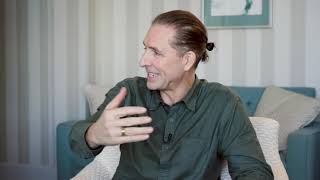
Naveen Jain, CEO of Viome, explains how gut, oral, and blood data reveal what your microbiome actually does. The company's AI predicts your glucose response from saliva with over 90% accuracy and manufactures custom supplements tailored to your biology, not generic advice.
Chapters
You're listening to the Human Upgrade with Dave Asprey. This episode's recorded live at the Beverly Hilton, which is my all time favorite hotel in la where I hold the biohacking conference. And I'm here in town on business, which gave me a chance to hook up with my good friend Naveen Jain, who is CEO of viome. If you're new to the show, what is that? If you've listened to one or more of the thousand episodes, you've probably heard me talk about viome and about Naveen. He is a mentor and advisor for me. And I'm an advisor for viome and an investor in viome. So, full disclosure, I have an interest, but it's not going to change my life if you do or don't get a VIOME test. It will probably change yours, though, which is one of the reasons we're talking. But Viome is one of the preeminent biohacking companies. The definition of biohacking, when I wrote it, is the art and science of changing the environment around you and inside of you so that you have full control of your own biology. Well, we just didn't know how to measure the environment inside us, which is where VIOME started. And now it's getting into the environment around us. Even, like, what's coming in. So, Naveen, it's been, what, nine years or something since.
I think it's more like seven. But who is counting?
So it's been seven years. The before time is always kind of muddled up in me. I'm all about the future. So are you. But you're better at counting the past than I am, apparently. So you started seven years ago and you came to the biohacking conference.
No, no, no, no. That's not how it all happened. You know that, right?
Oh, I think I was there for part of it. What are you talking about?
I think we started. I think you came to our offices when we were just three people seven years ago. And you sat down and you had your recording stuff and we started talking, right? And we started recording. But I think, if my memory serves me right, we actually met at X, where you had this electrical stimulation. I was up on my abs and on my arm and we were doing. And we couldn't even move. As if, like I was trying to move like five pounds and I was lifting 50 pounds.
That was the most fun. This was the Peter Diamandis. It was the 10th anniversary for the Ansari Express. And so there were a lot of big donors in the room. And I brought My weird Russian. It looks like an ied, and I'm hooking it up to people's arms, and it makes your muscles get fat really big. See how we did your abs? You're sweating. And we were all having such a great time. I have no idea how many people I electrocuted. In a good way. And then, yeah, after that, I said, let's do a podcast. I came to your offices. It was a tiny little. Frankly, it was kind of an unimpressive office.
It was. But not. But obviously, now you know how things have changed.
Yeah, now things have changed a lot. And, yeah, I came in and shocked you again. And we just talked about. We had the podcast, and you came to the conference, and within a couple years, though, you're saying, hey, guys, here's 10,000 species of bacteria that actually live in the human gut that no one knew about. You added it to the global database of stuff.
Yeah, we sure did. We sure did.
That might have a medical difference for some people. What do you think?
Well, first of all, you and I both know what happens in the gut unfortunately, doesn't stay in the gut. And if you look at the research now, you can literally look for any disease, whether it's a cancer and microbiome, or Alzheimer and microbiome, Parkinson's starts in the gut 15 years before you see the first symptom. Diabetes, depression, you name the disease, including the therapies for cancer. So whether your immunotherapy works or does not work depends on your gut microbiome. So literally, our gut microbiome is a foundation to human health.
The more work I've been doing in neuroscience and in all of the other fields of biohacking, it's become abundantly clear that we all have lenses on reality. So we have the emotional and psychological ones. You might see the person as a threat, I might see them as a friend, or all that sort of cognitive bias. But it turns out your meat, your body, has its own lens on reality. So it filters out some things, it ignores some things. It accepts other things. And one of the major things that controls that lens on which particles get into the body is the bacteria in the gut. So if you have the right bacteria or you just have a certain set of them, the body will detect that cancer drug or it'll detect that food you ate, it'll modify it and. And create some sort of signaling thing. And if we can change the bacteria in our gut, it changes the way our bodies interface with reality, partly.
So it's not just changing the bacteria. It's about their functions.
It's changing what they do, not which ones there are exactly.
The same organism in one environment can actually produce something good. And the same organism in a completely different environment can produce something toxic. Just like a human being. You take a person, put them in a good environment, a good behavior, you put them in a bad environment, a bad behavior. So it is really the behavior and the functions that matter. Because our immune system and our body doesn't have eyes. It doesn't say, hey, akarmentsi, see you there. It simply says, are you producing butyrate or you're producing toxin? And that's what it reacts to.
So we're basically reacting to bacteria poop all the time.
That's basically what it is. We are literally live and. And interact with the micro poop. Right.
You know, I should write marketing copy.
For you, but it's called metabolites. Right? In technical word, it's metabolites, but that's what they are.
It's probably more savory, but yeah, it is metabolic poop. And that's okay if you really think about it too. You know, what is soil earthworm poop. That's what plants are based on. So it's the cycle of life. And what you're saying is, let's modify via what we eat or potentially what medications or supplements we take, what metabolites are created. And those metabolites, in my language, those are signaling molecules that tell the body what to do and then the body will listen.
Exactly. And I think some of the metabolites, in fact some of the RNA may just directly signal, or these metabolites may actually bind to certain receptors like TLR4. So your whole immune system and our microbiome is constantly interacting with each other. So much so that 70% of our immune system is along our gut lining. So literally, our immune system and our gut microbes are interacting. In fact, as we start to talk, you will see, well, that is what ends up the beginning is actually somewhere else, which is on the top of the tube. And now. And also there is an oral microbiome, and that's actually more diverse than the gut microbiome. Even the quantity is about 1 or 2%. So there is a tremendous density of microbiome in your gut. But in terms of diversity, there is more diversity in your oral microbiome than your gut microbiome.
So did viome get it asked backwards here? You started out measuring poop, and then you went into poop and saliva and a tiny little drop of blood, which is the whole full body intelligence test with mitochondrial function, aging, that's ridiculously low cost compared to anything else out there. But you started out with poop and now you're all about where it comes in instead of where it comes out. What caused you to shift?
So look at the evolution of what we did. When we start to look at all the human genes that are expressed in the human body and obviously there are certain genes we get from mom and dad and the rest is all microbes, 150 to 1. That means more than 99% of all the genes that are expressed in our body don't come from our own mom and dad. They come from actually these microbes that we acquire after we are born. And the first exposure is when the baby is going through the birth canal.
Right. If it even does, which so few kids do these days.
And that's a different problem altogether. We're going to get to it later. But the point is we thought that since majority of the microbiome, almost 95% plus of all the microbiomes in the gut, we should start to understand because that's a dark matter, right? And you say, what if we can crack that dark matter, understand what is going on there? And we did that. So once we start to crack the dark matter, starting to understand, by the way, we are the only company to date, even though we started seven years ago and we told everyone that DNA doesn't matter, your microbes don't matter. What matters is what they are doing. And like a lot of people just had such a difficult time understanding when you say your genes are not your destiny. And you know, to some extent, I know there are a lot of people who talk about that, you know. Yes. But to large extent your genes tell you what you have propensity to happen, right? But identical DNA makes our hair, our skin, our eyes, our nails, literally start with the same DNA, you know, one single cell zygote, right. And then same thing can make your hair, your skin, your eyes, your nose and fingers. And so why is it I don't have the eyes growing on my fingers and the nails growing on my head? Same DNA. Simply certain genes are over expressed, certain genes are under expressed, they make your hair, your skin. So literally same DNA can write anything it wants to write. So DNA is like an Alphabet and RNA is the script that you are writing. Now the things that really surprised me, at least when it came down to the human genes, were people will say, well, based on your gene mutation, you're more likely to get Alzheimer. And it Always troubled me to understand how is it even possible that I am born with that gene? Right. So everyone believes that APOE4, right. Or multiple copies of APOE4 is associated with having Alzheimer's. And I'm thinking I'm born with that. So does that gene sit in my body for 50, 60, 70 years and one day it wakes up and saying, holy cow, I forgot to wipe out his memory? I need to do something. It can't possibly happen. Something has to trigger it. Something has to make it change its expression under expression over expression. And that's what causes you to have an Alzheimer's. But if you can take the trigger away, then does it really matter what genes you have? And now, by the way, last week a research was published that actually shows what the trigger is. So it turns out is called C pneumonia. So it's Clostridium. No, Chlamydia.
Oh, chlamydia.
Chlamydia pneumonia is actually bound to the E4 allele on ApoE and it does not bind to any other. Any other mutation. And that's literally is. Now they're showing, is the cause, especially.
Is it cause of Alzheimer's?
Cause of Alzheimer's A cause anyway, at least a cause. And what they did was they actually knocked off the E4 in mice. And these people did not develop Alzheimer's. Wow.
Let me define some things for the audience. So there's APO3, APO4, right? And you have a mix of things. You have two fours, a three and a four or two threes. People with two threes seem to be able to swim in mercury and they're fine. People with two fours seem to get heart disease and Alzheimer's a lot. So you can see this. But those are genes, Naveen. Those are not metabolites. What are we talking about?
But that's why I said, but ultimately their expression changes because of some other external environment.
The switch.
Switch, Right. So what happens is, let's assume you had two copies of E4 and you did not have cneumonia, then it doesn't matter. You can have three copies of E4 and it still would not cause Alzheimer's. Right. And that's the trigger. And by the way, elephants have four copies of Apoe 4. And what are elephants known for? Their memory.
That's interesting.
Right? So point I'm trying to make is that in fact, they did the studies on some of the Amazonian tribes. They have eight copies of E4, ApoE4, and they never develop Alzheimer because ApoE4 protects them from bacterial infection.
It's very interesting how bacteria and viral exposure has changed the human genome as some people died and other people didn't. So I think like my genetics, I've got MTHFR and I have rapid clotting. I have the perfect genetics to be someone who would go from village to village in northern Europe and take an arrow in the back, not bleed to death, not get sick when I ate the food from the stolen village and go to the next one. But that means now that, that when I'm swimming in toxins and all, having thick blood isn't a good thing. So I manage those, but my genetics look like that because of natural selection, which was influenced by bacteria.
But I still haven't completed my evolution story, right? So we started out understanding what's happening in your gut and as we start to analyze 100,000 people, we starting to say, wow, we now understand all these metabolites that are being produced in the gut and we know when they're producing lot of the stuff that are anti inflammatory, such as short chain fatty acid like butyrate and stuff that was really good. And when the microbes were producing things like LPS or ammonia or sulfide, it was no good. And now we're saying, wow, we can actually adjust the food that you take. So if you have lot of sulfide production, we can say don't eat broccoli or Brussels sprout because they all contain stuff that's going to convert into sulfide. Too much sulfur, Right, right, too much sulfur. And now you can look at the stuff and saying is your oxalate metabolism is not good, then you shouldn't eat things like spinach, very high in oxalate.
Maybe you shouldn't eat spinach anyway, or.
Kale for that matter. Right? But you know, but Popeye actually says something different. Popeye thought spinach is healthy for everyone.
If you zoom in on the can on the cartoon, it actually says testosterone right there. He was shooting up testosterone, not spinach.
But point is, the Popeye was no scientist, right? And that's a fundamental problem. We realize there is no such thing as universal healthy food and that people don't realize a food that's healthy for someone else may not be healthy for you. And even the foods that healthy for you today may not be healthy for you year from now because your body is constantly changing. Right? So as we were learning about the gut microbiome, we could adjust the food and we thought, wow, that's good. But what was missing was we, we didn't understand how it was Impacting the human gene expression. So we said, wow, we need to be able to analyze both of them together. So we say, what if we can get a finger prick blood and analyze all the human gene expression including your mitochondria? And most people may or may not realize the mitochondria has its own set of DNA which are different from the ones that. Human DNA.
Right, yeah. In fact this is so important, very, very little research has been done on this. Compared to the human genome, probably like 5% on the mitochondrial genome. It's becoming more popular now in my view of reality. The mitochondria are ancient bacteria embedded in our cells. They're environmental sensors and they can make metabolites of their own which control most of our system.
ATP especially.
Yeah, ATP which is energy. They can make sex hormones, they can make melatonin, serotonin, they can make inflammatory things, they can make proteins. So they're largely in charge of what we do and how we feel.
Well, look at human cells. They are a bunch of organelles inside the human cells. Cytoplasm. Ultimately these are all co evolved together. So these are ancient organisms captured inside the human cell. So now if you think about really who we are, we are really, you know, to all sense, I would argue at least being generous, we co evolved or one could argue they really are using us as a container. But that's okay.
We're puppets, we're walking petri dishes for our bacteria and they're running a lot of stuff and they just let us think we're in charge much of the time. But not always. That's my view. But that's why your mitochondrial expression is really important and for listeners. And you can look at what genes someone has, but you're not looking at that, you're looking at the expression. Walk people through the difference between looking at a gene versus looking at expression of a gene.
Yeah. So think about it. As I mentioned, that same gene, right, can make your hair or your teeth or your eyes. What it's making is what really matters is it really making what are they producing and what they're expressing.
How do you measure that? Like what is a gene expression? What is that measured in?
So it's like rna and specifically we are looking at both mRNA, that four letter word that we really got used to during the last couple of years. And the non coding RNA because we know just because it's not a messenger RNA doesn't mean it's not being impacted by the non coding RNA that's actually sending the control signals. So we look at both of them. So we look at non coding RNA and the MRNA of every sample.
So we got really technical there. I'm going to translate RNA for, for listeners because this gets relatively complex. I don't want your eyes to glaze over here. This isn't that hard. RNA reads DNA. So DNA, if you imagine this arm is DNA, it's got a bunch of helical stuff and then RNA comes along and it reads this. It actually it's a codon.
So we look at it.
Fair point. I'm going to take a little bit of poetic license here. So it reads the DNA and then decides what to do with it.
And it decides based on some of the thing called epigenetics. A lot of people probably know around methylation right. Or acetylation. So like things like these, when their genes is methylated that means there are methyl on top of your gene. Its expression is under expressed or actually could be prohibited from expressing. When it is actually acetylation then it's over expressed. So when you're reading the gene the gene doesn't change over time but it's actually the epigenetics is always changing and that's why the RNA is always changing and the DNA is not.
So epigenetics is a foundational biohacking technology. In fact biohacking itself. How art and science of changing the environment around you so you have control of your biology. That's epigenetics. Right. Just to be. I made epigenetics cool. And the words that we talked about there, adding acetylation, acetic acid. Oh, that's vinegar. So this is a core thing that our body does or we talked about adding methyls, methyl groups, another core thing. And you get those from certain foods or from certain supplements. And I'm actually an under methylator so I have to take methyl groups or my body doesn't work very well. Thankfully I know that from gene express actually I know that from genetic tests though not gene expression tests. So there's some value in gene testing.
Well you could have learned that from actual gene expression. We could have told you. These genes are actually over expressed right now and you need to under express them and you need some methylation there.
Yep. So you would actually. And this is something that you actually do tell in the lab.
So this actually what happens is when you look at the full body intelligence here it actually the third part that we haven't gotten to it. So as we were starting to understand the gut VC now let's understand if interaction with the human Host.
That's where it gets really interesting.
So we said, okay, so now we're gonna do a finger prick blood, because that allows us to see what microbes are producing. How are they changing our cytokines, our immune system, Right? So is the il1 up, is the il8 up, is il16 up, or is il18 up? So we are now looking at all of that. We're looking at all of the mitochondrial gene expression, and then we say, oh, wow. So we're able to see how these things are interacting.
So you started with poop, which gave you the. Here's the bacteria and what they're actually doing. And then when you started getting blood, you're saying, oh, look, that's funny. When the poop looks like this, the blood looks like this. And pretty soon you can predict the blood from the poop or predict the poop from the blood. This is why big data and biohacking are so interesting. Because right now what you're doing is you're going through all of recorded history and every Ayurvedic thing, every traditional Chinese medicine, every diet from around the world that your grandmother told you to eat, and you're saying that works. That doesn't work for you, and we can throw away the stuff that's fake and we can do more of what's real. And Big Food is screwed, because if their stuff doesn't work, we're gonna know.
And by the way, it's very interesting. Anytime you're buying anything that's not designed for you, there's a good chance it is actually harming you. Isn't that surprising?
Could it be that some foods are not compatible with your biology and they're compatible with mine and vice versa? Of course it could be right. But this is why you go to a restaurant 20 years ago and the chef is all offended that you don't want to eat it. That's because what tastes good, it's not compatible. And so especially for those people like me, who are probably on the far spectrum of what's good, you and I.
Had dinner yesterday, and we have the good example of what you ate.
I could have literally given you all the stuff I didn't want, and I could have taken all the stuff you didn't want. That's why we're friends.
That's literally what happened, is that you couldn't eat the stuff that I wanted and I could eat the stuff you want.
You're, like, swimming in hummus and stuff. I'm like, how do you do this, man?
And I was Like I wanted the, you know, little hot, spicy stuff. And you say, take that stuff off my stuff.
So let's fast forward to the future a little bit.
So I'm going to come there. So now we say, all right, that's good. But I remembered that my mom will always tell me, eat slowly and chew your food. And I kept wondering why. Mom tells me, is she worried that I'm going to somehow choke because the food is so big? Well, it turns out there is oral microbiome. And I'm saying it's so diverse. When you eat your food slowly and chew, your saliva, which is oral microbiome in a saliva is pre digesting your food and sending the signal to the body about what is coming. So it digests the pre digest the food. So it starts, the nutrients can get absorbed. If you don't pre digest the food, that food, the nutrition in that food cannot be absorbed in our small intestine. Right. So the idea was how do we go make the food pre digestible? And when you taste something sweet, it sends a signal to pancreas, hey, the sweetest stuff is coming. Start pumping the insulin. And that's why when people take artificial sweetener, what happens is the saliva on oral microbiome are sending the signal to pancreas to go pump the insulin. And guess what? Insulin has nothing to do because there is no glucose to digest. Now suddenly you have whole bunch of insulin in the body and now you get insulin resistance, you become diabetic, you have metabolic diseases because you thought you were taking this artificial sweetener that was good for you.
And it also, when the insulin comes out, it drops your blood sugar, which gives you sugar cravings, which makes you drink another diet soda. It's the perfect business model.
Artificial sweeteners, but it sucks for you as human beings.
Well, yeah, I know, but it's a business model. It's not. I'm being a little sarcastic there, but this is a prime example of the beauty of systems biology versus saying, well, calories in, calories out.
That worked at me.
Does your biome and all the 200 plus thousand tests that you've seen. No.
400,000. 425,000 to be precise. But who's counting?
A little bit of data. I hope you're counting. I mean, hey, I'm an investor, right? So that 425,000 data points, can you then say no, not data points.
Actually this 425,000 samples and each of.
Those has God knows how many data points.
600 trillion to be precise. 600 trillion data points, 100 trillion RNA nucleotides.
Is that it?
Yeah. See, by the way, that is the world's largest database of any company. That's about 50 times higher than companies like 23andMe.
Wow. How does it compare to like any of the credit reporting agencies?
Really? Nothing. I mean, that data is so small. But coming back to it, so as we start to look at now at the same time, your saliva and your gut and blood all together, which is what became full body intelligence, which is.
By the way, how much is full body intelligence for less than $300. You keep dropping the price. It's 299.
299, right. So interestingly now, looking at all three, what can we do? We can give you your, obviously your biological age. And by the way, that's the best biological age tool out there compared to true age.
Even the DNA methylation tests, Think about it.
DNA methylation only is one that's looking at the blood. We look at the blood, your saliva and stool all together to actually calculate your biological age. Right? And now we give you your cardiac health, your cognitive health, your immune health, your gut health, oral health. And then you say, well, that's good. Give me more details. So we give you literally all your functional score, your digestive efficiency, your dental health, your gum health, your bad breath health, and on and, and say, no, no, no, that's not good enough. Talk dirty to me. Great, we'll talk dirty to you. Here, your putresin production. Here, your flagellar assembly score. Here is your LPS score. Here is your butyrate score. Here is your, you know, GABA score. Here's your serotonin score. And we give you as much detail as you want. But more importantly, after all this, we tell you exactly, here are the foods you should not eat. And here is why eat these foods now? And here is why don't take these supplements that may actually harm you. So for example, if you have very high uric acid, you shouldn't be taking vitamin B3 or niacin. Similarly, if you have very high bile acid production, you shouldn't take turmeric or curcumin. Similarly, this is what's going to offend a lot of people. They think, I want to live long and I'm taking NAD or nr. If you have high cellular senescence or if you have high inflammation, you should be taking NAD because it's going to increase more reactive ROs and it's going to increase more inflammation.
Right, I want to see some more data on that.
We have Quite a bit in fact. By the way, NR and nad, I think last month I think I might have even sent you the research. It actually helps progression of cancer and help the cancer meta size.
Oh yeah, I did a bunch of research on that. Chris Masterjohn I think had the most nuanced read on it. It looks like NAD and NR and nmn, they're cancer preventive until you get cancer and then they're cancer promoting.
Yes. So that's my point is taking NAD just because you think you're going to live longer may be exactly the thing that may shorten your life.
Only if you already have cancer or.
You could be developing a cancer. Right. So the point I want to make is that no such thing as universal healthy things without knowing what else is going on. So now remember, if we could look at your biomarkers and what if we can say, hey, you don't have any signs of cancer, you can take nado, your inflammation is low or your cellular senescence is low. You can take this right? So literally, we custom tell you for each individual by looking at everything, what ingredients you need, how much of vitamins you need, minerals, herbs, digestive enzyme, peptides, amino acids, probiotics, prebiotics, like whether it's your lycopene, whether it's your amylase, we tell you you need what and we go a step further. We have built a robotic machine that literally every single month makes those capsules just for you. There is no premade capsule. This is not like a pill pack. Take one capsule from a red drawer, one from a pink drawer and put them in together.
This is really impressive, Naveen, because going back like 25 years when I started taking a lot of supplements to rewire myself, I actually made this wooden machine. I just threw it out when I was moving. I probably should have sold it on ebay, but it was for counting capsules, to get the right capsules in the right order and all just so I could have a custom bag of vitamins. And there's companies that do that. But what you did and you reached out and I vetted every single ingredient supplier. This is all super top tier stuff. And you are not making, oh, there's six varieties, I'm going to put you in a bucket. No, this is literally on a per milligram basis of each one, one for that person based on their gut and you're doing individual ones. So all eight of the pills in a little viome packet, all eight of them are just for me. And so this is like the world's most precise and complete.
Here is the thing. Surprise. All eight are the same. So what we do is we literally have a assembly. It says, go to. This is for Dave Asprey. Go to bin number three, take 22 milligrams, go to bin number seven. Take. Take 18 milligrams, go to bin Number 22, get 80 milligrams and makes the powder ultrasonically shakes it up, goes to the encapsulation machine, puts the powder in all eight capsules, and then it goes to a sachet machine to put them in a sachet. Puts the date you make it. So literally says, this is the date we made it for you. So. Right. And every month is made. So you can see every single month when it is made. And every ingredient, by the way, if you do retest, it completely changes. And now we are going even further. We saying, hey, we are looking at your apple health data and we see you were not sleeping well last month. So guess what? We're gonna increase the amount of magnesium we give you so that you can sleep better. Or we noticed that you were walking a lot and exercising a lot. We're gonna increase a bit of calcium for you. We're gonna increase a bit of these ingredients for you. Right.
That sounds like it would be insanely expensive. What is a monthly subscription.
It's very interesting. People have this idea that if it is custom made, has to be expensive. The robots don't care if they make the same thing million times or they make the million things different times. So once you build this automated system, it's the same cost. I can make the same thing a hundred times or I can make different things every time. It doesn't care. And our cost, we give it to a customer. Everything. Like for me, it's about 55 ingredients of vitamin, minerals, herbs, digestive enzyme, amino acid, peptides. Every probiotic, prebiotic, $5 a day. Under $5 a day. My latte costs $8 now.
Oh, yeah. Most people who take a meaningful number of supplements are spending five bucks a day on them. I'm probably spending. I probably spend 50 bucks a day. I have no idea.
And just the prebiotics alone is 30 bucks. Just the probiotics is 50 bucks. Right?
That's the problem. I am going to argue eight capsules isn't enough to fit some molecules, but it's not eight.
Plus this. Right?
This is the second part. All right, so you gotta get some prebiotics and probiotics. So this is actually really a powerful thing. So you've got the prebiotics These can't go in hot water. I can't put these in my coffee.
That's correct, because they kill the probiotics.
I know, but you need to get tougher probiotics.
They call them postbiotics. And we do use them.
You do, Right. So you open one of these up, you put it in water once a day, you drink it.
But I put in my oatmeal, by the way.
Why would you eat oatmeal?
Oh, why?
Because you hate your blood sugar levels or you hate your gut?
I hate my gut, actually, because oatmeal is really good for me. So, by the way, it used to be really bad for me because it has copper in it and all kinds of stuff.
What about your continuous glucose monitor? Do you do that?
Oh, my. Oh, I've been better than that. Oh, I forgot to tell you that we actually built in the continuous glucose monitoring based on what's happening with your microbes.
Well, it's not continuous.
So here's what we did. We actually built the AI model of. In fact, we started out with, can we look at what microbes are producing? And then we put on 1100 people for two weeks and we fed them 70,000 different foods. So we can build the AI model.
While you are monitoring the blood sugar.
While you're monitoring the blood sugar. So we build the AI model for every single food, what microbes would do and that would cause your glucose response and in a CGM, and then we build the AI model for that, and then we verify with 89% accuracy. There's literally the theoretical limit.
So if I send in my full body intelligence test, which is 300 bucks, you're going to look at my poop, my saliva, my blood. And based on that, you can predict with 90% accuracy whether oatmeal is going to spike my blood sugar or not.
That's right. And even better, that's legit. And now we're doing it just with saliva alone.
So just from basically spitting in a tube. So then you could tell me. So I've seen a lot of CGM data from oatmeal. The vast majority of people get a huge postprandial spike. Are you looking at the postprandial or just average postprandial?
So, interesting thing is very different. We saw people whose blood glucose went up with almonds. And most people will say, almonds have no glucose response.
No, they do have some for.
But some people spikes really a lot. What we saw was some people spike with bread, some people spike with banana. So we literally are able to predict that you can have banana but don't eat bread, or you can have bread but don't eat banana.
So my peanut butter and banana sandwich is probably not going to work because it's got all the way.
It just might work.
Actually, not for me. It would punch me in the face and the kidney all at the same time. So this is fascinating stuff. Do you find that there are times when it just doesn't work for a certain. Like there's 11% of people where. Oh, we would predict that.
But 11% is not. Because it doesn't work for 11% of the people. What happens is that even for the same person, if you put a continuous glucose monitor, there is a variant in the body. So in a sense that 11%, the thing that it just natural for the body to actually change. So if you eat the same food and you do it 10 times, you're going to have that difference.
How tired did you go for a walk? Did you do squats?
How sad, how you slept and what did you eat the night before? And bunch of things. So my point is that variability is what I call the body's variability. You just can't take it away. So it's not 11% of the people. It doesn't work. That 11% variability just exists in the.
Body 11% of the time. Okay, if I was to do the precision probiotics that include prebiotics based on my own stuff, is it going to change my glucose response to foods?
Absolutely. That is the whole idea is that can we adjust your gut so to be able to infect the foods that were causing high glycemic response, theoretically should be able to now not do that. Right. So over time, as your gut environment changes, the foods that were high glycemic response may not spike as much.
Okay, that is awesome. And people who want to, I mean, you can get the little continuous glucose monitors. I'm also an advisor to levels. I don't know if you've worked with levels.
Yes, so we do. Man. The point of the thing is that's good for one time, two weeks and then what? So my point that, you know, as a business in some sense, then what now you know, but you. Until you constantly understand, hey, now six months later I tried again and it changed. What did I do?
I find that there's a lot of value if I wear it at least half the time because then it reminds me, oh, I really didn't sleep well last night. It doesn't matter what I eat. My blood Glucose doesn't go very well or. Look, I did everything right and you know, I ate a piece of.
You are energizing everything.
So I'm curious, I'm a nerd, but.
Most people would not. They just. And they would not know what to do. And the thing about what we are doing is to tell you what to do.
It's totally true. So I think this is foundational. What I like to do is I do take my biome supplements and then I take a whole bunch of other stuff, a lot of which I've designed, that's designed to take me far beyond healthy, because I'm actually not interested in being healthy. I'm reasonably healthy. I was very interested in being healthy when I had chronic fatigue syndrome. I was sick and I weighed 300 pounds. I would have given everything in my life to be healthy.
Isn't that amazing, Dave, that when you are sick you only have one wish and when you are healthy, you have 10,000 wishes. Who would have thought to become a superhuman? When you are sick, all you care about is just to become human.
Exactly. That was my mindset. You just nailed it. What I am into now is I, of course, one of my baseline supplements, right. And getting custom precision made ones that are going to fill in the right amounts. And then I don't mind saying, you know, I'm going to push on this pathway, right. I want to see how good my eyes can be and then I'll focus on my vision.
I love that idea, by the way. You and I had dinner last night and we talked about this, right? What if we can actually create these power ups?
I want to help you do that.
And I love that idea that you get the essentially make someone healthy. This is what you need to be healthy. But now you want to say, look, I just don't want to be an average cognitive function guy. I want to boost my cognitive to be having unfair advantage.
I love it. Going back to an old product name, that was slick.
No, but seriously, I want to create something that says you want to be beyond healthy to have an unfair advantage with these power ups. Right? So cognitive power ups, metabolic power ups. Right.
It's like playing a video game in life. It really is. It's funny. I mean, you're an engineer. I'm an engineer by training. Right. That computer science and engineering stuff, you can break all problems down, including fixing your biology, including upgrading your biology. And it was just taking that stuff to saying, how do I get my brain back? How do I not be £300? And what we're finding in engineering and all businesses, when you have more data, you can suddenly invent a new airplane wing surface that no one thought of because we had the data and we could get it.
And I'm asking a different question.
What's the question?
So the thing is, it is half the time the questions you ask is the problem you solve. So what questions are you asking? You have all this data, but what questions are you asking that determines the solutions you want to get? So how do you learn to understand, ask the right questions?
That's an art, right?
So I can give you an example. When we were doing the Moon company and people will say, hey, even if you are on the moon, how are you going to grow the food on the moon? If you ask that question, the only solution is to find a way to grow the food. What if we ask a slightly different question that says why do we eat food? Yeah, right. You say, oh, we need nutrition and we need energy. What are the different ways you can get energy and what are the different ways we can get nutrition? And many now you have opened up hundred solutions rather than simply growing the food. Right?
Yeah.
Same thing happened in the healthcare company. When I started viome, we didn't say, hey, here is we want people to stay healthy, understand what is going on in their body. We challenge. When everyone says all about your DNA, say what if that is not true? What if it's actually what they're doing? When everyone said microbiome is important, we say everyone is focusing on trying to find out what organisms are there. What if actually it's not the problem because 10,000 different organisms can produce exactly the same thing that's making you sick.
It goes back to that. What's your lens on reality that we talked about at the beginning of the show?
That's actually called asking the right question.
I remember at one of Peter Diamandis events where you were the CEO of SpaceX was talking and I said, well you guys harden spacecraft so that they don't get damaged by radiation and you're trying to build these crafts to go to Mars. What have you done to harden astronauts? And she looked at me and she said, huh? No one's ever asked that question in 17 years. We got to think about that. And honestly, probably having the astronauts spit in a tube and do viome and then changing the gut bacteria so they work better in space is a big thing.
There are organisms that grow in radioactive nuclear waste. What does that mean? These microbes have actually figured out how to protect their DNA against the radiation and Use radiation as a source of energy. Now, if you take the genetic material from them, use CRISPR to modify yourself.
Your mitochondria could be radioactive mitochondria, and.
You could actually be completely radiation resistant.
Can we be the first two guys to do that?
There you go.
All right, I'm down.
The point I'm trying to make is that every single time, just asking a different question allows you to look at the problem differently.
You are one of the few gifted humans who just knows that you have a child's curiosity about everything. I know you really well, and you have that about everything. It's not just about viome or that you just see all these questions, and it's what engineers do when they maintain curiosity. And one of the things that your lens got you to is, well, what are the correlations from all this data? And now with oral health, you've got a lot of stuff that's brand new. That's actually why I wanted to interview you. Although we always talk about cool stuff. Is that last time we talked, you talked about, oh, yeah, we could spot a bunch of cancers. Was it four of the top five cancers?
So we actually were able just with a spit on the saliva, we can detect very early stage. The stage one is stage zero cancer in your mouth and throat with 95% specificity and 90% plus sensitivity. Never been done. FDA gave us a breakthrough device designation. And by the way, today you can go to a website, simply spit in a tube, and we can tell you if you have any sign of cancer. Biomarker for cancer.
That is groundbreaking and amazing. You've got something new, though, because it turns out that everyone in the microbiome space, including me, I've been saying, guys, you have a fungal microbiome, you have bacterial and phages, all this stuff. But we're all looking at the smoke that comes out of the fire. That's poop. And what you're now gathering data on. And you've got enough data to actually make conclusions, to say, well, maybe it matters what kind of wood you're putting in the fire. And maybe the fireplace needs to be built. Right? And that's mostly in the mouth, Right? So what did you learn about the mouth and gut bacteria and metabolic function?
So, first of all, I think you made such an interesting point. When we analyze gut microbiome or oral microbiome, we are not looking at just bacteria. We are looking at every bacterial functions, viral, rna, viruses, fungi, and everything, including all phages. Right. Most people may not know the phages are essentially the Viruses that infect bacteria and it changes the bacterial functions. So we look at all of those things again, we don't look at who they are, we look at in addition to who they are, what functions are they performing. Right.
It's all about what your behavior is, not what your intentions.
That's right.
I meant to do the right thing, but I killed everyone. Sorry. You're still a bad actor.
Yes. I think Gandhi said, punish the sin, not the sinner.
Well said.
So every meal we say, hey, here are the foods that today are bad for you. Based on your analysis, six months from now when you do the retest, those foods that were good for you may not be good for you anymore.
I actually do that every time I eat my lens. Is, is that food compatible with me? What are the pros and what are the cons? Do the pros outweigh the cons for my state? Now it took me a while to learn all the science behind that. And that's what you're helping people do with the biome test.
All right, test this.
Just oral health.
So now we are oral health. When you do, you do that. But we are taking it out because we thought this is $300. What if we can get 70% of the information just with saliva alone? Non intrusive, right. You don't have to finger pick your blood easy to spit. And we were able to, first of all we did was can we actually even detect your glycemic response just with saliva? So here's what we did. We had 50,000 people who have done blood, saliva and stool. So first thing we did was we say, can we build the model that we see in the gut to blood sugar? And now can we do between saliva and gut? So we can now actually get an enhance of gut to the. Sorry saliva to the blood sugar. And we did that.
That's amazing.
Now we are able to look at gum inflammation, your uric acid production in your arterial oral microbiome, your sulfide production in your gut microbiome, your bile acid production in your gut microbiome. Right?
All from saliva.
All from saliva.
That's insane to me.
And now once you do that, we are able to tell you your dental health score. Gum health score. And by the bad breath is not vanity, it's a sign of high polyamine, high sulfide that causes inflammation. So we are doing now not only tell you what's happening, we going to have a personalized oral gel, a personalized toothpaste that's designed for you that will not only remove plaque Remove the gum bleeding, periodontitis and hopefully help you actually with the best oral health.
So I'm gonna spit in a tube and then you're going to ship me toothpaste designed for my oral microbiome and.
Oral licenses that will be probiotics and prebiotics for your oral microbiome.
So you suck on elosin, so your mouth is populated. I guess after all that I should wash with Listerine. Right.
So Listerine, by the way, is one of the worst things you do.
Totally. It's terrible.
Completely terrible thing to do because it kills all your oral microbiome. Now, interesting thing is oral health. Most people think about his vanity, about why do we care. Most people don't realize your oral health produces nitric oxide. It is directly connected to your heart health. It is now being implicated in Alzheimer and many other neurodegenerative diseases. It is connected to diabetes. It is connected to colon cancer. So like colon cancer is actually now being linked to fusobacterium nucleatum, which is actually is oral microbiome.
Wow.
And what happening is lot of people are taking nexium or other anti acid drugs and we swallow about one and a half liter of saliva.
These are the proton pump inhibitor drugs specifically, not the histamine 2 blockers.
That's right, the PPI drugs. Right. So when you get rid of the acid in the stomach, all the saliva that we swallow all the time, these oral microbes normally would die in the stomach acid. And if you're killing the, if you have BPI inhibitors now, all of those things don't get killed and end up settling in the gut where they don't belong. And sometimes they end up actually causing colon polyps and colon cancer.
Wow.
Right. And so autoimmune disease, same thing. One of the interesting things we found was you look at a lot of the people who have Alzheimer's disease, they have very high level of ginger pain, which actually comes from P. Gingival. So P. Ginger virus, when you have inflamed gums, what's happening? Just like a leaky gut. Now have your leaky gums. That means your bacteria and viruses are now going into the blood from your mouth.
It's a massive health problem to do that. I had so much of that in my mid-20s when I was dealing with chronic fatigue. I'd go to the dentist three times a year. I did everything I was supposed to do, but I was living in an inflammatory environment eating the wrong foods, including tons of spinach and kale, which were causing A of ton tartar buildup of mineral and oxalic acid on my teeth that was contributing. And when I finally got control of that and stopped eating the stuff that didn't work for me, my teeth got whiter and I stopped putting this amazing level of tartar down. And my gums haven't bled in years.
We figured out like in our custom toothpaste that we're building the underlying gel. It actually removes the plaque not by rubbing its silica like every toothpaste out there is basically just rubbing out the basic is abrasive. Right. In this one it is simply using you and I talked about MSM and ESMART EDTA use the plaque on content.
It was funny at dinner last night, Naveen was just telling me some of this new stuff. I said what did you do? Put some EDTA in there? And he goes, yes. How did you know? EDTA is a synthetic amino acid that specifically dissolves calcium and a few other minerals. And you use it to remove plaque, to remove biofilms and to remove even in the arteries anything.
And the problem was you didn't know how to penetrate the biofilm, which is what MSM does.
Exactly. It's beautiful. So I am all in. I haven't gotten mine yet. When is it shipping?
It's going to be start shipping it very soon.
Very soon. All right. So you don't quite know yet, but will I be one of the first people on earth to receive this?
Well, I will make sure that you do get one.
All right. Oh yeah. But not the first one. That was a nice dodge, Naveen.
No, no, I'll probably be the first one. The three that I want to ask.
One of the very first. I hope you're the first in your whole team should. And if your teeth don't fall out, then I want to do it.
Well, actually I'm using it right now.
Oh, you are using it right now. Okay, good deal.
Awesome. I love it by the way. It is so addictive because it feels so fresh. In the morning when you wake up, you just feel fresh and you rub your tongue against your teeth. There is no biofilm.
Okay, let me ask you this. Now we're getting into serious biohacking. Do you tape your mouth when you go to sleep? Have you come across this?
First of all, it's a good thing to do because when you are actually breathing through the mouth, it dries up your mouth and it changes your oral microbiome and it changes the ph value. So by the way, it's very interesting you mentioned a lot of people think eating sugar really causes cavity. Well, it turns out that's not true. What happens is when you eat sugar, your oral microbiome is actually produced lactic acid that reduces the ph. So when your ph goes down is when all of these bacteria start to cause cavities. Lactic acid. Right. So it's not just sugar that does that. It is what these microbes do with that sugar is what does that.
It makes so much sense. And we have all these complex systems. I would love. I already have my gut bacteria and my metabolism to the point I can eat sugar. It doesn't really do anything bad to me. I can look at my cgm.
But I think you need to worry about the oral health as well.
Oh, I mean I take care of my oral health and I. I'm gonna.
Get you good toothpaste at least a good analogy.
I'm getting the viome stuff. I'm very interested in this. I'm gonna test it out against what I'm using. Cause it's a fascinating idea.
You've been using viome for a long time, aren't you?
Oh, I have, yeah.
And by the way, you have to tell your story about like microbial diversity changed because of that.
Well, yeah. When I was writing Superhuman, my big anti aging book. I'm very non judgmental except for about kale. Cause it just deserves it. But. And that's mostly humor. So I looked at all the data and there's abundant, abundant data that says prebiotic or soluble fiber extends human lifespan. I mean hundreds if not thousands of studies.
And if you have the right organism that actually producing butyrate because of that.
Yeah, well they'll grow if you take it on a regular basis. Even if you don't even take probiotics, which you would get if you're doing biome anyway and you have the whole carnivore world. And I mean I was in that back in like 2007 or something when I was developing the bulletproof diet. I went full on carnivore for three months and I gave myself leaky gut. I got autoimmunity, I got an egg allergy and like stuff happened because it doesn't work for most people long term. You don't do it for a month. I'm all over that. It'll shift your gut bacteria and same thing. Go vegan for a month, that's fine, just don't. Neither of those is long term sustainable. But if you ate meat every day and you had 60 grams, which is what I did, of a Mix of soluble fiber. On my viome score, I got four times the number of species. In fact, I had the number of species of someone much younger than me. And you can tell age through diversity. So that was a pretty magic finding. Where? Okay, yep, the data says that should happen, and it did happen. And viome is how I validated it. So ideally, that probably lowers my biome age. I don't know what your equations are there.
Well, remember, the way we measure age is very unlike anyone else. We are very quantified, right? We say, hey, this is your biomarkers of your blood, stool and saliva. And we have biomarkers for every different age. And say, where do you fall? And that's how we measure.
Have you ever correlated the viome age with a Horvath score?
The point is, the only Horvath score, you're only looking at one thing, which is Natalie, in your genes. That's only one part, right? So human gene, they're looking at the epigenetic on the human gene side, but they completely ignore the whole microbial side. And we now know that just because APOE4 is there, you still need the C pneumonia to actually go. May cause Alzheimer's. The point is you can't ignore 99% of your body and say, I made a clock that is really good for 1%.
Okay, I hear you there. Are you going to validate that? Because right now there's Horvath clock and then there's about 16 other aging clocks.
And you know, so you can look at the inflammation, cytokines, and they have an aging clock. Because of that, we can literally make an aging clock from anything, right?
Check this out. If the viome aging clock correlates, you could predict someone's score and all those other things probably from spitting in a tube.
You good. But the point is they are not the ground truth, right? So how do you. Where is the ground truth?
Well, here's the thing though, if you speak to any. In fact, I've spent a day with Steve Horvath who. And by the way, guys, we're getting super nerdy, but this is how you measure the actual age of your tissues, which would be important to know if you're an anti aging person. And Steve invented the first DNA methylation clock. There's an episode on True age and all that. So it'd be really useful. And that community, they just want data. And each of the people has their clock, says, here's why my clock is better. And if you show that your clock is as good or better or More.
Broad, how do you know it's better or worse? Because there is no ground truth to make you call it better. Right. So they're all different. Right. So if you do it simply based on your blood and you look at the methylation in your finger prick blood, what are you looking at? Basically looking at white blood cell because you know, you know the red blood cells are just hemoglobin. There is no nucleus there. So you're looking at white blood cell that tells you literally on a white blood cell what the methylation is. That may not be same in your lung, that may not be same in your heart, that same on your brain, same with telomeres. So basically what I'm saying is that based on one thing, you can make a clock and you can say that's good. And I think it was the best when it was done. And just because everyone has a clock and we do too, it's hard to know the biological age. So it's really difficult to see is it better or worse or the same or you're just as bad as them or you're as good as them or you are, you know.
So your argument is you're doing a broad trawl from many systems to see how they're behaving and interpreting that.
And then by the way we are doing is large that data. No one has ever built anything on half a million people. Most researchers will take thousand people, 2,000 people. Right. But nobody does on million people. Right. And that's really what we look at. 600 trillion, 600 trillion nucleotides. Now you're looking at the data that's never been looked at. And that is the power of big data. Now our biological age is going to keep getting better and better and better as we get to, you know, quadrillion. Now these numbers are starting to look like quadrillion. That's even more than the deficit of our country.
Right. Wow, that's incredible. For now just give them a little more time to inflate Naveen. That'll be good. Well, all right. So people can get the new viome, what do you call it? Dental gel, toothpaste, what's the word for it? Yeah.
So you're going to be oral health test and based on that you're going to personalize oral gel and you're going to get personalized oral probiotics and prebiotics. Right. So oral lozenges. Right. And you can do a full body that has everything in there, your oral health, your gut health, your obviously the human host health.
So I think we have a code for people, don't we guys? I'm really prepared for this because this is all about selling, right? It's viome.comdave. use code DAVE10 so you can save, you know, 10%. And you said this is 299 guys, just do the full body intelligence. If you could spend $209 on any one small panel at a normal lab and not get 10% of the data you get in this, in terms of data per dollar spent, there's nothing in.
The world like to really do something with it. Getting data is one thing. And then getting the things that actually make you better for $5 a day, for heaven's sake.
Yep. And then from there, with full body intelligence, you can get the supplements, you can get the probiotics that are custom printed for you, and then you also get the gel.
I think this cheaper option, in my humble opinion, you just simply pay $179 a month. That's $6 a day a month. And you get a kit for free. So you literally get your kit every single year. So you can see how the things that one per year and you can do as many as you want during the year if you want. But literally you get kit every year in the beginning and you get all your supplements. So vitamin, mineral, herbs, digestive. In the end, all the stick pack, probiotics, prebiotics, every single month. And every year you get to retest. And every year it gets adjusted right. And you can do every six months if you want.
And if they use code DAVE10, it's 10% off every month.
Sure.
Is that how it works?
We'll make it work.
Okay, guys, that is like amazing. So think about it. If you subscribe and you get your baseline way more than you'd ever get in a multivitamin, and probiotics and prebiotics, you were going to spend that anyway, but you didn't get a test kit. So now you got this amazing test. You get all the data, you get retested every year for free as part of that subscription. All I want you to do is feel amazing all the time with the least possible effort. I don't want you to exercise. I want you to come to upgrade labs and do 10% of the time and get the same results or better. I want to set you free so you can focus on stuff that matters, like service to others, being nice to people, and evolving yourself. This, for the vast majority of people, this new model from Viome, it's simpler than what you do now. It reduces curiosity. And a box of custom things works. And for travel. Gee, can you take these two things with you even in your carry on luggage? Yes, you can. And then you're always getting the stuff you need to be healthy. At the same time, I take my smart drugs, I take my cognitive enhancers. I take special herbal stuff. I layer a whole bunch of cool new cutting edge anti aging stuff on top of viome. And that's okay. But if you wanted to blow your supplements out of the water and get amazing probiotics. And again, Naveen, I don't want to say that I'm unfaithful. But this isn't the only probiotic I take. But I do take these and they make an amazing difference. You can feel it within two days of taking it. But I wanted some that had special powers and so I take some special power.
You're making yourself superhuman.
Well, there you go. And so this is what I want you guys to understand. You want like a simple baseline. It's not cheap. At 179 minus use code DAVE10 and save whatever $17. It's not cheap but it is incredibly effective. And it's not expensive compared to three bottles of high quality supplements. And you're getting 55 ingredients potentially. So I just want you to know I think this is a win win thing where you're better off to do this and then take all the other cool stuff I talk about. That's exactly what I do, Naveen. I can't wait to brush my teeth with the new viome stuff. Gel. We're going to call it Biome gel. That's based on my own oral microbiome and using custom oral probiotics that affect my gut. Probiotics in addition to using the probiotics and prebiotics I already take. If you guys haven't figured this out, we're building. Here we go. I got the picture in my head. Okay. In some of these superhero movies they show up and there's the person who makes the superhero costumes, right? And like, oh, they have to make the right costume for your superpowers. You run too fast. So you're close to Spiderman with a.
Different costume than Superman, aren't they?
Yeah, exactly right. And it has to be customized for the superpowers. So there you go. You're like the tailor who makes the superhero costumes. But it's made out of bacteria. Okay. I'm pretty weird, huh?
And by the end, vitamins and minerals and stuff. Yeah.
Anyway, that's the picture. Guys. You wanted Something that's just going to unlock all of your stuff for the least possible money, least possible time, least possible complexity, least possible confusion. I think Naveen's done something here that's going to get you there. So, viome.com Dave, use code DAVE10. Code DAVE10. And guys, I don't know a better use of $179 that I can think of. If you don't have your minerals and vitamins, why are you spending all your time on expensive crap when your baseline isn't there? By the way, my new book doesn't talk specifically about this stuff, but the point there is that if you don't have the basics covered, doing the expensive hacks is just dumb. So there you go. Thanks, Naveen.
Well, thanks. It was always a pleasure. You know, we always have fun.
Yeah, it's always fun.
Well, good to see you.
Likewise. Guys, if you like this, you know what to do. Pick up some biome test kits. Get just the oral microbiome, but understand if you're frustrated, I'm not getting results. I've done everything to try and sleep better. And I've done all this. I've done all that. Yeah, I spent a million dollars doing all that on myself. And it did work, but I really should have spent maybe $179 a month, plus a little bit more. But the idea is knowing what to do is what takes almost all of your time and almost all of your money. Let's cut that out. And I really, truly want you to try this, because what you're doing now may work, it may not work, but let's just get the data. And this is why I'm here. It's why I do the show. I curate the most amazing new tech, the smartest people, people you might not have heard of, people like Naveen you've heard of, who are doing really good work in the world. And he's always welcome on the show because you're always going to learn something. See you later.
Thanks.
All right, we got a good episode. You're listening to the Human Upgrade with Dave Asprey.










