EPISODE #1009: Upgrade Spotlight: How to Fight Zombie Cells and Win Aging – Neurohacker Collective
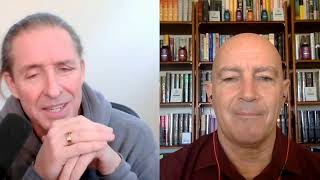
Dave Asprey interviews Greg Kelly from Neurohacker Collective about senescent cells, or zombie cells, that accumulate as we age. Kelly explains how these damaged cells resist autophagy and how senolytics like Qualia Senolytic work to clear them out and slow aging.
Chapters
You're listening to the Human Upgrade with Dave Asprey. Today is a special Upgrade Spotlight edition where I'm going to bring on a guest to explain something about whatever it is they do that they built for your life. Entrepreneurs, I believe, change the world. So when there's something new and worth your time, that's when I'm going to be on with them. I'm bringing naturopath physician Greg Kelly on the show because he's the head of product development for Neurohacker Collective. I've been working with Neurohacker Collective for a couple years now, and his expertise is around nootropics, anti aging and regenerative medicine, and funny enough, cognitive enhancement anti aging. So this is one of our tribe guy who really, really knows what's going on. And I wanted to go deep on autophagy if you are new to the show. Well, autophagy is that thing that gets rid of zombie cells in your body. I've written about it extensively and done a lot of research in my book Superhuman. But I wanted to go into some natural compounds with Greg that can turn on your body's ability to heal itself. Greg, welcome.
Well, thanks for having me today, Dave. It's a pleasure to be here.
Why do you guys call it Neurohacker Collective?
So the collective idea was the we is smarter than me. So the idea that there's just brilliant people out in the world and if we can get access to some of what they know more than we, that we can do more together to help humanity and the neurohacker. I think my understanding is probably fed off your coining the idea of biohacker. But originally our emphasis was on the brain, hence the Neuro amended to it.
I love the collective idea. Of course, our live audience today is called the Upgrade Collective because you can be a leader of a movement like I am for biohacking, but that doesn't mean that you know everything. It turns out that if you go onto Reddit or in the days before Reddit, there was a group called the Immortality Institute where crazy people like you and me would hang out even 15 years ago and talk about all this stuff. So there's always some, someone out there who knows more about vitamin D synthesis than I do. But it's your job and my job to curate that knowledge and to work within this idea of a collective where we're all working towards a common goal. And in my case, it's upgrading humanity. And I think we do that starting inside ourselves and working up. And there's Another case to be made with the neurohacker side of things. If you just look at the brain, there's plenty of work to be done there, right?
For sure. I think just in terms of. Even if you think of fundamentally getting someone to do new things takes a lot more brain energy than you or I that may be already excellent at having integrated that habit or diet or you name it, into our lifestyle. So the brain always can use support. So especially when we're trying to do.
New things, we're going to talk more about this idea that what if there was a supplement that you intentionally didn't take every day? A supplement that you took maybe once a week or once a month or something like that? No one's ever done that in the supplement industry that I'm aware of. In fact, there's a perverse incentive that says, well, let's get you to take it every day or take it all the time. But you came out with something new. The qualia senolytic that a lot of people in my community have been talking about, because it's, I think, the first time it's ever been done. Tell me about qualiacytic and what it is.
Sure. I think we need to step back and talk about senescent cells before we jump into qualiocinolytic. So, as you would know, there's this construct called the hallmarks of aging. So nine characteristics that organisms all the way up to humans share as we age. One of those characteristics are called senescent cells, sometimes referred to as zombie cells. Long story short, as organisms get older, including us, we accumulate more and more of these senescent cells in a variety of tissues. The current state of research is that these contribute to most of the dysfunction and challenges we face with aging. And then going Even further, in 2015, the combination of Mayo Clinic and Scripps Institute of Aging found that giving certain compounds in what they refer to as hit and run dosing. So an intermittent dosing can remove some of these senescent cells. And when that happens, tissues rejuvenate and good things happen with health. So senolytics specifically is the term that Mayo and Scripps used to describe compounds that were able to help remove these senescent cells from tissues as animals and humans age.
When we have more zombie cells, which I feel is relatively accessible, we all get that idea. They're not dead, but they're not alive. When we have those senescent cells, they sit there, they consume resources, but they don't work very well, and they make Free radicals throughout the body. Right.
What they do, the scientists refer to it as sasp. Sasp, but basically they excrete all kinds of things into the environment surrounding them. So growth factors, inflammatory molecules. But the gist of these SASP factors is what they refer to is one, they can cause other cells nearby to also become zombie cells. So that's one thing. Two, they can exhaust. Yeah, yeah, they can.
Fast zombies or the slow zombies. I'm just wondering.
I think they'd be more the slow zombies, like, like the original book, not the movie. So.
All right, good deal. I like that better.
Yep. And. And then they can also exhaust stem cells, so the progenitor cells. So at least the analogy I would use has to do with almost think of a plant, you know, healthy, vibrant plant, all green leaves. But you know, you start to get some yellowing leaves and good gardener would prune those off or you know, if there's no gardener in nature, ideally they would fall off. So the process senescent cells should go through is this falling off process. And if some, for whatever reason linger, our immune system should find them. And what happens as we age is some of these senescent cells become experts at surviving. They figure out a way to basically hang around the tissues. And, and as you know, the immune system also starts to underperform in age immunosenescence. So that combination is why they seem to accumulate. And so the way senolytics act would be a lot like a gardener. There's something that's going in and finding these equivalent of the yellowing leaves in our tissues and removing them. And what that does is the same thing that would occur if we removed yellow leaves from a plant. And it now spares up resources to go to where they're more needed, the healthy cells, and it creates room for new growth. So that's the combination.
I really like the pruning yellow leaves analogy because it's hard to picture what's happening inside your body. In my view of the model, this is a non critical process. You will be able to reproduce the species and then die. Even if you never turn on your body's ability to do autophagy, at least you never turn on very well. So if you're at high energy, you have enough electrical energy that there's a surplus and you have the right signals that tell your body that it needs to go in and prune, it'll do it, but it's not considered number one on the list like eating and breathing, reproducing and not getting eaten by Tigers are so much higher on the list that those will always win unless you set yourself up in order to do this kind of recovery work is how I put it. So how can we turn on our body's ability to get rid of these cells?
So that's the idea of senolytic. So because these senescent cells are so expert at surviving, at lingering, they would just gradually accumulate and then that it's called secondary senescence. But that idea of these secreted factors causing new zombie cells that combination it almost instead of even like a line of increase, it more ramps up as we age. And what researchers think it's a threshold effect. So what once a tissue gets a certain amount of senescent cells, we're going to experience poor outcomes in that tissue. And prior to the idea of senolytic, there was no way to basically recalibrate these pro survival networks so that the cell would then go through this natural falling off process and be more visible to the immune system. So without some technology, senescent cells will just gradually accumulate. And you've mentioned autophagy a few times. When I think of a stress cell, small amount of stress, they'll make antioxidant defenses and do other things to basically protect themselves. Once stress accumulates, you start to have gunked up proteins inside mitochondria, inside cells, and then autophagy would be what we would use as kind of the cellular stress response program to recycle those. But once a cell becomes so damaged that autophagy won't work anymore, that's when they basically put the cellular senescence program into place. So there's a lot of overlaps between autophagy and senescence. But senescence, once they're there, those cells are going to hang out unless we do something to get rid of them.
Greg, what's causing senescence is this buildup of gunk inside the lysosome. Is this because of toxic metals or do we know exactly why this is happening?
So it'd be all of the above. So one of the things for sure is mitochondrial dysfunction, which I know you've been a big spokesperson for correcting that, but issues with telomere attrition. So naturally, if a telomere gets too short, that would kick a cell into senescence, DNA damage. So most of the other longevity characteristics or the hallmarks of aging would cause it. And then almost anything environmentally that's too stressful. So ionizing radiation, you know, like UV could cause senescent cells in skin as an example. Okay. So I think when you Just think of aging writ large and then stress writ large. Those would be the two factors that tend to cause a cell to just be so stressed. Then the best plan of action is just to kick off this senescence program.
Is there any evidence that plant toxins would contribute to senescence? Things like phytic acids, oxalic acid, lectins, mycotoxins.
I've not seen anything done on that yet. And in part it's. This field is relatively new. So the idea of senescent cells they've known about for decades, but until, like their contribution to aging is much newer, or that known role of accumulating with age and then compounds that would help get rid of them, that was kicked off in 2015. But almost like many things in health, once there's a tool or a solution, that research explodes around that because now there's something you can do about it. And so my guess is we'll know more and more in a very short time about what contributes to senescent cell accumulation. And then the other thing that's somewhat challenged is there's no biomarker for senescent cells that you could easily measure in the blood or urine. As an example, you'd have to do a tissue biopsy so that until that bridge is conquered, it will be, I think, more challenging for researchers to be able to know what's linked to causing it. But again, my general sense is things that cause stress to cell physiology will invariably be found to contribute to senescent cell accumulation.
Got it. I haven't seen a ton. I've seen research on senescent cells in plants showing that some herbicides and pesticides and alkaloids probably contribute. But right now, the mapping over of either human toxins or plant toxins to animals, I haven't seen. What about a high protein diet or a high fat diet or eating lots of omega 6s or. We just don't know at this point.
We don't know the things that for sure. Exercise reduces the accumulation of senescent cells. With aging, it looks like calorie restriction, the intermittent fasting type of approaches to that that would promote autophagy as an example, at least, where immune senescent cells both prevent the accumulation and help get rid of those. So my guess is some of the technologies that you've advocated to your audience in the past for healthier aging, we'll also find have a direct correspondence to either managing senescent cells, preventing them from accumulating, or stacking with these other technologies like senolytic compounds.
Okay, let's talk about senolytic compounds. So now we know that cells are doing this and there's a variety of likely causes. We don't even know what all of them are, but let's just say aging. So maybe salicynescence is a symptom of aging, maybe it's a cause of aging. We don't know yet, but we know we can reverse it with some drugs. And there are some drugs I've talked about for several years, drugs I've written about that can make a difference. There's dasatinib or dazatinib, I can never say. Right. Quercetin, which is a compound that magically people took a lot of over the last couple years. Fisetin is another one I've used as a cognitive enhancer before. And Navitoclax. Are there any other drugs that are real exciting that are pharmaceuticals?
There's a few candidate drugs that are being advanced by a lot of these are startup biopharma and then there's some natural compounds as well. So as you mentioned, the original stack that Scripps and Mayo identified was dat, dasatinib and quercetin. What they found in that study and really what they looked at these pro survival networks that these senescent cells are using to linger, and they look for compounds that could renormalize those networks, basically. So the plant, the cells could go through this folic process, apoptosis. One of the things I thought that was really interesting in that original D and Q study was that dasatinib was active as an example in adipose tissue. It was senolytic. There. Quercetin was active in, I believe it was epithelial cells in bone marrow, but not in adipose tissue. And that was one of the reason they stacked them together. So right out of the gate with the senolytic field was this idea that think of senescent cells not as one homogeneous thing, but a category of things. And that depending on the tissue, maybe the source of stress that caused them to become senescent, they may be using different mechanisms to survive. And that stacking things together was the way to overcome that. And so that was the D and Q, the dasatinib and quercetin stack, which is, I would say, the most researched senolytic stack to date in both animals. There's also a couple published human studies.
I did try dasatinib. I tried it topically and I tried it orally. It's hard to get and you have to have a prescription and it was relatively expensive. And I'm not sure That I noticed much of a difference given the expense and all of that. And of course quercetam, quercetem is available anywhere that you can buy vitamins. So how do. What's the best path? I know that you've put together a new stack, but tell me about the quality of senolytic and how the dosing protocol differs. I was doing the pharmaceutical expensive stuff every week or two. I think it may be every Saturday I was taking it. So what's the schedule and what's the ingredient stack that you found works and how do we know it works?
So we used the. You mentioned fisetin. So that's currently the most studied single agent that I'm aware of. I think last time I looked, there was nine studies registered in ClinicalTrials.gov, human studies with fisetin. But the key thing, the way that it's approached is usually 20 milligrams per kilogram body weight. So a pretty big dose of it and then what's called hit and run dosing. So you give that high dose for a couple days and then you have a period where you're not doing any senolytic compounds. And so what we did at Neurohacker Collective when we created qualiocinolytic is we put that study dose of ficitin in. We then added other compounds that had some tissue specificity that, like I said, fisetin tends to work adipose tissues and more globally than quercetin. But we still want to have the senolytic activity of quercetin and the tissues it's useful at. But then we also wanted to do things for muscle tissue. So as we get older, often they'll refer to it as anabolic resistance. But the idea is the anabolic signals that lifting weights higher protein would usually give to our muscles to produce growth. Healthy muscle tissues. As we get older, we don't get as much benefit from those things. One of the reasons seems to be the accumulation of senescent cells. We included a proprietary ingredient called Synactiv that combines noto ginseng and sweet rose chestnut because that's been seen to be senolytic in muscle tissues. We also then included things like curcumin and olive leaf extract, because so far in those studies they've been senolytic in both intervertebral discs and in joint tissues. We also then included Piper longamine. So Piper longamine is from the roots of, of a plant called Piper longum. It would be a relative of black pepper. Long pepper is its common name. And this Compound Piper longamine accumulates in the roots, was used as a rejuvenator, or like Piper Longam, was used as a rejuvenator in Ayurveda. And piprolongamine seems to have unique mechanisms for how it helps remove senescent cells. So when we created qualiocinolytic, we wanted to combine things that had slightly different mechanisms, different tissue preferences, where they work, and then put that together into just a simple product that people could take for two days a month.
If you take it two days a month, how do we know that it's getting rid of senescent cells? What kind of studies have you done on it?
We've done two studies to date and the first study we did, we recruited people with some degree of joint discomfort. And what we did is we had them do. There's a really commonly used questionnaire for people with joint discomfort. We had them do that before they started on Qualacy Analytic and after three dosing cycles. So a dosing cycle would be the two days, some kind of a break repeat, some kind of a break repeat. So three dosing cycles. And what we saw was about 53% improvement in being able to comfortably do all kinds of activities of daily living. These are things like walking upstairs, getting in and out of cars. We also saw about the same degree of improvement with flexibility. Then in our most recent study, which we still have a few stragglers that are completing, so the numbers may change. We used something called the SF36 that Rand created as part of the medical outcome study back several decades ago. There's eight concepts built into the SF36. And for the audience, the SF36 is mostly used to get a good sense of health status and quality of life. But commonly you'll use it or researchers use it to determine if an intervention has value because it's a way to stack one intervention against another and see if was this cost effective. So what we saw again over three dosing cycles was seven of the eight concepts built into that. So energy levels, emotional well being, ability to do, activities of daily living, general health, all like I said, seven of eight improved and some quite dramatically. The one thing that we are unable to do yet, and we being the senolytic community writ large, is to tell if something is actually removing senolytic cells short of a biopsy. So the current studies I mentioned that are registered on ClinicalTrials.gov typically approach to like we're doing, they'll recruit people with some area like joint discomfort and use a validated measure that's tracking outcomes in that area.
And you could tell because inflammation oftentimes shows up either in joints or skin. Right. If you're just looking for, you know, a quick marker of how inflamed are you wake up in the morning and do this with your hand. And then look at your low back. And if it's real stiff or you have big bags under your eyes, or you feel like it's hard to get going in the morning, you probably accumulated inflammation overnight. It doesn't mean it was from senescence, but it could have been from the alcohol you had. There are various causes, but if you ate good stuff and you wake up regularly feeling that way, even when you're doing things right, then it gets better. That's a pretty good sign. I know because I lived my entire life that way until I was almost 30, and I figured out how to not be inflamed all the time so you can have a marker of it. And people with chronic pain and chronic inflammation know it. So then they use the. The quality analytic. And then they say, oh, look, that's weird. It doesn't hurt anymore. Basically, that's how it works.
Yeah. So I had. I was just at a 4m, which I know you've gone to at times. I've seen you speak there in the past, as a matter of fact. And one of my friends there has done several cycles now of qualia senolytic. He's a big dog person at my age. So what he told me is that he's been unable to throw comfortably throw things to his dog, and that after a couple cycles, all of a sudden he could throw comfortably again. And the key idea, I think that for the listeners is, is that the way each person will experience a senolytic, whether it's qualiosinolytic or other senolytic compounds varies because senolytics, it's that idea of a threshold effect that below a certain amount in a tissue, we may experience nothing. We still want to prune them away, but above that level, we can. Maybe for him, it was impacting his skeletal system, his muscular. For someone else, it may be joints. For someone else, it may be cognition. So because of that, there's no one way we'll experience it. And someone like you, Dave, or me, that's already doing a lot of good things, we maybe have our senescent cell burden low enough below that threshold that we're not experiencing anything that we'd consciously be aware of, but we still want to prune them away before they get to that Tipping point. So the progression of science going back to the research done by Mayo and Scripps is they would first add them to a cell culture, so an in vitro study and see if they caused disproportionately the senescent cells to be eliminated and kept the healthy cells fine. That was kind of step one. Step two is then they would give those orally to the animal and then look at fat tissue and did the amount of senescent cells go down before to after? But again, like senescent cells, you know, to understand if senescent cells went down in multiple tissues, you have to do biopsies in those specific tissues because there's again this idea that senescent cells are more of a category and what's causing a joint cell to linger may be slightly different than a senescent fat cell.
That I think there's additional research to be done. Your ingredient stack is amazing. And I am using Qualius Analytic on a regular basis now every month. But a lot of our listeners are a little bit aggressive. I could see some of them trying to use it twice a month. What do you have to say to people who like, I have to clean out all my senescent cells right now? Is there a benefit to doing it twice a month versus once a month?
So in the two studies I've mentioned, we've done it twice a month. But the main reason we've done, we get better adherence if we can do a study in a briefer period of time. But the key concept is when you remove some senescent cells, now you're making room in those tissues for new cells. So you're now progenitor stem cells are going to give birth to new healthy cells. We don't want to do this so close together that we exhaust stem cells. The goal is gradual. Do these things have a long enough period of time for new growth to happen, tissues to rejuvenate and then redo it? So I guess the analogy I would use would be pruning a plant. That's a great thing to do. It's going to create a healthier, vital, better looking plant. But if you prune a plant every day or too frequently, you're going to kill the plant with senolytics. I think the most reasonable protocol following that hit and run idea is once a month. And that's frankly easy to do. So for me, I just at this point do it the first weekend of every month. Easy to remember where if you start to do, you know, shorter protocols, then you know, it's harder to integrate in. So at this point, I would say for most of the audience, once a month would be ideal. But if someone wanted to do it more frequently, I wouldn't do it more than twice a week.
Got it. And this is really important because a lot of people who are into biohacking, especially if you're new, like, I'm going to go all in, and then you feel way better than you maybe have in years. So some of these are really big tools. And it's sort of like, okay, I like to go fast. I'm just going to go 100 miles an hour all the time and never pause to change the tires of the oil. We all know what's going to happen there. So you end up developing this cyclical approach to making sure that you have high performance and high performance recovery. And that's why I really like what you're doing with senolytic therapy in a way that means you don't have to go get a prescription and spend a bunch of money on a drug that probably has some side effects compared to some natural compounds. And for listeners, if you go to neurohacker.com Dave, use code Asprey and they're going to give you an extra 15 off because that's what it takes to have a show about this stuff. You got to give something back to the audience. So I think this is worth doing. It's less work than even taking something like quality of mind. You got to take that every day. Is there anything in the works where I could do like a once a month qualia mind that would work all month?
I wish. No, we don't have any of these. And there's certain things that we need that nutrition on a more continuous basis. But even with quality of Mind, our recommendation is five days on, two days off. So I think recovery from almost anything should be built in. In. We want to do it and we want to recover from doing it. Exercise, obviously, is a great example, but the fasting mimicking diet by Longo is similar. Right. A lot of the benefits you get is the recovery period when you start to refeed.
Greg, what do you wish everyone knew about senolytic cells? That's just not out there in the world.
I think the biggest thing is how much they contribute to our inability to experience robust health as we age. They were kind of a complete unknown until 2015. And I would say, outside of your audience, our listeners, and some very niche audiences, if I said senescent cells and senolytics to most of my network of friends and family, they would just be glassy eyed. They would have no idea where some of the things like obviously some of the technologies you've spoken about have been embraced. I've been watching Limitless on Disney. You see a lot of the biohacking things now making it into that TV show. That would be my bottom line is that just more people would know that a lot of these things that their loved ones that are older, that are experiencing, that are limiting their activity to really enjoy their elder years, senescent cells are contributing to that.
There you go. In fact, I think even in a lot of people under 30 who've had any kind of health problem, which is 80% of them, the guys with half the testosterone of what they should have and all the anxiety and other stuff going around, you might benefit from cleaning up senescent cells early so that they don't build up over time. So there you go. I, I feel like we got a, a really good episode here where I'm going to say an esoteric part of aging. It's as important as telomeres, which a lot of people have heard of. It's as important as, as eating a good diet, as having a brain that works is getting rid of these senescent cells that cause other cells to become zombies. So you get rid of the, the beginning zombie. It doesn't reproduce nearly as much. It's a long term part of my anti aging strategy. I expect to be doing this probably for the rest of my life, which means I think I should subscribe because that's going to be at least 100, 130something more years. So Greg, thanks for putting together a good product. I know that we're chatting about some other new stuff that you're working on and I'm really excited about that. So we'll stay in touch. Guys, just go to neurohacker.com dave and use code ASPREY. Save some money. And this is something you do once a month. You can do that and it actually works. You're listening to the Human Upgrade with Dave Asprey.










