Episode #1014: Stack Cold Water, Sauna & Breathing to Accelerate Your Metabolism – Susanna Soeberg
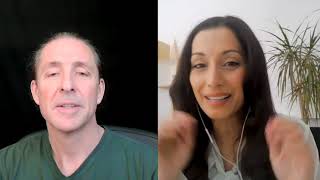
Dave Asprey talks with Susanna Soeberg, a metabolism researcher from the University of Copenhagen, about cold water, sauna, and breathing techniques to boost your metabolism. They cover brown fat activation, heat shock proteins, winter swimming protocols, and how short exposures to cold and heat change your body.
Chapters
You're listening to the Human Upgrade with Dave Asprey. Our guest today stayed up late in Denmark in order to be a guest with us today. And it's someone I've wanted to interview for quite a while because as you know, I'm into cold. I don't want to be cold all the time. That's not even good for you. But brief exposure to cold is something that I featured on my blog. When biohacking was first getting going, I talked about different types of cold exposure. I've done it consistently for 12 years. Opened one of the first cryotherapy locations at Upgrade Labs in la. So I'm a true believer. But there wasn't as much science 12 years ago. In fact, people thought it was crazy pants for it, but then they tried it and it seemed to work. So now we're going to go deep with a researcher who really is an international scientist and an expert in cold and heat therapy, which are those environmental variables that you change to have control of your biology. And she also does. This is going to sound so weird for you guys. Functional breathing in everyday life. So breath and hot and cold. Who would have ever thought that there's university research supporting biohacking backed by a PhD in metabolism at the University of Copenhagen. And if by now you haven't guessed, my guest is Susanna Soberg. Did I say Soberg, right?
Yeah, you did. Actually, I was just thinking that was perfect.
You're an interesting person by background. I've had Wim Hof on the show a couple times. He's a friend. Dr. Mark Harper has looked at cold water therapy for mental health and depression. But you seem like the most well rounded hot and cold researcher out there right now who's just going in on all of the extreme variants. What got you interested in the extremes?
Yeah, so that was because I got into the research of brown fat. So that's how it started. I was doing research in something completely different in something called FGF 21. And my master, you could say paper was a cell metabolism paper in the FGF21 where we discovered the sweet tooth. And I was actually planning to do my PhD just following that and finding out if I could maybe find a drug to lower the sweet tooth so people won't keep eating all that sweet stuff. So if you eat meat, if you eat proteins, you would lower actually your sweet tooth. So that was also what we found in the mice study. So we did both mice and humans, but that was not what we was going to talk about. But I got into the Brown fat research, because I jumped from this kind of studies and I wanted to stay in metabolism. And then there was this other very kind researcher, Camilla Scheele, who became my supervisor, who kind of like lured me a bit into the brown fat research. She said, I have this cell group, Susanna, but I don't have any researchers in the human part yet. But you do human studies. Can you please join? And. And I did. And she said, well, you can just pick and choose what you want to do. And I started reading a lot of papers about how is the brown fat activated and how does it look in. In humans? Is it only activated in some humans, young or old or. And is it only by cold? Is it in. Yeah. What. What do we know about this? And I found out we didn't know that much at that time. And when I went in to see if we could activate the brown fat with just a cold air or sleeping in a cold room, I found something interesting there because it did activate the brown fat. And we did increase the. We do increase the brown fat, which is a healthy kind of fat, where you will lower your blood sugar and get a better insulin sensitivity. And we did see that from studies where people were sleeping in a cold room at 19 degrees, and when they then slept at 24 degrees the month after and 27 degrees the month after that, we did see that they actually decreased the brown fat again. And that also decreased the insulin sensitivity once again. So that kind of like proved that cold, continuously cold stimulus must actually give us more brown fat in humans also. And not only what we have seen in my studies, but we haven't really seen anything really. Like, you can say, I wanted to do something that was applied. I wanted to go out and say, well, if you want to activate your brown fat, you could do this. And sleeping in a Coke room, that was like one thing, but not very like sexy or anything. It's not like something people really want to do. And wearing a cooling vest. There was also studies about that where you can wear a cooling vest for 10 days at 14 degrees. And they did see that people activated that brown fat and got more of it just by walking around with a coat vest on. And you can buy these online, right? So you can walk around if you want to. But I figured now that. Interesting. I mean, how can. How. That is not an advice that I would like to go and give people afterwards. So I just figured because I live in Denmark, I was like, okay, what can we else do? People winter swim here a lot. Well, a lot. But they do it Frequently more here than other places, I think in, in the, in the world. So Scandinavia is really a winter swimming part of the world at least. So I was thinking, well, I could, I could definitely find subjects for my studies. I. And that's also a good thing. So I told my supervisor that it could be interesting to see if cold water would activate the brown fat because we know that cold air activates the brown fat, but we have no idea if cold water would actually do the same. Well, if you think about it, cold water is actually a much more potent stimulus than just cold air. So we did debate it a bit before we started.
Okay. It's funny, I have a bizarre fetish for mitochondria and I'm just very interested in how mitochondria work. So I've been into this, but I went through this phase where I thought, well, if some is good, more is better. So I'm driving in the winter with my T shirt on and the windows down and I'm just refusing to wear a jacket. But I stopped doing that and I felt like maybe there was not, maybe that wasn't always good. How do I know how much cold is enough?
That is a good question. And you can say. Well, it's, it's difficult to say like a particular number or how. Yeah. How many degrees or for how long time you have to do it to, to get the health benefits for. If you just have to say something in general. But that was actually what we did study in my research, which we will, will come to those results shortly. But just in general, people have different body compositions and men and women also have different temperature, you can say variants. So. And women also have their cyclists. So it's going to be also how did you sleep and is it in morning and night? And so it varies how much you can, how much cold you can take and also how cold adapted you are. So that this was, this was. Will gonna vary from person to person, of course, but if you are very cold adapted, then you will feel, then you will, you will not feel too cold. You will just feel that you get cold and you like it. But that probably doesn't mean that it's not too much for you. So it's very good to have like a protocol saying, well, you don't have to go over this limit because that is not healthy for you. You will overstress yourself. So maybe you did too much, maybe you didn't.
I realized that I was over chilling all the time and that it was okay to be warm as long as I experienced Cold. And that led down what my next book that comes out February 28th of 2023 is about this. I call it slope of the curve biology. But it's how quickly can you reach a new state and how quickly can you exit the state seems to increase the change of our biology the most quickly. In other words, if you jumped in a warm hot tub and slowly cooled the water, you wouldn't get adaptive change very well. But if you jumped from the hot tub into the cold tub, that's going to drive adaptive change very quickly in a small amount of time. And I'm lazy. I only want to spend three minutes, I don't want to spend an hour.
No, exactly.
Does that match the results you're seeing?
Yeah, it does because the contrast therapy where you go into the cold water, you go into the sauna, a heated room, so you would, you would definitely have that big like temperature difference at the same right after each other. And that's going to drive mitochondrial increase because you are stressing the cells and getting this hermetic stress in, in the cell. So you will have them pushed from the acute stress to the next phase where the cells is going to be making itself stronger. And you will have an increase in the heat shock proteins which will prepare the cells. And because you do it very shortly, which was what I studied in my, in my research, you will not push the cells too much so they won't get exhausted and age the cells. That's really, we want to find that balance, right? We want to have it like an increase in longevity in the cells, but we don't want to push them that far where we will age them too fast. So, so that was kind of like what I was looking for in my studies. I really wanted to do a protocol where it was like the micro stressing to find a healthy protocol.
You're doing some of the coolest work out there from my mitochondrial centric perspective. Because that slope of the curve thing, it appears to work for everything. Even if you're training for anxiety reduction, how quickly can you turn on and then turn off anxiety? It works for cardiovascular, it works for muscle growth. It appears to be, it's not about how much work you do, it's about how quickly you do it and then stop doing it. And that kind of sets us free. And since you're looking at short exposure, why did you do that? That's actually very different thinking because most of the time we look at area under the curve and you're looking at slope of the curve. Also what made you Think that because that's kind of a radical breakthrough in human biology.
It's kind of like I just. One of the things that I kind of saw in studies was that either it's really extreme where people like, do these extreme studies where we study a long time or very low degrees or something like that. I wanted to see with how little could we actually go. I think it's very interesting in the world where we are so busy also, what can we do with how little can we actually get the healthy benefits? It's not about doing it extreme. And according to this, you could say science about micro stressing and, and, and I think it was Hans Seely who discovered the, the stress syndrome. And he talks about these phases where the cells get into this robust phase where it gets itself stronger, but it also get, get exhausted. And I read about that because I was in a cell group. Right, I just told you that. So I wanted, of course, yeah, I needed to figure out, okay, so, so what can we do? All the cells in our body is going to be affected by this. Because this is a complete systemic, universal thing that you do when you submerge your body into the cold water. This is going to affect everything. So I had to read about safety. I have to read about everything that's going on. And then I was like, okay, I have to go with a minimum, because the minimum seems to work with the hypothesis and the theories out there. And also by activating the brown fat, I figured I have to do some studies seeing how fast can I activate the brown fat so I don't have to go extreme. So I did some preliminary studies in my lab where I had people coming in, putting hands and feet in a bucket of water. And I tested like 4 degrees for 4 minutes. And I had this infrared thermography camera. So I kind of like looked at that and also made a protocol for how to calculate the difference in skin temperature. So I could exactly tell when will this temperature from the brown fat because it's located right here under the superclavicular bones and that when will that increase? And I think, and I actually saw it happens within minutes. And so they had this hand in, in cold water. And I mean, yeah, it was 4 degrees, but it didn't have to be, didn't have to be 4 degrees to activate the brown fat. So we, we actually also saw that just put. Just having my subjects laying on these cooling mattresses that were, that was what I used in my studies, so cooling mattresses. And I cooled them for actually hours in some of the experiments, but I also had them just laying there for a few minutes. And then I also saw this activation of the brown fat. And you go in and look at my paper. You can totally see at these temperature curves where I have continuously taking the temperature here. You can see the increase in temperature as soon as I turn the temperature down. You could totally see that the activation of brown fat is immediate. So why go extreme when you can go low? Because it's enough. Yeah.
What about shivering? Andrew Huberman, who's been on the show, I think in the 500s, so a while ago, he's recently come out and he's interviewed you as well, and he's saying you really have to shiver to get this succinate response. But I almost never shiver. It takes a long time and no one likes shivering. Do you shiver when you get in cold water? Do you think it's important or is he maybe overstating it?
H. No, I, I don't think he's overstating it at all. But I think that there is a. There's a. Yeah, so I'll try to explain this because when you, when you get cold adapted, you don't. You stop having the muscle shivering in that so vigorous. You can say, and you can, you can maybe imagine that if you are cold adapted in the beginning, when you start as a winter swim or you dip in cold tops, you would see that you would shiver afterwards. And you have maybe one or two hours afterwards, but you still have the shiver if you end cold. And I will tell you why I think people should end cold in a minute. But the shivering will be bigger in the beginning. But as you get cold adapted, you will have less shivering. And that is because you have an increase in the mitochondria also in the muscles. And also you have a more increase in mitochondria in the brown fat cells and they will get more effective of increasing your temperature in the body. So what we actually see is that brown fat will be able to increase your temperature much faster as soon as you get cold, but also keeping you a stable temperature. So the. You can say the efficiency of your muscle cells and your brown fat cells will decrease. And studies show that adapted, not only my studies, but also other studies show that the, the shivering actually subsides it when you are cold adapted. But it's not because you then have a lower energy expenditure. You will actually have the same. But it's because your cells are just more effective of increasing your metabolism. So it's just because the cells actually have more. Yeah, yeah. Increases in energy expenditure. Yeah. So the shivering is good, but when you're cold adapted you still get the benefits of activating your metabolism. But it's not as, as, as it was in the beginning. Of course when you, when we tested our subjects in my study, we saw that our cold adapted winter swimmers, they actually had a higher increase in energy expenditure during cold compared to the control group who were also cold and they shivered also. So it's like.
Oh, so shivering only matters if you're a newbie?
Yeah, it's because the cells are not efficient enough to keep your body temperature up. So it's getting more efficient by time you get, the more adapted you get. This is a metabolic response that you get through habituation.
Okay, so shivering is good for newbies. If you don't shiver and you've been in cold for a while, it's probably because you're good at it and you don't have to worry about it.
Just if you want to like push yourself a little bit. That is like one of my principles is also if you want to increase your, or keep pushing your cells and also the adaptation of cold, you could start changing the temperature. So it's kind of like the switch in temperature that's going to drive the cold shock in and out. And you will have, you can say you would not have the habituation staying still if you go into water that is same degree.
So, so it's just like with the keto diet and with everything else cycling matters. So it's not the steady state. I tell people, don't do keto for a long period of time, you'll break. And my whole book on that was like cycle in, cycle out and then everyone's like, carbs are bad. It's like, no. And the same thing with cold. If you're cold all the time, maybe you should get warm and then cold because it's the transition between the two that's driving you to make more cold shock protein. But why do I want cold shock protein? What does it do?
So cold shock proteins are fantastic. They are the ones repairing the cells. So if there are some damaging proteins that is curling up in the cells which leads to disease, these heat shock proteins will like repair the cells and make the cells stronger and prepare it for next time. And in that way the cell will become younger because it's, it's, it will last longer the cell and that's going to increase our longevity in the long run. So if we can have younger cells and repairing the cells, then we will also have a Lower risk of disease. So that is really good.
So you want to turn on cold shock proteins because they make your cells last longer. And I've looked at, like you said, gentle cooling, and I've looked at ice baths. I was doing a bunch of those. I remember my daughter, when she was three, she'd get in gleefully, throw water on me. I'm like, you know, I was cold already, but she's through cold water in my face. But she's in here with me, so I'm okay. Yeah, but yikes. And then now, though, I do cold, I have a cold plunge. But if I can do cold air at 160 centigrade below zero in a cryo chamber for three minutes versus 10 minutes plus a shower and getting naked in a cold tub with water that's been used a bunch of times in a public setting, I kind of feel like the cold air, in terms of a per minute change in my biology is a better equation. But I know there's core cold receptors and there's skin cold receptors. Walk me through the difference in the type of receptors and what they do.
Yeah, so it's just a different kind of how potent the co or how much the CO receptors we will be activated if you use cold air contra cold water, because the cold water will definitely, because it's also surrounding you in the way it does, it will have a very rapid increase when norepinephrine and dopamine increase by 2 and a half x and norepinephrine also by 2 to 500, actually, or 2 to 5x when you submerge in water within two minutes. So it's actually very quick. But of course, when you talk about also have to go to the water and fill the top or you have to get naked as well, then it's really fast if you do it with air. And air can be very sufficient because it also activates the brown fat. And we know that already because studies show that. So you could also do use a cryo chamber if you have access to that. Definitely. I think it's. It's a very good idea. It's a good solution if, if people have that. So I think that people should just use what is accessible to them. The cold receptors on the skin is definitely the one activating the brown fat the fastest because there is a direct link from the code receptors in the skin directly to activating the brown fat. So there's a pathway there going directly to the brown fat. I think it's so interesting that we have this tissue in our Body, which we for 20 years ago didn't know that much about actually. But it's activated as soon as you get cold with air, with cold water. And the code receptors that we have on in our core is not activated as fast because we, we don't get easily coat in our core, of course, but the coat receptors in our skin is what activates the brown fat. So you can use the cryo. Definitely.
So the cryo works. And I'm trying to get people in and out instead of getting them to spend more time exercising, I'm trying to get them to spend less time to get the maximum biological effects. So you go in and you just did six hours of interventions in an hour. It was worth it. And I'm lazy and so I got interested in all these things because I just wanted to save time and have more energy. And you got into it because you're worried about this thing called safety, like, what the heck? So I, I appreciate both perspectives, to be honest. Now, speaking of safety, this is something no one's been able to answer for me, and I'm hoping that you'll have a perspective on it. You mentioned norepinephrine, and it's really similar to adrenaline. Right. And a lot of people have adrenal dysfunction. When I was at my most burned out with all these mold toxicity and mitochondrial dysfunction, my norepinephrine to epinephrine ratio was 45 to 1. The scale ends at 13 to 1. In other words, I had a serious problem converting one to the other. And if I raise norepinephrine with cold exposure and I already don't have enough adrenaline because I'm burned out, does this mean that people who are highly burned out maybe shouldn't do cold therapy? Should they finish on warm?
Should they? Oh, that's a really good question. Burned out, did you say that? Very stressed? So what I usually tell people who are very stressed or have very easily panic attacks or very sensitive nervous system, because that will affect it definitely. But if you're very stressed out, going into the cold will also affect your immune system. And it might not be a very good idea to, to start that at that time. Although, I mean, it's like it's also good for people if they are stressed. That is exactly what I also say to people. If you're stressed, if you're chronic stressed, then it's super good to expose yourself to this micro stress, but because the micro stress will stress you up and that is to stress yourself down. Stress up to down. Right. But.
It, yeah, if you think about it, adrenaline or epinephrine is synthesized from norepinephrine. And so what. What I was having a problem with is what most stress or mitochondrial dysfunction people, mold, chronic fatigue, toxic metals, Lyme disease, all that kind of stuff, or just too much doom scrolling. What you end up is you. Or if you just have bad. Or if you just have bad blood sugar control, it's the same thing. But you suck at converting norepinephrine into epinephrine. So then if you go and you hop in cold water, you're going to get more norepinephrine that you might not convert to adrenaline, but it's going to fix your blood sugar, which is a primary cause of you having this lack of conversion. So by fixing your metabolism, you may drop those ratios. I don't know what mine are today, but they're clearly nothing like that because, well, I'm metabolically healthy. So I just feel like what you said is really important. If you're getting a cold or you have a viral or bacterial thing, maybe doing a long cold bath isn't the right thing to do that day. But if you're feeling generalized anxiety and burnout, doing it so that you get your dopamine levels back up, maybe that additional norepinephrine will convert to adrenaline even if your conversion's broken. But I have never heard a clear answer to that other than what the TCM Chinese medicine people would say is, well, if you have a cold, don't get cold, get a blanket and drink some hot tea already.
Yeah, okay.
Yeah, well, let's talk about hot tea. Now if I just did cold exposure and rather than tea, I just maybe have some coffee. Although this is actually minerals and electrolytes.
Yeah. Wasn't it?
Yeah. This isn't actually coffee, it just looks like coffee. The magic of video. So that said, can I have my cup of danger coffee right after I get out of cold? Or maybe at least espresso for the caffeine or is the hot beverage versus caffeine. Talk to me about cold exposure, caffeine and warm beverages.
Yeah, so if you, if you end on cold, and I definitely think you should because that pushes your metabolism even more. So you have to force yourself to heat yourself naturally. And that is what the Dr. Huberman named the sober principle when I talked to him on an Instagram live last year. So if you do that, you would, you could actually help yourself, especially if you are new to this, by drinking something hot because that will help you not have this kind of like very large drop after drop, it's cold. So your core temperature will not be the coldest when you are in the water. It will be the coldest when you get out of the water. That is also something people should remember also for especially if you're a new one because you will shiver maybe a lot afterwards. And it's not, the shivering is bad for you. It's good. But it could also be that you will have a very large drop in your core temperature. So it will be very unpleasant for you and maybe you'll have a bad experience. So just go easy in the beginning. But you could help yourself with a hot beverage just to keep your core a little bit warmer so you won't have just to minimize the after drop afterwards.
Okay, so hot beverages are okay afterwards because it's not that important that your organs get cold, right? It's the skin and muscle and nerves, right?
Yeah, exactly.
So there's our answer and a couple of my upgrade collective members. And by the way, guys, you can be in the live audience and ask questions like this. A couple of them are saying they even sip coffee during an ice bath in order to keep their, their inner organs warm. And they like doing that. And they're asking if it's all right. What about caffeine itself? I mean, could you, should you do a pre workout full of caffeine before you do cold exposure?
Well, you could, but you don't have to because you also get this huge increase in, in noradrenaline. So but you, you get activated your sympathetic nervous system. So you don't, you're going to be.
Awake, but there's, there's amp K effects from caffeine independent of the adrenal stimulus you get from it. Is it beneficial to have the amp K effects of caffeine when you're doing cold exposure? Told you I was on that.
Yeah, I don't know. I don't know.
I don't know. You know everything. Susanna, come on.
No, I don't. No, I don't. And that one I don't know. But I mean, it's really good to have coffee before you go to a workout. I would do that. But before a cold exposure, it's kind of like another activation. It's more, it's definitely more rapid and more intense in the sympathetic activation. So I think you don't have to get that stress level even higher up because my nervous system doesn't have to get pushed that extra far because coffee to me works very well and cold exposure as well. So combining That I think it's going to give me even more difficulties to lower my stress level when I'm in the water. Not that it's that difficult for me at this time, but. Yeah, but it will not help at least.
What does cold do for bdnf?
So BDNF will be activated. It's activated in the brain and it helps for the communication of the nerve cells between the cells, but also between the centers of the brain. And it also communicates with muscles. So it keeps your, your, your communication between muscles and the brain. You could say young. So it will definitely help you keep your muscles stronger and it will also do that for your. Yeah, so it will keep your muscles stronger and for a longer time so you don't lose them. Because we don't want to lose our muscles, which we do with age. So if we keep working out and we keep going into the COVID we will activate the BDNF and that will keep our muscles stronger and we will keep them so we don't lose them.
Okay, so BDNF is tied to muscle mass, which is something I haven't talked much about in my books or even on the show because I'm all about cognitive enhancement. In fact, if I could have a better brain and I had to have a dad bod at the same time, I'm okay with that. I do most of my work with my brain and my heart and I want a strong, good looking physiology and all that stuff. But really give me 10 IQ points and effortless memory and I'll trade a leg for that. I mean, like, like this is important for me. So you're saying though that even if you're doing the right amounts of testosterone, which is a part of anti aging for men and women, so you've got your testosterone levels where they should be and you're lifting weights and you're eating enough protein and you're intermittent fasting and you're getting enough sleep and your human growth hormone levels are where they should be. On top of that, BDNF is another thing that would affect the amount of muscle mass you have.
Yeah, definitely. And, and you will, you will affect that with the COVID You also affect that when you go out to your workout. Because when you go train, you don't only just build your muscles, you also keep the BDNF connection between the muscles and the brain alive.
Very, very interesting. You're giving me some interesting thoughts here.
Can I just ask you something?
Sure.
Because you can edit this out, of course, but I have Kind of like an announcement I would like to ask you if I can do on your show.
Oh, absolutely. Just go for it. And we're going to talk about your book, too, but I'm hoping it's more than just your book. And I have your book to wave around. It's just in the kitchen.
Yeah, get it. Oh, good, good, good.
Do you want me to grab it?
Yeah, yeah, yeah, grab it. What? I want to. I want to tell you about my. My online school, because I have opened an online school. It's called the Silberg Institute. And I don't know if we should talk about it now, but I just want to ask you. Okay. If I can.
Yeah, it's totally okay. Look, the. My job is. Is to be, like, the champion of biohacking. It's to make the movement work. And it's not about promoting just my stuff. I Stuff that works. People promote their stuff on there all the time. That's the idea. You're doing good work. It's based on real science. Everyone should know about it. And I find the good people and I point fingers at them so everyone can go and look at your stuff. That's what I do. Thank you.
Yeah, happy to.
Let me grab your book that was supposed to be sitting on my desk. And what I'm going to say is, I'll hold it up for you and say, well, of course a lot of this is in your book. And then you say, yeah, and it's in my program. And then all the people in the Upgrade collective will be all clicking on your webpage when you say that. And then when we put it out on the main show, I wouldn't be surprised if you just got swamped by it. So. Happy to do that. All right, give me one sec. Oh, my God, this is hilarious. I'm like, I found all these books that people have sent me, and some of them, I can't find it anywhere. It's underneath my laptop, holding my laptop up because I just moved last month. So your book is part of my laptop stand. So I am, as a result of that, I'm going to take this book, which I haven't yet read, called Attention Span, and I'm going to replace your book under my laptop with Attention Span as my laptop holder. Give me one second. This is how big of a nerd I am.
I'm glad it serves a purpose when you're not reading it, even. That's good.
Yes, exactly.
I do the same all the time.
So here's what I can say truthfully now Check this out, guys. Dr. Susannah Soberg's book has literally been supporting my work for a couple days now because even holding my laptop. All right, so let's cue this in really well, it turns out a lot of these questions are in your new book which is called Winter Swimming, which is all about cold exposure. And thank you for talking about safety because you can get really cold and you can do things that don't work. So hypothermia. Everything you'd want to know about cold exposure is in the book. It's not just winter swimming though. It includes ice baths and things like that. Where else do you think people could learn what they need to know about using cold as a tool?
Yeah, thank you. Also thank you for, for reading my book, Dave. I have also made a health program, a health journey, you can say it's called the Thermalist cure. It's a three week course and you can find it on the superinstitute.com and this s o e b r g institute.com where I have made this health journey. It's about how to do cold exposure and how to do heat exposure and also functional breathing and combining this and how to do it in a safe way. And also how can you use this to get healthier, less stressed and also get all these physical benefits that I've talked about and also found in my own research. And I have combined all this stuff into a course and which will be for the end user. So it's going to be for everyone who wants to start, who is already experienced. But there's going to be a lot of tips and tricks and explanations on how things work, both the physiology but also mental balance. So I hope that people would like to go and take a look.
That sounds really cool. And that's at Soberg. S o e b e r g institute.com you put this together yourself, you're a university researcher. You just wanted to make it so everyone could know how to benefit from it. I love it. You know, is it expensive?
No, it's not expensive. It's going to be a lot of things that people can take from this course. They can review all the videos again. It's not going to be expensive compared to what they will get out of this, definitely not.
S O E B e r g institute.com use code Dave and she's going to give you a little discount. She and her team are going to decide what it is and that way you can also know how many people who are hardcore biohackers listen to the show came to your site. And guys, I actually want you to do this. One of the coolest things you can ever do is take someone who spent 10 or 20 years of their life going deep on something that you never even thought about, learned all that we know about it, and then went to the time and trouble of writing a book, which is a couple thousand hours. And that's not for her to learn, that's for her to teach and then to put a program together. I've done the same thing for my books. Everyone has a teaching program because if the work is, the work has merit, if the work is important, then you owe it to the world to teach it to them in the right way. So support good authors who do good work. And as you can tell, she's kind of done the research herself. So I just, I'm going to sign up for it and I'm going to use code Dave, and you should too. And I'm not getting paid anything on that. That's just a gift to support a university researcher. And she's already paying it forward by giving you a small discount.
So thank you, thank you, thank you very much.
Now, we've talked a lot about cold and it's time to talk about heat. Talk to me about sauna because we're really only in half of your research and you live in the perfect country for this. I mean, all the Nordics, it's saunas and snow and all that. So what's the difference between heat shock protein and cold shock protein?
So actually if you combine them, they're called the stress proteins. So they kind of like do the same. So in different ways you can say. But they activate the heat shock proteins also in the code, it's just got the stress proteins. So they kind of like do the same thing. I'm not really sure if, if it's another way. Do you know that if it.
They do biologically, are they structurally identical? Are these just like cell stress proteins? I thought there was a difference between HSP and CSPs. It's, it's small, it's an amino acid or something.
Yeah, so what I've understood. Yeah. Yeah, okay. But. So as far as I understand, it's stress proteins that's going to be activated both in the heat. But yeah, we also called them heat shock proteins, but I, because I do my research in contrast therapy and. And you kind of like go from one extreme to another. I just tend to call them stress proteins because that's what's activated in the cells. But it's the same as heat shock.
Proteins should be interesting. That is super, super fascinating because I've seen so many influencers write about mixing cold shock proteins, heat shock proteins, and even naming some of them. So I'm going to go through and review it. But I love that they're all in the, the cell danger response or the stress response. So when a cell feels threatened by anything, it's going to do some things. But the fact that they're identical from cold and heat is, is totally a new learning for me.
It, it could be that there are others also, but that's maybe because I don't know, but I, as far as I can see there, it's going to be an overlapping stress response in the cells and, but it's going to be different because when you go in the cold, you will have like an activation of the cells right away because there's a shock. But when you go into the sauna, which we do a lot in this in Scandinavia, you will have a, like a slower activation. But as far as my research go, you don't have to stay in the sauna more than 10 minutes at a time. If you go two times a week and you go two times each day.
Wait. Two times each day and two times a week. Wait, you mean two times in one day? Once a week?
No. So my research shows that the, the results from my work shows that you can, you can do 57 minutes of heat per week in total. And it's not at one time that's going to underline that one. It's not at once in one session. It's going to be 57 minutes per week divided on two to three days. And each day you go two times into the sauna. So it could be that you, if you go two times a week, you have four saunas every week, or you have six saunas every week. If you go three days, that's because in the contrast therapy, that which I've studied, you go three times into the water and you have two saunas.
So, so, so it's cold, heat, cold, heat, cold, and then you're done.
Yes, yes, exactly.
How long are you in the water?
So you don't, you don't have to stay in the water that long to actually get the benefits that I've seen in the, in, in our results. So our results show that we discovered the minimum threshold for cold and heat exposure to see health benefits. And we saw that only by 11 minutes in total per week submerged into cold water. We saw that people get warmer and they also have an increase in the insulin sensitivity and actually a high activation of the brown fat in the winter swimmers. And we saw that the winter swimmers also had an, a higher glucose clearance from the bloodstream compared to the control group. And the control group was completely matched to the winter swimming group. So they were at the same fitness level, they were at the same age. And they also had the same kind of like diet because I also wanted to pair them on that. And they were also same BMI and fat percentage. So I kind of matched them on many levels just to even some of the, the bias out of the study. So they were very alike, these two groups. But one group just had a lower fat percent and that was the winter swimmers as well. And they had a higher energy expenditure during cold at least. So a little bit of stress to them and they will like have a fast activation of their metabolism. And that was shown actually when we gave them a shot of sugar. So we gave them a sugar drink to all the winter swimmers and the control group, just to see how fast do winter swimmers who are trained winter swimmers by this protocol, how fast do they get rid of the sugar in the bloodstream? And they had like a faster clearance of the, of the sugar of the glucose in, in the bloodstream.
So winter swimmers get one croissant a day and they're okay, yeah, okay, I think I got it. That's what I heard. Out of all that.
They definitely get healthier. So they don't have to do that much to increase their metabolism. So because they have a faster metabolism, they get, they are warmer, they have an increase in them brown fat and their metabolism is just faster. And it's only by 11 minutes per week. And you can divide that onto two to three days per week and you have three dips every time. So what you have to do is only stay one to two minutes in the water. And this is very, very, actually comparable to what we see in the literature when it comes to the increase in norepinephrine and dopamine and serotonin, it increases within a few minutes. And you only need to do that a very short amount of time and you will get these health benefits. So you don't have to stay in a cold top for 10 minutes. It's. It's not necessary, actually.
What happens if you stay in a cold tub for 10 minutes or 20 minutes? I mean, I got to where I could spend a half hour in an ice bath, but I don't know, is there any benefit to that or is that just sort of masochism kind of Thing.
Yeah, Well, I think that. I think that it's possible that we can actually do too much and exhaust the cells, and that will age the cells. So you can kind of like get the health benefits from the homesis process. So you build the cells stronger if you do it in, like a very short amount of time. And it's kind of like the cold and the heat, the stress of it is actually a little bit toxic for the body. It thinks, oh, we're going to die. But a little bit of toxicity in the body is actually good. It can actually make us a little bit healthier because it awakens all our cells, but if we do too long, it will weaken the cells. So what we see in sauna studies, I think this is very interesting. We were talking about heat. So in sauna studies, shows that there is a threshold for how much heat the body has health benefits for. And then there is like a plateau. If you, for example, do two to three times per week and you do around up to 19 minutes, then we see the most benefits. We see that two to three times per week lowers your risk of dying by 27%. And you also have that by four to seven times per week in the sauna, then you have a lower risk of dying by 50%. And that is if you go and do saunas that is only up to 19 minutes, then there's a plateau in health benefits from 19 to 30 minutes. And after 30 minutes, we actually see that there's again an increase in risk of cardiovascular diseases again.
So you have to get the right dose. You can't just say more is better. And this is a warning for biohackers. I am the quintessential guy who, yeah, okay, I'll try that. And I want to see when it's too much. But it's intellectually lazy. And our brains are wired to not make complex thoughts. They'll. They'll make shortcuts in thinking. And the simplest one is if something's bad, you should have none of it. Like cortisol. Zero cortisol will kill you, and too much cortisol will kill you. So it's actually correct amount, but we don't think correct. We think bad and good. And with heat, heat is bad. If you go more than 30 minutes, it's a problem. And heat is bad.
Yeah.
So what's the. You said the 50% less chance of dying. What was that number? Because that was more than 19 minutes, wasn't it?
No, that was 19 to 30 minutes in the sauna at a time. So but you could also do. You could also do very short amount of time because my studies have shown that if you do 10 minutes up to 15 minutes, which is what we have found, but it's kind of like in the same area. So the Finnish sauna cohort studies, actually, if you look at the minutes in the heat and in the cold, because they do the contrast therapy as well, we see that it kind of like fits with the numbers. So it might be that this is actually kind of like a sweet spot. If you stay only like between 10 and 15 up to 19 minutes, that's going to be like the window for where we know. Okay, this is, this is good for you.
Okay. What is the correct maximum and minimum temperature for a sauna?
Yeah, I love that question, Dave, because it's just like, I think that could be a maximum. Where you, of course, the, the, the higher temperature, the less time you spend in the sauna. Of course. So if you go high on temperature, then decrease the time you spend in the sauna. If you go low in temperature, then you can stay there for longer. Makes sense. Right? Because you are then not stressing yourself that fast. You can say. But you don't do that with the cold water because it's kind of like if you go at two minutes or you go at nine or two degrees, be good at nine degrees. It's kind of like very cold anyways. So you might not stay in various times within that range at least. But if you go into the sauna at 90 degrees Celsius and in Fahrenheit, I think it's like 170.
What about cold? I mean, I've done 36 Fahrenheit, which is 2 degrees centigrade. And I've also seen a lot of people set theirs at 43 Fahrenheit, which is about 6 Celsius. What, what's. I mean, it's actually way more painful to get in water that's just a touch above freezing. Does it matter if it's that cold versus, you know, sick? Two versus six.
Two versus six. I don't think it's going to make that big a difference because it's just very cold compared to very cold. But I think there's a difference. If you go into cold water, which is 15 degrees, which is still actually cold water, it's cold water. As soon as you just get your skin a little bit cold.
60. So that's not very cold. Like most backyard swimming pools are going to be at that or below. Yeah.
But that is still enough to activate Your brown fat and activate your metabolism is still enough to actually build up a habituation. So that is also why I think that people shouldn't go on only the extreme low temperatures. They should vary this because this is going to push your, yourselves even, even more. It's like a training center, right? You could also go to your training center and you do different kinds of kilos on your, on your weights just to, to work your muscles out. And you also vary how you do it. And that is also what I kind of like advise people to do. So if you go on these temperatures, see it as a training center, is different, different ways that you, that you expose yourselves to. So 2 to 6, I think that's just very cold and, but you could also bury it up to a little bit higher and then next time go low so you will have this change and build yourself stronger.
One of the things I, I taught people, I think in my first post about cold exposure, a lot of, a lot of people and a lot of Americans, the idea of getting in an ice tub is probably worse than fasting, which is also just terrifying. Who knows, you could starve to death if you don't have your M and M's. But what, what's interesting is I said, okay, here's how to start. You take a bowl, like a big salad bowl, and you put ice and water in it and you take a deep breath and you stick your face in the water just to get the cold receptors around the face used to cold water. And you do that for three nights or for a week. And then all of a sudden you can put your face in there longer than you can hold your breath. I actually got a snorkel and I would just do that for 10 minutes. Like I said, I'm kind of a nerd. But that did make cold showers painless. And then when you do a cold shower, you hit your face and your chest for at least a minute. Tell me about those baby steps for getting cold. Shoot holes in them. Tell me how to do them better.
You definitely have tried different things, Dave. I think that's very interesting. So when you do the face thing, you of course activate the vagus nerve and you have all the activation of the core receptors. And actually it's universal in the body. So what you say about cortisol getting habituated to the cold is actually very true because when you do that, you will also have a universal cold acclimation. There are studies, I think it's very interesting that there are actually studies of fishermen who. And these studies show that these fishermen who have, they have the hands in the cold water all the time and they studied whether these fishermen, because they have only the cold hands in the cold water and if they are cold adapted on the rest of the body and they actually found out that they are, they're very cold adapted universally or systemically everywhere. So I think it's very interesting that you, if you don't have time to go and take a coat, go jump into a cold top, or you don't want to do the drive down to your cryo center, then you can also just stay home and just put your, your face in, in cold water and do like you did. But you do get cold adapted very quickly in that way. And you could take cold showers for sure, but it's not gonna activate your parasympathetic nervous system in the same way as submerging yourself into cold water.
That's the trick because you get the vagal nerve effects, which is the calming and training of this nerve that innervates the whole body when you do the cold shower, cold face. And that for most people changes your life. Because now you're able to handle all stress, including your mot, mother in law or whatever, you can handle that better. But you, when you're submerging yourself, you get the additional benefits of that norepinephrine release, right?
Yeah, you get the norepinephrine release from the sympathetic nervous system. So, so the stress, the stress response, right. But you also get the activation of the parasympathetic nervous system because of the diving reflex. When you go into the cold water, you will have that and also release of the serotonin in the brain for mental balance. And you don't really get that kind of same activation of your rest and digest system when you go into a cold shower. And when you also do the face thing, you will have a little bit of that, but not as much as when you submerge yourself into a top or in the ocean or where you go. So there will be different benefits to though I want to say that cold showers are super good if you want to get a quick fix of focus and concentration and you just want to get energy because you're going to an exam, you're going to a job interview, then it's really good to have that energy when you go in, right? Because then you are also more positive because you have an increase in endorphins and you have the dopamine going. You will also just get more positive because of that. And then you probably convince someone to hire you, I would imagine it's a trick.
There's one exception to that. Maybe a cold shower. I remember when I was first really learning about cold therapy. I went to some big show, it might have been CES in Las Vegas. And I got a bunch of ice from the ice machine, and I did a long, pretty intense ice bath. And then a buddy called said, hey, come to this crazy party. You wouldn't believe all the people. Okay? So I. I show up and I just gotten out of the tub, and they had, you know, the Playboy Playmates and all these people. So I. I shook hands or actually maybe hugged whoever it was, and she's like, oh, my God, you're so cold. And I realized that my body temperature, I'd hit that trough. And so anytime I shook someone's hand, they're like, what is wrong with you? Are you a vampire? Because, I mean, I must have been really cold. I was not quite shivering. So when you shake the guy's hand, make sure your hands are warm. So there's like a window. And I want to see a clinical study on how long before the job interview you should do cold therapy.
Very good. Very good. That is a good point. That is a good point. One way you could do it, though, is if you do breath work afterwards, where you will get your. Relaxing your nervous system, and that will open your blood vessels, just like it.
Says in your book and in your online course at S-O-E-B-E-R-Com. See how we just effortlessly. No one even noticed how we did that.
Soberinstitute.com yeah, thank you.
Sober institute.com?
Yeah. Yeah. But, yeah, so it will definitely open your blood vessels and then you probably get a little bit faster warm hands. No, no. Yeah.
Okay, that's. That's a good way. And you teach the breath work in your course and in the book. And it's. It's definitely true. I do some rapid, like, hypoxic breathing before I get in, which. Which helps a lot. And do you recommend breathing in the cold water, like doing breath work while you're actually chilling?
I definitely recommend breathing in the cold water. I recommend that people. I recommend.
Okay, that was a good answer. Thank you. Okay. What type of breathing. Not using my gills. Should I use in the water?
Become a fish. When people do cold immersions, I. I would recommend people to try and get a. Relaxing their nervous system before they go into the water. And this is also something that I teach in this course because it's very crucial that People don't get into the water already panicking and hyperventilating. Because that is what I see when new people try to start up their co plunges. They already are a little bit too much in the sympathetic activation. And when you do that, they tend to hyperventilate already in the beginning. And also they won't stay in for more than one or two seconds. And that's also okay, of course. But if you want to increase your stay in the water, you want to increase your habituation in the water and stay there just for a little bit longer. You could use your breath to lower your nervous system by doing breath work in through the nose and out through the mouth in the water when you do that. But you should try to switch only to the nose if you can. And that's saying that it drives me.
Crazy, like in through the nose, out through the mouth. And I always ask people why. Because nasal breathing is better. And I've done enough breath work with Sri Sri Ravi Shankar with Art of Living for years. I can just go in and out through my nose. And there's no benefit to breathing out through the mouth if you can do your nose.
Yeah. The only way I say that, Dave, is because when people are new to cold plunges, it's very difficult for them to only do the nose, nose in and out breathing. And it's too difficult. I would say do the cycle in the beginning and only submerge a little bit. You can also just go in, stand there and maybe water up to the. Up to the navel or something like that and just try to calm your nervous system standing there. And when you can do the nose, nose breathing, then submerge even more. So that is also a soft way to be gentle to your nervous system. So there are different ways of doing this. And that is also what I want to teach people, because safety and getting a good start of this, this is really, really crucial to get this new health journey going, I think.
Has your research identified the best swear word to say when you get in cold water? Susanna, this has been a. It's been a fantastic interview. Thank you for. For taking all of my strange questions and even knowing the answers to all of them.
Well, thank you very much for inviting me, Dave. I think this has been so much fun talking to you. You.
It has been. And this is your final chance to tell people where they can go to your course. And you're giving them a 10% discount or something like that by using code. Dave, what's the URL?
So you can go to soberginstitute.com and you can see my thermalist cure three week course. And if you go there, you will find the course and if you give the code, Dave, you will get a 10% off for all Dave's listeners. So thank you very much and I hope you would like to go and take a chance to see what I offer on this health journey. It's called the Thermalist Cure and it's about how to get started or get on with new experiences in cold water immersion, cold exposure, heat exposure, and also functional breathing.
There you go. So it's a short three week masterclass and the book is called Winter Swimming. Even though you don't have to actually, actually do winter swimming, you can just do it in your shower, your bathtub, whatever. But everything you'd want to know about cold and heat and breathing and combining them is in this book. It's a foundational biohacking book. The definition of biohacking change the environment around you and inside of you so you have full control of your own biology. I'm pretty sure temperature is a part of the environment around you and inside of you. You know what I'm saying? So this is the first research that actually showed minimum effective dose. And if you only got one thing from this episode, it would be cold, hot, cold, hot, cold, and be in the cold for about three minutes and the heat for about 10 minutes. Right?
It's enough.
There you go. That's your minimum effective dose and that's going to really radically change your life. And if you're like, I was £300 and you're saying, what? Look, you could do everything, biohacking, I highly recommend you do intermittent fasting. You can read my Fastest Way book. But even if you skip all of that and you just did this and you didn't even fix your sleep, it's a big enough needle to move things. And once that gets fixed, then you have enough energy. Maybe you try fasting, maybe you fix your sleep. You don't have to do everything at once. But this is not that much work. It sounds kind of hard. It's not that hard. And when you do it, you get your energy back. And once that happens, everything that feels hard gets easier. And that's why this is a really important foundational episode for you. And I really want you to take Susanna's course. I will see you all on the next episode. Thank you.
Thank you.
You're listening to the Human Upgrade with Dave Asprey.










