EPISODE #1022: How to Become a Durable Super-Dad – Interventions with Dave – Bryan Gardner
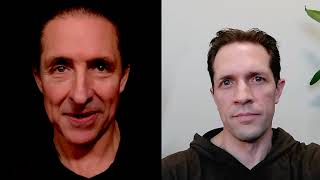
Bryan Gardner, a former SpaceX engineer, shares how he reduced his biological age by 3 months and maintains durability through targeted biohacks. He prioritizes gravity-altered resistance training, Zone 2 cardio, and meditation to balance being a dad, hedge-fund manager, and biohacker without burning out.
Chapters
You're listening to the Human Upgrade with Dave Asprey. Today is a smarter, not harder, Interventions day, and what that means is I'm doing the Intervention editions, which I've done for a while with members of the Upgrade Collective, where I teach you, our listener, about how to think about upgrading yourself. Since the newest book is all about things that work in less time to get targeted results, today we're going to talk about brain and nervous system function, fitness, even spirituality, how to get there faster with a member of my mentorship group, which is called the Upgrade Collective. I would invite you now to go to daveasprey.com and at the top there you can join the collective, which is a way to make new relationships with biohackers and just have more interesting awesomeness in your life, including being a member of the audience in the live studio audiences. So it's a lot of fun and I would love to see you there. Today's member of the collective we're going to work on and hack is named Brian Gardner, who's a former SpaceX engineer, a hedge fund manager, and has some interesting questions. Brian, tell me your story.
Dave, great to be on and I'm looking forward to this time with you. So put simply, I've always had a fun time with playing, having fun with our bodies, with our minds, all that kind of stuff. And the. I reached out to the biohacking group, to the Upgrade Collective in particular a while back, because there are the biological pieces of what we need and that stuff you can get from books. But community is an important piece. But the one of the things that's been fun about this is finding that we can control our biology and the things we do, the choices we make, can influence our energy, our viewpoint, our perspectives, and that ends up impacting our productivity and our overall happiness. One thing that's been fun is being able to learn how to track what we hack and measure those things. Calendar says that I'm 44, but biologically I'm 34, and I actually got about three months younger last year, at least according to True Diagnostic.
You're killing it. That's like 25% of your age.
Yeah, it's been fun. And one of the things too, and this was purely came from the hacks and strength and such actually being a key to longevity more than an endurance and cardio. I'm actually now stronger than I was when I was 26. I very clearly remember putting my benchmark saying, when I'm 45 back when I was 25, I. I want to still be bench pressing these weighted dumbbells and such. And I am now, as of about a year ago, dumbbell pressing harder than that. And I. I don't have the endurance that I had back then. I can't just get on my bike and ride a century in five hours. But those things just take more time. And this comes to the smarter, not harder piece is I have other pursuits other than spending hours and hours on my bike or on the trail running. I still want the practices that have kept me strong and young for this long. I want to keep those going, but I want to put more time into other things. And that becomes, right now, it's my girls and my hedge fund and wildfire. I want to get the. The wildfire problem solved. So those are the. The focuses that I want to keep more time for and less time for for riding my bike a hundred miles.
Got it. Uh, your goal, Six pounds of muscle mass. Tell me what you do today. That's your muscle program.
So there's that. £6 is a piece of my goal. I want to add that on. But mobility and durability against injury is my. That's really my top goal. And injury can come in many forms. So I'll actually use a very recent, immediate example. Just over Christmas break, I was back with my brothers on the second of five boys, and we were having fun. I was walking on my hands, and I flopped over and dislocated a rib. So that put me out for about three weeks. And I lost three and a half pounds over that three weeks because I couldn't go do my exercise and such. And it took me two months to put that three and a half pounds on, and now it's gone. And that's. So the getting injured, it can take you from being where you are. And I used to be able to bounce back, like, 10 years ago. I could bounce back from that kind of injury real quick and no loss. But now I have to actually work to regain endurance. I have to work to regain strength. And so even though I'm biologically 10 years younger than I am on the calendar, there's. That's not measuring everything. That's not the whole story. So I want to keep myself as young as I can, and I think a big piece of that is being resistant to injury. So I think a lot of that comes to not just muscle and strength, but keeping my tendons and my joints strong and my mobility strong. So those are the. Those are my physical focuses. I don't need to bench press more. I just. I want to be durable and this.
Is such a powerful nuance and it's definitely something that, that I talk about within the context of smarter, not harder. And one of the things that makes you more resilient is having enough muscle mass. But just having big muscles, ones that you don't know how to use isn't, it's not going to meet the goal you have. However, having enough muscle does make you more resilient in general. So right now, as I understand it, you're doing one 90 minute hot yoga session a week, plus once a week bodybuilding and that's 8 to 12 reps, like once a week. And then you also doing weights one day a week at just two to five reps. So this kind of weights two days a week.
So this is where I've sort of clued together my best guess at things. So the strength has a lot to do with longevity and that's less than five reps, you're, you just can't push that fourth or fifth, the fifth rep. So I do that once a week and that has, I'd never had that in my workout routine before and that's, I see a lot of benefits from that. Then the bodybuilding, yeah, that's the 8 to 12 reps from what I've read and picked up over a couple decades, who knows how right it still is. That's going to actually put on the muscle mass. And I believe there's also some tendon and joint strength that's going on there. Some of that, that connective tissue strengthening which I guess is harder to measure at this point, but I believe that's probably doing something. And then the 90 minute Bikram yoga, hot yoga, that, that's the mobility, that's muscles you can control and the flexibility piece and I just walk out from that. So mentally, emotionally, spiritually cleansed, there's something else that goes on there and biohackers tend to not talk about that. But for me that's been one of the most powerful practices that I have in my life.
The mental side of yoga is definitely part of, part of biohacking or meditation and breath work which are all built into yoga. So what I'm seeing here is you have two old fashioned pick up rocks practices and because you're an aerospace engineer, you concentrated the rocks into iron plates, pick up more dense rocks, which is pretty good from a materials engineering perspective. But there are new ways from smarter, not harder to get a signal into the body. And, and because you're a similar nerd, I want to Talk about that first and we'll talk about injury prevention. What we are doing, whether we're picking up our max load or you're doing an 8 to 12 rep till, till failure. What's going on there is your body has proprioceptors in it and you could think of these like sensors that are distributed throughout, I don't know, a spaceship or something, right? So if something's going on at the end of one of the fens or on the head of Jeff Bezos's penis shaped rocket, that sensor is going to know there's a problem and send a signal to the mothership, right? And if it's a catastrophic problem, the sensor is going to send something more catastrophic than, oh, it's just a little problem. So in our bodies, our brain, our conscious brain is way too slow to deal with a signal delay of something happening at the wrist or at the elbow or the shoulder. So we have local sensing systems that sense where our body is in space. And they have their own distributed AI system in them. Each little mitochondria is a compute node that goes, I don't know, how much stress am I under? What's going on here? And then the joint itself has its own intelligence about how much it can handle. And if you tell the joint to do more than the joint thinks is safe or the muscle thinks is safe, the muscle will send an alarm signal to you that feels either like I can't or it hurts. Now you have a MEAT operating system, and this is a new kind of way of thinking about it from smarter, not harder. By the way, if you're listening to this going, what? You should read Smarter, not harder. So you can go to anywhere books are sold and buy Smarter, not harder. And this will make more sense. And I read the whole book to you. And if you like my voice, you're listening, you probably do get the audio version. And then there you go. Anyway, the MEAT operating system, it's in there and there's about a third of a second delay between when reality happens and when your brain responds to reality. And it can range from about 250 milliseconds a quarter second if you're young or if you have an unusually, we'll say, modified nervous system like mine. And as you age, it gets slower and slower up to about 350 milliseconds. So a quarter to a third of a second delay when your operating system's in charge of. So when you go to pick up that dumbbell, what's going on is all of the sensors that are distributed throughout your joints, throughout your muscles, ligaments, and there's more density in some areas than others. They pick it up and then they sense gravity because Instead of weighing 10 pounds, they sense that when you wobble, what's the force? You're in aerospace, you know, the force of gravity. What's the force of gravity?
Now the 9.8 meters per second square is the acceleration.
Well, there you go. So force equals mass times acceleration. So there we go. So it's going to effectively weigh more from the perspective of your arm because it's in motion, right? So what that means is that the proprioceptors know that when it wobbles a little bit that it might weigh a lot more than ten pounds because all you have to do is move it and it'll appear to weigh more. Right. So it holds back and says, I know I could be injured. So if you are able to pick up £100, it's going to stop you when it's time to pick up £40, because it knows if £40 wobbles, it's going to feel like £100 and then you might get hurt. So you can't really get a full signal into your muscle even if you're doing. You know that that three to five things, your maximum things you can do because your body is protecting itself from gravity, because it can feel gravity. So what I would propose you do both for injury product, injury protection, as well as just putting on muscle more quickly, and the studies are in smarter, not harder, is you could remove gravity from the equation as a very important variable so you can hack your proprioceptive system. What do you think?
I'm curious. I intentionally do free weights and dumbbells when I'm benching, not a machine, because I want the stabilization muscles, not just that over strengthening that one direction, because I think that's where you, you get yourself. If you get too strong in one spot but you don't have the stabilizing muscles in place, then you're. That's where you set yourself up for hurting yourself.
You're right, you want to do both. But if you were looking and saying, well, I'm probably not going to do both, I think that there's a case for at least having enough muscle mass in the first place. So if I had a choice between the two, I would do the thing that causes me to put on the minimum necessary muscle in a very small amount of time without gravity. And then I would look at systems that get a signal in that include the corrective Muscles. And the highest return on investment for putting on muscle is an AI driven machine like at Upgrade labs, where you're fighting against a computer system that can modify resistance at will. And basically your proprioceptors won't get triggered and you can put huge amounts of force into it. The huge amounts of force increase strength of ligaments and bones very provably. So you get stronger ligaments, you get stronger bones because they're taking on more load than they could otherwise take on. But you might not be close to an Upgrade Labs.
Yeah, let me actually, so I went to an Upgrade labs. I was down in LA and there was one at the bottom of the place. So I went on down there, made it a point and I pushed on that thing and then I did my, my leg press. So you push and you pull, you do your leg press and I, I broke a thousand pounds every time that was coming back on me on my legs. It was six days later that I got back here, went to my gym and I picked up those dumbbells to do my bench and put them back and pick up the next setup and put them back. It put me £10 up in six days. And that was exciting and scary at the same time. So that's the thing that I haven't gone back to do it yet. I want to, but it comes back to that stabilization muscles. And if you don't mind me thinking out loud a little bit so it sticks in my head, the hot yoga, that's about control, that's all stabilization muscles, that's not strength. And there's also just a lot of mental energetic cleansing that I experience there. So maybe this, do all of them, not all at the same time is the right recipe. But when I'm doing strength, just do strength the way that I've seen and felt that it works phenomenally.
So I would argue that, okay, if you did the cheat machine and you were able to go up two dumbbells from that, it, it's unusual, but what that means is that your existing workout regimen wasn't that effective because you could have gone up substantially. And what you'll find is that your meat operating system in every person has settings that are far, far too conservative that prevent you from, from doing what you need to do even in an emergency situation. So if the body's convinced that if there's more than, you know, 40 pounds of pressure on your wrist, that you're going to get injured and be hurt, as soon as there's an emergency you fall on your wrist, it's going to stop working at a certain point. Whereas if you actually show it that it's going to be required to be able to work beyond that, it will strengthen, even if it's a very rare signal, once a week, once every couple weeks, which is one of the arguments for that. But the other argument or the other technology to use that I think could be helpful for you. And in addition to dumbbells, or sometimes maybe instead is resistance bands, because the slope of the curve of resistance for resistance bands is radically different than gravity. So now the proprioceptors are saying we're confused. We're not sure exactly how strong we need to be because this weird resistance thing, it doesn't move the way gravity does. It doesn't accelerate at 9.8 meters per second squared. And the double layer bands, they have different characteristics of it, like where in a curl you're gonna have more or less resistance, or we're in a squat. So your connective tissues, your ligaments, your tendons and your muscles all have to adjust in a new way. So what you're doing is you're sending them a funny signal. They're not used to funny signals. They're not used to, especially ones that come on and off rapidly. They drive adaptation to a wider range of environments, which is basically less likely to be injured.
I, I like that. But what do you say no to? And I, I come in here knowing that there's going to be, you know, do this, add this, add that, add that. Let's also get to what do I remove and take away?
The whole idea of smarter, not harder is that we want to free up time every day. And it's totally fine to say no to something. It's also okay to have a stack rank list that says, I have a half hour today and these are the most important things. I'll do as many of those as I can. I get to the end of that time and then whatever I didn't do, I didn't do. And that's okay. A lot of people do fall into perfectionism. I have to do the same thing every day, the same thing every week. You don't. You want to about every seven to ten days do this. And if you felt like it today, you didn't feel like it tomorrow, it's all right. As long as you're tracking that, you're doing it over time. So right now, your trail running around a lake one to four times per week, how much time do you spend doing that?
Usually it's 20 minutes minimum. And if I have the luxury of 45 minutes or an hour, then that's what I do.
There's definitely a way to get more return on investment for that time. Trail running, number one, most people who run over time get injured and stop running. It's a very common thing. Trail running more so. So number two, the rate that you run really, really matters. And if you were just looking for cardiovascular instead of nature and spiritual and sunlight and all that stuff, I would tell you there's some really powerful stuff at upgrade labs and inside of the book, things that you can do even at home that get you more return per minute. But that's not why you're doing it. What I think might be helpful for you is the section in the book on Zone 2 training. Zone 2 training is a type of training where you have to have a heart rate monitor and a very specific rate of exercise that's in a narrow band. And when you do zone two training, you can still be outdoors. You're, you're walking slash, maybe running really slowly, but it's at a pace where you, you can talk to someone and, and not be too out of breath, but it has to be precise. And when you do this, and it's based on a percentage of your maximum heart rate, which is determined by your age and a few other things, you put your mitochondria in a state where they're generating heat and they're burning fat very specifically. So it's really good for your mitochondria and it helps with your respiratory capacity and your metabolism. It helps more per minute and you're probably running a little slower and you're less likely to be injured than you are with your current trail running. So you can still do trail running. You just have to use Zone 2 trail running, which can be more meditative anyway.
So slowing down is actually doing more for my body.
It's sort of like slowing down is good for a rocket. Well, yeah, unless it slows down too much and it falls. Right. So what you're looking to do is there's a very narrow range of performance where there's a, a metabolic window. And I described that over the course of a couple pages in Smarter, not Harder. It's called Zone 2 training. I certainly didn't invent that. It's just provably better than chronic cardio in terms of improving metabolic performance. So for the ultimate in V2 Max, it's actually a modification of high intensity interval training called rehit, which is easier to do with AI, but possible to do by yourself. And then for longer term, you get the most metabolic benefits from zone two. And that combination is interesting. But now we get to the saying no thing. How you say no. What you want to do is you want to say, what's my biggest goal here? And you have multiple goals, and we all have multiple goals. You need to do some deep questioning to figure out which of these matters more. For instance, if I said which, which is more important, cognitive function or managing stress better, what would you say?
Managing stress because your cognitive function. So what if you got that whipping like a lightning if you're distracted by other things?
Got it. So I like your answer. And there are other listeners who would say, are you kidding me? Like, I don't, I'm not that stressed. I just can't remember stuff and I really need to fix my brain. Right, so those are different weights for you. And then we go through the same thing with multiple questions, asking different examples, and we use a statistical model to figure out what's your actual goal versus being healthy. Right. And that helps you know what to say no to. It also helps you know what to say yes to. Because if we can stack, rank your goals out of cognitive function, out of energy, out of weight, out of muscle, and we know yours, I can also say, that's funny. If you do something that improves your, your cardiac function, improves your cardio metabolic rate, that also has two bonus points for your brain and three bonus points for stress management, then we can run a little math model and say, that's funny. If you do these three hacks, you're going to get the highest return on investment and you're going to actually save three hours. And then every time you exercise, you say, not, I'm going to spend a half hour exercising. You say, I'm going to save three hours. And the motivation of saving money, your, your nervous system, your meat operating system, it actually values saving. It values laziness more than effort. That's why the, the coupon is worth more than it says on its face. You save 20 bucks on something. No, you spend 80 bucks on it. But you're like, yeah, I saved 20 bucks. And it feels so important. That's your inherent laziness that's making you overweight savings. So for me to exercise, I only think about how much time I saved exercising. So that way I actually will exercise. Because if I thought about how much time I actually spend exercising, gross. I don't want to do that. I have other things to do. So you've talked about, you know, resilience. You're looking at longevity and physical health. But you also, in the pre interview for this, you're looking at maintaining presence with your daughters and having quality time and all of that. So you're looking for hacks that let you do that. Tell me more about what you're doing, what you're looking at.
So I'm super dad. I always have been. I have a, a very fun play ethic. One of the mantras or whatever that I've lived by since way back in high school was do the things you want to do first. And the things you have to do, if you really have to do them, you'll get them done. And for the most part that tends to work. And then there are some things that have to be done that finally I eventually get done, like taxes, just barely before they're due. But with my daughters, I, it's fun being with them. It's so fun seeing them grow, seeing them learn. And that's like, you know, you enjoy coming and doing these interventions. You enjoy building yourself and you enjoy building others. And my first book, Hired Minds, was working with engineering students and developing their careers. What do they actually want? And it was, it was really fun. I do half hour interviews with them. So other people, people developing and growing is very fun and I enjoy that. So for me it's easy to just, it would be fun and easy for me to just be a stay at home dad and have all my attention absorbed in my girls. So that's one of these things of I have to budget how much attention I put into being with them and planning what I'm going to be doing with them. And then there's also then the, then the hedge fund piece. So this comes into where I have a easy time getting excited about things and getting really into it and being focused where I am. So people have the adhd. I'm the opposite. I have hyper focus and I'll hyper focus into something and then hyper focus into another thing and then hyper focus into another thing. And the discipline of cutting off, saying I've run my budget on how much I can focus on this is, that's one of the places where it is, it's not intuitive and I've built systems and structures to help me do that, but I need those systems and structures. So that's not exactly an answer, but that's the, the bigger life life piece. I have the presence, but I need to keep everything balanced.
Is there a difference between having to and needing to? Because your language always, as far as I've heard it here you'll switch from one to the other. But when you talk about these things that are. That you feel as duties or obligations.
Have to and need to are the same, those are synonymous in yeah, right.
And I don't think you're actually conscious that you're doing it because your meat operating system has to save you electricity in your brain. It's just a computing algorithm shortcut. And it's saying, oh, rather than solving the full equation, I can just use this approximation, which is have to. And then it feeds that to you. And then you're like, oh, yeah, I have to. And then you believe you have to, and you stop going, actually, you know what? Like, I really wanted to go play soccer with my daughter. I'm just going to go do that. So what I found is that the practice of cultivating true integrity in my word, where I don't say things like, I can't pick you up at the airport, I say, I'm not going to pick you up at the airport, I'm busy. And it calms your nervous system. And there's actually a couple studies that I've cited, probably in a blog post or something, where it actually shows that that level of truthfulness creates neurological relaxation and resilience. So one of the things that's coming out from our conversation around developing spiritual resilience and being able to balance time more effectively and balance energy more effectively is never feeling like you have to do something, always feeling like you choose to do it consciously, which takes it from the reflexive I have to or I'll die into the I chose to cognitively. And it raises the level of processing power that your brain will put into it, if that makes any sense.
It does.
The idea of the spiritual hacks in smarter, not harder is that just like with exercise or weight loss, some things are more effective than others. And some people get really triggered when you say, well, some kind of spirituality is more effective than others. I don't mean that your belief systems are more effective than others, although likely there are some belief systems that are more effective than others. But that's not what I'm saying in this one argument. What I'm saying here is that if you're looking to reach a certain spiritual state regardless of your belief systems, there are techniques that work better, like breathing. Plus meditation instead of meditation for most states will get you there quicker. And there's probably a few states where it doesn't work quicker, but not that I'm aware of. So, you know, you, you, you look at all these things, you look at all these different technologies, things like the Brain Tap. It's going to put you in these states faster most likely than just doing it on your own. Unless you're a true adept, at which point you've probably already used the Brain Tap at some point. And for listeners who don't know what that could. Braintap is. No, it's not Neuralink. It is. It's a device made by Braintap that uses flashing lights and sounds and meditation soundtracks. And there is a Dave Asprey track on there where I teach a form of meditation and even lights over your ears so that these lineup inputs your operating system so it starts resonating in a certain frequency based on what the Braintap device is doing. It's a very modern take on what started with Tibetan bells ringing at different sounds in each year thousands of years ago and has evolved ever since.
You know if I can plug for Brain Tap as well, because I. I haven't done them as consistently as I want, but I've seen so many positive effects. But actually it was just yesterday morning. I had the day before. There was a. A difficult, inconvenient interaction. And some of those just that they come up and you have to be able to deal with those. You need resilience to those. This comes to the spirituality piece and I was doing my morning brain tap just 10 minutes and coming. It was probably the last 30 seconds of it. My mind shifted to the state that I needed to be. And I was able to see the forward path of the continuing relationship. That is it's an. I'm not going to get away from interacting with this person. But I was able to shift to where I needed to be. And then the. The fear, the meat operating system, the anxiety of knowing that this is going to come up every other time it shifted out and usually I get there, but it happened over. It was brain type got me into the state that I was able to shift there much quicker than journaling and breathing or meditation and such. And it's phenomenal. It works for me.
Wow, that's so cool. And it's an example of the different things that are in the book. It's like, look, we all want to spend time accessing altered states of high performance. And some of those are reset modes inside your brain. Some of those are exalted states, some of those are flow states. These are just like putting your Tesla in whatever ludicrousness mode, right. Like you wanted to be able to do that. You just didn't download the thing yet. And it's possible to do that and it's possible to spend meaningful amounts of your life in states that you actually have never experienced so far. Right. And we can all do it. It's just usually the path to get there isn't what you think it's going to be because the, the knobs and dials aren't labeled. And how would you ever know? Well, turn this KN you don't know exists to level 7 and turn this one over here, you know, to level six. And like, what? This doesn't make any sense. I don't even have any knobs and levers. What the hell are you talking about? You know, you're some crazy person in a temple. You know, leave me alone. And I certainly have done that as a, you know, computer science hardcore rationalist earlier in life. I just was like, oh, wow, with a little bit of tech I can find those states. And it turns out I'm certainly not the only one. There's a rich history of meditation, people trying to figure out how to get there faster. So the first guy said, you know, if I stare at a candle, I get there faster than if I just stare at the cave wall. Well, there you go. He's a biohacker, right? There's thousands of years of scrolls in caves about how to meditate faster. Right. So it's not like this is anything new. We just happen to have a little bit of different sensor arrays. So I would encourage you to keep playing with that and try the exercises in smarter, not harder, around the reset mode where I talk about forgiveness. And a lot of people say I'm not going to forgive someone because it's too much work, because they don't deserve it because they're a bad person. Which is a misunderstanding of the idea of forgiveness. It's that the act of forgiveness has nothing to do with telling anyone anything or condoning anything. All it has to do is turning the alert on your meat operating system off so it won't bother you anymore and take up electricity inappropriately, like it's an internal process exclusively.
You know, I've seen that and experience that actually work with it, having been there and intentionally going in to do that work. And then when it comes back, you know, something reminds you in, in the world and you go back there and it used to, it would be either a cringe moment where you remember that and ah, and that cringe sucks up energy, or it's that, that moment of the, the retaliation or the anxiety. And for me, you have to go really far before I feel any inclination to retaliate, but that, just that little spark of, of negativity and it's just not there when it comes back. And I've experienced that. And it takes work to get there, but it opens up, it opens up energy for the future.
Wow. Very, very well said. And that's a huge part of what we're, what we're doing around, around the whole, the whole biohacking movement is like, how do we make it so we're taking less energy in order to do something? And people don't understand it. If you get triggered by anything, it's your fault. It's not the other person's fault for triggering you. It means you have bad code in your operating system. It means that you're walking around with a loaded gun if you can be triggered and you should take the bullets out for your own sake because carrying heavy bullets around you're not ever really going to do anything with is just a waste of time. It's been really fun chatting with you and looking through your engineer's mindset on this. I mean, you're doing phenomenally well. You've already achieved a 10 year difference in your biological age and you're now thinking about resilience and longevity instead of like get swole, which I think is, is a sign of long term planning versus short term benefit. And you're asking the really hard questions that a parent asks. You know, how do I allocate time to my own energy and have enough to do what I want with my kids and with my community? There always are trade offs in my experience. And there's also a way to make those trade offs with joy instead of with having to or needing to and to do them consciously instead of using the lower power systems that make fast decisions without consideration. And you're well on your way to doing it, which is really awesome.
My biggest takeaway from this is I will get better and better at that art of wanting to versus having to and needing to take my operating system out of that fear driven mode.
Thank you for taking your time. Thanks for being a member of the Upgrade Collective. And if you're listening to this and you're going, wait a minute, you mean we have like smart aerospace engineering people? Yeah. We also have tons of people from all kinds of different backgrounds in the Upgrade collective who are actually listening to and chatting with each other during episodes of the show. So if you're looking for an active community that's a lot of fun, go to daveasprey.com and there you'll definitely find links to Smarter, Not Harder. But you'll also find a link to the Upgrade Collective, which. Which is the membership group where I answer questions and you really get to tap into my brain in a different way than Braintap. I'll see you all in the next episode. Thank you.
Thank you, Dave.
You're listening to the Human Upgrade with Dave Asprey.










