EPISODE #1023: Acknowledge Your Limits/Get Your Brain Back – Interventions with Dave – Cindy Fraley
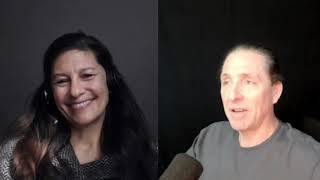
Dave Asprey works through a biohacking intervention with Cindy Fraley, a member of his Upgrade Collective. They review her health progress on inflammation, calcium scores, and cognitive function, drawing on strategies from Asprey's book Smarter Not Harder.
Chapters
You're listening to the Human Upgrade with Dave Asprey. Today's special interview of the Intervention series takes biohacking to a different level by using hack targets from my new book. If you haven't heard yet because you've been living under a rock, smarter Not Harder is out. This is the book that's there to save you the most time and give you the most energy back that I know how to do using biohacking. And what I do on intervention episodes of the podcast is I work with a member of my mentorship and membership group called the Upgrade Collective. The idea here is I'm going to help an individual person solve their problems using their goals based on where they are today. You learn from listening to this because you're, oh, I have that. I don't have that. But the line of thinking is, this is how to be a biohacker in the way you solve problems. This is the first time I've done what I'm doing today, which is when I visit back in with someone who has done some of the work. Our guest Cindy today did an intervention on episode 915 to look at inflammation and see what that was doing to her and what she could do about it. So we're going to check in with her progress and then look at what future upgrades are possible using the framework that you learn in Smarter, Not Harder. So, Cindy, welcome back to the show.
Thank you so much, Dave. Just gratitude, excitement, just pure joy already.
Thanks. So what's going on? How are you and where do you want to go? Just give me the background. What's going on?
Wow, Dave, where do I start? I will say that I'm shocked. I didn't realize I was gonna come out of this feeling so dangerous.
Oh. So I'm guessing it worked.
It worked. And I followed, I think, just about all of your recommendations. And as we see, just the smallest intervention makes such a huge impact.
You had a pretty high calcium score, and a calcium score measures how much calcium is in your carotid arteries. This was a carotid calcium score. If I rem. Right. Right. There's one they can do on your heart as well with some kind of imaging. But, like, you can tell I'm not a doctor, not a cardiologist, but I understand calcium, so that's a high score, which means that you could have not just a heart attack, but you could have the kind where the plaque is calcified. It's basically like a rock blocking part of your heart. You had low thyroid, and you had a lot of questions about it. So what did you do?
Well, first it was reality check. Very humbling. You graciously held my hand through the distance and told me to get my big girl panties on and quit stressing and worrying that I can't control that. And so say effort and get on with a fabulous life. So I think the first intervention was meditation and gratitude, which you the collective that you have just so many resources and that's the personal accountability. I had to hold myself accountable and those around me. So only have positive around me. And if it's not a positive day, I turn that around. So first thing is gratitude meditation when I get up. And you have to have that before you go to bed. And that gave me the clearer outlook and energy. Then to tackle the glorious suggestion of the butt Nuggets you shared.
Butt Nuggets.com Someone register that. So clarify for our listeners there, because sometimes I have to talk about buds to do biohacking.
We always do the butt nuggets. That was the EDTA chelation suppository we had talked about. That IV can be very expensive and pretty harsh on your body. And you again counseled and held my hand to say, you know, there's a gentle, easy way. I didn't get here overnight and I've got to put the work in over at least a year. And so I mapped out using the suppositories. If I remember correctly, you also recommended that I really watch my mineral vitamins, Calcium, magnesium, making sure I was supplementing. Right. So I did a lot of IV oral supplementations. I added H spot to help with the.
That's hyperbaric. And for listeners to the butt nuggets, there's a way of reducing calcium in your arteries. It's controversial, but it actually shouldn't be. And guys like Steven Sinatra and Julian Whitaker have been talking about this for 30 and 40 years. And it's a compound called EDTA that you can use intravenously that will pull calcium and all the other minerals that your body actually needs out of your blood. So it's useful for things like lead poisoning and things like calcified arteries. Even though some doctors, when you say the word chelation, they get triggered like a vegan seeing you eat bacon. If your doctor says, I've had clinical experience with it and I don't think it works very well in your condition, that's worth listening to. If the doctor says you're a bad person, because you asked me, that's a doctor who needs a therapist. Now, for those of us who have Decided that we want to try this because we have toxic metals or a calcium problem. And by the way, it is our decision, no one else's decision. Then you could do it intravenously or you could do it via the rectal route where they make suppositories that do this and it's more affordable to do that. And it will pull lots of metals out of the body. And that actually can be a problem over time when it pulls the good ones out. But you started using it and what happened? How's your calcium score? Give me the update. It was about a year ago. Right.
I haven't had it. Although I shared some of my previous lab work that my inflammation markers have improved. And then also I think more importantly, when I was looking at those micronutrients and vitamins, I kept those under control, improved quite a few. There's still, as I said, improvement. I will put a caveat. When I was going to start this, I went to my have a functional doctor, shared what I was going to like, wanted to do. And she's like, we don't do that. We don't support it. And so I pushed back to say, how can you support me? So she was willing to do multiple lab work and see how to somewhat support the other interesting is a couple of the Upgrade Collective members reached out to say, hey, what can we do with you to support you? So I'll call out with this method, you have to make sure you don't have fillings and I'm sure there's probably other situations you shouldn't. I was able to just go ahead and jump right in and also appropriately timing detox and sauna sessions with all of your guidance reading, researching. It took me probably three to four months to really get everything lined up, get a schedule. It's a very hectic schedule, but worth it. I didn't have any of the, I guess the detox reactions that a lot of people share. So I felt like it was a natural part of my life now. Yeah, There were some days where my body just says, I don't want that up there, down there. And that was a night or two I told took off. So listening to my body.
Thanks for bringing that up. Yeah. There's times when the part of us that knows that pushing through it is what strong people do. Because someone told us that when we were seven or whatever. Yes, having grit and willpower are super important and just not falling over at a gust of wind. So you've gotta be tough. There's also a time when allowing Your body to recover from the last procedure you did before you do the next one, where that's actually the right thing. That's discernment. It's learning how to not over detox, how to not even over hack yourself or just over train or over fast or over keto or even go over vegan. You can do all those things.
Yeah. So that was my little motto of gave yourself a push us and guide us. Still get your big girl panties on, but yet you were like, take your time, you know, your body. So I had two messages from you always in my mind. So probably six to eight months of the suppository, the supplementation, the sauna, definitely hitting hard into meditation and building upon, you know, at first I could only do five minutes, and then when I felt I could really more effectively use it on an airplane, at the airport, you name it, I was trying to incorporate the beautiful.
What form of meditation did you use to bring the stress down? That's a part of the whole equation.
A couple of factors. First, I was new, so I had to use guided and part of the upgrade collective. Added a lot of support. I have a couple of different apps. I have now the heart math, so I could really, you know, if it's a quiet scenario, I'm in the middle of an airport. I just need to focus on the quietness of my breathing.
Then I do it for listeners. Guys, HeartMath is an interesting company. I started working as an advisor for them in 2008, and it's a company that has an app that goes on your iPhone. It looks with a little clip. That's a clip to your ear at the space in between your heartbeats. I've worked with a lot of clients when I really saw clients individually, including one hedge fund manager who finally started doing it after a lot of me harassing him to do it. And then he did it every day for six weeks until he learned how to take himself out of fight or flight response, sat down to trade during the day and found that he was in fight or flight response the entire time the market was open and had to go in and trade that. So it turns out there's an invisible setting in your body where you can turn off your stress response, and you're now working with that. So you go to an airport, which is a stressful place by definition. And I've never talked about this before, but I did the same thing until I got to the point where I can turn on. I can turn off that fight or flight response and do heart rate variability Just on demand, without the hardware. Once you learn the signal, you know, it's. When I go to airports, I always do that extra because then it's just easy to go through the airport versus showing up all, you know, hurried. Then I swear the TSA agents invisibly pick up that you're stressed, and then, you know, they'll just ask to look at your bag. I just feel like I kind of sail through. And maybe it's all self deception, but I think heart rate variability is amazing. So you're doing that?
Yeah.
And I'm looking at the labs you shared with me from. Let's see, last. The last lab you had was in August of 2022, and you have a new one from four months later. Right. And some interesting stuff happened. You are much less insulin resistant when you started out. There's a score called lpir, which is called insulin resistance score. And there's a bunch of different labs that do this kind of thing. This one from LabCorp. But when you did this four months ago, you were in like the 50th percentile. And by the way, that's pretty crappy because 88% of people are metabolically unfit. So you're the average of everyone who's, like, broken. You went from there in four months, doing what we talked about. You went from there to 29, which is, well, less. Let's see, that's about the 25th percentile. So you basically moved very, very far into the I'm metabolically healthy range. Uh, so congratulations. That was a four month major shift. You dropped your, your HBA1C, which is a marker of how much sugar you're eating and whether you're likely to get diabetes. You went from 5.5 to 5.3, which is pretty cool because pre diabetes is 5.7. So in four months, you shifted. So you, you've had, you've had some very positive shifts. Your, your metabolism's improved in four months of doing biohacking. I mean, you've been doing it longer than that, but the four months from these labs. But what I'm, what I'm not seeing here is we don't know what your, your calcium looks like at all. And I'm just seeing all of your results here. Yeah. You just don't have a measure of it. So given that was your primary concern and you've done a chelation for long enough to see a difference, why don't you go back and get a calcium score? It's actually scary. Many people, even people with cancer, they'll Be like, I just don't want to know the results. It's not that you don't want to know, it's that your meat operating system doesn't want to know. So it'll make up all these reasons you can't go get it. So there's a fear in there, and that's okay. Fear is a real thing. It just feels bigger than it is to to us because we sit inside the operating system. The operating system tells us how scary something is and then we believe it. But if you ask yourself, well, it's just a test and it's not a moral failing, part of you doesn't want to get a calcium scores because you might not like what you find and then you would have failed. Do you know what happens to people who fail? No one loves them. They get kicked out of the tribe. Tigers eat them and they die and no one even buries their bones.
Oh goodness.
Okay, well, that's your meat operating system thinks, and they're stupid. Like your body is fast and dumb and you are smart and slow. So it's that feeling that's like, don't look, don't look. You might not. What if it doesn't work and you can just tell that feeling to go stuff it and order your damned labs.
For the mineral test, is it better to do blood, hair, urine?
Oh man, there's so much debate. I'm gonna say for mineral testing you should go with what your functional doctor is most familiar with. Hair tests are notoriously unreliable if you just look at how much is in them. But hair tests are reliable. If you say, well, what I'm seeing in my hair is a reflection of what's in the body. With proper interpretation, they're good, but a lot of times they're not properly interpreted. You can look at red blood cell minerals, which is kind of useful except, well, what if you have a ton of copper or a ton of magnesium in your muscle but not in your blood? Again, it's an interpretation issue like that. And then urine. Well, what are you peeing out versus what are you holding? You can take someone who's mercury toxic. There's no mercury in their pee. That's because they can't excrete it. You give them some B vitamins and methylation things and then they pee a bunch of mercury out. What the heck? So I'm going to say they're all relatively variable and subject to interpretation. You want to work with a functional medicine doctor who is trained on dealing with metals and work with their testing regimen. I would like to tell you, just one test works. Hair tests, urine tests, and blood tests are all available at home as well if you want to do it yourself. But it's very nuanced is what I can say.
Okay.
All right. What you're doing now, that's new. You've done some things, actually, that I mentioned in Smarter, not harder. You've done 30 rounds of hyperbaric. What was that like?
It was relaxing for me. I'm not claustrophobic at all. So it was almost a sense of peace. And I just felt like this is what my body needed at the time. Try to do some meditation in there. And I'm not sure. I always felt good after. Slept amazing that night again. There was so many things I was doing. It's hard to tell what's working. I just really wanted to just go all in, because when I started this journey, I was scared to death. I wanted to live. So I was like, whatever is within my means, bring it on.
It's funny, there's an implied belief in what you just said that one thing is working. We have no data that one thing is working or one thing will ever work. It's a shortcut that we make. In fact, it's part of Smarter, not Harder. And yes, I keep reminding listeners, you really want to get Smarter, not Harder, because I want you to read it for your own benefit. But the meat operating system in there causes us to make intellectual shortcuts that use less electricity. It's really easy to think about one thing being a cause. It's just less work that way. So it makes that approach just feel like the natural and attractive approach. The reality is very, very different. If I told you I want you to test and see if bread exists and you believed what you already believe about biohacking is that, well, there must be one thing that works well. What worked well? I baked water, I baked yeast, I baked flour. There's no bread. Like, what's the one thing that causes bread? There is no one thing that causes bread. What's the one thing that causes anything in life? Oh, my God. That's an intellectual shortcut. That is dysfunctional. Anytime you're dealing with systems biology, which is all the time you're alive. So what I'm going to suggest is that what you did was the one thing that worked. And of course, what you did had multiple components, just like baking bread works. And you could say, was there a more effective way to bake the bread? Was there a more effective way to get the results I wanted? Maybe and maybe it had less variables. Maybe you work with what you did differently. And that's the whole thesis behind Smarter, Not Harder is that you want to get the results with the least possible work. Why do you want to do that? Because your hardware, your meat operating system, is lazy. It doesn't want to waste electricity because there might be a famine. And that's a good thing. You don't want to waste electricity because that also means wasting money and time. And you had other things to do with your life. So what's your next goal? There's five big goals, and I think you're well on your way on your initial goals. The five big areas, the hack targets and Smarter, Not Harder, that I help people navigate through, putting on muscle cardiovascular performance, getting their energy back or losing weight. Same kind of a goal, actually. They go very well together. Uh, and then there's stress management, and then there's cognitive function. So what would you score as the highest? What do you want to. What do you want to do next as you continue on the path you're doing?
Cognitive function. I think I was in denial of how tired and how foggy I just felt. And with that little bit of change, I was like, wow, so now I want to tackle, like, bigger projects quicker.
You got some of your energy back. And, like, I remember what that felt like. Right, right.
Yeah.
It's funny, if someone really slowly dims the lights over the course of a day, you won't see it. And at some point when it's almost dark, like, why can't I see? And they're like, what the heck? This is what happens in our lives. I just had it happen to me in my mid-20s. So I became an expert at noticing whether the lights were on inside my head or not and then learning where the dimmer switches were. And what's going on now is you're saying, okay, I want that brain back because you like your brain, which is good in the book. In Smarter, Not Harder, there's a section that is very specifically dedicated to improving cognitive function. And some members of the Upgrade collective have done, you know, the big gun stuff, like 40 years of Zen with neurofeedback. And I recognize that that is a big expense. Here's what you can do for your brain. If you're not going to have access to stuff like that, it's possible to find a local practitioner. You want someone with exceptional experience who's done a lot of neurofeedback in order to work. It's very easy. And there have been companies out there who will just sell you a system and sort of like, oh, it's just like a pop up. You don't need much training, we'll just do it. I have seen harm come from stuff like that. So you just want someone who's truly an expert. They're very rare, but there are great neurofeedback practitioners out there and you usually come in like for therapy, like an hour, once a week or something. And you'll see shifts. You just wanna make sure they're the shifts you want. That's always my concern. I've had some very bad neurofeedback from people who claimed to know what they were doing. I've also had some amazing neurofeedback, but you could for at home try something like Focus Calm, which is an EEG biofeedback system that teaches you to be calm while you're playing little video games. Because it's one thing to be calm, it's another thing to be calm while you're doing stuff. Right, right. And it's an interesting tech. I write about it in Smarter, Not Harder. I talk about Muse, which is probably the best known home neurofeedback. All of the home neurofeedback systems suffer from just poor signal acquisition because they have to be easy to use. For some people it works really, really well. For other people, it just may not be the right states for you. So for a beginning meditator, you could try those two things. There's also a company, actually a company I'm going to have on the show here shortly called Mendy. And this is based on heg, which I write about in Smarter, Not Harder. And HEG is something that I really talked about in the early, early days of the blog. And this is when you shine an infrared light or a red light into the front of the brain and see how it bounces off of red blood cells. And based on that, you can get a signal for how much blood is in the front of your brain and you can consciously learn to move blood to the front of your brain. How is it that I can do all of the things that I do with a seeming effortlessness that people always talk about? I'm actually not working hard most of the time, but I also have, well, according to Daniel Amen's work, it's been a little while since I did my another scan, but I had something like three standard deviations less blood in my brain than average, which is a big risk factor for Alzheimer's. So I've worked on improving blood flow One of the ways I did that was by training myself to consciously and automatically move blood where I want it. What the heck? You can do that. And I don't know how to tell you with words, because there are no words to say. Move blood to the front of your head. It doesn't feel like anything, but I can say, play this game, and magically it works. So I used to sell something called the Upgraded Focus Brain Trainer in the first year of Bulletproof that did this. It was very clunky and hard to. Hard to use. Well, Mendy solved that problem and it trains your attention, so that can be really, really helpful, especially if you've had mold or you're having problems, you just kind of lose your train of thought. Okay, that's useful. I'm also. When. When you get into Smarter, not Harder, this whole list is there with all the different details. There are ways to use sounds, like targeted sound simulation on the body. You can do binaural beats. You can do something like holosync or center point, which are ways of using sounds to get into your brain. And you can run electricity across your brain. And what I'm just proposing here is I can't in one episode tell you all the stuff to do. But when you get into Smarter, not Harder, the Brain chapter lists each of the technologies, what they're good for, how effective they are compared to what you do today. Any of the things I just listed, which could be overwhelming if you're scribbling, trying to take notes. The notes are. It took thousands of hours to write them. The notes are called Smarter, not Harder. And yeah, I read the audiobook for you as well. But when you go through there, you realize, oh, I can pick one of these brain things, and this is what it's likely to do for me. And it's just better than closing my eyes, meditating and trying to have a better brain, which is what most meditation is, or relaxing and allowing the numbness of your betterness to do. Like, you know, there's all kinds of meditative loopholes you can do. I just think that if you have an hour of time to meditate, use something that's going to get you the results faster. You want to talk about some of the supplements from the Brain chapter as well? Would that be helpful for you?
Yes, please, please.
All right. I have written so many books about brain function, including Head Strong. So if you read that book, it's going to have a lot of stuff about how to enhance the two big facets of improving your brain. One of Them is turn up the energy already. Almost everything we talked about here does that. The other one is turn up the neuroplasticity already. If you could just get those two things to work, you're going to have a different kind of brain. All right, let's talk about some new supplements that are not in head strong. That's what got me on the tangent to talk about that because you need, you need to know the basics of those two. What I'm talking about here actually isn't much of those two. And these are supplements that I didn't talk about much there. So this is what's new here we have bacopa, which is a very, very interesting, interesting. Was it a shrub bush? I don't know what the heck it looks like. When it's in its wild state, I always use the powder and I've used it for a long time. But it's interesting because of its effect on dopamine instead of on the other neurotransmitters. Most of our cognitive enhancers are around acetylcholine and this is a different way of doing it. It's. It's a good one. So I talk about why that works and it supports a lot of the other kinds of biohacks, creatine as well. Especially if you're plant based or you don't eat red meat for some, for some reason you're gonna need more creatine, about 5 grams a day. It improves cognitive function via improving water, via improving cognitive, via improving mitochondrial function. So that's good. I also talk about oxaloacetic acid or oa, which is a supplement I've used for a very long time that restarts mitochondria that was in headstrong. The other one is something called the intellect tree or celastrus paniculatis, which I probably said wrong because my seventh grade Latin teacher probably didn't pass me in that. All I remember to say properly in Latin is morza ad latium, which basically means death to Latin. Other than that, I don't remember anything else, so I said it wrong. But this is a kind of tree that supports cognition, it's neuroprotective and it does work on acetylcholine pathways, but differently than the other things out there. So it's a relatively new to the world of biohacking. So if you were to maybe play around with some of those, you were to look at some of the brain hacking techniques. Most of the ones I recommended are under $300, which is the cost of a Couple hyperbaric sessions or something else. So they're within reach for most of us. Let's see Focus Comm. We talked about that. Yeah, I think we've got a pretty good, like, second level thing. And what I like here is this is the first time on the show you're progressing through this series, through the biohacking of your life. You actually had a health scare and said, all right, I'm going to get control of my metabolism first, which is one of the five pathways. And you're still working on it, but you got your tingle, sparkle stuff back. You got your power or at least a taste of it, and like a good biohacker instead of investing it on pizza and other things that are going to make you tired, staying up all night and drinking champagne or whatever it is you would do. Like, oh, I'm going to take this precious energy and I'm going to put it back into myself and you're going to put it into your brain. This is the path that I describe in the book. This is what I should have done. If I'd only known. By the way, all of my books could be titled if I Only Known. They were written for me when I was 20. Like, dumbass, you're doing it wrong. So what you're going to find is that most people are saying, I want abs. And what they really should have asked for was more energy, because more energy you can use to make abs. And if you do something for energy, you'll just grow abs anyway because you'll have less fat. And then they say, all right, I want to be stronger. Right? They go through these goals. But if you ask for more energy and you get it, that energy can buy a better brain. That energy can buy better abs, can buy cardio, it can buy stress resilience. But a lot of people won't do it. They won't ask for energy first or they feel like they have enough because they don't know what they could have. So then they're going to do one of the other hack targets. And I'm just helping you prioritize. So you, you have wisdom because you said, I want. I want to fix my metabolism first. And now you want to fix your brain. That's what I should have done when I was 19 or 20. It isn't what I did. I actually said, I'm going to fix my body first. And I went to the gym for 702 hours. I'm still getting even for that. Which is why smarter, not harder is there. And thank you for Being willing to try this stuff in there and for reporting back. It's pretty cool.
Thank you for your guidance and just the knowledge to get started. And it gives me courage. It still gives me hope and next steps. So thank you.
Well, let's replace hope with certainty.
Okay. I like that.
Do you believe that there is another level of energy? You could have another level of focus that is possible.
Not just one, Dave. I think there's a couple more.
There's many, many more. I didn't even know what levels there. I'm still getting better every day. Like, did that really just happen? I guess it did. Right. So it's not a hopefully that that's kind of allowed to weasel out. Yeah. This actually is very doable. You are not on your deathbed. You are not dealing with, you know, a chronic illness. That. That is a massive thing. You've got some metal, you've got some mold. You've had low thyroid. Right now your testosterone is a little bit low, but these are. It's like, oh, yeah, it's the end of the world. My car needs a waxing. Like, you can do this, right? So you got it. You more than have it. You're. You're not just enough. You're way more than enough. And I look forward to seeing you at the biohacking conference, and I'm hoping you can make it this year. It is June biohackingconference.com for listeners, and I want to hear. We have a special meetup for Upgrade Collective members. I want to hear how much smarter you are, and I'm hoping by that time you've developed X ray vision. If so, I'm going to have some questions for you.
Awesome. Thank you so much.
Thank you, Sandy.
Have a great day.
You too. You're listening to the Human Upgrade with Dave Asprey.










