EPISODE #1025: Wired to Lead the Neobiological Revolution
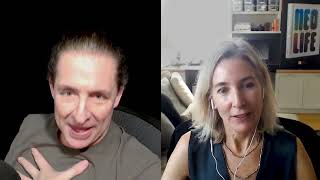
This is a YouTube video titled "EPISODE #1025: Wired to Lead the Neobiological Revolution" featuring an in-depth interview conducted on February 24, 2023. The conversation is between Dave Asprey, host of the Human Upgrade podcast, and Jane Metcalf, a founder of Wired magazine and author of the Neo Life newsletter. They discuss topics including futurism, biohacking, technology's impact on human biology, neuroscience, and the intersection of science fiction with real-world innovation. The dialogue explores themes of human flourishing, technological augmentation, and the cultural and scientific movements shaping the future.
Chapters
You're listening to the Human Upgrade with Dave Asprey. Today's interview is one that I've wanted to do for probably, like, 10 years and just haven't gotten stars, hadn't aligned until then. And it is with one of the founders of Wired magazine and someone who has been a continuous source of. Of interest and news and data for me for the last. God, like, since I was probably in my very early twenties as a computer hacker. The first edition of Wired magazine was, you know, it's like, oh, my God, someone gets me. And Jane today, having basically dissected nerds for her entire life, runs one of my favorite newsletters or news sites called Neo Life. And she writes a lot about biohacking and the future. And if you were to. If you were to combine, like, someone who just really understands society and understands tech and has probably read as much science fiction as I have and just gets it, you would have Jane, although she might have read more science fiction and may get it better than I do. So none other than Jane Metcalf, one of the most interesting people that's been on my list of. I've got to talk to her. It finally is happening. Jane, thank you for coming on the show.
Well, I'm thrilled, Dave. And, you know, I feel bad because I feel like I should have reached out to you much sooner because you're one of the people that got it. I mean, you know, I was starting to tell you, we said no, save it for the podcast that. You know, the tech bros that I grew up with were very disembodied. You know, they were very led by their heads. And I started to get crazy sitting behind my machine all day long. And, you know, I'm. I love nature. I love being outdoors, and I love smelling air and, you know, touching things and, and moving my body. And, you know, you were one of the very first people that basically ventured forth and said, yeah, I'd like some muscles. Yeah, I'd like to lose weight. Yeah, I'd like to be strong and feel good. And so I was like, okay, now this is going to be interesting.
So you clearly can see the future same way that I do. Like, I can count on a small handful on one hand the number of people who really are somehow good at futurism. And it's not because they think about the future. It's because they just feel about the future. At least that's my sense of it. And I always felt about this, even as a very young nerd, like, I don't know the first E Commerce out of my dorm room before we called it E Commerce, when I was just trying to not work at Baskin Robbins anymore, stuff like that. But I, I could feel it. And I, I always thought that those feelings were just nonsense because I'm a computer, you know, computer science guy. And it was only a little bit later, around the year, it had to be actually around 1997, I got my first EEG machine to start looking at my brain. And all of a sudden I'm like, oh, there's a signal below the neck. And I could probably use that. But it was an actual Asperger's interpretation because I used to have Asperger's syndrome. Like classic Silicon Valley, Mission College Boulevard, data centers, all this stuff. And all of a sudden I'm like, you know what? I have a built in onboard processing system here that's way more elegant than I knew. I just had a really bad user interface for it. So I'm just going to tune and customize my user interface on reality so that it does what I want and it's easier to use. Same thing I did on my early phones. I unsolder the LEDs and change the color because I could. Because I'm a nerd, right? So that's the mindset. But you're, you're someone who gets it. And what I want to know is how did you get your ability to just know what's happening? Because your newsletter is amazing.
Wow.
Okay. How do you do this? Give us your secret.
Oh, thank you. Well, first of all, thank you. I'm super flattered and I, you know, I think it comes down to. Futurists are basically optimists. You know, if you weren't an optimist, you would think there is no future. And so I think that's our default mode setting. And if you're an optimist, then you look for things that support your thesis because everyone around you is super pessimistic. You know, it's all doom and gloom, it's all cynicism, it's all cyberpunk. Everything's gonna get worse. And the forces of democracy and capitalism are gonna erode our freedom and privacy and all good things. And I think it's just a matter of not being the specialist. My father told me that, you know, problem with you, Jane, is you got to just focus on one thing. You know, you got to get one thing and be really good at that one thing. And you know, he was right. I would probably have had a much easier life if I had done that. I probably would have died of boredom if I had done that. And, you know, I think my, I don't think I'm necessarily a futurist. I think I'm just super interested in really smart people that are building things. And so if you do talk to enough people across enough different fields and you know, you mentioned science fiction. One of the things I realized long about the time that, that Jeff Bezos and Elon Musk and Richard Branson were all shooting their projectiles up into the upper atmosphere.
I love it.
They're basically just building the world they read about and as kids, you know, so we're basically just manifesting the visions that our science fiction writers have laid out for us.
Do you think that fiction writers actually do create the future?
I do, I do.
I think the biggest evidence we have is the Simpsons, isn't it?
Yes, yes. It's perfect. It's totally perfect. They anticipated Gen X. There's not Gen X, but millennials and Gen Z in a way that you can't, you can't make that stuff up.
So, so here's a question. I didn't think I was going to ask you this, but I've been pondering it and we know things about quantum physics and, you know, the observer effect and all. And if you get a few billion people all thinking about something with a story, does that make the story happen?
I fervently believe that.
Yeah. I think we're all collectively making the future. Which is why watching horror or I mean the news, they're kind of the same thing, is probably bad for the world.
Totally agree. Doom scrolling is bad. You know, I think a lot of social media is just bad. It's bad for your soul. I, yeah, I never watched horror movies growing up. Literally. I remember Whatever happened to Sweet Baby Jane? Do you remember that black and white film with Joanne Crawford and Bette Davis? Oh my God. They were sisters and one was bedridden and the other was tormenting her and oh, it was so scary. But I had to go read Winnie the Pooh before I could go to sleep. But you know, I, I, you know, as an athlete, I realized that my sister and I used to play field hockey and she was the goalie and I was a striker and she used to paint her goalie pads with like, with white shoe polish and make it as bright and shiny as she could. So I'm storming down the field getting ready to, you know, smash one into the corner of the cage, but all I see is the bright white pads. And so it's designed to attract your eye. And where you're looking is where you're going to hit it, you know, And I used to be a hang glider pilot. They had this huge landing field. It was a cross country flight and we were all going to land at the same place. Huge landing field. And they said, there's just one thing. There's a power line right across the middle of the field, but there's plenty of room on either side. And sure enough, you know, after a couple of hours of flying, I was tired and whatever, and it's like, well, there's the power line, you know. So I think it's really important that we create targets that we envision models of the future that we actually want to build, you know, and it doesn't make us Pollyannish, it just makes us selective. And. And it's like, yeah, that's not really working. You know, we could go spend our time talking about why that doesn't work. But what if we just kept looking for things that do work, you know, and what if we just put out here's how it would be wonderful. And let's try and make that happen.
That's. That's a refreshing view on things. And I. And guys, I am just suggesting I've been an admirer, if you can't tell of Jane's work for 30 years. And we have no agreements whatsoever about saying anything good about either one. But I will tell you that Neo Life is a newsletter that's worth doing because the optimism you just heard is in there. Like, there's an excitement about the future and a perspective that we actually can fix anything we break. And I still believe that to this day. And that's something I believe maybe from reading science fiction as a kid, or maybe having one set of grandparents from Roswell, the other ones from Los Alamos national labs from the 1940s.
Wow.
So I just, it's just, I'm a nerd family. I come from a nerd family. So I just, I believe, like, oh, yeah, let's go solve the problem. Like, oh, the oceans have plastic. Like, well, it's probably, how hard could that be? And it's actually not as hard as people think it is. And that's something Elon's been good at. And this whole thing, hacking the human body, I don't know. I'm 50. My biological age is 11 years younger. I started out from behind. I'm 8% body fat. I work out 15 minutes a week. It was hard work. It cost me $2 million. $2 million is nothing compared to the value of that. And given how much money gets invested in NFTs that were worth $2 million, like, I'm just gonna be really rude, but fuck you guys. Okay. What do you think about NFTs anyway? Are you a fan?
I don't have time for it. I got other stuff to do, you know.
Oh man, I fervently agree with you on that one. I do think if I was a recording artist, I'd be very interested in having control of my content. There's use cases, but people get so excited about those.
So one of the things I think is really cool, I was talking to Jennifer Doudna about this, about doing an NFT of the research and the, the approvals and things like that and kind of putting all those things together into something that went into creating a Nobel Prize winning, life altering, you know, discovery like that sort of thing is cool. And as you say, for artists. Absolutely. I mean, a lot of my visual artist friends are all over it and I think that's great. I'm just, yeah, I have a collector gene, but I don't know. Collecting digital things condemns me to a digital life. I'm still aspiring to escape from a purely digital life.
It's interesting to hear you say that. I'm the same way. I actually have zero desire to strap VR goggles onto my eyes. Unless, and I do do this, I have a special set of VR goggles with software that gives me sniper level depth perception beyond normal humans capabilities. I'll do that, but I'm not going to do it to look at Zuckerberg bouncing around like Terence and what's his other name from South Park, Terrence and Stewart. I just don't care and you cannot pay me enough money to care and, and you can't give me gold stars or anything like that. But I think you and I might be the 2% of weird people. Do you worry for our species if we all strap VR goggles on?
I don't think we will all strap VR goggles on. I think there are amazing applications. I mean, you talk to surgeons doing VR things and remote robotic surgery. It's like, that's amazing. To be able to map the tumor onto the body and see exactly what the contours are. Brilliant applications, absolutely brilliant. But do we all need to dive into the metaverse and live the rest of our lives there? It's like, no. You know, we just ran a sweet little Valentine's Day story about this couple that met on Never Met, which is a VR Dating platform. And, you know, yeah, they met and fell in love, but then they said, okay, here's the big reveal. Here's my photo. You know, it's like, okay, that went well. You know, meet me at the Furry convention in Las Vegas. You know, and so it's always going to come back, always going to come back to humans. And humans are tribal. And, you know, it's touch and smell and taste are like three of the five things that make us human. And without those things, you know, it's like our brain's not getting a sufficient amount of input. And I. I worry about what that means for the future of our species. You know, it's like I tell my mom, she's 87, and, you know, sometimes she gets, I don't know, petulant or depressed or whatever, and she's like, I don't want to wear my glasses. I don't want to wear my hearing aids, mom. That's really bad for your brain. You know, put your glasses back on. Put your hands.
Right.
We got to keep our brain stimulated, and without all of that tactile and olfactory and, you know, gustatory input, I think we're less than. Than what we could be it.
If my parents start doing that, and they might. If you're listening, mom and dad, I'm watching you. I will just tell them, here's the deal. If those go off, you stand on the whole body vibration platform until you put them back on.
Well, I am really curious what you think, because we need to interview this for a story that I want to do. Is autism a disease, and does it need to be cured? Wow.
Yes. Autism is a profound cause of suffering. It is a symptom of a disease. Chronic neuroinflammation needs to be solved, and that is usually a toxin problem which contributes to an autoimmune problem. Those are not okay because those affect longevity, and people on the spectrum have all sorts of additional allergies. They have all sorts of additional risk factors. So, yes, it's a disease cluster, but it's probably a symptom. It's not the cause. It's not a disease. Just like chronic fatigue syndrome isn't really a disease, even though I've been diagnosed with it in fibromyalgia and I had them. They're symptoms of something else, by the way.
I don't know if you saw this, but last week we wrote up a report about a particular bacteria that's associated with chronic fatigue and fibromyalgia.
I did see that. It was so Exciting. You find stuff that I don't find before I find it, which is really unusual because I have a brain that does that. Like, how does Jane always do this? Like, you're literally. I don't really read a lot of newsletters because I just. I don't know, I have PubMed. I just have ways of knowing things. And yours is something that I reliably read. Guys, it's Neo Life is what it's called. Neo.life is your URL. I think I just get it in.
Email because neo.life is so much cooler than neolife.com?
I guess it is. Now.com is like sending a fax now. Is that how it works?
Yeah, exactly, exactly. Well, and also, I'm not doing a lot of commerce on Neo Life, so there's that too.
Yeah, there's that. Yeah, fair point. You mean you actually still respect domain naming conventions? My God, so fashioned. Now you write about this very interesting combination of things that no one else that I know of combines. I mean, you do biohacking and you do neuroscience, but also crypto and big tech stuff. And someone who didn't understand the nerd perspective would probably say there's an unrelated. How do you describe NeoLife? Because I see the connection, but I don't have a word for it. What is it?
So I am only talking about tech insofar as it concerns human biology. And so as long as I keep coming back to that, you know, it's. It's chat GPT to the extent that it affects human flourishing, you know, or decentralized science to the extent that it affects how we do science and how we do science publishing. So I always try and do that. I do occasionally allow stories through my focus that are ecological in nature because I'm increasingly excited about how the understanding of ecology is influencing how we think about human biology. Before they were two separate things. There were like humans and then there.
Were plants and animals, you know, keep doing that. I mean, the definition of biohacking, you know, change the environment around you and inside of you so you have full control of your own biology. And that was why I decided to build a farm and do regenerative agriculture. And that's an enormous amount of work. But you learn so much and you just realize that if you want to write about what you're calling human flourishing, you have to include that. And for me, absolutely, I hooked Tech Bros, which was the audience for the Bulletproof Executive. When I started all this just by talking about human performance, because there's a class of people, entrepreneurs, hedge fund managers, pro athletes, and people in Hollywood, recording artists who are performance people. You have to be on your game, on stage, in front of ten or a hundred thousand people. You know, if there's a billion dollars online, it doesn't matter if you're tired, you will do it. Right? And that was. That was what I wanted, right? And. And that. That was the original, you know, the art of, you know, the art of performance or whatever we called it at the time. So it feels like you've gone from performance to flourishing and. And broaden the scope even a little bit. What does flourishing, humanity look like 20 years from now if your vision comes true?
Oh, wow, that's a beautiful question. So, you know, I. So let me back up and tell you a little bit, just personally, that I was stuck in that performance mode myself. And, you know, initially I was an athlete, and it's all about breaking through the wall, you know, pushing yourself beyond, like, digging really, really deep and finding that thing inside you that's going to keep you going when the others are falling apart. And, you know, your endurance is going to get you there. Your mindset and your physical endurance will get you there. And it works, and you're rewarded for that. And, you know, after that, I became an entrepreneur. And, you know, my father called me up on the night before Thanksgiving and said, what are you doing? And I was like, oh, my God, Dad, I'm so excited. I am putting the finishing touches on the business plan, and then I'm going to drive it over to Mitch Kapor, whose private jet is on the Runway at SFO waiting for my business plan. How cool is that? And he goes, oh, I was hoping you'd be home brining your turkey. You know, it's like, oh, oh. And, you know, but. But that was the thing. It's like, everything get out of the way, because I've got this thing, and I'm going to be the best, and I'm going to work harder, and I'm going to catch that person, a billionaire, before he flies off. You know, it's like early bird catches the worm, like all of that stuff. And then I became a mother, you know, and there's nothing you won't do for your children. You know, it's like, I'm exhausted, but I will get up at 3am I will clean up the vomit or the whatever it is, you know, I will do this. You know, I will put on a happy smile and run around the park, even though I'm dying inside. You know, it's like, and suddenly I got to like, middle age and went, I have nothing left. You know, it's just flatlined. And, and so, you know, for me, I see the younger people talking about performance, and I am at a different place in my life. And that think gives me a little more perspective because it's not about your work. It's not about showing up and showing off, you know, it's about integrating your needs with your desires, you know, so that, so that you're coherent, you know, and I just wasn't, you know, I got way out ahead of myself. And aging has taught me that I need to, I can't get over my skis anymore, you know, and so for me, human flourishing. I said this once, and a friend of mine has been repeating it for five years. I said to me, human flourishing is when what you think and what you do and how you feel are all aligned. You know, wow. If you are depleting yourself for some goal, that's not flourishing. And so, you know, Ariana Huffington actually has been on this for a long time, and I have huge respect.
I like her. Yeah, she's a friend.
She's awesome. She's totally awesome. And she wrote a beautiful piece for my predictions for 2023. And, you know, she's so right. And being in the media world, I mean, she literally was so tired she passed out and gave herself a bloody nose because she passed out on her desk, you know, and it's like, there's limits, you guys. And if the pandemic taught us anything, it's that, you know, it's like, what if you took FOMO off the plate? You know, what do you really want to do? What's really important, what really needs to, to happen now, you know, what's your gratitude?
Practice?
Oh, it's really simple. I mean, I, I, I'm not rigorous with a lot of this kind of stuff. You know, is there a service level.
Agreement or uptime metric for your.
I do track, I do track, you know, my biomarkers, but beyond that, I don't have. I, I, I appreciate, I mean, for so long, Jesus, I was running companies and had hundreds of employees and had little kids and, you know, had to be places on time and investors and all of that.
Like, people know what a stud you are this day. But like, you, you've done so much in your life, so. Yes, okay, so you're all into that, but how did, when did, when the gratitude come into it? When did it start?
You know, I actually, I, I naturally come by my gratitude Practice. I am ridiculously grateful. I am ridiculous joyful and grateful. Yeah, I mean, I. You know, I'd be sitting on a traffic jam on the. On the bridge, and I was like, okay. It's all okay, because when I get home, I have a Meyer lemon tree in bloom, and I'm going to stuff my face in those blooms. And that smell, and the fact that I'm going to pick one of those lemons and make a roasted chicken with that lemon, and it's all going to be fine, and my family's going to be there, and it's all good.
You know, I had a Meyer lemon tree in Powell, too, when I was there, and, yeah, they're pretty amazing. So I'm with you there.
Is there any. I mean, a well, a freshwater well or a hot spring and a Meyer lemon tree? You know, it's like, I don't need a whole lot more than that.
If someone came to you tomorrow with cyborg implants that were going to make you live longer and give you some robotic parts, would you think about it?
I'm definitely thinking about it. Oh, absolutely. Absolutely. No question. You know, I think that's where we're all heading. I really do. I mean, I think.
Does that scare you? I mean, what if the Meyer lemon didn't taste the same?
Well, I think we start to. I mean, we're talking about the distant future, you know, not the immediate future.
So by then, we'll have enough glyphosate evenly distributed around the globe. You won't have to worry about the Meyer Lemon. Or I just got dystopian again.
Yeah, I mean, I. I actually think our humanity is pretty powerful. And I actually, you know, I talk about this a lot. I. I just raised this recently. So one of my heroes has been John Markoff, because, you know, he was the technology correspondent for the New York Times for 30 years.
Yeah.
And he was doing really important work at the beginning of the digital revolution, helping us piece together, you know, some of the security issues and privacy issues and tracking the culture clashes that were happening between, you know, the hackers that were just using their brains to figure out where's this go and what's it mean, and what can I get to get around that paywall? And, like, oh, well, that's not secure. It's like, oh, check it out. There's a giant hole over here. You know, it's like, useful work, you know, to show us where our vulnerabilities were, you know, versus what's now called the dark Web. And the people who are just evil and who are trying to do things, to steal things from other people or manipulate the situation. And so. But anyway, John wrote a book not that long ago, sometime in the last six, seven years, I want to say, called the Machines of Loving Grace, you know, which is a Richard Braudigan poem. And they were all looked over by Machines of loving Grace. It's fabulous. If you have not read that, I highly recommend you pull it up again. But in that. And. And this is the amazing thing that John Superpower was that he didn't just track ideas. He tracked friendships, and he tracked who knew whom and whose ideas were being, you know, worked out in. In intellectual, you know, boxing matches with others. And he tracks it Back to John McCarthy and Douglas Engelbart, who both had labs at Stanford back in the 50s. And I had the extraordinary great good fortune of meeting Douglas Engelbart at one of John's birthday parties when my son was three months old. It was like, look, I gave birth to a geek. You know, will you please bless him? But Doug did the. The mother of all demos in 1968, where he showcased, you know, the metaphors that would allow us to understand how technology correlated to the work that we were doing. So it was everything from the desktop and folders and hierarchies and the mouse and computer user interfaces and all that, that great stuff. Doug was a. Was a humanist at heart, and he said, yeah, as, you know, as we need to be, because this is the future we're building. So keep humans firmly centered in your vision, and let's come up with things that enhance humanity. And so Doug designed them around human creativity, and he called his lab. Oh, my God, it just literally flew out of my. The Human Intelligence Human Augmentation Lab.
Yeah, Human Augmentation, yes.
Right. Whereas John McCarthy was like, I want this algorithm to generate the next iteration of the algorithm and see how far that goes and see what it can do. And that's the world that we're terrified of. And so, you know, if we were able to love ourselves enough, you know, we are human. Being human is a good thing. Humans can be taught to live in harmony with the other species on the planet. We can learn how to use biological forces for good to reduce the amount of water we consume, reduce the amount of pollution we put out, reduce the amount of pesticides that are required the most around the fertilizer that's required, harness the nature itself in ways that put us in harmony with everything else. Then we'll learn to love ourselves, and then we won't want to replace ourselves with some superior creation. That's my big vision.
To love ourselves enough that we don't need to replace ourselves. Where do you draw the line between more than human or just better humans? Like, like smarter, faster, happier, stronger, more expansive, more able to take care of the earth. How do you know where that is?
Right, yeah, it's a really good question. We've been talking about this for a long time. You know. You know, my whole thing is what is the strategic plan for the future of our species?
It's a good question. Do we have to ask China because they have a 500 year plan, we don't.
I know. I think we should ask. And I think that their creative brief might not be the same as ours. And I'm pretty sure their product roadmap is going to be radically different.
Different logos and everything too.
Totally. And who's.
I really like the way you think, Jane. Like your brain is awesome.
Yeah, so I, Yeah, I, I think a lot about my kids, peers, you know, do I want my kid to be the smartest kid around and no one else can relate to him, you know, probably not. Neil Stevenson. Seven Eaves.
Beautiful book. I've been trying to interview Neil, but he's like reclusive. I've wanted to interview him. I think he's one of the, the best authors of the last hundred years. Yeah.
Oh, Snow Crash had a huge impact on me.
I mean on the whole world. I mean that, that is a book that created a lot of the Internet. I mean it, it's amazing. Guys, if you've never read Snow Crash, it's one of the, the most influential books you'll ever read. It changed my life when I was, you know, deciding between electrical engineering and computer science and all that stuff. And I was like, yeah, that's where we're going.
Yeah, but what I liked and maybe, yeah, we don't want to give it away, but it takes all kinds. That's the answer. It takes all kinds. I think the idea that, you know, there's only one way to be human and the smartest human is the best human or even, you know, the stem steam. Human is the best human.
It's the most loving Human is the best human in the world that I want to build.
Right. That's it.
There's another famous science fiction author named Alistair Reynolds who's really thought about things in a great way. Are you familiar with his work?
No.
He describes two future branches of humanity. The really complex universe. And one of them are the cyborg enhanced humans who make a hive mind and he calls them conjoiners. And then there's another group whose names I forget who are about hacking our hardware. So one of them is we're going to modify biology and like we're gifted at genetics and we can do all these things with life. And another one is we're going to augment life with hardware and they become like two different segments of the future. Which of those do you think is most likely?
H. That's a really interesting question. And I'm wondering if, you know, the, the difference will be, I mean the neuromorphic computing people are making great advances.
They really are.
And the, the new materials people, you know, it's, there's, there's so much happening on that front that I'm wondering if that's a distinction that will be meaningful at the point at which we're talking about significantly enhanced humans.
It feels like when you start getting nanotech really, really correct, it's going to look a lot like life. Anyway. Wired has been something that really did. It was the first time I ever read a magazine. I'm like, well, these people get me. Like they know how to think, right?
And I got to tell you this people, when we first launched the magazine and set up a. I think it was like AOL or. No, I guess we had an email account. That's what it was.
Like subscriptions@wire.com or something, or the. Well, or something.
No, we had our own server.
Right, of course, you're a wires.
Yeah, yeah, yeah. No, we had the best, we had. Brian Bellendorf was there managing our server. We had, you know, Jonathan Nelson, who basically invented Programmatic advertising. We had like amazing people who helped us. John Gilmore, you know, one of the founders of the Electronic Frontier Foundation. I mean these were the people that helped create our, our infrastructure and. But anyway, our subscription people would spend all day long like emailing with people who would say, you know, I'm 13, I'm gay, I'm black and I'm a hacker and I didn't know there was anyone else out there like me. And they call on the subscription line and just talk for hours. And it was the most extraordinary thing. There's just like huge outpouring of pent up intellectual, you know, fervor around. Yes, this is exciting. Yes, it's exploding and yes, what are we going to do with this? You know, it was just extraordinary. We were really the red hot match that just.
Yeah, I, I never felt really understood by a group until Wired magazine. I Never thought of that.
Yeah, yeah, yeah, yeah. Well, I, you know, I don't think we realized the extent of it, you.
Know, I mean, the world with what. The way you were thinking, the excitement that you had. Like, you took something that wasn't cool and you made it cool and you built a community around it. That's hard. I know it's hard. Was what biohacking was. But it's such, like, very few people ever do anything like that in. In a lifetime. Like, that's what churches do and. Or may, maybe, maybe punk rock or, you know, skating was like that as well. You know, Tony Hawk did it. But it's. So anyway, well, and let me.
Let me just say, because you're giving me all the credit for NeoLife and Wired, and in both cases, I mean, with NeoLife, if it weren't for my editor, Jason Socrates Barty, you worked with. Yeah. Master's degree in. In molecular biophysics and. And science writing, and that's NeoLife.
Okay. I knew you had to have like, an ace in the hole on that because you are covering some cool stuff and like, how do you fiddle that in one brain? Some good people.
Yeah, yeah, yeah.
All right.
Yes, absolutely. But same with Wired. I mean, we had Kevin Kelly, you.
Know, he's been on the show. I love Kevin. He's a great guy.
Of course. Yeah. Lewis, my partner, you know, smartest man I ever met. And you know, John Plunkett and Barbara Khoury, our creative directors. You know, John Battelle. We had just incredible people. And then our collaborators, I mean, we had Neil Stevenson and William Gibson, like, basically doing reporting for us. Bruce Sterling. No, I swear, people created the future.
They really did.
Bruce Sterling wrote the COVID story of the first issue of Wired.
Yes, yes.
On the future of war.
You're so right. Oh, my gosh, what a. Oh, and I imagine if you're 20 years old listening. What are you guys talking about? We're talking about how everything that you care about happened is what. We're talking about literally all of the things in the world that you expect and take for granted. It was this that made that happen.
It was the technology that made it happen.
Well, yeah, but this fueled the technology boom. Silicon Valley would have been only 40% as full if there hadn't been a movement around this. I think you were at the center of the movement. I really believe that. Maybe I'm wrong. So were you taking acid back then?
Oh, God, I was working too hard.
So was I. Actually, I didn't. I didn't ever have Acid. When I worked in Silicon Valley, I had started Bulletproof before I decided it was worth doing that in a controlled setting.
But full disclosure, before we started Wired, we were part of the whole, like, rave scene in London.
Ravers, of course.
Yes, yes, yes, yes. And so we were publishing a magazine called Electric Word, and it was very cult like. I met Timothy Leary back in those days.
Very cool.
At, get this virtual reality party, I was supposed to be putting together a virtual reality conference. And for a brief moment, because we were writing the business plan for Wired, trying to convert Electric Word into Wired, and I thought, I can get a job with this other publisher who wants to do this virtual reality conference. And so there was this brief moment when John Perry Barlow and Timothy Leary came over to Amsterdam and we had this party, and that was pretty fun. And we had a couple of Oxford graduates who'd come over from the uk, and so, yeah, we had a groovy little scene, for sure. But, yeah, once. Oh, and I have to tell you this. So I went to a Grateful Dead show when we first got to Silicon Valley, and, you know, I had this list of because I need to get revenue in the door right away. I mean, it's like, you know, Reid Hoffman says, you launched the airplane and you put the wings on on the way down. You know, it's like, that is exactly what it was. And so, you know, by day, I'd be calling on Silicon Graphics and Intel and, you know, Apple and Microsoft and everything. And then I go to this Grateful Dead conference, and there are all the heads of marketing, like, tripping their brains out at the conference. And I thought, this is going to be easier than I thought.
Oh, that's so perfect. So that. That was. That was how it connected. I've. I've been reading Rick Rubin's book on art and creativity that just came out. Have you had a chance to look at it yet?
No, but it's on my list.
Yeah, I had a chance to communicate with him about it, and I'll probably eventually have him back on the show to discuss it when he's. Time and availability. What I learned when I read it was that he sees entrepreneurship and building the future and the kinds of creativity that we've both been involved with for a long time. He sees those as art, and his rules for artists are so opposite of what I learned at Wharton and what you would expect from business. But it seems like that's how all the technology change happens. So I'm starting to look at what I'm doing in business through his artist's lens instead of through the spreadsheet lens. And it explains some of the success I've had. I started a company in five product categories at the same time. You know, everything I did at Bulletproof was the opposite of what was supposed to work, but it just felt right. And it was. It was entirely embodied and it seemed to work. There's just something going on in the world where we're making change more and more and more rapidly, because the tools to enact something, you can just do it in the cloud instead of spending a million dollars on load balancers and stuff like that. So I think we're going to get faster and faster at our cycles of evolution, but it's going to look more and more like art. Is that not accurate in your view of the world?
Absolutely, absolutely do. But there's also, you know, it's the art of thinking laterally too. Right. And, you know, one of the things, back to my dad saying, you know, you got to specialize, and it's like, I think we need to be good at not being experts in everything. You know, it's really hard for an Engineer or an MD, PhD type to step outside of their domain of expertise. And I feel really strongly about this, that, yes, art and creativity are huge. And I think to the extent that we can unlock things, give people permission, take daydreaming time and forest baths and open minds in any way that happens, that's super important. And what I worry a lot about are silos. I worry about the walls that exist between academia and industry and government and NGOs. I worry about the walls that exist between genomics and neuroscience and synthetic biology and the future of food. You know, I worry about people becoming the world's expert in something that gets smaller and smaller and smaller. You go deeper and deeper and deeper into your hole. I mean, this whole, like, genetically modified foods, I don't know how you and your listeners, you know, line up on. On this, but I feel like there's an opportunity to genetically modified foods in a way that prevents 40% of the vegetables getting stuck on the farm, you know, because that's the current case, right? They never even make it off the farm. And then there's more waste in the distribution channel, and then there's more waste once it gets to the grocery store shelf, you know, and that's why food is expensive. So let's stop the waste.
You know, I. Here's how I would say my audience thinks about GMOs. We all know that the companies who actually release GMOs are doing it so they can poison the soil with chemicals that are bad for the planet and bad for humans. So we don't like GMOs because of that. But we also know when you put on our thinking hats instead of our feeling hats that you can actually use genetic modification techniques to do great good in the world. So I just had a guy doing a genetically modified probiotic that means alcohol is far less harmful for your system. So I'm like, okay, check the boxes. And there's safety things and all that that, that are part of the consideration. So I don't have any feelings about GMO any more than I do about shovels, guns, or fire extinguishers. It's what you do with the tool that is the problem. It is not the tool. And some people be very offended at that. And also, guys, I have no problem with vaccines. It's what you do with the tool. Give me a vaccine against getting old. I'll take it every year. Just show me it works and release the actual data. Not over 175 years. And maybe we should open source all vaccine formulas while we're at it.
Yes, well, that would have been. That would have been an amazing thing, wouldn't it?
Yeah.
Well, who was it? Who was it that said Jonas Salk, you know, why didn't you patent the penicillin vaccine? Or not penicillin, the small box vaccine? It's like, because I didn't invent it existed in nature. That's. You can't patent the sunshine.
Yeah, I'm not yet, anyway. All right, let's talk about that for a little while. If I could wave a magic wand and give you the ability to disband or modify the FDA in any way to create human flourishing, what would it be?
So I used to think, particularly coming from Silicon Valley, that all government regulators are evil. You know, I mean, Wired was at the forefront of the cyber libertarian.
No, right there with you.
Right, exactly. And, and, you know, I thought whatever's good for the Internet is good for humanity.
Doesn't seem to be true.
And it's true at the beginning when the regulators have no idea what you're talking about. And that's why you need organizations like the Electronic Frontier foundation, you know, where I was on the board briefly at the beginning of the organization. And, you know, we had to. We spent a significant amount of time coming up with metaphors, you know, just to help people, like, how do we think about this? And I think what happened is, you know, the government stood back and they saw that it was good. And so, you know, it's like, let's just let Silicon Valley keep doing what it's doing and it's generating a lot of wealth and that money is going into our tax coffers and it's going into our campaign chests and it's all good. But that kept going too long. And so, you know, there is a point at which you think our Congress would be able to understand the technology or in Hatch notwithstanding, and you know that we would be better. Chinese are much better at this. You know, like most of the people in their government are scientists and engineers, which I think is a real problem in this country, that scientists and engineers do not feel compelled to serve in Congress. And when they do run for office, they tend to have one or two planks on their platform. And that's never enough to get elected. And so, you know, I would be all in on helping to get more technocrats, you know, elected to Congress. So I mean, I think, I think the FDA is by and large a good organization. I think I have experience with the frustrating side of it. But a lot of my friends who are involved in the research say that on the research side they're very open minded and a lot of good can come of it. And so they're very much looking forward to the future. But you know, there's two different sides.
There's like there are good people doing science. Yeah, the science people at the fda, to have an issue with the policymakers and all seem like to have a very heavy handed approach. I interviewed a former FDA enforcement officer who was working as a freelancer and she told me this verbatim. She said, dave, every other Thursday we would have a pizza party in D.C. and we would Google around to find who we were going to send enforcement letters to. She was not a scientist. And those are the people who are harming progress in the US And I don't take that personally. I've had reasonably good interactions with him in my business life as well. But I also know that some things are exceptionally expensive because of regulations that aren't helpful.
Well, the thing that concerns me is the way we are now approving drugs and we're approving drugs that have a lower and lower efficacy. And that to me is just evidence of the medical industrial complex, which we're going to hear a lot more about in the future.
How are we going to hear more about it? Isn't chat GPT going to basically sit as a, as an interaction between you and the world to make sure that Everything you see is perfectly Orwellian.
No, I don't think so. Because right now Chappie GPT really can't figure out like my resume. Do you know what I mean? It's like there's some really basic facts that they, that it's still getting wrong. So I think we're okay. Still out from, from that you're still out.
How far out though? Like 2 years, 5 years?
To be honest with you, I have no idea.
Okay.
I have no idea.
That's a really fair answer from a futurist.
But I do, I do want to talk to you about something that I think is a very, very, very exciting application of AI. Okay. And I, you know, chat GPT and generating text and generating audio. I mean, you know, the people at Google have known for years that the end of truth is here already. And so, you know, this is just kind of playing out and it's going to be, you know, it's going to be lumpy. There'll be moments of truth and there'll be great moments of great defamation and distortion and you know, we will have to muddle our way through and it will come back down to our humanity and our trust. And who can you look in the eye and trust? Do you see that woman on Twitter with three front teeth? You know, she looks beautiful, but you know, I don't know how many followers she had. A million followers or something. Anyway. Yeah, but I'm really excited about AI in the medical field because it can help us discover new drugs. It can help us, you know, see things on X rays that the human eye can't see. It can help us in so many ways. But I'm involved in a new initiative that is, you know, so far reaching in scope and so ambitious and so bold and so optimistic that I just, I think your listeners would be really interested.
Do share. Yeah. Okay.
All right. So we sequenced the human genome 23 years ago, right. And, and that was a big deal and it cost billions of dollars and it took, you know, dozen years or more. And you know, in the end it was an enormous breakthrough and an unleashed this incredible amount of innovation which is helping us, you know, identify and eliminate, eventually eliminate single gene caused diseases and will initially also help us figure out how to match the right drug to your tumor and all these other things. Very, very exciting. We can sequence kids at birth, you know, because it takes a long time to figure out what's wrong with a newborn with a genetically inherited disease. Now we can just do that right off the bat. And the Minute we start to see things, you know, not going right, we can go, ah, this is what it is. You know, it takes years for people to get diagnosed and a lot can be done during that time. So huge breakthroughs. But in the end, as complicated as that was, and as brilliant as the scientists were who helped us do that, it's still pretty simple. It's just a string of code, right, or two strands of code, but it's just code. And it only accounts for, let's say, 20 to 25% of disease, which leaves everything else.
It's all epigenetic.
Well, exactly. And, and, and it's your immune system. Like what's going on in your immune system. You know, your, your DNA and your epigenetics aren't necessarily going to tell you that. And the immune system, you know, is quite possibly the most complex thing known to man. Yeah, to humankind. And one of the reasons why it's complex is that it isn't just made up of the, you know, the proteins and the, and the molecules and the tissues, you know, the cells, the organs of your immune system. It's also your entire omic stack. So it's your genome, your epigenome, your transcriptome, your metabolome, your microbiome, your lipidome, plus your exposome. So there's all this stuff happening already in your body and then it's all the external forces, including the food that you put in your body, including the amount of pollution in your environment, including the amount of stress that you're under. So all of those things make up your immuno. And your immunome is not a static thing. Right. The immuno you had as a newborn coming through your mother's, hopefully coming through your mother's birth canal is not the same thing that you had as a 16 year old, which is not the same thing you have as a mother giving birth, which is not the same thing you have as a 75 year old, you know, starting to become elderly. So your genome, your, your immunome changes over time. So it is a complex system embedded within other complex systems, you know, orbiting in a much more complex system. And how can we ever understand it? The pandemic gave us this extraordinary moment in time where we can actually use the collaboration, the global collaboration that has happened, coupled with the extraordinary advances that we're making in machine learning right now, to use AI to build models of the human immuno.
Yes.
So I've talked to some very smart people about this over the course of the last year, and I was asked to join this organization three years ago. It's called the Human Vaccines Project. But because everyone's doing vaccines, they were thinking, what is the next frontier? Yes, it would be great to understand how this vaccine is going to affect these different populations. But how is anything, how is any vaccine or antigen or threat to your immune system going to affect you and her and him now versus 20 years from now versus in the future? So what is the bigger picture? Where are we going? So the Human Vaccines project is rebranding to become the Human Immunome Project. And we convened a group of scientists, 60 of the most extraordinary minds. We had Eric Schmidt and the immunologist, Nobel prize winning immunologist Pete Daugherty as the honorary co chairs of this meeting. And we brought together immunologists, computational systems biologists and machine learning experts, including, you probably know, Stuart Russell. You know, Stuart is top 10 people in the world, Literally wrote the textbook used at Cal and other college campuses around the world for artificial intelligence and brought them all together and said, first of all, hello, can you hear each other, can you talk and you understand what each other are saying. And secondly, we brought together, I mean the alpha fold people came, we had people from, you know, the Broad and Caltech. And I mean it was just like from the United States, from Europe, from the Middle east. And, and we said, let's define the human immunome. Let's figure out what data we need to collect and how we're going to collect it and then let's put it into our models and see what it spits out. You know, what are the limits of what artificial intelligence can do right now? And how can what it does right now advance our thinking? How can it enhance what we're doing experimentally in, in the lab, in vitro? How can we take in vitro and in silico and combine it and how can the two of these things move the field forward? And it's an incredibly exciting time for immunology because of what's just happened with, you know, the vaccine, the, the virus itself, you know, the MRNA platforms. How can we take everything that we have learned and bring that over into this new way of thinking about immunology which is moving beyond the sort of, okay, here's the B cell repertoire and the T cell repertoire, and you know, here's the macrophages and the neutrophils, and here's what each of those things goes and does to mapping it into a 3D model and then moving that model over time into a 4D space.
There's something that's missing that's been kind of a through line in, in my last three books or something. And it's the notion that every cell and even subcellular component is at its core an environmental sensor and a computer that runs very, very simple code, sort of like Stephen Wolfram's a new kind of map, which you probably have in your mental database for listeners. This is a book about how if you run very simple rules for infinite amounts of time, you get complex behaviors that emerge like beautiful flowers and stripes on bumblebees and things like that. They aren't as complex as they look. They just come from doing the same thing over and over and over based on very dumb little rules. And I think a lot of our human traits are lower human traits anyway. Our egoic behaviors are emergent behaviors from subcellular decision making. And you can model that. And Candace Pert, who discovered the opiate receptor says, and I would support. And there's lots of evidence that the immune system has its own intelligence that's separate from ours and that would have to emerge from the component level behaviors. And if you take AI and you model immune behavior based on, well, what are the environmental inputs and what are the decision making things in each node you have a complex system that you can easily model that's very, very different than that. Well, you slam a vaccine in and then that tells it what to do. But I know for managing router flaps and all this stuff on, you know, creating millions of computers all running together in a beautiful harmony. Or interviewing Lehman Baird from Carnegie Mellon about how crypto algorithms for establishing trust work. They're the same algorithms that mitochondria use for establishing trust amongst themselves. Quorum sensing. So it feels like if you're going to be doing that kind of a thing, you have to look at the individual component behaviors and how they're communicating with each other. And we know the communications protocols now, but I feel like the network engineering and compute side of that may not. I didn't hear that person in that group, but maybe, maybe Eric Schmidt's that person. He has, he has the brain for that.
Interesting. Well, I have to say one of the most interesting people that was sort of randomly, one of our sponsors center was an ecologist and everybody was like, oh, we want the ecologist in our group as we brainstorm our strategy. And indeed she had some really brilliant insights to offer the group. So yeah, absolutely, it's, it's, you know, we're just getting started and this is a collaboration, this is a consortium, you know, what we're trying to do is identify all the different researchers around the world, you know, who would have data that they could upload and share so that we can help build this model. And we're looking for, you know, people from industry, from academia, from NGOs, from, you know, we've got Sumiya Samanthan, who is the outgoing chief scientist for the World Health Organization on our scientific advisory board. And so you know, we're, we're, it has to be, you know, a global south involved right from the start because can't understand the immune system if you're only looking at white European males. And so it's, it's just, it's a huge opportunity and it is the right thing to do. It is the right time to do it and we need all the support we can get because you know, we're just a little tiny little organization taking on this, you know, potentially multi billion dollar cost.
It is as important as the human genome for sure because we still haven't even figured out what makes a single cell when it's fertilized, what makes it turn into a liver versus a heart versus an eye. Right. There's something guiding it. Right. I have my ideas about that. Lots of people do, but it's probably not genes. In fact it's provably not genes because all the cells have the same genes. So there's like so much stuff we don't understand yet about, about all that.
Right. So what about Brian Johnson? Are you getting as good a result?
Brian? Well, he's only five years younger. I'm 11 and a quarter years younger. But maybe I've had more time to do it. So guys, Brian Johnson runs Colonel, which is one of the, I'm gonna say one, it is the most interesting neuroscience company out there. And I say this, running a neuroscience company the first 40 years is in but it is called Colonel and he wrote an interesting piece last month or something. I haven't talked to him about it yet, but I do know him. I've communicated with him a meaningful amount and very brilliant guy. And he's like, look, I'm going to go on this program to just rigorously monitor my stuff and like true biohacker style. And he's done a program that's actually pretty good. He'll find out in about three or four years that he's true too vegan on it and, and reverse his stance on fats, but give him time. I know because I went down that same path. But what he's saying, he's saying is the rate that you can, you can change your, your age is, is his measurement. So if you can make yourself biologically younger very quickly, that, that is of benefit compared to the total thing. I have questions about that because having lost a hundred pounds, I've had people lose 75 pounds in 75 days on my protocols. That is usually harmful because you dump so many toxins in the body when you do it. I don't have any evidence that says taking five years off your life in six months is better than taking five years off your life in three years. In fact, I think it's probably better to do it over time. And I, I do though have to say that Brian's done a great job of, of, of helping us all think about anti aging in a meaningful way. And, and some of the stuff we don't even understand yet, like what Viome's doing with oral health. It's really interesting stuff about cancer detection from looking at microbes in your spit. And there's all these things that like we're going to bolt on and pretty soon the page that I would have or that Brian would have is going to look a lot like your immunome or the exposome. Here's all the stuff I did. And it turns out the fact that I woke up and I looked at sunlight was way more important than I thought it was. But I didn't, or I didn't know that having a massage from a woman who is not taking birth control pills actually raises my testosterone 20% and a woman on birth control pills doesn't. Okay. By the way, I think that's probably true, but especially if she's ovulating. But nonetheless are. We could totally go into this. The species level effects of hormonal birth control on men. Right. Because you imagine if a male's operating system is like there's no fertile women anywhere because, because ovulation everywhere. We're like, what's there to live for? And our body will tell us there's nothing to live for. And then basements and video games look great.
So do you think that's actually triggering your lower sperm production?
It's part of the reason testosterone. Why would you make testosterone? It's biologically expensive to make it when there's nothing to use it on. Like we are driven. We like guys will do anything for that. And we don't know that's why we're doing it. Our bodies do that. There's a third of a second when they just make something look like, you know what? I'm going to conquer that thing because I know I'm going to get some of that pheromone that I smell. We didn't feel that our operating system makes that hidden from us, but it's in there. So yeah, it's part of it.
I mean, I think there's also all the pharmaceuticals that get dumped into our water supply.
Yeah, all that.
Well, not to mention estrogen.
Oh, yeah, right. Yeah.
And I think women are going to be taking estrogen a lot longer.
Oh, they are.
It's not just birth control. It's going to be our longevity hack.
You know about those things I'm hoping that I can do for my daughter is how old is she? She's 15. So when she's about, oh, 22, 23, I'll talk with her. And assuming that it's possible to do it or fly somewhere where it is, you can take a little tiny piece of ovarian tissue and you can bank it. And then when menopause or perimenopause happens, you put that tiny little piece back in. And menopause doesn't happen for, for another 20 or 25 years. And talk about anti aging. We should be doing this for everyone.
Everyone. So you have to read my story.
Totally.
Oh my God.
Well rounded. My God. I want to hang out with you sometime. Like we're gonna, we're gonna go out to dinner.
Let's do that. Yeah, let's totally do that. But yeah, no, we've been writing about this. I'm super interested in, in women's health, particularly non reproductive women's health.
Yeah.
Because what happens is the minute women stop reproducing, we start aging rapidly. And we. Our ovarian tissue ages two to three times faster than any other tissue in the human body. And if we can delay the onset of menopause, we can delay the aging of those tissues. We can not only extend our fertility, we can postpone our aging. And we can do that with some really simple tools that are already available that women all over the world are already taking, which is estrogen, estrogen and progesterone.
Are you daring to suggest that bioidentical hormone replacement makes people younger? Dare you? Don't you know it causes cancer? Of course it doesn't. Guys. I learned anti aging in when I was in my twenties from people in their eighties in, in Silicon Valley. The group used to be called Smart Life Forum. Now it's Silicon Valley Health Institute. It was started in 1993 by one of the co inventors of Ethernet and I when I was 27 was asked to be president of the organization and I was the only person under 50 there. But I was so excited because I had like my elders teaching me all the stuff that turned my brain back on. And these were nerds. Like these are people from Esalen and the Xerox, their, their Park. Park. Thank you. Yeah. You, you will see people who claim that, that all these things are bad when you age, but they're the people who are really not aging well. And you look at someone who is profoundly healthy and full of energy. I still remember an 88 year old friend named Mike who's on my board. He had more energy than I did. I was 26 and I'm like, what the heck? If that can be done, we should all do it. And so I love it that you're talking about that because ovaries have. They're the only organ in men or women that have more than 15,000 mitochondria. Ovarian tissue has 100,000 mitochondria per cell. Brains and hearts have 15,000. Everything else is much lower than that.
Wow.
And my, my view of mitochondria is environmental sensor, computer and then manufacturing plant that makes electricity or makes sex hormones or makes chemicals or folds proteins, whatever. So it's all in one compute. It's sense compute manufacturer and what I believe, and I don't have a study for this yet, but I'll. I just know because that's how stuff has to work. The reason for that is that some process in the body has to select which egg of the couple billion eggs that are possible to select. So based on the previous probably three months, but maybe six months of environmental inputs to your entire system, including the exposome, including your immunosome, it picks the egg most likely to survive. Whether you're in a stressful time, whether you're a non stressful time, whether there's enough nutrients, all of the sum of all that stuff. It does its best to have the densest compute node in men or women by a factor of five to make that decision. And then the one egg, and then that egg selects which of the multiple sperms can get into it. And the egg actually runs the selection process. Not, not the race to the first thing which is.
Right. And you know that the sperm collaborate. Yeah, the sperm actually collaborate to send the, the best one forward. Yeah. So you know, you know who's pushing a lot of this? First of all, that's a super interesting theory. I love that. But you know who's pushing a lot of this female Reproductive longevity research is Nicole Sheridan, who is Sergey Brin's ex wife.
I should talk to her.
Yeah, you totally should. Yeah. So she collaborates with a woman named Jennifer Garrison, who is a neuroscientist by training. She's over at the Buck Institute now. And they have formed an organization where they are giving out, I think it's $10 million a year for the next 10 years to different researchers working on different parts of this problem. There's a whole bunch of startup companies, most of them run by female CEOs, that are looking to find other solutions for fertility, for extending fertility, for preventing female aging. There's a whole thing. So my story on NeoLife is called Canceling menopause. And a lot of those people are referenced there. You know, Alicia Jackson runs a company called Evernow, and she was a DARPA program manager, biological funding, synthetic biologist training. She's now CEO of Evernow. And they have collected more data on women and menopause than has ever been collected before in the, what, two years or something that her companies existed. The largest trial before that collecting menopausal Data is like 3,000 women. Women. You know, it's like more than 50% of our population, you know, are menstruating, but we are not going to collect data about it. This is not of interest to us. You know, it's, we're not going to help women through the process. It's just something you got to suffer through. You know, it's, it's going to be painful and awful and you'll probably lose your job and your husband may leave you and your teenage daughter will probably hate you, you know, and you will shrivel up and die and no one will ever look at you again. But that's just your lot in life. So buck up, girly. You know, head for the back room with your other girlfriends. And it's like it's a whole new generation of women are saying that, no, thank you.
None of my friends going through menopause are in that mode. They're more like me and they're maintaining their sex drives. They're actually enjoying their life and, and their, they're really taking it differently than the last generation. I mean, they, they're, they're fully expressed happy humans and sometimes really frustrated because like, why the hell is my body doing this? But it's a different animal. And they're all on hormone replacement at the right levels, the right doses. And when they do that, all of a sudden, like, this is the happiest I've ever been versus the most miserable I've ever been. So it feels like there's a way.
Exactly. I mean, and, and here's the scary thing. You know, when I first went to my gynecologist and I said, you know, I'm losing my mind, like, I can't think anymore, and it's just a problem, you know, it's like, that's, that's my tool. That's what I have to work with. And if this is not working, I'm, I'm like, it's terrifying. Terrifying. I was like, okay, I understand why this is happening, but it's like, you got to help me. And, and her response was, well, let me write you a depression, a prescription for an ssri. I was like, wait, I'm not depressed. I mean, I'll get depressed if we don't figure out my brain fog. But it's like, why would you give me an ssri? And that is their solution. And the fact is that's going to make your brain fog worse. And, you know, and, and they were saying at the time, of course, you know, it's going to give you a heart attack, it's going to give you breast cancer. You know, it's, you can only be on this for a short amount of time. And then thank God that whole study was like, proven wrong because they waited, talking about the Women's health study where they did not give the hormone replacement therapy to the women until they were significantly post menopausal. And in that case, it's a shock to your system to suddenly start loading it with a bunch of, of hormones again. So the idea is that as your hormones begin to taper off, you just boost them back up to normal levels. I'm taking tiny, tiny little dose, literally, like almost the smallest dose you can take.
There's a protocol I wrote about in my anti aging book from a really interesting researcher named T.S. wiley, who's just widely, widely controversial in part just because she has a combative nature. And when I interviewed her, I said, how can you do this pattern matching stuff? And she says, oh, I had a tumor on some part of my brain or a cyst. And ever since that happened, I can just absorb research papers like no one's business.
Wow.
She wrote Sex Lies in Menopause, which is a famous book in the field. And she has a protocol where, you know, every month, every day is a slightly different to mimic monthly cycles. I believe that's probably the best protocol out there. It's just a lot of work to get someone who can write that script for you and all, but it, it actually makes your body mimic full fertility cycles. And all of the members of the live audience, my mentorship group who are on that protocol, all say that, wow, like, this is the best ever. But we've got to make accessibility and availability for that sort of a thing work. And more research. Any thoughts on, you know, day to day changes in it, or do you just take a flat dose all the time?
Excuse me? No, I just have a patch and it just, you know, delivers the dose on the patch.
I guess it comes up a little bit, then it drops off and you change the patch like every week or something?
Twice a week, but I don't notice it. But I got to tell you, my insurance company periodically switches it out and when it comes, it's printed with the manufacturer's name on it. It's like, is there not a single woman on your team? Like, literally not a single one. And if there is a woman on their team, how could she let that go out the door?
You know, because the logo doesn't match the handbag or what?
Yeah, exactly. Although being all matchy matchy is like, so 20th century. No, actually the bigger issue is why is it a piece of plastic, you know, adhering to my skin and not the cream? And the answer is because the cream costs like three times as much and won't get reimbursed by insurance company.
Really?
You have to have this? Yes. Yes.
Do you still rely on your insurance company to do anything?
Yeah, I mean, yeah, less and less. It's like, why have I put up with it? And I, I'm literally on the verge of saying, this is ridiculous. I'm just gonna pay it.
I don't, I. If I'm injured in a major way. But you have to value your time, and you only have so much time in the world. And every minute you spend on the phone with an insurance person trying to get a hundred dollar reimbursement, it might take you 10 hours to do that. And they know it because they're paying their call center people $8 an hour. And then the math worked out for them, like, yeah, you're gonna, you're gonna give up. And it's.
Every minute spent on the phone with your insurance company takes an hour off of your life. That's the equation.
I'm pretty sure I'm writing that down. That right up there with Moore's Law. Okay, it's, it's definitely something like that. So I, I actually think insurance companies are one of the main reasons we're having health problems in the US is that they, they don't allow even good doctors to actually treat patients anymore. And they've written absurd policies and all that. So I, I would say the vast, vast majority of the best medical professionals I know have opted out of taking insurance, which isn't cool. But they're just saying I have to hire five people and I lose money if I have to take insurance. It doesn't matter how much they pay me because I have to fight for everything. And I spend all my time on the phone and they know it. And I'm on the phone with a guy in a call center who isn't a doctor. So it's, it's. So they're just saying, no, I'm not doing it. And I think that is the future is your insurance is good for like in Canada, where I used to live, if you get in a car accident, you're not going to go broke. They'll take care of it. But if you have a chronic or you want to upgrade.
Number one cause the number one cause of bankruptcies in America is medical bills, you know.
Yeah. And they're not even useful medical bills for the most part. You know, $18 for a cotton swab. When. Like what? Like this. It's unconscionable. And I think until we fix that system, a lot of the stuff we've talked about, about the flourishing humanity, it will not happen in the US until we get insurance companies and we basically remove them.
So here's the thing. It's not just the insurance companies. It's the fact that we have a complex system and it's full of conflicts of interest.
Oh, yeah.
And we are not aligned. And so it's the insurance companies, it's the pharmaceutical industry.
They're driving the insurance companies. There's that.
Yeah, it's the. Yeah. But they're, they're all at cross purposes is the problem. They have perverse incentives to work against it. You know who's super eloquent on this topic is D.A. wallach. He went, I had lunch with him one day and he just went around the table to all the different players involved in the healthcare system in America. Wow. And like the pharmacy benefit managers, those are the ones who most people want to dump on all the time because those are not the people at the conferences I go to. And so they're the ones that it's. Now, the real problem was with the pharmacy benefit managers because they're the ones who are negotiating the price arbitrage. Right. But he was effectively presenting their worldview and what they're trying to do, you know, which is buy in bulk and sell at a lower price, you know, to other people. But the problem is their incentives aren't aligned with the insurance company, which aren't aligned with the providers, which aren't aligned with everything else. So it's the complex system, it's no one player is inherently evil. It's all of them together following their, you know, their, their line of interest, doing what it is they're supposed to do in our system that makes it fall apart. So this is a complete failure of, you know, of the free market.
It's emergent phenomena. And unfortunately there's a stable equilibrium. And if you're listening to this going, what are you talking about, Dave? That this is where there's places where a system will naturally come to rest. It might not be the sub, the optimal one, but there's places where it'll just do that. And I think that the most profitable equilibrium you'll ever reach as a business is you, you have a product that does the opposite of what it says and you sell it to people to solve the problem. And I'm talking about like diet soda. It makes you fatter, so you'll drink more of it and you will provably make more money in, in models that way versus is selling a product that actually helps you lose weight. Because if people will lose weight, then they'll stop buying your product.
Right? You're sick. So we're going to sell you this pill, but now you're going to take the pill for your, the rest of your life.
And I don't think it's evil people for the most part doing it. I think it's emergent behavior of complex systems. And yeah, that, that's one of the problems in, in our world right now. And it's one that maybe AI will be able to spot and solve. And I'm, I would actually within four years, by the way. I have a track record of being exceptionally accurate about the future. But I always think it's going to happen 20 years before that happens.
Right.
Like I, I think as I've aged I've gotten better, so I added a couple years to it. And, and I also know that I'm weird when I say this, but I would be to the point of voting for an AI before I would vote for a human within four years because at least I would know what its actual end goal settings were. I just want to know what the, what, what the direction of the system is because I Know, when I vote for a human, they don't do what they say. And I know with an AI, you know, we would know that at least it's moving in that direction, and that would be amazing.
That's a gross simplification, Dave. I'm sorry, I can't really. I'm not gonna let that one stand.
Okay, take me down seriously right now. I don't know. In fact, I'll be really, really transparent. When I was 18, I did huge amounts of research. I was all excited to vote, but I tracked whether people did what they said they were gonna do. And I was like, oh my God, like, why did I spend my time on all this? Because people don't do what they say. They say what's necessary to get elected, which is how the system's designed. And they do whatever they want, right, based on, you know, whatever influences they have, which are all non transparent. An AI system would just be more transparent. That's all I'm saying.
Except that that's not the way AI actually functions, right? AI actually functions. It's all based on emergent behaviors. It's all based on cheats. And like, how, here's my goal and how can I get to that goal faster, better, and that's the problem. And, and a lot of times, like, I'll never forget the artificial life experiments that this ecologist biologist was doing down in Costa Rica, and he was studying, you know, the law of the jungle, basically. And he created these little digital beings and imbued them with very simplest, you know, things of life. Like you got to get resources and you got to reproduce before you die. And he created this thing and set it loose and it was sort of, you know, simulating the jungle, right? Except that the code that the winning species was using made no sense to him. No programmer would ever have devised that code, you know, and it's like flocking behavior in the boids, those early, you know, computer simulations of birds, right? You know, they would be set up with really simple rules, and then suddenly flocking behaviors would emerge in the digital birds. You know, it's like there's stuff that we can't anticipate.
That's the Stephen Wolfram models that gives that that. And his math does explain some of that, but it's hard to predict without a simulator. He's the guy who invented, was it Mathematica or Matlab, one of the two that everyone uses for, for simulations. And so you get to the point where, yeah, what I would want to do is have the AI system make Recommendations and I just want to be able to vote for the weighting of outputs. So what matters most and for me actually medical freedom is very high because I would like to be able to choose what food I eat and what medications I take and anyone who wants to that all of my vote goes against anyone who's going to stop that.
Right.
And actually all of the force of my physical actions if it comes down to it. So, so that's non negotiable for me. So I would heavily weight that. But someone else is like just make me safe, you know, I'll give all my stuff to whoever. Okay. You get to vote too on the outcome. And then we end up having a set of weighted principles. Otherwise I don't know how we're going to do this as we have more and more people and, and, but you're right, if they actually made decisions it would probably cut everyone's heads off. We're not ready for that.
Yeah. You know, I don't know if you know this, you probably do if you run a neurotech company. But the, the whole idea of neuro privacy is just so terrifying and you know, it's so terrifying that the Chilean parliament already passed a law, you know, protecting the rights of individuals to their own thoughts. It's, it's so fundamental to who we are that there's literally an organization that, a legal organization that is consulting with governments around the world on exactly this topic. And you know, again, it's a knife, but it's a really powerful knife and how are you going to use that? And you know, in America we're not so good at controlling the way people use guns and knives. So.
Yeah, yeah. Neuro, Neuro. Privacy rights to your thoughts and you know, control of that data, it might be as important as genetic data. Right now according to my neuroscience team, we have the largest database of high resolution brain scans of super high performing people along with all this socioeconomic, behavioral stuff around it. So like they're, they're getting really excited about that and I just want to be able to compare how's my brain doing against other people who are doing everything they can to upgrade their brains. Right. And there's different types and levels of upgrades and things that you might want to do but to be able to train against that database. But the database is interesting and we already have lost control of our genetic databases. I mean the police use them without your permission all the time. I'm committed to making sure that doesn't happen with this stuff. And I can also de. Identify I don't need anyone's name in there, which makes it safer. But I do hope that we learn huge amounts about the human condition, including some of the woo woo stuff that the Vedic astrologers may be right. And we're going to see it when we have enough high resolution brain scans and we just give it to an AI and say, compare that to all the stuff we didn't think mattered and we're going to find that stuff about the woman on birth control or not, and we're going to find out that stuff that says, you know, your problem was you drank your coffee 90 minutes after you woke up and that's only what boring people do or whatever the thing is, right? So there's just so much to be unlocked and that's what has me hopeful and excited because we'll understand the human condition as long as the data gets out there and it doesn't just get put in a laboratory somewhere.
So. Yes. And yeah, I also, you know, I, I feel my, my DNA is unremarkable. There's very little of interest if somebody was to say, I mean, I've talked to a lot of people who are trying to create systems where you are in control of your data, you know, because people make huge sums of money off of reselling.
You can solve that pretty easily.
Yeah, yeah, but the problem is nobody wants my data. My data is not that interesting.
I think the drug companies like your data. They pay a lot for it.
Okay, but I don't take any drugs.
Yeah, but they still want to, Beta. Yeah, but you're, if you don't take any drugs that you're less interesting. That's a fair point.
Right. And if I don't have a disease, I'm less interesting. And if I'm not, you know, a rare thing or you know, at a moment in my life where something like giving birth or, you know, dying or whatever it may be, I'm just not interesting. So I, you know, but the point is I, I, I feel unique in spite of that. And I feel like there are not answers that make sense for everyone. I'm pretty sure of that. I'm pretty sure that the diet that works for you is not going to work for me. And it's because your microbiome difference, your calorie burn, your, you know.
Sure.
Stress levels, you know, all of these things are totally and utterly unique. Like, I was so excited with bullet coffee, I so wanted to drink that, but caffeine is poison to my brain.
Oh, your liver doesn't detox that well, then you have the.
And yet I've got. I've got the gene that says I metabolize it faster, but it gives me migraines.
All coffee.
All coffee.
Oh, so you have a mast cell disorder probably within you. I'm kidding. But mast cells are a major part of the immune system that causes a lot of migraines. And it wouldn't surprise. Surprised me if that was the trigger for the migraines. That. That's probably the most exciting in my little part of the world. The most exciting next step in. In biohacking and treating a lot of diseases is understanding the behavior of one component of the immune system. That's what's behind long Covid and toxic mold exposure. And a lot of migraines actually are mast cell things. So. Interesting, interesting.
Stuart Russell is on about the mast cells.
Is he really?
Yeah.
You know, the coolest people. I'm taking. I'm thinking about writing a book about mast cells because, like, people don't understand it and it's such a foundational thing. As foundational as mitochondria? I think so.
Wow. Absolutely. But I mean, I, I thrive on animal protein, vegetables and fruit and everything else is pretty much toxic. Sugar, dairy, you know, alcohol, everything else is pretty much toxic grains.
You figured it out. And, and just talking about that, that's an act of service. And when an agency says, you know, you're going to be allocated this much animal protein, like that doesn't meet my needs. Your. Your choice there is the one that trumps not. Not a. Regulators. And that. That's my big concern for the next 10 years.
No, yeah, absolutely.
That, you know, we, we may have people say, well, you know, you're going to eat crickets. I'm like, well, crickets aren't compatible with my operating system.
I have lots of friends who are vegetarians and they eat huge amounts of wheat. And it's like, I cannot do that. That is a path of, you know, I know what happens when I do that and it's not.
I think, unfortunately, that happens to more people than, Than recognize it. So there, there, there will be more learnings about that and about what foods are good for famines and what. What foods are good for flourishing. And I don't think that the, the overlap is particularly strong. You know, we're wired to handle survival foods. But maybe. And I'm all over this, and I think you are too. If I could take a genetically engineered gut bacteria that let me metabolize dairy protein, let me metabolize wheat, French baguettes.
That's all I want. God, let me eat that.
Has to convert glyphosate into something that doesn't stick, stick my, my glycine receptors. If it could just do those things. Oh, my God. I'm like, I'm a pizza man that day that happens, right? And I, I really hope we build that world because that would be awesome. I like pizza. I just don't eat it because it hates me. Right. Do you think, Are you on that camp? Would you do that?
Maybe. I mean, if pizza were health food and I couldn't eat it, then yes, absolutely. I would take whatever I needed to take in order to eat that. But, you know, I don't necessarily think pizza, even if I could tolerate it, is what I want to feed my. I'm a Lamborghini. I don't know about you, but I pay a lot of attention to what goes on.
That's great. I love hearing that. We're going to put that up. It's exactly how to think of yourself. You don't feed peasant food like cold overnight oats, which is the highest phytic acid thing ever that sucks minerals out of your bones. You do not feed that to someone who's going to go and, well, you know, start a company who's gonna go show up as, or if someone is going through menopause. Like, this is a food that makes you weak but keeps you alive during the cold winter when the lord of the house won't feed you something better. And to feed that to yourself as a, you know, some kind of societal thing, it's, it's offensive on its face.
I don't know. I think there may be people who thrive on that, that, you know, but maybe Irish people thrive on that.
I don't know. The Irish family, I think they're good.
Microbiome or something, you know, the bacteria.
I mean, I wonder.
One of my best friends is, is Ghanaian and you know, she can handle the stuff that, you know, the malaria stuff. And I just don't have the microbiome to be able to eat the foods that she didn't wash, you know, because she didn't need to.
It's, it's really cool, the diversity of, of biology we have. And that's why I hope the regulators stay out of it. Jane, you're one of the most interesting people in the world as far as I'm concerned. I, my, you know, my biases are clearly Silicon Valley nerd and bio nerd kind of stuff and biohacking. I just want to thank you for your work in the world. I think you've had a meaningful effect on society at large.
For real. So thank you. I appreciate that day. Thank you so much for reaching out. Thank you for an amazing, fabulous conversation. I think there's so much more I want to say and so much more I want to ask you, so I.
Hope we can continue it next time I'm in the Bay Area. I will look you up. And please do. Also, I'll make sure you get a copy of Smarter, Not Harder, which is my, like, most effective biohacks for the five Big Goals book that's just coming out. Because I think it'll be you'll know a lot of what's in there, but there will be a hierarchy. Hierarchy of an organization of it that is going to match the way your brain thinks and it's going to be useful for you. Cool. Smarter, Not Harder is what it's called. Thank you so much, guys. Neo Life is Jane's newsletter and wow. It's a good newsletter. It's. I don't read a lot of newsletters. This is worth your time if you are a biohacker. And thank you so much.
Well, I appreciate your time. Thanks for inviting me on.
You're listening to the Human Upgrade with with Dave Asprey.










