EPISODE #1027: Why Your Mind Works the Way That It Does – Paul Bloom
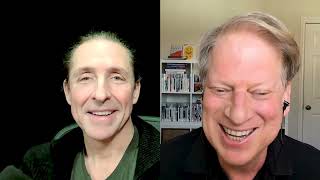
Paul Bloom, a psychology professor at the University of Toronto and Yale University, discusses how consciousness, memory, and fear shape human behavior. He addresses the replication crisis in psychology and explores why social isolation affects the mind.
Chapters
You're listening to the Human Upgrade with Dave Asprey. Today's episode is one I'm really excited about doing because we're going to talk about the story of the human mind. Our guest today studies adult and child development and how we make sense of the world. I'll say that again because I stuttered. Today's guest studies adult and child development and how we make sense of the world because it turns out that there's all kinds of automated systems in your body that are making sense of the world for you. And after they do that, they give you a picture of the world. And that picture may be more or less accurate based on a lot of things that are part of your programming. If you haven't yet ordered Smarter, Not Harder, my new book, I go into this in a lot of detail, but this is a different view than you'll find in the new book. Our guest is Paul Bloom, who's a professor of psychology at the University of Toronto and a professor of psychology at Yale University. And he teaches one of the most popular classes there called Intro to Psychology. And that led to his new book called the Story of the Human Mind. Welcome, Paul, to the show.
Thank you. I'm delighted to be here. Looking forward to talking your seventh book.
Because you've studied psychology at so many different levels, I feel like you've got some new knowledge, some new synthesis of things to. To share. And one of the things I like about your work is you say that the. The core of modern psychology is compatible with us having choice and us having morality and us having responsibility. Tell me about that.
Yeah. Many people see a big tension between them and they're not being foolish to see it. The psychology, the psychology I believe in and I practice and I talk about is reductionistic. It talks about. It reduces ultimately, our mental processes to the activities of neurons. It's evolutionary. It sees things in terms of our evolution as a species. It's causal. It thinks that our behavior and our thoughts aren't due to magic. They're due to sort of the same principles that underlie the physical world. So you're not nuts to say, hey, this clashes with religion. It clashes with spiritual beliefs. It clashes with the common sense notion that we choose what we want to choose and that we have some free will. And I try to argue through the book that the scientific view of the mind and the sort of humanistic view of people, you don't have to choose. For instance, I have a chapter on rationality where I argue that we are very, very smart, creative, rational, Beings. And psychology is the story of that, of how we come to be that way. Psychology doesn't dismiss our abilities. It kind of hopes to explain them and even helps us to appreciate them.
I feel like there's two sides of reality. This is an old Facebook or blog post that I made. And there's one group of people who believe we're meat robots and they're sort of hyper rational. And then these are the computer science people. That is my background. So computer science people who, you know, everything is rational and the emotional is less valuable and the experiential is sort of almost noise. And then on the other side of it, you have the yoga teacher where everything is woo, but you can't make it to class on time. And I think we all know people who are in the land of the lotus eaters or the land of the meat robots. Where is psychology on that spectrum?
Yeah, this isn't going to surprise you, but I reject that dichotomy. This is a hell of a choice to have to make. I do think Marvin Minsky once described us as machines made of meat. And you know, and it's true. It's psychology. Psychology says that we are evolved animals and basically everything we hold dear, all of our conscious experience, our loves, our hates, is just the functioning of our very physical brain. Modern psychology rejects the notion of an immaterial soul, and so do I. But so much of my book and so much of my thinking, so much I feel is actively engaged in the problem of how do emotions work? Why do we fall in love? Where does hatred come from? What goes on when you're in a meditative state? What goes on when you're in a state of flow. And so I feel that modern psychology has fully embraced the emotional, the feeling side, even the spiritual side of us trying to explain it as the product of machinery made of meat.
So you reject the notion of a soul.
I reject the notion of a Cartesian soul, a mystical thing floating around that makes our decisions and somehow connects to our brain. There's softer notions of a soul where soul just means ourselves, our ideas, our minds, our conscious experience. And that's compatible with psychology. But I reject a hardcore notion dualism that all of the important stuff doesn't happen inside the head, it happens somewhere else. I reject that.
So for you, consciousness lives entirely inside the brain.
Yeah.
What do you think about past lives?
I haven't given it much study, but my strong bias, my priors, as they say, as these rational people say, are that it's a bunch of hokum It's.
A bunch of hokum. Have you seen the papers? And I'm not trying to convince you otherwise. I'm just probing what you understand. I have come to the point where I believe that I am simultaneously a rational meat robot and simultaneously an irrational being and that they both live in the same. In the same existence.
And that much I can sign on to.
Yeah, okay, you would sign on to that. If you believe consciously, you choose to believe in past lives, whether or not you can prove they exist, you'll be less afraid of death, and then you'll make better decisions. And if you're right that there are past lives, then you win. And if you're wrong and you die, then you won't know. So the only rational thing you could do to live a better life now would be to choose to believe in past lives.
A sort of Pascal's wager, you know? Yeah. Pascal's famous wager was, you know, he's going to believe in God because if he's right, God will reward him with heaven. And if he's wrong, no biggie. I kind of. I mean, in some way, I could take that as sort of a psychological theory. People believe in past lives because they don't want to die, and that it.
Just makes you less fearful in this life so you can be more dangerous and make good decisions even if there's some risk.
So that is not a claim about whether or not past lives exist. People believe in heaven for the same reason. Right. And people believe in going to a spirit world for the same reason. Afterlife beliefs, I think, are very plausibly motivated by a desire to fear, by a fear of death. So I think a perfectly reasonable theory, I guess I would push back as a psychologist on your notion that fear is bad. I mean, fear is a wonderfully adaptive, important thing.
Fear is useful. It keeps you from getting eaten by tigers. Unfortunately, it also steps up and it gets more attention than is merited by the actual circumstances. So fear of public speaking, for example, that's not an adaptive fear. It's just a fear that isn't helping you at all.
Right. I think it's a deeply adaptive fear. We're social animals, right? And so it's critical that our tribe think well of us. Fear of publicity. You put yourself out there, you make an ass of yourself, and you'll pay the consequences. So I don't want to. I totally agree. I understand what you're going with this. And I don't mean to be a jerk and just picky.
You're not A jerk.
This is fun because you're right. One could have a crippling fear of public speaking and live kind of as a hermit and give up opportunity. One could have a terrible fear of death and never drive in a car, never talk to a stranger. That'd be horrible. But the optimal amount of fear is not zero. What would you think of somebody who speaks to an enormous crowd of people and has no anxiety about it? Totally calm. That person would under prepare, would not take it seriously and would probably mess up. Who would want a child who was unafraid of harm? Kid would go right into a highway. I'm fine. I don't care if I die.
It's interesting. I don't experience any measurable anxiety when I go on stage, even in front of a big audience.
Was that always so? Yeah.
No. When I first. I don't even know what I said. The first time I talked to a thousand people I was terrified. So I had to learn how to do that and in order to enter a certain state.
That's the perfect story of fear, which is your fear was there when you needed it to get you started. I was terrified the first time I drove a car.
Now I think most people are.
But now if I step in the car and start driving, I'm terrified.
That's pathological and that's why it's that when fear becomes pathological or a method for programming people and it's, it's neat to talk about fear with someone who's really studied psychology because it feels like we've had a lot of fear, maybe of, of amplifying negative effects. And it seems like that's what fear does. It makes our bodies automatically worry more about something than is married, like fear of starvation. I'm going to starve if I don't eat today. But you actually have like two or three months before you're really going to starve if you stop eating right now. But like the feeling of fear is so much not reality based. How do we deal with that amplification of fear?
Well, I'll first just step back and make a point, which is I make this in my book. I talk about the evolutionary psychologist Randolph Nesse and he points out that there's an optimal level, these things have evolved. There's an optimal level of fear and anxiety and lust and happiness and sadness that are calibrated to the environment. And psychologists and you and me actually are interested in cases of too much fear, too much anxiety. That's what brings you into a psychiatrist's office. That's what makes you see a psychologist, makes you read books. But what about people who have too little fear? Well, those people don't end up in shrink's offices. They end up in morgues and prisons.
I was gonna say, you know. Yeah.
So there needs to be a calibrate. Now, what do you do if you have too much, if you're too anxious and you have too much fear? Well, I'm not a clinician, I'm not a clinical psychologist, but I imagine that there's, you know, there's certainly medication for it that lowers your base anxiety. And then there's, you know, talk therapy. There's cognitive behavioral therapies of a thousand types. Including. Including what? What. What often gets recommended by people who aren't professional psychologists, but often a real wisdom for techniques to alleviate your fear and so on.
I, I've had great results from doing heart rate variability training where I learned how to sense my body's fear response and how to consciously turn it off.
Yeah, some sort of whack a mole with fear, some sort of biofeedback is. May have some success. That's a. That's a great idea.
So what would you say psychology has figured out about consciousness that is consistent across everything? Like, what are the universal truths of psychology?
Oh, gosh, I don't know where to begin. One universal truth about psychology is the malleability of memory. It relates to the idea of storytelling and, you know, it used. Some people still walk around thinking that we're perfect recorders of the world. Like holding up my iPhone and just recording everything. It all ends up in this hard drive in our head. And if you hypnotize me or do I do regression or my dreams, I could capture any moment of my life at any time. It's all there. I just can't access it. And psychology, I think, has proven that this is utterly wrong. That memory, memory is, is instead a reconstruction. It's an attempt. We have these fragmentary bits of information and then we embellish it and so on. We know that from studies. You know, there's been studies. This is a while now, but after the 911 attacks, a bunch of intrepid psychologists, including some friends of mine the next day said, where were you when you heard the news? When the plane. And people told him, I was at home. And then they went after these people many years later and said, tell me your 911 story. And the stories were totally different.
Really?
That's amazing. But for such an event, it's likely to be different because here's what happens? People end up, you end up telling me afterwards, where were you when you heard when the planes hit the towers? You tell me the story, but you're telling it to me. You embellish, you make it more simple. You take away annoying facts and everything. You tell it again. Maybe you hear your partner tell it a few times and it's a different story. And then by the time, 10 years later. Because memory is a reconstruction, you're remembering not what happened, but to stories. And so many find if you go back and take an objective event, we have film of it, and you ask people their memories, it's totally different. And these are not small things. People have confess to crimes that they never confusingly believe, remembering that they committed them. Right.
I came across a couple studies that I reference in my new book. I found two studies that showed that the way we actually remember things is that the emotion is the key. So we actually think of the emotion. And we're using that to sort of sort through our stories, to bring up the story that matches the emotion versus a fact based search through the brain. What do you think of that mindset? Does that jive with what you've seen about consciousness?
It sounds right. There's some research suggesting that events that correspond to intense emotion often get incredibly misremembered because they aren't stored properly in the first place. So that extreme emotion damages the storage system and memories. And this is one theory of what goes on in post traumatic stress disorder.
Because you go to the amygdala instead of the prefrontal cortex.
Exactly right. Exactly right. You go to the wrong part. Basically. Memories end up in the wrong part of the brain. And the idea is that they're not fully time stamped and they're not spatially stamped, leading these memories to emerge in a kind of a free floating way as not hallucinations, but as a constant feeling of dread for instance. But yeah, emotions and memory are intimately related in pretty much the way you're talking about.
I want to know more about our perception of time because I've had a problem forever. I don't have a timestamp on almost any of my memories. I couldn't tell you what I did last week versus a month ago versus even six months ago ago. It's all in the before time. And I know what I'm doing now and I know what's coming up in a big thing in the future. But I feel like I'm either damaged or just very different than normal people because time is just not that big of a thing. For me, what's going on with that?
So you asked what psychology learned about what's universal to us so we could talk more about that. But psychology also has made some discoveries of differences and differences. There's a lot of differences in conscious experience that we've ignored and now we're kind of coming to grips with them. Some are kind of, you know, some men are colorblind, so they experience the world differently than others. Some people love cilantro, some people, it tastes like soap. But those are sort of superficial compared to the deeper ones. And you're putting your finger in a deeper one, which is our experience of time and experience of the past differs radically. I don't think anything's wrong with you. I think you're just one kind of person who doesn't timestamp things that seriously. Another difference very related to this is some people have a narrative of their life. It's rags to riches, it's overcoming adversity, it's a constant stream of failures. It's whatever. Others don't. You say to them, tell me the story of your life. And they say, what are you talking about? It's one damn thing after another. You know, Other differences are some people, do you have vivid mental imagery?
Yeah, I can do that. Yeah, easily, I think, in pictures for the most part.
So some people have vivid mental imagery, very powerful. Yet these cases of synesthesia too, where they, where, where the vision and tastes are wired up. There's a guy who, who when he ate, he has colors associated with it and he couldn't, he couldn't read the paper while he was eating because the letters would evoke sensations that got in the way of his food. But there's some people who have no mental imagery at all. They close. There's nothing. There's nothing.
What do they have?
They could think, they have, they could do rationally. They can't call anything to their mind. Isn't that incredible?
And they function in society. That's so, so mind boggling.
Not only do they function in society, but, but you have these people like, who are 40 years old and they say, you know, I always thought when somebody talked about thinking up something or imagining a face, they were just using a metaphor. And to my shock, I've spoken to some friends and I discovered they actually have pictures in their heads. Who could have imagined?
Do you have pictures in your head?
Reasonably enough, I think I'm in, I'm in the middle range, in the middle. And I also have a voice in my head. And some people don't I don't mean the schizophrenic voice in my head. I could narrate something or if I'm thinking what to say, I'll kind of run it over my head. Other people, it's silent, silent as a tune.
I did have a voice in my head for a long time and it was, it was actually pretty critical and fearful. And as I did whatever personal development practices, a lot of neurofeedback and meditation and visiting monasteries and whatever, I don't have a voice in my head anymore. It went away. It shut up. Is that a common thing where people develop a voice in their head that's not schizophrenic or that they modify it in some way as they go through psychological treatments?
I think the experience of the voice in your head does, does alter a lot through your lifespan and maybe through different, maybe, maybe treatments and so on, you hear more about cases which encourage it, which you. In which you develop an internal narrator. And you're right, you're right. Sometimes it could be, you know, you could be walking around, you hear, oh, you loser. Like you have.
Yeah, I had a mean little bitch in there and I sort of dealt with that.
There's a famous, There's a famous philosopher, Jerry Fodor, a brilliant philosopher of mine who passed away sadly. And he was once at a conference, he was talking. He says he has a voice in his head when he works. And it goes, go, Jerry. You can do it, Jerry. Go ahead, Jerry. This is very encouraging, a beneficial one. Yeah, that's right.
Tell me about the most revolutionary finding about consciousness in the last 20 years.
I'll tell you something which isn't theoretically that interesting, but it's practically of enormous significance. And it just blew my mind when I heard about it, which is there's these people who move into comas and they're in so called locked in syndrome, where they can't speak, they can't move. And like politicians, they can speak, they can speak. But in these tragic cases and people tell you, should we pull the plug on them? And so on. And a bunch of psychologists, I think, from Europe, different countries in Europe, used the methods of neuroscience to see whether there's somebody in there. And what they did was, I'm going to get this slightly wrong because I forget the details, but they put the people in an FMRI scanner, which lights up when different parts of the brain are active, more or less, and they got them to do one of two things. They said to them for, yes, think about swinging a tennis racket now, thinking about swinging a tennis racket would occupy parts of the motor cortex. It'll kind of light up. You can see that you're thinking about swinging a tennis racket for. No, I forget exactly what it was like. Think about a musical tune. That's a different part of the brain, right? And you might have imagined the person. The brain scan just shows nothing going on. And for some people, it does. But for some people, they start asking questions. So you say, you know, do you have any brothers? And then if it's yes, the tennis racket part of the brain lights up and they have conversations with these people trapped in them. And, you know, my God, there's somebody in there. There's one very moving story. It was reported in a New Yorker article where it asked a person a series of 30 questions. They get them all, right? So plainly there's somebody answering there. And then they asked the person, do you want to die? And then it just shut up. The person didn't answer. I was thinking it over, struggling with that. And that's sort of. The consciousness, which seems to be totally gone, can be revealed through a method of neuroscience. I'll tell you something else. Just another finding which is also practical, which is very old school, but it's always stuck with me. It's the spotlight effect. And the spotlight effect by a psychologist, Tom Gilovich, Basically, in the first experiment to do it, they get people to wear T shirts. This has been a while ago. So T shirts either had a respected person on it, like Martin Luther King Jr. Or somebody who was not respected. And in this case, they had Barry Manilow, who was very uncool at the time. And then you get people to walk into a room, and then later on, you ask the people, how many people noticed your T shirt? And then you go into the room and you say, did you notice this person's T shirt? And the finding has been done a hundred ways by now, is we have a spotlight effect. We think everybody notices us, but they usually don't. We're thinking about ourselves. We fail to make the inference that other people are thinking about themselves, not ourselves. And as Gilovich says, this is very liberating. It's very liberating to know that when I, you know, when I discover at the end of the day my shirt was misbuttoned or had shaving cream on my ear, or when I said something incredibly stupid, that it matters a lot to me, it feels so salient, like the whole world knows, but most people are worried about their own ear, their own shirt. Their own stupid thing. I find that kind of liberating.
How do adults learn that everyone isn't thinking about them all the time? Because it feels like all of us worry about that way more than we should.
Yeah, some of us never do. It's very hard to. I know intellectually that that is not as big a deal as it seems to me, but I just know it intellectually. In my gut, I feel like I'm the center of attention, particularly when I screw up, you know?
Isn't that just fear?
Well, it leads to fear or anxiety or just sadness sometimes, but. But it's. It. The cause of it is this spotlight effect. There's something else. The story of your son is a great story. And there's another phenomena, and maybe, I guess this is the more theoretically interesting change. Blindness. There's a. Oh, yeah, there's a wonderful demo. And you can just see this on YouTube where there's a bunch of students are wearing white T shirts and black T shirts, and they're passing basketballs back and forth. And people are said, watch the basketballs and count how many throws there are. And at the end, people say, oh, I counted. There's 15. But in the middle of the video, they have somebody dressed up in a gorilla suit walk through, pound his chest, and then walk out. Most people don't see the gorilla and that. We are incredible. When we're focusing on something, the whole world, we don't notice changes. If suddenly I dip down and then came right back up and I'm wearing a different shirt, most likely you wouldn't notice. There's these lovely studies where they have people meet other people on the street and ask for directions. Then they have two people carrying a door, and they interject between them. And then they switch people from a man to a woman, from somebody who's white to somebody who's black. And the person giving directions doesn't notice. When you give directions to a person, you don't record anything. So we're kind of oblivious to so much what goes on. Your son had so much latitude. Nobody was noticing. He could have walked around the corner, came back dressed up in an entirely different way, and nobody would notice. Right.
Do you ever worry that people will use this understanding of psychology as a bad actor, for instance? Hey, everyone, let's look at the latest drama in the news. While they're changing, there's big gorillas stomping through, changing society and things like that.
So now let's sort of be humble about psychology, which is many of our findings aren't Powerful enough for me to worry about people using them for evil because they're the kind of things you find in a laboratory. There are some things. So there's a lot of psychology of persuasion and you can use.
Robert Cialdini's been on the show.
Yeah, is one of the masters of that. And Cialdini uses his powers for good. He has all these ways to talk about work for the environment and help other people and everything. But of course there's nothing stopping unscrupulous actors from flipping it around and using them for evil. And you mentioned politicians before. Well, good politicians, smart politicians use these techniques and if they're good morally or bad morally, they'll use the same techniques. So, yeah, it is a worry.
Now we're talking about all these unconscious things. And one of the guys you write about in Your book is B.F. skinner and the idea of reinforcement and punishment. How similar are we to being rats in a cage, as the famous song goes.
Yeah, so I don't treat Skinner gently. I, I, you know, is he had this weird idea which seemed very weird at the time, which is you can't talk about mental processes. Everything we were talking about for the whole last little while, he'd say just nonsense, not science, just nonsense. And of course he's wrong. We have consciousness, we have emotions, we have memory, we have perception and so on. But to defend Skinner, he came up with some very powerful techniques that are still used today for, for conditioning animals for dealing with people who are non verbal in some way. And some of these techniques are very powerful. My favorite example of where we really are rats in a cage is slot machines.
Oh God. Yeah.
So Skinner pointed out, maybe discovered what he called a partial reinforcement effect, which is if when you do something, I reinforce you every time. You know, for an animal that's giving you a food palate, for a person maybe giving you money or just saying, that's fantastic. But if I stop suddenly, just stop, cut you off cold, your behavior will stop pretty quickly. It's not, you say, it's not working for me anymore, plainly stop. But suppose I reinforce you randomly every once in a while and then I stop. Well, you keep trying and trying and trying and trying. Now, slaw machines work on the principle of partial reinforcement. They don't pay off every time, of course. They pay off in a sort of schedule that's savagely calibrated to make you keep on going, right?
Like social media algorithms.
And if it's not slot machines, it's this freaking thing where I took Facebook off my phone, I Stopped Twitter. I took Facebook off my phone. I wake up two in the morning, a little bit up. So I look at Facebook and it got videos. And these videos have been chosen to be exactly the sort of videos that I really like. Old K and Peele sketches, just stuff I kind of like. Clips from movies I like. And then I was like an hour goes by because I keep scrolling up and up and up and sometimes I don't find it. I keep trying and trying and trying and then boom, I get something. And these techniques capture the sort of low level processes in us. And you talked about psychology for evil. Well, there you go.
It's, it's amazing what, what you can do when you, you dial those algorithms in. And there's a second level that social media companies are doing now. Followers or people who create content, even like me, if you follow the algorithms, you can actually make a ton of money. Is something that I would never do. But reaction videos, you know, where people open some product and make a stupid face.
Yeah.
And the algorithms so heavily reward content creators who make these dumb things that they'll do a dozen in a day even though they aren't really useful content. But they're hitting the slot machine. Cause I did that when I got a million views and I made, you know, 70 bucks on clicks or something. I don't know. That's not my model for how I do this. I don't know how the payments work. But it's kind of funny because they're making slot machines and they're making slot machines using slot machine type rewards because sometimes they make one that works really well and sometimes they don't. So it's kind of a machine that's feeding itself at this point all by manipulating people at one level or another. It's, it's kind of creepy.
That's right. That's right. So, so I would blame Skinner for this, but to say I blame it means he was onto something about, about human behavior. Now.
What do you think all of the social isolation of the last couple years, like what effect does that, is that likely to have for written on society? Like what are they going to be like 10 and 20 years from now? If you spent two years of your early development years without the normal stimulus you'd have?
It's a really good question. I think there's been damage of at least two types. One type is what you're talking about. A social isolation might affect different kids at different ages. There's young kids who have not gotten used to seeing people without masks for strangers. And then there's like adolescents who, you know, during a time in their life which is supposed to be heavily socializing, might have existed only on zoom. And I think that's really rough. Then the second thing is for children of a certain age, there's learning gap problems where there's some studies suggesting that, you know, they didn't go to school basically and online school was kind of disaster that they suffered from, you know, serious limits in reading and math, which might percolate up. So that's all bad news. And you know, the bad. A lot of bad news is just that it's really hard for kids. The good news is I just, I'm a big champion of resilience and I think we're just a lot tougher than people give us credit for. But I don't know, I don't know how I question, you know, I don't know how the pandemic has changed us as people. I don't know. I know some people, so this is just anecdote, I don't know how broad it is, who have become kind of agoraphobic. I noticed people who have spent a lot of time in their houses. I'm thinking of, I know an older woman who spent a lot of hours and now she's not leaving. It's not like she can't leave the house, but she's comfortable in her house, she's at home. No communicating, we'll resume. She's nervous about getting sick from somebody else. And I think people of various particular people, various pre existing mental problems, the isolation could not have been good for them. And I don't know, I don't think we fully have an understanding of what was successful or not. I've read some deep analyses of sort of American states that did lockdowns versus those that didn't and so on. And the conclusion from these analyses is it's kind of hard to tell what works best.
Yeah, there's a different kind of crisis you talk about in your book that I really appreciated. And it's the replication crisis. And it's happening in psychology. It's happening in lots of fields like Alzheimer's research, like depression, all these things where someone makes a study, everyone believes it. And for 20 years we follow that path until someone's like, oh, that original study was bs Tell me about what's going on in psychology with the replication crisis.
So it hit psychology really hard because so many of our sort of most significant findings fail to replicate. And you might think, oh, just bad luck. Or the replication Wasn't done well. But in addition, it turns out that there's a reason why, which is that we were doing our science wrong. We were doing it very opportunistically. There's a million specific problems. The main problem is basically if you do enough statistical analyses, you can kind of get a result even if there's nothing really going on.
The old. If you torture the data enough, it will tell.
Yes, exactly. Exactly. So much of psychology was, you know, fire and arrowed and drawing a bullseye after it hit. And so we've gotten better, we've cleaned up our statistical act, we're doing better experiments. Now we're preregistering them, which means that you say ahead of time what analyses you're going to do, where to address a different problem. We're now much more serious about testing a wider and more diverse range of subjects. Somebody once calculated that a randomly chosen American college undergraduate is over 4,000 times more likely to be in a psychology study than anybody from anywhere else outside.
Of America because they're free guinea pigs.
They'll do anything for beer, money and a couple of some course credits. And now we're doing better. So a lot of research is.
And it's true in all medical studies. Yes, psychology and everything else. You know, the, the 20 year old white male might not be a good model for the 50 year old Chinese woman. Like there's.
That's right.
There's some core stuff, you know, cellular level, but the psychology at, you know, the Ericksonian stages of adult development, all that stuff, we, we kind of miss that. So we're fixing that.
That's right. I'll give you an example of where it made a difference. Exactly what you're talking about. There's a lot of studies showing, maybe not surprisingly, that college undergraduates have much better memories than elderly people. But somebody looked at this and they do. But somebody looked at this and found out, well, you know, you're testing the college undergraduates in the late afternoon when they're free to test. Then you bring in elderly people in late afternoon. But elderly people typically do best in the early morning when college undergraduates are still sleeping off their hangovers.
Circadian biology tied to aging.
So when you make it a bit more fair, there's still a difference, but it's not as radical. And this is an example how a failure to attend to the diverse needs of different communities leads you to wrong conclusion.
It makes a lot of sense that if you test people at their peak for who they are, and there's probably individual variations. I was very much above the neck guy early in my career. And I am a computer hacker, computer science, artificial intelligence network kind of, kind of thinker because that's my tech background. And when I got into neuroscience and started a neuroscience company that does feedback and all, I became more and more aware that it feels like many fear and anxiety signals are coming from outside the brain, but inside the body. And it's almost hard to differentiate. And I've asked different experts this question of what percentage of anxiety is coming from our physical body versus from our thoughts. What would you say for the average person? What percentage of anxiety is physical versus thought? Thinking of stuff?
I don't think it's the kind of answer. It gets a percentage to it because it's sort of a mix. It's like how much of your height is a result of your genes and your environment.
Well, versus eating enough animal protein or something.
Yeah, right. It just, it just isn't the sort of thing that, that could be seen as separate contribution interaction. I would agree that there's some times where your anxiety can, is definitely part of your physical body. Below neck. The simplest case is, you know, what are you. Physical pain, you know, your leg is aching. That's not going to do much for your, for your, your state of mind. And then, and then the other simplest case is, you know, your triple espresso. That'll do. Or your double the of.










