EPISODE #1031: How to Increase Neuroplasticity and Strengthen Your Brain – Moha Bensofia
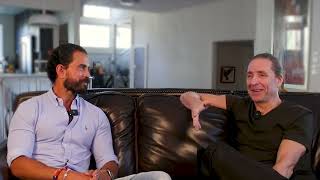
Dave Asprey talks with Mohan Bensofia, CEO of neurotechnology company Mendi, about increasing neuroplasticity and strengthening the brain. They discuss neurofeedback technology designed to improve blood flow in the prefrontal cortex and how it may help with ADHD, PTSD, and cognitive function.
Chapters
You're listening to the Human Upgrade with Dave Asprey. Today's recorded live, which is my favorite in person. And our guest today is one of Europe's best known investors in angel companies and the CEO of a really exciting neurotech company. A kind of technology that I've been a fan of for 12 years and something that's been a part of, a part of my path of improving my brain. And it's not neurofeedback, it's something different. It's also something that you have read about if you've already checked out your copy of Smarter, Not Harder. When I wrote the book, I talked about this new form of brain hacking technology that had great promise and I mentioned one of the companies doing it. And after the book went to press, I just happened to be introduced to by a mutual friend to the CEO of the company and didn't realize how far the tech had come along. So this episode is to introduce you to a new idea behind how much control you actually have of your brain, a new way of accessing your meat operating system and something I haven't really talked about on the show and probably wrote a blog about maybe in 2012. But since then this has kind of been missing from the conversation because I didn't have a good way to get it to you despite my best efforts. His name is Mohan. Ben. Sofia Mohan. Welcome to Austin. Welcome to the show.
Dave. So great to be here. Thank you for having me.
We're going to talk about neurotech. We're going to talk about getting more blood in the front of your brain and doing it without drugs. Although you could do it with drugs too. But before we get there, you're kind of a conundrum. So you live in Stockholm, so yet to bra. I have connections through my former wife in Stockholm. But you don't look like you're from Stockholm now. I'm from Costa Rica and somehow you're Europe's most popular, very active angel investor. So are you one of those guys where like, I don't always drink Bacardi, but when I do, I drink this. Like, you're like the most interesting man in the world.
I only drink tequila and I actually have. Yeah, I actually have a tequila room in Stockholm that's pretty infamous.
Got it. So you have this like international man of mystery sort of thing. You're like, dave, I'm calling you from Dubai and you're just bouncing all over the place.
I'm an investor in a few companies that a lot of them in health, but I mean, my whole journey. So I'm a Costa Rican. Everything kind of happened by chance. My whole journey happened, started out with me scaling a phishing app. And then from there it became. I kind of became one of the tech guys. So when I got to Sweden, after my issues in Libya, which, which I.
Mentioned, do you guys see why I'm like international man of mystery right here? Yeah, I'm Costa Rican and issues in Libya.
Got myself in a little bit of trouble in Libya and I ended up going to Sweden. And what happened was that I ended up getting a job at a fishing app. And one of the first things that I said to, I don't know if you know this about Sweden, but it's very easy to access anybody in Sweden. You can literally google anybody and get their phone number and their address. So what I did when I got there, and obviously I'm very close to, you know, one of the founders of Spotify. And I was like, well, there's this whole world that in Costa Rica is so new to us. Like, you don't, we don't have access to these people building these incredible, like, it's not a common thing. But in Sweden you've got all these engineers building these incredible companies. So I started talking to Daniel and I said to him, well, how do I get involved in this? Because I don't know how to code. I'm not an engineer. I was a mediocre high school student, never graduated college. I don't know anything about engineering. And what he said to me is, the skill set that you've got is very complementary because Swedes build. They want to build the best thing, but they don't want to talk about it.
That's true.
So my job just basically became to get the projects of smarter people and just talking about them and it all just kind of happened organically. I remember I Googled like the top 20 hot startups. This is 2014. And I remember reaching out to all the CEOs of these startups and like half of them replied me. And, you know, half of that half ended up asking me out for a coffee. Okay, let's hear what you've got. And I ended up taking a job with a fishing app called Fishbrain. And I remember this wasn't a dating.
App or a computer fraud app. It was not kind of like good old fashioned, like I'm catching trout app.
This is literally, yeah, it was the world's largest fishing app. It's the social network for anglers.
Okay.
And I scaled that and I took it from. Yeah. I helped that company kind of blow up with just common sense. Analog, Costa Rican. You know, we call it Malicia India, like where we come from, which is just like, kind of like that Native American, like, evil thinking, kind of like just common sense. You know, the same skill set that it would take for you to sell a selfie stick to a tourist. Like, that's the skill set. I just happen to be in these companies that have value, and I managed to negotiate some equity, and that's kind of how it happened. I remember, actually, my first conversation with this. With this guy. I said to him, I know nothing about fishing and I know nothing about apps, but you need to hire me. You need to pay me this salary, because I had calculated how much I would need for rent and food and to live comfortably, and I want 2% of the company. And he said, you're crazy. And I said, well, if I'm not crazy, I'm going to make you a rock star. And that's how my whole career started, kind of.
Wow. And then you diversified into investing and all. And then when we were introduced by a friend, which seemed kind of randomly, you actually described a little bit about what you're doing. I said, you know, there's one company in your space called Mendi. That's the leading one, and I have the gear. And you're like, I'm the CEO of Mendy. I'm like, this is too crazy. Right?
That was so exciting.
So why did you decide to go into running a neuroscience company, given that you're a social hacker?
If anything, I didn't want to. And I was actually. I was retired before that. I can't even take credit for finding Mendy. So the founders. Actually, one of the founders found me, and after that fish brain period, he had added me on Facebook, on Messenger. And then in 2009, that was in 2014. Then in 2019, he started messaging me. Can we have a meeting? Can we have a meeting? I need to show you this thing I'm working on. And so he had identified me, and he figured that I could scale it because I could have access to people like you, for example, that could get the word out about this technology that him and his partner Rikard had built. Who? Rikard's like, one of the smarter people I know.
Is Rikard also in Sweden?
Yeah.
Okay, got it.
And so Rikard's the one that built the technology and Sami's. Yeah. So they're the two founders of Mendy. And I remember going to. Wework in Stockholm, because I had to another one of my companies. I'm an investor in dozens of companies. And I said to him, you've got 15 minutes. And he came over and he brought this, you know, this Mendy. And he's like, oh, this is a thing called. You know, this is a thing called mendy. And it will fix everything from your depression to your anxiety to your ADHD to your insomnia to your lack of focus to. And I said to him, that really sounds like snake oil. Let's try it out. And then I tried it and I'm struggling to control it and I don't know what I'm doing. And then I. But it was definitely interesting. And I said to him, who's financed this? Who's bankrolled this? Because you don't look like you've got, you know, two dimes to rub together.
It's a well put together product too. When I got it, I was surprised because the one I used to sell 10 years ago was like a foam headband. It was really shitty.
Yeah, yeah, so. And he said to me, well, the EU has financed it and like Swedish Innovation agency and stuff. So I figured that due diligence has been done and I got on board and I started using it and it really helped me.
That was probably a mistake to trust any world government for doing due diligence on entrepreneurship.
I didn't say I was the smartest guy in the world.
Coming from 12 years in Canada, there's quite a lot of times where they just hand money out without a lot of diligence. But fortunately you picked a good one, because I have checked it out. Well, let me explain a little bit about why I'm excited about this tech and what it is for people. And then I want to go deeper with you on it, but I feel like normally I would ask you to do it, but I guess I could, but I feel like I've been so deep and because of the 40 years then stuff, I'd like to frame it for people and then we can go in on it. All right, so if you've read smarter, not harder, you understand there's a chapter on the brain in there and meditation and all the things that work better. And there's kind of a stack rank list of things that will just get you to these states more quickly. And part of the challenge of hacking the body is how do you get a signal in that drives change quickly? And sometimes you impose a signal, sometimes you create a signal. So an example of imposing a signal, you could use like flashing lights, like with a brain tap. And you can have, you know, headphones that are playing certain sounds. That's an external creation of state. Or you could use a feedback system like EEG. What I do at 40 years of Zen, which is an electrical thing. I'm going to show your brain what it's doing electrically so it can change it. And electricity can do a lot, but there's some things it can't do. And what's intrigued me a lot is what if you could consciously move blood around inside your head? Not electricity, but actually the thing that allows electricity to happen. The reason I care about this is that part of the chemically induced brain damage from toxic mold that I experienced. The stuff that Daniel Amen's work pointed out for me was that I had at one time 3 standard deviations less blood in my head than average. And guys, I've started a hundred million dollar company. This show has more than 300 million downloads. I'm a very successful guy with that. Okay, so if you have something like that going on, you can still do stuff, but you will have room for improvement. What that for me represented was, oh my God, what would happen if I got it up there? And you didn't go to business school, did you? No, that was probably a good move. So I went to Wharton. When I was at Wharton, I went to the program where it's a full time number of hours, but they fly the professors in. Everyone who's there is also working a day job. And I decided I might just be dumber than everyone else because I would sit down to do one of the problems on a test in class and I get like, you know, 10, 100% on the first question. The second question I get like 50%. Third question, 20%. After that it was just blank. Like it was. My brain was gone. And I was actually kind of scared. And I went to a psychiatrist and I'd read Daniel Amen's first book. And the psychiatrist actually when they saw the blood flow and they saw the metabolic activity on scans, he said, yeah, you have adhd and in fact inside your brain is total chaos. You have the best camouflage I've ever seen. I don't know how you're standing here in front of me today like basically your brain is applesauce in there. And I'm like, oh, thank God it's not just me. But it was because of that that I started looking at how do I control the blood in my brain. I looked at like blood volume and exercise and salt and Hydration, all of which. But then I came across this idea that you could basically bounce light off blood in the front of your skull and see how much blood was there, and that you could train it just like you can train yourself to make your fingertip warmer, which is the proof point for this. This is a very old biohack from the first days of biofeedback. So all of a sudden I'm like, oh, you can do this. So I bought this cobbled together, crappy system that had really bad characteristics of performance, but the data showed every time that I would use it, that my ability to pay attention would go up. And I can pay attention for as long as I want to now. Right. And that was something that I just like. I don't know how to bring this to people because I know that it makes a difference, but most people aren't going to do like an open source version of this thing. It's like soldering it yourself and just all this nonsense. So I thought it was a lost art, like one of those things that had potential but would never be available. And then all of a sudden this like, well made headband pops up on Instagram. During the very first launch of the public selling of this thing, I said, all right, I want it. And guys, this is literally a random connection. Like we don't have any commercial connection. I'm just really interested in this tech and I think it's really worthy. And I'll likely build it into some of the protocols that I recommend for you if you're a listener or if you're a member of the Upgrade collective, because it's that powerful. So that's my framing of it. Like, shine a light in your head. Learn to have more blood where you want it.
I truly believe that this can change the world. So me, I have adhd, but I also had really bad PTSD from Libya and I had nightmares every single day. So I couldn't get a good night of sleep because of these nightmares. And when I started using Mendy, the nightmares started to go away to the point where they were completely gone. And then I realized that it's really a better functioning prefrontal cortex controls everything. So it did make sense that it would help you with everything from your focus to insomnia and addiction and anxiety and ADHD and ADD and depression, because it does sound like snake oil. But in the end, it's the same when you understand how it works. And I did not study neuroscience and I. I am constantly surrounded by people that understand this better than I. Do I know you understand this way better than I do? Because I, I came in as a user and then they basically, you know, when, when they asked me to take the job, I said, yeah, but I know very little about this. And they said to me, yeah, but you believe in us, and that's really all we need. And, you know, and then what I did is I just sought out the experts, the people that understand all of this, so that we could find the answer. Why is it that people feel better? Why is it that when people use Mendi, the anxiety goes away? Why is it the panic attacks, you know, go away? Why is it that the, you know, the insomnia, all these things go away? Why is it that you can focus better? It's been life changing for me. You know, I would be incapable of having a job where I have to sit down and focus, let alone answer an email you can understand, like, sit there for hours. You still answer emails very rarely. And usually on my phone. I don't even travel. My laptop access, too. Yeah, I do.
I'm with you. It's always been pain to do that. And now if your listener is going, I don't have adhd. Actually, you probably do. If you live in the current world and you have a mobile device, you've probably given yourself adhd. This is why our attention span is about equal to a goldfish. And if you're younger and you've been eating the stuff they feed you in schools, which is pretty much peasant chow at this point, they've driven all the nutrition out of it. That causes changes in the prefrontal cortex blood flow in particular. So we have an epidemic of tech and nutrition stealing focus.
Yeah, 100%. The layers of behavior that have been put in. For example, like a child can't go to the bathroom without, you know, sending watching 10 TikToks and stuff. That's not how you and I grew up. Right. So it's. The technology curve is absurdly quick, and the brain is the same brain that our great grandparents had when things were a lot slower. So basically is how do you give yourself a fighting chance by strengthening your brain. And that's what we do. So what we do is very active. For me, it's. It's the reason why I do it is like, I'm so committed to it is because I truly feel that a lot of people that are medicated don't need the medications that they have or they need lesser. I feel that people are just forgotten. It's. You just give them stuff to numb Them. And we're not really trying to fix anything. Like. And it's because it's a different business model, right. For us, we're not in the business of just milking people out of as much money as we can. For us, it's actually about providing a solution that helps, and that's the whole thing. So for me, I always think, because I started using Mendy and I saw improvements in myself at age 40, I start to think, like, what would have happened if I would have had this technology at age 17? Maybe I would have graduated college.
Yeah, I understand. It would have made a big difference.
It would have made a big difference. I would have had better relationships. Emotional regulation is a huge thing. Obviously, there's studies being done in Sweden on juvenile delinquents. And the one thing that is a constant between them is that they have a lack of oxygenated blood flow to the prefrontal cortex. And obviously, as you measure it, you see the blood, you know, there's the connection to neural activity. And basically, you can rehabilitate people. You can control your anger, you can control your emotions. You control addiction. I was talking to a UFC fighter that just cold turkey stopped using nicotine through. You know, this technology is available. Why doesn't everybody have access to it?
85% of people in prison have brain disorders. And there's actually a study I cited for that. ADHD is the most common one. And then there's Asperger's. There's other associated things like visual disturbances, like you can't read because letters keep moving, things like that. And it's a pattern. And when you treat the brain, and I'm sounding a lot like my dear friend Daniel, Amen, where you treat the brain and suddenly the person changes. And I'm actually a fan of anything that increases blood flow in the brain. In fact, I use nicotine as a cognitive enhancer, and it does bring laser focus in. So does Modafinil, which I also have used for many years, on and off. I'm on it right now. Full disclosure. Thank you. Modafinil and Danger Coffee, because I love my brain on that. We also know that things like the Racetam class of family, the smart drugs like Piracetam or aniracetam. All my followers know about aniracetam. If you've read any of my books, you know about. Increases oxygen in the brain, right? We have all these feelings, all these sensations that happen in the body, and then we use our prefrontal cortex to make up a story about them. And that's why it's so hackable. Because if you hack the body to do more of what you want, but you don't have your prefrontal cortex working very well, then even if your body gives you a clearer signal of reality with less emotional triggering, you're still just gonna. I don't know. And it's that feeling of your brain not working. It's really kind of a horrible feeling. That's why I'm stoked on this. Is there anything I said in there that doesn't match your model?
No, it matches completely. And obviously the prefrontal cortex, I mean, the executive function, it's basically taking all those feelings and that information and deciding what to do with them. So if the guy honks, it's like you said, it's what's going to stop you from getting out of your car and punching them in the face. Right? It's what, inhibition, things like planning, like, all these things. It's basically the prefrontal cortex that controls them. So strengthening it. It makes a lot of sense. For me, it was as simple as I was basically like. For example, I remember after a few weeks of using Mendy, I had an ex girlfriend I'd had a bad breakup with. Tell me, like, why are you so nice? And I was like, I've actually heard that from a few people. Like, that's. That's a horrific thing to hear.
Here's a question. Did you notice you were nice before they said?
No, I noticed it when everybody started telling me. I just knew that I felt better.
Yeah.
Yeah, I just knew that I felt better. And I had been using Mendy for weeks, and then all of a sudden, it's like, well, what was wrong with me? Everybody's telling me I'm so much nicer. And she's like, yeah, it's still you. And she's fantastic. You know, her name is Elsa. Like the. Like the Frozen movie. The Frozen cartoon.
Very ninja dating move. So, like, smooth over anything with the public comment like that. Yeah, I see what you did there.
Yeah, I'll send her this. But no. So basically, it was just. She was just telling, like, what? You're so much nicer. Like, you're.
It's still.
Still you. And that's the problem with a lot of these. Like, a lot of the medication that people take, because it's not really you. It's a numbed version of you. Right?
Like, amphetamine does not make you nicer.
Well, I'll tell you that. But for example, and it's really. It's Interesting. I had a conversation about Ritalin and Adderall and what they do, and there is a big overlap. Imagine if you could get those superpowers without the side effects. And that is possible through work. That is possible through naturally, Right? But for example, somebody that's depressed or somebody that has some sort of condition, you give them a drug. What you're doing is you're just numbing them, right? You're not really fixing anything. You're just making them, you know, 50% less sad, but they're also 50% less happy, and they're going to, you know, so basically, the whole point of being fully there and fully yourself, but better, to me, that's what it comes down to. Well, I think the cool thing about this is that obviously everybody's got, like, their own limit and everybody's got, like, their own baseline. And I think your brain. And if you do a mendy session, I've got a device here.
I mean, yeah, mine's. I think it's not unpacked yet. I just moved to Austin.
But if you do a session, I do a session. Your results are probably going to be better than mine.
I'm not sure. I haven't done it in a while.
But to me, it's like I've been improving a lot, and it's like, I'm never going to be an elite swimmer, but I can become a much better swimmer kind of thing.
That's the thing, right?
And. And that's the thing. Like, I. You. It's. It's not about competing even. Like, so the whole point, when I did mendy, and one of the arguments at first when we launched on Kickstarter and they were telling me, like, oh, like, yeah, Like, I remember they had done the sales strategy, one of one of the founders, and it was like, oh, then you can buy a few mendies and stuff. And I was like, well, that goes against what I believe in. Why would you buy everyone, share. Get one me and share it with your whole family if you've got six people? Why would we. Like, we're not Apple. We're not trying to sell a phone for everybody. Like, we're not. I'm not trying to sell as many mendies. I'm trying to impact as many people as possible. For me, this is like. It's literally kind of like more. It comes from a sense of obligation because I've already made money doing other stuff that I don't care too much about. Like, I did. I told you, I've scaled everything from fishing apps to all sorts of stuff. I've been, you know, I'm involved in some things that, you know, I get to pick and choose more when I'm not broke than I did at first. But for me, Mendy is really about just helping 100 million people. Like, when I speak to a lot of users, and when you talk to a parent that says, you know, my kids panic attacks got better, or somebody telling me, like, you know, my. I can sleep, and they're thanking me, to me, it's just. That's everything.
Emotional regulation is precious for kids because kids usually develop a feeling of shame that they don't have it. And you're not supposed to have it. You're a kid. Your prefrontal cortex, the part that does that, it isn't built yet. So you're supposed to have, like, really strong emotions, the teenage angst and explosive anger. And then if your parents have done their work, then they're like, it's okay, little Johnny, you're fine. That kind of behavior isn't going to work. And they say it a thousand times until the prefrontal cortex does, and they don't get triggered at all. If your parents are that good, that's amazing, because I'm not that good. No one's that good because, you know, parents, we get tired too, right? Our prefrontal cortexes aren't perfect, but we all do our best. But then we end up basically being yelled at enough times for it. Then we're, like, frustrated. So then when you get a wave of emotion, even as an adult that generates from the body, even if your prefrontal cortex catches it, instead of just being, oh, that's what that is, then you get shame and guilt, and that's a lot of deprogramming. A lot of EEG work I do is around that. But what you're doing with Mindy is very different because there's no reset process. There's no forgiveness. It's literally just kind of make the curve go up. And when you do that, you wouldn't know it. You're just making the curve go up. But the thing you're doing inside your body, there aren't words for it. It's forcing blood forward. And as soon as you kind of slow down, you see the curve go down, like, oh, that's blood draining. And eventually like, oh, my God, I have a signal for this. And if you're a longtime listener, even in the very early days of the podcast, I talked about heart rate variability feedback, where you put a little thing on your ear and you can tell when you're being triggered, and then you can learn to turn off your trigger. That's another form of biofeedback, but this is a new one, and it's one that was only written about in a few brain science journals. But even then, it was kind of just a little tiny corner of neuroscience, and I had lost hope it would be commercialized. But the reason it's so powerful is that now once you learn how to do that, your brain will do it automatically. So then all of a sudden you're like, I'm going to focus. And then laser focus turns on and you kind of feel it in the front of your brain. And when an emotion comes up like that, you've got another level of focus. It won't derail you.
I like to look at it as kind of like. Kind of like the Tinder model where you swipe things left or right. Like, imagine if you could just basically teach yourself to not go into that dark place.
There you go.
You know, if you could teach yourself to put down the bottle of vodka.
Yeah.
You know, like, because, for example, like. So I went through a lot of therapy, and one thing that I learned is that therapy doesn't really change you. It just makes you understand why you do the stuff that you do. What Mendy does is more like a physical thing. It's literally, it's like going to the gym. It's like, I can have all the good intention in the world. I want to carry the shopping bags, but if my arms are not strong enough, I can't carry them. I understand. I should carry them. It's like, if we were talking about pull ups earlier, you could do 46 pull ups. 47 is the most I've done. I was doing. Yeah, I was doing them before I got here. But, you know, if I want to do pull ups but I don't have the strength, that to me, that's the therapy. It's like, yes, I should be grabbing this thing and I should be doing the pull ups, but I just don't have the ability. What Mendy does is it helps you build the ability to build the strength so that you can actually focus on the task at hand, on your work, or so that you can put down the bottle of tequila or the bag of chips. So there's a lot of people, because self control is such a big part of what makes our lives better or worse. A lot of people say, hey, I started losing weight because I can portion control now that I use Mendi, and it's like, obviously it's not a weight control device, but what it is is it's a self control device. And that controls everything that overlaps into any part of life.
It does. And I look at this as like, you have these triggers or switches, and when your prefrontal cortex is weak, it doesn't take very much to hit a trigger. Right. And if you've done therapy, like you said, well, now you know, you have triggers and you have this chasm or like these areas, Right. And the approach that I believe is the highest efficiency, if you can do it, is you actually delete the reservoir of whatever. Like you do a full reset process, like in smarter, not harder. And usually that requires electrodes or Buddhist meditation in a cave or something. And then you're like, you know what? Even if the trigger's there, there's nothing to trigger and it's gone. That's a baller, heavy duty spiritual practice in the rest of the time. And you're always going to end up discovering new little things to do that too. The rest of the time, though, like, oh, look, there's something I didn't know about. It's getting triggered. But if you have this, like, incredibly robust prefrontal cortex, you're going to notice that your nervous system did that to you and you're going to be like, whatever, and you're not going to lose your focus. Exactly right. And it's that strength of the trigger. Like, it's going to take something really big to get me out of my focus state. Because now I have a strong focus, so I won't be emotionally dysregulated. And if my strong focus is on following these things I have decided to do instead of just being blown around by the wind every day, that's a unique form of willpower, control and grit and perseverance. And yes, guys, those are trainable. I have trained billionaires using this kind of technology. Ten years ago, it just required a laptop and a bunch of crappy code, and it was terrible. So, no, now it's a consumer device. And like I said, we don't have any kind of commercial stuff set up. Although I'm probably gonna end up doing something with Mendy because it's awesome. But this is like, I don't remember how much I paid. It was Kickstarter. It was like 300 bucks or something. 400 bucks. What's the state of it now?
Oh, it's the same. My dream is that within the next few years, people don't have to pay for it. It'll be paid for by insurance and by nhs, will give it to people. But I will tell you to use your example about, in school about answering the first question, right? And so NASA, for example, they use it on their astronauts and astronauts. Yeah. So they use it like at the habitat. What they'll do is they'll get a drone and they'll get these pilots to perform this incredibly tedious task. So they'll get exactly the same thing with you in the test, right? So what they'll do is they'll get them to fly a drone, like in a square. And obviously the first square is perfect. The second one, but after square number 50 times of flying this drone, obviously you start to falter because you start losing your focus. And that's where the resilience thing comes in. And resilience is basically, you know, a mother that has a baby that's. That hasn't slept like her, keeping it together, a stronger prefrontal cortex. That's what it is. The same thing for, you know, any. Any part of life, basically having more resilience in your brain. And obviously the cognitive decay that happens with the years as we get older. You're talking about things like Alzheimer's and stuff. In my opinion, these things are completely preventable. If we train our brains, just like people going to the gym or exercising, that will keep them healthy.
You're not alone. I mean, Dale Bredesen, who wrote the End of Alzheimer's, has been on saying preventable. Daniel Amen's been on saying preventable. You're saying it. I wrote Headstrong, my big brain book. Yeah. These are preventable. I don't know that blood flow alone is going to prevent all of them. It's. It's a massive component because mitochondrial dysfunction is an underlying problem. And if you don't have blood, you have mitochondrial dysfunction. If you have toxins in the blood, you still have to deal with those. But the rate of decline, if you're getting Alzheimer's, that's the toxin produced kind. It'll be so much slower because at least you have enough blood. So I think this is also along the way. You would have more willpower.
And the whole if you don't use it, you lose it kind of thing. That applies to the brain. And that's the thing. This is not passive. This is not. You're just there and passively something is happening. You're doing the work. So when people talk to me about, like, competitors and stuff, and I. I don't believe in competitors. Like, I'm like, I Like all the wearables. I love the space. I've become a nerd about this space later on. Like I, I got into this in my 40s.
Yeah. You don't have competitors on the market that I found.
But, but, but, but to me, the whole thing is about like, I, I don't look at it that way. I just look at it like together. What we're all trying to do is we're trying to improve the human status right now, where we are like trying to catch up with where technology is and give people a fighting chance. So I'm a big fan of everything that's happening. What we do is different, to be honest. Our competitor to me would be like a squat or a bench press. Because if you think about it, what we do is to be honest, physical gyms would be the competitor to us. This would be a gym for your brain.
We are going to find that people who want to be healthy are just going to realize, let's see if I could train my focus. In fact, you just reminded me when I was doing this with clients, like a couple of hedge fund managers, people, this is like 2012 when I just was first starting Bulletproof. Before we got into all the consumer packaged good stuff, I called it the upgraded focus brain trainer. Right. Because that's what it upgraded your focus. You could actually train your brain to pay attention to whatever you want it to. And when you can pay attention to whatever you want to, a unique ability emerges. When focus is effortless and it doesn't cost you much to do, it doesn't cost much. Electrically you can have built in firewalls. Like, I don't see ads. Like you put them on a page. My focus is so strong, I just see everything else is out of my visual field. It's gone. I couldn't tell you what ads were there because they didn't have the ability to like they do for most of my life and for most people it's there and your eyes are inexorably drawn to it. And you look at it and you're like, God damn it. And then you look back and maybe you send a little wave of hate to the company who interrupted you and an additional one to Mark Zuckerberg and to Google probably who were involved in the ad somehow or you just don't see it. But the not seeing a trick, I think that comes about from having a strong focus which you can train. So imagine that advertisers are going to hate what you're doing. Are you afraid of that? You're going to have like an ad supported model.
It's funny because we had so right before we launched on Kickstarter, which it was like a historic thing. And for me that's when I was like, our moral compass needs to be at the forefront of everything because it's very easy to prey on people that have a condition or people that desperately need something. They'll believe anything and they'll pay anything. So for me it was like we need to basically not over promise and we need the science to catch up. That's why I'm starting to talk about these things now, because I know there's some studies now, Olaf Kriglesson, like some really interesting things that are, that are, you know, where it's inequivocal that this basically works. Stanford guys, like you're going to see all this, all this stuff and it's really, really, really exciting for us. But so bottom line is for us it was just we don't want to over promise anything but what we want to do is we want to just talk about what's available in a way that is understandable to people. So that's why we've got neuroscientists from Stanford now explaining what we're doing, explaining the science. Because for me the key is that everybody has access to it, that schools have access to it. I will tell you, for example, we have had a couple of big companies in the us, big healthcare companies, for example, in the early days say that they wanted to buy 30,000 Mendis and give them to at risk youth, like as a CSR project or something. And I actually said no to them because we weren't ready and because what would happen is we would get noisy data, like we would get bad data because it would be like giving treadmills to people that don't want to use them. The data that we would get is that people don't use the treadmills, right? When in fact what you have is you're giving the treadmills to the wrong people. The treadmills are fine, but you need somebody that is motivated to use them. So for us it was. Now we've gotten to the point where we have 20, 25,000 users and now we can take that step and go into the hundreds of thousands because we have enough cohorts, enough data. We know what it does to people with insomnia, we know what it does to people with panic attacks, with anxiety, people with depression, people with adhd.
Just to be clear, you don't diagnose or treat any of those things, they just go away as a side effect of focusing.
So I will, I.
That's how it works, man. Same thing. Meat can't cure anything. But if you eat some grass fed meat and all your stuff goes away, it was just magic. So it's cool to be able to do magic, right?
I like magic. Big fan of magic. Yeah, it's. To be honest, three years ago, I'd never heard about this. I would have said all of this is bullshit.
I would have said about time someone does this because I've already done to myself and this is real serious. And guys, I have no reason to tell you this other than because it matters and because now it's accessible. And before you had to be a real hacker to do it.
And the average person like me, like the way that I look at it is I was a 40 year old Costa Rican guy who had some sort of level of success and basically slipped on a banana peel and, and had this company land on my lap for me to even know that this technology existed. So what chance does, you know, a girl in, in Mexico City have? Like it's, it just doesn't exist. Like we need to make this mainstream for me. And that's why, you know, having access to these outlets, to these channels, people like you that actually understand this and have a following and can get that word out there. To me, that's how we create real impact and we help people. You know, I've had conversations, for example, with people, so I've never been a meditator, I've never meditated. To me it was always fluffy. It's just like meditate, go, you know, go lift something and. But the thing about meditation is that even when you talk to people that are very into it is that you can't really assess how well you're doing it, how deeply you're doing it. But when you have a score, when you're visualizing exactly how well you're doing, that's how you can really elicit change. So for example, it's like if you're on a treadmill and you don't know if you're running at 7 or running at 10 because there's no numbers there. Or if you're bench pressing and you don't know if you're doing £80 or £180, it's very difficult to make constant improvements. And the thing with Mendy is that over time your results will be better. And that's a very tangible, objective measurement. Right? And that's why NASA and Stanford and These very, very, very legit institutions, they're like, okay, yeah, this works. Let's figure out how to simplify this so that you can actually explain it to people. And that's kind of the process that we've been at. And. Yeah, and people keep asking me, like, why over the past couple of years, I haven't gone and just leveraged my contacts because I clearly very, very well connected to kind of get the word out there. And for me, it was just because the science needs to catch up. Like, we need to be able to have everything so that we can show. Because there's a lot of anecdotal data. There's a lot of people saying, I sleep better, I feel better. I, you know, I'm not depressed or whatever. Like, there's. There's so many of these stories. Right. But you need a certain amount of data so that you can really 100% say this is what it is. And that's where we're at now. And I'm very excited. I think within a couple of years, this will be mainstream and people will have better lives.
If you're paying to put your kids through college, or if you're paying even worse for yourself through college, the way I did, this is probably worth it. Just like smart drugs are worth it, cognitive enhancers are worth it, because you're just going to get what I would call an unfair advantage, which was the name of one of my early products of Bulletproof, which makes me happy. My call for you would be take care of your brain. And it's not just drinking your minerals in your coffee or MCT oil or taking your supplements or going for a walk. This is actually direct rewiring of the flow of oxygen and nutrients in your mitochondria in the front of your brain. Kind of cool, kind of legit, and pretty shocking that I wrote about it and then just meet you.
That's so cool. Yeah, that was so cool. In Dubai. Super random.
Yeah.
Yeah.
And I do have some friends in Dubai now. I've been a few times, and. But still just randomly at a dinner party. I know, Dave. And then just a WhatsApp comes in, and then, you know, you're in Austin a little while later. So thanks for coming out, and I'm truly impressed and you're inspiring me to re up my Mindy sessions. We'll probably. I don't know if you brought your phone and your device will do it after the show and we'll see how my brain's doing. It's been a while, but I mean, it's on here. The Mindy app's installed. Anything else we should give a URL.
Mendi Mendi IO codedave M E N.
D IO Code Dave.
I'm very grateful because honestly, you're obviously the godfather of biohacking, so a lot of it. So this is a big step for us in getting that awareness out to people so that we can give them the training wheels to improve their lives. Like I did. Right. I'm just this, you know, dumb guy from Costa Rica that basically found this technology and now I'm just thinking, why doesn't everybody have it? So thank you. Because you would be the channel to get it, get this information to everybody, and whether they want to do it or not, that's their choice, right? We believe in people choosing. We agree on that.
Yeah. You're very welcome, my friend. And my job is to curate the awesome stuff that works and let people know it exists. And like, here's the whole menu of stuff you can use to biohack to upgrade yourself. You're probably not gonna do all of it. I don't expect you to do all of it. Just some of the stuff is gonna be shiny and exciting and awesome and worth your time and energy, and some won't be. So if what we talked about was there, get a Mindy, use Code Dave. If you don't, then do something else. But you got to know it exists. And right Now, I think 99.9% of people listening. Unless you're like a die hard old school fan of mine, you've never heard of heg, the technology that's behind what Mendy does, and you certainly haven't heard of Mendy. So this is a new part of the world of biohacking.
Thank you for having me, man.
You got it. You're listening to the human upgrade with Dave Asprey. Went up.










