EPISODE #909 New Developments in Stem Cell Treatments Dr. Harry Adelson & Dr. Amy B. Killen
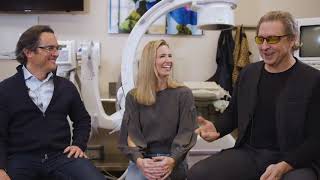
Dr. Harry Adelson and Dr. Amy B. Killen discuss stem cell treatments, including very small embryonic-like stem cells (VSELs) and clinical applications for aesthetics and sexual rejuvenation. They cover needle placement techniques, regulatory challenges, and how the stem cell industry is evolving.
Chapters
You're listening to the Human Upgrade with Dave Asprey. Today is a live interview and it's here in Park City, Utah, with a couple friends who've been on the show before. It's Dr. Harry Adelson, one of the most experienced stem cell guys that you'll ever find, who's done more than 6,000 procedures, including the whole body stem cell makeover that he did on me, or to me, with me, whatever that's called, along with Dr. Amy B. Killen. And you're on the stem cell side doing aesthetics and sexual rejuvenation and things like that. So last time you heard from them, I think maybe the time before, I had been unconscious for a while, and you had taken stem cells from all over the place and external factors and injected them in every part of my body that you can possibly do. And that's a massive rejuvenated thing. So I wanted to come back in because I'm here to get a refresh on my stem cell makeover and share what's happened in the last couple years with stem cells with our audience. So, guys, welcome to the Human Upgrade.
Thank you so much, Dave. So good to see you again.
Well, let's assume that some people listening didn't catch the last couple episodes. So talk to me about just the very basics. One minute on stem cells. What's going on with stem cells? What are they? Because they new to the field and then other biohackers who are super experienced. And we'll get into the biohacking mindset that you guys see in the people who come in first off, just ground the audience.
Okay. Well, stem cells exist in virtually every tissue in our body, and their job is to maintain the health of their microenvironment. So whenever you have healing after injury of any sort, it's a stem cell mediated event. So these stem cells recognize that the tissue's been damaged, they launch the healing cascade and thereby giving the body the opportunity to heal. Well, that works very well in an acute situation. But if you have what's called suboptimal healing, which is most chronic pain conditions where either you've had one traumatic injury or multiple overuse type injuries, and the actual tissue structure changes and the tissues are constantly firing pain signals, well, you're sort of left with what you're left with. So the idea with regenerative medicine and stem cell medicine is we take stem cells from an area of your body where you still have a robust population and place them in the area of suboptimal healing, thereby Tricking the body into thinking that it's been re injured and launching the natural healing cascade, which is really why it fits nicely with naturopathic philosophy because it's using the healing power of nature.
I love that. The type of areas where we can get stem cells or stem, similar to stem cells throughout the body. Just give me the brief list. Where do you get stem cells inside the body to put them in the right place inside the body.
You can get them from your bone marrow, you can get them from your fat. Those are the most common areas. I mean you can actually get them from all different areas. You can get them from your teeth, from your urine.
I use earlobe cells mostly because they're.
Everywhere, but lots of them in your bone marrow and your fat. So we use those quite a bit.
All right, and what's changed in the last couple years in the stem cell industry? And just for listeners, this is going on, what, 12 years of doing stem cells and 20 years of doing injections for pain. Right, and you've been working with cells for how long?
About eight years.
About eight years. Okay, so what's shifted? What have we seen? A lot of clinics changed and regulators and masks and God knows what's going on in the world. So what are you guys seeing?
Well, first talk sort of about the good news, which is the advent of this VSEL technology. HCL stands for very small embryonic like stem cells. And these are cells that exist in your blood. However, under normal circumstances they're completely quiescent, which is another word for hibernating. They're inactive. So if you take blood and you concentrate platelet rich plasma, for instance, there's a lot of V cells in there, but they're completely inactive.
So it's kind of like the US economy for the past two years. That's V cells and nothing's happening. Okay, got it. And we're going to activate them in some way.
I about this V cell technology for a number of years, but the only method that I heard about for activating them was this multiple freeze thaw that was very time consuming, took like 10 hours. And I just couldn't figure out how to integrate that into my day. And then one Sunday afternoon I got a cold call from Dave Asprey.
That's weird.
And I answered and I said, hey Dave, what's up? And you said, there's this guy in California, his name is Todd Ovokides, he's developed a new technology to activate V cells. It's a laser technology. Let me introduce you to him. I met Dr. Todd. Amy and I both spoke with him. He came here and visited. And starting last summer, we've integrated in the V cell technology along with the we still use bone marrow, we still use fat for the time being, but we've added in this V cell. Do you want to talk a little bit about the mechanism of action of the V cell?
Well, the idea is these V cells are. They're very youthful cells, so they're not changing as you get older. They maintain a lot of the youthful properties. Like the telomeres are still nice and long. We're using these cells. They're more active even than normal mesenchymal stem cells. And they also are very youthful. And so we're taking advantage of the fact that they're more youthful and more active than some of the other cells that we have access to.
I also like the VS part of it, the very small, because the smaller the cell, the easier it is to get into the brain to go all over the place.
They're smaller than red blood cells, so they freely cross the blood brain barrier.
I've been interested in ways to get more varieties of stem cells that can do the right thing in the body at different places I came across quite a few years ago. Now there's an ultrasound way of activating them and then the freeze thaw way of activating them. And we didn't even know 10 years ago that we had these very small cells are newly discovered compounds. And the idea that now I can come in and what we're going to do as soon as we finish recording and probably shoot some of it for you guys too, if you really want to see my butt or something. But we're going to take my cells and we're going to do a refresh on the whole body stem cell makeover. What that is, is every joint in my body has had cells to keep it younger. All this stuff along the spine. So we're going to go to the areas of weakness that I've had historically. I've had three surgeries on my knee. I had a recent surgery on my toe on my right foot. But we're going to systemically treat it and we're going to add in the V cells this time, which is really cool. So the idea of using all three versus just using V cells. What are the benefits that you get for doing a mix of stem cell types?
Well, there's the theoretic benefit and then there's the benefit that we've actually observed to this point. The theoretic benefit is you know, we talked about the small aspect, the embryonic. Like what's interesting about these V cells is if you look at sort of the hierarchy or the family tree of stem cells, at the very top are the embryonic stem cells and those are the most primitive. They have the ability to turn into anything. The problem with using them clinically, there's two problems. One is it's illegal and arguably unethical. The other is that they tend to turn into benign cancers.
Wait, which ones are these?
The embryonic.
The embryonic ones. And no one wants those anyway. There's. That's like a 1980s technology.
There are some centers in the world.
Really.
Yeah. That do it. There's a group in Moscow that does it. And there was a big case study about somebody who had embryonic stem cells injected into their spinal canal and they grew a tumor in there, which is a really bad place to grow a tumor. So we don't really use those. But then down here we have the mesenchymal stem cells, which are what we use from bone marrow, what we use from fat. But in the middle, looking down this hierarchy in this family tree are the embryonic like stem cells. They're almost as primitive as embryonic cells, but they're not so primitive that they turn into cancer.
And plus they match you. If you're getting embryonic cells, which again, almost no one on earth does, that's not what stem cells are. But if you're getting those, they don't have a match from a mitochondrial perspective and from a nuclear DNA perspective. So maybe you should get your own cells and just get the ones that act like that. It seems to me with the way I like to treat my body.
Exactly, exactly. So that's the theoretic. And so the thing that I feel the need to say is that this is. There's not a lot of research in Vsel. So you know, I'm going to tell you what our experience has been so far, but you know, we can't say with any conviction that this stuff actually does anything. Having said that since we started using the Vsel this last July, six, seven months ago, the two things that we've noticed just in this short period is that when people wake up from the proced, they have almost no post procedure pain, which before was a problem. People would really.
I've done both. Yeah.
And so that's gotta be a good thing. You know, that's an interesting finding.
It's almost like they're doing something that you can see almost every time. What do you call that clinical evidence. Is that what that's called? Is that still a thing?
That's right. And then the other thing is that people are reporting immediate benefit, which is not typical. Normally it takes two to six months before you see any benefit. And now with the V cell, we're seeing more and more people. And it's not everybod, but we're seeing more people saying, yeah, I just feel better right away.
I noticed too, from putting them in the nasal canal or eyedrops like crazy improvements in vision, just like over the top. So you literally can just put a drop in each eye and you're like, what just happened? So I'm a fan of maintaining eye health, which is a good thing. What do you see if you use V cells? Facially, skin, reproductive organs? Tell me the story for men. Well, because I'm kind of interested in that. And women, because I'm also kind of interested in women. So give me both stories.
I think that similar kinds of effects of other stem cells, but we're just seeing them faster, like he mentioned. And then sometimes in some people, just more improvements than we might see with other stem cells. So it's kind of like you had PRP back in the day, which we were still using for a long time. Then you have the other types of stem cells, the bone marrow, the fat, these mesenchymal stem cells, and then you have the V cells. And in terms of which is the strongest, it seems like the further we go down, the more strength we're getting and then the faster results we're getting as well. V cells are in your blood, so we don't have to necessarily do all the other procedures if we don't want to. To get the B cells, we're just taking blood and then we're using the.
Special laser, I think for the whole body makeover. I absolutely would want my marrow and my fat. Because you're going to go under anesthesia because it's a long procedure, like everywhere on the body that you can get an injection to be stronger. It's a major upgrade. So I would want all of the benefits, all the growth factors and things. But if it' a touch up right, you can come in and you can make it easier. So faster recovery and things like that. I've been trying to figure out, like vcells is a dumb name because everyone who hears it thinks it's vcell C E L L. And then it's all confusing. So I'm like, oh, they're faster. So then what should you call them? And I Go back to Star wars, but like the old Star wars from the 80s or whatever it was. And they had turbo lasers. Now, anyone who's an engineer knows a turbo is the thing you put on, like a gas engine. And you don't need a gas engine on your laser. So turbo laser is a dumb idea, but I still want to call it turbo laser just because it sounds cool.
Turbocells.
Yeah, yeah, turbocells. But we still got to find a new name. Super turbo upgrade. Whole body Stem cell makeover supreme.
It's a lot of adjectives.
I think that. And if it's like spell something cool, right, like you will rock, then if we can just work that out, I think we can do that.
All right, you're on it.
Okay. Now let's talk a little bit about what the industry has done in the past maybe three or four years. Because there's constant changes. It's almost like instead of allowing it to evolve the way normal industries do, there's these people with black sunglasses and black suits who just come in and stir up the rules every six months to make big Pharma more powerful. What changes have happened that have been beneficial or not beneficial for the stem cell business in the last little while?
Sure. Well, you know, the FDA put out a series of guidelines some years ago where it was a very strange move. Nobody really understood quite why they did it this way, but they sort of issued these guidelines saying what they considered okay and not okay. But then they said, we're going to wait three years to actually implement. That was it. About a year ago they actually implemented. And the main thing that happened is pretty much the entire umbilical stem cell cord industry, for the most part, came to a grinding halt in the US.
It'S still vibrant in the rest of the world. Right. It's almost like there's less innovation in the US now for some weird reason. Who would have imagined? All right, so in the US we're not doing umbilical cells. What was the downside of umbilical cells?
Well, you know, the downside was there were. There were actually people not doing a good job. So there were laboratories providing these umbilical stem cells that may not have even been alive or in some cases were contaminated. So that was the. You know, that was sort of the. The silver lining of this whole thing is there were people out there who should not have been doing what they were doing.
Thanks for saying that. Umbilical cells have always scared the crap out of me. And it's because what did the mother. You got Them from have. Okay, that's one set of things. And like, what was her lifestyle? Were they healthier cells or not? And all that. And then you have genetics and whatever else that might be in there that shouldn't be in there. But then you go, what do they test for to make sure they're clean. And if this is the universe of things that we know you might have, this is the universe of things you might actually have that we don't even know about yet. Some slow growing virus or whatever. And then this is the amount they test for. And then, oh, after you get through all that, maybe you got cells from only eight women that you're getting injected with and everything was. And then you go, oh, were they treated properly and are they still alive? And so at that point, that's not to say you can't get good umbilical cells, but every step has to be done with precision and integrity. And it's really hard and it's a complex supply chain. And so like I went to the discount stem cell clinic over the border or something. I would not feel comfortable personally with those. But I do know that there are some overseas in Switzerland or somewhere where they're probably doing a really good job. I'm just concerned about all the steps versus my own cel. Okay, yeah, maybe they're a little bit older, but we'll just make them younger. We'll get some B cells and laser them and I'm going to eat a radioactive spider later, whatever. We can do that and then it's compatible. And if it's infected with some weird virus, I'm already infected and I consider that to be much safer. Am I out of a line?
Well, that's why we like autologous tissues. Autologous meaning donor and recipient are the same person. We like using your own stuff because then there's really no question.
It's cool too, because even guys like my friend David Sinclair been on the show a couple times and Steve Horvath, who did the Horvath clock for cell aging and I talked about that on a couple of things. I just spent a couple days with them. What they're doing is they're saying we can measure cell age and we can biologically reverse it. And even in Superhuman, I read about some guys in Japan who are taking cells and reverse aging them. Stem cells and making them pluripotent. So why do I need to get this from an umbilical cord when I'm pretty sure we can take this and say, you, Sal, I want you to look like this and act like this and do this, and we can do that. And it's kind of cool because it hasn't happened before.
Coming soon.
Okay. All right, I have a question, and I want to start here. Of all the treatments you've done for any one patient, what was the most miraculous, crazy, unexpected benefit that you found?
I mean, my favorite patients are actually men who have erectile dysfunction. And if it's. It's pretty severe, so. So, like me, turn it around, like, because it's life changing, right? If you have, like, really severe dysfunction that's been going on for years, it's affecting your social life and your relationship as well as just kind of your. Your confidence and all of those things. And. And doctors have told you there's no hope for you to be able to occasionally actually turn back the clock on that and give people function back. It's. It's pretty amazing.
That is really life affirming if someone's in that situation. And to be really clear, the treatments with that, that involves injecting what kind of cells into the penis?
In the past, I've done it with stem cells from bone marrow or from fat. I've used PRP more recently, B cells. But some of my first cases where I was most just. First blown away was back when I was just using basic, you know, bone marrow or fat stem cells.
And there was a time you injected me, and you're like, this guy totally doesn't need it, but I'll just give it to him anyway. Okay. If you're new to the show, I might sound like I'm being inappropriate. Amy has been on stage making jokes about my penis with my hipaa, with my HIPAA permission form signed because she did the first. The first injections.
You were videotaping me injecting you the.
First time I spoke live.
Yeah. You were live videoing without me knowing it. So I look up, and I have a needle in my hand, and I have your penis with my other hand, and then there's your camera. And I was like, oh, and I.
Had a picture of a cat over the penis.
Not really.
I had a blanket that was there. So there's nothing you couldn't unsee if you find that on video.
Yeah.
Do you remember the other details in the video? What I said?
I don't remember.
You were probably too traumatized. So the camera's aiming, aiming down from where I'm laying on the bed thing, and then the blanket's blocking views, but all you see is Amy's hands coming down with Gloves on and this big needle. And as soon as it goes in my toes spread, I'm like, swing, like, ow. And then I say something along the lines of, this is going to help with width and girth or something like that. And then you started laughing, which makes the needle shake. Okay, you didn't do that. But it was riotously funny. And it wasn't painful. So every guy listening just cross their legs right now. There's lidocaine.
Can't feel anything if you're here. We just put you to sleep.
Usually, yeah. You did it again during the six hands whole body stem cell makeover. And that was non traumatic at all. But it's not as big a deal as it sounds like. And then you follow it up with some other shockwave kind of stuff. And now the reason that you would do this even if you don't have ED is that it actually grows new blood vessels and new nerves. And what could go wrong with having more blood vessels and more nerves in a senso organ that needs blood vessels to function? It's almost like it gets bigger.
It's a good preventative strategy once every.
To prevent erections.
No, no, no, no. To prevent non erections.
All right.
Oh, goodness.
Did I make you blush?
Did you? It's possible.
That's not supposed to be possible. All right, so we talked about the guy side of things, and you're doing B cells with that now. But there's also the woman side of things. So talk to me about what you do with vaginas. Where do you inject, what results do you see? Who should get that kind of a stuff? Because that's part of the stem cell makeover. So you come in like, oh, you're going to make my face look better, make my spine better, everything. Oh, and you might as well take care of my lady parts. So what happens in there?
I'll inject the clitoris. And I'll inject the anterior vaginal wall, kind of where the G spot is. Usually it's a few injections inside, and it's numbed, too. So it's numbed. Yeah, same thing. Top of numbing cream, not painful. Or you're sl. Sleep super easy, you know, super easy, super fast. And really no downtime from any of these injections. So. And people report increasing, you know, sensation.
No. No downtime, as in.
No downtime, as in you're able to get up and go, exercise and go. Okay, normal activities.
And it's usually one or two days before sex.
You can usually have sex right away if you Want to.
Okay.
Yeah. For both. Both men and women. All right. As long as you're not, you know, hurting, then that's fine. But yeah, we have, you know, increased blood flow. Same kind of thing that we see with. With men. We see improvement in sensation, improvement in an orgasm, sometimes improvement in stress, urinary incontinence symptoms.
I've heard several women friends who have kids mention that after being treated, they're like, oh, my God, I don't sneeze pee anymore. That's good.
Exactly. That's nice. You can get a trampoline and you can jump on too. So, yeah, that's what we do.
Okay. That's really cool. And from a male perspective, having experienced a vagina pre and post, I don't think it was the same vagina. It was a very big difference. Just to not be too crass on things, but the amount of rejuvenation you've been three or four days was just unimaginable. That's awesome. I'm a fan of that. And I think doing it when you're getting a whole systems upgrade is something you should just do. Let's talk about the kind of person that comes in for a whole system upgrade versus, like, oh, I just wanted more erections, or I just wanted my face to look pretty or something, maybe. Harry, you want to start with this? About half of both of you, half what you do is makeovers.
Let me just quickly remind people what full body stem cell makeovers and how it came to be. So when I started doing stem CELLELLS Back in 2010, very few people in the United States were doing it. There was really just a small handful of people. And so I was traveling to South America to learn from the maestros, from the people who'd been doing it the longest. And that was partially because I needed to learn from mentors, and there weren't any here. And the other was my practice was very slow here because no one had heard of stem cells. This is back in 2010, 2011. So I would go spend a month in South America, then I'd come back here. And my practice here, interestingly, was all ranchers, Wyoming cowboys. And the reason for that is because the earliest adopters of bone marrow stem cells were veterinarians. And here are these people who own these expensive work animals, these expensive horses who are getting old and have various injuries, and they want them to keep working for a couple years. So they would take him to this guy and he would do bone marrow stem cells on the horses, and they would see with their Own eyes how well it worked. You know, the horses went from not being able to work and now they could work. So these guys would say to the vet, well, can't you just do my low back and my neck? And the guy would say, well, no, I can't because I'm a veterinarian. But there's a guy in Park City doing it now. You can go to him. And so in those early years, I was getting these busted up ranchers who had worked their entire lives, like, watch Yellowstone.
That bullet hit that guy way too many times. Right.
I mean, these are guys who just never take a day off. They've worked hard their entire lives, and they literally have arthritis throughout their entire body. So I started doing the. And these are people to your question, a mindset. These are very pragmatic people.
Ranchers are cool. I grew up in New Mexico.
They're very pragmatic people. They're interested in what works, and they consider their body a piece of. You know, if you have a piece of farm equipment that breaks down, if the warranty covers it, great. But if it doesn't, you're still gonna get it fixed because you need it in order to function. And that's how they feel about their bodies.
And they don't whine either. Like, they're. They're pretty tough. They probably wait too long to come in, Right?
Yeah, there's no victim stuff going on with these guys. Yeah, you don't have to wor about that. The hardest part is to get them to tell me what hurts, because I'll ask them, so tell me about your pain. And they'll downplay it. I'm like, no, I want you to complain to me.
I love that.
So anyway, so I started doing these huge treatments because they'd say, do my back and my low back and my neck and both hips and both shoulders and both knees.
Overall, my tractor.
And so just completely, like jokingly, I called it a full body stem cell makeover. Like, really tongue in cheek. Well, then on leap year, February 29, 2016, was the first time that you came in, Amy and I treated you. And then we started getting these biohackers. And these are people who, you know, don't necessarily have arthritis, widespread systemic arthritis, but neither do they ever want to get there. These are people who want to live to at least 100, if not beyond, and be active the entire time. And I started getting people saying, well, can't you just do my whole body in one sitting? And I thought, yeah, actually, why not? And then I asked Amy. I said, amy, what would you think if we just basically did every single injection that we know how to do all at once? And this is from the. You know, I'm from the Mick Jagger school of anything worth doing is worth overdoing. And that was what. When did we do yours? I mean, it's been.
It's been a while.
It's been like four and a half years since we've been doing it.
I remember you wanted to say, could we come in twice? And we'll do, like, lower half and upper half. And I'm like, Harry F. That I'm gonna have to fly to Park City. Like, just do me good everything. And we talked about it and, you know, you brought in the whole team. And who doesn't? Is this more men, more women? What's the balance of it?
It's evenly split. It's evenly split. So people come in. They come in the day before the morning of the procedure. They meet with me and Amy. They meet with anesthesia. They meet with my nurse. You know, it's a bit of a commitment. It's a time commitment. It's a money commitment. It's an energetic commitment. Anesthesia puts them to sleep. The whole procedure takes about three hours. I inject stem cells, bone marrow, stem cells, fat stem cells, V cells into the entire length of the spine, both shoulders, both elbows, both wrists and thumbs, both hips, both knees, both ankles, and great toe. And while I'm doing that, I do.
The scalp, the face, the neck, the decollete, and then the sexual organs.
Decollete? Is that how you say that?
Decollete? Yeah. Yeah.
All right. And why is the decollete different in men and women? Aside from obviously boobs. But that's not what I'm talking about.
Women tend to wear lower shirts and dresses and they get more sun damage.
That's the only difference?
Well, that's the main difference.
I thought there was like a different, like, skin tissue type like that it was thinner or different appear in women.
The way it is exposed.
Okay.
To the sun and to. You know, and women just care more about. Men don't tend to show their chest.
So it's a just. It's a cleavage issue. Pretty much.
It's cleavage.
And yes, I swear I read.
I mean, it might be. You could be true.
Somebody somewhere told me that there was like a hormonal difference in the skin on the chest for women. Maybe it's like more because you have to hold babies there and maybe it's like more friction resistant or something. It was supposed to be softer and thinner on women than men. Like, otherwise, like, if your elbow and mine, yours would still be thinner. Because that's possible.
That's possible.
All right, I'm gonna have to find the study. All right. I'm really curious. I was like, you're gonna know because you know everything about skin. All right, let's talk about skin.
Okay.
All right. So what can you do to my face to make me look like a teenager? I mean, more like a teenager.
So we'll do injections, which, you know, I kind of look at the skin and just areas of thinning skin or areas of volume loss, injecting the stem cells and the B cells and all those things. And then I'll use microneedling as well afterwards. These things are helpful for improving the skin tone and texture and fine lines and making your skin just more youthful appearing. It. These things don't help as much for, like, loss of volume. Like, you know, when we lose volume in our cheeks and you put, like, filler or something in your cheeks, that's an immediate sort of filling of your face. Stem cells are not as good at filling, so they work well also with, you know, with other things, lasers or. Or fillers or things like that, if people want to do that. But a lot of our patients really want to sort of. Sort of stay natural, and they don't want to put other things, you know, into their skin. So in those cases that. This is really great just for making your skin actually be more youthful, because you're increasing collagen and elastin, hyaluronic acid, all the things that we start decreasing production of when we're, like, 25.
All right, I'm still stuck on the filler thing.
Yeah.
All right. So, yeah, you can inject hyaluronic acid, which is a component of collagen, which is probably the safest filler. Right.
It's pretty safe. And you can dissolve it if it.
Goes awry because you have, like, a big. Like a little baby face on this one.
Yeah, probably. Yeah.
Okay. But couldn't you inject calcium hydroxyapatite as a scaffolding to actually grow collagen in there?
Because some of the fillers are actually calcium sort of scaffolding type filler, like, radies.
And then if you did that with cells, wouldn't you then grow collagen and other tissue stuff on there?
Yeah, and there's actually a lot of research looking into using exosomes or cells and in conjunction with some of those type of things. In conjunction with either this Calcium scaffoldings or with lasers or with basically combining different types of modalities to get you even better results.
Got it. I feel like we're right on the cusp of just saying we don't really need fillers. You might inject something that causes, probably with cells that causes your body just, oh, I lost some tissue there. Maybe I should grow it back. And then you just grow it back. So you have this little pink kid cheeks.
Yeah, sounds good.
How long until we get that?
I mean, probably several years before it's.
Marketable, but like five years. You think it's going to happen five years? Okay. And guys, think about this. The amount of change that's happened in the last 10 years versus the next five years, it's getting exponential for stem cells. It really is. And you're really on the cutting edge because you're doing the different types, all the growth factors. So I see innovation happening everywhere. You just added the lasers, which is, I think, a really cool, really cool addition. What do you do to evolve both of your practices so to stay on the very, very cutting edge? How do you know what's good? How do you know what's bad? Where do you learn?
I think a lot of it's just sort of networking and meeting people and going to conferences and events. And in this world, there's not one single source of information. So it's about who you meet.
Yeah, I would say I've just trained myself to never call myself an expert. I try to maintain a beginner's mind. And I can learn from people who've been doing stem cell therapy for a shorter period of time. I mean, I was one of the early guys doing it, but I still. There's plenty of people out there doing fantastic stuff that I can learn from. And this full body stem cell makeover, for instance, if you look at it, it looks wildly complicated.
Let's talk about that just for a second. Most people listening back, I got cells. But needle placement is an art and a science. It's really hard to get right. And that's something that I don't think we've ever discussed on the show. So we have to talk about that. Maybe finish your point, but don't forget needle placement. You gotta explain.
Well, just to finish the point is just that despite so to watch this very complicated procedure looks so complex, But I can tell you every single maneuver who I learned it from.
Oh, that's great.
There's really nothing that I've devised myself. I've just learned from all these different people. From all these South American countries and North American countries. And I've spent a lot of time traveling, learning from different people, creating this meld of the best things that I learned. And in this country, we're so enamored with the concept of best practice that there's one right way to do things.
It's clearly bullshit, given that patients are.
Well, that was the thing that I saw when I was seeing these different clinics in South America was one clinic was very primitive and simple and inexpensive, and the other clinic was very complex and gold standard everything. And they were both getting good results. The difference was the type of people they were attracting. So when I saw that, that's when I said, you know, I'm just going to do what I want done to me and then I'm going to attract people who think the way I do.
Imagine if that was the Hippocratic oath, like, you know, only do to people what you'd be willing to do to yourself or your dad. Right? And at that point it's a different thing versus first, do no harm. Because, you know, like, that's actually garbage on its face. Safety is your first priority. You should hide in your house wearing 17 masks and see what happens forever, right? And clearly safety was your first priority. Breathing might have been your first priority. So I believe that what I do is to myself and making something that is clearly within all the standards of care, but also recognizes when someone comes in and says, I want to be one of those ancient cultures who would tend to their forests by having animals go through and eat stuff and maybe light fires to burn a little bit of debris so that they would have a park and you can choose that. Or I want to be one of those people who just waits till I smell smoke and I send helicopters in with big drums of chemicals to try and put out a fire because I didn't take care of my forest. So I think the mindset that you've got there is much more. Let's just be preventative and let's make this work better. Let's go back to needle placement, though.
Oh, needle placement, right.
We're talking about limbic things. What's the difference if you're off by 2 millimeters?
Well, it's the difference between being inside a joint or outside a joint. And if you're putting it inside the joint, it needs to be inside the joint. Same with intervertebral discs. Intervertebral discs are one of the only tissues in the body that do not not contain any blood vessels. So if it's not in the disc. It's not going to get in the disc. There's no hand grenades here. It needs to be precise. So this behind us is what's called a C arm. It's motion X ray that we use for needle placement. And behind that there's an ultrasound machine. So the nice thing about the X ray is you can see the bones, you can see the placement of the needle. We use a little bit of iodine contrast so you can verify that the fluid is going into the tissue that you want it to go in. That works great for joints and spine and epidurals and intervertebral discs. But for rotator cuffs and Achilles tendons and that sort of thing, then that's when we use the ultrasound. So having the two together really is the one, two punch. So if you're looking for a place, if you're considering having stem cells done, you want to make sure that they do either one or the other, or preferably both.
Honestly, it's a big procedure. I kind of believe if I'm going to get surgery done. How many professional athletes have you done surgery? That would be one of my qualifying questions. And then if you're going to do stem cells, how experienced are you? Because having the gear doesn't mean you know how to place the needle. So my vetting of you, I don't know if I ever even told you this. So remember, Lana is a Karolinska Institute trained medical doctor, full md, ER doctor, all that kind of stuff. So she came in for my first treatment, and afterwards she's like, his needle placement was just top notch. So she came in and was kind of inspecting your work and so you received high marks.
Well, to be perfectly honest, I usually turn professional athletes away because they're such monumental pains in the ass. But I will tell you the greatest sort of complex.
Yeah, you whiny bitches. They're very difficult.
You gotta talk to their surgeon and you gotta talk to their trainer and you gotta talk.
It's true, they're irons.
But the one thing, and I don't think I've told you this yet, Dave, is over the last couple of years, I have have a referral source for me has been the Navy seals. I've gotten a number. I've gotten a number of those guys in and they come in and I say, you know, how did you find me? And they said, oh, well, you know, I went. I went as far as I could and they couldn't help me. And they handed me a list with three names. You were first on the list. And here I am. And then I get a check from, you know, United States Government, Special Forces Command, escom, I think it's called Special Forces Command or something. And that's not something that I can, you know, like these guys, their identities are top secret. So it's not like I can whip out my phone and say, hey, can I make. Can we do a little video? And they're like, no.
Do they show up and like, rappel down from a helicopter? I'm picturing that right now. Yeah.
No, but that's been a huge honor to be able to work with these guys. Mostly it's gunshot wounds, which is not something we deal with. But just doing the fluid hydrodissection with ultrasound guidance, putting the stem cells along the nerves that. That are firing the pain signals, the entrapped nerves, has been very helpful.
That is one of the fundamental things. In fact, I just interviewed Tony Robbins and Peter Diamandis about their new book, Life Force, a big anti aging book, which has just great info in it. And they talk about hydrodissection, which is also something I've talked about, I think, in Superhuman. Can you define in a little bit more detail what it is, how it works, and why? Because I think this is a new part of biohacking that the audience needs to know about.
Fluid hydrodissection is a technique where you take the ultrasound camera, you visualize the nerve in the field, and then you place a needle right next to it, not into the nerve, but just next to it, and inject whether it's exosomes, whether it's V cell, whatever sort of regenerative agent you're injecting. The concept is that pain generation can occur when those nerves are fibrotic and entrapped in the tissue. Because nerves should normally freely flow through tissues through the different fascial layers. And when they are no longer, when they get adhered and they're not able to pass freely, that fires pain signals. Now, I will say something about hydrodissection is performing. It is incredibly gratifying to do. And it looks bitching, like anybody can look at it and go, wow, that is so cool.
It feels so different when you get it done too, and you're watching it and all of a sudden this nerve, it's all squished like a layer, just like sedimentary rock. And all of a sudden it just floats free and you're like, ah.
And when the nerve is actually adhered, it can be amazingly curative. However, there's other causes of pain, and I just. The One pitfall is I see some docs like that becomes 100% of what they do and they, and, and they, you know, now they have a hammer and they're looking for nails, you know. So I think it's a really nice tool to have in your toolbox. But it is not a Swiss army knife.
It's not. And anytime someone says one thing is going to do everything, they're totally wrong. Except for coffee. I mean, let's just. So it's a system and like, oh, what's the most important thing for maintaining your car? Well, clearly it's windshield washer fluid or is it changing the tires? There can be one. So I get a little frustrated because you'll see inventors or specialists sometimes this will fix everything. And I've had some people on the show who are like that and it's neat because they know everything about their tool and it's like the best knowledge. They go deep all the way through. Like there was a guy a while ago and I'm blanking on his name. Progesterone. And progesterone has all kinds of anti inflammatory effects when you use it locally. Right. And he's like migraines, progesterone, headaches, progesterone, colds, progesterone, broken bones, progesterone. You're like, hold on, the broken bone one. But his point was this has broad spectrum appeal and the more foundational you can get is good. But to your point, I think anyone with chronic pain and movement disorders, you might want to see a functional movement guy. And then you might want to do hydrodissection and you probably will be there. You should get some cells put in because you're doing the repair work and you sort of layer these things on with an openness to say, oh, maybe I need meditation as well.
Yeah, Stem cell therapy is not, not frontline therapy for low back pain. The question you asked Amy earlier is some of the most spectacular improvements that you've seen. For me, it's been dehydrated discs, desiccated discs. And these are people who, they're frequently young men, midline pain, worse, bending forward. Frequently it's deadlifting injuries, you know, doing the deadlift movement with let with not quite perfect techie. And if you look at their mri, you can see the white disc, the white disc, the white disc, the white means it has hydration and it has fluid in there and then there's a black disc and that's right where they point at their pain. And this is something that all the alternative Stuff doesn't help. And the only conventional option is fusion or disc replacement, which is much less frequently done. So these are people, young guys, who are looking at having their spines fused, used. That's why it's so rewarding to put stem cells in there, because one, it tends to work. Not with everybody, but with most cases it works. And two, the options, both conventional and alternative, are dismal.
Okay, so these spinal things, that would be a big problem for life. What's the typical age? It seems like you have all ages, especially in the preventative, it's younger. But what's the youngest that people typically come in and what's the oldest?
I feel like we see people from like mid-30s to 80, like all different ages a lot in that sort of 40s, 50s, 60s range, but really pretty.
And if you have like a severe injury, mid-20s. Okay. Like I would have loved to see in my 20s because I was trashed already. You know, multiple surgeries and all.
We treated last week, we treated a 16 year old because she had a avascular necrosis in her hip.
Okay.
But mostly it's 30s, 40s, 50s, 60s.
I've been seeing way more necrotic bone, like femur and hip things in young kids than ever before in my life.
Well, this girl has a bleeding disorder on top of it. So she had a severe traumatic injury coupled with a bleeding disorder that was not properly managed. When you were asking about the mindset of people who come in here, there's a category of people who simply don't trust the system.
Yeah.
Well, and then the other category are people who aren't necessarily so cynical, but they recognize that the whole concept of evidence based medicine, for one, it takes decades to get there. So just because something has not been proven to be effective does not mean it's been proven to be ineffective. It just means we're still in the waiting mode. And in the cases of these young men with the severe low back pain, many of them are people who understand that this is an unproven therapy, but they're also miserable and want to get on with their lives. They've seen, spoken to friends who've had it done or something like that, and they're okay, taking a bit of a doing something that is so called unproven.
Let's talk about the other part of being a doctor that people don't talk about. Physician, heal thyself. So how often do you do stem cells? Have you had a whole body makeover?
I have not had a whole body, but he has.
Okay.
I Do, do iv. I'll do IV injections a few times a year if I can.
Okay.
And then I'll do, I'll treat my own, like my own face. The parts that I can get to, you know, my own face.
Okay. So mid back is not a. I can't.
Yeah. Sexual organs, not.
Okay, Right, right.
Things I can do. And I do that, you know, maybe a couple, maybe once or twice a year.
Okay. And that's like laser and injectable microneedling kind of stuff.
Yeah, kind of the combination that's kind of hardcore.
Like I've injected all sorts of parts of my body, but micro needling with a gun on my own face in a mirror, I'd be like, microneedling is easy.
The injections on your own face with like an actual needle, I don't think.
That would bother me. I've injected all sorts of weird places.
That's a little bit more intense, but.
Yeah, but those are like insulin syringes, right? They're very small.
No, no, they're the needles like this long.
Okay, got it. But I've injected insulin. So like insulin syringes around my eyes, like peptides.
Yeah, yeah.
Okay.
All right, so I'll do that. So I like to. Yeah, I like to experiment. I feel like whatever I do for patients, I always want to try it on myself first.
I really like that. In fact, that's in my mind a sign of quality for most professions. But if you're a male obgyn, you're like, okay, you're screwed. Right. And there's, you know, if you're a shoulder surgeon and your shoulders are good, you just don't need to. But for regenerative stuff. I remember Dr. Nicotine from Vanderbilt University and I apologize, I'm blanking. Andrew something or another guy who figured out that pharmaceutically purified nicotine, not tobacco, but nicotine reverses Alzheimer's disease in 1986 and has published papers on it for 30 years. I'm like, so are you using a nicotine patch? How do you take it? She's like, I've never tried it. And I'm like, no, yeah, right. But it's like academic purity. But I feel like if you're going to use a laser on someone, like, well, what happens if I do it right there? So you can connect. Right. And same thing with stem cells. Because you've done the whole body procedure.
Yeah. I had an associate for a while that I trained up to the point for him to be able to do a full body stem cell makeover and he. I was his first one. I was his only one because then after that he demanded that I double his salary. So that was the end of our relationship. But a lot of that, yeah, it was puzzling. But anyway, I sort of. We were talking about the types of people who come in for full body stem cell makeover, and it's roughly 50, 50 men and women. And of those, about half are people who have multiple pain complaints. The busted up ranchers. And while we're here, we may as well do the whole thing. The other category is more like me. I actually went into it, I was more like the biohackers. I went into it in pretty good shape. Not much pain going on, but I wanted to experience it and I wanted it for potential future prevention. Right? Yeah, My experience, because with the people with lots of pain, it's obvious, like they have lots of pain and then they have less pain. Pain, right, with. It's a little more subtle when you go into it without a lot of pain. What I noticed is I just feel much more pliable and I'm more energetic. Like, just everything feels better. I feel younger.
It's so hard to put words to it. I really like how you explain that. And one experience, having had it, that supports what you're saying. I had a chance to do this weird Russian, like shamanic lineage bodywork. And I totally appreciate Russians as biohackers. Just the way of thinking there is like, we will modify the body. They're just down with that. So you go in and these guys take drumsticks and they stick them under your muscles and you're like, ah, then be quiet. Just hold you down. So they're doing that and then they walk on you and they brought in like people from remote villages and all. It was actually really cool. Dan Sykes is a guy who did that and afterwards and like this kind of broke in. She goes, I do not understand his body like sand. And it was because I didn't have a lot of adhesions because my tissue was way softer than it should be for a person my age. And as someone who'd worked on thousands of people, was like, I'm looking for these places that stuck. And it wasn't stuck. And I think the stem cell makeover that you did was a part of that for real. So it was so weird. It confused him. And at the end of this, they take a bullwhip. And this is not like the kind of whip that you would use like in the old West. It's like a super heavy weapon. Of war that, like, if you hit someone with it, it would break their arm. So they coil it over and then they. After they do their bodywork, they hit you with it, which kind of hurts, but it's to make your fascia tighten up so that it holds the new positions. They did. And afterwards, as a gift, they gave me the whip. So I have it hanging on the wall. And people think the weirdest thing is my office. Like, no, it's like a tool of healing from Siberia. Really.
Yeah.
Right, right, right. But their observation there, that, like, feeling looser and younger. I think that was an evidence point. Oh, did I see evidence? So, yeah, that was an evidence point that there was something biologically deep in the tissues that shifted from the stem cell makeover.
It's awesome.
Yeah. So I haven't told that story, I don't think ever. But it's kind of funny. People do laugh about this. The whip. Well, is there anything else that you feel like people haven't learned about stem cells or particularly the makeover? Just like, what are the things that you wish everyone understood about stem cells?
You know, we have lots of information on the website Doceryclinics.com we have a number of videos. We have the Nick Nanton film on.
Our practice that's also the same URL doceri D O C E R e clinics.
On the homepage, there's a free download of my ebook which tells the whole story. Tells a lot about going into great detail about my adventures in South America and the different doctors I visited and the clinics I saw. Also some of my own personal health tribulations and how that launched the tithing program. And I suppose I'll just mention the tithing program.
Yeah. In fact, I skipped over that. You're talking about milligrams, military guys and things like that. So walk through. I think you're the only guy now. Does it? I wish it was more common.
Yeah. So back in 2016, I lost the ability to speak and I was rushed to the hospital and I was having these strokes, and we couldn't figure out why. It took about three days to get a diagnosis. And I had a bacterial infection of my heart that was causing the strokes. And the surgeon came in, he said, well, the good news is we figured out why you keep having strokes. The bad news is you have a. A totally destroyed aortic valve. You need open heart cardiac bypass surgery in two weeks, which involves opening you up. So I turned out to be from bad dental work.
By the way, we keep saying that on the show People don't know how.
Important their gums are from cavitations, from having my wisdom teeth removed. So anyway, during that experience, I'm always looking for what's the silver lining? What's the lesson here? And what it was is I had the opportunity to experience pain. That was a 10 on a scale of 1 to 10, which I'd never experienced before. And it didn't feel like a gift at the time. But what I realized after is that, you know, no matter how great an advancement is in medicine, if someone can't afford it, it's worthless. So that's when we launched the tithing program. And the tithing program is one day per month. We do procedures for the medically underserved. So first people have to demonstrate that they're living below poverty level. Just look at your taxes. And then there's two pathways for enrollment. One is combat service veterans. If you've served this country in combat, I'll do it for free. No further questions. I'm happy to do it. The other pathway for people who are not combat service veterans is I'll do it in exchange for community service hours. And we're doing one tomorrow, a guide to did 120 hours at Habitat for Humanity. We're going to do a big spine treatment on him tomorrow. And it's super fun for me. It's super rewarding. I love doing it. I get to meet terrific people who I wouldn't meet otherwise. I get to help people I wouldn't get to help otherwise. And if you're a doctor and you're listening to this description, I learned about it from another doctor and she did a stage presentation on it, on her tithing model. And she said, if you're a doctor, please rip it off.
This is, you can do probably flexible spending account, health spending account, but not insurance. Right. Okay. And what is it? What's the starting, you know, very entry level. I need to deal with one problem all the way up to the most complete whole body stem cell makeover.
Well, there's treatment from me, there's treatment from Amy, and then there's treatment from both of us.
Yeah.
So currently, for me to start, we start at about $20,000. And this is, you know, there's a lot of moving parts. We're doing. We have anesthesia here, we have a lot of staff. We're doing bone marrow, we're doing fat, we're doing.
When you say anesthesia, you mean you have a full on certified MD anesthesiologist with all the chemicals who comes Here and is here the whole time. So you're paying a major medical professional as part of it. So that's what that means.
Okay, that's right. And it's not, again, it's not general anesthesia. It's IV sedation, but it's still born certified.
And you want to have someone there because when you're doing that, you need to have the best.
Right, right. So it's, you know, we book out a half a day for you and we're just working on you. So that's if we're just doing like a knee or a hip or something like that. Full body stem cell makeover. If it's just the orthopedic part, it's 40,000. If it's me and Amy working together, it's 60,000. And then for Amy, for your procedures, if you're doing.
I mean, my procedures start probably more like 5,000 for just a simple procedure.
Okay.
And then if I do all of my procedures, it's about 20.
Okay, got it. So that helps to ground people in it. So here's the deal. It's expensive. Let's just say it like it is. And you do a tithing program. Are you doing tithing as well?
We talked about doing some cases together, but I haven't done any yet.
But we will. Got it. And then just over time, I expect, and it might be over a very long period of time, I expect that what you're doing will become the standard of care. You're the pioneer. Right. And if you want to go see the best people on earth and you want to be one of the first people to get it, it's always like that. Like that's how it is in tech. And you want the fastest computer. Okay. That's how it is. But I do think that the knowledge you're sharing on this show and with your other colleagues and all, I'm going to call it the stem cell mafia, all the people figuring this stuff out. Thank you for continuing to do the work and thank you for loading me up again with a new round of cells to sort of polish out all the work that we've done. I'm excited to, to get refreshed.
Yeah.
Thank you.
Thanks, Dave.
Guys, D O C R E clinics with an S.com and Dr. Harry Adelson, Dr. Amy B. Killen are the guests on the show today. I will see you for the next show. You're listening to the Human Upgrade with Dave Asprey.










