EPISODE #925 How AI Transforms Your Body’s Biodata Into Real Health Solutions Lola Priego
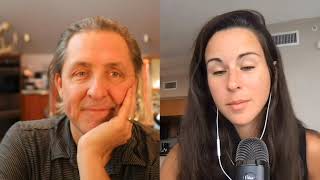
Lola Priego, founder of Base, discusses how AI analyzes your biodata to recommend personalized lab tests and supplements. The app integrates health data with shopping, and Priego explains how it compares to genetics and microbiome testing for understanding your health.
Chapters
You're listening to the Human Upgrade with Dave Asprey. Today we're going to talk about how you actually build a health data app. And you can say, I'm not an app engineer, I don't care, but you actually are consuming health apps all the time. You don't know it. As biohackers, as people interested in what we could do to control our own biology to become better human beings, it helps to know a little bit about the engineering, math, data science and predictions work. So I want to teach you today in this episode with a guest who's actually built a major health app. What's going on to help you know what's happening in your biology. Because let's face it, you could use an algorithm to become Facebook, which basically censors things and punches you in the face to make money whenever they can. And, um, or you could use an algorithm to actually solve problems. So I want you to know enough about health algorithms so that you know, you don't have a health algorithm that tells you, you know, eat a vegan diet and a plant based low fat thing and you'll be fine and big profit will make the most, the most money out of it because that's what's happening on search engines. What's going to happen for your health app? Well, understanding this conversation is the key to you knowing that you're getting good advice. Our guest is a experienced software engineer and a former medical student named Lola Prego, who's founder and CEO of Base. She's been on the show a couple years ago and it's a very interesting combination medicine and engineering with a master's degree in computer science and AI. So there you go. We're going to learn about both of those. Lola, welcome to the show. Right back to the show.
Thank you for having me. Really excited to chat today.
So you were back on in I think November of 2020. So it's been a couple years and we talked about your work at Base using basic lab tests. See what I did there? In order to help get additional info about, about people's health. Tell me what's happened in the last couple years.
A ton of things happened, I guess that, you know, when we chatted we had this idea for where we were thinking like, hey, there's a lot of not like unknown around what's going on with your body. Like people are fatigued, people are brain fogged, people have excessive weight and they cannot do anything about it.
Right?
Like they try things that doesn't work. They also go into vegetarian diets as you mentioned, thinking that that's the best thing for their bodies and when in reality it may not be right. It's really hard to find root causes to your symptoms, to your everyday symptoms, or if you really want to improve your energy, your diet, your sex, your stress, knowing exactly what is that thing that is going to give you 80% of the return of your investment. It's hard to find. And that's where base comes in. We help you figure out, hey, Dave, is your testosterone, it's super low. We're going to be focusing on that for the next couple of months. Or you know, is your vitamin D, it's, it's, you know, the, it's not optimal at all and it's going to cause depression, lack of energy, brain fog, a million things.
Right.
So what happened was that we took the product to market. So basically people will come to the site and they will pick one of the areas and with that they would be able to, you know, find out more about what levels are not optimal to get recommendations on how to improve those. Now what happened is that people want even more personalization to that. So we created an AI. It's a quiz that basically gives you a personalized test prescription based on what's going on, whether that's migraines, brain fog, acne, weight loss, you name it. In addition to something very special that we have started to plug the product in with personalized shopping. We take it one mile further and we have integrated with Amazon and other shopping engines to be able to give you recommendations from brands that we trust for the recommendations that we give you.
So people fill out a questionnaire and then based on that, you tell them what are lab tests that are most likely to tell you something interesting.
Exactly. That if you're trying to find out the root cause to your fatigue or to your anxiety, we'll get you through that based on a little bit of data that we'll ask you about. Or if you want to prevent cancers or Alzheimer's, we'll give you the markers that are related to that.
So you weren't doing that a couple years ago when you came on, right?
No, we only have five areas at the time. So it was more like we were trying to fit fit users into our products. What we realized is that we needed to fit our product to users lives and goals and needs.
Right.
So that's what we created based on user feedback.
All right, so you go in and you're going to say, okay, based on your set of symptoms, how you feel, are you looking at their genetic data or this is just a questionnaire.
It's just a questionnaire to actually prescribe the test. So, for example, let's take fatigue into consideration, right? There are probably like four top causes for your fatigue. Whether you are going to have your sugar is whacked, right? Like your hp, once it's going to be off with your inflammation, maybe, especially if you're a woman, thyroid may be a concern, right? You may have anemia as well, or you have any kind of vitamin deficiency. So for us focusing on those top four, we may even ask further questions about your medical history to fine tune that personalized test prescription. And that's how the algorithm work. We also take. You know, it's funny because as we are seeing thousands of members coming through the door, we are getting feedback on like how good our test prescription recommendations are given. You know, what people want to learn, Are they learning about what they wanted to learn when they got their results? And based on that feedback, we go back and fine tune that, that quiz, that questionnaire that it's, you know, the actual recommendation for the test leverages data science.
Okay, how did you do that? Did you get a whole bunch of tests from homeless people, then have them do a survey? Like, how much of this is machine learning versus just a predictive algorithm?
Well, it's machine learning and predictive. It's pretty much the same, right? It depends on what type of machine learning. But the way it works or the way we started it is by bringing functional medicine doctors to the table that were experts in different fields. And we were like, okay, if I want to learn about my migraines, what are the biomarkers that come into play for that? Where could be a root cause there. Or if I want to optimize for my diet and weight loss, what biomarkers are involved in those pathways of weight loss? Based on that data, we started compiling tests for different symptoms, but also understanding what are the needs that people have. So things like, I want to prevent cancerous disease or I want to prevent Alzheimer's, all of those things were things that we sat down with our medical board to start to compile those tests. Now as people become members and they do that test, we go back and ask them, hey, was this test recommendation accurate? Did you learn about what you needed to learn? And based on the response, we start to fine tune that algorithm where we go back to doctors and we are like, hey, it seems like this person didn't really find what they wanted to what they were looking for. And we made or tested the complete panel. And it seems like it was more interesting to test crp for example.
Right.
So that's how this quiz that prescribes that personalized test works in the background.
So you built an expert system by interviewing a bunch of people and then you're teaching the expert system based on additional input as more and more people come through the system.
Correct.
Have you seen the point where you can just use the survey with enough confidence? You don't need a lab test.
Probably, probably not. Because at the end of the day what we are seeing is that the weighted distribution, there's an element of entropy or randomness where there's not enough data to say oh, with these user features, if It's a woman, 25 year old woman is going to be anemia versus thyroid conditions. Well maybe it's more likely that she has anemia and if she's eating well, for example.
Right.
That she has anemia and not thyroid and her sugar levels are fine if she has a good diet as I mentioned. But at the end of the day you'd be surprised of you know, people that have that they think that they have an excellent diet and they are pre diabetic.
Right.
So uh, that's the problem that at the end of the day it's really hard to know and to control all of the variable and genetics to your point.
Right.
To actually know until unless you measure.
It, what is your incentive or how are you setting this up so that you'll just get the survey so accurate that you're like, you know what, take this test to validate it. But we have 95% certainty. You don't need the test. You should just, you know, eat your red meat and get, and be done with it.
Yeah, that's the key point. We don't see any situation where we are 95% confident. There's also this element that these type of surveys, I don't know if you've ever gone to the doctor and then they start asking you questions when something hurts. And sometimes they ask you questions and you're like, so how does this feel from 1 to 5? And you're like I have absolutely no clue how to answer this. So like these type of quizzes and surveys, like you know, are you eating well? Or like what foods are you eating? You know, people don't sometimes remember. Of course we have, you know, our group of biohackers, like we have a, a lot of discipline when it comes to diet but the majority and mass market of people just don't. And like when you Ask them what they eat to actually seeing them eating. There's a difference and there's a gap. And that's the problem here too, that when you ask someone like, hey, are you sleeping well? Are they actually sleeping well if they say yes? So that's also a problem of this kind of surveys where sometimes it's qualitative data that you're asking for. It's not like you're asking for, okay, Give me your Oura ring, your 23 me data. That's when you can start drawing correlations that are more accurate. So to your point, right, like you mentioned HRV to serotonin levels. But in this case, when you are trying to get to health goals, how are they eating, how are they going about their lifestyle? Things start to get more blurry. The first visit with your doctor, what's going on in is what I call an investigation phase. First they are trying to figure out what is going on with your body. And therefore the questions in trying to do tests and data work.
Right.
And that's what we call at Bayes, the investigation phase. We still don't know what's off, so let's just go and find that to then focus on that and improve that point of failure or that point of that is not optimal. So what we think is that phase is done today by a doctor that doesn't have a major in data science that may be worried maybe having a bad day, may have forgotten to ask a key question.
Right.
For example, what have you been eating lately? In that case, what we see at base is the system. It's having a support system that will allow you to find what's wrong earlier without the need to involve a human early on. Or if you need to involve a human, something that it's more elevated. So for example, right. You get connected to a physician that suddenly can see it that your dashboard of your data and understand different markers that are off to then put two and two together and just be like, hey, you know, it turns out that your diet has been really bad. You're really vitamin D deficiency. Like, let's just make sure that we focus on these things, these supplements and looking at your history with Alzheimer's, or we're giving it going to be monitoring your inflammation every three months. Something that is more elevated than today, today's experience that it's just going to a doctor's office and being like, I just, I'm tired. And then now you're putting on the doctor a lot of work of investigating, doing lab tests, asking you a million Questions. Because there are a million permutations of things that could be causing that fatigue. When you go into that doctor's office, if they actually don't know you and they don't see you on the day.
To day.
It'S true that for a lot of the time an expert system like yours, you go in there, you're going to tell it all the vitamins you take, it's going to know whatever lab tests you took and it's going to consider it all equally versus if you walk into the doctor's office and you say, oh, I take this bucket of vitamins and I do this and I do that. Unless you have a really good functional medicine practitioner, it's going to take them a while to crunch through all that. That's why an intro session from a lot of these doctors is a two hour meeting about your lifestyle, your sleep, your sex, your stress, your supplements, your diet, your exercise. And they go through it all and really come up with a good picture. And I sense that you're trying to capture some of that with your questionnaire in the same way that a doctor would do or doctor would say, okay, based on this, let's test do you have high lead, do you have high mercury? Do you have Lyme disease? Or just whatever some kind of cholesterol thing that some people think is bad even though it probably isn't. So how do you know though? I mean, you talk to your medical advisors and all. If someone comes in and fills out the survey, I'm tired all the time. How would you possibly know what lab tests to give them? Would you just give them all four equally? Would you say you're a woman, therefore it's your thyroid, even though guys like me get Hashimoto's, how do you do that?
Well, we do have that probability of it may be this or it may be that. And that's why I said we never see nine to five. It's really rare. So what we do is we recommend the most likely set of two to three biomarkers that could be where the root cause is. We do though create a personalized expanded test. So for those users that are not price sensitive, because Our product is $59.95 for the test, that includes the insights and all of that. If you're not price sensitive, you can check out for 220 bucks and get all of the set of biomarkers that actually impact that health goal that you're trying to solve. Now of course we also see the kind of user that is like I have a million things going on. So in that case we do see them checking out with what we call the base complete. That is like give me all of the biomarkers that you have.
How much does that cost?
That one costs $450.
And that's a one time cost.
That's a one. Well, you have an improvement plan that kicks off a couple of weeks after you receive your results. You can cancel if you don't want it. But basically what happens then after you receive all of your set of results? We look at the biomarker or biomarkers that are the worst and have the most weight. So for example, it's not the same if your melatonin at night is low. It's not as urgent as if your HbA1c is 6.3 or 6.1 and you didn't even know that you were diabetic. So there are different levels and degrees of things that we would work on based on your set of results. Because we have weights for different biomarkers. Right. So when we get your results back is not only that we focus on the biomarker that is the worst. We focus on the biomarker that is the worst and has the most weight, the most impact on your health.
Interesting. I like that. So you're doing a baseline. That's why it's called base test. That I would probably want to do the complete one. Right. Because that's going to give you the most things. So you're doing that and a survey and then from there you're saying additional tests you might want to do. So it's whatever data you have leads to the next step. Leads to the next step. How many steps do people usually need before they find the problem? Is this like three rounds of testing? Two rounds of testing? Do you find it the first time? Like how it's a great idea versus just spending like I have done multiple times. Oh, here's five grand. Just test everything. Right. So you're funneling in or narrowing in on what is the right stuff to test for, which is going to save people money. But how often is it one test versus two?
About 75%. Well, if you check out with the expanded, it's really rare. Like less than 5% of times that you actually have to go and do additional tests. We always find something that is off with that expanded. If you had the symptoms with base complete, never. And then if you check out with the 59, 95, I would say like 65% of the times we'll find something that is off with that primary test. The question is always like, would there be something else that is also off that you don't know about? But you always have the opportunity to go back and do the expanded after you receive the first set of results if you still feel like you have questions. So we see a lot of members doing that, but the majority of members check out with the expanded. And that just gives us a lot of opportunity to, from the get go, being like, okay, you're going to start to take omega 3 supplements and salmon and tuna, and you're going to drop your processed sugar items and we are going to retest you in 30 days to see improvements and we are going to continue there. Now, what's going on? And this is the magic of base. We didn't expect this, but when people finish their improvement plan and they feel good, what we notice on the product side, you know, we started to look at metrics and we started seeing people that have been testing for, you know, 11 months every month. And I'm like, hold on, I'm the CEO. I don't test every month. Like, I, I do my battery of tests every two months. Like, depending on what's going on in my life, I want to optimize for my diet or my energy. But what we found is that people after improving, when they see light, they don't want to go back to darkness. So they become scared. Like, hey, I don't want these levels to go off again because then that's when things like, I start to lose to gain weight. I have brain fog. So people start to monitor different areas or they start to dig into other symptoms that they have that they were not a priority before. So that's something that we're having a ton of fun at base, including our new personalized shopping division that people are using this to do their grocery shopping, which is really fun.
That's pretty neat that you're generating grocery lists and all that kind of stuff. What percentage of tests you've had so far end up saying it's a hormone problem versus a vitamin problem versus a.
Mineral problem or nutrient?
Yeah, yeah, nutrient. Well, there's. Yeah, there's nutrition versus vitamins. I don't know. I look at vitamins and minerals as being different things, but if you don't, okay, so is it hormones versus nutrition, then?
I don't have that data off the top of my head. Like, we don't slice it that way. We look a ton. Especially as, you know, we are getting a lot of inbound from nutritionist networks and employers and so forth. We look a ton of on the data about how many people are actually coming to base and we discovered that they have a high cholesterol issue, prediabetes, diabetes, vitamin deficiency and so forth, and they improve it. So we have that data on that vertical and like it looks very even. I would say. Of course, hormones are more complex and the number of people that test one versus the other also matters. We have more people testing biomarkers related to nutrition and vitamins especially anemia is a, that's a pretty popular one versus hormones, which is shocking. Although cortisol is, is popular as well and, and stress and anxiety. I figure that, you know, COVID 19 had something to do with it.
Yeah, a lot of people are noticing that they're kind of stressed right now. I hear you. Yeah, you guys can do it at home. Saliva. But how often do people have to go into a quest or have someone come to them to actually draw blood?
Well, sometimes it depends too. We have users that in their preference settings, they, they have it selected that they only want to be recommended tests that are available to be taken at home. And some others actually don't care. Some other members prefer to directly go to Quest especially.
Right.
If you do the complete test panel like you have to go to, we typically recommend you do go to Quest instead of spending, you know, 15, 20 minutes, 30 minutes at home collecting all of this. So to answer your question, maybe about 10% of people go to Quest or 15, but the remainder, 85% prefer to do it at home. And it's funny because in my head I'm like, I prefer to go to Quest. But then every time that it comes to test that I have to test again, I'm like, you know what? I feel lazy. Just send it, send it home.
But I always feel like I'm going to the Department of Motor Vehicles when I go to Quest. And it's like, I think I'd rather have one of my teeth extracted without an anesthetic than go to the dmv. So there's something about the waiting room and I don't know, it's just not that much fun. So I would rather draw my own blood with a machete then go somewhere. But I think I'm not alone because 85% of people want to do their own testing at home versus go somewhere where they treat you like another brick in the wall, to quote Pink Floyd. And that's not request specifically all the high volume lab testing companies. It's like you go into a cattle trough and they Poke you and prod you and get out and make sure you sign all your forms. And I don't know, I always have a strange experience. So there you go. But for some tests, I don't do it because the tests are valuable and it's worth it. So that works. And it looks like you guys also, if I wanted to come to my house, will they do that?
Well, that's actually coming. We are working on that integration because we've, you know, some people requested that and that's convenient, right? Like I would do that. Yeah, yeah. Like not only because you will actually get your results faster because think about it, you're removing the shipping back to the lab timing and USPS and all of that crap. And then the labs that do at home lab analysis take a little bit longer than the ones because it's more challenging to do the analysis on the at home collection carts. So then if you actually take it at home in two to three days you get your results back versus like five to seven business days.
It's because when you have blood on those little blotter cards, they have to rehydrate the blood and do all this stuff versus just take a fresh juicy vial and stick it in the blood juicer or whatever they use it.
Exactly, yeah. And like to your point about Quest, because we work a ton with them and it honestly breaks my heart to see how they operate. I think and they're our partner, so I cannot disclose too much, but it's just a company that is focused fully on lab testing and it's not user centric, it's not focused on what happens with that data, what's your experience, how do you feel and all of those things. So at the end of the day, and especially because they don't get paid by you, they get paid by payers in most of the times and payers don't care if you're waiting for 30 minutes. So that's what happens.
Right.
If you have to wait for one hour, you'll wait for one hour because they don't care you're not paying.
Payers actually love it when you wait for an hour because then you're less likely to use the service. It's one of the underlying reasons that healthcare in America is highly inefficient is because the more inefficient it is, the less likely you'll use it, the sicker you'll be. It's a pretty dirty thing and I don't know if anyone chose it to be that way. That's Just how it evolves when you set it up this way. Um, what about, though, if someone already has a doctor, can they get a report done for their doctor on base?
Yeah, actually, we. That's one of the things that we ask you on the questionnaire because, you know, like, there is something that we adapt if you're already working with a doctor, and it depends on what kind of doctor. If it's a PCP versus a functional medicine doctor.
Right.
Because if it's a functional medicine doctor, you probably would want to revise those results with them. And you'll probably be even more interested in not only reviewing the results, but the recommendations that are being grabbed by us. Matching your results with evidence on clinical trials and evidence that it's out there.
Right.
So at the end of the day, what happens is when you get your results, we are working on a new share button that it would allow you to share those results not only with your doctors or physician, but if you also have a family member that you want to share this with, you'll also be able to.
Which is worse, New York State or Canada when it comes to lab testing?
New York State. So at the end of the day, there are a couple of regulatory hoops that you need to go through if you want to work in New York. One is billing and the other one is collection. So you cannot do the dbs and certain collection materials for home lab testing are not allowed. So you need to use others, which is a complexity that we have to deal with when we ship to New York. In addition to some billing regulations that you have to build custom systems to be able to go around it. What I did is literally knock on the door of every lab in New York to be able to have a conversation with them and convince them how big this was going to be for them to be able to actually analyze our results and being able to build that customization for billing. So hopefully, I think I'm hopeful that in three to five years, we'll see these things in a different state, meaning state of regulatory processes. Because I am hopeful that the DoH in New York will eventually get there and we won't have to go through all of these complexities when it comes to setting up a health data company.
You look at blood and saliva, but what about hair and pee? Those are the other two things. Why do you focus on blood and saliva as data sources?
It's just simplicity for the user, type of choice. There's not been a biomarker yet that we want to measure in urine. That cannot be Measured in blood or saliva that is not accurate enough to that level.
Right.
Like, we don't do STIs or, you know, like other type of diseases that are better measured by urine. So in that case, that's why we don't have that type of collection. And then again, like, it's more. We don't think about, oh, how do we want our collection to be? We work backwards from the user. Like, okay, now people are concerned about their skin health.
Right.
What biomarkers come into play? And then we work backwards on what's this test menu. How can we offer it to consumers? Shall we have it only at Quest or if we have it at home, what kind of at home offering could we have? That's how we work. We have blood and saliva, but for blood we have the car and then we have the microtainer, and then for saliva we have this bit. So that's primarily why we do blood, saliva and aQuest.
Okay. It makes sense. One of the things that I find interesting is a variety of companies out there are saying, we're going to tell you the right dose of the right supplement and when to take it. So there's a circadian thing about when you take vitamins. It turns out different vitamins do totally different things and different drugs and different foods depending on when you eat them. Right. And then there's the individual genetic things and gut bacteria things and all that. But your. Your base test is recommending dosage and frequency of supplements. So how do you tell how much of how much resveratrol I need to take? Like, what, what would a marker look like? It seems like a very difficult thing to solve.
Yeah.
And it's not for all supplements that we will be able to personalize the dosage.
Right.
Like the one that you mentioned. It's freakier. I mean, if I'm going, I'm a freak.
Lily, did you call me a freak?
No, trickier. Trickier. Harder. Harder to.
I heard freakier. I'm going with freaky.
No, no, no, no, no. That too. But I'm going to include myself in that group too. So, like, hey, we're together in the same boat. We're in the same boat.
You're an engineer who also studied medicine. I'm sorry, you're already a freak. There's no getting out of it. So, I mean, it's all good. Nerds unite. I like it.
Exactly. So actually I am an engineer. So an engineer of like, AI stuff. Like it cannot get. You know that. Exactly, exactly. So speaking of that, the reason why we created this personalization shopping algorithm is exactly that, right? Like I worked at Amazon before and I saw that personalization being built and it was super interesting. And I always thought, you know, why am I not being recommended when I'm going out to do grocery shopping? Exactly what I need to buy to feel more energetic or to, you know, feel better about my diet, have less digestive issues, so forth. It just feels like so much work. So much work. You have to read books, you have to like read blog posts, you have to put things two and two together about your body and what's going on and it's a lot of work. So for me, I always had that need of just tell me what to buy, right? Like just make it easy for me. And that's why at base we created this component that is, you know, if you are deficient in, let's say iron, I'm going to recommend you an iron supplement that has a dosage that has been reviewed by our functional medicine doctors and nutritionists that it's actually going to be the appropriate for your levels. And same thing for you know, vitamin D and magnesium and other supplements where we would adjust that dosage and we'll give you, you know, two to three brands recommended that we trust that the base team actually uses and is validated by a third party side of auditors that actually look into supplements is pretty cool and validate that the quality is good and that's how we, we go about it. So basically we just look at the levels that you have in your results and then based on that we are able to fine tune that dosage and it's something that we've just worked manually with our scientific team.
Okay, I like that answer. And there are absolutely weird supplements that I take that I don't think anyone's going to tell me what to do. Which is why I'm a little bit skeptical of the vitamin recommendation engines. I think they're going to solve 80% of problems for people in the other 20% are like, oh, you needed that weird form of vitamin B, one that no one even knows about, but it's the one that works for you. I'm putting some of those in my, in my new book that's coming out there's going to be some very, very cool information about minerals and whatever. So when I look at vitamin and lifestyle recommendation engines, there's three different data sets and I'm just going to say there's companies making bets on each data set. One group of people says look at your genetics and Based on functional genetics from a lab test, do these things to win. And there's another group that says, I'm going to look at your gut bacteria based on what they are and what they're doing. You need to take these supplements and do these things to win. And that's again, a lab test. And then there's you who are saying, based on the actual levels of stuff in your blood or your spit, take these things to get the results you want. How would a person listening to this show sell me on why base is the right approach versus the other ways of, well, what's in my poop or what's in my jeans? Unless it's poop in your jeans, in which case you have a big problem. There, I said it.
I'm trying to figure out how to answer this in a way that is politically correct.
You don't have to. You can say the poop word and so don't say mean things about other companies. I know people at all these companies. I actually believe all three are necessary, if that helps.
Exactly.
But seriously, sell me. All right, so convince me that I need to do base first versus these other approaches, because I think they're all valid, but I might be wrong.
Yeah. So basically, at the end of the day, these are all data points.
Right.
So a couple of things. Genetics are important to know. What's your baseline and what's the context?
Right.
Like, are you. Do you have predisposition to have diabetes? And then now you know that you need to monitor that.
Right.
Do you want to know if you have predisposition to have Alzheimer's? It's just super helpful to know, like, hey, I need to monitor this moving forward. It can also happen with genetics that they tell you, like, oh, you have a predisposition to not be super athletic. And then you're like, okay, thank you. I know, right? So that's the thing about genetics. It's not my case. It's not my case. I'm super athletic, But I have friends that they were like, thanks.
Right.
To that type of report. So I think people find it super useful and helpful, myself included, to know, hey, I need to keep an eye on this. Now, for me, I use regular lab testing. So traditionally, blood biomarkers.
Right.
That has been around forever. And if you think about it, every time that you go to the doctor, that's exactly what they're going to. What typically they use to actually figure out what. What is going on. If you're tired or if you're trying to lose weight and you're obese, right? Like, those biomarkers are super powerful to understand how your body's working on a daily basis. Like, what's. What is going on in your endocrine system and metabolism and so forth. And that's when, you know, these biomarkers come really handy. To take action on that today and start working on that today.
All right, so I'm going to cut you off for a second there, okay? You're an engineer who also studied medicine, but you're not selling me very hard. And I'm just going to say, because engineers suck at selling, except I once was a sales engineer, so I learned how to do it. You got to convince me a little bit more why Lola, should I use base versus base, which is what's going on in your blood and your spit versus what's going on in your poop versus what's going on in your genes. So sell it to me hard. Like, why is this better?
So, as I said, genetics doesn't work if you're trying to figure out what's going on today. If you're trying to figure out where you're tired or you're anxious, migraines, how to improve your diet, genetics will only tell you what to monitor in the long run. And then for poop, here's the deal. I, you know, I'm an engineer, but also a data scientist. How long and how many data points we have collectively on, like, stool on poop, Right? Like, we don't have that many. How long does that science. Has it been around? Right, Versus how many clinical trials we have with biochemistry? How many blood lab tests get run on a daily basis in the world? We have a ton of data, a ton more of data, which make. Which means that it's easier to interpret. Like, hey, you need to, you know, do this or do that, or, you know, remove this from your diet or stop drinking 7 cups of coffee a day? Because coffee is wonderful and it's great, but maybe if you're having seven and your cortisol is high, you know, and it's shitty coffee, you know, like, you should cut it.
I'm with you. I'm surprised. Usually the engineering cutoff is 7, but for mere mortals, it's 5. But I hear you there. So maybe you could say that both genetics and poop are predictive, and they're going to tell you what actual lab tests you need to find out if it's happening in your body. Right? And that's kind of an interesting perspective. So, okay, there's value in functional genomics. But is it actually happening? Well, you could do it based on symptoms to a certain extent, plus functional genomics, or you could just look at the survey from base, which is going to likely tell you, here's the lab test you need to do, whether or not you had functional genomics supporting that or not. So I think if you wanted to spend the minimum amount of money and time using intelligent algorithms to tell you what lab tests to take to find out is it in your blood, yes or no. Which is, I would say, still the gold standard. That's really cool. There's a lot going on on the gut bacteria side. But like I said, it is new science and I'm seeing some promising stuff there. Do you think that we're going to have a day where we just ignore genomics or ignore poop and just look at blood and spit?
No, I think they are complementary. Again, I would do it all. That's the thing. But if you are trying to figure out what to eat, what to buy, how to fix a problem that you have today, and maybe like, you know, poop comes a bit more handy if your problem is digestive issues. So you need to do both poop and blood and saliva. And sorry to deliver the bad news to you, but you're gonna have to do both. But then for the remainder of the everyday symptoms, you're gonna have to, you know, do that blood and saliva work. Now genetics is just helpful to have that extra information that will help you to be more prepared to know what to monitor better through blood and saliva. So that's they're complementary data points. So is it needed to do the genetic test? No, you can just suddenly start feeling shitty and seeing your CRP going up and then maybe you got cancers or something along those lines. It's just like extra information to keep you prepared and to monitor proactively. So that's how I see genetics. And again, poop is more like the digestive component. If you have issues, super helpful. Trying to eat better. But that science is still very young in comparison to blood and saliva.
Talk to me about the dark side of all of this. So there's companies that know what's in my spit and my blood like base. There's companies that know what's in my genetics and probably three letter agencies. For me, there's that three letter agencies, you know, FBI, dea, fda, D, whatever, all those three letter agencies. But there's also a lot of companies now who are looking at all the social media, profiling, psychographics and all of that. So talk to Me about the downside of all of this data being smeared everywhere. Like, what are your concerns? What are you doing to protect people so that their data doesn't get used against them?
Good news for everyone that is listening. Regulations around data privacy are getting stronger and stronger, including audits that as a VC backed startup you need to go through. So a couple of things I would always recommend reading online and reading companies terms of service and privacy policy.
Right.
Like you always want to know what is this company, what am I agreeing to about this data?
Right.
In our case, for example, for base, we are, you know, like we take security as a design feature. We always say security by design and privacy as well. We are not planning to monetize or create a business around health data. I think even if someone would want to, they would find that super challenging. Especially in our case, we want to go to Europe, right. So I do think that data should be controlled by consumers. And it's your data, you can do whatever you want with it. So you should have access to it, you should be able to distribute it as you want it and how you want it. But a company shouldn't and should not be able to even visualize that data for you unless they have to. You know, a medical or a physician needs to get involved to review and release those results. So the way we see it is, you know, and to your point, I know that there are companies out there like 23andMe, that publicly ask you if you want to contribute to research with your data and then they monetize that with pharma.
Right.
Even, even if you say you don't want to do that, they will use your data to find criminals and they'll also like search, search to find relatives of people. It's pretty slimy what the government does with your genetic data, but once it's in there, even if you said no to sharing, they still let law enforcement agencies do that. So your privacy is gone. What would happen if you were subpoenaed to get the results of my last blood test?
Well, I'm not sure exactly that that's actually something that they can continue to do from my knowledge on latest regulation changes. So like, you know, I'll have to go back and check that one out. Yeah, because from my understanding actually they cannot do that with health data. There's a difference on like other type of data and this data that we are talking about, that it's protected by hepa. So from my understanding over the last couple of years, this is actually not even allowed that the FDA comes to us and it's like. Or like any other government agencies can request or grab, you know, someone else's data. From my understanding, I may be wrong, but, you know, I have to check with my legal team to confirm.
Okay. So I'm just looking at that from Health and Human Services. A HIPAA provider can only disclose information if the notification meets the privacy rule requirements. So there you go. Or they have to notify you, essentially. And it's an odd situation with medical records, but it's no different than would be at the doctor's office, is the bottom line there.
Yeah.
Right. So we have all these issues, and I feel like we're at the cusp of the same things happening with our health information and just being smeared all over the place. And you're sort of saying you have data security built in and you have HIPAA requirements that at least keep you from just being like Facebook with it. But it's. Is there anything extra that you can see in the future that's going to happen to help us own our data? Some kind of crypto blockchain? Yeah, I could think of a few algorithmic ways to do it. So what are we going to do?
I think.
And a couple of important points about the history of base and why we take security that seriously. I was working at Facebook and Instagram when the whole scandal of, what was it, 2017 or 2018 of Mark going to the Congress when that happened. I was one of the engineers involved on the entire. Hey, we'll give you this answer later on. What happened is a team of core and selected engineers. We have to go and compile a lot of materials for that. And seeing the scandal of what happened with the company and all of the security problems, it was very important and clear to me as an engineer that companies need to put this as a top requirement and not like, it's something that, like, oh, it's kind of there. Oh, you know, maybe we forgot about it. Like, it needs to be there. You need to question yourself every week. Like, are things going well? Is this secure enough?
Right.
Because at the end of the day, what can take a company down is a security bridge.
Right.
If you lose people's health data, you're done as a business. The same thing as, like, when I started working at Amazon, I remember how they had, like, you know, guarded, like, all of the credit card information. Why? Because they know that if Amazon loses the information of 1000 credit cards only out of their billions of customers, they are going to be hurt in revenue.
Right.
Like, so at the end of the day, they understood really clearly versus other companies, Amazon did, that they needed to protect certain levels of data and guard that and think about that very carefully versus or unlike other companies. So for me, seeing that difference of Amazon and what happened at Facebook helped me learn that security is very important. And needless to say, when it comes.
To health data, right.
So at the end of the day, being engineering led and especially with the experiences that I've had in my career, that's how we started putting that security and privacy at the top and the forefront. And I think to your question, what can we do? Just keep pushing. Like, it's just amazing every time that someone comes and asks like, is my data secure? Like, what are you doing with my data? Consumers, we need to demand and ask and just make sure that we are on top of that. Because if not, companies are not going to take that seriously. We need to be asking, we need to understand, we need to read privacy policies, we need to start to do those things versus trusting that because it's a big company, they are doing the right thing.
I don't think anyone listening says, oh, they're a big company, that doing the right thing. In fact, it might be the obvious. I would like to say it was neutral. But it's funny, Google, there's a standard called PCI dss. I'm exposing my life as a computer hacker. PCI DSS protects credit card data in the same way that HIPAA protects health information. And if you violate hipaa, you lose your right to manage health information. You violate PCI dss, you lose your right to handle credit card information. Which would be kind of a bad thing for Amazon because then they have to buy the credit card companies in order to get their rights back. I mean, that would be terrible. Poor Jeff Bezos. I feel bad for him having to buy a credit card company because he broke a rule. Oh wait, did I say that out loud? Shit. Anyway, to get back to the lab testing discussion here, I do like it that you're an engineer and that you are building security into it. And I think it's important. Frankly, I post my health data online. It doesn't matter. It's your right to do it. I just don't want. If there's something that's private. Yeah, I just, it's mine to control and it's not someone else's to control. So I, I appreciate that you're doing that, but there's another layer to, to what you're doing. At base you have health coaches and people they can take the results. If they don't know what to do, they call a health coach. How do you find health coaches who are actually good at this? Do they all work for you? Explain what you did for that.
We trained them. That's the only way.
Right? Okay.
Yeah. Like we find people, it needs to be actually both. They need to be good, they need to be smart and they need to go through specific training on like biochemistry, functional medicine. How does the endocrine system works, how does your metabolism work? Like, all of those things are critical for them to further understand because at the end of the day they are the ones that are also talking to people out there and understanding how are our recommendations fit into their lives. And it's important because they are also our AI feedback loop for us to continue to fine tune what we are recommending to people.
Right?
So they are a core component of the whole ecosystem that we've created that they represent the, like our members inside the company and for our algorithm. So they are pretty key to us. And it's, you know, like, it's interesting because they usually, when we even do scientific reviews, they join. And at the beginning they were forgiven if they were trying to like say something because the doctors were there and like, you know, like, how are they going to say something when there's someone who has an MD in the room? And pretty quickly they realized that they have really good valid points because again, at the end of the day, doctors are also humans and they may forget something or not see something or, you know, like I think there was something that doctors were recommending. I think it was oysters. I cannot remember two to three times a week and the health coach is like, who has the ability to have oysters two to three times a week? Like people cannot incorporate this recommendation. We need to change it, right? Like people are not doing it because it's too hard.
So the real world world thing, I love that, man. There's so many people, oh, just wake up at six in the morning and spend an hour meditating over a candle with a glass of tea and you're like, do you not have a 3 year old? That ain't gonna happen. You wake up at six, they're gonna come in, like spill the tea on the candle and then burn themselves and light the curtains on fire and there you go. Like, that's the real world. So yeah, okay, so you're teaching them to be actionable. And because they're real people, not, you know, medical professionals with a butler or something, maybe it's a little Bit more actionable.
Yeah, exactly. So at the end of the day, it's as important that it's effective, that it's easy to incorporate, that it makes sense to the user. Even, like when someone is like, this doesn't make sense sometimes, like, it's helpful that then we actually put more context on why are we recommending that to you.
Right.
So at the end of the day, we find that it's critical and important to have an ecosystem where everything is connected. And it's not like we're only recommending you things from clinical trials because there's no money out there to do clinical trials and everything, or that we are only recommending you something that comes from one functional medicine doctor because we. Like those scientific reviews where you have multiple doctors in a room are so fascinating to me because it's so much fun to see how they sometimes disagree on certain things because they have different experiences and different angles. And having them to commit to, like, no, no, we're going to recommend this. And it has certain priority. It's actually super fun. So that's how base works. Right? We're combining the data that we have out there with the data from doctors, from health coaches, from the actual data from our members retesting after incorporating a new diet or a new lifestyle recommendation. And we're blending all of that to continue to improve our systems to be able to, like, better help you to improve.
Okay, I, I think there's a valid set of data here. The idea of using a survey to choose the right test for you, which cuts your costs and gives you better data, and then using machine learning and AI algorithms to recommend what you do, and then pairing it with a coach. It's a really good approach to giving people more with less investment of time and money, which is really what this whole episode's about. And because you're cool, you decided that you would give everyone a gift. Go to get-base.com Dave, use code Dave and save 20% on your first purchase, which is a meaningful discount for listeners. Thanks for being a listener. If you're going. If you're just hearing this for the first time or something. Get-base.com Dave, use code Dave. And I think it's worth doing this. And you may have had a bunch of different tests. What I do when I'm working with strategic consultants, when I'm working with intuitive energy workers or I'm looking at, you know, getting surgery for something that someone says I need surgery for, I do this weird thing called getting multiple opinions or getting a Second opinion. So there's nothing wrong with saying, I want to run some data from get based and I want to compare it with recommendations from some other company and see where they overlap. That's very likely to be good. And that approach is great for biohacking. Right. So you could say, I trust this company and this algorithm. So I'm just going to go with it and see if it works. And if it doesn't, I'll try something else that's most cost effective. The idea of triangulating and looking for comparisons. You get two quotes on what your house is worth before you buy it, or before you buy one or sell one. You get two recommendations, ideally before you do some expensive medical procedure. There's nothing wrong with getting a little bit of data and saying, based on this, I'm going to change my diet. And you can start with a survey, which is one set of data. Then you get your test for your blood and your saliva, which is a second set of data. And then the machine algorithm interpretation is a third set of data. So you can do that with base or you can do it another way. But there's great validity to this approach. I think it's really cool. And Lola, I want to thank you again for being on the show and letting me ask you strange questions about Justin Trudeau versus the CIA. And you answered them all greatly because you're an engineer.
Thank you. Thank you so much for having me today.
I look forward to having you back on in another year or two when you've got the latest Skynet version of lab testing. Is that where it's going?
Yeah, totally.
Totally. All right, well, I for one welcome our new AI overlords. I'll see you for the next one.
See ya. See you there.
You're listening to the Human Upgrade with Dave Asprey doing up.










