EPISODE #973 How to Drop Happily Ever After and Do Relationships Better - John Kim, LMFT
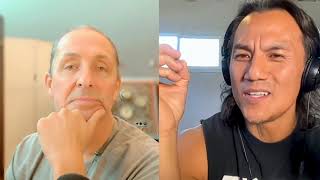
John Kim, a marriage and family therapist, talks about why the idea of happily ever after sabotages relationships and what actually works instead. He covers attachment styles, the difference between therapy and coaching, and how to build emotional awareness in partnerships.
Chapters
You're listening to the Human Upgrade with Dave Asprey. I promised that I was going to tell you what you get out of an episode before you listen to it. So you can decide whether you want to invest the next hour of your life with me and with the hundreds of thousands of other people who are listening to this. So here's what you're going to get out of this one. This episode is going to help you learn how to recognize your own and be a better partner in relationships. It's going to teach you how to let go of complete fairy tale unrealistic ideals of how you probably been programmed to think love and relationships ought to be so you can live in the present. Because when you talk about biohacking, we've got these three major F words. Fear, food, and the other F word. We'll call it fertility or the four letter version of that word. And if you are in, in a state of fear, you won't do food or love, right? But if you have all these stories about love that aren't real and you feel like you're not getting it, you'll go right back into fear. And all this stuff hijacks energy. So you want to be better at making energy and better at allocating energy across your emotions and about your work in the world. That would be kind of Biohacking 101. That's why you've got to pay attention to relationships as part of the environment around you that you are consciously controlling so you can show up the way you want to show up. It also means in this episode you might learn how to be a little bit more emotionally responsible to people you love. With no further ado, you're wondering who's it going to be? This guy who got a tattoo and a Harley to find his way. He talks about the great divide of his divorce about seven years ago, went to therapy, school, became a life coach, looked at technology, created online communities, built a name as an unconventional therapist who would take meetings with clients at coffee shops or at a CrossFit box. His name is John Kim. He's a LMFT licensed marriage and family therapist. And he kind of pulls no punches and he's actually, he's really funny. On TikTok, almost half a million people are tuning in for his shot glass bits of life wisdom. I think you'll have a lot to learn from him on the show. John, welcome.
Thank you for having me. What an honor. And also what a refreshing angle into relationships. And I love that you're talking about relationships on your Podcast because the whole going in through the door of biohacking, which is really interesting. So thank you.
Oh, you're so welcome. This element of wanting control of our own biology is so universal. It happens at all ages. We want it for different things. And the hook in was changing the environment around you. And relationships are such a big part of it. Your tribe, your friends, and your primary partner or partners. Well, those are kind of big variables. And if those are wrong and you're like, I wonder why I'm not happy all the time and I have all these other issues, well, maybe you could look there and. Yeah, but that's when like, like you say in a lot of your content, you've got to look at yourself without flinching and just realize, is it you or is it them? And that's the title of your book. It's not me, it's you. Break the Blame Cycle, which is a great name. It sort of flips it on head. Oh, it's not you, it's me. And you're like, no, it's you. So what is the blame cycle? That it says, break the blame cycle Relationship Better.
Yeah, this. This is. This is. This is my first. I' written many books. This is my first one. And I co authored it with my partner, who is also a therapist. And this was the most terrifying book to write because now I had someone to check me on my own shit. It's easy for me to write a book by myself because it's my point of view, my head, my stories. But when you have someone who's going to hit the ball back or not, it's terrifying. And so we really pulled the curtain back and we wanted to also show that. That therapists are just as fucked up as everyone else. And it doesn't matter if you have letters after your name. Relationships are really hard. So we talk about a lot of our struggles, our wiring, the stuff that we're going to talk about today, right? Like the misconception of happily ever after and the one and all of that stuff. We have fallen into the trap as well.
I can't imagine writing a book with your romantic partner as a therapist. How did you guys do this? So you didn't, like, fight over the name of chapter one or the past and present tense or whatever the heck. Yeah, walk me through it as a working relationship. Okay, you're dating a therapist, so you're both, like, psychoanalyzing each other and you're collaborating on a book, which is hard work. How does it work.
If I'm a shot Glass. She's a wine glass. And so it really works in that I'm kind of like, potent, punchy, she's long winded. And so we weren't stepping on each other's toes. And then also we had a conversation. Before we started writing this book, we wanted to be therapists who showed themselves. I think one of the. And this is a flag I've been waving for 12 years. One of the reasons, or one of the things I think is kind of problematic in the clinical world is a lot of therapists being cardboard cutouts. Right. And we're trained to. We're not supposed to show our own personal life. We're supposed to be neutral. And all of that, I think, is changing because of social media and stuff. And so I really wanted this to be a book that comes with you instead of at you. And so since we were on the same page with that, the writing was just writing. The writing was easy. You know, it's like, you handle that chapter, I handle this chapter. You write, you know, this part of your story. I write this. And so it really flowed well.
Do you have a therapist of your own?
Yeah, of course. I will be honest. I haven't seen my therapist in a while. I feel like do as I say, not as I do. But I think it's important for every therapist to have his or her own therapist to process, you know, their client stuff and what gets activated in the room. It would be hypocritical if you don't have your own therapist. As a therapist, what's the difference between.
A life coach and a therapist? Because you do both.
Yeah. I think a therapist and there is an overlap. I wear two hats. I called myself a coach because with therapy, there's a lot of rules and guidelines. And so when I wanted to work in a way that was honest to me, like meeting people in CrossFit boxes, going on a hike. In Los Angeles, I was living at Silver Lake, and there's this lake where if you walk around the lake, it's exactly 50 minutes. So I'd meet a client there and we would walk and talk. Right? And all of these things you're not really supposed to do as a therapist, even use the Internet. Back in the Google hangout days, when people were on AOL and dial up, I was running groups, and that was a big no, no. And so I said, man, if I want to really work in a way that felt honest to me, I got to hop the fence. So I have a clinical background. I am a therapist. I don't Deny that, but I can wear a coaching hat. And I think over the years, coaching has exploded. Coaching was a joke in the beginning, right. I mean, there were a few, like Tony Robbins and stuff, but if you called yourself a coach, there was a lot of eye rolling and like, what are you talking about? You know, unless you were a fit or a nutritionist or, you know, nutritional coach, but relationship coach there, like that does it. Life coach. What are you talking about? And also, who are you to tell me how to live my life? But now I think it's become popular because people are more interested in who you are instead of what you know. I didn't answer your question. I'm going to answer right now. The question. The difference. The difference is coach therapy is more like from, from suffering, the baseline. Right. A lot of processing. You are being treated for something, whether it's depression or personality disorder. And then coaching is more about from baseline to thriving, accountability, you know, homework, you know, pushing the needle forward. So it's more present focused and more goal oriented. Therapy can be ongoing forever.
You know, I'm a huge fan of transpersonal psychology and I've done work with lots of therapists. So not to denigrate at all, but the guidelines are very strong. So it's cool that you, because you're a licensed therapist, you can put on a therapist hat and have a couch and all the stuff a therapist does and then say, you know what, let's switch over. But certifications cost thousands of dollars per, per life coach, so not many life coaches are certified.
Yeah.
So there's a whole broad thing there. But you got to click with the person and they have to have enough life experience to help you. And I, yes, yes. I get a little concerned when I see someone who's, you know, in their early 20s, hanging up a life shingle. Life coach shingle. What's your take on that?
I think social media has made it where if you have a lot of followers or you're attractive or popular or clever or funny, then you think you could call yourself a coach. And a lot of people think coaching is about giving advice and it's not. You know, and I love that you had a training. I love that you had a training program, as I do too, because it makes coaches legit. You know, it's like just because you do a lot of fitness doesn't mean that you can. You should be coaching people with fitness.
There's so much noise in the market that I'm, you know, I'm very, I'm very supportive of People being highly qualified, highly experienced coaches who've done a lot of their own therapy as opposed to just being coached. Because I think you have to have your shit together. And I'm focusing more on neurofeedback as the primary way to do it. Do you ever do like the medicine ceremonies? Neurofeedback, hypnotism, electrical shocks of the brain, dilating eye drops, whatever other kind of stuff?
I've done a lot of wall balls and ice baths. No, but I'm interested in what's happening now with the emdr. Not emdr, the mdma. And they're using psilocybin. Yeah, like all that stuff. And then having like three hour sessions and just going somewhere and all that stuff. Microdosing. It's really fascinating to me and it seems like it's really blowing up as kind of a new way to get into the unconscious, you know?
You know, I'm a supporter of cognitive and biological freedom. So you should be able to put whatever substance you want in your body. Maybe some things you might not want to do. And there are some people who are maybe overdoing it. I haven't another set of friends. We've done more than 400 ayahuasca ceremonies.
Oh, wow.
And I'm like, I'm like. At what point do you say it's not working? Because I did one in Peru in 1999 and that was it.
How was that for you? Because I've always wanted to do it and I hear a lot of stories about puking and all that. What did it. Was it life changing for you or.
No, it was part of my path. But I mean, I've studied in Nepal and Tibet and with a lot of different disciplines over the years. And most of what I've had the most transformation, transformational experiences from has been more neurofeedback and breath work, like holotropic breathing. So I think ayahuasca should be at the very last step and that before you do that, you should have done therapeutic work with energy, therapeutic types, with all of the other substances. And that you probably should start with ketamine and then look at MDMA and then look at, assuming we're talking about trauma resolution. And then go to psilocybin or LSD and then DMT and then 5 Meo. DMT.
Yeah. And you know, I also feel like these days, because those things have become so popular and commercialized, people are skipping what, you know, in my field called the work, meaning sitting, you know, holding up a mirror, looking at your own Shit, they're skipping all that because this other stuff is fun and sexy because you get to, you know, go on an adventure or all the pretty people are doing it or it's all over Instagram. And so I think there is a lot of people avoiding therapy or the couch or having. Avoiding the hard conversations because they could just go do. Go take some drugs and then come back a changed person.
Well, well said. Well, they think they come back a changed person, but I think some of it's actually going to strengthen the ego versus weaken its control when it's. When it's not done the right way. And like you said, the work, you open the door, you go through it, and then you spend months picking apart what you found and talking about it with your therapist, your coach, and understanding it and journaling. And it's just a lot of work to do it that way. You might learn holotropic breathing, which is free and was a replacement for LSD and also has very similar effects to those. Those things. So I just, I feel like people should learn tantric sex, breath work and EMDR and do neurofeedback, which is, you know, one of my companies does neurofeedback. But you should do those things before you start getting into the drugs and maybe ketamine, because it's well understood and very safe.
So I'm interested in why you said tantric sex, which I haven't experienced, I haven't learned anything about, which I'm very curious about. Why does that fall also in that category? That's really interesting to me.
You know, if you want to meet God.
Yeah, you could do it in the bedroom.
About 20% of people in studies talk about having these profound spiritual experiences during really. Well, it's not just good sex, but it's during very. And their partner has no idea what's going on. They're just laying there twitching and making sounds. But they're like, I just met God. Like, I just had the most profound. I saw my past lives, you know, like the world opened up, I let go of trauma. There's tears coming out. And if you measure the tears, the tears actually are something called Amrita. They're not tears of just passion. They're. They're something. There's glands in women that Ayurvedic people and traditional Chinese medicine practitioners from the old school will teach you about. Like, there's glands under the tongue, there's special glands in the eyes and in the vagina where women will, like, secrete these substances that smell like perfume. You're like, what the hell is going on? I mean partner, I just thought I was having a good time, right. And this, that stuff's all real. And so there are some people when they get the right partner and they learn techniques like that where it is as healing, as profoundly healing as doing plant medicine. I think it belongs in the world of therapy. And I don't think, think people talk about sex with their therapists enough. Not that I'm a therapist or that, you know, but from what I know, a lot of therapists don't go too far into that. Or is that just an old fashioned view of therapy?
If they do talk about sex, it's not definitely through that door. It's through, you know, non communication. I'm frustrated. It's, I don't want, I don't want to generalize. But it's usually women being touched out, men not having enough. And then, you know, you throw children into the mix and there's just no time. So people are scheduling sex and sex becomes a thing that is something that they need to do more than people enjoy. I think, you know, isn't it better.
To schedule it than to just not do it?
Well, it is now I, I have, I have a chance because I have a, I have a, I have a two and a half year old and I really, when I grew up I was thinking, oh yeah, I'm never going to schedule six. I'm, I'm a hopeless romantic. I'm back. I'm not gonna. That's so stupid. It's so logical. Now if you look on my Google calendar, there it is Tuesday, 12 o', clock, 30 minutes, afternoon delight. Before we pick up our child.
I think that if people have, have kids, like younger kids and you don't schedule a date night and sex, you will probably get divorced.
I agree, I agree. I think that is crucial, especially things like what John Gottman talks about, the six second kiss. Something as simple as kissing for six seconds. Because life happens and we don't do that. Right. And six seconds can be a long time. When we talk about a kiss threaded through your day really can change the trajectory for sure. I think that's more important than like the long, you know, weekend to Greece. Right. I think it's more important the, in the mundane, the day to day routines that are going to build a closeness and connection more than, you know, not doing that and say you're going to go to, you know, some exotic vacation for a week.
What happens quite often is the, a woman will say, well we had this Romantic vacation. We did this thing, you know, why are you pestering me? Like, let's wait till next year sort of thing. Right. Because you have young kids, you have maybe nursing, you know, all the responsibilities, sleep deprivation, multiple careers, all that stuff. And like you said, it feels like a chore. And then the guy's like, well, you know, once a year isn't going to cut it for me.
Right.
And of course, there's other little things, but then it feels like it drives a wedge in. And I've seen, you know, very successful people just decide, you know, after enough of that, like, the spark is gone.
Yeah, absolutely. The spark doesn't happen naturally because of chemistry. It is something that requires work. It's part of it. It's part of building a relationship, is fanning the flames. Which I talk about in the book. Yeah.
Oh, absolutely. That's why I'm asking all this stuff, because you just wrote a book on it, Right. You talk about in the book chiseling away at childhood protection mechanisms, which is such good language, the idea that your automated things you take credit for are actually part of what your child learned how to do. Walk me through your thinking about that and the words you use for it.
Yeah. So by that language, I could tell Vanessa probably wrote it, not me, but I know what you're talking about. And I think a lot of our patterns come from childhood and upbringing, especially, like, attachment styles. Right. So I'm an avoidant attachment. Vanessa's. I'm an anxious attachment. Right. I hold onto her leg. She's an avoidant attachment, meaning she runs the other way. And so all of those things stem from early on. And so we have to be aware of our story. Look, open the hood, see how we're wired. And then actively try to become securely attached. Right. Actively rewire yourself, which is like changing your body. It's so hard to do. It's a daily thing. And a lot of people think they just go to a seminar or watch a video course and then it's all good, and it's not. It has to be a lifestyle.
I believe it does. And what's emerging from the work I've done on the brain and mitochondrial biology and 40 years is in the neurofeedback performance stuff. There's a lot of stuff that happens, I think, in the tissues of the body before it even gets up into the brain. And most of that is programmed in the womb and in early childhood. And you talk about attachment styles, and that goes right down to birth and what happened in the womb pre and perinatal psychology. And if someone's listening to this going, what the heck are you guys talking about? You've got this angry therapist that was named one of your other books, you know, wearing a thrasher T shirt with the sleeves cut off and some weird biohacker up in Canada. And you're saying you know attachment styles? Well, yeah. Like, everyone learns how to attach to a parent, because if you don't, you end up being a sociopath or a psychopath or maybe just a deeply wounded narcissist who walks around blaming everyone else for your life. And so, yeah, you kind of did that, even if no one ever told you you did that, and even if you don't remember it. And what that means is that you will do stuff automatically and then take credit for it. And what I believe therapists are doing is they're making you aware that you're doing it for those reasons instead of just because you're a bad person.
Yes, 100. And awareness is the key, right? I mean, like, in life, everything starts at awareness. And there's also a spectrum, right? Like, just because I'm anxiously attached doesn't mean that I am as anxiously as attached as I was in my 20s where I was very controlling and jealous and, you know, grabbing instead of holding love. So there is a spectrum. And, you know, sometimes we snap back, but just to be aware, follow the string down. Where does it come from? Getting curious about your behavior is what. It's the beginning. It's the beginning of breaking patterns.
You go back to that definition of biohacking. You want to have full control of your biology. You might want awareness of what you're doing so that you could gain control of it. Because if you don't have awareness, you can't.










