EPISODE #999: How Urolithin A Helps Create Super T-Cells & Boosts Immunity – Dr. Anurag Singh
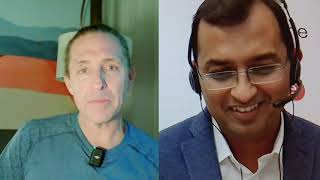
This is a YouTube video titled "EPISODE #999: How Urolithin A Helps Create Super T-Cells & Boosts Immunity – Dr. Anurag Singh" published in November 2022. It features a detailed interview between host Dave Asprey and Dr. Anurag Singh, chief medical officer at the research group behind Mitopure, discussing the science and benefits of urolithin A. The conversation covers topics such as mitochondrial health, immune system function, aging, exercise mimetics, and potential therapeutic applications of urolithin A for muscle endurance, cognitive health, and immune modulation. The discussion is technical and focused on anti-aging, athletic performance, and immune system enhancement through supplementation and lifestyle.
Chapters
You're listening to the Human Upgrade with Dave Asprey. Today I want to share with you some new research about a very potent new kid on the block when it comes to anti aging and athletic performance and even cognitive performance. I want to go into new research studies on something called urolithin A, which is a very sexy sounding compound that it took about 10 years of research to figure out. Some people when they eat pomegranates, have all these benefits but it turns out you have to eat a ton of pomegranate and have the right gut bacteria and all the other co factors then you might make a small amount of this magic stuff or you could take it and get benefits directly by taking it. It's something that based on older studies I've already added into my permanent anti aging, cognitive performance, physical performance stack. But I wanted to share with you the new information by interviewing Dr. Ann and Irag Singh, who's chief medical officer at the research group that supports Timeline. These are the guys who make Mitopure, the commercial urolithin A. It's one of the most studied new compounds I can think of. And since there's a lot of new stuff on it, I want you to be up to date on it so you can know what's possible for your mitochondria. And thank you to Timeline, the makers of Mitopure, for sponsoring the show to get a hardcore research scientist on. All right, Dr. Singh, what's the deal with your lutein A? Sure.
Thanks for having us having me on your show, Dave. So you know we've spoken in the past on your litin A. You've and you very nicely detailed. So a lot of us don't make urolithin A. I particularly don't and I can drink six glasses of pomegranate juice. My body will not produce urolithin A and the defect lies in my gut microbiome. So I really need to then look at direct supplementation. And that's why we decided to launch this product. And we've studied extensively the human population around the world and even the 30, 40% who can make it, there's very few who can kind of make it at the levels which direct supplementation will give you, which is basically the health benefits associated with it. So yeah, and a lot of our research has for 10 plus years has focused on improving health span and mostly on muscle health and endurance and strength and and now as you mentioned, there's a lot of exciting stuff coming around on neuronal health with brain health on this molecule around the world. It's just not us studying it. And over the last five years, we have very quietly also embarked into studying different impacts on immune health and immune metabolism. So that's what we're going to talk about today.
I have this underlying foundational hypothesis in most of my work that says if I can make it easier for the mitochondria to do their job, which is not just to make electricity, but to make immune signaling molecules and proteins and hormones and they do all kinds of stuff, but if they can just have enough power to do all that stuff, we'll probably have better immune function, we'll probably have better cognitive function, better athletic performance. And more and more and more evidence is pointing to that. It's not the only thing you do. Do you think urolithin A is working because it makes mitochondria better? Or are you seeing these new studies on aging and cancer via other mechanisms that are maybe different from mitochondria?
So I think there are two pathways we have seen in our clinical studies, in the randomized trials we run before and that what we are seeing now is basically sort of a reinforcement of what we already know. And one is really the impact on revving up and charging your or energizing your mitochondria. So they are behaving optimally now, whether it's your muscle cells which have 2000 mitochondria, or your neuronal brain cells that are about 1500 mitochondria per cell, or your immune cells which have about 200 mitochondria per imm. So there's certainly an aspect of mitochondrial biology which there's a lot of literature supporting it, that you basically are impacting the bioenergetics. The other is the anti inflammatory aspect of this compound which to date remains a bit understudied. But in our trials with older adults, with the overweight, healthy, middle aged adults, we see when we do a very intense biomarker studying of the blood in the plasma, we see markers of inflammation all going down like CRPC reactive protein and things that immune cells make called cytokines. And so that hints to us that it has. Well, the immune and the mitochondria are very interlinked. Mitochondria were ancient bacteria that evolved in sort of a symbiotic relationship. And the immune cells basically have all over their cell surface, they have receptors to identify bacterial and viruses, et cetera. So I think there's a very close crosstalk that connects the two mechanisms that you were des.
Beautiful. Just a Little point. You mentioned 1500 mitochondria per neuron, but I think you meant 15,000 per neuron, right?
Yeah. I mean, there's a range. Right. So the skeletal muscle is the biggest consumer and the producer of ATP, which is basically the currency of energy. And close to it are the brain cells, the neuron cells, and the heart cells. So essentially, organs that have a very high metab demand have the highest intensity of mitochondria, like skeletal muscle cells, brain cells, and heart cells. And then there's the others. They're like immune cells.
What about aging in specific, have we learned over the past couple years?
Yeah. So, you know, aging is sort of. If you look at the human lifespan, aging will, as you. You know, we know our most organ function, whether you look at muscle or even immune health, it peaks around our third decade of life. Right. And after that, at least for. If you look at just muscle function, every decade, you're losing about 5 to 10% of your strength. And so if you're not eating well, if you're not exercising right, by the time you're in your six, seven, eight decades of life, you're pretty much on the very fast trajectory to sort of, you know, what we call as frailty and sarcopenia, which is basically low muscle strength and low muscle mass. That happens with aging. Similarly with immune, for example, you can see that older adults are the ones who catch infections the most. They respond poorly to vaccination responses and is the highest. They have about a seven to tenfold higher incidence of cancer. Right. So aging is sort of the predisposing factor to many of the chronic disorders that we know today.
So if you take urolithin A at reasonable doses for a year or something, what kind of changes might you expect to see?
So what we see with urolithin A from the studies we have completed up to date, is we see that people who are very sedentary and who are not exercising, not eating right, over time, over four months, they have better endurance, they benefit, they can sustain themselves. You put them on an exercise activity, they last longer, so they don't get fatigued as much. Their muscle strength improves. This we have seen consistently across. And what we see is that their cellular and mitochondrial health is better. Now, the way we measured that in studies is by doing blood draws and looking at the blood and different. Looking at eight biomarkers of basically cellular health. And so what we see basically is that a lot of metabolites linked to fatty acid oxidation. Now, this is a pathway that shows that the Mitochondria are using energy better. And so we see that. And as I mentioned, we also see anti inflammatory effects by lowering CRP and pro inflammatory cytokines. So that's what we see. Now what we know about urlatin A is that it basically is a mitophagy activator. Now for your listeners, what it means basically is that it takes all the cellular garbage that has been accumulating over the aging process. And really that, you know, this mitophagy process that slows down with aging, it revs it up so it recharges. And so now you're cleaning your metabolic base products much more efficiently and they become the building blocks. And so we see what we call in our field as mitochondrial biogenesis. That means newer healthy mitochondria coming in.
One of the things that fascinates me when I dig in on all the mitochondria behavior sets is that we don't always just break it down and incinerate it into ash and its most basic components and throw it away. We'll actually reuse parts of cells in a relatively efficient thing, including parts of mitochondria. So we'll blow up mitochondria that's not functioning very well and we don't just pee it out, we'll reuse every little bit of it we can with as little breaking down as possible. Do you think that there's a role in making mitophagy more efficient or is it a role in turning on mitophagy?
I think it's really making mitophagy more efficient because that's what happens during the aging process is that mitophagy, which is a well conserved anti aging process, just slows down. Right. So your batteries are not charging well enough. And so you're basically now to take back your example of a battery charging, what you're doing now is you're cleaning that debris around your cells that accumulated over time and now they can function better and they just not function better. They actually lead to near healthier batteries. So it's like an optimal system.
Now that is really interesting. Okay, so if you're a younger person, say you're 25, because we have a lot of people in their 20s who are just going after it, who listen to the show. If you were to start doing this now, are we talking about a battery maintenance plan where, okay, my battery is my ability to store and make energy, it's not going to decline or am I going to see an increase in it even in my 20s?
Yeah. And so you know, of course we started studying aging first. So we went after older adults and trying to, because that was a target sort of population that made the most sense. Then we went even younger to the 40, 50 year olds who are not, you know, want to exercise but don't have enough time because of their professional life or whatever. And even in those populations, we showed a health benefit related to both muscles.
So people who are super busy with family and career, they take urolithin A and even if they're not exercising, they're getting some of the benefits of exercise.
Yeah, and that's what we, exactly what we are seeing in our public. It hits the same biology as an exercise regimen would. Now you do need to get this. You still need to eat right. You still need to maintain your. What it does, this molecule is it revs up and acts in four months in sedentary people, as you picked up. Rightly, we see the same effects that six months or four months of exercise would do.
It's hard for you to say this because you're at a research institution and you have PhDs and MDs and all that kind of stuff, but four months of taking a couple pills is two little red pills, two medium sized red pills every day or a little sachet for four months got you the same benefits. Not the same in terms of like muscle size, but the same metabolic benefits of exercise for six months. Right?
Yeah, that's exactly what we found and.
We published every sedentary person. And by the way, that's most listeners I know. A lot of you think that everyone else is going to the CrossFit gym twice a day and riding their bike there just because to like rub it in. The vast majority of us are working our asses off to put food, especially grass fed quality food on the table and build our career and build our community and have love in our lives and all the other environmental things that matter. So I'm just going to say it. If you don't hit the gym or the vibration plate or any of the other stuff that I, that I teach, that's okay. We all do our best. But it's probably a good idea to take the things that give you the metabolic benefits of at least some of exercise. If you're not going to exercise, if you do go to the gym and you do exercise, which probably means you don't have kids or at least young kids. Okay, what happens if that population takes mitopure?
Yeah, so a lot of our, we actually have a clinical study going on in one of the top sports institute in Australia right now with elite athletes and what happens in elite athletes. And this was a breakthrough paper that came out a couple of years back. Even in elite athletes, overtraining induces mitochondrial dysfunction function and impairs mitophagy.
This happened to me, Dr. Singh, in my mid-20s. I said, I'm going to lose this 100 pounds of fat no matter what. And I just went to the gym six days a week, hour and a half a day, didn't matter if I was sick or tired, didn't sleep, half weights, half cardio. I was seriously overtrained and I did not lose the inflammation and I didn't lose the weight, even though I was stronger. And I think that's what I did. I probably broke my immune system because that's what's happening, right? It's not just problems with mitophagy. They get immune dysfunction.
Of course, a lot of athletes are super inflamed. And if you look at the C reactive proteins and other cytokines, they're. They're very high. And that's mostly because there's, again, as I was talking about, there's a very close nexus between the mitochondria and the immune system.
I have this beautiful picture in my head of a future. And my company, Upgrade Labs, is working on this, where for each person, based on where they are today, we'll be able to say this is exactly the amount and type of training that's going to push you right to the edge without dysregulating you and then bring you right back as soon as possible. But what I'm hearing is that mitopure can probably help move the edge out, or at least it can help you return to baseline faster, because if you would have dysregulated, well, now that you're better at making energy in your mitochondria, because you're on mitopure, the chances of you dysregulating at a certain level of intensity go down. And so I'm working with AI models and we're franchising that all over the place. And I'm very happy to say we recommend that you take mitopure because urolithin A has dozens of studies that show it improves your ability to get towards those specific health goals, whether it's resilience or whether it's just being able to have a certain amount of endurance or not. And this. Are there other compounds like this? What would the other compound besides urolithin A B that has this much excitement behind it?
So the other two ways to boost mitophagy are regular exercise and caloric restriction or intermittent fasting, both of which are extremely tough to comply to long term. Right.
Is that because of MTOR or something else?
You know, I think all these pathways and we've done, at least in animal models, we've done caloric restriction head to head. It mostly is mitophagy. It boils down to mitophagy pathway of recycling and really efficiently recycling your damaged mitochondria that can then become building blocks of newer, healthy mitochondria. We haven't seen much of an impact on MTOR and haven't really studied it.
Okay. This is how important is for listeners, if you've read the books or you've heard the interviews about it. MTOR is a compound that causes growth in the body. And the way it works is if it's chronically elevated, your risk of cancer goes up. But if it's chronically low, you have no muscle mass and you have no bone density and you have no cognitive function. And the way you want to do this to manage your aging is you want to compress and suppress MTOR sometimes because the more it's suppressed, the more it bounces back. So the three things that suppress it which overlap with your list, Dr. Singh, there's intermittent fasting, there's exercise, particularly weight training, and there's coffee. So you do all three of those together. Exercise in a fasted state after a cup of coffee, and then have some protein and even some carbs if you want to afterwards. And then your MTOR explodes, you build. The MTOR will actually drive mitochondria to work better, as I understand it, like at least during the build phase. And then you get those benefits. But then you're fasting again, so you don't keep it high. If you add MITO pure to that mix, what I'm seeing is then your ability to build muscle and to adapt to the exercise that you just did when the MTOR is high should go up because you're just better at using your mitochondria, so you'd be even improving that. I call it tripling down on mtor, but it seems like adding mitrepure to that stack of behavior would be a beneficial thing.
And the other difference there is a lot of MTOR was targeted for immune suppression. So typically rapamycin was even developed as a drug and given to patients is a drug called sirolimus to basically engraft. When you are putting sort of transplantation, kidney transplant, you're giving sirolimus mostly to suppress the immune response. And so if you're hitting mtor, you will see immune suppression. What we are now seeing with, with these studies is that you are actually getting an augmentation by taking all the exhausted T cells. What happens in aging and cancer is that the immune system remembers basically that it remembers the shadow of a virus or a bacteria, but it just loses its energetic capacity to start a whole process of fighting it. And that's what we call immune exhaustion. And that's what, what we are seeing now that urolithin A or mitopure can very efficiently do is basically rev up those exhausted T cells and that help to fight cancer, help to fight infections.
What would be the most potent thing you could do to screw up your olithin A in your body? Would you take it with an antibiotic? Would you take it with glyphosate? Would you take it with seed oils? How could I make it not work? This is what hackers think. Like, how do we break a system?
How would we break the system? Well, let's start with how do we make it more efficient? And then we can talk about. So we have run the studies in older adults who are polymedicated. So they're taking antihypertensive, they're taking all the metformin. Diabetics, sort of anti. Diabetic medication. No, it's a very inert, very robust molecule that hardly interacts with, with anything that we know. So you can probably potentiate with things that you were explaining that you can always augment it. Now what can break it? Probably a lot of mitochondrial stress. Antibiotics is one. So I took a lot of antibiotics. I grew up in India, trained as a doctor. Everything before you diagnose it, you give antibiotics there. And so that stresses both the immune system and the mitochondria. A lot of environmental toxins, for sure, stress the immune system and the mitochondria. So you could probably have some impacts. But I don't think if you mix it with other stuff we haven't really seen. If anything, we have seen even a potential sort of improvement with people who are trying things with athletes. I think the biggest community feedback we've got is from amateur and even top elite athletes who are in the top prime of their shape and who are exercising. Probably they have top dietitians and nutritionists telling them what to eat. Yet they believe that mitopure is helping them perform better than they have ever done and recover if they're getting injured. So I think, yeah, we know Better what you can use to alchemy than how do you take away its effects.
There's a class of compound called a postbiotic, which is that these are therapeutic molecules made by certain types of gut bacteria that most people don't have. And you're a lithium a the mid appear. It falls into that category. And what drives me nuts is that I can take certain probiotics and they just never take hold. And like, I would love to have a probiotic that eats oxalic acid, which would lower my oxalate levels because spinach and kale and things like that are full of this thing and so are a lot of nuts and it's not good for you. And it causes gout and kidney stones. And I like, like the kidney that I have, I only have one, so I like to take care of it. So I'm just thinking, okay, that sounds like a superpower. I'll just like buy that upgrade at the probiotics counter. There was a company made that stuff. They don't make it anymore, so you can't really buy it. And the idea is I'm just going to eat kale every day. But all that does is give you joint pain and brain fog and shred your gut because it's gross and it's bad for you. At least that's what I would say. So. So I'm kind of stuck there. I don't know what to do and what I'm starting to think. And I've seen a few emergent papers that say your body is somehow telling the gut bacteria which ones are allowed to be there. Like there's a complex immune cell interaction even with your onboard biome. So your microbiome is somehow controlled by your body as it controls your body. So we have this virtuous cycle. So even if you add urolithin A in and by taking mitopure, is that shown to increase your population of urolithin A producers.
So I think a probiotic approach is extremely risky. So of course you could find the one bacterial strain or the one probiotic that could, while you're drinking juice, pomegranate juice or eating your walnuts can give you better urolithin a naturally. But again, the problem, as you correctly pointed out, and I've spent close to 15 years before studying urolithinase, studying probiotics before, and they just don't seed well. You take, I don't know, billion CFUs of bacteria and hardly a few percent colonize, and then how do they interact with the other gut Bacteria is a big question. What we do see, actually, in people who are blessed, as I call them, who actually naturally make enough of urlitin A, is that they have more of Ekkermansia, for example, and they have more of the healthy gut bacteria. Is it Ekkermansia, the one leading to more urolithin A production, or is it just a sign of good gut health that is then leading to urolithin A production? We don't know, but that's what we see.
It's a tough one. I've had experts on Akkermansia as a probiotic on the show for sure, and I think there's a viable case for taking it because of the reductions in blood sugar and all the things like that that are tied to it. So I take Akermansia as well, but I take urolithin A on a regular basis, and I have no idea if something seeds. But I. I take all the advanced technology, things that increase sprouting and seeding, and I talk to a lot of probiotic companies because I think there's magic in them. But I also think there's a degree of unreliability because I don't know whether my body's gonna say, you're allowed to grow here or not. And so we're gonna get there as just as scientists, and I think it's gonna be a long time. In the meantime, I'll just take the post compound because, frankly, I'm not drinking six glasses of pomegranate juice anyway because that would raise my triglycerides through the roof. And I don't care about. People say, well, it's fruit. It's somehow healthy. No, it's fructose. Fructose raises triglycerides. It gives you fatty liver. My liver fat is 0.93%. Thank you. I'm going to keep it that way. So urolithin A, I think, is part of that whole equation. And seriously, I would expect 20 years from now, when I look and feel even better than I do today, to say, yes, I'm still taking it because of all the work that you've done and your colleagues. Part of looking and feeling at least as good as you do now, 20 years from now, is understanding immune system function. And can you walk listeners through T cells, just kind of briefly, what are T cells? What do they do? And let's talk about your lithin and T cells.
Sure. Well, I'm trained as an immunologist, so this is a part I would love to give a primer On So the immune system basically has two sort of line of defenses. One is called an system immune innate immune system. And one is called adaptive innate is really the first line of defense, like when something goes in your eye, the tears and stuff that basically are stopping the allergen or the viruses from entering your body. And then there's the adaptive immune system. So the adaptive immune system basically is two kind of immune cells, T cells and B cells. T cells are the ones that are fighting the infections or fighting the cancer. And there are two types. There's one cytotoxic T cell, which is the key one, and then there's a helper, which is a CD4T cell. And then there's the B cell that make the antibodies. This in a nutshell is your immune system. Now what happens is we are from birth to our adult years to older age when we are born, we basically, our immune system has never seen any bacteria or virus or any harmful, what we call in the immunologist field as an antigen. And so it learns, it learns over time. And this is what is called as immunity immune memory. So it always remembers. The T cells are basically the good guys that are always fighting or taking your side and fighting the infections and fighting off the cancer. And they remember. And as we grow older, this T cell that learned everything starts to get fatigued. And this immune memory cannot be as efficient as when you're 78 years old, as when you were 30 years old. So that in a nutshell is how your immune system works.
Is it that it has so many things to remember that it starts forgetting some. What's going on with that memory cell?
It's possible there's fascinating viruses like when you got chickenpox as a kid. This just hides in your nerve sheets. 50, 40 years after it wakes up, this virus in a different position gives you something, a different disease. So it's. There are times when. And the viruses like the HIV goes after not the cytotoxic T cells of the B cell, it goes after the helper T cell. It kills off all the helper T cells. So basically it short circuits the whole immune system. So all these viruses and bacteria have evolved with us and they've grown smarter over time. And you're right, there's times an immunological memory is found wanting. And that's what this new paper actually is showing that the memory, the immunological memory relies on a very small set of immune cells. And these are called as stem cell memory T cells. And these are the ones that always Remember that. Always remember to come in fast and to really fight off everything that the environment throws at our body. And this is where urolithin a really hits the nail. It activates mitophagy in these particular stem cell memory T cells.
This is big because stem cell exhaustion is one of the seven pillars of aging that I teach people about. So we run out of stem cells. That's why you always see me having guts. Like Harry adelson from docetra clinics on the show. He's in my books. This is why I do stem cell work on a very regular basis, because I don't want stem cell exhaustion as I age into my hundreds. So that's one way to do it. But we're understanding now there's lots of different kinds of stem cells, way more than we thought. We think there were kind of of two kinds or three kinds. And it turns out there's probably a lot more. So you found that there's a t memory stem cell, which is interesting. And so as an engineering person, it would make sense that you should have some kind of a cell that can regenerate stem cells that are programmed with all of your environment. And these are those master copy, like, you know, the first press platinum album, whatever things they have when they made vinyl. Right, the masters. So if you need to remaster your stem cells, you go back to the master and you copy it. So what's urolithin a doing to those stem cells in particular?
So what it is doing is what we have always known that urolithin a can do. And it is basically activate mitophagy in these T cells or these stem cell memory cells.
Not just the memory cells, but the stem cells. So those are now younger stem cells than they were before. Like, that is profoundly important.
Yeah. And this is where the cancer cells try to hoodwink the immune system. This is where a lot of bacteria and viruses try to. Is basically they trick the immune system to exhaustion and they basically deplete this pool. And it's like your savings bank account. Right. You're always saving some extra cash. That's what this sort of particular stem cell memory T cell is doing. And so if you don't have enough of these, you will never be able to mount an efficient immune response. And what urolithinate does, basically, what was shown in this beautiful new publication in one of the top premier journals of studying immune function, is that it increases the numbers of these stem cell memory T cells, they become more potentiating, so they actually can fight off things like cancer in this case, which was the studied model. And basically it's mitophagy that is doing that was basically deficient in these immune system immune cells.
That is, that's powerful. Because if I can get younger stem cells on board, I mean right now I'm working with a group, I'll talk about this later, that may be able to take out my own stem cells and make them younger, working with some of David Sinclair's team and then put them back in. So I want 25 year old stem cells that are totally happy to go to town like that. If urolithin can just do that for my T memory stem cells. Okay, I'll take it for any kind of stem cell I can get. This is really exciting to me. Some of the other stuff that we discussed ahead of the show just to figure out what to talk about here is the anti inflammatory things going on even around autoimmunity like ibd, which is usually autoimmune and ms, which we know is autoimmune. And I've never talked about this before, but I was very concerned when I was about 28 or 29 based on the set of symptoms that I had. I'm like, if I don't get on top of this, I am going to end up with Ms. Or lupus. I actually arranged to get a test for one of them because I had so much autoimmunity and I was just so profoundly tired all the time and nothing worked. And I'm lucky that we figured out toxic mold was a major part of the problem and it oftentimes is for Ms. As well. Well, because it triggers autoimmunity in addition to directly poisoning mitochondria. So they can't do their job. But what did you find around urolithin A and autoimmunity?
So a lot of work in addition to what we are studying here is also urolithin A is such a now studied molecule that a lot of top labs around the world are studying it. So this work that I'm referencing to on inflammatory bowel disease and multiple sclerosis was not done by our research group, but it was actually done by two external top labs in the US and one, they used models of inflammatory bowel disease or Crohn's disease. And what they showed was basically in these models the gut barrier function is destroyed and of course that leads to inflammation, that leads to autoimmunity where basically your gut is destroyed by your own T cells. And they found that by giving urolitin A in the diet of these models, they could reverse the phenomena. And that was mostly because of the potent anti inflammatory effect similar. Another group showed in models of Ms. That they could achieve the similar effects all by augmenting T cell function and controlling. I mean the way I see urolithin A, a lot of it is anti inflammatory, but a lot of it is immune modulation. So it takes sort of a rewiring of the immune system and makes it more conducive to stopping harmful immune responses.
What do you think would happen if they removed diet soda from hospitals and replaced it with a urolithin a drink just as a universal practice?
I think that will be a fantastic idea. And actually we are running a study because. Because we've taken a very diligent obit. As I mentioned, research in a spectrum of time takes time over. So now we are going to elite athletes, but we are also studying hospitalized patients because each day that you spend in intensive care unit, you're losing equivalent to five to 10 years in terms of muscle mass and strength. And so the sooner you get people out of the intensive care unit from their sort of tube feeds, even the faster the recovery will be and less health economic impact.
Do we know anything about Alzheimer's or Parkinson's or better yet on just making people smarter and faster?
Yeah. So the Buck Institute of Aging has been spiriting a lot of effort. They have like a multi million grant from the National Institute of Aging to study urolithin A on neurodegeneration. And I believe they've just published a paper showing that it's very promising. The National Institute of Aging three years back, they studied thousands of natural compounds and drugs through sort of like an AI, as you were saying, a high throughput studying of which compounds would work the best for brain health and preventing Alzheimer's disease and the pathophysiology of it. And the top one they found was actually irolutenase. So and it boiled down to mitophagy. You know, a lot of times for a long time, Alzheimer's disease was a disease of protein misfolding. And basically now you're seeing all the failed drug trials and now it's the buzzword you hear. Well, it was always that plus inflammation in the brain. Right. So only if we had a drug that hit both. Well, I do think we have a natural compound that hits both both which is inflammation and mitochondrial dysfunction and protein misfolding. So I think again time will tell. These trials are long for brain health, but yeah, we are super excited about what we have with immune health. And we are trying to translate that into new clinical studies.
Now we're finding all these new studies showing the delicate interaction between mitochondria and the immune system. It's not the only thing you do to stay young. You might want to have, have fewer toxins and things like that. But man, if you wanted to perform better now, which is what most anti aging strategies do, I don't care how old you are, you can be 18 and you take this urolithin A and you are going to decline more slowly than your other friends do. When you're 18, you're not worried about declining, you're worried about getting a date. I will tell you, if you have better functioning mitochondria, you will have a better day. You'll also be more attractive and people won't know why. And the reason for that is that abundantly healthy people have eyes that glow a little bit and everyone doesn't know what it is, but they have a vibe and it comes from those things. They make little electromagnetic fields. They make the electricity that lets you go on that really good date, that lets you go out and build a career and all. And that's something that I was fortunate to learn in my 20s from people 3 times my age when I was trying to fix myself. So if you get on a preventative plan that gives you more power now and you compound those benefits over the course of, I don't know, 100 years that you might live. If you're 18 today, you're going to be so far ahead of your peers who just went to Taco Bell for all that time. You will look like different species in 100 years. It's that big of a difference. So I think there's something to be said for this. And yes, you should spend your money on high quality food. Before you take supplements, you need to take some basic supplements, like having enough magnesium should come on your list ahead of your lithium A, because if you're deficient in minerals, you can't use any advanced compound because your body can't do what it's supposed to do because it doesn't have building blocks. But assuming you eat well and you have your very basic stuff covered, this is something that has now enough evidence to say, I think it goes on your list and it's certainly on mine. So my job is to tell you guys what I do and to tell you why and to let you think about it so you can pick the pros and cons. We haven't talked about the cons like Are there side effects? Am I going to grow a third eye? Not that I wouldn't want to, if it's in the right place, but maybe one on each hand. What might go wrong with your lithium?
A so, so far from. As you mentioned, we've studied from 19 year olds to 89 year olds. That's the oldest participant in our trial. We are yet to see a side effect. And again, it boils down to. So the natural origins of the molecule evolutionary. We all were making this molecule because we were all eating, we were hunters and we were all eating fruits and nuts and sort of berries out there in the wild. And our microbiomes were conducive to producing this molecule and we were making lots of it. But of course, evolutionary, we have lost. A lot of us have lost that habit. The microbiome has changed and we have done tests where we have given 5% of the diet in animal models with this and we don't see anything so.
Abundantly safe would be 90% of your food based on this would be extreme. Did those animals levitate or anything cool? Like, did they have anything. Is it a linear dose forever or is it.
No, no. So in our clinical studies, it's linear telegram and then there's so much you can give the body. So the 2 gram looks exactly like the gram in terms of biological.
No matter your body weight.
Yeah, yeah. So we have done studies where you get a very nice dose escalation from 500 to a gram and then it tapers off. So we haven't done studies where you kind of play with twice or twice a day to see if it's the peak of the response or the exposure.
But yeah, I'm going to go out on a limb here and just say, given the way things usually work, since there aren't studies, if you're obese the way I was and you have the budget, you should do it twice a day because you have a whole lot of mitochondria and you got a whole lot of fat cells that need a lot of help. Right. So there's probably a therapeutic thing. And if you did a gram twice a day, you're not going to hurt yourself, but you probably are going to get more benefits, but we don't know for sure. And if you're on a budget, then, okay, you just do it once a day. It may take longer to heal or it may take the same amount of time. But if you were to say, you know, when people take 2 grams, it's very dangerous, then I'd be like guys, 1 gram hard limit. I don't care. So you can play with that as a biohacker, as long as you know it's not likely to cause any problems. You guys haven't seen any, and you've done abundantly high doses. Okay, now here's something else that we haven't talked about before. There's the original timeline. The mitopure powder with raspberry and a little bit of ellagic acid, which is a raspberry extract that can be a precursor for urolithin A. There's the new ginger powdered one. There's the softgels, and you actually make a protein one as well. How does it absorb? How do I get the most out of the mitopure that I take?
So we've compared the different products in terms of bioavailability or absorption, and they're pretty much same across the board. As I mentioned, it's a very stable inert molecule that sort of absorbs irrespective whether you're eating in a fasted stomach or with a big heavy fat meal or in a different matrix, whether it's ginger. I think the whole idea of putting it in a range of products is that everybody has different preferences. Some people like to take their health foods in smoothies and shakes and want to get the health benefits with a new molecule like urolutein A. And a lot of people prefer convenience in pills. So that's just the whole idea.
It's just a convenience thing. Is there anything I could do outside of that? I mean, should I blend it with some fat in hot water? By the way, it is heat stable. You could blend it in your coffee with butter if you wanted to put it even in danger. Coffee. I've done that. Kind of a raspberry flavored. The ginger in coffee is gross.
Yeah. Mixes very well with mcts with the medium chain triglycerides. So it's fat soluble.
So it should drive absorption there because mcts slightly open up the tight gap junction to let stuff in better. It's one of the reasons they hydrate. So maybe that's a good thing. If you're just trying to economize or just get more bang for your buck. Blend it with a little mct. Even just in water. You could do that, right? Okay, yes, that's one strategy. Take a shot of vodka with it. Vodka is a pro aging compound. But I mean, is there any other thing or is that kind of it? Blending it with a little bit of fat might be helpful because it's fat Soluble.
That's about what we can say with confidence now, of course, people trying different things, different doses and different ways to take it. But I think from the side scientific evidence we have, that's pretty much it.
Now I'm going to give a shout out to Timeline for doing something that I've wanted to do in supplements for a while and I haven't been able to pull off yet, even with my new supplement company that's part of Upgrade Labs. Plastic bottles kind of suck. No one likes plastic, especially sea turtles. And the FDA requires an extra piece of floaty plastic as a seal, even though there's an inner seal, which is dumb because the inner seal should protect you from tampering. But the outer seal becomes a piece of thin plastic that gets in the environment. So I prefer Mylar bags for supplements, but people have a hard time buying those because it's not what's normal. Mylar is a lot less plastic. So when you buy Timeline, they send you a beautiful glass bottle that's reusable, that's frosted glass, and then they send you packets that are sealed and environmentally friendly. The smallest amount of plastic with the tightest oxygen seal, much better than plastic, so that you get an intact product, you add it to your bottle, you take it every day as a supplement. That's one of the reasons I like taking the Mitopure supplements as pills instead of as packets. But when I travel, I have a handful of packets over in my bag somewhere because I'm on the road. I'm in Scottsdale right now and I'm recording this. So just in terms of this, you don't have to be perfect. Take one. But what would happen if you took it every other day? Are you going to see no benefits? You're going to see some benefits. I mean, people are economizing. Sure.
No, I think there's certainly. We haven't done clinical studies, but there have been preclinical studies looking at, let's say, every alternate day regimen. And as long as you keep your mitophagy revved up, as long as you can take out that cellular debris. A lot of people take. I know, personally, I take myself as you were mentioning the higher dose, and then can, once you start seeing the benefits, you can taper off to an intermediate 500 milligram dose. So, yeah, I think there are therapeutic benefits with doing it one day on, one day off, possibly. But yeah, if you stopped doing it after four to six months or a year, then I think your body will again come back to Its sort of original steady state which. Yeah, so yeah, yeah. It's like exercise or if you stop intermittent fasting you will lose this effects. So we do think that it's one a day because it's half life is about a day. So you gotta keep the levels up for the day and then once a day kind of a thing.
I believe it's totally fine to take this during a fast because of what it does for cells. Do you agree?
Yeah, absolutely. Especially the pill because it gives you zero calories.
I would be the hyperx during a fast. Laboring stuff in there. Could do something possibly. It's unlikely, but yeah. So take a pill during a fast and actually the powder has so little in it, but yeah, who knows. And then exercise before, during, after. Is there a preferred time?
So this, the clinical study we are doing is mostly looking at recovery. So kind of during and after training. But we have done steps studies in the past with exercise regimens and it actually augments the exercise response. So it's something you could take pre workout, during workout and post workout.
That's important. It augments the response. And what that means for listeners is that if you were on it and it was fully in your system so you took it an hour or so before exercise, when you exercise, you get more bang for your buck. What my gut would tell me is that you should take it right before you exercise so it'll kick in by the time you're done exercising so that you could recover better. Because my research at this point, this is in the next book, shows that the speed of recovery is a major variable we ignore. So if you could recover faster, you'd be much better off. You get more benefit per minute of exercise. But what you've just found is that if you're already on it when you start exercise because your mitochondria work better, then they can respond better. So that means just take it every day and exercise and maybe take a booster dose before you exercise.
Yeah. There's a very elegant study we are doing actually right now with 40 odd elite athletes, Olympians. And this is exactly the model you just described. We start them in a training camp model just before and then they go off to high altitude training where they of course get stressed downhill running, uphill running. And then what we are seeing, what we're looking at is how fast the body of these top athletes can recover from the insult there. And of course in the mitochondria health.
That is. That is beautiful. What an amazing compound. I'm really impressed. I see so much cool stuff come through where there just isn't enough research. And I'm willing to talk about some stuff like carbon 60 or something where, okay, there's old research and then you'll have someone come on who talks about some sort of new research, but then it hasn't been validated. But then, you know, there's still questions about that. Like, I've taken it for a while, then I stopped taking it, and I think right now I'm not taking that. But Urolithin A is not even in that category at this point. It's being studied by major institutions all over the place and there's a bunch of studies. So it's a very high degree of certainty that it's got a lot of benefit. So of the hundred things that come through, this is in the top top 5% of interestingness and efficacy based on the strength of evidence and the breadth of what it does for you. So I'm very excited. And because you guys are listeners, you know that you always get a discount. So. Timelinenutrition.com use code upgrade10, they'll give you 10% off the plan of your choice. I'm not even kidding. This is one of the things that belongs on your I take it on a very regular basis basis kind of list. So just do that and you'll be happy you did. In fact, you'll be happy from an immune perspective, a brain perspective, a performance perspective, a muscle perspective, a thinking perspective. It's legit. Dr. Singh, thanks for sharing your knowledge and going deep on immune function. And I'm pretty excited. I think I need to take more of this stuff. I'm going to be ordering some.
I've got the code. Thanks. Thanks for having us.
If you liked today's episode, you know what to do. Do something nice for another person and magically that gives you a flow state. And guess what drives your flow state? Mitochondria. Guess what enhances your mitochondria? Almost everything that you learn about on the show in one way or another, especially today's. I'll see you on the next one. You're listening to the Human Upgrade with Dave Asprey.










