Exposed: What Doctor's WON'T Tell You About Testosterone Over 40
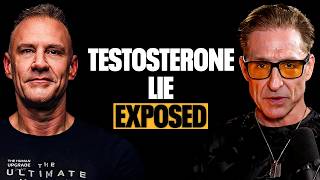
This is a YouTube video titled "Gary Brecka: The TRUTH About Testosterone That Doctors Won’t Tell You (Pt. 1)" recorded in early 2025. It features a detailed conversation between Dave Asprey and Gary Brecka, both experts in biohacking and functional medicine, discussing topics such as hormone optimization, testosterone therapy, longevity, systemic health issues, and the influence of corporate and public policy on health. The discussion includes personal experiences, scientific insights, and critiques of mainstream medical practices, aimed at educating viewers on optimizing health and lifespan.
Chapters
Corporate greed. Corporate corruption has been allowed to influence our public policy. Yet we just dropped the 66th in life expectancy under some south sub Saharan African nations that do not even have clean water and sanitation. There are places in the world without clean water and sanitation who have longer life expectancies than us.
I still think that Dr. Kellogg's nasty legacy is still in our medical system.
Yeah. How much damage?
This guy believed libido was the source of all evil and made cornflakes to lower our testosterone level.
Your grandfather and my grandfather were walking around with testosterone 11 to 1400. If your testosterone is 1400 now, your cardiologist is going to freak out.
Have you ever used anabolic steroids? You're listening to the Human Upgrade with Dave Asprey. Welcome to the first part of my conversation with Gary Breca. My team and I decided to split this show up into two parts for you so that you have extra time to digest all the amazing content in this recording. Part one today discusses hormone optimization, longevity, testosterone, and systemic health issues. But make sure to tune in to part two in a few days as we dive into methylation, genetic pathways, biochemical optimization, and so much more. Biohacking goodies. Guys, these episodes are packed full of content that you can use to truly upgrade your life in so many ways. So please take notes while you watch, re listen to sections and soak up all the value that Gary shares with you. Enjoy. This episode is recorded live in person at the studios here in Austin, Texas. And our guest today is someone you may have seen, at least if you have access to the Internet, which you probably do because you're listening to this. It is none other than Gary Brea. Gary's a friend, a fellow biohacking expert, and a functional medicine expert who has spent 20 years working on how do we do this? How do we make ourselves better? He runs the ultimate human podcast, and you've probably seen him at least as much as you see me on social media. And he's done some great collaborations with UFC athletes, Dana White, you've seen both of us on Joe Rogan. So I'm going to pick Gary's brain for you today, and we're going to go deep and ask questions about methylation, human performance, and most importantly, I want to compare notes today because Gary and I have a similar view on things, but it's when you have two experts in the room, you get to have these. These detailed conversations. So, yeah, Gary, I got a question for you.
Sure.
Welcome to the show officially.
Thank you. I'm excited to be Here.
I want us to nerd out but not be so nerdy that people don't understand what we're saying.
Right.
So I would ask you, and I know you're good at this and so am I, we're going to translate anything we say. So if I'm like c, y, p, a 1, 2. Yeah.
Oh, yeah, that's cytochrome C oxidase releasing mitochondrial nitric oxide.
Exactly. So we're going to translate this. It won't be. We won't go down to like, kind of Dr. Oz level in great respect for Dr. Oz, who's smarter than. Than you'd ever believe in person. But his show's like, like very tuned for super mainstream. We're not going to go that mainstream, but we're not going to go into PhD in biochemistry either. So does that make sense?
Fair enough.
All right. I'm super excited, and thanks for coming to Austin.
Thank you. Yeah. And I'm really excited to be here. I mean.
All right, which is more important for you, performance or longevity?
Um, I think longevity is probably more important for me. Um, I think. I think life is a marathon, not a sprint. Um, and I think there are lots of ways to improve performance. They tend to be, in my opinion, very short term. There are lots of ways to get big muscles, right. You can use anabolic steroids and get really big muscles, and you could improve your performance very quickly. Longevity is kind of a view on, in my opinion, the habits that need to be ingrained in your lifestyle so that you can not just, you know, the way I think about longevity is not just extending life. It's. It's not just adding years to your life. It's adding life to your years. Let's say you gave somebody the choice of extending their life, but not really their health span.
That's called hell.
Right, Right. That's called hell. You know, it's a slow torture. So if we say, okay, everybody's going to die at 81, but you're going to thr until your 80th birthday versus everybody's going to die at 81, and you're going to thrive until your 65th birthday, I think that's where the biggest promise in, you know, the biohacking, longevity, anti aging bio optimization, if you want to call it any of those things, I think that's where the market really lies is how first do we add life to our years, and then we can talk about how do we add years to our life?
When I created the biohacking term, I had been running a Longevity nonprofit in Palo Alto for actually since 1997, I think. And my challenge was that no one under 60 would ever come to our meetings to interview the luminaries in the field and people who are on both of our podcasts today. This is before podcasts existed. And I was walking around in remote parts of Tibet just lot three months. There's lots of time to think and meditate. And I just said, you know, it's a branding problem. Back then we called it anti aging because no one believed longevity was a thing.
And.
And no one would be interested if they were young. Because when you're young, you want power, you want attractiveness, you want your community, you want to feel good, you want independence and success. But these are the same tools. And for me, people in their 80s, luminaries in the field were teaching me the stuff, and it brought my brain to a new level, and it got rid of my a hundred pounds. So biohacking was the idea that you can have control over your biology and that people want different things at different stages in life. But no matter what you do, if you enter the path of biohacking, you'll end up wanting longevity and you'll end up wanting happiness. It just may not be where you start.
Right, right.
And this allows longevity to be, like, a beautiful thing. But it doesn't have to be what I care about now. I just know I'm gonna get it, even if my goal right now is big muscles.
Right.
Well, so let me ask you this. Have you ever used anabolic steroids?
No.
You've never had bioidentical testosterone?
I have had bioidentical testosterone.
Isn't that anabolic steroids?
Well, I guess you can consider that an anabolic steroid. I'm on bioidentical testosterone right now.
Fist bump.
All right. Okay. By the way, there's a really good. If you look at the 2018American Journal of Urology, which updated their clinical guidelines in 2018, and if you really want a quick, good summary of the excerpt of really good randomized clinical trials, I think the American Journal of Urology, if you just Google American Journal of Urology Testosterone, you'll see their 2018 clinical guidelines. Scroll down to section 13. Start reading from 13 on 13 to about 21. Essentially, what that section is, is it is the American Journal of Urologies, which. Which many endocrinologists would consider the bible for male integrant therapy. It is their guidance on how a physician should counsel a testosterone deficient patient. And I want to preface what I'm saying. By I'm on bioidentical testosterone. And I think if you're clinically deficient in testosterone, you should be on bioidentical testosterone. And if you read this summary of the research, you will be on bioidentical testosterone because it talks about improvements in anemia, bone mineral density, erectile function, mood, sleep, you know, obviously lean muscle fighting, sarcopenia. And it dispels a lot of the big myths and that testosterone was attacked for things like increased risk of cardiovascular disease, they actually proved the opposite to be true, right? I mean, the 10,000 receptors in the heart for testosterone alone. So more than any other organ in the body. So how would a deprivation of testosterone harm the heart versus an optimal level of testosterone help the heart? And again, you and I are not going to talk about supraphysiologic levels. I'm not talking about having your, you know, 400 nanograms per deciliter of testosterone or I mean, 4,000 nanograms per deciliter testosterone. We're not talking about, you know, competition bodybuilding doses. We're talking about optimal ranges. But if you ever had any doubt, or your cardiologist or your endocrinologist had any doubt, not only are all of the research citations in that summary, but it's in plain enough English, the, the impact on, you know, prostate cancer, that it, that it exacerbates prostate cancer.
It doesn't. It helps to protect you from prostate cancer.
It helps to protect you from prostate cancer. So I found that to be, for me, when I was starting, that was about the time that I got on hormone therapy, was 2018. And I also think that before you get on hormone therapy, you should look at deficiencies like do you have the right signaling strength, do you have the right levels of, you know, DHEA and vitamin D3 and the, and the, and the core building blocks for the hormone. Because I think a lot of us are not, don't have primary hypogonadism where we actually lose the capacity, capacity to produce testosterone very often, especially younger males. I mean, you know, you see a lot of guys, we have clients that came into our clinic system and they had started testosterone at 20, 21 years old. And like, whoa, that is, that's not the time for you to be on bioidentical hormones. But you look at their luteinizing hormone, the follicle stimulating hormones, you look at their clinically just floored out. In dhea, the body just didn't have the building blocks, you know, super elevated, you know, shbg. And they thought they could control their sex hormone binding globulin by just putting more testosterone into the. Instead of removing that protein and having their hormone levels rise naturally. I still would say that no matter what anyone says, including myself, there's no better hormone than one the body makes on its own. So if you can produce your own hormone levels into the optimal range, that's the first stop, that's the win. If not, then you can absolutely benefit from bioidentical hormone hormones.
When I was 26, I had tried everything. I'd been on, you know, low fat, low calorie diets. I lifted weights six days a week for 18 months. I had tried everything I could think of, and I was desperately fat. You know, 46 inch waist, I'm 32 inches today, and I'm 4.8 body fat. I'm not trying. Yeah, I'm trying to actually get more fat. It's hard to do for me right now.
Remember, fat's not the enemy. Don't listen to time magazine, circa 1990. 98.
No kidding, right. And I went to one of the very first longevity doctors, what you would call an orthomolecular doctor. And then they call him alternative medicine, and it became functional medicine and longevity. And his name was Dr. Phil Miller in Silicon Valley, only saw executives. And this is in the 90s, like, very, very cutting edge. First doctor ever knew who could use Excel and would track your variables over time. Like, this is what I do in the data center. This is engineering. One of the inspirations for biohacking. And I sent my parents there because I made $6 million when I was 26. I'm like, I know longevity is real. I'm talking to all these longevity people. I'm gonna see if I can get my parents into that. And then I said, I better go because things aren't working. I have this terrible brain fog. And he called me up and he said, I've got some news for you. Your testosterone is lower than your mother. And I'm like, this is not good. So how old are you now? I'm 52.
No, no, no. How old were you in that?
I was 26, maybe.
26. Wow.
Yeah.
Way more common than you think.
Oh, it's super common. And so I went on testosterone, and I've been on testosterone since I was 26. So it's going on 26 years now. Except I took off a couple years when I was developing the bulletproof diet to see how high I could get my levels if I followed all the biohacking principles. I Could get up to 700, which is just not enough. I feel around 1200, as you and I know. But listeners may not. Different levels of testosterone are the right set point for different bodies.
I would agree with that.
Like, if you get tested when you're healthy, maybe when you're 21, if you're healthy at 21, which is hard to do these days, then you know your numbers. But I never was healthy. I had toxic mold, xenoestrogens, and all kinds of stuff going on, so I never knew my numbers. But since then, I've. I've looked and yeah, 12, 1300, really good. 700, not good.
Right.
And so I went back on it after I proved I could go from around 250. If I'm not doing anything, I can take it to 700. And so I've been on it all this time. I've had two kids very successfully. I manage my FSH and lh. And these are things, if you're on testosterone, they get suppressed if you don't block.
When you say you manage them. Do you do that with hcg?
This was old school testosterone, so I did it with Clomid and Arimidex.
Okay.
And I did try hcg. And I'll just be like, super blunt. One thing that happens if you don't do HCG or these other things is your ball shrink.
Mm.
Right. Now, the effect of ball shrinking, I guess it's cosmetic. If you're into big balls. I.
It's a little frightening when you're a guy and you're like, wait a second.
As long as the other more part.
Of the ball shrink, they're getting bigger.
And the balls shrink, I don't care. But I was like, all right, I'll try this. So I tried hcg. Oh, maybe eight, nine years ago for about six months. I grew man boobs and a round ass. And I went to the doc I was working with, and he goes, what? Your body thinks you're pregnant? Like, stop, don't do this. And it's probably because my body does a great job of aromatizing testosterone into estrogen. And so for people listening going, what? Here's the deal. You work with a functional medicine doctor. They put you on the right dose of testosterone, and they block it from turning into estrogen. And you make sure that your testes are making enough estrogen. FSH and lh. Right. Or at least there's enough made.
How are you balancing, like, what are you using as an aromatase inhibitor?
Dim today, I actually don't need one. Anymore, All I do is I clear estrogen more effectively using calcium D glucarate, which increases the liver's ability to get rid of estrogen.
Okay?
I used to use crisin, which is an herb that'll block it much more effectively than Dem. And for a lot of listeners, when you go on testosterone, and I don't care if you're 25 or if you're, you know, 105, do what you can. Eat your meat, eat your butter, eat your egg. Eggs, if you're not allergic to them, get your sleep, get sunlight in the morning, all the biohacking principles, you're probably not going to get your testosterone up, right? And the reason is that something happened in the mid-90s. And all speed, all men, all women, our testosterone is going through the floor. We don't know if it's fluorescent lighting and led lighting or EMFs or plastic shoes or plasticizers or perfume or atrazine or glyphosate or whatever. I'm hoping RFK figures that out. Whatever it was, the world we live in now, you have to change your biology. So you thrive in this world because the world doesn't make you make enough testosterone almost universally.
And you know, during the World War II, when I, I think one of the biggest hormone studies that was ever done was during the Second World War because. But, you know, every GI that was either enlisted or drafted had a hormone panel done. It was still done by LC ms, which is the same way we do it today. So it's a very valid assay for detecting hormone levels. Your grandfather and my grandfather were walking around with testosterone 11 to 1400. Now, if your testosterone is 1400 now, your cardiologist is going to freak out.
By the way, your fat cardiologist is going to freak out.
The fat smoking cardiologist is going to freak out. So, by the way, just as an aside, you know what the leading cause of death is for cardiologists?
Cardiologists.
Cardiovascular disease. I say that tongue in cheek.
More than 75% of adults experience physical or mental symptoms of stress. Isn't that crazy? Chronic stress weakens your immune system and trashes your sleep. And it makes you age faster. One of my favorite hacks for chronic stress is the Apollo Wearable. It uses touch therapy in the form of scientifically backed specific vibrations that balance out your nervous system. You can also use it to help you focus or to sleep better or just feel more social. Apollo recently came out with a whole new program called Apollo Sessions. It's a new way to feel Apollo vibes just through your iPhone with the tap of a button. Your iPhone can now deliver Apollo's patented vibes whenever and however you like. Even if you forgot your wearable, you just hold your phone in your hand and you get the benefits. There's not a better, faster way to get in the zone if you're going to do a presentation or perform or just be present when you're feeling zoned out or maybe go on a first date. And if that's what you're into, get some good vibes from Apollo Sessions. It's free for everyone. For the basic version, just download the Apollo app from the app store. If you decide that you love it, you can upgrade to premium in order to get unlimited access to six different Apollo session vibes. Hug, Good Vibes, Refresh, relax, espresso shot, and let's go. You can get extended session times or visual session vibes for more deeper experiences. So get the Apollo session today by downloading the Apollo app in the app store or get the wearable for $90 off@Apolloneuro.com Dave, you've probably heard that mitochondria make the energy in your body that you use to be yourself. And you might have heard that damaged mitochondria are a primary cause of aging. In fact, I wrote a New York Times bestselling book on longevity about how I'm going to live to at least 180 and mitochondria are at the very, very center. And I use something called urolithin A in the form of timeline to support my goal to reach at least 180 years. Remember, I said at least 180 years because I think you and I are going to live way longer than anyone expects. And for me, timeline is a part of my strategy because I know that if I have young mitochondria, I will have the energy of youth for as long as I want it. This is something that is our human birthright. So go to timeline.comdave and get 10 off your first order of mito pure.
You know, interestingly, you know that that was, that that was the norm. And we could go through cholesterol too. You know, you know, LDL levels of cholesterol at that, at that time where cardiovascular disease was much, significantly lower than it is right now. And we're like attacking LDL cholesterol. I don't want to get too off topic, but, but you know, we saw this when I was a, a mortality researcher in and for large life insurance. We actually used big data. We didn't use randomized clinical trials because we didn't have day, date, time, location, and cause of death. And we really were seeing the data dispel a lot of the mainstream medical. I'll call them mainstream medical myths right now. One of which was LDL cholesterol, but the other was testosterone levels. And we're like, wait a second. You know, the. We've got data on centenarians. We've got data on 370 million lives. We've got data on elderly individuals, the ones that are living longer, where their policies are endowing. At age 100, they have clinically elevated levels of LDL cholesterol. And if you look at their past medical history, they had higher levels of testosterone until later in life. And a lot of these people, a lot of these GIs, like your grandfather. My grandfather didn't do hormone therapy. And, you know, it's just very interesting now that if you take testosterone to get your level into the nine hundreds, you know, into, you know, as soon as you get into the thousands on most, you know, Quest Lab Corp, you're going to be outside the their range. It's going to show as elevated. Your doctor's going to freak out and tell you that you're going to die of a blood clot or you're going to die of prostate cancer. You're going to die of thick blood. And the truth is these are normal pathic levels for, for the, for the mass part of the population, and we just ignore that.
I still think that Dr. Kellogg's nasty legacy is still in our medical system. Yeah.
How much damage has created.
Yeah. This guy believed libido was the source of all evil and made cornflakes to lower our testosterone levels, to lower cholesterol levels, which make testosterone. And when they're calculating these normal ranges, I've been teaching my kids since they were little, the last thing you ever want to be is normal.
Yeah, right.
It means average. And the average health is shit.
And what's even worse is these are population averages so that as the population gets worse, the averages go down.
Oh, and then they do it for your age.
Right.
And I've been teaching people forever. If your doctor says for your age, you should act a little bit triggered and say, excuse me, I would like my age to be 25 on my labs. So let's use those standards. Let's not use them for 55 or 65. That means something is off. Let's get me back to where I was when I was at my highest levels of power. And it's so easy to do now, but the mindset is let's make you average. And all of epidemiology is based on average. No one listening to the show has any interest in being average. They want to be above average for the things they care about.
Yeah. When I was in organic chemistry in grad school, school, I remember that there was a quarter where the highest score in the class was A, was a mid D. That became the A.
Yes.
Which works in organic chemistry when you're whenever.
Yeah, for me that physics.
But I'm with you. Okay. It doesn't work in population health, you know. So all of a sudden you took the, the D student who's the best performing student that became the A student. I was very happy with that because yeah, I also had a, A low D and I was I very well in this class. It turns out the professor would put things into the exam that we actually hadn't learned during the semester. The dean actually got involved and we, we, we fixed it. But the whole point is when you grade on a curve and you know, I think a lot of people don't realize that these are population averages. And a lot of times, you know, when we're looking at liver enzyme levels and we're looking at hormone levels and lots of other levels, you know, IGF1 and some of these other biomarkers that as the population gets worse, you will sort of start to stick out of that population if you are optimal. And it's, it's, it's scary.
It's really scary. And if you follow advice to make your blood levels like an average person, you should expect to be low testosterone, low thyroid, obese, unhappy, depressed and spend a lot of money on pharmaceuticals.
But because you're not dying and you are in the normal range, that's what you're going to be told.
Do you think an evil person set it up this way?
I don't think that it was one evil design. Like there was a Dr. Evil at the top. You know, the puppeteer.
His name starts with F or no.
Yeah, sorry, yeah, exactly. His name does start with F. As a matter of fact. What I think has happened in this, in this country is corporate greed. Corporate corruption has been allowed to influence our public policy. And you know, this is why you get a food pyramid that says Lucky charms are more nutritious than grass at stake. This is how you get generally accepted as safe. The grass rules that, that are essentially based on a single dose toxicity profile. You hear a lot of people will say the dosage determines the poison I kind of take issue with that. I don't think that the dosage determines the poison. I think the cumulative dosage determines the.
Poison, and the synergistic dosing determines.
Yeah, I mean, nobody ever got mercury poisoning from a single piece of tuna fish, right? You got mercury poisoning because you ingested, had optimal, you know, within range, safe amounts of mercury over a prolonged period of time, and methylation couldn't keep up. And now you have a toxic level. And ditto this for everything from microplastics to glyphosates to, you know, you name it in our. In our food supply. And, you know, I. I was listening to Cali. Means he's become a very good friend.
I love Kelly.
I love Cali, too. And just. And I love his sister too. Casey still trying to get her on the podcast.
They've both been on. Both been on this show.
Have they really? Kelly, what's up with.
All right, we're gonna have to. We're boys.
You've stayed at my house, bro.
Yeah, we're gonna have to work on this for you, man.
But, but what I like about the fact is, you know, these. It seemed like they both had this epiphany around the same amount of time. Right. And. And I, I see that. I see they're getting assailed now, too, which, you know, goes with the territory. But, you know, you've got a Stanford trained physician, you got a Harvard trained lobbyist, both having this epiphany. But what was really, I thought, very impactful about what he talked about in terms of the influence that private enterprise has on our public policy. That's where things get really dangerous.
It's super dangerous.
Our National Institute of Health and our national, you know, research institutions that set public policies should truly be independent. They should be funded by the taxpayer. Yeah, right. And they should be completely independent when you have influence over those. And I see the pundits on social media, they'll cite peer reviewed research. You see here, it says, you know, aspartame is. It's inconclusive on whether or not they're.
About to say that.
It's. It's inconclusive whether or not seed oils shouldn't be part of a heart healthy diet. It's inconclusive whether or not. Three months ago. It's inconclusive whether or not highly processed foods are leading to chronic disease. And yet we just dropped the 66th in life expectancy on December 6 under some sub Saharan, South African nations that do not even have clean water and sanitation. So you just Let that marinate for a second. There are places in the world without clean water and sanitation who have longer life expectancies than us. Now, obviously they're very mobile and they do eat whole foods because it's all they have access to. And, you know, and the same article talked about the chemical industry having sprayed so many thousands of acres in some states for such a long period of time for certain pests like whiteflies, that there aren't whiteflies for hundreds, in some cases thousands of miles, and yet every crop, they still spray it for this pest that doesn't exist. So that's when you start to ask yourself, is there something more sinister behind it? And in that case, I would say yes.
I'm absolutely certain that there are evil people. And I think I used to be a little bit naive on that front. And the data shows pretty clearly that 4 to 5% of the population actually are sociopaths and psychopaths. And if you follow the curve, that means 4 to 5% of people are damn good people, right? So we have the evil ones, we have the really good ones, and then everyone else is somewhere in the middle. And what game theory shows is that if you have people operating on the basic good principles, that, that in simulation things become like the golden age and you put one sociopath in who's following the bad guy template and everything goes to hel. So I don't think there's one sociopath causing any of this because I studied AI and I designed distributed systems for the tech part of my career in Silicon Valley. And emergent complex behaviors are where a lot of things happen that look like they're planned and orchestrated. So when you set goals up here and you have billions of micro decisions made by individual humans, all of whom have cognitive bias. I sat next to the CMO of Monsanto at a Stanford neuromarketing conference about a decade ago, and I said, well, it must be kind of hard in your job. And he didn't know who I was. And he said, no, we're saving the world. This guy believed in what he was doing because of cognitive bias and all of that. And you just realize if you have a bunch of people making a bunch of decisions ultimately around profit, it's going to look like someone's pulling the strings. And sometimes there is the lobbyist or the bad person. But the vast majority of the time, time it's just a misalignment of incentives because the vast majority of people are good and we don't do a good enough job of finding the bad Ones who are profiting to the tune of billions. During the pandemic, I wrote a post called the Pandemic Business Model. And I showed how every four years some big scary disease is announced and they announce a high death rate. And then two years later, with no publicity, they announce. And I did the math, the average is 1/65 of the original death rate. So that was my prediction for the last big pandemic. And I was spot on. I was so spot on that they gave me a big award. They put me on factcheck.org.
I just got fact checked by the Canola Oil Society of Canada. I didn't even know that it exists, but so welcome to the fact check world.
You know what though? That just got undone today as we're recording this yours? No, as we're recording the show today. Not just mine. Facebook just announced that they're no longer fact checking.
Wow.
At least at Wall Street.
I wonder if that, that little foggy thing that's over. Some of my Instagram posts will come off because. Yeah, you know, they put that little thing false information. Click here to see why and then you have to click through to see the post. You know, because I. Mine was on seed oils and there were a few others.
They're going to be copying Elon over at X with his.
I saw Dana White just got added to the board of Meta.
That's interesting, isn't it?
Very interesting. Some straight shooters coming in to make sure that we're not, not misled by algorithms.
My hope is that for all of us in the longevity and human performance world, that we arrive as a society at the point where I get to tune the algorithm so I get to say what I want and it does that.
Yeah.
And if the big social media companies don't do that, that there will be an AI tool that does it for me.
Well, I think that we, I think that we're in a golden age now where we can go directly to the consumer and we can communicate. I mean, I don't think the last president would have been elected if it wasn't for social media. Right. Because the, because the mainstream media bias, and this is on both sides of the aisle. But the mainstream media bias, you know, filters the information that they think the audience should hear rather than just the unfiltered. Like you, when you assume that the population is too ignorant or lacks the intellectual capacity to process information and come to a decision on. On their own. Which I think is very myopic. And I, I think you're underestimating most of Americans. Then you, you think of yourself as this sort of elitist. Well, I need to filter the information and tell them what they need to know rather than give them the information and let them draw their own conclusion, which is really what should be happening in a free Republican and democracy.
Think about this. You and I play key roles in health. We filter, curate experts for people who have decided to trust us. Right. And there are people who don't trust us. And that's fine when it's the government doing it. They don't have my consent to filter information.
Right.
Didn't hire them to do that. It's not in the Constitution. And that's why they're not allowed to do it. Except they started doing it via what they were doing with Facebook and all. And honestly, I don't hire Facebook to filter my info either.
Yeah, they do it for free.
Yeah, exactly. Yeah, they just filter it. So the garbage comes out then.
Well, we're way off from the mitochondria now. We're down the rabbit hole. I can tell you and I are bothered by the various things.
Well, it's because we're both seeking reality. And the reality is either something works or it doesn't work. And it doesn't matter whether a cardiologist screams about cholesterol. It doesn't matter whether, you know, a tinfoil hat wearing person is convinced that it's just deuterium in your water if you could just get rid of something you can't get rid of. Right? And there's all these perspectives in the middle. So the reality is curiosity and data are the only things that matter. And that's why I'm such a fan of lab testing.
I am too.
And for me, after this 18 months of working out every single day and not losing a pound, I'm like, oh my God, what I'm doing doesn't work. I'm just going to have to keep changing what I do until the numbers move, because that's what I do as a hacker. That means you could ignore all the screaming, all the trolls, all the, all the opinions, even all the epidemiology. I'm going to try this and either it works or it doesn't.
Right?
And this creates so much peace and freedom just internally to go, you know what, it's okay if what I'm doing doesn't work. I'll just do something else.
Especially if it has very little downside. I mean, one of the things I love about biohacking, nutrition supplementation, what I call targeted supplementation, is that the downside risk is very, very little. Like, I was really surprised when the FDA came in and went after peptides and they didn't do it. It, they did it for a lack of safety data, but they didn't do it for a lack of safety. It wasn't because of the high rate of infection, high rate of adverse reactions, high rate of anaphylaxis, high rate of hospital visits, high rate of, you know, illness. That's not what happened. It's that we didn't, we don't have the safety data. Well, what about the 27 million people that have been on peptides for 15 years without adverse reactions? I mean, what about, you know, the, the, the fact that, you know, body protection compound is synthesized from gastric juice and it's very hard to get to a toxicity level. And there are hundreds of thousands or millions of people that have been on this for, without an adverse reaction. Same thing happened to, I had an adverse reaction though. You did?
I mean, I, I did Melanotan and man, I was just so horny, it was really distracting.
I actually have heard about that with melanitan. I've also heard about the prolonged reactions of like, man, I'm just trying to, just trying to get my, my melanocytes going here. And the next thing you know, I'm chopping wood for eight hours a day. You know, I'm just kidding.
But the adverse reactions are very, very low.
Yeah, that's what I mean.
But here's the interesting thing. What safety data do we have for the fda? I mean, their recommendations. If I look at all of the curves on health, we're going in the wrong direction. So the FDA hasn't proven that their competency is significant, safe.
Right. And I think we built the whole industry around the gold standard randomized clinical trial. And you know, a lot of these randomized clinical trials, when they don't work, they get shelved and they get started over again. And when we publish even peer review data, very often the peers that are reviewing the data, are reviewing the as stated data. They're not actually reviewing raw data. And raw data doesn't come out until there's litigation and there's been consequences. And this is why you have, you know, a 10 year trial that leads to these, the approval of a drug, a synthetic, a compound, you know, pharmaceutical, chemical, and then we drop it into the populace for another 10 years. And then we realized that we really screwed up and, but now we're two decades down the road. And I think the really exciting thing for me about the space that we're in is we have the convergence for the first time of artificial intelligence and big data and early detection. And you start to put these three things together and when you have a mechanism to, to take 700 trillion independent variables and create an actionable result, I think therein lies the capacity to really advance longevity science. Because, you know, none of us, yourself and myself included, can really consider the entire community that our cellular biology is in at any given moment. The just the vast numbers, 300 billion methylation processes going on every day, and there's 300 billion cells that were with you yesterday will not be with you tomorrow. I mean, and community is very robust and so many little variables affect so many things. But with artificial intelligence now, you can take a look at how our biology behaves in its community. I think some of the most damaging research that we've ever done is where we study things in isolation. You take a cell out of the body, you put it in a petri dish, you look how it behaves in a lab, and you assume when you put that cell back into the body, it's going to behave the same way. And nothing's further from, from the.
You put a person in solitary confinement for a while and see how they behave.
Yeah. What we knew in the mortality space, that's a very good point. We knew in the mortality space that if you wanted to cut somebody's life expectancy in half at any age, put them in isolation would literally cut their life expectancy in half. And this is, you know, broken heart syndrome. We, we have all these terms for it, caregiver syndrome. This is how, you know, this is a lot of times what happens to the elderly. They are there being further and further and further isolated that will to live that purpose for life, that meaning to life goes away. Once you lose that, your cellular biology follows. But back to the exciting part. I mean, the exciting thing is now we've got the computational power to consider trillions of independent variables and create an actionable result. So what's going to happen very soon, it already is, is you're going to see big data is going to circumvent the entire system. Right. And it's actually going to prove like it's going to be hard to stick to the LDR real hypothesis of cardiovascular disease when the big data directly stands in that gap. And lots of other things. I mean, ditto this for whole foods and all kinds of things that biohackers would consider to be beneficial.
One of the big problems with randomized controlled trials is There is an untested assumption, and the assumption that's built into the entire thinking is that that only one variable matters.
Right.
And, okay, like, let's test whether bread exists. I baked the yeast, I baked the water, I baked the flour. All separately. There is no bread because life is a recipe. Life is multivariable. And when the big drug companies are saying, oh, you know, we're going to find the one thing, and we controlled for all variables, they never do. Like, no. One of my favorite things is, is if a woman feeds a mouse, the stress results in the mouse are entirely different than if a man feeds the mouse. And did they control for the age, the menstrual cycle?
Right, right.
The gender of the person doing the feeding? No, they didn't control for. For all variables because we don't know them. But AI could figure that out if we even gather the data. So what's happening is a functional medicine person like you or me, Me, we're going to say, what are the results of everything we're doing? There's something called the exposome, which is a set of everything we're ever exposed to. And what has me most excited is what Peter Diamandis and me were talking about, where we'll be able to take genetics. I want to go deeper with you on genetics, but to take your genetics personally and build a virtual cell on exactly what yours are doing so then we can test how that works. So we can say, all right, given everything we know, in fact, let's build a whole body virtually that runs in a simulation. So we can say, what would happen if we add bpc? What would happen if we add more.
Zinc or methylfolate or.
Yeah, all of the different things. Right. And all of a sudden now the kind of personalization that will be coming over the next five years is incredible. And we're just unlocking it. So I'm really excited that the future is way better than where we are today.
I totally agree.
Coming up in part two of my conversation with Gary Breca, if I can.
Get you to believe that you have a genetically inherited disease, then I can easily get you to subscribe to a lifetime of medication. I have not seen in the last seven years a single client that reported suffering from anxiety that did not also have gut issues. Not once. If you just looked at your methylation pathways on only and supplemented for that deficiency and did a basic blood panel, you would be 85% of the way there. But the question is, what does your body need?
See you next time on the Human Upgrade Podcast.










