Extend Lifespan by 96%: Breakthrough Longevity Supplement | Chris Rhodes
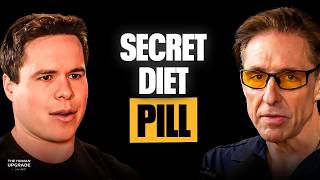
Chris Rhodes discusses Mimeo, a fasting-mimetic supplement made from four molecules his team isolated after studying 36-hour fasts. In worms, it extended lifespan by 96%. Human trials at Cedar Sinai showed eight weeks increased free testosterone by 50% and lowered biological age by 2.5 years.
Chapters
One of the things that I'll say we didn't know a lot about back in 2011 was the ideal length of a fast. And so what I found is you want to probably go 18 hours. And I talked about some longer fasts, but then people were over fasting and creating biological stress, almost a starvation response. If I start taking mimeo, this carefully constructed blend of four things, can I stop fasting?
Nature has given us a lot of these very interesting regenerative states of the body, regenerative pathways that our body naturally uses to heal ourselves. The nice thing about the mimeo formulation is that in addition to the clinical studies that we've done on the full formulation, the individual ingredients have, you know, like 100 plus clinical studies out there already on them showing they have all these various effects for the lifespan extension. For example, PEA was able to extend lifespan by 24%. OEA was able to extend lifespan in that same range, like 28%.
Is it true that you've extended lifespan by 96%? You're listening to the Human Upgrade with Dave Asprey. Chris, I'm really excited to have you on the show because a lot of listeners know back in 2012, I started writing about the Bulletproof diet, which was, I'm going to say, the first modern intermittent fasting diet. Oh, yeah. Written a couple big books about fasting and a big book about longevity.
Yep.
And you're coming out of UC Davis and you've really studied biochemistry and you're now looking at details in fasting that no one has looked at throughout history. Is it true that you've extended lifespan by 96%?
Yeah, that is true that you've extended lifespan by 96% in what? In C. Elegans? Yeah. Okay. So, you know, we'll put that in perspective for people, Right. That's like nematode worms, but it's also a really, really common methodology for measuring lifespan extension. Right. And the cool part about being able to extend lifespan by 96% with Mimeo is, is that when you compare that to longevity drugs like rapamycin or metformin. Right. Metformin can extend lifespan by 36% in C. Elegant. Rapamycin. With some downsides. Yeah, with some downsides, rapamycin can do it by 19%. So Mimeo, this natural combination of these molecules that our body naturally produces during fasting, being able to extend it 96% with no side effects, that's pretty remarkable.
One of the things that I'll say we didn't know a lot about back in 2011, 20, 12 was the ideal length of a fast. And, and so what I found is you want to probably go 18 hours. And I talked about some longer fasts, but then people were over fasting and creating biological stress, almost a starvation response. So I followed up with fast this way to talk about how do you adjust the length of your fast based on your biological state and your goals, but you've gone way deeper since then. What is the magical number for a fast?
Yeah, that's a great question. When you look at the clinical research into it, the magical number really seems to be kind of this 36 hour mark. So that's typically what you would experience during alternate day fasting, which is where we see in the data you get the best lifespan extension and typically where you get the best health span extension as well. So it's basically one day of normal eating, one day of complete fasting, rinse and repeat throughout the an entire organism's lifespan. And that's where you'll see these really great impacts without a lot of deleterious and side effects if any at all from the fasting.
So you eat every other day?
I don't anymore. I did do that. That's part of my, my journey with fasting was after I got out of college, got my BS in biochemistry from Leola Marymount University, didn't know what I wanted to do, took an immunology fellowship at Stanford where I just kind of started pouring through papers and got really into fasting that way. Because you know, I don't have to tell you, it's there's one thing that helps with everything, helps to treat, prevent and delay most major diseases, but then also one of the only ways that we know of to extend lifespan. So I was learning all of these immunological techniques and I just started fasting myself. I was like, all right, I can do this right? I can fast for 12, 24, 36, 48, 60, 72 hours and just kind of track what happens to my cells throughout that time course. And that was really impactful for me because I could see all right after 36 hours, after 48 hours there was this progression of improved cellular functionality. My cells became more anti inflammatory, more resistant to stress, you know, better longevity, better metabolic functionality. So really, really cool, very quantified self for a scientist to be able to see that. And then that's kind of where I got hooked on and I was like, okay, I'm going to do alternate day fasting. And I did that basically for two years. But event to the point where you know, it's really beneficial for your health, but really impactful in a negative way for your socialization. Right. You're not having those meals with co workers, you're not having meals with family. I had plenty of interactions with my friends where it's like, oh look, come have dinner with me. And I'm like, well, it's a fasting day, so I'll come and I'll like, you know, drink water in front of you while I stare at you while you eat. And that's just like not, you know, not the best. Nobody really wants to do that. So I got to the point where it just wasn't viable as a long term thing. So that's one of the reasons why I got to the point of wanting to try and create something like Mimeo. Figure out what's happening in the body during these periods of fasting that are activating these beneficial effects and find some way to recreate them.
What are the beneficial compounds that the body produces during a 36 hour fast?
There are a lot of them. So when we looked at it, we had 20 people come in, 10 men, 10 women, to avoid a gender bias, and we had them fast for 36 hours. Hours. And what we found was that there were over 300 significantly upregulated metabolites in the body during a fast. And when we screened through those molecules, we found around two dozen or so that had some kind of literature result of having bioactivity, whether or not that was creating anti inflammatory effects or inducing autophagy. And then once we screened through those, we did kind of, you know, individual ex vivo modeling to look at how these of metabolites impacted the cells. We found that there were the synergistic combination of four of them that we could use to replicate all of these beneficial cellular health effects of fasting. And like we already touched on, we could extend lifespan by 96%. So the ones that mimeo is working with are nicotinamide spermidine, palmitoyl ethanolamide and ole oil ethanolamide. But then of course there's, you know, a bunch of others as well that we kind of know about, like ketone bodies and then we don't really know about all that much like palmitoleic acid and these other ones that don't have a ton of scientific research behind them or don't have any, and that we, as a part of our research platform and part of our product discovery platform are looking at on the back end to see if we can develop more synergistic formulations. Like the mimeo blend or these, you know, new wave of clinically derived health and longevity molecules that have an immediate context within human health because they come from us.
I was really interested in spermidine. Yeah, I wrote about it in Superhuman, my big longevity book. And at the time you could not buy spermidine in the US except as a research chemical. It was very expensive. So I took a probiotic that I kind of illegally imported from Japan in order to raise my spermidine. And the first company that, that brought spermidine to the market, they came on the show and launched and I was so excited to do it. And I still take spermidine every day. And I even stopped fasting for a while to see if I would still get the benefits. And I think spermidine is good for you. In fact, I know it is, but I didn't seem like I was getting the fasting benefits from just spermidine. So it's a synergistic thing that's a combination.
Yeah, absolutely. So spermidine really is going to be focusing on autophagy. Right. Which a lot of people think of as it's the main therapy benefit of fasting. But in reality, what fasting is doing is activating this very, very complex, what I like to call bio program. So you have a lot of different pathways that are being activated all at the same time and they're all going to be complementary and synergistic with each other because, you know, that's how biology works. We have to get through a lot of, you know, positive and negative feedback loops and just the right combination of activation and deactivation of pathways to achieve a specific effect. So when you're doing something like single spermidine supplementation, that's going to be affecting the autophagy pathways, but it's not going to be affecting other things that also happen during fasting, like the NAD CERT pathways or AMP kinase or, you know, ppars and lipid oxidation and things like that. So you really need to create a more holistic picture to kind of get the cell over the hump and create more of these, you know, stacking beneficial effects.
And one of the things that I kind of appreciate in the mimeo stack that you've developed with all the statistical analysis you're doing, it's niacinamide. And as a old school longevity guy, I mean, 25 years, and this is what people have been taking for 40 years.
Absolutely.
And in the way it works and other guests, David Sinclair has been on and just recently had another Whole discussion about NAD with the guys from Wonderfield and it's like, okay, you have niacinamide and you have nr, then you have nmn, which goes to nad, and you can inject nad, or you could take any of those things. And niacinamide is like the old school molecule. Why did you choose that versus another NAD precursor?
Yeah, we chose nicotinamide because we found that nicotinamide itself was upregulated during fasting in circulation. But then we also found that one methyl nicotinamide was highly upregulated during fasting as well, and even more than nicotinamide is itself. And in addition to nr, nmn, nicotinamide is also the precursor for one methyl nicotinamide. So it's even more downstream of that path. And one methyl nicotinamide has been shown to have these really interesting kind of like myokine effects. So muscle enhancement, performance enhancement and cardio protective effects and anti inflammatory effects. And we saw that all throughout the cellular data that we were doing as well. So we use nicotinamide because it's going to give you basically everything downstream in that stack. So when you take nicotinamide, your body's going to make nicotinamide riboside and it's going to make NMN and it's going to make NAD and it's going to make one methyl nicotinamide. So you're kind of getting everything all from this one thing that is also significantly less expensive and has a much better clinical history than NR or nmn.
There's no reason you couldn't do both though, right?
Oh, yeah, no, absolutely. Yeah. Since they're all running through the same pathway, you can stack as much as you like.
Okay. One of the things in, in biochemistry that you can do is you can add either a methyl group or a phenyl group to almost any molecule. Like phenyl. GABA is a pretty darn potent for sleep. In fact, it has pharmaceutical effects and it's a little addictive. So why don't you just make methyl nicotinamide and put it right in mimeo?
Yeah, there is a complicated story about that kind of gets into the weeds of some of the silly things that the FDA does. But the reason why we don't use one methyl nicotinamide directly is because there was another company that took one methyl nicotinamide or tried to take one methyl nicotinamide down the IND pathway as a drug development. Yeah, exactly. So they got all the way up to the phase two studies, you know, big human trials and they. For the, for the disease state that they were looking at didn't find that the dosage, which was really low of 1 methyl nicotinamide they were using had enough of an effect to qualify as a drug. So then the FDA was like, oh, sorry, it's not a drug. They shut it down. But because of the rules of the fda, any molecule, even if it's a natural molecule that you know exists inside your body and basically every cell in the living world, even if it's. That if it's ever gone down the IND pathway to a certain point, then it can no longer be sold as a supplement. So this one, methyl nicotinamide, is now being sold as a supplement in Europe, where the original company is based. But now it's kind of just locked out of being sold as a supplement in America.
Well, there may be a new sheriff in town. Bobby Kennedy, if you're listening. Thank you. If you are. If not, I know lots of your friends are. So since you're running the FDA now, maybe we could just set aside this policy so that if something's in the body naturally, whether or not a pharmaceutical company tried to claim can be sold as a supplement, wouldn't that set a lot of things free?
Yeah, wouldn't it though? Ironically, that's one of the reasons why I think the FDA hasn't done it. So there's another case that's very similar to this with Homotorine, if you've ever heard about this one. But kind of same deal, a company tried to take homotorine, which is a natural molecule found in seaweed, down the IND pathway. It showed really great cognitive enhancement for Alzheimer's and specifically the apo genotype, like 33% cognition enhancement, but still didn't reach the threshold that it needed to for being a drug. So then the parent company tried to then, you know, appeal to the FDA and say, hey, it's still a natural molecule. It has these great beneficial effects on cognition. Can we please self it's as a supplement. And the FDA was basically like, no, you can't do that. Out of this very hyper technical rationale.
The FDA doesn't like competition for. Okay, well, I'll say they didn't. It's shifting now. Similar thing with anandamide endamine or anandamide, the compound that's in tobacco that reverses autoimmunity and Hashimoto's and all kinds of people that they, they're actually preventing my God given right to use whatever the hell I want in my body to improve my health. And like I didn't I didn't hire them to do that. So this is why a lot of people will leave the US to do advanced longevity treatments right now. And I think it's going to shift. And also there's lots of stuff that does work because we're routing around FDA roadblocks to human progress. Mimeo. You're like, well, these four things, 96% in yeast, how does that translate? So if something in yeast is 96%, we take it into mice. Was it going to be like 30% on average? How does that work?
Yeah, it's a great question. It really depends on a case by case basis and how the molecules operate within each other. In our case, we kind of take a different approach than most other longevity pathways. So usually how it goes is, you know, you make your initial discovery in the worms or in the flies or in the lower organisms. Right. And then you kind of hope that it translates up into mice, and then you kind of hope that it translates up into humans. In our case, we do more of a top down approach. We start our discovery process in humans. Right. Studying this longevity bio program and then found our formulation from there and then basically confirmed that it would have these lifespan extension and longevity effects within the C. Elegans.
Oh, that's cool. And you can only do this because of AI and big data and bioinformatics, all the stuff that came online in the last 10 years.
Yeah.
It's like, okay, what do the humans who get benefits look like? And then you engineer the molecule and then you test it on mice. But if you go back 10 years, they would have just actually do it on yeast. And then mice, 10 years ago, they would have said, let's just screen a whole bunch of random compounds on yeast and hope they work in humans.
Exactly.
And it's really funny because the first compound that was a fasting mimetic that I'm aware of was metformin. In 2003, Biomarker Pharmaceuticals came out and they said, well, we tested on mice and it turns on genes, same as fasting. And so I started taking it back then because being early longevity guy, that's what I do. And two years later I met with the research team at Biomarker just in Palo Alto. And they were looking at me and I'm asking all these questions like, who is this weird guy? Like, he's not even old and he's a computer hacker. And so I've been taking it for two years, metformin for longevity. And they just looked at each other and they're like, can we ask how old you are? And I looked at him, I said, yeah, I'm 68 years old. And I was like, maybe 30 or whatever. And they all was like, it works. I'm like, sorry, guys. It, you know, not really. Well, I kind of felt bad because they believe me. And I quit after a couple years because I, like, I don't think metformin is a great thing to take unless you have diabetes or something, because there's just other ways that work better. Yeah, but that was the first one and it was so hard. I mean, that was 20, good God, 22 years ago when that, that kind of stuff was coming out. What's happening today at Mimeo with AI and with extending your formulas that you couldn't do five years ago?
Yeah, that's a great question. So what we do with Mimeo is that we take this biomimetic approach, right? So we, if we want to solve a problem in humans. I'm a very firm believer that you should start by studying humans. Right. And nature has given us a lot of these very interesting regenerative states of the body, regenerative pathways that our body naturally uses to heal ourselves. Right. Like, you know, all the, all the plant molecules that are out there that, you know, come from extracts of, like, fungi or, you know, yeast or some kind of plant. That's. Those are the molecules that were designed by that plant to heal that plant. And sometimes they work for us, too. But human molecules were designed throughout, you know, tens of thousands of years of evolution to work on this human operating system that we have. So these molecules are designed to heal ourselves. So what we do is we look at these interesting regenerative states like fasting or cold exposure or sleep or exercise. And then we see how the body upregulates and downregulates certain molecules to achieve these beneficial regenerative effects. And that's kind of how we develop our formulations. We take what nature is already doing and then just kind of recreate it so you can get those same benefits on demand.
Is Mimeo going to make exercise in a pill?
Ah, yeah, Mimeo is definitely going to try to make exercise a pill for sure.
Now, there's a couple compounds that I'm fascinated with. This is not part of your current formula, but I know how you think because you're doing some cool stuff. One is PGC1 Alpha, which is something that's produced from exercise. And it's funny, this weird thing called nicotine raises that probably niacinamide a little bit. Does it?
Yeah. Niacinamide does a little bit for sure.
And then the other one that is probably the most profound that you can get today is GW501,516, also known as carterine. You ever play around with that stuff?
I actually haven't heard about this.
Oh my gosh. It causes you to grow new mitochondria. It makes your mitochondria work better and raises PGC1 Alpha.
Interesting.
It's the closest thing to exercise in a pill. It's a, what people call it a sarm. It's not, it's. It kind of. It gets lumped in with SARMs, but it, of course, like all useful substances, was banned by the exercise bodies. I just signed the, the Declaration on Human Enhancement that's behind the enhanced games. I was one of the signatories and gave a talk to a couple hundred big researchers from universities and my guys, when I was really sick with chronic fatigue and my mitochondrial networks were shutting down and I was just wrecked, I went to the list of banned substances because I know they work. And they're like, oh, like that's kind.
Of real and sure is.
So these are the things where I, I look at what you have with your knowledge just because of what you've studied. And your frame on reality is very different than most researchers. You know, like you're human first, you're big data first. And if we do that and so what does someone look like after they lift heavy, after they're doing hit and you say, okay, this is that. How do I just turn on those switches? That's kind of mind blowing.
Yeah, absolutely. I mean, when you, when you really break it down and think about humans, you can kind of think about if this is like big chemical computers, right? If you put the right inputs in the software, it can run a program on your hardware and that'll tell it to do a specific thing. And it's hard to totally encapsulate that because of course, when you're looking at it from a natural biology point of view, you have hundreds or thousands of processes and molecules that are all working in conjunction and exactly, exactly the same time to do a specific thing. But when you can start to break that down and be like, all right, what's really important here? Then you can kind of get at all right, at least this I can activate and this effect I can activate. And the metabolic efficiency and the autophagy and the NAD CERT pathway and the ampk, I can do all of that at once to better create this, you know, fasting longevity Bio program. And then as we progress through our research and our product development, we'll just kind of continue to make our formulation more robust and then, you know, develop new ones in these other interesting states like exercise.
If I start taking Mimeo, this carefully constructed blend of four things, can I stop fasting?
I haven't, I can definitely say that, but I can say like it, it makes fasting a lot easier and it may, it can help to accelerate your benefits. Right. So Mimeo was designed from a 36 hour fast. So if you are doing something less than a 36 hour fast, mimeo can really help you to kind of accelerate those benefits. Like autophagy is a big one, right? Autophagy is one of those benefits that doesn't really show up until around, you know, 24 hours of fasting. And that's just where it starts, right? You have to fully deplete your glycogen stores in order to get to that metabolic switch. And usually it takes 20 to 24 hours to do that. So if you're fasting for, you know, like I do one meal a day now because that fits in with my lifestyle. Mimeo is really helpful for that because it has the oleo ethanolamide that's in there. That's part of the gut brain axis, you know, stimulates satiety, helps to suppress appetite. The PEA that's in there has these cognition enhancement effects, really profound effects on neuroinflammation, pain relief. It's kind of like your body's like natural cbd, right? Because it's part of the endocannabinoid system, stimulates through CB1, CB2 receptors. So that, you know, that mental clarity, that energy, that sharpness and alongside appetite suppression just really gets you through the full day. And then by the time, you know, my, my one meal a day rolls around, I'm like, perfect. This is exactly what I need. And I didn't feel like I was missing out on anything. And I know that I'm getting these stronger fasting benefits because I'm, you know, basically taking it up to 11.
Pea is an interesting molecule. It acts a lot like low dose naltrexone for turning off neuroinflammation. It's something I've, I, I think I wrote about it in my cognitive enhancement book and certainly I use it regularly and I don't know much about, we'll call it oea.
Yeah, sure.
And I do know that excessive olive oil or oleic acid can have a downside, right, because it turns up the inflammatory process for linoleic acid. So the Omega 6 has become more oxidized when you have more than probably 30, 40 grams of olive oil, which contains some amount of polyc acid. But what you're using is a metabolite of laic acid.
Correct.
How does that stuff work?
So OEA is very cool. It is a metabolite of oleic acid. So it's not, it's not a nutrient in and of itself like oleic acid is. Your body doesn't use OEA for energy. It uses it as a bioactive signaling molecule. And what's really interesting when you look at the research history of OEA is that it was originally found to be a satiety factor. So it was upregulated when people would eat and usually when they would eat like a big lipid heavy meal. Which makes sense, right? You're taking in food, your body's telling you, all right, we've gotten a lot of lipids, we're going to convert it to oea. That's going to tell you that we're getting full stop eating. What we found in our study with the 36 hour fasting, which no one had really known before, was that oea is, yes, upregulated when you eat, but it's really highly upregulated when you fast. And that makes a lot of sense from an evolutionary point of view. Right. When you get to these later stages of fasting, your body is going to be focusing on cognition. It's not, you know, serving anyone to constantly be putting you in hunger pangs that you like, you can't move around with. So it's going to naturally suppress your appetite so that you can then focus better on finding food or hunting down that gazelle. Right. So OEA is kind of, you know, one of our body's natural mechanisms for appetite suppression, but then also stimulates through PPAR alpha to promote, you know, lipid oxidation mitochondrial health, and then have these kind of craving effects on the brain as well. So that you're decreasing cravings, you're not as focused on what am I, you know, what am I trying to get out of the, the food? And more like, okay, let's just find it. Let's just be focused, let's be dialed in.
That's really cool. And this is a compound that I think no one knows anything about. And it's, it's one of these. Have you tested using only OEA or only PA to see what it does compared to the mimeo mix they have?
We, we have done that on A cellular and organismal level we have and there are lots of clinical studies with palmitoyl ethanolamide and oleoethanolamide on their own. Right. The nice thing about the mimeo formulation is that in addition to the clinical studies that we've done on the full formulation, the individual ingredients have, you know, like 100 plus clinical studies out there already on them showing they have all these various effects. But what we found was like for the lifespan extension, for example, PEA was able to extend lifespan by 24%, OEA was able to extend lifespan in that same range, like 28% and but together, you know, those synergistic effects got it to the 96% mark. But the really cool thing about the pea and the OEA and these like lipid modulators, the endocannabinoid system is that they operate at really small levels. Right. So we can do something with pea and OEA in like the 10 micromolar range and still get this big 36% or sorry, 28 lifespan extension. And that's very impactful because a lot of the problems that we have with other molecules that are more water soluble is that you need them in really high doses dosage, you need them like gram levels in order to achieve things. And that becomes really hard on a day to day intervention.
One of my biohacking fetishes is mtor.
Sure.
And talk about mtor, what is it? What does fasting do for MTOR and then what does mimeo do for it?
Yeah, so mtor, mammalian target of rapamycin. It's probably one of the primary growth forward pathways in the body, really stimulated by protein intake, insulin, glucose levels. Like if you have a bunch of nutrients around, but particularly protein, that's what's going to be stimulating mtor and that's going to tell your cells basically to grow, replicate and divide. So it's very good for muscle building, it's very necessary for muscle building. It's also very good for, you know, necessary cell replication and division. But the problem is when you overstimulate mt, you get all of this pro growth pathways, your cells start dividing at a more rapid rate and what that does is ultimately wear your cells out faster. So MTOR is very highly associated with decreased lifespan. So if you've got a lot of MTOR signaling, the organism is probably going to live not as long and in not as great health because again, you're kind of like running your cells ragged, always replicating themselves and always turning themselves over to a certain degree. Fasting is a basically you know, you don't have a lot of nutrients that are floating around. Right. You don't have a lot of protein that's coming in. You don't have any protein that's coming in at all. So you're not going to be stimulating the mtor, you're going to be stimulating more of these energy conservation. Don't replicate, don't divide. Let's focus on cell maintenance and repair pathways like AMP kinase and NAD search and all that fun stuff. Mimeo is actually not really doing anything to MTOR itself. It's just stimulating these other pathways that we were talking about with fasting. So the NAD cert, the ampinase, the PPAR alpha. So we're not, you know, an MTOR down regulator, we're just up regulating these other pathways that run counter to MTOR and aren't usually activated at the same time.
I'm, I'm always torn. Things like mtor, you don't want it to be chronically elevated. Right. But if it's low all the time, you're going to look like a vegan. Yeah. You won't have any muscles, you'll be weak, you'll have low bone density and you probably won't live a long time either.
Exactly.
No. And insulin's the same way. If you have chronically low insulin all the time. Well, it's called insulin like growth factor for a reason. You can't put on muscle. And so I've seen a lot of people say, oh, I'm only going to eat plant based protein even though it's not very bioavailable because I'm afraid of mtor. But then I looked at, well, what raises MTOR carbs way more than animal protein. Amino acids like methionine or something. So I'm like, I'm going to go for the most powerful proteins I can get which are animal based because they're more bioavailable, they have better amino acids. But then I'll do intermittent fasting. So then I have some time without mtor. So you get this beautiful cycling up and down. And what you're proposing is, especially during the time when you're fasting, you take Mimeo, which is going to amplify the counter MTOR things like, like AMK and sirtuins. And if that was too technical for you guys, read Superhuman. I go through these pathways in detail and how you can use MTOR to put muscle on faster and all this kind of stuff. Are you on testosterone therapy?
I'm not on testosterone therapy.
Do you measure your Testosterone.
I actually don't do that either. Yeah, My quantified self days are a little bit behind me because I'm not in the lab constantly as much anymore. But, yeah, I haven't been measuring.
How old are you?
I'm 34.
34.
Okay, cool.
So if you are eating and fasting, sleeping properly, and you don't have too much microplastic, and you're not sniffing Durkar Noir or Axe body spray, you're probably. You look like you probably have some testosterone going on. Probably a little. Good, good. Good for you, man. It's probably time to get your numbers, though, so that you can keep them there when you're 50.
That is true.
True. Okay.
One of the fun things that we did. So we've done a clinical case study with Cedar Sinai, the Dave Petrino lab there, and what we found was that when people were on eight weeks of supplementation with nymia, we were actually able to raise their testosterone levels by 50%. Holy crap. And that's free testosterone. That's a big deal. That's a big deal. So they went from like 6 to 9. It was pretty crazy.
Wow. Although you want to be at 20 if you're. If you're, you know, it is true.
I mean, I'm not. I'm not saying that those are the right levels, but we did increase them.
That's meaningful. And if you're sitting there with a free testosterone of 6, you're like, you have no motivation to do anything that matters in the world because this is it. Testosterone drives dopamine. Right. So that means if Mimeo is raising testosterone or free testosterone by 50%, you're also giving them more dopamine. Right. Which means that they start caring about themselves and world around them even more and being motivated to do things. That's kind of a big deal.
Yeah, absolutely. And I mean, even beyond that. So this case study data was really impressive. You know, not only were we able to raise that testosterone level, but we also had a really great impact on a lot of these cardio metabolic markers as well. So we were able to reduce glucose, HbA1c, insulin, improve the HDL LDR ratio. And then we also looked at biological age and got a biological age reduction of two and a half years in. In just eight weeks of supplementation there.
Which biological age metrics do you like?
So the one that we used for this one was the DNA methylation. True age. Yeah, exactly. But I also like the blood works. Those are usually the ones that I find to be the most impactful. Because they're actually showing you something that is, you know, grounded in the biology of some of these risk markers that we typically use in a clinical setting. But glycan age I also like a lot.
Yeah, glycan age is good. And then there's a bunch of things that just look at ratios and metabolites and even nutrients. And they all are, they're all good, they're all valid. And it's sort of like what I learned in business school at Orden. You can take a balance sheet and you can look at it with like 25 different CFO things and you can make it say whatever you want. All right, so there's different lenses. And what I appreciate about all the longevity clock things like this is if you look at one, it's suspect. If you look at three of them and they all line up, you have a really good case to say you've actually reduced the speed of aging. And there's a few, I'll say, like luddite doctors out there who are like, wow, those clocks aren't scientific. Because I don't believe that it's possible to extend human lifespan. I'm like, well, that might not be a scientific way of thinking about it, because it sure looks like it's possible. And since we can do it in mammals, why can't we do it in ourselves? Sure.
I mean, there was just a study that came out a couple weeks ago, three year long study, 777 patients, and they were looking at the impacts of omega 3 supplementation specifically on biological age. And you know, a three year study with hundreds of people with four biological age specifically, never been done before. Right. And they saw that omega 3 supplementation could reduce biological aging by three months. So nothing, you know, uber crazy. But still, it's this big study that's now telling us, yes, it is actually possible to slow down aging in humans. And it might be, it might be subtle, but it's there and we can do it.
And the cool thing is if you can reduce your aging by even just three months at the end of your life, you'll probably be happy for that three months, but along the way, what they call health span, and you'll just feel better. Even if you're 18 and you started doing this, you had more energy, you had more power, you had more cognitive function. So there's very little downside to doing this. Unless there's a side effect that no one's noticed from moderate omega 3s.
Right, exactly. And that's kind of the approach that I take with Longevity, you know, like, we can think about it as this mythological Ponce de Leon thing where we're all out here trying to live, live forever, become immortal. And I think that that's the wrong way to look at it. Right? Like, the field of longevity isn't about immortality. It's about, I want to live my life in the best health possible and, like, without disease and degeneration for as long as I possibly can.
I've been very open about the fact I plan to live to at least 180 in perfect health. Get it? But the real answer is I'd like to die at a time and by a method of my choosing.
Yeah, like that.
That is the ultimate freedom. But it's very different than saying, I am running away from or I'm fighting death. Because what I've learned in all my consciousness work is that when you fight something, it just gets stronger. And this is why Mother Teresa, years ago, some protesters said, will you join us in our march against the war, the Vietnam War? And she's like, no, what do you mean? And she said, I'll march for peace, but I won't march against the war. And my approach on longevity comes from having experience groups who are very anti death. And I'm like, death is the same as being born. We're all going to do it. And that could be very triggering for some people. And for me, it's like, it's inevitable. So I'm not going to fear it, and I'm going to do it with grace and elegance when I'm ready.
Right.
And that means I need to have all of my systems running at their very fullest power so I can just live the life I want. And it's, it's why biohacking. I came up with the word because I couldn't get anyone to pay attention to longevity or anti aging unless they were 60 plus.
Right.
And I mean, you'll do biohacking. You're 34. Cause, like, I got my power, right? Right. And it really matters. And it's changed my mindset on my own cognitive function, on my. On my. Even my spiritual meditation stuff. Have you noticed correlations between the things like amk, sirtuins, all the things you're upregulating, and your mental or your meditation performance?
Yeah, absolutely. I mean, there's plenty of studies out there looking at, you know, the impacts of all these pathways on cognition and mood and mental health and all that. And you definitely, you definitely see those correlations. You know, when you get into these positions of metabolic dysfunction, like End diabetes or obesity or things like that. You have declines in health across every metric, right. Your metabolism is so tied into everything that's happening in the rest of your body because every single cell in your body has to have these metabolic pathways inside of them to be able to use nutrients, create energy, burn energy and actually stay alive. Right. So I think that the metabolic pathways are some of the most powerful in the human body and those are the ones, ones that we have ironically the most control over. So that's why I think that this pathway forward of looking at, you know, the metabolic pathways, the exercise pathway, the fasting pathways, those are going to be the way that we get to really that ultimate biohack, right, of like how do our cells work, how can we tweak around what they're doing, you know, through our own methodology to get them to do what we want to do.
That's, it's so cool. When you started looking at fasting, you probably had some ideas about what metabolic shifts you would, you would predict. What was the most surprising shift you found?
I would say a lot of it that we found was surprising. You know, though there's an obvious one where it's like fasting increases ketones, right. And increases, you know, circulating free fatty acids. It increases some of the, some of the protein catabolization markers. Right. But there are also really interesting things that I, we didn't expect. So fasting ironically causes a very sharp increase in like EPA and DHA which we wouldn't have expected because it's not like it is an omega 3 supplement where you're putting more into the body, but it actually causes your body to produce its own EPA and DHA or mobilize stores, I should say it's not producing it, it's mobilizing its, its stores of these molecules and then up regulating them. And then same with like branched chain amino acids. You get a really big increase in branch chain amino acids which are actually muscle sparing. Right. So those are in these early stages of fasting. Kind of like we were, what we were talking about before, before you get into these later stages that can be very much more like a starvation response. You have this in between zone where your body is doing all the things that you want it to do during a fast. It's going to be mobilizing fat while sparing prote, enhancing cognition and whilst like suppressing hunger and suppressing inflammation and all these deleterious things. So kind of getting back to that reset that happens and then, you know, beyond things like that, then A lot of the metabolites that we looked at were a surprise to us, right? Like OEA was a super big surprise because people had only seen it in a fed state before and had no idea that it was highly upregulated during fasting. More like pea, which is more considered to be a rest and recovery molecule that's really highly upregulated during wound healing or like after a traumatic brain injury or things like that. For it to also be elevated during fasting and creating these repair effects was really cool to see.
A lot of biohacking includes circadian biology and the truedark glasses I'm wearing started this company 10 years ago to support circadian biology. And when I wrote the Bulletproof diet, I said, look, it's easiest to skip breakfast because of social things, but the peak caloric consumption window is from basically noon to 2pm because that's when the sun is above us and when we were mitochondrial floating in the ocean, that was when there was the most algae. So if you were to really perfectly set up your one meal a day, you'd have like a big lunch and no breakfast, no dinner, but then you'd have no social life and no dating and like it, it sucked. So basically just have an early dinner and you'll be fine. But with fasting, if you were to say, eat all your calories at midnight instead of during the day, you would have an unsuccessful fast. Y. Right. How does mimeo and what you're upregulating in fasting, how does that tie into circadian rhythms?
It's a great question. We didn't do enough research on our end to really look at the circadian pathways that were also being affected at the same time because we were very well controlled when we did our study. So we looked at, you know, the same time of day in a baseline state and the same time of day in a fasting state, or same time of day in a fed state and the same time of day in a refed state to kind of, you know, eliminate as much of the confounding factors as we possibly could. So we haven't as a research group seen a ton of impact on how fasting relates to the circadian rhythms or if there is is a more appropriate time to fast or not fast.
I have definitely seen some research that the number one thing setting your central clock is light. And there's four colors of light plus two other variables that are controlled with those sleep glasses I make. And this is why I teach people. Turn off the lights at night, get Dimmer switches get red lights. This is really important. And if you want to fix your biology, do it. And that's because we know you become insulin resistant as melatonin goes up. And so with fasting, we're messing with insulin levels and all of that. So I know that it matters. And we think we know the time, we think we know why, which is why peak consumption of calories in the middle of the day would make the most sense, even though you can wiggle. So given, let's, let's just pretend that all that is true. It's a good theory and it's backed by some good thinking. When would be the best time of day if you were to predict without having a study to take Mimia.
So I feel like the best time of day to take Mimeo is usually in the, the morning or the afternoon. I'll, I'll say morning because since these are all fasting metabolites, we know that they work better in a fasted and.
You'Re asleep, so you're fasted. So you take them to amplify the fast in the morning. Okay?
Yeah, exactly. And then they'll give you those, those great benefits throughout the day. We have also shown in clinical studies though that you can take mimeo with a meal and it'll give you these fasting like benefits even when you're eating. So we had people come in, eat a standardized breakfast alongside a placebo control, then looked at their plasma functionalities, their cellular functionalities. We had those same people come back after a washout period, eat that same standardized breakfast, but then with supplementation with mimeo. And what we found was that when people ate the breakfast with the placebo, there was this big loss of plasma functionality. And that's, you know, very typical of the postprandial response, right? You've got all these foreign molecules that are coming in, all these nutrients that are flooding into the system, kind of throwing the system out of homeostasis, creating all this metabolic chaos, immune responses, inflammation, things like that. But when they had that same meal, but with supplementation with Mimeo, we were able to not only prevent all of that loss of function, but then add gains of function on top of that that mimicked what we saw during a fast. So instead of being pro inflammatory, their plasma was anti inflammatory, Instead of being pro oxidant, it was antioxidant and it was much more cardio protective, had much better, you know, metabolic readouts. So we were really, really happy with that. To be able to like, yes, you can take this with food Kind of balance out these negative impacts of the postprandial state and get these fasting like benefits just through supplementation.
You could call up Kellogg's and just partner with Froot Loops and just have that mimeo Froot Loops bundle. So Froot Loops won't be as bad for you.
Yeah, see, there you go. Kellogg's idea.
I have to get that red number two out of there. This leads to the question if it's beneficial to take your fasting mimetic in the morning and to skip break fast so that I have a longer fast, should I also take it when I have my main meal just to make sure I don't get punched in the face by my meal?
Yeah, you can definitely do that if you want to. What we found is that people, people typically don't like to take it at the end of the day because it does have a energizing effect. Right. So we've had plenty of people who take it at like six or seven o' clock at night when they were, you know, at an event with us or something like that. We were handing out samples, they took it and they were like, wow, I had a great experience. I felt X, Y and Z things, but I did not go to bed until 2 in the morning. Yeah. So it's one of those things. We just typically recommend that people like take it in the morning or. Yeah, if they're doing more traditional, you know, 168 style fasting. You can definitely wait until your first big meal to take the mimeo with kind of help extend the fast and yeah, keep your meal from punching you in the face. I like that. We'll put it on a T shirt. Nice.
It's kind of funny because you need powerful mitochondrial action when you're asleep to drive the glymphatic system to clean out all the toxic brain metabolites. And I published a couple, couple or references to a couple studies and I think that was in my brain book. I don't know, it could have been in Superhuman. And so we know that that's necessary and we know that you get higher sleep efficiency if your mitochondria are running at full power. But if you become energized via other pathways, either your ability to go to sleep, your desire to go to sleep, or your ability to stay asleep will go down. And you're saying so kind of latest time to take mimeo would be, I.
Would probably say that I, I wouldn't take it past maybe four or five. Okay. At night and something like that.
Got it. Unless you're a burning man. You're gonna be up all night, so take it.
Yeah, exactly. Well, I mean that's ironically like we'll, we'll say this like off the record, don't tell nobody but I like to take mimeo if I am gonna go out and like, you know, have a big night of celebrating or drinking. Because in addition into all these great fasting like benefits, the PEA and the OEA themselves have great cellular repair benefits to them. Right. And then PEA and oea specifically have been shown to be really helpful for enhancing gut, the gut membrane, so increasing gut tight junction and barrier functionality as well as in reducing specifically alcohol related inflammation and symptoms of alcohol alcohol abuse. So they're really good for creating those, you know, those pain relief effects from the PEA and then the, you know, alcohol inflammation suppression effects and protective effects of the OEA at the same time. So I definitely like to use it later at night if it's going to be a long one and next morning feels great.
Nicotine.
Yay. Or nay, that one. I come specifically from a, a rheumatoid arthritis lab who did research on nicotine specifically and nicotine not even in the context of cigarettes, but nicotine just like it has its own and that was shown to be pro inflammatory and have these negative impacts on joint health specifically in a rheumatoid arthritis context. So for that for me is kind of like I know that there's data on the brain side of things, but then I also see this conflict collecting data with inflammation and joint health. So like I'm, I'm on the fence about it.
On the fence about it. It's likely a dose thing and it's also, there's probably some individual biochemistry and it's funny, you go back to niacinamide, nicotinamine, riboside, they're activating downstream nicotinic acid receptors in the brain. I use it for neuroprotection because I don't want Alzheimer's or Parkinson's.
Right.
And as someone who had arthritis since I was 14 in my knees and I don't have it anymore, I monitor my joints, they seem to be doing pretty well. So I'm gonna keep doing my low dose anti aging nicotine until I find that there's evidence not to.
Well, there you go. I mean follow the science and it will, it will show you reality.
It's also good for interviewing and just cognitive function. So I kind of like smart drugs.
Yeah, I mean who doesn't?
Do you ever track biomarkers with mimeo like galvanic skin response, heart rate variability, body temperature, eeg, brainwave amplitude. Like, what, what information do you have about that?
So we don't have a ton of that data. What we do have a ton of is blood data. Okay, so we, we can see blood markers being altered with mimeo like we were talking about before, like the cardio metabolic stuff. We've seen ALT levels go down, we've seen biological age shift around. We've seen HDL, LDL ratio, triglycerides, you know, glucose, insulin, HPA1C, what have you. And you know, even beyond that, we just recently, very excited about this. We were doing a decentralized clinical study with people science as our third party CRO and just finished that study looking at the impacts of 8 weeks of mimeo on overweight people with elevated HbA1c. And we're able to show that we can modify appetite, really suppress that, reduce food noise, reduce cravings, increase satiety. We have been able to decrease abdominal pain and bloating and then reduce fasting glucose levels and reduce oxidative stress, reduce cholesterol level levels, improve lipid profiles. So really, really enthusiastic about what mimeo can do. And especially like we were talking about on those metabolic health pathways that are so important for just general functioning cognition and, you know, longevity in general.
So big pharma hates mimeo.
Yeah, Big pharma will hate.
Put that on a shirt. I mean, like that. This is the power of using science and data and advanced supplementation. It's, it's pretty fascinating.
It is.
No one has studied these combinations. And one thing that made me want to bring you on the show is that a lot of companies, a lot of researchers, they find like a hero molecule. And like, like David Sinclair, for instance. I like David. He's been on the show. He has two, which I totally like. Okay, Resveratrol and nad. So let's look at them together. And so that's like a first step. But you get a lot of the, the big pharma thinkers or traditional thinkers, and they're saying, well, I'm gonna study this one molecule to see what it does. And there's this analogy that I think is in at least one of my books. But if you were to take an FDA researcher and say, I want you to test for bread, they would say, well, I, I baked the yeast, I baked the water, I baked the flour, I bake the salt. There is no bread, because you have to have a recipe. And longevity is all about a personalized recipe for your biology to Give you more energy now and to extend your life. And it's not going to be single variable, it can't be. And biohack is like, what are all the variables I could play with to get them close enough into a symphony to make my biology do what I want? And you've come up with a four part recipe, funny enough, same as bread that, that you're showing. Works for a lot of people. Yep, super cool. Now, after I wrote the bulletproof diet, about four or five years later, my good God, I see people way over fasting. Like Jack Dorsey, super cool guy, you know, the, the guy who was CEO of Twitter for a long time and he had bulletproof coffee in his office and he started doing one meal a day and then he started skipping meals on weekends. And it seemed like, it seemed like there was a point where he was starting to over fast. And then there were people who were just blown out, like I have been biologically. And they're saying, well, some intermittent fasting is good. I'm just gonna way over fast. And then when guys over fast, we end up after about maybe six, eight weeks, like, oh, that's weird, I wake up without a kickstand and I can't sleep very well and you realize, oh, I've done something that wasn't good. And women, it takes less time and they're waking up frequently at night, their sleep goes away, their cycle gets wrecked, Hair starts getting thin in both of us. But since women are more susceptible to over fasting and there's a monthly variation in when women benefit from fasting, you're saying Mimeo works for men and women equally. Does this mean women will get more benefits from MEO than men? Like, walk me through the man versus women fasting difference.
It's a great question actually. So I can do that now. So, you know, when we, when we did our initial fasting study, we were doing it with 20 people and we had an equal distribution of 10 men and 10 women to avoid that gender bias. Right. There is not, there is not enough research with women and fasting that that's the major takeaway that we can get from all the literature. So we wanted to make sure that the changes that we were looking at were going to be universal across sexes. So what we found from Mimeo is of course applicable to both. And that's what we also see in this big randomized, double blind, placebo controlled study that we just did. We also had an equal proportion of men and women gave them Mimeo. And what we saw there was that There wasn't any significant gender difference. We just saw these good improvements in all of these biological markers. Their, you know, their appetite suppression, their cravings, their food noise, their abdominal pain and bloating, all that fun stuff. So, you know, as far as we can tell, mimeo works equally well for both men and women because we designed it that way.
With men we have the years when our testosterone is adequate and then we have years of andropause call it grumpy old men. Unless we do something about it.
Yeah.
And with women you have the years when you're cycling, you have perimenopause and then you have menopause. And the what works is pretty different during those things.
Absolutely.
For the women in your study, did you mix the three stages? Were they all young? Were they all middle aged? What, what did they look like?
Yeah, for the initial study they were actually all young. So they were all, you know, pre menopausal women. That's what we were looking at in this latest study. We were looking at older overweight people. So all the women were post menopause. So you know, we, we've, we've looked at women in both. Say we haven't hit paramenopause yet because that's still like a very much an evolving state that's kind of new to the scientific lexicon. But yeah, we try to get as big of a swath and as equal of a swath as we can when.
We'Re doing our research in, in Fast this way, my second book to kind of correct the, the amplifications of the fasting strategies. In the first book there's a chapter where I pulled all of the research on women together. And one of the studies that stood out the most was that for menopausal women. There's an Australian study and a good sized one. The Benefits start at 12 hour fasts three times a week. Okay, that is really tiny.
Yeah.
Basically you just had a late breakfast three times a week and they probably scale up to 18 hours and probably more than that. But the idea here, if you're listening, saying, oh, I'm, I'm in menopause or maybe my mom's in menopause, you don't have to be a crazy faster to get benefits just from intermittent fasting. And if you have something like mimeo that amplifies the effects of that, you might literally say, I wait till 10 to have breakfast, I take my mimeo and I wake up and you're getting meaningful benefits that include not really having cravings. Yep.
Okay.
This is kind of a big deal. Yeah, I mean, I'm intrigued.
I mean, so my, my coo, Caitlin Beatty, who's also happens to be my sister, she uses Mimeo specifically for that purpose. Right. Like before, you know, she was of course aware of all the fasting stuff that was going on because it was a big part of my lifestyle. But she never really embraced it all that much up until we like started forming Mimeo and she started to get into it there and she found it really difficult before we had first prototypes to get it and to really be able to extend her fast beyond that kind of, you know, 12 or 16 hour mark. But then once we actually had the prototypes of Mimeo, we could take the product and we could see how it works. She found that she had no problem doing it. You know, she's done a full day fast, up to 36 hours now and was like, oh, yeah. I just wasn't even thinking about it because I was on my Mimeo and I had other stuff I was doing that day and it just kind of happened. And it really empowered her because it's one of those things. It's the same for me. We are told this story over and over and over again in Western nutrition where it's like three meals a day plus snacks. Like if you are hungry, it means that your body is eating itself like you should never be in because of hunger. And I think that that's a very, very damaging message because it leads to this kind of chronic dietary inflammation, this chronic dietary fatigue that we all get into. It takes the body around four to six hours after a meal, meal to return back to baseline, to get out of the postprandial state. And if we're doing three meals a day plus snacks, we're basically never getting out of that fed state. It's always just kind of stacking and stacking and stacking until we finally like sleep and fast and let our body return to homeostasis and do its cellular repair and all of that stuff. So to be able to go a full day without eating and not die was like a really big revelation. Right. It's like everything that I ever learned is wrong. Right? And there's this better way to do things that can work with your lifestyle better, that can make you healthier and can just really help you have a better relationship with food in general.
If you're using a fasting memetic like Mimeo, does that mean you can eat more carbs when you do eat?
What a good question. Usually what we tell people with Mimeo is that we can't guarantee that we'll make you healthy, but we can guarantee that we'll make you healthier. Right. Mimeo is not going to be, you know, a magic bullet that's going to allow you to like, okay, cool, now I can just eat donuts forever and take mimeo and I will be fine. Right? We still recommend. I still fast, I still eat well, and I take mimeo in order to get the maximized benefits of all of that. So it's not, it's not something that's going to be this total metabolic shift, game changer kind of thing. But it really, it will really help you, like we said, kind of establish more of that natural homeostasis where if you are stimulating these fed pathways constantly with that western diet, three meals a day plus snacks, we're also going to be helping you elevate these beneficial fasting ones that you're not going to experience in that, in that time zone so that you can balance things out.
The closest I've seen to the eat donuts every day and live a long time is Sandy Kaufman, who's been on the show. She's a friend and a medical doctor and longevity doctor and kind of crazy, in a good way. And I have been out to dinner with her and she's like, I'll have the cupcake. I'm like, are you kidding me? And every time she's in Austin, she goes to these cupcake vending machines. I'm like, like, you're really going to do that? He just regularly says, yeah, I just block all the effects of all of the bad things sugar does because I like it. And I'm not that far on. But I'm not opposed to using pharmaceutical molecules or natural molecules to extend my life. I'll do whatever. But I kind of like the idea. If I knew with certainty that I could eat absolute junk food and feel amazing and maintain all of my health and longevity, I wouldn't mind the cheesecake diet.
Yeah, no, yeah, of course not. Who would, right?
Do you think we're gonna get there?
I hope so one day. I mean, there are some really cool technologies that are coming out. So, like, you know, Mimeo comes from a biotech background. We were in the indie bio accelerator program, which is basically like Y Combinator but for biotech. And there's a lot of, like, nutrition, food and ag technologies that are coming out of that program. So we've gotten to see and meet people who are doing some really interesting stuff, including calorie absorption technology. Right so basically you would take this thing alongside food and it kind of sucks up the, the nutrients, the glucose, the proteins, the lipids, whatever, into this non digestible fiber matrix and then just passes it right through your system. Right. So I think that, you know, as we progress and as we progress, you know, forward at a really rapid rate, now that we're in the era of big data and AI, that. But it's really going to be a lot of game changers are going to come down the pipe pretty soon.
I look forward to the day when there's an antidote for every type of food that isn't good for me. So I'm like, today is going to be gluten, dairy, canola oil, glyphosate, whatever. And I pop a pill or shine a light in my earlobe or whatever the hell it ends up being, and it has no negative effects. Yeah.
I'm just. My diet today is going to be all oxidized canola oil and I'm going to feel great.
Yeah. And it doesn't taste once you're used to real food. So I would just eat probably all croissants and, and grass fed steak anyway.
But that is a, that is a very good choice. Mine would be trace leches cake. That's like my favorite thing. Oh, man.
As someone who's definitely cow dairy sensitive, this, it goes into case morphin in my system. It's like, it's like taking Valium. I, I become just unable to think. I drool on myself and then my gut is wrecked and gluten does a similar thing. Well, at least American gluten. I seem to handle European gluten all right.
But I see how that works.
That combination to me is the worst kryptonite ever.
Oh yeah.
But tres leches is the most delicious thing you could ever eat. So that.
Ain't that always the way?
It's not fair. So come up with that at Mimeo, would, would you?
Well, yeah, you know, we'll work on it.
Yeah, yeah. And it doesn't taste good once you're used to real food. So I would just eat probably all croissants and, and grass fed steak anyway.
But that is a, that is a very good choice. Mine would be tres leches cake. That's my favorite thing. Oh, man.
As someone who's definitely cow dairy sensitivist, it goes into case I morphin in my system. It's like, it's like taking Valium. I become just unable to think. I drool on myself. Just. Let's Just antidote.
I would. I would spend a little on Zealous specifically, as I. For no other purpose, just. Just sat.
Right. Yeah. Put on your. Your future hat and let's say that you continue with what you're doing with mimeo and fasting becomes entirely optional for humans. Would we lose something like, is there something about fasting that just in and of itself is good for us?
Yes, I definitely think that there is something about fasting in and of itself that's good for us for sure.
And then my gut is wrecked, and gluten does a similar thing. Well, at least American gluten. I seem to handle European gluten all right.
But Isaiah, that works.
That combination, to me is the worst kryptonite ever.
Oh, yeah.
But Tres Leches is the most delicious thing you could ever eat, so that.
Ain't that always the way?
It's not.
Because, like we were talking about before, there's this element of empowerment that comes along with fasting. Right. To be in control of your body in that way and to be able to exit out of some of the societal philosophies and fair.
So come up with that at Mimio, would you?
Well, yeah, you know, we'll work on it.
Yeah.
It's like edicts that have been been, you know, brainwashed and burnt into us since we were kids, like the nutrition pyramid and the three meal a day plus snacks, kind of. Kind of western diet stuff that we know about when you can break that cycle through fasting. I think that that's just very cognitively empowering, very philosophical.
Just, let's just antidote on. I would.
I would spend a lot on Stella specifically, as I. For no other purpose. Just a sack.
Right? Yeah. Yeah. Put on your. Your future hat and let's say that you continue with what you're doing with mimeo and fasting becomes entirely optional for humans. Would we lose something like, is there something about fasting that just in and of itself is good for us?
Topically and spiritually empowering? Right. To be able to say that I can control my body. I know what my actual limits are. And if I don't want to eat, if there's something in front of me that it's like, oh, someone brought in pizza, right. To the office party. Like, I don't actually have to eat that pizza. It's just as it's noon, doesn't mean that I have to do it so I can, you know, have more of that control of myself. Yes. I definitely think that there is something about fasting in and of itself, that's good for us for sure, if that better food relationship. And yeah, be. Be in charge of your own metabolic destiny.
There's a sense of inner peace that does happen from learning how to fast. Because some of the research I found says about a. A third of the average person's thoughts every day are about what's for the next order.
Because, like, we were talking about before, there's this element of empowerment that comes along with fasting. Right. To be in control of your body in that way and to be able to exit out of some of the societal philosophies and.
Yeah, so if a third of my thoughts are about tacos, they're not about extending my life. They're not about being kind. They're not about improving anything in the world. They're literally about tacos or tres leches. So that's not a functional state of being, which means I've got to make.
Like, edicts that have been, you know, brainwashed and burnt into us since we were kids.
Like, with my operating system's desire to eat food and to tell it to chill out your night.
The nutrition pyramid and the three meal a day plus snacks, kind of. Kind of western diet stuff that we know about when you can break that cycle through fasting, I think that that's just very cognitively empowering. Very.
Phyllis, I'm gonna die. Yeah. And if we were to say, well, you know, I have to eat all the time and I can without any harm, the having to do it part still is not a good thing for humans. So it's like, I'm okay if I'm not in a fed state. I'm okay if I'm in a fed state, and either one's just fine. That's a great piece of learning.
Yeah, exactly. And that is something that also kind of happens a little bit. Biologically and spiritually empowering. Right. To be able to say that I can control my body. I know what my actual limits are. And if I don't want to eat, if there's something in front of me that it's like, oh, someone brought in pizza right to the office party. Like, I don't actually have to eat that pizza. It's just so it's. It's noon. Doesn't mean that I have to do it so I can, you know, have more of that control of my cell. Logically, too, you get into this. This state once you get a d adapted to fasting, where you do kind of get this separation between you and your hunger responses, where it's just like you said, it's like I'm totally fine when I'm fasting. I'm totally fine when I'm fed. And I appreciate the differences between them two but I'm not obsessed with them anymore. It's just like I don't really feel hunger. All that, that better food relationship and yeah, be, be in charge of your own metabolic destiny.
There's a sense of inner peace that does happen from learning how to fat.
Much on a day to day basis anymore.
Chris, your research is@mimeohealth.com m I m I o health.com and that's where your fasting memetic is as well. Now when people come on the show and talk about. Because some of the research I found says about a third of the average person's thoughts every day are about what's for the next their cool stuff. I usually say you're going to give listeners a little bit of a discount here. You up for giving us a discount code?
Oh yeah, absolutely.
Okay, cool. We didn't prep this meal. Yeah. So if a third of my thoughts are about tacos, they're not out of time at all. I just like chemical stuff.
So.
Yeah, yeah. What do you want to make it?
I think we already have it. I think it's just Dave.
There you go guys. Make sure your team turns that on. It's going to be Dave. Is the not about extending my life. They're not about being kind. They're not about improving anything in the world. Sound code mimio health.com 20% off. And there's, there's real science to this. And a lot of times people are saying, well David, you're always promoting something. Yeah, I'm always promoting live. They're literally about tacos or tres leches. So that's not a functional state of being. Which means I've got to make peace with my operating system's desire to eat food and to tell it to chill out your night being as long as you want and feeling amazing. And there's all sorts of cool stuff out there and this is very data driven. This is PhD level stuff. It's big data stuff. And fasting memetics are real and like I'm kind of a big deal in the fasting space. I've taught a hundred thousand people with a fasting challenge. I do, I think that's fastwithdave.com I'm gonna die. Yeah. And if we were to say well you know, I have to eat all the time and I can without any harm, the Having to do it part still is not a good thing for humans. So it's like, I'm okay if I'm not in a fed state, I'm okay if I'm in a veg state. And either one's just fine. That's a great piece of learning.
Yeah, exactly. And that is something that also kind of happens a little bit by.
And it matters for, for peace inside of you and anything that makes it easier to fast. I don't care if it's putting butter in your coffee or if it's mimeo or some breath work, it's important that all humans learn how to go 24 hours without food without losing their shit.
Like that's really important. Absolutely.
And your supplement will do that. And I think there's enough evidence behind.
What you're doing that biologically too. You get into this, this state once you get adapted to fasting, where you do kind of get this separation between you and your hunger responses where it's just like you said, it's like I'm.
Mimeos in my stack. That's totally fine. So.
Yeah, I love that. Yeah, I appreciate it. Totally fine when I'm fasting and totally fine when I'm fed. And I appreciate the differences between them two.
Guys, if you like today's episode, you know what to do. Step away from the taco.
I'll see you on the next one. But I'm not obsessed with them anymore. It's just like I don't really feel hunger, all that.
See you next time on the Human Upgrade. Podcast.
Much on a day to day basis anymore.
Chris, your research is@mimeohealth.com m I m I o health.com and that's where your fast memetic is as well. Now when people come on the show and talk about their cool stuff, I usually say you're gonna give listeners a little bit of a discount here. You up for giving us a discount code?
Oh yeah, absolutely.
Okay, cool. We didn't prep this ahead of time at all. I just like doing cool stuff.
So.
Yeah, what do you wanna make it?
I think we already have it. I think it's just Dave.
There you go, guys. Make sure your team turns that on. It's gonna be Dave. Is the discount code mimeohealth.com 20% off. And there's, there's real science to this. And a lot of times people are saying, well Dave, you're always promoting something. Yeah, I'm always promoting living as long as you want and feeling amazing. And there's all sorts of cool stuff out there. And this is very data driven. This is PhD level stuff. It's big data stuff. And fasting memetics are real. And like, I'm kind of a big deal in the fasting space. I've taught a hundred thousand people with a fasting challenge. I do. I think that's fastwithdave.com and it matters for peace inside of you and anything that makes it easier to fast. I don't care if it's putting butter in your coffee or if it's mimeo or some breath work, it's important that all humans learn how to go 24 hours without food without losing their.
Like, that's really important.
Absolutely. And your supplement will do that. And I think there's enough evidence behind what you're doing that I. Mimeo's in my stag. That's totally fine. So, yeah, I love that.
Yeah, I appreciate it.
Guys. If you like today's episode, you know what to do. Step away from the taco.
I'll see you on the next one.
See you next time on the Human Upgrade podcast.










