Finding Pleasure in Fasting, Sex and Spirituality with Nadia Bolz-Weber
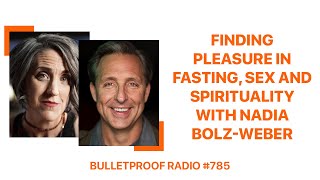
This is a YouTube video titled "Finding Pleasure in Fasting, Sex and Spirituality with Nadia Bolz-Weber" published in April 2021. It features an in-depth interview conducted by Dave Asprey with Nadia Bolz-Weber, a Lutheran pastor and author known for her candid and unconventional approach to religion. The conversation explores topics such as fasting, spirituality, grace, sex, pleasure, and the evolving perspectives within Christianity, particularly Lutheranism. The discussion also touches on personal experiences, theological insights, and cultural observations related to faith and human behavior. The content is a single-speaker interview format without Alicia Mackey Huber as a participant.
Chapters
Bulletproof Radio, a state of high performance.
You're listening to Bulletproof Radio with Dave Asprey. In honor of our show today, I am on hour 48 of a fast, and this is my third interview of the day. Why? Because you don't have to have a brain that doesn't work when you're fasting. It's entirely possible to do both if you know how. And the guest today is known as the sarcastic Lutheran on her social media. And she's got a strange relationship with religion that is frank and includes a lot of swear words. So if you don't like swear words, this might not be the right episode for you. Her name is Nadia Bolz Weber. She's a Lutheran pastor. She's written three New York Times bestsellers and was a standup comedian. And she ran something called the House for All Suit Sinners and Saints in Denver for 10 years. And now she's just a public theologian. And she's going to talk with us today about fasting, spirituality, faith and religion, sex, pleasure, and all sorts of things you probably wouldn't expect from a Lutheran minister. Nadia, welcome to the show.
Oh, my gosh, I can't wait. Yeah, thanks for having me.
I'm going to admit something. I. I don't really have a good map in my head of all these different Christian derivatives in the U.S. we've had a leader from the Escopilian church on, and I really don't know the basics of what's a Lutheran versus all the other flavors of Christianity. So what's the deal with Lutherans?
The important thing is we're just better.
Looking taller, better looking smarter. Yeah, all of those things. I got it.
No, so the Lutheran, Lutherans and Episcopalians are just one degree separate from Roman Catholic. So we were the first ones to sort of break off because there was just sort of, you know, Eastern Orthodoxy and Roman Catholicism. There was really just these two things. And so in the 16th century, there was the Protestant Reformation. So there was this Augustinian monk, Martin Luther, who realized that the teachings of the church were harming the people in his care. And he thought we should probably rethink those teachings. And so kind of earnestly he wrote a bunch of them down. And there were 95 of these things he wanted to have a conversation about, and he nailed them to the door of the church in Wittenberg, his 95 theses. And that sparked the Protestant Reformation. And so I come from that direct line from Martin Luther. And so the worship service is going to be similar to a Roman Catholic Mass. Episcopalians, Lutherans and Catholics have a similar sort of ancient ordo of the liturgy that we follow. And it's a sacramental tradition. But the thing that really makes somebody Lutheran, it's a theological identity. Whereas what makes somebody Episcopalian is a shared prayer book. What makes somebody a Lutheran is a shared theology. And Lutheran theology is distinct in, in this way. The point of gravity, the center of the whole theological system is grace. It's not striving to be virtuous, it's not adhering to rules. It is absolutely grace. So that is what is distinct from, that distinguishes Lutherans from, from other Christians and also our theological systems based in paradox and not dualism. And I think that's an important distinction as well.
When you said it was close to Roman Catholicism, I'm like, okay, so this is like a guilt and shame based thing. By the way, my family is mostly Catholic and at least was at one point. So, you know, that's not a dig on Catholics. You know, I think any of them would say that. So what's the role of guilt and shame for you?
If the center point is grace, why would you have either? Now, I think guilt, obviously guilt is different than shame. Like if you've done something that's caused harm and it kind of weighs on you that that's, that's good, you know, that's healthy.
That's guilt. Right?
That's an internal mechanism that's useful, you know, but that's not, that's not shame. Shame is like, is like believing that you have no worth or you have no value, or there's something so inextricably damaged and bad about you that you're totally irredeema knew you really, really well. They would of course reject you.
Right? So shame's about who you are and guilt about what you did and pretty different things. Okay, so those aren't major things. What is grace, though? I'm not sure that I know how you're using that word.
No, I love that. Because if you can't define a word, why use it? So grace. I describe grace as that freight train that delivers into my life all the most beautiful, transformative, and totally unearnable things like mercy and love and forgiveness, endless second chances, a perfect peach in summer. I mean, there are things that. How do you earn it? Do you earn the right to eat a perfect peach? No, it's grace that any of us get to have that experience.
So you're looking for, for beauty and elegance in everything.
I don't know. I don't know that I've ever thought of it like that. But I, I think I look for what is.
I don't know.
I'll have to think about that. I've never thought of it like that.
Interesting. All right. I love mapping all this stuff out because there's almost always something of great value in every spiritual tradition, even if it's one that, that's new to someone. And I'm very happy to learn from people all around the world, from wherever the heck they're from, to get the nuggets that stick best for me and share them on the show. You're out there, though. I mean, you're straight up, like, okay, vice versus virtue. You know, you talk about, you talk about sex a lot. What's the deal on your perspective on sex? Is that, is that grace? I'm. I've done some non graceful things in bed that were pretty fun. But were they graceful?
I mean, that's why I wrote my last book, you know, because I. What happened was I just kind of, you know, I'm ordained in a pretty liberal denomination, but they still made me sign something that said I'd be faithful in marriage and celibate in singleness when I was ordained and I was married at the time, so. And you know, I didn't think much of it, but. But my. Just because somebody's faithful in a marriage doesn't mean it's a healthy marriage. It doesn't mean that the sex life in the marriage is healthy. And we were in this sexless marriage to a very good man who would never deserve for me to say anything bad about him. He's a good human, but we never connected. And there was this cost to me in having that whole part of myself shut down. And I ended up like obsessively doing CrossFit. And I had this, like, my hair was like half an inch long and I, you know, I was just so. There was such a hardness to me and I think I had to protect. Protect myself in a sense is what it felt like, because I was pastoring a parish and I was on the road speaking all the time, so I was pouring out and when I came home, nothing was sort of filling me back up. And. And so there was a cost to it. So we went through an amicable divorce. But then when I got together with Eric, my partner, we did connect in so many different ways. We'd been together when we were in our early 20s and we sort of rediscovered each other when we both got divorced. And we did connect in all these ways and it felt like an exfoliation of my whole being, my whole spirit, to access that part of me again. And we were together a few weeks, and then I had to go and support the UK and the German edition of my last book. So I was on the road for a few weeks in Europe, and I was walking down the street in London. All this stuff was swirling in my head, and I was just, like, so amazed by how good it was for me to be having sex again. And. And then I thought, why did the church make me sign a paper saying I wouldn't do this? Like, how is it better for my church if I'm not getting laid? That makes no sense whatsoever. And I call up Eric, and he's not Christian. He's a heathen. And I go, why do you think the church has tried to control sex for so long? And without skipping a beat, Eric said, well, I guess I always assumed that the church saw sex as its competition. And I was like, I'm writing a book. I was supposed to be writing a different book, but that was the point where I was like, no, I have to write about this.
I once dated a woman who was Catholic, and her priest told her that sex is how you meet God. Which seemed like a very strange thing to come from a Catholic priest. But then again, that was only in the context of marriage, so I guess it was okay. And that led to the question of how would you know? Because you're required to be celibate, right?
Yeah. It's a flawed system. Yes. Yeah.
Do you think it's different for men and women? The need for sex, the desire for sex, the benefits of sex?
I sort of pause when I want to say something really essentialist, because all I can think of are the exceptions of what I'm about to say. But given that this is a general statement and says nothing about the individual, I think that there are some biological imperatives that create different response systems within female or male bodies, and I think that there's cultural things that affect those. But this idea that men are the ones who want sex and women just leverage the fact that men want sex, I seem to be bullshit.
Yeah. Yeah. No, Most of the women that I. I know like sex totally.
And. And also women are very candid in the way they talk to each other about sex in a way that I have found that men aren't as often.
So how would you know because you're a woman?
Just from. I have asked my male friends, like, do you guys talk about sex in the way that, like, we do, and they're like no, not.
Probably not. Yeah, it's hard to, it's hard to say. There's differences there. The reason I'm asking is my new book on fasting, Fast this way I talk about all the different types of going without that can lead to either biological improvements or spiritual improvements depending on your goals and that you don't have to always have a spiritual angle for fasting. And one of the things I talk about is fasting from sex or fasting from ejaculation or fasting from porn. And you know that those can provide benefits. But the benefits are, at least in the literature I could find in my own experiences and just being pretty open about this for the past 10 years, that it's very different for men and women. Right. Where you know, for a guy to hold back sometimes is, is certainly as an act of will and like showing yourself who's boss of you is important, but there's other biological things that happen. Your testosterone stays higher for longer and things like that. But those benefits don't seem to apply to women at all. Even going back through thousands of years of spiritual literature and biology and all that stuff. So I've always wondered if the rules for priests, for women priests ought to be the same as for men priests. I. I don't know.
Huh. That's interesting. Yeah, I think that's right because also just women are, have that capacity to be multi orgasmic in a way that is very different for men. So we, there's not this sort of energetic depletion from that exists. So I think that, that that's a huge difference as well. So I don't know.
The daoists say a woman walks away undiminished from sex. But, but men don't. Right. And that's why, that's why we typically fall asleep right away.
Exactly, exactly. Yeah. Yeah.
Okay.
But, but there can be a harnessing like you know, of that. There can for men be a harnessing of that, that energy if they have a certain practice around not ejaculating.
I tried for a year to disprove the daoist perspective on that, but by measuring my daily happiness and the frequency of sex versus ejaculation and to my great chagrin at the end of the year I'm like, yeah, they're right, you know.
Totally.
So ejaculating less and having more sex is probably good for men. It's just, it's a, we'll call it a spiritual practice because it's really hard in order to do that. I want to get your take As a, you know, as a Lutheran minister on, you know, the Lutheran's perspective and your perspective on sex because, I mean, you write books about stuff like that. Is there a. I guess we've talked about kind of as a clergy person, you're saying, okay, you're not allowed to have sex with your partner unless you're married. But it seems like you're breaking some rules there. Right?
Yeah, they're actually my denominations in the process of redoing those guidelines. Thank God.
Okay.
Since. So, yeah, technically, am I in violation of that policy? Yes. But I'm one of the few people on the clergy roster in my denomination who's also a public figure broadly. And so I could sort of take the risk of starting that conversation and being public about my life and it wouldn't have the same consequences for me professionally that it would for a local parish pastor. So there was intention around that for me.
Well, I'm glad that you're, you're including that in the conversation because if it's sort of never, never there and all parishioners do it and pretty much most people do it, but it's, you know, don't do it or, you know, don't do it without rigid rules. It always seemed a little bit controlling and fake to me versus embrace the, the spiritual side of whatever you do, including whatever you do in the bedroom.
Yeah. But also, I mean, restrictions, the pat. The fastest path to fetishization. So just to tell people in roles of spiritual leadership that they're, that they have to completely not be sexual is. Is you're setting up an entire system for abuse.
Let's talk about fasting from food. And this is something that in. It feels like in a lot of Christian religions in the last 50 years has gone by the wayside. And you look at, you know, Jewish faiths, there's still a fast. Very strict Catholics have some stuff around Lent and all that, but it feels like it's just been eroding. What's your take on fasting from food? What's the spiritual side of that?
Well, I mean, we do, we do keep Lent in the Lutheran Church. And so people, but people decide for themselves what that is going to mean. So there's, you know, a lot of people do have particular types of fasting that they, that they take on during the 40 days of Lent. So that is part of my tradition. It's just not prescribed. My own experience of, profound experience of fasting actually wasn't part of the Christian tradition. So it was. There were for the last two years I've sort of done a thing up on my friend's land where I have. It's just 48 hours of prayer and fasting and I'm outside on. On the ridge of this mountain. Not a mountain, but the hills and with just a bedroll. So for. For two days in. Surrounded just. I stay in one spot. So it. Being a New York Times bestselling author does jack shit for you.
Exactly. It's good for your ego for about five minutes.
Oh my God. It does nothing so. But I really sought that out because I wanted to be. I wanted everything stripped away and to. And to have that experience. And so there's no food or water.
Oh, you're a dry fast for two days. Wow. Okay.
Yeah. And. But the interesting thing is my experience. I did not. I genuinely was not hungry or thirsty. And it wasn't because I'm some evolved person. You're also not sort of. You're sitting in one spot, really in one little space. And so you're not, you know, using a lot of energy. But I had things. It felt like having things stripped away and gaining a sort of ability to hear from my own source more clearly. So both times I had. I mean, I hesitate when people are like, you know, the Lord said to me, I'm like, like sirens go off. You know, it's very. It can be a form of spiritual self flattery to be like God. God spoke to me. It's like dangerous. But. But I have had experiences where I felt like some words came to me that didn't feel like they originated from inside of me. And I know that because they didn't sound like me. Like, like I. The first year I did started raining and there was this storm and in my mind I was like this, like, I'm, I'm. I'm out. I'm not gonna finish this. I'm not gonna have a wet bed roll. And I'm under my tarp and it's beating and the wind and the rain and I was so like, miserable. And then I had this thought because the. Then it stopped and I kind of peeked out and there's these like, antelope, like a whole herd of antelope, like right there. And I turn and I look the other direction. Double rainbow. I'm like, okay, that's a bit ham fisted God, but whatever. I love it when God lacks subtlety. But anyway, so. But the words that came to me were, those are only thoughts. Like, those are just thoughts like as a, as a human animal in a situation, you're Fine. And all of the misery that you just experienced was not the situation. It was your thoughts about the situation. So there have been these moments of incredible clarity that. That I've had that didn't feel like came from me. It was accessing my divine source that allowed for it.
I love that description. The narrative in my new fasting book, which I'm going to send to you as soon as it hits the shelves, is I decided that I was going to spend four days fasting in a cave, not a dry fast. I had water because I had figured out that I was afraid of being alone. It wasn't like a conscious, rational fear. It was just like I would do anything to not be alone. It's actually a very common thing. And I knew that I was afraid of being hungry because I'd been obese. And so kind of a similar thing. I'm in nature. There's no one around for 10 miles. There's no food for 10 miles. And what else are you going to do but, you know, feel your feelings. Right. And see what's going on in there. And I experienced something where after about two days, the colors got way more vibrant than they were before. I felt like I could see more colors. Do you see stuff like that? Did you find that your senses changed?
I found that I had this. Mine was more aural, so I could hear different bird songs around me and be aware of and start identifying how they were different. I mean, there's so many sounds around us all the time, but our brain has to filter out a lot of that information for us to kind of function and do the tasks at hand. But to slow down that much and to have that clarity. For me, it was about the sounds. Like I could really enter how each of them felt.
In a way, your senses got turned up. I'm glad you said that. I didn't put this in my books. I hadn't thought of it until you said that. But, yeah, you hear all the little sounds in nature. And there was one evening where I swear and I was in a cave that's been used ceremonially for 10,000 years by a local tribe with permission to be there. And I swear I was hearing, like, drum beats and things that were clearly not my heart. I'm like, could they be someone else around her, but there's no one around? Like, I have no idea what that was. To this day, I can't explain it.
It's a mystery. It's a mystery. Yeah. I mean, and the thing with fasting, I mean, to get back to like the idea of fasting from sex is that there. A lot of people have a lot of very strong opinions about pornography, for instance. And I understand there are issues, some serious issues of justice and exploitation when it comes to pornography. But the fact is that human beings have drawn erotic imagery from the time we could scratch it inside caves.
Kind of part of being human, as far as I can tell.
Right. And the response that we have to erotic images is an empathic response. And so there's nothing sort of that's morally neutral. Right. So I have no problem with the fact that human beings create erotic imagery and that we have, that there's a stimulation that happens within us that's fine. Just like people have eaten sweets since the beginning of time. There's nothing wrong with them. There have been pomegranates and honey and fruits and dried fruits. And that's just a part of being a human being as well. Sweets. Right. So again, morally neutral. But what is different about then than now with both is that they are now available in a concentrated form and available all the time. I don't know that our wiring, the hardware, human hardware that hasn't changed. Same hardware is when it was just a scratching inside a cave of an erotic image, occasionally finding honeycomb. Right. So the hardware is the same, the software, like what's entering in has completely changed. So we have no, we've never had the access to this much concentrated, you know. And so what happens is I don't think it creates an excess of pleasure because you cannot appreciate how sweet an apple is when you just drank a 64 ounce slurpee and you can't appreciate how like beautiful your lover's body is when you just streamed four hours of pornography with these young, hairless, perfect acting people on a video set. You know, so it, it's not that, to me, it's not like it's bad that we want these things and there's pleasure, but they actually decrease that those things, I think, decrease the amount of pleasure, pleasure of our actual bodies and the actual world.
Porn is basically like corn syrup then.
Correct? It's, it's, it's high fructose corn syrup. And it, again, I don't, I, to me, it's morally neutral. It can be good and it can be bad. And, and pornography is not just one thing. I mean, there's ethically produced pornography. There's make love, not porn. There's, there's feminist pornography. There's, there's stuff out there. So I kind of have to, I think we have to Be careful when we paint things with just one brush.
You know, it seems to me that there's also a difference in how it's delivered. So if you're looking at rolls of papyrus and there's an image on it, that's a lot of imagination involved. And if you were going to really have porn, you go to the ISIS sex cult where there's sacred prostitutes. Way back in the days of, of papyrus. And that was a very rare thing that had a spiritual component. And now if you read porn or listen to porn, it activates entirely different parts of the brain than watching porn. When you watch any video, it puts you in this kind of programmable state that you can see it on EEG with electrodes. So perhaps just the. That's part of its corn syrup nature when porn is on video versus even just a photo or a story.
I think that's right because. Because with. When you have to just. If you just see it or just, if you just see a still image or just read something or just hear something, your own being has to fill in the rest. Do you know what I mean? You're filling in through your imagination and your being is sort of completing whatever that is for you within your psyche for. But when it's been completed for you, there's no longer that process.
And that's actually a recommendation for people listening. If you're going to consume porn, read it, don't watch it and see what happens.
And pay for it. And pay for it ethically. Pay for it.
Yep, I agree with that. Because it's important that people make a living and especially now, a problem. So I'm glad you said that. You wrote a chapter in your book Shameless called I Smell Sex in Candy, which is a fantastic title for a chapter. Tell me about what's happening in there with Jesus being a glutton and a drunkard and why you called the chapter that.
Well, it was a lot of that argument that I just made about, about food and sex, but. But also how terrified we can be of pleasure. And also I just, I. It's baffling to me that Christianity became such a body hating pleasure, hating religion, when the whole thing, what the whole story behind Christianity is God decided to have a human body like, and then we say they're evil when if we actually believe God decided out of all things to slip into skin and walk among us. It's just crazy to me. And also, Jesus was accused constantly of being a glutton and a drunkard. Like, it shows up several times in the text his very first miracle was turning water into wine. He was always eating with all the wrong people. He was hanging out with the sex workers. I mean, but so that is true. He, he. I don't think he was afraid of pleasure, clearly. But then he also fasted in the wilderness. You know, there was a syncopation between these two things. And I get. I get a little annoyed when people are like, well, the real important thing is balance. I'm like, I don't do anything a little bit. That's not my personality. So balance isn't. I have two speeds. Go and stop. That's it. That's how I'm wired. And so I went to my spiritual director and I was like, I just don't feel like I can balance anything. She goes, well, what if it's. What if balance isn't the goal for you? What if it's rhythm? Keeping a maintainable rhythm between go and stop? And I thought, oh, that's genius. Like, there's a syncopation between these things. And I think that's how Jesus lived. There was this syncopation between fasting and wilderness and feasting and community.
When. When you think about balance, there's two places you can be on a scale to balance. You can be right in the middle of the scale and never move, or you can be way off on one end. But if you want to achieve balance, you're gonna have to spend a lot of time way off on the other end. And both of those are balanced. But it feels like this regression to the mean or to the average. There's a word for average. It's normal. And it's also kind of boring.
Boring. Yeah.
I think that's why Burning man is such a popular thing. Like, there's too much border. And people like, I'm gonna get some balance by being really crazy for a week. Right. And then they come back.
It's like roomspringer. Yeah, it's like grown up. Roomspringer. Do you know that word?
Roomspringer?
Roomspringa. It's when Amish. Amish turn, I think, 17 or 18, they get to go out into the world. They can wear English clothes, they can do whatever they want. And they. They get experience all the things that are not allowed them when they're Amish, because that's the only way they can reliably decide if they're going to join the church as adults. And so, yeah, it's an interesting practice.
I wonder if the Mormon mission has some of that in it. I know that they're not supposed to supposed to go off and do crazy stuff, but I don't know any teenagers who don't go do crazy stuff. So it's an interesting idea to achieve balance. We're like, all right, you got to see what's out there. I like that a lot. Something that came up when I was looking at all the spiritual literature on fasting. And I'm all about metabolic benefits by themselves or spiritual benefits and metabolic benefits. But you don't have to have a spiritual focus all the time. But when I go back, it's not even just Christianity. What is the deal with fasting for 40 days? Why does that number keep popping up everywhere?
Because 40 in the. A couple thousand years ago, 40 just meant a lot. It didn't mean.
It might have been like, you know, 30 days, but like, I will just round up kind of thing. Is that why really? Yeah, I love it.
It just meant a lot. It seemed like a long time.
There's an interesting thing that has to do with 40. And in modern research, if you go about six weeks, which is roughly 40, it's 42 days. That's the amount of time it takes to form a habit. You do something for six weeks, it's kind of locked in. And then you get Hitchhiker's Guide 42, Life, the Universe and everything. So there's something going on around 40 or 42. And I always wondered if that might be part of what they were saying.
Maybe it is. I love that I'm gonna pocket that little trivia.
And yeah, I've always wondered. I've never fasted for 40 days. I mean, I'm probably going to fast for three or four days. I haven't really decided yet. Whenever I feel like I'm done this time, and I've done up to about nine days. But it's one of those things where I'm intrigued by saying what would happen if I did a 30 day fast. And there are some places in India where you can go and they, oh, you reset your biology, you become young, you shed your skin. But I mean, they have you on just water for a month in darkness and some really esoteric practices. But then they're like, oh, here's the 150-year-old guy, here's 18 year old. So there's something interesting that happens. But it's always spiritual and physical. When you start getting into those long things, I don't think you can fast for more than a few days without starting to have some spiritual experiences.
Yeah, probably. Also, why would you want to be young I don't know if someone's like, oh, the promise of this thing, it's going to be awful. But the promise is it'll make you young. I'm like, Jesus, why would. I had nothing going for me when I was young. I had great abs and literally I had nothing else going for me. Like, why would I ever want to be young again?
The idea for me is I'd like to have the wisdom of being old and the energy of being young so I can do more with the wisdom. Right. I want to build a world where there are people way older than me who can teach me stuff, who have the energy to do it and the memory, because there's so many people with Alzheimer's these days where, like, we're missing our elders.
Yeah, yeah, that's an interesting point. Although I think just people didn't live that long before there. There's a corrosive. You know, I mean, I had to get an implant to a tooth implant this year. And it's like, I've. I am 51. I reached my sell by date for human beings a while ago. You know, like the human beings just didn't live that long before. And so there's some stuff that is like. Like our teeth that it's like, you know, jump ship.
The Bible says, you know, people lived 400 years.
Oh, the Bible says a lot of stuff.
And then 200 years and then. So I have some odd theories about that that are. That may be real. But there's a number of scholars who are making the case that the maximum human lifespan a thousand years ago was much higher than it is now, but the average human lifespan was much lower. So if you made it through wars, famines and plagues, you had a pretty good chance of being an old person who was reasonably healthy. And that old might have meant something different way back in the day. And if I want to get really out there, I think, well, there was a comet that hit the planet about 11,000 years ago, very provably that may have brought some stuff with it that lowers human lifespan by causing DNA breakage.
Sure. Huh. That's interesting.
You know, and you could say, Dave, that's the craziest thing I've ever heard of. I'm like, everything I'm saying here has real, you know, possible theoretic things behind it, but our ability to measure time, even color historically is different. There's another theory that we couldn't see the color blue until very recently in human evolution because it's the hardest one to see with your Eyes. And you know, why would you ever call the sea a wine, dark sea if you were Greek? They never said it was blue. It was always the color of wine. And if you can't see blue, that's. Yeah. So our perceptions are expanding.
I love evolutionary biology. I think it's fascinating.
What's the Lutheran take on evolution versus creationism? I'm curious. I just don't know.
Oh yeah. I mean, we're not biblical literalists, so I'm it. Yeah. I mean, so we, we're free to believe in science. So. Yeah.
Put it bluntly, why don't you?
Yeah, so, but, but actually, interestingly enough, that idea of creationism, that there's a literal seven day creation, that sort of fundamental scriptural fundamentalism is actually a reaction to the Enlightenment. So for much of Christianity, scripture was really read allegorically. The when we started saying, oh no, this is like scientifically true, wasn't until the scientific revolution. It wasn't until the Enlightenment when we started thinking, oh, we can apply human reason to certain problems and we can prove things are verifiably true through the scientific method. So after the Enlightenment, when, now we think, oh, there's only one way of understanding something to be true and that's through the scientific method. And we had an encouragement, increasingly secular age. That's when Christians started to go, oh, oh well, therefore, in order for the Bible to be true, it must be scientifically true. So we now believe in the literal seven days of creation and that the earth's only a few hundred years old or whatnot. So that's, that's a somewhat recent way to even view things.
Very interesting. And it makes a lot of sense. I look at the literal creationism stuff and I kind of have a hard time because if I wanted to take it literally, there's just too many conflicts in any spiritual literature anywhere. Unless you go back to instruction manuals from cave dwelling monks, like step one, breathe deep, step two, do this. And then I'm like, okay, that was more like instructions. And there's no dogma in there, but otherwise the conflicts always kind of blew my head up.
Well, and the, in the, the fossil record, I mean there's, there's a lot to sort of go, nah, I don't think this is true. You know.
Yeah, there's some stuff in there. What do you do?
No, sorry, I want to, I want to change what I just said.
Okay.
You can look at the fossil record and say, I don't think that, that creationism is, is fact because one of the Things that the Enlightenment stole from us. And Charles Taylor said it gave with one hand and stole with the other, is the fact that there are different ways of understanding the world that we can understand what is true, what is truth in very different vectors in terms of the human mind and experience. So obviously, the scientific method. Science is one way of saying what's true, but it's not the only truth. And anybody who has a spiritual path or spiritual experiences knows this. And so if somebody says to me, do you think Jesus was born of a virgin? Like, like, do you think that's a fact? I'm like, oh, is it a fact that's totally unknowable? Is it true? Yeah, I think it's totally true.
Interesting.
Yeah.
I'm a huge fan of the Enlightenment because it was fueled almost entirely by coffee. When you, when you study it, literally, it happened in coffee houses when coffee first came to Europe and that's where all the intellectuals would meet. And that's why they tried to ban coffee. They're like, oh, it's making all these people do non churchy stuff because they're thinking and talking and how dare they? Couldn't they.
That's actually true.
Totally.
There was a piece on NPR this morning about Beethoven. And Beethoven, his music was completely a product of the Enlightenment and specifically ideas that were coming out of America about truth, liberty, the pursuit of happiness. These are the things that really drove his music, and these are ideas that he encountered in coffee houses.
I love it. So coffee equals Beethoven. I also have a theory that just about every great work of literature is the product of coffee and nicotine and very rarely alcohol and pot. But it's usually those first two are involved Stimulants.
Yeah, yeah.
That make the brain do certain stuff.
Yeah. I'm a huge coffee person. I only just started meditating a couple months ago, and very begrudgingly, it's never been, like, my thing. Mostly because I can't. I can't stand meditation teach. I hate that passive aggressive half whisper that is, like, supposed to mean they're spiritual. I like, immediately don't trust them and assume they're a monster.
Anyway.
Yeah, that. So it's not my thing. But my. I was talking to my best friend and she's like, but I just started this thing with this teacher, Jeff Warren, online, and I think you'd really like it. And I go, well, I can't meditate because. Because I have to drink coffee as soon as I wake up. So there I can't. And like, it feels like meditation should be A kind of first thing in the morning. And I already have my first thing in the morning thing, and that's coffee. And she goes, but you can, like, drink your coffee while you're listening to the teaching and then do the meditation. And I was like, really?
Yeah.
She's like, yeah. And I go, well, I can't sit on the floor because, like, I have a bad back and I just, like, muscle spasms if I'm. She goes, I just sit in my chair and sit up straight. And I'm like, really? So somehow, because my friend said that I could drink coffee and sit in a chair, now I'm meditating every day. That's. That's how spiritual I am. That's what it took.
It. You can also. This is. This was a practice I had for a long time until I had kids, and it just became inconvenient. I chose the least convenient, most ritualistic way of making coffee, and it's called a vacuum pot. And I would fire up a Bunsen burner, and there's this. This glass flask. And then you boil the water with a little alcohol Bunsen burner. And it forces water through a little vacuum system up into this container. And then you stir the container with a wooden paddle only three times, and you never hit the sides. And if you stir it perfectly, when the vacuum pulls the coffee through, you get a little volcano cone. And it is. It's. It's a ritual, right? And it takes about 10 minutes to make one cup of really good coffee that way. And so that was part of my meditation, was like, you know, like a Zen thing. Like, can I stir it? Exactly right. You know, will I. Will. I get the perfection. We'll call it grace, you know, in just preparing the coffee. And I drink that and meditate. And there's nothing wrong with that. And then when I had one kid, it was, daddy, can we make fire coffee? But you don't meditate with a kid in your lap unless you're some kind of great master. Beyond me. And so now I do espresso or do something that's a little bit faster, like a pour over. But, yeah, I love it that you're like, okay, sure, do whatever. And even in Tibet when I was learning meditation from the masters there, like, you want a chair? You're from the West. You don't even know how to sit on the floor. I had to do yoga years later to learn how to sit on the floor. Right?
Yeah. I don't have the hamstrings for that. Yeah, I do aeropress that's my thing.
That works very well. It makes a great cup of coffee. Yeah, except you have to wash it. I don't like washing stuff.
Yeah, you have to wash it. And. And I use the same beans. There's a local roaster called Pablo's in Denver, and for 10 years I've drank Danger Monkey is their blend.
And how could you not like, that's the perfect name of a blend for you.
Yeah, Danger Monkey.
Well, Nadia, thank you for walking me through your take on fasting and shame and sex and all the other cool stuff we just talked about. I appreciate you being on Bulletproof Radio and just showing up the way you show up without shame. Just being who you are and doing some good work in the world. And thanks for being on Bulletproof Radio.
Oh, total pleasure. Anytime. Let me know if I can be of service to you. Thanks.
Your website is Nadia Bolzweber. N A D I A B O L Z Weber dot com. And, guys, I'll put that in the show notes for you as well. But if you'd like to check out a very unusual take on the world, Nadia's got it. I'll see you guys on the next episode. And maybe by then I'll have eaten, but maybe not.










