Heal the Relationship Between Your Food & Your Mood - Dr. Will Cole - #1033
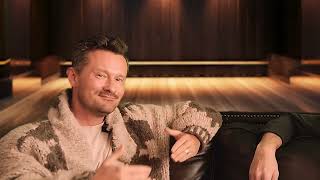
This is a YouTube video titled "Heal the Relationship Between Your Food & Your Mood - Dr. Will Cole - #1033" published on March 21, 2023. It features a podcast-style interview hosted by Dave Asprey with Dr. Will Cole, a functional medicine practitioner and author. The discussion explores the connection between diet, gut health, mental health, and emotional well-being, addressing topics such as shame, anxiety, biohacking, intuitive eating, and the physiological basis of mood disorders. The conversation also touches on gender differences in wellness approaches and the impact of diet culture and societal expectations on health.
Chapters
You're listening to the Human Upgrade with Dave Asprey. This episode is recorded live in Austin, where I live now. So I can actually see people in the flesh, which is always a pleasure. And today I've got Dr. Will Cole because he wrote an awesome new book. What we're going to talk about and what you're going to learn about today is what's going on in your body that's affecting your moods. And some of it's the gut. Some of it's something else, though. And Will has great, great credentials and actively sees patients and has really come across some new stuff for you that I think you're really going to like. So it's like half psychology, half what's going on in your body. Will, thanks for coming to Austin.
Thanks, buddy. Thanks for having me.
Your book, it's called Gut Feelings and the subtitle is what we're going to talk about first. And it's healing the shame fueled relationship between what you eat and how you feel. Why did you talk about shame on the COVID of a book? Did you want to sell books?
Well, it's such an integral part. Like anything that I write, it's born out of what I love doing with my patients. And when I'm consulting people from the telehealth center, 10, 11 hours a day, this sort of mental, emotional, spiritual component to why people are struggling. And we deal, I mean, you know this, but we deal a lot with people with autoimmune issues. Chronic fatigue.
Yeah, both of those.
Right, exactly. So so many people settle for feeling lousy and they're kind of disillusioned on where to even start. So shame and stress and trauma, these things impact physical body. The physical body can be stored in our cells. So people, there's a growing conversation around mental health. Right. Which is good. But I don't think the connection with the fact that we see play out in people's lives on an hourly basis, that mental health is physical health and we need to stop sort of relegating mental health, sort of this obscure thing, because it's quite physiological. I listen to my patients and when I look at labs all day long, it's kind of hard to not have this conversation. Okay, Right. And it's just a matter of when. I had the conversation in book form because I have it on an hourly basis all the time. So it's quite important. And so many people are suffering with different things like fatigue and brain fog and anxiety and depression, and they don't have to settle for it. These are largely overcomeable healable, optimizable things.
And they're not personal flaws. They're hard.
Right, Right. So many people feel like that they are just.
I did.
They're broken or lacking willpower or something's wrong with them. So the book, I tried to infuse it with so much grace because I know how heavy these topics are.
There's a feeling of helplessness that happened to me where I felt like I had the accelerator all the way to the floor. I'm like, I could push harder, but there's no more room to go, and I'm slowing down, and I'm like, it's because I'm not trying hard enough. And especially, I think, for guys, then you get the same thing. I certainly had that. But you said something in the book. Fitness is masculine and wellness is feminine. So I feel like, as a guy back then, I was in my late 20s, early 30s, things have shifted a little bit. But it was actually. It was a sign of weakness to take care of your wellness. Like, the hacker ethos was you drink your Joel, eat your pizza, stay up all night coding, show up to work the next day and just be invincible. Mm. What happens when people do that?
Well, it's. You cannot. You cannot work out a bad diet. I mean, most.
You know you'll get canceled.
If you learn one thing in this.
Conversation, it's that aren't the calorie bullies like these people who are chronically hungry, so they're angry, and they just troll all the time saying, but calories in, calories out.
Yeah.
Aren't they gonna come after you for that?
Maybe. Maybe come at me. You know what? But the reality is there's so much conflicting information online. And I get it. People are disillusioned as the heck they should even be doing. So hopefully we. We settle it with a middle way. You know, our world's filled with so much. I don't need to tell you this.
But you're telling everybody. Hundreds of thousands of people.
It's sort of toxic tribalism online, right? Where it's like you have these tribal warriors, and because maybe it worked for them, they apply it to everybody. And it's like there's these zealots when it comes to it, and they're many times stuck in their own echo chamber. And we're talking about food and fitness, and it should be pretty fun stuff, but to become so negative and militant. So, yeah, I'm sure I'll offend somebody when it comes to talking about food and wellness and body images, because I Talk about it in the book.
But you do. That's why I wanted to interview you about this. Okay. I've never seen someone just bluntly say, fitness is for boys, wellness is for girls. I'm paraphrasing you, and you're saying that's not real, but that's. That is a cultural trope. Why is it that way?
The reasons why, I'm not sure, but it is. I think a lot of times you can even look our vast majority of patients. Even when you're talking about the wellness world, it's predominantly women. I think it's changing. I think it's growing change. And I think part of it is the biohacking community, because I think biohacking is an in for more guys, and they don't even know they're doing wellness. And then they realize, oh, yeah, this is actually synonymous with wellness.
All of the language of biohacking was written so that hackers, entrepreneurs, tech bros, and just high performance guys who were like, you know what? I don't want to be healthy. I want to be superhuman. It was written for that. But the path to doing it actually is wellness. But a lot of people say, dave, bulletproof is such a masculine brand. You guys don't get it. Women want to be powerful and fit, too, and guys want to be well. And the idea is, what's the language that lets us do it without shame? So I want to get your take as a physician about what you see most commonly in women, around their anxieties around food or other issues. And then I want to ask again for men, so tell me the typical problems women face around food. Again, it can be for anyone, but these are patterns.
Yeah. Well, I think even us having this conversation is a great thing because wellness should be democratized. And I think sometimes people feel like it is for someone other than themselves.
What does democratize mean?
Making it for everybody. Making it accessible. Making it. Hey, look, it's. You should get in on this as well.
Oh. Everyone should have access to it. Okay, for a minute, I thought you meant mob rule.
Oh, yeah. Okay, well, no mobs allowed. No, this is the democracy of kindness.
Okay, there we go.
That's the only rule. Be nice.
My kids were like, dad, why are things so messed up right now? You know, with all the last few years of nonsense. And I said, children, just remember, 50% of people are dumber than average.
Yeah.
So all you need is that plus one person who got deceived from the top half, and then we do the dumb stuff. Yeah, Right. And I feel like we're not talking about that side of democracy, let's say.
The Republic of wellness.
Okay. With some rules of kindness. I'm getting there.
Let me correct myself. Yeah. So I think with women, to answer your question, women with food, there's so much, as I said, this sort of endless vortex of conflicting information. And information's wonderful. Right. We're getting more people educated and empowered, but then they're just disillusioned on what the heck they should be doing because it doesn't work.
Right?
Right. And they hear one thing from one person and another thing from another person. And then I meet them online when I'm talking to them on their initial consult. And they are many women when they're struggling with food, they're kind of somewhere on that orthorexic spectrum where they wanted to do the right thing. They're wanting to eat good foods, but they're just so. There's so much stress and anxiety and shame around healthy foods, which is the antithesis of why we're doing, like stressing about eating healthy foods is not healthy. So I'm trying to unpack some of that and get back to the why. Why the heck are we even doing this stuff?
I felt like when I was working on losing all that weight, I went from zone diet, I tried Atkins and they all worked somewhat. And I tried the low fat thing, I tried low fat, high protein, all these different things, just trying to figure it out. After I realized that just going low calorie and exercising all the time, it just didn't work. So I did go through a bunch of that. But eventually I fell into being a raw vegan because that's supposed to work and that's the cleanest and because enzymes. And it actually made me really ill. And I feel like this is happening with a lot of women now. They're saying, well, I heard through some cultural, I don't know, pheromone or something that animal products are bad for me. And then I run into them all the time where they're malnourished and they're under protein and they have the wrong fats. Do you see that in your practice too?
So much. And that's a big issue that we see, right. They're trying to do the well intentioned thing, but they're bloated and they're fatigued, they're wired and tired, as they tell me, they're anxious but exhausted and they think I'm doing all the right things. I'm eating these like colorful foods, but I'm really And they, and this is the big sort of interesting thing that can happen. It's better. You can make the argument that it's better than the standard American diet eating whole foods better. So they're going to have this sort of honeymoon period with that.
You always do.
Yeah. And then they get stuck at this plateau and the things that used to work aren't working anymore. So typically when we're running labs and kind of show them data on why they feel the way that they do, it's like this empowerment because you don't want to go over things that are wrong with somebody's health. I'm quite aware that this is heavy for some people, but you have to know what you're dealing with to do something about it. And most of the time they're open to maybe bringing some pescetarian options or bringing in some grass fed beef. And it almost for many of them feel so much lighter because they thought they were bad if they had this food. Like they were a moral failure if.
They had this food that feels like an eating disorder. Any food you eat that makes you feel good, there's no moral failure in that.
That's why I tried to get it more out of it in a way where it's like the analogy that I made is like continuing to eat foods that don't love you back is like, it's like staying in this toxic relationship for years and wondering why you're still miserable.
Oh my God, what a, what a profound thing that's it's in. Like at what point do you realize it just doesn't work and you have to change something.
And obviously also to eat foods that love you back isn't restrictive.
No, it's self respect.
So hopefully people can realize this is not about be your own n of one experiment. And that's what biohacking is all about. Like, what does your body love?
I oftentimes will come across people who have and I sound like I'm picking on vegans, but also it's the same for guys who are like full or women who are just fully keto and you're like, how's that working for you? Well, I lost my first hundred pounds, but this other 100 pounds hasn't changed in the last four years. On keto, it's probably because I'm eating 12 grams instead of 8 grams of carbs and they're malnourished and they needed just to go eat some carbs. Right. And so it goes both ways. I have a couple friends here in Austin who've been vegan for a long time. One of them with serious health issues that I think are caused by the vegan diet. I am preparing them grass fed steak for the first time ever. Wow. Like we're doing like a ceremony for it because it's emotional when you, it's almost like changing from one church to another. It's your identity.
Right. I honestly think sometimes for those sort of really deeply entrenched tribalism like where that's become sort of a faith for some people, it's probably easier to change someone's religion than the foods they eat.
What's the trick? I mean you're a doctor, you have someone in your office whether they're keto, whether they're vegan, whether they're just eating Hot pockets all the time. What's the words you use as a doctor to help them expand their perception of what's possible for them?
Well, this is really, it comes down to finding out their why, like why are they doing what they're doing and when they feel when they're up against autoimmune flare ups and digestive problems and chronic fatigue and anxiety and depression. They don't want to feel like that. Yeah, no we don't. It's so bad. No one wants to feel like that. So when you start having and connecting to them where they're at and then show them data from labs, they are normally open to trying something different and they know they have to do something different to see something different. And maybe that's pivoting and it's a better version of a more plant based diet. Maybe it's just not optimized for you. And I have to meet some vegans where they're at. Maybe when I'm first meeting them, they're not willing to eat any fish or grass fed beef or bring anything other than that. Okay, let's at least be pragmatic and help them where they're at most of the time. When we do that and they start feeling better and they sort of trust you more then they, oh yeah, I'm open to having this a few times a week. And when you're having things like organ meats, you don't need that much of it to start making a big impact. They can still be predominantly plant based and feel freaking amazing when they're bringing in these nutrient dense foods in.
You know, you take some liver capsule pills. I sound like I'm picking on vegans, but I'm not because this was me.
Right.
And there's times like, okay, I'm just not going to eat anything. And then at the end of the day, like I fuck it, I'm having the Ben and Jerry's.
Right, Right. And I've seen that same sort of. They can't really talk about it amongst their peers in the intuitive eating world as well, where they will say, those are the communities that will say there's no such thing as a bad food. There's no unhealthy food. And they don't, they're very triggered by that. But they are the ones messaging me on social media and coming in for consults online and they'll tell me I'm eating all this food and everyone's telling me there's no such thing as a bad food, but I feel miserable. And it's interesting the similarity between that. But I think commonly it's the tribalism.
It is the tribalism and intuitive eating, it actually is super meaningful. I interviewed a guy from Alder Spring Ranch, Glenn Elzinga, one of my first hundred interviews. And he's a soil biologist who started raising animals. And he's like, Dave, the reason my beef tastes so good is that my cows, they walk around and they sniff this grass, they don't eat it, they go to that one, they eat it. And when I became a farmer, a regenerative farmer, and I had 25 sheep just wandering our whole 32 acre property up in Canada, I'd watch it. They go to the walnut tree. Walnut trees are toxic for sheep. And they'd eat one leaf, it's anti parasitic. And then they'd go over and they eat the rosemary and they were actually treating themselves with intuitive eating. But if I gave them a bunch of grain, which we didn't feed them, but even just the alfalfa pellets, like bleh. And then they just go crazy for it. And they would eat all that. But when we told them they couldn't do that, they would intuitively eat.
Yeah.
And so I feel like even with my supplementation, I reach for a bottle and if my body says that's not for you today, I listen and I don't take it that day. So I believe that intuitive eating has validity and I know how to hack your operating system all over the place. So let's just add some MSG and see how you intuitively eat. You can't, right? And it's like your body's doing something to you. And the main thing in your book, in Gut Feelings, you're talking about what the body does to the brain. So I couldn't Throw out intuitive eating. Because if you don't need more meat today, then fast or eat some cauliflower, whatever. Right. You should know that. But if you just go with craving based eating, what causes cravings?
Right, Exactly. And I think that word intuitive when you're talking about capital I, capital E, intuitive eating, it's almost been co opted by a specific group and they're typically the body positivity group, the anti diet culture group. And they're being sold, I think things that are perpetuating them feeling lousy.
It's cruel.
There's nothing wrong with intuition. I love it. That's why I called my last book and thanks for having me on for talk about that book Intuitive Fasting. I think authentic, mindful, intuitive eating of wanting to feel good is wonderful. But hangriness is not intuition. Insatiable cravings is not intuition. Just second thing learned in this.
I think you and I are probably the only two people in the world of intermittent fasting who just acknowledge that like different length of fast for different days. Other than a few people focusing on like for women at phases of their cycle. But the idea that some days you need a longer fast, some days you need a shorter fast and you have to feel it.
Yeah. And you're not a failure.
So those are hard words to say because we all want to be so rigid. How much of the rigidity do you think is driven by shame and guilt?
So much. I think that you're. And this is the problem, I am not an advocate for someone when you talk about the word, the phrase toxic diet culture. I do feel like there's obviously toxic diet culture shaming your way into wellness is not going to be sustainable for you. Or if it is sustainable, it'll be such a source of dread for people that it won't be like the stress and anxiety will really be a saboteur to your health goals. So it's a massive issue. A mantra for our patients is you can't heal a body you hate. You cannot obsess your way into health. So that going back to the why, like why are people even doing what they're doing matters? Because you can have an amazing biohacking tool. But if this is a source of obsession and anxiety and dread, that is sabotaging the good stuff, even if it's clinically relevant for someone to eat a certain way or do a certain practice. That's why the conversation I'm trying to have in gut feelings like really using these tools of wellness of biohacking as a form of self Respect. And getting back to the heart of. Think of what I find works best with patients to have sustainable wellness, which we all want.
You can look at loving your body means I'm going to decide to. To take care of it, to take control of it, which is in the definition of biohacking, and to coax it to do what I want it to do the way you would love, like a sculpture. If you're working, if you're an artist, your body can be your art. And there's something super important. I know when I weighed 300 pounds, I didn't want to see myself naked. I was. Had lots of pleats in my pants. They didn't work very well to hide how fat I was. But no one likes that feeling. And hating yourself or hating your body for that is psychologically damaging and it's unhealthy. And certainly I was doing that at the time. And I would have given anything in order to lose weight and all my willpower, all, everything. And also to feel good and deal with the other issues. But honestly, that was a big one. Because how do you love your body? And what I've learned since then is that at least in my world, you are not your body. You are a consciousness that kind of rides in there. But my body does all sorts of weird crap to me. It tries to convince me of things that aren't true and it gives me cravings that are not good for it. And then it's my job to sort of manage it, but not to hate it, to accept how it looks. And I'm stoked on how I look now. How would you approach if a patient walked in the door who was clearly metabolically unfit? And what does the conversation look like to help them respect their body, accept their body, but also decide to make it what they want it to be?
Yeah. And I think that this is the nuance and context that I think is important around these conversations. It doesn't have to be either or. I think you can love your body, but loving yourself doesn't mean you're accepting yourself where you're at now. Meaning that you could love yourself and say, I want better for myself. I want to feel better and have a real heart to heart with, you know, for me that I'm having with the patients, it's like, where. How do you want to feel? How do you truly want to feel? And most of the time they are back to that sort of tribalism that we keep talking about. They are. They know they don't feel good.
Yeah.
But they are trying to almost be overcompensate for where they're at right now. And when they don't have the energy to do the things they want to do or feel uncomfortable because of chronic inflammation, nobody, again, nobody wants to feel like that. So it's. The labs are a big aha moment for people.
You show them the data.
Yeah.
Like, you can love your body. It's not working very well right now.
Yeah. There's nothing positive about metabolic disorders. There's nothing positive about. Doesn't mean that you should hate yourself, but it means you should love yourself enough to nourish it with things that love you. Back to that relationship analogy. So we love to have this conversation in our culture today about healthy boundaries, but I think healthy boundaries also applies to your body, to ourselves, and to food and our body. So it's just applying these things to the person's life.
Okay, are there as many men in the intuitive eating or body positivity movement as there are women?
I would assume it's mostly women.
I think that's likely.
Yeah.
So what's the equivalent for men? Like, what do we do?
You're saying instead of the intuitive.
Yeah. So we're not doing body positive, intuitive eating. How are. How are men coping generally? Right.
I think for men, honestly, in our culture, they're ignoring it. They're like. They're not even. It's like, back. Back burner, head in the sand. They feel lousy, too.
Yeah.
But they're in our culture, kind of left to fend for themselves because back to that sort of exclusivity of wellness, they think it's feminine. And it's not for them that I think they're kind of disillusioned and don't know where to start.
Yeah, I think you're right. What I found is that when I talk about how do you want to feel? The conversation's slightly different with men and women, but for men, it's like, I just want my brain to work. I want to be powerful up here, and of course, I want biceps or whatever. And when you're like, hey, when you come home at the end of the day, do you want to be dialed in and completely able to just go play with your kids and not stressed and not anxious and not exhausted and not, like, needing a beer? That's okay. Like, that perks people up. And you can keep your dad bod. It's okay. It doesn't matter. But it's like, get the power back. And when I speak with women about it, they want their energy back. Too. But it feels like maybe women are more aware than men on average because it feels like they're better biohackers than men because they've just maybe more in touch with feelings in the body. And a lot of guys like me, I didn't notice there was anything below my neck.
Yeah, exactly. Gut feeling. There's more body awareness for women in general. Okay, you're right. I think that that's sort of divorced. I think society as a whole are divorced from their body, but women are generally holding on to that gut feeling more than men are.
Yeah, it feels like that. You talk about in your book the relationship between food and mood, but then you go straight from there and you talk about what having a bodybuilder dad did for you. So what did that do for your perception of all this?
Yeah, well, I mean, the foods, that old saying, that cliche of you are what you eat. We know that it's backed by science. Now. The foods you eat actually are the raw materials for our neurotransmitters and food for our gut microbiome, which is what's making 95% of our serotonin, 50% of dopamine. So it's a major player. And people, again, they divorce mental health from physical health. But, you know, the people that I see start to use the tools that I talk about in the book are able to not be defined by this. My depression being genetic or my anxiety is just runs in my family. The reality is, yes, there are genetic variants that predispose. When we look at methylation gene variants and things that are impacting how neurotransmitters are expressed. Yes, there's a genetic component, but really the majority of our mood is governed by epigenetics, by the choices that we make in our life. It's gut and feelings. It's the physiological and the psychological. The physical, like the underlying gut problems, the methylation gene variants, chronic infections, mold toxins, chronic Lyme disease, we see a lot those things are going to impact your mood. And then also the mental, emotional, spiritual stuff like unresolved trauma and shame and chronic stress. Both sides need to be addressed for you to feel great. So, yeah, it's. People have to realize that we all have different bio individuality. We all have different methylation gene variants. I just talked to a patient last week and she said I was having so many marital problems and I thought this was just. He was just a jerk and he didn't whatever all the problems they were having. But when she started having that fog lifted and Started supporting these things, the gut and the feelings, the men, the physical and the mental, emotional, spiritual. She realized it wasn't really marriage problems. She just. Her bandwidth was so limited, her resilience was so low that everything was frazzling her. This saves people's relationships. This isn't just about somebody's health. It's impacting families and households.
Thanks for saying that. And we are wired, so that's invisible. You're going to behave in ways go, how did I do that? I must be bad. And you feel shame and guilt about was a hardware problem. And when you, in your book, the stuff you teach, when people start going, oh wait, maybe I'm not bad and maybe I'm not weak or dumb. And I've thought all those about myself. I had a hardware problem. What percentage of, of anxiety in the world do you think is caused by body problems instead of trauma?
The vast majority. The vast majority. It's just, yes, you're going to find some situational circumstances for some people or it could be a component, right. A stressful season of your life or taking care of a family member that's going through a health crisis or circumstantial things. But the predominance of the epidemic that we're seeing as a society. And that's why I feel like the conversation around mental health in the mainstream world is just an incomplete conversation. Because it's one thing to say mental health and get help from a therapist, yes, that's important. But why do we have this problem in the first place? What's the actual hardware problem that you're mentioning? And there's a whole. This isn't just my opinion. This is in the scientific literature, the cytokine model of cognitive function. How cytokines pro inflammatory cells, how are they impacting how our neurotransmitter works? So we say, you know, it's a, it's a neurotransmitter imbalance, which that could be debated anyways. What if you're going to take that model, what's even driving the neurotransmitter signaling issues? Well, it's oftentimes chronic inflammation. And then what's driving the chronic inflammation? It's the gut and the feeling issues. It's the physical and then some spiritual stuff.
My template for eating is how am I going to feel when I'm done eating?
Amen. It should be as simple as that.
It's not flavor. Flavor comes second. And actually sometimes convenience comes second and flavor comes third. Sometimes flavor comes second and convenience comes third. But it's always based on how I feel and I will not eat it if it's going to make me bloated and feel like crap the next day. It's just not worth it.
Yes. And that's the real, I think, mindful, intuitive approach is that when you realize, hey, this food doesn't love you back. It's not like I can't have it. And I think that's the freedom. I call it food peace. In the book. It's like this piece. It's not this list of you can't have this. I can eat whatever the heck I want, but I love feeling great more than I want something that's going to dim my light. It's going to sabotage how I feel. So that's sort of the breaking the sort of bonds I think that people have around food. Because it's not about rules, it's about just self governance and knowing what your body loves and loves you back.
You're not in charge when the food's in charge.
Yeah, okay, 100%. And hopefully that's a. I think back to that concept of grace and lightness and forgiveness, I think is important. Not just forgiving others, which is great for your nervous system and inflammation levels, but forgiving ourselves, I think for things that we maybe we really weren't fully ourselves because we were kind of in the throes of chronic inflammation and a dysregulated, hypervigilant nervous system.
The things that I've learned in writing my big mitochondrial books called Headstrong is that your mitochondria, they aren't power plants, they're decision making nodes. And they decide based on whatever signal they get from what you ate and from the environment and also from your emotions. And they can make sex hormones, they can make neurotransmitters directly. Even melatonin they make in them. And they can make inflammatory molecules and they can make electricity. So ideally they make sex hormones, they make neurotransmitters and they make electricity. But if they get stressed and then they start making cytokines, well, the electricity went to those you lost manufacturing capacity. But the cytokines tell all the other mitochondria there's an emergency, so they stop doing good stuff too. And this isn't something you hear about, but you write about it elegantly in your book about this is where the feelings come from. And what I found fascinating is that you really get into the roles of societal gender things. So you talk about having a teenage son and you talk about pigeonholing masculinity what's going on with that?
Well, I mean, I think in general, there's a. I think young guy, young boys and young women are marketed to an industry that's not looking out for their best interests. They're not looking out for them. Feeling amazing. And I want my son to feel great. I want my daughter to feel great. And I think that hopefully we can get past all of that. Dr. Google confusion online to really find out what their body loves. And, you know, I now I see my kid. It took a while. My son, he's 16 now. He's not making decisions for himself. When I walk down in the morning and he's making himself an adaptogenic tonic, and, and he's picky as heck. I mean, he doesn't like. He still has some. Some room for improvement, as we all do. But when you plant seeds as. As a parent or anybody that you have influence over when it's done in love and meet them where they're at, then they start making decisions for themselves because, again, people want to feel good. So then my son can make the decision for himself and say, yeah, this, whatever food, this pizza doesn't love me back. I don't feel good having it. He's going to naturally have less of that pizza because he has an awareness of what feeling good looks like. And he has this, what I call for my patients, like this center. And you could pivot from that center and explore the outer bounds of that center. And as you have resilience, you can handle some stressors, but ultimately you want to come back to that center.
You worked a lot with GOOP and Gwyneth Paltrow. What did you learn from working with her audience that maybe other people wouldn't have seen?
Well, I mean, the book Gut Feelings and Intuitive Fasting. The last two books were with Goot Press underneath part of Penguin Random House in Rodale. So great people from the book side of things. And I've been a part of the GOOP community as far as, like, writing and speaking at their events. I think they're one in the same. I think there's a huge overlap between the GOOP audience. The GOOP audience that's interested in wellness. Probably not all of them, but a big chunk of them are very much into the same things that we're into.
I love Gwyneth's work. She's. She doesn't call it biohacking, but I would say she's like the leading female Biohacker.
I would 100% agree with you. She is a Biohacker in many ways. And she wants to feel good again. She wants this sort of agency. She wants to know what her body loves and what it does, just like any one of us. So yeah, I think it's good because she's shedding light to areas that maybe that person that's interested in fashion or pop culture, they don't really know about wellness. And she's empowering people and educating people.
She's making it cool. But you talked about nutrient density and I have a little bone to pick with you there. It's a grass fed marrow bone, so it's okay. Now.
It is a food that loves many people back.
That's true. The ANDI score aggregate nutrient density index. You'll see this even sometimes at grocery stores where they say, well, this plant has this amazing thing. But to calculate nutrient density, you ignore the size of the food and you only worry about calories. So nutrient density calculations are basically a calories in, calories out argument. And what happens is a food that's all water and indigestible fiber and cyanide, it doesn't matter as long as it's not a calorie, it's invisible. So the nutrient density thing is training us to eat non energetic foods that are mostly indigestible and think it's good for us.
Yeah, I agree with you fully when I said nutrient density. You have to. Part of nutrient density is also bioavailability. So it's nutrient density plus bioavailability. You're absolutely right because I see people that are doing, even omnivore people that are eating lots of foods that their gut is to the point where they're not digesting and absorbing nutrients really at all. Maybe they're having lots of raw foods where it's, it's like you are what you, you aren't just what you eat, that's part of it, but you are full. The truth, the deeper truth is you are what you absorb.
Yeah.
You are what you assimilate. And if you could be eating all of these foods that are in theory have nutrients but your body's not actually making good use of it, especially if someone has digestive issues.
You nailed it. In fact, that's part of, I mean the very first chapter on the bulletproof diet. I talked about phytates and oxalic acid and lectins and omega 6. These are the main plant toxins. And there's some animal toxins as well from the way you cook it and the way it's fed. But what phytic acid does in grains and seeds and nuts and certain other plants. It sticks to the minerals. So when I was a vegan I was eating all the high mineral plants, but I was getting tons of phytic acid and oxalic acid. Even though I was eating minerals, I was eating an anti nutrient with them. And when people are getting these ups and highs, this food anxiety, a meaningful amount of food anxiety is just mineral. You didn't get minerals because our soil is damaged. So it's not in the plants, it's not in the animals even. And if you on top of that eat stuff you think is healthy, that sucks minerals out of your bones, well no wonder you're going to get problems. Including the cognitive stuff.
Yeah, 100%. And that's why one of the first ways that we reintroduced plant foods, vegetables mainly, is cooking them and having them more soups and stews to break down some of those anti nutrients to make what? Yes, in theory less nutrients because people, especially the raw vegans are afraid of cooking food. But the nutrients that that food does have is going to be more absorbable and usable and less irritating and inflammatory because the more you're feeding that inflammatory storm, the less your body is going to be able to utilize these foods. So yeah, without a doubt.
Earlier we, I would say definitely agreed on the fact that a large majority of anxiety and stress people feel is actually body stress, not trauma stress. And I would guess 70, 80% is physiological, it's body and the rest of it is trauma. But some people have just a lot more trauma than others. Have you seen people who had emotional and physical things that were sources of anxiety? Have you seen them have an easier path on doing the emotional and spiritual work once they fix their body?
Yeah, absolutely. And that's what many people will ask me. Well, what's more important? They're both important and some, yes, in theory you probably could. I've seen needle movers being more on the feeling side for one person and more on the physiological gut side for other people. But they're both important. So in my opinion I think that a bit of both, even just leaning into it like getting their why down, getting sort of the mental emotional enough of a reason and intention of why you're doing this then starting on the physio physiological to lower inflammation, get their gut healthier because then people are encouraged to want to keep doing the things that are loving them back and they have more of that bandwidth to deal with that trauma, to go to the EMDR to unpack that stuff. That's a lot less prescriptive it's easier for me to say, these foods are most likely to mess up your microbiome and raise inflammation. Have less of those, and focus on these things that love you back. It's not prescriptive to say, don't have that trauma or don't have that stress. Yeah.
Try to calm down.
Yeah. Then they stress about not stressing, and then it's like, it doesn't work. So when they start feeling better, they can unpack the harder things. They can unpack the more complex things.
Well, what's the worst piece of advice you've ever heard?
I would say one thing that comes to mind that's just maybe not overtly said, explicitly said, but I think it's implicitly implied within our culture, is that we are our thoughts and emotions is that we are like, we feel the offense, we're offended by somebody, so therefore it's us, and we're going to go and attack somebody whether it's in person or online. Typically, people love to be keyboard warriors and do it online. So I think that's a major problem that I. Growing up in our culture, we just are so attached to our thoughts and emotions and we make them who we are. Which I think if we start to realize that we're not that and we start realizing we are that, observing presence, our thoughts and emotions, I think the world would be a better place, a healthier place, a kinder place. So that's the first thing that comes to mind. But there's probably a long list of bad advice that I've been given, so I love it.
And I would double down on it. It really kind of resonates with what you just said, because when people are like, well, that triggered me. You have to stop. And it's like, well, actually, the fact that it's triggered your body and your emotions, actually, it didn't trigger you because you're not those. And all of a sudden. And that's why you do the hard thing in your book. It's writing about psychology and even some spiritual stuff, when you get really down into it and the connection to the gut. And once people understand that and you realize that when you eat to feel a certain way, then you can go do the spiritual work. It's really liberating.
It is. It is. I mean, it's like somehow our ancestors knew when they said things like gut feelings and, you know, I'd feel it in my gut, they didn't have placebo control, randomized control trials of what actually the gut was doing. But it's so true. When people really kind of get in and anchor themselves into this gut feeling connection that I think is important for all of us to reconnect with. We are. We're not so easily offended. We're not so easily triggered. We are more kind people. We are more compassionate people. And it's not just virtue signaling. It's actually authentic tolerance for people that we may disagree with or don't see eye to eye with. And that's ultimately what's at stake here. I think that the breaking of the disconnection between our gut and feelings is part of why the world is so dysfunctional today.
Very, very well said. Well, thanks for coming on the podcast today, guys. The book is Gut Feelings. It has a much prettier cover.
Yeah, this is like this, like the academic version that's printed off for college students.
Smells like laser printer.
It'll be color. It'll be hardback. It'll be pretty pictures inside.
Yeah. But I see I got to read it for everyone. You did. So it'll look prettier. But I just. Gut Feelings is the name and people can go to. Was it. It's Dr. Dr. WillCole.com Dr. WillCole.com all.
The information about the telehealth center, the book, all the things, all the stuff.
You do in the world. Well, thanks for coming out to Austin for the podcast. I love doing this live and thank you.
All right.
Thank you, sir. You're listening to the Human Upgrade with Dave Asprey.










