How I Beat Brain Fog In My 50s (6 Simple Habits)
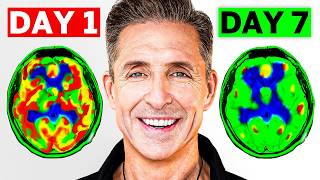
A person in their 50s shares six habits that cleared their brain fog, covering sleep, stress, eye strain, and inflammation. They explain how hormonal changes and cognitive overload contribute to fuzzy thinking, then offer practical biohacking strategies to sharpen focus and mental clarity.
Chapters
I haven't experienced brain fog meaningfully in over a decade. But when I was 22, I couldn't focus for even a few minutes. I had chronic fatigue syndrome, and I had crippling brain fog as my career was taking off. And I felt kind of helpless. So let me walk you through the six major things that cause brain fog so that you can do something about it. And I've written the New York Times bestselling science book about the brain and making it work better. So I've gone very deep on this because I was desperate and I want to share the core things with you right now. The first cause of brain fog is chronic physiological stress, not psychological stress. Your body was designed to use stress as a way to get away from danger, get pumped up for battle, or get hyper focused on hunting a deer or finding a potato or something. And that's good stress. Problem is, say you're low on zinc and your body says, well, I know that to adapt to my environment, to handle the stress I'm under, I need this raw material, but I don't have it. So you get stressed and your body is stressed, and you're going to think that it's psychological stress, but it's not. It's physiological stress. And on top of that, you do have psychological stress. Modern society has you running around with stress all the time, so your body's in permanent fight or flight. Part of it is because you're lacking protein from animals, you're lacking minerals, you're lacking the right fats, so your body can't adapt. And on the other hand, you have all this weird social media stress. Even worse, high levels of stress are actually addictive, and you live in it for so long that you use little bursts of adrenaline and cortisol as a way to get things done. Because adrenaline and cortisol feel good temporarily. The cost is ever worsening brain fog until you just can't make any decisions. You hit the wall, and you probably know what I'm talking about. All of us have hit the wall at least once. But what if you hit the wall just getting out of bed? That was me in my 20s. So the two key fixes for stress induced brain fog are, number one, reduce physiological chronic stress. And that comes from learning how and when to eat. You need animal protein, you need animal fat, and you need plants that don't cause inflammation. And number two, you want to increase your resilience to stress, which is a major part of why I created the biohacking movement. So what I like to do is Stack together recovery activities, relieve stress and you can do meditation using binaural beats, which are special sounds that cause you to more quickly meditate. Or I meditate outside in a place where I'm touching the ground for earthing or leaning against a tree to get the benefits of grounding and nature at the same time. So I'm getting multiple ways that my body will work better. Any of those by itself will reduce stress, but if you do them together, there's a synergistic effect that's worth it. The other thing that makes a huge difference is building stress resilience. And for that you want to do hard things that cause temporary stress. It needs to be intense and needs to be temporary things like a cold plunge, a high intensity workout, or even breath work. The trick is they're temporary, and your job is to return back to your baseline quickly so that your body got the signal that there was stress and the body had the safety and ability to recover. And that recovery is what drives adaptation, which drives resilience. What are some of the things you've used to clear away brain fog? Drop a comment below and let's see how many different solutions we can come up with. The second cause of brain fog is sleep deprivation. Your brain fog isn't just because you're busy. Poor sleep quality is likely the real culprit that wrecks your cognitive function. Sleep disruption or just poor quality sleep impairs something called the glymphatic system. And this is your brain's detox pathway. What that means is every time you get a good night's sleep, you get a brainwash. Your brain literally dumps toxic proteins that build up over the day and flushes them out and replaces them with clear and clean cerebral spinal fluid. But only if you're getting your deep sleep. It's like having a dishwasher that doesn't fully drain the gunk before you wash the next load. That's one of the reasons you get brain fog. And Harvard research shows that deep sleep is critical for you to consolidate memories. Other studies show that one night of poor sleep reduces mental clarity and decision making by up to 30%. So prioritizing restorative sleep is the key if you want to perform at your best the next day. Prioritizing restorative sleep is essential if you want to perform at your best. And yes, I did say prioritizing. Problem is that if you're a high achiever like I am, you're also going to want to prioritize your love life. You're going to want to prioritize building your business or making your mark in the world or doing whatever is important to you. If you prioritize those other things over sleep, you will suck at doing them later. I did not understand this in my 20s and it's one of the reasons I had brain fog. I was willing to burn the candle at both ends and in the middle, and I made $6 million when I was 26 years old. Lost it when I was 28. Maybe I'd have kept it if I got better sleep. You can also enhance your sleep with blackout curtains with magnesium supplements, and you can track the time you spend in REM and deep sleep. In fact, I'm wearing two rings that monitor that clarity starts at night. A cool room temperature and regular sleep schedule will support your circadian rhythm so that your brain recovers and small changes can create dramatic improvements in your energy the next day. Like 30%. I have whole videos dedicated to teaching you how to get more sleep in less time so that you don't have to sleep eight or 10 hours and you're still getting good quality sleep. Subscribe to my channel if you want to see those the third cause of brain fog is overloaded cognitive bandwidth. Your brain is not a computer, it's not a machine, and it does have limits. With biohacking you can move those limits way out, but even then, if you push too far, you drown in decision fatigue. When you run out of decision making capacity, which is based on your mitochondria, every decision becomes a struggle and even simple tasks feel overwhelming, much less going to the gym. Cognitive overload leads to a downward spiral where you just don't have the productivity you want, and then you get stressed by little things that shouldn't even bother you. One of the easiest things you can do is bash similar tasks, so you might just spend 20 or 40 minutes working on the same type of problem and also remove unnecessary decisions from your life. Quite often we spend a third of our thoughts. Yes, there's a study for that. Thinking about what's for lunch. If you already know what's for lunch, you won't think about it and you don't have to decide later. Understand that every decision you make contributes until you hit the wall. You don't want to hit the wall and you want to make your brain work so good that the wall is very, very far away and you can really do the work you want to do. But don't waste any decision and incorporate strategic rest periods. It's very easy when you're focused to Just go for four hours and forget to eat or to hydrate. It doesn't work very well. It feels good, but it doesn't work. So respect your bandwidth. You can work smarter, not endlessly. You don't have to grind it out to get results. You could also use cognitive enhancers. In fact, they're a major part of my success and I'm using several of them right now. You can use things like caffeine. Yes, that's caffeine on my bicep. You could also use Modafinil, which is the limitless drug. It's a prescription that increases your ability to make decisions and to focus. And it's not a stimulant. Don't use Adderall, that stuff's not good for you. You can also naturally boost your cognitive capacity just by having an anti inflammatory diet that has good quality fats, including animal fats and animal protein. You can do some intermittent fasting and you can take supplements that directly enhance your cognitive function. If you want, I'll do a whole video on ways I boosted my brain power naturally. Just let me know in the comments. The fourth cause of brain fog is something you probably haven't thought about. Let's call it digital eye pollution. Your eyes are the only sense organ that connects directly into your brain. All the other senses pass through your spinal cord before they get to your brain. That means your eyes are almost a part of your brain. And if your eyes are stressed, your brain is stressed. Studies show that excessive screen time will wreck your focus and. But it's not going to do it in the way that you probably think. One part of it is toxic blue light exposure and just bright light exposure. Part of the blue light spectrum is necessary during the day and part of it is toxic and stressful to your brain during the day. It's kind of like there's corn syrup and then there's a piece of fruit. They're not the same thing. Not all blue light is bad. What I'm doing right now is I'm blocking toxic blue light, but allowing the good stuff in. This is one reason that blue light blockers, well, you need to know what you're doing with those things and I'll do a video for you on that if you'd like. The other problem is that excessive screen time just by itself will wreck your focus. And that's because, well, social media is designed to do that. So you get scattered attention. That's one stressor. And you get a bright screen shining light that makes your brain tired. The combination's just not good. Research from the Journal of Behavioral Sciences highlights that if you take even a short break away from screens, it'll reset your mental performance. You can follow the 20, 2020 rule. You look 20ft away for 20 seconds every 20 minutes. It reduces eye strain and improves focus, so you don't get brain fog. I just set my office up this way. I have my main computer here. I have a window back here, and I have a large monitor next to the window. So sometimes I look here, I sometimes I look here, and sometimes I look out at the trees. That allows my eyes to shift focus, which means I don't get brain fog the way I would if I just stared at one screen. I've dedicated the last 20 years of my life to discovering how all humans can perform at their best in every part of being human. If you want to see everything I've tried that's worked for me, tap the subscribe button below to stay updated. We're talking longevity, personal development, cognitive function, and just feeling good all the time. The fifth cause of brain fog is irregular hormonal biorhythms. Midlife for men and women isn't just about slowing down. There are changes in testosterone, estrogen, and thyroid hormones that drastically alter your cognitive performance. And guess what? 48% of people underneath age 40 also have these changes. And it's getting worse. Hormonal imbalances just go unnoticed until the brain fog is really bad. Or you're just gaining weight and nothing works and you're so tired all the time. I had all that before I was 26. And when I learned to manage thyroid and testosterone so that they are where they should be regardless of what's happening in the world around me, magically, I've lost a hundred pounds. Magically, my brain works better than it ever has. These are things you can measure and things you can manage. If you'd like to know your levels, you can go to Axo Health. Axo Health and just get a lab test at your home. I worked with a functional medicine doctor so that I could figure out what was going on in there. And the results were just night and day. I identified the imbalances that I had, and I took the right supplements. I adjusted my sleep, my lifestyle. I stopped over training. And those personalized interventions like bioidentical hormone replacement therapy absolutely changed my life. And they've made me stronger, faster, smarter, and younger now than I was 20 years ago. You can biohack your hormones and you'll find that your brain is different and you Are a different, more energetic person of yourself. The two most important hormones to measure are testosterone and thyroid. But you should measure all of them, because why not? It's not about guessing. It's about leveraging data and science and AI to get your body working right. Once those hormones are imbalance, you'll get results from your meditation, from your exercise, and you don't get the brain fog that you're used to. The sixth cause of brain fog is systemic inflammation or direct brain inflammation. And they go together. This is one of the most common causes of brain fog, but it's also the hardest to get rid of. Well, that post lunch slump, chronic inflammation, which is a part of blood sugar dysregulation, is the root cause. It's what you're eating. It's the toxins, like maybe MSG or flavor enhancers in your lunch, or even just stress. Inflammation interferes with the way your body produces neurotransmitters and it reduces mental clarity and energy. Figuring out which foods or behaviors are triggering inflammation is really important so you can get rid of those symptoms. It's very likely that that some foods are inflammatory for you, that might not be inflammatory for someone else. Getting rid of refined sugar is a good idea. Paying attention to your gut health is a good idea. And you can even add anti inflammatory supplements like omega 3s. Or you could realize your body naturally makes toxins in the gut and they're in your food. And you could take a toxin binder like activated charcoal, which surprisingly can give you a brain that works again. If toxins are the cause of your brain fog, because the toxins cause inflammation that cause the brain fog, A cleaner diet, high quality probiotics and anti inflammatory foods, which includes animal protein and especially herbs and not too many of some of the superfood plants you might find makes a huge difference for how you can think. Also, regular movement, 20 minutes of walking once a day, ideally in the morning, but whenever you can do it completely changes your brain fog. Hydration is such a big deal. Hydration doesn't mean drinking water. In fact, that can give you brain fog. It means drinking water with salt in it or electrolytes that include sodium. Because having enough water inside your cells changes your brain very very quickly. And learning how to manage your stress is a good idea. Don't waste brain energy on stress, use it for what you want to do. So stress is something you can train. When you get rid of psychological stress, it actually reduces inflammation in studies. So learning to not stress about your mother in law or your boss reduces inflammation, which reduces brain fog. You're more present. You feel better. Brain fog is not normal. It's not healthy, and it is not something you need to live with. Whether you have it when you're 19, the way I did, or you have it when you're 90, it is within your control and it's costing you. It's very hard to live a full life if you're not present half the time. You're not going to perform at your highest. And even worse, when you have brain fog, it means you don't have enough energy to manage the way you respond to your emotions. You're going to yell at your kids, you're going to yell at your partner. You're going to wonder, what is wrong with me? How could I do that? What happened was your brain ran out of energy, and you ran out of energy to manage your behavior, so you did something you wish you didn't do. We've all done it. I've done it. And this is why managing your brain fog makes everything in life better. Try some of the things in this video and you'll see an improvement way faster than you think. And if you can identify the root cause of your brain fog, and maybe more than one, you'll be able to eliminate it to the point that you never forget a word so that you're always present and it doesn't feel like you're walking through mud all the time, which was my entire twenties.










