How I Ditched Glasses In My 50’s Without Surgery (5 Natural Steps)
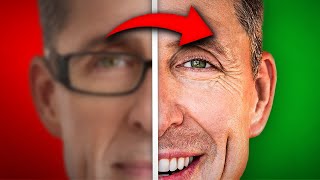
Dave Asprey shares how he stopped wearing glasses in his 50s using five natural methods: eye exercises, dietary changes, light therapy, environmental detox, and lifestyle adjustments. No surgery involved.
Chapters
In my early 20s, my vision deteriorated till I was about 20 80, and I had astigmatism that was getting worse each year. To be honest, I could barely see the details of my mom's face when she was standing right in front of me. So I did what I thought was best. I went and got Lasik when I was 27 years old. It worked for a few years, and then my vision declined again, as it usually does. And I fixed my vision without surgery, without doing another Lasik. In fact, I did it through training my eyes and my brain. Unfortunately, it took about 10 years of research and experimentation, working with different experts. But I'm going to give you the basics in about 10 minutes so you can restore your vision and see clearly no matter how long you decide to live. The idea that your vision will inevitably decline with age. Basically a lie. And it's perpetuated by industries that make money from you needing glasses and having eyes that don't work very well. It's not that there's an evil overlord deciding that that's how it's going to be. It's what happens when you build a system that's designed to give your eyes things that make them progressively weaker. And that mindset that it's inevitable. It keeps you dependent on glasses and surgeries instead of addressing the root cause of poor vision. And when you shift your perspective, literally, you open up the possibility to naturally improve your eyes. You can put on more muscles no matter where you are in life. Why can't you change the muscles in your eyes? Well, you can. Here's one technique you can do right now. Grab a pencil or a pen. It doesn't have to be a fancy pen. I just have one. Now. You hold it at arm's length and you focus on the tip. Once you've got it in focus, you slowly bring it close to your nose while keeping your focus on the tip. Don't let it get blurry as you move it. See how close you can get to your nose before it becomes blurry. Once it gets blurry, slowly move it back out to arm's length and you keep the tip in focus the whole time. This is called a pencil push up, and it improves your convergence and your eye coordination. And if you want to recover from your pencil workout, you can use an ancient technique called palming. Now, recover from your workout. If you do this 10 or 20 times, you do it when you're stopped at a stoplight. You can do it when you're bored, probably not in a meeting with your Boss, because you'll look weird. You just do it. And after a while, you're going to feel your eyes get tired. So here's what you do. You rub your hands together like this until they're warm. And then you gently cup your palms over your closed eyes like this. You don't want to press on your eyes. You're cupping your eyes and you breathe deeply. The breath is more important than you might think because you're teaching your body to be relaxed. Even though your eyes experience some stress, it'll relax all the muscles in your eyes and they really don't get a rest. When you're awake and you're working on screens all day. I mean, you're probably doing this a hundred times a day, looking at your phone, maybe looking at your computer right here. But you don't often look out here and you don't often carefully move in and out. When I started focusing on eye relaxation and recovery techniques like palming and cupping, my eye strain went down dramatically within days. And your eyes are an extension of your brain. If your eyes are tired, your brain is tired. And having visual stress will make it hard for you to pay attention in meetings and for you to just be focused. And research actually supports these methods as effective ways to reset your eyes natural state of focus. And those techniques calm your nervous system as long as you breathe with them. And they reduce that chronic tension caused by extra screen time. For bonus points, you can do it outside. If you do it outside, you're getting the benefits of natural sunlight, which in studies reduces your chances of needing glasses. But you can also go from the pencil all the way in. Go back to the pencil and then look at the tree and then look at the mountain and look as far away as you can anytime. You can change your focus in multiple steps from far away to close in. You're basically doing training for your eyes now. Everything that I'm sharing with you is backed by science. And it worked for me and it's worked for so many other people who've restored their vision. Maybe you've tried some other weird stuff to restore your vision. I found that the best resource here is@screenfit.com and you can use Code Dave to save some money on it. It's a collection of all the different eye exercises you can use to not need readers or to not need glasses to see further away. And it's backed by a top vision therapist. In fact, it's pretty profound what that can do. And if you tried other weird stuff, maybe eye drops, maybe supplements Tell me about it in the comments below because maybe other people can learn from that. It turns out too that what you eat is either nourishing your vision or maybe it's destroying your vision. Your diet plays such a big role in how your eyes work and most people eat in ways that damage their vision and they don't even know it. And that's because things like highly processed foods, artificial colorings and sugar create inflammation or other effects of aging that affect blood flow to your eyes or even a process called glycation that makes the lenses yellow over time. And over time, that lack of nutrients, lack of blood flow, depletes your body's ability to keep the critical eye structures working. I focus on anti inflammatory foods like high quality animal foods, grass fed beef, especially wild caught fish, sockeye salmon, brightly colored low toxin veggies, and low sugar options. There are lots of studies that show omega 3 fatty acids and foods rich in lutein can improve retinal health. I also take supplements like astaxanthin and low dose vitamin C to support my eyes. And simple shifts in your grocery list can lead to a noticeable improvement in a few weeks if you're consistent. So think of your meals or your supplements as fuel for your eyes. And your retina needs those high quality nutrients so it can function well. It turns out there's different types of light that affect your eyes because light is also a nutrient for our cells. So good light heals your eyes and bad light actually wrecks the macula in your eye. In modern life, well, you're probably looking at a screen, right? It forces you into environments filled with junk light. And light therapy is a way to restore your eye health. And there are plenty of studies that support this now, particularly red light. And we'll jump light from screens in. It disrupts melatonin production. You've probably heard that. But what you may not know is that blue light underneath 490 nanometers, the lower part of the blue spectrum that gets closer to ultraviolet. It can damage the delicate cells in your retina when you're overexposed, especially without the more nourishing red frequencies. So that constant exposure to harsh blue indoor light contributes to short term strain and long term degeneration. I started using red light therapy in the mornings and in the evenings, and I make sure to get some time outdoors in natural sunlight, which studies show improves your vision. And if you're wearing glasses or you're behind a window, it is not natural sunlight. Both sunlight and red light therapy can boost mitochondrial function in your eyes. And they can reduce oxidative stress. And your eyes are full of mitochondria. Natural sunlight also helps to restore your circadian rhythm, which affects your eye health, your aging, and your cognitive function and your testosterone levels and all the other good stuff. So even a few minutes of intentional light exposure to natural light or to therapeutic red light can make a big difference. And remember, not all light is bad. But knowing how to harness the right kind of light can really be a game changer for your eyes. Some people will tell you that you should use blue blocking or amber glasses at night, and that that's going to make a difference for you. Sadly, it's not going to work. It doesn't work because just blocking blue light at night, it'll help to support melatonin. But there are other colors of light that also affect your eyes and affect your sleep. So blue blockers during the day, they're not going to work because you need some blue light to wake up. You just don't need the toxic blue. And at night, you need far more than just blocking blue light. That's why I'm wearing truedark glasses. They only block the toxic bad blue, and they allow the good blue to come through so you still wake up and you have focus during the day. So blue blockers, too much during the day, not enough at night. They just don't work. But blocking toxic blue works. And blocking the other three colors of light at night will give you such better, more restful eyes and more restful sleep. So light is a healing tool, and if you use it wisely, it's just part of your healing strategy or just your high performance strategy. So turn the lights down at night, get less artificial light, and if you're under bright artificial light, block the bad stuff. In strength training, it's not just for your muscles, it's for your eyes. And a lot of us don't realize your eyes have muscles and you can train them for better performance over time. If you don't train your eyes the same way you would go to the gym, they lose their flexibility. And that's why a lot of people get that blurry vision or have a hard time focusing. When you do intentional exercises to retrain those muscles well, they can work efficiently again. And I first learned about this with something years ago called the Bates method, which includes exercises like shifting focus between near and far. In fact, I like doing them guided by the screen fit software because it tells me all the things to do in the right order. Use Code Dave. Now, that method has anecdotal support for reducing dependence on glasses over time. But I have worked for months with therapists based on the Bates method and had incredible results. And I recently did a whole podcast about how that works. The Bates Method also teaches you to consciously relax your eyes instead of straining them. If you're not used to being aware of the muscles in your eyes, they could be straining right now and you won't even know it because they always do that. So you can learn to consciously relax them and that can change the shape of the lens. Even so, if you do these exercises regularly, it'll help your eyes regain their natural strength and adaptability. It makes a big difference, not just for vision, but for how tired you are at the end of the day. Because your eyes, they also thrive on movement. And if you give them a workout, they will stay sharp. And think of this like physical therapy for your vision or maybe like functional movement. You might have gone to the gym and your trainer tells you to do a squat this way. Well, whoever told you how to do a squat with your eyes? Well, there's a way, and it's a low effort habit with high impact results. I'm a big fan of natural methods that improve your eyesight and everything else in your physical and mental performance. But to be honest, I don't care if it's natural. I care about whether it works and whether it has way more benefit than cost. And these eye exercises don't take much time and they make a big difference. And wearing glasses all the time teaches your eyes to become weaker and weaker and weaker. But if you do exercises instead, they can become stronger and stronger. And people who use these exercises, or people use the Screen Fit software, they can over time reduce their need for readers or just get rid of them. Or they can reduce their need for glasses to let them see far away. And I am so grateful that my eyes work, even though they didn't used to work. And it's because I learned how to do this. And I'm really grateful for the people who have spent so much time figuring out how eyes work. I spent the last 20 years of my life to discover everything about how to live longer and how to be more conscious, how to be more happy. Started the biohacking movement to help teach it. So subscribe below and I'll share all of it with you. I don't want you to go through all the crap that I went through in my teens and in my 20s as a 300 pound guy with glasses. Body odor, arthritis, brain fog, all the bad stuff. None of which was necessary. Part of the problem is that toxins in your environment, they're silently eroding your vision and the air you breathe. The products you use, even allergens around you, well, they're constant threats to your eyesight. Airborne pollutants reduce oxygen that goes to your eyes, and chemical irritants inflame the tissues in your eyes. Even mild environmental triggers can accumulate over time, and then you get noticeable vision problems. In fact, environmental toxins are such a problem that if you have mold in your environment, you'll be able to measure a change in your vision. On a clinical test. It turns out that mold has neurotoxins, and they reduce your ability to see fine changes in color and grayscale. You won't notice it unless you do a test, but it is real. So I detox my environment. I use HEPA filters, I have chemical free cleaning products, I don't have any artificial fragrances in my home, and I get rid of all the hidden allergens I can find. Having a clean environment in your house helps you to cope with a not clean environment out in the world. And that drastically reduces irritation and you're just less tired. Of course, I'm going to drink filtered water, not tap water, full of microplastics and all sorts of other toxins. You don't want heavy metals. They're bad for your vision and everything else in your body. So these small environmental changes, they're really like habit changes, can significantly lighten the toxic load on your entire body, including your eyes. Since your eyes are so sensitive, they oftentimes show the effects of toxins before you feel it in your brain or somewhere else. Your surroundings matter as much as your habits. If you clean them up, even just partially, your eyes will thank you and so will your brain. So cleaner environment, less junk light, less junk food, less junk air, less junk water is the foundation for eyes that work better, a brain that works better, even hormones that work better. It all goes together. And that means that having healthy eyes, even if you are with me on the path to live to at least 180, I plan to be 180 and still seeing without glasses, so you don't have to put up with doctors telling you it's just going to get worse as you age. It's like, dude, I'm planning not to age. Can you help me? And you don't need to worry about surgery. You can enjoy seeing clearly without glasses. It will take some work, but it's less work than having to buy glasses for the rest of your life. If you're ready to maybe get rid of your glasses or just not need them, well, your eyes can be healthy for decades. All the exercises that I just taught you can just do them. But if you'd like all of the other things you can do in a clinically validated program that works in a few weeks, check out Screen Fit. It is the best app I've found. It's screenfit.com and they'll give you a discount using Code Dave.










