How I Got Ripped In My 50s (By Drinking THIS)
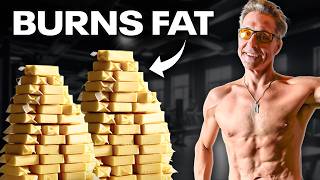
A man in his 50s lost over 100 pounds and got lean by drinking butter coffee, doing intermittent fasting, and eating high-fat foods. He argues saturated fat isn't the enemy and that diet quality matters far more than exercise for losing weight.
Chapters
My lab tests think I'm in my 30s. The calendar thinks I'm 50. But I got abs in my 40s by putting butter in my coffee every morning. In fact, drinking butter coffee was part of my journey to lose over a hundred pounds of body fat. I'm about 4.8% body fat now, and I'm never hungry. It got so popular that even athletes and Hollywood celebrities started putting butter in their coffee. And you're probably thinking, wait, butter weight loss, that's got to be a joke, right? Well, as a guy who used to be fat, I thought the same way. I was on low fat diets and I could never lose weight. And over the past two decades of starting the whole biohacking movement, I realized most of what we thought we knew about health and weight loss was totally wrong. Let's go back to 2004, where it all started. I'm a young entrepreneur in Silicon Valley. I've made and lost millions of dollars, and life is pretty good, except for one problem. I've weighed up to 300 pounds and I keep gaining 10 pounds, losing 20, gaining 50, losing 30, and I'm all over the place. And I walked in my doctor's office and he sits me down, he takes a deep breath, looks in my eyes and says, dave, your lab tests say you're at high risk for heart attack and I'm not yet 30 years old. He said my blood was thick like sludge and that I could have a blood clot and drop dead at any moment. So for the next 18 months, I'm on a low calorie diet, low fat diet, and working out for an hour and a half, six times a week without fail. Now, you'd think that I would lose all that fat. I got stronger, but the fat never moved. I still had a 46 inch waist. After 18 months, 702 hours of working out in the gym, no weight loss, half weights, half cardio. Then I took a trip that changed everything. I'm at 18,300ft elevation in the Tibetan mountains, sitting in a guest house, and it is 10 degrees below zero. I am so cold and so tired and there's no air to breathe. And a little Tibetan woman about half my height hands me a cup of yak butter tea. Now, it wasn't the most delicious thing I've ever had, but five minutes after I drank it, my brain lit up in a way that I couldn't even explain. It didn't make any sense. You're supposed to feel like you're dying at high altitude, but I felt better than I had in any time I could remember. So I came back to Silicon Valley. I recreated the recipe. I tried 25 kinds of tea. It didn't work. It tasted bad. And I found out it had to be the right butter. And I found that coffee worked even better and that some coffee caused jitters and crankiness and other coffee worked well and that mold in coffee was the factor. And since then, I've started each and every day with about two teaspoons of butter in my coffee, sometimes more. And I have learned so much about the things we thought about health that just don't work. And that led me on a journey to write multiple New York Times best selling books that have helped people lose more than a million pounds around the globe. And here's nine myths that were keeping me and, well, way more than half the US right now. Fat and sick. Here's myth number one. Saturated fats are bad for you. No, they're not. I lost over 100 pounds by eating way more saturated fat than what the government says is healthy. I don't think anyone trusts the government for health advice anymore, but more fat, not less. Avoiding the healthy seed oils that actually cause inflammation transformed my biology. And it wasn't just me. Millions of people have done this and it works. I didn't just eat saturated fat and butter. I drank butter in my coffee and I feel better than ever. This whole idea that saturated fats are bad for your heart, it's based on outdated, flat out wrong research that was paid for by the companies bringing you cheaper shortening and margarine and crab oils. They're trying to sell you stuff that's low cost even though it's bad for you and make you think it's good for you. So here's the deal. Saturated fats from natural, healthy sources like grass fed butter, coconut oil, and even animal fats from grass fed animals. They are profoundly good for you. They are fuel for your brain, and they give you that steady, clean energy that keeps your mind sharp and focused. And guess what? Saturated fats don't just make you feel more full. They help you build and regulate your hormones. Everything from your mood and your metabolism depends on fats, including saturated fats. And when your hormones are dialed in, you feel like you're firing on all cylinders, both your body and your mind. And the weird thing is that eating those fats actually helps you burn fat. You can flip your body into fat burning mode so you don't have to rely on carbs for energy. And no more carb Crashes or slumps that leave you dragging all day. The old myth about saturated fats clogging your arteries, it's total nonsense, especially when you're eating the good stuff from grass fed animals. Myth number two is that low fat diets are healthy. And let's be real, low fat diets are one of the biggest scams in the health world. And I used to be just like you. I would avoid fats like they were poison cuz I thought they would clogged my arteries. And even worse, I thought that fat made you fat. And I was totally wrong. And so is the entire low fat movement. Yes, a few people can lose weight on a extremely low fat, high carbohydrate diet. Problem is they're in craving mode all the time and they always bounce back because they lose control of their cravings. I know, it's happened to me multiple times. And life is miserable and you're hormones don't work and your thyroid doesn't work and it's just awful. So cutting fat, at least cutting healthy fat is one of the worst things you can do for your body. Because your brain, it's made out of fat. Your hormones, they're made out of fat. So when you ditch the healthy fat, so they're the building block for the membranes in your cells, you're telling your body to run on empty and there's probably a famine. When I started putting things like grass fed butter and MCT oil in my coffee, it felt like someone flipped a switch. My energy went through the roof, my brain fog disappeared and I lost weight without ever being hungry. Yeah, you heard that right. Eating fat helped me lose fat. So the low fat craze, it's outdated and it makes people sicker. So what you really want to avoid are the bad guys, trans fats, which are thankfully starting to move out of our food system. Well, actually they're not. They're just hidden on labels now and processed vegetable oils, which are just bad for you and shouldn't be in your diet. They wreck your health. And grass fed butter can radically make you feel better, even in a very short period of time. So don't be afraid of natural fats that humans have ate since the beginning of time and try eating them and just watch what happens first to your mind and then to your body. You'll thank me later. Myth number three is that cutting calories is the key to losing weight. And for years I would think, how many calories are in this potato chip? How many calories are this? How much do I have to Walk it is complete BS because if you eat less and work out more, you just stress your body out and then your cortisol goes up. And turns out not all calories do the same thing. I went on low calories. I hit the gym religiously and excessively, and I still weighed 300 pounds after a year and a half of that. And, and what no one was talking about then is that the quality of the calories you eat matters way more than the quantity. I don't count calories at all, and I'm way under 10% body fat. It's not just about how much food you put in your mouth. It's about what you're eating and how it controls three things. Your hormones, your metabolism, and your inflammation. When I started focusing on high quality foods that were free of toxins and full of nutrients, especially the good stuff I put inside my coffee, my body finally started to get its act together because it finally had energy and micronutrients and a working metabolism so you don't have to starve yourself to lose weight. Suddenly my metabolism cranked up and I felt like a totally different person. Because your brain uses your metabolism. So the low calories in, calories out thing, it's a lie, because it doesn't consider how foods affect your cravings, your hormones, or your energy levels. Who wants to try to lose weight by restricting calories and working out on a treadmill all day long? If you're just going to spend all of your waking hours dreaming about food the way I used to, it just doesn't work, especially if you want to live your life counting calories. It's like trying to fix a car with a hammer. It's just not the right tool to be using in the first place. Focusing on the quality of my food changed everything for me. Myth number four is that eating a lot of small meals is better for your metabolism. And I used to be that guy who believed that I had to eat six small meals a day so that I wouldn't go into starvation mode and I would have a metabolism like a furnace that doesn't work either. Constantly grazing keeps your body from burning fat efficiently. And that's why I wrote one of the first major books on intermittent fasting, which was called the Bulletproof Diet. And I've written a second book on fasting called Fast this Way. And I've gone deep in the research with the world's top experts. And the reality is that sometimes having an empty stomach is really good for your metabolism. It can help your body flip a switch from burning sugar to burning fat. And the best part of intermittent fasting is that, yeah, you can lose some weight, but it makes your insulin sensitivity better, and it triggers something called autophagy, which is your body's built in clean cleaning crew that gets rid of damaged cells to make you look younger. So now, instead of snacking like a rabbit and eating a bunch of processed vegan nonsense all day, I just drink butter coffee. I do it in the morning, and I have one or sometimes two meals the rest of the day. And it turns out eating all the time, even those little snacks, it just spikes your insulin and it can make you gain weight over time. Since I switched to intermittent fasting, I've not had to think about my weight. My focus is so good, and my energy is not just steady, it's epic all day. So, yeah, forget about the six times a day advice for eating. Intermittent fasting blows it out of the water. Myth number five is that vegetables are good for you, so you should eat all of them. Well, some vegetables are good for you, but we've been told that our whole lives. Turns out a lot of vegetables are not as saintly as you might think. A lot of them are packed with anti nutrients like lectins, phytates, and oxalates. You probably haven't heard of these things because these are little plant toxins that are there to stop animals from eating too many plants. Because plants can't run away from us. They just make things that irritate your gut, cause inflammation, and block you from absorbing the minerals that your body's craving. So, yeah, I'm talking about whole grains, legumes, and even a lot of the leafy greens that you're paying a lot of money for that actually shred your gut. When I finally ditched high lectin, high phytate, high oxalate plants, my digestion did a 180. My gut never has problems the way it used to, and my energy went up even more. It was like my body just stopped hurting. It was like it was done fighting a battle I didn't even know it was fighting. And yes, I've been a raw vegan. I've taken all of the plants. So some plants are good for you, some are bad for you. How do you know? You avoid the ones that mess with your gut. And you stick to veggies that actually help, like leafy greens, say arugula that are low in anti nutrients. You compare that to spinach or kale, which are high in anti nutrients. So you like leafy greens? Lettuce and arugula. Don't eat the bad ones. Just because something is a veggie doesn't mean it's going to be good for you. It means you could eat it during a famine to survive, but it doesn't mean it's going to make you live longer or feel better. Sometimes the bad guys are hiding in plain sight. Not all veggies or grains or legumes or nuts are good for you. And myth number six is that whole grains are healthy. Since about 1970, we've been fed this lie that whole grains are health food, and they're not. In reality, the outside of the grain is the part that has the most anti nutrients, the most phytates that steal minerals from your bones, and also things like gluten. And gluten is the ringleader of all that chaos because it causes digestive problems and sparks chronic inflammation in your system, even if you don't have celiac disease. When I finally kicked whole grains out of my diet, it's like I became a new man. And kicking grains entirely out of my diet was another level. And if you think about this, the peasants would eat whole grains and brown rice, and the people who could afford to remove the toxins from the outside, which got rid of some of the energy and just eat the inside that had lower toxins, were the wealthier people. It's not that the peasants wanted to eat dark bread. It's that they were forced to eat dark bread because there wasn't enough food. You have enough food. There is no meaningful reason to eat the outside of grains, including brown rice, including whole wheat. If you're going to eat that stuff, eat the inside and you radically reduce the toxin load. And let's face it, grains are not where you get your vitamins. That comes from animals. Myth number seven is that fruit is always healthy. It's almost like fruits and veg is one word, but they're entirely different. And fruit by itself raises your blood sugar amazingly. And you can see where I'm going with this. Not all fruit is innocent, good for losing weight. In fact, the ones that are high in fructose, like bananas and apples, can actually stall your fat loss, and they can wreak havoc on your insulin levels. And fructose, which is what's in fruit, does not always cause a blood sugar spike. But it is sneaky, because when you eat high levels of fructose, even in fruit, it leads to fatty liver insulin resistance and something called leptin resistance, which makes your body cling to fat like a dog. Sticks to a bone. That's what was happening to me when I weigh 300 pounds. When I cut back on the sweeter fruits, my fat loss sped up. I got way better at managing my energy throughout the day. I'm not telling you that you shouldn't eat fruit. I'm telling you to be smart about which ones you eat and how much. Blueberries are really good, strawberries are really good. And what you're going to find is by minimizing fruit and using it as a dessert or a treat instead of a basic food grip, you can feel completely, completely different. So fruit isn't the golden child of health, but it's not bad for either. Just understand, fruit is dessert. Myth number eight is that you need to eat breakfast right away. The whole breakfast is the most important meal of the day thing, well, it turns out that was brought to you by the people who brought you corn flakes. They wanted to get you ready to go to the factory job and not waste time eating at the factory. But humans usually don't eat breakfast right away in the morning. We never have, except for the fact that, well, it was convenient for our corporate overlords so you don't have to eat as soon as you roll out of bed. After I experimented with putting butter in my coffee and fasting in the morning, I realized that skipping breakfast was actually a much healthier option. You eat a later breakfast or an earlier lunch and an earlier dinner, and suddenly you're intermittent fasting. And you never think about food. That MCT oil and grass fed butter in the morning keeps you full and focused for hours. And the best part, your body stays in fat burning mode. It stays in fasting mode even if you have some calories and butter and MCT oil in your coffee. This has to do with basic biochemistry principles, but those things don't raise your insulin levels. So no more energy crashes, no mid morning snack cravings. In fact, you wouldn't think about eating if you put butter in your coffee and you lose fat more efficiently. And myth number nine is my favorite. It said exercise is the best way to lose weight. For the longest time, I thought exercise was the holy grail. If I could just hit the gym hard enough, if I could just try harder, I would finally melt Those pounds off. 45 minutes of weights, 45 minutes of cardio, six days a week did not work. So exercise is good for you, but it doesn't help you lose weight. What helps you lose weight is what's on your plate and more importantly, what's not on your plate. When I shifted my focus to eating real foods, especially healthy saturated fats, especially animal protein, everything changed. I got better results from dialing in my diet than I ever did from all those brutal workouts. And you're not going to believe this, but my current workout regime is 20 minutes per week, not per day, and I'm doing all right. Everything you've seen in this video allows your body to burn fat like a machine without having to grind it out in the gym every day. Sure, exercise matters. Go for a walk. But diet is what really drives fat loss. Exercise is just the frosting on top. In fact, going too hard with exercise can actually backfire by spiking your cortisol levels, and that can make it impossible to lose weight. You ever seen a gym bro with a big pot belly? That's from overtraining under sleeping and not having the right nutrients. Get your nutrients right, you'll be lean. Go to the gym. You'll have more muscle. When I got my nutrition on point, when I realized how important good fats were for my cell membranes and for my testosterone, I realized I didn't have to destroy myself in the gym to get results. It all came down to what did I put in my body. And that's what made the biggest difference.










