How I Took 9 Years off My Age with Gene Therapy Pioneer Dr. Adeel Khan | 1098 | Dave Asprey
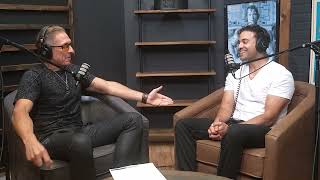
Dave Asprey talks with Dr. Adeel Khan about using gene therapy to reverse aging. Khan explains plasmid technology and stem cell treatments, and Asprey describes how these approaches helped him reduce his biological age by nine years.
Chapters
You're listening to the Human Upgrade with Dave Asprey. Formerly. You're listening to the Human Upgrade with Dave Asprey. This episode is live in Toronto with Dr. Adil Khan, who I would say is the Elon Musk of gene and cell therapies. And, well, I just got gene therapy for the first time in my life. This is a momentous occasion for me because I have been dreaming about this in the context of longevity for 20 years. And I wrote about it in Superhuman, my big book on longevity, saying, we're going to be able to do things to stem cells to reverse their age. Here's what's possible only in Japan. And here it is a couple years later. Well, you can do that. And the gene therapy that I got, we're going to talk about, but it was just a little shot. And over the next three to six months, I should take nine years or maybe seven, depending off of my biological age, my intrinsic age, which is an enormous thing, for one shot. And you're going to learn some things about stem cells the way we used to do them, especially umbilical cells that you might not like or might surprise you. So let's dig in. Adeel, thanks for hosting me here in Toronto.
Yeah, yeah. No, it's going to be hard to live up to that introduction, but I'll try my best.
And tell me about the gym where we're filming this.
Yeah. This is pure muscle. It's the Mecca of the north. It's where Drake has come to work out here. Anyone who's an influencer or celebrity comes to work out here. The reason is not just because, I mean, the bodybuilding scene is great here, but it's actually because the machines that they have are not available anywhere else in the world. Dorian Hamilton is probably the single best guy at the building a gym. He built one for Chris Bumstead, who's the world's biggest fitness influencer. He has like 19 million followers, but he has his own gym now, and Dorian built that for him. So Dorian is a master of selecting, like, equipment. So you can work around injuries, you can work around chronic pain, and you can hit muscles and angles that you could never hit with just freeways.
That is legit. In fact, maybe we can go hit the gym after this. I haven't lifted in a long time. I'm always using.
We can get Big Mike to train you.
Oh, nice.
He's the guy with the skull tattoo.
Oh, my God. What could go wrong? I do all AI assisted stuff, so most of my muscle comes from Getting a signal and different. A lot of time in the gym when I was working on losing that 100 pounds, and I didn't get great results at the time because I was over training, and because I had mitochondrial blockades from toxins, and I had tons of estrogen and all that stuff. Now I'm lean, relatively muscular, and I. I appreciate going to the gym, and I don't do it that often because I have the tech that just puts my muscles on for me. But I also don't. You know, I'm not a powerlifter like you.
No, I think strength is important. I don't think it's the most important when it comes to longevity, because there are other ways to develop that that are more efficient, like you're doing.
Oh, man, I'm so excited about the gene therapy thing. So many places we can go. But I called you the Elon Musk of cell therapy. And we just. We just sat down last night at dinner, and we were introduced years ago by Andrew Masanto, a mutual friend and a friend of mine from the crypto business. So I was like, okay, who is this guy? And I dug in, I met your CEO, and I realized you're doing the stuff that no one's willing to do in longevity circles. A lot of us are still saying, well, how do I raise my NAD levels? Which is. NR has been on the market for 15 years. I've been on it, and that's kind of cutting edge for a lot of us, and I'm a fan of it, but there's so much more we can do. How did you. I mean, you're both. How old are you?
36 now?
36. All right, so you're a relatively young guy. You're trained as a medical doctor, and you're doing all this crazy stuff. How did you get here?
Yeah, I mean, I went to med school because, like everyone else, I was just like, I want to help people, which was a basic desire. But then when you get into med school, you kind of get jaded a bit because you realize that they're just treating the symptoms. They're not treating the root cause. Why I had that perspective, probably because I was a gym rat before. I was a personal trainer before I went into medicine. And I love bodybuilding. I've been following bodybuilding since I was 18. I remember watching Ronnie Coleman, who's, like, the world best bodybuilder of all time, and I remember watching him just eat ridiculous amounts of eggs. His training, all the supplements. Obviously he took steroids, too, but just that lifestyle of like taking care of your body, that, that to me always resonate with me because to me, your body is the most important thing. And if you don't take care of it, it's. And most people don't. It's what's called a deficiency need, like health in general, which means people don't take care of it until they lose it. And I was determined. I'm like, that's not going to happen to me. Especially because, you know, a lot of people in my family have diabetes, heart disease. So when we're learning in medicine, we're just learning about pathophysiology, but we learn about some of the root causes, but then we only treat the symptoms. And that always baffled me. And that's why I was telling you last night too. I read your book in medical school and I'm probably the only med student in my class who read your book. You know what I mean?
Thanks for being open minded.
Yeah. When I read Mark Hyman's book, I read dozens of other books. I read dozens, hundreds of books in med school outside of just allopathic medicine. And so integrative functional medicine is naturally where I got inclined. Andrew Weil was a huge influence for me.
He's been on the show too. Great human being.
Yeah. Oh yeah, he's, he's amazing. Like plant based medicine, breathing. He talks about so much stuff that is becoming more popular now, but he's been talking about that stuff for like decades. And, and then that just led me down this whole rabbit hole of being like, wait a minute, we're not actually doing our patients the justice that they deserve. And it naturally led me to, okay, lifestyle is great. Like, I love it, not against it at all. Like, you know, sleep, exercise, stress, nutrition and optimization of supplements, but what else is there? And I've always been kind of like a tech geek, I guess. And so I kind of just got super fascinated about this whole field of regenerative medicine, which is essentially the concept of being able to repair or restore your tissue or even your whole body back to a previous state. So can we take. The question is, can we take something that's disease, whether it's your body, your heart, whatever, and take it back in time, essentially, can we reverse it? And that was the promise of regenerative medicine. And it took about, I'd say, good 30 years of research to actually get to clinical translation. Because Dr. Arnold Kaplan, he coined the term mesenchymal stem cells, or stromal cells, more appropriately. But he coined that term in 1992. And so he came up with that. So we'd known about stem cells for a while, but no one could figure out exactly how they work or exactly how to get them to do what we want. And so the cell delivery mechanism is what was the biggest issue and the hurdle to clinical translation. And now we've been able to circumvent that with. With the new technology, which we'll go into. But even with gene therapy, that was a big issue. It was a delivery mechanism. It's like, can we control the delivery of the signal that we're trying to send? And so I just got obsessed with that stuff. And for me, it was always about trying to make a big difference, not about trying to do whatever the hottest trend is. I was into this stuff since, I mean, I guess six years, since when I finished school, I've been just obsessed with this stuff.
If you're already going, what the heck, go to daveasprey.com genetherapy and I'll have all the links and all the stuff you need to know about this, because this is a quantum leap for longevity, something I've worked on for 25 years. But what I heard from everything you said is that the AMA and medical schools need to do a better job of screening out healthy students who want to study medicine, because you might. Who knows what you might do?
Exactly. We're rebels.
Something else happened as well. Most doctors get out of med school horribly in debt, and then they get a job at a hospital for $80,000 a year, which isn't enough to pay off their loans ever. And they realize they get three minutes per patient and they just hate their life. And I've talked to so many of them who finally just said, I'm done. I'd rather run a small practice even if I make less money so that I can really help people. So you didn't follow that path. You want to talk about why you could start all this stuff?
Yeah. No, to me, the system was broken. Like I always saw, the system was broken. The part where it enlightened me, there's a few moments in my life. One was in medical school when we had lectures on nutrition. And not kidding you, we only had two lectures on nutrition. And one of them was the Canada Food Guide, which is. And this was. And this was backed up by an endocrinology. So there was two. There's one was a nutritionist or dietitian, registered dietitian, and the other was an endocrinologist. And basically their lectures were essentially like, you got to get Your food groups in. You got to have your wheat, you got to have your dairy. And essentially they told us, this is how you promote food to children. And they wanted us to go to schools to teach children about the Canada Food Guide, because apparently that's the gold standard. And I was just like, this is like, crazy, because I was educated. I came from fitness, and I read boxes, bodybuilding books, and I read your books. I read Poliquin. I read so many other books. And so I was educated and I was like, this is wrong. And I, I confronted them and they, they, they're like, they're like, you don't know what you're talking about. I'm like, okay. And I was, I was a med student back then, so obviously I'm not going to question my.
That's called appeal to authority instead of logical thinking.
Right? Yeah, exactly. And so, so that's when they started wa. I started waking up to the idea. I'm like, wait a minute, like, the people who are teaching us, maybe they don't actually know what's best in medicine. And then once you start diving into it a little bit, you realize that medicine's innovating at a pace that's never happened in history before. So it took from 1900 to 1950, 50 years. The medical literature database doubled in that time. Okay, so 50 years. And then it gradually became less and less. And now guess how much it takes for the medical literature to double.
About three days.
So that far off, 73 days.
Close.
And so that is insane. Imagine less than three months. The amount of medical knowledge we have is doubling. How can anyone possibly keep up with that? And so it becomes a thing. It always becomes of, like, who has the most knowledge, and how do you keep up with that knowledge, information, and how do you keep up with the gaps between clinical translation and basic science? And there's huge gaps now, and the gaps are just widening every year. And so. So I think it's great that a lot of doctors are raising awareness about exercise and all this other stuff for prevention, but the reality is this stuff about, like, cell and gene therapy has been there for, like, over a decade. And it's not, it's not necessarily new. It's just that I'm just trying to bring it to the forefront and combining the both, because in my view, we're kind of in the new era, which is, we're calling, you know, medicine 4.0, which is basically cell and gene therapy and tissue engineering combined to bring us the next generation of therapeutics.
All right? The definition of biohacking is change the environment around you and inside of you to have full control of your own biology. So these are absolutely new laser focused techniques that allow you to change what your body does. And I want to say straight up, it's reversible. So if I don't like what happens, you can take a substance that turns off the genes. So this isn't a permanent change. It's only there as long as you want it. And that's, I think, really important. And if I got your gene therapy and then I chose to have more kids, which I am not going to do, but if I did, this has nothing to do with the germline.
No. Exactly. And that's the beautiful part about this plasmid gene therapy. It's very different from traditional viral vectors because it's just a circular strand of DNA and it's just a delivery system for a peptide to be secreted in your body for up to one and a half to two years. And like you said, it's basically a precise signal. And that's, I think, the biggest thing for people to understand. There's a field called spatial transcriptomics. It's basically single cell resolution imaging. Instead of guessing that, hey, this is how a cell works, this is how maybe we think this is how it works, we actually know how it works now, so there's no more guessing. I think when we were trained in medical school, there was this conception that molecular mechanisms aren't that important. Maybe you can make that argument 20 years ago because, yeah, it's true, we didn't understand that much about molecular, we didn't have the science.
Right.
So it was, it made sense that we had to just treat the symptoms because that's the only thing we could do. But there's no excuse for that anymore. We can understand to a cellular level what's going on in almost every chronic disease. So why can't we target that and reprogram the body to heal itself? We can and we will.
All right, let's, let's go into first gene therapy and then what you're doing in cell therapy. Because they're both really important for people to understand. It makes it hard to talk about it because it's such a, such a big thing. I'm still like, I can't believe I just got. About five years ago on the show, there was someone who's doing viral inserted therapies that were highly not regulated. And I was trying to arrange to do that. I even put together an interest list from people on the show but we just couldn't bring it together, pandemic and all that nonsense. So this is, though, not viral based. And there's been a couple episodes, if you go back through the thousand of them, where I talk with people who are trying to figure out how to do this, and then I talk to you and I'm like, oh, we're doing it. We've done our clinical trials and here's the results. So that's why I was confident enough to, to get the injection. Plus I can turn it off. So talk to me about in the realm of gene therapy, walk listeners through as if they're not longtime listeners or readers with what is a plasmid? What is plasmid? Gene therapy. And then we're gonna talk about this specific gene that I got changed.
Yeah, I think to understand the current gene therapy, you have to understand the history a little bit.
Okay.
So basically, gene therapy research, like it really started in the late 90s and it started with something called viral vectors. And there's one specifically adeno associated virus AAV vectors that got a lot of attention. The reason was because it's easy to manufacture, but it is still costly and there's still the risk theoretically of it translocating causing infections. And there was actually, there was actually a big case, I believe it was in the late 90s that he had a viral vector for, you know, one of the incurable conditions. He actually ended up dying from it.
Oh, wow.
So that set the gene therapy field back like literally a decade. So from like, you know, from early 2000 to the late 2000s, there's really little done. I think it's an argument one side, I see both sides. But I do think that, you know, similar to like the crypto revolution and a lot of things that take off really fast, you have, there's going to be risks with it and there's going to be understanding on both sides to say, hey, if we want innovation, we have to be able to take some risk.
I'm sorry, the government is not my mommy.
Yeah.
I'm a grown adult and that means any risk I choose to take is my risk. And anytime someone says they're doing something for my own safety, they're just an oppressor. Yeah, I'm sorry. My safety is my job as an adult. And if it's a child, then you say, okay, you can't do that because you don't know enough. So this kind of paternalistic view of humans, it doesn't work. And the reason it doesn't work is that in the US where many therapies are not available, you just go somewhere else.
Literally.
Hey, am I in Toronto? Oh, hey, what do you know?
And why did I work in Dubai for this whole winter? It was because I could do what I want there. And the government doesn't have the same, you know, affiliations with their pharmaceutical companies there because the government is the royal families and they don't care about the money.
It is. I, I'm going to Dubai again next month and I'm spending a lot of time there and same thing. The attitude towards innovation there is more like Silicon valley in the 90s. It is so good.
They approved psilocybin recently there, which is really. Yeah.
Last thing you'd ever think.
I know. So it can tell you how progressive they are because they want what's best for the people. But basically, so you know what happens a lot of times and people get scared. Right. And then. So essentially set back gene therapy for over a decade and then they picked it back up again. But no one could really figure out, like, how to scale gene therapy because viral vectors are so expensive to manufacture and there's still risk with them inherently. And so like you were saying, you're trying to get that viral vector. Right. A couple years ago, but it's not easy to get and it's also much, much more expensive. The scientists that I work with, Walter Patterson and Mac Davis, they're the inventors of this technology. They figured out a way to basically make something of E. Coli origin. So they started looking at mini circles. So mini circles are basic. Have been in mice research for, for over like a decade. But they were kind of asking themselves, why isn't anyone doing this in humans? So they just literally took what was already being done in mice when. And if you, if you think about someone like David Sinclair, a lot of what he talks about are animal studies. And yet he's very, he's getting a lot of, you know, notoriety and press.
Yeah, he's been on the show.
Yeah, yeah. And he, you know, but it's a lot of animal studies. Right. And so, but having human studies is just so much more powerful. And so they were like, why don't we just do this? Why don't we take the same thing that we understand works and follistatin is a very safe molecule. Why don't we try doing that in the delivery mechanism of the mini circles that have been around in animal studies for years? And they knew that because the mini circle is basically just a strand of DNA. And so it's a plasmid, which means it's of bacterial origin, but there's no live bacteria in there. So literally just think of a circular strand of DNA that goes into your body. And so that little area where we injected has that strand of DNA and it's going to secrete and send a signal for follow statin and every day at a low dose.
All right, so we're going to talk about what is follistatin in a minute here. But I want to define plasmids in a, in a way. I've written about these in, I think my second book. And the idea of a plasmid is that when bacteria are sitting around, they can use plasmids to exchange information. Yeah, I think of it like the X Men. They have trading cards like, hey, I'll trade you my ability to regrow my tissue for your ability to shapeshift. Okay, here's a plasmid. Here's a plasmid. And it's an instruction set to turn on a new ability. And this is why we have antibiotic resistance, by the way. So you give an antibiotic to a cow, those bacteria all become resistant and then they do the plasmid swap with other bacteria that infect us and suddenly those bacteria are now antibiotic resistant. This is why you shouldn't eat industrial beef. There's lots of reasons you shouldn't grass fed, local, organic and all that. So that's what a plasmid is. And since bacteria secrete these little circles. Right. And uses the swap abilities, you've added a new ability to my system and the ability is to make more follistatin. Tell me what follistatin is and why it matters for aging.
Yeah, it's the holy grail of anti aging research because it's basically the culmination of not just preserving muscle, but but also reducing systemic inflammation. So Follistat is a peptide. A lot of people know what peptides are. But just a quick refresher. A peptide is just a chain of amino acids. Protein sends a signal to your body. Insulin is a famous peptide. Right. Peptide hormone. But there's lots of. There's ozempic. There's so many peptides out there on the market that people like most people have heard of now. And so most people understand a peptide is just a signal to your body. So what's the signal that follow statin sending? It's actually pretty amazing how many different signals it has. And those signals are something called FOXO pathway, which is an anti inflammatory signaling pathway. And that's why it has these huge dramatic epigenetic alterations. Like you were saying, it's gonna reduce your intrinsic biological age by up to nine years. Why is that? It's because it's gonna reduce systemic inflammation, which is probably the biggest driver of aging. And then on top of that, bostatin has an antagonistic relationship with myostatin, which to me is probably as a gym junkie and a gym rat is probably the best thing ever. But something I dreamed about since I was a child is, was myostatin inhibitors. You know, when I was 18 years old, I remember looking at these guys, like these bodybuilders, like Ronnie Coleman has a myostatin deficiency, you know, and then those big Belgian Blue Jack cows. It's because they don't make myostatin. So obviously this isn't gonna take your myostatin levels to zero. You're not gonna be deficient. But it will lower them enough that it'll allow you to increase lean body mass and make it easier for you to put on muscle. And most importantly, I think for the average person, it's gonna prevent muscle loss as you get older because it's severely, severely anti catabolic. The biggest issue with intermittent fasting with all these weight loss drugs is that you're losing fat and muscle and people don't realize body recomposition versus just losing, just fat loss. And there's weight loss. Most people are just doing weight loss. They're not doing fat loss.
I just did a post about Ozempic. Like, look, it's a powerful anti aging peptide. If it doesn't make you feel like you have morning sickness like it does for me.
Yeah.
But I tried it for one week for a show I did on it. I don't need to lose any, any fat. But what's going on with people is they stop eating protein.
Yeah.
And so then of course they lose it. But if you could force yourself to eat enough protein when you're on Ozempic, you're not going to get that problem.
Or you just do the false statin.
Or you could just do false statin. In fact, you know, if you look at what they're charging for Ozempic on a, if you're going to take it for several years, it probably adds up to a single injection like this anyway. And right now this is an expensive therapy.
It is. But our vision for it, for the company is for this to be accessible to everyone one day. And we have a roadmap to do that. That's going to be partly driven by doing phase two and phase three trials. So we'll have more evidence. But also the phase two trial we're hoping to do in Japan because they have a huge aging population and sarcopenia is a huge problem there. So if we can prove to the government there that, hey, this will actually help save you costs, because it will, then, then maybe we can get insurance companies to even cover it one day.
Wow. I look at this as mobile phones and I've talked about this a lot in my books. I will go out and I will do any of the crazy millionaire biohacks that I can get my hands on, so I can talk about the mechanisms, I can talk about the relatively cheap version of this and even the free version to take advantage of a new understanding of biology. But anything that's expensive now will 20 years from now be commonplace. And the first mobile phones are $20aminute. They cost 40 grand. They took up the trunk of your car and only annoying millionaires had them. And then all of a sudden, now it's a dollar a month in Africa. So I think this is going to.
Happen with gene therapy 100%. It's going to democratize health for everyone. And the reason it'll do that is because this is cheap and scalable technology. And so Tony Robbins, I was just at his house a few days ago, and so he's going to be documenting his progress about this therapy too. So.
Nice.
That'll be good for, I think, more exposure. But the reason I bring him up is because he said the best. He's like, I'm happy to do this treatment even though it's expensive because I know I can afford it and one day it'll be affordable for everyone.
Yeah.
And so that's the right mindset, I think, is that. And it was just like it was like buying a Tesla 1013 years ago, like in 2010, 2011, who was buying them like they were not good cars. They were like, the tech wasn't great then. Yeah, it was. Didn't last very long. You had to charge a lot. There was lots of issues, lots of bugs. But there was people who were early adapters because they know it's for the greater good. So I think this is for the greater good. And you have to have that mindset of saying, hey, this is new technology, it's safe. Number one, we know that there's no adverse effects. And number two, it can have a huge benefit for society at a large. So the people who can afford it, if they can do it and be the early adopters like people like you. It influences other people to say, hey, I want this one day. Maybe not now, but maybe when it's $5,000, which hopefully eventually it will be.
Yeah, right now it's about five times that, right?
Yeah.
Okay. And those are not Canadian dollars, those are discounted.
Yeah, they're US dollars. So that's like 40,000 Canadian.
Speaking of Canada, one of the things you can get here that you can't get in the US is microdose nicotine, so.
Oh, really?
Yeah. So the FDA, this has been around for 20 years. It's actually the best form of nicotine for anti aging. I use nicotine because it reverses and prevents Alzheimer's disease at low doses. And we know about this since 1986. There's many studies out of Vanderbilt about this.
No one talks about like, oh man, we could all. Yeah, for sure.
Spray it under your tongue. All right, he did a double spray. Now he's going to be launching off the planet.
Here, I'll show Elon Musk. Okay. So basically a perfect example of that is intranasal insulin.
There you go.
Intranasal insulin has been shown to treat not only Alzheimer's dementia but but mild cognitive impairment. And I never learned anything about it in medical school and 99.9% of doctors have never heard about it because you can't patent it and because there's no patentable intranasal insulin that you can do as a pharmaceutical and package it and make a shitload of money off of it. It's such a shame though. It's such a disservice because it can increase white cortex matter, it can make you smarter. It can sort of just for like, let's say health optimization.
Do you use it?
I just started, yeah. But I'm doing it for. I've done it for my father in law who has mci and it's been amazing.
I love it that you know about this. Almost no one does. I've used intranasal insulin on occasion for anti aging and it's a really good cognitive enhancer. You use it, it kind of feels like nicotine, like it dials you in. But there are also studies that show that higher levels of insulin in the brain have some negative effects as well. So it's like insulin causes growth. So I don't know that we know the right dosage and timing to use it for longevity versus.
Yeah, I'm personally using it more clinically for people who have actual mci, like mild cognitive impairment or maybe A brain injury. Yeah, or brain injury or dementia. Because what's out there? What's the alternative? It's pharmaceuticals that don't even work. And they tell us they don't work and they have a huge list of side effects. So why not try something that's safe, number one, most importantly. Right. And number two, that is efficacious. And number three, has good molecular mechanisms and basic science to back it up. So you have all these real world evidence of cell and gene therapies around the world too, with patient registries and data that work. But because there isn't RCTs, people are like, oh, it must not work. It's baffling.
It's driving me crazy. The first laser I got that had profound biological effects was not approved for humans because none of them were. It was approved for racehorses. So I said, I'm a racehorse, I'll use it. And so if you look at what you can do, like if I had a brain injury, I would absolutely. If there was a gene therapy that would fix that, I would do it in a minute. But I would also look at stem cells. We're going to get into what you're doing with stem cells. I would do intranasal insulin and I would get in a hyperbaric chamber and I would use a laser on my brain through the skull. And you can radically transform someone's brain. And when you're done with that, then you retrain it with neurofeedback.
Exactly. You understand that better than 99% of.
Brain damage from toxic mold I had to fix.
But why do you understand that and a neurologist doesn't? That's what puzzles me. Why does an MD, PhD, neurologist who's gone to Harvard does not understand that, but you do. That's my question.
It's what happens. There's two answers to that. And Naveen Jain from viome, I was a friend and mentor and a partner in our mentorship group called Apollo Group. I spent a lot of time with him and he said, dave, I come from tech, like he's an old Microsoft guy. And he said, I can do what I'm doing with the gut bacteria and things like that because I'm not from the industry. So anytime you cross over and what you did is you crossed over from basically bodybuilding into medicine, and that allowed you to think about it differently. So it's always cross industry stuff that creates the most pollination.
Yeah, that's what Tai Lopez calls it, cross pollination.
Okay. I haven't talked to ty in a while. He's great. Actually, no, I was on a show recently, it was like 10 years between the two times.
I thought he coined that term. Did you coin that term cross pollination? He says that from different industries.
Maybe he did. I thought I made it up right now, but clearly I didn't.
But no, cross pollination is exactly how I think. It gives you that ability to have lateral thinking, which is take things from other industries. But medicine is a perfect example of that because if you only train in Western medicine and Canadian just so people, because most of your listeners are probably Americans. But Ontario medical schools are the equivalent to like Ivy League medical schools. There's only five medical schools in Ontario. And if you're from the Toronto region, to get into an Ontario school here, you have to have pretty much a perfect gpa, a perfect mcat. So you have to be like, it's basically going to Harvard or one of those med schools. So it's very, very hard to get in here. So if you get into a Canadian medical school and you're told you're the smartest cream of the crop, you're basically told from when you're 22, 23 when you get in that you're the best of society. And so you think you know everything because you go through this medical training. You're told that you're the smartest and then you go through this rigorous training. You don't sleep, you do hundreds, thousands of hours in the hospital. So how can anyone possibly know more than you when you're a specialist in something? And that's the God complex that doctors notoriously have. And ego is the enemy. Right? Ryan Holiday wrote that book and it's probably one of the best books of all time. And so I think that's so important to humble yourself and just realize maybe I don't know everything. And what opened my eyes was what I call cross cultural medicine. And I think this should be part of medical curriculum, which is basically medical students or residents should have to travel the world and do medicine in different parts of the world to really see what medicine's about. Because when I worked in Japan, when I worked in Europe, when I worked in South America, when I worked in the Middle East, I saw so many different things and then I was able to bring them all together. And now I can make medicine 4.0.
It's funny, another guy who's been on the show a couple times is Dr. Barry Morgolon, UCLA endoscopic surgeon with 30 years of experience. He said the same thing he traveled all over the world and eventually ended up in China. But he was learning medicine while he was teaching western medicine. So you get this amazing thing. And so many of the biomacs are Ayurveda or TCM and like, oh, it turns out there's data to support where they've always known. And so I'm seeing more of this happening when people get out of med school and they say, oh, I have to go learn functional medicine and all. And then we've got where you are, where you're cross medical fields. You're also crossing bodybuilding and just powerlifting and medicine. And then you're getting into the tech with gene therapy and the stuff with cells.
Yeah, the fact that Japan approved stem cells, like expanded stem cells, we're talking culture expanded, which is still legal in the US by the way. Approved it nine years ago. And they have regulation in place for that. They have a regulatory framework which keeps it safe. Just it's baffling that they have that and the FDA doesn't.
Let's talk about what those are. So. And if this is a repeat for you, I apologize. Most listeners don't listen to every episode because there's a lot of them or you haven't read my book. This would be Superhuman is the book where this is. You can also get stem cells from umbilical cords, which has a lot of shortcomings that you're going to hear about on the show. But you could take your cells and you could brew them in a reactor basically and make a lot more. So I have mine banked and I can culture, expand my cells.
What age did you bank them at?
Oh, about eight years ago.
Robert Harari, who's an MD, PhD, he owns the company Cellularity.
Yeah, he's been on the show.
Oh, okay. You know, everyone. So he says that, you know, after age 40, there's probably, there's a precipitous decline of the efficacy of your stem cells. You know, I think autologous stem cells still have a place for certain things, but there's something called allogeneic stem cells, which are basically donor stem cells. And now we're getting into the new generation, which we'll talk about our gene edited stem cells, which I think is really the Future.
Future. That is the future. And I've had about 500 million of the type of cells you just described. And this is where they take a very powerful cell that's been carefully vetted and screened and they grow it forever, basically as a single thing and then it's Been tested on tens of thousands of people. And I am okay with that because you can see if there's reaction patterns. But if you get umbilical cells from eight different women, you don't know, and they're saying, you know, hey, it's $500 a month or whatever the deal is. I, I have not done those. And I know that there are risks, including host graft response, which is when your immune system rejects. It's not common, but there's also some disease things. Talk to me about diseases in stem cells.
The problem is with those stem cells, like you were saying, they're even though they're immunoprigged, which means they don't have an HLA antigen. So they're not going to necessarily. Like, like they're not supposed to. They're not supposed to. Yeah, exactly. But, but just because they're immunoprigished doesn't mean they're not gonna trigger your immune system. In fact, they do trigger your immune system, which is why they're cleared up by your immune system relatively quickly. And that's the fundamental problem. People don't understand the science. Doctors who are doing intravenous stem cells are telling patients that, yeah, this is gonna stick around, you're gonna increase your cell count. Your stem cells decrease as you age. Therefore if you do 100 million, it's like giving yourself 100 million stem cells that are gonna stay there permanently. That's not true at all. Intravenous stem cells maybe stay in your body for four weeks. They're cleared up by your immune system.
And what they do is they come in, they stick to the site of injury, and they secrete stem cell poop called exosomes.
Exactly.
And that's what triggers the healing, Right?
It's all about the secretome. The secretome is micrornas, cytokines, proteins, signals that basically help to reprogram the environment to allow for the healing. So I always say, like stem cells are like the construction workers, right? If you're trying to build a house, they're gonna help to put everything together. Right. And so to do that though properly, you need scaffolding and you need something to protect them to stay there. And so that's, that's where the hot area of research is now. It's biomaterials, it's tissue engineering, and it's gene edited cell therapies coming together. So we can actually make the stem cells stick around and do what they need to, which is regrow new tissue or repair or reverse tissue. So when you're getting stem cells from 99% of doctors right now. I mean, I think I'm the only one in the world who's doing it, actually. So the genetic ones, I mean, but basically everyone else who's doing it is essentially just giving you umbilical core stem cells, which are mesenchymal in origin. Right. But they're not going to stick around very long. So there's just paracorene signaling. I think a lot of people still, and I hate the predatory marketing around stem cells, which is basically using celebrities, using people be like, oh, it was the best thing ever. It cured me. Like, you know, like, you know, I get that there has to be some sales around it, but you need to be honest and you have integrity when you do this stuff because you're playing with people's lives and you're giving them false hope. You know, for me, as I consider myself a clinician scientist, I'm doing, I'm one of the two doctors in Canada approved to do stem cells because I'm doing a Health Canada clinical approved trial with stem cells. So there's very few doctors who are doing science and doing clinical application. And I think if you're going to go to a stem cell doctor, which is a bullshit term by the way, but if you're going to go to one, make sure they're actually doing scientific research with the institution. I work with, University of Toronto, which is like the Harvard of Canada, and you got to work with an institution or else you're just, you don't know what you're getting.
There are some people with decades of experience in it and I've had great results from the whole body stem cell makeover. But this is a big, expensive procedure. And I lay down, they tap into my bone marrow, they get my fat and then fortunately, the second time at least knocked me out. The first time I was awake for a little bit. And then they inject every joint in the body and it was really beneficial for me. This is a heavy duty procedure and it totally worked. But most people aren't going to do that because it's quite expensive and.










