How to BioOptimize Your Gut and Digestion #515 Full Podcast audio only
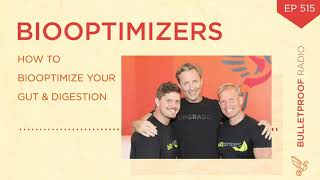
In this Bulletproof Radio episode Dave Asprey interviews Wade Leithart and Matt Gallant, founders of Bio Optimizers, to explore how gut health, enzymes, and probiotics can be leveraged for better digestion, nutrient absorption, and overall performance. The conversation begins with a "cool fact" linking air pollution to 3.2 million new diabetes cases in 2016, underscoring the importance of environmental factors. Dave shares his own history of gut distress caused by chronic antibiotic use and obesity, and how he transformed his body through biohacking. Wade describes his journey from a vegetarian natural‑bodybuilder who needed to maximize protein utilization on a low‑protein plant diet, while Matt recounts his martial‑arts and strength‑training background and how he discovered the power of high‑dose proteolytic enzymes. The trio explains the biochemistry of digestion – from chewing and salivary amylase, through stomach acid, pancreatic enzymes, and bile – and why enzyme deficiencies (protease, amylase, lipase, lactase, cellulase, DPP‑4) can cause mal‑absorption, inflammation, and systemic issues. They discuss practical interventions: HCl or betaine HCl supplementation for low stomach acid, targeted enzyme blends (Bio Optimizers’ protease‑rich formulas, Gluten Guardian, lactase, cellulase), probiotic strain P3OM (a super‑L. plantarum engineered for rapid colonization and pathogen inhibition), and unconventional delivery methods such as probiotic enemas. The episode also covers lifestyle levers that affect gut health – air quality, sleep, breathing, hydration, exercise, peristalsis techniques (squat‑position breathing, TENS capsule), and the role of meditation/Zen neurofeedback. Finally, they provide actionable advice: prioritize air, water, and movement; use enzyme supplementation strategically (empty‑stomach for systemic recovery, with meals for digestion); test gut response via HRV or symptom tracking; and consider a cyclical diet with periodic carb‑spike days. Listeners are offered a discount code for Bio Optimizers products.
Chapters
Foreign.
A state of high performance.
You're listening to Bulletproof Radio with Dave Asprey. Today's cool fact of the day is that there's a new study out there that quantified the link between smoggy air and diabetes. According to this study, air pollution caused 3.2 million new cases of diabetes worldwide in 2016. That's coming from fine particulate matter, the stuff made by cars and factories and chemical reactions in the atmosphere. The stuff that hangs around is haze and makes air hard to breathe. It's already been linked to chronic conditions like heart disease, diabetes, but no one's really measured the connection. And this is a pretty big study. They tracked 1.7 million US veterans for almost a decade and assessed their risk of developing diabetes. They used data from global studies on diabetes as well as air quality. Data from the EPA and NASA created equations at this stuff, and they think air pollution is responsible for 14% of diabetes worldwide. There's other things like genetics, weight, activity level and diet that clearly influence your risk, which is rising. Globally, there's about 422 million people now diagnosed with type 2 diabetes, up from 108 million in 1980. That's pretty scary stuff, and it's interesting. It wasn't the same around the globe. Countries with the worst air pollution, like Pakistan, India and China have more levels or they have higher levels of air pollution linked diabetes. The US which has relatively clean air, though, is also high on the list, partly because we have indoor air pollution here. That's pretty gnarly. What that means is, well, do lots of different small things that decrease your risk of diabetes. Things like sleeping at night reduces your risk, lowering your exposure to blue light, maybe even using an air filter, or maybe even having good digestion. And speaking of digestion, I'm going to tell you a few things about that on this show today. You're going to learn a lot. That cool fact of the day, by the way, came from the Lancet Planetary Health. If you like the show today or any day, I would love it if you took about 10 seconds, went to bulletproof.com iTunes, which will take you directly to Apple's page where you can leave a review for the show. There's been more than 500 episodes, thousands of hours that have gone into researching the show and putting out new information that hopefully you haven't heard somewhere else. If you like it and it's worth your time, I'd love it if you left a review. So, speaking of digestion, this is something that I've struggled with for years, when I was obese, when I weighed 300 pounds, I was technically able to clear a room in at least 10 seconds, which was really a problem when I was trying to date in high school, let me just tell you. So this was actually a serious issue for me. The gas, the acid reflux and all sorts of problems to the point that I just didn't understand what was going on, but I knew it was in my gut. This was probably compounded by the fact that I'd been on antibiotics once a month on average for about 15 years, thanks to chronic sinus infections and chronic strep throat, which are hallmarks of environmental water exposure. So basically, I dropped a bomb in my gut, ruined my gut bacteria every single month for years, which affects autoimmunity, allergies, digestion, all sorts of things. And you fast forward now after all these years of biohacking and today I'm somewhere around 11, 11.5% body fat, feeling really good. And well, I don't think I could clear a room if I had to, unless you gave me a whole bunch of cheesecake or something, in which case, well, I deserve it. And on this episode today, I've got two guys here who are really digging in on what's going on inside your gut. The two guys I'm going to interview are the founders of Bio Optimizers, Wade Leithart and Matt Gallant. And Wade is a former three time Canadian natural bodybuilding champion. And Matt's an experienced strength and conditioning coach for pro athletes, a self defense instructor who's in ketosis most of the time, and he's been working on supplements for more than a decade. And both of these guys look pretty darn amazing. And both of them have very deep knowledge of human performance, which is why I wanted them on the show. And we're going to talk about some of the stuff that goes on in your gut that you probably don't know about, including probiotics, healthy gut bacteria, the role of enzymes, which is something that I think is often overlooked in health and nutrition. And we're going to dig deep on that stuff. So, guys, welcome to the show.
Great to be here.
All right, that was Wade talking.
Yeah, super excited to be on the show, man.
And that was Matt. And we are here at Bulletproof Upgrade Labs Alpha on Vancouver island, all in person, which means we're going to have a really cool interview because I always like getting to meet people in person. Thanks for coming up.
It's great to be here, Dave. I mean, we're just kind of blissing out in the optimization zone here. It's upgraded everything. The features, the functions, all the gear downstairs. This is a playground for biohackers. I mean. I mean, I can hardly contain myself. I can't wait to do this interview as well, maybe play on some of this gear.
Yeah, I flew all the way from Panama. I got to say, I'm a little jealous. I'm like, this is definitely a future home for me. Just all the gear, all the fun, beautiful place. So congratulations on that.
Thanks, Matt. It's kind of fun. People don't really know I live this stuff. And since I'm up on an organic farm, having access to the tech that I believe is going to help me live way longer than Mother Nature wants me to is kind of important. And I perform better, I feel better. And you guys have done a lot of the biohacks that are here are things that I do with my various companies. And so I appreciate you just making the trip up because Canada, it's like a whole nother country. Yeah, it really is, says our other Canadian here. All right, I want to know how we got a vegetarian bodybuilder. Are you still vegetarian?
Yeah.
All right.
Although I really hate labels because, you know, I think everybody goes through a dietary evolution. And so this is where a person might be at a certain period of time, and it can always upgrade, always change, always evolve. And I think it's really important to be flexible in how one approaches things that we don't get locked into a box that. A paradigm box that limited us.
Tell me you don't eat bacon.
I don't eat bacon.
I'm sorry, I thought you looked weak. I'm saying this to a guy who could crush my head in his biceps.
Maybe if I ate bacon, I could be even better.
Totally kidding. All right, so what drives that is that health and performance driven? Is that animal? What's your thought behind that?
I think we share a similar idea, and that is a certain amount of curiosity. And so I grew up, like every Canadian boy, in a very rural environment. Wild game, growing food in a garden. I went to university and I started to notice there was an effect on my health just by switching from what I had at home to what I was in in a university setting. And that was an eye opener. When I was studying exercise physiology and nutrition, and I didn't understand it. That was a long time ago. And then I started on that evolution in about 10 years into my bodybuilding career. Nobody was doing this as a vegetarian. It was virtually thought it was impossible. And I read a book called the Holy Science. And it was a guy talking about the nervous system and the digestive system and he was talking about meditation and vegetarian diets. And I said, you know, I'm going to experiment with this for a couple of weeks. And I did it for two weeks. And I said, well, I'm going to experiment for two more. I thought it was going to dry up and blow away. After a month I didn't and I was kind of like, okay, I'm still alive. And I went another month and after two months I just, I just stopped doing it. And I said, I want to see if I can actually win championships, if I can be a successful competitive athlete on a plant based diet. It turned out all right and I ended up winning a whole bunch of contests and went to the Mr. Universe and World championships. And back at that time, that was unheard of. And then that started, you know, a pattern of behavior of looking at optimization from a different perspective. But I think what's different about me is I'm not one of these vigilante vegans that says everybody's got to do this and don't kill the animals and all that stuff. That's not what it's about. It was just about going in a direction and pioneering in a direction and just see where it could go.
So are you vegetarian or vegan?
I classify myself as vegetarian.
Got it. I find that people perform reasonably well as vegetarians and some people totally kick ass. But having some of those animal derived fats, particularly dairy fat and some of the Omega 3s seems to be pretty important. Maybe some eggs. But if you're just doing the pure plant thing, and I was a raw vegan for quite a while because of enzymes, believe it or not, I did.
Raw vegan for two years.
Oh, man. It didn't wreck you the way it did me, man.
Well, that's what led to the development of the digestive experiments because I needed a way to optimize the amount of protein I was converting to amino acids. Because, I mean, I'm competing at a World Championships on 85 grams of protein a day when my competitors are doing 250, 300, 350. So that's what got me into that whole digestive idea of how do I optimize my digestion and make that functional with the diet I had. And then ultimately, socially, as you know, raw food diets are very difficult socially. I mean, you're the weird guy in every room.
Totally.
And not the cool weird guy.
Right.
So eventually I opened up the Gates that allowed me a much more flexible and socially acceptable lifestyle. And I do believe that there's some additional health benefits just because with any specialized diet you have to be so meticulous. And I believe that when you upgrade your health and your vitality, it should increase flexibility or options as opposed to decrease.
I would agree with that. And I encourage everyone listening to find what works for you. And there may be some blood type, but more likely some other genetic things that determine whether you do really well on that. And I'll tell you, if you're doing bodybuilding on 85 grams of protein a day, yeah, protein utilization is going to matter. But if you look at what happens to people who are eating hundreds of grams, particularly of whey protein and these other casein and things like that, or even just steak, they're not going to end well. We know what excessive methionine, cysteine, these other amino acids do. And that's why moderate protein, grass fed, organic. And I eat vegetarian or fish when I go out. Not farm fish either, because I don't eat industrial animals. It's bad for the animals, it's bad for the planet. It's bad for your gut because you get the glyphosate, you get the antibiotic residues that mess with things. And I actually really like having function gut because I never had it until I was about 30.
Wow.
All right, so that's how you got into this. Now, Matt, you're a martial artist and.
I'm a kinesiologist who actually got a degree in the science of physical activity. And both Wade and I were personal trainers for about a decade. And that's how we met. I was a trainer back in Moncton, New Brunswick, where he's from. He was living in Vancouver, came back to see his parents. We met at the gym and then I said, hey, I want to move to Vancouver. Moved to Vancouver, became one of the busiest trainers at World's Gym downtown.
Now, are you also born in Canada?
Yeah.
Oh, so you're both Canadian. Okay. Presumably, I was thinking you moved to Canada like I did. Okay, cool.
Yeah, Canadian. I live in Panama, though. I can't take the cold anymore, but yeah. And then met Wade and of course I was doing keto and he was doing vegetarianism.
Did you guys get in an arm wrestling match? Well, we.
A lot of psychological ones, yes.
Who won?
Yeah, I think we both won. Because I think what's really interesting about the Internet is create these kind of tribal communities that reaffirm biases in a lot of ways. And One of the things.
Do you mean the keto Bros or the angry vegans?
Yeah, exactly. And one of the things that I think we celebrate, Matt and I, is that we test each other's ideas. And we do come from very different spectrums. And the exchange of ideas, I think, is what separates us. We welcome a little bit of conflict or a little bit of challenging and then having that. Because if you look at history, that was how great minds came to conclusions. It wasn't about, I'm better or you're better. It was about, let's go for the truth or let's find what's the middle ground or what's the best ground and surrender the position once it's been proven by the data, to be supported by.
The data and the experience. What drove me nuts as a raw vegan, like, well, the data says I'm getting my enzymes. It says they should be working. And I am losing weight, and I felt really good last month, but now I'm breaking teeth and I'm getting autoimmune issues, and I'm cold all the time, no matter how much I eat. And at a certain point, okay, this isn't working, but I'll just add raw meat back into it. So I was a raw omnivore for a while, and I felt so much better when I did that. And it was when I went to Tibet and Nepal to learn meditation from the masters. I'm not eating raw yak that's been hanging on someone's porch for a while. I'm pretty sure I'm going to cook what I eat in this country. And I just realized that that's what worked for me. But massive protein is not good.
Yeah. And that was the thing. I think, as you alluded to earlier, there's some genetic differences where Wade can eat a lot of carbs, and it works really well for him. It's proven. For me, I just get fat, you know, So I need, for me, keto is magic. It's always worked, and I've just embraced that. So. But the one thing that we did find that worked really well for both of us, we met a doctor named Dr. Michael O' Brien and spent some time with them, and he. And he taught us about enzymes, and we tried a massive amount of enzymes for 90 days, and we both transformed, you know, both gained muscle, we both lost fat, the skin improved, our brains improved. And we're like, okay, this is. This works. And I think that really helped weight as well as a. Especially as a vegetarian bodybuilder, because A lot of vegetarians, the issue is they're not getting enough amino acids because vegetarian protein is. Tends to be difficult to break down and they're not getting that much.
So, yeah, plants make protein to keep animals from eating them. Mostly they don't want that to be highly bioavailable because that would just make them more attractive to predators, not less attractive.
So, yeah, and then Wade was winning some natural bodybuilding championships. I was studying marketing, and I said, hey, let's package your information. And that was 15 years ago. So we've been actually in business for 15 years.
All right, let's talk about the two big areas where you guys have focused. Let's start talking about enzymes. Tell our listeners exactly what an enzyme is.
Well, first of all, we all have an enzyme bank account in our bodies, and they do about 25,000 different functions in the body. Everything from thinking to blinking. Yeah, enzymes are involved. You know, they're the. You can call them the catalysts that kickstart chemical biochemical reactions in the body. And when we eat food, we need to break that food down. So our body's going to use our enzymatic bank account to break that food down. Now, going back to your raw food story, the whole theory around raw food is, hey, if you eat raw food, there's enzymes in the food and you don't need to use your body's enzymes, which is true. But the challenge is, in today's world, from the pesticides, the herbicides, the fungicides, which kill enzymes in the food. So even if you're eating organic, a lot of times it's still been sprayed.
Or there's just residues from the crop next door.
Right. Or there's not that many enzymes in the food because of the way it's farmed or because the soil is dry of minerals. The problem is, a lot of times it's difficult to get the enzymes. And when we eat cooked food, there's definitely an enzymatic cost that our bodies experience as a result of it.
Now, a lot of people don't know this unless they remember something from biochemistry in high school or they studied it in college. But if you have a chemical reaction, it usually takes a lot of energy. You have to cook something on a Bunsen burner or something like that, or you add a small amount of the right enzyme and magically it takes far less energy to make this happen. And this is the difference between biochemistry and regular chemistry. And it's starting to look like most enzymes work at the quantum level where they're able to tunnel electrons in a way that doesn't happen in non biological systems, which is really cool. We just don't know some of the guts of these things. But your comment Matt, about enzymes being present? 25,000 different types present in countless things happening inside the body. It's not just what we get from our food. They're actually manufactured on board in distributed systems and in a few different organs. And where are the organs where these are mostly made for digestion? Either one of you guys can answer this?
Yeah, our bodies can convert enzymes from one type of enzyme to another inside the body. So just depending on what you need, your body will basically manufacture the enzymes on demand. Starting with, you know, when you start chewing on food, your body, your brain identifies, okay, I'm eating starches or I'm eating, I'm eating a banana, I need more amylase. So that's why chewing's so important, you know, Cuz when you're chewing your brain is recognizing I need amylase or I need protease or I need lipase. If you're doing that, get some ice cream for an example, which is delicious by the way. Love it. So depending what you're eating, your brain's gonna recognize what enzymes it needs to produce and then start breaking that down in the mouth and then continuing to excrete enzymes inside your stomach. So that's why chewing is so critical, because if we just swallow, then our brains don't have the time to recognize what it is that we're eating and produce what we need.
And what I was looking for there was, there's the stuff in the saliva, your pancreas makes a ton of enzymes. Your liver is involved. I think there's some in the lining of the stomach that are probably made.
We can talk about DPP4, which is the gluten one.
Awesome. So there's this amazing thing going on that happens before we even get to the bacteria which, oh, themselves make enzymes. What do you know? So this is one of those areas where I would say we don't know nearly enough. Especially if we look at the complex between what food is it, how was the food grown, how was it cooked, what else did you eat with it and what else was present in your natural flora? And then what's your genetic history, what's your mitochondrial DNA, what's your nuclear DNA? It's that combination which is probably, if you look at the number of possible combinations, it's greater than there are stars in the universe kind of thing. It's that level of complexity. So we're just starting to tease out patterns and things that work. And you guys have done some fascinating stuff there.
Yeah. I think there's even epigenetics. If you look at, for example, Japanese who have far larger pancreas, they're designed to eat rice. Right. Their pancreases are designed to produce the enzymes that it needs to to break down rice quite easily. When I used to go to Japan a lot, I'd get constipation. My body's not designed, but I can eat potatoes because I grew up on them. And my parents, my grandfather was a potato farmer. And so I think there's probably even some epigenetic Passover on enzymes there.
Definitely as epigenetics, people who can handle potatoes had families who could, because we only introduced nightshades to our diet relatively recently in human evolution. And potatoes are nightshade. Rice has been around a lot longer. Maybe. I'm part Japanese, I like my sushi. And it's funny, I tell people potatoes can be good for you if they don't trigger inflammation. And it's very individual. And you have to look at where your people are from. And it's tough because if you do a genetic test and you find your ancestry, you're like, I don't know where my people are from because I have people from all over. I'm 0.1% Siberian nomad, according to this. Maybe I kind of doubt that one, but it really makes a difference. And I don't think that we're to the point where we can say definitively, but we can say there are definitely patterns and things that everyone has to test. And it's completely okay to sit down and say, you know, that food is not compatible with my biology. And it's also. Even though the person next to it's actually good for them. And it's also okay to say that food isn't compatible, but I can make it compatible if I take the right enzymes or the right blockers. And this is back, and this is taking control of your environment, making your body do what you want. And goddammit, if I want to eat potatoes, find me the right enzyme to do that. By the way, I still don't eat potatoes because they give me arthritis. But if I could find an enzyme that let me eat mashed potatoes, I probably would. But not every day because, well, too many carbs.
That's what's cool with enzymes. There's many different types of enzymes that do different things. Both Wade and I feel the most important ones, though, are proteolytic. Enzymes, the proteases, because two reasons. One, we can't break down protein. We get problems, right from allergies, which is basically proteins we can't break down to protein toxicity, undigested proteins in the blood, in the gut, all those are very problematic. And then on the plus side, if we can break down protein to amino acids, all kinds of amazing things happen. My friend Frank, who came to 40 years of Zen with me, he was on antidepressants, two of them, for a long, long time, started taking mazymes or protease rich enzyme formula, got off of both of them because his body started making the neurotransmitters it wasn't making. Right. So a lot of times I think that. And you look at vegetarians that lose a lot of muscle mass, which is very common, and we meet a lot of them sometimes at events, all they're missing is amino acids because they're just not breaking down the protein.
You talked about protease. And protease is really interesting because there's a whole bunch of different classes of those. And, and plants naturally contain enzymes that break down those proteins, unless you cook the plant or you store it wrong or all these other things. But they also contain enzyme inhibitors, which are chemicals that stop them from working. And this is why when people say eat whole grains, do you know what's in the outer lining? It's covered in stuff that keeps you from getting benefit so that plants, babies can survive. Because if they weren't coated in that stuff, animals would eat the seeds even more than they do, and there would be the end of that species. So part of the problem I ran into as a raw vegan is I was getting lots of enzyme inhibitors while I was getting lots of enzymes and oops, that's a bit of a problem. So there's an art to mixing things or potentially cooking some things to remove the inhibitors and then taking enzymes or eating a little bit of the raw stuff with the cooked stuff to give you some of the enzyme action there, which is kind of cool. But you talked about protease and there's a whole class of those things. But the other two that are worth mentioning for listeners are lipase and amylase. Walk me through those.
Yeah, so amylase is what is really the enzyme that's responsible for breaking down carbohydrates. So we were working with literally dozens of people who had type 2 and type 1 diabetes. We put them on our enzymes and they just start using less insulin simply because they were digesting their food better through the enzymatic process. Lipase is the enzyme that digests fats. So oftentimes, I believe what we, we coached over 15,000 people over the course of that time and we'd get them to submit their data or ask questions, you start to see patterns. And I found that most people are gravitating towards a diet probably based on the enzyme deficiencies that they may have encountered either from their early childhood or, or that's been passed on genetically. So we started looking at that and addressing first the dietary components and then getting into the enzymes to say, well, what enzymes will have X amount effect? And as Matt said, protease was the number one, number one factor. And then for people, based on the dietary choices that we, if they were, let's say they had trouble losing body fat, chances are they're going to do much better if they add more lipase into their diet or if they have skin conditions, oftentimes a lipase enzyme would be very effective. Also, if they have trouble, as we talked about carbohydrates or they get brain fog, amylase is really good. So these type of patterns and enzymes you'd start to see in dietary choices. And as they would kind of clean up their diet and clean up their lives, all of a sudden flexibility would open up as their digestion improve or their digestive strategy improved.
So part of being metabolically flexible, it's one of the reasons the bulletproof diet is cyclical. You go into ketosis, you go out of ketosis mostly maybe have some background ketones because you're using brain octane. But the idea is you actually do eat carbs. You don't eat a high carb diet, but you don't eat a zero carb diet. And I think what you're doing there is you're teaching the pancreas to be able to make some things that do this so you don't get insulin resistance. And when I was testing the bulletproof diet before I wrote the book, I said, well, I'm going to eat about 4,500 calories a day, and sometimes it's only 4,000, sometimes 5,000. And my deal was I was only going to do this for a month and I was going to measure all this stuff and say, well, I should have gained 20 pounds when I was going to restrict my sleep to less than five hours a night, usually about four. So I'm going to stack the deck to make myself fat. But magically I lost weight and I did really well in that amount of sleep. And I did this for 18 months. And when I was doing it, I said, well, maybe I'm just pooping out all the fat. So I'm going to take lipase specifically to make sure I'm able to break down the fat and use it. Now, for people listening, this is not the bulletproof diet. This is me testing the edges of it. There is clear evidence that having way more food than you need contributes to aging. So this isn't a long term strategy at all. It was, I should gain £20, I'm only going to gain £3. But I did not expect to lose weight. And so it's funny you mentioned lipase because if you're going to be able to absorb fat, it's really important. And if you've had your gallbladder or something removed, it's even more important. And then amylase is something that if you're carbohydrate intolerant, you might want to look at that. You also might want to just look at the kind of carbs that work for you. Because there are people who like, yeah, you give me cassava root and I'm so happy, but you give me potatoes, I want to die. And there's people who are vice versa. And some of that has to do with the bacteria and some of that, I think has to do with enzymes and some of it's genetic. And to date, I don't think there's one test or even a group of tests that can tell us that other than that amazing test, is put it on your plate and then see if you need to loosen your belt two notches afterwards that you're probably not doing well on that. Try some enzymes. If that doesn't work well, then maybe you're kind of getting a message from the universe that says, don't eat that.
Yeah. I think there's different things we can do to figure out what works for us. And first and foremost is biofeedback, which you don't need a machine for. I felt like crap 2 hours after I ate that meal. Right. I mean, we don't need tech for that.
It's like a million dollars worth of sensors embedded in your brain.
But a lot of people ignore that. I mean, a lot of people don't pay attention to really how they feel. If you want to get more technical, looking at HRV data after a meal.
That'S heart rate variability.
Right. And when you eat things that your body doesn't like, it will go up your earth. Well, it'll go down, basically. It'll get worse.
It's funny, one of the reasons that I became a CTO and co founder of one of the wrist tracking companies that intel bought for $100 million, it's a company called Basis, was because they were the first company that could get HRV from the wrist. And I was so pissed off that even though we could do it, that I couldn't get it into the product launch calendar because the team was, we have to have gamification. I'm like, don't talk about steps per day because it doesn't matter. And it turns out now side note, that 10,000 steps a day thing that we've all heard, it came from a Japanese pedometer company in the 1950s marketing pedometers. They just made it up. And we've been saying you need 10,000 steps a day ever since, but there's no scientific backing for that whatsoever. I can tell you that if you walk 10,000 steps a day, you'll probably want to eat more. Other than that, who knows? But it was that heart rate variability as a massive predictor of how stressed was your body. And to your point, Matt, if you eat something that isn't compatible with your system, you measure your heart rate variability and oh, if it drops, which is a bad thing afterwards, it means your body got stressed by what you ate. And it's interesting also you can self test with that stuff and say, well, what would happen if I took enzymes or I had a different composition of gut bacteria which you can measure with tests, or you can just say I took some gut bacteria and presumably it made it through. And that's stuff where you guys have spent a lot of time and energy and just decided to, you care about it enough to start a company, which is the biggest thing an entrepreneur can do is say, this matters enough that I'm going to spend years of my life on it. Have you seen differences in other people or in yourself in their after meal heart rate variability? If they take enzymes or probiotics or the same kind of foods, no doubt.
About it, your heart rate variability improves dramatically. One of the things that I do on a weekly basis is I one day a week I eat carbs. Very much bulletproof, cyclically. And I tend to eat also a surplus of calories. Strategically.
Yeah, you can cycle it, but not every day.
Right, right, right. So strategically I'll eat maybe 5,6000 calories a day. And I can tell you if I don't have enzymes and the right enzymes, it's a rough day.
Well, it's a rough day for people around you because everyone knows what A bodybuilding gem smells like, no offense here, but excessive protein, when it ferments in your gut, it makes all kinds of lipopolysaccharide toxins, which are directly contributing to mitochondrial decline, brain fog, inflammation, joint pain, allergies and all these things, especially if you're doing it in ketosis, because high fat will escort those through, which is why you better have the enzymes, you better have fiber in your diet. And if you do that stuff right, all of a sudden you're able to process that many calories and actually put them to use. And the body's like, yes. And then the next day, maybe you don't eat anything and it actually works.
You feel great. I mean, that's the thing. You can get away, if you will, eating almost anything with the right amount of enzymes. Not saying that anybody should do that, but I'm saying that you can, because sometimes you want to go out and have hamburger and fries at your friends. And that's what we do.
There's a couple other kinds of enzymes that we didn't talk about. And we've all heard of people who are lactose intolerant. So I can't eat dairy. I'm like, what are you talking about? We've had lactase, the enzyme that solves that problem, available for something like 40 years. So, yes, you can eat dairy. It doesn't mean you should eat especially. Casein is a low quality protein that's tied to inflammation. I don't recommend people eat that stuff on a regular basis, but you should definitely take lactase if you're sensitive and we can talk about that one. The other one you might have heard of is cellulase. And cellulase helps you break down rough fiber, basically. What are the role of those?
Yeah, well, going back to the cow milk, I think a lot of people, the issue is not. They think it's lactase, but I think it's the A1 protein.
You're exactly right. Talk about A1 and A2 protein real quick, if you would.
Sure. So A1, A2 are just different types of proteins. And myself personally, I can't do A one. I mean, I try.
That's the most common kind of milk protein you get from a species of cows that makes a kind of protein that's hard for most people to digest.
And pretty much every other animal. I can do goat cheese. I can do pretty much any other type of animal cheese, no problem.
Yeah, I like sheep. I do pretty well on that stuff.
Yeah, exactly. So that matters quite a bit. And I think for most people, the inflammatory response they get from a one is very high and they should probably move away from it. As far as cellulose and cellulase, that's basically when you're eating a lot of veggies, it's very difficult for the body to break down the cellulose, which is the cell membranes that plants have. And I know some bodybuilders. There was this famous bodybuilder that both Wade and I know, and he went crazy eating a tremendous amount of vegetables and wrecked his digestion.
Oh, I did that as a raw vegan. I had to get these one gallon salad bowls to just hold enough food because I was hungry all the time. And I'll just add more cashews and I'll add more coconut oil, but I could never be full because I was malnourished, even though I was eating crazy amounts.
I had a similar experience when I was going through my two year raw food experiment. Experiment. And that's why I got so into enzymes and their usage, because I knew that I really couldn't perform at a high level on that diet if I didn't have really superior digestion. And then that inadvertently trying to solve that problem as an athlete translated over to all sorts of people who I discovered had digestive related illnesses. And we could actually solve those. And that led to a whole cascade of things and eventually a company and all that sort of stuff. So it's kind of a. You scratch your own itch and start out with a toaster and end up with a rocket ship.
That's awesome.
There's this weird thing. If you look at the thesis behind Head Strong, my book about mitochondria, the idea is that some of us are not very good at taking a unit of food and converting it at the subcellular level, combined with oxygen into a unit of energy. Roughly half of people under age 40 have a problem. Everyone over age 40 has a problem called aging. But the step that happens before this subcellular thing is you have to actually get the thing that's sitting on your plate into your body, break it down so it can be delivered to those mitochondria so they can do it. And if you have a problem in that part of the system, it's sort of like, I have a problem with my car. And the problem is we can't refine oil to make gas. So then I could make the engine in my car work better. And this is a level of biohacking that's looking at that part of the problem. And in part we're not talking about as much as, well, what happened to that food before it got on your plate? Because that seems to matter too. But maybe enzymes can help you if you're not getting the right stuff on your plate. And let's face it, no one's perfect. Even me. The other day I had grass fed beef, but it wasn't harvested by monks. It could have been more. Seriously, I mean, you could always be more perfect. But I travel a lot and there's times when these vegetables probably aren't organic. I'm at a restaurant and I argued with the waiter for 10 minutes to just get a whole plate covered in broccoli, not two spears of broccoli already. And you go down that path. Look, I'm willing to pay an unlimited amount of money for a plate of vegetables. And they scratch their heads and go, we can't do that. You're like, actually, I don't want to spend $40 on a plate of broccoli. But seriously, bring me some broccoli. And you go through that. So it's just not going to be perfect. So being able to patch that by having things that let you make better use of whatever you get in your body, I think there's great wisdom in doing that. All right, how do people just sit down and say, all right, how do I know what my enzyme intake is with what I'm eating today? How do I think about that?
Well, I think maybe before we start on that, maybe we should go through how digestion works for people who don't understand. I say there's five stages to upgrade your digestion and then we'll work from those points and go into specifics on each one. So I think one of the most dangerous memes that are out there is you are what you eat. And I would say it's not what you eat, it's what you're able to digest, absorb and utilize. And ultimately what you can also eliminate to kind of take that to the next level. So if we look at the digestive process, it's a single canal from your mouth to your anus. Okay.
So the food, we're all donuts, basically. They're hollow on the inside. Yeah.
So food is in the digestive canal on some level of that process, but that's not inside your cells as you alluded to, where you can actually use this. And, and of course, our digestive system has its own brain. You can cut all the nerves to it and it still functions, which is pretty remarkable. And we always have these gut feelings and et Cetera, et cetera. So you look at digestion, it starts with chewing. You take in the sensory and actually when you sense and smell the food, it will activate enzymatic activity in the body. And your body starts to prepare and plan for what is the meals to come. And as we get used to a particular diet, our responsiveness to that diet or metabolic response gets improved. That's why a lot of bodybuilders, for example, are high performance athletes. Stick on a very specific, the same diet over and over again. And the research demonstrates that that can be very effective, although boring for performance based diets. So we start chewing the food pityline and you know, amylase based enzymes will be oftentimes released inside the mouth. The food will then travel into the esophagus. So there's two different camps on should you chew the food or gulp the food, Depends, whatever. But I think for the most part chewing the food, one of the things it does it. People tend to eat less if they chew more and just because of satiety factor. But once the food go down the esophagus, it enters into the upper cardiac portion of the stomach. And at that stage, that is where the enzymes present in the food are supposed to start breaking the food down. Now if I'm a tiger eating zebras, you know, I knock down the zebra, they open the zebra up, they go in and grab the entrails first. That's where all the enzymes and probiotics are and then they eat the rest of the carcass. A horse would go eat grass and if it had any blood on it, it wouldn't have, wouldn't have that grass. But if it's fresh grass, it'll get that and get the enzymes present in the food, which as you alluded to earlier on, plants will break down that food once it's inside the warm, wet and digestive environment that we all are equipped with. So when it comes into that the upper cardiac portion of the stomach, that's where the enzymes start breaking. If you don't have the enzymes, that becomes the initial problem stage that people will experience. And we can get into that, maybe injuries, burping up or that sort of stuff at about 60 minutes, sometimes earlier depends on the person. And as you get older, it's less and less or more and more time you start to release hydrochloric acid. Now hydrochloric acid is really interesting because it has a few functions. Number one, it's a disinfectant. It kills pathogens inside the body. And that's why A lot of older people are more susceptible to viruses and, and bacteria infections because they just don't. If you're after 40, you're just not producing enough hydrochloric acid.
It goes down with age. Yeah, that's right.
It's also a key component in giving us chloride ions that helps the immune system and et cetera, but it also changes the PH of that food chime that's now under peristaltic contraction. Now why that's important because that's going to activate certain enzymes and deactivate other ones. For example, in the case of protein, if you're eating protein, there's enzymes that are broken down at around 6.0, then there's ones at 5, then at 4, then at 3, all the way down to 2. You're going to cleave different amino acids.
At that particular point in those numbers. Those were ph markers. So the level of acidity. So you need highly acidic portions of the stomach. You need mildly acidic portions because the same PH doesn't work for every enzyme. Enzymes themselves are very sensitive to whether you're acid or alkaline.
Correct.
What happens if people take baking soda or alkaline water with their meal?
It's a great question. I think for the most part, when it comes to digestion, for example, your stomach acid is extremely acidic. So drinking the water or taking baking soda probably wouldn't interrupt it as much from an acidic side, but it would affect the enzymatic solubility. I don't recommend taking baking soda. I think it's a poor way to alkalize your body in the long term. Although it works short term, I think it's a long term detriment to the body.
You're saying with meals or at all?
Just at all.
Interesting. Yeah. There's some new studies coming out around autoimmunity and I think there's probably a good case for some people taking it on an empty stomach, but never with food. And when I got my first alkaline water machine in about 1996, somewhere around then, and for a year and a half I had this undigested food in my poop and I just couldn't figure it out. And, well, alkaline water, stomach acid enzymes. So I found that drinking that with meals was a really bad idea for me. Even if I took HCL capsules, the betaine HCL that you guys make, I wasn't taking yours back then. That was before you existed. But the same general concept, but different effects happen if you're doing it on an empty Stomach. And there your PH is regulated by this amazing thing we do called breathing, not by what you drink.
Yeah. I think that using various breathing techniques is probably the most effective way to alkalize the body. Whether you use water breathing or there's a lot of different methodologies going back to hydrochloric acid, which I think is a really important thing because there's so many people that are being treated for acid reflux and they think it's. They're not producing, or they're producing too much acid, which is actually the opposite, because when you hit a certain saturation level of hydrochloric acid, it flips the esophageal sphincter, which is like a little lid that closes off the stomach so the acid doesn't splash up into our esophagus. And if you don't produce enough, the lid doesn't shut. And now you get acid splashing in. You go to your medical doctor and he gives you a proton pump or something. And now you're inside that system and it's just going to be the next drug and the next drug, the next drug. And I think if you polled 100 people who had acid reflux, they think that they're producing too much acid. And I think it's a great injustice to people's education on that part.
I'm so happy you said that. When I was 23, and this is going back more than 20 years, I had my first bout of acid reflux and it felt like there was a candle burning in my chest. And I went to the doctor, I'm like, I'm dying. This is horrible. And he said, oh, yeah, take some Pepcid ac. The next day I'm like, oh, I feel so much better. But after a year and a half of taking that, I'm actually not better. On other fronts, this doesn't seem good. So that was when I first looked at that early research about hcl. And I actually had to take six capsules of hydrochloric acid, which is quite a large dose, in order to get that valve to close. And over the course of time, as I fixed my gut, I actually found I needed to take less of it. But it's just a great act of service for you to share that and for everyone listening. If you or someone you know has that problem and you're on proton pump inhibitors, you cannot digest or sterilize your food. If you're taking those, they are terrible for you long term, even if they stop the pain. So I recommend for people who have that problem. If after a meal you have acid reflux, I'm going to say baking soda, because it'll stop the pain and it's way better than taking these other things.
Absolutely.
But next meal, start taking hydrochloric acid, which is available in capsules. And that's one of the things that you guys have in some of your formulations, which is cool and it actually works. Tell me about whether there's updates, because this is the algorithm I've used for 20 years.
Sure. Well, then, what's going to happen afterwards? And sometimes for people that might have parasitical infections and stuff, they can take mega dosages of hydrochloric acid, which I did on a. After coming from Asia. My nd she had said that, hey, you picked up some hitchhikers.
Oh, yeah.
And I said, well, what do you suggest? She goes, well, here, take 20 caps of hydrochloric acid.
Holy crap.
And which I did for a period of 10 days and cleared it up.
On an empty stomach or on.
Yeah, I took it on an empty stomach.
Did that just burn or.
No, it actually didn't. I think if you have enough. I think if you get yourself into an optimized state again, your body has the. What I say, the. The homeostasis mechanisms to bring you back. If you become too reactive to anything that you're doing, there's probably an indication that there's an area that you can upgrade or improve. And so I always look at feedback from my body. My mind runs my body. And if my body's not able to cash the check that my mind is writing, I need to go out and find the hack that's going to fix it, because the body's always going to bring me back to balance. And it has just a vast array of tools that we're just trying to optimize. We're just trying to give it the tools, the resources, the materials, whatever it needs so that it can run its amazing metabolic process that will take hundreds of years to figure out. We're dealing with millions of years of biology here that we're just getting a. You know, we're just so, so slowly into scratching the surface of what's been developed over this. The eons, if you will. So going back, so I love going on these tangents, but. So then now the food is going to exit out of the digestive system. Your body's going to release what's called bicarbonate buffers, which is just a fancy name for alkaline minerals.
Like baking soda.
Exactly.
But that's what's happening.
Exactly.
Yeah, yeah. The bile is highly basic, not hydrocytic. Right, Correct.
And so it needs to neutralize that. If it doesn't, that's when you get ulcers.
Yes.
And that is a dangerous thing. And one of the, you know, one of the caveats for people who are going to run out there and buy some proteolytic enzymes and stuff is if you are, if you do have ulcers or gastritis, we recommend that you stay away from a proteolytic enzyme at first until you get that solved. The reason being is those enzymes will start digesting that, that, that ulcerated stuff. So warning out there for people just as a little, you know, first do no harm. Usually after a month of a good enzyme formula without protease, then you could go into a protease. Once that's figured out. So the minerals are in there to buffers the acids, and then it goes into the, what I call the final stage of the intestinal tract. And that's where the, the war for whatever's left is engaged. You know, with the, in the microbiome. Good rule of thumb is we have 10% good, 10% bad, and 80% opportunists. And depending on your diet, your lifestyle, stress levels, all these different things that you talk about, that's going to influence your particular microbiome. And basically, from my standpoint, or my observation, is probiotics or good bacteria, which are pro life, they're like little smart bags of enzymes that finish off the digestive process. So if enzymes are cutting the grass, probiotics are mulching the grass and converting it into the units that are then taken across the intestinal barrier and into the body and utilized by your cells, by your organs and by your brain, obviously. And at the final stage, of course, is peristaltic contraction. And then you eliminate the rest of the waste, period. If everything's going.
You want to hear a cool story about peristaltic contraction?
I am always up for a cool story.
All right, so if you're listening to this going, what the heck is that? That's the little compression of your intestines when they squeeze to move stuff through the tract. And there's actually a specialized form of tissue that does that, which is kind of cool. When I knew I had this gut problem and I had tried everything, I tried a bunch of different. This is going back a long time. A bunch of different, I would say mostly dead probiotics that oftentimes didn't do anything. And there's Been a big change in technology and understanding of those in the last 20 years since I started all that. And I said, all right, I'm going to try this thing. And I found a swallowable TENS device from Russia. So TENS is an intellectual stimulation thing. And leave it to the Russians, they're the most badass biohackers. I think it's because I don't know what's going on over there. But for the last 40, 50 years, all the weird vibration, electrical peptides, all this stuff, they're one of the leaders in this. So it was kind of a horse pill sized capsule. And it's activated by moisture. So you just swallow the thing. This is kind of cool. And every five seconds goes bzz, bzz. And the idea was it, it's going to strengthen peristalsis. I'm like, I know my gut isn't working. I'm so goddamn tired of this, I'll do anything. And it came with Russian writing on this little pack. I ordered it from overseas and I swallowed the thing. And I was like, every five seconds I would kind of twitch as the thing would go off. And I'm doing all right. And about eight hours later, it's somewhere in my small intestine, right by my left hip flexor and it gets lodged there. So my left leg is just kicking every five seconds and it's not moving. Like, this is horrible. And so I started jumping up and down and doing weird positions and headstands and, and whatever I could do to, to dislodge it. So it finally did, but there was a couple hours, like, ow, ow. Just constantly. So I can tell everyone listening that that might not be the best way to stimulate peristalsis. So what is the best way to stimulate peristalsis if you have slow transit time?
Well, one of the things that I do every day as part of my practice is I get in kind of a semi squat position with my hands on my knees. I do a deep exhale, exhale the water, and then I bring in my stomach in and out rapidly as many times.
With your lungs empty.
Exactly. And I do that usually five sessions, like five rounds of maybe 10 or 15 seconds each. And I do that every single morning as part of my routine, or as I call it, my awesome health formula.
Do you have a Squatty Potty?
I do.
Yeah.
I have one too. I admit it. It's one of those things where actually biomechanics matter. So for people listening, just Google Squatty Potty Unicorn and you'll know everything. I'M talking about.
Well, you know, the funny part about that is I learned that from real when I went tree planting in northern Ontario as an 18 year old guy. And this is a heavy bug infested zone and you have to go out into the, into nature as our ancestors did to, to use the bathroom. And what's interesting is it's amazing how much faster you can defecate in nature than you can sitting on a toilet. And later on I didn't, of course I was ignorant to the matter, but then I understood the mechanics of why that was later on as I studied exercise physiology and that sort of thing.
Since we're talking about poop, a friend of mine was telling me about the first time he took his kids camping and his son comes out of the bush going, dad, it's so amazing to poop in the forest. This is the best thing ever. And I was just terribly excited about this idea that you didn't have to sit on a toilet for it. But it's true. Raising your knees is that last step, but if your peristalsis is broken, it's not going to work as well. And that exercise you just talked about is something I think everyone can benefit from. And you don't necessarily have to even be in a squatting position. But the idea is empty your lungs and suck your stomach in and out without breathing as many times you can before you have to breathe. And it will cause motion in those things. That probably won't happen any other way. And that's something that I do too. But I usually don't squat when I do it.
I just. Yeah, I do semi. I do kind of like a semi squat.
Yeah, just kind of lean forward, my.
Hands on my knees and lean forward a little bit.
Yeah, and even something like the child's pose in yoga is meant for that. And if you do the really advanced sit in a lotus pose and bend forward, that's also supposed to do that, but most people don't. Can't do that. I can. Ha. All right, let's talk, Matt, about that. Proteolytic enzymes for speeding up recovery and for changing flexibility. But let's talk about recovery things like sprains and strains. What have you found in the research on that?
Yeah, there's actually quite a bit of pretty mind blowing research that's been done with athletes. So Dr. Fulgrave thought so he could take spray sprains and strains from eight weeks to two weeks with proteolytic enzymes. Another doctor, they took hematomas from 16 days to seven swelling from 10 to four, inflammation from 11 days to four days, being unfit for training from 10 days to four. And some other doctors, Dr. Littman trained boxers finally could get rid of black eyes instead of 10 to 14 days, from one to three days. And Dr. Bohlmuller found that he could do fix ankle related injuries 50% faster. So a couple keys is one is start taking the proteolic enzymes as fast as possible. And the other thing is you want to take it on an empty stomach.
That's really important. That's a different use than digestion.
It is. Now we're getting the systemic results and as most of your listeners are into biohacking, you know, as, as great as the digestive results are, the systemic stuff is also as exciting because now we're really starting to reduce inflammation. Clean old, undigested protein that might be lying around in intestinal tract. And even on fast, you know, Wade and I have done a lot of fasting from three days, five days, and Wade's done a few 10 days. One of the best things you can do to improve a fast is to take a lot of proteolytic enzymes on an empty stomach throughout your fast. Because now you're cleaning house now you're going to get the enzymes in your blood into your intestinal tract without the food. Because if the food's present, it's going to break down the food, it's going to focus on that. But if there's no food now, we're really cleaning again the old crud that might have built up.
It's funny if you imagine that each cell in the body wants to do what it's designed to, when I say it wants to, it actually has ancient bacteria, puppet masters driving it, saying this is what you're here to do. And it's part of a whole system that emerges in us being mobile petri dishes for these bacteria. And if they have more enzymes present because you took them, they will be able to do their biochemical activities faster and better. A long time ago, when I was looking at this constant muscle pain, joint pain that had been a part of my life always, I had arthritis, my knees since I was 14, that's gone now, and all sorts of stuff like that. So I went through a period where I would take about 150 Protease capsules on an empty stomach every day for a month or two. And when I did a bunch of electrical stuff later, where they're looking for adhesions in the body, we found eight. Normally, even in an athlete or anyone we're going to find hundreds of places where your fascia, these collagen lining things in your body where they're stuck together, but you don't have those. And all the scars I've had from my surgeries, there's still an incision mark, but the tissue around it's gone. And some surgeons now, plastic surgeons in particular, are saying, well, take these afterwards because you get less scarring. So I found a profound effect from doing it on an empty stomach. And these were crazy doses, probably more than was even necessary. But I figured, what the heck, I'm pretty desperate. And when you have all the, the symptoms of the diseases of aging when you're young, I'm not going to do this. So I was willing to kind of go out on a limb. But I have to say systemically using these enzymes is important. And I love that you're talking about that. You guys recommend 5 to 15 capsules of which of the bio optimizer things do you use?
Well, we have more protease per capsule than anyone else. So for us, if you're taking let's say 20 capsules a day or 30 was probably the same dose as your 150 back in the day. Okay, so if you're doing you want systemic effects. Yeah, 10, 10 in the morning, empty stomach, 10 before bed. And a lot of people find they sleep better too, taking the enzymes before sleep. So that's a little bit of a sleep hack.
It makes sense. You know, the body wants to do repair process at night. You make it easier, you're going to have less subtle biological stress. Same reason I do mitochondrial stimulation before bed. Some of the supplements I take. Why would making that work better? Well, because the body wants to do what it wants to do. You make it easier. The body likes it when it's easier to repair itself.
Exactly.
All right, tell me about gluten and the gut. What do you know about that?
Yeah, gluten and gut. So first of all, I love in Your Biohacker News 1 video, you shared a couple of really interesting facts. One is that 99% of people that have gluten sensitivities aren't aware of it. So for everybody listening, and again, I think you're dealing with a very aware crowd. But a lot of people have gluten problems and they don't know it. And the reality is we live in a gluten filled world. If you go to any restaurant, I don't care if you order gluten free, unless the kitchen has zero gluten in it, it's contaminated, you're going to be eating contaminated food, like almost in every restaurant.
And that probably won't affect people who are mildly sensitive because they're not getting enough to trigger it. But if you have true celiac and you're truly gluten sensitive, it can mess you up. Yeah, right.
But there's a special enzyme in the intestinal lining called DPP4 and that's what people that are gluten sensitive or celiacs lack. So there is a special enzyme and our product, Gluten Guardian, has it called DPP4, which will break down the gluten. So I think when you go out, it is a smart thing to take. And even if you eat at home, again, is your kitchen completely gluten free? My wife's a celiac, so I know what it's like to.
Yeah, we don't have gluten in our house just because no one eats it.
Yeah. But again, sometimes people bring things, and I mean, again, it's a gluten filled world that we live in. So it is smart to protect yourself with something like Gluten Guardian when you go out.
There's definitely an argument for that. And for people who say, oh, this is a license to go eat gluten, there's a whole bunch of other stuff in grains that is just not good for people. If you eat grains, even if you follow the advice that says soak the grains, put vinegar on them and do all sorts of things, you can make them sprout them, you can make them slightly less of a problem, but they're still just not a great food source for a whole variety of reasons. And that's it. If you're going to be exposed or you're just going to say, you know what, I get so much pleasure out of this chocolate cake, I'm just going to take the hit. You might as well minimize the hit. Which is why I'm a fan of specifically taking that enzyme if you're going to be exposed to the stuff. Although I'd say if you're going to cheat, just have some sugar, which is also bad for you, but less bad for you than grains.
Yeah, no, I mean, again, I do have my spike day once a week and I do eat stuff like cake. I mean, I'm not a saint. So when I do, I make sure I take those enzymes. And I gotta say, it's made all the difference in the world on those meals. I don't feel intoxicated, bloated. All the things that I used to.
Feel I found that if I eat crap on a higher carb day, I always. Two days later, I have more cravings, and I just live a life without any cravings for food. It's amazing. I like to be in that state. All right, let's talk more about probiotics. And I just want to preface this by saying I've been taking a whole bunch of different probiotics on and off for a long time, and I've never felt a difference from probably 80% of them. And that's because a lot of them are dead. The way they're delivered, the way they're packaged, or they get killed in the gut. And I know you guys have done a lot of work on solving those problems.
Well, what we focused on is the developer strike strain that. First of all, there's two types of strains. They're either transient or colonizers. So the. And. And the colonizers is what, frankly, we feel is. Is in the BS zone because we. We're not finding much. Again with the viome test, that is colonizing the transient strains, they go in the body and they leave. So we focused on developing a strain that eliminates bad bacteria. And we know it works because we've all had everybody in the company at different points just traveling, has eaten bad food, from bad fruits to whatever had food poisoning to the point where we're on the floor feeling like we're going to die and take 10, 15 capsules, and 20 minutes later, it's gone. At my friend's wedding, I had enough probiotics to feed about half the people there because everybody had food poisoning from bad pineapples.
Not a very good friend.
I know I should have brought more. And everybody that I gave the P3OM to, they were fine after 20 minutes. And the other half were sick for a day and a half, which is typical from food poisoning. Selena who's here, maybe she can share their story with her dad, because he's had a pretty amazing transformation from taking them.
Selena's the bulletproof executive producer extraordinaire.
Hello, bulletproof radio fans. I'm Selena. I'm the executive producer like you said. And these guys sent samples that Dave clears first. So I grabbed some for my dad, and he. Perky. My dad's name's Perky. He was.
It's actually a real name. He's actually that way.
He's super perky. He wasn't able to digest food. He was down to like, £93. And we were pretty desperate, and I got him the P3O M and brought it to him because I had it on my counter. You guys sent me a couple of them. And after a week, he started digesting food and able to keep food down, which was, like, revolutionary. He's back to normal within, like, two weeks. So you, I mean, you saw him out on the fourth.
Oh, yeah, he was perky, was kicking ass, I would say.
Yeah. So getting rid of bad bacteria is what we focused on. Again, we've always known it's just transient, and it's a very special strain that is basically like a Navy seal of probiotics. We've taken L. Plantarum, we've. We put it through a process where it literally evolves into a far stronger version of El plantarum and just basically kicks the butt of any bad bacteria.
And that process you're talking about is fascinating for people listening. You can take bacteria when you're culturing them, and you can make life tough so only the really strong ones survive. And the same thing works in your body. You do cold showers. So the same idea that mitochondria can't make energy, they die. So strong ones can come in. You do the same thing to push probiotics. You get these really powerful ones that come in and they basically see the normal bacteria in the gut and they're like, bonk. And they can literally do things because they grew up in a stressful environment, which is kind of cool.
Well, the science is well known about, for example, antibiotic resistant strains of bacteria that now are prevalent in all hospitals. And that's simply because those bacteria have been subjected to a very aggressive environment. And some of these will mutate in life. Life always seems to find a way to survive. And that was the premise for the cultivation of a super probiotic strain. And the cool thing is what the patent shows is antiviral antiretroviral protolytic activity. And why that works is viruses work with a protein coating that attaches to the cell and sends its message in. And when you can interrupt that through being able to break down that virus or break down the proteins coding, you interrupt its effect, and that's what makes it so effective. From immune system, we have people reporting all sorts of different benefits that are outside of what we can say for medical claims. But it's powerful and people try to get it.
All right, I got to ask you about a slightly uncomfortable subject here, but one that I may or may not have experimented with over the years. Sometimes getting bacteria into the large intestine doesn't work very well through the mouth. There Might be another way to get it in. What's your take on basically using probiotics in reverse? I'll put it that way, politely.
I'm going to turn this over to Matt because he's probably. He's created maybe the most creative way to address this problem in the world. So I'm going to queue him up. Here you go, Matt.
All right, Matt, tell us how to put probiotics where.
Yeah, yeah. We call it the Batman enema. So there's a couple of things going on here. First of all, you take about five capsules and you put it in coconut water, about a liter. P3.
Oh, one strain that you developed now.
And this strain actually doubles every 20 minutes, which, if you know, probiotics is very fast. So it'll. Every 20 minutes, it's eating the sugar and they just multiply. So it gets in three, four hours of fermentation, you're multiplying quite a bit.
So you grow a lot of these things in coconut water.
Yes. And it eats the sugar. Right. And you'll. You'll know when. When you taste it and it's turned acidic. It means the sugar is pretty much gone. Now's the time. And so depending on room temperature in Panama, it's like three hours here, probably be maybe five or six. So once it's ready, you do an enema. And ideally you use maybe a teeter, the back conversion device.
So you hang upside down.
You hang upside down and now it's going to make its way through. And what's interesting, unlike other enemas, a lot of times there's nothing that comes back out. Your body absorbs it.
And how much liquid are you using for this?
About a liter, liter and a half.
Oh, that's a lot of liquid.
Yeah, yeah. And I will say that I've had the best. Like, the only time in my life that, you know, that weird rubbery tar stuff came out of me.
Gross.
I know that you sometimes see online or pictures of was when I did that, did a colonic, and then it wasn't. It was like a couple of days later, like some, again, stuff that I've never seen come out of me. That, again, like that weird shape stuff. The stuff that you can tell was caked on the intestinal tract came out.
No, I got into that idea a long time ago and it was really this idea. We have all this undigested stuff. But I talked with some medical doctors and they're like, I don't get it because I stick scopes up there and there is no lining. I see pink tissue on the sides. So is it possible it's coming from somewhere else?
No, I think this was deeper.
Okay.
No, this was deeper. I mean, when you hang upside down for like 10 minutes and it just.
Keeps working somewhere way up in the small intestines. Yes, got it. And.
But you still have, again, bad bacteria, can live even though the tissue is pink. You can still have all kinds of weird.
Yeah, you can. But you don't get this idea of there's this thick, ropey fungus alien living in your gut. I don't think there's great evidence for that in most people. But there can be fungal mats. You can have all sorts of weird crap going on. See what I did there? Weird crap.
Yeah. So again, I think it's wise to do it once in a while to clean house.
All right. I have not tried that. But if you wanted to try it with sake instead, would it work? I'm just kidding. Don't do that. You didn't even answer that one. I'm just ignoring you, Dave. Thanks. I would say coconut water seems like a good choice there because it's mildly sugary and all that. The reason that I thought of sake, if you over ferment, you tend to get alcohol production, which kills all the bacteria. Is that something that happens if you leave it overnight or something?
No, I mean, you know, again with when you do kombucha, you put a lot of sugar in there, in which, you know, you get a little bit of that trace alcohol amount with P3OM. No, I mean, again, when it. When the sugar is gone, you're gonna taste it and it's gonna go bad fast.
Okay, got it.
So. And by the way, that's another hack too. Just to drink. You can ferment P3OM, put it in the fridge, and then it'll be good for about two days. And then it's. You're basically getting a mega dose. And I found that if you take it at night before bed, it calms the nervous system down.
Interesting.
And we know that too from all the research that's been coming out with the link from the gut to the brain, that they're sending neurotransmitters to our brain all the time. So I've definitely found that it calms the nervous system.
That is profoundly cool. And it's a way that's very cost effective. Because if you were to take the whole bottle of P3OM every night, that starts to add up. But if instead you're saying, I'm going to put this in something, let it grow naturally and then use it. Then you do that once a day and make fresh stuff. You're pretty good to go. I'll add to that.
One of the things that I like to do is I'll actually blend it up with the coconut meat and the coconut water and make a fermented kefir yogurt. Coconut, kefir, whatever. And then I'll put that in a jar. And I have a lot of women who have proliferation of yeast infections for years, they'll eat that literally at night before, and literally it's gone. Or they'll even put it, if it's really bad, right on the vaginal area. And the effects are really profound. And I know we can't make medical claims and things like that, but I mean, there's so many people suffering from this. I think it'd be a disservice not to mention that to people also people that have a variety of viral conditions that can come up. It's very effective for that. Again, because it interrupts that protein coating of a viral component that'll come in, apart from enzymes.
That's from the probiotic itself.
That's from the probiotic. Because, you see, with a probiotic, with a transient strain, it can go through the body. It's not just going to stay in the digestive canal. It's going to go clean up other areas of your whole bodies. And that's what makes it different from, say, what an implant strain would be doing.
Very cool stuff. All right, I've got one more question for each of you. Matt, I want you to go first. Someone comes to you tomorrow and says, based on all of your background as a human, but also as a professional trainer and martial artist and kinesiologist and all that, I want to perform better at everything I do as a human being. Three most important pieces of advice. What would you say?
You're going to love the first one? Go to 40 years of Zen. Oh, really? Okay. No, I'm serious. For me, I've done it three times. I'm going to get September, and nothing's given me the roi. I mean, to spend five days upgrading my brain, my limbic system, my nervous system, learning how to control my brain waves, cleaning house emotionally, all the things that we do there. It's just been transformative. And I keep going because I haven't found the ceiling yet. I just keep getting amazing results. So thank you.
Wow. Thank you for that. I totally did not know you were going to say that. I appreciate it. And for people listening. 40 years in is the neurofeedback facility that I opened a few years ago because I needed neuroscientists from my own brain to do what I do. So thanks, Matt.
Dave did not pay me to say that I'm paying him to go. The second thing, I mean, if I could only take one supplement, it would be mouse lines. That's the. When I travel, or, I mean, at times for logistical reasons or whatever, I've run out on the road and life's not quite the same. So for me, if I had one supplement, it would definitely be the enzymes. And then the third thing, as far as I would probably go with meditation, which kind of goes with the first one, because I found that to maximize or continue making the gains from 40 years of Zen, I've been meditating, which, by the way, I couldn't meditate before 40 years. I try. I mean, I do it, but it wasn't effective. And then after the four years of Zen, it's like I wanted to meditate. I knew how to do it. And it's just been amazing.
Beautiful.
Those would be my three things.
So many people talk about meditation as one of their three things. And I like to invite people on the show who've done all sorts of things that are changing the world in some meaningful way. And it's just shocking how many people do that. And I know that because my next book, which is called Game Changers, that comes out later this year, I've actually quantified how many people said meditation was that important.
So it's kind of cool, and I apologize. But I'm going to go for a fourth one.
All right. Which is always take a fourth one. Correct.
I know. So let's go for it. Deep sleep. So I've spent about 30 grand creating a sleep system. And I used to be a guy that I needed eight and a half to nine hours, and now I'm down to six and a half, seven. Feeling twice or three times better than I used to.
Sleeping more, sleep better, not longer. I love that.
Yes, and I know you're all about that, too. So I got a Faraday cage. I use the Essentia organic mattress. I've got the ERT Pulse below it. I use the Chilipad. I've got the Delta Sleeper on my head. And then I, of course, use the right supplements, like L Theanine or Gaba. I used to love your Gaba product. That was a little sad when that got off the market.
We couldn't get a reliable source for the stuff.
But that was good.
We've got sleep mode out there now, which is a legitimate thing with different pathways. Right.
But yeah, just sleeping deeper for me has been transformative on body fat, muscle gain, brain, mental endurance, creativity. So sleep deep is so key. And of course with youra ring, you know, I'm so grateful that ouras got.
This because finally after years of that stuff with headbands and all.
Z02.
Yeah, they never made an approved lingerie grade headband, I can tell you.
No. And I used to sleep, I used to have five to 10 minutes of deep sleep and I didn't know it, right. And then we had the oring like five to ten minutes. Then I'm, you know, now I'm at least over an hour and three hours of rem. But what a transformation. Justif you're gonna invest in anything in your house, definitely invest in a good sleep system.
Love that. Alright, Wade, drop us some knowledge, Mr. Bodybuilder.
Well, the three things I would recommend are not really nutritional or supplement related or diet related. It's air, water and exercise. Deep breathing practice. Usually correlate it with meditation. That's the first thing. Breathing's the first thing we do when we get on the planet. It's the last thing before we leave. You can go months without food, you can go week or so without water. You can go minutes without air. So I think a lot of people just don't know the power of breathing. Practicing with consciousness and how it ties. It's the only thing you can do consciously and unconsciously. And its effects on the body are virtually instant. Second thing is water. Ensuring proper hydration. Everything works better when you're properly hydrated. 95% of the population at least is chronically dehydrated. And that means that they're going to take time in order to get their hydration levels up. And then the third thing I think in today's sedentary based world is exercise. Find the exercise that is the most efficient, effective for your lifestyle, the one that you love to do and the one that makes you feel the best and just integrate those three things. And I have a program called the awesome Health Formula. Because once you get your digestion figured out, we say activating awesome Health. Our mission is to end physical suffering through optimizing digestion and then activating awesome Health leading into the things that you talk about and how do you optimize. And so those three things are the primary factors. And then if I was to add a fourth thing, everything works better when you get your digestion in order. It doesn't really matter what diet is suitable for the person. I've yet to find someone who hasn't taken, you know, 30, 60 or 90 days to really just focus on optimizing their. Those components of the digestion that we talked about. If you do that, it'll carry forth and you'll fully understand and comprehend why optimizing your digestion just has a cascade of benefits and makes everything else work better. I know when I take any product and mats like this, and also people who go through a digestive correction process, if we say or optimization or upgrade program, all of them start to feel the other products that they may be using much faster and get an amplified effect. And so I think that's the. That would be my message.
Beautiful. Well, thanks guys for sharing what you've got. And for people who are familiar with the show, I usually ask people to come on and talk about the cool work they're doing to offer something special for bulletproof listeners. You guys are offering people 20% off if they go to Bio Optimizers or that's bioptimizers.com bulletproof and use code bulletproof20 to save 20%, which is a nice discount. Thank you for offering people that.
And, and we actually have a big bundle. Oh, cool. If people want to try all four digestive products, I think it's, it's over 30%, so.
Oh, nice. And even bigger discount. Yeah, beautiful. So if you're listening to this and you're thinking, all right, I, I want to upgrade my energy pathways. Well, getting your body to assimilate the nutrients you take so that you can burn them in your mitochondria is a really important step of this stuff. We've talked about viome as well, so we can start to quantify what's going on in there, which is really cool. It's a neat idea to run an experiment and say, I'm going to do a test before, take the enzymes, take the P3OM and then see what it looks like later. And you really ought to see a change, which is kind of cool. And that's something that you guys have quantified. So thanks for that. It was code bulletproof20@bioptimizers.com bulletproof which is super cool. So thanks guys and thanks for being on Bulletproof Radio.
It's really been an honor.
Yeah, thanks a lot, Dave. We really appreciate being here and we can't wait to play around in this amazing facility.
You guys.
Wow, nice.










