How to Fuel Your Follow-Through and Finally Reach Your Goals – David Nurse – #1046
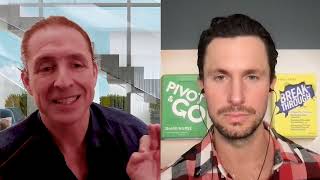
In this Human Upgrade episode, host Dave Asprey interviews NBA mindset coach David Nurse about why people often fail to act on their goals and how to overcome those barriers. Nurse introduces a framework of nine "action archetypes"—mental roadblocks such as the Test‑Believer, the Blamer, the Perfectionist, and others—that keep high‑performers from taking decisive steps. He explains the underlying cause of hesitation as fear of outcomes, and offers a practical formula: Repetition + Instinct + Trust. Real‑world examples (Kyle Korver’s focus on three‑point shooting, elite athletes’ "cigar mode," CEOs’ fear of shareholder pressure) illustrate how identifying one’s elite strength, seeking wise counsel, and applying the "compensation theory" can turn perceived weaknesses into assets. Nurse also challenges the conventional 10,000‑hour rule, arguing that neuroplasticity, bio‑hacking, and targeted practice can accelerate skill acquisition. Throughout the conversation, he provides concrete tools for each archetype, emphasizes the importance of focusing on strengths rather than generic perfection, and encourages listeners to experiment with the framework to move from good to outstanding.
Chapters
You're listening to the Human Upgrade with Dave Asprey. On today's episode, we're going to talk about just taking action, which is what happens when you don't just have a goal, but you decide to do something to reach the goal. This is something that I actually struggled with, and I don't usually say struggled with, because you don't have to struggle if you have a challenge, but that's something most of us do. When I was younger, I did struggle with this because I'd have these goals, but just wouldn't do the basic things to get myself there, and then I would sort of beat myself up for it. So I invited David Nurse onto the show today, and he talks about action archetypes. And if you've been following me for a while, you know, I love these frameworks that help you understand how to perform better as a human being. Whether we're talking about, like, a personality type, a neogram, or we're talking about even erotic blueprints from the conference last year, or love languages, all these are different frameworks for understanding people. But I have not come across something called an action archetype until I became familiar with David Nurse's work. He is an NBA mindset coach. Because apparently just throwing balls through hoops isn't enough. You have to actually think about throwing them through. Isn't that right, David? Is that what you do?
That's it right there. Yep.
All right. More broadly, though, you work with, like, Fortune 500 CEOs as well as pro athletes on the mindset to get them through the taking action steps and all the other things. So really happy to have a chance to chat with you.
Well, Dave, I appreciate you having me on, and I think that is the greatest explanation for an NBA player. Hey, NBA star, throw the ball through a hoop throw.
Figure it out, and don't stress about it while you do it.
Yeah, yeah. You don't have millions of dollars on the line.
Just.
Just do it.
Don't think about all those people watching you.
Exactly. Well, I'm excited to be on, man. It's. It's cool to have your. Your live audience here, too. This will be fun.
Oh, man, I. I am always grateful the Upgrade Collective is here, asking questions, nodding, making faces at me, things like that. So I appreciate you guys. And if you're listening, you can go to daveasprey.com and you can find the link for the Upgrade Collective and you can join the live studio audience. And I do calls with people where I'm providing mentorship and some private information, which is really cool. So, David, I was just on your show, had a really good interview as well, and I was talking about my new book, and I wanted to be able to share your work with my audience because I really enjoyed our interview. So you've got Pivot and Go and Breakthrough are a couple of the books that you've written that are worth it when you're interested in the mindset here. My first question for you is.
When.
Do people call you? I mean, you have these exacts. Do they call you when they're failing? Do they call you when they're kicking ass? What's the.
Yeah, that's a really good question, Dave. And it kind of varies. But you want to know the honest answer of when the majority of execs or NBA players reach out to me is not when they're down at their lowest point or they can't figure out how to take their first step out, but it's actually when they are killing it, when they are hitting on every other area and facet, when they are succeeding. Because once you understand that, all right, you're doing well, and I'm sure everybody out here listening right now is you're doing well in your respective job and career and mission. But it's how do you take that next step? Not how you go from average to good or even good to great, but how do you go from great to outstanding? Because one of the most difficult things to do is when you are succeeding is how do you separate yourself from the rest of the pack? So that's the primary time when I start talking to athletes and execs and even now some, some marvel actors of how they get in the frame of the mindset that will separate them. And there's, I mean, there's a lot to it because you're always meeting somebody where they're at and you're figuring out, and they figure out, too, hey, I actually have a few roadblocks holding me back. And that's why I think this, that taking action, it's such a broad term, but you can narrow it down to these nine different action archetypes that I've been able to develop through understanding the human brain, understanding how people act, and taking thousands of surveys and doing way too many years of research on this.
So Deborah from the Upgrade Collective really wants to know if your techniques also work on short people.
Deborah, are we talking about basketball shooting or are we talking about the mind? Because it does work on the mind. Can't promise you on making it in the NBA all right.
You actually have an equation which I think is interesting about eliminating hesitation.
Well, hesitation is all centered around fear. And the reason that we don't take action in general is based on fear. It's based on fear in different areas. Basically fear that the results will not work out the way that you want them to work out and then you have to face the consequences. So eliminating hesitation is built through of course, the muscle memory development in the skill set, in the, in the, in the skill set, the God given skill that you have. So understanding your strengths. And I'll give you the, the formula that I can literally tell as an NBA player when they step on court with me, if they have the potential to be an all star. And it's, it's a simple formula, but it's, I mean formulas can be simple. Execution is very difficult for it. That formula is understanding what your main strength is. What do you do better than anybody else? So as you are listening to this, think about that. In your own life, in your own job, what is your skill? You're not going to do everything. But for NBA players, here's the example. I worked with this guy named Kyle Korber. So Kyle, I grew up with him actually in small town Pella, Iowa. And he wanted to do it all. He wanted to be the playmaker, he wanted to be the passer, the defender. So Dave, for NBA, that's, that means a lot of things. Hockey kind of resonates as well with that. But so, but his skill set, his, his God given skill set was shooting, shooting threes in specific. And he wasn't very good in high school. And he got one college scholarship offer, Creighton University. He got to Creighton, still thinking, man, I'm going to do it all, I can do it all. That the coach sat him down and he said, Kyle, you will never play if you try to do everything, focus on shooting threes. All I want you to work on is becoming the best three point shooter in the country. So we took that and he did it and he became a great three point shooter after repetition, after repetition. And obviously there's a lot of actual work that goes into that, that develops that muscle memory. But he goes on to having a great NBA career, becoming a top five three point shooter in NBA history. So the first understanding is you have to know what you are very, very good at and you have to lean into that and you have to work on that. All right, go ahead.
I'm going to ask you something here. I promise you that there's more than one person listening right now who has a voice in their head that says, I'm actually not that good at anything. How do you deal with that?
Yeah. So I would disagree. I would say seek wise counsel. Wise counsel not being just the people, your friends that probably are going to bring you down or say something to boost themselves up or even your parents, really. Your. Your mom is not an expert in everything, so don't go to her for every piece of advice, but seek wise counsel from people who will be truth tellers to you that will actually give you the truth. And, hey, what am I good at? What do you see? What strengths do you see in me? And if you ask people that will tell you the honest truth and not just the American Idol parents that say, hey, you're a great singer, when you actually suck, then you're going to find out. You're going to start crafting what these elite skills are. And you generally. I think people generally know, like, when they do something well, that it has been applauded at some point in their life that they have this kind of just. Just this first seed of what that might be. And then when you tie it in with this wise counsel, I think that is what. How you can determine what your elite strength is.
Your advice to seek wise counsel, that's what good friends are for, is to point out the things where you actually are good. And then bad friends either will tear you down or they'll just say you're good even when you're not.
Yes.
Right. To make you feel better. And both of those are toxic traits. Telling you that you suck at everything or telling you're good at things you're not good at. And the wise counsel is that that gap in the middle that says actually you're really good at that and you think you're not, and you actually do suck at that. That was what your coach did in your example. And finding friends like that is really, really important.
Yeah. And even to go further on that point, like, even think about this. So a lot of people think, well, oh, I have this flaw, and it's just so prevalent. But think about the, like, the most talented people in history. You think about Beethoven and Bach. They are deaf. If you've ever heard Andrea Bocelli sing, I think he's got the voice of God. He is blind. They have these glaring flaws that you can actually use for strengths, which I call the compensation theory. Like, if you're so bad at something and Dave, I'm so bad at a lot of things. If you ask my wife to put Together, something from Ikea. I'm out in two steps. I can't do it. You put me in the wild to survive for more than a day. I'm probably going to die, but I know what I'm really, really good at. So the compensation theory of understanding that your weaknesses are not necessarily weaknesses that are going to define you, but these weaknesses, you find people around you that are really great at it. Like, if I'm going to try to say, hey, I want to, I want to figure out what the. How to, how to, I mean, biohack my life, I'm not going to just say I'm the one that knows it. I'm going to ask you questions. I'm going to ask you how to get the most efficient workouts because you're that person that has that strength in my life. So put those people together, figure out what your elite strength is and make this ultimate team.
I love the mindset. Your formula from your newest book is about repetition plus instinct plus trust. Walk me through that in some detail. Tell me why it works.
Yeah, well, repetition, first and foremost, you have to have repetition with the correct form or the correct mindset and the correct positivity. So it is, there is. I don't know if it's necessarily 10,000 hours. It's kind of a generally accepted term. It might be less, it might be more for some, but the repetition with the instinct. Now instinct comes from what people will call flow. So I also think there's a flaw in flow. And I'm starting to do a study and I'll have a book coming out at some point that'll be mixing flow with focus to find that ultimate instinctual point. But it also is trusting those instincts that you have. And when people get into what is called a pressing situation, and a lot of people will do this, they self sabotage, they press. You try to go a hundred percent or 110%, which I think is crazy because you can't do that anyways. But you start trying too hard, you start caring too much and it takes away from the result. And I've got a great story with a friend of mine, Jeremy Lynn, who's had Lynn sanity, an NBA superstar and he went to play for the Toronto Raptors in his last season and he just tried way too hard. He just pressed. He wanted it so bad that he ended up working himself out of the lineup. So it's, it's trusting that, that you've done the work. That's why we talk about the repetition. And I call it the cigar Mode when you go into. So if I go on stage and I go speak in front of thousands of people, you do the same. Like, we are not figuring it out there in the moment. We are letting our instincts, our flow build based on our preparation, our repetition. Cigar mode, meaning you can light up a cigar because you've already done the work and you can trust in that. Now, the key to it is eliminating the fear of the results. So if in any sense I'm. Let's say I'm a basketball player or any kind of sports player, and I'm worried about what the result will be if the shot goes in or like how people are going to think about me afterwards. That's what I'm going to focus on. And I lose the flow instinct, essentially causing this hesitation and hesitation from the great levels like we were talking about at the start. That separation is 100th of a second. It is processed in the SMA, the Supplementary Motor cortex of your brain, where it's just that. Oh, it's the instincts, it's the subconscious, and that's what you're ultimately training through this muscle memory, myelin spinning development in your brain. It's. It's like I said, the formula sounds like it can be easy, but the actual getting there, it's the difference of watching Steph Curry. You watch the NBA, watch Steph Curry. He'll miss 15 shots in a row and he'll shoot that 16th shot. He doesn't care. He didn't miss 15 in a row. It's just the same every time.
You mentioned 10,000 hours and some amount of repetitions required. I don't believe that anymore. Not after writing smarter, not harder, I.
Don'T think I do either.
Yeah, it sounds like someone got the message that they have to work really hard. And since the argument for 10,000 hours is that if you do 10,000 hours, it'll lay down neural pathways. What would happen if you were a biohacker and you learned how to lay down neural pathways faster and you took compounds that increase neurogenesis, like the cognitive enhancers I've been talking about for 20 years? You do some of those and maybe even some microdosing, which also is in studies, raises your neuroplasticity. So suddenly you can learn faster, like a kid. Do you still need 10,000 hours? Probably not. Maybe you run some electricity over your motor cortex and that causes it to myelinate faster. So the 10,000 hour rule is by someone who fed fetishized suffering, not by someone who was driven to perform quickly. Right? So the fact that someone did 10,000 hours once and got results doesn't mean you have to do it. And I don't have enough 10,000 hour blocks in my life to be good at all the stuff I want to be good at. And there are other ways to do it. And it's funny, some of the top guys you work with are biohacking the heck out of what they do because they're seeing the benefits all the time. More power in their brain, more plasticity, proper training with proper form. And magically, it doesn't take 10,000 hours, which is what, five seasons or something, to improve.
Yeah, see, I actually, I really like that and I'm glad that you said that. And even when I said 10,000 hours, and I kind of just say, because it's that generally accepted term, but then I catch myself, I'm like, well, why do we even think about generally accepted terms ever being true? Because more often than not, that we found out in the past four to five years that every generally accepted term is. Is probably BS with a narrative behind it. So as you talk about neuroplasticity, I think that's so important for people to understand us, even in the action archetype of what I call the inopportune, where you think, oh, I'm too young, I haven't learned it yet, or oh, I'm too old, I can't learn it. It's all about the neuroplasticity and the hundred billion neurons in our brain. It's the difference that I say is between maturing the brain maturing and actually continuing to grow. Your brain will mature at what, like the late 20s or something, but you grow with the neuroplasticity changing in your brain throughout your entire life. It's why a Lady Nola Oaks, 85 years old, can go to college and just flourish and get a college degree. Most people would say 85, that's way too old. You can't do it. Or even young in your sense of why these chess masters can be so brilliant. They're not spending 10,000 hours playing chess. They're figuring out how to expedite that process.
I like that mindset a lot. And so you're listening to this and someone's told you you're going to have to suffer greatly. I was in a Uber the other night, and I say, what's the secret to success? You just have to persevere. And I said, I don't think that's the secret to success. Because, you know, if your job is digging Ditches, by the way, that's really hard work. But. And if you say, well, I'm just going to persevere and I'm just going to keep digging with the shovel my whole life, or you could work with a tractor. I know, I'm sorry. Perseverance has no value unless you have the right tools first.
Right. But I think it's been so ingrained in our minds that you have to work hard, you have to work 9 to 5 or you didn't accomplish something, and then you feel bad about yourself because you're not putting in that same type of work. And I think it's really hard for people to unwire that because they've been raised that way. But once you can see that there's another side, a better way to it, you don't have to live in the same rat race that everybody's created for you. You don't have to live in the world basically says, hey, be a pawn, be a cog, just go through the system, make us money, all the big people money, without even knowing it, and you're working for somebody else and literally like your life is gone. For what.
It feels like because of this belief system, young people oftentimes like, I'm not going to work hard because I see what that does, right? And so that creates a fear of working hard for brief periods. And it feels like successful people are willing to really go all in without the fear for a brief period, and then they're willing to not work really hard for a period. And guys like me, when I was beginning my career, I just never stopped working hard. I worked as hard as I could all of the time when I wasn't asleep. And I made $6 million when I was 26, I'm not gonna lie, I lost it when I was 28 and was miserable and there's all that kind of stuff and probably harmed my health in the process. So I'm saying you don't have to do that. But had I not been willing to pull the all nighter when it was necessary, I wouldn't have succeeded. However, being willing to pull one all nighter is different than doing one every night. And it feels like we have this weird societal thing. So how do you coach your athletes or your CEOs who are the most likely of all people to over focus and to overdo it? How do you coach them to go through that cycles of high performance focus and then recovery?
And I think you just set it up perfectly too. So to go back to the point where I was Telling you about Kyle Korver and understanding your strength. The other, the second part of that NBA all star formula is what I call insatiable drive. Now, insatiable drive is the determination and the drive the quote unquote hard work. But it's understanding how to do it. It isn't just grinding yourself until you're tires like you've done or I've done. Because if you also look back at it, you probably think, hey, if I wouldn't have had this, I probably wouldn't be where I am today too. So it is an important skill, and I call that skill too, of the insatiable drive. Am I dragging you to the gym, meaning am I telling you it's time to get up and go to work or are you dragging me to the gym, meaning you know that, hey, I'm excited about what I put in today is going to have the benefits down the road. The seeds I plant today will produce the fruit down the road. But also in that sense, this is what Kyle Korver taught me as he's the guy that we're talking about. Some days he'd go for an hour, some days he'd go for 15 minutes. He would go, he'd go hard, he'd go game speed in practice until he felt like he had it. Until he got to that spot where he felt really good and he felt like, okay, if I go anymore now, I'm just going to have diminishing returns. I'm going to start being tired, I'm going to start going to start getting sloppy and it's actually going to create worse habits. So if you decide, hey, I'm going to work, I want to be like Elon Musk and I'm working 18 hour days, seven days a week. No, you won't. You're going to have diminishing returns. You will snap on your wife, you will snap on your kids. You will be so stressed out it will affect your health. So you have to understand. And it's tough to find that balance, but it is until you feel like, okay, I've got to the point where if I go any further, I'm now going to get diminishing returns.
Okay, you make a lot of sense there. I want to go deep with you on two of the different action archetypes and really understand them. Because there's nine of these. And how do people figure out which action archetype? I mean, other than reading the book?
Yeah, I mean that's going to be the best way. So you can see every one of the action archetypes. And it is an awareness, it's not necessarily a personality test where it's, this is who you are. There's actually one of them called the Test Believer, where you have to take yourself away from just saying, oh, well, this is who I am. That's why I'm acting this way. And I think one of the biggest ones for this, Dave, as we go back to diving deep into these for that sense of the test believers, like, people will say, oh, I can't go meet people. I'm an introvert. No, no, no, no, no, no. You can be introverted in, like recharging on your own, but you can go be extroverted or go meet people. So I don't think. I think that's. There's a lot of this is who I am. That's an excuse. But, yeah, read the book. I'm just going to say read the book.
The book is called do it by David Nurse. So if you guys are vibing with this, just check it out. Wherever you like to buy books. And if you're wondering why we always say wherever you like to buy books, it's because there is a place you can buy books that doesn't start with a. In fact, there's many of them. And when you support those smaller businesses, you support freedom in the universe. There we go.
It's a good point, Dave. Thank you.
You're welcome. And by the way, anytime you pick up a book from someone who's been on the show, you really should leave them a review after you read the book. It's like tipping your. Tipping your barista. Just do that because you're a nice person. So let's assume they're going to read Duet. But it's funny, you pulled out the Test Believer because that was one of the two that I wanted to ask you about. And you basically define this in the book as people who seek validation for who they are based on a personality test or the way the stars align or some external factor. What does that do for taking action?
Well, it allows you. So each, each one of these action archetypes is essentially a roadblock for why you are not taking action. And action is the gap of where you are today and where you strive to be to tomorrow. So right in between, there is that taking action and the Test believer is a roadblock of saying, well, this is who I am. So if you look at all these different types of, of personality tests, you look at the Myers Briggs, you look at Enneagram, you look at your Zodiac Sign, like, let's say, I know this is stretching it a little bit in this example, but let's say, hey, Mercury's in retrograde. I'm gonna have a horrible month. Because it says that. And then you lean into that even on, like, you manifest it. It's like the aura ring, too. I love those things. But when it says, oh, yeah, there you go. When it says, david, Your recovery is 32, don't move today, don't do anything. Like, am I going to say, all right, aura ring, you are correct. I'm going to have a horrible day. Or. Or do I overcome that? So I think it's good for awareness, but it's not necessarily the thing you want to live in.
You really burst in my bubble because when I wake up and my score, actually, I've never had it that low, but if it was that low, I woke up, I would complain about it, blame others, and do nothing about it.
And that's another one. The blamer is one of the most prevalent action archetypes right there. It's always somebody else's fault.
I was trying to get us to the blamer. And you so got it. That's so good.
Right?
Let's talk about the blamer as a way of not doing stuff.
Yeah. And it's. It's so much easier to blame somebody else or blame the circumstances. Yeah, right. The circumstance that you're in for, why you are where you are. Blaming is rooted basically in your personal need for self validation. It's ego, it's fear. It's a free pass from ever having to really take responsibility. And the funny thing is, so if you would say, like, okay, blaming is correlated with negative stimuli in the blood in the brain, I think most people would generally, like, they would agree with that. There is evidence. It's doctors. I think it's McLeod or however you pronounce his name. He did evidence that shows there's greater processing in the brain that takes place. So more energy is used in the brain when there is negative stimuli.
Yes.
Is it Saul? I think, is it Saul or McCloyed and McLeod?
I don't know how to say it.
But I know the stuff you're talking about. Okay, well, the point being is, why would you choose that when your brain is going to have to actually work harder? If there's negative stimuli and the. The understanding that it is the situation in the circumstance, those are always going to change. The only thing that can remain constant is you, and that's the choice that you get to make.
So let's say that I took the test and I read the book, by the way, guys, it's called do it. It's the book. And I realized, okay, the two things that were holding me back are that I blame other people. So I've got the blamer thing and that I have the test believer. So I've had a test that says I can't do it. And I know it's someone else's fault that I can't do it. What would I do to fix that?
Oh, Dave, great setup. So at the end of each archetype is a tool to be able to overcome these. This is not just an awareness book. And then you go feel bad about yourself. No, you actually take action towards it. So for the blamer, it is what I touched on earlier. This is the tool called the compensation theory. So what do you. What are you blaming for the reason that you're not successful? It is a flaw. It is some type of flaw that you have or some type of fear. Now, like we talked about with Bach, with Beethoven, they have immense flaws. But did they blame their flaw for why they couldn't become great? No, they blamed that for what or they used that for why they could become great. So look at what you are blaming and why you are blaming it. And there's. There's. There's two ways to look at life. And this is really the only two ways is upward counterfactual thinking meaning well, ah, man, what if. If I would have just done that differently or if that would have just went my way? It's the what ifs in a bad way. Upward counterfactual thinking or downward counterfactual thinking, where you look at the past and it's, well, it could have been worse. Oh, I got in that fender bender. Ah, car could have been totaled and I would have been dead. So it's. How do you look at the past in this compensation theory of it could have been worse and how you look at your flaws of. Well, I can actually use that as a positive. So it's a. It's a type of perspective pivot or shift in that sense, then the tool. Now this tool is a. Like an actual. You're writing this one out or you're checking the boxes for the test believer. And I just put a whole list of different terms that you say, yes, that applies to me. Check. Yeah, that applies to me. Like you've done these type of tests before. In the list is every single thing, every single aspect of Myers Briggs, of the Enneagram, different things in Your zodiac. I mean, like multiple tests. And you find the ones, like, at the end, you'll come up with, oh, I'm. Here's my strength. This is it. This is it. And you see that you're such a blend of all of these. So the point of it is to open your eyes to see you are not just in one single box, but you're a little bit of everything. So you don't tie your identity to that. And hopefully people can see that. Well, if I'm not just in this box, I'm also not just in the box of you are a regional sales manager for this company, and that's your identity that defines you. Same similar type of thought.
It makes a lot of sense. I get a lot of pleasure from those type of tests. Not because they tell me the truth, but they're likely to highlight patterns that are invisible to me because that's what my meat operating system does, and it hides it from me. So I'm like, oh, look. And if you do the do it stuff in your book, suddenly it will become visible to you that you're doing one of these. And it would be invisible if you didn't. So the use of tests in my world is to see the unseen and to see the invisible habits and to see how your operating system is tricking you, but not to believe the test. Because even things as simple as a happiness set point, there are some poor people out there, psychologists with degrees, saying, there's a happiness set point and you'll never be happier than that. And I'm like, how many ways can I show you my middle finger? Because let's hook you up to some neurofeedback. And like, let's do this, because I've done this with miserable people, and they come out going, wow, I didn't realize I could be happy like this. And it sticks. So, like, none of those tests are definitive other than perhaps a genetic test and even that use epigenetics to turn genes on or off. But I will tell you, if you have two of a gene.
You can't.
Turn that one off. You might want to deal with that in another way. It still doesn't limit you. You just know that that's an area where you put your focus to get around something that might be harder. So I'm with you. Even though listeners might say, wait, hold on.
Yeah, but I mean, I think that's so important to hear that, and even the genetic stage of it as well. Like, people will say, well, here's your potential, I think potential Is a terrible word. It's just a. It's a bunch of bs. It's what anybody else has perceived as your limitations to be. And I give this example. If you want to see how you can burst through potential, type in Steph Curry, one of the greatest players that will go down in history as NBA player. Type in his NBA draft prospectus, and you'll see what comes up. It says, too small. A fringe player might be lucky if he makes it in the NBA. Bad decision making. And if he lives in that. Well, this NBA scout who gets paid a lot of money says, this is what I am. That's what he would have become. So it is just an awareness of. Well, okay, these patterns. Okay, let's see how I can break through this.
Okay, I like it. In the example of blaming, you talked about someone who blames one of their own inherent flaws. It seems like there's a lot of blaming of other people in society these days.
Oh, yeah.
So what do you do with people who, well, I can't do it because, you know, whoever's in the White House, whatever, whatever clown suit they're wearing this four years, it's their fault or whatever else. Or, yeah, it's your mom's fault, whatever. So the difference between blaming yourself versus blaming others, how do you get around blaming others?
Well, I mean, it is. It all comes back to the old adage of if you're pointing a finger at somebody else, there's four pointing at, back at you or whatever that is, three pointing back at you. That just becomes an excuse because it's so much easier to deal with results if it's not based on you. If you don't step out and take the risk, then where's the failure point? There is no failure point. If it's somebody else's fault, it's never on you as a failure. And essentially every single one of these action archetypes or roadblocks that hold you back is based on fear of failure, fear of the uncertain future to come fear, fear of fill in the blank. And the reason that you blame somebody else is it's just so much easier than to take ownership on yourself. And we've created a narrative in this world that it's, yeah, it's not your fault. Blame somebody else, it's on them. And I think it's just become so ingrained in our brains.
Makes a lot of sense. One of the action archetypes and do it is the perfectionist. And so many people I've worked with in my life or at 40 years as in the neuroscience brain upgrade program. Especially high performance people like CEOs or pro athletes. Perfectionism is a part of it. Like, I have to do it perfectly. I'm going to stay up late, you know, taking that shot over and over until it's perfect. Why does perfectionism hold us back? And what do you do about it?
I love this one. Yeah. Perfectionism has, has even increased over the last 20 years because of the rise of meritocracy. And we're able to see everything on social media. And it becomes so highlighted that everybody is perfect when in reality, we know it takes some 20 cuts to make that video. Or everything is. Is filtered.
The Enneagram, which would be. Yeah, I think you just fell into your own action archetype there.
Did I fall into it? Was I blaming the Enneagram?
They were like blaming to me.
I just came to Enneagram. You're all messed up. You're the reason for everybody's stress. Oh, see, there you go. I mean, just kidding. But that's the cool thing about this too, Dave. And I'm not saying this just to pump it or say, hey, go buy the book or anything like that. Of course, of course I'm saying that. But yet, some point in our lives, we're all different ones of these. I know that I've been every single one of these action archetypes, roadblocks holding me back at some point. And it's cool to be able to come back and filter through it to see what is holding you back currently. But the perfectionism is such a debilitating factor because we, we think that what we put out there is going to be the final product and is going to be literally what everybody makes of us. And it's going to be. It has to be spot on. But in reality, when you start to understand that most people don't give a shit what you are doing, they only care about themselves. And the only way to actually see if something is working or having resonance in somebody is just doing it. The ready, fire, aim. And you learn so much from that. It's what I call. It's a distortion effect of when a basketball player misses a free throw and says, oh, my shots broke. I suck. I'm terrible. No, you're not. That was one byproduct of a result that does not define anything that you've done leading up to that moment. So your production doesn't necessarily reflect the process, the system, who you are, the process, the daily habits. You're not going to get it right every Single time, nobody ever did. And it's cool to be able to go back and just search like, oh, how? How did these great people in history, did they have roadblocks? Yeah. Look up Walt Disney fired from the Kansas City Star for not being creative. Look up Colonel Sanders a thousand and nine times until his recipe for KFC was accepted. There's so many stories like that. And the way to overcome it is, is coming back to that 90% rule. If it's 90% of the way, there's go for it. You're going to learn, you're going to craft it, you're going to keep getting better at it. David People went back and listened to my first few podcasts that I ever did years and years and years ago, they'd be like, this dude sucks. Like, those are brutal. But I didn't wait till I had it all together, because we will never have it all together.
I got to ask you this. As a coach, I've been experimenting over the last couple years with just different techniques to help people get past limitations. Usually because of neuroscience or sometimes just working with people. There's just so much trauma out there. When someone says I'm a piece of shit or whatever their limiting belief around that is. Sometimes I just go, you know, you're right. You know, I just agree. And I'm like, you know, absolutely. I mean, can't you see it? It's pretty clear. Everyone knows. And you kind of double down on their message until the point of absurdity. And they're like, well, wait. Well, fuck you. I'm like, oh, you got the point. Is that a good technique or not a good technique? I haven't decided yet. It seems kind of dark, but it seems really effective.
I actually think it's a really good technique because ultimately what it brings them to is understanding that they can laugh at themselves and it's not so serious and they're actually telling themselves a lie that you agree to them to the point of over agreeing, not to the point of just subtly agreeing where they actually believe it, but they get to the point where they're like, the hell was I thinking? And then you wire it back. So I think it's a really good strategy.
Yeah, so it is a good strategy because I generally, especially when I'm in those kinds of healing or brain upgrade sessions and people are vulnerable and you don't necessarily want to say negative things, but when I see someone caught in, like a pity cycle, which is what happens with, you know, that archetype when you, when you really turn it up all the way. Well, sometimes it's like doubling down on the pity. So I'm glad you're. You're validating that I'm not doing it. It doesn't feel good to do that. Although I guess the impish part of me kind of laughs because I'm like.
So you got to be careful, though, too, with it. Of, like the pity party part. I like to go on that. As far as what you said, but there's also that, that, that finding the right balance of empathy, of if someone is just raw off something that happened, that they're saying that they suck so bad because they just had some massive failure, maybe that's the time to feel it out. And I'm sure you. You can do that and feel out the room and feel out what people are thinking. But in generalities, I think if there's someone's having a pity party. Yeah. Go with it until they start laughing at themselves.
All right, I love it. I'm gonna. I'm gonna stick to that advice. Okay. Now, you coach CEOs, I don't know. I don't think Bulletproof was ever fortunate 500, but it's a $100 million company, so I don't know if I can't say CEOs like me, technically, but you coach big name CEOs and NBA superstars, so how do we know that this applies to someone who hasn't had any success in their life yet? What's different?
That's a great question. And it totally applies in terms of understanding that no matter what level somebody is at, everybody struggles with the same innate struggles. It's the top NBA players that I work with struggle with confidence. I have a guy who's made over $250 million in the NBA, and the main thing he was struggling at the start of this season was because he's coming back from injury. What the fans were saying, what people were saying about him on Twitter, that was his biggest stressor. Like, come on, $250 million in the NBA, multiple time NBA all star, potential hall of Famer, and that's what he's struggling with. So to see these guys are struggling with the same type of things. Big CEO that I'm working with. He is. They're literally moving these stock markets by decisions that they make. But he is so worried. What I mean, obviously, I mean, shareholders, which is something that is a very relevant worry, but he's worried about how he can combat them until he realized, well, maybe he should make them work with him and get him on his team. So it's just like you're at the office and you're trying to battle somebody who's bringing you down. Well, maybe you can work with them and help them find their best self to be able to help other people. So it's the same type of struggles. It's just at a different scale. And sometimes it's the same, though. And people. People don't tell yourself the lie that somebody that you see that's a Hollywood actor or something, that you think they don't struggle. They probably struggle more than you do.
The successful or the story that successful people don't have the same problems as you is complete nonsense. I mean, I've worked with more than a thousand highly successful people through the 40 years of Zen program. And I mean, very successful people. Their problems are this list of nine things. It's always the same. These are human things, and I think they're caused by our meat operating system. This is a struggle between our mind and our body trying to make sense of each other. And this is where the shortcuts to save energy end up and where the patterns end up that are most energy efficient to make sure we survive. But each of these is a survival type of behavior that humans exhibit, and our bodies hide it from us. So that's why we do it. Or get wise counsel. Of course, it's hard to know if you have a friend who's wise counsel. Stress, testosterone. Because maybe they think they are and you think they are, but that's just your operating system tricking you. So having this framework. I mean, this framework is a test. And once you take it, David, just to make sure I understand your book correctly, once you know which one it is, that's locked in forever. And you'll be stuck with perfectionism for the rest of your life.
Correct. You are screwed. You will never amount to anything. No, you're able to break through it and then continue to come back. If there's something that you can see that, okay, why am I not at the spot that I want to be?
It's like, find your blind spots. And I think that you did a really good job in this book of pointing out blind spots. In my 20s and 30s, like, one of the big things, why did I not do that? Why did I procrastinate? Why did I hold back and you just don't know. And then you feel like it's because there's something wrong with you. No, it's because you have a body testimony.
You did.
And these are the things. So I think that a lot of people are really going to enjoy the book. And thanks for coming on the show and sharing this knowledge. And I really think that these nine things, you nailed it on the head, so it's cool. Website davidnurse.com book is do it. The Life Changing Power of Taking Action. Thanks, man.
Appreciate you, Dave. Thank you, man.
You're listening to the Human Upgrade with Dave Asprey.










