How to get a handle on your histamine with Dr. Becky
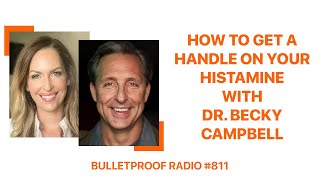
In this Bulletproof Radio episode, host Dave Asprey interviews Dr. Becky Campbell, a board‑certified doctor of natural medicine, to explore histamine intolerance, mast cell activation syndrome (MCAS), and their wide‑ranging impact on health. Dr. Becky shares her personal journey—from childhood migraines and thyroid issues to discovering that excess histamine was the root cause of her symptoms. The conversation defines histamine intolerance, lists common but often unrecognized signs (migraines, fainting, rapid heart rate, anxiety, dermatitis, flushing, food comas, dizziness), and distinguishes it from classic allergic reactions. They explain the biochemistry of histamine metabolism, emphasizing the role of the DAO enzyme, gut health, genetics, and nutrient cofactors (vitamin C, copper, zinc). The discussion contrasts MCAS (over‑production of histamine) with simple intolerance (impaired breakdown). A detailed inventory of high‑histamine foods (aged meats, fermented foods, alcohol, certain fruits, avocados, vinegars, leftovers, bone broth) and histamine‑liberating triggers (heat, stress, certain medications) is provided. Practical mitigation strategies are outlined: low‑histamine diet phases, DAO supplementation, quercetin, vitamin C, zinc, targeted probiotics, and acute use of antihistamines (Benadryl) or natural antihistamines (quercetin). They connect histamine dysregulation to related conditions such as POTS, low blood pressure, thyroid autoimmunity, and post‑COVID syndrome, noting that mast cell activation may underlie many of these. Lifestyle factors—adequate cortisol, sleep, hydration, stress management—are highlighted as modifiers of histamine response. The episode also touches on controversial topics like COVID‑19 vaccination, suggesting short‑term antihistamine pre‑medication for sensitive individuals while warning against chronic acid‑blocking drugs. Dr. Becky promotes her book, “The Four‑Phase Histamine Reset Plan,” as a structured protocol for diagnosis, elimination, re‑introduction, and long‑term management.
Chapters
You're listening to Bulletproof Radio with Dave Asprey. Today we're going to talk about histamine. And you might say, what do I care? I know about Benadryl. It turns out histamine is a major neurotransmitter that affects your awareness, your food cravings, how tired you are, how inflamed you are. And it's something that happens for all sorts of weird reasons. So I tracked down a guest named Dr. Becky Campbell, who knows histamines really well from her own experiences and from working with patients she's treated. Histamine is one of the things to watch out for, even going back as far as 10 years ago, when I first wrote about the bulletproof diet, that this is one of the things that can be messing with you in your food that you don't know about, but it turns out it does a lot more. So our guest today, board certified doctor of natural medicine who has a virtual practice@drbeckycampbell.com looking at histamine intolerance, thyroid, and autoimmunity. And we're going to go deep on why does inflammation happen and why are you maybe hungry after some meals and not others? And what are the other things that are going on? Dr. Becky, welcome.
Thank you. I'm so excited to be here.
Now, you got into histamine because it messed with you. What did histamine do to you?
Well, you know, honestly, like, even as a kid, I never felt, you know, normal. I. I know that I had migraines. I would pass out in the sun, which wasn't normal for kids. And. And then even, like, you know, fast forward to college when I figured out I had a thyroid issue, which took forever to even get that figured out. There were still things that were going on in my body, and it was really related to food, but I was eating really healthy foods. And so I could not figure out, like, why am I eating this and why am I getting a migraine immediately? So then I started to learn about histamine and mast cell activation syndrome, and I kind of put it all together, and I realized that that is what I had going on. So once I realized this is what I had going on, I knew a lot of people did not know about this, and I had to, you know, know, spread the word as much as I possibly could because there's so many symptoms associated with this, and a lot of people don't know what it is.
So you dealt with it. And what are some signs that histamine is an issue for people that they might not know about. You mentioned migraines and passing out. What else?
Yeah, migraines, passing out. You know, eating and having, like, a really fast heart rate for no reason. Having anxiety kind of out of the blue for no reason. Any type of dermatitis or hives or flushing, you know. You know, you see people that you're talking to them and they're flushing, and you're like, why are you flushing? That type of stuff, you know, random diarrhea, going from sitting to standing and getting dizzy. It's kind of all over the place. It's really. If I could describe it best, it would be all these random symptoms happening that you cannot pinpoint where it's coming from.
I also know that a food coma is a common cause of it, and people have heard of, like, a pork coma. You ever go to a restaurant and eat a large amount of pork, and afterwards you're like, oh, like, why am I passing out? What, I want the cheesecake even though I'm too full?
Yeah, that's histamine for sure. Oh, yeah. I mean, my biggest symptom of histamine intolerance is fatigue. I would eat something like, you know, that was supposedly healthy for me, like fermented foods, and literally feel like I took a sleeping pill.
I've had exactly the same thing to the point that I actually have a Benadryl in my. In my bag. And if I eat at a restaurant, I'm like, yeah, that's probably a high histamine food. I'm not that sensitive, but sometimes, like, I'll eat it. I'm like, well, I feel like I just got, you know, a Valium and then Benadryl, and suddenly your brain turns back on in five minutes.
Yeah. It's so crazy, all the different things that histamine, you know, too much histamine, I guess you should say does to your body is really wild.
So I'm going to take a quick poll from our Upgrade Collective members who are live studio audience here. Guys, does it sound familiar? Just kind of raise your hand and wave at me. Yeah. So probably half the people are saying, yeah, I would know what you're talking about. And are some people histamine resistant? Like. Like, they can just eat whatever they want? They don't have a problem.
I think it all depends on your ability to break down histamine. So if you have a lot of that DAO enzyme there, you know, there's different enzymes that break down histamine. So it's a natural reaction for our body to release histamine but if we can't break it down, that's when there's a problem. So if you have, you know, good gut health, which is where most of this enzyme is, is created, then, yeah, you don't tend to have an issue with histamine. And you can eat all the fermented foods you want, drink, you know, alcohol and feel totally normal, but then someone else who, you know, can't break down histamine, well, is going to completely have the opposite effect.
Here's a question for you. What's the difference between an allergic reaction and a histamine reaction?
So I think when you have an allergic reaction, you know, you are producing histamine. So you, you get something in your body. Your immune system goes into overdrive, it sends in all this histamine and you get inflammation. And then that causes, you know, for some people, the throat to swell and close up. They have trouble breathing. You know, that's an allergic reaction. A histamine response is not going to be that severe. You're going to get symptoms, but you're not like, dying, you know, you're not at risk of actually losing consciousness. For most people, throat closing up, that type of thing. I think it's, it's the level, it's, it's something whether you're literally allergic to it or you're just more sensitive to it.
So it's not really an allergic response with IgG and IgE, but it's something faster because it's a direct neurotransmitter. What happens when you eat a bunch of histamine? Like, walk me through what happens in the gut, what happens in the brain? How quickly does it happen?
Okay, so if you don't have an issue with breaking down histamine, you eat a high histamine food. We have enzymes that are built in, they come in, they break down the histamine, it goes away, you feel normal. But the problem is, is that most people with histamine intolerance are. They're, they're low in those enzymes, so then they're not breaking down that extra histamine. So they already have a lot of histamine in the body, then they're eating more histamine, and then they're getting histamine into all these receptors which are all over the body, and then they're going to get all these random symptoms.
And when the histamine hits cells, there's mast cell degranulation. Can you talk about that?
Right, so our mast cells, they produce histamine and release It. So degranulation is basically, it's almost like imagine a cell bursting open and histamine and other inflammatory chemicals just kind of pouring out. So that causes a lot of inflammation in the body and it's going to cause us to have all those reactions that we have. And. And the difference with mast cell activation syndrome and just histamine intolerance is with mast cell activation syndrome, you have an abnormal. You're producing more histamine than a person who does not have mast cell activation syndrome, basically. So the wind, you could be too hot and you're going to start dumping histamine. Whereas somebody without this issue isn't going to respond that way to. To heat or to cold or to mo. Know all the different triggers of mast cell activation syndrome.
What percentage of people have issues with histamine would you estimate? I know. We don't have good studies on it.
I know. I mean, if you look it up, I think it says like 17%, which I know is completely off. You know, I think it's just that it wasn't talked about enough or even known about. So there's not enough, like, accurate data on this. But I can tell you that I used to talk about thyroid predominantly, and since I started talking mostly about histamine intolerance, I've had such a reaction from people saying, this is what I have. You know, nobody knows this. This is what I have.
Did you just say. When I started talking about histamine intolerance, I had such a reaction?
Sorry, no.
I find it resonating more, too. This was unknown even 10 years ago in the context of COVID there are some adventurous biohackers and physicians actually saying straight up that they believe that long Covid is related to histamine and that it's mast cell activation syndrome.
Right. Yeah.
There's any reasonableness to that.
I completely agree. I think that, you know, with COVID we talk about the cytokine storm. You know, that's kind of what people. You hear people say. And cytokines, they can be inflammatory. And. And same thing with histamine. And so what's happening is you're getting this really inflammatory response and your body has all this inflammation and doesn't know what to do with it. And if you start eating more histamine foods, you're going to get even more inflamed. So post Covid, they're really recommending a low histamine diet, and that can help at least what you're taking in as far as what's going to Inflame your body. So, I mean, I had Covid, and I have mast cell activation syndrome. But I was also, you know, I, I do a lot of stuff and I've been doing a lot of stuff for years to really get my body, you know, my mast cells very calm and happy, you know, so I think I was a little prepared.
So you were the, the perfect person to get Covid because you already were managing that. What would you, what would you say for someone who says, oh, I recognize that I'm one of these histamine sensitive people, and I'm going to guess it's probably 40. Have some degree of sensitivity. It's high.
Yeah. I think it's a good number.
They just don't know. Like, sometimes I'm tired after I eat. I'm like, sometimes it's what you ate. And, you know, maybe it was that maybe you're allergic to eggs or something, but when it's that sudden drop after a meal, then you know, it, it's something. So.
Right.
What, what would the basic things. Okay, don't eat high histamine foods, which is basically leftovers. Pork that wasn't very, very fresh, or fish that wasn't fresh. Certainly no fish sauce and no fermented soy. I'm trying to get the big ones.
Right. Yeah. And, you know, avocado, I find is a big problem for people. Alcohol. Yeah. Well. And just sometimes in general, I mean, it's, you know, histamine producing food for whatever reason. It was strawberries, which you would think, like, why would strawberries bother me? Citrus fruits based, definitely. Fermented foods and alcohol, I think are the biggest hitters. And you know, aged meats, aged cheeses, all that stuff with. Because it's the fermentation process. So I would say, you know, cut out the biggest hitters. And in my book, I have a yes, no and maybe list because I really try to get people to be able to eat as much as they can. So I say just start with eliminating the no foods. And that's kind of like the foods we named.
What I do is I minimize those foods. But there's times when, like, look, we, we raise the best pork on the planet and we actually tell them, don't hang it for a long time, freeze it when it's still fresh. So there isn't any breakdown of the proteins to make histamine. But if I'm going to eat something that I know is maybe a leftover, I will take dao, which is an enzyme that you can buy that helps break it down and I'll take a part of a Benadryl and I can do it. And I don't eat 3 day old guacamole because it's just bad. But if it's from good avocados that have black spots, it works. So, you guys, if I'd have known this, there was a time back when I was in my MBA at Wharton and I was working really hard in this incredibly math centric class. Only in Wharton would you have to do calculus and a management class. I don't even understand that. But let's just say it wasn't my favorite class and I wasn't doing that well in it. And we had a. You know, they would make food for us there at school. And so I ate a bunch of avocados and they were not fresh avocados. And that night I had the most severe histamine symptoms. I know what they were, but I felt like I was tripping, like I was hot, I was sweaty, I felt like I was passing out. I was trying to study and I showed up the next day. And I'm grateful that you were allowed to get a D minus in several classes and still graduate because I totally bombed the test. And I know at this point that it triggered mast cells throughout my body. Like I walked a quarter mile to class. I had blisters on my feet, so systemic inflammation that wouldn't have normally happened. And I got a really big hit of histamine there. And so that's an example where you just don't know. And it just feels like, why is this happening to me right now? But there was a clear connection. I just didn't have the knowledge at the time. And maybe we didn't. I don't think most people knew about histamine way back then. So this is how impactful it can be. But other times it can just be, I'm trying to drive home and I'm feeling super, you know, I can barely keep my eyes open and I'm sort of driving by braille because when I hit the bumps on the side of the road and I don't have a Tesla, then I know to stay in the lane. That can all happen. So this is a kind of a big deal. When it's a big dose, the rest of the time you just feel a little bit like crap and you want dessert. And that's why I think it deserves more attention than it gets. And you've been one of the loudest voices saying like, this is a big deal.
Yeah, it really causes a lot of issues for people. And it's sad because a lot of doctors don't know what it is, and they just. Are you. They just dismiss them, you know, and they just say, oh, you're fine. Or, you know, it's. It's hard. It's. It's hard for people to kind of navigate what to do with this. And I was like, I have to create some kind of manual, like, this is what you need to do, because people need to understand this.
It's. It's one of those things that may be genetic. It may also be tied to some other stuff, like environmental toxins break down, why this is happening for people.
Yeah. So I would say you can have reduced enzyme activity, like the dao enzyme that breaks down histamine from genetics. You can have it from vitamin deficiencies like vitamin C, copper, different vitamins, you know, your gut health, because that's where the enzyme is mostly produced. And we. How many people do we know that have gut issues? You know, and. And all different types of gut issues, you know, leaky guy, bacterial overgrowth, yeast overgrowth, parasites, even, you know, irritable bowel disease. Like, there's so many issues that can contribute to this. So. And then, you know, I think that mast cell activation syndrome is probably the. The number one cause of histamine intolerance. But there's even different medications, you know, antidepressants, NSAIDs, that people are just taking it, and, you know, they take without realizing the effect that they can have, and they're breaking down their ability to actually break down histamine. And even anti histamine medication taken on a regular basis can have this effect where it actually reduces that. That enzyme that breaks down histamine. So that's why sometimes things like quercetin, which is a more natural version of like, an antihistamine, can be more beneficial than taking, like, you know, zyrtec, because it doesn't break down that enzyme, and then your body can still do it on its own.
So things that help with histamine intolerance, from my own research. Vitamin C, quercetin, zinc.
Yep.
Funny. Don't they recommend all of those if you're getting Covid.
Yes, exactly. Exactly.
Any mast cell connection couldn't be. Let's not talk about that anymore. So what else? I mean, that's. Those are kind of the big ones. But what else, in terms of supplements makes a big difference?
I like, you know, I. I try to use food as much as I can, so quercetin, we talked about. So there's. There's a lot of foods that naturally have quercetin in them. Sage has quercetin, red onions, broccoli is, you know, very good for anti.
You're not gonna get therapeutic doses of quercetin from sage. You can eat the whole bush.
No, but you can. I'm just saying, if you're adding these foods, I take quercetin. I mean, I take it in a supplement, but I'm just saying I also try to add, like, as much as I can with food just to help, you know, But I take a blend that has a couple of different things in it, like nettle and quercetin, vitamin C. You know, vitamin C is a really good antihistamine. So, you know, that type of stuff. And then supporting your gut, you know, I really think that, you know, there's. There's, you know, good probiotics, and I've actually read your article on this. There's good bacteria that helps to break down the histamine, and then there's bacteria that actually makes histamine worse in probiotics. So, you know, if we're talking supplements, you know, you definitely want to make sure you're on the right one.
All right, I'm going to find that post. I think I wrote that in 2014, and it was, guys, here's. I went through all this medical research, like, here's the probiotics that increase histamine in the gut, and some of them are in common probiotic supplements. And then here's the species that reduce histamine in the gut. And so I'll find that article and I'll repost it in the show notes for this.
It's a great article.
You may find when you look at the bottle of just kind of probiotics you picked up on the shelf somewhere that weren't formulated that way. They may have species that are maybe good for some things, but bad for that. So if you're having gut issues or, you know, you're having brain issues after some meals, look, it could be msg, it might not be histamine, but histamine is a much bigger variable than most people know about. And it's one of, like the big five or six that I talked about in the bulletproof diet where, like, this might be it, it could be msg, you know, it could be lectins, it could be oxalic acid. But you got to find whatever. If you're having anything you don't like after you eat, then you got to figure out what is it, so you can stop doing that. At least for a while and recover and maybe just not do that because it's not compatible with you.
Yeah, definitely.
If you wanted to stack up oxalates, lectins and histamine in order of like which ones are causing the worst problems in the most people, how would you order those three?
Probably lectins, number one, you know, just because I feel like so many people have issues with their gut and the integrity of the lining of their gut. And we're seeing that lectins really contribute to that. You know, oxalates, they overlap with histamine sometimes. And I feel like when you put someone on a low histamine and low oxalate diet, it can be really restrictive. And I find that oxalates can really be related to yeast in the gut. So for me, with, with everybody, I work on their gut, you know, and I almost never have to do a low oxalate diet. So I would say lectins and then histamine and then oxalates.
Lectins, histamine, oxalates. I, I would agree. Um, and in terms of a low oxalate diet, it's usually not necessary, but a not high oxalate diet is usually necessary.
Right?
So if you're doing the two kale salads a day and you have issues with histamine, you get inflammation caused by oxalates. And guys, if, if this is new info for you, oxalates are, it's a, a thing that causes crystals to form with calcium in your bottle in your body. It's common in kale and some seeds and, and things like that. That's an. A little known cause of cravings and inflammation. And lectins are common in nightshade, vegetables and grains. And these are proteins that stick to carbohydrates. So these are things in food. And just look at every food as a mix of energy plus good stuff, plus stuff that might be causing problems for you and sometimes stuff that always causes problems for people. And the approach that I've been advocating is eat less stuff that causes problems for you that has the right amount of energy for you and lots of nutrients and magically you feel better. And if histamine is one of those things causing problems for you, and you're eating it all the time because you think that sauerkraut's good for you, well, maybe. But if it's got spicy stuff in it which has lectins and the ferment that was used made a lot of histamine and you don't know it and you know, sauerkraut's good for you. You'll eat it every day, and you'll have brain fog and cravings all the time and know you're doing the right thing for your gut, even though it's not working.
That was exactly me and bone broth. Right. Because a lot of people, you know, went on this bone broth crave or craze, and it's good for many people, but for people, you know, the. With what people don't know about histamine is the longer you cook something, the more histamine is. Is kind of produced in it. So when you cook 48 hours, you know, in a crock pot, bone broth, and you don't feel well, it's probably because there's a lot of histamine in that bone broth you're drinking. So maybe it's not right for you.
A huge number of people say, oh, bone broth. But it has collagen, but it usually has substantial amounts of histamine in it. And if you take the meat out entirely, you get a lot less of it. So if you're actually making bone broth that doesn't have meat that's been cooking for a long time, you're much more likely to feel good afterwards. But I find a shorter cooking of bone broth usually works better. And if you drink bone broth and you get food cravings and you want ice cream afterwards, that's not the bone broth for you. So it's something you have to be really careful of.
Yeah, I do. Instant pot bone broth.
Yeah. Instant pot is a good way to do it. And even with sous vide, which is one of my favorite cooking techniques, if you don't get the temperature right or you cook it for too long, you can make tender, amazing ribs or whatever, but then you eat it and you feel like crap afterwards. Or maybe you feel fine, but your spouse feels like crap because they're more sensitive than you are. So, so true. If someone eats a meal with histamine and like, wow, I'm. I'm having something going on here, how do you take immediate action to feel better?
Well, it depends on the degree. I mean, you talked about Benadryl, and I do tell my patients. I'm like, if you're having a severe reaction, take some Benadryl. Hopefully it's not the one with the dye in it, but, you know, take some Benadryl if it's very intense. But if it's not, you know, I tell people, I'm like, let's say you Want to have a glass of wine? Let's say you want to have some dry farm wines, right? We know we've both had that. Take some quercetin or, you know, some product with quercetin and some natural anti histamines in it before and maybe some liver support and then take some after. And that will help your body get rid of it and also help to kind of calm down that histamine response. So it really just depends on how severe the response is. There's definitely different avenues you can take.
It's really funny how many people say I can drink vodka but I can't drink wine. And that's, you know, original. Original. Hey, here's the alcohol roadmap from I think about 10 years ago. And it's been, you know, making the rounds on the Internet ever since. And so now we have cleaner wines. Like we mentioned, dry farm. They, they test their wines for things like this. But a lot of wines, even high end wines, you drink a glass of that, you don't feel good the next day. What percentage is ochratoxin A vs glyphosate vs other yeast toxins vs histamine? I don't know, but there's a lot of stuff in there that if you were to distill, it would not be present. And that's why vodka generally works better than wine. But if you wanted to do the wine and you do this stack that Dr. Becky just talked about and maybe add some activated charcoal before or after, not right at the same time as the supplement so it doesn't inactivate those, then maybe you can have that glass of wine and you're not going to feel like garbage the next morning. And that's useful because wine, it's nice, there's nothing wrong with it. But if you do it every night, you probably won't like how you feel.
Yeah. And white is easier to tolerate versus red when you have histamine issues.
Dry white French was the lowest in the research that I did and it's good. And sadly for my friends in California, even organic California wine is now high in glyphosate because they've pretty much saturated the state in glyphosate. So it's hard to get away from that. And you'll feel very different if you do that. If you do that in different, just from different regions of the world. And it's one of the reasons I like the dry farm stuff. One of the other things that happens when people either don't break down histamine enough in their Bodies because their gut bacteria aren't working right, or their liver isn't working right, or it's genetic, or they have toxins or parasites or something. Going on here is they get this mast cell activation, where cells are prone to inflammation. And this can lead to things like hives, low blood pressure, even problems breathing, like real severe diarrhea and things like that. Many people have low blood pressure. This pots, the postural orthostatic hypotension. I've had it for a good portion of my life. I have a genetic thing. So even as a kid, I had low blood pressure. I thought you were supposed to see stars when you stood up. It's been that way for my whole life.
Same.
Yeah, you're the same way.
Yep. My whole life.
I have hacked that for years, and not necessarily through histamine pathways, although I take all that stuff anyway. But just by making sure I have adequate cortisol, because I genetically have low cortisol, which is not a good thing. You'd rather have high than low cortisol. And Nick Foles came on the show, the MVP for the super bowl, and a good friend. And his wife Tori, has pots. And several other guests have talked about this before. So this is something where you can have someone, you work with, someone in your family, and if their blood pressure is just a little low, there's not enough blood in the brain, and it really feels like you're drugged all the time. It's not a good thing. And there's a connection between histamine and low blood pressure or episodes of low blood pressure. What is that connection?
Well, our mast cells are in our connective tissue. You know, so it definitely. When we're releasing a lot of histamine, that definitely is going to control what's happening, things like blood pressure. So we. When. When histamine is released, we start dilating our blood vessels. So when our blood vessels are dilated, our blood pressure is going to drop. So that makes us really dizzy. But the thing with POTS is usually your blood pressure drops, but your heart rate, your heart rate actually increases. So when you stand up. And actually, a really good way to test to see if you have POTS is stand up and take your blood pressure or heart rate. And if you have an apple watch or whatever, you know, you can just do it manually. But if it goes up 30, you know, degrees more or higher, then, you know, that's probably pots. And so a lot of people think, oh, my blood pressure is dropping every time I stand up. But it is. But it's also that heart rate increase, too, so. And that's why we get migraines and all those things. You know, runny nose. It's that dilation of those vessels, it's causing fluid to leak out. That's why your nose runs when you eat something high in histamine. And, you know, the reason that your ears itch when you eat histamine is because you're getting inflamed there. You know, it's. There's all a connection. It's. There's so many different symptoms related to it. It's crazy. But, yeah, POTS isn't fun, and it's hard to exercise with it. And, you know, you really have to be good at listening to your body, not pushing yourself too much, because when you do do too much, you tend to get very dizzy. You can pass out, or you can have a really hard time recovering.
How big of a deal is pots just in terms of incidents in the. In the population? Do we have good data on that?
No. I. I know when I got tested and, and confirmed I had pots, they made it seem like it was no big deal. It was like, you know, take a beta blocker or add more salt to your food. But then I also had a eustachian tube issue because of my mast cell activation syndrome. So too much sodium caused an issue there. So I think it's a bigger deal than people make it. I think it's just. It's very uncomfortable and you feel like you can't just go do whatever you want, and you have to really plan for things. And sometimes you're embarrassed in certain situations because, like, your brain thinks that you can do a certain type of exercise and you might be with a group of people, but your body is like, no, you can't. And so it's, you know, it's just. It's very uncomfortable. I don't know that people are, you know, dying from it necessarily, but it's not. It's not good to have. It's. It's something that's very hard to live with, in my opinion.
So I haven't seen studies on the incidence of it that I thought, like, took a good survey because it's a relatively unusual specialty in medicine to know about it. But I have come across thousands of people who have it and don't know it. When I talk with them or people just interacting with. On all the social media channels and all where it's painfully obvious that's what's going on, you talk about it and they Google and go, oh, wow, I have low blood pressure and when I stand up, it goes down. And what's supposed to happen is basically the body can squeeze a little bit to keep your blood pressure high when you stand. Otherwise all the blood leaves your head and it can secrete cortisol if necessary. But if it has to make the heart beat a lot more because you have laxity in your connective tissues, probably because of genetics, then, well, you're just not going to have the blood that you want. And yeah, it is weird if, you know, you, you go to do some kind of exercise that ought to be normal, but then you're just knocked out afterwards. Like, well, what just happened? This is, it's a real thing and it happens to more people than you'd think. And until it gets really bad, it's one of those things. Oh, it just works that way and you just sort of toss it out of there. But I believe everything like this is hackable. But you've had it your whole life. You won't even know that it's not normal.
One of the main things I think that that has helped me is to stay really hydrated. And you know, I've actually had to maybe take extra electrolytes, you know, just to make sure that I am hydrated because, you know, I want to hold on to the water that I'm taking in. And, you know that and getting enough sleep, you know, have you noticed, Dave, if you don't sleep enough, you're. You're much more dizzy than you were if you did get a really good night's sleep.
Not anymore, but I.
But when you had like a bad, you know, when you were struggling with this.
I take bioidentical cortisol, so my cortisol is where it needs to be no matter what. But I spent a lot of my life with very low cortisol. And people say, oh, cortisol is a bad stress hormone. No, all hormones. If they're low, your life sucks. And if they're too high, your life sucks. And it's like one Goldilocks zone for all of them. And you want the Goldilocks zone of a 25 year old no matter how. And if you just do that with your thyroid, with testosterone, estrogen, progesterone, all of them, cortisol, oxytocin, whatever it is, melanocyte stimulating hormone, it doesn't matter. Every one of them. If once we get there and we have the ability to manage that through our lifestyle, through our sleep, through our exercise, through our supplements, and frankly through injecting, or using a cream, it doesn't matter. That's what makes you feel youngest and last the longest, at least in everything I've ever seen. You agree with that approach or is a little too aggressive?
I do. No, I do agree with it. And I think, you know, I think stress is one of the biggest contributing factors to all of this stuff. So I think, you know, really managing that, which, whatever works for you, whether it's meditation or, you know, whatever speaks to you the most.
But you advocate punching people. You don't like to reduce your stress because that's what the doctor said.
Okay, so maybe not whatever it takes, because that doesn't come to my mind.
All right, I don't advocate that either.
But let's definitely say that.
That realizing that it does connect into stress is really important. What about the flip side? If people have high blood pressure and they have a histamine issue, what happens there?
You know, I. I don't see that a lot, but I have actually seen studies where it is that way. You know, I don't know the exact mechanism behind why that happens, but I know that it does happen that way. I mean, there's a lot of different reasons for high blood pressure, but there. There can definitely be people who say they have the same symptoms as pots or just have histamine intolerance and do have high blood pressure, but I think that most people with. With histamine intolerance are more on the low side.
Got it. So if someone has super high blood pressure and they get knocked out after eating high histamine foods, it's possible, but less likely because it's not a blood flow thing, it's just an inflammation thing.
Yeah, that. That kind of makes more sense to me.
I've been reading some stuff recently around nad, and longtime listeners know NAD is part of the electron chain transport in mitochondria. It's something I take intravenously. And I've had a couple sponsors on the show like Tru Niagen and interviews with David Sinclair from Harvard about NAD and how important it is. And it looks like during mast cell activation problems and probably histamine intolerance, people are low on nad. Have you come across that?
You know, somewhat. And honestly, I've actually seen people talking about it with a post Covid syndrome, but I haven't, you know, studied it enough. I would not call myself an expert on that specifically, so I don't really want to speak on it, but I have. I have seen that. I have considered it as something that seems important and especially dealing with mast cell activation syndrome and with post Covid.
Syndrome for sure, the long Covid research, they're suggesting that nicotinamide riboside and nicotinamide mononucleotide NR and nmn, which are the most common ways of raising nad, in addition to intravenous nad, that those probably aren't hitting the right pathways for histamine based or mast cell based inflammation, and that you would want to use good old fashioned niacin as well as. So the thing that I'm actually experimenting with now to see what it does for mast cells and histamine is taking the kind of histamine that makes you turn red and get all tingly for a little while. And then the rest of the post Covid stack is pretty much zinc, selenium, vitamin C, quercetin, and possibly either an H1 or an H2 blocker. These are things like Benadryl or Zantac. But as you were saying, they may downregulate your histamine pathways. So that might not be a good thing. But post Covid that seems to be what's working best, along with all the other mitochondrial resuscitation stuff that's been a part of what I do for years. Any other thoughts on that?
The only thing I can say with, you know, like a Zantac is that, I mean, don't you find that a lot of people have too little stomach acid and that's leading to, you know, that bacterial buildup and stuff? So sometimes if your gut issue is driving your mast cell activation syndrome or your histamine intolerance, yes, it's blocking the H2 receptor, but it's also leading into more of a gut issue.
I'm philosophically opposed to acid blockers for gastric reflux, and I think I've written about that several times. So if you have to take Pepcid or Zantac on a regular basis, something's wrong. And it'll basically destroy your ability to sterilize food because you need stomach acid. But if you take that stuff, that means every time you eat food, you have to take a handful of betaine hcl, which is stomach acid in a pill, so you can make sure that you have it with your food. It's just inconvenient. You don't want to do that for a long time. But you might want to do that if you had long Covid or if you were just dealing with mast cell activation thing and you were going through a brief period where you wanted to turn down the two types of Receptors that are activated by histamine. And interestingly, when you're doing stem cells, an experienced stem cell practitioner, like say, Dr. Harry Adelson, the guy at Docerre who did my whole body stem cell makeover, you can take Zantac right before or right after the procedure just so you get less inflammation afterwards. Because anti inflammatories, the traditional ones, actually stop stem cells from working. But lowering the histamine inflammation means that you'll be less puffy. And it's, it's kind of funny. I did stem cells once and the next day I was on Lewis Howe's show and I didn't do Zantac and I'm like, I have like the puffiest face I've ever had in my life. I don't even look like a healthy person at all. But you're getting a systemic response from that. So sometimes you deal with short term pain for long term benefit when you're biohacking, that's for sure. But a lot of people don't know anti those antacid or anti the proton pump inhibitor drugs, those long term are going to be really bad for your gut and your health and your bones and it's just a bad deal absorption. But short term, if you're super puffy, maybe you should just take it for a day and it's probably okay.
Yeah. And I think that's the misconception people have. They're so afraid of medication that they don't even want to take it once. And I'm like, if you have to take Benadryl because you're having a severe reaction, take Benadryl. Just don't make it your daily routine. So, yeah, I definitely agree, you know, and even with the COVID vaccine, they're saying, you know, maybe take an antihistamine before you get it or take Benadryl because they see what it's, you know, it's causing this histamine response. So it's fine to do that. It's just that that's not what you want to do all the time. You don't want that to be your answer to histamine intolerance.
That's actually a really good idea if you don't want to feel crappy after you get it. I would probably look at a Zantac and a Benadryl and you might be tired from the Benadryl. But yeah, that seems like very sound advice. Hadn't thought of it. Thank you.
No problem.
Did you get the vaccine?
No.
What do you think about it?
You know, I haven't vaccinated any. I have three kids. I haven't vaccinated any of them. And here's why. I actually think that vaccines are not a bad idea. I think it's that what they put into preserve the vaccines can be the issue and it, and I wish that that was different and maybe it will be. And I know with the COVID vaccine it's not, you know, the, the same stuff that goes into like, let's say the MMR or whatever is not what they're putting in there. But I do think that, you know, it takes so many years of, you know, trials with vaccines to, you know, supposedly get it right, which I'm still not sure that they are getting it right. So I, it's, it scares me a little bit to, you know, take a vaccine that they've basically put together in a year when they've had so much trouble in the past trying to vaccinate for COVID infections, you know, different strains. So, and, and because I have mast cell activation syndrome and you know, with mast cell activation syndrome, the wind can blow too hard and you have a reaction. So, you know, because I know that I'm sensitive, I, it's just for me, not an option. So, you know, and I, I respect people's decisions on it and, and I understand why people want to get it because it is a scary thing that's going on. But just for me personally, it's, it's not the right choice.
I'm actually really intrigued. I had Lou Reese on about a year, year and a half ago from United, I think Biotech, and he was talking about new types of MRNA based vaccines that could really, really change quality of life and aging, where you can go in and do these very targeted things for this one little biological thing that's messing with us without any of the adjuvants. I'm like, you know what, that actually sounds kind of interesting, but I also want to see a lot of testing on MRNA stuff before we maybe rolled it out as fast as we did. So now I've been labeled by artificial intelligence algorithms as a bad person. I expressed any hesitancy whatsoever. But I'm super intrigued by what the future might look like because very fine tuned control of your immune reactions is an incredibly high potential way for us to improve quality of life and live a long time and have a ton of energy. So I go, I have this one problem that keeps doing this and I know the trigger and I know I can tell the body to stop that. Like, holy crap, like that's so amazing. But like, let's see, let's see what other activation of the immune system happens for a little while before I'd want to sign up for a bunch of those and let's look at long term consequences. But I'm open minded, that's for sure.
Yeah. And honestly, I mean, I feel selfish saying this. I want other people to get it just because that way we can have more research on it and see what it's doing. I just don't want to be the one to test it because I know I'm reactive to things. So, you know, I hope it does work. I hope it is a good thing, but I don't know that it is.
Yeah, we, we don't have all the data yet. We'll know more in a couple years because that's about how long it takes to really figure out long term consequences. But whichever way, it's a personal decision people make. And what I remind people who are freaked out on either side of, of that debate that shouldn't be polarized at all. It's that if you do get it, based on the data we have so far, it looks to be pretty safe because like a billion people have had an injection and not that many of them had a problem. And if you do get Covid, if you're not in a high risk category, it looks to be like it's relatively safe because a lot of people have had it. And in some countries, the ones that supplement niacin in their grain, like India, they've had very few problems where everyone got it and the death rate was a tiny fraction of what they expected. So maybe if you're just biologically prepared in the right way, either way your risk is low. So it's like not damned if you do, not damned if you don't, but there's risks on both sides and like we can just be like in the middle. It's okay to be in the middle.
It's okay to be in the middle. Thank you for saying that because everyone thinks you have to pick a side. And I do take niacin, by the way. I take a supplement that has niacin and it's good for me. It works.
How much do you take every day?
I think 400. It's around 400. There's a, there's a few other things in there too. It's a stress reducing supplement, but I have MTHFR and I take the methylated folate and I take the methylcobalamin, but I also need to take a Little niacin sometimes to kind of calm me down, too.
Got it. I do 500 a day, so you ever see me on zoom and I'm bright red? Well, that's because I just took my niacin. And when I'm feeling super aggressive, I'll hop. I'll take it before I get in the sauna. But if you do that, wait 20 minutes and take some activated charcoal because you're going to detox like crazy because of the increased circulation. That happens. Very cool. Well, thank you for sharing info about this mysterious thing that messes with some people, doesn't mess with others. And can you run through that list of high histamine foods, the ones most likely to be?
Yeah, and I actually. I wish I had it up and ready. Well, I actually have like a. I'm a big chart person, so I in my book have tons of charts and I actually break it down by like high histamine foods, histamine liberating foods, and Dao enzyme reducing foods. But.
And tell me the name of your book again.
It's the Four Phase Histamine Reset Plan. So this is the COVID guys.
It's a good book. If you've got histamine or this, push the button for you. It's got actionable, useful charts in it. And one of the hardest things to do as an author is actually summarizing huge amounts of information so you just have what you need to use it. So I've actually read the book and I was like, yep, yeah, I like this. It makes sense. And it was easy to absorb.
I'm a chart person for sure. So aged foods, you know, leftovers, you know, really foods that have been cooked for a very long time. Like we talked about bone broth, fermented foods, alcohol, you know, aged cheeses, and then with avocados. For some people, yes. Some people, it's not a problem. Vinegars tend to be an issue. So things, you know, made in vinegars or, you know, olives are fine. People think it's actually the olive, but it's actually the vinegar that the olive is sitting in. You know, certain nuts like cashews and walnuts are higher in histamine than others. Like almonds. I think those are probably the biggest, you know, fish. That's not fresh meat. That's not fresh. But I am by no means not, you know, a vegan or vegetarian. You know, personally, I'm actually eat. I'm pretty, you know, I eat a lot of meat. That's just what my body likes. So I just make sure it's fresh. You know, same with seafood. And that those are the biggest hitters.
I think probably a little asterisk on there. Apple cider vinegar is the lowest. Histamine, lowest. Mycotoxin, lowest, all toxin vinegar by orders of max magnitude.
Yeah. And that's usually fine for people. And some people, you know, when I had a bad issue with, I had a hiatal hernia and I was getting food, like, literally sitting right here, I was drinking apple cider vinegar, you know, with a little water, and it was fine. So it's more like balsamic or red wine vinegar, especially malt. You know, anything like that with gluten and stuff in it is usually the problem.
All right, that makes. It makes a lot of sense. So apple cider vinegar is probably an okay vinegar. Let's take a couple of questions from the Upgrade Collective, and then we're going to cut over to our friends on Clubhouse and do a couple questions there. So if you want to ask a question on Clubhouse, raise your hand now. And in the Upgrade Collective, you can use the raise your hand function on Zoom. It's under the little reactions button at the bottom, and that'll put you at the top of the list. Tina has a question.
Can you see me? I don't see myself. I see you, Tina. All right, here we. Oh, now I see. Okay, so my question is this. Can you raise your histamine tolerance? And if so, how? Yeah, and the way that the best way to do that is to raise the ability of your body to break down histamine. So that's finding out, like, nutrient deficiencies like vitamin C, copper, you know, certain types of nutrients that actually increase that DAO enzyme or taking DAO in a supplement, or, you know, kidney, you know, that contains a lot of dao, you know, making sure you don't have certain gut infections because a lot of the opportunistic gut bacteria we have can actually produce more histamine. So those are the things that I go through in my book is actually how. How do you identify what is causing your histamine intolerance and what do you do to reduce those issues so that you can actually ingest more higher histamine foods?
Any other Upgrade Collective questions, raise your hand if you want to do it. Otherwise, I'm going to kick over to Clubhouse. Got a couple questions there. All right. And guys, if you're interested in Upgrade Collective, go to our upgradecollective.com. we've got classes every week, we've got coaches. We're answering Every question from people. And I'm on a couple times a month with Live Q and A. So it's a big and growing community where they get to be on video with the podcast. All right, we're going to cut over now to Clubhouse, and I'm going to. Yeah.
So my wife was, you know, diagnosed with hypothyroidism. Hashimoto's. But a lot of the symptoms you describe obviously sound like symptoms she has. She has very low blood pressure, but she's also, you know, very small. So how do you kind of diagnose or distinguish between the two, or are they the same thing, related, etc.
They're. They're not the same thing, but they can definitely drive each other. I actually have Hashimoto's and mast cell activation syndrome. So low thyroid hormone can actually lead to an increase in mast cells, and mast cells are what, you know, release that histamine production. So a lot of people with hypothyroidism do have a higher level of histamine in the body.
Okay, thank you so much.
Yeah, you're welcome.
I would suggest in a case like that, address the thyroid first, because the labs are easy to do. Get your thyroid. So it's working. Your TSH is one or below, and you've got the right amount of T3 and all. And then if there's still issues, then you look at mast cell activation. Right. Is that a good order of operation?
Yeah. The only thing I do is, you know, I have my thyroid book and my histamine book, and people say, well, I have both. What do I start with? And I'm like, maybe the diet and the histamine book, but the. Both books are kind of addressing the same thing. You know, we're looking. With functional medicine, we look at the hormones and we look at the gut, and we look at all of that and decreasing inflammation in general. So, yeah.
So would you recommend starting with, like, a low histamine diet or like, something like aip, which is what she was trying.
I find that a lot of people don't even need to do AIP sometimes for me. What. You know, I work with a lot of people. I'm actually in practice, so I. If I put someone with a thyroid issue and histamine issue on a lower histamine diet temporarily and then work to support their thyroid and figure out what's driving. And a lot of the time, both. Both issues are being driven by the same thing. So if I look to find what's driving these issues and work on that simultaneously, Then I find out that, you know, you can start adding more foods that contain histamine but are still really healthy for the thyroid.
Thank you both so much. This has been great.
You're welcome. If you look at the bulletproof diet, the first two week induction phase, it came out probably around the same time that AIP came out. And both of those have roots in Donna Gates work, who wrote a book called the Body Ecology Diet in the early 90s. And we've become friends. And what you find there is that when people remove the vast majority of offenders for a brief period of time, they're like, oh, my God, look what I'm capable of. I can't believe I feel this way. And then you go in and then you say, well, I'll have the pizza, beer, cheesecake, and sauerkraut and whatever else. And you're just wrecked. And you're like, okay, I've proved to myself that something other than my willpower is the issue here. So now I'm going to have to do the detective work. And it's different than, say, an elimination diet, which takes about 18 months. And I did this a long time ago, where, okay, every four days, you can only eat one food from this category. And it's like spreadsheets of garbage to find out what that one food is. But it's a lot easier. Just don't do anything that's likely to be offensive. And when you look at the bulletproof diet, roadmap. Daveasprey.com roadmap. It's free. There's like a green zone. And those don't mess with most people. And do my best to balance between all the different big food five things that mess with people. And then you say, okay, what would work for almost everyone? And then I would say 95% of people who try that, like, I felt much better. And then you might be. Or your wife might be, oh, I'm a histamine person. And you might be an oxalate person. And you may be one of those people who's like, I can eat whatever I want. I feel good. Of course, your labs will look terrible if you do that, but at least you feel good. So we all have our different strengths and weaknesses, and it's remarkable. Just when you stop doing the stuff that's punching you in the face with food that you don't know is punching you in the face, like, oh, it's not normal to feel that way anymore. And that's the big gift. It's just. It's not the same for everyone. And I think histamine deserves a big spotlight because there are people walking around just wondering why they feel like they do half the time, and they just can't figure it out. And yes, it's histamine in your food because your body doesn't handle it well, even if someone else does. And it's okay. You're just different people. That was why I wanted this whole episode. So thanks for that question, Yaniv. Just.
Just one follow up to that. Is. Is, like taking Zyrtec or Benadryl a way to diagnose meaning? Like, if you feel better with one of those, is that like a way to kind of at least get some evidence?
Becky, what do you think?
I think if you feel better on antihistamine. Yeah. I mean, if you're reducing the histamine or vine, you feel better, then. Yes. But then I think you just switch over to something that's a little more safe long term, something like quercetin. And if you. You can put. Probably still get the same effect. And then if you're lowering the foods that are adding histamine to your body, then you'll feel really, well.
Great. Amazing. Thank you both again.
You're welcome. I love that. If you're in a food coma, try a Benadryl. And if your coma gets worse because Benadryl makes you tired, and if you feel better, it's because you had histamine. There you go. It was a diagnostic test that cost you five cents for a Benadryl. You can do that. It's so practical. But this is biohacking, right? You're not going to be harmed by Aben Unadrol. Most likely, you'll get dry eyes from it, you know? All right, we have another question. Let's see. Anyone in Upgrade Collective? Any more hands want to go up? All right, Joe, you want to ask your question out loud? Yeah, sure.
Hi. Good talk. So, a couple questions. Is there a relationship between higher uric.
Acid levels and histamine sensitivity?
I have not seen that a lot. You know, going back to the oxalate issue, I know, you know, those two can kind of go together a little bit more, but I haven't really. You know, I do test uric acid on all my patients, and I don't really see a high uric acid coming in with histamine intolerance as, like, a.
Regular thing in case people couldn't hear the question Joe was asking about. Relationship between uric acid that's high in histamine sensitivity and Becky's saying, doesn't really see one like that now. Let's see. Let's go to Christine on Clubhouse. Hey, Christine.
Hi. Can you hear me okay?
Yeah.
Okay, so I love this. This is super fascinating. I have had a histamine and yeast kind of problems after going through menopause, so. And then I've also been considering getting the COVID shot, which I know is controversial, but I'm just curious if you, either of you really, you touched on a few things, but have anything that just pops into your mind that I should. A protocol? I guess if I were to get the vaccine, knowing that I have those two issues.
I don't know that there's enough research on the vaccine, you know, when it in general, to relate it to yeast specifically. But I think when Dave and I said maybe just protecting yourself with the histamine response, I mean, maybe a H1 and H2 blocker, which would be like an antihistamine and a, you know, like a pepcid or whatever to reduce the stomach acid temporarily. It's really not that for that reason it blocks one of the histamine receptors, but that would probably be the best bet. But you know, having yeast as an issue, you know, you wouldn't want to block your stomach acid long term because again, we need that for the health of our gut. So that would be my, you know, recommendation. I mean, have you done anything specifically? Do you know for sure you have, you know, have you done a stool test? Like what, what have you done to determine that you have a yeast issue?
Yes, I've done a stool test with my functional doctor and it's been something that I've worked on through the years. But after going through. Well, I went through surgical menopause unfortunately, which led me down the, a new direction.
So.
Yes, so I do know that I, I struggle with yeast. I have to be really, really good with my diet or I get flare ups and then I also get the histamine response as well.
I have a couple of thoughts for you there. As a non medical doctor, as a biohacker who had problems with yeast for many years from living in a house with toxic mold, if it was me and I was considering getting the vaccine, I would want the yeast to be down a lot before you did that because it causes systemic inflammation. So I would want to go on fluconazole for 30 days, monitor my liver enzymes and take my glutathione to protect my liver while I did that. In case you're one of the 2% of people who gets a problem fluconazole kills yeast very, very effectively, maybe with some nystatin. And then when you're at a much lower yeast level, then it would be a better time to get the vaccine, just because you're going to be able to handle it better. And if you've never gone on an extended fluconazole thing. Fluconazole. Did it work?
Yep. I've been on both. Both nystatin and fluconazole. And yes, it did.
It.
I mean, helps my gut tremendously. And then, you know, six months later, it will come back whether. And sometimes it's because I'm not perfect. I'm just not a perfect person. And I don't eat perfectly.
Well, you can't eat perfectly. Yeast can eat candida, can eat ketones just as well as it can eat sugar. And a lot of people. I'm going to starve the yeast. No, you're not. You got to work on the terrain.
Do you have any mercury fillings?
No, I don't.
Okay. No, no.
And I. That's the next step with my functional doctor is actually she suggested doing testing for my, like, all of my metals if I have anything like that going on, but I have not done that one yet.
Okay.
So thank you, Christine.
Thank you so much. I appreciate it.
All right, guys. I am really enjoying having a live audience with Upgrade Collective. I can see you guys, you're asking great questions in the chat thread. We're getting really good questions off of Clubhouse. And I'm planning to continue doing this maybe without the tech errors we had this time, because I think it adds to the show. And what I'm asking now is when you hear this on itunes or Spotify or wherever you like to listen to it, leave some comments for me. You can leave them on the daveasprey.com podcast podcast page. Let me know if you like getting some live Q and A here. And I know that the Upgrade Collective members I'm planning to continue doing that. I can put their questions in the podcast I air, or I can keep the questions just for within the Upgrade Collective community. But if this was worth your time as a listener for the show, let me know. So I can do more Q and A from listeners like you, or I can just keep that as a kind of a private group thing. I'm willing to go either way. I just want the show that's most worth your time for you. And thank you for listening to the show. Becky, thank you for being here.
Thanks for having me.
If you like the show, definitely pick up Dr. Becky Campbell's book called the Four Phase Histamine. Did I get that right?
For our phase histamine reset plan.
There you go. And it does have a really good summary of what you need to know about this and Upgrade Collective. Thank you, guys. And clubhouse. Thank you, guys. And Becky, thank you.
And thank you. Thanks, guys. It was really nice to see all your faces while doing this. I loved it.










