IG live with Dr Cates
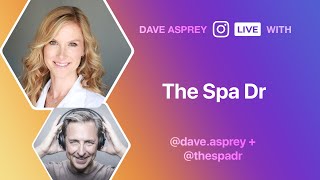
This is a YouTube live session titled "IG live with Dr Cates" recorded on May 17, 2021, featuring a conversation between Dave Asprey and Dr. Trevor Cates. They discuss skincare, anti-aging, biohacking for skin health, the use of collagen, sunscreen, Botox, and other skin-related health tips. The format is an informal interview and Q&A with audience participation, focusing on practical advice for maintaining healthy skin and longevity. The content is conversational but does not include Alicia Mackey Huber as a participant.
Chapters
What's up, Instagram? How would you like to talk with the spa doctor, medical doctor, who's looking at how you make your skin work better? I'm interested in anti aging, interested in living a long time, interested in having skin that works and looks like it should look, but more importantly, works like it should work. So let's learn. This is Trevor Cates. I'm going to invite her in real quick. Give me one second. You can do.
Yay.
There she is.
Hi.
Hey, trevor. The spa Dr. Kate's. Good to see you.
Good to see you too. I was over on my Instagram live waiting for you to join me.
Oh, did I have it on the wrong channel?
That's all right. We're all good. We're to get connected now.
Oh, my goodness, that's so funny. Well, you're on my channel, I guess I was supposed to be on your channel. See, I should probably read my calendar better. Sorry, guys. I have known Trevor for quite a long time and she. What's the name? Which of the high end hotels did you used to be the spot doctor.
For, like the Waldorf Astoria and Park City.
It was in Waldorf for four seasons. But anyway, she's like, in charge of, like, fancy people's skin for a long time. And now you run your own. You're in your own clinic and have your own line of skincare stuff and you're just like, you know, a lot of stuff and you're a good person. So, like, you should be on it. Let's talk about scan and our mutual friend Rachel Varga, who's been on the podcast, is here going, can't wait for it.
Great, great. Well, I've been enjoying listening to you, Dave. Always, always interesting to hear about what you're doing next and all the little biohacking tips that you've got going on.
All right, so are you interviewing me or am I interviewing you? I'm so confused.
I don't know. Well, now. Now it looks like the roles have reversed.
Speaking of role reversal, check out this board. On the road, guys. Like, is this a male? All right, let me, let me help you out. Okay? This is a male, and the other person is a female born on the road. And if you're having a really hard time with that, there's a thing called an eye exam that you could probably get. And if not, I can teach how to hack your eyes as well. And Trevor can tell you what kind of night cream to put around your eyes so that they don't get all swollen shut like they probably are now.
Yeah, I know I throw people with my name. My first name being Trevor, that people. People are like, wait, that's a guy's name. You're not supposed to have that name.
All right, so you wanted to interview me, apparently. And I just started on my channel because that's what people always do. So I did it wrong. Guys, I'm taking the blame for this. But, Trevor, what do you want to know or what do we want to know? I don't know. You guys ask her questions. That's the wine, brother. It was sake who wanted us.
I should talk about. I think we should talk about biohacking for skin. Like, let's talk about some of the things that we both know to be really great for skin, because I know you talk about how you're going to live to be 199, 100 gazillion. So when you're going to live that long, your skin has to keep up with you. Right?
In fact, I did some math, and there's a degree of collagen loss in the skin of basically just the amount of protein in your skin that goes down every year as you age. And if you're going to live to 180 and you don't do something about it, you'll have 17% of your skin thickness left, which means you could probably see your liver and your ribs through your skin. And I don't really think that's the Mr. Smithers kind of look I'm going for as I age. So for me, taking care of the skin as an organ, making sure it replaces itself is really important. So there's a lot of questions here about Botox. What do you think? Is Botox a good thing for your skin or a bad thing for your skin?
Well, when we're talking about what does Botox do? It's. Well, Botox is. Botulinum is a neurotoxin. In fact, I actually had a patient when I was in Santa Barbara that had botulism poisoning as a child and ended up with paralysis and things. So it's, you know, it's very toxic ingredient or substance that occurs naturally. It is a natural substance, occurs in nature, but it's a neurotoxin. And then, of course, the botulism was found, you know, the poisoning and canned foods, and a bunch of people died. But it's also used as an Botox, as an injection to kind of, you know, freeze the muscle so that it diminishes this. The, you know, wrinkles, like they disappear because the muscles can't create the wrinkles. My, you know, and typically it's been said it's safe. Now the concern that I have is what if it, what if it's not? Like there are a lot of things that we've said for many years, you doctors would recommend smoking cigarettes. Doctors would say many things that were.
Wait, that's not safe. Smoking cigarettes.
Crisco oil. Yeah, like definitely eat Crisco oil. Yeah. All of that good stuff you can.
Put on your face too.
It's good for everything, safe for you. And then all of a sudden some study comes out that it crosses the blood brain barrier. So maybe it's not so safe. I'm, I'm just saying I don't think that. I mean, everybody's using it these days. It's so popular and so trendy. But I'm starting. The other thing is that I start trying to figure out what my girlfriends are thinking or what's happening because I can't see their expressions anymore. Are they surprised, are they angry, are they sad? I can't tell.
You can certainly overdo it. There are studies, I think Rachel talked about them when she was on the show, that show a thickening of collagen in response to either Botox. And Botox has a bunch of proteins in it that you probably don't want, but there's just the pure protein free version whose name I don't remember anymore.
Well, you know, I don't know, I'm still not getting convinced that Botox is completely safe. And also like, what kind of look are we going for anyway? So I mean, I'm, for me, I prefer the more natural look. And you know, I've got wrinkles here. I kind of like them because I don't know, there were signs that I've been, you know, going out in the sun and I've been smiling and laughing. Yeah.
So basically you want to look natural. You don't want to look like a glass, you know, a glass doll for sure. But also people don't want lots of wrinkles as they age. So for me it's how do you have more moisture and more thickening in your skin? Right. And I'm right, I'm definitely interested in peptides and putting the right oils. And mostly it takes seven years to replace the collagen in your body. You replace 50% of it. So the half life of collagen is that I have been taking a couple scoops or more of the bulletproof collagen and I'm the guy who made collagen famous like it was a non ingredient for protein powders 10 years ago. And I've been doing this reliably because of the anti aging nonprofit research stuff that I've done. And I think it actually makes a difference. And people say, oh, my hair grows faster, you know, my skin is looking better. And there's studies in mice that show, and they're not human studies because seven years a long time. But in mice they do show increases in skin thickness when they eat more collagen. So I think it's a pretty good idea to eat this stuff and eat healthy fats because I mean, Trevor, what happens if you have a client who eats french fries, you know, fried in God knows what oil?
Oxidative damage that speeds up the aging process. So definitely, definitely not something you want to know. French fries are definitely not the way you want to go. But yeah, you know, it's really both internally and externally what you do with your skin. And I think you and I both are big fans of that, of talking about things like collagen, taking collagen supplements. I have a collagen supplement too, and, and I take mine every day as well. And we want to make sure that we're nourishing our bodies on the inside out with the healthy oils, the healthy fats, antioxidants that help prevent oxidative damage or like slow down that oxidative damage effect. And, and then we also want to use things on the outside that hydrate our skin, help protect our skin, that keep the collagen from breaking down faster. And that includes protecting from too much sun exposure. All of those things are important. And also exposure to toxins, air pollution, all of those things. We want to make sure that we're protecting our, our skin from that both internally and externally. And you know, I think the two, as we get older, we have to work a little bit harder with that. And that's part of like where biohacking comes in, where you know, you can still just eat more of those healthy foods, start taking more supplements, also using a little bit more active skin care products. And then Asia, you've got, you've got some laser light therapy stuff too, don't you?
Yeah, the True Light device. True Light's a company I started five years ago because I find light therapy, it's very hard to find the right frequencies. And we use two kinds of red and infrared, which you can find those all over the place. But we add amber and there's really good studies about amber and small blood vessels and fine lines. So I'LL literally lay there and, like, put the panel either in front of my face or half my face and then turn it over. And I notice a difference from that. And it also has a pulsing thing. And that's. That's shop. Shop truly dot com. But it's called True Light T R U E. And I really noticed a difference from light therapy, and it's something we do at Upgrade Labs as well. And so I feel like if you get a signal in that says that, okay, you need to be able to grow and get this energy from the light and the stimulation. And you have topical stuff and you have raw ingredients because you've been eating collagen and the right fats, maybe your skin will be healthier than someone who just ate French fries and didn't do anything else.
Yeah.
Okay, let me ask you this. You and Rachel and all my other skin care friends are like, dave, you have to put sunscreen on, okay? Sunscreen gets in your eyes and feels like crap and it looks stupid on camera, even if it's mineral sunscreen. And sunscreen sucks because I like my UV rays because they're good for you in small doses. So how the heck are you supposed to put on sunscreen every single morning without weird and glowy and stuff like that? You didn't hear my question, did you?
Okay, no, I heard you kind of froze there for a second. It was about sunscreen. And it's a great question. People ask me about sunscreen all the time. And I live in Park City, Utah. We have a lot of sun here. I'm a big outdoors person. I ski, mountain bike, wake surf, do all of that kind of fun stuff. And I appreciate sun. And in fact, we. We need sun exposure without. Sometimes without sunscreen because we need vitamin D. That's one of the best ways to get vitamin D. And when we wear sunscreen, we block that ability for our bodies to produce vitamin D. So we do need some exposure. The question is, how much do we need for healthy. And then how much do we need to protect? And then how do we protect? Right. Those are the big questions.
And where do you get. It is a question, too.
Where do you get sun?
No, like, does it have to be on your face? In other words, if you expose your butt to the sun and it gets brown spots, nobody cares, really. But if you expose your face. So you might want to choose where the sun hits your skin is what I'm saying.
Exactly. Exactly. So we get the most amount of exposure on our face and the tops of our hands, our neck Our chest because those are the areas that are exposed year round when we're driving a car. Then you think about the tops of your hands that comes from the sunlight comes through the glass, all of that. So what I tell people is to really pay attention to your face, your neck, your chest, the tops of your hands in particular with your arms and your legs. You could get some, you know, go out into the sun without sunscreen and get some nice vitamin D. But you really only need to go out in the sun like 10 minutes a few times a week on a sunny day. And you don't need to go in the middle of the day when the sun is this harshest to get. You know, that's all you need to really to get a good dose of vitamin D. Now it really varies where in the world you are. Like where I am, I'm close to the sun so I don't need quite as much. I'm also very fair so I also don't need as much sun exposure. So those are the, some of the things that we want to look at. And then of course when it comes to vitamin D, you can easily get your vitamin D levels tested, get blood work done, ask your doctor for 25 hydroxy vitamin D and C. While your levels are because you might be okay, you may not need that extra sun. And then if your levels are low then take a supplement. Dave, you probably have a vitamin D supplement, right?
Oh geez, who would ever imagine? Yeah, the bulletproof ADK has the vitamin K that you really should be taking with vitamin D in the same supplement I'm getting. Keep going. It sounds. Got something important?
Okay, well no, I was just going to say but then you know, with the protecting your skin with you know, hats, cover ups, try not to go out right in the middle of the day, trying to go out earlier. And you know using a mineral based sunscreen is way better than the chemical sunscreens because then you get away from endocrine disrupting chemicals like Oxybenzone. You're also getting away from some of the chemicals that we know are damaging for the environment like that are now being banned. They're banned in Hawaii and, and things.
So I just put straight DDT on my forehead. It looks so good.
It doesn't matter, just use some gasoline, whatever. No, but the zinc oxide sunscreens are the best option. And I like the tinted ones. It's okay for men to use them too. But the nice thing about the tint is they're not that like pasty white. They have some Color to them so that you can kind of match them for your skin tone. And just keep an eye out for. For the other ingredients too. Like, you want to still stay away from fragrance and parabens and mineral oil, dimethicone, those kinds of things.
Definitely. I would be concerned. Most sunscreens I wouldn't want to put on my face. And I know you've given me some good sunscreens. Rachel's given me some. So there are some that mostly zinc based or mineral based, but still, like, I don't want to get in my eyes because it makes my eyes get all weird. And I'm seeing some other questions.
Don't put it on your eyelids.
Okay, good. I kind of leave a circle around my eyes, but then I have like nicely tinted and then my eyes are slightly different color. I've got like reverse raccoon. I don't know. It's a lot of work. Like, I'm a guy. I just want to, like, smear one thing on my face in the morning and be done. Like, I'm just lucky I shaved that morning. Like, I feel like a lot of guys, you know, that's about what we're going to do. And you might convince us to wash our face every morning if we're not in the shower.
And that's one of the reasons why I wanted to create a really simple skincare system. A lot of guys love, love the spa doctor skincare system because it's so simple. And as I when. When I told you how to use my products, I told you about this. Like, just use the cleanser to wash your face. And then steps two, three, and four, put them all in your hand together, rub and then rub them on together. So then it's like just two steps, super easy.
All right, now I'm seeing a couple more questions coming through here. So as you know, I was in the New York Daily News or Post or something from a habit of butthole sunning. And people are asking, is that actually a thing?
Is what a thing? Sorry, I couldn't hear what you said.
Butthole stunning. Like, where you expose all of you. It was on Instagram. I was briefly famous for a minute because I was making fun of someone else for doing that.
I saw that.
As a skin doctor, is there any benefit to exposing other various parts of the body between the legs in men or women to the sun? A real question that's only kind of funny.
It's a really good question. I haven't looked at the research on this one, so I'm just going to make some assumptions here based upon what I know about the body.
So you're gonna make fun of me is what you're saying. Gee, thanks.
Well, I mean, you know, there is a reason why, you know, it's where the sun doesn't shine, right? So we maybe we do need a little extra exposure in places where we don't typically get sun. I mean, I don't think it's such a bad idea. But you might be more likely.
Did you just say but it might be?
But I did say but you did.
It on purpose, right? You're making me laugh. Okay, keep going.
But be careful because you might get sunburned.
I did that. Man, it's like eating jalapenos. Don't do that.
That is not a good place to get sunburned. So if you do it, just be mindful of the time.
Um, There you go. I like that advice. And there is a study or two that says vitamin or sun. Sunshine on the testes increases testosterone. And it probably does. So it's like, yeah, sure, but that's probably less important because few people are going to get sunburned frequently enough to have wrinkles there. And if you have wrinkles there, you're not even going to be able to see them. So it's okay. So let's talk about the other two questions that are here. People are asking about what you do for sun damage. So how do you reverse sun damage on skin?
Yeah, that's a great question. First of all, you want to try and not have it happen, prevent it from happening. Of course, that's the first thing wearing a mineral sunscreen. But when you get sun damage, I mean, the first thing is with like a sunburn then good old fashioned aloe is one of my favorite things for, for healing the skin with a sunburn. And you can get fresh aloe plant. There's also aloe in my skincare line, but also there's some really great plant based oil. So whenever I have someone that's like, oops, I spent too much time in the sun, now I'm like burnt and I'm peeling. I'll have them use my step two and step four of my four step skincare system. They're really rich in antioxidants and plant based oils that immediately will help heal the skin. So hydration, antioxidants, those are key both internally and externally. And I also love astaxanthin is a great supplement to take internally to help protect the skin from the inside out from the sun damage. And you can you know, the astaxanthin, ideally you take it before you go in the sun, but you can also take it afterwards and with that uneven skin tone, hyperpigmentation or one of the biggest things is antioxidants both internally and externally.
One of the things I do that I think helps my eyes and my skin, I make a supplement called eye armor for bulletproof or I formulated one, Bulletproof makes it and it's got high doses of astaxanthin in it and I take five of those a day which is way above the recommended dose. And I have for a long time and I have noticed for actually going back 15 years when I'm on high dose astaxanthin and low dose omega 6 oils. So if you're eating a lot of the inflammatory seed oils, you're just going to get sun damage. You don't have resilience. But if you're eating more grass fed butter, animal fats and stuff like that from grass fed animals and the omega 3s but not the sixes and you're taking astaxanthin, your resilience in the sun is ridiculous. Like you can be at 5,000ft for a couple hours, like ah, no problem. Whereas growing up in Albuquerque I would have just been completely crisp as a kid, but I was, you know, the puffy, you know, give me liquid margarine kid because that's what I thought it would be.
Yeah. Somebody just asked about melasma and what we're talking about is it's same, same things apply like the astaxanthin, the antioxidants protecting your skin from, you know, the sun going, you know, wearing a good sunscreen, those are all important. But really that hyperpigmentation, melasma, sun damage, all of that, you can benefit from the things we're were just talking about. Astaxanthin a s t a a s.
T a X a n T H a n so asta x a n than There you go. Jenny Garn just posted it. Thank you. It's a weird one. There's also zanthin in which goes along with it, which is in eye armor which comes from marigold. That probably has a skin effect as well. But astaxanthin is best known for UVP protection. What foods are high in it? I don't know. You get in any foods other than like salmon and red algae or something?
Yeah. So shellfish, salmon is that pink color? That pink color must be like sockeye. You know it has astaxanthin. Yeah.
Crazy Kate wants to know if other companies can carry your skincare line.
Yes, yes. Just reach out to me at the spa. Dr. D.M.
Her.
Yeah.
All right. And Jen Lala is like, just bought the bulletproof vanilla collagen protein. Woohoo. Thank you. All right, guys, you have one more question for Dr. Cates. I'm supposed to go have lunch now because I'm breaking my fast. Let's see, eight hours until two. What is eight to two? Whatever that is. Eight to eight? Yeah. I'm gonna go eat soon. But one more question. What can we do? Everyone says you have lovely teeth.
Thank you. I've never had braces.
Freddie said it. I'm just reading it.
I know. Lovely teeth.
Well, there you go. You did something right, Trevor.
And yes, we. We can ship to Canada.
You made her blush, Freddie. I'm not gonna offend her.
No.
And it's.
It's so sad that we don't get to see each other. That.
Let's see. One more question. It's from. Hey, Veronica, what are some of the garbage techs you should avoid? Like, what's a piece of skin tech that's probably bad.
I'm sorry, say what was the what.
The garbage tech like tech that people are selling for the skin that isn't really good for you?
You know, there's a lot actually. I mean, really, when it comes to products, you really want to look at the ingredients because a lot of times they'll feature like one ingredient that's really, really great. But then you look at the rest of the ingredients and there's really not a lot of that one potent special ingredient in there. And there's a bunch of crap. So that's one thing to look out for. And then when it comes to all like the gadgets and gizmos, as you know, Dave, you know, there's a ton of junk out there, but there actually is some stuff that can be benef beneficial and can help. And I can tell you what's really, really important is the stuff you do on a daily basis. That's what's really important. That's what it adds up. When you're using like a really good skincare system every day, what are you eating? Really healthy things. You're getting those antioxidants and the great oils every day or as much as possible. That's the biggest thing. I know a lot of times people say like, you know, a few times a year they do something special for their skin, but that's not going to make up for all the stuff you've done on a daily basis that's actually been harmful for your body and your skin.
I love that. And that seems very accurate to me. I'm going to name two things. The fascia blaster is a very bad idea. This is like this weird thing and you go and you break up your fascia. That is a signaling thing in the body. So don't do that. There's people swear by it. There's many people with lawsuits. And then there's a really important question from Kim Defit who's asked about skin tags and guys, skin tags are a sign you have high blood sugar. They're straight up sign of that. When I was a teenager and I was obese, I had skin tags all over the place. They go away when you fix your metabolism. I'm going to invite you guys go to fast this way.com and there is a fasting challenge. I will teach you everything in the book even if you don't buy the book for free as a gift. Fastestway.com 60,000 people have have signed up for this and gone through it. There's a whole active community. I'll teach over two weeks how to change when you eat, even if you don't change what you eat. So you get control of your metabolism. Give yourself six months of controlled blood sugar, never being hungry the whole time and your skin tags will actually go away on their own. You don't have to cut them off. It's pretty ridiculous. Am I lying, Trevor?
I know. No, it's great. It's amazing. And you know, definitely skin tags, sometimes you have to do like. Some of them won't just disappear. You have to like do the lift and snip that Doctors, doctors can just. The big ones. Yeah, the big ones. They don't just go away.
You don't need a doctor for that. Just get a pair of nail scissors and cut them off. It doesn't even hurt. They have a tiny little thing. Easy. You should be raising, billing you doctors and you're all the same. Get your own tank of liquid nitrogen. Pour it on there.
No, just go get your doctor. Go. Just get your skin checked down once a year. If you have skin tags, they can clip those off really easily and. And then just balance your blood sugar so you don't have any more because it's so true. I remember with my first pregnancy, my blood sugar was off and I had all kinds of skin tags. I was in naturopathic medical school at the time. I hadn't quite figured that out yet. But then when I learned with my other two. I didn't have any problem and haven't had any more skin tags since then.
Very cool.
Yeah.
Thank you, my friends. All right, we'll go get some Trevor Cates. All right. We're going to hang out in person as soon as all this ridiculous travel restriction that doesn't seem to change anything except making us uncomfortable. As soon as we end that, we'll go hang out. See you guys all later. Bye.










