IG Live with @thepedipals
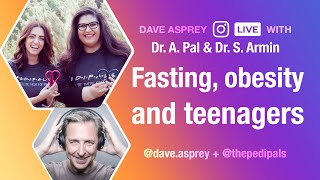
Pediatricians Dr. Arlin Marcus and Dr. Arthi Marcus say teenage obesity hits around 70% in their Houston practice, worsened by pandemic lockdowns. They argue kids need intuitive eating, not parental control over food, and that safe fasting means letting children skip meals when not hungry, not restrictive dieting.
Chapters
What's up, guys? We're going to talk about fasting, obesity and teenagers on this Instagram Live and I'm bringing a special guest in. Give me a second to make that happen. There we go.
Hey.
Hey, guys.
How are you?
I am doing really well. Thanks for joining the Instagram live with me. And we're going to be giving away some books.
Yeah, we even strategically placed them behind us.
Nice. So you've got how many copies? 20 books of fastest way for people listening.
Yeah, we have 25 total to give away.
25. Well, thank you guys. I think that's so cool that you're doing that. I appreciate it. So let's talk about teenage obesity. What are you guys working on?
So it's a problem. Obviously it was for me. Yeah, I can imagine. I actually wanted to ask you a little bit about that in a bit, but we deal with it, we see it every day. And then if you throw in a pandemic and lockdown and kids being stuck at home and having unlimited access to food and snacks, the growth charts that we're witnessing are really problematic. And I'm sure the data on all that's going to come out in a couple of years of like the long term effects of the pandemic and lockdown and all that. But teenage obesity in America and North America and is a huge problem and it's something that we deal with frustratingly as two pediatricians on a daily basis.
Yeah. That's kind of what led us to start this platform because we wanted to talk about wellness as it encompasses children as a whole. Because we only get a few minutes with our patients every day, cover something like obesity and nutrition. It's a lot to talk about. So it ends up being really frustrating for us. So. And there's so much conflicting information out there for parents, for moms, for dads, for their own journeys through wellness and nutrition that we thought it was really important to talk about it from the beginning because that's where these habits are forming. That's where we're talking about nutrition. And it gets a lot harder when you get to our ages to kind of reverse all of that conditioning and all of that messaging we've had about food. And so that's main reason we kind of ventured out into social media and tried to talk about it more.
What percentage of teenagers are obese now?
I'm not sure on an exact percentage, but I can say anecdotally from what I see, and we both practice in Houston, so I would say easily 70%.
70% of kids, yeah, we have that.
Conversation more than we do the opposite conversation, which is that everything's fine. Although our narrative has evolved a little bit over the years. Before, it was very number driven, right? Like, what's your weight, what's your height, what's your bmi? And now it's a little bit different where body types are different. We don't want the kids to get stuck on the number. It's more about how you feel and wellness is such an important thing and teaching just the foundation like you're talking about. So we noticed that most of the time, people start to really take an interest in their health when something's going wrong. Like you said you had a problem when you were younger. And that's the average thing, right? Everyone just kind of waits until something's not going their way. Wait until they're overweight or they don't feel well, or they come down with a chronic illness. And then it's like, ah, you know, what do I do? Where do I go? They start reading and then they start really understanding how the human body works, what's good and what's not good. And it would be really awesome if you could start it before the problem hits.
When I was a kid, I, I didn't know the, what kind of energy you're supposed to have because I was always pudgy and then fat and I'd have kind of the triple ripple. I had stretch marks, you know, around my abdome and my waist when I was 16. And, you know, you don't know that that's abnormal, especially if 70% of your friends are like that. But, you know, on some level. But then the idea that, oh, my brain is all over the place, I'm tired all the time, you just think that's normal because you assume as a child everyone feels what you feel, which is never true. In fact, most adults assume that as well, which is pretty funny. How do we get kids to know, oh, it's not that hard in order to feel the way you want to feel. Is there a message that you found works for kids?
They have to be engaged. Like, they have to be involved. They have to. It cannot be us lecturing them and it can't be the parents trying to control them either. They have to be involved in the whole discussion. And so that's why it's so important to lay the ground rules when they're younger and to start talking to them about it at a young age. Do you do that with your own kids? Like, do you start your education because you Have a couple little ones, right?
Yeah. Well, they're 11 and 13 now, so they're a little. Ish.
Yeah.
I think the first thing that I notice is when they're in that toddler phase, when they're between, like, 1 and 3, and they all inevitably become picky eaters and picky eaters. And so parents say, you know, they went all day and they ate one meal or they grazed at food all day long. And a lot of times we notice we're doing a lot of reassuring during these times, because what happens is kids at that age, their metabolism slows down a bit. And so they are very intuitive eaters at that age. You know, when they're hungry, they come to their parents, they say, I'd like a snack. And usually they get a processed snack. Some goldfish here, some crackers here. And then what happens? Exactly what happens is we've had a bunch of snacks through the day, and now it's time for a meal, and they don't want to eat. So they get coined picky eaters. And so they've just eaten up their calories in little snacks, snack forms throughout the day. So this is where we really reassure families that they are intuitive eaters at this time. It's okay to let them go long periods. You know, sometimes they eat one meal a day. And that's what I think is so interesting about this, is they're eating when they're hungry, and we kind of impose our nervousness about, will they grow? Are they the right weight? Are they going? Are they gaining?
Yeah, you nailed it. That's what's happening.
Mm.
Yeah, there's. There's a lot that happens, because especially our parents, generations. It's my parents generation. Either they or their grandparents, they went through world wars. And that meant there really was a time. I know, like, my wife's mother, you know, she was in a coal cellar for a year in World War II when she was 2. Right. So what happens there is, like, actually there was a time when there wasn't enough, and it gets into your bones, and then you see a child who's hungry, and then you feel your own pain as a hungry child or the. That was, you know, brought in through multiple generations. And then, of course, you want to push food on your kids. Whereas my kids, like, I don't want to eat. And my son tried this when he was about 6 or 7. We have a bulletproof diet. They're very healthy. They don't have food cravings the vast majority of the time, because we know how to eat. We live on a farm. We grow our own food. Like, we're, you know, kind of dialed in. That's what I do for a living. So he says, daddy, I'm not getting my broccoli. And this is, you know, a kid power play. And they'll do that, right? And I'm like, that's awesome, Alan. You've heard me talk about intermittent fasting. In fact, I just wrote a book on it. Although this was before I wrote the book and I said, so it's so cool that you're going to join me in an intermittent fast. So we'll both put our food away, and we won't die if we don't eat for probably another two months. So we can totally do this as long as you'd like. And you just looked at me like, I just eat this broccoli and you're done. And there's never been an issue about that before. And that's it. Every time I've tried to force the kids, like, look, you need to eat that, right? Quite often they don't want to eat it because it's not good for them. The next day, no one in the house felt good. And like, yeah, I guess none of us should eat that. So the intuitive eating is real and just letting your kids not eat. But the intuitive eating also involves sugar, sugar, sugar, sugar, sugar, sugar. How do parents tell their kids, like, no sugar for you?
So it depends, right? There's some parents who are super involved, and they're trying to educate themselves for the most part, I think. And it's totally normal. I'm a mom, too, so I get it. Most of us are just winging it, right? And we live in a world where you have that kind of push and pull where you want to give them the best foundation. You want them to be good eaters. Intuitive eaters. That also goes when they're sick, right? Kids are awesome. Like, we don't do any special diets for them. You have some in your book where you're like, hey, when you have a virus, try this and this. Which is awesome. But for kids, we don't really say that because they already know what they can and can't handle. They don't try to eat anything that they shouldn't eat. But also, as a parent, you know, it's kind of confusing sometimes to know. And you also don't want your kid to be the one that goes to, like, some birthday party pre Covid and then goes in, like, chugs coke because he's never seen it. Before in his life, he's, you know, getting a high from it. You know what I mean? And so it's kind of tough for parents a lot of the time. So they're always trying to find that balance of, like, giving them the good foundation and then not depriving them too much at the same time. And all of this marketing in their face.
I think I just wanted to add, a lot of times parents, when they get nervous about their kid eating broccoli or healthy foods, a lot of times they'll say, you know, I'll give you this treat after your meal. You know, you'll have this treat. So some of that messaging that we do with what ends up happening. Sorry, can you see us? So when. When. When we give that message, a lot of times what happens is we associate that as the prized food, you know, the sugary snack, the processed, you know, the cookie, which is. It's fine to have all of that in moderation, but we don't want to associate that as the thing we crave or we look forward to. You know, we want to make, you know, fresh fruits to be the thing we look forward to at the end of, you know, when we're getting a treat or a snack as opposed to some of that. So I think it's a bit of how.
How do people win a book from you guys?
So if you follow us, follow Dave, and then tag a friend and tell us why you want a book, we will be happy to pick 25 winners and mail it to you.
There you go, guys. So you got to follow. You follow me, and then tag a friend. Yep. And then there's 25 copies of Fastest way, brand new, multiple week, New York Times bestseller. Yeah, and there's some questions people are asking here. One from Sadie. Pop says it's a calorie deficit. Eat less. Nice. No, Sadie, it's not about calories. You can get fat on less calories. Calories are not what make you fat. That's 1970s Readers Digest nutritional information. How do I know this? Because there's a little pill they give cows that make the cows fat on one third less calories. If the pill can exist. It's not about calories. The pill does exist, and it's in your food. If you eat industrial animals, that's how it works. So you can just erase the calorie deficit thing. When I went on a low fat, low calorie diet as a young man, I exercised an hour and a half a day, six days a week for 18 months. I still had a 46 inch waist. So if I can just put it really bluntly, f the calories, because, you know, we've got pediatricians and whatever. I'm not going to say the real word, but. No. Calories are dumb. And if you don't understand it, read my book. It's when you eat and what you eat, not calories. And by the way, if you want to take a kid and make them into a monster, put them on a low calorie diet. Calories are energy. Kids need energy to grow and then the energy to focus. So if they're hungry, actually hungry, not because they didn't eat for a little while, but because they actually aren't getting enough energy, that's just mean. Don't do that to kids, don't do that to adults. This is a way to create suffering.
Absolutely.
Am I wrong?
No.
As two doctors, we have to be careful about what we endorse. Right. We can't just pop on and be like, yeah, we endorse this. So we, I mean, we read this. And the entire time my book is full of notes.
Oh, that's so cool. What about fasting with kids? I mean, I tell people straight up there's risks of eating disorders in teenagers. I don't think you should force a fast. But if a kid doesn't want to eat, my daughter's like, daddy, I don't want breakfast. Like, then don't have breakfast. It's okay, you're not going to die. And then she's much happier and she eats when she's hungry and that feels normal. It's not fasting and certainly it's nowhere in eating disorder land. How do you know if it's getting into eating disorderland?
So building a healthy relationship with food, if they're obsessed with food, that's different, right? And obsessed with what's going in their body. And if they're looking into calories and if they're starting to act like the relationship with food is a little bit dysfunctional and mostly always the key is if it interferes with your quality of life, that's usually the time when you know that there's a problem.
And hold on, that's such a platitude, I got to call it on that. So if I was to ask my 13 year old daughter, who, who I love very much, she would say that not getting ice cream all the time interferes with her quality of life.
No, no, no.
How do we sort this out?
I mean, the parent.
Oh, okay. From the parent's perspective. Okay, I'll believe that if the parent.
Sees that their relationship with food is interfering with their quality of life, that's a red flag. So, yeah, you can't ask the kid because obviously the kid's gonna want the ice cream.
And I think we have to be very careful. Cause at every visit we go through the growth chart with them. So. So the way physicians and healthcare providers and nutritionists kind of phrase, this is very important because they're getting messaging about weight, how they should look from their friends, from social media, from everywhere, especially the teenagers. So the main thing that we emphasize is when you're growing, your weight is going to go up and your height is going to go up. We want that to go up proportionally, not necessarily the number or where you fall on the chart, but that we're consistent. So we look in consistencies, in growth charts. So when we see something that's, you know, where they're dropping or they're going up too fast, you know, we address that. We talk about lifestyle, we talk about nutrition. And so it's looking at trends, which is what we do. But you have to be very. How you word things with parents and kids.
Something else that I've been really conscious of with my kids as I've been raising them is they say, oh, I can't have that. I go, no, no, no, you can have it. But if you do, you know how you're going to feel. Right, right. So it's not a can't. Which really makes kids want to say, yeah, I will. And I remember a time when the kids were much younger. They had made fun of. Of our nanny because she went to a drive through to drink bad chemical coffee. I say the words of the word poopy chemical coffee. Because, you know, they're like, daddy makes good coffee, other coffee, bad, very simple kids stuff. And the. So like, I'm like, look, kids, we're going to go to McDonald's and it's not okay to make fun of people for doing whatever they want to do. So we're going to go to McDonald's and we're going to. They're have ice cream. They're going to be little toys. And we've only gone to the bathroom in McDonald's. I'm like, that's not really food. And they both got really like angry little looks on their little faces. And they're like, daddy, you can take us to McDonald's, but you can't make us eat. And like, I would eat it with you. And inside I'm going, I'll feel like garbage for like three days. If I eat all that and bad oils and stuff, that's just not good. But I was willing to take the hit for the kids. And they're like, no, seriously, we know what it feels like when we eat food that doesn't work. Our tummy is hurt and then our heads hurt and we just, we don't want to do that. And I was like, oh, that's so. That's awesome. I felt good as a parent. But when you link it to how you feel and how much power you have, which is the one thing kids want the most of until they hit puberty, then they want something else more than power, but. And that's relationships. But it's, it's such a powerful thing. And then, of course, power over how you feel, power over how you grow. And it feels like that's the healthiest approach. Is that, is that the direction you guys are taking it?
Totally. I. On your McDonald's story, we had a similar thing. I have two girls, they're seven and 10. So we did the whole science experiment. We got some McDonald's and we put it on the counter and we saw when it was going to turn moldy, which is never.
That's awesome.
And then I had them Google how many ingredients are in a McDonald's french fry. And because, you know, they were surprised because they thought it was just going to say potato and it doesn't say potato, it has potato plus 27 other ingredients. So. So in that way, you know, you kind of educate them too. But it's same thing. It shouldn't be taboo. Nothing should be taboo. They can try whatever they like. But if you teach them to be more intuitive, listen to their bodies, and then see how things make you feel, then they'll probably be set up for more success. And I liked also in your book how you said there was like a little quote where you were like, if you want the cookie, eat the cookie and don't feel bad about it, you know?
Yeah. Tying guilt and shame into food, especially for teenagers or young kids, is ridiculous. It's very hard though. You're saying, look what that has, you know, that's made out of gluten and glyphosate and does make you weak. So we're not going to eat it even though it tastes good. But here's some dark chocolate. And there's all kinds of things I'd say, hey, kids, I will trade out your crappy Halloween candy for high end dark chocolate, which my kids learn to enjoy. They like that Stuff. And so they'd think about it. And the first year, okay, this is great. And they say, well, I'll give you money for that. Whatever you want. But they always want the chocolate. Then they realize, wait a minute. That means I can go to all my friends and I can trade my good candy for their really cheap candy, because daddy doesn't care what candy I trade in. So then they're the most popular kids because they're the ones willing to give up a Snickers for some crappy little Costco whatever. And. And then the only problem is, what would you do with a big bag full of toxic candy, full of artificial coloring? I don't put my compost because it'll poison the soil like it really does. It makes bad soil, and good veggies won't grow in my organic garden. What do you recommend people do with buckets of garbage candy after Halloween?
You take this one.
I mean, that's a good point. I just say get rid of it.
But I mean, do you take it like the toxic waste dumps? I don't want people to eat it. It's bad for them. I don't give it to people because I care about people. It's kind of a conundrum, right?
Yeah. And the thing about these. These snacks is they. Children crave them, right? That's. You're. You're not intuitively eating the food. So usually kids are in front of their screens. They're not eating dinner together. They're not talking about food. And so you're just popping those. Those processed foods, you know, without even thinking about it and not thinking about how it makes you feel until it's too late. So I think the. The conversation like you had with your kids is so important, you know, even with Halloween candy.
And I mimic the same, you know, the Halloween candy, these little Snickers bars and all that. That's like nails on a chalkboard for me. But so I let them participate in the festivities. I ration it. I say, you know, decide how many you want to have tonight. And because they don't eat it all the time, they'll have a piece, and then they're like, I'm good. You know, they don't really have that acquired taste for it anymore.
Yeah, yeah. My kids will say things like, that's too sweet. I don't like that. But, you know, if it's got good fat in it and it's got sugar, they'll probably want it. And that's pretty normal for kids. And if they have a little Bit of that on occasion. It's not the end of the world. But if I make it a, you know, oh, you've done a good thing, let's reward you with sugar. You know, I could reward them with cigarettes or alcohol or heroin too. I just don't choose to because it seems like that would be a bad habit to me. So if I can create an emotional association of, you know, let's not go that far down. Now remind people there's 25 copies of Fast this Way, my new book. And by the way, if you guys haven't read it, it's got a lot about women in fasting, fasting for different ages, fasting in parts of your cycle, and even fasting as a teenager. And generally speaking, if you want to skip breakfast because you're not hungry, great. But intentionally fasting longer than you need, at least not very often. I don't recommend it. But what do people do? They follow me. They follow you guys. And your handle is the it's pedipals P E D I P A L s. So follow you guys. Follow me and tag a friend and, and say why you want your copy of the book. And they're going to just send it to you as a gift because you guys are watching this.
Yeah, it's PD pals endorsed.
Yes. Thank you.
Nice. And Sadie says lost 8 pounds or been lost 10 pounds since 1747. Now limiting sugar, intermittent fasting twice a week and monitoring calories and fat, she says, and sugar and teaching kids those things. And also the type of fat is really important. Oh, it's at the pedipals. So I've been teaching my kids, like, don't eat the omega 6 oils. And this has been going on for the entire time they've been alive because that's part of the bulletproof diet and part of fast this way. And it's becoming a more common part of our knowledge. Oh, it's free of sugar, but it's made out of, of canola oil. You still don't want to eat it. And it can be a little bit confusing for my kids. I'm like, look, if it's high in sugar and super sweet, don't eat it. If it's got fake colors, don't eat it. It's got bad oils, don't eat it. Oh, and if it's got grains to speak of, especially gluten grains, but most grains like that. Otherwise there's a lot of interesting things you can get at a gluten free bakery that are made out of Rice and made out of butter and cream and things like that. And it totally works, right?
Yeah. As two Middle Eastern women, we love the fact that you endorsed white rice.
Brown rice is gross. Can I just say it? In every country where rice is a staple, people who can afford white rice eat white rice. And people who can't afford it eat brown rice. And the reason is that removing the 80 times more arsenic and all the plant toxins from the outer layer of the rice is part of preparing it properly. But if you can't afford to prepare properly, you do your best to stay alive. But to try and say, oh, it's got fiber, you have to look at what it also has along with the fiber before you decide it was worth it for the fiber. It's not. So you want to be hungry, Eat brown rice. You want to be fully white rice and a ton of protein and fat. And you'll be happy knowing that. And you'll be happy. That's the trick to fasting, right? Oh, you can actually not be hungry during a fast if you eat the right stuff. But eat kale and brown rice and some omega 6 oils and just watch how hungry you are afterwards. It's terrible. And the same thing to your kids. You do that for your kids, they're gonna have the same problem.
Yeah, absolutely. And I've done intermittent fasting without realizing I've done it. I was never a breakfast person, so I've just been like, yeah, I don't really feel like it. And the next thing you know, 16, 18 hours have passed, and then suddenly you start getting the hunger cues. But when I was growing up, you know, the message was breakfast is the most important meal of the day. And you know what I loved in your book? I love the analogy of the car. I'm actually going to use that because I've never really heard that before, but I'm going to use that talking to my patients from now on. When you're talk about if somebody were to tell you that you have to take your car to fill up gas every Tuesday and Thursday. Right. You said.
It doesn't make sense. Right.
And not every car has been the same. Nobody asked you how many miles you'd even driven the car. But you have to put the gas in the car. It doesn't matter if it's overflowing. That's exactly how the human body works too. No two of us are made exactly the same way. And the best part of this book is it's actually not a how to. It's actually more talking about how to really.
If you want to write, like a quick and easy fasting book, here's how it goes. Step one, don't eat for a while. It's good for you. And step two, here's a bunch of studies saying it's good for you. Done. And I was like, I'm not writing that book. There's already some really good books with the science of fasting. And heck, the bulletproof diet has the science of fasting from seven years ago. So what was missing from the conversation was, how do you do without suffering? And the difference is amazing. I think of my daughter in maybe second grade. She came in, she goes, daddy, when I get to school, the teacher starts telling me we have to have a snack. She says, what about all the other kids? Don't they have breakfast? Like, how can they be hungry? I didn't even want a snack. Sometimes I pretend to eat the snack to make the teacher happy, even though I'm not hungry. And I'm like, you have my permission to pretend to do that, Anna. And I said, have you asked your friends what they have for breakfast? And she comes back, she said, well, one of my vegan friends has a green apple for breakfast. I'm like, my God, a green apple without a ton of fat and protein with it is just going to make you ravenously hungry. And no human can pay attention after eating a green apple all by itself as well as they can if they eat other stuff. So it's just, you know, parents trying to do their best, but they're creating kids with fatty acid deficiencies, with too much sugar, with insulin resistance and all that stuff. It's. It's pretty crazy. Yeah.
The other thing I really loved is your chapter about women and fasting, because, you know, I've gone through my own journey with food and nutrition, and I think it's really important, especially for our demographic, for the moms, because diet, culture and nutrition is so targeted against, you know, for women, but no one is talking about how it really affects their body and their mood and, you know, different stages of their fertility and postmenopausal women as well. So I really appreciated that. That it's not the one size fits all that. You really have to discover your journey through this, you know, and that's. That I thought was really important.
Thank you.
He has a whole chapter just for women. Nobody ever does that. It's true, because I've read a lot.
Of books about it, too, and gone through it. And, you know, my family comes from India and we naturally would fast you know, through different times of the year and no one ever explained why, you know, we were holding off on wheat today or, you know, onions today or rice today. And there's different fasts that are kind of incorporated in the culture and. But it kind of makes sense now when you think back at all these different cultures and how they've incorporated fasting in their routines, which is just really interesting.
And actually most of the pediatric and teen studies that have been done on fasting have been because of Ramadan or religious fasting. There are a lot of studies that support that it actually doesn't cause any harm and overall have a lower BMI afterwards. And then their cholesterol panel might improve as well. And they, they tend to have positive effects. I liked the General Rule of 18 though, before then. If they do it intermittently here and there, and if they're more intuitive eaters, I think that's great. But nothing too strict or severe until they're fully grown.
Yep, that, that seems like a good pediatrician level advice. And who knows, maybe if they're obese kids, there'll be a study sometime that says, you know, you letting them go 24 hours every now and then, but the idea of a child 24 hours without food, oh my God, they're going to suffer. No, if you do the hacks that are in fastest way you can fast without really losing your attention whatsoever. And my son, of his own accord, with no encouragement, and I write about it in the book when he was, I'm guessing nine or something, said, daddy, you're writing a book on fasting. I'm going to do a fast for 24 hours. I'm like, really? And he says, yeah, I'm going to challenge myself. I'm just curious. I want to see if I can do it. I want to show myself I can do it. And I said, we'll use some fasting hacks. And he goes, no, I'm just going to have water. I really want to see if I can do it. And he really pushed, you know, but he set a goal and he did it. And then he said, you're right, daddy, this is the best food I ever had. You know, fasting is the best spice there is. And he's never tried fasting again. He'll skip breakfast if he wants to, but it was just like, okay, I got this. And sometimes it's, you know, that, that power is good. Well, guys, say one more time before we get off what you've, what people have got to do in order to get a copy completely free. And also people are saying, will you send it outside the US So you want to give people info on how to get their copy of fastest way?
Yeah, that's fine. So we are at the PD Pals. T H E P E D I P A L S. And then the rules are, follow us, follow Dave. Tag a friend and tell us why you want a copy of the book, and we'll pick 25 winners, and we'll mail it out to you.
Beautiful. Thanks, guys. Thanks for talking about kids fasting and just healthy food for kids. It's something that I think could use a lot more attention on social media. So we teach our kids to want food that makes them have energy and taste good. It's all possible. All right, guys, I hope you get a copy of my book from this. If you don't check out Fast this way, and if you haven't gone to fast this way.com, there's more than 30,000 people being taught how to intermittent fast right now by yours truly, and I would love to offer that to you as a gift as well. So if you get a copy from the pedipals, that's awesome. Sign up for the fasting challenge. If not, sign up for the fasting challenge. Whatever you do, follow both of us. Have an awesome day.
Thank you.










