Improve Your Hair Health with Nutraceuticals Dr Sophia Kogan & Dr Tess Marsh
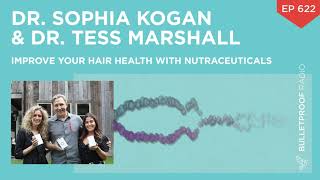
This is a YouTube video titled "Improve Your Hair Health with Nutraceuticals Dr Sophia Kogan & Dr Tess Marsh" created on December 8, 2019. It features a detailed interview hosted by Dave Asprey with two experts from Nutrafol: Dr. Sophia Kogan, an integrative hair health expert and medical strategist, and Dr. Tess Marsh, a naturopathic doctor and director of product science. The discussion covers scientific and holistic approaches to hair health, including causes of hair loss, the role of stress, gut health, nutraceuticals, and personalized treatments. The content is an informative presentation rather than a conversational transcript involving Alicia Mackey Huber.
Chapters
Bulletproof radio, a state of high performance.
You're listening to Bulletproof Radio with Dave Asprey. Today's cool fact of the day is that getting goosebumps might actually help you grow more hair. That's because nerves and muscles that raise goosebumps also stimulate stem cells in your skin, which make hair follicles and help hair grow. Harvard University stem cell researchers just reported that getting goosebumps when it's cold probably helps make animals fur thicker. Nerves that are part of the sympathetic nervous system, which controls your pupil dilation, your heart rate, other things like your autonomic or automatic processes. They nestle next to stem cells that will create hair follicles, which no one knew before this new study. And usually nerves are wrapped in a protective coating called myelin, which you've probably read about in the bulletproof diet or head strong or something. But it's kind of like the rubber wiring around an extension cord. Researchers found that nerve ends were naked where they meet hair follicle stem cells like wires stripped at the tips. That's something you would never imagine is going on in your head. And those nerves secrete the hormone norepinephrine, which is necessary for hair growth. And that might explain why hair loss is a side effect of beta blocking drugs, which interfere with norepinephrine's action. However, beta blockers can help you if you have stage fright and anxiety going on stage. I've had a few clients who decided to go that route. I don't think it's the ideal route. You might want to deal with the root cause of that anxiety. But now you're like, what happens if I don't want to be bald and I want to be a professional speaker? Deal with your crap. Now you're asking yourself, is Dave going to talk about being a professional speaker or is Dave going to talk about hair? What could it be? Well, at this point, I think you should go with hair, because we're going to talk about hair because, well, it's interesting and it's part of living to 180, because if you live to 180, would be nice to still have a full head of hair, right? We're trying to live past 180. I'd be okay with losing a couple hairs along the way, but not more than that. And what does this study mean for you? It means that men with male pattern baldness lack these interesting muscles called arrector pili muscles in their scalps, which are responsible for goosebumps. And that suggests that sympathetic nerves and goosebump raising muscles might be important in that one type of baldness. So restoring nerves and muscles could cause new hair growth. This is cool because when someone says, you know, we know everything that there is to know about science, therefore what you just noticed isn't possible. Even though it just happened to you that, that kind of ego, well, you show them studies like this. Well, we didn't know that before. Maybe it was possible and you just didn't have the right study. So when someone says that didn't happen because it can't, you know that they're following a religion, not science. Now back to hair, because I'm sitting here across from a couple people with just truly, truly awesome hair. I'm talking about Dr. Sophia Kogan and Dr. Tess Marshall. Now, because I'm interviewing two people with great hair at the same time and they're both, by the way, from a company called Nutrafol that's been studying how to have healthy hair instead of just how to have hair that doesn't fall out. I'm going to ask each of them to tell me their voices as I introduce them. So, Sophia, say something.
Hi, everyone.
All right, so Sophia is an integrative hair health expert and this means for men and women. And she's the chief medical strategist at Nutrafol and she's written peer reviewed studies on hair thinning, hair loss treatments, botanical medicine, and has an MD and a dermatology fellowship from. How do you say it? S U N Y, or did you say sunny if you're cool?
No, it's suny.
Suny. Sunny. Suny.
And they don't like the word downstate, but it wound up never changing.
To me, I'm saying it anyway. SUNY Downstate Medical School in Brooklyn, New York.
One of the oldest in the country.
One of the oldest. All right, so it's like a big deal.
Well, I mean, it's a deal in Brooklyn.
All right, so in other words, someone who's gone deep on the science and medical side of it and then you flip over with Dr. Tess.
Hi, everyone, it's Tess. Happy to be here.
You guys sound really similar. It's going to be so confusing.
Oh, no, we'll deal with it.
So Tess is a naturopathic doctor and director of product science and innovations for nutrition, Nutrafol. And I wanted to get both of them on the show today because there's the white lab coat, Maryland. I mean, it's amazing. I mean, right now Sophia is wearing a white lab coat. She has a stethoscope around her Neck and looks super medical. She's got one of those headbands with a little amplifying light thing on it. Okay, not really, but you do have that I went to medical school kind of vibe, right? And then you have.
I do?
Well, yeah. I mean, you look all professional stuff. And then you cut over to Tess, who's a naturopath, so she's wearing a floral dress. She clearly hasn't showered in, like, two months. And, like, she looks like a naturopath. You know what I'm saying? Okay.
I have dreadlocks in the back.
So now I've offended both my MD friends, both of them married to an MD and my naturopath friends. I'm just kidding me. At all. But I did want the more natural, systemic, holistic perspective as well as, like, the hard science MD side of things. Because I've never been satisfied with hair stuff. When I say stuff, the research on it, because it tends to be either all one, where it's like, dip your head in castor oil or something, and it'll all be good. And then on the other hand, it's like, just take some of these pills that might neuter you and it'll all be good. And so I wanted to sort of have this holistic perspective that says, all right, what's actually going on in there? My understanding is that there's multiple pathways for why hair falls out, why women get thinning hair. So I want to just get to the bottom of it, because I think most people listening, you're in one of three buckets, and we're going to hit all three of these buckets. One of them is, I'm young and I probably have most of my hair, and I'd like to keep it that way. And I can't imagine my hair thinning for women or just falling out as a guy. But if you're a guy, you look at your dad, you look at your grandfather, you look at your uncles, you're like, ew, maybe I should think about that. And so then it's, how do I keep it? Then you have people who are starting to see some fallout, and they're going, oh, my God, this is actually happening. What the heck is going on? And you have people who already have thin hair or hair that isn't healthy or are mostly bald saying, can I grow it back? And these are three different use cases. So I want to go through those with you guys today. Sound like a plan?
Sounds great.
Okay. And if Nutrafol sounds familiar to you, it's probably because I'VE had them on more than, I think 100 episodes ago on episode 420, believe it or not, I should have had a CBD one for that.
Awesome. Happy to take that spot.
And episode 535 where we talk more about hair and some other things like that. But this is an ongoing area of interest. I hear feedback from bulletproof radio listeners and now that I'm really focused on anti aging with my super human book, I just thought it was time to have you guys back on for another episode to talk about the stuff we didn't get to cover last time. So you've now moved into what you're calling with Nutrafol, hair wellness. What exactly does that mean? Especially if you're looking at it from the perspective of each of those three different buckets of people either it's not going to happen to me, but I don't really want it to. It's happening to me right now. Omg. And it already happened to me. How do I get back? So, hair wellness, what's the deal?
It's a great question. Just like you said, it's three buckets of people and actually you missed one. I think there's another bucket. Yes, there's another bucket. Now the one you missed might have been, I want better, healthier hair.
Your hair is already healthy, but you want it to be like even more healthy.
So what if you're not. Yeah, what if you're not afraid of what's coming? But what if you're just, I want to have better, better looking hair. And yes, there are so many people suffer, suffering from hair loss and thinning and there's just as many worried about it and just as many wanting to do something about it. But there are also a lot, you know, it's also a wide range of, if you wanted to sort of go across all of these buckets, you wouldn't just call it hair loss and thinning. So hair wellness is something in between the medications that we have available, which are FDA approved drugs like Propecia and Rogaine and the simple vitamins and minerals like and also castor oil or whatever other stuff that people could be using. It is really about utilizing clinically proven and efficacious nutraceuticals, basically botanicals that have clinical efficacy to rebalance the pathways from within. So like you said, there are more than one bucket here of people. If we were just talking about hair loss and thinning, it would be hair loss and thinning. Hair wellness is about encompassing all of these and really looking about prevention as well as restoration.
So I heard a lot of marketing stuff and it's not very medical in there, so I'm just going to go a little deeper. Okay, so topical interventions. It sounds very fancy. Let's start with the people who have my hair is pretty good, but I want to make it better. So I mean, are they going to. I know eating more collagen helps for sure, that's one of the things. But are they going to take just a supplement? Are they going to switch their shampoo? Are they going to start micro needling or using lasers? How do you know you could spend ten grand on your hair and not even get started? I was completely blown away that anyone does that level of stuff. But give me a stacked rank. I'm a healthy hair, but I want goddess hair. What. What do I do?
I think it depends a what kind of person you are. But then if you just are wanting to support hair, I feel like those people normally turn to the common things they consider good for your hair. So those people are gonna. They might use Pantene, but yeah, everyone, there's a lot of people that understand that, you know, like parabens and sulfates are not good. So people are using natural shampoos and conditioner, but that's a misnomer that, that can actually help grow your hair. So it can definitely help like your texture and clean your hair, condition it, but it's not actually spending enough time on your head to actually do anything underneath the surface. Also, those people are probably looking for biotin. They're taking collagen in their water and smoothies and coffee. They're just really supporting it on a very not superficial level, but we'll call it a nutritional level.
Okay.
I think as hair loss or thinning progresses is when people start to turn to other treatments. So those people might be taking a drug and a supplement and topicals, and then they're going to pay $7,000 for PRP. They might get a hair transplant after that. So I feel like you start at the minimal and work your way up.
You're a naturopath. Would you recommend the drugs?
I do not recommend the drugs.
Why not?
Mostly because we've seen them not have the most efficacious results. So, you know, I'm not going to say that Propecia doesn't work, because it does. It just comes along with some unfortunate side effects that are in the the sexual realm and aren't too enjoyable for your average person. And then as a girl, you know, using Rogaine and Minoxidil you have to put something on your hands, you have to put it in your head. It makes your hair kind of greasy and sticky. A lot of side effects can be like irritation. So that's just not something that I think I would recommend to somebody else.
Okay. So it doesn't really work. Okay, now let's get the medical side of things. All right, so we got our naturopath perspective. All right. And you guys both work for neutrophil and you're both coordinating on this. I'm expecting there to be some overlap, but I mean, are there times, Sophia, where you said, yeah, pop some drugs, your hair will like it?
Well, I'm not a practicing nmd. I am fully. This is one. I'm fully. I'm one of the co founders of the company. So obviously my opinion is a little bit skewed. I do not recommend the medications. And like Tess was saying, I think Rogaine could work. And I think when we did our clinical study, we actually asked that question, would you prefer to take a supplement or use a topical. And the study was in women and most women said I would. I think over 80% said that they would prefer to take a supplement over using a topical because it messes with our hairstyle and it leaves a residue. And I do very strongly believe in interventions that are multi targeted, that have an ability to target multiple pathways. And some of those are, of course, PRP and the nutraceuticals. And prp, platelet rich plasma does work. We often use it in conjunction with the supplement.
Okay. And I've talked about PRP a few times on the show. Not just for hair, although I've had it done in my hair. I talked with. Let's see, it was Amy Killen from Docera Medical who last time I was there, I did this whole six hands, whole body stem cell treatment. They did every joint, all along my spine, my brain. And while I was unconscious for four hours, they also did PRP on my face and my hair.
You must feel amazing.
I don't even know wherever else they did PRP because I unconscious.
But they do it in every.
Oh, I had some. I've been pretty open about the male. The male. What are they called? Enhancement shots. But they did that as well.
The P shot and the O shot.
The P shot and the O shot. The O shot for me, really hurt. They kept. You know, I'm kidding. But it's. My wife did have that done as well and it's powerful. But I. So I did have PRP and my hair Done. But it's pretty darn painful if you're not unconscious for it. Right. Which is. So it's expensive and it can be painful.
I think that my business partner had it done, and I had it done, and he was screaming in pain, and I was just like, what? Whatever.
You're like, I can have a baby.
Exactly. So I think there's definitely a slight difference between how we perceive pain in men and women.
They do say that women have a higher pain tolerance than men.
Surprisingly, yeah. I think, especially for hair. I've had a couple different practitioners mention that. Amy mentioned the same thing, like injections on the face and in hair. Women are just tougher than guys are, apparently.
And also, a lot of our doctors use distraction mechanisms, so they'll use, actually a vibrator that would distract me on the scalp. Oh, that sounds good. Yeah. On the scalp to distract from the pain sensors. So that helps a lot for a lot of people. And also sometimes they utilize even nitric oxide to.
I would just like to breathe the gas and get a little bit hot.
That's why my business partner had whippet.
He used whippets.
He was great. He loved it.
Yeah, that'll sell a lot of prp. All right, I got you. Now, it's interesting. Nitrous oxide can get you a little bit high, but if you have certain types of genetic things, it can also make you feel like crap for days because it affects your nitric oxide synthase system. I'm one of those people. So for me, sorry, whippets are not my drug of choice. That would be coffee. That's my drug of choice.
Understandable.
But for other people, it's profound. You go to the dentist and you're like, I was just kind of loopy. And then everything was done, or you get whatever done to your hair. Okay, so I'm hearing a little bit from both of you. Obviously, you work for Nutrafol, and you have a combination formula that works on multiple reasons people have hair that's unhealthy, or people are losing their hair, etc. And it's well formulated. Obviously, you guys wouldn't be on. But what I'm hearing, though, is that from both of you, there's a path that goes where you start with getting hair healthier, and that's nutrient based. And that would obviously involve Nutrafol or you guys wouldn't bother making it. And then there's a path that progresses up from there. What are the pathways that you're going after with Nutrifol? I heard earlier don't use bad stuff on your hair that's not though, in a capsule. So if we are using natural shampoos made from unicorn juice and whatever else, what are the pathways that you need to hit?
Well, so originally we formulated a men's formula and a women's formula, and both of them are targeting inflammation, oxidative stress. Stress. Because stress is a big impact on hair loss and hair health, as well as the hormonal pathways such as DHT and of course, anything that is coming at us from the environment. We published some papers with very prominent dermatologists talking about the fact that hair loss is not due to one thing or another and genetics are not the only thing. I always say genetics load the gun, environment pulls the trigger. And that's why the formulation works so well, because everything else out there targets one pathway only. However, today we've evolved since we last spoke. We actually, Tess and I wrote a 50 page white paper looking deep into the research of how functional medicine applies to hair loss. And it's fascinating. As we were doing the research, and this is really where hair wellness comes in from, the scientific and medical support is that the follicle is actually not separated, it's not separate from the rest of the body. Just like every other disorder in the body is really a combination of different systems being affected in the same way. The follicle or any dysfunction in the follicle is a result ultimately of other systems being impacted as well in the body. And that's where we created a new and evolved version of Nutrafol. And the way that we apply Nutrafol for our customers and to our patients is a personalized and systems wide approach.
What does personalized mean when we're talking about taking vitamins?
Well, internally we do research and we also test people. So one of the things that we had started doing earlier on as we started doing a hair mineral analysis test on customers that weren't responding fully to the core formulations. And what we found were some very interesting trends that perhaps are not very surprising is that some of the most, some of the pathways that were most impacted were the detoxification pathways, the stress pathways, and the gut.
The gut, thank you. My favorite.
Yes. And the gut.
So hair loss is detox systems, stress systems and gut. Oh my God. Did we just say that hair loss has to do with biohacking because those are like the main things that you go after. Yes. Now does this mean that you're saying people with unhealthy looking hair might be unhealthy?
Yes.
In Fact, we are.
Oh, my God. Who would have thought?
I think that the medicine as it stands today, we look towards normal ranges as a standard. When somebody comes in, unless they're sick, they're basically healthy. And that's not true. There's a period of time before a disorder or dysfunction happens where there was suboptimal functioning. And that's where biohacking comes in and Eastern medicine comes in and naturopathic medicine comes in and functional medicine comes in, where we understand that normal if. If you're one, if you're within the normal range and you're one off, you're still considered normal. But that's not true. You could have a normal thyroid test, but that's not true either. And thyroid hormones are very important for hair growth. So what we're basically doing is we're supporting the systems that are having suboptimal functioning, and when they have suboptimal functioning, that results in hair loss and thinning as some of the first signs, along with fatigue or any other symptoms that can come along.
And when we say personalized, it's because not everyone is going to have poor gut problems. Not everyone is going to have poor detoxification problems. So all of our new targeted booster products were curated. So if someone had a little bit of stress issue and some gut problems, they could take formulas that would address those things. Then if you looked at your best friend, that person might need some liver support and B vitamins. It just goes back to the point that no two people are actually the same, even if they're presenting with the same condition.
So how would I know if I'm a liver guy or am I a stress guy?
You'd probably be a nothing guy because you're already taking all of the.
I'm working on it. I take all the stuff you guys send me, and I take 150 pills a day. Right. But I will tell you that my forehead's a little higher than it used to be, but I'm almost 50, and all the guys in my family were Bald by their mid 20s, so I've way exceeded the expectation here. But I definitely pay attention to it, and I haven't done anything crazy, unnatural. I don't take any medications for stuff like that. So I'm always going through this. I also know many years of thyroid dysfunction played a substantial role in my hair. It finally got on thyroid, but it wasn't until probably my late twenties when I did that, and I'd already started feeling differences. And since then, there's been times when I'm like, oh, go off thyroid because I just took whatever sarms and then I'm overheating for my thyroid. I actually need to reduce it, but I reduced it too far and I'm like, wait, what just happened to my hair? I'm like, oh crap. So you get back on thyroid but you lose a little bit when you're a biohacker. Can I grow that stuff back? Is my Thor going to get lower?
There is some damage that happens to follicles over time and at first they get thinner and thinner and thinner and then there's scar tissue that forms. So there's some follicles that are not able to come back unfortunately if they've been significantly damaged. On the other hand, there are also sleepy follicles that have been dormant and when they are available underneath the skin, then you can stimulate that by proper balancing of the of all of these pathways.
So that doesn't answer the liver versus stress versus whatever guy I am, but it was a nice dodge.
Well, to find out what you are affected by in your lifestyle, we need to ask you some lifestyle questions. So ask away for our listeners today. We actually have developed a lifestyle questionnaire on our website which will actually ask you questions about your energy, about your sleep, it'll ask you about your digestion, it will ask you about if you have or eating too much fish with mercury in it to really kind of see what systems may be over compromised for you specifically. So it takes about five or five to seven minutes.
I'm going to take this, it's go to nutrafol.com nutrafol new t r a f o l dot com and then.
There should be a nice button that says get started.
So is it going to be long and boring?
It's actually not boring, but it is a little bit long. It takes five, like I said, five to seven minutes.
So ask me a couple of these questions that are on there.
Okay. So you want to ask them off the top of your head, are you a man or woman?
Okay, I'm pretty sure I've got that one. Today I'm identifying as a man.
So some of the questions might be related to, for instance, what energy patterns do you have to elicit whether or not you have a cortisol dysfunction? We all know that cortisol is supposed to be highest in the morning so that you can wake up and be ready for the day and lowest at night. A lot of people who are in adrenal dysfunction who have imbalanced cortisol levels will ultimately have have low energy in the morning and will be wired and tired at night. We'll ask about fish consumption too, and what, what deodorant you use, for instance, because aluminum toxicity, we find a lot.
Of connection between the environment and your hair. And since our liver is responsible for helping metabolize all these elements from our body, so this way they don't damage us and our hair. That's why we're really asking those questions.
Okay, so what do you eat? How old are you? I only got to the how old are you? And are you a man or woman?
And also, age matters, especially for women. We recently came out with a product that targets peri, menopausal, menopausal and postmenopausal women. So there's a slight difference in hormonal shifts that happens later.
Huge difference. Yeah.
The, the science behind it is actually pretty interesting. How come these women are starting to notice similar patterns as to male pattern hair loss around that age? And it's because when menopause happens, your estrogen and progesterone really decrease at a rapid rate. And their testosterone isn't necessarily high, but it's just decreasing at a slower pace. So we like to call that relative testosterone dominance. And then you, at that time, you actually have less sex hormone binding globulin, so you have more free androgens, which are likely to turn into DHT and then will affect a woman in those specific patterns.
This is why women in perimenopause get so buff. Okay.
I think the diet, the dietary questions are really important. Most of us are not eating a great diet, and some of us that are eating an amazing diet, usually. I would like to say that I'm pretty good. I'm still impacted here in the United States versus when I go abroad because of glyphosate and because of all the other toxins and antibiotics. And even if you're eating organic, it's usually still going to be not fully organic. And so the microbiome is significantly impacted. And some of the most interesting things that we've witnessed recently is that hair connection to the gut. And the hair connection to the gut is through the permeability of the digestive tract, also from the inflammation, the systemic inflammation that occurs that actually ultimately impacts the hair follicle. There are some interesting studies that came out recently. Two case reports of two alopecia universalis patients that were refractory to treatment. So alopecia universalis is when it's one of those autoimmune hair loss pathologies.
I like your Whole body.
Yeah, your whole body loses hair. And interestingly enough, they were refractory to normal treatment, like steroids and all of these other things. And they also happen to have clostridia difficile infections. And so they were given FMTs, fecal matter transplants, and lo and behold, they grew hair back.
Whoa.
So, yeah, super interesting. And I think that just is case in point that the gut has a large part to do with your immune system and immune regulation in your body because it's. It's, you know, while it's crappy. They had to have a C. Diff infection.
Did you say it was crappy? Okay, I'm sorry. That was funny.
Pun intended. You know, it's unfortunate that they had to have a C. Diff infection to be able to receive an FMT.
Just the U.S.
Can you.
If you go in overseas, you can definitely.
Magically, there's medical freedom in some countries.
If you can just go to the pharmacy, be like, I'll just have a.
And they probably don't even need it that much.
I was.
Their food is healthier.
I was just thinking, like, you guys have good hair. Can I just have some poop? Okay, never mind. I wasn't thinking that.
I want a young organic farmer.
I would want to keep my microbiome away.
I'll sell it. But. But in all seriousness, is, do you see a future? That's where I was trying to go with that, even though it was gross. You see a future where actually we might do specific, not necessarily fecal matter transplants, but the bacteria from those. And you can already buy those for people who are really sick, but there'll be ones. Oh, we know these bacteria make you grow hair like crazy.
Absolutely.
So we know one of those strains already is called Lactobacillus reuteri.
I mean, you can buy that as a probiotic, right?
Yes. It actually has really wonderful benefits for upper GI issues. The brand biogaia, I don't know if you ever heard of them.
Or neutropol.
Are you guys. Put it in neutropol?
Yes.
Oh, that's a new addition, though, right?
It's not in our core formulas. It's in our hair biotic.
Oh, interesting.
But this one particular strain actually has preliminary studies. They're done in mice where they have actually shaved off part of their hair. So the mice are still living and being treated wonderfully. And they take this L. Rotera and actually grow more thick and lustrous fur. They also dove in a little bit deeper to see why that was happening. And they noticed it's because of a modulation between IL10 and IL17, which are.
Inflammatory cytokines for people who are not as biohackery as the three of us. So basically, in inflammation there's different pathways, and these are signaling molecules for inflammation. Right. So that's intriguing. Do you know what that stuff eats? Does it like fat? Does it like protein, or does it like carbs?
That is a great question. I'm going to say it likes fat, but I'm really just using my educational knowledge off of that.
I'm guessing if it's Lactobacillus, it's probably going to be more of like a fiber or a carb. Most of that species that I'm aware of don't eat fat, although they tolerate it. The reason I'm asking is that most probiotics, you can take them, they work and then they go away. But if you take a prebiotic with it, you get an explosive thing where it just grows like crazy.
I would love to talk about our prebiotic.
Oh, you guys have a prebiotic? Well, you have a bulletproof one too. So tell me about your prebiotic.
So we use a non conventional prebiotic. It's actually a bacteriophage, which sounds like a scary word, but it is a really innovative proprietary blend of different viruses that you actually take. And it goes in there and basically targets all of the bad bacteria. Think of as like a little prebiotic. It is considered a prebiotic because of the results that that you get. So it goes in like a little sniper. It kind of blasts the back bad bacteria and then the good bacteria eat those cellular components and it's been clinically shown to grow.
Okay, I am so going to get some of that stuff. So bacteriophages are an area of interest for me, for people listening. The only time you've ever heard me talk about those is probably with Naveen Jain from viome, because their test, and I think if you use code Dave, they give you a deal, by the way. But VIOME is the only one that can actually measure what phages you have. And these phages are basically viruses that feed off of certain bacteria and they only target bacteria.
I know viruses sound scary, but I think for any probiotic, prebiotic combination, there's this concept of weed, feed, seed and feed. And the idea is you want all of those three components in there. So for us, when we developed the hair biotic, we wanted the bacteriophage to weed the bad bacteria and then to seed. We also have a bacillus subtilis, which is acid resistant. It's spore forming.
Is this in herobiotic? They're all in there.
All this is in here.
Okay, so this is in herbiotic. It has the good stuff. Okay. The phages are really unusual in a probiotic formula. And I'm super interested. Most of the phage research, by the way, was done in Russia. You guys may know this. And then the Russians, when the economy went down, like hundreds of millions of dollars of research is just in some guy's freezer at home. And this has largely been ignored in the west, but it's now resurging. So I'm super stoked that you have that.
Yeah, let's go find that freezer.
I mean, there are people who are out doing that sort of stuff. It's fascinating. I'm actually going to totally take that stuff. I'm really interested to try it. And I'm doing. I wrote about this in Superhuman too. The bulletproof inner fuel, which sounds like it'd be very compatible. There are no phages in that and there are no probiotics at all. It's just the growth medium to cause lactobacillus and the other good strains to grow. So when you take something like a hair biotic, it can grow and proliferate and just have a substrate to grow on and to get enough digestive fiber in your diet. Because a lot of people, when they're going on keto, especially the dirty keto guys, you should read the thing about more vegetables than anything else. A lot of people, they go down the pork rinds and eggs. Yeah, pork rinds, eggs and diet soda, keto root and bad things happen, as you guys know. In fact, I don't think they could feed that special species that you've discovered, because what they're eating, there's no food for that Lactobacillus strain in there.
Exactly. And I think that's why keto has gotten so much heat on that. It's bad for the microbiome, but it's really based off the dirty keto practices.
Yeah, when you eat enough veggies, it's good. And the problem I was having is that when I travel, you can go to a restaurant and say, I'd like a plate of just steamed vegetables. And they bring you two pieces of asparagus. Like, oh, no, I'm sorry, I wanted a whole plate of it. Here's $1,000. And they bring you four pieces of asparagus. You cannot get vegetables. It doesn't matter what you do.
Yeah.
I'm traveling 150 days of the year, so half the time my diet is not enough fiber from vegetables. Because when I'm at home, I get it. That's why I made inner fuel. But stacking it with phages and with the specific species you found that grows hair growth is something. I'm actually really excited to give that a try. So I want to look like a werewolf. Next time I see you, lovely.
You'll be our test subject then.
Right? Right. That sounds cool. All right. That's fascinating. I did not realize you guys had gotten into phages. I also didn't realize you could call phages a prebiotic, but I like it.
Yeah.
What's the difference between short term stress? The sort of thing where, okay, I got in a car accident or I got an infection or I had a bad breakup versus just the longer term stress. What does that do to your hair?
I will answer that question.
Okay.
I love this question because from an MD standpoint, most doctors believe that there's only one type of stress related hair loss, and that's called telogen effluvium. It basically means that our follicle is suddenly, very suddenly pushed into the resting phase, which is the telogen phase. And it can only stay there for three to six months. So inevitably, after a stressful event, all the hair that suddenly shifted into that phase will fall out. And that's what your average doctor will test for. They'll do a pull test and they'll see how many hairs come out. Now, what we are understanding now from research is that it's not. We're not encountering life threatening events very frequently today. What we are really truly encountering is this chronic level of stimulation.
Like Facebook, like.
Exactly.
Facebook makes you bald.
Exactly. I want to.
Actually, it's a part of.
It's a part of your Instagram, Facebook, dating apps, WhatsApp, iMessenger. It's that whole emails. What else is there now? I have slack.
Hey, you're not caught up on your bulletproof radio episodes? There's so much pressure to listen.
Exactly. So we'd never disconnect from our phone. I want to say, I think back in day, Hansely, who actually coined the term stress, basically said that, I think in the 60s or 70s, he basically said, oh, we don't have enough anabolic time. They did not have enough time to disconnect. Now think about what that means today. If they did not have enough time to disconnect, then what does that mean for us? So there is this chronic level of underlying stimulation of the hypothalamus, pituitary axis. And of course, the, the autonomic nervous system and the adrenals are constantly working and that disrupts our normal cortisol patterns. And the follicles actually have receptors for cortisol and for corticotropin releasing hormone when they're stimulated. Interestingly enough, they can actually produce their own hormones. So they act as almost antennas for stress on the skin. So with that in mind, we can't say that it's a sudden stressful event that will impact them. It's actually every little bit of accumulated stress that might not look like stress. So I often ask people, are you stressed? And they're like, no. And at the same time they will say, oh yeah, you know, I don't really get a chance to eat in the morning or in the afternoon. That was a recent question I asked for some residents, medical residents, and I'm like, how do you just say that you're not stressed? So that's why we ask the questions on our quiz in a very sort of roundabout way. We want to make sure that we're not asking directly, are you stressed? But we're asking about energy levels, we're asking about sleep patterns and things like that.
And we do ask if you've had a big event, because sometimes that's just like the event that tips the glass over. Like you can have all this cumulative stress adding up, adding up. And you, you haven't reached this threshold yet. And then you have a breakup, you get surgery, or you have a big move and then you're just adrenal system collapses.
Like you just get handfuls of hair.
Coming out and then, yeah, then you're gonna have those handfuls.
I think everyone's noticed that you're like, what the heck is going on?
Yeah, because sometimes it's hard for people to identify one thing or they'll be like, I had this traumatic event happen to me over two years ago, like, I should have my hair back by now. And we notice people do not. And that's because even after that, there's no rehabilitation time. Your body can' fully recover because you're still exposed to these low level chronic stressors on a daily basis.
And that's very common for post pregnancy, actually a lot of women. So even though, well, pregnancy is in itself beautiful and wonderful, but it can be very stressful in the beginning, once the baby is born. And the body actually during pregnancy tells the hair follicles to stop cycling. So all the mechanisms that were happening Normally in your normal life, the body's very smart. It just says that's not important right now. Can we stop? We'll focus the. In all of the attention on the baby and the pregnancy. And so during that time, the hair looks beautiful and luscious and wonderful. And when the baby is born, inevitably within three to six months, a lot of those hairs will fall out. Now, normally speaking, we used to tell patients, I back in residency, I remember this, don't worry about it, it'll come back. Now, what I hear a lot now is that those women actually never recover fully. And what's behind that? Well, also, that baby is very stressful to have in the beginning.
Lack of sleep.
Yeah. There are nutritional depletion, you know, nutritional differences when during pregnancy and post pregnancy, and that accumulates. So there hasn't been a chance for the woman to regain her normal way of being. And that's why two to three years after they're still feeling that the hair hasn't come back fully. So that's chronic stress for you. And that's really what's important to address, not just those sudden stressful events.
So having babies causes baldness in men and bad hair. That's what I got out of all that, right? Pretty much, yeah.
Like I said, it is very multimodal.
It's a little stressful to have babies because they keep waking you up and.
Then sleep is disturbed.
It is stressful for a man also to have a baby because you're dealing with maybe a hormonal lady and then also waking up and having to feed the baby. You're having to deal with.
With stress, like no more sex for like six years.
And we have to study those effects.
Yeah, that's.
We haven't. It's probably good for maybe that's the next. I look into it in the meantime. And that's a really good point. So one of our boosters is actually the stress adaptogen and the. Yeah, we actually have two boosters for the stress response system. One of them is the. Actually a B complex. Because B vitamins get depleted during stress. One of the only things that happens is that we actually deplete all of our nutrients and most importantly, B vitamins. And some of them have been studied and shown in mice when we replete them that the adrenal gets. Adrenal glands become healthier and you can.
Actually prevent them from getting worse if you take B vitamins in early stage stress.
Yeah, I think it's a good idea for most people to be on those.
Exactly. And the Stress adaptogen. We have a stress adaptogen and in the core formulation, it's the Ashwagandha, it's standardized to very high percentage of the bioactives and has actually been shown in clinical studies to reduce cortisol levels in chronically stressed adults. And then the boosters have many other adaptogens in them. And that's for people who have that who have really almost at a point of adrenal fatigue or have been impacted by chronic stress. Probably everybody.
We have reishi mushroom, rhodiola and schisandra.
Beautiful.
Surprisingly, Schisandra has some research that actually tie it to hair health as well.
There you go.
Yeah.
All right, let's talk about stuff that's bad for our hair that we do that is just purely environmental. Like not enough sunshine, too much sunshine, bad air, air pollution, I don't know, standing in garbage, rain. Tell me what's bad that people are doing?
They're using products that are not healthy for them. I think one of the biggest issues that we find is xenobiotics, including bpa. And as Tess is drinking from her plastic water bottle, we don't often. That's one of the questions that we actually do ask from our customers is how often they use plastic or anything that is contained in plastic. Parabens, sulfates, all of these phthalates, they do damage us. And one of the biggest things about the hair follicle is it is one of the most sensitive hormonal tissues. So it's incredibly sensitive to a good endocrine balance. And anything that disrupts that endocrine balance is a big issue for the follicle. And it's a finely tuned mechanism. Through multiple growth factors and cytokines and hormones, it has receptors for absolutely every hormone. If you do throw off even one thing, the rest of the biological clock suffers. And so I think in terms of air pollution and in terms of the topical things that we put on our hair, on our scalp, or even on our skin, because that travels. And anything that we ingest as well, such as the BPAs and from plastic, can throw off that balance.
Sophia is making a great point for how the environment can throw off our endocrine system. But then you have like the direct toxins that actually come in and can hurt your mitochondria. They cause higher reactive oxygen species, which in a fancy world is for oxidative stress, which can eventually damage the follicle and impact the growth cycle.
So give me some specifics here. What should I not do if I want to have a head full of lustrous.
First, don't eat a lot of sushi.
What?
Sushi.
Because mercury.
Mercury. Unless you're really using a great liver support, something that helps you detoxify, well, otherwise all that mercury will accumulate. And, you know, aluminum, for instance, in our deodorants. I think we spoke about that last time I use a crystal deodorant. Salt.
Doesn't it say, like, aluminum on there? Right on the crystals.
No, sure. Absolutely. 100% sure. I tested negative. I was one of the few people in our office who had no aluminum. Who had no aluminum in my hair.
That's cool.
The rest of the people who were not using a crystal and were not hippies like me were actually me specifically.
Hold on a second. Our MD was. Was cleaner than our naturopath. Oh, my goodness. Yes. Those are defying stereotypes.
Everyone always says that about us, actually.
Okay, so again, so not utilizing any aluminum.
Keeping the metals out is a big deal.
Keeping the metals out. I think E cigarettes as well. Or cigarette smoke.
Trasher. Hair.
Yeah, exactly. So cadmium was found in hair.
Just nicotine itself in high doses is bad for hair follicles.
Yeah.
Fun fact about cadmium, they found in premenopausal women. Most of the cadmium sources were actually coming from soy products. So, you know, we have a lot of vegetarians and vegans who are eating soy, and it can be a.
Can we translate that? Eating garbage? Can we just be really straightforward about that?
It has so many issues because not only is this soy product with the cadmium, but also thyroid. Thyroid hormones. It's a huge interference for normal glyphosate.
And pseudoestrogens and all the other lectins and all the other reasons that it's not food for humans or animals.
And now to both of yours, point, we kind of just covered five different things that are influencing five different systems in our body that we've actually found tied to hair. So you're using products that are disrupting your detoxification system. You're eating food that is disrupting your gut. You're eating soy. Now you have thyroid problems. So all of these things are compounding in your body at one time, ultimately with the end result of, you know, inhibiting the hair follicle.
So I'm going to fix all this with some neutrophil capsules. Right.
Well, the way that we've evolved as a company is that, normally speaking, you would take the neutrophil capsules to really target the pathways at the follicle. And then once you identify which system is impacted for you. And it's not just really based on what your environmental inputs are. Also it's the cumulative effect. Not everyone is going to have the same system impacted because it's the accumulation of all the different stressors that makes an impact. And genetics and biochemical individuality do play a role. So for you, it might be the detoxification system and the stress response for meat might be the, you know, sugar support or sugar or metabolic, metabolic system that is impacted. So it's different. So once we identify which of the supporting boosters you would need, that's the personalization aspect of the, of the intervention.
So if the average person who has average or below average hair decides that they're going to, all right, eat less of the bad stuff, they're going to, I'm going to assume, eat some of the bulletproof collagen because it just makes hair easier to grow, support that, and they're going to add nutrival in. How long would it take before they would say, oh, look, I can see a difference in my hair?
That's a great question. Sophie loves to answer it. But because I think people like to jump the gun. They take a product for a month and they don't notice anything is happening. But the hair cycle actually takes very long to go through its whole process.
How long is very long?
It actually takes years, but we.
About six years. Three to six years in the antigen phase. And then the catagen phase, which is the. So antigen is the growth phase for anyone listening. And. And catagen is the regression phase and that's about three weeks. And then a follicle goes into the resting phase, which is telogen. You can think of it as having a cup of tea.
Okay.
Yeah. And so the follicle is essentially resting and the hair has already detached. So it's just waiting for it to fall out.
How long does it wait before it falls out?
About three to six months.
So you can have like a dead hair for six months that hasn't fallen out?
Yeah. And that's when the regeneration process starts and when the stem cells gets activated, get activated, for the new follicle, for the new hair to grow. However, again, there's. When you don't have all of the pathways balanced, that hair might just decide to stay in the in between phase and kind of sleepy. We call it the keen phase, but that's not often used in common language.
Okay, so it's going to take me six years after I start.
No, no, no. In our clinical study, it actually showed that people saw Results in three to six months progressively. So as time goes on, they were seeing better results.
In general, everyone is different.
Most people will say, I'm going to try a new supplement for a month. And by the way, most supplements, unless they're direct mitochondrial things, and I make a few ones like that, you feel those in five minutes. But most of them, if you're gonna take your vitamin D, you probably aren't gonna have like angels singing from heaven from your vitamin D. But if you take it for three months, like, oh, what do you know, I didn't get sick the way I used to. And you see these changes. So it's not an unreasonable amount of time, but it's longer than the short attention span that most of us naturally have.
And Nutrival comes along with a lot of side benefits. Like some of the ingredients have been like ashwagandha for instance, actually helps reduce anxiety, it helps promote stress resiliency, you might sleep better. And these have been proven to happen before the three month mark. So I think people, a lot of our customers, they say, you know, Nutriflon is making me feel great. I don't notice my hair is growing yet, but I'm still going to take it. And it, because I feel so great on it.
That's the systemic effects. Okay, right, that makes good sense. All right, so we talked about bad stuff you can do. How long it's going to take to get your hair to grow better. I'll say, what if you're just like full on bald and you're a guy? Are you screwed?
I wouldn't say you're screwed because there's plenty of really beautiful bald men.
But I mean, if you're bald and you want to grow hair.
Yeah, it's probably unlikely. I would say it depends on how bald you are. And it's interesting to me, sometimes I meet men who actually shave their hair and they are bald and I don't offer them neutrophil. I have friends like that. And all of a sudden they come to me and they, hey, so what about that supplement? Can I take it? And I'm like, what? And the reason is they actually want to have those little black dots on their scalp still maintained. It's not like they're looking to grow their hair, but they actually still want to prevent the loss of it. So I think in those circumstances you can still take it if you're really set on having retaining hair, which you have to do something because it is progressive, but you would not grow the scarred follicles back it's just impossible because there's not much you can do with that unless you're having a transplant.
I will use the true light, red, infrared light stuff. Just full disclosure, I'm a founder of TrueLight and Help to actually some of the patents they have on the glasses I wrote, but I've been using that on my head and noticing a difference. Would you stack red light therapy with neutrophil? Is that a good plan?
So, yes, Low level laser light therapy has been actually shown to stimulate mitochondria and the follicles around the follicles and stimulate growth. So a lot of our doctors who have neutrophil in their offices, they are utilizing it together with the helmets as well. So it does work. I think. I think that if you stimulate the mitochondria and lower the inflammation and provide the botanicals that are countering all of these other pathways, it's a really great combination therapy.
Okay.
And even in addition to that, neutrophil does contain vitamins and nutrients that help support hair growth, nutrition. So you have more mitochondria, you have more cellular energy to be using all these great things coming through the bloodstream to actually help generate the hair that you see.
Should I also use a derma roller on top of that?
It wouldn't hurt.
Yeah.
There are some studies that basically show that healing or the process of, you know, that creating a micro incision does generate some level of good inflammation.
Right.
And it stimulates growth and stimulates stem cells as well. So they do help. Sometimes the derma rollers that are at home are not deep enough. So a lot of the, our doctors, they also use microneedling, which goes a little deeper.
And just a quick disclaimer on the derma rollers. I think they're starting to crack down on how deep they can actually go. Because, you know, doing a medical procedure in the safety of your home isn't always that safe. You know, if you're not cleaning your head, if you're gaining that doctor's license.
Yeah.
Or you might end up seeing more people.
Oh my God. I did derma roller and my hair was dirty and I got an infection that was my own damn fault. Yeah, yeah. So let's definitely not let people do that. Sorry.
Yes.
A little bit of a shout out there for, you know, self responsibility, but you're right. Okay. If you're going to take like 1 inch needles and roll over your head.
Yeah. Don't do that.
Okay. Got it. How, how deep do you think it's safe for? Just Mere mortals to go who don't have white lab coats.
I don't even know, maybe like 1.1millimeter. I think 1.5 is actually significant enough to, you know, cause a micro trauma.
Yeah. You'll start bleeding around. Yeah, five or two.
Yeah.
If you're drawing blood in your house, it's probably not the best thing to do. You should see your dermatologist, see one of your esthetician to do some micro needling there.
Probably depends on where you're doing it too. If you're doing it in like the middle of your scalp, it's a different animal. If you're doing it like on your forehead and you're going to look like someone bro to tilled you. That's the problem. Okay. I'm just speaking for a friend.
I would say if you really want a real microneedling treatment.
Yeah.
Go to doctor, go to your board certified dermatologist and.
Are you a board certified dermatologist?
No, I'm not.
Oh, you're not board certified.
Okay. I left my residency.
Okay.
To do this.
The other thing is doctors have the electric little vibrating microneedling stuff that works really better than the rollers anyway. So. Yeah, that's what they did on my head when I was unconscious. At least that's what they told me. I believe them. So. Okay. So if you were to just go all in on like, okay. And there's a lot of people listening to the show, a lot of people who are exactly this. Well, why would I do just one thing? I wanted a result and I'm less worried about knowing exactly which one thing. So you would start out by saying, don't eat crap. Okay. I might plug the bulletproof diet there. That's got the kryptonite foods at the bottom. Avoid those. And then I'd say, all right, toss some collagen in there because that's really easy and you're probably already doing it. If you listen to the show. Bulletproof made collagen. Cool. And then you'd add Nutrafol, right. And you'd figure out whether you need the core product for men or women. And I'm intrigued. I can't say that I've tried it yet. But this new prebiotic, probiotic. Hair biotic. Hair biotic we call it. I would toss that in there, right. I'd add some bulletproof inner fuel because you want any probiotic you take to have areas to grow and it's good for gut health anyway. And then from there you would do first light therapy, then microneedling I would do likely.
Well, first I want to say that we don't just have the hair biotic, we also have the liver support. We also have other products. So there's about.
You'd want to fill out the survey and figure out what you need.
We have seven targeted boosters.
You'd want to fill out the survey and understand if you need the particular booster because you also might not need boosters and we don't want to push a product on you. So by taking the surveillance, you'll understand what it is that your body needs are. And based on that, you might wind up with Nutrafol core and two boosters, for instance, and then with all of these other components, which I fully think are amazing from bulletproof as well. And when you decide what procedure you want to do, I think it's really good to go to a doctor who actually knows, you know, knows all of these things, who is actually utilizing multiple therapies, like a person who has a good hair restoration component to their practice and they can really identify what it is that you might need or desire at this point. And not everybody needs everything. That's the thing. I don't think that any. I think we all jump the gun by saying, I want to do everything right now and it's not necessary.
No, it's not necessary. But there's a counter, counterpoint to that.
Because there are those people. There are those people, every one of the problems.
And if they are those people, then I would do the three pronged approach. I would do the nutraceuticals and the food and everything else. And then I would do both low level, low level laser light therapy as well as the PRP and.
Oh, so you'd add PRP and the light therapy?
Yeah, I would, I would bundle PRP with microneedling because I think they're very similar in that way. Okay. Except PRP adds to the microneedling.
Expensive, though. Though it's a lot more expensive.
Yes. But if you are one of those people that wants everything, then you're probably going to want to go the full gamut. So that's the way that I would approach it.
Okay, that makes sense. And the reason that I say that you might not need everything, we're all walking this delicate balance where I'm going to get results. And I went down this path 20 years ago. I said, all right, I'm going to try vitamin C for a month or two. I don't know. Didn't work. So I'm going to try vitamin B for a Month or two. Okay, it didn't work. And eventually you realize, wait, if I try everything possible for just two months, it'll be the end of my life. And I want to try everything. And I haven't tried combinations of things either. So the pragmatic biohacker approach is, look, I'm going to do everything that might work, that doesn't contraindicate. I'll just do it all at once. And then we get the results, which is what I wanted. And then I can say, I'll quit doing whatever this thing is. And maybe this is going to sound amazing, maybe I had expensive pee for a while, but it's okay because I got the results I wanted, versus this fear of, oh, my God, what if I took one thing I didn't need? Well, it probably isn't going to hurt you. It's a vitamin, for God's sake. So that's why I'm like, no, just go big or go home on getting something done. And when you're walking around, you feel the way you want, your brain works, you look the way you want, and you've got it. Start paring back until you fall off the rails and go, I guess I should do that. Like, it's just so much easier. That's why you'll be surprised how many people are like, I don't. Just give me everything. Right. And they'll book something. They'll probably call. They'll go back to the episode with Amy Killen and be like, hey, hook me up with my prp, whatever. Because their goal was, I only have so much time and I want hair, so just do it.
I agree. And I think that's actually one of the things that a lot of our doctors are doing as well. The ones who really, truly understand hair loss and tend to. And hair health in general is they really just throw everything at the patient. And I'm, of course, coming at it from the medical standpoint and looking at the integrative standpoint as well. I agree. I think that if you do everything, at least you know you did everything, and ultimately something is going to stick.
Yeah.
Or the com. Most likely, it's the combination that is going to stick because it is a multifactorial ideology. So no matter what you do, you're making yourself healthier.
Yeah.
And that's where the philosophy of the core plus targeted boosters came from. It's that, you know, core is wonderful on its own. It's supporting your body, but when you have these incoming stressors from all different angles, you just need More so we're supporting some of these like foundations to health, that if they aren't balanced, your hair can't thrive.
I've got one more question for you and Tess. We'll start with you.
Now I'm scared.
Good. You should be. You know that Superhuman. My new book on anti aging is in pre order and I've been pretty public about this. I'm gonna live at least 180, but people think I'm completely crazy pants for that. How long do you think you're gonna live?
I think I will live till about 95.
That's it.
That is it.
Even with neutrophil.
I think I might be tired at 95 though.
No, these pictures of being old. Okay, what if when you were 95 you weren't tired?
If I was 95 and I wasn't tired, then by all means, let's live as long as we can.
Do you know how many 95 year olds, when you ask them, say, hey, do you want to die right now because you're so tired? You know how many of them say yes?
A lot.
No, very few of them. And the ones who do usually do something about it. Yeah, my grandfather did. Did that. He's like, I'm going on the all wine diet. And like four days later he was done. Right. Yeah.
I just like to say my grandmother is 95 and you know, she. She's just one of those people that's always curious. Yeah, I think if you're always curious about life, about everything. She just picked up yoga. Come on, 95? Really? She does qigong in the park.
And that's my 85 year old grandma sent me a headstand photo the other day. I can't even do that.
You've got good genetics tests.
I do, I do, yeah.
So I think you step your game up a little bit.
Okay, so I'll move it up to 110.
There you go. And also, I mean, you guys are young and science is moving along and we have this picture. Especially if you've been through med school where like old age is like diapers and tubes and monitors and wheelchairs and not knowing your own kids names. Right. And if that isn't what aging looks like, because you took care of your stuff 50 years before that, right? The picture changes and now you're like, oh, I'm that wise person who like walks around and talks to people a third my age and tells them how to not be idiots when they're 50. Like, like that's cool.
I would say my most important Thing is to focus on health span. Not really lifespan as long as, like, I have it all together and feel really great. I even call it within our company, your hairspan. So if you're supporting your body for. For health, you know, you'll have better hair for longer.
Did you just say you want to live as long as you have good hair? Yes, I think that's what I heard you say.
Oh, my God.
That's why.
What a great answer. Okay.
It was good.
All right, Sophia.
I would say I'm immortal.
You're immortal. All right. Now you gotta unpack that a little bit. Is this because of your hair?
Totally. Because hair, you know, it's a spiritual. The length of the hair really does have an energetic component. I don't often think about this. I think we are immortal in many ways.
And this is like a reincarnation sort of thing.
Yeah.
Okay. That guy. I've been here before. I'll come back. I'll come back with even better hair.
Exactly.
All right.
That's really my answer. I think Tess gave a great answer. I would probably, if you were really to push me, I would say around that age as well. I look at my grandma, and I think, well, she's really thriving still. And, you know, she's having some backaches and some issues, but she's thriving. She's thriving because she is still her. Her spirit is up. And I think having the spirit up is one of the most important things as well. Yes, having the health of the body is important, but the spirit is super important.
Cool.
So self care and finding ways to support our soul and spirit is very important to me. And I think in that aspect, I think I am immortal.
All right. No one's ever answered that way before.
Did you ask everyone this question?
I do. Yeah, absolutely. I switched from the perform better as a human being after Game Changers came out, which was 500 samples and really good data. And now that I'm talking about anti aging, the mission is to change the way people think about being old. And. And I think the world is missing a lot of village elders because a lot of old people are too tired and too sick and just infirm because of what we're doing. The environment, the way they live. So what if when you're old, you're like, oh, I'm wise and highly functional? Then what does it look like?
I have this great idea. I have a whole plan figured out. I just want to go to an island and have a home with all my friends.
Live in a community.
Yeah. They call that, Bali, Right.
Have a lot of fun.
Beautiful. That's a good way to live a long time. All right, I'm with you there, Sophia. I appreciate you guys coming on Bulletproof Radio today. You're with Nutrafol.com and you have the cool survey. I'm super intrigued at the new Hair Biotic, and I think that the idea of personalizing what's going on for your hair is really important. I'm paying more attention to my hair, and I think that you guys are onto something, something here. So I appreciate you. This is your, I think, third time on the show, but we got into some stuff that we've never talked about before. And if I have you on again in a while, I'm going to follow up on that Hair has energetic powers thing because I think there's maybe something to that. And then we're going to have to talk about the effect of laser hair removal, but that'll be on another show. Have an awesome day.
Awesome.
Thank you. Thank you. Sa.










