Knees Over Toes: Fix Knees, Calves, Shins & Shoulders – Ben Patrick | 1127 | Dave Asprey
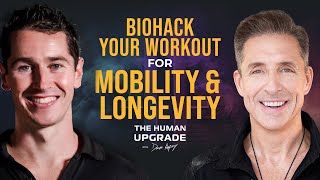
This is a YouTube video titled "Knees Over Toes: Fix Knees, Calves, Shins & Shoulders – Ben Patrick | 1127 | Dave Asprey" published in January 2024. It features a detailed interview and discussion between Dave Asprey and Ben Patrick, known as the "Knees Over Toes Guy," focusing on functional movement, knee rehabilitation, backward walking exercises, and longevity through physical training. The conversation covers practical advice on strengthening knees, calves, and feet, as well as lifestyle and supplement recommendations for joint health. The content is an expert talk/interview format centered on health, fitness, and biohacking topics.
Chapters
So I told you earlier, I think the foundation of exercise is resistance from the ground. I think the second part of exercise to me is strength and flexibility as one. And then for me, the only third part is filling in weak links. Like I mentioned, the tibialis race. That's it. Done. End of. End of podcast. If all you did was just learn those three things, that's the best I can do. Those are the three things.
Tibialis, raise and.
And walking backward. That would be like your. That would be like your sampler plate.
You're listening to the Human Upgrade with Dave Asprey formerly. You're listening to the Human Upgrade with Dave Asprey. Today is a really fun episode. As opposed to all the other ones, which are generally, oh, wait, they're all fun, but they're just different topics. Whatever is top of mind, you know, you're going to hear something likely about being smarter, living to at least 180. If someone says health span on the show, I'm going to sort of thumb my nose at them and call them a wuss. Because the people who are trying to cut the knees off of the longevity movement by saying, oh, we're just going to be healthier and die when we were supposed to die. Screw you guys, okay? Just screw you. Because we are at the point where we can, for the first time in recent history, extend our lifespan. And we have a moral imperative to do this because it's going to sound weird, but we don't have enough kids in all European countries, some Asian countries, and certainly in North America. Our replacement rate is far below. So we're going to have empty cities or we're going to have old people with the energy of young people and the wisdom of old people who are going to be productive members of society for twice as long. We better do it. And you're going to be a part of it, because you'll listen to the show so you can just count on hearing that kind of stuff. And today's episode is no different. This is with a guy I've been working, watching and admiring and sometimes triggered by just because he does these odd movements that no human should be capable of. Yet he is. And someone I actually worked really hard on connecting with last time I was in Florida and his home country. Actually, this was several last times ago, but between having my teenagers when I'm traveling, they get my time and attention first. And he's got toddlers. We never did it. It's none other than Ben Patrick, who is by far my favorite podcaster with the Last name Patrick. And who is Ben Patrick? You might know him as knee over toes guy. If you follow functional movement in the world of longevity and the world of biohacking since my very first book and the very first conference 10 years ago, by the way. New conference is end of May in Dallas. Go to biohackingconference.com the first, biggest and by far the coolest biohacking conference ever. You should show up. Well, what's been a pillar of this is functional movement. And functional movement means that whatever age you are, whether you're 18 and you want to be able to do Parkour or you're 30 and you still want to do parkour despite all the injuries you got doing something that's probably not good for you, or whether you're 80 and you still want to do it and maybe still can do it. Functional movement defines how long you're going to live and certainly how well you're going to live. If you're one of those weak health span people, I'm going to convert you. By the end of the show, I'm going to be as mean to healthspan people in a loving kind sort of meanness as I am to vegans. Because, guys, we're on the same team. You're just doing it wrong. But functional movement, back to that. If you can't walk, you can't move, and you don't have full flexibility, your brain doesn't work right. Ben Patrick. The reason I say he triggers me is I've had three knee surgeries.
Oh, wow.
By the time I was 23 and Ben, I for years had, like, PTSD because I would walk and my right leg would fold, my kneecap would shoot forward, my leg would fold sideways, you know, the way knees shouldn't. I would fall over. This is in college. And there's a thing. You always fall over in front of attractive women when you're 19 or 20 or 21. I don't know why that is. So, Ben, our first question is the guy who can, like, stand on one leg upside down, why do you always fall over in front of attractive women or at least more often?
Well, I wasn't in front of attractive women because I was having those knee surgeries as well and dropped out of school. Oh, you were a step ahead. There you go. You're a step ahead of me. Yeah.
At least you dropped out. They just kicked me out. This is kind of the same thing. You know I'm kidding. But we've both had crazy knee problems and I've trekked the Himalayas. Since I've had all kinds of yoga and other functional movement stuff. But you do things that literally, I see it, and it makes me hurt inside because my body tells me, holy shit, humans can't do that. Yet you've trained people how to do this, and I want to do your stuff. And until I repaired the joint to my big toe, that was an old yoga injury I don't think I could have. But I think I'm to the point where my movement is there. So I want to go deep with you on how you learned this crazy stuff, why you're called, well, knees over toes guy. Let's start with that. Knees over toes, like that. That's actually a thing in weightlifting. You never do that, and yet you call yourself that. What's up with that?
Let's do this. And I don't know if you know, but I was actually selling your products out of my gym, like, 10 years ago. I've actually sold.
I never knew that, Ben.
I've sold tens of thousands of dollars, and we all loved it and had great results dating back, like, 10 years ago.
Ben, you're amazing, man. Thank you for supporting me back then. We've been community girl all this time, and you never told me? I love that. Okay.
Yep. That was before. That was before social media. And I had no intention even then. Ten years ago, I never expected to have the abilities that I do now. Really. I just wanted to be off painkillers for my knees. I wanted to just be able to enjoy playing some pickup basketball on the weekend and not having to, like, worry, am I gonna have a knee surgery if I go play pickup basketball with my friends. So the fundamental of that for me was walking backward. And I would either have a friend or my now wife sit in the car with it in neutral, and I'd put my butt against the bumper, and I'd, like, push it backward, or I'd find a sled at the gym and drag it backward. But walking backward for me is what got me off painkillers for my knees. And if you look at it from a side angle, like, if you stood up right now and took a step backward, your knee is over your toes. It was found in the 1970s. Yep. Go ahead and stand up. Take your time. And I'm standing up side, sideways to the camera.
I'm pretty. See, my camera can get this. All right.
Yep. Now take a step backward. Take a step backward with your right leg. Yeah, there you go.
My knee is over my toes. It's. Some of the time. Yep. Okay.
Yeah, like you wouldn't, you wouldn't be able to walk backward. Like backward. Walking forward is kind of like knees behind toes. Walking backward is knees over toes.
Okay.
And it was. Yeah. It was found at a university in the 1970s that when your knee is over your toe, there's more pressure on the knee. This wasn't some like long term study that found that was bad. They just found there is pressure on your knee when it's over your toe. So for me, it was finding what I could do to improve at that pressure that then got me off painkillers, got me back able to play basketball. So I became really. I've always been a bit obsessive. So I've probably now spent more time coaching and digging into these ingredients of knees over toes training. And trust me, I never imagined I would be able to do the things I'm doing now. I can jump off stuff and do all kinds of basketball dunks and explode from crazy positions with my knees, and that's not what I was going for. It's definitely helped to show and inspire people that the body is not as fragile as most people think. But if you avoid pressure on the body, you might not get there. The whole idea is how can you find a scalable route to be able to handle pressure?
It seems like the basics of everything in the biohacking world is how do I get a signal into the body that's the right signal at the right intensity at the right time for the right time to cause change without overwhelming it. Right. And why, how did you figure out that walking backwards was that signal?
Well, it's definitely not something new. Some people listening to this may have even recalled seeing older folks holding hands, walking backward in the park. Because it's a very safe way to start, is you have a partner hold your hand, they're walking forward, making sure that you're walking on a safe path. And this was passed down generation to generation in China.
I thought that was this whole time.
So that would be like a low level of it that's been passed down for centuries to prevent arthritis in the knee. There was a someone I think you would consider in the biohacking space in terms he at least had this viewpoint. Charles Poliquin. He trained Olympic athletes.
Yeah. Charles is an OG biohacker. I dedicated one of my books to him when he passed.
So no way.
Hundreds of Olympic athletes. So he was a backwards walker.
That's right.
That's right.
So back when I was. Back when I was far from an Olympic athlete, a failed high School athlete with bum knee, nasty surgery stuff, hooked on painkillers. I saw this sort of clue from him that the farther and stronger the knee can go over the toe, actually, the less chance the knee has of then getting hurt in the sport. And so he was having people drag sleds. He learned that from Louis Simmons, who's actually a powerlifting coach, and he got that from Finnish powerlifters whose day jobs were dragging trees backward like they would have to drag trees. And then they credited getting these incredible legs from dragging trees. Wow.
Okay, you're. You're convincing me that there's a history here that I did not know about. I've seen your stuff online about walking backwards, and I admit I haven't done very much of it. Uh, I'm about to get a. A system that I'm testing out that would allow me to put some extra. Some extra tension while I walk backwards.
Uh, how sweet.
How many miles a day of walking backwards do you have to do?
I don't do miles a day. I've done. Yeah. It was like I looked back and I've tracked all my logs. We're talking about 13 years that I've been doing it, and only. We're talking roughly a quarter mile three times a week for that time. In seeking to add resistance, I'll send you one of our backward treadmills only after years and years of the number one question being, how do I add resistance without a sled, without good weather? We make a cheap treadmill that doesn't turn on, but it has resistance, and it's only for backward.
How much does it cost?
600. If you're paying full price with no discounts, nothing.
Okay, so it's.
I'll send you one of those for.
A lot of people, or you can go outside for free and do it. And that's something that's really important. There's more people than we've had in the last 20 or 30 years who are now paycheck to paycheck, and it couldn't have anything to do with the fact that our government just created 40% more of our currency last year, which means they sold 40% of your bank account and then gave it away. Not to you. So I'm a little annoyed about that. I don't know about you, but you live in Florida.
My legal team just asked me to end the podcast. It's been great.
Yeah, exactly. Exactly. But that stuff's going on, so I just want to say 600 is still a lot of money, but it's achievable and there is a way to do this. Was a weighted vest or carrying something, or does it need to be pulling something when you walk backwards?
That's a great question. I think the foundation of exercise for longevity is resistance from the ground. Now, that could mean like what I started doing originally, dragging a sled. So if you dragged a sled, where is the resistance on your body? It's the friction on the ground. It's not bearing down on you. I recently showed this, and a lot of people are like, oh, I get it. I hooked my mom, who's 69, up to a thousand pounds. Sled. She tried with all her might. Did she get hurt? No, not. Not at all. It's fundamentally safe when the resistance comes from the ground. Now, the cheapest form of that would be like a hill. The difference with the hills, you still have to come back down. So actually, a lot of people get great results walking backward up a hill. Just make sure you come down really safely and slowly.
And rattlesnakes.
Yeah, so. So, yeah, my. My treadmill for $600 is not free, but the average one costs over $3,000. This gym also affordable. Go ahead.
It's affordable. What I'm saying, though, there's people who kind of have 600. So there's still a lot to learn in this episode. And 600 is for a piece of fitness equipment. Not exorbitant by a long shot. It's a. It's in the affordable class.
Right. And at gyms, the treadmills that are already there, Even though I would argue it's better to have ones that don't have the electricity that you do the work for. Cheaper nonetheless, the ones. The million treadmills that are already out there, most of them, if you don't turn it on and you turn around and put your butt against the handle and spin it backward, there's some internal resistance. So this has already been tens of thousands of people. Had great results, actually, by backward dead milling, meaning not turning the treadmill on, you use your strength to spin the belt. And going backward, I like about 5 minutes if you have resistance, 10 minutes if you don't. Look, if you've got good weather, you could find you could drag a tire. Some people have results in driveways dragging tires for that Friction.
Wow.
Okay, so there's a lot of ways to do this.
So it's a friction thing, not a weight thing.
Yeah, it's. The resistance is coming from the ground upward rather than weighing down on you, which is. Weightlifting has its own awesome benefits. I just think the foundation of human exercise, or let's say resistance training, would be where the resistance comes from the ground. Because it's so fundamentally safe, you can ramp up. Like when you go backward with resistance five minutes, you're getting cardio, your feet are getting stronger. I help people fix plantar fasciitis by stepping backward. That's a toe first activity. Walking forward is heel first. There's a lot you can get from resisting from the ground.
Did you know there's a new technology that's about to shift the way you think about health? Since it's my job to test things out and tell you what works, I had to give it a try. Studies show that this tool improves both red and white blood cells. But what's even crazier is that it's been proven to reverse early stages of blood clotting in minutes. So if you're looking for the next level of performance and energy, in fact, that's probably why you're listening. So check this out. Users report a significant increase in energy levels. There are studies that back it up too, with a massive 20 to 29% increase in ATP, which is your body's energy currency. This new tool is called Quantum Upgrade and it's a customizable way to help you reach new levels of health. Whether you're looking for deep relaxation or peak physical or mental performance, it's got settings for everything. I've noticed a meaningful difference in my energy and recovery since I started using it. And now you can too. Quantum Upgrade is offering a free 15 day trial for you because you listen to the human Upgrade and thank you. Go to Quantum Upgrade IO Dave and experience the change for yourself. That's quantum upgrade IO. Dave get a 15 day free trial. When you look at like Shaolin monks, these guys aren't muscular at all, but they can do stuff that a lot of Powerlifters can't do, right? And especially on a power per. Per. A power per pound of body weight. They're crazy. And I, I've learned mostly from studying esoteric forms of Chinese medicine and movement arts. I'm kind of a nerd that way. I think you are too. You can strengthen your muscles, which is like the American way, so you've got guns or whatever, but then you can strengthen tendons and ligaments. And then in the east, they talk about strengthening wang, which is interstitial areas of the body, which is how the Shaolin guys can do this with like no muscle that you can see and they're standing on one finger and Doing all that stuff. Do you know what are you training? Are you strengthening tendons and ligaments? Are you training muscle? Are you strengthening bone? Are you strengthening interstitial tissues?
The interstitial goes beyond what I understand. Okay, I don't even know what that word means, but I, I think I get the concept. But I think you're strengthening everything when you're not avoiding positions but embracing them. So let's say, okay, when the knee is over toe, there's more pressure on the knee. If I hadn't developed some tendon ligament, there's no way I'd be able to do all this stuff year after year without ever having a breakdown or getting hurt. There's no way. It's just muscles. And I don't like to go down like the study rabbit hole. My challenge for myself is almost, can I explain this with common sense? And so, yeah, when you get into some of these tougher positions, you're loading more than just muscle. You're actually loading joints. And there's a big misunderstanding for most, not all people, like you clearly already understand this. Most people don't realize that joints have certain connective tissues that can develop and build. It's not only muscle. Like, I grew up thinking, okay, muscle can build, but everything else is just going to degrade. And you hope that it, you hope that you live long enough that it. And it doesn't degrade too. It's all just downhill. Like I genuinely thought. Joints, joints are downhill. But muscles you can grow.
Yeah, and teeth too, if you avoid either. Except they do. Like every, every tissue in the body can grow, as far as I can tell.
Yeah. Now, some people have brought up maybe there are certain connective tissues that can't grow. Like what? We already know that. Well, we know that tendons and ligaments can grow. There's cartilage hasn't been explored as much.
It does a lot of people think absolutely, in some circumstances grow. I mean, we know stem cells can. But for me, the most profound thing I've ever seen in space that you'll probably love this was when I was running a longevity anti aging group near Stanford in Palo Alto, when I was in my late 20s because I was learning all this stuff about how to fix my body from people three times my age. This woman came in, she was probably 50, she was morbidly obese and on a walker. And she came in and just could barely move and her knees were in terrible pain. She had two injections of ozone into the joint space in her knees. Basically where the cartilage is. And she showed us her X rays when she came in the first time, and she came back six weeks later and she showed us her new X rays. And you could see she had grown in a relatively short period of time, thicker cartilage. And I'm like, oh, it can be done. Now, whether she was a freak case, what other variables, I don't know. But I believe we can even grow that, even though a lot of people think we can't. And I would bet if we measured yours, whether new cells grew or maybe they hydrated, maybe you have more glucosamine on them. I. I think everything is fl. Is there. If you get a signal in and you just came up this crazy backwards signal that I'll bet you money fixes cartilage, too.
Yeah. And it's. I think it's possible.
Okay.
And we already know that. We already know that plenty can grow to make a significant change. So these principles are just don't work through pain. Find these positions where you can be addressing your joints and then fully train the joint. So the goal is actually to progress from backward walking to full range of motion. Knee strengthening.
And what would that look like? So you do your quarter mile three times a week walking backwards with some weight. And then how would you strengthen knee after that?
Yeah, and to be clear, I think the backward walking is a great starting process in itself without adding weight to it. Just so someone out there is thinking, you know, a lot of people get results just with the backward walking. To this day, my zero program, where you need nothing, no equipment whatsoever. To this day, that's the most appreciated program. So there'd be. I sell equipment, but zero is the most appreciated. Progressing then. Strengthening calf muscles, Strengthening tibialis muscles. Tibialis anteriors, the muscle on your shin. So it goes from underneath, wraps around to the inside of the foot. We want to strengthen all these things. It's like a ground up approach. Like we're rebuilding the body from the ground up. The backward walking, you're pushing through the toes.
The muscle that's like right here on the.
Is that your right leg or left leg or. I guess maybe our screen is inverted. Yeah, I think.
All right.
Yeah, yeah, exactly. It actually starts from the inside of the foot and then wraps across.
And then it comes across the top. Or it comes across.
Yeah, it comes across the top. So then your shin muscle.
Is it the shin muscle on the outside of the shin? There you go on the inside of the shin.
Yes. There's the. Yep.
Goes under, goes on the outside.
All Right. Yeah. I just think, I think on the screen our right left is inverted. But fortunately, fortunately, I've made bazillions of videos on these. So if you search like anterior tibialis rays, you'll see lots of stuff.
I've been doing a lot of PT on that because I had a fused joint on my right foot from an old yoga injury that was really inhibiting my movement. It was driving me crazy. So I did a documentary on how I healed from the surgery faster. But I do a lot of PT and I'm still doing foot strengthening, so I know that's, for me, an area of improvement. And you are one of the few people out there who's really talking about all the crazy stuff going on in feet. And it feels like maybe so many people having knee problems because they're wearing shoes that scrunch their toes and they're walking poorly. I think that's what got me early on, because I have giant feet, like size 16ft that are wide in the front. So it's no wonder that when I'm 16 years old with giant feet, that I probably didn't have great shoes.
Good point. All right, let's do this fully. This is even more exciting. There's no doubt that if we started like from your big toe and gradually went up the chain to the knee, and then even if we continued beyond to the hip, it's all related. It's not like there's just one secret thing, but when we start there, 3 million cases of bunions are created per year in the US alone. So most shoes are not shaped like feet. I didn't grow up realizing this. I've only realized this in recent years looking down at my own big toes jammed in. So most shoes were designed for style. They're pointed. And that shuts off your big toe. You have different foot muscles shut off. So what I do is I have people walk backward. If they are having foot issues, I advise them to wear a shoe that's shaped like a foot and to put a big toe spacer in, at least in the meantime. For people who have foot problems, putting a big toe spacer in, in a foot shaped shoe, walking backward, it's like your foot muscles come alive because now they're functioning as they were designed to, because remember, the backward walking is a toe first activity. So I'm not saying this is an end all, be all. You could add anything you want to that. But I think those three basics have to be common knowledge for someone with foot problems is that backward is a toe first activity to get strength and circulation. Your shoe might not even be allowing your big toes to function. And if that's already been chronically deformed like it is for millions of people, you might need a big toe spacer to get started. And then it's man things come alive. So, yes, I've, I've gone so far down this that I have the only basketball shoe that's shaped like a foot. I make my own basketball shoe after years and years of complaining that basketball shoes aren't shaped like feet. Now, as we continue up the chain, we want strong lower leg muscles on each side. So you go to your gym, you got a seated calf machine there. Wonderful. Where's the seated tib machine next to it? There's not, but bicep, tricep. We got both sides, but now for the lower leg, we're just going to ignore one side of the leg. This is just the way it built up. Those front shin muscles are not exactly like bodybuilding show off muscles. So at the gym it's hard to train that. Fortunately, you can use a wall. You can do a bodyweight tibialis raise. We work people from 10 to 25 reps. 25 reps body weight. Go try it right now. While you're listening to this, you have no excuse not to try 25 Tibialis raises against the wall. I leave up my tutorial that on YouTube for free. 0 Tibialis raise, meaning you need no equipment. Tibialis raise. 25 reps at your level, you're going to be on fire. And that's after you already did your 10 minutes of backward walking. 10 minutes backward walking. Now build up to 25 tibialis raises. Now we also do a calf raise. We want to be strong on both side. Then we actually start to get into the knee itself. Bending a stairwell is a perfect place to start. And it allows you to elevate your front foot and actually to bend your front knee through a full range of motion. You can use the railings to hold on. So I call this an ATG split squat. A split squat is like a lunge, but stationary. This is typically done. This is typically done with the knee bending about halfway. I do it full range of motion on a split squat. So I don't do a half split squat. I do a full range of motion split squat. ATG is, is short for ass to grass. I made my business Athletic Truth group just so that it would be at.
Grass Athletic Truth group. I love it. That actually makes me happy. Thanks for telling me the truth, Ben, because my seventh grade sense of humor has now been activated and I just. Actually, I'm now two years younger biologically.
And with that, just to finish people out who want to try a protocol with that, I advise people to do five sets of five reps per side. So it's like you're. It's like you're taking a full range of motion for the knee, but you're scaling it down to a super low amount of pressure and a low amount of flexibility needed. But as you lower your front foot, as you reduce the need of assistance, you now progress to actually that quite amazing mobility. That's what I did for my mom. She was struggling to get out of bed at 65 years old. Different. I mean, probably on the fast track for hip replacement. Now she's 69. She can sprint, and she can do flat ground on these ATG split squats. So for longevity, I want people to be able to do a flat ground ATG split squat and maintain that for life. I even add weights to it. So I'm like, my body's become like an acrobat because my leg muscles, I can do a front splits and fly up and dunk a basketball. Because I'm training my strength and flexibility, it's the same thing. I don't think of them as different qualities. I train my strength through my flexibility. One and the same. So I told you earlier, I think the foundation of exercise is resistance from the ground. I think the second part of exercise to me is strength and flexibility as one. And then for me, the only third part is filling in weak links. Like I mentioned, the tibialis race. That's it done. End of. End of podcast. If all you did was just learn those three things, that's the best I can use. Those are the three things.
Tibialis, rays and.
And walking backward. That would be like your. That would be like your sampler plate of how I exercise.
There you go, guys. Now you can add another 10 years to your health span if. If that's your minimalistic goal of failure. Or you could live another 50 years and be fully mobile by doing the same exercises. I think you should choose the latter. But hey, it's just me, you know, you, you be you. So then this is really like masterclass level stuff. And you mentioned everything starts with the feet. And it's reminding me of again, some of the ancient, esoteric stuff. And by the way, what you're doing sounds a lot like what the Shaolin people are doing. You know, the split squat to dunk So I, I think you're training certainly ligaments and tendons, because they're a part of strength, actually reminds me of two things. The esoteric thing is there's something called a homunculus, which is also known as a tactile homunculus. And this is if you were to draw yourself or draw a human based on where we feel the most. They have very ancient statues that were. That they found and they have giant lips because our lips have a lot of sensory things on them. Giant tongue, if you can see the tongue in the statue. Giant eyes, giant ears, huge hands, because we have so much density and huge feet and of course, huge genitals and because that's where we, we actually interact with the world the most through those systems. Right. So the reason the feet are really big is because there's so many nerves there. And when the feet are working properly, you end up having a brain that works better because you're literally processing more reality when you can feel the ground and when you activate all the muscles. I was actually duck footed as a kid, like pretty profoundly. And I have flat feet. They're much less flat than they were because of all the rehab work I've done. I can control my toes individually and I've done all kinds of weird work on just realizing I had a muscle in my foot that I never learned to use when I was a kid. And some of that may be related to Asperger's syndrome or just reading books when I was 18 months old instead of crawling, which I know is probably not good for my nervous system. But hey, you can teach a baby to read. There's a book about it. My parents read it. So there's always an upside and a downside. So with all these functional movement problems, I've gone down all these different paths and I don't have all day to fix my feet and fix my knees and do this and do that. So I want to amplify this using some of the technology from Smarter, not harder or from upgrade labs. What would happen if you put a blood flow restriction on your legs when you did this? You ever try that? I talked about the bands in the book.
No clue.
Doesn't work.
No clue. No clue.
All right.
No, no, I'm saying, I'm saying I have no. I think you could, I think with your knowledge you could expand upon these things a lot from nutritional perspectives to then enhance the desired outcomes and so on and like what you're saying. But I.
You haven't tested kind of.
I kind of figured out early on that the best thing I could contribute would be like, what can I get out of the most basic things I can do here? For example, I don't do any kind of treatments for my body whatsoever. Don't take any supplements whatsoever. Because I want to know what, what am I getting exactly from these exercises? So what you see with me is what you get. That's, that's all I do. There's nothing else that could be enhancing my results. That doesn't mean I don't think there's things that could enhance results further. But my God, to be dunking a basketball and doing a splits and stuff. Like, I never dreamed of doing this stuff. So when people are like, why don't you add this or that treatment to it? I'm like, I've already exceed. I'm. I'm not that greedy of a person. Like, let me. So I just stay in my zone. I think you're, I think your knowledge, you could probably look at each thing and, and nutritionally and otherwise know how to help people get even better results from it. Recover, like. So I think that's the beauty of it is I'm. Maybe I'm bioslacking, but you're biohacking and there's, you know, I'm, I'm sorry. It'll work itself.
Because you don't measure all those unnatural toxins you take in every day, right?
I don't measure them. But you're taking them.
So wouldn't it make sense to at least take supplements to balance those out since you can't prove that they benefits? I'm starting to sense like a. I'm definitely on your side earthquake of logic slowly tumbling in. And tomorrow you're going to be taking handfuls of pills. Like I'm seeing it.
Well, I think that could be cool is you could kind of share what you think. No, but you could kind of share what you think the most basic things are. In that regard, I can tell you where I'm at right now. We, we try to get the cleanest food sources we can. And, and my wife dresses me in all like organic cotton.
That's good.
And yeah, what else? I mean, we exercise, so we're sweating. There's some sort of a detox process with that. I would say we try to get a lot of sleep. Like I don't even bring my phone upstairs.
Okay, so you're doing a lot of good lifestyle stuff.
Yeah, exactly. So there's nothing. I guess there's nothing. I guess I'm more on the removal Side, not necessarily adding things to it, but like what, what can I sort of eliminate on the removal side? Simple stuff.
Take or do you drink tap water?
Do I drink tap water? So this one's kind of tricky because we have a one year old and a three year old. I was always doing glass bottled water before that. But now that we have them in the house, we do get, we get bottled Fiji water. At least it's got some minerals. That was kind of my thought process. Like, look what they can hold it. It's got some minerals.
Okay. It's, I don't know, it's bottled water. Okay, so you're not drinking tap water. So, so you're, you're doing, you're doing a bunch of stuff, right? Relatively clean lifestyle, but you're not doing supplements. For listeners, probably the single most powerful old school thing you could do for your joints would be gelatin or collagen. And I kind of made collagen into a billion dollar business. And one of the reasons you did you. Yeah, and I'm happy I did it. You know, lots of companies have benefited, but it was, someone had to talk about all the benefits. The reason that I.
Well, and I've had tons of that. I've had tons of that. So I would be. Actually, that reminds me, because of your, because of your product, we've been using that for, I want to say about 10 years. So incidentally.
Oh my gosh. Okay, so you're on. Here's one of the things that inspired me to make that collagen. And I talk a lot about. I went to Tibet and I had yak butter tea at 18,000ft and I felt like something turned on. And that led me down this path for bulletproof coffee. And my new coffee company is now Danger Coffee for new listeners. And it's called Danger Coffee because who knows what you might do. You might even have a 42 inch jump even though you had knee surgery like you do. So before that trip, literally, or I say on that trip, but literally seven days before I started walking around Mount Kailash, I had descended 7,500ft in Nepal in one day. And the cartilage in my knees was so bruised and I was still dealing a lot with knee pain and knee problems that I've since resolved. In fact, it was a miracle I could do this. My doctor after my third surgery had said, be grateful you can walk. You're never going to be running or doing any kind of sport again. I was 23 when I said that. So I was pretty stoked. I was doing. I had trekking poles, but I couldn't walk across the street to get a pancake. I mean, I was ruined because my knees were so bad. And I realized I'm not healing fast enough. It's very high elevation and. And I'm in a bus and we're driving towards Lhasa. And I know in Lassa we're going to get a four wheel drive and drive five more days. But if I can't walk, what am I going to do? I'm going to not be able to go to Mount Kailash. So we stopped at this little mud hut and it's unimaginably not developed at the time. And there's three mud buildings and that's where we're sleeping and that's where we're eating and that's it. And everything is cooked over yak dung. That's the only heat source there is. So it really was that way. And I asked the Chinese guy, Jerry, who I was riding with, who could read the menu. Hey, what does it say? And he reads everything on the menu. And they had pig's ears. I'm like, that's collagen. I'm going to eat some pig's ears. Never had pig's ears before. So I get it. I don't know what to expect. And it's just a big bowl of like 16 boiled, cold pig's ears just sitting in a bowl. And I'm like, this is the most hellish. Like what was that show that Joe Rogan did? Fear Factor. It was like a Fear Factor episode. So I'm like, oh, and I order some soup and I'm dipping him in the soup to warm him up and just. Anyway, I ate all 16 of them. And the next day pain was 50% gone and I could move. And I kept healing after that. And I was able to do 26 miles at know rough terrain around the mountain. Still hurt, but I could do it. And that's collagen. That's why it's so important. But the second supplement for people listening, I wrote about this one in Superhuman in my longevity book. It's glucosamine HCl. It's an old school knee thing. It's not glucosamine sulfate, which most people sell. It's the acid form of glucosamine. It has very positive effects on blood sugar regulation. But for people with knee and joint pain, it's a very affordable old school supplement that has had very profound effects for me. So if you were to say, I'm going to do Ben's program, I want to rewire and fix my knees. I would be doing 20 grams, maybe 30. You don't need a lot more than that. A day of collagen peptide, you can put it in your danger coffee, you can put it in a smoothie. You can, it kind of disappears whenever you put it in. Just get it in. And then I would be doing maybe even up to a gram of glucosamine HCl. And you might find a really meaningful difference in how your joints perform same t, same time. Since we're kind of sharing knowledge here, I'm, I'm, I want to be learning from you. I also want to be teaching people a lot of joint pain that I'm finding these days, especially amongst people who have been vegan or very strong plant based or even paleo is they're building up oxalic acid in their joints. And this is caused by kale, especially lacy kale and spinach and almonds and raspberries and beets and a lot of these so called superfoods. Even too much dark chocolate will do this. And so if you're waking up, you always have joint pain and knee pain. These are oftentimes the culprit. And I have been more careful since I wrote my last book, Smarter, Not Harder. It included a lot about oxalic acid. I've been more conscious about avoiding this. It's in beans and nuts and grains and seeds and all that kind of stuff. And I'll tell you, my flexibility, the amount of joint pain, it gets better and better. And I think this is an unacknowledged part of aging. So I would say avoid the more inflammatory vegetables that have oxalic acid in them. And by the way, I did tell Joe Rogan and his followers this when I was on his show. And seven years later when Mike Tyson came on and was talking about killer kale, Joe said, oh yeah, I had to quit eating kale smoothies because of oxalates. I'm like, yeah, I told you so, Joe. So this is one of those things where maybe it's not adding, but it's subtracting to your point. So if that's useful for listeners, hey guys, you know, I don't want your knees to hurt, I don't want your feet to hurt, I don't want your fingers to hurt. And sometimes it's the veggies, it's probably not the meat, and sometimes it's a lack of a supplement. Or maybe you just don't know how to move, which is why we're gonna go deeper with Ben. All right.
That's great advice. And it seems like the collagen is that I said I didn't take supplements, but we had. At the gym, we had your bars and the ready to drink shakes, which I love those things.
That makes me so happy just to know that 10 years ago, before connected that it was making a difference.
Yeah, yeah, yeah. So I think the collagen, it's sort of an in. It's like I didn't think of it as a supplement because it's like a bar or shake. Like I was using it. If anyone on here has been a trainer, it can be kind of long days, not necessarily time to go get food or you're trying to stay in the zone physically. And so I lived off a lot of those bars and shakes. So it seems like the collagen would be good advice for someone as like, like you said, you can throw it in your coffee. There's so many ways you can get it in. It's not like you're having to take a handful of pills or something like that.
Yep. It's. It's just a powder. And it. Since it really doesn't taste like much, that's why it's good. Just make sure it's from grass fed animals. There was a company that came in and started kind of copying some of the stuff that I was doing at Bulletproof, who was doing industrial chicken collagen, and it was full of metals and God knows what. So just grass fed guys. I don't buy from any brand you like. Just make sure it's grass fed or organic or something like that.
Awesome.
All right, let's. Let's move on. I've got some more questions for you here.
Okay.
How bad is a spin class for you in terms of what it's doing to your hips and your movement patterns?
Not an expert on it. To me, it seems like cycling is a sort of neutral activity for the knee. So there's some strengthening going on. It does sort of limit how the leg would stride around when you're sprinting. So I try to advise people to then do, like I mentioned earlier, atg, split, squat. You're now letting that hip extend. You're stretching out the hip flexors. You're getting that front leg through a full range of motion. So something like that might balance out cycling. If cycling is what someone likes to do, then I want them to do what they like to do. So my whole purpose for the exercise is actually not to tell people exclusively how to exercise. I'm trying to find these common denominators that can help no matter what you like to do. But definitely in working with a lot of people, I see that cycling, you would want to take some extra precaution to be flexible, letting that leg come through a full stride. So like atg, split, squat, couch, stretch things, things where that, that quad and hip flexor get to stretch out.
Some of the people in the Upgrade Collective, our live studio audience, are saying 42 inch jump. Did he just say that? Tell me more about that.
So in basketball, the biggest measurable is your vertical jump. So not like a box jump, but really like how high your feet actually get off the ground. And in basketball, they're talking about with the running start. So I infamously had a 19 inch vertical jump in high school. I was ridiculed a lot in high school for how unathletic I was. And I've gotten, I've tested that up to 42 inches now, which is plenty for me to throw down all these dunks.
So.
So I think that's where the 42 inch jump was referenced.
Okay, that's, that's impressive. I have no idea what my jump is. I should probably test that one of these days.
I don't think you need to test it, honestly.
Well, I mean it's. I'm tall enough, I don't need a jump. I just reach up and unscrew the light bulbs. Drives short people crazy.
There you go.
Until they sit in economy and I'm trying to sit next to them in a yoga pose. Which brings me to yoga. Good for your joints, bad for your joints. What's your take on yoga?
I think of yoga and strength training as sort of a yin yang. So strength and flexibility, I just happen to train both those at the same time. So I don't do like, you might take a yoga pose and a power lift and then you might see what I'm doing, like, oh, that's kind of like both merged together. So my, my goal is to train my strength through the flexibility that my body has rather than to stretch with no load or then strengthen through a partial range of motion.
That. That makes sense. So you're, you're kind of neutral on yoga is what I'm hearing.
Yeah, well, this seems to have helped certain yogis who lack strength around the joints. So maybe it's painful to get into certain positions. And then it's also helped, I've helped powerlifter squat a thousand pounds. So, okay, it seems to help whatever pursuit you're gonna go after. But to me, I would, I wouldn't do just yoga or just powerlifting. I would see those as like two qualities you would want to merge.
Can you put one of your legs behind your head?
Behind my head? I mean, I don't know what that. Oh, like, like in yoga. My wife is here trying to show.
Me happy boyfriend teachers call it.
I mean there's the, I mean I can put my you're pretty. Put in my mouth.
You're pretty, you're pretty close. But maybe as far as, you know, you could go. I just had abdominal surgery four days ago, so I'm not gonna push it, but you can you get up?
Oh, wow. Very impressive.
So I'm just wondering like, you know, Again, this is 15 years of anti inflammatory eating and lots of collagen and functional movement and a bunch of other stuff like that. And my front split still sucks. How can I fix my front split? I gotta even this out.
Front split, like, you know, stretch, stretch strength. Meaning. So I, I can maintain a front split with two exercises. I don't have to stretch to maintain a front front split. I work out a few times a week.
You can just do that?
I can do a front, yeah, I can do a front split year round without having to stretch for it because I'm strengthening with my hip flexor stretching and then I do other strengthening exercise with my hamstring stretching. And so you literally put the angles together. Like I literally maintain a front split off two strength exercises.
That seems unfair and wrong on many different levels. Ben.
Looking back, it is kind of, it is kind of wild. Wasn't, wasn't seeking a front split, was just seeking to protect the body, be more athletic for basketball. And then after a while I was like, holy shit, I can do a friend.
How long does it take someone to develop that if they start working with you?
It's like asking any how long question, where are they now? What are they?
An average person is a weekend warrior.
Two years. Wow.
And that's daily practice or three times.
A week practice we do roughly three times a week. But the days in between, like, I like, you know, someone could do some extra work. A lot of people doing my programs now can do a front split or have gone from really bad to quite close to a front split. It's not like something I encourage people to try. Like my program doesn't have front split in it, but if the hip flexors get stronger through stretch and if the hamstrings get stronger through stretch, you improve at your front split.
So it's more like But I think of training, it's more like a side effect. Like, oh, look, I accidentally. Yeah, yeah. Side effects are weird, definitely. Like sometimes people come in to upgrade labs to improve their energy and you know, if there's a side effect of they don't need a blood sugar lowering medication anymore, it's just a weird, unexplainable side effect because only drugs can do stuff like that. Right.
So, so yeah, I believe that. I believe that when you, when you're addressing ability and increase ability, ability, ability, ability, then a lot of the malfunctions like disappear as you go.
Wow, you're, you're encouraging me to start doing this to doing your practices on a regular basis. It, it sounds like it'd be good for me.
I'll, I'll, I'll film for you and just send you like a, like my advice on.
Okay, I would like that. It's not like it's been a major big goal for me, but I like being flexible. I like having the flexibility of an 18 year old. And when I'm 118, it seems like, of course you should want to do that. And if I'm not doing it means my longevity strategy needs additional work. Not that my health span's about to end and it's the end of the world because I just don't play that game now.
Okay.
What about toes? So my toes, like they're, you know, I have really long toes. Like, like I should be able to play the piano with them. It is, it is a curse, unless you're a swimmer, in which case it's like built in flippers. So my toes were always like kind of gnarled and overlapped because you, they're just crowded and one of them would fold under the others. And I've been wearing either zero shoes or Vivobarefoot or the five finger shoes. And I just was able to tease Mark Sisson when I ran into him at a studio a little while ago. He's got another like a five finger shoe. That's really nice. It's a new brand and I'm forgetting the name. Sorry, Mark, but they don't make a size 16. What are they?
Pelava. I don't know how to pronounce it exactly. It's spelled.
There you go, Mark. Pelava. Thanks Ben, for remembering that for me. So basically I've only been wearing those shoes for at least a decade and it's helped me enormously. So my, my toes don't do that and I learned how to straighten them out. But The Upgrade Collective. So many people, they have toes that curl under, that don't straighten out, or they have toes that are all like crunched and cranked around. How do you fix toes to fix feet, to fix knees, to fix hips?
Yeah, the three basics I do is get in a shoe where your foot can spread out. I'm a fan of using big toe spacers, at least when you walk backward and ideally building that up to some resistance so you're pushing through the toes, they're spread out. You feel the foot muscles, the toes working. That's the extent that I do for it. Those three.
Okay, that's cool. So we get those. We get those three big exercises. Toe spacer, walking backwards. And again, let's see, there's an episode. And we'll put the a link to the number in here for you where I interviewed the CEO of Zero Shoes, Xero. They make amazing, amazing shoes in the U.S. avivo is a European brand, a little bit more expensive, especially with all the fluctuations in currencies lately. And then there's the old Vibram five fingers. And then there's Mark Sisson's new brand, Pala, we think. Yep. And so, guys, all of those.
And if you play basketball, you got my brand.
Thank you. Ben, what is the name of your brand?
No, it's all good. It's called Uncivilized Sneaker.
I'm sorry, you mentioned that earlier. I just didn't see it. So uncivilized is just for basketball or do you have other ones too?
Just for basketball. But it's a clean, minimal design. And there's. There's white and there's all black. So someone, no one would really notice if you're wearing the all black. And the whole point is that it's not a clunky basketball sneaker. It doesn't have the heel that lifts up when you have the air pocket or pump in the heel that's been found to increase your chance of ankle sprain by four times. It's not a theory. You're. You're literally lifted up. So if you're playing basketball and you're lifted up higher, it just magnifies how far your ankle sprains. And then it's also foot shaped. So it's zero drop and foot shaped, but it does use nice sneaker tech to give you some bounce. So it's zero. Like, I'm a big fan of Zero shoes. This has more support, there's more cushion. Oh, these compared to a zero shot.
These are cool. I did not know oh, thanks.
Okay.
I'm looking at them right now. They're uncivilized. So I've been like shouting out all your competitors because I'm a really good podcast host.
I wouldn't say competitors all in the same, helping each other out.
It's actually a rising tide that floats all boats. Fixing shoes is like a hundred year problem for civilization because rich people used to wear pointy shoes to show that they didn't need to walk. And so we still mimic that.
Oh, wow.
I'm sorry, ladies. Six inch heels, they can be hot, but they don't have to be pointy to be hot. They could have a round toe that looks like a foot and a pointy thing and your calves will still stick out. It's okay. Like, just. Just wear those. They look. They look.
That's the future. My. Yeah, my wife's feet are still natural. And that's. That's hot. So there will be guys like me waiting for you if you let those feet be natural.
Exactly. Now, is uncivilized sneaker going to have a high heel model anytime soon? Because I know exactly three women who would wear it.
No, we'll stay in our lane with the basketball shoes. I wore Zero Shoes. I love the CEO of Zero Shoes and it was great and it really fueled my ideas because I'm like, this concept needs to be in a basketball shoe like you when you're on a hardwood surface. So yes, it's not natural to cram in the toe. It also wouldn't be natural be slamming around on a hardwood surface. So that's, you know, these kind of things gave me the inspiration. My friends happen to be sneaker youtubers and their brand is called Uncivilized. So I'm like, maybe we should just make our own. Like, I played basketball with them. We've traveled around the world playing basketball together, and it only took years and years for me to realize, geez, maybe we should just make our own shoe instead of complaining about it all the time.
I love the way you're thinking. It's funny. Steven Sachin, who's the Zero CEO, I ran into him randomly at a restaurant in Boulder with when I was hanging out with the CEO of Gaia Networks. I have a big show on Gaia that's doing really well. So I was out there like, this is such a small world. Your uncivilized sneaker, though, you only have size 10 through 13 and basketball players have giant feet. What are you doing, man?
Kind of a startup. I'm 32, so we're getting there.
Girly sizes. I'm telling you, my wife.
My wife, we run everything together. So trust me.
She.
Quickly. We have, like, at our HQ, we have sizes 6 to 9, and then also 14, 15. Like, we have those testing and really trying to get the sizing dialed in right. Because you want people to have that nice, big, wide toe box. Yeah. So, yeah. So we're testing those sizes. It's coming along quickly now that we.
I will pull my son and for my daughter.
Sweet.
He. His feet are already too big.
We'll comp them for you.
Of course, he incorporated my genetics, which is what children will do without your. Without your consent. I'm very triggered by that. But he stole my jeans and, well, he's got size 14ft already. And I'm like, you poor kid. Like, you do not want these giant feet.
My wife will make a note right now. We'll send you a pair of shoes.
My daughter, I don't know her size off top of my head in men's. But do you have a women's thing coming up? These are very masculine shoes. All the shoes that are comfy. Actually, no. Both zero and Vivo have some girl sizes, but what girls don't play basketball? Then you're triggering me again. I identify as trigger. Just so we're all clear.
I. I was born, like, without a detection of design. So my wife. My wife really has a good eye for design, and she's making, like, some really nice women's ones.
Oh, she is. There's not on the way.
I think. I think she's going to do a phenomenal job.
So you're in the early stages of this. So what we're going to see coming up here is in shoes that match your feet, you're going to see uncivilized as a rising. A rising force that walks backwards carrying a sled. A good way of putting it.
That's how you'll recognize us. Yeah.
And also shout out, man, you're 32, you're an entrepreneur, and you've done all this biohacking on your movement. And how long ago was it that your knees were just jacked? And they basically said, you're going to be fragile forever.
Oh, yeah. By 18. That was the final straw. Don't play basketball anymore. Partially artificial left knee. Thinking that was kind of the end of. Of any active lifestyle.
And here you are about, you know, 10, 12 years later, and you're doing things that are not supposed to be possible. It took me a little bit longer. I. I had my. I recognized. I Was kind of screwed when I was about 20 and I had surgeries at 21, 22 and 23 with a screw in my knee and all sorts of stuff.
And then amazing job overcoming that.
Yeah. And I just said, I'm not playing soccer anymore or I don't even have an ECL in one meet. I don't care. I don't make maybe a GR Back. I don't know. I can do plenty of fun stuff, but it took me a long time to get to where I was pain free. And you did it much more quickly. And you're starting a company still relatively early in your career. So wishing you the best of luck. And if you ever get stuck or you're going to take, you know, venture. Venture funding from, you know, some kind of, some kind of group or whatever and just want to make sure the fine print is going to you from getting screwed. I, I'm an expert at getting screwed, so I, I can share that with you.
That is extremely kind of you. And yeah, I've been, I've been in the trenches on this stuff. My wife is a much better entrepreneur than I am, so we're very fortunate to have each other, like, exponentially better than if I was trying to do this on my own.
Just, just know there's other entrepreneurs who have been down the road who are happy to help if you need good advice.
So it's seriously helpful to know that you're willing to do that.
I feel like we haven't talked about hips enough. I. I was going to say, you know, we're getting up to the end of the show, but we've talked about knees, we talked about feet a little bit about ankles and, and all that, but what about hips? Like, what are the things? I know you're going to tell me the big three, but what are the other things? I. I see a lot of banded squats. I see people in gyms, usually on Instagram, with uncomfortable camera angles, you know, doing on the ground split, you know, banded splits. I don't know what you call that. Like, like butt together, knee things. What's the, what's the. The way to have healthy hip flexors without necessarily wanting to grow a giant caboose? What's the right modern word for backside? Junk in the trunk. I'm just going to make myself get further into the inappropriate comments here. Upgrade collective. You got to help me. What's the appropriate yet slight booty? Thank you, Laura.
Booty.
That was what I was looking for. I'm blaming this on my lack of neutral Picks today, I've only had two shots of espresso from Danger Coffee. So anyway, I don't want a big booty, but I want strong hip flexors. What's the recipe?
Well, what I learned from all the other stuff was just sort of the premise that the body was designed to work right. So first let's. If something broadly is not working well, I'm going to go on the presumption that we're messing that up somehow rather than think we need like some expensive, secretive method of handling it. So if you look at the hips, I mean, crap, we're all, pretty much all of us are sitting too much. Tech jobs is now, even if you don't think you work a tech job, you're like, oh shit, I work a tech job. And so sitting a lot and hunched over and the hips getting stiff. Also, modern lifestyle, we don't tend to keep sprinting, which seems like something we wouldn't have really had a choice out in a Paleolithic lifestyle. Like everyone would have to keep sprinting from time to time. Um, so things definitely seem to stiffen up even from the time where kids were sitting in chairs in school. So sitting on the floor would be more natural, like you would do you watch most hip mobility workouts? Like, oh, my kid does that. Every single. My 3 year old already does that naturally. He does all those hip mobility workouts just by sitting on the floor naturally. So sitting in chairs rather than the floor and not sprinting anymore, just from like a common sense viewpoint, it seems to me like those are two pretty big deviations. So I already mentioned this. Atg, split, squat. And as boring as it is to say it again, it allows you to stretch out those hip flexors but in a loaded position, in a strengthened position. So like, rather than being like the solution, everyone on here, go sprint right now, come back. I guarantee 10 people are walking back in here with an injury. I mean, it's just to jump right into that. Like, it sounds great in theory to say everyone just starts sprinting. I would say identify what occurs when sprinting, how those hip flexors get to stretch out and they have to be working actively and then maybe we can start bringing that back up. Maybe you do want to sprint, but maybe you don't. I don't want to force someone to have to sprint. I like things, I like everyone exercises that can scale so that atg, split, squat, and then I even do like a seated good morning. But where I'm trying to keep my posture and stretch out my inner thighs because it would have been natural in school to be resting in a deep squat. I was sitting on a chair instead of resting in a deep squat. So most people don't realize their inner thigh muscles. I mean, it'd have to be. 99% of people's inner thigh muscles are tighter than they would have been if we were sitting around a campfire eating in a deep squat position. And so I actually help a lot of back and hip cases by not only doing this deep split squat, but also by doing a deep seated. Like, if you sat in your chair and you tried to reach forward and touch the ground, you would feel a bit of a stretch. So if you sit, if you sit in your chair and from a sit, from a sitting position, try to reach and touch the floor. Now put dumbbells in your hands, and if you're keeping your posture, you'll notice it. Start to stretch your inner, inner thigh muscles. So that's one that I think there. Yeah. Someone said on the chat, adductor muscles.
So a. I haven't tried doing a squat since I had hernia surgery five days ago, but it looks like I can still do like squatting like this. You're saying we should be sitting, like, hanging out for how long in this kind of squat?
I don't actually advise people when or how long or if they should rest in a deep squat, but the way that I do my strength exercise restores and improves that ability.
The ability. So for me, it's okay.
Exactly. So for me, it's like the, all the, the way that I exercise addresses the strength through flexibility of these various tissues to mimic. Because even if you do it now, well, but this should have been something natural for the last four years. Maybe someone overdoes it and now their knee or their hip hurts. So that's not, I'm not an expert in right now. How do you mimic a Paleolithic lifestyle? That's. I don't know. It's not. But with whatever you spend on exercise, 10, 20, 30 minutes a day, whatever it is, even a few times a week, by learning some of these stretch strength exercises where you're stretching through, you're strengthening through stretch positions in directions that we would have had more ability. That's, that's just how I exercise. And sure enough, I can do like that perfect resting, deep squat. And I mentioned front splits and various things that those were side effects of stretch strength training.
Okay, I, I get it. So you, you do the basic three things. You're gonna have more mobility in all the stuff you wanna Do. It took me about five years of yoga practice to be able to do to comfortably drop into a squat and hang out there for five or 10 minutes.
And that's fantastic, and that's a really worthy goal. And I just help people get there by doing strength training.
Actually, I didn't believe it was possible because I never could do it as a kid and because I had arthritis diagnosed since I was 14, and I had so many injuries. So for me, it was partly overcoming, actually proprioceptive fear, like the fear of my joints. My knee would say, I'm going to send pain signals even though there's no risk, just because I've been injured so many times. So it was like calming the knee, learning how to do it properly. But, I mean, it was years of several yoga things a week. And of course, with yoga, you're doing breath work and all that kind of stuff. And I don't do it regularly anymore, but once the patterns are in, it feels like. Like you can do it. I imagine I'll be able to, barring injury, to be able to do that another 25 or 50 years from now. When people do your techniques, are we getting the movement patterns imprinted? So even if we stop walking backwards every day, are we still gonna have functional movement patterns, even if our muscles get weaker, or do we go back to our old habits?
Well, I think it would kind of relate to what sort of lifestyle you're living. So I really advise people to make it part of how they exercise. And it doesn't have to be a lot of time. And when it's working well for you, the more protected your body gets, the easier it is to stay fit. So I would at least say that the effort you put in would take exponentially less time to maintain. But I don't know if I wouldn't advise anyone to just stop doing this stuff, but I would say that it would take less and less time to maintain, the better you get at it.
So if you're planning to have a family, you should do all this before you have kids, because you're not going to plan to stop exercising. You'll just have kids. And then you probably will, because, well, that's what happens to most people. I'm seeing all the people with kids laughing and everyone else going, what are you talking about? So, you know, the amount of free time you have is not what you think it is. So getting it.
Very, very true. But that's a great point. Yeah, you're making a great point, though, which is like, because you made me think about my kids. And like, so now I'm on my hands and knees and in deep squat positions and all these things that I couldn't do before that I actually help a lot of parents who can't. Those are my favorite wins of all. When a dad is like, oh my gosh, I had my daughter on my shoulders at, you know, at the park this weekend without having to have my knee braces or I'm able to bend my knees and like, you know, rest in a deep position with my kids playing. So by the nature of it, the tougher and more strenuous that was for your joints, that would probably be difficult. So the better you get at it, I kind of see what you're saying now. Like, the better you get at these things, those patterns you might now be in and use. So I suppose it would be possible. But since this is how I exercise, rather than a short term rehab protocol, this is just how I exercise. I never kind of thought about what happens when you stop.
All right.
But it would seem like less is needed to maintain. And I, with the one year old and three year old now, like, we have to carve out our time that we're able to get. We try to get in like three exercise sessions per week, whereas. So it's pretty easy to maintain for like three times a week, 30 minutes. I know. Now it's like, wow, I can maintain stuff now off this time that I used to have to work out much longer for.
Yeah, you start focusing on efficiency and then like, oh, for me, I would rather do three one hour neurofeedback sessions and train my brain than do the physical stuff. I'll do the minimum necessary of each to get the maximum results, but that's why I'm asking there.
Cool.
Um, I'm seeing one other question here from the Upgrade collective and if you're listening, you could be in the live audience right now. Go to our upgradecollective.com and sign up.
It's easy.
You get a bunch of free stuff that I teach you how to do and, well, then you get hangout. It's fun. So the question is, what about shoulders and wrists maybe, or elbows? Anything going on there? I know shoulders are vaguely connected to hips, but do you have things for shoulders that are as revelatory as knees over toes, like shoulders over nostrils or something like that?
I was faced pretty early on with a lot of pressure to fix shoulders because people locally, I remember like one family, the kid, they thought that he'd never be able to play baseball again. Shoulder Surgery years later, still couldn't come back, couldn't play baseball. That's a lot of pressure. So I took it very seriously and tried to become a master of my craft in terms of the shoulder. And for example, for him, with his shoulder, we simply created a strength training regimen that was the opposite of throwing a baseball. And it worked great. I'm not kidding. So we. So yeah, so like one exercise strengthened, like, for example, okay, you have muscles, you have different muscles, right, that attach in. And then you have muscles between your shoulder blades and you even have like, if you think when we think of our trap muscles, maybe you've heard of those, and you think of up here, but they extend down to just above your lower back and they're very hard to figure out ways to train them. And especially with the modern posture, the average adult right now is as weak as a 10 year old in those lower trap muscles just above the lower back. Like the protection you have just above your lower back. Not you specifically, but the average person is that of a 10 year old on an adult body. Meaning like our lower backs are just vulnerable and those then connect up to the shoulder.
Wow.
So, yeah, so I have. But everything I've mentioned, I give away everything I know. So, like, on my YouTube, this would be called. I think I call it reverse. How to reverse out shoulder pain. On my YouTube, boom. Everything I just described, you could go see in detail. How to start at any level right now. How to reverse out shoulder pain. My YouTube still has no ad money. Never turned on. Over a million subscribers never turned it on because I said when I started, I don't want you watching. Take this pain relief. Ooh, nacho cheesy. All right, now let's fix your joints. No, I don't, I don't want that shit. So you can go on and not have to watch ads. If there's any minor ads. It's just what YouTube puts that. I don't even have a choice, but I don't. I don't get a penny of ad money. How to reverse out shoulder pain or when we were talking about the hips, the two main ones that I think are the opposite of the modern hip lifestyle are ATG split squat and ATG style seated. Good morning. And there's just like tutorial videos on those. Everything I know about them. So I don't want to like leave someone hanging with any secrecy there on the shoulder. It would be a lot easier to watch the video if, if you were curious about that.
You know, I think you should turn on Monetization. Either that. I'm serious, and you got to listen to my logic here for a second. Either that or, like, partner with a couple companies that make cool stuff. And again, you are. Because you talk about your backwards treadmill, right? So you're monetizing your own.
My wife's. My wife is a freaking genius. So, you know, we, we, we've always done our business coaching people, and now we make our own equipment to help people with that, and we make our own shoes to handle that. And I can just stay there doing those three things very, very well and maximize the quality of that.
And we're very talk about those at the end of every episode. I don't know if you do that or not, but it's okay to talk about something that you care about enough to create a new product that didn't exist. And there's always, especially on YouTube and X is where you find the most trolls. They're not your customers. They're mostly like bored seventh graders. You just block them and after a while they just go away. They don't matter. But literally, if you care enough to make a product that's new, instead of copy someone else's product, in which case you're just a parasite, then like, good for you, man. And anyone has a problem with that, they probably need to get a therapist. So it's okay to get paid helping people. And you help them because you want to help them, and they pay you because they wanted to support your work and get something new they couldn't buy anywhere else. So, like, it's actually win, win, and it's super ethical. So don't, don't undersell yourself.
So important that you're saying that because I used to have the different viewpoint that'd be better to just be a broke gym owner with principles that no one ever heard about. And it took. Honestly, my wife wanted a ring that I couldn't afford. And. And I was like, shit, I might need to start social media. I'm not kidding. Yeah, I was not on social media. Hated social media. But, you know, there's probably people listening to this right now who need to hear that. Like, look, go turn on a TV for an hour and tell me how many medication commercials you see. Look, they are winning the marketing game. So, like, fight back. Get good at marketing. That doesn't make. Like, that doesn't make you a schmuck. Like, we gotta fight back with some natural marketing here. And so it took me a long time to realize that it's true.
You nailed it.
I I'm a hard marketer, but I'm hard marketing things that I know are going to help people more than the constant onslaught of medication ads that I'm seeing.
You. You said it perfectly. If you make the best product ever that could change the world and cure every bad disease and you never tell anyone about it, you're still a failed inventor. Sorry. That's how it works.
Well, you're. You're doing us a disservice. You know, it's. So have some boldness. You deserve it. If you're trying to help people naturally, it's Almost a catch 22 for some of us. Like, I'm more of a pushover, honestly, like that just by. Whatever this is. My natural state is more like, to let someone push me over and. And I have, like, strong feelings of empathy towards people. And so I think I would feel. I think I felt bad about how I'd be seen if I seemed like I was pushy or sales. So it's almost a catch 22 that, like, you might be out there with a lot of ability to help people, but you might need to shift your viewpoint on also being bold about that. I don't know if that. I didn't quite explain that, but I.
Think you got it. Look, if you believe in what you're doing, if you're right, you're right. And you should be unapologetic and you should explain that you're right in the most elegant way that makes it accessible and believable to help people.
I was saying probably not a lot of us on this call want to be politicians. Is a good way to explain it. If you are the type of person who's like, I want to control others or this or that. It's Almost a catch 22 of the type of people, but we actually kind of have to fight back and level up and be a bit more aggressive and bold. That doesn't mean you ever have to tear anyone down. And I think that's. I think some people associate those two. So I would say be as bold as you can and never tear anyone down, and you'll do great.
Yeah. You don't have to do, like, the. The Rogan cancel thing, you know, where, oh, I don't like this person because they're selling something else. You never have to say a bad thing about anyone. And where it gets really touchy is when someone's doing evil, like Monsanto. Right. Should you tear them down? Probably. Right. I had to come to grips with that, too. So sometimes you got to call evil what it is. The rest of the time if someone's, you know, selling extra padded marshmallow shoes that don't work, you talk about why yours work better and how the stuff works and, you know, enough people are going to listen and we all do our best. So just don't be shy about building a business and a life based on helping others that also supports you so you can do an epic job of supporting them. And it pays back over time. So if that's helpful, that's my knees over toes business advice.
Beautiful.
It's been really a great pleasure, Ben. I am going to get one of your backwards treadmills and I'll try the split squats and see what happens.
Awesome. We'll stay in touch on it. Thank you so much for having me on.
You got it guys. Thanks for listening. You learned some really interesting stuff about quick and easy ways that you can have a body that works really well for a long period of time, even if you sit down to listen to podcasts or something like that. So I'm looking forward to seeing you on the next episode of the Human Upgrade. And if you need some coffee, gain your coffee. It's the most amazing coffee. It tastes awesome. It has remineralization of the beans so that there's more minerals in them so you feel better. You get electrolytes, you get ionic minerals and coffee tastes great and you feel great and it's amazing. And when you buy it, you Support my work. DangerCoffee.com thank you for listening. You're listening to the Human Upgrade with Dave Asprey.










