Memory, Psychedelics, and Biohacking with Dr. Manoj Doss | 1187 | Dave Asprey
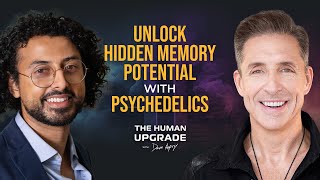
Dave Asprey talks with Dr. Manoj Doss from UT Austin about how psychedelics affect memory and cognition. They cover neuroplasticity, hippocampal function, and practical ways to enhance brain health through biohacking.
Chapters
So, for example, the first time you ate a pizza, you might, you know, be like, oh, this is amazing. Blah, blah, blah. And then over time across eating pizza several times over, you now know what a pizza looks like, tastes like, smells like, and you don't have the episodic memories anymore for what that is. And the idea is that the hippocampus is thought to train the cortex, the kind of outer layer of your brain, in a way that kind of distributes that information, such that if, you know, I damage one part of your cortex, you're probably not going to, you know, forget what a pizza is. If I take out your hippocampus, you're no longer able to form episodic memories.
You're listening to the Human Upgrade with Dave Asprey. You're listening to the Human Upgrade with Dave Asprey. Today we're going to talk memory, but not just any memory. We're going to talk psychedelics and memory. Now, if you're about to say, I'm not going to listen to this, a bunch of people talking about psychedelics, there's shamanic and journeying use for personal development or healing or spiritual things. There's also medical use for fixing things in your brain. And there's also a huge difference in dosing. Small doses of psychedelics have a very different effect. And some of this has directly to do with longevity and with cognitive performance. And if you've been listening for any of the last 10 years, you know that longevity and cognitive performance are two of the main pillars of biohacking. And biohacking itself is now a $63 billion industry, which is amazing. Starting, I guess this was 13 years ago with a hundred people at a bar in San Francisco at the first biohacking conference, when I started it, we're now at 3,200 people. But the entire time, how do you improve yourself? How to improve cognitive performance? How do you heal stuff that needs healing, including trauma? And how do you live longer than you think you. You can, which includes having a brain that's young and flexible. That's what we're going to talk about today, and very specifically about your memory. Because who wants to live a good life if you can't remember it when you're done? Our guest today is Dr. Minaj Das. He's a scientist at the University of Texas at Austin Dell Medical School. Man, that's a mouthful.
I know.
Could they add some more?
Yeah. It's a weird thing about med schools sometimes. Want to have that extra title? Nice.
You're studying how Drugs affect thinking, emotions and the brain. Now when I say drugs, is this only psychedelics or do you look at things like metformin and rapamycin and other things?
Not those in particular, but mostly psychoactive drugs. So this can include, you know, thc, alcohol or other gaba A sedatives like benzodiazepines and Ambien, as well as dissociatives, which I don't always group in with the psychedelics. So, you know, ketamine, dextromethorphan, and then also stimulants like amphetamine and methamphetamine.
Okay, so you're into all the good stuff, I suppose.
Yeah.
A special shout out to Dr. Charan Raganath who recommended that I talk with you.
Oh, yeah, yeah. Charon. I worked in his lab over 10 years ago and odd little fact, I think his grandfather sold furniture to my uncle way back in the day.
Wow.
Yeah.
The universe is so connected.
His grandfather was, I think, one of the first people to do movies in Kannada and tam. Wow. Which is like these South Indian languages. Yeah.
Amazing.
Yeah.
And he was on episode 1152 a couple months ago and we talked about the science behind memory in general. And since you're studying psychedelics memory, I'm like, we gotta share this with all the listeners because they're really into this.
Charon was a huge influence and still is. And what in the way I study memory. And in fact, actually a really funny thing is when I was leaving his lab, he said, don't study drugs and memory. You know, there's no career there. And then later on, I think this was a few years ago, he said something. I guess you're one of the people that I've given bad advice to.
You know, sometimes we think we know and then we find we didn't know. And it's a hallmark of someone who's done some emotional healing and has done ego work in order to be able to say, wow, I was wrong, I'm improving now.
Yeah. And I. I actually think though that there was still a piece of advice that he said there that I. I still think is probably true. He doesn't remember this, but he said to me, you're not going to learn anything about the mind from drugs. And I thought at the time he was being a hater. And now I think he might be more right about that than ever, but I think he might have flipped his opinion.
It's funny, by disabling or ramping up certain aspects of the mind, it feels like as a computer Hacker by training. If you're trying to get inside a black box, a system you don't understand, you turn knobs and dials and see what happens. So it feels like there is some learning we can get from psychedelics. Why do you think maybe there isn't as much, I guess.
I mean, we've been. This research, you know, the Renaissance side of speak has been going on since what, probably the 2006 publication of Mystical experiences, although psychedelic research was happening even before that, both in the US as well as Europe, to some degree anyways. And I honestly can't say I've learned too much about the mind from these studies. Maybe it's the way that we're studying them. Whereas I can say from just basic kind of psychological paradigms, you know, experimental psychology, or to some degree even brain imaging, you know, I have learned certain kind of fundamental aspects of how the mind or brain works.
If you could, in four sentences, tell me how the mind works, what would you say?
I don't think I have a. I don't think I could do that. I think that some people would. You know, the big kind of overarching model that some people, especially in the psychedelic world, are going off of is the predictive processing framework. I don't totally buy it, but, yeah, it's hard for me to say. I mean, I think there is some type of hierarchical way in which the mind works and things get more abstracted, and we probably only have access to some of that. But that's, you know, not being very specific at all.
If you're saying predictive processing. What this guy named Jeff Hawkins, who was the guy who invented the first handwriting recognition for the first personal digital assistant, what would be the great, great, great, great, great, great, great grandfather of the iPhone? This was called the Trio back in the day. And he wrote a major book outlining how the brain predicts the future microseconds from now.
Jeff Hawkins. Yep. I think, wait a minute, I might have got his book at one point, but I never read.
Was one of those books that really changed the way I think about it. Because whether it's how things actually work, the reality is that you notice things that aren't as they should be. And he goes in great detail into brain structures and things like that. And it's something that some of my more advanced students at 40 years, as in my neuroscience facility or neuroscience experience, I suggest they read it because it's useful for thinking about this. Huh? If my brain is only noticing things, what is it not noticing? And that's why, for instance, skeptics die, I think, six years earlier than non skeptics.
Oh, that sucks for me.
Well, there's curious people who are saying, I don't know. And skeptics are the ones who say that can't be, therefore it isn't.
Yeah, yeah. I mean, I think I'm always open to new possibilities, but, yeah, I think I can certainly sometimes be a little skeptical, especially among psychedelic scientists.
Yeah, there could be some people who maybe sample a little too much. Speaking of that, if I accidentally spilled some ayahuasca in your danger coffee before we started, would. Would that be a better interview?
No, I probably would be unable to speak. I think a lot of people forget sometimes that with psychedelics that, you know, it kind of. For some people, anyways, for a lot of people, at least at different moments in time, it can kind of cut off your ability to speak very easily or very fluidly. We. We were doing this task at Hopkins, kind of this free association task where, you know, you're primed with a stimulus and then you're just supposed to chain off words. And, you know, the idea is that, oh, you get very free associative, whatever. And people were struggling. I mean, I only, you know, watched, like, a handful of participants do it. And maybe the data will look different, but people were definitely struggling. We would tell people, okay, if you can't come up with a word, just say the word you said previously. And then so after finally somebody gets a word, they're like, ketchup. And then they're like, catch it, catch it, catch it.
I'm reminded I recently was down at Eterna where I got some gene therapy for longevity. And they also did a procedure where they were injecting kind of Japanese stem cell into my reproductive system. And so they gave me ketamine as a anesthetic. And I said, well, don't give me enough to really knock me out. It's already numb with lidocaine. I'm just going to do a video for you. And so I'm doing the video, and afterwards I'm like. And finally they just, like, shoved probably a little propofol, even though I didn't want it, just to make me shut up so they could finish the procedure.
Did you put the video online ever? No.
I sound like a total moron, right? So at the time, I didn't think I did. But that can happen, right?
I. Yeah, that's. That. That sounds like it would be a fun video, though. There's. I probably shouldn't say who this is. But there was a group that I knew that they were piloting one of their studies and I think, you know, they, they got approval to do this. So a few of the researchers were, you know, testing out doses. You know, one of the researchers seemed to really like it. Another person was like, this is kind of weird. And then another person, slightly on the older side, who'd probably never tried ketamine, ends up getting it. And then in the video, this person goes, oh, it feels like I'm, you know, moving away to the back of the room. And then all of a sudden it's like, oh God. And then the camera shuts off. And then I heard that they're like, take it out, take it out. Stop.
Here's something for you. If you dread allergy season, it might make you forget it's even happening. It's armor Colostrum. Colostrum is one of nature's powerful bioactive foods. And it's the first nutrition that everyone receives when they're born so they can thrive for their entire life. Armor of colostrum has over 400 bioactive ingredients that strengthen your body's barriers and create cellular health. There are thousands of research backed benefits. And when it comes to allergy season, you want to get some armor of Colostrum. Colostrum strengthens your respiratory barriers to change how your body interacts with allergens. When you strengthen your body's barriers in your nose, your sinuses, your lungs, you can manage how your body responds to those environmental allergens. So if you want natural support during allergy season and beyond, Amara Colostrum is your friend. Go to tryarmra.com Dave and get 15% off your first order. That's T-R-Y-A R M R-A.com Dave.
Let'S.
Talk about memory specifically because you've studied this so extensively, which is exciting. Walk me through the phases of memory. Like what happens when I want to remember our conversation.
Yeah. So especially when you're talking about with, you know, manipulating memory with drugs, you always have to consider three phases, a fourth one that maybe we will, we'll touch on later. But that will be encoding, consolidation and retrieval. So encoding is when you're forming your memories, you know, like when you're studying, for example, consolidation is when you're, you know, those memory memories are stabilizing. In some ways we'll refer to this as being like offline. So there's still things happening at the synaptic level from one hour ago that will determine whether or not I can remember this experience or remember that experience from an hour ago. And then lastly, there's retrieval, so your ability to access your memories, remembering, essentially. And so, for example, in the lab, what we can do is we can give people, show people a bunch of stimuli, and they can be on the drug during that time period, in which case it'll affect the encoding or the formation of those memories. We can give a drug immediately afterwards, after we show them a bunch of, let's say, pictures. And that can retroactively impact those memories in a certain way. There's a really cool effect with alcohol. And then you can also just give people, you know, show people a bunch of stimuli and then, let's say, a day later. So that way you wait for those memories to stabilize. You can now give them a drug and see how it impacts the way they access those memories. And what you can end up showing is, especially with different drugs, is that they don't affect all those stages of memory the same. I think, you know, as I was just kind of alluding to with alcohol, everybody knows if you study drunk, you're not gonna remember anything the next day for your test.
Right.
However, if you study and then get drunk immediately afterwards, and, you know, in the studies in the lab, we're talking, you know, four shots in 10 minutes.
Oh, that's so bad for you. You'd be hungover the next day.
Right. And so. So assuming you can perform on, you know, your test with a hangover, you might actually retain more than had you not drank at all. And so it's a very. Yeah, it's. It's known as retrograde facilitation. It's this very paradoxical effect because, yeah, you study drunk, you're not gonna remember anything the next day per test. You study, get drunk immediately afterwards, and it'll enhance your memory. And, you know, this hasn't been quite tested in, like, a very, you know, ecologically valid situation. It's not like they've gotten a bunch of students drunk and done this, but, for example, at least showing people words, images, sentences, emotional words or images, and then using pretty much any gaba, a positive modulator. So alcohol, benzodiazepines, and Ambien or kava Kava could work, too. Exactly. I don't know.
Shout out to my friends at true kava.
Yeah, I've actually wondered that myself. So kava, it turns out, at least with the propofol, it might actually impair.
Your memory, but it screws up your mitochondria, which are the basis of energy for Memory.
So yeah, it's also a GABA A agonist. It might even have some GABA B effects. And so, you know, there's other things. And it doesn't work with GABA E agonists anyway. GHB anyways, that's one test of that one. But it does work with the GABA A positive modulators. And yeah, people have had different delays between study and test. It's been shown by numerous groups around the world.
Have you ever studied or looked at Aniracetam?
No, but you're like, you're talking about one of the neurotropics, like the.
Yeah, yeah. So aniracetam, it's a pharmaceutical. It's in the racetam family. And these have been around since the 50s. Actually Sandoz Pharmaceuticals, who also was the manufacturer of pharmaceutical LSD for the study that Stan Grof did. Stan was on the show years ago. He's the father of transpersonal psychology and infinite holotropic breath work for listeners. Anyhow, you look at Aniracetam, it's the only racetam that improves memory IO in studies. And I've been on it for 22 years, almost every day. And I notice a huge difference on aniracetam. I just remember all these things and I can recall them like what I just did there with stenograph.
Just it's all right there.
And if I don't take it for a couple days, I notice there's a slight delay in word recall. Like it's a very noticeable effect. It's one of those things that no one's going to make money off Aniracetam because it's off patent for God knows how long. But it's one that I wish there was more research on. So I'll give you a bottle.
Yeah, you think it's. So you think it's better than what's the one that logically. The one starts with a P?
Yeah, P. Paracetam is kind of the one everyone studied the most and there's lots of analogues. So phenyl piracetam is more energetic than piracetam and there's oxiracetam and some of the others. I've tried all of them. And the one that I stand by for memory is Aniracetam. It's also the only racetam that is stress or anxiety reducing as well. So it's also the only one that I know of that's fat soluble. So I take that stuff in the morning and I really notice the difference. Piracetam, especially for young People, it helps as well, but it depletes acetylcholine, which is an important neurotransmitter. So you have to take a choline donor when you take it. So for people listening, this is my favorite memory drug. But who knows, maybe we're going to learn some new ones in this interview.
Yeah, so I mean, the thing with a lot of, with memory in general, a lot of times is that you can enhance one thing at the expense of something else. So, you know, there's, there's kind of like a general filtering mechanism. There's, you know, kind of a limit to what you can remember. Some people think, for example, like, oh, emotion, you know, it enhances your memory. Well, it enhances certain elements. There's what's known as, for example, the weapon focus effect, where you can, for example, if somebody's pointing a gun at you, you might remember the gun and what's like around it in its, the immediate surrounding. But then everything in the context behind it, you might forget now. And so, you know, I would always be curious as to, well, is there ever a, you know, what's the downside? That's what I'm always, that's what I'm always concerned with when, you know, enhancing anything.
It's funny, everything we do has an upside and downside, including golf, including lotion and like everything in your body. And we don't really study the downside of lots of things. For instance, fragrances have a really serious downside on your hormone system, but people use them all the time without even knowing, right?
Yeah, I mean, I think this is true. You know, sports, right. They're obviously generally pretty good for you training and all that. But then, you know, how many downsides to even yoga, you know, your joints can potentially get a little messed up, right?
It's funny, it's called danger. Coffee or drinking. Because who knows what you might do. But, but all the things worth doing have some element of danger, even if it's just eating breakfast, right? There's always something. But the things like asking the girl out, getting a degree, starting a company, whatever, whatever is the thing that seems daunting. That's what you want to have the power to do. And oftentimes unlocking trauma is a part of that because the internal resistance is there. And psychedelics can help with that. But there's many ways that are non psychedelic, like neurofeedback, like breath work, like emdr, and there's this long list that people know from the show. And when we're looking at being Able to remember things better. This is really important for executives, for students. And frankly, as you age, a lot of people start losing their memory, but they don't know it. I'm not going to name any certain politician, for instance, when we talk about that. But if you realize there are ways you can protect or enhance it, and they may include psychedelics, they may not. This is just precious knowledge. There's two kinds of memory that I want to know how to enhance, and one I suck at and one I'm world class at. There's episodic memory and semantic memory. What's the difference?
Yeah, so episodic memory is more of, you know, your event memory, memory for where and when something happened that, you know, yesterday I went to go pick up my partner at the airport, you know, at 8 o'.
Clock.
Whereas semantic memory is more of this kind of general knowledge. You know, you might call it like crystallized knowledge or something along those lines. So knowing that George Washington is the first president of the country, you have the semantic memory for that. You no longer have the episodic memory for where and when you learn that information. Or even like knowing what a pizza is, right? We, you know, we. I know what a pizza looks like, tastes like, smells like, and yet I can't remember the first time I had a pizza. And so a lot of times, the way things kind of are thought to work in the brain, there's a very simplistic way of describing this. And CH might get a little mad at me for describing this in a way that people described it 30 years ago, but I'm just for the sake of, you know, simplicity, I'm going to say it. But. So one idea is essentially that your hippocampus is. It binds a bunch of disparate elements together into these episodes. So, for example, my partner doesn't have anything to do with an airport, not necessarily anyways. But together I can put this into a single episode. And then over time, you can kind of extract the statistical regularities across those episodes. So, for example, the first time you ate a pizza, you might be like, oh, this is amazing, blah, blah, blah. And then over time, across eating pizza several times over, you now know what a pizza looks like, tastes like, smells like, and you don't have like the episodic memories anymore for what that is. And the idea is that the hippocampus is thought to train the cortex, the kind of outer layer of your brain, in a way that kind of distributes that information, such that if, you know, I damage one part of your Cortex, you're probably not going to forget what a pizza is. If I take out your hippocampus, you're no longer gonna be able to form episodic memories. And so it's a very kind of interesting distributed system. And over time, you know, Alzheimer's is a great example where they get so much damage first to the hippocampus, and they can't form, you know, episodic memories. But even over time, they start to damage, there starts to be damage to the cortex, and then they can, you know, forget their mother's face or these very kind of obvious crystallized memories.
One of the hallmarks of aging is hippocampal shrinkage. So of course I measure my hippocampus, because why not? And I'm 87th percentile, which means whatever biohacking longevity stuff I've done over the last 20 years seems to be working. But there are ways of regenerating hippocampus. How would you go about doing that?
So, yeah, it's one of two regions that can have neurogenesis, the other being olfactory cortex. So, you know, an area that represents smell. But, yeah, your hippocampus is one of those regions. But there's something to be said about. More is not always better. You know, it's kind of like, for example, since, you know, you were. When you were five years old, you probably had the most connections your brain has ever had, and then you prune those connections over time. One idea is that it makes things more efficient. You get kind of less bizarre associations that are probably not going to, you know, do anything for you for the sake of your survival or whatever. And so, you know, I don't always. It does seem to be the case that certain disorders, ptsd, depression, they're associated with smaller hippocampi. But like, for example, there was a really famous study where they had taxi drivers or they had people who were becoming taxi drivers in London. There's what's known as. I forgot what it's called. It's like the book or something. Yeah. And they have to learn, you know, London really well. And what they showed was from before and after learning, going through that procedure, that their posterior hippocampus became larger. I think that the interior hippocampus became smaller, though. And so, you know, and again, I don't know how well that replicates. I think the actual posterior hippocampus effect probably does replicate. I'm not sure about the interior one, but, you know, there's. There's always kind of compensation. And more is not always better. I mean, you can, you know, look at, for example, people. I don't know if the hippocampi are actually bigger, but there are people who are like super remembers and, you know, they can remember, like which episode on what day, you know, Joey from Friends did whatever. And I say that because I think that's the example someone used. But they tend to sometimes have, I think, kind of problems, like affective problems. And so, you know, I'm not always convinced that, you know, having more. Although I think you're right that it does get smaller and that probably is somewhat of a sign of, you know, aging and memory getting worse. So I don't know. To make things better though. To make things more, let's say. If you did just want to make them make it larger. I think exercise is, seems to be one. There's also some. It's unclear if hippocampal neurogenesis even happens in adults, adult humans. There's some like people out there who are still, you know, that they're saying that this is. It might not happen as much as we think it does or it might not even happen at all. So I think it's still kind of controversial. What. And then new neurons are not. Those new neurons also haven't like integrated necessarily into circuits either. That could be useful. They might be more useful for things that are less important. So, you know, if I were going to tell you anything about how to make your memory better, I think exercise is probably the best one.
What if advanced physics discovered an energy that underlies reality that's very hard to detect. Well, they have. It's called quantum energy. And you can get a PhD in it. It's real, but it's invisible when you can use it.
Right.
It enhances your vitality, reduces stress.
And since stress accelerates aging, a lot.
Of us are working on that problem. One of my favorite companies is Leela Quantum because they have dozens of studies, double blind, placebo controlled, showing that when you use their technology to change your quantum energy state, your body measurably handles stress better. EMFs are a significant stressor. It damages cells and causes oxidative stress. What if you could undo that by going at a level below the EMFS, which is the quantum level? Well, that research includes 59 studies and a recent third party study showing between a 20 and 29% increase in ATP production, which is the energy currency of your mitochondria. Those studies show significant improvements in blood quality and heart rate variability, which is a key marker for your resilience from all causes. Learn more@lelaq.com Dave and save 10%. We know that exercise increases blood flow in the brain. I'm on the board of Amen Clinics and Daniel Amen was just on stage at the biohacking conference and is a dear friend whose work really changed my life. Looking at like half a million brain scans, you can measure blood flow and we know that exercise does that. But maybe more importantly, exercise raises a compound called bdnf. Can you talk about that and what it does?
Yeah, so brain derived neurotrophic factor. So it's. So first of all, you know, a neurobio person would definitely be the person more to ask about this. But it has become especially talked about a lot with, amongst like psychedelic researchers. And so it's at least one component involved in different forms of neuroplasticity. So that includes neurogenesis. It also includes, for example, forming new dendrites, so connections the branches between neurons or at least one of the types of branches between neurons. And so some evidence suggests that psychedelics can upregulate BDNF as well as. Now there was a study that just came out that suggested that psychedelics actually bind the same receptor track B as bdnf. Although I also saw some people have now been like, wait a minute, wait a minute. We tested 40,000 compounds and none of them bind to track B. Like, we don't believe that psychedelics bind to it either. And so it's still, you know, there's still research to be done. But one idea is that that might be responsible for how psychedelics are enhancing at least certain types of plasticity. So specifically that structural plasticity, the, the dendrites essentially grow the dendrites, or what are known as spines, these little buttons on the dendrites or. But you know, the neurogenesis stuff, for example, with psychedelics is not as clear as some people, including myself, have made it out to be. I've cited papers and then later on I'm like, ooh, actually there's a lot of papers that don't find the effect of neurogenesis interesting.
Yeah, if that's why exercise works. One of my, my major books, this was the one that was on the New York Times science bestseller list, which as an author was, wow, that, that's the list that's hard to get on versus the advice list. And it was sandwiched between Homo deuce and Sapient. And the book was called Headstrong. And I'm like, two things you can do if you want to have a Better brain, which includes memory. It's have enough mitochondrial activity in the brain and have enough BDNF that you have the ability to at least re sculpt it. And there are some things that we know work, fasting, exercise, interesting studies of lion's mane around bdnf. And then more recently, I invested in Paul Stamets's company. He has something called the Stamet Stack. And Paul's been on the show. He's a friend and just. He's like the mushroom guy, the fungus guy.
Yeah, I saw him at. He gave a talk right before mine at the Texas Eclipse Festival.
Perfect. Oh, wait, I was at a different eclipse festival here. Yeah, he's just an amazing human. And what he found was mixing psilocybin, lion's mane and niacin to increase blood flow in the brain, was causing whole brain neurogenesis in. This is a pharmaceutical company that he started in order to use this for things like traumatic brain injury or for things like aging like Alzheimer's. And so it looks like there's some evidence that we can do this. And that wasn't just hippocampus. That was whole brain. Thoughts on that?
Yeah, I mean, I would have to see the data and I would. One of my neurobio friends would have to approve of it, I think. You know, people have talked about other regions of the brain having neurogenesis. And, you know, every time, you know, there's something that comes out, there's always somebody who's like, I don't think that's quite the case. And like I said, even with, you know, the hippocampus, there's people out there who are saying, at least in adult humans, I'm not sure if that how much neurogenesis is actually happening there. The other thing you have to always consider is how those neurons are wiring up. They're not going to wire the same way they did previously. And, you know, manipulating that in a way that can be, you know, adaptive is probably not easy. If you have a brain that's overly linked up, you know, it can potentially lead to, you know, interference information processing or. I mean, I don't know, perhaps. I don't want to say seizures, but, you know, there can be things that can happen where there's too much of.
Something going on, especially without any organization. That's why I use neurofeedback with substances, even just regular BDNF promoters, so that at least the neurons know where to go. So they're. They're generated and called into action and the effects have been, over the last 11 years, pretty potent.
I mean, this actually, you know, makes me wonder. So for example, with psychedelic therapy, we just leave people on a couch with eye shades on while they have a massive dose and they listen to white people music. And I, you know, I always wonder, you know, should we be doing something with them? Right. Should we be perhaps, I don't know, driving certain ideas like this sounds almost like brainwashing or something. I don't mean it like that, but I don't know, telling somebody they're a good person or something, you know, after 10 years of thinking that you're a terrible human being, you now have formed a semantic memory for that that, you know, George Washington is the first president of the country. I'm a terrible human, you know, human being.
What if they really are?
I mean, just joking, you know. Yeah, I think that, I don't know, good and bad is, It's a weird thing, right? I don't know if there's always good and bad. Bad.
I, I totally. That was joke. What, what we did is we launched our new products called Psychedelic Assisted neurofeedback, where you're on a substance at 40 years of Zen. We're using ketamine for very specific reasons. Low dose ketamine, not going on a journey. And we're showing your brain what it's doing, which is different than putting something into the brain. And then we take you through a structured meditation process. Well, you're more, say, more synaptically plastic. And the idea here is that even if you go into a deeper journey, which you do on one of the days, your brain is getting feedback on what it's doing during the journey. So you kind of have a better automatic or subconscious sense of where you're going. And the, the results so far have been people are able to do more of the, like the deep forgiveness work. This is the core of the program. When they're doing it with that, and we measure that by brain waves, we know what that looks like on a brain wave when someone has a transformative experience. And so we can guide them into that more deeply.
But how do you know what those brain waves are reflecting? This is what's known as a reverse inference problem.
Well, I mean, after you have 1500 people go through a program, when you see this specific pattern and large numbers of people report this kind of experience, like I could tell you what deep, authentic forgiveness really looks like in a brain because we have enough data on that.
So, yeah, it's interesting. So right now, you know, Neuroimaging. Right. So if you're talking about eeg, that's been around for, you know, over a hundred years or about a hundred years.
Yeah.
And then FMRI has been around now for 30 years. And yet neither of these tools are used in psychiatry. EEG is used in some neurology. It's used in, you know, sleep disorders and epilepsy, but it's not used, you know, in depression or anxiety.
Psychiatrists who use it.
And yet, I don't know, Eddie and I. Okay, let's talk.
Daniel. Amen. He's a psychiatrist and he's got a half a million spec scans, which is a kissing cousin to fmri.
Yeah, and FMRI is better, I'll say.
Except that one study that showed it was all junk, remember?
Well, there's a lot of studies that have been showing. It's funny how FMR researchers are the biggest haters of fmri, myself included. And so I think that they're interesting tools for research, but they haven't, you know, they haven't really cracked anything yet that's really promising for diagnosis or prognosis or anything. And yeah, we have tens of thousands of scans and have, you know, some of the best people looking at, you know, using machine learning to try to pick things out. And yet it's hasn't been super useful yet. And so I do this is why, you know, wondering. It's like, okay, well, you know, sometimes you can see certain brainwaves, for example, or let's just say, you know, brain activity, let's say in the amygdala. You know, the amygdala, everybody thinks, oh, it's emotion center, fear center. You can see the amygdala. You can see amygdala activity when, sure, when people are probably scared. You can see it when they're looking at somebody scared. You can also see it when people look at a happy face or if they're looking at something salient versus non sex. It's very active, I'm sure, you know, but if you, if you, but you can also see it if you compare, let's say like a checkerboard versus a gray screen. My guess is the amygdala activity is going to be up for the checkerboard salience, you know, so it's like you can't. So this is the idea of reverse inferences. We are unable to infer what's going on in the mind based on brain activity. What we can do is the other way around, where you can look at certain types of behavior and know that, you know, the associated brain activity with it. But usually, you know, a different, different brain areas, they respond for multiple different stimuli. And so it's, you know, it's. Yeah, it gets a little difficult. Yeah.
Didn't some researchers recently look at high resolution EEG brain scan and be able to infer what a person was looking at just on their brainwaves?
Yeah. And you can probably even do that. I think. Yeah, you can do it with FMRI as well. Especially if the images are quite distinct from each other. Like an object versus a scene.
This was a scene of like a, a road with cars and a tree or something. And, and they, I would say what the AI model looking at brainwaves predicted was 90% the same.
I mean, they definitely do some pretty cool reconstructions that, you know, I mean, but especially, but if you look at, for example, even like, like actual brain activity, if you get patients with, you know, electrodes in their heads, usually it's because of something like epilepsy and so they're about to go for a surger. You know, it's like sometimes the reconstructions of their brain activity for what they're saying, it's like, it's like not like perfect, you know. So, I mean, I think it's getting better, but yet, I mean, as I said, it's not like a tool that we typically use. We don't scan somebody's brain and say, okay, this is the medication you should go on, or you have this flavor of depression or anxiety or whatever. It would be really useful. Right. Because then, for example, we wouldn't accidentally give somebody with bipolar disorder when they're depressed the wrong medication. But yet we don't do that because I don't think it, it's just, it hasn't, you know, it's not that useful yet.
Yeah, it's a very early days. I'm, I want to go back to episodic memory versus semantic memory. And guys, episodic is I remember something happened on a certain day and semantic is I know how stuff fits together. So I mentioned earlier, I'm really good at semantic memory, like world class. I, I've just got all that stuff in there. Episodic memory. I don't know what day of the week it is. I don't know I did yesterday or last week. I literally look at my phone and to me, anything that happened more than two weeks ago could be six weeks or six months or two years ago. And it's all the same. What's going on in there?
That's interesting. Yeah. So, yeah, it's interesting. So semantic memory, as I mentioned, it's kind of this, you know, it's a. It usually takes a longer period of time before it gets into semantic memory. But sure, after a year, that probably, if you have something from a year ago, it might be semanticized, so to speak. And so, yeah, I don't know if my episodic memory is great either, but at least the things that I know, I can tend to get in there like. So, for example, if you give me a new fact about psychedelics, I'll probably be able to retain it. It's interesting, I think, that with certain specialty, with the way, if you have a schema, for example, if you have a way of kind of encoding this information, there might be an easier transfer to, let's say, semantic memory. But a lot of times, at least when you initially form a memory, like, let's say a lot of times for when people are studying for a test, for example, what they'll do is they'll sometimes try to remember the page, the textbook, that they saw it, and you can say that even though it's almost like a semantic memory that they're trying to form and yet they're using episodic memory to recover it. Right. Because it's not very quick that we can necessarily transfer this information. But yeah, I think a lot of it probably has to do with just specialized knowledge that the things that get transferred the easiest are going to be what we already have, schemas kind of built in for the way that we encode information a lot of times has to do with what's already there. And so what can ends up getting in and getting into semantic memory particularly might end up being what it's most related to in the first place. So I don't know. Yeah, you study a lot of biohacking and I'm sure it's easy for you to. Then you read a new piece about biohacking and then it gets into there, you know, but if you were like studying like, I don't know, like Mandarin or something, don't tell me you know Mandarin, but let's say you don't know Mandarin.
I didn't know a little bit.
Or maybe it'll get in there easier. In my case it wouldn't. But I think that, for example, I was trying to learn a little French during the pandemic. Luckily it's close enough to Spanish and Portuguese, so even if you took out my hippocampus. So one thing that's worth mentioning is it's not Always clear. What's a semantic memory? An episodic memory, except these very clear examples of, okay, George Washington, first president, country, you took out my hippocampus. I would still probably know George Washington as a first president country. And that's kind of the way at least I would define it. I don't know if every memory researcher would agree with that. That's a semantic memory. And it's unclear exactly what is an episodic versus semantic memory sometime. But at least in the case of something like, if you were to take out my hippocampus, I'm pretty sure I would still know a little bit of French. And that might give you an idea of what gets into semantic memory and what doesn't. And actually, one of the things I'm proposing with psychedelics is that it might speed things up to get into semantic memory.
Interesting. But it looks like some psychedelics can reduce episodic memory.
I think that they generally do. And so I think they essentially bypass the hippocampus in some ways. So, yeah, if there's any reliable effect on memory, is that encoding specifically, not consolidation or retrieval, although there might be some interesting effects there as well. But when it comes to the formation or encoding of memories, yeah, if there's any reliable effect with psychedelics or any drug, it's that hippocampal dependent memory gets worse. But something that at least we found with psilocybin mdma, and I just had a paper published this past week with psilocybin and 2 CB is that it looks like this kind of, you could think of almost like a short term semantic memory that hasn't quite become a permanent fixture in your cortex just yet, that this form of memory, notice, familiarity does seem to kind of get enhanced. And you know, essentially familiarity over time can become what can become a semantic memory. It has this sense of knowing. So familiarity can be thought of as, you know, you might, one day I might see you somewhere out, you know, in Austin and I might say, you know, you look really familiar, but I can't remember where I met you, when I met you, what your name is. I just know I've met you. That's familiarity in the absence of, you know, this typical episodic memory recollection. And so over time, after several repetitions which enhance familiarity, that that's probably what produces something like a semantic permanent kind of crystallized semantic memory. And so I think that, you know, by enhancing familiarity, psychedelics might help drive information into the cortex. People sometimes lead these experiences having the sense of knowing, even though they can't remember all the steps and recollections, the episodic memories that lead to a sense of knowing. Sometimes it's some bizarre things, like, oh, I understand the universe. And it's like, all right, how do you know you understand the universe? It's like, I wouldn't be able to tell you. I just know I do, you know, and then other times it might be, you know, more useful, like, oh, yeah, I'm not a bad person. Right. And they don't know everything. They can't recollect everything that took them to that point. But knowing that they're not a bad person is probably something that could be useful.
I've worked with a good number of people, whether you want to call them psychics or readers or whatever, and they somehow seem to have developed this. Well, I'm just going to call it knowingness, right? Or you can give them a name, and you think of someone and they tell you all these facts about the person. You're like, how could you possibly know this? You ask them, they say, it's just right there. I just know it. Are they crazy?
You know, I'm not a medical professional, so I shouldn't make that diagnosis. But, yeah, I wouldn't be the first person to believe them. I. I believe they believe themselves, but I wouldn't necessarily be one. And I think that that's a type of. So this, like, driving of noeticism, you know, I think is something that psychedelics can do. And as I said, I think it can be potentially bizarre at times, but it could also be adaptive. You know, for example, something that's, you know, as we, you know, kind of discuss, is less objective, like you being a good or bad person and. Or thinking that the world is dangerous or not. You know, the truth is, it's. It's both. It's dangerous. Sometimes it's not. And, you know, thinking that it's always dangerous is probably not useful, or knowing that it's always dangerous is not useful. But I do wonder, and it's something that, you know, we've wanted to test if, you know, somebody gave me a million dollars. One of the first things I would do would be looking at different types of learning under psychedelics and seeing whether or not there's certain things we can enhance that is objective. You know, like, let's say language learning. You can think of languages. I used that example earlier. They might initially start episodic. You might think, oh, how do I conjugate this verb? And they become rather automatic and, you know, crystallized you ask a person, you know, whose first language is something that, you know you don't speak, why is it this way? And they'll be like, I don't know, it just is, you know, they just know that it is. And so I think that it would be very interesting to, you know, for example, you know, look at psychedelics and whether it's language learning or, or certain types of kind of automated crystallized learning to see if they might speed up that process.
This would obviously be dose dependent. Right. And a lot of these things will cause auditory distortions which aren't going to be helpful with French, which to me sounds like auditory distortion anyway. No offense. My, my kids speak fluent French and I just, when I try to hear it, I know my auditory processing is weird. And French and Swedish both, to me, they, I just don't hear them right.
French is definitely the weirdest one out of the romance languages. Sorry, sorry, French people.
Yeah, you know, no, no shade there. I just, I've tried and it doesn't stick. But Spanish is fine for my brain and so if I could take a psychedelic that let me learn French, that's fantastic. I also don't know that I'd put the effort into that because I'd probably rather learn some more neuroscience than French.
Yeah, well, so, you know, it's interesting you said it, you know, it distorts, you know, audition and I mean, it obviously does and probably in ways that aren't as true to reality. But if you think about, you know, the way like sounds, phonetics and things work in the first place, they are, you know, we interpret things like your. I'm trying to think of an example. I, I did not do very well on my auditory neuroscience class. But like, for example, I think like B's and P's are sort of on a spectrum or M's and N's I think are on a spectrum. And your M might be more like my N, for example. And we end up very quickly picking up on, you know, which phoneme you're trying to say, you know, and so that might, you know, be one of the sources of auditory distortions under psychedelics. No one's studied this properly.
Right.
And in which case, you know, that could actually probably help you with certain languages understanding them.
Zeus, I think LSD could help me understand French.
I don't know, but I would love to test that.
And again, no, no shade on French speakers. It's, it's just a challenge, man. Like I do not know how people hear that language, but I also recognize that we all have our unique auditory processing stuff.
And it's weird. I have always thought I was like, yeah, if an alien came to Earth, you know, let's say they stop in Spain and they're like, okay, this is how, you know, humans speak. And they, you know, pop over to Portugal and they're like, okay, you know, they go to Italy, then they get to French and they're like, that's not how you guys actually sound. Right.
So they're all.
Same with me.
Yeah, it's.
Yeah.
And then you get into, you know, some of those other languages that are like, like Mandarin, you know, that all the little sounds, Westerners just don't have brains to hear that. And that has to do a lot with the sounds you hear when you're very young.
Right. And so there's this idea, right, that psychedelics, people think that it opens up this, you know, critical period and that people report feeling very childlike under it. It'd be very interesting to see if, you know, those types of things. So you can do this with babies, right? Two sounds that sound the exact same to us. You know, something in a tonal language. And then without the tonal bit as much, you know, it would sound the same to us. But then, you know, as you said, you know, somebody with, you know, who speaks Mandarin would be like, oh, yeah, no, those are very distinct things. And babies can, you know, they'll do, I think, what's. What's. They'll end up like, fixating more. I'm forgetting what the word is. But essentially they'll fixate more if there's something novel, but then they'll kind of habituate if it's not novel. So if you have two different sounds, they'll be like, huh versus if you just repeat the sound a couple times. And so it'd be interesting. For example, I don't know if a human would necessarily notice. An adult human, sorry, babies are humans as well, I've heard. I don't know if an adult human would necessarily notice the difference, but this would be a useful place for brain evoked potentials, you know, and just seeing. Does it. Do they get treated somewhat differently? So, yeah, I think that would be, I think, super interesting. Yeah.
And in the context of understanding, guys, what. What is any Vogue's potential? That's when you hear or you see something, how quickly does your brain get the signal that you heard that? And funny enough, young people have a faster speed, and as you age, you get to about 350 milliseconds or so. So you have a delay on reality. But people who meditate or take care of their brains can maintain the evoked potential of a young person. Like, I have the same response time as an 18 year old last time I measured my evoked potential. So it's playing video games.
That was. I have some friends that are big, big, big gamers. Chad, Chad James and Sam, Sam Mitchell. And these are guys I actually used to skate with way back in the day. And now they're like video. They're gamers. But yeah, when I was asking Sam, I was like, well, what makes you know, like, you know, who are the best gamers? He's like, oh, it's always people under 30. You know, it's, it's, it's all about reaction times. Yeah.
And it, it seems like that can be trained for sure. I also wonder. We're talking about. This will sound dark, so you got to stick with me. We're talking about people in that kind of neuroplastic state when they're coming off of psychedelics. And you can train people with positive reinforcement, but we all know that negative reinforcement is better. So if you took someone and gave them like a mild electric shock every time they didn't hear sounds, they'd probably learn the difference in those sounds much more quickly than if they had a positive reinforcement.
Is that, is that so? I mean, this is one of those things that I don't, I don't know as well as I should have. And, and it's also a little bit on the side of conditioning another memory system. So conditioning, for example, you know, is, is the kind of automatic response to something. So, you know, you hear a sound associated with a shock and then you might not even remember that you ever did this experiment, but you hear that sound again, you're like, something doesn't feel right. A really, I think, famous case is there was this guy who didn't have a hippocampus or he had some kind of damage to it, couldn't form episodic memories. You would never be able to do this, by the way, now. But this was done, you know, 100 years ago or something. Not the most ethical. And so he's. The doctor's meeting him and he puts a tack in his hand and essentially pokes the person's hand. The person goes, ow. You know, and then of course, you know, the next day he meets the doctor again. It's like, oh, hey, you know, the doctor reaches his hand out, goes, hey, what's up? You know, like, I'm whatever, doctor, whatever. And the person is like, I'm not going to shake your hand. It's like, why not? It's like it's dirty. Like, they made up some answer. But there was, like, a conditioned response to that, doctor. So, you know, when it comes to things like. Yeah. I mean, there's some evidence, I thought, that, you know, positive reinforcement works better than punishment in terms of, like, training. And so I. Yeah, I don't know. I mean, I think that you can learn very quickly certain things. For example, an animal, if you shock them in an environment, they're going to be afraid or due to a sound or something, they're going to know that that sound. They're going to be forever afraid of that sound in one trial, you know.
Yeah. And I'm not proposing we do this to humans or animals. I mean, I would. A mild electric shock that doesn't. It doesn't cause serious pain, like. Like a rubber band snapping you on the wrist kind of a thing. And the only time it goes off is when you don't hear the right sound.
So.
So then it. You don't. Your body isn't going to say one sound is better than other. It's not hearing them both that is the risk.
Yeah. So I think it. Again, it. It probably also depends. So it depends on the memory system, I think so. For example, I think, you know, if you're norepinephrine, for example, it might be something that's more related to especially negative emotional events. And there's been some evidence that, you know, norepinephrine can keep memories kind of hippocampal dependent. This might even, you know, been. This has been proposed even to potentially underlie ptsd. So, you know, they have this traumatic event, and it remains hippocampal dependent. It never, like, integrates into the cortex where it loses details. And people might still know that they fought in the war, but they lost a lot of those specific details that are traumatic, and instead it remains in this kind of episodic state.
Is that because of high norepinephrine or low norepinephine?
High norepinephrine. And some people have, you know, shown this with yohimbine. Are you familiar with that one?
I took some this morning. Oh, yeah.
Oh, wow. Yeah, I took it one time when I went skating. And, you know, so I go. I do, like, rollerblading with tricks and flips and grinds, and I'm not doing as much of the flips anymore. But, you know, it's one of these things where there's definitely. It gets Your kind of heart rate up, you get a little scared. You know, even now, it's like, I'm doing something that I've done before, and, you know, you know that you can get hurt. And I feel like they just amplified my fear and my heart was just. Maybe I took too much of it, but I never took it again. But, yeah, they did a study with Yohun Bean, and they showed that, you know, 30 days later, the memory was, like, just as much, if not more dependent on the hippocampus that were formed memories under yohimbine. But then there's. What's been proposed is, like, dopamine. And I don't want to say dopamine's the pleasure, you know, pleasure molecule and kind of is. Yeah, I don't know if I would totally buy that you take L dopa and you don't feel pleasure. Usually, you know, you take L dopa for a long period of time, you might become, you know, a sex addict or a gambling addict.
You can become dopamine desensitized, of course.
Well, I was saying, actually, if you take it over a period of time, so if you take L dopa for, like, one time, you don't really get pleasure from it. You might get nausea. Yeah.
If you took it in your hands, it'd be better sex.
I wonder. I don't know. I don't know if they've done that study, but I knew that. I mean, certainly amphetamine, you know, people, you know, take, you know, stimulants, and, you know, they have. They have some, you know, certain interesting experiences. But at least L dopa alone. I've just heard, you know, that I didn't actually know this until I had a psychiatry friend that was telling me that. Yeah. Over time, you know, sometimes people will take Aldopa and then they can develop things like a gambling addiction or sex addiction or whatever. But it certainly doesn't happen overnight. And I don't. I don't know if a single dose. I took Aldo for once for a study, and I was, you know, I didn't really get anything out of it, but I had a friend who got a lot of nausea from it.
Interesting.
But, yeah, it's like. But dopamine, in any case, it is involved in reward. It can also be involved in negative, you know, negative kind of learning as well. But the idea. One idea of dopamine is that it does help kind of drive things into the cortex. It helps consolidate these memories or, you know, make them more kind of semanticized. And so I do wonder, depending on the type of learning you're doing, should we really be rewarding people during certain types of learning to kind of drive that learning into the cortex, make it a more permanent kind of semantic memory?
It's so fascinating.
Yeah.
All right. Is cannabis good for memory?
I mean, I think the short answer is no. Whether you're talking about the encoding of memories, it certainly doesn't seem to help things get in. Whether you're talking about the, I don't know if it does much to the consolidation. So if you study and then smoke weed afterwards, there was one study that did that. And although alcohol enhanced your memory, cannabis didn't really do anything. One thing that we found was that if you try to retrieve memories on thc, it'll actually distort your memory. It'll make you just come up with a bunch of garbage. And so, for example, what we did was we showed people a bunch of labels that were followed by pictures and there was negative, neutral and positive images. So for example, you have guy sitting on his porch, and maybe you get a picture of a guy sitting on his porch. You get happy baby, and you maybe get a picture of a happy baby. You get dying baby in the icu. I say that because that's a real stimulus. And you don't get a picture of a dying baby in the icu, for example. And then later on, two days later, we give you THC and then we test your memory by showing you all those labels again and asking you, did you see this as a picture? And we could get people to say they saw pictures of a dying baby in the ICU when they never actually did. And they would say it with like, we gave them like a five point confidence scale. They would say with high confidence. And so, you know, in that sense we said that, well, it seems like it can distort your memory to the point where potentially could create a false memory. I don't think most cannabis users are, you know, having these massively distorted memories. But the point is it's not impossible for that to happen, especially maybe if you were under certain suggestible conditions. So, yeah, and then I think the long term effects of cannabis, I think there's some, you know, evidence that, you know, if you're a daily user, probably all day, every day user, maybe even just once a day user, that it's not great. You know, you're a lot of your cognitive faculties do get a little worse, including episodic memory, but I think to some degree they can recover if you quit for a month or so. I don't know how permanent that is, but I think it all depends on how much you're doing it. And like you said, there's positives and negatives to all these things. And I'm not there to tell people not to use cannabis.
I'll just say it's unlikely to improve your memory or your cognitive function, especially over time. I think there's enough evidence out there.
Yeah, we did find a really cool effect that it's super complex and so no one's ever going to cite it, but it was this effect on encoding where we essentially showed so in a previous study, we showed that. So there's this idea that if you study something, you should take your test in that same place. You know, context dependent learning. I study in this room. I'll perform better if I take my test in this room. And so we decided to see if there's ever a case where that could be bad. So if I saw, you know, a dog at the beach, and then later on I go back to that beach and I see a similar dog, I'm probably gonna think it's the same dog. Or will I be able to, because I'm reinstating the context, have a more accurate memory and be like, wait a minute, no, I remember the original dog because I'm back at the beach and I can reject that this is not the actual dog. Turns out that one didn't work. That's what I thought was gonna happen, that if you reinstate the context, you'll have a veridical representation of the original memory and then you can reject this new thing that's sort of similar to what you previously saw. So it turns out if you give cannabis during memory encoding, so THC specifically, you can amplify that effect, but you can also remove that false memory effect too, depending on the semantic congruency between the context and then that item. So dog at the beach, semantically congruent. It's going to amplify that effect, that false memory effect. You're going to be more likely to think, oh, it must be the same dog, cat at the beach. Cats don't usually hang out at beaches. That's actually going to abolish that false memory effect. So in that sense you can say, well, you know, in that very specific condition, THC during memory encoding actually gave you a more accurate memory.
You mentioned something earlier that's really worth exploring. You talked about the guy with the thumbtack and he didn't want to shake hands the second time, but he didn't know why. So he made up a story. And what I've learned over time is that I, like all humans, am a master of believing my own bullshit, right? Because my body, my hardware will automatically make up a story to match whatever I'm feeling, right? And a lot of meditation, a lot of personal development work is just learning that that is the case and that you should be curious about whether it's real or not. Talk to me about memory fallibility and what we can do about that.
Yeah, so, I mean, I think that I don't always know how much we can do. I think that there's a lot of these processes that are sort of automatic. Sometimes, you know, we're kind of associative machines that, you know, automatically try to extract regularities. And sometimes it's actually adaptive to have these processes. So a lot of times in the lab we study, you know, false memory and, you know, we can try to make cases in which this could be bad. But for example, I give you the words bed rest and awake, and later on you remember the word sleep. That's probably adaptive. You know, you're compressing all this bed rest, awake information into one word, like, ah, what's the general concept that we talked about sleep? And you know, it's probably won't always trust your memory, you know, that you should be willing to admit that you have a fallible system. I think the, the Mandela effect is a great example of self preservation where people can't admit that their memories suck sometimes and they remember, you know, the Monopoly guy with the monocle, and they wanted to say, oh yeah, people of the future are controlling us instead of taking blame for their own shitty memories. So I think like, you know, I think just, you know, knowing. I think exactly what you said is.
You know, are you a monocle guy or a non monocle guy?
I think, well, now I know that effect. So I don't know what I would have said not too long ago, but we. A friend and I were talking about this and I think it was with the Pikachu. We did think that it had a black tip on the end of its tail. And I don't think Pikachu does.
Wow. So either the guys at CERN split reality or our memories suck.
Yeah, I think, you know, the more, you know, plausible case is that the guys at CERN are controlling us.
Yeah, no, most definitely. Yeah. Yeah.
So I mean, I think that's, yeah, there's a lot of kind of cognitive illusions and, you know, this is something that, you know, I've become kind of interested with things like psychedelics that, you know, what becomes very fluently processed can feel very real. And so this is known as the illusory truth effect. So, for example, if I show you a statement multiple times over, you're going to be more likely to believe it. So, you know, a lot of politicians probably do this, right? They repeat something over, or advertising even. Right? Advertising. They show it to you multiple times over. Finally, you're like, you know what? Maybe I should get into that clinical trial or use that medication or whatever. I think politicians do this too, you know, and sometimes we, you know, some of us are less susceptible. You know, we don't believe that guy. But the people who are already leaning towards believing that person after they say something so many times over, they might say, oh, you know what? That is true. Even though no new data are coming in. So, yeah, I think that there's a lot of different types of cognitive illusions. Like, you know, we all know, like, visual, perceptual illusions. Right. But I think even, like, at the kind of higher level cognition that can happen, that, you know, we should, I mean, just know that, you know, you're not perfect.
Yeah, yeah. I've seen some research that says memory retrieval is indexed or organized by emotions and physical senses. Is that accurate?
I mean, I think it can be, but I think, you know, I think, again, it depends probably on what type of memory you're talking about. I think that people, you know, again, I don't want to say the amygdala is the only thing that supports emotion. And in fact, some people will say that, you know, you still have emotion, and a lot of that's actually interpreted through the cortex. But, for example, people can not have an amygdala, and they can still, you know, form memories. They can still retrieve memories of different types, whether it's semantic memory or episodic memory. Even conditioning can be done without, like, fear conditioning, I think can be done with it without an amygdala. Although it depends on how you do it. But, yeah, I mean, I think emotion is definitely, you know, a huge part that's like episodic memory. Some people say. Yeah, like, episodic memory without emotion is not really all that episodic. Like, it all has somewhat of an emotional component to it.
But, yeah, I found that by removing emotional triggers, that it enhances my ability to remember real things versus my story around things.
Yeah, I mean, I think that the story around things, you know, while it can distort your memory at times, it can also be useful for kind of creating Retrieval cues so that one thing chains off of the next again, you know, it's like evolution wasn't perfect, Right. And it helps us for certain ways, and it also creates a bunch of garbage in other ways. Yeah. So, I mean, I think. Yeah, it depends on, you know, what you're trying to remember. If you think about, you know, the. The memory palace or the method of loci, right? That's like, you know, using this kind of story, this. This context to remember a bunch of useless things that are very temporary. Like if you ask any of those, like, you know, those, Those. Those MEM memorists, if you ask any of them, like a day later, like, oh, hey, what was that deck of cards? They're not gonna remember it. You know, it kind of shows you just how quick episodic memories can be forgotten. But, yeah, if you're trying to get something into semantic memory, I don't always know. You know, it's like, yeah, try to relate it to a schema that you already have. Repetition, of course, spaced repetition specifically. But yeah, it's.
It's fascinating. I'm remembering. I was studying some of the early alchemists, and these are the people who eventually started the enlightenment and a lot of the. What became the scientific method. And they're also studying longevity and immortality, which was the really thing, the thing behind their quest for the philosopher's stone and all kinds of esoteric knowledge. And one of the stories I came across was from one of the famous figures, I don't remember which one. And as a child, he was with his father, and they threw a log on the fire and a salamander jumped out of the log. Now they believe that the fire turned into salamanders. They called them fire lizards, and it's actually a symbol of alchemy. Back when I was running bulletproof, you might have noticed there was a salamander hidden on the packaging for the first few years. That was a little Easter egg for people. And if you notice the logo for Upgrade Labs, it's an axolotl, which is a form of salamander that also has Wolverine's regenerative abilities, where you can smash its entire spinal column. It just grows back. It doesn't die. They're crazy, like very powerful, strange animals. Anyway, I digress. So when the salamander jumped out of the log, the guy's father smacked him in the ear and he started crying. Says, why'd you do that? He said, because that was unusual and I want you to remember it.
Yeah. So it's interesting doing something like that it can produce certain memorable events. Creating those types of event boundaries, though, can also, you know, there also might be other things that are forgotten. Like maybe write what happened at moment. Sure. What happened in the five minutes before that, that might now be more likely to be forgotten later. So, yeah, it's. As I said, there's always kind of sacrifices to, you know, enhancing certain things. You know, I mentioned, you know, like I said, with psychedelics, you know, it's like, well, it might. It might help get things into the cortex, but you're sacrificing what's going on at the hippocampus, or perhaps even the case with something like neurodrenergic increases. Well, I mean, there's a really cool thing like that's what people think underlies the whole weapon focus effect, is that, you know, you remember really well what's going on in the center of your vision, but everything at the periphery gets sacrificed.
I believe that having a calm nervous system improves your ability to remember actual reality versus flavored reality. And so training that, whether it's through heart rate variability or meditation or breathing or anything like that, does, at a minimum, reduce the amount of electrical noise in the system so those electrons can go to good use. Have you seen anything about advanced meditators having better memory or people who've done their trauma work being able to remember things better?
So. No, not necessarily. Although I, you know, there's something that you. You brought up the idea of trauma and remembering. And in this case, are you talking about remembering the trauma itself better or just in general after the trauma?
Usually people have patterns or triggers from trauma. They have less emotional calmness because it keeps getting triggered unconsciously. When they remove the trigger so that they have more, I'll call it more peace, their ability to remember both the trauma and anything else new increases because they're wasting less electricity on old defense mechanisms.
Yeah, so definitely, I mean, somebody with, for example, ptsd, it's this very kind of, you know, paradoxical disorder where they have this very vivid recollection of, you know, their trauma or multiple traumas, and yet their everyday memory actually does become kind of poor. There's a really interesting, you know, like alcohol cortisol, for example, not to say this is strictly dependent on cortisol, but cortisol during encoding can impair your memory. Again, there's certain nuances there to what I just said. But if you, for example, stress people out immediately after showing them a bunch of stimuli, you can enhance their memory. In fact, actually, Haran's colleague Andy O', Neill, he had people study. I can't remember. I think it was pictures, a handful of pictures while they're going up in a plane. And then he threw them out of the airplane. And then their memory was bad. Better for those pictures if they got thrown out of the airplane. So, you know, there is, you know, but. Yeah, so I just digress a little bit myself, but I think so, yeah, I think that there's something to be said about that. But then, you know, there's also, you know, being calm. I think you're probably. You're right. That overall that's going to be better than remembering certain things anyways. But I do wonder if, you know, for example, like, if you're really calm while somebody's really angry, you might not forget some of the things that they said to you, which is probably a good thing. You probably don't need to hear all the terrible angry things they said. But what if you, you know, kind of forget just how angry they were, you know, and it probably might be useful to remember how angry they were, you know, to be like, oh, this is an angry person. While you're really chill, this person might be dangerous. You know, I don't know. You know, it might be useful sometimes to get that, you know, kind of kicked in. But you know something, the idea of remembering trauma, There's. I have a little. I take a little issue with that because so essentially the idea of, you know, repressing memories, and we're not talking about, like, avoidance, but we're talking about, like, straight up not remembering. You know, that's a problem.
When people can't remember, they're really traumatized.
Right. Well, if they truly can't, they're unlikely to ever be able to. It's the idea of remembering trauma. There's. I have a little. I take a little issue with that because so. Of recovering memories is so unfounded by the memory world, and the idea of creating false memories is a lot more founded. And so it's. I mean, and I know that that's. I feel, you know, and I don't want to, like, negate anybody's experiences, but like, you know, just to give you an example, for example, the guy with that didn't have a hippocampus. You know, he definitely got a little messed up from getting the tack in his hand, but he doesn't have any kind of, like, recollection of it. Right. And he'll never be able to access that because then it was never formed in the first place. If his hippocampus was damaged. But for, or even like as a 2 year old, if, you know, there was some type of abuse in your life as a two year old, it'll almost certainly, at least for a lot of people, you know, mess them up later on in life. They might be more like, you know, hyper aroused. They might be more, you know, just yet vigilant, you know, or anxious or whatever, but they're not gonna ever be able to access those memories as a point.
I mean, regression therapy is a thing.
Freud is very unfounded. So it's actually really unfortunate right now in the psychedelic world there has been some, there's been some inklings of you, kind of the Freudians are coming back out from the 60s.
Yeah, I'm not talking about Freudian stuff. This is more transpersonal. Stan Gross.
Yeah, it's still. Well, I'm not here.
You're skeptical on that one.
And I know when I say me, I think it's a lot of. There's a lot of people out there essentially, that kind of. So the issue with something like PTSD is not that you can't remember your trauma, it's that you can't forget it. And so I think, you know, what did happen. If you look at, you know, for example, the Satanic panic, that is a great example of manipulating the memories of vulnerable people such that they're, you know, claiming that they had all these terrible things happen, for example, that all these babies were being sacrificed. There's only so many babies you can sacrifice before somebody, you know, finds out. There's, you know, somebody has to carry that baby for nine months. Like if the baby just suddenly disappears, people are going to start asking questions. They never found any babies that were sacrificed in satanic rituals during the Satanic panic, but they were people who were being manipulated by, you know, psychoanalytic type people and saying that, oh, you've got something that you need to remember. And there ended up being, you know, some really bizarre cases of. Yeah, and I do think that, don't get me wrong, childhood abuse happens. But I mean, just look at the MeToo movement right now. There's never been a case in the MeToo movement where somebody said, oh, I forgot it. And now remembering what they said was that, oh, I didn't come out because I didn't want, you know, I didn't think anybody was going to believe me or, you know, I thought that people were going to like, blackball me or something. You know, it's never been the case that somebody forgot their trauma and then, you know, decided to come out. Yeah. After they've remembered it.
Yeah. I know people who have forgotten childhood traumas. This is around seven, eight year old kind of things. And then doing breath work or psychedelics or even neurofeedback or especially MDMA is really good for that. They go, oh my God, I remember. And then they talk to the person and like, yeah, that did happen. How did you remember?
Yeah, so I mean, I don't want to say it's impossible, but I think that the data are pretty slim. And you know, the, what I mentioned about THC causing false memories is something that we've sort of saw actually with MDMA as well. I need, I would love to redo that study and you know, get better statistical power. But I mean, look at the supplement. Look at our newest review on that. It's. We definitely show evidence for. Towards memory distortions.
Memory distortions and false memories are real. In my experience, sometimes people do remember real things that are verifiable later. And that's when it starts to get really interesting where you're going, oh, like maybe it's both. And sorting that out is really difficult.
Yeah. And I think that there's, there's, there's two things there. Like, one is also, you know, you know, again, to kind of bring this, you know, to like, me too. Some people just also didn't want to talk about it. It's not just that, you know, they were afraid of getting blackballed or that they didn't believe that. It's just they. Nobody, you know, nobody wants to have to re. Go go through that again, you know, so there's, there's that kind of element to it. There's also, I think, the not being able to interpret things. So for example, if, you know, before you knew what sex was, if somebody had you, you know, perform some sexual act, you wouldn't necessarily know how to interpret that. Right. And it might still cause some harm to you later.
Cause all kinds of destabilizing.
Yeah. And so later on you might then put the two together and be like, oh shit, you know, like that person abused me. Right where. I think that there's sometimes other types of ways you can link information. So I had a friend who's, she's a clinical psychologist. I was asking her about, you know, like, oh, have you had any type of situation either recovered memory, false memory, whatever? She was like, no, but she was like, you know, the closest I can think of is there was somebody who went, you know, through therapy, kind of linked these two ideas together that they Knew both of these ideas separately, but never put them together. Essentially what it was was that this person. It was verified this person was abused, the person's uncle was. Whatever in prison got. You know, they knew that that had happened. She also. This. This, you know, the victim also knew that she had, you know, that her parents used to go out of town through therapy. She linked those two together on weekends. Was like, oh, my God. This was able to happen because my parents used to go out a ton of weekends. And it's like one of those connections that it seems very simple. Like, okay, but to her, it was the world, and she never linked that together. And that helped her kind of get through her problems, helped her narrative, et cetera. So I think there's those types of things that can happen, linking two ideas together in kind of a novel fashion. But I think I would just. I'm very cautious, and I think I've heard people talk about this, too, with psychedelic therapy in some of the clinical trials, where people will, you know, come up with what might not necessarily be a vertical representation of reality. Like, maybe their parents hit them, but then it goes kind of even deeper. And especially when you have things like satanic rituals and sacrificing, that's when you know, it's like, okay, that's probably not real, right?
Yeah, there are some. This is a thing where. Let's say that half of those memories are fake and half of them are real. Or maybe it's 80, 20. It's hard to throw the baby out with the bathwater if you can verify them. Right, Right. And it's that the times you can verify, oh, no, this person was here and they did this, and they confessed to this, or they did it to the neighbor, too, then you're going, okay, there's something going on there. And I don't think anyone knows how to tell what's a false memory versus what's a real memory other than other witnesses.
Yeah. Yeah, definitely. I mean, I think sometimes. And sometimes it. You know, in many cases, it might not even matter. Right. Like, sometimes it's just like, oh, hey, my. You know, it could be like, actually, my mother and I didn't have a great relationship. And, you know, coming to that conclusion, I mean, that might even strengthen your. Your relationship with your parents later. Right?
Sure.
It's when it goes into, like, deeper details, you know, where. That's when it can be a little bit, you know, more dangerous. But I. I agree that it's, you know, like, I. If. If something like that happened to me, it would be, you know, I'm sure I would be that person. Be like, oh, you know, yeah, it's definitely real when I recovered, you know, we all are. And I think, you know, again, what's something that I think psychedelics can do, especially, is they kind of enhance the sense of knowing. You know, it feels like just undeniably true. And so even if they're provided with evidence that goes against what they're saying, I think it can be very difficult to kind of shake these things. And even in the case of, you know, without psychedelics, like in so what's his name? So Remembering Satan is the name of the book. Lawrence Graham.
I don't remember.
Yeah, and so he's the author of Remember Satan. And so even if they're provided with evidence that goes against what they're saying, I think it can be very difficult to kind of shake these things. And even in the case of, you know, without psychedelics, like in so what's his name? So Remembering Satan is the name of the book. Lawrence Graham.
I don't remember.
Yeah, and so he's the author of Remembering Satan. I think he actually lives here in Austin, but, yeah, like, in that book. So I think by the end of it, they were like, okay, he actually lives here in Austin, but, yeah, like, in that book. So I think by the end of it, they were like, okay, clearly there wasn't. This wasn't a case of sexual abuse. And I think that the family is still completely broken apart. And, you know, I think the. The daughters have, you know, changed their identities, but still think that something happened. And it's. It was. It was a pretty crazy situation. Like, the. The father started admitting to these things and including. There was a situation where, okay, clearly there wasn't. This wasn't a case of sexual abuse. And I think that the family is still completely broken apart. And, you know, I think the. The daughters have, you know, changed their identities, but still think that something happened. And it's. It was. It was a pretty crazy. This professor from Berkeley at the time came to him and, you know, while he's in jail and said, you know, oh, hey, your daughter told me you made her commit incest. And he said, oh, I don't remember. And he's like, go back to your cell and start praying on it. Because that's what he would do is he would pray and then he would get these visions, and he was like, oh, my God, I did abuse my daughter. So in this situation, he didn't. Like, the daughters never said that. They never said Anything about incest. Easy situation. Like, the father started admitting to these things and including, there was a situation where he goes back to his cell, next day, you know, talks to me, says, oh, my God, I can remember it now, and gives you this extremely graphic. Like, the only thing I can think of is where this guy got this, like, graphic story from his horrible misattributing, like, his. His own, like, experience with pornography onto what was happening here. It was absolutely nuts. Yeah. This guy spent, like, I don't even know how many years in prison, but, like, I don't know, a decade or something a while he spent for something that almost certainly he didn't do. And he was so easily suggestible, you know, that this professor from Berkeley, barely even knew him, was able to plant a false memory in his head like that. Yeah.
How do we make ourselves less suggestible?
I don't know. Actually. I. You know, this professor from Berkeley at the time came to him and, you know, while he's in jail and said, you know, oh, hey, your daughter told me you made her commit incest. And he said, oh, I don't remember. And he's like, go back to your cell and start praying on it. Because that's what he would do is he would pray, and then he would get these visions, and he was like, oh, my God, I did abuse my daughter.
I made you say that.
And. And sometimes, you know, it. It, you know, as you said, I think being skeptical can sometimes. It can sometimes hurt. Right? Yeah. Like, you know, not believing, you know, there's any magic left in the world. I mean, that kind of sucks. You know, I, you know, certainly have, you know, had to fight with that. Right. You know, it was kind of like, I don't know if you grew up so in this situation. He didn't. Like, the daughters never said that. They never said anything about incest. Religious at all. But, you know, you have a little bit of that, and then you're kind of like, maybe this isn't the case, but maybe there's still something else. And then it's kind of like, you know, especially in science, it's just all that kind of gets stripped away, and it's like, ooh, all the magic in the world is gone. You.
You bring Joe Dispenza to speak at your event, man. There's some serious science going on there, you know, 3,000 people, genetic analysis, cytokine analysis, and it seems like there's still some magic left in the world. And I actually grew up as atheist and agnostic and didn't believe any of this. You know, he goes back to his.
Cell, next day, you know, talks to him, says, oh, my God, I can remember it now, and gives you this extremely graphic. Like. The only thing I can think of is where this guy got this, like, graphic story from. Is misattributing, like, his. His own, like, experience with pornography onto what was happening here.
Ph.D. engineering grandparents, my. Even my grandmother. So very, very skeptical family. And I'm to the point where, you know, world's both magical and not magical simultaneously. It just depends which lens you want to use.
Yeah, I mean, I think that my thing is, you know, studying the brain and just the fact that, like, you can create anything, right? You can, in theory, you know, with whatever amount of probably brain. It was absolutely nuts. Yeah. This guy spent, like, I don't even know how many years in prison, but, like. Like, I don't know, a decade or something. A while he's squashing in drugs. You torture somebody, you can get them to have whatever crazy experiences and memories and whatever that. It's like anybody can be driven psychotic, you know, It's a pretty.
Yeah. Are you familiar with Daniel Brown from Harvard, his research on hypnotism?
I. I know of him, but I don't know specifically his work.
He came on the show and it was one of the most profound episodes ever, because this is one of the world's leading experts in hypnosis, and this. Is there such a thing as a Manchurian Candidate? And he stops and he said, I spent a hundred hours with Sirhan Sirhan, and I will tell you, as a leading expert in hypnosis, he was hypnotized. We know who did it, where they.
Did it, but for something that almost certainly he didn't do, and he was so easily suggestible, you know, that this professor from Berkeley, who barely even knew him, was able to plant a false memory in his head like that.
Okay, yeah. How do we make ourselves less suggestible?
I don't know, actually. I.
You know, when I would tap on the arm twice, he would drop into a crouch and talk about kill points. Like, if anything in my entire career anyone has been programmed with hypnosis, it was him. And I said, oh, my God, they should do a documentary on this. And he looks at me and he goes, they did. And then they deleted my eight minutes in the documentary and audited my taxes for seven years. Oh, wow, I made you say that.
And sometimes, you know, it. It, you know.
And he was saying this because he has a neurodegenerative condition and was like, you know, my. My career is amazing. And this is a very, very credible and knowledgeable guy who in his spare time translates 13th century Sanskrit cave meditation manuscripts so they aren't lost to the world. I mean, this is just someone who has no agenda. And I'm like, did this just happen on the show? So we know that, as you said.
I think being skeptical can sometimes. It can sometimes hurt, right? Yeah, like, you know, not believing, you know, there's any magic left in the world. I mean, that kind of sucks.
You know, sometimes people are programmed that way. And I'm interested in making a world where advertisers, I, you know, certainly have.
You know, had to fight with that. Right. You know, it was kind of like, I don't know if you grew up in.
Politicians in particular, cannot program people.
Yeah. But I think they. They bootstrap off of things that are, you know, are good. So, as I mentioned, you know, religious at all. But you have a little bit of that, and then you're kind of like, maybe this isn't the case, but maybe there's still something else. And then it's kind of the illusory truth effect. There's also the mere exposure effect. Same idea. Except, you know, I present a stimulus to you multiple times. You're more likely to like it. It essentially goes off of this familiarity, this cortical processing, the ease of processing or fluency is associated, tends to be associated with things that we like more. You can think of. It takes less resources, so we like it more. Perhaps that's, you know, one story behind it. And so, you know, that can be a good thing. As much as it sucks that, oh, yeah, now it means I'm going to drink, you know, Coca Cola over Pepsi. It also, you know, can mean, hey, that person that, you know, I felt a little uncomfortable around the second time I see them. I feel a little bit warmer and it's more easy to talk to them. You know, I'm less one of these, like, you know, especially in science, it just. All that kind of gets stripped away and it's like, ooh, all the magic in the world is gone.
You, you bring Joe Dispenza to speak at your event. Man, there's some serious science going on there, you know, 3,000 people, genetic analysis, cytokine analysis. And it seems like there's still some magic people.
I can usually talk to anybody, you know, but, you know, some people, they're not as easily able to like. And it just takes multiple times over that. My partner's actually like this, where she's not always warm initially, but then, you know, after a few times, even if it's the most mundane conversations, it's like, all right, now she's like, warmer to you, you know, to people. So it's. I think that it's hard to completely remove those things. And yeah, unfortunately, I think, you know.
Left in the world. And I actually grew up as atheist and agnostic and didn't believe any of this. You know, I think we just have.
To be aware, more aware of them. But, you know. Yeah.
There's all sorts of different ways that we can be manipulated and. Oh, yeah, I think just being more aware, more conscious, having more energy and having less chaos in your system makes it easier to notice. But even then, we all have our vulnerabilities, and that's. That's what happens when you ride around in a human body.
Yeah, I definitely. I do wonder.
Yeah.
With, you know, like, I wonder if I'd be hypnotizable. For example, you know, I mentioned I was like, oh, yeah, if you give me enough torture or, you know, drugs or whatever, like, sure, but I'd be very curious. You know, I know that one time I got scammed by somebody selling clothes on the street when I was like, 22 or 3. And I'm the most, like, skeptical person.
That, you know, as I PhD engineering grandparents, my. Even my grandmother. So very, very skeptical family. I'm to the point where, you know, world's both magical and not magical simultaneously. It just depends which lens you want to use.
Yeah, I mean, I think that my thing is, you know, studying the brain and just fact that, like, you can mention. And yet it did happen to me once, and I felt like I was like, oh, my God, am. I got a little bit of schizophrenia in my family. And I was like, oh, my God, is this. Is this about to start?
Right? And so I guess constant vigilance is the. The most important thing you do is, you know, is. Is. Is this person running an operation on me. And I've done an episode with Robert Cialdini, who wrote the book Influence out of the University of Arizona.
Create anything, right? You can, in theory, you know, with whatever amount of probably brain.
And he went undercover with insurance salesmen and used car salesmen to learn the techniques of manipulation and then come up with a manual. Actually bought his book for my kids and told him I give him 50 bucks if they read it. Because he's like, here's how to tell when someone's running a playbook to manipulate you outside your conscious awareness.
Washing in drugs, you torture somebody. You can get them to have whatever crazy experiences and memories and whatever that. It's like anybody can be driven psychotic, you know, it's a pretty. Yeah.
Are you familiar with Daniel Brown from Harvard, his research on hypnotism?
I. I know of him, but I don't know specifically his work.
He came on the show and it was one of the most profound. I was like, wow, that's like a firewall for your brain. So there's some techniques. But I want to ask you about two drugs in particular we haven't talked about that affect memory. Oh, is that nicotine? One milligram of nicotine. You want some?
Sure.
Don't breathe in while you do it. It's minty. There you go. Interesting. So what does nicotine do for our brains?
So, yeah, it's a nicotinic agonist, as you probably know. So that works on the cholinergic system. The cholinergic system is very much involved in episodic memory, hippocampal dependent memory. So people have, for example, scopolamine. That's a drug that massively knocks out your episodic memory. It also, there's actually, there was a study that found if you administer scopolamine after encoding, unlike alcohol, it didn't enhance your memory. But if you administer it along with the nicotinergic antagonist, then you got the retrograde facilitation found episodes ever.
Because this is one of the world's leading experts in hypnosis and this. Is there such a thing as a Manchurian Candidate? And he stops and he said, I spent a hundred hours with Sirhan Sirhan. And I will tell you as a leading expert in hypnosis, he was hypnotized, who did it, where they did it. Translate that to less science.
Yeah, sorry. So if you administer an antagonist of both types of cholinergic receptors, so you have nicotinic, and then you also have muscarinic. Muscarinic. And so if you administer, if you block both types of receptors now, you can retroactively enhance your memory.
Wow.
And so, you know, study something. Block both those receptors. It can enhance. But just like alcohol benzos, it, you know, it's kind of like that effect. So there's a really boring reason for some of these things, whether it's alcohol or whether it's because of this, because of its, you know, a cholinergic antagonist. It's that if you prevent new learning from happening, the old stuff can stabilize better without interference. That's the really boring answer. It turns out, at least with the Gab A positive modules, there might be something more complicated going on there. But it, you know, as it, you know, as I mentioned, though, so if you block these receptors, it impairs memory, but a lot of times when you activate them, it can actually enhance memory. So people have shown, for example, nicotine, that if you administer it to people who don't even smoke, there's. There's one city particular I can think of where I think it was done with a patch. And even people who don't smoke, it enhanced memory encoding. And so it certainly has some, you know, effects. Like I said, it drives that cholinergic system, which is highly involved in coding, consolidation and retrieval. So I think that there's something there. I don't want to say, you know, people should always use nicotine. I think it can become certainly, you know, obviously it's quite addictive. And a lot of times, you know.
People, when I would tap him on the arm twice, he would drop into a crouch and talk about kill points. Like, if anything in my entire career anyone has been programmed with hypnosis, it was him. And I said, oh my God, they should do a documentary on this. And he looks at me and he goes, they did. And then they deleted my eight minutes in the documentary and audited my taxes for seven years. Oh, wow.
People will say, is that right? It kind of just. Your baseline kind of goes down a little bit, and then it brings you back up. I still think that it's possible that it can still pull you above your baseline.
There's pretty good studies of nicotine as a cognitive enhancer. And my recommendation is between 1 and 5 milligrams. There's 20 milligrams on a cigarette. So this is 1 to 5 over the course of a day. And you really don't want to do more than that. For longevity, I've had I call Dr. Nicotine Andrew Newhouse from Vanderbilt. And he was saying this because he has a neurodegenerative condition and was like, you know, my crew is amazing. And this is a very, very credible and knowledgeable guy who in his spare time translates 13th century Sanskrit cave meditation manuscripts so they aren't lost to the world. I mean, this is just someone who has no. Who's been studying since 1986, publishing papers that say small doses of pharmaceutical nicotine. Smoking's bad for you, tobacco's bad for you. Don't do that. Where he says, when you do the pharmaceutical extract, it reverses or inhibits Alzheimer's disease. And we know Smokers don't get Parkinson's and Alzheimer's, they get cancer instead. But if you're using pure nicotine at very low doses, it definitely acts as a cognitive enhancer. And if you keep your dose constant, it works every day.
Yeah. So, yeah, actually one of the things that they'll give to people with Alzheimer's, for example, our cholinesterase.
Oh, agenda. And I'm like, did this just happen on the show? So we know that inhibitors.
So essentially they block the enzyme that would break down acetylcholine. The kind of. You can sort of think of it as you're like endogenous nicotine, you know, so it's a slightly different mechanism, but it's still in. It still evolves the same system. Yeah. And there have been exactly, if not nicotine, nicotinergic agonist studies, you know, drugs that bind to. To the nicotine receptor that probably have similar effects as nicotine. And I mean, I think the issue is, yeah, they can be.
Sometimes people are programmed that way. And I'm interested in making a world where advertisers and politicians in particular cannot program people.
Yeah. But I think they, they bootstrap off of things that are, you know, are good. So as I mentioned, you know, quite addictive. And so, you know. But yeah, I think, I think you're right to, you know, I think nicotine certainly has some cardiovascular effects that maybe aren't always good, just like, you know, caffeine. But, you know, at least with something like caffeine, we've all accepted those cardiovascular effects and, you know, we all drink it every day, most many of us, anyways.
I think it comes down to microdosing it versus yeah. And the. They're just so mixed up. People think coffee and caffeine are the same. They're not. They think tobacco and nicotine are the same and they're not.
And the illusory truth effect, there's also the mere exposure effect. Same idea. Except, you know, I present a stimulus to you multiple.
It's very dose dependent, so there's something there. But my favorite drug of all time, one I, I really popularized at the start of the biohacking movement, I went on ABC Nightline for the first time and they're like, this guy is taking the limitless pill and he used it.
To get through Wharton multiple times. You're more likely to like it. It essentially goes off of this familiarity, this cortical processing, the ease of processing or fluency is associated, tends to be associated with things that we like more. You could think of. It takes less resources, so we like it more. Perhaps that's, you know, one story behind it.
And so in school, and he's using it as an entrepreneur and is it, is it fair to use such a big cognitive enhancer? Of course, that was Modafinil. What's your take on Modafinil?
Yeah, so Modafinil is used. So because I study drugs, people are sometimes more open to talking about their drug use. But it's used a lot more in academia than I think some people realize. Yeah. And so especially at conferences like forget even. There are people I know who have prescriptions to it. They take it every day and sometimes they'll even take like low doses. So, you know, 200 milligrams of modafinil is, you know, I think what a lot of times is prescribed.
100 is where it starts and 200 is the big pill.
They'll take 50, you know, I'll do 50.
In fact, that's a normal dose for me.
Yeah. And so, you know, that can be a good thing. As much as it sucks that. Oh yeah, now it means I'm going to drink, you know, Coca Cola over pep. But yeah, what I've seen sometimes at conferences is one reason I think people take it is you're staying out late, you know, networking. Networking, drinking. But I will, I will say that some of those networking events that involve alcohol have produced some papers in my life. But then, yeah, you're waking up early for that conference the next day. I don't know why conferences don't start at like 11 o'. Clock. But yeah, so people will take Modafinil. And so I have seen that. I think that, you know, it's. It also, you know, can mean, hey, that person that, you know, I felt a little uncomfortable around the second time I see them. I feel a little bit warmer and it's more easy to talk to them. You know, I'm less one of these people. I can usually talk to anybody, you know, but you know, some people, they're not as easily able to like. And it just takes far as like getting work done. For some people, it's certainly works. I knew no names here. I know a professor who does take it and he even said he's like, yeah, I take it every day. He's like, forget it. Even if I'm not working, it's fun.
You know, I've noticed the same effect. It improves my meditation. It improves just a lot of different aspects.
It's multiple times over that my partner's actually like this, where she's not always warm initially, but then, you know, after.
A few times for me, I went off of it for a while just to see what happened. And bottom line is, I like my life better on that cognitive enhancer.
I feel that way about caffeine. Yeah.
And I've. I've gone off caffeine for five years before. I felt like molding coffee was tweaking on me, so I would drink coffee and get all jittery inside. Infinite mold free coffee. There you go. But those are the two things that would be like the.
Even if it's the most mundane conversations, it's like, all right, now she's, like, warmer to, you know, to people. So it's. I think that it's hard to completely remove those things. And, yeah, unfortunately, I think, you know, I think we just have to be aware, more aware of them. But, you know.
Yeah, there's all sorts of different ways. Most important cognitive enhancers for me would be coffee and modafinil and followed very quickly thereafter by nicotine and then aniracetam. If you could name four in a row, your most important cognitive enhancers, what would they be?
I mean, unfortunately, I think amphetamine is still probably a pretty good one. Adderall, right?
It comes at a cost. Yeah.
Yeah. Oh, yeah.
I think this stuff.
And I mean, I think, you know. Yeah, definitely. You know, people will feel tweaky on it, especially, you know, closer to the end or if they take another dose.
Adderall. Summer, too.
Okay, so Adderall, I mean, I think caffeine, honestly.
So we can be manipulated and. Oh, yeah, I think just being more aware, more conscious, having more energy, and.
It'S probably number one for. Just because it's the safest. And, like, you know, there are people who get kind of addicted. They. They take like 500 milligrams a day, and that's not good for you, I don't think. Yeah, the FDA has some limit of 300 or 400 milligrams.
Still believe them?
I. You know, yeah, sometimes. I mean, I think it depends, you.
Know, that means they don't believe them. They're skept.
I'm.
I'm. I'll go with the longevity researchers who say up to five cups a day extends your. Your lifespan at least it reduces your. Having less chaos in your system, makes it easier to notice. But even then, we all have our vulnerabilities, and that's. That's what happens when you ride around in a human body.
Yeah, I definitely. I Do wonder.
Yeah.
With. You know, like, I wonder if all.
Cause mortality and reduces some. Some things. That's around 400 milligrams.
So there. There were. Yeah, there were people at Hopkins that I'd be hypnotizable. For example, you know, I mentioned. I was like, oh, yeah, if you give me enough torture or, you know, drugs or whatever, being this. And I'm forgetting now what their limit was, but they were saying that there were some cardiovascular, you know, at the upper limits.
Yeah, yeah.
Around 400, 500 milligrams, I think.
So. Yeah. Let's do rapid fire. So, okay, so you got Adderall, Caffeine.
Caffeine. I mean, honestly, forget Adderall. I think methylphenidate is probably better, given that it's. I think it's a little less addictive.
Methylphenidate, caffeine, I guess Modafinil seems to like.
Sure. But I'd be very curious, you know, I know that one time I got scammed by somebody selling clothes on the street for a lot of people.
One more.
That's the fourth. I don't know. I mean, the thing is, I don't. I don't necessarily take all these things, so it's hard for me to say, but, I mean, I don't know. Exercise. Yeah, that should be number. I mean, it gets certain things going in your system.
Would you put nicotine on there? Oh, yeah.
Nicotine, yeah. Nicotine's. Yeah.
It raises PGC1 Alpha the same as exercise.
Anyways, when I was, like, 22 or 3, and I'm the most, like, skeptical person that, you know, as I've mentioned, and yet it did happen to me once, and I felt like I was like, oh, my God, am. I got a little bit of schizophrenia in my family. And I was like, oh, my God, this is. Is this about to start?
Right. And so I guess constant bid, some of those effects.
But. But again, you know, I think with all of these things, I'm not endorsing them because especially given the addictive properties. Ut would have my head if I were endorsing anything.
You're not endorsing. I mean, just looking at. Just a scientific question on it.
Well, I mean, retrograde facilitation with alcohol is a very robust effect that's been replicated by numerous girls.
Really bad for you. So.
Right. Drinking alcohol. Yeah. I mean. But again, it depends on how much you're duping it. I think that, you know, having vigilance is the.
The most important thing you do is, you know, is. Is Is this person running an operation on me? And I.
Again, this has not been tested in a lab, but let's pretend it actually does work. Such. Sorry, it hasn't tested the lab. It hasn't been tested in, like, people taking tests. Let's pretend alcohol retroactively can enhance what you studied the hour before. You know, and you did this, let's say, once a month. How bad would that be for you? People drink so much more than that. That's very perfect. Yeah.
Awesome. Minaj. This has been a fascinating conversation, and you're plumbing these depths of the brain that a lot of people don't. Don't think about. And there's a spiritual side to this. There's a hard science side and understanding what's a memory, what's not a memory, how to make it better. I think it's one of the frontiers of human consciousness, understanding how to drive our bodies better. And it's a major part of the biohacking movement. So thanks for the work you're doing and thanks for. I've done an episode with Robert Cialdini, who wrote the book Influence out of the University of Arizona, and he went undercover with insurance salesmen and used car salesmen to learn the techniques of manipulation and then come up with a manual. Actually bought his book for my kids and told them I give them 50 bucks if they read it. Making the drive over to be live in the Human Upgrade studio.
Oh, yeah, no, thanks for having me here. And yeah, happy to talk anytime, guys.
If you like today's episode, you know what to do. Drink some coffee. I have a spray of nicotine. Take a modafinil. That's what Manoj recommended.
I did not say that.
Just kidding. You know what to do. Hit, subscribe. Like, follow. Because he's like, here's how to tell when someone's running a playbook to manipulate you outside your conscious awareness, all that kind of stuff. And if you like the episode, share it with someone who needs to remember.










