Miesha Tate's Champion Insights from the Octagon on Training, Parenting & Entrepreneurship #1034
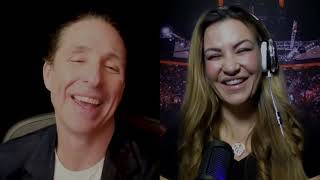
Dave Asprey talks with Miesha Tate, a former UFC bantamweight champion, about training recovery, hyperbaric oxygen therapy, and how she balances fighting with parenting and running a business. They discuss mindfulness, breathwork, and the mental side of combat sports.
Chapters
You're listening to the Human Upgrade with Dave Asprey. Today's episode is going to be how do you train for martial arts? How do you train to be a professional athlete? Well, biohacking while recovering and being a parent and an entrepreneur. And it's with, I'm just gonna say, one very, very tough woman. Her name is Misha Tate. She's got a couple million followers on all the different platforms and literally kicks ass for a living. The reason I want to talk with her today is that professional athletes, and especially fighters, are some of the top biohackers in the world. You might not know this unless you're a longtime follower, but I've been the first sponsor of a couple Bellator fighters many, many, many years ago. I don't even know if that's still a thing. But the reason is that when you get especially into the really big leagues, UFC and all, that, every little thing you do that actually works can be the difference between winning and losing. So this is like a crucible for figuring out which biohacks are worth it and which ones aren't. And it's higher stakes than anti aging, because with anti aging, you get old. With professional fighting, you get punched in the face. So I want to know what that is like. And we're talking about, like, a very strong win winner, a one championship vice president, a former UFC Strike Force bantamweight champion. So, like an absolute stud. Misha, welcome to the show.
Thank you. I'm very excited to be here. That was a wonderful introduction. It's almost like, you know, what you're doing here.
You know, I. I like to fake it till I make it. You know, I love it.
I love it. Yeah. You know, being a fighter is, um. It's a unique career. A lot of times people ask me, it's probably one of the most often asked questions I get. Aren't you worried about getting hurt or damaging your face? And to be honest, it's not really a question that you can afford to have cross your mind. We just don't think about it, you know, we can't think about, oh, what will happen when we're in the octagon. Now, what I have done is think about what I can do to mitigate the risk that I know I'm taking when I get into the Octagon. Right. So. So what can I do on the back end to make up for that? Because I don't wanna be the grandparent that, you know, they can't trust to take kids to and from places. Cause I'M gonna forget them in the backseat of the car, you know what I mean? I want my brain to be viable and available and great to me as I age. But I have committed myself to a career with obvious brain trauma consequences.
One of the things, ever since, even before the start of bulletproof, I've been looking at brains because my brain was damaged by toxins, not by impact. Although I've had a couple big tbis. I know with a hundred percent certainty, like wrote a science best selling monthly list book about brains. There's so much you can do to precondition your brain so that you can actually be dangerous. You know, we're like, okay, I'm choosing to take the danger. I prepared myself and the benefits were bigger than the risk, so I chose to do it. And I would love to know, what do you do now? Because, I mean, you've been to my biohacking conference. You were there last year. You've studied what to do. What do you do to protect your brain before you even step into the octagon?
Well, a huge part of protecting my brain before and after is hyperbaric oxygen therapy.
Love this.
I believe in this through and through. I will tell you that I recently went to Dr. Amen's clinic and I had my brain scanned. Yes.
Love it. I'm on his board of directors and he's a dear friend.
Incredible. Knowledge is power, right? So I was going there hoping to get good news, but also looking to see what can I do to further maintain the health of my brain. And Dr. Amina was the one who actually went over my report and sat down with me and said, this is what's going on with your brain. But I'll keep the story, you know, relatively short and pertinent to the point was that he said, hey, I've seen some of your fights before and I want to give you the good news now. I thought your brain was going to be a lot worse off. He's like, really? Yes. He said, realistically, there are no holes which are just basically spots of lower blood flow in your brain. And he said, you have a very powerful brain. Said, what are, what are you, what are you doing? I said, well, I do hyperbaric. He said, okay, how many times have you been in hyperbaric oxygen therapy? And I said, hundreds. And he said, keep doing it, it's working. We see it all the time. Clinical results of people coming in here with these lack of blood flow in their brain. They do hyperbarics that come back. We see it all the time. That it helps and it gets better. So there's no question in my mind that that has been a huge part of restoring my brain. I get into the hyperbaric oxygen therapy the night of my fight. When I get home from my fight, it's the first thing that I do. I kiss everyone, I say hello. But like when I go to sleep, I actually sleep in the chamber.
Your brain must be so happy. It's funny. I bought one of Dr. Amen's chambers used about 15 years ago.
Right.
Uh, and I've had a soft chamber at home. And then recently I, I upgraded to one of the oxy health hard chambers. They actually, they were both oxy health chambers and I, there's actually one on Vancouver island for my former wife and my kids to use when they need it. Uh, my son hit his head playing, you know, 13 year old sports and he's doing his hyperbaric because that's what you do when you hit your head. And I love it that you're just talking about it so openly because you're actually changing people's lives. If you're listening to this and you whack your head on your car door and you were dizzy and now you're nauseous and you're seeing stars. Welcome to having a concussion. You could just let your brain work at a lower level or you could fix it and you just do hyperbaric. It's what you do. What about your body? Do you heal faster otherwise too, not just your brain?
Absolutely. I had a laceration over my eye last November, and inside of seven days, you couldn't have, you couldn't even tell that I had been in a, in a fight. And I'm talking not just a laceration, not just a little cut under my eye. It was about an inch and a half, two inches here.
Oh, wow.
It was a pretty good size. And I also had major swelling to where my eye was swollen shut. Basically. I couldn't see the purple bruising, all of those things. And I came home that night, I got into the chamber and I put on the mark Pro. That's also something that I really like to use.
Where do you put the pads on your face though? How do you do electrical stuff?
Yeah, so it was like here and here, if I remember correctly. But of course, I called up my guy and I said, look, I have a swollen eye. How do I activate my lymphatic system to clean this area? Where do I have to put it? So he kind of guided me in that sense and I was kind of Doing this with my pulsing the muscles.
It makes you smile whether you want to or not.
Yes, exactly. So, so I did that. And I'm also a huge advocate for red light. Now, I'll be honest, I'm kind of a hard sell in some of these things. I question things until I feel like they work for me or until I can get enough information to where I feel like, okay, this is something viable. So first, before I knew anything about red light, I was like, what? You know, how could light. That doesn't make sense. How could light, you know, help you? How can it go in your skin? Well, obviously I've learned a tremendous amount about red and infrared light since then, but, but I stuck the pad right there on my face and I have a, a photo accumulation. I don't know if you would want to put this out somewhere. Of the progress through day one through seven of this giant swollen shut purple eye with a, you know, a inch and a half laceration and stitches to seven days later with next to no makeup on. And you really wouldn't be able to tell that I, that I had been in a fight a week prior. And I'm not a spring chicken either. You know, I'm in my mid-30s, so it's not like I'm like an 18, 19 year old kid. That should be, oh, maybe that's a little more realistic. No, I 100% believe that these are the accumulations. I know my body. I know how long that would have taken to heal. And it would have been minimum two weeks. And I think I still would have had some residuals. You know, some, some. You know, if you look closely, you probably would have still seen it. I didn't have anything after a week.
It, it's really cool that you're, you're talking about this. If you go to daveasprey.com heal I did a mini documentary about healing from surgery. Like, what do you do before, during and after? This is one where they were cutting my bone and the doctor after three days is like, what, what did you do? Like, stop taking antibiotics. Like, you're, you're healing in a way. It's twice as fast as I would expect and it's possible. And you could do it as a professional athlete. And anyone listening to the show can use that kind of stuff if you get injured, if it's a car accident or whatever. And why hospitals don't do it. I, I just think it's kind of cause you go to hospitals to die because they, they do not care about how fast you Heal. It just doesn't seem like it works.
You know, Dave, I. I think there's not as much money to be made, let's be honest, for hospitals, for doctors, I think that our educational system is designed to mask symptoms, not fix root problems. So you go to the doctor and you say, oh, I'm having this symptom. Okay, well, let me give you medication so you don't feel that anymore. But did you fix the problem? No. And, you know, the question should be, well, why are you having that? Right? What's going on? Is it something in your diet? Is it a toxic exposure? Is it an injury? What could it be? A system's not really designed to do that. It's designed to prescribe pills that stop symptoms, not problems. And hyperbarics, red light. These kinds of things, they really work from the ground up. Oxygen is so important as, you know, Maybe we breathe 2,300 times a day. It's the most important thing we consume on a regular basis.
It matters. And there's so many things you can do to train your cells to be better at using oxygen. There's hyperbarics in smarter, not harder. I talk about actually reducing oxygen for a brief period, like simulating what would happen during a stroke, but only for a minute, and then allowing the oxygen to come back up. So the body's like, oh, my God, I might have to get ready for ischemia. And then it gets stronger, but then it never actually gets ischemia. And there. There's a ton of evidence for that kind of thing, mostly out of Russia. So what it looks like is you can train almost any system in the body to heal faster than it's supposed to. You just have to learn how to get the right signal in.
Right?
And I think it could make a giant difference.
Is that kind of along the lines of the Wim HOF breathing? Because I've recently implemented that. I just finished his book, and so I wake up and I do the breathing. But he does promote a state of hypoxia. Right? You kind of go into breathing, 30 breaths, and you feel like, oh, I'm. You know, I'm a little light headed. I definitely feel like I'm. You know what you would feel like if you were hyperventilating and then you let all the air out and you hold it for as long as you can. There you go. To simulate a state of hypoxia. Right. So is that similar?
It's. It's related. In fact, I write about breathwork in a bunch of my books. I'M friends with Wim and I love his techniques. There's a similar one called holotropic breathing, which was designed to replace LSD by a guy named Steve.
When you do this breathing, it feels like a drug.
The first time I did Wim Hof's stuff formally, he showed up at my conference actually with Rick Rubin, which was incredible and so much respect for both of those guys. And so I said, well, why don't you come up on stage? But it wasn't planned. He goes, all right, let's do my breathing. So, okay, I'm in charge of 2,000 people. This is my conference. I'm on stage and I'm doing his breath work. And I'm thinking, okay, I've done my shamanic work, I've done holotropic, I'm going to start tripping balls here. And he has me doing push ups on stage like, okay, I hope I don't pass out right now, but I might because I'm seeing a lot of stuff here. So, yeah, I think there's some commonality between those states and that's, that's just the brain responding to things. I, I don't think it's harmful. And it's likely that if you look at what James Nestor's book Breath, which you'd probably like as well, or Wim Hof's book, or both, there is something going on around our it. It's called hemoglobin affinity for oxygen. So hemoglobin can either love oxygen and latch onto it or just be more relaxed about it. And it looks like there's probably an effect there, but the, the most pronounced effect I've seen is actually from just breathing air that has no oxygen in it until you really lower your. It's called SpO2, but the blood oxygen and get it down to 90 or something, right? And then come back.
I have done that as well. Out the altimeter, I believe is what it's called. I do those in my training camps. You know, again, to induce a state of hypoxia, simulate that if I were at altitude, what, you know, and it's all about, you know, adaptability. That's what you're talking about is adapting to stressors. You know, people think, I'm going to go to the gym and I'm going to get stronger. No, you're going to go to the gym and you're going to get weaker. Because when you're working out, you're stressing your body out, you're tearing tissue down, you're Getting weaker. It's the recovery. It's when you go home, you. Whatever it is that you do, you eat your protein, you sleep well. I could go on a list of things that I do as well, you know, some of them I've already mentioned, but that's the time you actually get stronger.
Oh, recovery. Who taught you that? Because a lot of people don't know it. It's almost like you're supposed to push hard. Push hard, push hard. That's why the title of the book, I don't think that works very well. When did you learn this?
I'll be honest, it's sort of embarrassing, but it's my. My second chapter of my career, so I will tell you. I became the UFC world champion in 2016, and my life kind of came tumbling down after that. I was, you know, in the process of leaving a toxic relationship, and I had been a candle burning at both ends for quite some time. I thought that I needed the stress. I had to be in the gym 24 7, and eventually it caught up to me, and I just realized I can't do it all. I can't take this. And I retired from the sport, and it took five years to figure out who I am other than Misha Tate, the fighter. So not only did I go soul searching, but I also went wellness searching. I became a mother of two in that five years. And my children really motivated me to be the best version of myself, because if I'm not the best version of myself, there's no way they get the best version of me, Right?
So, man, so well said. If you're low energy and tired and over trained, you're probably not going to be nice when, you know, a small child says no for the 5,000th time for some simple request that actually is even up to them. Like, that's frustrating for even probably, like, you know, some Zen Buddhist master after a while to be like, you know, for fuck's sake, dude, just like, take the bite of peas or whatever you're trying to. Hopefully it's not kale.
Yeah, right. No, I haven't fed my kids kale. And so you told me that that would. That's not a good thing to do.
So I bet they're happy about that.
Yeah. You know, it's funny, kids, they don't like kale, and maybe there's a reason for that. You know, it's very bitter. It's a warning sign. I think children are, you know, they're a little bit more in tuned with what's, what's good and bad sometimes than adults are. You know, it's like this tastes terrible. It tastes like poison. Maybe it's not great for me.
Okay, I have a weird question for you. I notice with my kids when they were young, especially like under, under five, normally they like broccoli and there were a few times when they just didn't want to eat it. And somehow the kids know more than I know. So then I said, well, how do I train my intuition? I've done some episodes on training intuition. Do you think you're more intuitive now than you were when you were young, now that you're not over training?
Oh, absolutely. I had no idea there was so much guesswork and so much blind leading the blind. Let me tell you when I started this fighting and wrestling. I wrestled in high school before I began fighting. And I began fighting in 2000, end of 2005 or beginning of 6, it was the blind leading the blinds. We didn't know, we just thought, you just train hard, you fight each other every day and that's how you prepare. I mean, the generation before me that started in MMA used to just show up, fight each other five, six days a week on concrete floors, and that's how they got ready for fights. They had no idea about hrv, had no idea about recovery. You know, these things really matter. And so to continue on after my five year hiatus from the sport where I retired, and I thought there was no chance I was coming back. I was nine months pregnant with my son. The pandemic had hit. I was living in Singapore and I said, I want to fight again. You know, the pandemic forced all of us, I think, to reevaluate in some ways. And for me, that reevaluation led to the three most important things in my life. Family and friends, time, goals and dreams. And so what do I want to do for my goals and dreams with the time that I have left? I've got a great family and friends. I want to get back to them though. So we moved back from Singapore, you know, borders were closed. My mom, I couldn't stand the idea of my parents not meeting their, their grandson for his first year plus of life because who knew when the borders were going to open back up. So I said, we're going home, I'm going to start training and I'm going to make a second run in this. And I came back about a year after having my son 12, 13 months. I was still nursing. I had my first fight and I won my fight. And it felt damn good. And it really inspired me to continue on this mission of better mind, better body, better soul, all of these things having synergy within myself. And I opened a wellness center here in Las Vegas called Desert Moon Wellness. And I'm really inspired to share this knowledge with people because it should be something that's more accessible. Hyperbaric oxygen therapy shouldn't be a foreign thing that people don't know about. Right? We, we should be. Yeah, it should be.
It absolutely is something that, that ought to be available all over the place. And it's, you know, it's, it's part of my mission to help those things happen. Because when we have the tools like that, we're nicer. Like, could you imagine walking around with the TBI when I took a high speed knee to the head? You ever see the movie Thunderdome? The old Bad Max movie?
Yes.
So I was doing that at Burning man and someone with a titanium knee who shall remain nameless, but it was a her. And she and I were flying through the air and she tried to scissor me and clocked me with a titanium knee in the temple. And I was completely dizzy. I couldn't look at lights. Like I couldn't just stand in one place. I was fully disabled. I had a bleed in the brain and all that stuff. Like that's something similar to what you could get in the octagon, right? I still remember I swore all the time, you know, in front of the kids. I couldn't play Go Fish. Like a simple dumb game. I sent Tim Ferriss a super angry email about something he didn't do because, like, I was literally out of my mind, right? And I'm sure I wasn't nice to my wife at the time or anything like that. And thank God, like I had hyperbaric and I had all the supplements and I had neurofeedback to Reprogram. And I looked at my brain waves, it was like a spaghetti mash. And there's you and there's me who get to recover from those. And then 95 of people just go on and they get divorced.
Yeah, well, like they. Or worse, Dave, I mean, look at some of these football players, you know, that are. I mean, it goes everything from suicide to murdering their loved ones to having all these crazy, crazy symptoms. And people are like, shame on them. And, you know, I would never condone any, you know, bad behavior. It's not what I'm saying. But what I'm saying is I don't think it's all their fault. I think if you looked at what was going on in their brain. If we could actually get doctors and scientists to really take a step back and say you know what, let's try to, let's try to figure out this from some of the root cause up. I mean that tbi. You're, you're absolutely right. These things do affect, you know, we're seeing it with fighters too obviously you know, as a brain, a sport that has a lot of traumatic brain injury. We see it periodically where there's substance abuse, there's self medicating. Yeah. Spouse abuse because they're isn't necessarily a wide knit support system and inter dialogue between the medical practices that be also great. Right. Where you could go and see one doctor and they say I have a network of people that's going to help you have comprehensive healing. Because it's never just one thing. Right. You could go to the hormone doctor and he could say oh well that's easier, testosterone's low. But you know, what if it's your brain too? And what if it's, you know, what if it's your nutrition and what if it's the way you're sleeping? And what if, I mean, right. Shouldn't we kind of be looking at our bodies and our minds as a comprehensive unit? Because it is all intertwined. It does all work together.
It, it does all work together and, and more medicine is shifting towards a systems model which is more like biohacking, which is, which is incredible. So I'm hoping that we get more of that. But I think there's a spot for like your clinic like Desert Moon Wellness where we're doing things and upgrade labs too. Like we're doing things that are not medical but they're so supportive of our own body's ability to heal. They mean that it saves the medical for when you have a specific thing. Not I'm tired but like you know, my kidney isn't working or I broke my leg and then I love the ability to do that. But I just feel like maybe, maybe this new model you're talking about is, is the way to go.
I sure hope so. You know, another thing that I'm a big proponent of as I talk about mind, body, soul, you know, and I, I don't mean that in like a religious way. I just mean that that level of connection that's beyond just you know, how you think and how your body works or something. There's another element there. Right. So it leading in towards like psychedelics and things like that, you know, spirituality. I know I gotta get you down.
Let's talk about that. As a fighter, what do you do with your soul when you walk in the octagon?
Well, when I walk into the octagon, you know, I'm working on incorporating my soul more. To be honest, I don't feel like it has been a very mindful part of my fighting, and perhaps it has as instinct. You know, if you've seen my fights before, a lot of people say, you know, you've got that warrior spirit you've got. You just fight so hard. You just never give up. It probably is my spirit. It's just not on a conscious level. I would like to bring it on a conscious level, and that's. I'm a work in progress, just like everybody. I mean, we're all a work in progress, and our brains, our bodies, and our spirit is changing whether we like it or not. So I'm trying to have some focused direction on that. And a big part of that for me has been incorporating not only breath work, which we kind of talked about, but meditation practices. So I'm a huge proponent for brain tap as well. That has been a game changer for me.
I love that they're a big sponsor at my biohacking conference in June in Orlando, and I've worked with them for years.
I'll be there.
You're going to be there again this year. Awesome. All right, guys. Biohackingconference.com Come meet Misha. Come meet me. We'll hang out. It'll be fun.
Yes, I'll be there. With. With Moda Method. I think you are doing something with them. Yeah, we just launched a partnership and sponsorship deal with them. I think there's some really powerful evidence supporting, and I've actually, you know, anecdotally experienced some really interesting things. I'm excited to share with the community as I'm. I'm monitoring my HRV and I've started to take these supplements and I've noticed change. And also, you know, my. My fiance Johnny, when he was in his fight, I was like, here, you take these. Because I wanted to gather evidence on my own hrv. Before I started, I said, but here they'd given it to me. I said, let's try, you know, you try it out. His HRV shot right up. So, you know, for me, it's. I've talked to them at length. It's an incredible product. I'm excited to be partnered with them, but I'll be down there with them at.
Well, we'll. We'll definitely stop and chat. I'M I'm sure. Plus we always have all the good parties and stuff at the conference, so it'll be fun. And guys, so. So you know what we're talking about. Mode and Method is a supplement designed and clinically studied to raise heart rate variability. If you've been listening to, I don't know any of the thousand episodes I mentioned it at least half the time. Heart rate variability is a measure of whether your body is in rest and recover or fight or flight mode. And it's actually kind of cool that they brought you in as a fighter to talk about rest and recovery. It's pretty neat, so.
Well, more fighters should be doing it. I'm the one here, you know, kind of trying to get the word out, you know, when I'm working out at the UFC Performance Institute, which I plan to be more on the other side as I move into retiring from the fighting part of my career, I still want to be hands on with the athletes because I know firsthand how helpful these things can be. And nothing breaks my heart more than as a mother, to see fighters go in and not know that there's so much they could be doing to help their, their future, to help their brain from ever getting to a point where, you know, they're having those off the wall episodes and are suffering. I don't want to see the suffrage. I don't think it's. I don't think it has to be that way. You know, was it you that says pain is not a lifestyle?
It is for some people, and who knows, maybe there's an argument for that.
Yeah.
In fact, I want to ask you about that. There's, there's a notion that doing something painful every day makes you happier the rest of the time. And this goes back for thousands of years of human, human behavior. Like the, the, the monks who would, like, whip themselves because they were sinful, or biohackers who dip themselves in ice water. Right. And the studies of ice water in particular. It actually hurts for a little bit and you get used to it, but it's still like a welcome kind of pain shock that if you do that just for a few minutes a day, then the rest of the time your dopamine works better and, like, you're just happier. Right. A lot of addicts do ice baths because of that. Do you think there's some sort of, like, when you get beat up in the ring, like there's some party that's like, yeah, I know it's going to hurt, but, like, I can handle this. And Later, I'm going to be even happier.
Oh, absolutely. I mean, the reward at the end is like finding the pot of gold at the bottom of the rainbow. You know, it's just sometimes it feels so elusive. But when you manage to capture that, there's truthfully no better feeling. And for me, even when I've fallen short, I've been able to shift my perspective, whereas I used to identify as a fighter, and that means if I lost, I was a loser. And that's not a very good feeling. So I've adopted a different mindset through the brain tap, through wellness, through therapy, through mindfulness, through my children. Thank the Lord for them because they have really changed. And. And, you know, I say saved my life because it's a much better quality of life. They've motivated me to have a better quality of life. You know, so the. The pain is not a. That doesn't. That doesn't really factor in. For me, you know, pain is temporary, and honestly, it's not really necessary to feel it in a fight. Oftentimes I don't.
Okay. I want to know more about the psychology and spiritual side of this. So. I am far from a professional fighter, I'll tell you that. I've been in at least 100 fights, though. Before I got out of high school, I never threw a first punch. All but one time I threw the last one because small men are bad at physics. Sorry. Like, there's. There's that dynamic of Napoleon's complex. So what I found, though, is that until the very, very end of my fighting career, I didn't know what the hell happened to me. The whole time, I would just get so enraged, I'd sort of like, come to with, like, a bloody other guy who started the fight on the ground underneath me. And, like, I wonder where my nose hurts. And like, he punched you in the face, but I had no memory of it. Like, do you, like, white out during a fight or do you just have presence the whole time?
Well, 15 minutes is a long time to just be completely gone. I have ebb and flow of moments where I am so just entrenched in what I'm doing that it's like the time just disappeared. And it's. Not everything is present. It's almost like muscle memory takes over and you're just in a flow state, so you're just going. And then you'll hear your coach or the announcers or somebody yell something, and it kind of clicks you back over into, okay, I've got to receive information. I've got to take that in, and then I've got to go back into flow state. So switching. That's where I feel like brain tap has actually helped me a lot. But switching between those states of mind. Okay, right. It's important that we can do that so that we can go into 60 seconds of rest and take in information from our coaches and receive it and then go out there and go back into a flow state. The ability to do that is really important, and I think a lot of athletes struggle with that. And this is where it can get really frustrating. If you're not able to make those switches, it's really hard to be asked to do that. And then sometimes that's where we will feel like we're thinking too much. I think you've always. You've heard probably many times where athletes feel like, oh, man, I was overthinking it. I just didn't show up. I was over it. Because you didn't get. You didn't tap into flow state. That's what happens when you don't have the flow, when you stay in thinking mode. And that's why I tell my coaches a lot. No offense, but I'm like, shut up.
Amen.
I'm like, shut up. Because either you trust me or you don't. We've worked together this whole camp. Now is not the time to try to micromanage what I'm doing in there. If it's important, speak up. If. If it's not essential, like I'm about to get my head kicked off, then please be quiet and let me stay in my best frame of mind. Because my best frame of mind is to just go. You don't have enough time to hear something, think about it, and react because the situation has already changed 10 times by then.
Wow.
You. You can think your way through it. That's what drilling is for. You can think through certain scenarios to get the right motion. And then you've got to. You've got to put it into place where you don't have to think about. And that's what athletes refer to a lot of times as muscle memory. It's that you've already it so many times. And you could go into a session where this is meant to be thought out. This is meant to be slow. It's meant to be overanalyzed. It's meant to be to get you doing this right. And then once you've done that, you've got to get more. The. The coach has got to get more hands off. At that point, you've got to let the fighter go. And then when it comes to competition, you. You can't expect. You can't overdo your job. And some coaches drive me nuts with the. This not coaches I work with, because I won't have. I won't have it. But I hear and I see other coaches doing it to fighters, and I was like, you guys don't get it. This fighter is so overwhelmed right now with everything that you're trying. You're trying to act like they're a puppet. They're not a puppet. They've got to go out there and they have to make quick, calculated decisions, and you're constantly making it harder to do that.
Wow.
And you know what taught me about that? Intuition.
Beautiful. You just paid attention to your intuition. I have an interview on the show that you would benefit from. It's with Lt. Col. Grossman. He wrote a book called On Combat. And this guy's a military trainer, and he talks about how first responders and warriors, how their brains are wired. It was a fascinating interview, but he talks about that same flow state that you're talking about and how in a life and death situation, and it's not actually life and death usually in the octagon, but it's close enough that your body can't tell the difference. How, exactly how you drop into training, in what order, and when the systems kick in. It was really fascinating, but Lt. Col. Grossman on upgrade Radio, and I'll send you a link after the show, but for listeners, that's something you want to hear because you just realize, wow, there's a whole hidden operating system in there that we're doing heavy duty work with, and it just doesn't rear its head until you go to the level of getting into the ring or when your. Your body really thinks like. Like there's no way to do this until your brain just shuts off and then something else comes in there. And some of that, I think, is that spiritual warrior stuff you talked about earlier.
Yeah. No, it's. It's. There's real elements to this that when you start to tap into it and you get it right. Because I did it long wrong. Excuse me. The majority of my career, I didn't know about healing and wellness and recovery. I was young, and I was able to push my body beyond limitations and still find a way to win. To win in spite of. You know, I think I was addicted to adversity. It had to be hard because that's how I knew how to operate. But I'm telling you, there's a way better way, a more efficient way, a more fulfilling way to go about being in athletics. You know, whether it's professional or whether you just want to enjoy some time, I don't know, playing pickleball or whatever. I think mindset matters. It matters. And the body follows the mind.
It. It does follow the mind unquestionably. And we don't see it, though. And that's the annoying thing is, like, you wanted to see it, it's just not there. And it's kind of scrambly, to be honest, when you try and figure out, like, why, you know, why, why when I think of this, it doesn't work. And why when I stop thinking, which, you know, Bruce Lee is a guy who do it, you know, stop thinking. And. And all the, you know, all the martial arts sort of things, the body knows. It's just. If you're just willing to. To let go. And then you have to trust your body, which means you have to like your body. And there's a whole spiritual thing in there.
Yes. Huge element to that. Absolutely. Absolutely. So I don't know. I'm trying to think of any other things that I do. I know that there are other things that I do to help with my. My recovery and healing. Oh, this is something I've been doing more so recently, is just being alone with my thoughts, you know, having a mindful presence because I, you know, being a mom of two, I'm busy. I'm go, go, go all the time. I rarely sit down. So thank you for having me on this podcast. So I can actually remember what a seat feels like, but I go, go, go. And sometimes we get used to being in that state of, oh, maybe like a little bit of a frenzy. You don't realize that you're tapping into fight or flight, and that's how you're primarily operating. I think a lot of people don't realize the nervous system dysregulation that they might be operating under. So, you know, I would. If I was taking a shower, it was time to turn on a podcast. If I was driving in the car, it was time to turn on the radio or a podcast or whatever. It was just that I didn't have a moment to just be present because I'm constantly inundating myself because that's the way that I knew how to operate it. There had to be something going on. If I was just even taking a shower, God forbid that I just give myself a moment. I needed to educate myself. I still needed to be doing something with that Time, Right. And so recently I've been a lot more fixated on just being present with myself. You know, when I'm in the shower, just trying to focus for, you know, two or three minutes to take a mindful shower, to take some breaths, close my eyes, notice the sound, notice the feeling, what am I smelling? That really, for me, has been very powerful because I've been able to implement that. Sometimes when I'm feeling like 10 things just jumped on my plate or my mind at one time and I'm all of a sudden like, oh, my God, I'm feeling really anxious. I've got a lot I've got to do today and I don't know where to start. And I start getting a bit every, you know, I guess you could say, you know, sort of like somebody maybe would relate to add. But the thing is, is that I have managed the coping skills now. Right? So, oh, it's a deep one to two, one to three deep breaths. I'm going to pick one thing, I'm going to do it well. I'm going to write the other nine things down really quick so I remember to come back to them. But I guess what I'm trying to say is that mindfulness and attention to self is really, really important. And I'm really realizing, more so over this past year how important that is sometimes to just be alone with your own thoughts. Because if you don't ever ask yourself difficult questions, if you don't ever stop and say, well, you know, why do I do this? Or is there something maybe that you don't love that you do, why do I have that tendency? Is it childhood trauma? Is it a coping skill that you don't need anymore? Like, what could it be? You know, and I'm just giving examples. These are things that were true for me. You know, I, I've tied things back to, to my childhood. And, you know, I didn't have a 10 out of 10, you know, you know, abusive childhood. You know, I wasn't sexually abused, thankfully, or anything like that, or physically abused. But, you know, I do absolutely believe that I had a 4, 5, 6, 1 out of 10 consistently. And did it give me coping skills that no longer serve me? I absolutely believe so.
Wow.
So I've really been able to look back at myself and sometimes just knowing the why is really helpful. I'll give you an example. My fiance said to me one time, oh, you know, do you remember so and so, you know, you met them. I said, I, you know, it's like, oh, you wouldn't remember And I was like, ouch. You know, it wasn't meant to hurt my feelings, but it was true. I said, you know, why don't I remember these things? Why is it that my friends or other people or I'll met people, I'll have conversations, I have full on dinners, I have no recollection. Well, I do get hit in the head for a living, we'll say. But my brain, according to Amens, is pretty healthy. So I think what happened is that in my childhood I learned a coping skill to not be present when I didn't want to be or when I, you know, it just became habit. And as I became an adult, right, this became more habitual and I would just not be present a lot of the time. I said, you know what? This is his coping skill that no longer serves me. I'm going to choose to try to be different. So for me, that only happens when I allow myself to have those mindful moments where I can have internal conversations with myself. Because if I'm constantly engaged in something that isn't me, then I don't oftentimes find the time or to, to connect with my intuition, I guess, is what where I'm getting at.
Very well said. I work with, with my assistants on making sure that my schedule isn't overbooked because if you leave me to myself, I will fill every minute because that's, you know, every minute with the most effective thing. That's how I operate. Like I just wrote a book about that. Except thinking itself is important and I love it that you're calling that out. You know, you have a different background, but you're also an entrepreneur in addition to a fighter. So it makes sense.
And you know, I have a lot of things to balance. So it also helps me with my time management because not always am I deep diving into, oh, how am I going to fix my soul and these complicated issues that may or may not have been because of, you know, upbringing and coping skills. But sometimes it's just, oh, yeah, okay, so I'm going to, you know, get am I ready by this time? And I'm thinking through my day and I'm just really, you know, harmonizing with what's, what's on the horizon, what's, what's for the rest of the day and you know, having two children and being an entrepreneur and a business owner, you know, passionate about learning about wellness, all these things. I'm constantly trying to educate and help people. I just have a big, I have a big heart and I love to Help people. It's very fulfilling. I think it's one of the most selfish things that you can do because it feels really good. It feels really good. So I'm on a mission. Since your biohacking conference, I've been on a mission to biohack my parents.
Oh, my gosh. It's hard to make parents do anything. They're worse than kids.
Oh, yeah. No. You know, and sometimes now I wonder who actually is the parent. Is it me or is it them? You know, it's. It's that cycle.
I love that.
But, you know, being a parent, a lot of times, you know, we talk about how hard it is it that it's so hard to be a parent. And I want to present a different way of thinking while I'm on this podcast, but because I know a lot of people are parents out there and they're listening and they're saying, yeah, it is. It's really, really hard. What if I said it's not hard? What if I said it's not hard at all? What if I said it's hard to be a parent and do all the things that you're trying to do? What if. What if we go back to hunter gatherer days or days when villages were together and they had support systems to raise children and mentally and emotionally healthy states and the children knew that they were loved and that primary purpose of life was to raise your children.
Wow.
And provide for your children. That is the purpose. And what if all these things that we have created, the expectation to drive a nice car, to work a 9 to 5 plus or 60 hours a week, to go to college, to have a nice home. What if these are all just things we created, which I believe. And it's not really real?
Wow.
It's not really real. Like, this is just what we think is the norm because we live in a society where that conditions us to think that this is the expectation of what we must do. And therefore, being a parent while trying to do all of that is hard. It's absolutely very hard. Because my daughter will come to me sometimes and I'll be on my phone or I'll be trying to get that last email and, mommy, I need this. Mommy, I'm hungry. Mommy, I gotta. And then Dax says, mommy, I gotta. And it's like, oh, my God, this is so hard. Like, being a parent is so hard. So I think being a parent gets thrown on the, the, the chopping block a lot of times to say that's what's hard. No, it's not. What's hard because I tell you what, I put my phone away for three days over Christmas, which was a blessing, and I'm so fortunate to be able to say that I did that. And I'll tell you what, being with my kids for three days was not hard. It was the most restorative, healing, beautiful thing that I've been able to gift myself in doing because my children taught me how to reunite with myself in that moment. We colored, we were creative, we played. I feel like that was all the therapy that I needed. And it wasn't hard. It was hard to do all the other things and be a parent. So I just wanted to put that out there because, you know, it is hard to do it all. It's hard to do it all.
But I think you just helped a lot of parents in a. In a really meaningful way because you can be fully present with your kids. It's just really hard. Especially if your brain is injured, you don't have enough energy, you're physically tired, you're depleted. And that's why a lot of the stuff I do, even, you know, bulletproof coffee. So many people got their energy back with that. People drink it before super bowl games, like Nick Foles. I know very well that having ketones present reduces the likelihood of getting a traumatic brain injury or it sustaining and causing permanent damage, because ketones support mitochondria during times of stress. So it turns out it's a good idea to have some MCT oil or any of the other ways of increasing ketones, but that works for everyone, and you don't have to be a pro athlete for that. If you needed the energy so that you could be present and not snap and just, you know, do what you need to do as a parent, that's probably harder than. Than a fight.
Oh.
Because it never ends.
It never ends. And, you know, I'm, I'm, as I mentioned, a work in progress. You know, I'm certainly not perfect. You know, I don't want to make it seem like, oh, well, I could never put my phone away for three days. So what she's saying is not applicable to me. No. Because I did that over Christmas and I could afford to do that then. I can't afford to do that now. But what I can afford to do is the first 10 minutes of the day, when my children wake up, we don't just turn the TV on. Although that is their request every morning to just turn the TV on. I say, no, you guys are going to help me make breakfast. We'll make Breakfast together. We'll fill your water bottles together. And it's 10 minutes. And then we turn the TV on. They get to watch a show each. And then we go to school. And then for the first time, 30 minutes. When they come home, I will put my phone on a timer and I will throw it in the drawer and I will play with them for 30 minutes. We'll just tickle, we'll play, we'll run around the house, whatever it is, we'll play with. Play. D'oh. I don't know. So by putting my phone away for that 30 minutes, and that's 40 minutes of my day of dedicated time as a parent. 40 minutes is not a lot of time. People spend more time than that at the gym, you know, and that's great, too. But I'm just saying. But those 40 minutes, they matter a lot. And I feel like that's what our children are going to remember was the times that we were fully present, not the times that we were there for two hours, but our mind, we were somewhere else. Children are aware of that. They know when you want to be somewhere else or you're stressed out or, or you're multitasking. They get it, they see it. And I think it's damaging. It can be. You know, I think that there's reasons why, you know, that's emotionally, immensely. You know, a lot of people aren't. Aren't totally healthy and they have unhealthy coping skills. You know, a lot of it stems from. From childhood trauma. So I'm a big fan of Dr. Gabor, mate. I've been following him for a while. He's fantastic. And another thing that I've been doing, Dave, I'm going to switch gears off the parenting thing, although that you feel like this applies. Intermittent fasting. Holy smokes.
For kids.
Not for kids. Kids fast intermittently on their own. You know, they have a biological internal clock. So what I do as a parent, when they first wake up, I don't offer them food. I wait for them to ask. That's all.
So that's all it takes.
You know, I'll make sure my kids eat dinner because I know what will happen if they don't eat dinner. Is that right before bed. It's, I'm hungry. Okay, well, we're not doing this tomorrow night. We are going to make sure you eat dinner. So eat dinner. But I do not feed them breakfast because my children are two and a half and four and a half. So they naturally sleep. Sleep 12 to 14 hours anyways. That's a long fast. They're sleeping.
There you go, fasting.
And when they wake up, if they're hungry, they eat right away. And if they're not hungry for the first 30 minutes, they don't ask. Then I wait till they tell me that they're hungry, because I'm pretty sure their little bodies are designed to know when they should eat. You know, I think that's pretty intuitive. The baby comes, you know, out of the womb, and the first thing he wants to do is eat. I think that's one of the most intuitive things children have.
You know, you're. You're a little bit fearless, probably because you're a fighter and you've. You've dealt with danger directly. The feeling that most parents, especially moms, have is that if your baby doesn't eat or your child doesn't eat, that they'll starve. Because throughout all of history, actually, children have starved. So.
And they are starving children out there now. I mean, commercials, sometimes on the tv, that's enough to put fear in any, you know, Right.
And so we get this unconscious meat operating system thing like make a meat. Make them eat. Make them eat. And it's not really good for the kids to do that. And when you just realize that. That the same goes for them as goes for you, which is that you can go for at least 60 days without eating, without dying, and so can they. And can I offer a parenting tip for you with your age of kids?
Yes.
Okay. So my kids are teenagers now, and it probably wouldn't work with them, but there was a time, especially with my son who was pushing back at five or something, six, and he said, I'm not going to eat the broccoli or whatever. And our broccoli kicks ass. It's made with butter and blended. It's worthy of eating, and it tastes good. And I just looked at him and said, oh, my gosh, I'm so happy you've decided to try intermittent fasting. I'll do it with you. It turns out we won't die if we skip meals for up to 60 days. So we can fast for as long as you want.
Want.
Let's put our food away. And he just looks at me like, damn. And then he eats his food, and he never did that trick again.
There we go. Sometimes, you know, it's about putting things in perspective for kids. I know for me with Amaya, she's four and a half, and she's a very smart little girl. And I say, hey, honey. I describe it to her. I try to tell her about her health and her body so that she can make decisions for herself, even at four and a half. So I tell her that she has these little soldiers, cells in the body that are responsible for making her feel good. And when she eats sugar, that those soldiers get weak and they get sick. And then the Huns, because she likes to watch Mulan. So the Hun come in, and that's a virus. All right? Okay. So I say they can come in and sugar makes them stronger. So then they start beating up your soldiers, and your soldiers are hurt in there and they're having a hard time. But when you eat your meat and vegetables and these healthy things that I know she likes, I don't make her eat things she doesn't like. But I do find the things that are healthy that she will eat. And I put the grass and butter on them. And, okay, if I know you like this, they say, but if you eat this, you're going to give your soldiers weapons. You're going to give them swords and shields, and they're going to be able to kick the Hun's butt. So, honey, what would you like to eat right now? Do you still want this sucker, or would you like to eat something healthy for your soldiers? She said, I'm going to eat something healthy. I would like to give my soldiers. And that's an informed decision she's making on her own in the terms that she understands. And I feel really good that she's a willing participant and that hopefully she's not interpreting me as this overbearing mother who really says she can never have sugar, because I don't want to be that parent either. I mean, I still want my daughter to have a piece of birthday cake when she's at birthdays, and I want to be reasonable, but I want her to also understand that continuous eating of sugar, unhealthy foods will make her body sick. So, you know, these are the things that I try to do to help my children have better, you know, be a part of the decision. And fasting for my hormones is something that I am working diligently on. Women are so different than men. I find it fascinating that men get testosterone every 15 minutes, and we get it once a month. I'm like, well, that explains a lot. You know, as I've trained with men my entire career, so that's been really powerful for me, too. When you mentioned ketones, that made me want to think about exactly that, how powerful ketones are for healing our body and our brain and how we have a natural, built in system to help us make those things. You know, not that it's bad to get them, you know, through ingestion or through eating them. You know, I do take ketones when I am in a fasted state oftentimes, but that's really powerful too. It's really, really powerful to learn that the brain was designed to run 50% off to glucose and 50% off ketones. Right. And if you're never getting into a state of, if you're never getting into a ketogenic state, you're really robbing yourself of the clarity and focus and the best version of you that you could offer to whatever it is that you're trying to do, whether you're a parent or whether you're an entrepreneur or whether you just, you want to learn, you better have better retention. Do you want to do better on the test you have coming up? Do you have a public speaking engagement that you want to be able to think clearly for? I will utilize intermittent fasting anytime that I'm going to go and speak in front of a group of people because I want to have the most mental clarity that I can have. Our bodies are designed to do that. Hello. It's a pretty cool system and if you tap into it, it's really powerful. Not only for weight loss, which, you know, a lot of people are, you know, oh, intermittent fasting for weight loss, hey, I'm not knocking it for that. I'm just letting you know there are a lot more benefits out there than just weight loss. And for me, that's been a really powerful tool and insight that I've recently gained. And I'm working on fixing my hormonal dysregulation because when I, in my last fight, I dropped a weight class lower than I normally fight. Normally I fight at 135, I went down to 125. I had to work so hard and I'm already very lean when I, when I'm a bantam weight. So to go down to fly weight.
How did you do that? How did you lose 10 pounds?
Well, I had to lose muscle because I'm already very, very lean at 135. So I had to change my body. A lot more endurance type training, less heavy lifting of weights, you know, a lot more wake up in the morning and go for a run and close the night out with a, you know, a low, slow, endurance bike ride. You know, sauna was also a big part. That's another thing I haven't even brought up. I mean, the sauna is Tremendous for healing. Not only is it a great detox, but the heat shock proteins, the hormone response, those things that you get from getting in the sauna, that's really helpful too. And the cold plunge. I am, Dave, I will admit something to you right now. I am the biggest weenie when it comes to cold. I hate it. If you want to see me be like the complete polar opposite of a tough fighter that most people would, you know, envision me as, try to stick me in an ice bath, I'm just terrible. And you asked me earlier, I don't think I answered this completely about doing something that is painful. Every day. I would change the wording on that because I'll tell you through having natural birth with my son and the power that the mind and body has, sometimes when we use words that are intimidating, people are like, oh, I just don't want to be in pain. Well, how about being uncomfortable? I think we could get comfortable being uncomfortable. Right. So I think doing something every day that's not necessarily painful, but that pushes you a little bit, that's a little bit uncomfortable is a great thing to do. It's rewarding, it's fulfilling. And like, in all likeliness, if you're doing something healthy, if you're engaging in something as I would consider biohacking, if you're doing those things on a regular basis and chances are you're gonna feel a lot better for having done that.
That is, that is so fascinating. You know, sometimes cold is just too much for some people, but then they hate the sauna. We have our individual things and I'm, I'm absolutely convinced that it's a historic practice. Even if you go to, to something like, like the sun dancers, you know, or getting tattoos as a rite of passage, like people do stuff that hurts all the time.
Absolutely. Having kids, I mean, that's, you know, that's, that's pretty, especially.
I didn't think that was that unpleasant.
I mean, of course you didn't sleep that you missed after having kids. Maybe. I mean, there's always an element of unpleasant to it, for sure. But I had a pain free birth with my, my son, my second one, which I was actually terrified of giving birth the second time. Because the first time, Dave, I thought I got, I got, I was like, I got this. I'm a fighter. I am tough. I was like, how bad can it hurt? I'm like, that's going to hurt really bad. It's going to hurt really bad. I'm okay with that. I'll just get through It. No. Three days of prodromal labor because I fought my own body. I literally looked at my body like an opponent. Wrong approach. It was like trying to play checkers, coming prepared to play checkers. And somebody had chess set up for me. You know, I just wasn't playing the game right. I didn't tap into it.
What awareness you have. Keep going.
I was scared out of my mind to try it again. I was convinced I would never have natural birth again. I was like, I'm going to the hospital, I'm getting the epidural and I don't care. Like seven months into my pregnancy. I was like, oh, my God. I ha. I have to try this one more time. And I was so scared. I was like, I have to try one more time. I think this is going to be my last kid. This is my last opportunity to do it. Other women have done it. Why can't I do it? I just must have done something wrong in the approach. If I. If any fighting's taught me anything. How you prepare matters. I mean, if you were going to try to prepare to do something important to you, Dave, you would prepare, right? I mean, that's just how it goes.
That's how I do it.
You prepare. So I thought, you know what? I didn't prepare for birth. I just assumed that the other things that I had done would prepare me enough. Wrong.
It didn't.
It prepared me in a wrong way to where I've drugged my labor out for three days. So I did hypnobirth. Which teaches you a lot about the mind connection, right? And so the way that I understand it as a layperson, the science is that essentially pain and, and, and the feel good hormones, they kind of dock to the same receivers. So if you had like a hundred ships of, of pain out there and a hundred ships of endorphins, the feel good stuff, they're all going to try to come in and dock, and whoever gets there first is what you're going to feel. So the idea behind the hypnobirthing was to get the endorphins pumping out before you would have a chance to have those ships kind of docking and receive that feeling. So I actually. We talk about feeling like you're on drugs. I was high during my labor and delivery, and we had them on the bathroom floor on accident because we couldn't even make it the hospital. That's how fast it went because I was just embracing the process. I was breathing, I was humming, I was meditating. And then between my. What I called Surges instead of contractions. As I talked about changing terminology sometimes, so it feels a little bit more approachable. I was like, oh. I was like, I, like I was woozy. I felt like I was. I was high. I was. I mean, but it was a beautiful experience and I would reach it for anything. So just showing the difference. And the mind, body, it's really, really powerful. It's really powerful. Yeah.
And a lot of the healing work, like the spiritual stuff we talked about earlier is not about fighting, it's about surrendering. And that's. That's the hard stuff. And it's just hard to do that if your brain is all jacked. If your cells are all jacked. You can't make energy. Like, how are you going to get the energy to switch a state if you just can't make enough energy to just do anything but just what's right in front of you? And I'm. I'm really concerned that, that just with all the overwhelm that, that really governments have put in over the last three years, there's a lot of people are right at that level where you're just so depleted that it's really hard to do stuff that's not supposed to be hard. And so our job is to turn our biology back on so that we can actually see what's really going on and that we're in charge of ourselves and that you can then make those changes. This radical difference from three days of contractions to effortless surges that created a very different experience like that. That's beautiful that you can talk about that. I really like that.
No, I appreciate that and thank you. And I think for anybody out there who's like, you know, I don't have the resources or time, you know, maybe people say, oh, I can't. I can't put me first right now. I can't get in it and spend an hour a day in a hyperbaric chamber. Or I can't do this, or I can't do that. Pick something that you can do. Something you can do.
There you go.
It's one thing. And just start there and just start small. I mean, it's already proven through science that if you take three deep breaths that you're going to start to disengage your fight or flight system and you're going to start to put yourself in a more parasympathetic state, which is more restful, it's more productive overall because you're not burning at both ends. You can only burn the candle at both Ends before, for so long, before you get sick and before you don't feel good and before you feel like absolute garbage. So if that's the one thing that you can do for yourself, take a deep breath. When you feel like you're stressing out, or three deep breaths would be ideal, then start with that. And you know you're going to start to combat some of the things that are dragging you down simply by having some intentional breath. Can you take two minutes of your shower and be alone with your thoughts? Can you do that? It's not really. You're already taking a shower. Can you, can you just give yourself some time to experience the senses that are around you, to just be completely in that moment? And your mind is going to wander. It's natural, right? The human brain is going to go off and you're going to find yourself thinking about, oh, the chores. Can you bring yourself back and just feel the water, notice the temperature, notice the smell? What is it like, what do things look like in the shower? That's just how you can really kind of like take a little bit off your plate so that your brain can maybe just, just have a little unplugged time. We're so good at plugging in these days because we have cell phones, computers, all these expectations that before we ever had technology, we wouldn't have had to deal with so much. We wouldn't have had our brains, wouldn't have been required to process so much. Our brains have to keep up now with the speed of technology, and it's a lot. So my suggestion, my humble suggestion to you would be find a place and time that you can unplug. Even if it's just 10 seconds, it's powerful. Or two minutes in a shower where you can focus on unplugging and being present with yourself.
Love that advice so much. And the idea of you can't afford to biohack all of my books, even the new Smarter, not harder book, here's the free version, here's a piece of knowledge, here's how to take advantage of it for free. Like I said, some breathing, you can do that. The breasts are the same price, whether they're long or slow.
And then the same price, they're free. Breathing is free.
At least it is right now. They haven't figured out how to tax it. I'm sure someone's working on that. And what you'll find is that there's another level where it's really accessible. You know, you might get a true light, like red light therapy, or you might go to Desert Moon. You might go to upgrade labs. You might go to someone that has a float tank, right? And just say, okay, I'm going to do that. The same way you might have said, I'm going to treat myself to a massage. Or you have some new people sponsoring you, like longevity labs. Okay, maybe you decide that's the right supplement for you. Or maybe you decide you need your minerals or you're just going to eat a little bit better. Those are things where you decide what you do, but you're not helpless. And you don't have to go do the crazy billionaire thing. You can do something that that is free or is low cost, that takes advantage of new knowledge. So I love it that you're saying that. And the cheapest thing besides breathing is, I'm going to take two minutes.










