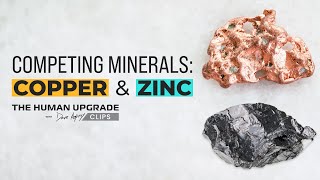
Dr. Chrisy Sutton and Dave Asprey discuss why zinc and copper compete for absorption in your body, how your genes affect what minerals you actually need, and why fat-soluble vitamins matter more than most people think.
Chapters
During the pandemic, many people started taking more zinc, which is a good idea because most people are deficient in zinc. Of all the processed foods and plants that steal zinc from you so you won't eat them and things like that. Well, I have a genetic thing that means I need way more zinc than the average person. So if I take enough zinc to meet my needs for zinc, zinc competes with copper for the same receptors. So I'm much more likely to have copper deficiency. But if you take zinc and copper at the same time, zinc usually absorbs. So one of the things that this will create is gray hair. So my mom completely gray in her. Almost white in her mid-20s. Like, she went very, very early, probably because of the zinc copper thing, because you need copper to have darker hair. The question is, if people are supplementing zinc or maybe they have supplement zinc, and they need to get their copper levels up, which would in turn raise their iron levels. How do you get copper up if you still take zinc?
We have to take them separately. You know, make sure your stomach and everything is working to absorb it, just like you need to. If you're. If you need to take iron and calcium, take those separately because they're going to bind together. The truth is, a lot of the minerals compete in the first part of the small intestine is all of the minerals are basically absorbed in the first part of the small intestine called the duodenum. And they really compete, like, they're all kind of competing to get in. And some people genetically are better absorbing more some minerals, and some people are better or worse at absorbing some minerals. And, you know, I have the same genetic issue like you for the zinc, where I tend to need more zinc and I struggle with, you know, I have to take zinc, too. But, yeah, it's about combining things in a way where they're not going to bind together, which can be complicated sometimes, because sometimes you're like, oh, what do I need to take at this meal? And okay, I just only eat so many times a day.
And so one of the things that. That I believe helps with absorption is having the right forms. So in the mineral formula that I make called minerals101, I do have zinc and copper in it. And in an ideal world, would you take them separate? Yeah. Would most people do it? No. But I'm using forms that are chelated to glycine specifically, because it's the first place that minerals go in in cells. And there's many different ways you can bind minerals to things to make them absorbable so that's part of my mineral strategy. And then the other part is ionic minerals that can open cell membranes and those are present in danger coffee, which by the way is the only lab tested mold free coffee that's out there, at least lab tested with the test that can actually detect ogre toxin A which is also tied in with all of our mineral levels. So I'm restoring trace minerals when I drink my coffee instead of taking them out, which a lot of coffee can do. And then I'm taking supplements that are bound to the right amino acids. And guys, if you want to know about that stuff, minerals101.com is a good place where you can go to get that supplement. And it's or you know, take whatever you like. What I want you to do though, more importantly is know your levels. And if you're saying I don't have money for lab tests and supplements, it's probably a good idea to get the affordable minerals and the, the fat soluble vitamins that help to guide the minerals in. It's like vitamin D tells some minerals to go places, vitamin A for others. Are there fat soluble vitamins that guide iron and copper into cells?
Yeah, mostly it's vitamin A. Yeah, vitamin A is important for that.
So if and plant based vitamin A isn't actually vitamin A. And vegans, I've seen vegan collagen, which is hilarious. Like there's no such thing. Plants don't have skin or joints. But you see this like mislabeling. I'm surprised the FDA allows that. You also see this with plant based vitamin A. It doesn't convert and it doesn't have the effect of guiding copper into cells. Which is why if you take vitamin D, which is less than like 20 bucks a month when you're on the subscription, it has real vitamin A in it, the kind your body needs, retinol. And that changes everything because if you take your minerals and you don't have your fat solubles, you're not going to get the results.