Muscle Preservation with GLP-1 Drugs with Dr. Anurag Singh | 1156 | Dave Asprey
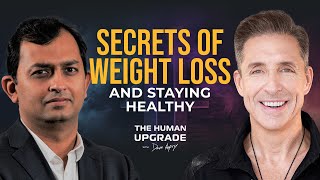
Dave Asprey talks with muscle biologist Dr. Anurag Singh about GLP-1 drugs like Ozempic and Wegovy. They cover how these medications affect weight loss and muscle preservation, why protein intake and exercise matter during treatment, and what emerging tests reveal about mitochondrial health.
Chapters
So if you take a look at all the fasting studies and you look at these studies that are called the Ozempic trial is the step one trial and the other one I think is the sustained trial. These basically achieve weight loss faster compared to maybe a two, two year fasting protocol. But that fasting protocol is much easier and it preserves the muscle. I think that's the key point that I want to also make when you compare such studies. So here you're not preserving the muscle, and that's the word. I'm trying to see it in everybody's sort of lingo that these drugs, these GLP1 drugs are hitting the muscle and you need to think about preserving the muscle. So fasting would preserve the muscle.
You're listening to the Human Upgrade with Dave Asprey. You're listening to the Human Upgrade with Dave Asprey. Today we're going to talk about something that is near and dear to my heart. It it is losing weight. If you've been listening for more than five minutes, you probably know that I lost a hundred pounds and I've kept it off for a long time. My medical grade equipment from Upgrade Labs continues to repeat that. I'm at 6% body fat and I'm never hungry. So it's almost like this biohacking thing works and it keeps working. But if I go back to when I was heavily overweight, if I could have taken Ozempic or Wigavi or one of the GLP1 drugs, I absolutely would have because I had tried everything on the planet to lose weight. So when these drugs first came out, I think before the big trend happened, I had one of the senior researchers come on the show and I tried it for one week, feel like I had morning sickness the whole time and said, good God, I don't really want to feel this way. But there is good evidence that low dose GLP1 agonists are good for longevity. Maybe not at the same doses that we might take for weight loss. And I know that a lot of people get offended. Well, these are pharmaceuticals. You shouldn't do it. Well, they're actually peptides. They're signaling molecules in your body. And there's a case for losing weight being more important than whatever side effects might happen. Speaking of that, magically, the danger coffee just arrived. Our guest today, Dr. Anurag Singh, is an expert in things like OIC and WeGovy because he understands aging and he understands muscle loss. And we're going to go deep on these topics. He's the chief medical officer of Timeline Nutrition, a biotech company that makes products that change cellular health and aging. I have been taking the Timeline product since it first came out religiously because the 10 years of data as a longevity substance behind it are very, very convincing. So I actually take four capsules of Timeline every morning because I think it's just a really good bet if you're into longevity. The last time you heard from Dr. Singh was episode 999 in 2022 where we talked about that specific substance. This episode, though, is about GLP1, lycosimpic and WeGovy. What's gonna happen to your skin, what's gonna happen to your muscle, and what's gonna happen to your aging if you choose to use these at different doses? Also, let's talk about a zic face. What do you think? Dr. Singh, welcome back.
Yeah, pleasure as always. Love to talk to you and your audience.
As I mentioned in the intro, I did not like my experience on Ozempic. And just for people saying, dave, you cheated. No, I used it for one week to do a podcast before. It was cool. And that's the only time I've ever used it. But I kind of want to use it every other week at low doses. I just don't like feeling like I want to throw up all the time. So if I wanted that, I would just get pregnant. Oh, wait, I'm not going to do that either. But. So we're going to set that aside. I am not a user of it, but I want you to explain your take on the GLP1 class of drugs. Are they good for you? Are they bad for you?
Yeah. So, you know, these GLP1 drugs, whether it's Semaglutide or it's commonly known as Ozempic or Wegovy or datrizeptide, which is the Li Lilly drug that is called as Mounjaro. These were classically developed as diabetes medications. Right. These were the new stars in managing diabetes. And what they found was that they had this specific, as you said, is the peptides that block sort of the GLP1 glucagon stimulation. And that basically allowed people to start researching on their obesity effects. And they were such. The trials showed some very striking clinical evidence. And there's a big buzz and the big craze now around these drugs. And I think what has been sort of buried and shadowed in all the hype around most of these drugs, if you look at the trials, cause about a 10 to 15% weight loss in about 12 to 18 months time span. Right. Is the side effects, and the most common, if you look up all these New England Journal of Medicine articles around these trials is, as you said, nausea and sort of GI issues that accompany them. But that's one side of the thing. The main reason I'm here today is sort of. I'm a muscle biologist and a longevity trial list, and we have been studying muscle decline with the aging process. Right. And you lose. We've been saying that, and We've been studying 1% of muscle every year after your third, fourth decade of life. What they saw in these trials with Ozempic was that in addition to, you know, the fifth out of that 15% weight loss was 10% fat, which is great. You know, so they are great drugs because they're going to help a certain section of the population that is, that is obese and is being obese is making them prone to cardiovascular diseases, obviously, and other chronic diseases. But you're also losing 5% of that weight loss is the muscle loss. And that 5% is about 5 to 10 pounds or even more in certain cases. So that's what, you know, for me, as a. As a muscle scientist and the trialist was something very concerning because you're losing almost what you're supposed to lose in 10 years, in about one year with these drugs.
I've seen a lot of reports that say that the muscle loss is substantially more than 5 pounds for a lot of people, or 5%, it can be more like 10 or 20. So what's going on with, I mean, 25% of your muscle mass? It feels like losing that much fat is probably still more important than losing that much muscle, because you can put the muscle back on if you do something. Is that the right way to think about this?
So, you know, losing muscle mass in that fast a time is like almost akin to starvation. Right. So you almost like starving. That. That's probably the closest analogy I can give you in terms of what they're seeing in these trials. Now, what happens is a lot of people when they see is these are expensive drugs, they cost, I think, about thousands, 1500 bucks a month to maintain. And a lot of people wean off after a year or two years of the fat, obviously, slowly comes back. Muscle doesn't.
Unless you do something.
Unless you do, of course. Agreed. Unless you keep your protein intake and your diet high, unless you keep exercising and unless you, you know, improve your muscle quality. So, yeah, you're spot on there.
So let's assume that someone listening is a couch potato and they don't eat a Diet low in seed oils and it's got lots of processed foods. They go on semaglutide or one of the other weight loss GLP1 drugs and they lose most of their fat and 20% of their muscle over the course of a year or two. What's going to happen to them when they stop taking the drug if they don't change anything else in their lifestyle?
Well, if they don't change anything in their lifestyle, the fat is going to come back.
It'll come back faster though because they have less muscle.
Yeah. And it's something we call in our field sarcopenic obesity, which means all the good muscle is going to be taken, the space is going to be taken over by the fat. And when you're young, overweight and you're trying to be in shape, probably it's not that big an issue and you can probably use the residual muscle mass and muscle quality to sustain certain muscle strength over a decade or so. But if you're in your 50s, 60s, 70s, I think for the aging population it's a big, big worry. And that's, that's the sort of little alarm bell that I want to sound out here is that if you're an older adult, overweight and on these medications, then the, the muscle is not going to come back unless as you said rightly, you're going to try to proactively address those issues.
My recommendation for obese people who are interested in Semaglutide or WeGov or any of these other drugs is that you shouldn't touch it unless you're willing to eat one gram of high quality protein per pound of body weight, no matter if you want to throw up or not. And you're willing to pick up heavy things at least like push ups and squats or coming to upgrade labs and it doesn't take long, but you got to do something to stimulate the muscles and have enough protein if you're willing to do that. I think these are longevity drugs because if you have 100 pounds of fat to lose like I did, you can lose the fat and keep the muscle. That would be very pro longevity, right?
Yeah, yeah. And the time it takes to lose, I mean these, I'm not saying it works for everybody, but at least in the trial data that if you see people are losing 15% of their, you know, weight in about 12, 15 months, that's remarkable.
It feels like you should budget about $200 for high quality protein supplements every month and another 350, $400 for a personal Trainer or an upgrade labs membership or someone to hold you accountable to eating the protein and doing your squats because if you don't, the drugs are dangerous. But if you do do that, I think it's a good bet. But some people get really mad about that. Why do people get so angry about the idea that a drug could help you with weight loss?
Yeah, I think it's part of, it's a tough question. Why do people get angry?
Because they're dumb. I'm kidding.
Yeah, no, I mean, see, you know, people like to think that, you know, they're taking a magic pill and they don't have to move or walk around or eat the right and they can keep eating the fast food or processed food and things like this and keep, keep off the weight. So if you tell them suddenly, hey, this is not the miracle drug you think it is, then obviously there's a big reaction to that. But I totally agree. I mean, good dietary counseling along with these GLP1 medicine and good physical activity training with a personal trainer, geez, that's the magic combo.
If I could go back and these drugs were available and I Talked to my 20 year old self when I was going to the gym 90 minutes a day, six days a week for 18 months and not losing weight, I was eating the wrong foods because I thought low calorie and you know, semi vegetarian was the way to go because of propaganda that was part of the problem. Probably not enough sleep, was it? And also thyroid dysfunction. Had a lot of stuff going on, toxic mold and all. But I would have told myself, Dave, fix your thyroid, fix your testosterone, get it up to above a thousand for men and the number for women varies in where you are in your cycle and what age you are. But you want it to be at the high normal lift, heavy for two months to put on the muscle that you might lose when you go on the drug. And you might find after two months of adequate thyroid and testosterone, you don't need the drugs and you'll save a lot of money. But if you do still need the drugs, at least you have the muscle mass and now you have the habit of exercise. And I promise you that if your thyroid and testosterone are adequate for a 30 year old, whether you're a man or woman, it depends. Obviously you're going to get better results from the drugs. Of course, I'm not a doctor. So is someone with adequate testosterone and thyroid going to respond better to GLP1 drugs?
Yeah, so I think testosterone levels, there's a lot of, I mean if you see how the pharma industry is now moving in this space. They all know this problem exists, right? The li lilies and novas, they all know it, that this is a storm brewing in the background because almost this is the first $100 billion drug, right? And so one out of every five adult is going to be on it. And long term everybody is going to have. And it's just not muscle, bone mineral density. If you look up the papers, that's impacted too. Metabolic rates are impacted too. I mean if you're burning fat at such a high rate in such a short time, you're going to impact your basal metabolic rate as well. And so what these companies are now, these pharmaceutical companies are doing is obviously they're trying to look for the next generation of drugs that are, have, have a muscle sparing effect. And I mean in the. And I think the solutions already exist. And you know, these are already very good drugs that irrespective of whether you're doing it as a lifestyle choice or you're actually obese and your doctor is recommending them, there are, if you complement them with certain lifestyle choices and nutritional companion products such as high protein or we can talk about other sort of muscle quality and mitochondrial products that boost, keep the muscle quality high, then you have a very sustainable solution long term.
In my big longevity book which was called Superhuman, I talk about seven pillars of aging and these are the main systems to maintain to stay young. And one of the big ones is tissue loss or sarcopenia that you talked about. See, as you age, you lose muscle mass. Now I track mine using the upgrade labs cell health analysis and it's a clinical grade system. And my muscle mass has been absolutely constant or going up, even though I've probably lost a good 15 pounds of fat over the past two and a half years just by tweaking various nutritional things, just continuing to play with fasting and all the things that biohackers do. One of the things that I did do though, and it's probably been what, four years now is I started taking a timeline and this is a urolithin, a supplement that increases mitochondrial function and muscle output. I would not attribute my leanness or necessarily my maintenance of muscle only to that. But given all the research you guys did on muscles and urolithin a, the timeline stuff, I, I think it probably played a role. How important is mitochondrial function for people who are on semaglutide or GLP1 drugs?
It's very important. As I pointed out, your metabolism goes for A toss really, because you're losing so much fat in such a short period of time. You're losing so much muscle that you know is seen only in starvation or in 10 days of intensive care admission in a hospital. That's the amount of muscle you're losing. So I think focusing on mitochondrial health and mitochondrial quality and energetics and keeping the muscle strength and muscle force intact while you're on these therapies of, you know, targeting weight loss, I think that's very key. And more and more you'll see a lot of research coming out and we ourselves are looking into it.
If you'd like to learn more about timeline Urolithin a go to timelinenutrition.com Dave and they'll give you 10% off. You know what they say, death and taxes are the only things you can count on. Well, there's something you missed because you can count on your cells dying first. Yes. Every single day you can say goodbye to millions of your cells and when you hit about 30, your cell loss goes into overdrive. Guess what? That's also when your stem cells start to take a nosedive. It's like a double punch. And you know where that road leads. It leads to age related diseases like diabetes, heart problems and even ed. But you don't have to worry about it because there is a new supplement called Stem Regen that helps your body unleash millions of your stem cells. When you take just two capsules sometimes that's more stem cells than you get in an iv. It's totally amazing stuff. So give it a shot. Go to Stem Regen co Dave and get 20% off your first bottle. This stuff works. I'm looking at the comments from the Upgrade Collective. This is my, my mentorship group and Beth says she was in this situation. She's been on Manjaro for about a year. She's gone from £400 to £300. Congratulations Beth as life changing weight. Just absolutely life changing. And by the way guys, our upgradecollective.com you get to be live on the shows and ask me questions and be part of the community, which is fun. But she says she finally started changing her diet and started exercising and now her doctor says you should be on the lowest dose for the rest of your life. So low dose OIC versus high dose oic. What are the differences?
Yeah, so I think they have done studies where they have, you know, ramped up the dosing and over 12 months shown a quick weight loss and then sort of put people on a maintenance dose. And that seems to work so, you know, long term. But the studies, the longest study I've really seen is up to 18 months. And they've compared it to people who kind of totally weaned away from the drug. So. And then as we discussed earlier, the fat comes back very, very quickly. So I think makes sense to, to keep the low dose. I haven't seen just the data comparing the low dose to the high dose in terms of head to head, but I, I have seen it in the maintenance phase and that makes sense.
I think that that's an advisable thing to do if you have the money for it or if your insurance company will pay, especially for people who are really obese. And I just, I have so much empathy for being in that situation because I haven't talked about this in a while, but fat people, and I can use those words even if you're triggered because I was one, we are willpower athletes. Like every single bite you put in your mouth, your biology is screaming at you to eat it. And you can only use willpower to ignore screaming for so long before you're going to eat just half the cookie, right? And then you're going to beat yourself up for it. But people with healthy metabolisms, the 20% or so of people who are left, they don't have the same voice in their head around food unless there's some kind of emotional eating issue going on. It's, it's not a biochemical signal. Does Ozempic or the other GLP drugs, do they quiet cravings or is it just that you're too nauseous so you don't have cravings?
Yeah, it could be that, but I think they're, the biology is that they hit on the glucagon plus the reward center in the brain, that that sort of is linked to the delayed gastric emptying. And so you just don't, you know, it's, you don't feel the urge to, as you said, eat that half a cookie that much. And that's why I think these are the successful drugs. They are because they hit sort of a dual axis, sort of the, you know, gut brain axis of the reward center that connects our eating behavior. So you know that that's what the new biology in these drugs is saying.
Let's talk more about what GLP1 agonists do or GLP1 inhibitors. And if you're just tuning in, guys, basically Ozempic and Wegovy and other drugs like that. So what do they do?
So they inhibit basically GLP stands for glucagon. Like peptide, they, they block this, this sort of, you can call it the hormone glucagon that basically whenever you have this craving, having more glucose spikes up. And so you, when it goes up, you eat, you tend to eat more to, to boost your glucose levels to, to give you that energy. Or, and, and so these peptides block glucagon secretion and, and that basically allows more insulin that basically regulates these cravings. And, and, and that's how these were created as anti diabetic drugs initially. But they hit this reward center in addition and delayed gastric emptying which gives a dual anti obesity and anti diabetic effects.
That's a pretty powerful effect. And there's also the direct signaling of the hippocampus. I mean these are changing brain structures, at least brain structure response in a way that you're probably not going to get from other things. Except doesn't fasting do the same thing?
Yeah, yeah. So if you take a look at all the fasting studies and you look at these studies that are called the Ozempic trial is the step one trial and the other one I think is a sustained trial that basically, I mean these, these basically achieve weight loss faster compared to maybe a two, two year fasting protocol. But that fasting protocol is much easier and it preserves the muscle. I think that's the key point that I want to also make when you compare such studies. So here you're not preserving the muscle and that's the word, I'm trying to see it in everybody's sort of lingo that these drugs are, are these GLP1 drugs are, are hitting the muscle and you need to think about preserving the muscle. So fasting would preserve the muscle.
Fasting will preserve muscle. If you're doing intermittent fasting, right. If you're doing like a 10 day water fast or even a 10 day, the way I talk about in fastest way you can have black coffee and it actually works better and you suffer less and you can have MCT and still get those effects.
Sure, yeah.
But it seems like you still lose weight on a longer fast. But if you're doing 18 or 24 hour fasts several days a week, you get the hippocampal effects. You stop having cravings after a little while. And, and that was a big surprise to me. The first time I did a four day fast was in a cave in outside Sedona led by a shaman and she dropped me off in the middle of the desert and I was really concerned. I, I believed that if you. If you didn't eat, like six meals a day, you'd go into starvation mode, which actually means, like, you start dying. And that's not true, but I was really worried. And right before I walked into the cave, or at least took the trip out to the cave, I had, like, three protein bars for just in case. And I'm like, oh, man. So I left them with a shaman. And it was actually kind of scary, to be honest. And this was 2008. I hadn't learned as much as I know now about fasting. And after four days, I had zero hunger cravings at all. And my energy was so high that I ended up walking 10 miles and climbing the wrong mountain to get out of there. And, like, I just felt superhuman. And this is without any OIC or anything like that. So I would just encourage listeners to try fasting, but it doesn't always work. Why would fasting not work for someone?
Well, I think the problem with fasting is the compliance. Right. The challenge of containing a sustained fasting protocol over time.
Do you really think it's compliance? I know people who are religious about it and don't lose way.
Well, for me, it is.
Okay, I can see you owning that. What I find is that men and women make the mistake of over fasting. In fact, when my publisher came to me, this is a few years ago, and they said, dave, write a book on intermittent fasting like I did. It's called the bulletproof diet. People have lost a couple million pounds on that. It was the first big intermittent fasting book. And they said, no, we need another one. And I went deep on it and said, you know, there is a case for it, because over fasting, just like over exercising or getting really sick or starving yourself, it's a metabolic stressor that raises cortisol. So if you have excess cortisol, because you're over fasting, it's very hard to lose weight. And if you suppress thyroid function, so your body thermostat goes down, it's hard to lose weight. So it's like fasting the right amount, not too much, not too little. It seems to be the hard thing for people.
Yeah, and, you know, I can certify to that. And that's why I got in the business of looking for compounds that for people who are not as religious. I'm a weekend warrior. So I do my physical activity over the weekends, and I fast once in a while. I just find it hard to continue it. And that's why we discovered these natural compounds that sort of hit the similar biology as fasting or regular exercise.
I'm a continuous guinea pig. So once I'm fully convinced that something works, I like to stop doing it just to see if the, the bad stuff comes back. And I, so I went through about the last year where I said I'm going to intermittent fast a lot less than I normally do. Right. So this is a variable that I'm fully convinced makes a difference. And if anything I got a little bit leaner probably cuz I, I'm also manipulating my cortisol levels artificially because my body has never made enough cortisol so I can have too high or too low pretty easily. But what I found is that my speed of aging went up from 69% to 72%. So. And Brian Johnson is in all the news with a similar message to a superhuman and he's speaking at the next biohacking conference. I've interviewed him on the show. Really interesting guy. And his speed of aging is 72% on A, on a diet that includes collagen protein. Other, other than that it's, it's plant based and it's kind of funny. So 72% speed of aging without OIC and with much less intermittent fasting. But I feel like I'm aging a little bit faster cuz I don't fast as much as I did. Does that line up with what you know about aging?
Yeah, absolutely. I think there's, you know, there's. You probably have heard a lot of folks talk about these different hallmarks of aging and it's a continuum, right? It's not if you tackle one or two, if you, you know, hit on nutrient sensing or deprivation or mitochondrial dysfunction, you're not going to correct for everything. And that totally makes sense.
It would be kind of funny if you had a friend with like a high end sports car and like man, I change my tires every three months. This car is going to last forever. Like you'd laugh at them. But when it comes to longevity a lot of people are saying, well there must be one thing. And as far as I can tell there's a lot of things. But if you want one thing, it's have badass mitochondria. And fasting is a part of that. I think that timeline is a meaningful part of that. But there's a whole bunch of other supplements like adequate minerals, your fat soluble vitamins and of course longtime listeners. Dave's about to say vitamindake.com, which is the fat soluble minerals that I take that I created Sorry, Fat soluble vitamins that drive minerals and of course endanger coffee. So what would happen to someone who eats junk food but doesn't have adequate minerals or fat soluble vitamins or B vitamins and they're basically nutritionally not prepared. What happens if you go into zyc and you're and you don't have the nutrients versus if you go on a zyc and you do have your vitamins and minerals?
Big difference. We've taken a look at people who have bad nutrition and bad physical activity levels. We've taken chunks of their muscle tissue through biopsy and looked in very deep in how their mitochondria are talking to each other and how they actually visually look with electron microscopy and they look in real bad shape. They basically look like spaghetti inside, inside a big bowl. So. And we've compared them to people who are, you know, very lean and fed and taking sort of their 10,000 steps, running for half, preparing for half marathons. And their mitochondria are, are, you know, you could look at a 75 year old who's maintained very good diet and very good physical activity levels or the altiers and the mitochondria like a 30 year old. So you can reverse aging if you focus on your mitochondria and you focus on your diet and keep the fat away. I mean, so that's why I think a guy taking Ozempic with all the sort of the cellular pillars of health, vitamins, minerals and nutrients that boost mitochondrial health is the best possible solution.
I agree. It just seems like selling the drug without the lifestyle is a problem. But when have you ever seen a drug company promote a lifestyle like it's almost like they can't patent a lifestyle and they can't sell it to you for a thousand times what it costs. That's all right. I've got a solution coming for that as well. Come to the biohacking conference guys, and I'll be telling you about a new tool I've got for you so that you don't have to worry about that anymore. Now something else I wanted to ask you about. I know you focus on muscle and metabolism and even measuring mitochondria is difficult. At the biohacking conference there's a new test out of UC San Diego for mitochondrial function and the Dr. Patel, the lead creator of that is going to be there talking about how this works for me going back to I think 2015. Since then I've been searching for a way to measure mitochondrial function accurately. And there isn't a Lab test. Until now, you had to actually like punch some of your muscle out with a punch biopsy. And it was very involved and painful and no one's gonna do that. So now we have an accurate test for it. Is there a way you like to look at mitochondrial function?
Yeah. So, you know, I'm a trialist. So in, in clinical studies, there's only two ways that you do that. One is, as you said, a bit invasive. You have to take a chunk of the leg muscle to look at the mitochondria under electron microscope, which not everybody would be very keen on doing. And the second way is you make them exercise in an MRI like machine. Again, not everybody has access to an MRI like machine. And you look at the rates of ATP depletion with exercise. I know very well the technology you were mentioning for UC San Diego and I've spoken to Dr. Patel. I think they're onto something. I think like any technology, it's in the early adopter phase where you need to over time show that that's capturing the decline in mitochondrial function at a tissue level, at a whole body level, and that is amenable to catching how interventions would behave. So I think it's a very powerful tool. We are ourselves planning to test it. And I think having such a thing where just with a few drops of blood you can tell your mitochondrial score or your mitochondrial health score is a very powerful tool.
I'm excited for more technologies to come online. I investigated Dr. Frank Shallenberger's technology. In fact, we had it at the Beverly Hills upgrade labs for a little while. It was a VO2 Max exercise bike and a full metabolic cart with a new algorithm. But you had to be fasted, come in in the morning and just beat yourself up on the bike for an hour. And it turns out no one wants to do that, including me. So it's one of those. You could do it, but the pain involved in getting the results isn't worth the results because you could also just, you know, how's my energy level? Which is a good way to do it.
So that's what we do. We have with MITOPURL 10A, the trials we run, we see an effect on VO2 max of improvement of 10% in peak VO2 or a few months of supplement. But we realize it's not something a consumer in real world setting can readily perform an exercise test with all the challenges. So yeah, any tool that has, we've looked at now biological ages as we are actually looking at that with a similar technology of giving A few drops of blood. Can you look at these DNA methylation patterns and predict the efficacy and would that be reflected? Because if you're doing mitochondrial changes on immune cells that are reflective of what's happening in the whole body, maybe you can pick it up and seems like this is a good technology. Of course there's so many clocks there that no, everybody loses it.
One of my concerns, any drug that delays gastric emptying, which is what Ozempic and things like that do, well that means you got food sitting around in your stomach for longer and the bacteria in your gut are going to break the food down, maybe not in a beneficial way. Do you see increases in endotoxins? And longtime listeners have heard me talk about lipopolysaccharides from bacteria and how they cause inflammation in the brain and slow mitochondrial function, which is why having a good microbiome matters. Will you mess up your microbiome with Ozempic?
I think there's a high probability you would just. Those studies have not been done yet and it would take somebody to, to basically sequence the microbiome over longitudinal intake of Ozempic and show that, you know, anything that has such a rapid metabolic effect, I would be very surprised if it doesn't have an effect. And I think people who are trying it are anyway overweight, obese and their gut microbiome is already has got dysbiosis. So yeah, imagine the effect of these drugs and already dysbiotic microbiome.
I'm going to ask my friend Naveen Jain to do that at Biome. It'd be an easy test. You have a bunch of people I know it just could be 25 or 50, take a test, then go on Ozempic or something similar and then do a test three months later. And if you find, if you find a lot more of the bacterial byproducts that come from just having food sit in your gut, basically rotting. Um, what that means though for people who are on Ozempic, if it's delayed gastric emptying, a really smart thing to do would be to take betaine hcl, which increases stomach acid. If you take too much you'll get heartburn and if you do that, take baking soda, you'll be fine. And then also to take digestive enzymes with your meals and that way you'll absorb all the protein from them because the last thing you want is rotting protein in your gut because then you'll have, well, bodybuilder farts cuz rotting protein gives you really, really bad gas and Betaine acts like stomach acid and it helps to sterilize food in the stomach. It also can reduce heartburn if it helps to close the little valve at the top of the stomach and then the enzymes are gonna help to break things down so you get less bacterial byproducts. So it seems like I should just publish my Ozempic support protocol at this point because there's a lot of things you'd want to do. In fact. Hey Joey, will you send a note on that to the team? I'll write that up and we'll do a blog post on it. And guys, if you're, you're going, I want that. Well why don't you, if you're watching this online, if you're on Instagram, you can just DM GLP1. Just DM me that and then I'll respond with a link into the write up I'm going to do for you. Because no, I'm not a doctor, I'm just. We'll call me a, an expert in mitochondrial function and metabolism without a degree in it. But all these mechanisms of action make sense and all of these things that I'm recommending are things you probably should do even if you're not on the drugs. They're just going to make your body work better so the drugs can do what they're supposed to do. What else would you do if you just had an unlimited checkbook and someone's going to go on Ozempic? Yeah, we've got eat more protein, lift some heavy stuff a couple times a week, take digestive enzymes, take betaine HCL of some. Was intermittent fasting still something they do or are they gonna lose too much muscle?
Well, they, they can do intermittent fasting but I, I have to mention that they should support their, their mitochondrial health in parallel with, you know, products like Mitopur Timeline.
I'm glad you said that because I, I would definitely add that. So if you're doing the full stack, remember you're spending a thousand plus dollars a month on these drugs. You really should be spending a couple hundred dollars on supplements probably before you try the drugs. But this is just worth it to maintain your metabolism. I would absolutely include timeline, not just because you're on the show. Like I said, I take four of those, which I think is a double dose. I take that every day because there's really good evidence. It took 10 years to do all the research and to come out with that compound.
Yeah, and the researcher who discovered GLP1 and how these peptides work, she Works. She heads a big laboratory in the National Institute of Aging from where all the technology got licensed. And she's actually now testing mitopurlatanae because she believes that that can be sort of a companion product that can not just keep your muscle quality high, but have effects and sort of insulin resistance and keeping your glucose levels in check. So, you know, a lot of times the people who are weaning off these products can. Can take these companion nutrition products as well to keep their metabolism in check. So, yeah, we. This is something we are running right now with the National Institute of Aging.
It's interesting. One of our Upgrade Collective members just said, mito pure is amazing. I notice a difference for sure worth the cost. And I. It's. I don't remember the monthly cost. It's something like 50 bucks or something, right?
Yeah. And a subscription. It's like close to 80 bucks.
Yeah, 80 bucks. So a little bit more than that. So it's not cheap. But the 10% improvement in mitochondrial function for 80 bucks is not a bad investment, I would say. And increasing mitochondrial function, if you're obese, could have a side effect of helping you lose weight. Right. Because your mitochondria burn more energy. Your body has to get it from somewhere. So if you're eating appropriately, they will get it from fat.
Yeah. You'll see so many new studies come out in the next years or year or so where people are going to have to combine ozempic with things like, you know, high protein or ozempic with mitopure like products and really show muscle preservation. I think that will be the holy grail. Inflammation and the effect on gut microbiome. I think this is a total Pandora's box. When it open, there will be all sorts of ramifications, and you'll have probiotic companies saying, oh, your Akkermansia is gone with Ozempic. And take Akkermansia, you know, So I think this research is two words. I always say, reinsurge. People find something and they rush to sell it, like these pharma companies. And then you realize all these side effects associated with it.
There certainly can be side effects from drinking too much water. People die in marathons all the time from that because they don't know that you should put salt in your water if you're going to drink it. I do think Akkermansia would be a meaningful addition to an OIC protocol. And I've had, I think, three podcast episodes about this specific kind of gut bacteria that actually helps you with your GLP.1 levels. In fact, I just had a recent podcast about that. There's also spermidine, which is a fasting memetic, and a postbiotic that could be a helpful addition along with acetyl carnitine and coenzyme Q10. I'm just kind of going through my mental database like what, what would I do for that? Am I missing anything?
No, I think creatine maybe.
Oh, good idea. Of course. And for listeners, creatine is dirt cheap. There's a lot of companies for the last 25 years who've said my version of creatine is better than that version of creatine. They all work. And there's probably a couple that are nominally better than others. About 2 to 4 grams a day is a really, really good idea. And if you're a male and you start on creatine and you get lots of hair shedding, it happens in a very small percentage of people. If that's the case, it's not the thing for you. And you probably have some other mitochondrial blockade or you're lacking some minerals or B vitamins or something. We don't know why that happens. But I would just warn you, if you try it and you start losing hair, pay attention. But for the rest of us, it's cognitively enhancing, it's metabolically enhancing, it's muscle enhancing. It seems like it's a good plan if you're on a plant based diet. Well, number one, stop. Number two, you could. And by the way, you can be vegetarian. I'm just saying don't be vegan and do this. And then you need to take extra creatine because creatine is found in red meat. But you're not going to find creatine in garbanzo beans or some other pseudo superfood. Is there a difference between vegans, vegetarians, normal diet people, and carnivore people on the way they respond to Ozempic.
I don't think it's been studied, to be honest.
Hasn't been studied. But you would, you would because, you know, mechanism of action, what would you posit, what would your hypothesis be?
Given all you know, I think it would not be that different. But I do think that in, you know, being a vegan probably, or your sources of high protein are pretty, unless you're really paying attention, are limited. So maybe, you know, you lose the same amount of muscle mass. But yeah, you'll probably have bigger effects because yeah, you're not taking all the animal protein, et cetera, to supplement it. So probably bigger muscle Problems, I would.
Assume, I would guess that because there's two variables that matter. One is how much protein. Actually three variables.
Quality of protein also.
Right. So there's three variables that matter. There's how much protein are you taking? Are you absorbing the protein you take because you're able to digest it. And the third one would be what is the amino acid availability? And even our very best highly processed vegan proteins, they don't digest as well. And the amino acid availability scores are very, very low compared to dairy protein or compared to eggs or compared to eating animals. So I would say maybe if you're plant based and you want to go on Ozempic and you're just not willing to revisit your lifestyle and look at deaths per calorie from your vegan protein, which is very high, by the way, you might maybe consider a broad spectrum amino acid supplement on top of it to help you. Does that make sense?
Yeah, makes sense. Absolutely.
I think we've created a pretty good protocol here.
Yeah, I think you can trademark that Ozempic companion protocol or some board protocol. Yeah, nice.
Well, the, the point of, of my work is to, is to kind of shine a light on people doing research maybe who haven't really found a platform yet. And this is why Peter Attia was on the show before he had a podcast. Andrew Huberman was on the show before he had a podcast. Tim Ferriss was on the show before he had a podcast. Although frankly, everyone knew about his work before that. But it's like now there are big names, they didn't used to be, and then there's a ton of researchers like you who probably aren't. I don't think you're planning to write a book and build a podcast platform and all that, but your research is fascinating and your knowledge is really broad. So to be able to pick your brain and to let people listen in, that's what this is about. It's like, how do we find the experts and just learn? So thank you for collaborating on.
Oh no, this pleasure is mine to give again, as you said, to have a platform to talk about the science and the, you know, our North Star as a scientist is always, you know, good science and good scientific evidence and how that, you know, translates into the real world. And so you are that bridge into the real world. So thank you for that.
Yeah, you're very welcome. I, I do my best. Plus I'm just curious, like, this is, this is fun for me because I'm a nerd. I want to talk about something that that's personal for me. It's Ozempic face.
Yeah.
So like I said, I've only used one injection to do a podcast on it. But I've gone from weighing 300 pounds to weighing 200 pounds and running around 6%. Anything below 8% body fat, like I have hollowing of the face now when I was a devout raw vegan many, many years ago, I had some of that as well. In fact I got down to about 176 pounds cuz well, what do you know, I wasn't eating much protein so I lost a lot of muscle and but I did lose fat as well. And there's that gaunt dark circle under the eye vegan look. I definitely had that and now I don't have that look but I do have a lean face. And so because I had extra skin, if you look at my old pictures from, you know, when I was 23, like I'm round faced so I see like more lines here. Look I for not what you call these, the frown lines, the ones that meolabal folds is what they're called. Yeah, right. And people who go on Ozempic and what happens to their faces, why does it happen?
Yeah, it's, it's that their skin goes through, you know, it's all the fat that goes away and that causes such massive effects on skin hydration and skin barrier. And so what, what you see is basically what you described. They have this hollow face with you know, shrunken eyes kind of.
It's a starvation look.
It's a starvation look. Yeah, it's, you know, that's the closest analogy. Ozempic is basically a drug that causes starvation. And so you know, you're getting thin but you're starting to look very different than how you look the year back. Right. And so that's the sort of dermatological problem that a lot of these esthetic medicine doctors have sort of red flagged with Ozempic use. And you know, again you have to proactively work on it. So you not saying people with zempic need to think about fillers and all the cosmetic solutions out there, but they are and we've been looking and it turns out mitochondria get hit too, you know, with this kind of, with the aging and rapid sort of loss of fat and that Ozempic phase kind of syndrome that you're describing. Mitochondria get compromise and their energy gets compromised too. And so we have taken a sort of a 360 look and we have found that by hitting and keeping your mitochondrial quality in the skin tissue high can also result in sort of ablating or dampening some of the effects of skin aging and maybe even melzemic phase.
It makes sense that for long term starvation, which is what happens if you don't eat the right amount of protein on ozempic, which is hard. Well, of course your mitochondria are not gonna respond well to long term starvation. Short term lack of nutrients or lack of energy is good for them, just like going to the gym is good. But if you were lifting for eight hours a day for a month, you're actually not going to like what happens to your body over that because it's too big of a load. So when people get this OIC face, getting adequate protein is gonna help. But you're still lost a lot of fat, you still have a lot of skin. And skin tightening procedures are available. I've talked about using soft wave, which kind of heats the layer underneath the skin to tighten collagen. Some people will get fat injections of their own fat. Brian Johnson talks about doing that. I haven't had fat injections mostly just because it's kind of painful. It's a pain in the ass. And frankly, I don't have any fat to harvest. I mean I, I've never been this lean. I mean I, I look at pictures of myself, I'm like, good God, I don't even recognize myself. And I, I'm not complaining but like, I'm just like constantly fascinated that it's even possible because some part of me still, in fact there's, there's studies that show that your picture of yourself is actually an average over the last seven years. So even seven years ago I, I might have had another 15, 20 pounds or something. But some of it has to go further back. So some part of me still remembers, you know, triple ripple at 46 inch waist and seeing this leanness. But the downside is if I want stem cells from fat or if I want fat for a fat transfer, I have to eat a bunch of junk food or something to put on fat, which would be a huge pain in the butt. And I don't like how my brain works when I do that. But increasing mitochondrial function while I do that makes it more, it makes it less painful. But then it's harder to lose weight. So maybe I'd have to stop taking timeline if I wanted to get fat. What do you think?
Well, we have not run any studies where we have stopped weaned away people like the Ozempic trials. But I don't think it's a good idea. It's like, you know, I always say it's like hitting the same biology as ex regular exercise and fasting. And would you. Would you just do exercise for a few months and then stop and think that you got, you know, lifelong effects with that? No. So it's something that's part of your lifestyle and you gotta keep at it. And we have these. It's sort of inside out solution now. So we have the oral nutrition products that hit mitochondria, and then we have the topical products that also keeps mitochondria healthy.
I definitely use the topical products as well, because mitochondria in the skin's really, really important. And my. My girlfriend keeps stealing my mito. Pure stuff. Like, come on, man. Like, like, leave, like, leave it at my house. But, oh, well, I. I think she has an excuse for that. So I ordered extra. So there we go. One of the reasons Ozempic face is an issue is that, okay, you just look different, but a lot of people, they see it and then they get social anxiety or they start isolating themselves. Like, it happened to a good friend of mine where over a very short period of time, like, she was suddenly just skin and bones. This is a person over 60 and just for like a month or two there, where I just found she was less social and didn't want to go do stuff until she fortunately ate a bunch of protein, went off the drugs and put, you know, put the muscles and everything back on. But yeah, that weird skin and bones thing that appears suddenly in your face and in your body can be disorienting for people. So the psychological effects of rapid weight loss without maintaining muscle mass, it is something that we don't talk about enough. But I. I think it matters because end of the day, even if you say, well, I'm not a vain person, how you look affects how you feel. And that's why I have no issue with longevity treatments that are just to make you look the way you want to look. Right. I think it's a bad thing if you're injecting chemicals or something that have a big downside. But if you can find something that's reasonably healthy that makes you like how you look, you'll probably be more social, which will make you happier, and it'll make you live longer too, because a social life is one of the most important things. All right, I wanted to get into some more science. Talk to me about Urolithin A. This is the timeline supplement and how it Works to support weight loss on GLP1 like Ozempic specifically.
So what is known about your litin A. So it's a. It's a gut metabolite or what we call a postbiotic. So it's being made by the gut microbiome, the healthy gut microbiome. Now, what has happened during the human evolution, we've all moved from, you know, eating fruits and nuts and fresh food and moving to eating, you know, a lot of processed fast food. You've lost that healthy gut microbiome.
Do you think we really ate a lot of nuts during evolution? I was just thinking, because I. I have a walnut tree on my organic farm. I have eaten two walnuts over eight years. Because the only other thing I could do is I could shoot or trap every squirrel in the forest because they steal them. I even wrapped them in paper and tied them up, and the stupid crows came down and untied the string. Okay, they're smart crows. And my kids were really upset. Like, we've been growing these walnuts. We never get any. So I don't think we had that many nuts. They were like an opportunistic thing every now and then.
So that's how urlitinate was discovered. Because, you know, in these, in these farm, Iberian pigs were always eating acorns or squirrels who were eating nuts. They started finding that in their muscle there was this byproduct that they thought was just a waste product called. And then we started looking at the pomegranates and the nuts and the berries, and we found that it was not the ella tannins, the. The. The polyphenols, the antioxidants in. In these fruit, but it was really these complex phenols getting broken down into simpler gut metabolites. And that was the. Was how we discovered ural today.
I didn't know that. I always thought it was a raspberry thing.
So squirrels, we run fast because they are all high on urine today.
And one of the things that, that the indigenous people of North America have been eating forever is acorn flour. The problem there is it's very high in oxalic acid. So you better have some unusual gut bacteria or unusual metabolism for that not to harm you, because those are nuts that are in abundance when they fall. They're everywhere. But almonds and walnuts are not like that. And if anyone listening has not had a chance to try that Iberian pork or any. Anything from a pig that just ate acorns, it's some of the most flavorful meat you'll Ever have. But I did not know that it was actually full of urolithin A. That's a really cool story.
Yeah, yeah. So we've gone, we went around the world because we were asked to show that the, the origin of ural thin a was, was from the nature. And so we, we went breast milk of women who were drinking pomegranate juice. And we found it was even in the breast milk of certain people who obviously had the right gut microbiome. So one third of us have that gut microbiome, the others don't.
So let me get that straight. If you're one third of people and you eat pomegranates or maybe raspberries and acorns which I don't think you should actually eat.
Yeah.
You would then be able to make a small amount of urolithin A. But the amount that's in mitopure is the equivalent of eating something like 20 pounds of pomegranates and then having the right gut bacteria and then converting them over. So this is something you, you're not going to make physiologically in any normal environment, which is why you take it as a supplement.
Yeah. So the, the exposure you will get is very small and that is unlikely to give you any health benefits even if you're producing it. So it's the equivalent of drinking six glasses of pomegranate juice or eating three big bowls of raspberries which unlikely you're going to do it.
And can I just take a little side note here? I'm going to tell a story about raspberries. Back when I was a, a raw vegan, of course I ate lots of raspberries and lots of beets and kale and spinach and all that stuff that you might have heard me talk about. Isn't that good for you? But after I quit that and I started eating grass fed meat and what became the bulletproof diet and it was a diet for fertility from my very first book. I still was going to the farmer's market and I was buying maybe 10 boxes of raspberries every week and I would lay em out in the fridge so they wouldn't spoil and I would just eat them because they're good for you. We've all heard that. And after a few months of this I just had to pee. But like my bladder wasn't very full and I had to pee really bad 30 times a day, 20 times a day. And it was one of those things, if I don't pee soon like I am going to have to, like, buy some adult undergarment kind of things. So I went to my longevity doctor. This is back, geez, 2005ish. And he's like, I don't know what's going on. So I went to a urologist, and they stuck a camera in. Well, like, my urethra, like, all the way in. Okay. This is one of the most traumatic procedures I've had. I've had my bone marrow taps twice when I'm awake. That's nothing compared to having a camera. And at the end, they said, we don't know. I'm like, sitting there kind of shaking and, you know, white in the face going, what just happened? And I eventually figured out it was caused by raspberries. And the reason for this is raspberries are as high as spinach in oxalic acid. And oxalic acid will form razor sharp microscopic calcium crystals that specifically cause 70% of kidney stones and irritate your urethra. So once I stopped eating those, magically, the symptoms went away. And I've had so many friends, especially women who are saying, oh, I've had interstitial cystitis for so long, and I get these frequent urinary tract infections. I'm like, step away from the almond, step away from the raspberries, Stop eating beets and kale and spinach. And magically, in three days, like, my symptoms are gone. And so I would just tell you, if you want to get urolithin A from pomegranates, well, don't eat the pomegranate seed because it's also high in oxalic acid. And don't eat raspberries because it's high in oxalic acid. And this will age your tissues over time by causing calcification everywhere in your body. So the only way to get enough urolithin A that I'm aware of is to use timeline. Like, there. There isn't another path to raise these levels and get the metabolic benefits. And trust me, you do not want a camera there.
Yeah. So back to your question. How it's going to help people in the ZEMC that are having probably compromised sort of mitochondria or poor muscle quality is we've seen that mitochondria are the factories where protein gets synthesized. Mitochondria are the factories where, you know, so what we have seen is that we improve mitochondrial function in about four weeks with the intake, and that translates to better muscle preservation and better muscle strength and endurance with two to four months. So that's how it's going to help people who are nosey and losing muscle along with the fat, of course.
Okay. I am such a fan of Ozempic and Wegovy and the other GLP1 agonist drugs at low doses for longevity. And I would just say fix other stuff before you do the high dose stuff. But if you can't lose weight, being obese is going to make you more susceptible to every one of the big four killers. In my longevity book, if you're obese, you're probably gonna get diabetes, which means you're probably gonna get heart disease or cancer or Alzheimer's or all three. And those are the big four killers. So losing weight is the most important thing you can do, but losing weight and maintaining muscle mass is like a 9 out of 10 importance right after just losing weight. And since you can increase mitochondrial function so you don't get the other damage that comes from what's essentially long term starvation if you're using these drugs and not taking care of yourself. I think there's an argument for MIT pure and you guys actually did some clinical studies around taking mito pure around cellular energy production. So talk to me about whatever evidence you have specifically about GLP1 and Mitopure.
Yeah, so. Well, we haven't done a trial with Ozempic in combination with Mitopure because that would be like a drug trial for a nutrition product. So what we have done is we've induced muscle atrophy much like the rated but Ozempic would do. And the way you do it is you basically stick a cast on a single leg of a healthy person and in two weeks they lose 10% of their muscle mass just because they, they can move around. So that induces as rapid a muscle atrophy as ozempic or starvation. And then you give high protein and high protein plus mitopure supplementation and you see sort of the effects on improvement, muscle strength and endurance. And we are still looking in these trials at how we impact on GLP1, et cetera.
Okay. I was hoping you would talk about activation of genes that control collagen organization and assembly, because that's part of the face. Yeah, yeah.
That we did with the topical application, not yet with the oral products. So what we did similarly is when, you know, people who have this sort of skin wrinkles and skin sort of fast skin decline when they applied the topical mitopure. We saw that applying mitopure for eight weeks was helping in boosting collagen production. When we would take skin biopsies in these people and study this Collagen production and it would dampen the inflammation because such as fast loss is also causing what we call sort of extrinsic skin aging and really ramping up the skin inflammation aspects of, yeah. Of these medicines.
And can I ask you a question you won't like?
Yeah, sure.
I have probably 10 different topical skin care things that affect longevity of the skin in clinical studies. Right. And some of them I'm buying because I've seen all the research and some of them, I, they get sent to me for trials. I'm like, wow, I like this stuff. But I find I really can't smear 10 different things on my face every day or I would be able to like peel something off because I would just have too much on there. What would happen if I poked holes in my mito pure capsules and squirted them into some other stuff or just I, I've, to be honest, I have mixed my, my mito pure skin care stuff with other stuff. So I'm only going to smear one thing on. So it's 50% mito pure and 50% whatever other stuff I'm playing with. How do I get all that stuff on my face?
So if I understood it, you're saying that, what if I broke open a capsule and took whatever's in the capsule and put it on my face or.
Squirted it into, you know, whatever facial stuff I have? Because I, I know listeners are saying, I want the benefits of mito pure. I'm taking it orally, but either they can't afford topical and oral, or they already have topical stuff they like, but they want to add mito pure to it. Is there some way to do that? Do you have like a serum I could put in something else?
Yeah, so we do have a serum. We have different skincare products. A day cream and night cream. Now, it's important to mention that these have mitopure as the star active in them that is obviously delaying acting on the mitochondria. We have other stuff in it. We have triolose, for example, which is an autophagy inducer. So it was kind of hitting mitophagy and autophagy at the same time. We have NAD boosters in it. So it's kind of acting on bioenergetics of the skin. So, you know the, the skin products we have and why you should take them over the other 10. Well, if you believe the science, then I would say the one we have is the most clinically studied skin longevity product and it has all the good Actives in it that, you know, you won't find in a single topical product.
It has a long list of actives for sure, and that's why I use it. I'm just sort of like, how do I add some other active that's not in there? And it may be that I'm better off to open some other serum booster and put a peptide in my, in my Mito pure or whatever. I don't know the right answer for this. I don't know if you do.
That's a good idea. Maybe there, you know, maybe a future versions. You're giving me ideas now.
I mean, honestly, I would, I would buy a Mito pure serum booster that was relatively strong mito pure that I could add to other stuff, especially like whole body. I have enough stuff sent to me that. And I, I mentioned before, you know, I've lost £100. Fortunately for me, most of my extra skin is in my low back and my butt, which is great. So I have decent abs and I've, I've done actually a whole podcast on, you know, removing sagging skin without surgery and all. But I got to take care of the skin on my low back and my butt because otherwise I just don't have enough fat there. So I like the idea of putting mito pure everywhere, but I'd have to basically be able to get your serum booster that I really hope you make and I'd squirt it into like a whole body solution because otherwise putting facial stuff on my butt, well, it's kind of expensive that way. I mean, I like my butt, but not that much.
I hear you and well taken feedback and we'll be on it.
Put me in your beta test for it.
Yeah, there you go.
It'll be really good.
Done deal.
Okay. We've talked a lot about just not losing muscle and how Mito pure could help. Could help with that. Before we, we come to the end of the show, what's next, like for weight loss? So we've got GLP1 agonists. We've talked about them for longevity, we've talked about them for short term weight loss and all the things you should do if you were to put on your future hat as an expert in muscle biology, cell biology. Give me the next two or three innovations that you would guess are going to happen.
You know, they're going to try to make the next generation GLP1 drugs that have a muscle sparing effect that I'm sure they're on it right now. If you look at Eli Lilly Just bought a discarded drug from no artists for a couple of billion. That is a myostatin inhibitor drug. So basically the idea is that you can biologically, the myostatin is a gene that controls muscle anabolism and catabolism. So there's, there's an idea that you can control and spare the effect.
If you look at mice with myostatin amplifications, these are like bodybuilder mice. They're just ripped. And I think they've done it in cows too.
Yeah, yeah, they've done that. But what they saw in the human trials just is that they ended up boosting mass by like 5% but the strength didn't really change. So you know, there's an idea that you can now bring them back, you know, as part of that. Oh, you lose 5% with Zempic. But maybe you take these and so I think that's probably what you will see in the works. And then you'll see probably GLP drugs that have a much better safety profile. As you mentioned, there's various GI effects, acute pancreatitis in some people, in some people, nausea. Nausea is actually one of the biggest ones. And so they'll figure out a way. And then I think the combination of. I personally feel a mitochondrial energetic compound combined with the GLP1 would be a big game changer for the field. So sort of not just muscle sparing, but muscle sparing plus the enhanced energetics of the muscle and on the metabolism effects would be a big deal.
Yeah, I don't share that forecast. If a pharmaceutical company made something that enhanced mitochondrial function, the demand for all of their other products that treat the symptoms of mitochondrial decline would go down. So I, I feel like this is something for the, the supplement industry to handle versus the pharmaceutical industry will literally kill a drug that increases mitochondrial function. Unless they can give it for short term for $10,000 a month for cancer or something. Otherwise it literally would, would remove the pharmaceutical industry as a player in your health, which frankly, I love drugs, drugs have saved my life a few times. You know, drugs are really useful antibiotics. If you have a really bad infection, they literally will save your life. And some of the other things like Modafinil. I wouldn't have a degree from Wharton without a cognitive enhancing drug. It's okay, you just look at risk, reward and you also have to look at motivations there. So I, I like the idea that you're promoting, but I think what's going to happen is they'll sell drugs that maybe you don't lose the muscle and you're going to have to keep selling Mito pure that people take alongside it.
Yeah, I meant Mitopure like com natural compounds, you know that, that the pharma companies will wake up that these are, you know, kind of companion products that they can, you know, possibly educate people and we'll have to find common ground with all the side effects. These, I mean, statins, these are wonder drugs too in the past and you know what statins do in muscle too. So this is a similar, similar trajectory.
It's funny that I think it's Eli Lilly or Merck, one of you has a patent for selling a statin with coenzyme Q10, which is a supplement that increases mitochondrial function. They don't sell the drug, they just patented it. So no one else would. That's good because they know that they harm mitochondrial function.
True.
So it's, it's funny. And, and we talked about myostatin as a way to maintain or grow muscle mass. Liz Paris was, Liz Parrish was on the show. She's a few years ago pre pandemic and she did gene therapy via a viral vector to increase myostatin in one of her legs and noticed a difference from it. And I've, I've done other gene therapy for follow statin levels and I think that may be some of the future as well. Like let's upregulate these things via gene therapy. That's reversible. I know there are some doctors out there who genuinely think you can't extend human life and so that, well, don't do gene therapy because, you know you can't win anyway. And I'm, I'm just not one of those doctors. In fact, I don't think that's a longevity approach. That's a, you know, a pro death approach masking as longevity. So I, I'm just really blunt. I want to extend my life and I want to extend your life and I want to extend and expand your health the entire duration of your life. Even if it's 10 or 20 or 30 or in my case, a hundred years longer than it's supposed to be. That's okay, and maybe I won't make it. But to say it's impossible means you wouldn't consider gene therapy. And in this case, I, I don't know if it's a drug or a gene therapy or a new peptide or whatever it's going to be. But your job is to maintain muscle mass no matter what as you age. That doesn't mean you need to exercise seven days a week. In fact, over training as you age is a stressor on the body. And I see a lot of people in their 50s, a couple guys over for dinner the other night and they're both, I mean, big, you know, big shoulders. Like these are strong people who work out way more than I do and they're just big pot bellies. And they were looking at each other saying, we've never worked out this hard to be this fat. And, and it's, it's something that happens when you over train. Your cortisol's high and as you age. So should they go on a GLP1 drug? I mean, if you lift all the time, you got lots of muscle, but you got a big belly. Are they candidates for these kind of drugs?
Good question. I think they would be because they would sort of focus on their diet and building their strength. So maybe they are. They are. But what we do know is that overtraining induces mitochondrial dysfunction. So I think before I recommend Ozempic, I'll recommend mitopure because I know that overtraining induces inflammation and mitochondrial dysfunction. In fact, we just did a study where in elite Olympians we see that and mitopure recovered induce better muscle recovery and less inflammation. So actually, yeah, they should try mitopure.
Your friends, it's shocking how you can lose weight by exercising less. Right. And maintain muscle mass. And I've seen so many people I've worked with over the last 15 years who are genuinely like, I'm gonna do this same way I was when I was in my early 20s, I gotta lose this weight. And you know, six days a week of working out and it's that cortisol thing and it's the stress and it's mitochondrial dysfunction. So one thing you could do is every other day, lift on the other day, take a yoga class or a meditation class. And that'll probably help because then your mitochondria can recover. Or use an advanced technology to help your mitochondria recover. Mito Pure would be one of those because you've got the data, 10% better improvement. And you could do all the upgrade lab stuff that's around recovery. You could do all the biohacking stuff in all my books. Here's how to recover faster from any mitochondrial stressor. I don't care if it's a bacterial toxin, I don't care if it's emfs. I don't care if it's sleep disruption or a bad diet or whatever it is. Increased mitochondrial function, increased lifespan 200% agree. Sweet. It's always a pleasure to get a chance to talk with you, Dr. Singh. I think you're working on just a fascinating area and you're one of the, the small number of researchers who I think are going in the right direction, looking at cell biology as where we start. Instead of looking at like an organ system, we're looking. The worst case is like epidemiology where, oh, I don't know. You know, I believe that people live longer in this blue zone and I'll ignore that blue zone over there where they eat a lot more meat and then I'll write a book that says eat more beans without any mechanism of action whatsoever. Like, I don't look at that as being highly scientific, even though it's very well meaning. I, I think looking at cell biology and I don't care if it's garbanzo beans, I don't care if it's kale, and I don't care if it's grass fed steak, either it works or it doesn't. And your mitochondria won't lie. And since mitochondria don't lie and mitochondria work better on mito pure, it's part of my stack. That's just kind of how I'm gonna do it.
Perfect. Pleasure to always chat with you and talk about the emerging signs and, and to share that with your, with your audience. Thanks for having me.
You got it. And guys, whenever someone comes on the show to talk about something that they're involved with, I ask for a discount for you. Timelinenutrition.com Dave, you get 10% off. I feel a difference in my brain and over time, seeing a difference in your mitochondrial function is important. And my ask for you is that if you are going to use any of the GLP drugs that you listen to this, you download the transcript or you send that DM to me on Instagram that says G L P1 and I will send you a document that tells you all this stuff. Just summarized for what to do to Support yourself on GLP1. I think you should be taking timeline if you just want to live longer. But double down on that if you want to take any of the GLP1 drugs because your mitochondria are the thing that keep you alive. If they go, you go. Every degenerative disease is tied to poor mitochondrial function. Don't let that happen because Alzheimer's sucks, heart disease sucks, cancer sucks. You don't have to do that. And so does diabetes. They're all mitochondrial illnesses. And here we have a broad spectrum supplement that goes at a low level to support all the systems in your body so they can do what they're supposed to do. So please, please consider that if you're on these expensive drugs, this is just a worthy addition given everything I know about biology. And again, it's timelinenutrition.com Dave and get 10% off. You're listening to the Human Upgrade with Dave Asprey.










