Prioritize Performance, Not Fame with Ramon Hervey II | 1150 | Dave Asprey
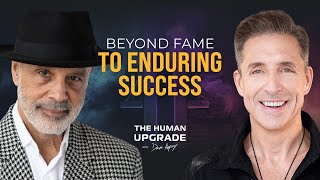
This is a YouTube video titled "Prioritize Performance, Not Fame with Ramon Hervey II | 1150 | Dave Asprey" published in April 2024. It features a long-form interview between host Dave Asprey and guest Ramon Hervey II, an experienced music manager and publicist. They discuss the nature of fame, its challenges, the entertainment industry, personal integrity, and the impact of fame on personal development and mental health. The conversation also touches on the evolution of fame in the social media era and the importance of focusing on success and authenticity rather than fame itself. The content is an in-depth talk focused on fame and performance, with two main speakers.
Chapters
If there was a formula to fame or, like, if you drink something or you take this vitamin, in three weeks you're going to be famous. I'd be, you know, I'd be interested in selling that, possibly. But there is no. There is no formula to sell fame. You know, no one can guarantee it. And it's a game. You play it and you try to do it strategically to your advantage, but you don't know if you're going to win every time. You don't know if you're going to lose. Understanding the level of fame that you're comfortable with or knowing that you can fuel your own burnout if you let that happen.
You're listening to the Human Upgrade with Dave Asprey. You're listening to the Human Upgrade with Dave Asprey. Today, let's talk about fame. So many people, especially starting out in our careers, you're looking for fame. In fact, the number one career that young people say that they want is to be an influencer. Now, this may be wired into our biology as that's part of making your mark. And I want to share a story about why this podcast is relevant for you. And then I'm going to bring our guest in, who's here, because his book is actually called the Fame Game. An Insider's Playbook for earning your 15 minutes. But when I was a teenager, I was about 19, said, you know, I'll be happy when I'm famous. I'm going to be known for my work. Of course, I hadn't done anything that meaningful yet, but I could have tried to convince you otherwise because I certainly believed that there was something I was doing. And When I was 23, I was an entrepreneur. Magazine pictures in there. I was actually in 80 publications as the first person to sell anything over the Internet. And I was absolutely happy for at least 10 minutes. And after that, fame just doesn't make you happy. And that's why I actually erased my identity before I started biohacking. And I said, all right, I'm willing to be known as an act of service, but not because it feeds anything in you. And if you're seeking fame, when you get it, you may find out that it actually has a big downside. And all the celebrities I know and have worked with, we all deal with it all the time. So I want to look at fame on what it takes to be famous and whether you even want to be famous. And our guest today is Ramon Harvey II has worked with and managed some of the biggest artists on the planet. Vanessa Williams, Little Richard. Richard Pryor, Bette Midler, Bee Gees, so many others. So he's an expert in that. And you're going to learn a lot of lessons from this conversation because this is a man who's accumulated a lot of wisdom and seeing the effect of fame, how they earned it, how they manage it, and how that affects your performance, your resilience, and that side of personal development. I'm, I'm really excited to, to bring this to you. So, Ramon, welcome to the show.
Just one small correction. The last name is Harvey.
Did I say it wrong?
But I get a lot of people that call me Harvey.
You know what happened? My, my spell checker keeps correcting you to Harvey. It's Hervey. H E R V ey. Yeah, yeah, got it. Thank you.
Thank you so much. It's a pleasure to be on your, your podcast. And it's so funny because your story that you just shared with everybody really echoes is often, you know, it's authentic because I've experienced it with so many people, you know, and I believe that you're. I think what's interesting about fame is you. There's no place that, where you can go and learn about how to become famous. Everyone takes a different path, and there's no way to prepare for it, and each person is going to respond to it differently. And I think that what you just said is you think you want to be famous, but I think, you know, in my book, I say that fame is not a destination, it's an accolade that you earn from being successful. And, you know, there's no guarantee that even if you're successful that you're going to become famous. It's, it's. There's a lot more successful people in the world than there are famous people in the world. And, you know, they're not all famous. Only one person, less than 1% of people in the world are famous. And out of, you know, over 8 billion people in the world are famous.
It'S probably closer to 0.01%.
Yeah, it's really, really small. It's like 0, 0, 0, 6, 5. A mathematician created this formula. I think it's, yeah, 4 zeros and 6, 5. And then also, even with social media, you know that we have over 8 billion people, 450 billion people are on social media. And in terms of the influencers and that, I mean, there's only 1% on any of the major formats that reach over a million followers or however you want to rate it. So, you know, that's out of 450 million people that apparently do use social media now.
I've watched a lot of my friends become well known over the last dozen or so years of creating the biohacking movement. You know, Jim Kwik started out working with Fortune 100 CEOs and all these celebrities also. I could remember their lines and things like that. He's got a massive following. And Lewis Howes, when he was first getting started with School of Greatness. And you see how, how it affects different people differently, right? And you know, both of those guys have handled it really well. But then you see some of the more recent of people who rise it. It seems like there's oftentimes hidden secrets that come out. Like this week as we're recording, the New Yorker just came out with a big article about Andrew Huberman, right? And it feels like sometimes people tell a story where, you know, their, their origin story isn't real, right? And then they become famous and they're like, oh my God, I said I was a PhD in a Navy SEAL, but I wasn't either one. And like, someone's gonna find out, but then they get trapped in it. How often do you see that happen.
In the entertainment industry? I think it happens occasionally. I don't think it's a widespread phenomenon because it's too easy to fact check. And, you know, if you're gonna start lying at one lie begets another lie, and then your story starts to unravel, you know, as you're telling it. So, you know, I always talk to, when I've represented people, you know, I've always tried to convince them to be, you know, authentic and real. And let's try to, you know, focus on your strengths and accomplish, you know, I think what as a manager and even as a role as a publicist, you know, you really. It's the merging of art and commerce, you know, that's what leads to, quote, unquote, fame in the entertainment business. It's the artistic, you know, talent of a particular person and then it's the ability for them to achieve success. Whether that's a hit record or whether it's a movie, television, whatever medium that they're using, that, that's the balance that you want to try to create and sustain is, you know, the integrity of your art. And hopefully it's commercially rewarding.
One of the things that I, I found I, I learned to do as a kid, a lot of us learn this was to lie, right? And so you lie to tell yourself a story of self worth. If you're not Feeling like you have self worth. So then you sort of just inflate things a little bit and you sort of make excuses and things. And sometime around my, my mid, mid to late 20s, I realized, wow, like, this isn't, this isn't a good thing. It doesn't feel good. Years later I came across actually some studies even that show that a practice of 100% truthfulness, what in the four agreements, they would call integrity in your word, that it's so much less mental work to just always tell the truth, even in the smallest way possible. That, that created a lot of peace for me where I do my best to say, I'm not going to pick you up at the airport, but I'm not going to say I can't pick you up at the airport because truthfully, I could, but I was going to have to blow up a meeting and I didn't want to. So. Even the tiniest lies seem like they can get amplified when you're more known. Right? And this is why things like integrity in your relationships, you know, if you, if you say that you're married or that you're in a committed relationship and you're not, if you're famous, someone's going to take a picture of you somewhere, it's going to come out. And, or if, you know, you say that you're not drinking and you are drinking, it's going to come out. And so this practice of personal truthfulness that gets reflected in my words has been really important for me. And it's one of the reasons I think I've had longevity in being well known and also because there isn't any, there isn't any BS that I'm aware of in what I'm saying. When you're dealing with artists versus, say Internet influencer types, how important is that integrity? Integrity in your word? Or is it less important for artists?
I think it should be important for artists. But we live, you know, the entertainment industry is a industry that's based on illusions. It's based on making regular people seem bigger than life. Bigger, larger than life. And everything that, you know, if you look at the history of Hollywood, it's always been how do we make this person seem more special, more unique, more different? Their lifestyle, how they live, the glamorous sides, all the perks that you get from quote, unquote fame, how do we blow that up so that we all make money? And so that concept of lying or not, not necessarily blatant lies, but skewing information to appear more valuable than it is or you know, it's, it's. It's in the record industry, for example, one of the things that was very popular when I was starting off in the industry was record companies used to. As a way to inflate the value of their artists or upcoming release, they would say the record has shipped platinum, which means that platinum is a distinction of sales threshold that represents a million units. So by doing that, they were hoping to get more media interest for the artists. You know, that if this has already sold a million records, we've just shipped it, it's actually not on sale yet. More people will line up to want to buy it. But what they created was a phenomenon where records were shipping platinum, but they were lying. And in some cases the records, you know, record stores always have the option to return records that are unsold.
Yeah.
So a record could ship platinum and return gold. Like over 5,000 units that they said, you know, were sold, weren't really sold. And so they basically had to return them. And they were eating those costs. And so those costs, the record company takes a loss on that and so does the artist in the sense that the artist doesn't make the royalties from that. So there's. There's all these ways in which we, you know, we, meaning people like me, managers or publicists, we do try to shade things to make our. Our people look more. More valuable, more special, bigger than life. And it's something that you do, it becomes almost automatic. So it's hard to. When you build up a falsehood and then you expect the artist to act normal, then you've created sort of Pandora's box. Because the whole industry is based on. Everyone's kind of joined together to create this illusion. And we're all funneling information, changing it, manipulating it to make that particular artist look better, more super human than the average person. And that's why people love, you know, that's why I think we're so immersed and engrossed by the whole concept of celebrity, because we put those people on a platform that's higher than what we believe we ourselves can accomplish.
Years ago, I heard that the average human uses only a fraction of their brain's potential. And it made me sad. So I thought about doing something about that today. Imagine if in five days you could upgrade your brain function and productivity, make yourself more resilient to stress, and make much better decisions in smaller amounts of time so you can navigate anything life brings your way. That's what I built at 40 years of Zen, the world's most exclusive brain upgrade. Retreat. My team of neuroscientists and facilitators will map your brain and guide you through a custom protocol to rewire your brain to perform at its best using proprietary techniques. Proprietary facilitation that's been developed over eight years of hard work. I've spent six months of my life with the electrodes glued to my head personally. To be able to help bring you this program. 40 years end is the brain hack used by C Suite executives, celebrities, athletes and other people who want to be a part of the future of human evolution and consciousness. Go to 40years of Zen.com Dave to receive an exclusive offer for listeners of the Human upgrade. Your mind will be quieter and you'll have the brain power to sharpen your mind. That's 40 years of Zen.com Dave. This is one of the most worthwhile investments you can make in your entire life. A recent client stepped out of the pod and said, that was the best plant medicine journey I've ever been on. Without the plants. It's that big. Some people have a personal Persona and then in person they're a little different. And I've become friends with, with Paris Hilton. I was on her show and I mean she has her cooking with Paris show. It's hilarious. And she kind of pretends like, I don't know. That woman is freaking brilliant. I mean she is such a sharp business person and is just like quick witted and, and you know, you when I first met him, like, wow. Like this is, this is a smart, fast, like really sharp business person. But I wouldn't have known it from social media. How many artists or, or influencers or famous people kind of have a public Persona that's really different from their personal one. Like Steve Aoki. He's the same at his home and same on stage. Like he's a playful, fun loving guy.
Right.
And then you have others where there's like a kind of a curated image that, that maybe is a little bit, a little bit different. And I'm not saying it's fake. It's just like that's a Persona. It's, it's an act. Like what, what percentage would you guess from what you've seen are people are like playing themselves versus playing someone else when they're interacting with the public?
I'd say at least a third.
So a third of people are kind of, they have like a public things a little bit different.
Yeah, they have a public Persona that they, they fuel. You know, some celebrities I worked with, they don't want their children, their husbands Their wives, you know, they, they want to be able to have some sense of stability in their common commonality with the rest of the human race. You know, so they don't want to be put. They don't want to live on that fake pedestal forever. They, they know that it. That it's fake, but some of them, they love being in that role. You know, Rick James was a guy that was obsessed with being fame famous, and he loved being coddled and he loved being able to intimidate people. He loved being. Walking into a room and have everyone recognize him. You know, anything that, that fame, any of the bad things or good things about fame, he wanted, you know, and so some people, it, once they get it, it becomes like an addiction because it's, it's like an endorphin push or an adrenaline rush. It affects your physical, mental, and the way you think about everything. And so when, when you become culpable, when you're not culpable and you don't understand when you're in that zone that it's, that it's not 100% real and you get hooked on it, then that's when problems really start to fester and then you're, you're really in a. In an unreal state of mind on an ongoing basis. Because fame, as you said, it's, it's, it's fleeting. You don't know when you're going to become famous or when you're not going to become famous. And if it hits you at the wrong time when you're emotionally, emotionally unstable, it can be devastating.
It feels like it's incredibly toxic to become famous as a teenager or even a really young adult, because. Feels like it makes you question your reality. And I've, I've seen this in, in a few different people where, like you said, it's a dopamine hit and you start seeing yourself through other people's eyes. And so developing yourself as a, as a person is probably harder if you're a young influencer of millions of followers because you feel like everything you do is an act versus what you. What was authentic to you. Do you have a story of someone you've worked with or someone you've seen in the entertainment business who became famous at a young age, where it really was toxic.
When I first started in the business, I was living in London, England, and I worked with a group called the Bay City Rollers. And the Bay City Rollers were a group of musicians, or they were basically five guys that really weren't that talented at all and they had a deal with two producers who actually recorded a whole album. They recorded two albums with session singers and then they went out and found five guys to portray the music and to deliver it. And at the time, there was a really popular TV show in London, England called Top of the Pops. And if you could sustain your record or single on Top of the Pops, each week you could. You were given an additional appearance. And so every week you could get on the number one music show in the country and you could escalate and become famous in a very short period of time. So they became very, very famous in a. Off of the first record. And then at the end of the first record, and they thought people were saying that they got so big that people were comparing them to the Beatles. They were anywhere. They couldn't hold a candle to the Beatles musically. Even the songs. I mean, the songs were written by two very talented producers, Bill Coulter and Bill Mart. But they weren't on the par with the, you know, the legacy of the Beatles. But, you know, the media was. A lot of fanzine magazines were part. This was in the 70s, by the way. So they had a very. They were so young that they just didn't get it. And they didn't understand how their platform was. Was not authentic. But they started to believe they were who they had. They were being acknowledged for. So they basically told these two. They fired the two producers and they told them, we want to write our own songs. And they disappeared. They had one album that was humongous. And then they really, if you go back, they really didn't have a great career. And the two producers took the second record that was supposed to be theirs and they found five new faces to. To. To. To do that other record.
Wow.
And I worked with that group as well. That was another young group and they were called Cuny. And they didn't sing on their record as well. So they took. They took two different records, they edited it and they changed the second record to suit this other group.
Amazing. So it can happen. You just get too full of yourself and then people won't work with you.
Yeah. And it's. You know, there's a. Milli Vanilli was a very famous American group that had a similar type of situation where they didn't actually sing on their records. They, you know, they were. They were recorded and. And one of them ended up committing suicide.
Yeah, it was really sad.
Yeah, a very sad story. So there's, there's, there's talks, there's stories like that. And then there's, there's drug, you know, stories, alcohol stories. I mean, you know, Rick James ended up dying from, with seven. You know, he, he had a drug and alcohol addiction for many years and that ended up being fatal for him. And you know, there are a lot of. I've been involved with several, I mean, Natalie Cole I represented, she had a drug problem for many, many years. And it just becomes there are so many ways that it can be toxic there, you know, in the sense of that's one, another one is drugs. You know, people that alienate themselves from their family, from their friends, and it will end up being very lonely in that thing.
One of the things that I teach, I run a small exclusive mentorship group with Naveen Jain, who's a Forbes list entrepreneur and a Vision Lakhiani from Mindvalley, and it's called the Apollo Group. And we just had our three day mentorship meeting in the British Virgin Islands. We talked about exactly that. How as you become successful or famous or both. Because you can be famous without being that successful too, right? Well, no, but you haven't really done anything.
It doesn't last for long.
Yeah, it doesn't last for long. But either one of those can drive loneliness because all of a sudden do people want to know me because I'm famous or because they like me or do they want to know me because I'm a successful entrepreneur and they want money or they want resources? So a lot of successful and famous people are really lonely because they don't know who to trust anymore. And I think that's one of the reasons that influencers cluster together with influencers and celebrities in Hollywood hang out with other celebrities because at least they know they're not trying to get their fame.
Right. Right.
How do you deal with that?
Well, I mean, fame is a form of currency, but you have to know how to use it. You know, it's like being a great investor or anything else. You know, it, you have to have a realistic approach to what, what level of fame you want to achieve and what level of fame you can actually handle. And that's the, you know, that's the thing that you don't really know until you get there. A lot of people think, oh, I want to be famous. But they don't have the mindset or the, the mental capacity to do it. And they don't realize that until they get there. Because again, you can't go to. There's no classes or school or university that teaches people at any age how to be famous or how to Maintain, sustain your fame. So it's still an unknown commodity, you know, and everybody has so many, there's so many different iterations of it. And I think there's also people who think they're more famous than they are. And those are the worst kinds, I think, you know, like I said in my book, you know, when you, when you're famous, it doesn't entitle you to be an.
Yeah.
And if. And being a famous is the worst kind of. To be.
Oh, God. Yeah.
You know, so it just. Some people just, you know, they're, you know, they're predestined. Like, you know why some people, they can't drink or they, they can't do drugs because they're not. It, it's. It's against who they are. They, they, they're not able to co. They can't do it for fun. And so you have to learn, engage your fame as it, you know, as it's impacting you and, and not lose your sense of being or getting into that scenario where you exist to please other people, but you're never really pleasing. You don't know. You've lost sight of how to please yourself because you're so caught up in fulfilling the illusion that you've helped to fuel and feed them.
So fame can stop personal development.
Yes.
There's a process called autophagy, which is the process of getting rid of old mitochondria, or old cells and replacing them with newer, younger ones. One of the most interesting new ways to do that is a supplement called Mitopure from Timeline Nutrition. If you just happen to eat way more of a certain kind of fruit and you had a special bacteria in your gut that a lot of people don't have, you might make some urolithin A, but probably not enough to make a difference in your biology. Problem is, I know from testing that I don't even have those bacteria and I would never eat that much fruit because it would cook me in fructose. So my only choice is to take urolithin A in the form of mitopure. And it has great clinically studied benefits. That's why it's a permanent part of my I'm going to live to 180 or die trying stack. But along the way, I'd like to stay young and mito pure is a part of how I'm gonna do that. Check it out for yourself@timelinenutrition.com Dave get 10% off any plan when you use code ASPREY10. That's timelinenutrition.com Dave code ASPREY10 I consider myself not very famous, but a lot of people know my name at this point, and I acknowledge that. And I, I've, after I divorced, I, I went on a few dates with a very famous person and it was like, man, I, I do not want to deal with Page Six. It was a constant thing, Page Six guys. If you don't know, it's some sort of thing in Hollywood, some newspaper thing where they do all the celebrity gossip stuff. And it was, it was definitely something that was on my mind. Like, okay, we're, you know, out at a public place and like, are there photographers at the, things like that? Unfortunately, none of that stuff happened because it's nice to have a private life. Right. But, but that's also something that comes into play there. You know, if, if you're making a decision about who you want to spend time with and you go, oh, I have to run that through a filter of pr, publicity magazines and gossip and all that crap. I, I'm glad I don't deal with that on a regular basis.
Yeah.
And I, I, I feel like it makes a lot of toxicity for people.
Yeah, it's very invasive, you know, and it's just, it's kind of a, you know, I've had a chance to, to experience it a little bit. I don't consider myself to be a uber famous person, but I was married to a famous person who I helped become famous. Vanessa Williams. And, you know, so I was famous. I was a famous appendage. The reality is, is, you know, that we raised a family together, and so you do have your, There is an invasive sense of when you have your family and people come up to you at the strangest times and want, you know, to intervene or to make their presence known. And some are very polite and other people aren't, you know, so it's. Once you become a public figure, you're vulnerable to that kind of, you know, personal evasion or of your space when you have no way. You can't control it. You may not even see it coming, you know, so you have it, it's kind of happened spontaneously in the moment. And, and fans, you just don't know how fans are going to end up being, you know, Bette Midler. We used to have, I did a, I worked with BET for about eight years, and there was this family, a mother and two daughters, and they, they stocked bet, not in a bad way, but they showed up at more things than you. Like, how were these people? They, We Did a book tour, eight, eight major markets across the country. They came, they were in line, the first in line at every single book signing in eight different cities. And that used to just go, what is, what is you doing with your life? What is your life exist? How can you be all these places? We love you, we love you. I mean they were very nice, very cordial. They never said anything bad, but they were just die hard fans and they, this is their, you know, they, this consumed their life, you know, so it affects, it not only affects the celebrities, but it also affects people who want to somehow, you know, be next to it or be part of it or, you know, there's so many intangibles that you, you just don't know until you know you're there.
The being stopped in public thing is, is interesting. I've been stopped all over the world by people who recognize me from social media or something. And every interaction has been like so positive. I've had a few people interrupt dinner with the kids, but even that's like really respectful. And so I'm just grateful. I've had a few stalkers, but nothing that toxic. And so I'm, I'm grateful so far that it's been, it's just been kind and just people saying oh my gosh, like thank you and, but not being.
Too invasive to me, that would be a compliment to you on your, the way that you've promoted your self image and people feel, you know, and it's different like I felt with. There's a different, you know, I represented major athletes, very famous athletes. And there's a different, that's kind of a. Athletes are more like a workman's hero, you know.
Right.
And so those people, they're less evasive, they really respect that athlete for their talents, but they're, they treat them differently than celebrities that like would go after Justin Bieber or Beyonce or Taylor Swift, you know, where they're crazed, you know. And also you're talking about younger kids too. The younger the, the famous person is, the younger their, their, their fan group is. And so you also have those things working as well as opposed to when you get older. You know, the type of fan that you, hopefully your peers are, your fans as well as some, you know, so as you get older then the amount of fandom and the way that you're treated is slightly different than when you're dealing with teenage fame.
That makes a lot of sense. Probably the most awkward but still positive interaction I had is I was on a first date with the Famous person. And when I went to pay for dinner, the check came and it was already paid for. And it was from some people at another table who'd recognize me, but not her, who's way better known than me and had written, dave, thanks so much for your work. We thought we'd buy you dinner. And I was like, kind of shrugged. And she looked at me and said, well, you still get credit for that one. All you can do is be grateful for that. It was such a kind act. But I'm always watching to make sure that that sort of thing isn't something that's like, fueling my ego or my self identity. What are your best tips for everyone listening, who's got followers or who is building their influence to not let it become toxic?
It's hard to say, but I would just say to stay grounded and stay within yourself, stay balanced, you know, because of the fact that again, fame, you know, I, again, every client that I ever represented has had an ebb and flow of fame. They didn't sustain and have the same level of fame throughout their whole career. And so you have to be able to make adjustments. And you can only do that based on your ability to stay, you know, balanced and grounded. So then that way, when, if you're a little bit more famous, it's cool. If you're a little less famous, it's cool. You're not really on the edge all the time, you know, And I think that's the warning sign that I think that when you start to be enthralled by your own fame and you let it dictate, you should dictate your fame and not let your fame dictate who you are. Don't let fame define you. You define how you want to deal with your faith. And I think that is really important. If I was going to say you don't. Don't start believing the hype.
I had already done the work to work on being happy and being unknown. So being happy and being known is like the. Being happy is a thing that's independent of whether you're known or not. And I'm grateful that I had the opportunity to do it. And in, in your book, in the the Fame Game, you know, your first chapter, a path of self destruction will sabotage your fame. And I, I feel like a lot of my resilience has come from self care, from biohacking, you know, making sure I have enough energy. So even if I'm tired, I'm not gonna, you know, act like a jerk if, you know, if, if I'm being seen or not based on the heck knows who's watching anytime or just with my family. And also having enough energy to have ego awareness and just to sort of think about how I'm behaving and to notice how I'm behaving. And I feel like the more drained I get from doing a bunch of public speeches or something, I still have enough energy. Sometimes it's pretty low, but I still have enough at the end of the day to just be present. And when I was younger and my energy was less stable, I had a much harder time being present. So the more self care I do, the more I can be present, the more I can be of service. And I'm assuming that that probably affects whether I'm well known or not. But in the third chapter of your book you say don't self assess because the public dictates fame. Talk to me about the measure of fame today.
I think there's a, it's a totally different paradigm than when I was first coming up in terms of. But you know, I, in the book I also say that, you know, you don't. No other managers or none of my most famous. We never sat around and talked about being famous. Yeah. As a pursuit or what do we do to make you more famous? You know, we, I never had those kind of discussions with people. I mean everybody, we, we just wanted to make the best art that we could figure out the best way to strategically market it and, and position it in the marketplace and to, you know, fuel that success with, you know, you put out a record, you tour, you try to get sponsorships, anything that you can to amplify and elevate the brand. We would focus on that more than, you know, the fame. So if you spend a lot of time self obsessing about fame, then you're not really doing your best just to be successful. And to me, being successful is a much more realistic goal to aspire to than being fame famous because it's something that no one can take away from you.
So you don't set, you don't set fame as a goal. You set success and authenticity as a goal.
And fame may happen, right, because you can't dictate fame. And if you start to believe that you're, that you're famous before you're really famous, it's, it's a, you know, it's a downward spiral. And that's where that, that, that sense of. And you go. The other problem that you have when you over self obsess about fame is you don't do it by yourself. You're basically comparing your level of fame to other people's level of fame. Like I want that or why am I not be as famous as this person? My song is as good as, you know. And you, when you get into that thing where you think that you're something's as old to you or that you're deserving of something else, you know, that's where, and that happens a lot where people will compare themselves and they get frustrated because they want to be on someone else's level plateau of fame and their disability want to get there, but they're not able to manifest it. And there's, you know, and that's the thing where from as a manager, you have to remind them that, you know, you can't compare yourself to that person because your path is different. Your path and what you, what you, what's going on in your life is different. So your journey and whatever is, is making you popular. That's what we have to address. You know, we can't worry about every person that you want to be more famous as, as famous as or more famous than them. There are people that, you know, I don't think in theory to just sit at home one day and say, wow, be fun to be famous. I don't think that's a bad thing. But if you're, if your only goal is to become famous, then I think that's a problem.
Yep.
Because you're not really in charge. And you know, that's the other, you know, the thing that. What I was saying is, as you noted was that in the book, I talk about the fact that the public is ultimately the arbitrator of how famous you get and for how long. When the public turns off on you. And even with all the machinery, the best machinery, the best producer, the best director, the best studio, the best record company, with all these people behind you, at some, some point the public is going to get tired of you. They're just not going to be into what you're doing and that's out of your control. You know, for example, a good example is the Bee Gees. So the Bee Gees, I worked with the Bee Gees when they were at the top. They were the number one group in the world, but they became a number one group in the world as a disco artist. You know, they did pop music before. They had many different iterations in their career of success, but when I worked with them, they, they really, you know, became. And it was a conscious move to move into the disco industry, their producers, their record company, they knew what they were doing. So this was a strategic plot. What the, what everybody didn't realize, and also the Bee Gees, was that there was a backlash within the industry. It's the only musical form that I, in the whole 40 years that I've been in, in that their industry shut it down. They decided that disco music was not good for the future of music. And all the radio stations and record labels, even the Grammys, they, they didn't want disco artists winning awards. They were blackballed by our own industry. They decided. And if you go back in history, what happened was, so they're the number one group in the world and they're the biggest disco artists of all time. And then the industry decides we have no future. You know, the, the highest, we've, we've tapped out, we're not going to sell more records or this is not what we want young artists to aspire to be is disco artists. And so there was in Chicago at a stadium, I think it was either the White Sox, it was at the Chicago White Sox, they actually had a bonfire of disco records and they burned the, there was a DJ that was so against. And he, he, he did this whole PR thing and they were burning disco records in the middle of, of the field. And that's what really ultimately ended the Bee Gees career because they had become so big, but it was to no part of their own. Their songs were still great, but no one wanted to hear the music. They couldn't get it played anywhere. Radio stations stopped playing it. Record companies didn't want to, you know, release any more records. And it died. You know, it, it morphed itself into what is now, you know, dance music or edm, you know, but it's, it's. The term disco was just. They tried to erase it from existence.
So you could become famous in an area that's not cool. One of the areas like that in my industry, when Paleo was all the rage, I remember there's a website called Paleo Hacks. And I went on there and I said, guys, you may be living in your caves, but the biohackers are coming and we have lasers. And today Paleo is kind of a shadow of what it used to be because it's evolved. And you go to any of the surviving kind of Paleo industries and there's lasers and light therapy and cryo and all the biohacking techniques, because Paleo and even keto were, they had, they're part of fame. So if you're over identified with one of those movements and then it falls out of fashion, then. Yeah. Your fame will go away unless you succeed in transitioning. And I'm hopeful that the biohacking industry, we're now about a $63 billion industry. So I think that's still going strong and probably will for a while, but you never know.
Yeah. And you're apparently the one that everyone should be applauding.
No, I did. My name's in the dictionary, and I created the movement. But there's lots of people in the movement, and I definitely started it, but.
So I did a little. It started in 1988.
Someone in, I think 1984 used the term biohacking to talk about gene editing your cat to make it glow in the dark.
Okay.
Or actually, no, that was 94, not 84. So that was the first use of the term. The first use of the term for hacking your own biology as biohacking was me. And that was the word that entered the English language in 2018 in Webster's Dictionary.
Okay.
And it's. It's a very interesting thing. You know, I. I didn't trademark the term because I. I thought I. I want to build a movement that's around longevity, and I want to make longevity cool. Because if someone had told me I could do longevity when I was 19 and £300, and they would have used it in a language that I could have heard, I would have been all in on it. Instead, I spent a few million dollars reversing my age and healing all my ails and losing £100. I just didn't want to have to spend 20 years becoming an expert in the field in order to cure myself and then to feel good all the time. I'll just share this, but it was a consciously created movement, but it wasn't created for fame. It was created because I didn't want anyone to suffer as much as I had. And I think that's why it's had sustainability as an industry.
Yeah, that's important. You know, sustainability, I think, again, is. It's. It's more plausible if you're. If you're pursuing something with integrity and something that you think you can be successful at.
You sound a lot like Rick Rubin, who's also been on the show, famous music producer, and Dan, who.
I know who Rick is, of course.
I'm just for listeners who probably. I mean, you would know. You guys probably have met multiple times, but some people didn't know it. I'll admit, when I first met Rick, he'd reached out. I didn't know really who it was. I just heard his name. So when I got to him, like, wow.
Yeah, he's got a great legacy.
In your third chapter, though, you talk about focus on your craft instead of worrying about fame. And Rick's most recent book on the creative act was really profound for me to read because he says the same thing. He says, focus on your art, Focus on your creative art, whatever it is, and don't worry about the public. You have to do the right thing as an artist. And then fame may happen, it may not, but if you focus on fame, your art will fail. And I thought that was really profound. And in terms of managing fame, I texted him and said, hey, Rick, you know, your book just came out. Why don't you come back on the show? And he goes, you know, Dave, I'm overexposed right now.
Like.
Like he's watching his fame. He doesn't want it to hit a super high peak because then they'll hit a trough. So he's become an expert. I think he just intuits it in sort of like surfing it, but not ever crashing and not becoming, you know, excessively famous. And that's why he's been on Eminem's videos and like, he's done all this stuff. And I went through. And I realized, I think nine out of the 10, like, like, most favorite of the songs that, like, define my life with memories are. Are all produced by Rick. I'm like, oh, my God, I had no idea. But it's so. He's a guy who seems to have managed the fame game better than anyone else I know. I mean, you have like, Taylor Swift and people like that who are real super famous now. But we'll see, you know, whether she's the next Madonna or not. Only time can tell that, right?
But again, I think what he, what you said, what he said to you and what you gathered from, you know, in terms of. In reflection is true that that's part of the strategic part of the game. One is just to understand that it is a game. You know, there is no guaranteed winner or loser. You just play the game the best way that you can. And you, and you. You try to. To be as successful as you can, but it is a game because there, if. If there was a, you know, a formula to fame or like, if you, you know, like in your thing and you say, if you take. If you drink something or you take this vitamin, in three weeks you're going to be famous, I'd be You know, I'd be interested in selling that possibly. But there is no, there is no formula to, you know, to sell fame. You know, no one can guarantee it. And it's a game. You play it and you try to do it strategically to your adv. You don't know if you're going to win every time. You don't know if you're going to lose. And, and I also think what he said is understanding the level of fame that you're comfortable with or knowing that there is a. There is, you can fool your own burnout if you let that happen. That's what he was acknowledging is I don't want to burn out on one this one thing. I need to stay balanced so that the next time I come out, people still want to talk to me and still promote what I'm doing. And that's where some people, when you get so, you know, obsessed with it in that you have to, you know, you're like, you have to feel that level of fame every day when you wake up in the morning. I got to feel like something needs to happen today to sustain my fame to, you know, so that when I go to bed tonight, I'll feel as famous as I did yesterday, you know, and if you have that kind of, you know, attachment to it, then, and you're not putting it in check ever, you're not really looking at how people are receiving you, what, how it's changing your life then, then again you're letting it control you and you're letting your fame dictate it. And he's a smart enough guy, been around long enough to know that I'm going to dictate and control how much fame I'm willing to deal with to maximize the commercial exploitation of whatever is selling at a particular time. And you tell that, you know, you tell that you turn down things. You, you know, you get offers to do newspaper covers, or you get offers to do television, or, you know, you get offers to do big dates and you say, you know what? The time is not right. It's good money, but you don't need it.
It makes a lot of sense.
You have to be able to say no. You have to be able to absorb failure. You know this. You can't stay on one even keel, like, go, go, go, go, go forever. You know, there's got to be balance. And, and that balance, again, isn't always something that you can control because you can't. You don't know how you're going to react to failure. Most people don't and that can, you have to, you know, prepare your, if you're more grounded, then failure is something that shouldn't impede your, your progress. But you look at it, you examine it and you learn, you try to learn from it, but it's going to happen. Everybody fails at some point in their life. And how you approach that and how it adds, your build, your character is going to impact how you, your decision making process. The next time you're in a situation, you're going to analyze it a little bit different and just try to, you know, not control it, but just limit the possibility so that you're feeling less. Because anyone that constantly fails all the time, that's not a good, you know, that's not a good form of stability or sustainability if you're constantly failing.
Yeah, I know a few people who get really angry because they're not famous, right? Like, I'm a good person, I've done big things. Why am I not famous? And, and some of them, because they become very, almost evil from that. Like I had a, a former family member justify trying to steal one of my companies like, like full on lawsuit level over something like this. And it ultimately came down to I'm smart, I should be famous, and a sense of entitlement that was very narcissistic. How do you stop a desire for fame from turning you into just an angry person, for lack of a better word?
Again, there isn't one way that would work for everybody, I don't think. I think that sometimes it takes, you have to be able to listen. If you have good people around you, surrounding you and they're helping to keep you in check and you're able to listen to that and understand that they're trying to look out for you. If you start to see a trend with more people trying to do that, then that might tell you, hey, you know what? I need to rethink how I'm, you know, looking at fame, what I'm, how I'm, how it's affected me because it's now it's changing the dynamics of my friends, my family, my children. So, you know, whatever you have in your life, in the circle of your life that you trust and you respect and when you start giving messages from those people that you love and respect and you know that they love and respect you, I think that's a time to sit down and meditate and really examine, self examine and see what you can do to modify and change the way that you're behaving. But it would be different again it's not the same with everybody. And some, some people have to hit rock bottom before they will accept the fact that they were on a path, they were warned and they didn't listen to, they didn't take the signals.
Yeah, that's for sure. There's a lot of polarization in the media right now and it feels like when people work on becoming. Well, if they're working on becoming famous, I think they're probably doing it wrong. But there are still people who work on being famous. One strategy is to be really polarizing as a way to do it and the other strategy is to do whatever it is you do for. We'll call it mass market, don't be offensive, appeal which of those strategies is better?
I don't think polarization is a good path or strategy to take and I think if you known for that, you're going to burn out faster than taking the other route, you know, but you're right, I think that there is, I think it's the worst it's ever been.
Yeah.
This idea that, you know, the whole concept of canceling and that, the whole concept of people tattling on each other, you know, to bring them down. This is a really sad state, I think for our society to watch this unveil itself. And you know, without social media this would not be possible.
It's definitely made it worse. I mean, there was a time about 10 years ago where Joe Rogan just absolutely tried to cancel me. I was on a show three times and you know, there was a commercial interest that seemed to be motivating things like that. And then I watched during the pandemic when the media tried to cancel for, for actually doing the right thing in, in my perspective. And, and he withstood it like a boss. And I was like, wow, this is really cool. He's one of the few people who managed to just like brush off a cancellation thing because essentially he is a form of media at this point, which is interesting. In your chapter eight in your book though, you talk about the role of media and I have a specific question for you. There's so recently I was on one of the top 10 podcasts in the world. We had a great interview, like, really cool. I didn't think it was particularly polarizing. Afterwards I found out that one of the largest sponsors of the show was a plant based, 100% vegan brand. And I'm someone who's been a vegan. I'm not a vegan anymore because it made me really sick. And I write books about how, let's eat some plants, but don't eat only plants. But. And they actually emailed me yesterday and said, we're spiking the episode. We're not going to air it, because. And this is, like, blatant, what I would call censorship for commercial interests. So I'll be sharing more about that over the next little while, depending on what happens with the show. But if you're going to have a friendly relationship with the media, but you can't be authentic because the media is on a certain kick right now, and you don't want a polarizing strategy, how do you handle that?
I think when you. I don't think it makes sense to always stage a counterattack, if that's what you're asking.
No, I'm not talking about a counterattack at all. Just like, I mean, I could have got in there, in fact, if the host had just said, hey, Dave, lay off on that. We could have talked about neurofeedback on the brain or something. But it was one of those things, of course, it was kind of surprising, and frankly, my PR agency should have warned me about that, and they didn't. But it's one of those things where certain people who say things are much more likely to be canceled or censored these days. How do you advise artists who are looking for decades of artistic. Earning the public's attention with their work, if something's uncool, like disco, all of a sudden, like, do they need to pivot?
I think that you have to. You have to pick and choose your battles carefully. Yeah. What things are really important to do. You really need to make a comment about something that's. That's none of your business or that you're not really engaged in. You know, I think that's usually the worst part is why would you make a comment about something that doesn't personally affect you, it doesn't affect your business, it doesn't affect your personal life, but you feel the need to make a public statement one way or the other. You know, sometimes you're. It's not like you're. You can say something positive that can be just as negative if the perception from the public is you should not be supporting that person as. As it being the other way, where you're. You're basically condemning someone along with. Maybe that's the public. You know, that's the mode that the public has taken. You know, like, sometimes it's. It's like a buddy system or it's. It's like things snowball, where either people come to rescue someone or they come to further condemn them from whatever caused that.
Controversy leads to polarization every single time.
Yeah. And I think when you, when you were. If you jump on the bandwagon and you, you do it at the wrong time, then you're more liable for backlash that you could have avoided by not saying anything. So I think that's really the, you know, if you don't want to, you know, if you, unless you have something at stake, I don't think that everybody is waiting to hear what you say or what position you have on every single issue. And some people feel like they have to comment on this or they have to come on and that. And it's not, it's not necessary. It's not worth the risk of, you know, it's a, it's a distraction that you're creating yourself that you don't need in your life.
That is, that's definitely wise advice and I could probably take more of that.
But, but like in your situation, like you, you, you were sharing something. I, I'm, I'm assuming is from your art. You experienced something and you were just expressing an authentic view. Yeah, this is how this didn't work for me.
But I also have written, you know, three New York Times bestsellers.
Anybody? Yeah. Freedom to be a vegan, if they want to be. But the fact that the company, you know, that, that's really silly, I think. But it shows them in a bad light if, if that comes to light or if you choose to make that makes the company look worse. That does not you.
Yeah, I don't, I don't like picking fights. I, I've found, you know, there are certain personality types usually who are bullied a lot and haven't done their healing work. They'll just always pick a fight. Right. Whenever they can. Like that. That, the whole take down attitude thing like that. And it's, it's so juvenile and it's so boring. Like, how about doing something worthy that actually works and showing that it works in studies or even with customer testimonials. And then if someone says, I have a different opinion, you're like, that's great. Like, show me your evidence. And I, I do my best. Even when, when Rogan was coming after me, all I ever did was just post a link to my article with 36 studies supporting what I said.
Right.
That's all I ever said. It took a lot of patience.
Right.
It took a therapist. And ultimately I had to go in and hook a computer up to my brain. So I'd Stop being triggered by all that. Because it was a lot of like bullying energy. But it was, rather than counter attacking, it was just straight up like, this is real, right? And I kind of started questioning my reality, but like, no, this is real. Here's the 36 studies. I didn't pay for any of these things. You know, global governments agree with what I'm saying. I'm just going to stick to my guns but not be defensive about it. And what I've, what I found is there is a gang of, there's always a gang of bullies in almost any, any industry, right? They're the ones who just love to be the leaders trying to take down someone for whatever. And, and it's not that many people though. So if you just kind of stick to your guns, they get tired of not getting a reaction and they go find someone else to pick on. That was the strategy that worked well, I think.
You know, it's funny you were talking about lying earlier, but to me, crisis management, I've done a lot of crisis management in my career, throughout my career. And the one thing that I think it's okay to be an advocate for, one, if you believe passionately about something, civil rights, women's rights, disability rights, anything that you feel passionate about and you know about that, you know, just like you said you did 36 studies or if you have a personal crisis, you know, before you, you, if you can avoid being impulsive and having a sincere, authentic response to something in your own life that you are being confronted with and you know, all the information so that when you make this statement, nothing can come back to haunt you. That's, you know, because now in social media, you know, when I started in the business, you know, nothing could happen in, in a matter of seconds today with social media, a visceral response to anything that you say can be reported on and spread across the, you know, in seconds, in a matter of seconds, one statement. And if it's a misstatement, you can't ever take that back, you know, so it's very, because of the social media and the Internet, I think you really have to be very careful about what you advocate for or against what you say. And can you live by, do you know enough about what you're saying to make that statement and back it up in perpetuity? Because it will haunt you not only in the immediate time, but they'll come back and throw that in you, which happens all the time now. Well, you know, two years ago you said this, you know, but so it, it it becomes, you know, embedded in your legacy. And if you, if you are making these kinds of errors or impulsive, you know, proclamations and they're not supported by evidence or by truth, then you're, you're, you're building a reputation for not really being authentic or not being wise or not being knowledgeable about what you're speaking on. And I think that those are things that you, you. And the other thing is that you don't, you don't have as much time to decide on what you're going to do. So if you're being accused of something and it's not like the law or someone says you did this or you did that, if the longer you wait to make a statement, the harder it is to have a positive impact with whatever you say.
That's an interesting, interesting little hack that I didn't know about.
Yeah. Because if you wait now two or three days, if a statement, say a negative statement has been made against a celebrity or whatever and he or she doesn't respond for three or four days, that story is being refunneled and re repeatedly 24, 7 for three days. And everyone now is, it's not just now the whole world and the dynamic which I find so interesting is, or the uniqueness of what social media is. It's given everyone a voice. You don't have to be famous to express yourself on social media. Famous people get more attention. But anyone can respond to a Twitter, anyone can have a voice, anyone can have an opinion. And collectively that body does have impact. The body of influence. You know, I, one of the biggest Cat Williams came out and dogged out everybody in the entertainment industry, fellow comedians, whatever. He was on a, on a show. Famous football player, forgot his name is a hall of fame football player. And he has a new, a new podcast. He only had 5, 500,000 audience. And Katt Williams came on, he did a show, I think it was a two, two hours, two and a half hours. And in the, and people what he, his audience grew to 50 million in one 24 hour cycle.
Wow.
From 500,000 to 50 million. You know, that could not happen 20 years ago. And if you look at, you know, social media, to me it's just so powerful and it's hard to believe that it's become so powerful because it's really a teenager. You know, the mainstream social media networks did not become mainstream until around 2010. That's when Facebook and Instagram and you know, most of those, those same platforms were actually founded in between 2004 and 2006, we're entering our 14th year, only our 14th year of social media. And look how powerful it is compared to, you know, regular broadcast, whether it's network, cable, what used to be the mo. One of the most powerful platforms, radio, print, newspapers, which have twiddled, you know, because of the impact of social media. But it's. It's amazing that the world, globally, we're so impacted by a media format that's really only 14 years old. All these other formats have been around for hundreds of years, you know, starting in the mid-1700s, 1800s. And you're talking about this one, you know, and we're talking about maybe five formats that, you know, between YouTube, Facebook, X or, you know, all of them there. It's not like there's 20, you know, there's not 200 social media platforms that have the reach that these. The main ones have. Like, you know, you have 52 states, and each state has a major newspaper. You know, I mean, the way that. Or television networks. And just the amount of media that has. Has lost its impact due to social media as well.
It's definitely changed the game. So the speed and it seems like the stakes are higher.
You.
You wrote a really interesting chapter in your book about, you know, Vanessa Williams, right, where it's called fame is currency. Infamy is a liability. Walk me through what happened with Vanessa and what your thoughts were from the fame perspective, that situation.
There's a saying in our business that, particularly in the entertainment business, but I think it's used in others. Any publicity is good publicity, and I've never endorsed or believed that that was true. You know, I was a publicist. I had my own PR company for many years, and I never believed that. And I think that's a misnomer. And in her case, I think a lot of people did feel that through her controversy and the unveiling of the pictures or whatever, that, you know, no Miss America had ever become more famous, and that. That somehow benefited her, and it didn't really benefit her. It would have benefited her if she decided to become like a reality TV star or whatever. And she. She decided to play the victim role. And, you know, but she wanted to have a legitimate entertainment career in the entertainment business. And so she had to actually overcome that baggage and get people to focus on her real talent as opposed to being judged. You know, she was. She was the first black Miss America. So that had never been done. She wasn't raised in the pageant industry, which is a whole industry where some kids are their parents Start having these young girls in pageants when they're 2 and 3 years old. So she wasn't part of that. She didn't represent that. And so she really, she was a junior, she was about to be a junior and she was in her sophomore year in college. So she had no identity. She was just a college kid, you know. And then she was thrown in. You know, she, I think it was a six month window between the time that you run or the regional campaign to the time that you go to the national. And then they have the big TV show in September. So it's a very short window. And in two minutes when, you know, when those final 10 contestants stand up there and then what's his name? I forget his name. But when they announced her name, that's how instant her fame.
Wow.
If they wouldn't have announced her name, she would have never been famous. No one would have cared. Who knows who were the other nine contestants of any Miss America pageant? You couldn't, I bet you no one can tell you who are the final 10 contestants of a Miss America pageant. So in that, you know, it takes a minute. I think I timed it to see how long it took from the time that, you know, it's, it was less than a minute for him to actually say and the winner is. And in that line, that's when you become famous. And that's how everything shifted for her. But then, you know, within a year in, in 10 months then she had the, the unveiling of the pictures and she resigned. She became the first Miss America to ever resign. And then we plotted a career for her in the music industry. And you know, it eventually involved some, some minor television, film, whatever, but it wasn't, it took over 10 years for her to put that scenario behind her. And by, when I say behind her for those 10 years that of developing and trying to help her, you know, develop her career. Every time her name was printed in media it said Vanessa Williams, former Miss America dethroned for nude pictures. It was like a, that was her tagline. Wow. Would ever print a story and just say Vanessa Williams? The first time that happened after 10 years was the, after the opening night of Kiss of the Spider Woman when a Broadway writer critic named Frank Rich did the review of her opening night. And he was the first one who said Vanessa Williams, who opened last night, wow. And kissing Spider Woman, you know, and that was like a major breakthrough for her. And, and having been her publicist and then her manager, you just can't over underestimate how valuable that was that finally we had broken through. You know, we had broken through and she had gotten her name back for the first time.
Wow. Well, for. If you're listening to the show now and you see a cancellation campaign or a hit piece in the media about someone or something like this, there's almost always two sides to a story. There's almost always a motivation. There can be an angry ex employee who, who has issues. There can be a jilted lover. And you're probably never going to get the whole story when you get a cancellation campaign of anyone for any reason like that. And over time, I've just learned every time I read one of those, there's probably some truth in there and there's probably a lot of BS in there. And if you find yourself, you know, how dare she have nude pictures? The reason we have VHS is for taking nude pictures of people. The reason we have webcams is for taking nude pictures of people. Literally all of that technology was designed for pictures of naked people. In fact, teleconferencing originated from this. So it's not like you haven't done it either. And the fact that you're holding some celebrity to a different standard than you is probably because, well, maybe you don't understand how fame works. You don't understand that famous people are still people. So I would just invite you if you find yourself frothing at the mouth about some celebrity doing something or another. Number one, maybe they didn't do it. Number two, maybe there's a different story than the one you're hearing. And number three, there may be a targeted attack. It can be from a narcissist or a sociopath or a competitor or anything else. So I, I read all that stuff with a huge grain of salt. And anytime a celebrity does anything in their personal life, it's actually none of your business, and it doesn't matter. And if people would just grow up, up, then no one would care that Vanessa Williams years ago had a naked picture, because it doesn't matter. All humans are naked. That's how we're born. But maybe we'll all grow up someday. I don't know.
It's. It's such a quad Meyer of how to really try to make sense of all that stuff, you know, but this whole canceling thing is still. I, I've never really gotten quite used to it, but I study, too. I, you know, I'm. I'd like to watch things unfold and watch how people resolve it. And one of the bigger ones that I was Disappointed in was Dave Chappelle. Yeah, so I'm a big fan of Dave Chappelle. I don't know Dave Chappelle, but I like his work, I love his thought process and I like his sense of humor. But he took on the whole LGBQ thing and mostly attacked it, you know, made fun of it. And he made it the subject of his transvest, you know, transsexuals. And he made it the subject of more than one special that he was, was paid like $50 million by Netflix to do. And I thought that he, he did it once and then he did it again. And then finally, you know, the pushback was enormous and a lot of people went against him. I mean, he didn't get canceled 100%, but certain, certain venues did cancel his shows. He was supposed to get some awards. The people that were going to award him pulled, pulled those away and he decided to go out and on Counter Attack to defend his right as a comedian, to deal with the subject matter in the way that he, that, that's, that's a right, you know, was freedom. It's a right, it's a freedom of speech as a comedian. It's an art form. But he knew what he was doing. And I think at some point when, when something is self inflicted, you made a decision to do this and then you don't want to take any responsibility for that act. You don't want to take any culpability or the reaction that you created. At some point, you know, you just say, you know what? I didn't mean to offend as many people as I did. Or you say, hey, I don't give up, you know, I don't care and I'm going to do it again. Which is more what I think he did. And I think at some point that we all, as much as we worry about being judged by other people, we have to judge ourselves. And that means if you're a celebrity or if you do something that is really unnecessary or it's degrading, that you need to stand up and take ownership of that. And I think I was disappointed in him that he didn't do that. And I think had he done that, he would have avoided a lot of the, you know, the, the fallout that he has now had to try to rebuild and, and reshape his career around. And I think that that's, that, that idea again, that also comes from the idea that you're think you're so famous, that you're untouchable and that you're above Humanity or what's, what's considered fair and equitable.
Yep.
I'm not a Trump fan, and I don't think that what he has done as a former president is, I think it's irreproachable. And the fact that he can still run, again, I don't agree with. But again, it's, it's, it still is influenced by a level of fame that feels, it gives a sense of, of entitlement that doesn't, that you don't really have good fame should not give you that entitlement. That you can put yourself above everybody else. Your wealth, your status, your, your fame, your fans, and that you're basically not subject to any recrimination for anything that you do. I don't think that that's a real, that's real. That's a reality that, that we should abide by. So I think with other people not having the right to judge you, like you said, I also think there has to be some level of accountability and self judgment exercised by people who are famous and, and use their fame in a destructive way.
You know, who did handle that kind of thing really well was Joe Rogan. When the video came out of him talking, you know, she's an N word just dozens and dozens of times. He, he did a remarkable job of, of owning it, saying, you know, I do sound like a, an asshole here. And, you know, and he, he apologized.
I do remember that. I, I, I was a, I was impressed by that as well. That's a rarity. That was a rarity. And he did it, it wasn't like he talked about it for a really long time. He was very contrite, he was very sincere. And he, he did it like in three minutes of just, I plucked up and, you know, this is, I'm, I'm accountable. And I, I thought I, I really respected him for the way that he.
Handled that and I think it actually led to his next leg of fame, that he handled it well, didn't make a big deal out of it, but acknowledged it. And since that time, because I live in Austin, I've been to his comedy club, I've seen him live and, and man, he's an, he's a master of, of almost stepping into it again, but he never quite does like, he, he plays with it in a way that I, it's funnier than how to be perfectly honest.
Yeah, there's a bunch of people that weren't able to handle it and they're, you don't hear about them anymore. Yeah, you know, it's the same thing about the MeToo movement. So many of those guys that got busted never had any. You know, they weren't contrite, they weren't apologetic, they deflected all the obvious. You know, they. They never owned up to their own behavior.
Yeah.
Or misbehavior.
And perhaps that's the entitlement that comes with fame, where you think you're indestructible, but you're not.
Yeah, you're not. That's. That's really so important to understand.
Well, Ramon, this has been a fascinating conversation about fame, which is something you don't hear a lot about. People talk about being famous, but you've really studied it. And I would say if this show pushed a button for you, or if you are an influencer or you're building a biohacking business, there's chapter 12 in the book, which we didn't review, and it's the Tenets of Fame, where there's a summary of 13 basic rules about what it takes to be famous, but maybe more importantly, to not let it destroy you and to not let it define you and for you to manage it instead of it managing you. And I haven't found another book like this, and I know a lot of famous people and some people think I am one, and I found this book uniquely valuable. So thank you for your 40 years of working on fame and then thinking about it enough to put it into a structure so we could all learn it. I genuinely appreciate it.
I appreciate it that you took the time to understand it. I think the title might have been misleading, but I thought once people read the book, they would realize there is no, even if you get 15 minutes that just cherish it, enjoy it, but don't let it ruin your life. And there's. There is no way. You know, Again, I think my main message overriding message was no one can tell you the way to become famous because it's different for everyone.
You're listening to the Human Upgrade with Dave Asprey.










