Saunas Use Infrared to Power Detox, Immunity & Renewal – Connie Zack with Dave Asprey – #823
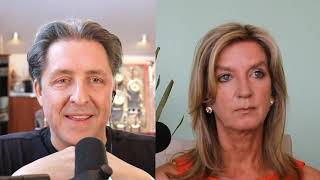
This is a YouTube video titled "Saunas Use Infrared to Power Detox, Immunity & Renewal – Connie Zack with Dave Asprey – #823" published in April 2022. It features a detailed interview and discussion between Dave Asprey, host of Bulletproof Radio, and Connie Zack, co-owner of Sunlighten, a company specializing in infrared sauna technology. The conversation covers the science, benefits, and technology behind infrared saunas, including detoxification, immune support, sleep improvement, and cardiovascular health. The content is an expert talk with a live audience, focusing on wellness and biohacking topics related to infrared sauna use.
Chapters
Bulletproof Radio, a state of high performance. You're listening to Bulletproof Radio with Dave Asprey. Today we've got a live audience from the Upgrade Collective, my membership and mentorship group, where there are lots of people in community working on learning all of the stuff in all of my books, with coaches, instructor lectures, and all that fun kind of stuff. So when you're a member of the Upgrade Collective, by the way, go to ourupgradecollective.com you can. You can actually be part of the live audience, which means you get to hear the podcast before it's edited and before it goes out onto the airwaves. So early access and a chance to ask questions. At the end of the show today, the audience gets to ask a couple questions of our guest today who has a lot of experience with infrared, because, as you know, I've been an early light hacker, and infrared light is something that works very, very well. I started using it in the late 90s, believe it or not. And I've got a guest for you guys today named Connie Zach, who is a co owner of sunlighten, which is a sonic company that makes infrared light therapy stuff. And they've grown over the last two decades in order to make it a thing. So anytime I get a chance to interview someone who's been doing something for 20 years and has filed multiple patents in the space and all, this is where the learning comes from, where we go. Okay, we're. Why is it this way versus someone's, oh, I heard infrared light was good. I made something in China. And whatever else, I like to go to the experts who created industries in order to really learn myself. And I like to be that person for a new industry. So, Connie, with no further introduction, welcome to the show.
Thanks so much, Dave. It's great to see you. I feel like I haven't seen you in so long. It's great to see your face.
It's funny because with COVID and all, you and I have gotten to know each other over the years at a variety of different events. And then all of a sudden, for the last 18 months, it's like, no face to face.
I know. So it's great to see you. Thank you for having me. I'm excited to answer questions and to chat.
All right. 20 years ago, only weird people would have an infrared song. Of course, I'm raising my hand. I was a weird person. I had one that I was not very happy about, but there was almost nothing on the market. It was more than 20 years ago. And I mean, you've been a loud voice for a long time. You've been on Dr. Bras talking about the doctors, even Oprah Winfrey. And I've yet to get on Oprah, although I have a picture with her once. That's about as far as I could get. And you've been in goop and all these things, but you got started because of chronic fatigue syndrome that your brother had. Tell me what infrared. Like, how did you get into this? Through chronic fatigue syndrome?
Yeah, so my brother was really, really sick, and this is, you know, in the 90s, and nothing worked. And he tried everything. And it was his dentist in St. Louis that recommended infrared and said, if you can somehow get that into your body, I've heard that maybe that can. You can through sweat. You can sweat out toxins. And the dentist, through theory, was that my brother had mercury trapped inside his body from his fillings in his mouth. And indeed, you know, that's what he did. He did. He tested himself. He did have high levels of mercury, so he had mercury toxicity. And he first started with an infrared blanket. There was just the smallest amount of benefit, but enough of an amount to say, maybe if I could find, like, a higher quantity, a higher amount, and actually sweat more, maybe there would be a difference. And so, you know, way back then, there was, like, as you said, there was nothing available, no information. But anyway, he purchased an infrared sauna, and it changed his life, and it saved his life. It, like, truly is like, there's not a lot of things that change or save your life, you know, and this is one of the things. And I was in St. Louis at the time, and I saw. I saw firsthand my brother's experience. I was working for Procter and Gamble on the pharmaceutical side. So I had access to all sorts of medical information. And I started doing research, intense research on infrared. And there was a lot of information, which I was shocked that. And the information was powerful, powerful, showing the benefits of infrared onto the body, especially back then, the heart, which is so important. And I thought, gosh, if somebody could really investigate this, this. If they could really, you know, find a way to make it more effective and more efficient. Because it took my brother a really long time to heal himself. I thought, you know, there has to be a better way to improve everything. And then they could put some science behind it and, you know, put some. Some meat behind it. This could be a game changer in. In this, you know, when the wellness field. And instead of doing pharmaceuticals, which is what I was, you know, I was managing a Team. This. This is something that could actually cure, right? It could really, without drugs and without side effects. And so that's. I mean, this, you know, that's how we got started. And I eventually left P and G and Aaron, my partner, my husband, you know, he was also at P and G, he left. And we jumped off a cliff and, you know, left our corporate. Great jobs, very safe. And to start an industry that nobody knew about. I mean, nobody really even were talking about saunas either. So just, I mean, it wasn't even like, you know, that wasn't a thing either. So, yeah, we just took it one customer at a time.
It. It's funny, back then, I didn't know what was going on with me, but I knew that I was biologically wrecked. I think I'd been diagnosed with chronic fatigue or fibromyalgia or a bunch of other stuff. But I had mercury, I had mold for sure, which oftentimes goes with mercury. And they had all kinds of other stuff going on and definitely got a lot of benefits from this thing that no one had ever heard of. And, like, what's that in your living room, right? Oh, it's a sauna. And they're kind of like, what are you, Swedish or something? It's not even the same kind of thing as a normal hot sauna. What's the difference between traditional Finnish or Swedish or Norwegian kind of, you know, sit there with steam or heat and an infrared sauna? Because I think a lot of people listening might not know.
Yeah. So the difference essentially is the way the heat is delivered into the body is with infrared, the heat goes, especially if you get a high enough amount, which we can talk about. That's what makes enlightened special. That's what I've studied for all these years, is how to get the maximum in the body. So infrared, if you can get the maximum heat and you master the wavelength, then you can get it all into your body to change and transform your body. Traditional Finnish saunas have hot air and they heat the air and the wavelengths stay in the air. So you're still hot because you're hot if your air is hot, right. Like, if it's a hot day, you're still hot, but the wavelength stays in the air. So the healing properties that actually transform the cells like that is it stays in. In the air. And the hotter the wavelength is, the shorter the wavelength is. And. And the harder it is to get into the body, the cooler the wavelength, the longer it is, the easier it is to get into the body. And Sunlight and has mastered the maximum amount of long wavelengths, far infrared specifically, to get into the body. So that's essentially like when you walk into a finished sauna, like to make it really simple. Sometimes you're like, oh my God, that's hot. Right. Because you're feeling the air, the heat and the air. When you walk into a sunlight and infrared, there's no, it's warm. And actually once you start to sit there, you start to feel hot from the inside. And you start, you know, your heart rate starts going, but it's not this oppressive, like gasping feeling. That is different. So they're two completely different experiences.
It's sort of like if you go into the shade on a really hot day, you're still really hot. But if on a cool day you go into the sun and the sun warms you up, it's a very different feeling. And it turns out there's different biological effects from it.
Correct.
So it's not just about heat, it's how does heat delivered, Is it through, you know, convection, through conduction? And what we've figured out over the last 20, 30 years is that heat's generally good for you because you heat shock protein.
Yes.
But the delivery method of the heat really seems to make a difference. And I feel very different if I go into, you know, traditional wood fired sauna and there's some hot steam versus if you're actually getting an infrared dose because. Presumably because it penetrates deeper.
Correct.
We've, since the dawn of infrared saunas, we've talked about these different wavelengths. And I want people who listen to this to sort of think about, we have fat and we have carbs and we have protein. They're all food. Right. At least some forms of those are food, but they do different things. And you look at a spectrum of light, red light does something different than green light or blue light or yellow light. Right. And. Or the whole spectrum of this. And when we're dealing with infrared, you can't see any of it, but it has similar spectrums like those colors or like the types of foods. And the way the industry breaks them down now is that there's near infrared, mid infrared and far infrared.
Correct.
Can you walk me through? Let's start first with near infrared. What is that?
Yep.
And then like kind of give me the pros and cons of each one of those. So near infrared.
Yeah, Yep. So near infrared is the shortest wavelength. It's called near because it's the closest to the sun. So in a perfect world, if you were like just delivering near infrared, it would be like thousands of degrees Celsius. I mean really, really, really hot. Like too hot to deliver. So you have to convert near infrared into LEDs in order to deliver it effectively. So that's a really important thing to know because today on the market, you know, after we introduced these three wavelengths, now it's 11 years ago, I think is when we brought these three wavelengths to market. Now a lot of people are talking about near infrared, which is really interesting.
The.
But they're delivering it sometimes via light. And you really need to. If you really want the most effective near infrared, it has to be invisible and it has to be LEDs. That's the precise, tangible wavelength. The benefits of it, to answer your question, I mean there are so many. It's really powerful. It's great for wound healing, for skin benefits. I mean it's amazing what it will do for cell health, for immunity. Athletes are using it all the time right now. Like we have a handheld device where you take our LEDs to go and they'll use it all the time for muscle recovery, for reducing inflammation, like at the knees and the ankles. I get those hard areas to, to hit. Also there's tons of studies on increasing collagen. So for I call the vanity wavelength is what I've coined near infrared because it's great. If you put the near infrared LEDs on your face, it helps to boost collagen and it helps to with fine lines and wrinkles. And there's tons of studies on anti aging with near infrared. The downside is you have to, you can't, you can't get like near infrared bulbs and like expect it to work. You really have to get LEDs. So that would be like the downside. Mid infrared is the next spectrum of light. It's not as hot as near, but hotter than far. It's in the middle. That benefit is for reducing inflammation at the joints and tissues. So this wavelength, I always think of mid infrared as the athletic wavelength. Like because anybody you know, and I think Nike saying right now, everybody, that means everybody, right? Everybody's an athlete, you know, so everybody needs, you know, the reduction of inflammation at some point in their life. And when mid infrared is amazing for getting into the joints and tissues and reducing that inflammation, it's also really good for helping to aid the far infrared wavelength for weight loss. So that's another benefit. And we show that in the study. Far infrared is what we studied the longest. And the quick backstory as to that is when we first started we, we didn't Understand the three spectrums, right? We were brand new. I didn't even, I mean, you know, I didn't like wake up and think, oh, I'm going to get into the sauna business today. It just, you know, happened with my brother. And so I was trying to understand that Far for a can't do it all. And that's really what led us to investigating mid and near. But far's claim to fame is the heart health, helping to increase blood flow, increase circulation, helping to lower blood pressure. And then the study we did that really kind of changed, especially now with COVID has really changed. Everything is back 18 years ago. We studied the far infrared wavelength on the body to see if it can elevate core temperature. And it significantly helped to increase core temperature, which obviously, you know, helps to do a million other things. Activate heat shock proteins and leads to boosting the immune system, et cetera. So that's the breakdown between the three wavelengths and hopefully identify some of the separate unique benefits of each.
Now how much would you guess that you've spent at sunlight and on core research of the technologies? Not like to make your gear, but just to understand what it does physiologically over the last 20 years, it has to be a lot, a lot.
I mean we're just, I mean even in the basement, like when we first were starting, it was constantly just trying to understand like not only the wavelength, like far infrared, just to take that for example. But then how do you fine tune to get into the right, this is going to like sciency, but the right micron level that gets it into the body at the deepest level so the body can absorb it and transform. Like I mean that's all we did for, I mean for as long, I mean until even, I mean even a couple years ago, we were still studying that we're breaking down near infrared, right. And understanding what you just said about there's near infrared, which is truly invisible and then there's red light and then there's blue light, you know, and really understanding that tight, it's a tiny, tiny little spectrum of light. But every single change makes a huge difference on how the body responds to that colored light. They're very different. You know, you don't, you don't use blue light, which you use red light for. You don't use red light for which you use invisible light, which is near infrared. So I don't have a quantifiable answer, Dave, to say, you know, how, how much time, but it was part of, you know, my daily like routine. Like I remember in the basement, just somebody would call me and say, hey, you know, is farm Fred good for whatever? I'm like, let me check. And so I would start just. I mean, that's all I did was study this. And we still study. I mean, there, you know, it's, it's amazing.
It's part of being an innovator. You know, I, I spent a bunch of money, I donated some to University of Washington. I'm like, figure out why blending is important for bulletproof cough. Because I couldn't understand it. And it still makes me mad. I can't eat a stick of butter and drink a cup of coffee. It doesn't work. Like, why? And eventually you figure out, oh, there's physiological reasons for it. And, and so I believe that innovators in a space oftentimes are contributing to core science because you have to understand how your stuff works if you're going to improve it. And then that ends up percolating into academia and into our general understanding of biohacking, which is really cool. I want your advice.
Yeah.
So last night I was up late because one of our lambs here on Asprey farms or one of our sheep was having a couple lambs and one of them got stuck. So, you know, 10 o' clock at night, I'm up like doing this weird squat position like sumu wrestling a sheep to hold it still while we got the baby on stuck. Fortunately, both lambs are doing well today. But I didn't exactly get a good night's sleep last night because I was up late exercising and I'm still sore from all of that squeezing with my inner thighs. You guys wouldn't imagine there's. I'm putting a video up soon, but it was really hard to hold a sheep still for that anyway, so I got sore muscles and I got crappy sleep. So. And I've had a sunlight in for I think six or seven years now. So what frequencies are the ones that are going to make me recover faster from a bad night's sleep when I also have some muscle soreness?
Yeah, that's a great question. So I think part of probably what's leading to your lack of sleep is the muscle soreness is the muscle recovery. And I mean the dream blend, to use your bullet coffee analogy, the is blending mid and far together and that and so on. The. So the program I would use would be the pain relief program because that has that tunes into reducing inflammation at, with each wavelength at the right level, the right frequency and the right amount. The pain relief program Is whenever you're going through anything is one of my. Just like, go to. I. I use it all the time. And it, like, it's so quick, too. And I think if you did that program, that will help some of the inflammation that. From helping your beautiful animals and. And then leading that will help to, like, increase, you know, motivate, like, your brain to kind of shut down and then hopefully get a better night's sleep. Because you. I mean, just using the sauna alone in any, like, just regular, quick start setting helps better sleep. And I think you did. You did a study or. I remember back at Bulletproof, one of your conventions years ago, where you had all these different types of mechanisms, like melatonin, coffee. You had all these. You measured out things that you would do before sleep and just showing the difference. And I remember on that slide that your presentation that you did, you know, the impact, the positive impact that, you know, your sunlight and had on your sleep.
You know, this is, by the way, biohackingconference.com, we're doing a virtual conference very soon here, like a really big one. And so I've been doing that conference for eight years now. But what I did for quite a long time is I would go through every night, I would track my sleep, but before bed, I would say, here's all the interventions I did so I could see statistically which ones made a difference. And I did find that doing infrared sauna before bed was improving deep sleep, as I recall.
Yeah, I remember that. And that was like. And we've been receiving. I remember that so well, because at that moment in time, we had been receiving so many empirical data from people like, they were sending, like, I've never had such a great night's sleep. You know, what do you know about that? I'm like, you know, well, tell me more. You know, and so. And then I saw that information, I thought, wow, you know, this is really. This is something. There's something physiologically there. The way that the wavelengths are working on your brain to help relax the body, to change the body into a more deep, relaxed, meditative state. So.
Well, I do know one thing. Counting sheep does not help you sleep. That is proven. Infrared sauna. All right, here we go. That does empirically work. Now that I can compare the two.
You can add that to your slide next.
Exactly. Yeah, don't count sheep. At least not that way. Let's go into some of the specific benefits, because I want listeners to understand you can go to a facility and use an infrared sauna and You've made them pretty darned affordable for the smaller units that they can fit in a normal size house. And you get a one or two person model and you can put it in a corner of a room and it totally works. And you get the three different spectrums and you can choose the recipe. But I want to go deeper into some of the pros and cons and some of the studies because we know something called a false fever can be really powerful just when you heat the body temperature. They're even using very, very high levels of this for cancer treatment in German, where they call it hyperthermia, where they give you a really strong pulse if you're higher than you'd get in a sauna, which is. You study the extremes to understand the direction you're going when you move there. If you're not going to quite that extreme, they have you under medical supervision and they're cooking you basically.
Yep.
Now, what did you find in the studies you did? And they're on your, on your website. But just for listeners, what did the false fever created by the sunlight and sauna do? Do white blood cells, T cells? Just kind of walk me through what you found.
Yeah, there's a lot that it connects to the increased core temperature for sure. And it helps with strengthening the immune system for sure. Remember we talked to Dr. Oz about that back in January 2010 on his show because there's been studies showing that infrared can help reduce colds, flus. Definitely the increase in core temperature helps with the antiviral effect as far as, you know, activating heat shock proteins and kind of helping to prepare the body to, you know, be stronger. Kind of creates that hormesis that, that change state in your body. One of the most interesting, I think benefits that has was studied by Dr. Raison, I think is how you say his name from University of Wisconsin was connecting the core temperature increase to reduction of depression, major depression symptoms, which that is really fascinating to me. They studied and it was only Dave, it was only one session. So most of the time, you know, any it takes like is the cancer treatment centers, we've worked with them many over the years. Like it takes, you know, you're doing this multiple times, right. This is a, this is a process. But it was one time they took them the infra that they use. It took them an hour and a half. Fortunately for ours, it's only 30 minutes to increase your core. But the depression symptoms were alleviated and it lasted up to six weeks. And they were measuring, they had these people coming. I Know, and they had these people coming back every week and, you know, each week, you know, they, they checked in and that's what his Dr. Raison said he was most impressed was the, the, the length, right. The longevity and the how long that treatment lasted. And his theory of why. Because I know that's something you're really interested in. I'm really interested in. Okay, so how does this work? Is that the infrared connection with the skin, the way that the infrared heat connects with the skin is a pathway to activate the serotonin producing skills in the brain. And then that increases your serotonin. It makes your brain feel happy. And so we, you know, like what a great thing to be able to with a non, invasive, non, you know, medicative way to make your brain feel happy by sitting inside, you know, Farm for Red or, you know, a three in one sauna. And, and you're right, we have a portable unit. So you don't have, you don't have to have, you know, like this massive sauna that, where you spend tons and tons of money, you can get a portable unit and, you know, sit in there for 30 minutes. So those are some of the benefits that with the core temperature, there's also the reduction of toxic elements. You know, our mutual friend Betty Rocker, you know, she, she used, her program was for one year, she used the detox program and the impulse three in one. She took her mercury levels from 15 down to 12 times a week. I know. So I mean, that definitely. And Dr. Klinghardt's theory in how it works is that the infrared inside the body is like the. Creating the mobility, right? It's created the movement of the cells and so that they can eventually like purge cell through the skin, through the sweat and release like the mercury that way. Cause it's so hard because the mercury's so heavy. It's so hard to get it out of your body. But it's kind of just that movement infrareds, that vehicle that creates that, that pushes them out.
It's interesting the research from the University of Washington that isn't about saunas, but Dr. Gerald Pollock figured out that, okay, when you drink water, the first thing the body does is it puts the bulk water up against cell membranes which are made of tiny droplets of fat. And then the body heats that at 1200 nanometers. There you go, there's your, you know, your infrared light that's created by your cells just through the metabolic process. And that process of heating the water changes the water from bulk water into exclusion zone water and Your body can't use water in biological processes like folding proteins, like making collagen, like making ATP or energy, until the water is converted. So when you sit in front of an infrared light, you're most likely helping to convert the water that's in your tissues into biologically useful water, which has a different viscosity than the water that you drink. And this is probably why even you know Tibetan yak butter tea, when they blend it, that works because there where it's really cold and there's no food, so they're preparing the water in their tea. So when they drink it, they can use it right away. I think that's one of the reasons bulletproof coffee works as well. But it all ultimately comes down to how are you going to get that exclusion zone water made. And I think an infrared sauna is one of the reasons it improves circulation, especially microcirculation is that change. And there's a fascinating set of books written about this obscure thing in water that seems to make a big difference in human biology.
Fascinating, right? It's fascinating.
It is. And there's something else that you did some research, I think. I don't know if it has to do with the solo carbon heaters that you guys are using, but you figured out what's in sweat from a normal sauna versus from the sunlighten. What did you find as a difference between just a Traditional Sauna Sweat vs Infrared Sauna Sweat? What comes out of the body differently?
Yeah, so it's the toxic elements that come out of the body. And back when we did a study with UMKC in 2005, we showed in that study was amazing. It was double blind, randomized, placebo controlled and, and that actually compared sunlight into a generic infrared. So it was different than a traditional, it was actually an infrared. So it just showed the difference in the quantity, quantity of infrared that we've really worked hard to get. The maximum amount, that's what we have a patent on, the maximum amount of infrared into the body. And we showed removal of the toxic elements through the sweat. So that particular study there was arsenic and lead and cadmium and some of these really harmful versus traditional sauna. It's really essentially all water. So you're really getting, again, it gets back to, like I said, Dr. Klinghardt's theory is you're getting, you're getting that movement because you're getting this healing rays we're filtering out. That's how I always look at it in my head, like a funnel. And we're like when we Take the wavelength. We're putting it through this enlightened funnel process so that what comes out is almost 100% of the healing rays that get into the body. And we've left out the, the hot air, if you will.
So, yeah, the hot air is probably the least important. Well, the study, when I was just doing my research for this episode, normal sauna, sweat, 97% water, about 3% toxins. But when it's infrared, you're getting 80, 85% water, 15 to 20% cholesterol. And a lot of people don't understand this unless maybe they've read some of my books, but fat soluble toxins, they get into your cholesterol, they get into your cell membranes, and they get recirculated. And a lot of the really nefarious ones that come from toxic mold, that come from Lyme disease, the lipopolysaccharides that come from your gut bacteria. Lipo means fat. These are fat soluble toxins that get in there. And when you sweat out cholesterol like that, you're actually sweating out the toxins that are attached to it as well, which causes the body to resynthesize cholesterol. And you are finding sulfuric acid, sodium, ammonia, and uric acid. Now, uric acid is tied to gout and ammonia. If you're on a keto diet, or you're doing a high protein keto diet, which is not how you're supposed to do it, excessive protein consumption creates extra ammonia in the body, which is really rough on the kidneys and rough on the liver. This is why high protein, low fat diets are not probably a good idea in general. There's a bunch of aging things that happen, but ammonia is part of it. So if you're actually sweating out that ammonia, then you're getting rid of stuff that you don't get rid of if you sit by a fire inside a sauna, even though that can feel good and it's beneficial, it's just not the same thing. Which is what I wanted people to learn from this episode.
Yeah, thank you so much for clarifying that point. And that may be one of the reasons, like another one of the studies that we did, one of the results was a statistical significant reduction in blood pressure. And that wasn't the, I mean, the goal, but that was, that's the reason that we were able to, to get on Oprah was to be able to, to sit inside, you know, a sauna and know you're going to lower your blood pressure without taking medication and having A passive experience, you know, is, is, is, you know, mind boggling. She was doing a show specifically on longevity, you know, of life. And how do you, how do you not only extend your life, but most importantly, you know, that extension of life, how is that quality? Like, how is, you know, how do you make those lives your best life and your, you know. And so she was introducing some products that help with that, which is one, you know, which is our sunlightin. But you know, to the cholesterol point. I was trying to tie it back to. That could be one of the reasons. It's also helping to normalize blood pressure. You know, when you sit inside because you're removing the cholesterol, you're moving the fat, you know, you're moving the stuff that's in the way to have a healthy heart.
That's. It's totally true that if you're going to, if you're going to do anything that lowers blood pressure, if you have high blood pressure, it's going to be good for you on all kinds of things. If you just look at all the causes of aging. So there's a lot to be said for that. Do you have any data on what percentage of people achieve meaningful reductions in blood pressure from sauna use? I know you probably can't say for your specific kind of sauna, but have.
You seen studies, There's a lot of studies out there. There's a ton of heart health studies. I'm trying to think back the percentage of. When we did our study, it was clear when they did, the statisticians, when they measured sunlight and sauna versus the generic infrared, it was stat sig. I mean, it was statistical. Significant reduction in the people that were participants in the study versus the placebo effect had no difference whatsoever.
There's probably five or six more areas of studies that we've touched on, but we could go deeper around tissue healing, around anti aging, around skin and collagen synthesis. So I'm going to ask listeners to just say there's a boatload of evidence supporting infrared saunas that didn't exist 20 years ago. There was very little when you started this being like, all right, this one thing might work for my brother. And since then it's expanding as one of the new areas of biohacking because let's face it, in the 1970s you couldn't make far infrared. Like we didn't have the technology. So this is part of that changing our environment around us. We have new tech that allows us to create an input to the human body that was not available from Mother Nature. You could lay in the sun, which is full spectrum, but you get a sunburn. Like, there's a limit to what you can do there, and it's not as strong. So we're tuning the dose of what we get to make our body. Bodies do what we want. One of the things that. One of the reasons I tossed away that old sauna that I bought in the late 90s was I had a lot of concerns about just stuff I've learned. So I was really selective. When I first got to know you guys, I asked you all kinds of questions, and there's some things that I pay attention to when looking at an infrared sauna, and you guys pass with flying colors. Talk to me about the type of wood that asana is made out of. Why does that matter?
Well, because you're heating the wood, and so you want to make sure that you're not causing any type of fragrance oil, like, anything from the wood. You don't want that to come off and to have an allergic reaction. And we learned, you know, I mean, we learned through, you know, bad experiences at the very beginning, when, you know, we. We had, for example, our manufacturer had popper with us, but that's before we did it all ourselves. And we just. We learned through trial and error, Dave. Like, I mean, that's what you learn when you. When you don't know what you're doing. And. And we would get. And, you know, there started to be these patterns right, where somebody would call, like, my eyes are itchy, and I. My throat. And it's because there are certain woods that, when heated, I mean, I don't know about when they're not. But have allergic reactions.
They have volatile organic chemicals. It's not even an allergic reaction. It's a chemical reaction. So VOCs, a lot of people heard, oh, those are bad for you, but you wouldn't think that it's that big of a deal. But if you take a bunch of, say, cedar, which is probably the worst for VOCs, and you take some freshly cut cedar, put it in your bedroom and sleep and wake up in the morning and see how you feel, you're actually poisoning yourself with VOCs, and it's not. Say you can't have a cedar chest that's been off gas for a while that has a small smell to it, that can be pleasant. But if you're reheating it, you're getting a huge dose of this that comes out, and you really don't. You really don't want to feel that way. So you guys use basswood, which is hypoallergenic and non toxic, which was a requirement for me to do it.
Yes. Yeah.
Magnetic assembly. So you avoid using glue, right? Tell me how that works.
Yeah, and that we, we learned through trial and error because we were having some problems with warping based on the way the sauna was going together. So we're like, okay, this is not gonna, this is not gonna work. We need to figure out a better way. And so we installed magnets and patented the assembly process in the side so that they seals in the product together so that it helps in many ways. It helps in the ease of the assembly. I call it adult Legos. It helps in the construction of the sauna because it prevents the sauna from warping and cracking because you're not getting that expansion and contraction of the wood due to heat. If you don't have. Some companies use clips and those clips are not, they're not tight.
You know, my old one had clips and it was a nightmare.
I'm sure it did because that's what they were made with. And you know, it just doesn't seal in. So it's a really easy process and we avoid any type of our whole thing. Dave is wellness first, right? Like safety first. Wellness first. I mean, we're in this because my brother was really ill. I mean, so this is all about leaving the world a healthier place as a result of what we're doing every day. And we want to do it to the maximum amount. So we're not going to put things in our sauna that's going to potentially have harmful. And we test everything. We test, you know, anything we're going to use, you know, we test it to make sure that it's edible. That, I mean, you can, you know, it's safe. So we don't use anything that's harmful. Everything is that matters.
It matters a lot. Just because you're going to be breathing air in there. The other thing that, in fact the major reason that I got rid of my old one and replaced it was with your sunlighten is emfs. So bulletproof radio listeners probably know that excessive electromagnetic frequencies aren't good for you. I've been talking about that since the very beginning of the blog. Not to say EMFs aren't useful. Sometimes I have a cell phone, I use it. But you just don't need more of that. And some infrared saunas are very high in EMFs. Especially that old, really old tech. You guys, when you hired a third party, just came out in January of this year. And you hired a credible thing. What's the industry standard and what's your number for EMF?
Yep, our industry standard. The industry standard is 10 milligauss and ours is 0.5. And that's a really big deal because we've been working. And that's for Impulse specifically. We've always had our Solo, which is our portable, and our Signature, which is our far infrared product. We've always had those being ultra low. We've had a canceling mechanism forever. With Impulse, it's more complicated because there's three wavelengths. There's three separate wavelengths. You have the tablet inside. I mean, there's more reasons for more field to be in there. So we've been working really tirelessly and relentlessly for the past 11 years since we launched it, to bring that down. And we were so excited when Vita Tech, they just came out. It was just brand, you know, it's really hot off the press news.
That's why it makes sense to interview and to order from people who've been in an industry for a long time versus you can slap something together. And I just find there's a noticeable difference. So I went through all the different things about toxin levels, EMF levels, construction, all that before I decided I was gonna make make the change. And I've been very happy with it for, for years and figured I should talk about that more. Now. Let's see. I have several questions from the Upgrade Collective. Really good ones queued up for you before then, though. Anytime someone comes on from a company, I ask them to offer a discount for bulletproof radio listeners as part of what you get for listening to the show. You guys are offering a 598value, which is free shipping, plus $200 off the cabin unit. And you're offering $249value, which is 100 buck discount and free shipping on the Solo system. You guys can go to sunlighten S U-N-L-I G-H-T-E-N.com Dave just mentioned Dave and wherever the thing is. And they'll give you the discount if you want to get one. If you don't want to get one, find a friend who has one.
Yep.
And go hang out with them. It's friend time. Assuming that, you know, you're allowed wherever you live. In some states, it just doesn't matter. And magically they have the same rates of everything else as the states where you're not allowed to see a friend. I can't figure that one out. But I do know that being in a sauna is probably good for you and probably makes you harder to kill from all things. So I support sauna use. Shall we have some questions?
Sure. I love it. Love it.
All right.
I've been so excited to hear what people. What's on people's minds. You know, I haven't been able to see people.
It'll be fantastic. And when the person's asking the question, you and I have to be super quiet so that it transmits. It's the sound. Right. And all that. And if there's a problem, then we'll just ask it again and we'll fix it in post. All right, let's have Deborah ask her questions first.
Hi. Thanks so much for doing this. So, as bulletproof people, we're experimenting a lot with intermittent fasting. That's a huge piece of the bulletproof diet, obviously. Have you done any research or are there benefits or how it would affect using the sauna? Fasted versus non fasted. Gosh, Deborah, that is an excellent question. Is it okay to talk now? Dave, I just realized. Yeah, perfect. That is such a great question and nobody's ever asked me that. I don't have. That's a. It'd be a great thing to study. And I love Dave's suggestion as far as just general suggestion to monitor the sauna impact on either how you sleep or your mood or whatever you're trying to track. That would be an interesting thing to, to journal about and to interch. To see, you know, when you're intermittent, when you're fasting, how it would affect. I, I mean, you know, just myself knowing, you know, I periodically do that as well. And you know, I, I like to now stack. So if I'm gonna. I typically exercise, I do everything in the morning, like all that type of stuff. I can't imagine that it would have a negative effect, but if you do it, will you let me know? Yeah, okay. Absolutely.
You can treat the sauna like you would exercise from thinking about it because you're getting the heat shock proteins that also come from exercise and you're getting the same physiological response where your blood glucose levels are going to go up a little bit, your cortisol is going to go up a little bit in a good beneficial way, and your heart rate goes up and all that. So when we talk about tripling down on mtor, which is something in fast this way, the idea is that you exercise at the end of a fast. So if you can do it optimally, do your intermittent fast at the end of the intermittent fast, say an hour before you're going to eat, take a couple of the activated charcoal pills, straight up plug. Activated charcoal from bulletproof is awesome stuff. I formulated it myself. They're not all the same, but take some activated charcoal because you're going to be liberating toxins when you're in the sauna anyway. And the body is going to need to burn calories, which we showed it already can burn about 600 calories in the sauna session. So it's going to have to get those from somewhere, ideally your fat, which means the fat is full of toxins. It always is. We store toxins in our fat. So now you've got that present. And then as soon as you finish the sauna, you take a shower, do whatever you're going to do, and then go break your fast just like you would do instead. You could do high intensity intervals right before that. So that's the best way to stack it. Just based on how we know everything works that I can think of.
Yeah, no, I think that's perfect. That's how I used it when people would ask, ask me, you know, back in the day questions. I would totally use the, you know, passive cardiovascular conditioning connection to exercise versus active cardio, you know, and the sauna is passive cardiovascular conditioning. So that activity, if you're comfortable doing it with active cardiovascular conditioning, then it should be completely great.
Beautiful. Thank you. All right, Brandon, you had a question about temperature?
Yes, hello. I was wondering if there was a specific temperature, a bell curve type thing where I heard it from somewhere else where if it's too little of a temperature or too much of a temperature, the amount of toxins that are secreted can be less. And I'm going to throw on these last two things. I know I'm being greedy here, but what are your thoughts on chelators and that? Clear body, clear mind. I know it's Ronald Hubbard, you know, blah, blah, blah. But I hear people use that niacin protocol. So, yeah, the temperature that chelators and the clear body, clear mind, if you know about it. Sorry for the greediness. Okay, so I can answer the first one as far as temperature. So you really want to. If you're using a sunlight inference on a, you, it's really all about like the length of time that's in there. It's really not necessarily the temperature that you're using it at. So you, you want to ideally be in there 30 to 40 minutes. Minutes. Ish. So a lot of times people get so focused on aspiring to get to a certain temperature that they lose focus on the consistency and the longevity of the time that they're in there. So to answer your question specifically about is there a temperature that. Where you don't remove as many toxins? Yeah, that's when you're. That's what the study, when we talked about earlier in the show, where that we've done on sunlight and because we're maximizing the amount of infrared into the body, you're going to remove more toxins. When you're in our sauna, if you're getting into a. Either generic infrared or a traditional. Especially the traditional that's really hot, you're sweating. When you're sweating, you're sweating water. Right. So you're not really sweating the toxic elements. And that temperature is much hotter than a sunlight and sauna. Does that answer your question, Brandon?
It's interesting Brandon's nodding, by the way. I realize he's gonna have to unmute in order to do that.
Okay.
If you look at a normal sauna where you're just getting heat from air or sitting next to a heating element that isn't far infrared, you're going to be looking at temperature. And I think most of the conversations needed an ideal temperature. It's not about dose delivered into the body because they're assuming that the body is basically absorbing it from warm air or from steam. Right. So it's not about air temperature. It's about the rate and frequency at which you raise the body temperature and how deep you go.
Right.
And the protocol that you're talking about from L. Ron Hubbard's stuff, by the way, he was a great science fiction writer. If you've never read Battlefield Earth, like, that is such a good science fiction book. I love that one out was a teenager. But what they would do is they would give people niacin, which is a vitamin B3, which causes your body gets all red and tingly and flushed. Right. And oftentimes, from what I hear, people would have that and they wouldn't know they got that. And then they'd be like, oh, my God, like something physiological is happening. So there can be a little bit of kind of bait and switch going on there, but the. The sauna use of. Or the use of niacin in a sauna is actually a really good idea. And I will do that sometimes. So you can actually take, you know, 500 milligrams of niacin. Niacin's awesome because it's an NAD precursor. So I take niacin I take actual NAD. I also take the true Niagen and I take nicotinamide mononucleotide. So I take all of these NAD things but the niacin because it's incompetent, increasing flow to the small blood vessels near the skin. When you're in a sauna, there's really good. Just, hey, doesn't that make a lot of sense? Because you want more blood at the extremities when you're heating the body up. So I do that quite frequently. And I would say there's great reasons to do it that are NAD based and that are also circulation based. So if you want to boost from your sauna, do that. If you've never had 500 milligrams of niacin, though, you're going to feel hot and tingly and look like you have, like you're really embarrassed. I mean, it's very noticeable. Don't go on zoom right after you try niacin for the first time. But I believe that there's extra benefits to be had from saunas with niacin. So, Brandon, if that helps. All right, and we have one more. One more question from Mary. And let's see. Mary, why don't you come on up?
Hi, Dave.
Hi, Connie.
So.
I guess what I'm looking for, Connie, from you are pro tips on.
What does someone need to consider when.
Purchasing your first unit?
And that's a two part question.
The other thing is, I live in Colorado. Do you have any units that can go outside?
Okay, so I'll answer the outside question first because that's really easy. I recommend having it inside. We can't. We can work with you on outside, but I find that people use it a lot more if it's inside their home. And this is from 20 plus years of experience. And the whole goal is if you're going to get one, we want you to use it as much as you can. So that's my pro tip on outside versus inside. As far as what to look for, what should you consider? Wow. So first is, you know, do you want, like, think about, you know, visualize. Okay, how am I going to use this? Am I going to use it? You know, do I care about having it with my kids or whatever? You know, like, what is the social aspect that you're going to do? I mean, I find that, like I said, I love when my kids come in and they. I don't even mind once they get on Netflix or like, it's just great having them in there. So think about what are some of the other experiences that you want to have? The other decision you'll have to make that turns into a financial aspect is, do you want. We talked a lot about this spectrum of light, which is awesome. This is just a great service to help people understand this infrared spectrum. How do you feel about that and how important. Important to you is having the three separate wavelengths? And that's a question only you can answer for yourself. If that's really important to you, then I would look at the three in one, because then you also have the Android control panel, the tablet that's in there. You have the six programs. You also have the option to do your own program. If that doesn't matter to you, then you can look at the Solo, which is one of my favorites. For people who just, you know, they just. They want a portable unit. They want. They want easy. You know, like the person that wants just, like, quick and easy. I just, I, you know, I want to do it. I want just. It's just me. And the Solo is awesome and super easy. Or we have the signature. So those are some of the things I would consider is the wavelengths. And then, you know, I love the sound. And I'm so glad you asked that question, because it just reminds me of how, like, I love the vibration therapy that you can't get in the Solo. So you can only get, you know, in the. The wooden cabins. Those are some of the things I would think through. I'm trying to think of the other things. When I bought, when, you know, I did my Discover, I wanted to think space, right? Like, how much space do you want to have in there? Do you want to lie down? Do you. How do you picture yourself using it? And keep in mind, I really would encourage you and everybody who's listening to think beyond the purchase, right? Because I have never, in 20 years, there's not been one customer that's ever called me and said, I wish I would have got a smaller unit. But I've had enormous amount of people call me and said, I wish I would have got a bigger unit. You know, I mean, so many people, because once they get. They're like, oh, gosh, I could do this with my spot, like, day six, you know, you guys can, like, you know, get naked and, you know, have a party. I mean, there's so. It's like, there's, you know, a lot of benefits to having a larger unit and stretching. So that's what I would say is just really kind of just picture yourself using it. Picture where you think you'll you'll use it most, please consider highly consider inside your your house.
Let me, let me make a couple comments on the outside thing. First. Look at friction as a major thing. And friction is how hard is it to use? If you create any new biohack in your life that requires 15 minutes to set it up and you gotta go screw around and do a bunch of stuff, you just won't do it. So you want to make it low friction to do something so it becomes just an easy part of your routine. There's something called initiation energy. How much work does it take to start doing something? If that's too high, you just won't do it because you're human. But outdoor saunas, they're a bad idea. Because I know a thing or two about toxic mold. Imagine this. It's zero degrees outside. You're sitting in this nice warm wooden box of untreated wood excreting huge amounts of moisture from your body. And they are condensing on the outside cold surface of the wood. What's going to grow there? Inevitably mold is going to grow there. And this is why Alaska has some of the worst toxic mold in the world. You're like what Alaska is going to because you're sitting in a heated house that's nice and moist and the entire membrane of the house is just covered with black mold. In fact, I think that's some of what contributed to my dad's heart attack. He had many, many years ago after living in a super moldy house they had to condemn when they moved out. He only lived there for a few months in Alaska over the winter. So why would you want to take this beautiful toxin free sauna and put it outside? What you'd want to do is you want to put it in an inside insulated shed, probably with dehumidifiers if you had to do that. Otherwise put it in your living room. Because your house already has the ability to handle normal amounts of moisture like that because it's designed that way from the ground up. So that's an environmental way of thinking about it. If you live in a super dry desert, you might be fine putting it outside, but otherwise. My original sauna, I did put it outside on a deck and it did grow mold. That's the other reason I got rid of it. So don't, don't ruin your sauna by putting it outside and then getting condensed body moisture and all the stuff that happens. If you are in a situation where that's your only option like that, I would consider every time you use it hitting it with Home Biotic, the soil bacteria. It's one of the companies I started, you know, full disclosure, et cetera. But it's a bacteria that likes to. To feed off mold, so it competes with mold in a natural environment the way it would in soil. But I don't think that's enough. I really think. Think you should just put this on inside. If I can be really blunt on that. All right, thank you. Upgrade Collective. Guys, if you're listening to this, you don't know what Upgrade Collective is. Go to our upgradecollective.com and you can sign up to be in a community of people. There's dozens of people in the live audience right now and thousands of people learning all of my books and things like that, including deep conversations like this that we have every couple weeks as part of the collective. So it's a really fun learning and mentorship experience. And if you didn't get the code earlier, if you go to sunlighten.com Dave, there's a couple different ways you can save a bunch of money on a sunlight and sauna. You can tell. I do my diligence. That's part of my job, is to try all sorts of weird stuff, tell you what works, and then tell you which ones are best. So I curate the awesome stuff. Sunlight made the grade for me, and I'm super happy to have him on the show today to talk about why and to talk about the science, because there is real stuff here. If you have a half hour in the day, you wanted to do something. If you do that same thing inside Asana, you're getting more benefits than you would have if you did it outside Asana. And that's why this is a cool biohack. Thank you for your time and attention today. My goal is that every episode of Bulletproof Radio is worth more to you than the investment of time and energy you put into it. I hope I made the bar for you today. Let me know in the comments. Thank you, guys.
Thank you, Dave.










