Solutions for Chronic Stress, Pain & Neurological Damage - Dr. Brandon Crawford | 1086 | Dave Asprey
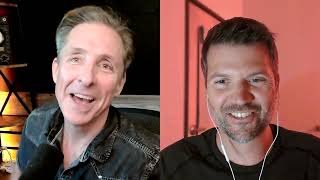
This is a YouTube video titled "Solutions for Chronic Stress, Pain & Neurological Damage - Dr. Brandon Crawford | 1086 | Dave Asprey" published in September 2023. It features a detailed interview and discussion between Dave Asprey, a well-known biohacker and brain health advocate, and Dr. Brandon Crawford, a developmental functional neurologist. The conversation covers topics such as brain injuries, laser and light therapy, neuroplasticity, circadian biology, and advanced neurological assessment and treatment methods. The discussion also touches on personal experiences with neurological conditions and practical biohacking strategies for brain health. The content is a one-on-one expert interview rather than a multi-speaker conversation involving Alicia Mackey Huber.
Chapters
You're listening to the Human Upgrade with Dave Asprey, formerly you're listening to the Human Upgrade with Dave Asprey. Today we're going to talk with my friend, Dr. Brandon Crawford. If you were at my 9th annual biohacking conference, you would have seen him talking about brain injuries and using laser and light therapy to upgrade your nervous system and change your brain. He's a board certified, get this developmental functional neurologist. And he's founded five different ventures, including the neurosolutions center of Austin, which is why I've met him. He's one of the more intriguing brain guys I've met recently because like a few other guests here, he's pushing the boundaries of what you can do. If you remember the interview with Lisa Wimberger, she has actually taken kids and adults and through her own practice had just turned on different parts of the brain in the right order to have them move their toes when they hadn't moved them in a long time. So what we're seeing is there are people at the edges of functional movement, functional neurology, who are doing impossible things. And when I say impossible things, Brandon has absolutely transformed the lives of many children with major brain injuries. And as you know, if you've read my books or you've listened, I had substantial amounts of toxin induced brain damage. I'm on the board of directors of Amen Clinics. It was Daniel Amen's work that first helped me diagnose that I had a hardware problem in my brain, not a moral failing. And it's been part of my mission on the show to just say, look, if you're having a hard time, even if you're anxious, even if you're depressed, even if it feels like things aren't right, it's probably not you. It's probably a brain problem. And when I heard about the innovative work that Brandon was doing, by the way, another guest on the show, Johns Hopkins neurosurgeon named Marcela Madera, introduced us. You just realized there's a thread of people doing cutting edge work around transforming the hardware of your brain, which is the hardware that runs your personality. So much of your reality is determined by your brain. And you got this guy here who's just hearing us and going, oh, yeah, you know, you can do this. And most of the profession says it's impossible. So, Dr. Brandon Crawford, welcome to the Human Upgrade.
Thank you so much. That's a really nice intro you gave me there. I really appreciate it. I was going to say thank you for really just Putting together this entire movement, right, this entire biohacking movement. At the last conference, I really, actually got to feel and experience the depth of what you've really built here. You know, I spoke with people that, yes, had debilitating brain injuries. I spoke with people that even they were fighting cancer. They had other types of chronic health conditions, right? And the interesting thing was that they were all taking their health into their own hands, right? And that's something that people just don't understand is even a possibility. And it's amazing that you've given people the platform and just the courage to be able to do that. So thank you for that. Thank you for that amazing intro. That was very kind of you.
You're so welcome. Now you and I have something in common other than just being absolute rock stars, total geniuses, and just undeniably attractive to all humans. And that is, obviously, if you're watching, we both have red lights. What's going on? You're in a room full of red light. Why?
You got it? Well, the thing about it is my marketing director wants me to have this light coming into my face, right? Because we have to be well lit. But at the same time, I understand that there are health implications to that. So in order to negate the health complications of this blue light coming into my face, I need to surround myself with red light. Blue light actually negates blue light toxicity. And what I mean by that is that there actually is research that shows blue light actually damages brain tissue. Now, when I say brain tissue, we have to understand that the research I'm quoting is talking about the retina. But what is retinal tissue? It's neurological tissue. It's actually part of the diencephalon. It's a direct extension of the brain. And so if we have inconclusive evidence that this type of high frequency blue light actually degrades and damages our neurological tissue, then we need to do something to counteract it. So red light is the answer. And so, yes, anytime I've got this blaring light in my face, I've got to have red light around me.
You are one of the only people I know who has put those two things together. You'll see the thing behind me. And by the way, we didn't plan to talk about this. I didn't even know you're going to have red light on. But I'm like, oh, look, someone who gets it. So the one behind me is a luminaire that's specifically designed for true light, which is one of the early Circadian biology companies. It's when I found it. It's not when. Talk about it enough on the show, probably. But true light makes these vertical things because it turns out the color and angle of light matters. So I have these in every room. And you can actually set it on daytime because you need some blue light during the day, but it needs to be above 490 nanometers. And most of the blue light sources we get from LEDs are below that, which is toxic blue light. So blue light is not good or bad. Some blue light is bad, some blue light is good. But when you're looking at LEDs, and I do have, unfortunately, an LED right above my screen, there is a very high end one. It's set to 2700k, as low as I can get, and it's going through a diffuser, but it still sucks. So I have red lights behind me because they look cool. And I have the true light luminaire. I think it's shop. Truly.com is the oral, if you guys are looking. And I have one of those back behind me. So what I'm getting is enough red so that your eyes are like toxic blue, healthy red. Cancel each other out at least as best you can. I have a lot more cognitive resilience when I do that. Otherwise, if your eyes get tired, your brain gets tired, right?
Absolutely. Yes, you're absolutely right. And, you know, that's one of my main biohacks, actually, is red light therapy for my brain. Whether it's my red light panel at home or actually the laser that we use in all of our rehab cases. That's one way that I keep myself mentally sharp. I was actually using gamma brain waves on myself before we started talking here, just to give myself a little pep of energy so that we're ready to rock and roll.
Love it. I do very, very similar things because after a while you just figure out what works. So there's something else we have in common, aside from very small egos, which I covered earlier. If you're new to the show, I'm actually not a jerk. I just have. I just have a trolling sense of humor that's left over from seventh grade. Is that something that can be medically treated? My sense of humor? I'm just wondering.
I don't know that you would want to.
What we actually have in common is a history of ocd and I've talked about how I had Asperger's syndrome as a kid. I also had adhd. I had OCD and odd, which, if you're laughing going, ah, he was odd. No, that's oppositional defiant disorder. And if you want to know what that is, we can probably queue up a clip of the Rage against the Machine song, the part that goes, f you. I won't do what you told me. But you just have that running as a soundtrack in your brain all the time. So I had all those things, especially as a kid. And I understand the environmental and genetic and diet and underpinnings and why and how, and I've fixed all that in my brain. What did you have going on when you started on your path?
Yeah, Well, I think one thing I want to point out first is that I actually wrote an article for a magazine here a little bit ago. They were asking about neurobehavioral disorders, things like ocd, adhd, et cetera. And I was actually discussing that this is more like a superpower, if you really understand what's going on in the brain. And when you have a brain that has this really strong dominance profile on one side or the other, or in a specific lobe versus the other side, you get these symptoms. And sometimes these symptoms may look like ocd. Or for me, it was Tourette's and ocd. Right. So I would have facial twitches and different types of twitches and movements.
So you had like the facial scrunching thing.
Yes, that. And I had this. This take going on.
I had the thing where I had to scrunch my face like that, like, three times. It always had to be three times. And like, if I was gonna, you know, serve a volleyball, it had to be, like, a specific number. And then I would stim all the time with my fingers, and I would count 1, 2, 3, 4. And if I could do that, I would do it with my teeth. And, like, it's totally right. It's all gone. None of that stuff happens to me anymore. But I remember that, like, you had to do it, so you had that as well. I never thought of that as Tourette's. I remember wishing I could have Tourette's when I was really young so that I could just swear at people who I wanted to swear at, because I was kind of angry too. But, you know, as an adult, that would be stupid. But at the time, I'm like, you could have an excuse to swear to anybody. Like, oh, my God. Yeah, I was maybe not a great kid.
Yeah, well, you know it. But I describe it as a superpower because you have this very strong dominance profile, these traits that other people don't have. What you're typically lacking is on the opposing side of the brain. You have networks that are keeping those other networks in check, in check and balance, right? And so if you have this imbalance, what you can get are these repetitive thoughts or these like what you mentioned. I would always have to set up things. You know, I'd have to have an even number of things on the, on the table or my desk. I would have to have them in order and so on. But what happened was through my functional neurology training is I understood that every network in the brain has an opposing network, right? So, for example, like the left hemisphere of the brain is more like the gas pedal and the right side of the brain is more like the brake pedal. And I'm obviously dumbing this way down. And so if you have this, this urge to just go, go, go, do, do, do your real meticulous, methodical, linear, logical, analytical, then that's more of a heavy left brain dominance. And so you may be lacking some integrity on the right hemisphere of the brain. And well, that's important to note because, well, now we need to understand why is it like that? Is it inflammatory? Is it autoimmune? Kind of like the things that you were mentioning, Was it from a developmental trajectory problem? Right. Are there underdeveloped networks on that side? And then that lets us start to understand the therapy windows in. And so for me, I actually had some underdevelopment causing that imbalance. And so through my functional neurology training, I learned how to balance out my system by doing some really simple exercises at home. But it wasn't just the exercises, but it was the specificity and how to target those networks that we needed to balance out. I also had some autoimmune issues that were going on a raging Hashimoto's, which is now under control. I actually got it completely into remission when I moved to Costa Rica and lived there for a while. Had some ulcerative colitis issues, mold of. Had mold issues. I mean, all the things, right? So once you start adding up all of those things that was driving a neuroinflammatory response in my brain, allowing for this expression of symptoms that was labeled OCD in Tourette's.
I have said publicly, I think, at the Autism One conference, that autism and the cluster of things around it, including ADHD and the things you just went through, those are all tied to chronic autoimmune neuroinflammation that can be triggered from multiple things. There isn't any one cause. It's what the body's doing as a result of different environmental inputs. It exactly matches my experience growing up and all. Some of it though is I just never learned some functional movement. So when I was going through and fixing my vestibular system, my vision system, I failed all kinds of tests, the kind of tests that you do with clients. And I spent months doing these bizarre cross crawling exercises and looking through one eye and these things that were just neurologically exhausting and kind of torturous. But when I was done, I didn't need glasses anymore because my eyes worked again. But it was, it was like doing a, a wad, like a CrossFit wad for my eyes and my brain every Saturday morning. It was just brutal. I'd sleep all day afterwards and just eat. Yeah, is there, is there a better way now for people who maybe have some stuff. It's all invisible to me. I thought it was normal until like I couldn't close my eyes and walk in place without spinning in circles and stuff like that. So walk me through why this stuff's happening and like what we can do now versus just this kind of brutal training regimen that I did.
Absolutely. So I would say that, yes, I would argue that there is a better way now. And that's basically why we've developed what we call the neurosolution ESM methodology, right? So we have the energy, sensory, movement, pillars of health, right? And so what I'll. Before I explain that, what I need everyone to understand is that you, you said a few things that were very important. Number one was how exhausted you were. And there's a difference in neurological or metabolic fatigue and just strenuous training, right? So if we're just going through all these exercises and our muscles are getting sore and we're getting tired, that's one thing. But if we're actually hitting that wall where we're actually getting neurological fatigue, we may be skipping a few steps or we may be exceeding some thresholds that we need to pay attention to. And that's important whenever we are trying to establish neuroplasticity. So with neuroplasticity, we have to understand that the brain is always changing. It's always changing no matter what. And that's one very, very important thing. I was actually going over this with a consult this morning, someone in Ukraine or somewhere in Europe. It was a pediatric brain injury. And one concept I need them to understand is that this kiddo was in a locked in state, right? So they had this severe, severe injury. They cannot move, but they're Very cognitively aware, et cetera. And all of their therapists are just saying, look, there's nothing that we can do. Sit in the corner, take some medications, keep them comfortable. And the dad said, fuck that. I don't want my kid to be comfortable. I want my kid to work and get better. That I can tell that they're there. Right? And so we have to understand that there's negative plasticity and there's positive plasticity. So if we are doing nothing and we're in this default mode like this locked in state with this little child, they will be building more and more negative plasticity. Where what we need to be doing is understanding the imbalances in the brain in these dominance profiles and these under connected networks, et cetera. And we need to be building positive plasticity. So that's important to understand now. Comes in the metabolic and the neurological fatigue component. And this is where a lot of my, my personal IP is in the laser world is understanding the biphasic dose response curve, which is the hormetic curve. I'll describe that later. And its use with laser and light therapy. So it's important to note that if we're doing this neurological training exercise and boom, we hit this, this metabolic fatigue point, we need to stop or alter what we're doing because beyond that we might actually be causing some negative plasticity. Right. So why do we use lasers every step of the way whenever we're doing our therapy? It's because light therapy is so intimate with cellular energy. Right? We, our cells need light in order to produce energy. I would even say that the majority of our cellular energy comes from light.
I was going to ask you about that. So you say in your work 2/3 of cellular energy comes from light. My research says 10% of mitochondrial energy can come from light, but usually doesn't. Two thirds is a big ass claim, my friend.
That is a big claim. So yes, and this is coming from extrapolations from Gerald Pollock's work and then also from Gilbert Ling's work, the red.
Light thing, the stuff that, that you'll read about in Gilbert Ling's book, was it called Cells, Gels and Aerogels? Yeah, it's everyone listening. If you're really into biohacking and cellular biology, you should read that book. You should read Gerald Pollock's the Fourth Phase of Water book and actually funded a bunch of research at his lab at the University of Washington because this is such foundational work on cell biology. So what you're saying is because light transforms water to make it into exclusion zone water. Therefore, your body didn't have to make the energy to do that, therefore it's contributing to your energy. Am I reading you right?
Correct. You are reading me, right. But then there is the question that was posed by Gilbert Ling through his work. And I know that everyone has the general acceptance that all cellular energy is really coming from ATP, but that may not exactly be totally true. And so we have this easy water, like you said, the exclusion zone water. And what is that? Well, that's a structured type of water, right? You have these charges on either side of a positive and negative charge. And what that's doing is essentially creating a battery, right? And so you get these. This battery that's created within the cell, around the cell. Right. And so the conclusion is, well, okay, is the majority of our energy really coming from this, or is it coming from ATP? Or is it a combination? Is it more from caloric intake? What's really going on there? And as far as I know, there's not really a conclusive answer to that. I know there's a generally accepted answer. But anyway, there's a whole tangent that we could go down on that discussion, but those are some really, really interesting topics to me. And what I've noticed is whenever we have these extremely complex conditions come in the door, that they all have this poor light exposure experience, right? They're under fluorescence all day, they're not outside, they have no sun exposure, et cetera. And as soon as we start actually changing their light exposure and altering circadian biology, very miraculous things start to happen. So what I do know is that there's a very intimate connection with cellular health and light exposure, whether it be correct light or wrong light. And just that simple approach can really make a dramatic impact to someone's health.
So the 2/3 of energy coming in is probably like, I would say, probably. So it's an estimate, but you're basically saying that the 2/3 of energy is the real deal, and it's the real deal because of all the different factors that light's doing to our body that we would have to correct for with energy if we didn't get it.
You got it. Yes.
Okay. And that actually makes a lot of sense. The, the 10% number that I found was from a team of, surprisingly, dentists down in Mexico who looked at the effect of melanin, the stuff that gives you a tan or gives you dark skin, and how it does a very profoundly good job of converting full spectrum sunlight into electrons in the body. And, and their research said 10%, which is why I'm citing it. And I think I wrote about that in Head Strong, my book on the brain. But the fact that light saves you a bunch of other energy I had never even accounted for. So you're going to have to be warmer or you're going to have to eat more if you don't get enough sunlight.
Correct.
Do you find that when people get more sunlight, they need to eat less?
Yes, absolutely.
Interesting. Okay. I have practiced for many, many years getting morning sunlight for 20 minutes. I actually inject MSH, the tanning hormone, every now and then if I start getting pale so that I maintain the healthy glow without getting sun damage on my skin. Any other practices for getting more sunlight or getting better sunlight without causing skin harm?
Well, I mean, you actually touched on it earlier that there's different times a day that we want to be outside. I'm very into circadian biology, and so, yes. You described 20 minutes outside as the sun's coming up. I want to be outside as the sun's coming up. I actually want to as well get outside at that peak time of day. Right. I like that really intense sun. And I tell my patients, go outside and especially to expose the belly, because that. Yeah, because we want melanin, even on our stomach, because that's going to be absorbed by the body. It's going to be used, it's going to be used as energy, etc. And then it's also important to be outside as the sun goes down to, again, influence proper circadian biology.
This is so critically important. In the research on light that I've come across, there's five things that really matter. There's the angle of the light coming in, which is not talked about in most of even the people talking about blue light glasses. I'm over blue light glasses. I use the truedark glasses because I count for all five. But you have the angle of light coming in. So light above you is not the same as light in front of you. You have the color of light, red light, good blue light, under 490, bad blue light above 490 will wake you up. So the time of day matters. And then you have the intensity of light, because even super bright red light will disrupt your circadian rhythm, but low red light won't. And then it's not just red, because within color, you have amber, you have blue, you have green, you have violet. All of those will mess with your circadian rhythm, but not all will change. Melatonin. So when you put all that together, you're like, oh, to get the correct signal in, go outside at sunrise. Go outside at sundown. I love it. I go out around 12 to 2 most days. When I'm home, I just get naked because it's easier. And I have a backyard with tall fences. So I just lay for about 20 minutes on the table out there on a towel and get sun on my midsection. It's enough to get a tan. It's not enough to cause sun damage. And you feel way better when you do it. But I didn't have any science about why I did it at lunch other than it just felt good. So.
Right.
Kind of to mark the midday as we're doing that.
Absolutely. You know, the. The sun is mainly infrared light. Right. And so we need that warm feeling because those longer wavelengths produce more warmth. Right. And so I want to go outside. Whenever you get that peak infrared, you know, that really strong, intense, long wavelength, there's benefit to that.
It sure feels like there isn't. Just the infrared light. It's going to make more exclusion zone water in your cells. What Gerald pollock recognized was 1200 nanometer light. That's body heat. Infrared, or from sunlight, is what makes exclusion zone water the most. When the water is up against tiny droplets of fat like your cell membranes, which is going back to Gilbert Ling's work. And so it makes sense that you want some sunlight. But if I was out there for two hours, I would just have sun damage. Right. So the ghost makes the poison, as they say. Right.
You got it. And that kind of goes back to the discussion on the hormetic curve or the biphasic dose response curve. Right. So there's this concept of, you know, small doses aren't enough, then you have your perfect dose, and then too much is going to be destructive. My argument whenever you look at laser and light therapy and my ip, is that we're not taking into account the fact that we get sick. And sometimes we need more of something when we get sick. Just like, for example, if you get a cold, you may need more water, you may need more nutrients, more rest, et cetera. So your biphasic dose response curve was altered based on your state. And so that's part of my battle right now within the laser and light therapy field is that oftentimes these doses quoted in the research are actually not high enough for that person experiencing X, Y, or Z symptoms.
So we'll talk about dose in a minute. I want to finish up that thing about the angle of light, the sunlight and all. I don't think I shared this with you when we talked in person last time when you were at my place. But the TrueDark glasses that I make that cover those five variables of light, we are about to publish a study in a journal showing that wearing that combination of angle and light and all the stuff we do with the TrueDark glasses, that it causes the same brain waves as advanced meditation if you wear them for 15 minutes. So you can literally put on glasses, do the dishes, and by the time you're done doing the dishes, your brain state has fundamentally shifted just by changing the light. No sounds required, no anything. It just happens naturally. That's how important light is. And that's why casinos and big box stores mess with the lights the way they do, because they know they can hack your brain with their lights. And God knows, probably the TSA does it, too. Right? So your job is to understand that. And that's why, if you're smart, when you travel, you have a baseball hat because it blocks half the light signal that's coming in from junk light. And you wear the right glasses, like the true darks. And this is the last time I'll mention it, probably, but if you go to truedark.com you can see the glasses I'm talking about. I think it's called the sunset lenses or something like that, but it actually works. And I wear these. You see me wearing these things in airports all the time because I don't know how to feel good when I land if I don't do that.
Well, something interesting with that is that. So I'm actually starting a research study with Cornell University right now. We're going to be doing it in my office with a partner of mine, Dr. Jerry Levine. We're actually doing it also with the Earln Foundation. You're familiar with Earl.
And Ellen's a friend. She's been in my house, too.
Yeah. Yeah. And so basically, we acknowledge that simply changing the frequency of light alters brain waves. And so now what we're doing in the study is we're actually showing how visual filters. So changing the wavelength of light in the eyes actually alters the brain waves. Or we're going to have some amazing metrics that come out of this. We're going to have some standardized data that comes out of this. So it is perfectly in line with what you just said. And I thought we were the only ones talking about it, but apparently not.
We're about to publish the data, so you can add that to your data set.
Perfect.
The interesting thing is I picked this up because I've been running that company for almost nine years now and it's gone through different iterations. But TrueDark has been very meaningful for me because I feel like crap if I'm in a typical conference room all day under normal lighting. It's like someone gave me Valium and I can't show up. So, so like I, I, it was important and it was Helen Erlen's work with something called Erlen Syndrome and she's been on the show, I should have her back on where we just went through how impactful this is. Some brains are more sensitive than others, but if you have a neuro inflamed brain like yours or mine have been, we're likely to be more sensitive. So the other thing that's interesting is at 40 years of Zen and guys, this is my brain upgrade company, we've had about 1500 high end entrepreneurs and celebrities and athletes and all come through there in Seattle. A five day intensive thing. Every time you come out of these very advanced states, you're essentially in a psychedelic state without using any drugs to keep you in the state. So you can integrate and debrief. We put those glasses on you, the TrueDark glasses, and we keep the room lights dim just so you can stay in this expansive effusive state and get full benefit of all the deep, deep meditation work that you just did with the help of neurofeedback. So again, I don't know how to do that program without controlling light. So I can't wait to see your data. But you go deeper than just filters, you are into lasers and we are collaborating on some upgrades for 40 years of Zen. A variety of ideas I've had that I think you can help me with, and ideas that you've had that I haven't even thought of, which is why collaborations are fun. But tell me about the laser that you're working with, how it works, what it does.
Yeah. So the laser that we have, actually, there's no other laser on the market like it because of the beam physics. And so what I mean by that is that we're able to have a higher power but a lower safety rating just because we're diverging that beam. Right. So just like if you were to go outside and take a magnifying glass and concentrate the sun's light and burn ants, you're concentrating the light, you're converging the light. So we're diverging the light. And what that allows us to do is that actually allows us to have a higher power now that's important because what did I say earlier is that if we're working with someone that has a complex issue, or maybe you just don't want to use a laser for so long, you just want to use it for a quick few minutes and then go. Go about your day. You need to saturate in the area quickly. And so this beam physics, the type of beam that we have, actually allows for a higher power with a lower safety rating. And we have red, infrared, we actually have violet. Actually working in developing some other wavelengths at the moment as well. But then we also have the frequency sets, right, because we all know that frequencies matter, or at least I know that you know the frequencies matter. But we especially acknowledge that when it comes to light. And so when I talk about frequencies, I always talk about languages, right? So if you speak to me in Arabic and I speak to you in Spanish, we may not be understanding one another, but we're still speaking a language. Well, frequencies are the same way. So if we're speaking the wrong language to a part of the body, that part of the body may not be as responsive. And now we're seeing this in the research as well, where, for example, there was. I always like to reference this study where they shine continuous wave, so no frequencies on kidney. One acupuncture point on the bottom of the foot, and they're measuring activation of the vagus nerve. And with continuous wave, there's nothing. But when you pulse the light at 10 hertz, it actually starts to increase the activation of the vagus nerve. So we know that the body and the brain are very receptive, number one, to the wavelengths of light, like you've already discussed. But two are the frequencies of light. And so we actually have a very, very wide, diverse range of different frequency settings based on whatever you want to do.
And to be really clear, this is a very expensive medical laser for clinicians, not a, not a consumer device. So if you're listening, going, oh, my God, I have to get a laser, It's. It's about $10,000 plus training. So this is something you would go to a functional doctor, a functional neurologist, a developmental neurologist like you, for they can come and see you at neurosolutions. And when you're looking at lights and you're looking at lasers or LEDs, there's. Well, there's three big variables. Maybe. Okay, maybe there's four, if you really want to be technical. One is just the amount of time of treatment. That's an important thing. You can over Simulate or under Simulate, just based on too much or too little exposure. The other one is the frequency of the light. That's the color of the light, basically. And after that is the frequency of pulsing of the light. In other words, you can turn it on and off so rapidly that most people can't see it. If you have a very fast nervous system like I do, you can see flickering that some people don't. My nervous system is fast because it's, it's highly modified, like it's hacked six months of 40 years of Zen and all the mitochondrial stimulation will do that. But even then, if you're flickering at, you know, 1,000 hertz, I can't see a thousand hertz, but I can see 200 hertz. So the flickering rate matters. And sometimes people call that the frequency, but the frequency is the color. And then the frequency of the pulse rate is a different number. Just understand there's those two things. There's how long did you have it on? And of course there's also how powerful is the light? Because if it's so powerful that it vaporizes your skin, you're probably doing it wrong. Likewise, if it's so dim that it doesn't get a signal through into your inner tissues, it also wasn't good. So you've done a lot of work. It's actually very impressive what you put together for your clinic on this, which is why we're going to be working together at 40 years of Zen in order to take brains to the next level. And it's not about healing brains at that point, but about accelerating them. When someone comes in to Neurosolutions in Austin, what do you. Do you send, Is this an interview first? Do you throw electrodes on their head? Do you put them in an FMRI brain scanner? Do you hold them upside down and shake them? Like what's, what does a typical evaluation look like?
Maybe all the above. So basically, number one, we have to understand where is that person in that developmental trajectory of brain development? And what I mean by that is that your brain has this blueprint sprint for development, right? Like, we all know that a baby has to crawl before they walk. You're not going to take a three month old baby and stand them up and say, okay, walk little Johnny, let's see what you can do. You're not going to do that. Why? Because it's not time. They don't have the spinal integrity, they don't have the neurological integrity, et cetera. And so if you're going through life and something happens Whether it's just mild cognitive impairment or it's a severe injury, well, guess what? Your brain has mechanisms that it goes, hey, I remember how I built these networks to begin with. And so it's going to backtrack, and it's going to go into these older developmental networks and start to go through and redevelop these networks that way. And so our job and what we've developed is a system so that we look at this process and it goes. We look at the sensory systems, we check primitive reflexes, select primitive reflexes that we can then identify what area of the brain or what location of the brain we need to specifically target. And then we go through our postural reflex exam, our core stability vestibular exam, eye movements, and then cognitive assessments. And that's going to look different for each person that comes in. But then for objective metrics, we'll also utilize QEEG, so look at quantitative EEGs, we'll look at balance and coordination. For those people that can stand on our system that we can measure that in, we have cognitive assessments as well that we can use, which is standardized data as well.
So tell me about the balance thing. A little more detail. This is fascinating, and I have a little story about it, but tell people what you're measuring.
Yeah, so we're measuring perturbation and titubation. So we're actually. If you're standing upright and we're doing eyes open, eyes closed, then we have an uneven surface that you stand on as well. And if you were to imagine a line or a pole going out, you know, between your legs, and as you're moving, you're drawing this line, right? So you're drawing this line, and then we're measuring how long that line is, basically. Does that make sense? And so we're measuring how much your body is moving, because if you're moving this way, your vestibular system should respond to that and keep you upright. And so there's a normal variance based on your age, how much you should be moving, and then how. How much is outside of that norm. And so we're measuring that, and then what we're doing is we're getting you into norm. And then even better, like, whenever I was working with a college athlete, you know, I looked at him and he was in, like, the 70 percentile range. And I'm like, dude, if you want to go to the mlb, this ain't going to cut it. And so we worked and worked and worked, and by the time he left, he was like, 90, 98 99% and everything. He was actually the MVP and, well, I guess I can't really say, but he, he did extremely well that, that season after working with us. So it was really cool to take someone who is already a high performing individual, observe these metrics, and then see that outcome on the field.
It's interesting that healthy humans invisible to us. This is part of what your meat operating system does. We stand and we think we're standing still, but if you're measuring our feet, we're moving, if we're healthy, in a kind of a cone shape, we're like constantly swiveling around a point in the middle in these micro movements. Right, right. And if we're neurologically unhealthy, it won't be a cone shape. It'll be like an odd kind of triangle shape. It'll be bigger than it should be. And I've certainly dealt with that. So when I learned about this about 15 years ago, I'm like, I gotta hack this. So I bought a Nintendo Wii which had a balance board attached, and then I was like, okay, there's an open source hack for this, so I can turn that into a feedback system. So I was gonna teach my nervous system how to stand better by reducing my wobble. And I went so far as to download the operating system and then I built a $100 million a year company called Bulletproof, and I never touched it again. But I still have the we and a plan to do that. I could probably just buy some equipment that does that. But is there any feedback system where you can actually train yourself to stand better just with direct feedback? Or is it all other hacks with lasers and stuff?
Well, no, there's actually. The system that we use actually uses feedback. So there's things where you can actually see on the screen in front of you your center of gravity moving. And then we can even have games going where we'll have a target and you have to move your body so that your center of gravity shifts and then the target's over here and you have to actually shift your body weight accordingly. So there's actually ways to do that built into the system.
I love it that you're actually doing something that I was trying to invent in my head 15 years ago. So one thing I haven't done yet, but that I will be doing as soon as I get back from Burning man, is coming into your office. Because so far we've just met in my place and talked and, you know, you've shown me how to stimulate my vagus nerve. And longtime listeners have seen me talk about at least three or four different ways of stimulating the vagus nerve over time. There's vibration, there's sound, there's tapping, there's. Actually, we've probably talked about lasers at least once, but you have some electrical stuff that's very, very cool as well as the laser. So, you know, we've done some. Some work together, but I would say I'm not done. So I'm going to come in and play with all your toys, and I'll bring you some Danger Coffee. How's that for a good deal?
Perfect. Absolutely, man.
Now, we're going to go into your laser settings in a little bit more, but I got to ask you something, because I just brought it up. Coffee.
Yes.
Good for the brain, bad for the brain.
Good for the brain.
Good for the brain. All right, good deal. And now, guys, if you're listening, I don't talk about my own stuff probably as much as it would make sense. I always like to shine the light on experts like what you're learning today with Brandon, and just on all this cool stuff in the world. But Danger Coffee, oh, my God, it is absolutely killing it. It tastes so good. And the trace minerals in it are there in part to help my brain work better. To help your brain work better. Because when you have enough minerals. I don't know, Brandon, what happens when you get enough minerals? Does your brain work better or worse?
It works way worse. You don't have proper neural transmission. You get all types of cellular disruption.
Yeah, that's why it's such a big deal. And people notice the difference from drinking it. They don't know why. There's also electrolytes in it. So your body likes it, even if you don't know why your body likes it. So I'll just say, go to dangercoffee.com and give it a try if you haven't. And you'll understand you're getting a massive dose of expensive minerals every time you drink your coffee. And it's actually cost effective and it tastes really good. So there's my plug leading brand guy like me saying, yeah, Danger Coffee's good for you. At least we think it is. So thanks for the impromptu and unplanned mention of Danger Coffee. My team is going to be happy. And if this offended you greatly, because you're listening and, oh, my God, I talked about something I put love into, then you should get a therapist, because that's not my problem. All right, therapy. What is the usefulness of therapy? Compared to lasering your brain?
Oh, man, that's a good question. Okay, so are we talking about, like, your traditional talk therapy?
Yes. How about CBD or. No, CBT. Sorry, CBD is. Is from POT. CBT is a thing that cognitive behavioral therapy. Sorry, there's two meanings there.
Right.
By the way, 10% of people laughed at that joke. The rest of you didn't get it. That's. Okay.
So here's what I'll say. Is that. So I already mentioned the colleague, Dr. Jerry Levine once, so I'll mention her again. She's actually.
That's not the Jerry Levine I'm thinking of. Okay, never mind. Take that back. She's not famous. I don't know who the heck she is. Tell me about her.
She's famous to me. She's a clinical psychologist. She's a partner in neurosolutions. We do several collaboratives together. But she's a really good example of how you can take someone who's had a history of doing your typical talk therapy or cognitive behavioral therapy. But then she started to learn about neuroplasticity and brain activation. And that your reality is really just your brain's perception, right. Of what's going on. And so you and I may be sitting in the same room that's the same temperature with the same sounds, but we could have a completely different reality or a completely different perception of that room. Right. One of us may be triggered by the sounds or the smells or whatever, and that may elicit a stress response that could then provoke, you know, some depression or anxiety or whatever it may be. And so when you start to look at how the brain is activated or is not activated, talk therapy may not always be the answer. And I'll say this. I'm not saying it's bad. Okay? I'm not saying it's bad. But sometimes it can be very triggering. You know, someone that's had this very traumatic event, they're in this fear paralysis state. They need some work on their vagal system. They need help in this trip. This developmental approach, like what I was talking about, talking through something time and time again from different angles, might actually be digging a deeper hole again. There's time and a place for it, and I think that it's good in certain situations. But there is also another time where we need to be using things like laser therapy to provoke a certain brainwave while we're reliving those traumas, or vagus nerve stimulus to actually help to develop the ventral vagal complex so that it can inhibit the sympathetics and the dorsal vagal complex, et cetera. Right. So you can be doing talk therapy, by the way, while you're using a laser and while you're stimming the vagus nerve. So there's some biohacks that can be done even with talk therapy.
I love your take on that. Talk therapy in my experience is not a bad thing because it at least helps to take pressure off. But I know many people who've spent 10 plus years in talk therapy and they're still going every week and it's sort of like cutting your nails. They're always going to keep growing and it doesn't solve the problem in a way that some of the more what's called transpersonal psychology based therapies can go down and edit what's going on. Things like EMDR can be really effective. And if you're incorporating it with some of the neurological interventions that you've created, I think you can go very deep. Even the stuff we're doing at 40 years of Zen, which is around resolving long standing patterns that are sucking energy and keeping you from showing up in your world the way you want to do it, goes deeper than talk therapy. But it's not even therapy. It's just you going in and saying, I don't want to be that reactive anymore. How do I train my nervous system to just not react so that the pain goes away? So there's this, this whole rich universe that first came from Stan Grof's work, who's the guy who invented holotropic breath work and is considered one of the fathers of transpersonal psychology. Back in what, the early 80s, late 70s. He's been on the show. I've done a breathing event with him when he was 94. And when you look at what Stan brought into the world, you now see all of these people doing birth work and birth regressions and all these things that somehow affect the nervous system in a non linear way. I prefer that because I don't want to say, oh look, I'm aware of my feelings now. Every time they come up, let me just take 2/3 of my energy and focus on not punching the guy in front of me. Okay, that was a win. I didn't go to jail this time because my nervous system isn't more regulated, but I have tighter control of it. It just takes all of my willpower. Like that's a better way to live than punching people. But it's not the only way to live. And I feel like where you're going with lasers where we're both going with neurofeedback and things like that. There's a world of people at peace and a world of people who are almost impossible to program. And we need a lot of impossible to program people because there are bad people right now trying to program us to do masks again after this last three years. And I'm hopeful that that creates absolutes. Like every government or institution that institutes masks needs to be blockaded by every type of vehicle possible while we can still move vehicles without a global lockdown on those. But seriously, like, no, we can't do that. So if you can't be programmed, you can be free. If you can be programmed by people who are trying to make you afraid, they are triggering your vagal nerve on purpose to make you unable to think. How would you take someone listening and quickly snap them out of a fear psychosis state?
Breathwork, breath work.
Okay. What kind of breath makes it hard for the government to put you into a state of fear? They're not the government. The private companies like who that are controlling the government to keep those from putting you in fear.
So the physiologic sigh, that's really my favorite. You know, if you're. If you're needing to actually engage that vagal system and you're really needing to, you know, help calm someone's nervous system. The physiologic size. Fantastic. There's research on it. It works great. So you're familiar. Yeah. So basically taking this deep, long breath in through the nose. And once you feel like you can't breathe anymore, you take another quick breath in through the nose, and then you breathe it all out through your mouth, nice and slow. And I've taken people in a. Just in an anxiety state, like they're going into a panic attack. We get this physiologic side going and it brings them down. But here's another trick that I like to do. So I had this person and they were in complete panic mode, and I was trying to get them to do the physiologic side, but she was like, get out of my face. I'm not breathing, whatever. And so I grab her. And by the way, I grab her face because if you touch someone's face, they're going to pay attention. And so I grab her face and I say, okay, listen, go back in time. You had children, you gave birth. Yes. And she said, yes, absolutely. I said, okay. In that moment when you were about to give birth, who was there to help you? She said, no one. I had to do it myself? I said, absolutely. And did you do it? Yes. How did you feel? Did you feel strong? Did you feel powerful? She said, absolutely, I felt powerful. All right, so let's go back in that time and let's. Let's go back when you were focused on giving birth. No one can help you. You're powerful. You can do this. You're kicking ass. You can do this. And I said, okay, now take a deep breath in. And now take another deep breath in. So I had her do a physiologic science. She didn't even know she was doing it. And it completely broke the panic attack. And it was amazing. And then what did we do? And then we went and got theta waves and we started doing theta waves with the laser and started doing more vagus nerve stimulus. But that consistently has been a very effective way. You remind the person that they are powerful, and if I have a connection with someone I know what that event is for them, then it's easy to walk them through it. But reminding them that they are powerful no matter what, so they can do it, and then having that physiologic sigh really helps.
The physiologic sigh comes straight out of Buddhism, and Andrew Huberman's been talking about it recently. He was guest, I think about number 400 on the human Upgrade before he started his podcast because he was doing really interest work at Stanford. And it's, It's.
And then having that physiologic sigh really helps.
The physiologic's been really cool to watch him take these biohacking techniques and help to popularize them. So that's one of the big ones he talks about. And it is a Buddhist technique, just like even Stan Grof's holotropic breathing. When I interviewed him about it, he said, oh, yeah, my wife and I were looking for something to replace LSD when we couldn't use that clinically anymore. So we went and we found an ancient yogic breathing technique, and that's what it is. So we find we're. We're taking ancient knowledge, validating it with biohacking and science, and then figuring out which of the ancient techniques works better for what. But there are some techniques that weren't ancient. As far as we know, they did not have lasers. They probably had some advanced tech. In fact, there's increasing evidence that there was some earlier societies on the planet than we like to acknowledge in our current version of history. But as far as we know, there weren't lasers. The closest they had was Cut and polished gems that could take sunlight, filter it and put it on ACU pressure points on your forehead or on your rings. For what we know that was the extent of the light therapy they were dealing with. But that's why ancient cuts always have a hole for the gem to protrude through on the back of a ring or a, a crown. Even though modern settings, they'll cover the back of the stone. Well, you don't get the light therapy benefits from it. So they didn't have lasers, they couldn't do it on and off. They did stare at candlelights that flicker, right? There probably are somewhere they had a fan or something that was rotating at a certain speed. Wouldn't surprise me. Or the whirling dervishes, right? You whirl at a certain speed, you get lights that do that. But I think those are a far cry from 1000 or 10,000 Hz laser blinking that you can do with the devices you have now. So this is cutting edge biohacking, where if light is part of the environment around us and the definition of biohackers change the environment around you, inside of you, to control your biology. Like, hey, I got a new way to manipulate light. Let's use it. And that's why I want to have you on the show because you're doing incredible work at Neural Solutions and people fly in from all over the planet to come and see you, right?
Yes, they do. You know, I never really intended for that to happen, just to be honest. I was retired in Costa Rica. We sold everything, and my own health was deteriorating. And so my wife and I made the decision to move to Costa Rica with my kids. And life was good. And then I started getting calls. I was asked to go consult in the Middle east actually for neurobehavioral disorders. And so I came back here in Austin and obviously was traveling to the Middle east and doing that, but in that time, people just started reaching out, you know, hey, I need help. Can you help me? And the answer is, you know, I don't know. Let me take a look. Let's see, let's talk. And it's really just about giving people hope that there, there are answers, there are things to be done. I don't know what the future is going to look like for you, but I know it can be better than what it is now. And it's grown into this massive movement, really. I mean, like I said just today, I was talking with someone from the Ukraine. After I get off here, I talked with someone from Australia. And it's a global movement. People want more than what traditional medicine is offering, and we have it. And we're not the only people that have these technologies and things that we're the only ones that have the methodology that we use. But traditional medicine needs to grow up. They need to understand that there's answers that they don't know. And it's okay not to know the answer, but it's not okay not to pursue it. Right. They need to open their eyes. They need to go, okay, there's more that can be offered here. People are suffering and they need some hope.
Yeah, they do. And there's so many new things you couldn't do even 10 years ago that have come out. And it's so beautiful, the way you just described, even just doing the physiologic. Sigh. You can do that while you're watching, whether it's CNN or Fox, it doesn't really matter. You can watch the little ticker about whatever latest variant, whatever nonsense. You can actually do the psy. And everything on the screen turns into a cartoon. It's just not a particularly good cartoon. And this is the kind of you're like, really like, do they think anyone's going to fall for that? But then you have to feel like the sense of trauma. Oh, my God, some people did fall for it again, like, how stupid is humanity? And if you fall into that trap, there's also a technique for that. So if you're feeling pissed off at the world because they're doing stupid things and they're going to try to make you stupid things again, what's the vagal nerve hack there?
Oh, goodness gracious. Okay, so that's a loaded question, but here's how I answer it.
You think?
Okay, yeah.
So.
So what I'll tell you is that I absolutely love the Simba Canca. Okay, so the Simba canca in the ear, whenever you stim the simacantia number one in FMRI studies, it's a little.
Spot at the top inside of the ear, right?
You got it. Yes. Whenever you stim it. And we like to use a certain device that generates a pulse. Radio frequency device. Research is typically using a tens, Right, So like a tens pin, something like that. I prefer the stempod unit that we have, the pulsed radio frequency device. When you stem this area, FMRI studies will show you that you get bilateral activation of the cerebellum. So the cerebellum is at the back of the brain. It's controlling movement, but it's also controlling thought. So 80% of the cerebellum is actually controlling our thoughts and coordinating our thoughts. It's controlling and coordinating our immune pro, our immune system, our inflammatory systems, et cetera. So very, very important, not only movement based. Now what we also see is that higher centers in the brain are also activated parts of the prefrontal cortex, et cetera. And so what I love to see about it is that whenever we've done our own pilot study for this is that we get parts of the brain that are activating that need to activate. So if you need the right angular gyrus to activate, that's typically what will activate. If you need the dorsolateral prefrontal cortex to activate, that's the area that'll activate. Now again, this is what I've seen in my pilot studies, but this is also coming true in the research. Very consistent with the cerebellum. And that's why I bring this up, because if what you described, if we need a solution for that, then we need a way to be able to stimulate the brain, bring in more blood flow, bring in more create neuroplasticity and have an influence on the vagus nerve and the vagal system. That's my go to hack right there.
All right, now listeners are going the simba what a. So this is probably left ear. More likely you're going to stimulate this. You could do it with a microcurrent tens unit, but reality is probably an LED light is what most people have access to if anything that do anything.
So the answer is yes, that will do something. And we've again, we've looked at that in our pilot studies. Yes.
Can you spell Simba Concha for people?
C Y, M, B A C O, N C H A. Two words. Cymba concha.
Got it.
Yes.
And conch being like cochlear. That's some sort of Latin root, I'm sure. And could you mechanically simulate it? I mean, if you're like just losing your mind, like, ah, it's the end of the world, they're going to fire me again. They're going to lock me in my house. By the way, they are planning to do all of those things unless you stop them by just ignoring what they tell you to do. But let's say that, that you're triggered. So I mean, could you stick your finger in the top of your ear and kind of like squeeze it really hard and like massage it and like do acupressure on there or is that.
Not going to work? I don't see why not. I don't have an educated answer for that because I haven't tested it and I have not seen that in research, but I don't see why that wouldn't work.
What about ice? Ice in the ear is one of the most unpleasant things you can possibly do. They do it to torture people. But I think if you're losing your mind, sticking ice cube in your ear is a great idea because you won't be thinking about whatever nonsense is on the news. You'll be thinking about getting the ice out of your ear.
Well, okay, so if we get ice, ice water inside the ear canal, we're going to cause what we, we actually do in rehab sometimes if we need to calm a vestibular system down or raise the opposite side. So if we have this imbalance in the vestibular system, we have this high side and this low side. And there's always going to be a high side and a low side. It's a seesaw. So we can put ice water in that side and what it'll do is it'll shift that side down. Yes, correct. It'll shift that side down and bring the other side up. The goal is to bring balance, right? That's the goal. That's called a caloric stimulus. So preferably, if, unless you know that that's the side that you need to put ice water in, maybe tilt your head and put it on the simba concha so it's not dripping down into the ear canal. But I will tell you that cold stimulus on the tragus, right? So cold stimulus on that part of the ear that's like the sticky outer.
Front part that you could pierce but you're not going to because it would be weird looking. But some people do that when they have a nose ring. And that wasn't enough. That one.
You got it?
Yeah, I'm kind of showing it as best I can. It's like that front, little bit, yeah.
So there's some information out there, I can't remember the study, but that you actually do get vagus nerve activation, vagal system activation, whatever, you get cold stimulus on that part of the ear. So I would assume that it would work as well for the simva concha.
Okay, so to summarize all this stuff, you're watching the news, you're watching the heavily censored feed on most social media networks that now, by the way, we have absolute proof, was censored by the government and something triggers you that may or may not even be real, but someone wants you to think it's real. And it got through your cognitive filters and it triggered your nervous system. And now you're like having a panic attack, which is warranted when there's an attack on your freedom. So what do you do? Well, you could just be reactive, which is what they want. Or you could say, all right, I am going to do the physiological breath. And then if you have lasers or electricity, you can stimulate things. You could do other vagal things. You could try pressure on the top of the inside of your ear, but we don't know if that's going to work, but it might. Or you could possibly ice the front little tab on your ear here. And I would suggest, if nothing else, just pour the ice water in your ear canal and scream, because you won't give a shit about what the government's telling you to do, because the ice is going to have your full attention. And the bottom line is those commands from bad people are not valid commands to your nervous system. You don't have to follow them. So I'm hopeful that this is just a way to get yourself out. You still have to deal with the situation and whatever they're trying to do, but you don't have to deal with it from a place of fear. And when you deal with it from a place of gratitude, a place of surrender, a place of peace, but a place of ultimate power, there's not as much that they can do that they think right. So follow the leadership of people who are doing that and make sure that you know the tools to snap yourself out of a trance that is carefully designed by bad people, because it is happening very well. You don't have to agree with. With everything I'm saying there. I just want your neurological take. You might think that, you know, the people forcing masks on small children are saving the world. I respect the right.
No, I mean, I really. I like that you bring that up, because we actually have had a handful of cases now, and probably more than that of now that, you know, the whole Covid thing happened and everyone was wearing masks. Well, we have this demographic of children that grew up not really being able to get the full exposure to people's facial expression. And facial tone is all about social engagement, right? So our ability to have what's called neuroception is based largely on being able to read one's face. And so if we're covering up a large part of the face, our children, those children that were of the age where they were supposed to be learning about facial tone and social engagement, they didn't get that. And we are seeing Neurological fallout. We're seeing consequence from that in these patients. And they're coming in and the parents are very well aware they've come to the conclusions. They said, look, they don't have social engagement. They don't know how to read people. They think everyone's out to get them. This whole concept. Because when you look at the ventral vagal system, or the ventral vagal complex, that's made up of the nucleus ambiguous, and that's cranial nerves 5, 7, 9, 10, and 11, and that's all about facial expression, talking with your hands, the intonation, all of these things that allow for proper neuroception and being able to read the room. Is it safe or is this not safe?
As someone who was wired to believe the entire world was not safe for the first 30 years of my life, I feel for them a lot. I was wired that way because of the way I was born. I was posterior. I had the cord wrapped around my neck. I had a traumatic birth. And you come into the world literally believing that it's a hostile place that's trying to kill you because you almost died on the way in. And usually they don't pick you up and hug you after that. They slap you around and put you under lights or something thing. So there are a lot of people who deal with that kind of birth trauma. But imagine that you have a healthy birth, which is increasingly rare, but then you don't get to see people smile at you for a couple years because some politician thought it was a good idea to get himself reelected, which is pretty much that. Or someone was going to make a lot of money on it. And my question for you, Brandon, is how do you teach a child who is going through that critical developmental time when they couldn't see smiles? How do you restore the neurological damage that did? What's the protocol?
We've done it. We've done it time and time again. And I'm telling you, and I'm going to try not to cry when I talk about this, but we have these kids that come into the room and we literally. We bring changes of clothing because we sweat having to help hold the kids. And we're punched and we're kicked and we're bitten, right? And we're not trying to harm them. We're just trying to do our protocols and our methods and do our things. These same children come back, this just happened last week. Come in, they hug us, they kiss us, they tell us, thank you. And again, I'm trying not to tear up, but it's possible and it's possible because we understand the development of the nervous system, and we apply these modalities specifically and targeted so that we develop the specific networks that are under developed. It's not this shotgun approach. It's not this, oh, just run through this protocol. Run through this system. No, it's not a system. It's a. Where are you in this developmental timeline and what can we do in order to generate change, in order to create positive neuroplasticity? But there's something else to be noted is that when you come into our practice, we're not in white coats, we're in athleisure. I'm in yoga pants, and I'm in Lululemon today. And our rooms are like this. We have whatever type of light. Some kids respond better to green light. We see actually a lot of autistic kiddos. Initially we have them in green. So the room is green or red or whatever it may be. And we're playing music. So we always ask, like, what kind of music does your child enjoy? We have that music playing. We speak to them like, we're a parent. We're all parents here. Right? And so having that type of healing environment is also extremely important.
What can a parent do at home to help a kid who they know was damaged by the mask mandates?
So there's several things. Number one is the inclusion of cohorts, right? So we need our kids to be socializing with cohorts. That means kids their same age. And so finding a friend and then adding a couple of friends and having initially this environment that is somewhat controlled so that you can kind of help them out. Right. And then letting them eventually figure it out on their own. Now, I say that, but then there's also some strategies, like we've already discussed, the simba concha is a big window in for these kids as well. So if we can actually stem the symbacontia, and then we actually will use laser therapy as well on these kiddos. And a lot of parents will like doing that at home. It actually works better for them. Or maybe they are across the world and we can't, you know, be with them the entire time. But basically we can actually teach them how to do a lot of this work. Sometimes they need to be doing primitive reflex work. And we teach them the primitive reflex work and how to work through a moreau. Like, the Moreau reflex is huge in these kids. Part of the reason that they have that Moreau that's not integrated yet is because the ventral vagal complex is not Fully on board. So there's several different strategies, and it really kind of depends on exactly what's going on with that kiddo.
So for parents, the first thing that they can do is find another child who's in a similar situation or another child who's not in a similar situation, and then pair them up and do fun things together.
That's going to depend on that, on that kid. Right? So, for example, some kiddos, they may be so severe that they don't need to be with another kid in that similar situation. It's not going to go well. They're not going to engage with one another. But finding a kid or someone that has a child that is willing to talk to that child, acknowledge that child exists, and understand that the playing back and forth may be a little altered. One really good example are my own children. They get to come in and they see all, you know, everyone that we get to work with. And so when they're out in the world and they see someone that's struggling, they don't see someone that's struggling per se, they go up to them and they're like, hey, how's it going? What's going on? Like, I remember we were at some restaurant and there is a child that had some developmental issues and they had some physical deformities. And my kids went over to them and literally just started talking to them and playing with them. And that kid acted like this had never happened before. What? It hasn't ever happened before. And the parent came over to my wife and I and said, this is the first time another kid actually engaged with my child. So understanding that we need to be talking to our kids, we need to be showing them that, you know, these differences that everyone has is just. It's just that it's. We're all the same being. We're all of the same thread. Engage with others. You never know what they're going through, but, you know, it really does kind of depend on the situation.
Okay. And that. That's the difficulties here. So I'm hoping we have more support groups that form and just more acknowledgement. You know, your. Your kids missed out on something as a result of that, and we all did our best. And if you have any guilt as a parent over the fact that that was happening, there's a lot we didn't know then, and a lot has come to light since then. Number one, don't let it happen to your kids again under any costs. We know that it's not worth it. We know our kids are safe if they get sick, they get better the vast, vast, vast majority of the time. So it's, it's one of the things we have to have compassion for the rest of their life and for their children's life because they'll pass it on. If your kids don't get something from you when they're three, they won't have it. And then when they have kids or three, they won't get it. And it's generational until someone breaks the cycle. So if your kids were damaged by societal stuff, then it's your job as a parent, to the best of your ability, to make yourself whole and then to share that sense of peace and calmness with your kids. And some people are going to come and see you. Some people might see a developmental neurologist where you are. And I'm sure that there are support groups and communities online of parents who are working together to do this with care providers and all. So it's possible to restore the brain beyond anything you'd believe. People with severe brain damage, people like you and I, who had ODD and OCD and adhd, in my case Asperger's and just all kinds of stuff that I wouldn't wish on anyone that we have overcome. I spent a huge amount of money doing it because I didn't have any direction. I just did everything. And now I feel like with the biohacking protocols that are on the website, the knowledge that you're sharing with the world, Dr. Amen's work, Lisa Winberger, all these people who are contributing to our knowledge of how things work, we can make the change happen affordably for millions of people. With what we know today, we just have to acknowledge that there was a problem, which means we'd have to quote Richard Nixon and saying mistakes were made and we know the names of the people who made the mistake and maybe they'll be held accountable, maybe they won't. I wouldn't bet on it in the world we live in today. But that doesn't mean you can't undo the damage they did. And that is what I wish for you for listening to the show. Thank you for your time listening to the show and Brandon, thank you for doing this advanced work on hacking kids brains. Where can people find your clinic in Austin? What's the best URL for you?
Yeah, so it's neurosolutionatx.com so Neurosolution, the letter A T X. Com.
All right, I'll link to that in the show notes and I'll tell you, you know what you're doing.
Thank you, sir. I appreciate it.
You're listening to the Human upgrade with Dave Aspen free.










