Spiritual Hygiene Upgrade Your Personal Definition of Prosperity Pedram Shojai
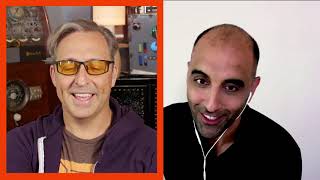
This is a YouTube video titled "Spiritual Hygiene Upgrade Your Personal Definition of Prosperity Pedram Shojai" created in December 2019. It features a long-form interview or podcast-style conversation hosted by Dave Asprey with guest Pedram Shojai, an ordained priest, Qigong master, and author. The discussion covers topics such as managing time and stress, personal productivity, Eastern wellness practices, and redefining prosperity beyond money to include health, family, and spiritual well-being. The content is educational and motivational, focusing on practical habits and mindset shifts for improving life quality and performance.
Chapters
Bulletproof Radio A state of high performance.
Today's show is around a couple different things, but we go to all sorts of places that I didn't expect we'd go. You're going to hear about a new film and you're going to hear about what you can do with your money and you're going to hear about a bunch of different habits you can, you can follow actually 100 of them, although we don't go through 100 in the show that can change your life and sort of a structured way to do that. So this show is sprinkled with just cool stories throughout and it's worth the time to listen through to the very end. And if you listen through, you'll actually hear an incredibly off the wall conversation about orgasm and ejaculation that I absolutely did not plan to include here. No, it's not dirty, but it's all about spiritual awareness. So check it out. You will not believe the number of things that we get to in this episode. It's a lot of fun. You're listening to Bulletproof Radio with Dave Asprey. Today's cool fact of the day is my absolute favorite kind of cool fact because Spanish scientists conducted a 10 year study with about 20,000 participants and they found some bad news. Higher coffee consumption in the study was associated with a lower risk of early death. It's an observational study. It suggests that coffee can be part of a healthy diet for healthy people. And they found that participants who had at least four cups of coffee per day. How to get this? 64% lower risk of all cause mortality than those who never or almost never consumed coffee. Now you can't use a study like this to say coffee does anything. But what you can, you can draw as a conclusion from this is that the coolest people drink coffee. That's really why this comes to us? Not really. It may be that people who are already healthier just choose to drink coffee. There can be some self selection bias and I'm not saying why. And in Head Strong I read about some of the interesting compounds in coffee that aren't caffeine, both the good ones and the bad ones, and talked about those, but this is the largest number I've seen. Like 64% lower risk is kind of cool. It's also though a bit of a medical trickery that they use in studies because if the risk of all cause mortality was one in a thousand, well, 64% lower risk is a very small change. So what this says to me at least is that if you like coffee, well, it's probably okay to drink it. And if you come across one of those ancient studies that was usually funded by a company selling a burned grain product to try and compete with coffee, that says coffee stunts your growth, causes all sorts of problems, well, I haven't really seen a preponderance of evidence of that either. So I'm going to stick with my coffee habit. And this was a really cool and interesting study, just because when you see 20,000 people over 10 years, you'll come across stuff that you wouldn't expect. And they were drinking European coffee. There are standards in Spain for mold toxins and coffee that are not present in the U.S. so who knows, Your mileage might be different here if you're drinking whatever you come across every single day. And speaking of coffee, before we get into today's show, you might not know this, but we actually have three different kinds of roasts. The original bulletproof coffee roast is a medium roast and it's called the original roast. It's a very original name there. And we came out with the Mentalist, which is a medium dark and it's currently my favorite roast. I'm playing around with it a lot now, and we have something called French Kick, which is a dark roast. We work with one of the top coffee tasters on earth, a guy who trains the judges for the coffee cup of excellence in order to dial in the roast exactly the way we wanted them. And I told him, dark coffee, seriously, dark roast coffee is just. It's never good. You just have to hide the flavor of bad coffee. And he said, dave, I swear to you, it's possible to have dark roast coffee. That's good. And he proved me wrong when I said that it was impossible. So our French Kick is. It's actually dark roast that I like. So if you haven't tried them, we have a three roast bulletproof coffee variety pack, so you can get all three and see which one you like best. All of them are the certified clean coffee that we've lab tested for 27 performance robbing toxins. They're all single, grown at high altitudes, Rainforest alliance certified, and of course it's fresh. So if you haven't tried all three, you might find that you like one more than the other and they all make you feel good, which is what it's all about. Head on over to bulletproof.com to check it out. All right, onto the show today. If you're a longtime listener of Bulletproof radio, you might recognize today's guest. His name is Pedram Shojai and he's been on a few times before. And this is because Pedram, in addition to being a friend, he's just an interesting guy. He's an ordained priest from the Yellow Dragon Monastery in China, an acclaimed Qigong master, a master herbalist and a doctor of Oriental medicine who also studied biology at UCLA and then went out and had this series of profound mystical experiences that drew him towards this more eastern approach. So you'll find that he brings this Eastern thinking and practices to people in the West. You probably heard me talking about his New York Times best selling book, the Urban Monk. He's the founder of well.org and has made a couple documentaries. Today we're going to talk about two things he's done. One is called the Art of Stopping Time, a brand new book that talks about how to transform your relationship with time. This is something that's been very important to me because if you are stressed by your calendar or by the way you interact with time, it actually takes a lot of energy from you. So this is something you can do as a performance upgrade. And then we're also going to talk about one of Pedram's other projects because he's a good guy and he's just connected to what's happening in the world around him. His documentary Prosperity, which is around how to build companies and invest in ways that support people and support the planet and just do it with consciousness versus I'm going to make a lot of money right now and who cares what the long term costs are. These are two very different topics, but they're both top of mind for me and I think they'll be interesting for you as well. So Pedram, welcome back to Bulletproof Radio.
Dave, always great to be with you. Always great to be here.
Let's talk about stopping time. We have exactly 48 minutes left on this episode. Okay, not really, but what's up with stopping time? It's kind of a big claim and a little bit woo woo, to be perfectly honest. What does stopping time mean?
Yeah. Well, time is constantly the thing everyone I know in the modern world are complaining about not having. It's a scarce resource. We will oftentimes trade our money or our energy for time. And in that trade, whether or not it works out for us, one of these vital resources is always going to be in deficit. Most people are stressed because they're living in compressed time, right? Which is I got too much stuff to do in too little time. And I'm now wound up. Right. And so, you know, what's the answer to that? You know, there are a lot of ways of, you know, kind of optimizing and hacking. That's why you and I are such good friends. I was actually listening to your coffee study and it's like, you know, maybe they're 64% healthier because they have energy to feel like working out. Maybe they have energy to, like, you know, do things in life and, you know, go for self care, right? So these are all factors in this understanding of time, but it's one of these things that we just don't really think about enough. So, yeah, I mean, you can become excellent at time and event management and stack on more and more, but to what avail? Right? And so for me, it's kind of a broader conversation of saying, look, if you had room in your life for, say, five things that are really important to you, your health, your family, your career, a couple other things, what would they be? And then how much time, energy and money, really, in the form of, let's just call, water, do you need to allocate to these things? And how much do you have available? And are any of these plants already withering? And then looking at that, then you basically can frame that and be like, look, this is what I said is important to me and all this other stuff. These are weeds, right? And I need to get way better at curating what I allow in my day and become much better at saying no to things. Because, look, I used to. I used to teach qigong and meditation. Thousands and thousands of people. I still do, but there's no amount of qigong, energy work, yoga standing on your head that I can teach you that's going to help you if you have terrible boundaries with time and you say yes to everything. So there's a lot to it, and I'm happy to just unpack it over our time here together, because it's something that we don't think about enough and we're frivolous with, which puts us into a lot of trouble.
So this comes down to managing fomo. That fear of missing out, or is there more to it than that?
There's more to it than that. I mean, look, if I'm, you know, I got plans to go to the gym and then go have dinner with my family tonight, and those are two big flowers in my life. And then my buddy Dave Asprey texts me and is like, yo, I happen to be in la, you want to meet me for, you know, coffee?
Imagine that.
And, you know, I'm like, imagine that, right? And I'm like, oh, man, Dave's here. And I jump and I say yes, which I'd be inclined to do because I love Dave Asprey. What I just did implicitly is say no to my exercise and say no to my family time, right? And that bill is going to come due. Right? And so there's a lot of kind of yes and no management that goes in that. And there's also just the ability to understand that, you know, your perception of time varies. And so, you know, if you're having a really good day and your time, you know, your sense of time feels one way versus another, where it's just like, you know, either I don't know what the heck happened to the time today, or this day seems to be dragging on. So, you know, look, you're watch is still doing the same thing, right? It's ticking at the same click. The sun is, you know, the sun is up there and the earth is spinning at the same, you know, kind of velocity. But our perception of time changes. And that, to me, that's where I, you know, kind of kick it old school and go to the eastern stuff is, you know, that's just your ability to tap into your consciousness and understand that there are states of being. And, you know, from all your 40 years of Zen and all the stuff that you've done that take you to a timeless place. And when you can tap into that timeless place, then you are back on the perch, you are in the driver's seat, and you get to control your experience of life in a way that doesn't feel like you're tumbling down the Whitewater.
All right, so if I'm listening to the show right now, these are some big claims, but how do you actually do this? And I know that this is in your book, but just walk people listening today, just walk them through. How do you. How do you do the math on that? Or what are the actions you take in order to free up some of this time or just to have less stress about it?
Yep, yep. And I'll preface this by saying we just did an independent third party panel. We gave 70 people half the book and ran them through it for 50 days. And I have actual results back from what people have gotten out of it. And so we've quantified it because I wanted to see if there's a time ROI that comes out of this stuff. And so I'm happy to share that with you. But look, your perception of time is very much related to where your blood flow is. To like, if you're coming out of the amygdala and you are in a stressful state, what's happening is the rest and digest circuitry is shut off. And also the prefrontal cortex is shut off. So you're not getting enough blood flow to the parts of your brain that are in charge of negation of impulses, higher moral reasoning, and basically all that yummy serotonergic stuff that makes us feel happy. And you're in a reactive place. And in that reactive place you miss your exit, you miss one point on the email and others, three emails in a chain, trying to clarify what the heck you were trying to say. You were thinking about the three other open windows you had while you were supposed to be working on the one thing you were supposed to be working on. And so you're not here, you're not present, you're not focused, you're not engaged. And because of that, you are not optimizing your experience of life in time right here and right now. And so being able to just stop and do the one thing that you're doing. And we all know multitasking sucks, right? But do one thing while you're doing it, stay focused on that one thing. Finish it, move off, Plan in breaks the way that it would help you reset and recharge. Go into deceleration rituals in the evening and really kind of hack into the biorhythms that are kind of intrinsically laid out for you through your cellular biology and use all of these things to optimize your sleep, optimize your go time and take breaks in between. These are all strategies that we know work. But building them in into microhabits is really where I kind of turn the corner after the Urban Monk and I'm like, man, people just need bite sized chunks. So it's like today, this is what we do. That's it. Today, all I want you to walk around doing is smile at other people and see what that does, right? And it could be as simple as that. And so it starts to elicit new patterns and new behaviors that allow you to live in time, more in the present and more engaged. And when you do so you can tell the difference with everything you do. And you see this with peak performers all the time, right? It all kind of gets Zen once you start swimming upstream. It's all pretty Zen, right? Like either you're in that zone, you're in a flow state, or, or frankly you're just less efficient.
We get to hang out a good amount of time at conferences, things like JJ Virgin's events and whatnot. So we've talked over dinner more than a few times and you're the first guy to talk to me about a gong. And I'm pretty knowledgeable in my eastern stuff and trips to Tibet and China and stuff like that, but what the heck is a gong? And no, I don't mean the Gong Show. Walk me through that. Because that's part of what actually I was called the main part of your book.
Yeah, so I started doing gongs 25, maybe 30 years ago now. And originally. So the word gong is your work, right? And so qigong means energy work, Gong fu is kung fu, hard work. Right. And so the gong that you set out in front of you can be whatever you choose. You can say, look, I'm going to do 100 push ups a day, that's my gong. And if I miss a day, I start over. And it becomes your dedicated act of self care for the day. And you assemble the rest of the day around it so that you don't leave yourself out of the equation. And so the way I structured the book is every day is a different gong. Every day is just a little kind of walk through the park of life. And you know, it could be something with your interpersonal relationships. It could be opening up your phone and seeing if you've actually scheduled, you know, your workouts and your downtime in your calendar. Because if it's not there, when is it going to happen? Right? And some of it could be just sitting, sitting down and breathing to your lower abdomen. And so what I've done is I've done 100 different gongs for my readers in this book to just take a sampling of all these cool things that could be helpful. Right? And you know what, if 10 of them stick, if 20 of them stick, after you run through it, your life has fundamentally transformed because really it's just these little microhabits, this little behavioral stuff that we can do that makes everything better. And you know, one of the things that I do is like, I always treat people as if they're broke, right? It's like, wait a minute, you're going to write a 350 page book about maximizing time? I don't have time to read that. Right. Like I. Right. And so basically what I did is I said, you know what, what's the best way to do this? I have a hundred little one to two page chapters, which is less than five minutes of commitment a day just to read something. And then you're Going to find something you're already doing in your life in that day and try to do it a little differently. So what we're doing is I'm not trying to take time out of someone's pocket. I'm trying to find you some spare time and then maybe suggest that all these things that you've been wanting to do for yourself, you could reallocate it there, if you like.
All right. I'm a huge fan of that perspective that says if you don't schedule time for things that matter, it automatically gets taken up. And people who listen to the show a lot probably hear me talk about how I drop my kids off at school when I'm home, and that's a commitment I've made. And how I have a half hour of personal upgrade time scheduled every morning before I get on the phone, even before I take my phone out of airplane mode. So literally, you can't reach me until my kids are at school. And, sorry, if it's really that big of a deal, I'm sure someone will come to my house. I live on an island. They'll have to really want to come to my house. But if I'm running my company well, I have lots of people at the company who can handle things. And there's that fear of, oh, no, what if I'm not? What if I don't know? Well, the answer is, if you don't know, whatever's going to happen is still going to happen. That's helped me to scale as an author and a podcaster and a CEO and a dad all at the same time. And you're dealing with this, too. You have young kids, and you're a filmmaker and an author and running your company, It's a pretty similar situation. And it's a forcing function when you get that busy. And you realize if I do what the traditional Western kind of role models do, which is I kind of ignore my family so I can be the breadwinner. And then you're like, oh, wait, my kids are 18, and I guess I spend a little time with them. And that's not good either, right? Because that comes out of them. It also comes out of you because you don't get that time back.
I actually had a lot of really wonderful wisdom kicked down as a young acupuncturist. You know, when I was first in practice, I just, you know, I saw a lot of very successful people, very wealthy people, you know, that you'd be like, whoa, that guy's a baller. Right? And, you know, in Very private, intimate setting where, you know, I get to hear what's really keeping these people up at night. And, man, I gotta say, if you don't work out that family math, you don't work out that personal spiritual hygiene. You don't work out these things. I know what's going on in these people's lives, and they were just miserable. And so I got a lot of data very early in my career to suggest that my definition of prosperity needs an upgrade. And my definition of prosperity needs to include all of the things I hold dear, which includes time hiking with the dogs and dropping my kids. I drop off my son at school every time I'm in town. You know what I mean? Those things must be there, or else it's not worth it. You'll run out of gas. You'll be unspeakable.
The whole definition of prosperity is doing what you want to do. I used to think it was about money. I made $6 million when I was 26 at the company that held Google's first server, when it was two guys and a computer. And that was awesome. And I remember I told my friends who were all in a similar situation of sudden wealth, like, you know, I'll be happy when I have $10 million. That's when I'm going to stop. That's my happiness number, $6 million. And $10 million is zero. If you come from not having millions, either of those is enough money to live the rest of your life doing what you want to do. But I didn't know that because no one talked about that, especially back then. And I think that's what comes down to this. The real art of stopping time there is. Well, time flows differently when you're doing what you want to do, when you're in a flow state. And it also actually ties into what we'll talk about in a little bit, your documentary Prosperity. Prosperity is not about having unlimited dollars. You got to have enough dollars that you're not spending all your time worrying about what you're going to eat. And that number is about $75,000 according to studies. And above that, another $10,000 doesn't make you happier. It might buy you cool stuff, but that doesn't do it. And so who would have thought?
But.
You'Ve definitely developed these hundred different practices or gongs, that are in the book, and you've developed them yourself, but you've also tested them on 70 people. So of the 70 people, what are the top five most popular gongs?
You know what? That's not part of what came through in the results, I can tell you the ones that, yeah, I can tell you just based on feedback. And so just to be clear, I've tested these on tens of thousands of people. We just did a focus panel on these 70 of people who don't know me kind of thing and do it. But here's some of the data. I just pulled it up. Frequency that I feel happy or joyful increased 23%. Amount of energy I have through the day increased 28% on average. How calm I feel, 25%. Ability to handle stress 29%. Overall health 20%. Productivity 26. Quality of sleep 34. And it goes on and on. Free time. I have 33. And so these are people who just read 50 chapters, went through for 50 days and came through. And a lot of it is just. It's interesting, right? Like some of the gongs that, you know, kind of came out of nowhere. It's just like, you know what? Today I want you to stop and say hi to a neighbor, right? Like, we live in places where people don't even know the neighbors in their neighborhood. And everyone's head down, pulling into a garage and it's just like, whatever. That's the, you know, there's Robbie, right? But it's just like, just stop for a second and just say hi, Acknowledge something. And like it's created a sense of community where they've learned to appreciate the place that they live and they now have, you know, a sense of some sort of community where they're at. You know, some of it is, you know, like I mentioned, like, you know, walk out and just go to a park and listen to the birds for one second. I don't care if you just walk out of your office park and listen, just listen to the birds. When's the last time you noticed the chirping of the birds? Right? And it's all of these things that are anchored in something really real, like nature. Nature is real, right? It's not this abstract thing that's like part of this thought train that I've been caught up in since my first coffee this morning. It's this other thing that's happening all the time of which we've become oblivious. And so getting these cues anchoring into things like your breath, anchoring into things like stretching deeply and just letting your body get whatever it needs for the two minute break that you're taking and stopping time to just honor your body for a second. I mean, it's profound what happens to people because we don't Give ourselves permission. I'm only as good as my productive capacity. If I don't look busy, I'm a loser. And they're gonna think that I'm not good enough at this company. Right. Like all these weird mimetics that train us to just run like morons, frankly, until we hit a wall and then end up with some sort of cellular disease and pathology, we're all headed for that unless we learn to slow.
It's funny you mentioned cellular disease. I just recorded a podcast the other day that may come out before or after this one. So I'm not going to name it, but it was with a medical researcher who had looked at the effects of personal growth and meditation on telomerase, which is the thing that makes your cells age more quickly or less quickly and on mitochondrial function. And she said, well, this probably won't hit the medical journals for three years because of skeptics, but the data is in. And your cells run better when you do this kind of thing, which is why one of the reasons I want to have you on here, if you can control your stress around time, it does make you actually age less quickly. And people who age less quickly perform better because their cells make more energy. So all those things that you talked about there, those percentage improvements, those may be caused by or may influence the amount of energy that comes from the cells. It's kind of a cool thing. You mentioned one practice there that's say hi to a neighbor kind of thing. And I'm sure everyone listening can do that, but what are the other kind of big hitter gongs, the ones that everyone talks about is, wow, this one really changed my life. I'm looking for actionable stuff that people listening right now might be able to take before they buy your book.
Yeah, yeah. I mean, one of the things that I do often, and you know, it's been really profound for a lot of our readers, has been getting into a deceleration ritual where you just go by candlelight in the evenings and, you know, just try, just try it once and see how it goes type of thing. It's like, wow, the kids just stopped being crazy and everyone just kind of got along and, and, and we slept better than we ever slept that night. Right. Like stuff like that app on the.
Iphone, it looks like a candle. We just set it right there on the table. It's so cool.
Totally. And it plays music.
All right, if you guys didn't catch. If you didn't catch the humor there, that is not what I do at night. We have light Dimmers and all that stuff. And we actually oftentimes have candles at dinner. But yeah, just making it calm. Okay. So I could see that would be really popular.
Yeah, yeah, making it calm because people just don't give themselves the permission. One of the things that I've been doing for, I don't know, about three, four years now that's absolutely changed my life. I have all these injuries from the martial arts days when I was bruising a lot harder is I set a timer every 25 minutes and take a five minute break. And in that five minutes, it's just whatever you're doing, just pull away. And basically I'm already at a standing desk, but basically I got a bunch of weights over there, I got some Swiss balls, I got all sorts of stuff. Just do some push ups, do some squats, stretch out a little bit, lunge into a stance where you're breathing, go drink some water, go to the bathroom, come back up and at first it's like, oh, you know, don't do that, don't do that. That seems so wasteful. I do corporate wellness for about 2,200 companies and there are such profound differences, impact on absenteeism, presenteeism, productivity. Everything starts to go up when people just give themselves permission to check in with themselves twice an hour, stretch, move their body, get the blood flowing. Your active metabolic rate goes up, your resting metabolic rate goes up, up, your aches and pains start to get better and you just honor your body. Simple math, right? But it's just like, oh, I can't take breaks that often.
Well, what do you do when you're on an hour long conference call? I mean, I get a lot of those.
I basically, for better or for worse, take all my calls on my cell phone. I route all my calls on my cell phone now. And I, to tell you the truth, and sometimes I get caught. I'm in Southern California, so I get away with it is, it's beautiful out there. So I will just go walk around the block. There's a park that no one goes to by our office over here. I'll put it on mute, I'll chime in, put it back on mute, hang off the monkey bars. Literally, I'm stretching at the park while on these conference calls. And I'll preface it and be like, look, I'm a health and wellness dude. I cannot afford in time, energy, mood or any of it to be indoors under fluorescence any more than I already have to. So I'm going to take a walk outside. But.










