Taking Alcohol in a Natural Direction – Bill Moses with Dave Asprey – #843
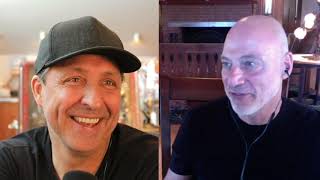
Bill Moses, founder of Flying Embers, talks with Dave Asprey about making healthier alcoholic drinks like hard kombucha and hard seltzers. They discuss fermentation, probiotics, adaptogens, and the regulatory hurdles of bringing these beverages to market.
Chapters
Bulletproof Radio, a state of high performance. You're listening to Bulletproof Radio with Dave Asprey. Today we're going to talk about alcohol, which is something a lot of people like to talk about and a lot of people like to drink. We have, as usual, the live studio audience from the Upgrade Collective, which is my membership and mentorship group where I am teaching a lot of people every single week, my books and everything. It's a vibrant community where I've. I think we've answered every question anyone's ever asked in our private groups. So if you really want to go deep with me personally and with my team on biohacking, learning all of the stuff that I've ever written and talked about in a structured format with a team, go to ourupgradecollective.com and come hang out with us. It's so much fun. It's been inspiring for me this year, and that's why I invited members of the Upgrade Collective to be in the live audience. So you get early access to these and you get to ask questions, questions of our guests at the end of every show. Kind of the live studio audience don't know what they're going to say. Now, I mentioned alcohol. Our guest today is Bill Moses, who's the founder of Flying Embers, which is an innovation lab that's looking at making alcohol better for you. We're talking about hard kombucha, hard seltzer, and fermented botanical brews. Sort of going back to the very old days of alcohol where if you were in, say, England 400 years ago, you wouldn't drink water because parasites would kill you. So you drink beer and you might get some B vitamins that way as well. I'm not ever going to be one to tell you alcohol is good for you. I know that the alcohol industry has been really trying for years to falsify studies to say, oh, just get drunk every night and you'll live longer. And like, guys, didn't you learn from Big Tobacco? It doesn't work like that. That said, most people listening to this right now do drink on occasion. And I've written for years, how do you do harm reduction? But part of it is, what do you drink? What do you choose to drink? So I found a guy, Bill here helped to build the first certified organic winery in Southern California called Casa Barranca. And he was former chairman and co founder of Cavita Probiotic Drink, which is a very well known probiotic beverage that Pepsi bought. So it's a small hippie California brand that's sold in 20,000 stores. And he's also a biohacker health guy. So, Bill, welcome to the show. Thanks, Dave.
Good to be here.
How's that for an info or for an intro? Biohacker health guy.
Well, you know, that could cause some controversy among some of my peer group, but I think I can go with it.
Dude, you started a probiotic beverage company. I'm surprised you even shower. I mean, do you shower?
I do at least once a week. At least once a week. But yeah, I think. Look, coming from New York to California some 20 some years ago and getting involved in the alternative health and living lifestyle here in Ojai, California, I got a new way in, a new view in on how to live and how to really take care of yourself. And out of that journey, I found myself into fermenting organic grapes and making sulfate free wine and writing white papers about what's in the wine that's not on your label and getting really into testing and cultivating culture and product to make sure that it is what we think it is and it's the best it could be.
So you long standing winery background, long standing fermentation background, which is different because, yeah, you can ferment wine, but there's a big difference between organic stuff and probiotics. This is a true story. I interviewed at Gallo Winery in Modesto, California for my first job out of college to work in the IT department. And they said, well, we're not going to hire you because we know that as soon as we train you, you'll take the training and then go get a job that pays more elsewhere. But I almost went to work making million gallon vats of stainless steel vats of wine and realized it's such a far cry from what you would do in an organic winery. It's almost just a different product. Not to pick on Gallo. I mean, it's wine, but there's additives and stuff. So you took all that history, all that background, both from non alcoholic and alcoholic, and right in the middle of the 2017 fires across California, you started your current Flying Embers company. Did the name Flying Embers come from the fire or is that just a coincidence?
Yeah, no, it actually did.
Did the name Flying Embers come from the fire or is that just a coincidence?
Yeah, no, it actually did. You know, when we were sitting here sort of fighting the fire, dealing with what was happening at the time, the largest fire in the country and you know, when the first responders were on the property and spending time, energy, day after day with us, I really got a deeper view in and a real appreciation for what they're doing. And when I was watching the embers literally speckle the hillside, that sort of like amazing, almost transformational sort of experience, I just went, wow, flying embers. If we could emulate that in a quote unquote better for you alcohol product, then we might really do something that in whole is a little bit more desirable than what is in the marketplace. And that's where flying numbers came from.
The idea that, all right, I'm going to have something alcoholic tonight, and I can get the bright blue or green artificial flavor, sugar, hard stuff, or I can get a mass market beer or, or whatever. I could buy some wine that does or doesn't have stuff in it. Those are generally what people think about. Of course, there's artisanal whiskey and things like that, but not a lot of people think about, I'm going to go get a hard kombucha because I'm tough. Have you, have you had people? I mean, do people even know this stuff exists?
Yeah, it's really interesting and it's a category that's really kind of growing and taken off. And I think the, you know, the non el kombucha space is now trending around $1 billion with a 20% growth. And so a lot of the non elk kombucha drinkers where they have had the controversy of, is there alcohol in it? Is there no alcohol on it? You know, and spending years trying to keep the alcohol out of it. Some, you know, the trans. The translation into a hard kombucha, I think is readily available to a lot of non al kombucha drinkers and growing. So, yeah, it's actually a category that's. That's growing pretty rapidly.
There was a time probably about five years ago where a major kombucha brand got taken off the shelves and a bunch of retailers, because this is the weirdest thing, like when stuff ferments, some small amount of alcohol forms and to get drunk, you'd have to drink like 18 of those kombuchas, which would make you throw up. Like, you couldn't drink 18 kombuchas. At least no one I know could, but it was legally absurd. So you're just, okay, fine, alcohol is going to form during kombucha, so let's just own that and make it an adult beverage. I kind of like that it's rolling with the way mother Nature works versus, you know, a fantasy that, you know, mother Nature is going to do things exactly According to a label, when there's always variants. So, so you, you've established the category and you've got people doing this. Do people, you know, go to bars? I guess that's a loaded question given Covid. But when people go to bars again or restaurants, is this the sort of thing that you see that we're going to be able to purchase alongside a wine or something?
Yeah, absolutely. I mean right now across, let's just say the coast, coastal regions, whether it's in the east coast, we're prominently on sale at Terrace Teeter, Publix, Wegmans Total Wine. We're seeing on premise draft program evolving. So out here in Southern California, you go to any pub or bar or tavern or even restaurant and you're seeing almost, almost everywhere that's trending a hard kombucha being offered. It's happening.
Well, if, if we do end up getting a liquor license in Victoria bc, I just opened my farm to table restaurant called Upgrade Cafe about two weeks ago and it's, it's based on the, the Bulletproof cafe, which is soon to be renamed the Upgrade Cafe down in Santa. And I would love to be able to do that. So it'd be really interesting to have that. But I don't have a liquor license yet because we're serving super healthy food. But look, if people want to have a drink with dinner, I'm not going to stop them. I'm just going to say do it better. And I think this is a way to do it. What about the weird stuff that grows in Kombucha? I wrote an article on my blog a few years ago saying, well, there's weird stuff that's never been characterized growing in kombucha. Have you done some of the science to actually tell us what all is in there?
Yeah, sure. So our, we have, we have identified identity specific strains of bacteria. We've got a library of them. You lyophilize them so that you can pull them out of storage and use them. We manage against drift. But ultimately yeah, we, you know, doing a PCQR DNA test called Scorpion test, you know, we, you can get a view in on the actual DNA of what it is and inevitably scobees get passed around. They ultimately drift. You ultimately get all sorts of lactose and molds and funguses and everything in a scoby. It is not necessarily the cleanest, purest form of a culture because of the way it's handled. And to some that's romantic, that's beautiful, that's au naturel. You know, we take a different view in. And our view in is that we really want to know what's in there, we really want to test it, and we really want to continue to maintain the integrity of the bacteria and the yeast that is fully clean and tested for mycotoxins and all sorts of impurities. So, yeah, we do manage that.
When I was a raw vegan, I definitely had my scoby growing. And until one day I was growing some green and blue stuff on top and I'm like, what do you do with a scoby when it's gone bad? I felt like, do I have to give it a. Like a gravestone and bury. I feel like I was burying like an organ. It was like poke it with a stick. It was pretty horrifying. So I guess you don't have that problem because you're handling yours better than I handled mine.
Well, you know, I guess I think when you commercialize it, you gotta, you have to maintain some level of integrity of quality or you end up with problems that many find in this live organic cultured business, whether it's food or beverages. You got to stay on top of that stuff. Yeah.
Okay, so you have a little bit more process. And I've been concerned about home brewing of kombucha. I mean, I've done it, so I have concerns. Doesn't mean I don't do stuff that I have concerns about risk reward. You're not probably going to die from drinking your own kombucha. So the risk is low. But I definitely know that sometimes I've got vinegar and sometimes I've got other things. And we grew some with the kids a while ago as a project. But I don't think it's very sustainable to do it at home because you have to actually have a carefully controlled environment. So you've solved all that. You got something that's hard. Are there still live bacteria or is there so much out there that it killed all the bacteria?
No, no, no. So we have Leidocetobacter, live Bacillus coagulans, Saccharomycin boulardii, and yeast that lives till end up end of, end of shelf life. So we find a way RIP our, I think trade secret is how do you make a kombucha, a hard kombucha, with the right amount of alcohol that really, that isn't pasteurized, that ultimately can maintain integrity on the shelf with great organoleptics without any bottle explosions or siring or spoilage. And that's, I think that's our unique approach to this category that I think differentiates us.
Okay. Saccharomyces boyardi is something that a lot of people don't know about. It's a species of yeast that eats bad yeast. It eats candida, and it's used to reduce autoimmunity. And it's something that I've used in a home fermentation. You can actually add it to the ferment, or you can take it orally. And it's something that helps a lot of people with leaky gut. So it's kind of cool. Like, all right, I could have had a shot of something, or I had a hard kombucha that actually had probiotics. We've had a couple interviews about bacillus coagulans, which I think. Isn't that a spore former?
Yeah, it's a spore former that really maintains its integrity in an aqueous format. Most, you know, most, let's say beneficial bacteria is when you put it in water, it doesn't have much shelf life and isn't sustainable. So the other thing that's great about the bacillus coagulant is that it really does help get the product fully dry. So a lot of the research is that it's not only a beneficial bacteria, it's not only a probiotic, but it really helps in the fermentation process. And all of our beverages, all of our drinks have zero residual sugar. So it really kind of plays to that important part of health, I think, which is sugar is not our friend.
It's not my friend. This is interesting. Some of the major brands I've seen out there actually have meaningful, you know, 8, 10 grams of sugar, and they're going half a bottle. And you're like, this is getting to be in the direction of soda, and you don't necessarily want that. So you're saying, all right, zero sugar. So now you've got a trade off. How much alcohol is in an average bottle?
Well, well, we have two. Two lines. We have one that's about four and a half percent alcohol and one that's about, let's say, six and a half percent to 7% alcohol. We have two lines. So.
So let's assume you're drinking a 4.5% now. You end up doing this sort of bulletproof diet math. And just to be clear, kombucha is on the suspect list of foods. Suspect means it might be okay, it might be innocent, it might be guilty for you. But now you're saying, okay, I got zero Sugar, which is a benefit. Right, but then you've got alcohol, and alcohol metabolizes before sugar and before ketones in the body, but not a lot of alcohol. It's only 4.5%. So would I want four and a half percent alcohol versus a few grams of sugar or 10 grams of sugar? It depends on how alcohol affects my biology. Right. If that much alcohol ruins my sleep and I see it on my sleep score, sorry, I need to cancel the alcohol out with some glutathione and some other stuff. Or maybe it's just not going to work for me, but the next guy could sit down and be like, oh, are you kidding me? I can handle the alcohol just fine, but the sugar would mess me up. So you got to do the math.
That's right. That's right. And there's zero carbs as well in our drinks.
Zero carbs as well. So it's very keto compliant then.
Right, Right.
Totally unlike most kombucha that's out there.
Or. Yeah.
Or.
Yeah, well. And yeah, most. Most kombuchas or any beer. Right, for sure, for sure.
Okay. So it's, it's definitely more in that bulletproof, compliant side of things, except it has alcohol, which isn't good for you, but it's a little bit of alcohol and it's a social situation. You're probably not going to get drunk off the four and a half percent and you're going to have to drink a six pack of the six and a half percent to really have much of an effect. How many people drink a six pack of flying embers at one city?
Listen, I'm not recommending drinking a six pack and, but you know, you look, I mean, seriously, anybody that's into health and wellness, that's looking for a libation of sorts, something to make them more relaxed, mitigate stress, whatever it might be, help with their cortisol, Cortisone, if it's, if it's late at night, I don't know. I mean, one or one or two of these that I experienced, someone that really has issues with inflammation, is not impactful as it relates to any sort of adverse effect that normally you get with drinking a couple of beers, a couple of cocktails, et cetera. So there really is a different experience, a higher vibrational sort of phenomena that goes on with this live fermented bacteria and healthy yeast that and the adaptogens that we have in there that are much more bioavailable because of the dual process of extraction. The dual extraction process with the alcohol the ethanol, you really do get the most amount of polyphenols, et cetera. So at the end of the day, we all know that alcohol can really be impactful to one's health. And for those of us that like to have a drink something that's healthy, I think this is the best way in. And that's why I took 10 years to cultivate this.
I wouldn't have had you on the show if I wasn't inspired directionally by what you just said there. I got one more question, though. What about histamine? I have had some brands of Kombucha where I'll drink it. I'm like, man, I'm puffing up after this thing. Are you controlling for that, that in.
You know, and we test, we do fusel alcohol testing as well to make sure there's no, you know, methanol and other sorts of toxic alcohols. But absolutely, the, the bacteria and the yeast and the process will all yield histamines or no histamine. So everything that goes into it is quantified and qualified for its histamine production. And so we're histamine free, 100%.
So that matters a lot. So. And the reason I'm asking these questions is the Upgrade Collective members are like, dave, you've warned us about kombucha for years, but the reason I warn is that there's such a high variance across it. You never know what you're getting. And in your case, you're like, well, I kind of have a little bit of a CV in Kombucha. You're like a little bit of cavita and a little bit of organic wine. So you're a believable source here, at least on my standard thank you. And you spent some time on it. And that answer, okay, you're not going to get a histamine response from it unless you're allergic to something else that's in it. And you're basically fermenting sugar and green tea.
And black tea. And we don't use honey. And we don't use honey for a reason because, you know, honey could harbor, when diluted down, mycotoxins. And so we consciously don't go that route. And it's a traditional beverage that we try to bring to modern age in a way that improves and could be of value.
So, yeah, I actually like it that you don't use honey. And there are recipes that use honey. I forget the name for it. It's a slightly different name than Kombucha. You would know what it is.
Yeah, yeah, yeah. Jung or yeah, there's yeah.
But the problem is honey has antimicrobial properties. So you mix it in. You don't know what's going to happen because it depends on how much propolis and how much pollen and all that. So I, I look, you're fermenting the sugar. It's a fuel source and it, Is it organic sugar or is this corn?
Oh yeah, yeah. It's 100 everything. All ingredients are organic, certified organic.
So this is a high end thing. Okay. And now our Upgrade Collective members are hitting me on the chat here and they're saying tell us about the adaptogens and all that. I'm going to define adaptogen for listeners who don't know. These are herbs that you can use, they originally used back in China and Russia and they allow you to turn on stress response and turn off stress response more effectively and efficiently so you don't stay stressed for a long period of time. And I take adaptogens every day. So what adaptogens did you add into this?
Yeah, so we ferment, this is part of the fermentation, the primary fermentation process. We have turmeric, you know, we have ginseng and we have jamir ginseng. We use astragalus in some of our local. And ginger. And ginger. So these are the adaptogens that we ferment in the scoby. Yeah.
Okay, that's cool. Those are three very well known adaptogens. And interestingly, astragalus is when you have huge amounts of it, more than you're going to get even if you were to eat a pound of it is one of the very advanced telomere lengthening supplements. It takes something like 45 pounds of astragalus. So it's got some interesting powers. But at lower doses, astragalus is just a well known adaptogen.
Yeah. And what's interesting about that is that, you know, the FDA and the TTB are super restrictive with regard to what you could put in alcohol beverage.
It's really interesting.
Like we try and make it better. So the astragalus that we could, we could only serve within our state, which is California. As soon as you ship it across state lines, the FDA has an issue because of it's not FDA grass, it's got to be FDA grass. And there's no astragalus out there that I'm aware of that is FDA grass. They're self grass, but not FDA grass generally regarded as safe. So you know, one of the projects that we're looking at is some of these botanicals and adaptogens that aren't FDA grass to actually go about and applying for FDA grass so that we could put them in and ship them across state lines.
This is something that a lot of listeners probably don't know much about. But the generally regarded as safe standard is so floppy and subject to manipulation. How do you know if something's generally regarded? Well, normally you could ask around and anyone listening to this show with a bit of a background, well, of course Astragalus is safe. It's been used for a long time. There's tons of studies. What's the issue? It's thousands of years. But then a regulatory authority would be like, well, we don't regard it so, therefore it's not generally so. So then you go through this weird legal discussion that could take years to try and convince bureaucrats that something that is generally regarded as safe is actually generally guarded as safe. And in the meantime, if you sell it, you get in trouble. And I've had, you know, I've just seen so many powerful things not be available to consumers because of that weird roadblock. And I didn't realize Astragalus was even not on the grass list, given that it's been a supplement for so long.
Yeah, yeah, same thing was really interesting. We had the same issue with ginseng. And ginseng's been used forever. And we were prohibited by, in a partnership with another company, New Belgium, by Whole Foods, to say you can't use ginseng. And then we had to go through a long process to ultimately prove that ginseng does have approval with fda, even though it's not FDA grass. And so it's a bureaucratic mess when it comes down to some of these great ingredients that aren't necessarily approved yet for use.
And it's especially odd because things that you can buy in a capsule and totally just buy off the shelf, almost no standards. As soon as you want to add it to mayonnaise or to kombucha, it's all of a sudden it becomes a food, and you can't do that. And so I'm. I would just say if you're wondering why your food is expensive, this is one of the reasons, like the level of garbage that food companies go through that adds zero safety, zero health, zero value. Lots of attorneys, lots of consultants, lots of meetings and drives up the price of everything. This is going on in the background and, and I don't think food guys like you and me or beverage guys that we. You don't disclose this publicly very much, but you're fighting the good fight to say we have a right to have ginseng in our tea if we want to. But why do we have to fight over that? Aren't there bigger things we could fight over?
It's amazing. It's amazing. Yeah. I mean, we also have, you know, we use reishi. Our beers are bittered with reishi and lion's mane, and we use ashwagandha. So. And we get, you know, whether they're, you know, fruit body extractions, beta glucans. So, you know, we're trying to use the best that's available out there to really, let's just say, offset some of the. Some of the not so great properties for you in alcohol. So at the end of the day, you put it on a scale. I know that I want to have a little bit of fun. I want to have a drink, I want to relax, whatever it might be. And we know that the alcohol could cause some inflammation. Was there an offset? Is there something that may offset some of it? And that's. That's sort of the way I rationalize this is better for you, alcohol.
I think you actually have a pretty good case for that. I'm still not going to say alcohol is good for you, but I also. Look, cheesecake isn't necessarily good for you, but most people on the call have had some cheesecake in the last couple of years. And look, it's okay. Just have a cheesecake that's not made out of weird crap, that's at least made out of real cheese and real cake. Right. So it's directionally better than you would have done before is what you want to do. And I've got a bit more of a nerd question for you here. Some of the supplement brands that I've used in the past and probably still use today, they'll actually use usually a yeast fermentation with say, a B vitamin or a mineral that you see these chelated minerals chelated with yeast to increase bioavailability. When you are fermenting adaptogens like this, do you have any data or science that says they're more or less bioavailable?
Well, there is science to say that ethanol does do a better fat extraction on curcumin. So curcumin is, you know, I mean, you could do a water, you could like tea, soak it in water. But there is science that says the ethanol, when you ferment, it makes the curcumin Much more bioavailable. So the science is out there. There is substantiation documents that show an ethanol based extraction is in fact gives you more bioavailability, pulls out more of the better for you botanical that your body can actually use. So we don't do the testing ourselves, but there's well known science out there that substantiates that fact.
Okay, I definitely see that in the case of medicinal mushrooms. Not the kinds that make you trip, but just the kinds that help inflammation and cognitive function all in. And alcohol and hot water extraction totally works. But a powder, if you take the same stuff, doesn't do anything like lion's mane. Is people saying, oh, you know, I'll put some lion's mane powder in my coffee. Like, no, I tried that years ago at the Bulletproof cafe and it just tastes bad. But it doesn't actually change how you feel. But when you get a dual extraction like that. So you're saying, look, the fermentation process, just by virtue of having alcohol, is going to pull some of the unusual fatty compounds out. So they're available. It makes sense. Okay, I want you to educate me a little bit because you guys do more than the hard kombucha, which is what caught my eye. It made me want to chat with you guys. You also have hard seltzers. And I actually don't really know what a seltzer is from an alcoholic perspective. What does that mean when you say seltzer other than bubbly?
It's predominantly a bubbly water. I mean it's just like a non elk seltzer. You know, it's bubbly water. And so, you know, today it's become overnight $6 billion category. I mean like literally six years ago, boom. And so when you see this, you say, what? What's the consumer trend out there? And again, the larger consumer trend, it's about taking the bad out of something, at least in the alcohol space. And these are 4 and a half, 5% lower alcohol offerings. There has been a movement away from craft beer. They don't want the gluten, they don't want the calories, they don't want the sugar. Exactly. So in that, you know, renaissance of awareness by consumers, this hard seltzer has just absolutely exploded in the alcohol space. And so seeing that happening and understanding that hard kombucha is a, let's just say it's less developed, right? It's more crafty, it's a little bit more to grok. People can't even say it. We decided to Go and make our do our own fermentation through recapture our own CO2. So we don't have any volatile compounds that you get from traditional CO2, organic CO2, and make our own hard seltzer that is sugar free and carbon, you know, with no carbs.
You guys actually have organic CO2?
Yeah, we do. And we're, you know, we're the only hard seltzer in America that recaptures from our fermentation. The CO2, gets it certified and uses it back to carbonate our beverages.
That's actually kind of cool and like a closed loop sort of way versus buying industrially compressed and extracted stuff.
It's really interesting. You can really taste the difference like when you pull it off your own ferments versus buying it and having it shipped in with, you know. Anyway.
So yeah, I like that about what you're doing. I'm kind of the same way with coffee. You have to know what's in there, like what happened before, what happened during, what happened after. And I find that when people get really deep into whatever their field is in yours is fermentation, right? There's all these little things that no one would ever think about. And then if you have the time and the resources to, well, what if I did all of it the way I wanted to? I've never thought of recycling that, but it's, it's a cool idea. And one of the, the other things that you're, that you're doing that I also appreciate is you're actually donating back to firefighter firefighters. I guess that's because you named the company during.
It's really interesting. So I think I'm sort of a tactile guy that really wants to touch and feel what my give back is, you know, where I am right now. And so look, I mean, you know, climate change, fires, hurricanes, flooding, all that stuff is happening. It's real. And so for me, my, my most impactful way of dealing with this, I think is giving right back to the first responders. There's a lot of mental health issues that go on with them during this time. So we do mental health causes. We went to Austin, Texas to really help out during the flooding and the, and the freeze. And we, you know, so we really show up when there is an issue, an acute issue, a problem, what we call ground zero, to really help those that are really doing what they can in the most immediate way. And it's an important part of our business. And we set up a 501C through as well to get other corporations and organizations to partner with us so that we can do more and give more in partnership in a nonprofit vehicle.
That is fantastic. And a lot of companies just don't have a charitable arm. I would say back when I was running Bulletproof, I never did anything formal bulletproof. I just did it all personally. Lots of funding of Alzheimer's research and wells in Africa and stuff like that. But I think it's a good idea to build it into the company. And that's why with Upgrade Labs now haven't announced our new logo, but we'll be doing some environmental donations as well to support wetlands because, well, I kind of feel like we need dirt in order to.
Good dirt. Everything's about good dirt, right?
It sure is. Well, I mean, you know, grapes. Right.
Well, it's all. And it's all about the dirt. It's all about the micro rise in the healthy dirt that's ultimately going to enable the vine, if you're in the grapes, to really absorb the nutrients in a most effective way. So it could be the most. Could have the most amount of polyphenols and, you know, just be the best fruit. And so again, healthy dirt means healthy globe, healthy ecosystem and. Yeah, right on, right on, right on.
Yeah. And it's funny, fires are a part of healthy dirt, but maybe not the kind of fires we've had in California.
Yeah, I mean, it's good to have a fire, you know, generationally speaking, but, you know, we have them seems like, you know, yearly.
So that's a bit. Yeah, the weekly basis is not good.
Totally.
One other thing that I came across when I was checking out your work before deciding to do a show, Michelada. Michelotta. How do you say it?
Michelada. It's a, you know, look, I mean, some of the fun things that we could do is we could make sort of these fun cocktails out of the kombucha. And michelada is this incredible sort of spicy mix that you could put into it that makes it, I don't know, just next level flavorful, you know.
So it's supposed to mix drink that's made out of hard kombucha. Because I know you've launched 25 different projects because you're a beverage innovator with, you know, with things. So I came across. I don't even know what that is. I don't know what language that is. Like, is it Spanish?
Is Italian. It's Spanish. Yeah, yeah.
It'd be meek, not.
Michelle, you're from California.
You're supposed to say it, right? Aren't you?
No. You know, I'm originally from the east coast, so, you know.
All right, you butchered it. Actually, half the Spanish words in California are butchered. Anyway, I used to live in a town called Manteca, and, well, in Spanish, it's manteca, which means lard, because the white guy who named it thought he was naming it. This is funny, guys. He thought he was naming it sweet cream or butter, which is what montequilla is, but he called it Manteca. So, yeah, I went to high school in a town named after lard instead of after butter. But funny enough, I like both of those. So it's like it was ordained. It was meant to be that way. So when I see me michelada, which is how you should say it, I'm like, I got it. When you say michelada, I'm like, dang, east coast invaders of California, you are. But I'll forgive you this time, Bill. Thank you.
Thank you. Appreciate that.
So that explains also why I was applying at gala, which is right next door in Modesto, California. So there you go. Now, what's going to happen with alcohol consumption post Covid? I know you had Covid. I want to talk about you with your Covid experience. But people are paying attention to their health. The whole, like, party scene has blown up. People are sometimes coming back. You've been watching wine for a long time, and the whole industry where. What's drinking gonna look like over the next few years?
Yeah, I think it's gonna be a year or two of probably some excess. You know, I think a lot of people have been bottled up, and. No, you know, look, I think there's a. Definitely a thirst for jubilation celebration. And, you know, it's. It's happening. And so, again, it's. I think it's going to be something that is going to be a phenomenon this summer when. When the concerts and the festivals come back. People are going to really get out there. They're going to move their chi. They're going to express themselves, hopefully drink the right stuff and not drink too much of it and really experience life to the fullest. I mean, that's what I think everybody's waiting to do after the time we've spent kind of sheltered in.
Okay, so you're forecasting a rebound jubilant party. And by the way, historically, that appears, if you look back at what people do after all the other pandemics that we've had pretty much lots of drunkenness and lots of babies, so. Well, we'll see what the next couple years bring us. But they. They might be great fun. Unless they bring us yet another marketing campaign for pharmaceuticals that's tied to. You're not allowed to do anything fun until you buy our product. Have you ever thought about doing that with. With Flying Embers? Just making it so you have to have a Flying Embers passport before you can go anywhere?
No. No, that's not part of our thinking.
Yeah, that was the right answer. I'm glad you answered that way. But what happened, though? Because you really. You got Covid. You got really sick. So tell me about your experience with COVID Like. Like, this is a real thing. People don't talk about this as much as they do, so.
So I. I really. I really didn't. I didn't grok how impactful Covid could be. I guess early on, I mean, I was really taken. I was taking 10,000 IUs of vitamin D, zinc. You know, I was doing everything C. Astaxanthem. You know, I was. I was. You know, I was healthy. I'm healthy. I'm vibrant. I. I got my hyperbaric chamber. I got my cryo chamber. I'm doing everything you do. And. And so the. We're in a. We have a manufacturing facility. We ferment, make our own stuff. We've got a lot of people. We're wearing masks. But we're essential, right? We're essential. So we were able to go to work and work, which was great. You know, it's. One of the great things about being in the food business was, you know, we could actually. We didn't have to be cloistered up in the home. And I actually like going on, so. So I was part of the community at work. And, you know, we had. Someone came in and got it, and several of us got it at the same time. And I was. I just doubled down on everything. And I waited and got progressively. And I started taking ivermectin and was hammering that. And, you know, nine, eight days into it, I was literally unable to breathe. I had my own oxygen machine because I pulled it out of my hyperbaric. And I'm like. At night, I had oxygen in, and I'm like, I'm gonna. I don't need to go. I don't need any. And actually, I was one of those guys. I was part of this cohort. There is a cohort of us out there that actually have cytokine storms. And I had a cytokine storm going on in my lungs where I actually couldn't breathe. And I Went into UCLA and I was there almost three weeks. And after time was going on, the oxygen requirement kept going higher and higher and higher. They came in, they said, do you have a dnr? We're going to have to take you in and intubate you. We can't get any more oxygen in you. And at that given time, I was like, oh, wow, like, this is real. So I call my wife, I call my kids, I say goodbye. I literally say goodbye. I do everything I can. And I realized that there was no more high flow oxygen that I could get. I was at the limit. And just at that time, the head of infectious disease at UCLA comes walking by and comes into my room and says, you know, look, we need the, we need to probably find an experimental for you treatment. And I was like, okay, what? And he told me what he thinks he should give me. He goes, we've had some success here. I have to call the FDA to get compassionate use for it because it's not FDA approved. Still not.
Even though he's a doctor who has a license to do whatever the f. He wants. And the FDA's.
The FDA will not allow, allow doctors to give anything other than what is approved or what is what is currently part of their clinicals.
So this is not use of authority.
So, so there was so that clinical. So anyway, so he had to go get special permission. Well, he got it and he came in, you know, that night and put two shots of this stuff in me. Loranolumab. And. Yeah. So again, was it lorana? Lemab is. Cytodyne is what it's. And he had a hunch, he saw it work on several other. And a week later I was out of the hospital.
That stuff is a mast cell treatment.
Yeah, that's right. Yeah. And there's some interesting applications on it. So it worked for me and I'm thankful for it.
Well, you had a good doctor who was willing to say, I don't know how to treat this virus, but I know how to treat inflammation. And that's what I've been trained to do for years. I'm head of infection diseases. This is the only pandemic ever where they've forbidden doctors from doing their work.
Well, I mean, I think there's, there's really, there's really that, you know, the treatments are, are, are governed and there are, I think there is, there's. Hopefully there's going to be more and more treatments for this because I think there's a lot of us that'll. That'll end up getting it. And great treatments are going to help. Help us. So I'm all about. I'm all about treatment, Dave. All about treatment.
Treatment is a good thing. And it's interesting. The cytokine storm. We know the cytokine that's most common with this is called IL6. I'm guessing you had high levels of IL6, right? Yes, yes. Did you see the post I wrote in the first two months of the pandemic about how to stop IL6?
Ah, no, I didn't see it.
No, you didn't, because it got taken down. Interesting how that works. But there's a bunch of herbals with very potent IL6 suppressing properties. I know about that because toxic mold people like me have had. Had mold exposures. We tend to. If we have the. The genetics for that, we tend to have relatively high IL6. So I know how to suppress it. And it's not even that hard with botanicals, but apparently talking about that isn't okay. So I didn't. You know, but it's one of those things where I think that when people are using botanicals regularly that help to regulate inflammation, even if they're drinking, even if they're eating pizza and cheesecake, which is probably not a great idea, Perhaps we can keep a healthy enough balance that we're less likely to get as sick as you did. And like you said, you're in that cohort. It's probably a genetic thing, and it could be an environmental thing where your mast cells were triggered to be more sensitive than others. But I'm happy you made it. I'm happy you share the story, because people say, oh, it's not real. Actually. No, there is something going around. It's real. And people say, oh, you know, I'm invulnerable because I insert name of health practice. No, you're just more resilient. And there you go. You're sitting here in front of us. Right. You had some resilience and you had good care. Like, who would have thought? So I'm happy you made it.
Yeah. Thanks so much. Yeah.
And thanks for sharing your story. Because there's so much polarization there.
Look, I think. Polarization? Yeah. I think what I realize is that everybody has their own right to have their own view. Right? I mean, really, that's it. And we control our own bodies. We want to be a choice. And really, there's no judgment around. For me, my view now is that there's no judgment if there's no judgment whether you're for or against Something you want to follow or you don't want to follow. At the end of the day, everybody has their own individual right and choice and, and that freedom is really important. It's really important.
Very well said. And it's funny. I think it's a 5 to 10% of people are the shrill, angry people at either end of the debate. You have like the super keto, another carb is a bad thing versus the super vegans. Like, oh, my goodness, a bug touched that. I can't eat it. They're extreme minorities. And then when you get to alcohol, some people are like, I'm a teetotaler. If you have one drop of alcohol in your vanilla extract, you're a bad person. And then you get the, you know, if you don't drink a six pack every day, you're a bad person, you're less of a man. You know, but those are outliers and most people are in the middle. But we don't talk about it because we're in the middle. I think when it comes to stuff like, you know, treatment of pandemics and all, most people are somewhere in the middle. They're curious, interested, and okay with it. So I, I would just encourage people listening. It's okay to be in the middle and to be curious and just say, you know, I'm going to make a call whether it's, I'm going to have some alcohol, I'm going to have a lot or a little, you know, it's okay. Like, you have to judge other people. So.
Right on. Right on.
Especially given that you've had it and it made you really sick that you're supporting medical freedom. I appreciate that as well. That's cool. All right. You've now convinced me that if and when I get an alcohol license, probably just for my Victoria restaurant, that I'm going to have to have your stuff, you said on tap. Is it available?
Oh, yeah. Oh, yeah.
We can do this in Canada. Not just in.
Yeah, we're in Canada. We're in Canada. Yeah.
Okay.
Actually, this is a commitment.
If that happens right now, we're open for an early dinner, but.
And I'll fly and I'll come up and I know that you don't drink, but we'll, we'll, I'll drink. We'll have a hard kombucha.
I would be honored to toast you with one at the, at the Upgrade Cafe. So I will do that. I don't know how much it costs or how long it takes to get a liquor license, but I think we're going to just because it's a nice dinner place. I mean, I grow the pigs, I grow the veggies, the lamb myself, and, like, bring it to the restaurant. It's my highest and best offering. So how can I not have dinner and make it special?
That sounds awesome.
So I'm stoked I can get in Canada. Thank you for supporting Canadians and just thanks for taking industry that's full of a lot of, like, soda equivalents, but with alcohol and doing something that's different and special. So if you're going to have some alcohol, you got a good choice. I. I think you've done something good there.
Yeah. Awesome. Thank you.
Would you. Would you like to take a couple questions from our live audience?
Sure.
All right. Upgrade Collective. If you want to ask a question of an alcohol innovator, anything about kombucha, stuff like that, now is your chance. Raise your hand. Bonnie looks like she's thinking about it. Or Deborah, Deborah has a question. There you go, Deborah. Go for it. Hi. I find that a lot of my clients avoid kombucha because it makes them gassy and that sometimes it can feed the not so good gut bacteria. Does flying embers help contribute to the good guys or the bad guys? Or can you?
No. Well, I think gassy has a lot to do with yeasty and so, yeah, so for, you know, and it's got to be the right yeast and it can't be too much yeast. So. Yeah, no, we don't get, you know, one doesn't get. And also sugar, really kind of, you know, the gut formidable sugars that, that end up in your stomach and, you know, your whole microbiome gets. Gets the yeast and gets the sugar and the next thing you know, you get gassy. So we don't have sugar. We have the right kind of yeast and you don't get gassy with us, but I think that's the cause.
That is a really good answer. Bill and Deborah. Brewer's yeast, which is. Sometimes people take it because it's a B vitamins. It's actually associated with cancer on PubMed studies. It's not a good thing. Brewers and baker's yeast, and that's Sarcomyces cervicae. And I'm probably saying that wrong. C, E, R, V, I, S, A, E. Cervaceae. Cervaceae. There you go. I've read it 10,000 times and written books with it, but I don't say it out loud.
Michela. Michelada.
Michelada. And then you have Boyardi. Which is the good stuff. And the boyardi is what eats the bad stuff, including Candida, including the brewers and bakers. And it's the stuff that calms the immune system. So you got something with zero sugar to feed the bad stuff and something with stuff that eats the bad stuff. You're not going to get gas from that. If you do get gas, it's probably because you have Candida and then there's some sort of a fight between the boyardi and the Candida. But then you already had gas. At least when I had Candida for years I sure had gas. So that was a great question. All right, let's see. All right, Deborah, you had a follow up question there. Oh, yeah. What's in the Michelada? Can we get the recipe for that? We won't tell anybody, I swear. Just.
Yeah, no, I'm actually, my partner's sitting here, he's like saying, what's in there? So. Well, it's a special. Hang on a second, let me just make sure. So it, it's on the website.
Flyingimbers.com. yeah, there you go.
It's on the website.
Anyone else want to ask a question? That was an awesome question, Deborah. All right, we've got one more here from Brandon Wilson. So, Bill, that story about your Covid experience was just amazing. And I just wanted to ask, having gone through that, did you make any significant changes in terms of an inventory of your life and behavior and any changes after that experience?
Yeah, that's a good question. Yeah, certainly. I mean, what I realize is really all you have is time and family and the amount of time you spend or we waste kind of with frivolous, drama oriented stuff or things you really don't love or resonate with. I'm systematically cutting them out of my life. So it definitely brought home to me what's most important and really how, you know, how we never know when it's our time. And there's something very sobering about that when it comes to, you know, our choices that we make. So, yeah, actually, you know, my next venture is actually going to be, you know, another one more beverage in me that's going to be something that's more of a nootropic. And so I'm thinking about that saying, okay, is this next venture, I have, this next innovation, is it going to be something that's really, I'm really going to resonate with? And so when it comes to that, you got to resonate with everything all the time. No compromise, bottom line.
So love that. What A powerful answer, fully supported. Bonnie, you got a question? Yeah, Bill, I'm just curious as to where you get your inspiration for all the fun flavors. I was out on the website earlier in the podcast. Podcast. It just looks super fun.
Well, you know, you know, we get around a room, we have an innovation sort of meeting, and we've got a lot of people around the table that come up with new ideas and, you know, we debate them. So it's a, it's a. We source creative ideas collectively. And so it's really, it's really not one source.
There are whole flavor houses I've worked with when I was developing recipes for the. The Bulletproof Diet Cookbook and for the cafe. And it is a crazy science, but what you're limiting yourself with is you're using real flavorings versus all the weird stuff. And I'm like, guys, if you won't tell me whether that's petroleum based, I'm not touching that. So even, like natural flavors aren't that natural, but some of them are fine and some of them aren't and extracts and all. So it's really tough. I think flavoring, it's such a specialty when you're saying, I'm organic, it's. It takes away all the weird chemistry and then you've got to really do the hard work.
So, yeah, you definitely get limited. We're all certified organic, so, you know, we're not. We can't concoct anything that is too crazy because it really has to be an organic source from a natural plant based.
Cool. That was a, that was a really good question. Because it's flavoring. Any kind of cooking is as much art as it is science. Well, Bill, I'm. I want to also extend a thanks. I ask when people come on the show, provide a discount. When people go to flyingmbers.com Dave, you're giving them 15% off all orders. I'm assuming you have to be 21 or maybe in Canada, 18, whatever the right ages are. And that's cool. So flying embers.com Dave, or use code Dave. And I think you're just taking a clean, healthy approach. Everything is mold tested, everything's histamine tested. You know what species are doing it. You're using probiotic, proper species. There's no random yeast in there. So this is the kind of kombucha that you can drink if you tolerate alcohol, which most people do in low doses. And you can have a celebratory beverage. So it's cool. And I am going to put this in my restaurant if I get an alcohol license. So that's awesome. Thanks for convincing me. And just for attention to detail, that's what makes stellar brands and stellar products that are. That are safe to use. So good call.
Thank you, Dave. Yeah, and follow, you know, following your lead as well. The testing, the purity, knowing that science is really the most important thing, I think, for. For any of us these days, given the state of the world and the state of our ecosystem.
So, yeah, well, we'll fix it. One. One plant at a time. One cubic meter of soil at a time. And organic. You're doing it. So thank you, brother.
Thanks, man. Appreciate it.
If you liked today's episode, you know what to do. A couple things. One, we'll try some flying embers. If you're going to have Smile call, you can you just learned why that's a good idea. You might also consider joining the Upgrade collective. Why? Because you could have been in the live audience asking questions and chatting back and forth with me during this, which is a lot of fun. And I'll teach you everything that I've written in classes with other people who care about it, so you can have fun. It's structured, and you can be a biohacker of your own biology. And then you would know when you read the label on flying embers. Should I drink this? Even if you didn't hear this episode, and you'd probably say yes, have a great day.










