The Expert In Your Face: Youthful Skin Without Surgery with Dr. Anthony Youn | 1120 | Dave Asprey
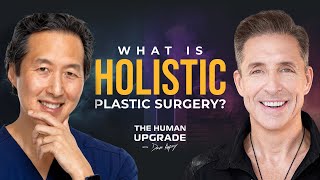
This is a YouTube video titled "The Expert In Your Face: Youthful Skin Without Surgery with Dr. Anthony Youn | 1120 | Dave Asprey" published in January 2024. It features a detailed interview between Dave Asprey, a biohacker and host of the Human Upgrade podcast, and Dr. Anthony Youn, a plastic surgeon known for his holistic approach to skin care and anti-aging. The discussion covers topics such as holistic plastic surgery, non-invasive skin rejuvenation techniques, the role of supplements and nutrition in skin health, and the limitations and benefits of surgical versus non-surgical interventions for aging skin.
Chapters
You're listening to the Human Upgrade with Dave Asprey. You're listening to the Human Upgrade with Dave Asprey. Today we're going to talk about how to hack your face. Well, your skin anyway. Leading holistic skin care, anti aging techniques from TikTok's biggest star, Tony Yoon. Mostly because of his twerking. Tony, where did you learn to twerk?
You do not want to see me twerk, Dave. It is not a pretty sight. I told my kids that the one thing dad's never going to do is dance on TikTok. So yes, I've gotten the following without having to dance. That's. That's a good thing.
So that's just your only fans. I gotcha.
You got that? They have at OnlyFans has actually reached out to me. Only Fans. And Cameo wanted me to join and like, yeah, I'm a doctor. I don't, I just don't think doctors should be on Only Fans. But maybe someday.
Yeah, onlyfans wanted to have a channel of just me drinking coffee, wearing white button down shirts with rolled up sleeves and veiny guys. I can't, I'm sorry, I can't do that. But I did Cameo for two weeks and thought it was a bad idea. So.
Yeah, it's not my deal. Yeah, yeah.
If you guys wonder what Cameo is, it's some service that lets you like ask for a little birthday video or something. If you see me in person, I'll record a 10 second video for your friend or your family or whatever. I don't mind at all, but I just want to do it at home instead of dinner with my kids. Screw that noise.
I totally agree. There are, there are doctors who are on it though. And I don't know, maybe they're making me and my buddy, Dr. Pimple Popper. She's a good friend of mine and she's on it and I don't. But then you've got people who are like billionaires. I think like Mr. Wonderful from Shark Tank is on it. Like he doesn't need the money. So I don't know why some people do that.
I think that's a charity thing when they do that. Or maybe he's just bored. So you're known as America's holistic plastic surgeon. But Tony, Surgery is not holistic. How dare you. How dare you. Shame on you. I'm channeling a whining 20 year old tool of the state. If you haven't, forget what I'm talking about. So aside from that, how dare you? For real like, okay, honestly, I have no, I have no issues with any modification of the human body that you have control over. So I'm, I'm not for or against any surgery as long as it's up to you. But holistic surgery, walk me through what that even means.
So how can that be? Well, I'll tell you, Dave. I was taught, I went through traditional medical training. I did four years of medical school, I did three years of general surgery residency training, two years of plastic surgery residency, and then a year fellowship out in Beverly Hills with a top named plastic surgeon. And I was always taught that to cut is to cure, and, and the only way to heal is with cold steel. And for many years, I believed that the goal of a surgeon was to bring people to the operating room. And then I had a patient who had a absolutely horrible complication after a facelift, one that I couldn't have avoided. She couldn't avoid it. Just sometimes things happen and it really got me into thinking that, am I doing the right thing? And so I was always taught that the goal of being a surgeon was to bring people to surgery. And I realized that my goal should be the opposite. It should be how do I keep people out of, of the operating room. And so I spent many years studying nutritionists, dietitians, skincare experts, dermatologists. I read your books and I realized that there's so much that I did not know about turning back the clock naturally. And I came up with this concept called autojuvenation. And it's how do you use your body's own regenerative abilities to rejuvenate itself? And it's based off of five specific things. It's what you eat, when you eat, supplements, skincare, and non invasive treatments. And I strongly believe that the vast majority of people, 80 to 90% of people, that if you follow these types of tenants on those five things, you can look and feel amazing and not feel like you have to go under the knife or even the needle.
It sounds almost like these core biohacking techniques about not eating inflammatory stuff that shreds your skin and your gut, which is made out of skin and you know, circadian biology. It seems every condition, including how you look, is influenced by that.
So it totally is.
I like it. Skincare is an area where we might actually not agree 100%, given that you're an expert and I'm an unlicensed biohacker. So I'm allowed to say the truth and you're held to the standard of care. My poor, constrained physician friend Just teasing you. But I worry because some of the medical proceduralists that I know and respect very much, as soon as it comes time for a surgical procedure, they're like, well, let's get out all the sodium, Laurel, whatever the hells, and a lot of endocrine disruptors and. But it works so well. But my general rule is I. If I can't eat it, I shouldn't put it on my skin. Where do you stand on the natural skincare versus, you know, this has some weird petrochemical that might, you know, give you a glowing beauty that's actually good for you.
So I tell you, Dave. So once again, I trained traditionally, and when I started my practice back in 2004, I did what a lot of plastic surgeons do. I brought in medical grade skincare lines, ones that were basically promoted to us as plastic surgeons that a lot of other plastic surgeons carried. And I sold thousands and thousands and thousands of dollars worth of these products to patients. And I tell you, I saw some really incredible results in their skin. However, for years, while I was selling thousands of dollars of this stuff, I had a secret that I didn't tell anybody. And it was that I could not apply those products to my skin. If I were to apply these products that I was selling to my patients to my own skin, I would break out in hives. I would get redness and irritation and inflammation, and it would make my skin actually look worse. However, when I would see somebody who came into my office and they had terrible sun damage, you know, they. Let's say we're farmers, you know, in the rural areas of Michigan, and they had terrible sun damage. And we put them on these products that really would improve the aging of their skin considerably, but I couldn't use them. And so what did I do? This is when I started realizing, like, hey, all this stuff I was taught, why am I believing it? I started looking into natural skincare. I started reading things from friends of ours, like Dr. Trevor Cates, and I started using natural skincare. And I thought, holy crap, I'm using products that I can actually use on my skin that feel great on my skin. However, most of these products, these natural products, didn't really do anything or weren't scientifically proven to actually reverse aging. And so one of the things that I did was I started my own skincare line where I did use active ingredients like retinol, like vitamin C, like Kojic acid, but still made them with natural and organic compounds as a way to hopefully kind of bridge that gap. So I think that There's a happy medium there somewhere. I think that there are a lot of natural skincare lines that honestly just don't do anything, but they feel nice on your skin. But there are also a lot of these medical grade lines that really do work. They're scientifically proven, but they're filled with fragrances and chemicals and preservatives that really just in general are not good overall. And so I think you can get a happy medium there somewhere.
It's the same way with food and supplements too. And there's some supplements that's great, but you put it in with titanium dioxide and FDNC red number whatever to make it look pretty. You ruined it. And a lot of the commercial $500 bottles of skin gunk, you read the label. Wow, I'd love to have that peptide, but I would never put that other stuff on because my balls will shrink. It's an endocrine disruptor. It's not. Okay, so the, the Venn diagram of companies that are willing to make skincare products that have neutral to beneficial bases instead of harmful, that don't have problematic ingredients. It's very, very small. And along with good actives, like you said, Trevor has been on the show several times. Good friend and Trevor Cates, she's been talking about this forever. And I've seen a shift in some doctors, but it's the same. You go to most doctors, well, take your syndrome one a day and it can get a little bit better than that. And if you go to someone who's a functional medicine doctor. So would you call yourself a functional medicine doctor? Are you that far into it or. No?
Okay, no, I'm not. Because I've not had functional medicine training. I have been, I guess probably the best way to describe it. I'm inspired by them. But I also would not tell you that, hey, you know, if you've got, if you want to improve your gut health, then yes, I can definitely give you some really good advice. But I'm not the one who should be interpreting your labs and treating you that way. I'm still a plastic surgeon. I still operate two to three days a week. I perform facelifts and eyelid lifts and liposuction and tummy tucks and all that. But at the same, because I do believe that there are these conditions where the only real option is surgery. If you've got excess skin, that skin's hanging, then there's no cream or light treatment that's going to make it go away. Then I still think we still have to perform these procedures if people want to get those types of results. But once again, I do believe that using that as a last resort, that's kind of this idea of holistic plastic surgery because there is so much more that we can do in non invasively. And some of these things that the plastic surgeons that you know, don't even know about, you know, I mean like red light therapy is a good one. You know, you've been upfront about the benefits of red light therapy. You can ask a plastic surgeon at a, at a meeting and say, hey, what do you think about red light therapy? And you will be met with a blank stare because it's just not something that's talked about in plastic surgery.
You can heal twice as fast and have less scarring with red light therapy. And I've been talking about this publicly for 11 years now. Like one of the very first red light consumer therapy companies is my company, True Light, because I believe in it. And you couldn't buy anything consumer grade 11 years ago. And now you can buy a bunch of crap that doesn't work, which is the downside of rapid progress. And it almost feels like malpractice to say, you know what, this hundred dollar device which is cheaper than the painkillers you have, could speed your healing dramatically. Because it's a device and not a drug. We just don't think to talk about it. And I know doctors get uncomfortable when people use the M word. So I'm not trying to say actually that, but it just feels like you're so bad at your job as a plastic surgeon if you don't recommend red light therapy pre and post even, but certainly post a procedure like what are you doing there with a knife? Maybe you should, you know, get some training.
I'll tell you it's interesting because I started my first 10 years of my career where patients would ask me, Dr. Yoon, I'm on these supplements, what should I do? And you know, my answer to them, Dave, would be, would be get off of all your supplements and just don't worry. And they go, well, should I change my diet and all, it's fine, just stop smoking. Because that was what I was taught, you know. Oh yeah, it wasn't that I didn't know anything about supplements. And so, you know, when I had this thing happen with this patient and I really had a come to Jesus moment where I thought, what am I doing here? I think the problem is a lot of traditional physicians don't know that they don't know. And that's endemic, is they don't know that they don't know and they believe they know it all. And I was in that position for a while and I finally realized that there is so much out there that I just do not know. And I need to take thousands and thousands of hours. I need to spend thousand dollars to figure that out. So I started actually by looking at the difference. So as far as like supplements and healing, we were taught nothing about that throughout all my training. And I had some of the best training in the country. And so what I ended up doing is I started looking at research in surgical papers with wound healing and what they would give to patients in the ICUs to heal pressure sores and things like that. And then I would look at the holistic books written by people like you and you know, friends of mine, colleagues of mine. And I combined all that into a supplement system that I started putting my patients on. And interestingly enough, I found that patients were healing faster. They were having these benefits that I would have never expected. They tell me, oh, my chronic pain has gotten better after starting these supplements. My hair is getting thicker. They would heal faster. And I actually started, I created this supplement line and this protocol. I wrote it all up, but I did not give it to anybody because I was deathly afraid that some other patient of another surgeon would do this. They would have a complication just because they had surgery and the surgeon would blame me. And now I may be liable for their hematoma or whatever complication.
Wow. So the liability thing is a big deal. I hadn't thought of it like that at all.
Okay, that was. I would be a convenient scapegoat. Oh, what are you taking? What are these supplements? Are they proven? That's why you had that bleeding complication, that's why you had that blood clot. That's why you end up in the hospital. It's Dr. Yoon's fault. And I'm like, well, I don't want to be responsible. But the interesting thing, Dave, is that now that there are these come out and I set this up like eight, nine years ago and there are companies now creating pre and post op surgical supplementation with the exact same things that I had come up with years ago. They have now figured this type of stuff out. I'm like, wow, you know, I see like they have the exact same stuff. It's arginine, it's glutamine, you know, they're getting them on Omega 3s afterwards. And it's the same stuff that I had figured out years ago. And so, you know, there's progress there, but it is definitely slow, my friend.
It's slow. And I remember I was going in for some kind of a procedure and the reason I don't remember is. Well, I kind of, you know, well, I'm a biohacker and sometimes I'm doing stem cell this or whatever. And I asked the doctor about some supplement. I truly don't remember which ones, it doesn't matter. And he said, well, there's no studies on that, so you shouldn't do it. And I said, I didn't ask if there were studies, I could have found those. I said, do you think it'll make a difference? Goes, well, if there's no studies, you shouldn't do it. And I looked at him, I said, hey, man, there's no studies on whether it's safe to use lotion with whatever it is you're doing, which has nothing to do with my skin. It was some other, some other thing. And he just paused. You're right. And I said, so are you telling me I shouldn't use lotion? He goes, now you can use lotion. I go, okay, so in your professional opinion, is this likely good or likely bad? Because nobody knows for anything in the entire planet because there aren't very many clinical studies. So. So we have to just think for ourselves and be a little dangerous. And so he said, it's probably fine.
Which was.
That's what I thought too. I just wanted him to know if, you know of a problem. If not, it's probably fine. Just like there's no clinical study of whether you. This breath is the right breath for you to take, but you'll take it anyway.
A good example of that, when you're talking about skin is bone broth. And you know, we've got a good friend of ours, a mutual friend, Dr. Kellyanne Petrucci, huge fan of bone broth and talks about the benefits of bone broth for the skin. And bone broth, we know it's chock full of collagen, especially if it's high quality bone broth. But the big question then is, does it really improve your skin? Well, I have done a lot of research on it. There's absolutely no studies that prove that drinking bone broth will improve your skin. However, there are no studies that show that drinking bone broth does not improve your skin. There just aren't any studies. So should you then have a null hypothesis that, oh, okay, well then, because there's no studies out there, it doesn't help your skin, it Makes sense that it definitely would. And if you looked at the research on collagen, you would know that it makes 100% sense. You don't need a study, you know, to tell you that if you drink bone broth, it's going to definitely improve the collagen of your skin, because there's science out there on collagen, and we know that it's filled with it.
It's kind of funny because, you know, with Bulletproof, I made collagen a very big thing, and vital proteins followed and. And all that. The reason I went with collagen peptides instead of bone broth was that I could find studies on collagen peptides, specifically Diane Tripeptides on skin health. And these studies had to stand up, because when I went to go to Dr. Oz to talk about collagen for the first time on his show, I had to meet for an hour with three of his chief scientists and go through all of the studies on collagen before they'd even let me on the show. Because that guy's very high integrity. I. I very much admire Dr. Oz. And so that stuff was real bone broth. I never did bone broth protein because I couldn't show that it worked. And I knew what I was getting with collagen peptides. Do I know studies that say bone broth is good for the gut? Yes. Do I know studies that say less gut inflammation equals better skin? Yes. Would I drink bone broth? Only if it didn't have histamine in it. And I'm histamine sensitive. So some bone broth, I. I take a drink and I start coughing. Other bone broth, I drink it and it's great, and I feel amazing. So this is like a hidden thing where. Well, hold on. Was that bone broth good for you? What spices are in it? Are you sensitive to some of the spices? Was there MSG in it? So it feels like for all of us, if you learn how you feel after you eat and you feel good after you eat, your skin's probably gonna look better. And if bone broth is in there, it's probably good for you. Like you're saying. I wanna ask you something else about that, though. Topical collagen. Smearing collagen on my face. Should I be doing, you know, a collagen peptide, you know, mix it with butter and rub it all over my face, you know, like a churro?
The problem, as you know, but your listeners may not, is that collagen is a large protein, and if you apply it to the surface of your skin, your stratum corneum, the upper layer of skin is not going to allow it to penetrate. I mean it's job of our skin is to prevent penetration. And I think a lot of people don't realize that collagen peptides, those are the supplements you want to take because those that large collagen protein has been broken down into amino acids and peptides that can be much more easily absorbed. You know, I get so many comments and I comment on collagen supplements. That's a huge. One of the big things that I talk about in my new book is the benefits of taking a collagen supplement. But if you put that on social media and I have, there are people who come out of the woodwork saying, oh, my family doctor says it doesn't work. You know, oh, this doctor says that it's, you know, it gets broken down the gut. And there's interesting thing, Dave, there's a doctor on TikTok and he's a, he's a weight loss surgeon. He talks a lot about nutrition. He's got a big bushy beard and, and he made a video a couple years ago about bone broth. And he said, you know, bone broth is one of those things where there's no science to show that it works. You might as well just eat gelatin. And he showed that jello gelatin. And I thought, oh gosh. And that's something you obviously would like, not like. But interestingly, a few weeks ago I saw a second video and he's watching the first one, he swipes it aside and he goes, you know, sometimes we make conclusions in medicine that are not correct. I've looked at the studies and I was wrong. Bone broth does work. It does help to improve your skin. So I was floored because you've got this guy who acts as if he's the authority on anything nutrition. And he went back and said that he was wrong with it.
Kudos to him. Especially because weight loss surgeons by definition are not experts in nutrition because if they were, they would be out of a job.
So you're saying that plastic surgeons should be experts in non surgical rejuvenation too.
I believe, Tony, that if you were really good at your job, you, you wouldn't have to do surgery anymore. You would just wave your hands and you would chant the magical words and then everyone would be young and youthful. I mean, I saw it on a Disney channel. It has to be right. I would pay you more to come into your office and like, you know, Dave, I could give you a facelift, right? And that would cost whatever, 25 grand. But for 35 grand, I won't give you a facelift. And I'll give you the same results. And just like upgrade labs on company, you know, you'll get 2% improvement if you spend an hour a day in the gym. Or you could spend five minutes with me and it'll give you 12% improvement. Mine's more expensive than the gym. And people are lining up to go to upgrade labs because they don't have to go through the pain of a surgery. So I like having both options. And I'm curious, I mean, what work should I have done for you?
What would I do? Well, one of the issues that as we get older is, especially when you're very lean like yourself, is we lose volume. And I actually was one of the co authors of a seminal paper in our plastic surgery literature called the Volumetric Facelift. And it was one of the first articles that explained aging in three dimensions. So prior to this article, back in 2004, plastic surgeons really looked at aging in two dimensions. It's gravity. Everything gets pulled down, so you get a face.










