The Psychology of Leadership: Life Hacks from a $500 Billion Fund Manager | Sébastien Page
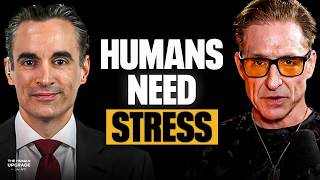
This is a YouTube video titled "The Psychology of Leadership: Life Hacks from a $500 Billion Fund Manager | Sébastien Page" created in April 2025. It features an in-depth interview between Dave Asprey and Sébastien Page, the chief investment officer at T Rowe Price, discussing leadership psychology, stress management, decision-making, and performance optimization in high-pressure environments. The conversation covers topics such as the Yerkes-Dodson curve, sports psychology parallels, strategic patience, feedback culture, and the use of AI in leadership and communication. The content is a single-speaker interview format with two participants, Dave Asprey and Sébastien Page.
Chapters
There's an ideal dose of stress that creates the highest performance, and it's different doses for different things. Maybe you hate bankers, Bear, but this one, you want to hear them out. Because the guy managing $500 billion a day doesn't just handle money, he masters pressure. Sebastian Page, chief investment officer at T Rowe Price. Governments trust him. Fortune 100s call him. He moves markets with a single decision.
Optimal performance does not happen at zero stress.
But this episode, it doesn' focus on money, it focuses on performance. If you procrastinate, you're not lazy, you're strategic. If stress runs your day, you're not broken. You just never trained for it. And if you still think leadership belongs in the C suite, you've already lost the room. Because the people who perform under pressure don't rely on motivation. They run systems. This is the psychology of a leader.
There's this whole area of research called Yerkes, Dodson's curves. The origins of the research is fascinating because they started with testing Japanese dancing mice. Those curves are fascinating because at zero stress, you're not at the optimal performance point. As stress increases, your ability to perform as a money manager or in any aspect of life increases.
How do you handle the mental burden or stress of managing $500 billion every day? Leadership isn't a title. It's a mindset. You don't have to be a CEO. You just have to start acting like one. You're listening to the Human Upgrade with Dave Asprey. Sebastian, thanks for coming to the studio in Austin, you know, flying across the country for this, the week of launching your new book, the Psychology of Leadership. I asked you to do that, and you were kind enough to say yes because you have an incredible story. The idea is you're running a $500 billion fund and you studied leadership and interstates. And I'm all about, well, how do you manage what's happening inside your thinking, inside your emotions? Because most people lose their mind around money. And so you've got this cool leadership thing in a big executive. You're all over the news talking about markets going up and down and all that stuff. And by the way, should I buy or sell right now?
What a tough question, Dave. This is probably the worst week in history. Almost. To ask that question, I'd say, sit tight, don't panic.
All right? Sit tight, don't panic. Is that basically the summary of the psychology of leadership?
That would be a nice summary. There's a lot in there, you know, sit tight, don't panic. I would say a few of the talking points would be think long term.
Okay.
Embrace stress for resilience, which I know you talk about in your show. So some, some of those would be the headlines.
How do you handle the mental burden or stress of managing $500 billion every day?
You have to learn to deal with stress. And the biggest finding for me writing this book was that optimal performance. Dave and I know you've talked about this on your show. Optimal performance does not happen at zero stress.
Thank you for saying that. And you just reminded me of something. When I first started the biohacking movement, the very first consumers of it were hedge fund managers, even before tech entrepreneurs. Because my seed capital, back when I was at Bulletproof and I was just getting it going, a small investment bank called clsa, you've definitely heard of them. Well, they hired me to fly around the world so they could go talk to hedge fund managers and I could dumb out be smarter. So guys like you are the most mental and stress performing humans on the planet. And the fact that you took the time to write it all down, to say, well, here's how I do this incredibly burdensome job. I want to really pick your brain in this episode.
You know, I wasn't doing well when I started writing the book, researching psychology, especially sports psychology, which is a big part of the psychology of leadership. I was beating myself up for being stressed.
Oh, you were mad at yourself for being stressed?
Yeah. And then I started talking to a sports psychologist. Name is Dr. Daniel Zimit. He's awesome. He's helped me in this project. And he looked at me and he said, you know, stress increases performance up to a point. And there's this whole area of research that's super fascinating. It's called Yerkes Dodson's curves. Yerkes's Y E R K E S. Okay. It's been researched in psychology and in particular in sports psychology for decades. The origins of the research is fascinating because they started with testing Japanese dancing mice. Okay. So I explained the tests in the.
Book and the fact there is such a thing as a Japanese dancing.
They have an ear defect. But those curves are fascinating because it's simple. At zero stress, you're not at the optimal performance point. As stress increases, your ability to perform as a money manager or in any aspect of life increases. And then up to a point, those curves are different depending on the task. So if you're trying to do research, to innovate, to write computer code, your optimal performance point on that stress curve is closer to a low stress level. If you're Doing powerlifting or you're running 100 meter sprint, there's almost no level of activation that where your performance is actually going to decrease. So the curve looks different for different tasks. And then the other part of this is that the curves are different for different people.
That might be an important personalization of stress. How would I know if I need more or less stress as a human being versus for a task?
So as a human being, you have to stop beating yourself up about being stressed. Tim Ferriss wrote I love this. He wrote embracing stress is like a superpower. Right. So that's the first thing. And we all want to be like Neil Armstrong. This is an example of a human being who had a really stress curves that were really interesting. So let's go back to the lunar loon landing in 1969. Neil Armstrong, Buzz Aldrin, they're in the lunar module. Everything goes wrong. Dave, It's a famous story. They lose connection, the computer stops working, they run out of fuel, the module goes off course. And this is a critical moment in human history. And Armstrong takes control and manually lands the thing in the wrong spot that wasn't planned for, but he lands it and then everybody knows what happened next. He said it's a small step for a man, a giant leap for humanity. Here's the thing that it might be interesting for biohackers. For example, he was hooked to a heart rate monitor. Can you guess his average heart rate for that mission while all of this was going on?
Probably like around 60 or something.
It's 75. It's like a resting heart rate for most people.
Wow.
And it spiked when he actually landed. But now we have someone whose stress tolerance is extreme. And there are ways you can improve your stress tolerance. And I know you talk about this in your show, but repetition, repetition, and even mental repetition, you're going to do something maybe a little stressful like going to Dave Asprey show. Well, spend the last, you know, 24 hours before kind of doing a few reps of what you're going to say.
This is really stressful for you. Is it?
I'm having fun so far.
I mean, you've been on CNBC and, you know, two minute interviews and all this is. Most of my guests aren't stressed.
I got to say, I love the podcast format. I'm just so psyched for it. First of all, you gave me some awesome coffee. And the thing with the podcast format is we can have conversation. If I go live, national TV on CNBC and it's two to five to 10 minutes. And it's about the debate of ideas, and it's high pressure. It's not the same.
You got to hit your beats and you don't get another chance on. On national tv. It's. It's really stressful, for sure.
It's not the same.
I noticed you brought a notepad and it fell down. You want to. You want to grab it. All right, so what's on your notepad? Like, what kind of notes do you take? So you want. So you're not stressed.
So there are things. This is security blanket. Okay. So a lot of times I do this, these media engagements, and I put this down and I never look at it, but it's a little bit of a security blanket. And in my defense, you have one, too. Okay. So the other thing is, there are things that are not as intuitive that I want to talk about. Instead of just giving you an answer about the research, I want to give you an answer that has a story behind it or something interesting. And sometimes I tend to forget. So, for example, under sports psychology, I have this idea that. Just give you an example in there.
That's cool.
Okay. So sports psychology applies to money management. It's fascinating. And one of the things that you have to learn is that you lose. You lose. You lose in sports.
Yes.
And you lose in money management, the power of losing. But to the extent you have a little edge and you can replicate it over time, over long periods of time, that little edge can add a lot. So I have a note here that says Federer, because Roger Federer went viral about a year ago, speaking to students, and he looked at the crowd and said, I have played 1500 games in my career. I have won 80% of them. That's a top tennis player. Close to top. Maybe top tennis player.
Didn't tell the Brand brothers when they were on.
He goes, do you know the percentage of points that I've won? It's 54%.
Oh.
And then he goes, no matter what game you play in life, you're going to lose, and you better get used to it. And there's another link between sports psychology and money management and life, frankly, is how sports psychology, surprisingly, is not about winning, Dave. It's about losing. And what do you do with the loss?
Yes. Okay. What do you do with the loss? Because there's a lot of people allergic to losing.
Yeah. So what do you learn from it, and how do you grow from it? When I started working on the psychology of leadership, I had this moment where I met a sports psychologist. I mentioned him before Dr. Daniel Zimit. Okay. The guy also has 44, 0 national titles in the sport of handball.
So that's, that's a really rough sport.
That's like squash, but you hit the, you whack the ball with your hands. Yeah, 40 national titles. He's a sports psychologist, but he's got his mental game together and he actually is a high performing athlete. So we sit down and I, I'm asking him about sports psychology, starting the research for the psychology of leadership. He starts telling me the story of his best match ever. And I listen. It's fascinating because it was maybe 10 years before. He remembers every point.
Wow.
He remembers where the ball was at every point. And then there's a moment where he's on his knees, the crowd's going crazy, he makes an extreme shot, and he almost has a tear in his eye. And he's telling me this story and it's complete letdown because then he goes, oh, and then I lost the next two points. I go, what? You lost the game? He goes, yeah, but that doesn't matter.
Because he made the shot.
And moreover, that day on the court, he grew. He realized he was playing a stronger opponent. He realized he had improved his skills to play at a different level. So what about that mindset that's so powerful is that you're starting to almost embrace losing as long as you grow from it. It's fascinating. Fascinating mindset. And going back to investment management, you got to embrace your failures and learn from them.
I'm going to go back to your cheat sheet. There's a reason you're doing it that you might not be aware of. It's not just a security blanket. It's one of the most powerful ways to memorize content is to make a cheat sheet as if you're going to cheat. And I admit that in ninth grade, I may have cheated on a test once or twice like everyone else in my class.
Where did you hide the sheet?
Well, I mean, you'd write it on piece of whatever, a little thing, and you like put it somewhere, your sleeve, your shoe. There's all this stupid stuff that kids do. And yes, I recognize that cheating isn't what you're supposed to do, and it was wrong and all that. But hey, I was a dumb kid. So I realized after a little while that just making the cheat sheet made me think about it and compress it and put it in my memory. And it's still. It's one of the reasons I write books, because the act of structuring Information so I can communicate it clearly in a book, makes it locked into my brain. So I'm just using it to be a better biohacker. So I think when you wrote that, you uploaded it in a more structured way into your consciousness. And this is a way anyone can increase their memory. So you're getting the security of having it, but the act of making it was the real value. Does that match your.
I could not agree more because, you know, 99% of the time I don't even look at the thing. But the process of distilling the ideas in a few words on a sheet, that process itself helps me prepare. And there's a lot to say about process, Dave. You know, process over outcomes. Here I have a process that helps me prepare. And writing, I'm just addicted to it. I just love, love, love, love writing and what you said, writing is learning. Absolutely. You organize your thoughts, you gain clarity on how you're thinking about an issue. There's nothing that compares to that. Sitting down with a blank page and organizing by writing. And it's a lot of fun when you get into it.
When you get in flow, it really is fun. And I'm assuming that means you didn't use AI to write your book.
No. But you know what, in terms of editing, I think the tools that are out there right now, they're really good. And I have no qualms about using AI based editing. It's just very powerful. Sometimes in my day job, I'll admit, if I write an article quickly, I might say it's been helpful for the intro and conclusion. So I have the article, I got to put it out, I go into AI and I go write the intro. Three bullets or help me craft a conclusion. I end up rewriting about 50% of it. But it's helpful, It's a tool.
It's totally helpful. And some people are saying, well, that's cheating. Look, you flew here on an airplane instead of walking. That was cheating too. We all do things for efficiency. And I have to say, my next book, I'm not going to let AI write it for me, but I am going to structure my ideas to the best of my ability. And I'm going to say, what did I do that wasn't as good as it could have been? And when it says organize it this way, I'm going to listen. And maybe I'll take it, maybe I won't. But I actually had a relatively difficult conversation with my girlfriend. There was something I was looking for the right words just to talk about It. And she's a relationship coach. We coach other couples at her. We deepen things. So it's not like we aren't well experienced. But I'm like, I know that I don't have the right words. So I kind of put it in. I was like, hey, help me out here. And it did a better job of structuring what I wanted to say than I was capable of. I don't have a problem with that. And I told her I did it and she laughed and said, that's so cool.
You know, I see it in business. It's starting to pop up. Sometimes I get emails and they're overly polite and agreeable and I know the person and I go, no way. No, that's A.I.
I did have in one of the companies I own. It's a very young company, the CEO or president, whatever the top executive was. I basically said, well, don't ask me if you want to do something, show me the plan with numbers and expected outcomes, which is a normal executive thing to do. And so he pasted in this long, stupid chatgpt thing. And I'm like, oh, we're going to play this game. So I pasted it back into ChatGPT and I said, shoot this full of holes and use as many words as possible. And then I pasted that and sent it back to him. I'm like, we can play the AI dumb game all day long. And that was a good lesson. And at that point we became more concise and, you know, intentional about our communication. So it can be used for wrong, but for research, I bet you found some studies you didn't know about as you were pulling this together. And that's where it's the beauty of, like, all of human knowledge. Knowledge is available as a leader, knowing that you have access to all of this, whether it's for writing the psychology of leadership or just in your daily interactions. Are you using AI not for trading, but say, in difficult leadership situations or when you're questioning yourself, do you go in and analyze it with an AI or did you go to a therapist? You're a sports psychologist. What's your practice when you hit a wall?
I don't go straight to AI. Maybe I will over time. You're kind of giving me an idea here to at least try it. When I face difficult situations, I just take a pause and try to be mindful of my own reaction and what's going on. I talk about this in the psychology of leadership. Leaders Dave, have, especially in business, especially in money management, a tendency to be decisive.
Right.
And that is a well accepted fact or quality that is completely overrated, especially when emotions take over. So I talk about this as psychology of leadership. I go, look, an underrated skill is strategic patience. There are plenty of decisions that come at you as a leader that might trigger emotion or stress, where the answer is strategic patience. In a lot of cases, not all cases, sometimes you need to make the decision, but in a lot of cases, you take advantage of the time you have left to make the decision. And we in business leaders, we tend not to do that. And I have a whole model behind strategic patience. But if you go out and look for a restaurant and you're walking around with your girlfriend and you're not too hungry and you give yourself an hour to find a restaurant, your standards should be really high at the beginning because.
You have an hour.
Yeah, you have an hour. But if, if you're like at the hour and you're starving, you might end up at McDonald's. I don't think you would ever end up at McDonald's, but it's unlikely.
Yeah, fasting is more likely. Okay. In my time as a venture capitalist, and I'm not one anymore because, well, I, maybe that's a predatory business model. Just kidding. VCs, we're all friends. I learned that the top VCs, they will tell you they have an intuitive knowing right away about a deal, and then they take a little bit of time and then they think about it. And if they line up, they write the check and they make money. But there's times when they have an intuitive knowing right away, that decisiveness, and then their brain says no. But then they invest anyway and they often make money. But if the intuition says no and the brain says yes, they never make money. So you trade much more frequently than that and you're dealing with a very large organization. How do you know when to use your intuition and when to use your brain?
Right? So as I said, some decisions require you to be absolutely decisive. There's no doubt about it. Other decisions, and this is where most leaders fail, require strategic patience. Okay, you know the difference? Very simple. How much time do you have left to make the decision? Simply asking that question, I guarantee you, even I myself, others leaders, we don't spend time even parsing through this. How much time do we have? Someone comes to you with an urgent decision, just ask the question, hey, do we need to make this decision now or not? You'd be amazed how that question does not get asked because there's essential version. You See, we're in business. We're moving fast. Let's go. No, just how much time do we have? And the longer you have, just take the time, because then things might resolve themselves. As a leader, when you have two people who disagree and they come with you to you to solve things, this is a really tough part of a leader's job. I don't know if your organizations, if that happens and how much of your mental space that takes, but it takes, surprisingly, a lot of a leader's mental space. Resolving conflict. Well, a lot of those are opportunities for strategic patience.
Hey, we use pepper spray.
That's the other way pepper spray model. But if you wait it out and you go, okay, let's all take a beat, and you don't immediately rush to the rescue of resolving the conflict. Oftentimes you're empowering people in your team to resolve the conflict between them. You're giving them time to do it.
It took me about 10 years of running a company or a portfolio with multiple companies in it to really get down to that. Where at the beginning of being a CEO, someone would come in with a problem and I'd believe it, which is a bad idea. And then, well, let's fix this. And now, unless it's really, really urgent, I'm just going to say, okay, what are you going to do about that? And I'll maybe get the story from the other side and I hold back and I want my people to resolve it. And if I have to step in, it means my culture's not working.
Right, Right.
So what percentage of the time when there's conflicts do you have to step in as a CEO?
First of all, you mentioned culture that is super important in resolving conflicts. And there are cultures where people just want to agree and is consensus driven and that's not productive. And then there are cultures that are just combative.
Yeah. Like the Steve Ballmer, Microsoft kind of thing.
And you know, they're famously in the money management world. There are places where it's well known that it's all about direct confrontation. One of my friends works at one of these places and he said there's lots of Ferraris in the parking lot. I've never seen so many miserable rich people. Yeah, that's the importance of relationships. So the key is trust and mutual respect. We don't necessarily have to like each other. We don't necessarily have to agree on everything. But if there's a certain level of trust and mutual respect, and if we assume good intentions as opposed to assuming bad intentions, then we get to a place where ideas survive on their own merit. It's just so important in money management, Dave, because what you want is get the best thinking of the team on the table. It's super hard. We don't know the future. We're allocating money and we don't really know what's going to happen in the world.
Right.
So we need the ideas to bounce and we need. We need to almost like reach team, team level, flow. An engagement.
You sound a little bit like, like Ray Dalio when you say that. Who's written one of the most amazing books ever. And so you're saying you want an idea meritocracy.
Right.
Now, if people aren't really comfortable with losing, then they're going to lose the argument and they're going to be emotionally reactive.
Right.
So how do you get comfortable losing an argument without losing your mind?
Rule number one, your idea is not you. Oh. Your idea is not you. And by the way, Ray Dalio, in my mind is an extreme version of this. And I read Principles and I loved it. And I also read, you know, the other book that maybe goes unmentioned, but that kind of goes behind the scenes.
Okay.
I'm actually blanking on.
Okay, got it. This is another one about the culture at Bridgewater.
Yes, but it's an unauthorized version.
Oh.
And you can see how out of hand and extreme these things can get. Mutual respect sometimes is more important than, you know, me giving you direct, immediate feedback in your face. It's not for everybody, as they would say. Anyway, I don't like talking about competitors. I'm in the money management business.
Yeah. But I think the respect that we both have there comes through loud and clear, you know?
Yeah, absolutely. Absolutely. But the idea meritocracy is necessary for high performing teams. Absolutely. And you have to do this, leave your ego at the door. Yeah, right. That's. That's key. Is not taking it personally. Your idea is not you. And the process of feedback, which is a big part of the firm we just mentioned, is key to that. The problem is everybody hates it.
Okay, let's talk about this. I do employee performance reviews. All my executives do. We have software that helps and we have structured conversations.
And.
And I work with people who I think are great. And still there's been times where I say, you know, there's this one time, you know, this. This wasn't what we want. And I can never predict when someone's just going to be fully triggered and just lose their mind over necessary feedback. What do you do about that at work and then in your relationship.
First of all, let me ask you, do you like that process or would you rather be doing something else?
When you have to give, it's a horrifying process. I'd rather be doing something else.
Yeah. No one likes it yet. We need feedback. We need feedback to grow. So Dr. David Rock, I mentioned him in the Psychology of Leadership, has this hack, if you will, for feedback. I see your eyes light up when I mentioned the word hack.
Yeah. Give me the special recipe here.
It's so simple. Ask for it. So build a culture where people proactively ask feedback. So you would love his research, because there's neuroscience. They hook people up to monitors, they have them go through exercise and they measure the biological response to the feedback process. And they do this little tweak instead of just giving feedback, asking for the feedback and then receiving it. That decreased the stress response by almost half. So as a leader, you got to go around and say, how did I do? And then people look at you doing this and then they start doing the same. How did I do? After this device, before I fly back home, I'm going to ask you, how did I do? And then there's another trick. Make it forward looking. What can I do better next time to improve? Okay, so that takes a lot of the stress out of the feedback. But let me ask you a question. Sure. Can I give you some feedback?
Absolutely.
But how do you feel when I ask that question, though, when I. Well, isn't that like one of the most stress inducing questions you can.
No, not for me anymore. Literally.
You didn't flinch.
I felt excitement right in my chest.
Awesome.
But I have spent six months of my life with electrodes glued to my head and I, I fully believe in my soul, in continuous improvement. And I only do that with data. So if you've literally been like, Dave, you know, you're dressed like, I would have been like, this is so cool. Someone's actually telling me the truth. My big challenge actually is, and you may get this as an exact too. People tell you what they think you want to hear instead of the truth. And I, I want to be reality based in everything I do.
Right.
How do you get people to tell you the truth?
There is a way. It's not perfect. It's the anonymous peer review. Now, this is another one we all hate. But at the same time, because it's anonymous, I'm ambivalent about it. But things will surface that otherwise would be very difficult. Now, if you have the right culture and people are like you. And I say, can I give you some feedback? And you generally had a positive reaction. You might be the only person, like, out of a million who will generally have, can I give you some feedback? And you're like, please? That's amazing.










