Vaccines Poised to Fight Chronic Disease – Lou Reese – #641
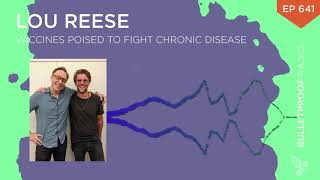
This is a YouTube video titled "Vaccines Poised to Fight Chronic Disease – Lou Reese – #641" featuring an in-depth interview recorded in December 2019. The conversation is between Dave Asprey, host of Bulletproof Radio, and Lou Reese, founder and CEO of United Neuroscience. They discuss innovative vaccine technologies aimed at targeting chronic diseases such as Alzheimer's, Parkinson's, and cholesterol-related conditions by harnessing the immune system. The dialogue covers scientific concepts, regulatory challenges, safety, and the potential for democratizing health through accessible long-acting biologics. The content is a detailed expert interview focused on medical innovation and healthspan extension.
Chapters
We're talking hundreds of thousands of dollars a year per patient or millions of dollars a year per patient. And if we look at certain car t therapies, we're talking over a million dollars a year for a single treatment. And it's a single treatment solution. These are extremely expensive solutions and they offer unbelievable benefit to people. And I love that that suffering has been eliminated. And I commend the scientists that have made all those amazing breakthroughs. My goal is for every single person on the planet to be able to afford this. My goal is for every single government on the planet to be able. That's what I mean by democratizing health. Every single person should have access to the best health. Bulletproof radio a state of high performance.
You're listening to Bulletproof Radio with Dave Asprey. Today's cool fact of the day is that fidgeting affects brain activity. The seemingly useless motion of fidgeting has profound and widespread effects on a mouse's brain activity, at least according to neuroscientists at Cold Spring Harbor Laboratory in New York. And they recently reported this in their findings in Nature Neuroscience. The researchers used several different methods to eavesdrop on nerve cell behavior in animals brains. As the mice completed normal mouse like tasks. Video cameras and a sensor embedded on a platform under the mice picked up every move the rodents made. And there were a lot that pretty much means that they're almost like on a social media network where they pick up every move that you make. Now the mice would wiggle their noses, they would flick their fingers and fiddle their hind paws while concentrating on finding the sound or light. And those fidgets showed up in their nervous cell activity. And the fidgets predicted a big chunk of neural behavior and even had stronger effects on brain activity than did the task they were actually doing, according to the research. And one possibility from this is that body motion and its big effect on brain activity is actually part of the thinking process. So the next time your kids are fidgeting, you can just say, hey, thanks for fidgeting. I know it's actually making your brain work better. And that's pretty awesome. This is a special edition recorded live at the XPRIZE Visioneering Summit. This is where a group of people get together every year and we figure out what the next things to improve the world are going to be. We're talking about things like the privatization of space. The first X prize was around the first group of any type who could send a ship to the edge of space and back down and then back up again two weeks later. Was going to get $10 million that kicked off this whole effort. It's now a 25 year old nonprofit group that is solving global problems. Last year I helped to fund the Carbon Capture X Prize. This year I'm pitching an X prize around actually hacking stress and how we're going to be able to measure stress of all humans on Earth so we can see whether what we're doing to our environment is working or not working. Who knows if that'll get funded. We. But this is like one of the most fun things they ever get to do. And the interview today is going to be profoundly interesting because it is with my friend Lou Reese, who is founder and c something o of United Neuroscience. Lou is working on actively hacking our immune response to all sorts of things that you wouldn't think about. This is one of those three days every year. I get super excited and thanks to Peter Diamandis who's been on the show lots of times. Naveen Jain, who's been on the show, who's a trustee, Joe Polish is involved in this as well. Former guests on the show. But this is a group that's changing the world. The most smart, interesting, forward thinking, disruptive individuals. And Lou is one of those. And what Lou's doing is hacking our immune system. So they'll do what we want. Lou, welcome to the show.
Thank you so much for having me, Dave. It's awesome to be here. It's really an honor and it's great to be with you.
You're wearing some kind of funky lightly tinted glasses. What's up with those?
You know, these are the Ugo Rodney Jane Goodall collaboration glasses and they're entirely plant based and you can throw them into the ocean and they biodegrade. So it's, it's one little thing that we can do to avoid junking up our world.
So you're just wearing them to look cool?
Well, there's prescription I have to see.
Oh, they're prescription too. You got a little tint on them. I was wondering, are you one of those Irlen lens guys?
No, no, no. They, they block the majority of UV light so it's good for your eyes and, but, but more importantly, I can see.
Got it. So that whole prescription thing, I thought I would just hack my eyes and I went from 2060 down to 2015 just by training my eyes. But if you want to rely on prosthetics and be part cyborg because you now have a piece of mechanical hardware in front of your eyes, that's cool. I like cyborgs.
Man, I'm doing my best here, but I think that I'm going to have to talk to you about training those eyes, because that sounds significantly better than relying on these glasses.
I'm just giving you crap. But I did go from 20. Well, I had Lasik in 1997, and then that was. Put me to 2015. But then over the course of five, 10 years, it drifted till I was 2060 and I developed astigmatism. And then in three months of training, I got back to 2015. And years later, with all the stuff I do, I'm still 2015 with full flexibility. I can read the finest print a teenager can read. It's crazy. It's not even supposed to be possible. So hacking your eyes isn't what we're going to talk about. But I just like, you have this cool look. You look kind of like a surfer and you're wearing these funky glasses. I'm like, these have to be some kind of a cool biohacker thing. But they are because you're actually saying we got something that's going to dissolve when we're done with it instead of clogging up the ocean.
Yeah, that's the idea. This is a world hack, not a biohack.
On this. I'm have to talk to you and see if I can do. If I can get some of that tech into the glasses I'm wearing. One of the other companies I started, but that's not our topic, Immune Systems. All right, give me your story, man. How did you get to be where you are? Why do you care so much about this? And why the heck are you qualified to hack some immune systems?
You know, I'm probably not qualified, but our team is. And I believe that the team and the science behind what we're doing is really solid. And I think they've. We've been developing it for 30 plus years, and it's. It's really compelling. How we got here is impact. What's the largest impact that you can have? And I feel like the largest impact that we can have is on addressing the largest issue facing mortality in the world, which for the first time ever last year, ceased to be the enemy that's outside of us. It ceased to be bacterial infections and genocide and starvation and migration, mass migration of people. It stopped being those things and instead became ourselves. It became chronic illness. That's the number one killer. And so that was the first time in history in the existence of mankind, that what killed us was things that our body made inside rather than things that were harmful coming outside. So the exogenous is no longer the primary enemy. The endogenous is the primary enemy. And seeing that transition is really important, I think. And the question then was what can we do to alleviate suffering and alleviate ultimately elements or entirely chronic illness. And so we targeted some of the largest and most impactful diseases in the, in the world right now, including Alzheimer's, which is the sixth leading cause of death, the only one in the top 10 that's increasing, which is shocking. Parkinson's, where we have a vaccine or a long acting biologic that is a V word. Yeah, the V word. Darth Vader. And it's fascinating. So that trial's happening in man right now and We've got a PCSK9 drug that is going to potentially eradicate cholesterol problems. So these are major innovations that I think can really do a part in eliminating suffering and increasing health span.
You said two things that are really fascinating. So the first one you said a vaccine for Parkinson's. So what do you mean when you say vaccine?
Well, so it's really a long acting biologic. And I'll explain a little bit of the mechanism in terms that I, that I understand. And you know, there are people that are over 100 that perform exceptionally well both physically and mentally. My grandfather was one of me, died at 102 and he was doing the New York Times crossword puzzle in Pennsylvania until he died. And he was unbelievably active physically in all sorts of ways until he died. And the idea really was that what makes those people special, what makes them stand out and how can we see those areas and harness them and hack everybody's immune system so that they can do that? That's really the trick. That's the question. And it turns out that a lot of these older high performers have antibodies that their bodies naturally generate against toxins that their bodies are naturally generating. So when you look at the blood of some of these high performers and high performing agers, what you see is that they actually have antibodies against alpha synuclein and forms of a beta.
You got to describe what these are for people who don't know those.
So alpha synuclein is, is a, is a protein that's frequently linked to Parkinson's. A beta is a protein that on its own is, is, is probably quite helpful, probably actually clears bacteria that somehow makes it across the blood brain barrier. However, as you age, just like your skin changes its texture, those A beta molecules change and they glob up. And when they glob up, they form dimers and oligomers and fibrils, which means they're stuck together. And when you got that stuff stuck together, Science just did an article on this a couple weeks ago. It causes neuronal death because you disrupt the communication between the synapses and neurons, and that literally causes the neuronal death. So what we see is in the people that have those antibodies naturally, they don't have that neuronal death, they don't have those consequences, and they don't have those, the impending diseases. And so I think that what we have is an opportunity and a technology platform, really, that allows us to specifically alert the body to these targets one at a time. And the body then generates those exact antibodies, like my grandfather, in these superagers. And it's amazing because then you get the results that those superagers get, right. You have an antibody production that is actively clearing only those toxic endogenous proteins, which is really amazing.
What if you get it wrong? What if you turn on an antibody to something useful, like, dare I say, cholesterol?
Yes. So the cholesterol is a great example. It's. It's my belief that if you turn on the immune system to something that is a harmful target, there's absolute risk to that. And so, so that's something that we are. We are so focused on avoiding. And that's why we go after primarily targets that are by their very nature toxic and should not be there.
But cholesterol is a substrate for testosterone and cell membranes. It's not toxic.
So with cholesterol, we're not actually going after cholesterol, we're going after PCSK9.
Now, what is that compared to cholesterol?
So PCSK9 is a hormone that has been related to the types of cholesterol specifically that lead to coronary events. So there are approved monoclonal antibody drugs that are the next line of treatment in addition or conjunction with statins or on independent of statins, usually in conjunction, though. And you have to go through multiple lines of treatment of statins that might not be effective for you before anyone will agree to pay for the PCSK9 monoclonal antibody, because the insurers won't pay for it. Nobody's going to pay for it until you've gone through these lines of treatment. By then, the damage done to your heart is irrevocable. So at the time that that's now, you know, you're on your last leg, so to speak, you then can have access to this PCSK9 vaccine. To me, this is immoral. Oh yeah. This is fundamentally wrong. So what it means is, it means that what we need to do is have every single form of medicine or health available to everyone democratized. And absolutely, that is our priority. And so our vaccine technology, and I'm using that word very loosely because it's really a long acting biologic. It's something that's just like really body dependent. Your body, your immune system is being unlocked and unleashed to target toxins that are generated by that exact immune system. So the most sophisticated machine in the world ever is our immune system and we're really just targeting it at these, these misshapen or these elements of chronic illness, these toxins.
Okay, so we know there are genotypes where you make excessive, either oxidized cholesterol or small particles that are not good for you. And if there's a way to tell your immune system, hey, go after the thing that's making that and turn down what you're doing, that makes a lot of sense.
That's exactly the system. I mean, that's the goal. And what's interesting to me, and what I find is a moral imperative is, is how great is it that by using this technology platform, by, by unlocking the body's own power, you can democratize these drugs that, that people can't get, can't afford. You know, it's, it's, it's a matter of, it's a matter of really helping, doing our very best to eliminate this, this little area of suffering.
I, I would say flat out, statins are bad for 99% of people who take them because they destroy mitochondrial function. Like the, the evidence is pretty clear there to the point that some of the drug companies have patents on putting like coenzyme Q10 with the statin drugs because they know it's causing harm. But they don't actually sell that, but it is patented. So I've looked at this for years and saying statins are a bunch of garbage. And people with low testosterone talk about low quality of life. But what you're talking about is saying you're not going to give someone low cholesterol, you're going to turn off the formation, or at least turn down the formation of certain types of this by having the immune system do something.
Absolutely.
Now people might say, hold on, that's a vaccine. But I'm going to talk about something weird that I've done that's going to drive people nuts. There's a form of allergy therapy. I've had allergies, especially when I was young and I still have some food allergies, but I turned them down pretty dramatically. Even some of the mold allergies. You guys remember something gross? I know that you probably are medical. There's a guy who figured this out about 20 years ago. You can collect the immune signaling molecules from your urine after an exposure. So we've all heard of this Indian thing where you drink your urine.
I'm very familiar with it. My father was a practicer of that.
Oh yeah, no kidding. He had those antibodies. Are you a practicer of that?
It depends on the situation, but yes.
All right, there we go. I will admit I tried it. I read the book years ago. I was like, all right, anything that's going to make me perform better. Like I said, if I could live on gravel. Screw those vegans. They're eating vegetables. That's mean. I like gravel, by the way. Gravel doesn't work. But neither does a vegan diet, just so it'd be really clear. Um, but anyway, if you, if you go down that, that whole path, like, all right, I'm going to try this. So I tried it and it was not as horrible as you think, but certainly not pleasant at all. Didn't see any results. So I found this cool thing.
Better chilled.
It's better chilled. I found if I blend it with ice. Okay, I didn't ever do that. That's disgusting. But what I did find out though is you can eat something you're allergic to, or, you know, roll in cat dander or whatever you're allergic to, wait 4 hours and then collect your urine and it'll be full of igg molecules. And then you take a sterile sample and inject it intramuscularly. And when those proteins are injected intramuscularly, your body's like, there's a foreign protein in my muscle. It's an invader. Let me make antibodies to my own antibodies, which is a beautiful hack. And you know what? It actually works. It reduced my sensitivity. And so I did this at a doctor's office. And then I'm like, this is too much work. So I ordered the little filters that you put on the syringe and I just did it at home for a while. Yes, I self injected my own urine. How metal is that?
I haven't done the self injecting of the urine. Gotta be clear on that. Haven't done it yet, but I'm now very interested.
It's not too late to start. But this is just an example and I'm sharing this probably because it's like, what the heck? But also the idea of using your immune system to tell your body to behave is something that is cool. Now what you're doing though, when you talk about vaccines, okay, vaccines have developed a negative rap.
Absolutely. Why is this so vaccines, that term is misunderstood and categorized across a broad variety of things. No one has ever successfully vaccinated. There's no single product in animal or man approved, with the exception of our platform technology, against an endogenous target.
Endogenous meaning just meaning already on board.
Something that the body generates versus something.
From outside of you, like an infectious disease.
And those guys, we call them exogenous. These are big words that I have to use a lot because otherwise these folks, you know, everybody, everybody always wants them to be those.
They're in my books too.
Yeah, it's those enemies outside or those enemies inside. And the enemies inside. It's real hard to get the immune system to want to do this. And the reason is that by definition, getting the body to attack things, or antibodies create antibodies against things inside by definition or theoretically in an unchecked manner, that is absolutely an autoimmune response. That's the definition of an autoimmune response. So what you don't want is an autoimmune response that isn't directed towards something toxic. So if you can create, which we've been able to do successfully in, in every patient that's been vaccinated, if you can generate antibodies against highly specific toxic targets that are inside, you basically have made your own body a drug factory against the toxic forms of proteins floating around in your body.
So you could conceivably say, well, here's what the antithyroid antibodies look like and people have Hashimoto's. And you could then say, hey, body, make antibodies for your antithyroid antibodies and you could cancel out an autoimmune response.
In theory, yes, absolutely.
So the technology platform you're working on could allow us to figure out what things are causing autoimmunity and go through and selectively turn off autoimmunity to a bunch of things.
Absolutely.
Okay, so that could be kind of cool because a huge number of the things that cause aging are tied to autoimmunity because long term chronic inflammation will cause at least three of the seven pillars of aging that I talk about in Super Human.
And as a very good example, brilliant link there, because that's exactly what one of the other other kind of areas of focus that we have are on certain targets, hormones specifically, that are related to. Exactly chronic inflammation. And so if you can target certain interleukin receptors, we have a belief that you would be able to, you would be able to actually, you know, fight elements of chronic, chronic inflammation, if that was a mouthful.
There are certain inflammatory cytokines. These are compounds of inflammation that are created by eating bad fats, by chronic inflammation, chronic stress, having bad bacteria in your gut making lipopolysaccharides. There's a long list of things, Lyme disease, toxic mold, probably some types of electromagnetic frequencies. But anytime there's inflammation, there will be one of a handful of inflammatory compounds. And I do a lot nutritionally with herbals and fish oils and all sorts of stuff to manage my inflammatory response because I have one hell of an inflammatory response, because I have a history of autoimmunity, history of obesity stuff runs in my family, I have genetic stuff. So I'm set up for inflammatory failure. I'm like, I'm not going down that path. So you're saying there may be a day down the road where we can figure out which inflammatory cytokines are the problems for me and tell my body, could you stop that shit? And it's actually going to be an injection or an oral supplement or something I can take that's going to do that.
It would be an IM injection and it would be, be one of the, the hallmarks of our long acting biologic platform is that you only really need to get these IM injections once a year, once every six months after the initial prime and boost paradigm. And so these are extremely convenient, as convenient or more convenient than any flu vaccine. And in the future, and these are moderately near term realities. What, what I would like to see is this is about distributing and democratizing health. 80% of the people on the planet receive some form of inoculations that have increased health span dramatically. If you have an opportunity to think of that many people, we're talking 6.8 billion people. If you can target all of those people with an existing infrastructure that's as simple as a shot, you can really do a huge part of eliminating chronic illness. And back to the specifics with these cytokines is absolutely what we're going to find is that certain people have different levels of cytokines that are responsible for all this.
Very true.
And when we do, one of the great things about the long acting biologic platform is that we can combine targets and we can do it without cross reactivity, meaning without harmful side effects or any consequences to the immune system or the body. And, and we can have the body go after multiple targets that would be specific to, to Dave's issue with inflammation or specific to Lou's issue with inflammation. And I think that that specificity, that personalization of, of the, the paradigm of medicine and health is, is, is an amazing thing to witness right now.
You said some big stuff. You know, Democrat, am I going to get like a free dose of thimerosal or aluminum or any other real yummy adjuvants with this kind of stuff?
You know, the. Every. Everyone uses a different adjuvant. Right.
And so that define what an adjuvant is. For people who aren't familiar with it.
An adjuvant is like the extra stuff that they shove into things so that it mixes. In terms of the liquid, I thought.
That was an emulsifier. The adjuvant was something that was more to trigger an immune response in excess of what the, the compound would do.
It's, to be honest, it's both. Right. You're using both and, and, and it, but it's, it's, it's, it's heavily utilized for, for, for the compounding purpose. Right, okay. And so, so one of the realities of the adjuvants is some of them. Absolutely. Agifos is an example, have been shown or to increase an immune response. And, and there are very few, however, that are approved. And so one of the things that's, that's that I think is actually necessary in the space. And one of the things that we're working on as well is increasing the breadth of things that are approved as adjuvants. Because I think that's going to be critical so that we can get past the agifos days and into water and oil emulsions, for example.
So you're saying one of the problems is that you'd like to use things that might be safer, but you're not allowed from a regulatory perspective.
You have to follow a very tight regulatory pathway in terms of what adjuvants you're using, utilizing and which ones are approved. Otherwise you're actually getting an adjuvant approved first and then a drug that would be helpful.
Can you just make the drug without the adjuvants? I mean you can get adjuvant free vaccines of like. I think, I think I got a tetanus one a while back. I actually got tetanus.
Really?
Like, like lockjaw, you know, go to the hospital, they better give you the immunoglobulin things or you die sort of thing.
Wow. Well, that's, that's, that must have been tough on the podcast, the joys of.
Living on a farm and stepping on a rusty nail and then getting on an airplane are many.
Oh, my gosh. How long does that take to happen?
You know, it took about four or five days. And I thought, oh, I'll just. The nail didn't go in very far. I'll just wipe it with some iodine. I'm fine. If I had more time, I would have hit it with ozone, which probably would have prevented the problem. And then I'm like, oh, this is a little infected. And then two days later, I started getting the tingling, and my wife, who's an ER doctor's, like, you're going to the hospital. I'm calling them and telling them to fly this stuff in ahead of time. Like, this is actually wait another six hours. You could die. All right, so I cut in line even though I looked healthy.
Well, I'm really glad that that worked out.
I mean, but they did send in the tetanus vaccine that didn't have the adjuvants in it. Because I have a history of responsiveness to thimerosal. And when I say a history. My wife and I started a medical lab testing company in the mid 2000s that was doing radioactive cell counting of white blood cell proliferation in response to different environmental toxicants. So you could actually test white blood cell proliferation in response to methylmercury, metallic mercury, or thimerosal. And in my blood, we found that I responded very heavily from an immune perspective to that adjuvant. Wow. But it wasn't antibody mediated. It was something else. So what I'm saying is I have some concerns about all the other crap that's in vaccines, but I also really like the idea of telling my body, hey, I would like you to follow these immune rules. And if we don't solve this problem and just get past all the emotional reactivity on either side of that debate.
And just say, look, how do we.
Get a signal into the body that says, hey, eat up this thing that will kill you. It seems important. Or I'm going to pull all the blood out of the body and run it through this giant machine, and you can live in an iron lung and we'll have nanobots. That all seems like more work than just programming the system a little bit better. So I'm kind of excited about what you're doing, but I want to know you're not going to shoot some other stuff into me that I don't really want.
Yeah. So the way that. The way that we. We. We have designed this Long acting biologic platform. Is that the so far. And you know, you always got to do, you always have to think about the future. But in every person that we've used this platform, it's been unbelievably safe.
How many people are we talking about?
So there's been over 100 people or right around 100 people that have gone through different trials with us. And one of the things, how many.
Of your own injections have you taken? Oh, look at that. He doesn't want to answer.
So I can tell you that we have used this long acting biologic platform against endogenous targets and pigs which are remarkably similar to humans. And we've been delicious and delicious. I love bacon and nothing's better than bacon. And it's remarkable because what we've seen is that we've dosed 5 billion pigs. We vaccinate 25% of the pigs in the whole world.
Not we United Neurosciences, but humans dose pigs.
One of our, one of a company that uses, that is affiliated sister company that is only for animals that uses this platform technology. And that company for example, was vaccinated over 5 billion pigs for what? For LHRH and for foot and mouth disease, depending on the incidence. Now what's interesting about this is that there's been contrary to any safety concerns, it's actually taken significant percentage of market share from other companies that were using what I would consider to be.
Using antibiotics. Right?
Yeah, they're using, well, they use antibiotics, they use vaccines from, from you know, major pharmaceutical companies. They use a variety of things to maintain these, these pigs. And one of the things that that's and, and lhrh, you know, that's an immunocastration that's allowing your body to castrate itself. And the reason that we have to do that with pigs, nobody knows this about pigs, but all male pigs are castrated because if they're not, they have endosterone and it makes them, it's called bore taint and it makes the meat unpalatable to male consumption, basically because only men have an adverse reaction to the aldosterone. But it makes it inedible. So one of the things that we've been able.
Hang on a second. My pigs aren't castrated. I have eight pigs. I mean we butcher them after probably they're less than a year old, but maybe that's why. But you can't tell the difference between a male pig and a female pig. But if you let them grow tusks and mature, then you have to cut out glands and do all sorts of weird stuff I don't know how to do. Yes, okay. But for commercial farming, you don't want boars to grow tusks and put all their energy into that stuff. And it does create a stronger flavor, especially if they're highly crowded and stressed.
Which my pigs aren't, which makes them better pigs. I mean, happy pigs are better pigs, just like happy people are better people.
It's actually unethical to crowd pigs the way they do. So I'm not a fan of industrially raised meat, but the idea that you could use antibiotics, which will kill the planet if we keep doing it that way, including glyphosate, but just antibiotic resistance is destroying our soil, our waters, our ecosystems, our gut bacteria. So if you can do a vaccine instead of heavy duty vaccine in animals instead of heavy duty antibiotics, I would choose the vaccine every time. Unless it means the meat does something weird to human immune systems. Any studies on that?
Yeah, so we studied extensively. In order to do any of these things, particularly in feedstock, anything that's going to be consumed. There are extensive tests around that in terms of the transmission of any toxins to potential consumers or anyone who would eat it. And you do those in both animals, and you also do. And you do extensive testing around it. So you're giving huge quantities of these things so that you make sure that they're safe and inert.
All right, so back to your own use of your own company's products.
Yeah, so what I like about that is that that gave us tremendous confidence in going after a broader group of targets. And the reason I mentioned them pigs in the first place is because that was the first ever platform that was licensed against an endogenous target in humans or animals. And the reason was that it was safe and it did the job. And it did the job in a way that was disruptive for farmers and disruptive for the pigs. Because one of the worst things to see if you've ever been inside of a, of a commercial farm is when they castrate the pigs. All the other pigs are biting them and licking them and, and the wounds are, are, are unbelievably detrimental to the feed conversion ratio and the health of the pig, meaning the, that they don't add as much weight thereafter because they're stressed.
Wait a minute. We all know it's calories in and calories out. There could be no such thing as a feed conversion ratio. What are you talking about?
Well, you know, it's, it's, it's one of them things. And. And the farmers are very specific about it. You know, that's their. That's their key metric. And. And what? I find it.
Okay, but humans are different because with us, it's calories in, calories out, but with every other animal, so that's different.
Exactly. Humans are special.
So if you're listening to this, you're going, what's Dave talking about? Like, ranchers and farmers know damn well that if you feed certain drugs or do certain things to animals, they get fat on way less or way more calories. Humans are the same way. And anyone who tells you it's about counting your calories is completely ignorant of biology there. All right, keep going.
Couldn't agree more. Yeah. So it's really an interesting time. I couldn't be happier. Be alive right now. When you. When you wake up and you look at the level of innovation and change and promise and understanding that we have of the body and the fact that these things are becoming more and more clear now, we're still looking through a fog, right? Nothing's a hundred percent. Nobody knows everything about the body. Mysteries are unlocked on a daily basis. Thank you, Dave. And one of the things that we're looking at is that's a future with less suffering, and that's a future with a greater health, like, greater health span.
So I'm totally down with all that stuff, and I'm still fascinated with this idea. Now, all right, you got to tell me if you can't tell me that you've used your own company stuff because you have, you know, you want to get life insurance, or there's some regulatory reason, you say I can't answer that question, but otherwise, you're going to have to tell me why you haven't used your company's products on yourself.
Well, okay, I'll tell you the truth. I have absolutely been adamant with my head of regulatory that I would like to.
Okay.
One of the issues that I have is that it's a big responsibility to try to save or help or eliminate suffering for the entire planet as best I can. And one of the things I can't do is mess that up. So I can't do anything that would lead to me not being able to help other people.
Okay.
And so by me, at this exact moment, that's the reason why I haven't. It's strictly based on the regulatory reality.
But no one would know.
Well, today they would.
You guys, like, sneak a little sample out and jab it in your ass. I mean, how hard is it?
Well, no, it would absolutely be that easy. And that is something that I had threatened repeatedly with my head of R.
And D. Now we're getting somewhere.
And so that's exactly what I'm. So the answer is I'm absolutely willing and able to take this vaccine. Any of these drugs, any of the products we make. I think they're 100% safe. Personally, I'm 100% behind it. There's nothing that I believe in more. And the reality of the regulatory thresholds and hurdles around that and allowing that to happen without a potential impact with the FDA or the EMEA or any of the other regulatory bodies, that's the only risk that makes me not want to do it, is that I want to make sure that these get to people.
So you're concerned that if at this stage of the drug development, you go and you use your own company's drugs off label, that a regulatory agency would then come in and say you didn't follow appropriate investigatory things. You weren't registered in clinical trial.
Exactly.
Why don't you just register yourself in one year clinical trials?
So that's a great question and absolutely something that I've also pitched my head of regulatory, and I've been pushing this really hard. If we. If you ever talk to Lee Shaw, he'll let you know. And this is something that I, That I am. I am adamantly on board with the issue, which is amazing, is that, you know, we have very specific criteria for these clinical trials. So you have to be a certain age, which I'm not. You have to be. You have to have a certain set of diagnostic backgrounds depending on it, which I don't. So it's very difficult because, again, I don't want to jeopardize what I'm doing because it would get it. It could hurt billions of people. Yeah. Yeah.
Okay. So. So you're. You're first in line.
I am. I am first in line.
Will you commit that when this is a commercially shipping shipping, each of these a commercial shipping drug, that you'll be the first person to inject the commercially shipping dose?
Absolutely.
All right. That's a pretty big commitment.
Yeah, I'm on. I mean, this is. This is something where, you know, we're not doing this for any other reason than to do our part in eliminating the areas that we think are the largest areas of human suffering.
Now you have kids?
I do. I have two amazing kids.
How old?
5 and 8.
They gonna get it?
Absolutely. The. Depending on these. Absolutely they will. Depending on their age and when it would Be appropriate to utilize these, these medicines, you know, in other words, where the risk factors come in. Yeah, absolutely. Okay. 100%. Yeah.
What's the age that you think we should start using these signaling molecules for anti aging?
I think that preventing problems is easier than solving them.
Amen.
I think that Einstein had a great quote around this. He said, smart people solve problems in geniuses, prevent them. Unfortunately, I'm not a genius, but I still believe that our team is filled with geniuses. And I think that we can solve these problems and I think that we can solve them by prevention, not by doing it after the fact. Yeah. Not by. Not by seeing how much damage can be done first.
Right.
And so my answer is as early as possible. And so for something like the PCSK9 treatment, you know, it's my belief that those targets are things that in theory and after appropriate, you know, regulatory hurdles and everything else that would be necessary are things that can be administered extremely early. If you look at. There was a study that recently came out that showed that at the age of 10, the average American child is already showing signs of the hardening of their arteries. So at the age of 10, based on the typical diet in the West.
Yummy.
Children are seeing actual signs of atherosclerosis, which is the hardening of the arteries.
You've clearly seen the kids menu at most restaurants.
Jesus H. Christ.
So unacceptable. And my son just two days ago.
Was like, daddy, it was this thing.
And they gave me the menu and all they had was like these weird chicken fried things.
Everything's fried.
He said, I'm not gonna eat those. Cause I know I don't feel good to eat that. And so he said, there was some fruit. So I ate a piece of fruit. And he said, then I ate one of the bars, the bulletproof collagen bars of his own choice. He could have eaten the fried stuff. He's like, my tummy hurts when I eat that. I don't want it. But if you imagine what most kids are eating because you save $2 at the restaurant, no wonder they're doing that. But here's the concern. Let's say that we go, this is great. And we inject 10 million kids with this stuff, that's going to make them live a lot longer. And then we start finding 20 years later that if they have the immune molecules created by your technology that it increases. I'm making this up. But increases tumor risk or some other bad thing. Is there a counter agent to turn off? Do you make another.
Oh, that's such a Great question, Dave. I'm so glad you asked that. Okay, so what's interesting about this is the reason I say it's a long acting biologic is because it's reversible.
Okay.
This is super important.
So if we screw it up, we can unscrew it up. Okay, I didn't know what you were going to say to that, but what's the deal there?
The body will unscrew it up by itself.
How does that work?
So if you look at antibody levels in our trials and in our animal studies, what we see is that people return towards baseline, towards their normal level within a year. So you're going after safe targets, you're going after targets that you aren't worried about safety associated with those targets and you return back to normal in a year and sometimes faster, actually. And so the idea is that the risk factor is unbelievably mitigated.
Okay, so it's going to sort of wear off after time.
Exactly, yeah.
So if you stop doing your booster shots, won't happen.
All right, that's it.
Talk to me about accessibility. So you're saying these are going to be cheaper than the ineffective drugs like statins and blood pressure medications potentially that are just out there all over the place. How cheap is cheap? Like put on your. When they launch, general price ranges. And where do you think, think it's going to be 10 years from now?
Yeah, so this isn't a promise, by.
The way, because they haven't launched and I'm sure you have a lot of manufacturing stuff. Just give me ranges and thoughts.
Yeah, this is the way that I think about it. If you look at the most cutting edge therapies in the world, we're talking hundreds of thousands of dollars a year per patient or millions of dollars a year per patient. And if we look at certain car t therapies, we're talking over a million dollars a year for single treatment. And it's a single treatment solution. These are extremely expensive solutions and they offer unbelievable benefit to people. And I love that that suffering has been eliminated. And I commend the scientists that have made all of those, those amazing breakthroughs. My goal is for every single person on the planet to be able to afford this. My goal is for every single government on the planet to be able to afford this. The goal here is that we can, we can absolutely treat at scale for what is going to amount to dollars a dose of. So not hundreds of thousands of dollars a dose, but dollars a dose. And I believe that we can do this in a way that, that's what I mean by democratizing health. Every single person should have access to the best health. And I think that when you, when you look at it, it's a moral prerogative. It's something that we have to do. And when I think about, you know, when my, when my son asks me, why does one person have a $200,000 car and another person lives on $300 a day? And I say it's because we're liars.
And we're day $2 a month, a year.
And it's. And because that was a real situation with this. A friend of ours was, was, we were in a, in a very specific location and a friend was. Their, their average income was about, about a dollar a day. And, and they're close friends. And Bear had the, the brilliance of youth to ask, he said, dad, why is it that you just bought a $2,000 ukulele and our friend lives on $300 a year? And I said, because we're liars and hypocrites, son. And that's what it is. You know, we sit here and we say that everybody's equal and all people are equal and all genders are equal. But you know what? There's a lot of people that are dying and suffering from chronic illness that are only suffering because of lack of access to the best medicine. And to me, my obligation to my son and my daughter and everyone that I know is to make that feeling of having it really be for everyone a reality. Because I don't want to see a differentiation and access to health span based on income. I want to see humankind and the power of humanity unleashed across socioeconomic scales and across location. And I want them all to be able to live the best possible lives. And you can only do that when you're healthy.
Stress makes people make bad decisions, bad short term decisions as individual human beings, but really bad decisions as leaders and even as societies. And so just this chronic stress thing is a problem. And if you're not healthy, you will have chronic stress. By definition, when you're sick, you're stressed. So I feel like we can make a lot better decisions in the world if we can solve some of this aging, some of this healthcare problem. And I'm also sort of tormented by the lack of accessibility in Superhuman, the new book I write about. Okay, here's the cheap thing or free thing you can do now. Here's the very affordable thing that's going to move the needle for this one metric of aging. And here's what the crazy millionaires are doing right now, that's going to come out there in the slope of the curve for what you're doing with United Neuroscience. How fast is the cost going to drop? It goes from crazy millionaires who start when it first comes out the gate to average American is doing it, to average Cambodian is doing it.
Biotech is an interesting industry because a lot of times in order to access the overall market, you have to partner with companies that are marketing and distribution oriented and that have a lot of infrastructure in a lot of countries so that you can access and distribute in those partnerships. It's potentially, you know, out of my personal control. Exactly the way that the launch cycle happens. I can tell you that any products that we bring to market, which is absolutely our goal and that we're marketing and that we're responsible for, will be accessible to everyone when they're available, Period. There isn't. We don't. We're not going to do this sliding scale where first millionaires and billionaires get to play and then we slide down and it's the United States gets to play and then we slide down and Cambodia gets. That's not the game. The game here is that everybody gets to play. It's a fair playing field. It starts as a fair playing field. And, and that's, you know, have you ever met a disease that said, oh, I'm not going to get this rich guy sick? Diseases don't discriminate.
It's totally true.
And medicine can't discriminate.
The, the best thing that can ever happen is you have a billionaire who either their family member or they get some disease because they're like, you know what, all the yachts and all the other cool stuff I had that I thought mattered, none of it matters because I'm going to die. And then they will direct their wealth to that.
Yep.
And you're even seeing this with Google founders like, oh, we're at higher risk of Alzheimer's. Let us just drop a bill on that. It's pretty crazy. But one of the benefits, and there are many downsides to that almost stupid concentration of wealth that's happening right now is that it is allowing people to go after some of the causes of aging and diseases that would never get pharmaceutical company support because there isn't necessarily a business model. There's just, I'm going to die and I have a lot of resources, so I'm just going to throw them all at it 100%. But the side impact on society of that kind of behavior might actually Be really good because if you hack it for one person, you might hack it for everybody.
Well, there's a person I admire a lot, Mike Milken, and he created faster cures. And I think he's a real living example of someone who did exactly that. And the end result has been significant improvement for humanity.
I think that's a real thing.
Yeah.
All right. I'm feeling more hopeful about what the future is going to look like in terms of aging and chronic disease. And I think that you're on a good path for this stuff. What's your number? How long are you going to live? Is my final question for you, given all the stuff.
You know, I love those questions and I think about it all the time. And I have two answers. One of them is I'm going to live forever because we are the stuff of stars.
And I believe that the reincarnation sort of thing.
No, I think that I don't even necessarily need to be reincarnated. I believe that we are energy and to energy we shall return. So it's all the same. And I think we're all connected and I really believe that. So that's the first answer now for a number, because a number is, is a useful metric.
Yeah. And, and as soon as this stuff is commercially available or if you just don't tell anyone, you're going to be able to shoot yourself up with all sorts of custom stuff that no one knows about.
This is so true. I, I actually think that some form of immortality is absolutely on the, on the, the offing right now. If you, if you talk with, with Peter Diamandez or if you talk with, with a lot of these other brilliant future thinkers, these futurists and these, in these just innovators, the pace of innovation is, is so breakneck right now. And the pace and generation and storage of information is so amazing that I believe that at least our consciousness will survive. Whether or not that means that our physical bodies will be there, I'm unclear on. I think our physical bodies have every chance of living to 150 or 200 years old in, in this lifespan. I think that right now this is the, the age of unlocking. I think it's the time where we have an opportunity to reverse aging. I think that we have an opportunity to actually. And, and my friend Martine said this the other day. Martine Rothblot, who's the CEO of United Therapeutics.
Martine's great.
It's, it's. Biotechnology is technology. And I used to say we put the tech in biotech they're very similar thoughts. The bottom line is that this is the revolution, this is the innovation, this is the future. This is the opportunity to really unlock healthspan.
Healthspan is such a weasel word. Screw that noise.
What would you call it?
Healthspan. I want to be healthy for as long until I die. No, screw that noise. I want to be healthy for way longer.
Then I'm similar thoughts. The bottom line is that this is the revolution, this is the innovation, this is the future. This is the opportunity to really unlock healthspan.
Hellspan is such a weasel word. Screw that noise.
What would you call it?
Hellspan. I want to be healthy for as long until I die. No, screw that noise. I'll be healthy for way longer than I'm supposed to live.
Exactly.
Health span is such a. It's a cop out.
Oh, no, I don't think so. For me, what I mean is, I don't want to be 150 and have Alzheimer's.
Okay, there you go. I want to be fully functional.
That's what I mean.
But, but most people say health span. They're saying, I don't think I can actually live longer, so I just want to be healthy for as long as I live.
Oh, stop it.
Like, just live way longer and be healthy the whole time and screw that noise.
That's what I mean.
All right?
I mean extending health span and extending lifespan so that the health span matches the extended lifespan so that what we're doing is we're. I mean, think about it. What would be worse than living to 180 and have an Alzheimer's for 90 years of it? Nothing. So what I'd like to do is make sure that we live much, much longer and healthy.
That's a good deal. Lou Reese, United Neuroscience. I'm supposed to live.
Exactly.
Healthspan is such a. It's a cop out.
Oh, no, I don't think so. For me. What I mean is I don't want to be 150 and have Alzheimer's.
Okay, there you go. I want to be. That's right, Fully functional.
That's what I mean.
But. But most people say healthspan. They're saying, I don't think I can actually live longer, so I just want to be healthy for as long as I live.
Oh, no, stop it.
Just live way longer and be healthy the whole time and screw that noise.
That's what I mean.
All right.
I mean, extend.
Do you have a URL? Where can people go to find out more about what you do?
Www.unitedneuroscience.com dude, you just dated yourself.
Who says www in front of a URL right now?
I don't know.
Are you like 107? What's the deal?
Maybe. See, look how well the aging is working.
I totally just giving you a crap. All right, guys, if you just are saying, dave, you just talked about vaccines and you didn't shit on them. Actually, that's totally true. Because you know what? I'm not for or against vac. I'm not for. Against drugs. I'm not for or against liquid diets. I just like to know what liquid the diet's made out of. Because a gasoline diet probably is a bad idea. So, like use your head. Use your thinking and being health span.
And extending lifespan so that the health span matches the extended lifespan so that what we're doing is we're. I mean, think about it. What would be worse than living to 180 and having Alzheimer's for 90 years of it? Nothing. So what I'd like to do is make sure that we live.
Protein is not good or bad for you. Fat is not good or bad for you. Water is not good or bad for you. And air is not good or bad for you.
It's all much, much longer and healthy.
That's a good deal. Lou Reese, United Neuroscience. About the dose, the timing, and what's actually in there. And that's how you control your biology. And this is an example of the kind of cool stuff that's coming down the pipeline that is actually going to change the future in ways you haven't even thought of. Hopefully you enjoy the show. If you did leave a review and if you don't have a copy of Superhuman yet, you want to know what's happening right now, read Superhuman. It is literally the roadmap for living longer than Mother Nature wants you to. Have a great day. Do you have a URL? Where can people go to find out more about what you do?
Www.unitedneuroscience.com dude, you just dated yourself.
Who says WWW in front of a URL right now?
I don't know.
Are you like 107? What's the deal?
Maybe. See, look how well the aging is working.
I've totally just given you crap. All right, guys, if you just are saying, dave, you just talked about vaccines and you didn't shit on them. Actually, that's totally true. Because you know what? I'm not for or against vaccines. I'm not for, against drugs. I'm not for or against liquid diets. I just like to know what liquid the diet's made out of, because the gasoline diet probably is a bad idea. So use your head, use your thinking. And protein is not good or bad for you. Fat is not good or bad for you. Water is not good or bad for you. And error is not good or bad for you. It's all about the dose, the timing, and what's actually in there. And that's how you control your biology. And this is an example of the kind of cool stuff that's coming down the pipeline that is actually going to change the future in ways you haven't even thought of. Hopefully you enjoy the show if you did leave a review. And if you don't have a copy of Superhuman yet, you want to know what's happening right now, read Superhuman. It is literally the roadmap for living longer than Mother Nature wants you to. Have a great day.










