Weight Loss Truths, Mayo Clinic Dietician Debunks the Hype
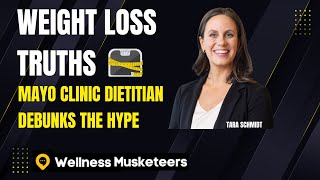
In this Wellness Musketeers episode, host Aussie Mike James and co‑hosts (Dr. Richard Kennedy, economist Kettle Vitting, and trainer David List) interview Tara Schmidt, lead registered dietitian at the Mayo Clinic. Tara shares her personal journey into nutrition, dismantles common diet myths (fruit sugar, grains, “toxic” food language), and explains why the simple calories‑in‑calories‑out model is incomplete, emphasizing adherence, environment, genetics, and psychology. She outlines the four weight‑loss pathways—lifestyle, medications, endoscopic therapies, and bariatric surgery—focusing on GLP‑1 drugs (Wegovy, Ozempic, Mounjard, Zepbound) and newer dual/triple agonists, their mechanisms, efficacy, side‑effects, responder rates, long‑term use, cost, and future oral formulations. The conversation covers weight stigma in medical settings, the concept of “food noise,” the power of self‑monitoring (food diaries, apps), and why misinformation spreads on social media. Tara presents practical nutrition guidance: the Mayo Clinic plate (half vegetables/fruits, protein, whole grains, calcium), unlimited vegetables, modest fruit, and the importance of adding healthy foods rather than subtracting. She critiques ultra‑processed protein bars, discusses intermittent fasting, hydration, and offers three actionable take‑aways—add nutrient‑dense foods, assess current habits before changing, and shape the food environment. The episode ends with Tara’s reflections on evolving attitudes toward diets and a final set of practical tips for listeners.
Chapters
Hello and welcome back to another episode of Wellness Musketeers. I'm Aussie Mike James, joined by my co-hosts, our medical expert, Dr. Richard Kennedy. Hello, Richard.
How are you, Mike, and everyone?
Our economist, Kettle Vitting. Hello, Kettle.
Hi.
And our fitness trainer and man about town, last but not least, David List. Welcome, David.
Hey, it's a pleasure to be here.
Today we're thrilled to welcome a special guest, Tara Schmidt, one of the most trusted voices in health and nutrition today. As the lead registered dietitian for the renowned Mayo Clinic diet, Tara plays a key role in shaping evidence-based, compassionate, and inclusive wellness strategies for individuals across the country. She hosts the widely respected Mayo Clinic on Nutrition, where she demystifies complex health trends, debunks diet myths, and champions sustainable habits over quick fixes. Welcome, Tara. Terrific to have you with us today.
Thank you so much for having me, everyone. Pleasure.
Tara joins us today to tackle the big questions: GLP, commonly known as, trade names as Wegovy and Ozempic, et cetera, GLP medications, diet myths, weight bias, and what really works for better health. So if you're ready to rethink your plate and your relationship with food, this conversation for you. Let's get right into it. So just to start off, Tara, what originally drew you to nutrition as a career, and what has kept you involved with it?
I've been interested in nutrition since childhood, so I don't know if that makes me smart or weird or just— you want— I was the kid like reading the nutrition facts on a cereal box next to my sister, who was older who was doing the mazes. I'm also a product of the '90s, and that was pretty ugly diet culture at the time. So I think that fascinated me. I was a tall kid, which in my mind meant big, which was untrue, but that's not how I felt. So I rolled with it. I got my bachelor's and I loved it. I got my master's— I did get my master's eventually. I did my internship. I loved it. So And I've just kind of stuck with it ever since.
Terrific. Well, what are some of the most persistent nutrition myths you've encountered over the time, even that are even around, say, today in 2025?
The ones that I lose sleep at night over are fruit has too much sugar, grains or wheat is inherently bad. And I think more so the use of the phrase or words like poison and toxic when we're talking about foods. Not saying that these foods are healthy, of course, but those words bother me a little bit, especially if someone has like a cocktail next to them, which includes a toxin of itself. And then they're calling, you know, someone's kids cheesy rabbits toxic or poisonous.
Has that just come over the last couple of years? I've noticed that too.
I think so.
Yeah.
Social media, unfortunately.
Exactly. And now you're a child of the '90s, but we're quite a bit older than that, the three of us. And back when we, when weight loss became a big issue and a commercial issue as well, I think about the '70s, '60s, '70s, it was pretty much just a case of calories in, calories out. That's what everything was focused on. Does that still pertain, or obviously we're missing the full picture, but does that calories in, calories out still maintain a proper perspective?
Yeah, I like to say the math is still the math, but it's a lot more complex than that, right? So the complex of where do you live, how do you eat, what's your body type like? How do your emotions play into this? How does your health play into this? So yeah, I have a, a physician that I work with who said, you know, I can make anyone lose weight. They're gonna come into the hospital and I'm gonna give them an NG tube or a nasogastric tube and just tube feed them a certain number of calories. It's gonna be less than what they need. And guess what? I've got the best diet on the markets. The math is true, but of course we don't live in hospital rooms with NG tubes if you're privileged enough not to be living in that. Scenario. It's more complex, but at the end of the day, it's just math.
Okay, great. Well, and how do you respond to when someone asks you the, the typical party question or wherever you're out? I'm sure when they know your background, what's the best diet?
The one that you'll do. So if we're talking about weight loss, we talk about the percent adherence. So we always have, you know, diet A versus go all the way down to Z, which one's better, which one's the best, which one has the best outcomes. And what we know is that. You will lose weight. If you're in a calorie deficit, like we talked about, you will lose weight. But whether you keep that weight off or not is unrelated to the diet and more related to your percent adherence to whatever diet you selected. So that's— would be kind of the conversation related to weight loss. In terms of best diets for health, there are many of them, but the common denominators when we look at DASH and Mediterranean tend to be things like it's plant-forward, it's high in fruits and vegetables, it's limited in ultra-processed food, it has omega-3 fatty acids or other healthy fats in it. It's limited in added sugar. So, and that's good news, right? When we have common denominators that we know have been proven, we don't have to keep fighting over, you know, which one made the list this year.
Okay. I'll hand you over to Kettle for some questions about the common weight loss medications and metabolic health.
Since I, I, since you are so kind to give me the, the, the, the, the, the, the that I can speak, I would actually like to kind of tell you that I had a lab that since have passed away and your lab are constantly hungry. And, uh, I would feed that lab the same thing basically every day because that's the only way we could keep the, the weight down. So I, you know, I said, you know, maybe, uh, my wife could give me food like that and therefore I could lose weight, but it's never really worked.
Adherence. Remember adherence.
If we start chasing cows, we're going to be worried.
I mean, I don't know if the lab would get the same food over time, but you know, I can, I can assure you the lab, if you actually put a lab next to like a big container of food, the lab would literally eat itself to death.
My golden retriever would do the same.
Yeah, it's the same. It's the same thing. Okay. So let's then talk about the big elephant in the room. So it's a, what, a GLP-1 is the nice technical term for it. It's, uh, Ozempic, Wegovy, and Mounjard. For instance, and a few others coming on the market. It's a big business as well and seems actually to work.
They do.
There's a big buzz about it. How should we really think about this revolution?
Can you repeat that? I'm sorry. You cut out for me.
How should we really think about it? Is it really a positive revolution? It's something that's going to solve all our issues and the obesity epidemic around the world, not only United States, unfortunately. Oh, you know, it's every—
we can go that far, right? You, you lost me at the end there. I think that these medications are absolutely going to be life-changing and life-saving for many people. I think that we, we've seen weight loss percentages that we were previously only seeing with bariatric surgery and bariatric surgery is still out there and it's still a good option for many people. But I think this is going to be much higher in terms of accessibility. We'll see about cost over the long term and kind of the return on investment, but I, I think that these are, let's at least say that they're a fabulous benefit that we've been waiting a very long time for.
Will these medications work for everyone, or are there some parts of the population that they just won't work with for some reason?
A lot of times what we'll do is we will assess your weight loss at the end of, let's say, 12 weeks and make sure that you are considered a responder. So, a non-responder would be someone who's been taking the appropriate dosage for 3 months and did not lose 5% of their total body weight. I think that that's a, a smaller percentage because these drugs are pretty powerful, you know, because they work in the brain, they work in the gut, they're helping the liver, they're helping the pancreas. So these are pretty powerful drugs. We have dual agonists and now we have triple agonists coming more and more coming. So I think there's a small percentage of people who would be considered non-responders. But the good thing is that at that 12-week appointment, prescribing provider would likely just try a different medication, of course, if that was still safe and appropriate for you.
Can you explain what you meant by dual and single agonist?
Yeah, so dual agonist, think of two drugs working for you to help to decrease appetite, increase satiety, slow down the gut, and help manage blood sugar. Triple agonists are adding a third, let's call it ingredient, that's gonna help.
Oh, so that, that's, those are ingredients in the, the, the drug, or is it actually taking One GLP-1 together with another, maybe drug for, for diabetes or something like that?
Nope. They're more like ingredients. Now some people do. Ingredients. Yeah. Yeah. Some people do combine, let's say bariatric surgery plus a, a medication, but the triple agonists are just a different class of medications.
Okay. Is it, is it, I also, sorry, is Zepbound a triple agonist?
Yeah. Like trizeptide.
Yes.
Sure.
I actually, you know, I, as we all probably know quite a few people who are on these drugs, it seems that. It's like the side effect can be actually quite strong, but I would actually challenge you and say maybe those are the effects, you know, you don't feel good when you eat.
Yeah.
Uh, so you, it really punishes you.
I agree that it's part of it. So there are some physicians who will prescribe these medications and at the same time prescribe an antiemetic, an anti-nausea medication, because we know that people struggle with nausea. And there are other physicians who say, I'm not giving you an antiemetic, your nausea is essentially part of the mechanism of action of this drug. And of course there's a learning curve for portions and frequency of eating. But yeah, I, I agree with you. It's hopefully it's not a punishment, but as with bariatric surgery, I kind of tell people like there will be a learning curve for you to understand what hunger feels like for you, what fullness or satiety feels like for you. And some of them are just, just straight up side effects of the drug or of, of the weight loss themselves. But I agree that some of them are somewhat helpful side effects in this scenario.
I have a cousin and she's lost 61 pounds, and then she knew that she's going on a family trip to Hawaii, so she stopped the medication because she knew she was going to eat, or wanted to eat while she was there. She gained 8 pounds, and then she's back, and now she's back on the medication.
Another thing is I know someone who actually have diabetes too, and actually was able to monitor blood sugar quite carefully before going on one of these drugs. And it's really one of the immediate effects was to be able to flatten the blood sugar, reduce all of the spikes, nearly independent of what you ate. So actually it seems to have an effect over and above the effect on what you actually eat on how your body processes sugar.
Yes, that's correct. And that's especially why these started as diabetes medications because of their impact on, on things like insulin and glucose rises after meals.
So let's say that you're, you're really focusing on losing weight. When would you say this medication is the right option?
I have a conversation with my patients about, we consider them essentially kind of 4 different pathways for weight loss. So you have lifestyle, good old diet and exercise. You have medications, and there's a, a number of them, not just GLP-1s. We also have endoscopic bariatric therapies. So weight loss procedures that are done endoscopically or, or down the esophagus. And then we have bariatric surgery. And I would say for people who a medication is right would of course depend on the amount of weight that they need to lose. I think people who struggle with hunger, people who struggle with cravings, people struggle with food noise are good candidates. And they're not a good candidate if they anticipate using these, in my mind, if they're looking to lose 5 pounds. One, they might not even qualify, right, via the FDA guidelines to be prescribed the medication. But we really have a conversation with patients about looking at these as long-term medications because obesity is meant to be seen as a chronic condition or chronic disease state.
Yeah.
Can you explain what food noise is?
What's that? Food noise?
Yeah. Have any of you ever experienced just like being in your home and not being able to stop thinking about food? Like, when's my next snack? I just had dinner, but I wonder what I'm going to have for dessert. Or like the thing where you like have your pantry open and you're just staring because you know you want something. So literally just consistently persistent or high, I should say, thoughts of food. And I think that people either know that they have it and can quickly identify that, or they'll say like, I don't know what you're talking about. And that person doesn't have food noise if they don't know what I'm talking about in my mind. Do any of you have food noise? I absolutely do.
Yeah. Okay. Yes.
No.
I recognize the, the symptoms, but I, I don't have it all the time. I guess someone all the time.
Yeah. And of course there's Eating is complex, right? It's psychological, it's physiological, it's environmental. So it's more than— I don't mean to make it sound like that.
I got to speak with Tony Robbins once.
I have some snack. Sorry.
I spoke with Tony Robbins once and he said that food is the friend that can't say no.
Or people who are like, I don't know the last time I ate. And I'm like, you don't? Like, I forgot to eat breakfast.
I'm like, I've never forgotten to eat breakfast in my life. Some people are like that. So I asked my wife, you know, there's some more snacks in the house now than there used to be. It's not really bad snacks, but I know that I have a tendency to pick them up. And she's trying to hide them, but she was not very smart at it. So I phoned it and I said, you have, you know, you have to stop me from finding that and you have to fight me.
Oh yes, you have to fight me, you have to stop me.
Dr. Kennedy, what were the most common things related to weight and nutrition that your patients would speak to you about?
Most of the—
well, I sort of have two types of patients. I have the patients who, like Tara just said, want to lose 5 pounds, 10 pounds for the upcoming wedding, or, you know, they bought this dress and they got to get in it because they want to impress somebody.
High school reunion, I hear.
High school reunion. Yes. And so, so it's, it's one of those things. So those people are one thing. And I think the, for me, the dilemma that the GLP-1s brought out went because of their success and people losing weight. And because it was, for a lot of people, it was a quick way to do it. It helped them to forget about lifestyle, forget about exercise. Because if you just take these drugs, you'll actually, you will lose weight for those who it works for. Now, so then there's the people who are morbidly obese, the people whose, you know, BMI is 35+ kind of stuff. They're different in that most of them at the time, once they are ready, and I always say you have to meet, I've learned you have to meet patients where they are. When they're ready, they will sort of guide you down the path of, okay, I'm ready to do this. I've always been a proponent. I technically hate the word diet because to me diet means that it's a time-limited period restriction. Then you go back to whatever is your normal routine, which defeats the purpose. I don't know what the other term we should use is because everything in the environment has diet attached to it. And so I, you know, but I think that they work. One of the things I have found is it is, at least for me, when I was still practicing, it was harder to get people who were just obese but who didn't have diabetes or who weren't pre-diabetic to get on these drugs. And particularly because, you know, I was dealing with a population that was in the Medicare population. And so Medicare is not covering it. And so, and that's a large percentage of people, you know, there's a greater percentage, and Tara probably will correct me, of obese people over 55 than there are under 25, but probably not that much. But I see, you know, you see it and, you know, it's funny now being an older person and being a patient and sitting in a doctor's office. And you see the number of people and you see how people, many offices have changed the size of the chairs that they put in the waiting area.
It's actually a regulation that depending on, for example, if your clinic practices bariatric surgery, you will have a surveyor or an auditor come and make sure, and this is a good thing, right? Especially if you're going to do something like bariatric surgery of, does the hospital bed What's the weight limit? Are the toilets floor-mounted versus wall-mounted? What do the seats look like in the waiting room and in my office? It's kind of fascinating. But in that scenario, it's for the patient and especially so that they can feel comfortable and so that they can feel welcomed in that environment, which is the exact purpose of why they're there.
So, one of the things that I think you mentioned is that these medications are kind of forever. Is that fully true or any chance that you can get off them?
We don't know yet. So what we do know is that people who stop the medication about 1 year after cessation of the drug, they tend to have regained anywhere from 50 to 66, so half to two-thirds of their weight back. And I very commonly kind of overuse this scenario of what if you had a patient with chronic hypertension or high blood pressure? If you take them off their blood pressure medication, they will have a return of, of their hypertension. So we know that long-term usage is really the only solution we have right now for long-term efficacy. Now, we don't have data super far out in terms of what the other options are. It's not likely going to be stopping the drug. If anything, it's likely to be decreasing the dose.
Okay. Yeah, I mean, this is to some extent related to the costs. Obviously, these are medications that are in high demand and somewhat restricted supply. So, and the companies will say we need to recoup our investment in these drugs. So even a company like Novo Nordisk, who claim they are for the benefit of humanity, they seem to have gained a lot of money on this.
They're doing okay.
But you know, at some stage this will fall, so they will be off, uh, you know, will not be protected, the patent will not be protected anymore, and you get more entries into the market and you will actually reduce the cost to the cost of production more, more closely. I'm an economist, of course, but this can take time. But you know, what do we know about actually how costly it is to produce these?
Cost. Well, and it, it's complex, of course, and, and you know better than I about these complexities. But another thing to consider is that oral medication will be coming on the market quite soon. So that could, I believe, will vastly decrease the cost because now we're not having to use pens or injections. We also have to think about the cost savings that we may end up having insurance companies, for example, because what if you no longer have to take your blood pressure medication because that's resolved? What if you no longer need a knee replacement because your arthritis is doing better and that was really just weight related that you had knee pain? Because what if our rates of cancer go down? Because I think there's 7 different types of cancer that are related to obesity. So I think we're focused, of course, on how expensive these are right now, and it's very difficult to get the ROI. Out of it because it's so complex. And obesity, you know, you can consider impacts every organ system in the body, in my opinion. So how do we measure the benefits and the cost savings? But we're looking at a pretty, like a, a big sticker shock when you look at the injection itself.
So we, we are here seeing a drug that, you know, we talked about the side effects. Often those are the immediate side effects that might not even be side effects, but to be the part of the way they work. But, you know, when I put something in my, my body on a continuous basis, I could be a little worried about what's the long-term effect on my health, apart from the positive ones that you mentioned. Maybe there's some possible negative that we haven't studied yet, or do you have any indication what that could be?
Yeah, I think they're looking at people now, right? So they're, they're currently looking at people who are, are going to be 5, 10 years, et cetera, um, on these medications. There is a risk of course with any medication that you put in your body. But we're also seeing some really wonderful benefits, right? So we're talking about like the decrease in cardiovascular risk. These end up might being used in addiction for people who struggle with addiction. So yeah, we, we can at least know that they're gonna keep a close eye on the, the population and on these medications, especially people who end up being long-term users. But That takes time, right? We have to have people on them for a long time to get those results.
So, I mean, are there any people who are genetically wired to struggle with weight and, uh, despite doing everything right and, and maybe even with, with these drugs and they're not sufficient?
Yeah, I do think that genetics play a role. How much of a role? Um, I'm not sure we've, we've uncovered that secret yet, but I believe that genetics play a role. I think your childhood and how you learned about food and nutrition play a significant role. I think trauma can play a role, psychology, environment. I'm a pretty big believer that I, at least in America, live in an obesogenic environment. So it's kind of just this big puzzle piece, like which piece of the puzzle were you stuck with? Like, do you have the genetics and you live in a food desert and your education level is lower? Right. It can be pretty complex, but yeah, I do think that having the right quote unquote puzzle is probably related to privilege.
Are rates of obesity related to income or education level?
Especially if you think about food access, right? So how many fast food restaurants is in that town are in that town versus how many grocery stores, what's the cost of fast food versus what is the cost of fresh food? What's access like to a dietitian? What's access like to a wellness center? Can kids safely ride their bikes? Is there a sidewalk? So absolutely there's many, many factors that play a role in weight, but also just nutrition and wellness that are completely out of a person's control.
So when I moved to the United States, this is now 25 years ago and things have gotten worse everywhere. I gained weight in the first 2 years, not enormous amount, but I thought I ate the same thing. Is there any, you know, is that, is that this high fructose corn syrup that is kind of poisoning me all the time when I'm here?
I would ask you more questions. So even though you may have been eating the same things, I would ask you what did transportation look like for you, right? So were you previously walking or riding your bike or even taking the train and now you're sitting in your car and sitting in rush hour for multiple hours a day? Even if you were eating the same foods, I would ask you if your portions were different, were not. We're not real good at small portions in the US. Added sugar, added fats, all the foods that make— all the things that make food taste good. Access to food, accessibility, normalizing eating in various aspects of your life or environment. So there's a long list for anything.
I think the French would focus a lot on the rhythm of food intake, so they have very regimented times when they eat. So you eat a very small breakfast. It might be quite sweet, but it's very small. And then you eat lunch and that's about 12:30 all over the country. And then there might be a little goûter, what they call, and then there's dinner and they can be a little later. In between that, it's frowned upon to snack. That actually helps quite a lot, although it's not, you know, they drink a lot of wine to that, so that's not so good.
We do know that the higher frequency of eating you have, in most cases, unless you're tracking, et cetera, and you can do that math yourself, but in most cases, the higher frequency of eating someone has, the more calories they will consume. That's, that's again, kind of one of those just like calories in type things, because most people don't adjust their next meal, even though they had a snack or don't stop their meal halfway through with the anticipation of having a snack. So it tends to just be Additin as opposed to Adjustin.
Okay, Tara, before we move on to, uh, wellness and diet culture, just got a couple for you just off the top of my head. When we're talking in the bodybuilding world, they often refer to creatine as a, as an aid. Does that help in weight loss or is that purely muscle building?
Creatine is actually one of the most studied supplements out there, so I, I am familiar that it's pretty well studied and it, it does have some benefit to it. I'm not sure if there's good evidence for weight loss per se.
All right. Another one.
I was told by my trainer that because I was going actually doing a competition where they were weighing you in, that in the, in immediate effect of creatine would be to increase weight because it's because of water. Yeah. Water. Yeah. But I mean, that's just a tactical.
Yeah. Yeah. Temporarily.
Also, there's a lot of talk, and I've seen various research, conflicting research on diet sodas, that they can actually have the opposite effect of what they're advertising, that they actually put on weight. Do you have any comments on that?
My comment would be not mathematically, because zero is zero, but I do ask my patients, when you consume an artificial sweetener, when something contains an artificial sweetener, How do you react? And I, I truly think there are two camps here of if I have an artificial sweetener, someone said it's kind of like putting water in your gas tank. Like it, it looks full, but it's not gonna do anything for you. And so your car expects that it should be able to go, but it doesn't, right? You're not getting a blood sugar rise. You're not getting immediate energy. So I do think there are some people who will then go seek out actual sugar. They'll go seek out that blood sugar rise. They'll go seek out that, that increase in energy. I also think there are people who have a diet soda and say, that's what I needed. I just needed that hyper kind of very sweet taste on my tongue. And now I feel good and can move on with their day. So I actually would have a one-on-one conversation to ask you or experiment a little bit with how you react to those.
So what about, uh, so I read, of course I'm like everybody else looking at the internet and and stuff, but the artificial sweetener might have some negative effect on your gut, uh, culture.
Yeah.
And those might be important for the overall health and how you eat and cravings and all that.
Yeah. Artificial sweeteners, um, have, have been linked to, we could say maybe a poor gut microbiome outcomes or poor gut health. So what I prefer to talk about of course is then what has positive impact on the gut microbiome. 30 different kinds of plants and fiber and, and all of the, the above. Okay. But yeah, I have, I've heard that as well, Kettle.
Okay. And finally, I mean, Kettle alluded there, uh, when he talking about when he first came to America and, uh, thought he was eating the same food, but I guess that, um, relates to recording your food or diarizing your food. And I, I swear by, I think it's a great app, is MyFitnessPal that analyze, you know, we record your daily intake of food and so forth.
You're supposed to say Mayo Clinic Diet, Mike.
Mayo Clinic. I was just gonna ask you, what's your recommendation?
You misspoke accidentally.
Okay. So what was it again? Mayo Clinic. You have, there is an app that records?
Yes. Yes.
Mayo Clinic. Okay.
We'll be sure and put that in the, yeah.
I'll get you a free account.
Now of MyFitnessPal and one of Mayo Clinic. All right. So now moving right along on wellness and diet culture, I'll hand you over to Dave for a couple of questions he may have.
Yeah. Well, I think one thing I've just kind of in the news lately, this is kind of, a little bit of a tangent, but we're seeing a lot of things about, or the last day or two about sugar in Coke as opposed to high fructose corn syrup. And I don't know if that is any kind of a victory. It's sugar, you know, and I don't know that we need to be having much sugar regardless. We have too much as individuals and as a society.
I was quoted in an article yesterday on this. And the article's a bit political, so I'd prefer to not share it because I don't want people on the other side of the party to come at me. But my, my clinical, nonpolitical opinion, which is exactly what I gave, I did not know it was going to be spun politically, is that sugar is sugar is sugar in this scenario, right? So high fructose corn syrup is brown sugar is white sugar is molasses is honey is cane sugar is what we got them all, right? Because in soda, which is what we're talking about. They're still ultra-processed, right? So this is not someone like chewing on sugarcane. I think panda bears maybe do that, but they're the only ones that I know that are actually eating this in their— its natural form. So if we're going to talk about regular soda, in my mind, regular soda is regular soda. So that was my take on that.
And again, we could all be less— So the quote was, "Sugar is sugar and sugar," something like that?
Yeah, I said, "Added sugar is added sugar is added sugar." It was more eloquent, but yes, they did grab that one.
One of the things that you've spoken and written about is weight stigma. And what role does weight stigma play in how people experience care and how people feel about themselves?
I think it's really complex. Unfortunately, one of the places that people face weight stigma the most is actually in, in their medical care. And we could even reference what we were talking about in if you go to a waiting room and there's not a chair that, that fits your body. So weight stigma is really difficult because people experience it in their day-to-day lives. They experience it in opportunities or lack thereof for employment, in their sense of belonging in society. People that I've learned the worst stories from are people who have actually undergone dramatic weight loss. I work a lot with bariatric surgery patients.
In what, in what way, what kind of things do you see?
I had a woman once tell me that people open doors for her now. And I said, what do you, what do you mean by that? And she said, when I'm out in public, people open doors for me. And I said, didn't they, didn't they open the door for you before? And she said, no, they didn't. They, they pretended like I wasn't there. Or if you go to a medical appointment for knee pain and your medical provider says, Well, just lose weight. Now that medical provider's not wrong in that excess gravitational load on a joint is impactful, but I had a patient once who had cancer. She had a tumor in her knee and felt like she was ignored, her knee pain, and it was not bilateral, but her knee pain was ignored for a very, very long time because they kept telling her it was related to her weight. So those are my worst examples, but profound examples of weight bias.
I saw or read somewhere that they called obesity the last acceptable form of discrimination.
Yes. And it's more acceptable because people think that it's in our control, right? So the color of skin that you have is the color of skin that you were born with. You did not choose that. And that's obviously there's, there's racism and that's not acceptable. More ideally not going on in our society anymore, but weight bias is accepted because people think that obesity is a choice of they could do something about it.
I actually would interject, I had a patient once who She was 5'2" and 326 pounds, and she was going to her brother's wedding, and the airline would not— she bought one ticket, but the airline told her, you need to buy two tickets. Well, we will not let you fly on this, this airline unless you buy two tickets. Um, and so, and this I guess sort of ties into what obesity, the effects it has on your mental health and wellness.
Absolutely.
It can be quite disruptive. And what does happen? Because it's funny when you, at least I know with me, when I talk in detail with some of my really obese patients, the first thing they tell you is, I don't really eat a lot. And, you know, so then I asked them, I said, well, you need to do a food diary. You need to tell me everything that you eat for a week and put it in, put a time in it. They were always surprised at, because they were technically snacking. And because in the culture that they grew up, eating was sitting in front of a table with the rest of the family and you eat a full meal and then you go on, but they don't consider snacking. As part of eating.
And this is exactly what Mike was bringing up with self-monitoring before I yelled at him. And yes, Mike, regardless of the app that you use or a Post-it note, for all I care, right? I don't care how you do it, but self-monitoring tends to be one of the number one predictors of long-term successful weight loss. And you can do calories, you can do carbohydrate choices, you can do fruits and vegetables. You can just keep tally of how many glasses of wine you had, if that's your source of excess calories. But when you have to write it down, you have greater self-awareness. It's not me telling you as your friendly neighborhood dietitian, what you should have or shouldn't have eaten that day. You're just ideally being neutral and recording what you're sticking in your mouth. And you're going to have some awareness of like, oh, I had a cookie with my coffee this morning, which is exactly what I did. Cause the neighbor brought them over. But if I had to write that down every single morning, we'd have a problem.
Same thing applies to exercise. People who tend to write down their exercise, it makes them much more accountable. Okay, Dave, you, um, okay, Dave, you had a final question, I think there.
Okay.
Well, well, so can you talk about your work debunking misinformation on social media and why do we believe in these things so easily from showers to diets? To God knows what.
It's engaging, right? People who are good at social media are good at social media for a reason, and they make a lot more money, unfortunately, than I do. It's eye-catching. It can be shocking, right? Or the, the, the article or the, the COVID of the New York Times is meant to be engaging so that someone buys your magazine. It can be appealing results. It can be scandalous. It's, it's interesting, right? And that's what entertainment is. And what I have to say in comparison is pretty boring. Like, eat your fruits and vegetables, everyone. Like, record what you eat. And it hasn't changed that much. And people don't like that. So if I tell you, hey, Dave, remember what you learned in second grade about nutrition? 85, 90% of that's true. Like, just, just go do that. Is not going to sell magazines. That's not interesting. But it is, but it is true. So I think it's more of just the excitement around new diet, new food, new toxin, new method for what we're looking for. Right. And we also want things very, very quickly. And I think misinformation on social media tends to promise things very, very quickly.
Do you?
I also found that it's big. I've probably spent too much time on YouTube, but I find that it's really adapting some of the, adopting some of the old tabloid newspaper methods. Every one of their, it's a headline and the video may have nothing to do with it. It might have one line in there, but it attracts an attention and people might get on this thing for 30 seconds or something at most, but they've still seen that headline. And that, that is how it creates misinformation. I think it's really employing old methods in a new field in terms of communication.
And it gets your click, right? You clicked on it.
Yeah. And that's all they're concerned about. That's all they're concerned about. They're not concerned about the Do you understand?
People have short-term interests. You have to catch them. If you just look at any newsfeed that's on, they pretty much do everything in cycles of 3 to 5 minutes and nothing more. If it goes beyond that, you tend to lose your audience because it's hard to keep them engaged.
In addition, now the algorithm can tailor make to you. So they have seen that I've been Googling a lot about how to lose weight. They will send me a lot of, you know, information about that, that 90% of it is not correct. And, you know, that the tailoring is the new thing that is really powerful.
It's impeccable. I Googled where I was going on vacation because I wanted to see a picture, and I was just bombarded with like, the whole world knows where Tara's going on vacation right now. Because I was getting advertisements and articles and ma— yeah, it was, I was like, okay, well, that's not a secret anymore.
Okay, maybe we can hand over to Dr. K for some questions on practical nutrition for daily life and longevity.
Oh yeah, yes, Tara. So you've talked about nutrient density and what would you say would be your go-to framework for building a a balanced plate?
Yeah, I do. What we, we've done for the past, we're going on about 15 years with, with the government's plate method, and I don't disagree with it. And, and that's half or more fruits and vegetables. Variety would be key in the long term. A source of protein, be it lean animal or plant-based protein, a source of, of whole grain or a different starchy plant. And if you'd like, some kind of calcium in your diet. And if you want some, some extra fruit or veggies in there, we kind of consider those to be unlimited. So this is why I don't have a huge social media following because I say boring answers like that, but that it works. Right. And that's like the good and the bad news of it is like, it's not overly complex, but I think people want it to be.
Yeah.
So you should, I could eat that much fruit and vegetables. No, no fruit. You said fruit as, as I, Yeah.
You know, here's what I say. Unlimited vegetables for everyone.
Okay.
Fruit. I, I actually tend to say I've had maybe one patient in my career who I had to say back off on the fruit. One, they were blending it in a smoothie, also had higher triglycerides, et cetera. But 99 out of 100 people I'm going to say are not eating enough fruit. So it's extremely rare that I would limit you. Now, if you have diabetes, I'm gonna pair it with a meal. We're gonna make sure that you count it as part of your carbohydrate sources. Outside of that, I'm really doubtful that you're eating too much. There are a million other foods that I would say, let's put on the brakes before I've ever told someone like, hey, Dr. Kennedy, like, I think you had too many apples today. Like, I also think they're self-limiting. Like, are you really gonna eat 10 bananas? You're gonna be constipated as heck. First of all, I just don't think you're gonna eat 10 of them. But can I eat 10 handfuls of pretzels or chips? Like, you betcha. See you there.
Yeah. Yeah.
So what about the little dessert at the end of the meal?
Anything can fit.
Do you want me to give you permission?
You can have a good little dessert.
Yeah. Yeah. Comment on that. So I, you know, because I actually follow someone who actually was tracking the glucoses and it really, and, you know, the theory that it works, it it posts where it says very different at the end of the meal than at the beginning of the meal is actually pretty true. So if you eat a little bit of sweet at the end of all vegetable or fruits, they will, you know, at least you don't get the same spikes.
Yeah. Or like if someone had diabetes and they said, can I never have a cookie again? I would actually say have a cookie with your lunch because now you have protein ideally in that lunch. You obviously have, hopefully have some fiber in there. You have other foods in the stomach that will slow digestion instead of just having a cookie on an empty stomach. So yeah, I would say put the, the sweet with the meal. I don't really care necessarily about the timing of it, but if you can put it on the plate and consider it to be, okay, that's one of my carbohydrate choices, or instead of a grain, I'm gonna have a cookie. Okay. Now we swapped those 15 carbs out of there. That actually is a, is a method that I, I'm absolutely comfortable with.
So what are some of the common healthy foods that you think are misunderstood or that people don't think they are as healthy as the establishment believes?
I'm not a huge fan of bars. I think a lot of— they're convenient, and I absolutely understand that. But I think if you look at the nutrition label of many of them, they're going to be like a healthified or a glorified candy bar in my mind. I also think there is kind of a lot of unnecessary protein products out there, like protein chips. We've got protein popcorn. And I'm okay if you have chips and especially popcorn in your life, but does it, does it need to be protein? I'd rather you have like actual popcorn that you pop. That's a technically a whole grain, right? And now we've got maybe a healthy omega-3 or a little bit of omega-6 fatty acid in there. But if we get into protein popcorn and protein chips, and I've saw protein cookies out there, now we're just going further down the ultra-processed food aisle or route. And I think we have some very strong evidence that our high consumption of ultra-processed food is absolutely going to impact our health.
And for someone who's trying to make one change to improve their eating habits, what's What's the most powerful first step one can make?
Take stock in what you're currently doing, right? So I could say, hey, my best advice is for you to stop drinking alcohol. Well, what if you never drank alcohol in the first place? And that's not good advice, but for someone else it might be hugely meaningful. I could say, I need you to start eating more vegetables. What if that person already has vegetables? 6 times a day, that that's not relevant to them. So what I really want people to do as their first step is, is kind of like what Mike was talking about is what are you currently doing? And where do you think— I look for excess empty calories. So these are one calories that we don't need, but they're also calories that are not providing you with nutrition and start there. Are you drinking any water? That's a great goal. Are you moving your body at all during the day? That's a great goal, but take stock in, in your current habits. Before you make that decision.
So how much water is too much water in a day, if there is such a thing?
There is, cuz you can get, you know, you can get water toxicity. I think we saw a really tragic case of that at a frat hazing incident.
Yes, that's true.
Sometimes it can happen with athletes if they're not also pairing it with, with electrolytes, et cetera. So for me, it depends on your body size, also your sweating, if you're sweating, if you're exercising, if you're in a very, very hot environment. How we tell people to assess their hydration is by looking at the color of their urine. There's really not a better test. So we like light lemonade, politely speaking, or straw color. If it's darker than that, you're probably dehydrated. And especially as the day goes on, it should lighten up. It does not need to be clear. So we're looking for pale yellow and if it's more concentrated than that, have some water in your life.
And is clear urine, is there any bad indication of that, Tara, if your urine is clear?
I don't think so. Unless we're getting into that, that water toxicity range. I don't think it's, not to my knowledge, I just don't think it has to be the goal per se.
What about Dr. K? What do you think of that clear, clear urine?
No, I, again, it, I think it depends on the situation. So if you have an, and not necessarily an athlete, just someone who's out and about working out on a regular basis. I always tell people when you're young, you can get away with not being as hydrated as you are when you're 35 plus because you're, you know, I think everybody's metabolism changes as we age and what we used to be able to eat when we were younger and how we could burn calories, you know, almost just by thinking it. Changes over time and you have to compensate for that. I always tell people they need to listen because most of us know when, you know, when we're thirsty. Most of us know when it— I think it's more complex when you're older because you don't have the same reaction to dehydration that, you know, your reactions tend to be you pass out, you fall down. Whereas when you're 18, 20, you can get dizzy pretty quickly, lightheaded pretty quickly. And so, you know, the change. So I, you know, and I've always been a proponent of water and I've had enough personal experiences in my life when I didn't get hydrated enough and the consequences are, you know, dire, you know, like fracturing half my face. So, yeah, so it's— I think it's a— it's, it's, it's very important to drink enough. And I always say, technically, if you were to literally put an IV in most people and rather take an intravenous line and just draw out all the liquid out of it, all that would be left would be 30% of us because our body in the healthy person, 70% is water by weight.
Okay.
All right, Dr. K, do you have any other questions to finish off there?
Uh, no, I'm pretty good. Yep.
I have a question. So on the, there's a fad, it's called intermittent fasting. What do you think about that? Yes. What do you think about it?
There is actually some good evidence, um, for, you can call it intermittent fasting or time-restricted eating. Um, but it doesn't need to be overly dramatic. I did have a po— I had an endocrinologist on the podcast and, and had a full episode on on it, I believe that she said we see the most benefit when we fast for at least 12 to 14 hours. So that leaves a, a 10 to 12 hour eating window, which I think is quite reasonable. But if you think about people's kind of nighttime habits, it can get complicated. But I, I do think, and again, so I think a reasonable eating window, there are some benefits because you, I think your body just needs time when it's not digesting food. It's also not likely necessary that you have that many calories or that you're eating that late at night. So I know that it became quite popularized kind of in a, a fad diet type way, but we also have some, some pretty good actual evidence to support limiting your eating window.
So nighttime fasting would count. So let's say I eat at 7 o'clock at night and next morning I don't eat before 8. That's pretty good.
Okay.
And it's breakfast. That's what it means. Breaking the fast.
And interesting Ramadan, where people from sunrise to sunset, they take nothing in. But if you've ever been around people in the evenings when, when they're having that one meal, that they're having. And I always used to be surprised having had a lot of Muslim patients, how most of them during Ramadan never lost any weight. They really had, they really had some feasts where you almost make up for all of what you didn't do during sunlight hours at night.
That's interesting.
Yeah. And that's a good comment on if someone asks me about intermittent fasting or if they're experimenting with it. You know, if people are like trying to sneak in their last snack before their time is cut off, I'm like, okay, intermittent fasting is probably just not a good fit for you. But moving your dinner earlier and not eating after dinner, like those are very reasonable habits that we don't have to call intermittent fasting. Like it doesn't have to have a name associated with it.
All right, folks, as we start to wind up after Tara spent such a long time with us, which we really appreciate, of course, just a couple of of almost rapid-fire questions, if you like, Tara. What's a nutrition belief you've held before that you've probably changed your mind about over the years?
I have admittedly been judgmental about, let's call them diets or fad diets out there, that I did not think were necessary. I did not think that they were medically backed or had any good research behind them. And in recent years, I have adopted more of a sense of You know what, Tara, if it works for that person, why do you care? So I'm trying to be more mature about letting things go. But like before, like my dietitian heart was like, no, but that's not the good one. Like, I don't want you to do that. And I'm trying to just—
meat is okay if that works for you.
If what?
Just eating meat. Red meat.
Did you see the YouTube video of the girl yelling? Okay. Uh, that one's not my favorite. No, it's not my favorite.
What's one thing you wish everyone knew about their health, Tara?
It's individual. So please individualize your choices and your goals to you. A second one, if I can have two, would be one bite can make a difference in a good way of like adding one bite of, of a plant or fruit or a vegetable or a bean over time can compound to benefits. Okay.
It's like in the book Atomic Habits, he talks about that, doing small things at a time.
Yeah.
If you had one minute with someone standing in front of the fridge at 10:00 PM, who's talking? Was that, sorry, Kettle, was that you? Okay. All right. Again, if you had one minute with someone standing in front of the fridge at 10:00 PM debating a binge or maybe a beer, talking personally here, what would you say?
Go to bed.
Okay.
Or if you really want me to go to bed, I could do my couch plank.
I would sneak onto bed if you told me that like that.
I have small kids. Can you tell?
I would have bowed my head and I would kind of sneak up to bed.
My mom voice coming out.
Yes, exactly.
Or I could say, Mike, whatcha looking for? And what I mean by that is, are you hungry? Like, is your stomach actually telling you that it's empty and you're getting a sign that you need something in your stomach? Are you bored? Are you seeking comfort? Is this habit? Are you just in the pantry? Cause that's in the same open concept space as your living room. And that's in where you're watching TV. Then I'd say, go watch TV in your bedroom because I'm assuming you don't drink beer in bed. And if you do, no judgment.
That's a whole other podcast.
No, we are getting it.
I'm picking on you.
Australian, not drinking beer. You know, they drink beer everywhere.
That's a, that's a very bad cultural stereotype there. It's still something.
Yeah.
Yes.
Yeah. But we always like to leave our listeners with, you know, 2 or 3 actionable items just to finish off. For a good healthy nutrition plan, is it 2 or 3 recommendations you think could just point us in the right direction, Tara?
Think about what you can add to your diet. So much of what's out there is about stop eating this, don't eat that, right? Quit X, Y, or Z. And it's so much more fun to add. So can you add some fruits or vegetables to your life? Right? Can you add some more fish to your diet? Can you add some olive oil when you're going to cook your dinner tonight? So add instead of subtract. Before you make a change, assess your current habits and what would actually be a realistic, meaningful change for you versus what the very attractive TikToker told you to do. And third would be look at how your environment is playing a role, right? And this is not like you can't have ice cream in the freezer, but if you didn't have ice cream in the freezer, would you have eaten it at 10 o'clock at night? What if you had to get in your car and go drive to the gas station? Most of us wouldn't do that. So are there ways in which you can adapt your environment, adding things to your fridge, pre-cut vegetables, right? Or subtracting things from your fridge or pantry that help support your wellness goals.
Terrific. That's very unique advice. Really, I think that'll be really beneficial to all of us. So in closing up, that's a wrap on this inspiring conversation with Tara Schmidt. A huge thanks to you, Tara, for joining us today. I know you've got a very busy time, so thank you very much for joining us. Very beneficial for all of us.
Thank you for having me. It was a pleasure.
And we'll get onto that Mayo Clinic app right as soon as we finished here.
Thank you.
So folks, if you found this episode valuable, hit follow on your podcast app so you never miss what's next. And if someone in your life could benefit from this, share it with them. It helps grow our community and spark new conversations. Hit like and share so we get a hit on the algorithm or whatever you call it. And you'll find links to Tara's podcast, Mayo Clinic on Nutrition, plus more of her content in the episode description. So until next time, stay curious, stay kind, and stay well. Thank you, folks.