UCSF Trauma, Memory, Health and Healing Conversations; event Sept 20 2019
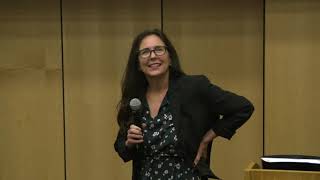
The recorded panel at UCSF brought together clinicians, researchers, and artists to discuss trauma, its neuro‑psychological underpinnings, and innovative healing approaches. Louis Engel led a group tapping exercise designed to reconsolidate painful memories, guiding participants through sensory detail work and measuring change on a 0‑10 distress scale. David Bullard reflected on a recent EMDR conference, using a typo‑autocorrect analogy to illustrate how trauma represents a perceptual error that can be corrected and permanently erased. Wajih (Speaker G) offered a SAMHSA‑based definition of trauma and argued that current research often omits a crucial “meta‑trauma” phase— the distress caused by the act of studying or treating trauma— emphasizing the need for participatory, ethically‑responsible methods when working with refugees. He highlighted secondary trauma for researchers and the scarcity of culturally‑informed services. Eileen Serlin presented a non‑exposure, movement‑based modality called kinesthetic imagining, drawing on her background as a psychologist and dance therapist. She described how community‑building rituals (haka, dabke, movement choir) foster belonging, and she linked cultural trauma, loss of home, and climate‑driven displacement to the need for culturally resonant arts‑based interventions. She also warned about compassion fatigue among staff and the importance of supporting practitioners. Eddie Machado, representing the new Center for Trauma‑Informed Health Care, argued that scaling trauma‑informed care within primary health systems is essential, noting that most chronic disease is rooted in unresolved trauma and that trust, safety, and attachment are the first therapeutic steps. The session closed with Bullard’s hopeful remarks about collective healing, gratitude for participants, and an invitation to continue the work.
Chapters
I want to thank Nora for coming in. You know, this evening is going to be about trauma, and many of you have known of Bessel van der Kolk, who a couple months ago, Phil and I and several other people were back there for his 30th Annual International Trauma Conference. A thousand therapists from around the world came to that. And Bessel has written one of the, one of the big popular books on dealing with trauma. And one of the first things he says is he wants people to do yoga. And I was afraid of yoga. I'm 73. I was afraid, I think, the first 69 years of my life. And for 4 years, been able to go as regularly as I can. To Nora's class, which is called Ageless Yoga. And they're— we've never left there feeling hurt. And I don't know if that's a compliment, but it sure is a compliment coming from me. So thank you for joining us. Thank you.
Thank you very much.
I'd like to introduce one of our hostesses, Susan Conrad, who's with the Spiritual Care Services.
Thank you, David. Well, it's so great to see everybody here on a beautiful Friday night. Thank you for being here. As David shared, my name is Susan Conrad.
I'm a chaplain and acting interim director of spiritual care services here at UCSF Health.
And it's with so much pride and honor and humility that we are able to co-sponsor this event tonight. And it's, it's a critical time to have these conversations. Those of us, I think, committed to healing, committed to empathy, committed to global connection, are maybe faced with unprecedented challenge and unprecedented opportunity for that work. And I can think of no one better than David Bullard to help us have those connections. And I think of David— David, I hope you don't mind—
I think of you as a midwife of crucial conversations. And so the diversity and expertise of folks who are with us tonight is a testament also to David and your ability to pull together these wonderful conversations that are really on the cutting edge of healing and of knowing that being trauma-informed is really an ethical imperative. So thank you so much, David.
[APPLAUSE] Thank you.
We've done several of these, never, specifically on trauma before, but we couldn't do it without the help of Spiritual Care Services and the Division of Palliative Care Medicine, new division, and Symptom Management Service, which is run by Mike Rabo, sitting right over here. And they've been very supportive in putting these on. Just a couple of words about my own experience with trauma, because I got interested in trauma quite young. And then I'm going to introduce Diane. Would you like to go first after I give a little introduction? Good. And we have— we're going to have 4 speakers, but rather than all sit up there, maybe one at a time to do your sikh. I told them to think of it as a mini TED Talk, and we're going to see how that goes. And hopefully it'll be interactive and they'll be interactive and it'll be synergistic and very interesting. So when I say I was interested in trauma at an early age, it was age 3 because I was diagnosed as having appendicitis that needed surgery. And in Detroit, Michigan, they had a medical protocol which meant that children should only be seen— their parents should only visit them 1 hour a day. That doesn't sound right to me. I don't think they do it that way anymore. Parents get to stay in with them. When, in those days, in about the late 1940s, you had ether. And ether is an experience of suffocation, and it smells bad, and you fight it. So the first time it worked, I mean, they got you. But I had 4 more surgeries before I was 11. Nothing life-threatening, just things where they put me out with ether. We have tonight, Eddie is gonna be speaking about the Center for the Advancement of Trauma-Informed Healthcare. And I'm giving you an example right now of how trauma can impact healthcare. I put that in the back of my mind, that whole experience. But at age 50, many of you know, you're supposed to get a colonoscopy. And I didn't, and I wouldn't. And I had a funny feeling that I just was not going to let anybody put me to sleep. I'd had experiences with alternate states of consciousness, that was okay. But I knew, I just knew, even if I had a very dire surgical procedure that was recommended, I thought, boy, I would sure have trouble with that. I had no strong identification with it having being related to experiences that I couldn't even remember. And then meeting Peter Levine, whose work in trauma for the last almost 50 years has involved somatic experiencing. He's the first person I knew who said childhood surgery can be traumatizing, especially the way they did it back then. And I worked with that kind of therapist for a bit and learned about somatic experiencing and then went right in and had a colonoscopy. And I think I was gonna ask him, could I have another one right away? I was so, I liked the propofol or the whatever the medication was they gave you. So I'm not gonna ramble on much more. I think I'm just gonna introduce, and I'm first of all so thrilled that you all came and showed up on a beautiful, beautiful San Francisco afternoon. About 160 people signed up. Many of them, because they were UCSF connected, got in free. I think they had to make a choice tonight. But they also knew that they could see all of this on recorded, not just livestream tonight, but we know there's some people watching now, but you'll be able to watch it at home up to a year. Diane Shumay is the Director of Psycho-Oncology Services at UCSF. In the Helen Diller Family Comprehensive Cancer Center. And I've learned a lot from her over the years. And she's gonna— we don't know what any of us are gonna speak about. I think it's gonna be kind of extemporaneous to get all these years of knowledge and experience in working not only with cancer patients, but with staff who can be traumatized. And she's gonna boil it down to 12 minutes or so.
Wow.
So it's good to see a bunch of friends in here. Hi. My gosh. I want to just say that if you're not already friends with me or each other, I hope you take the opportunity tonight to actually introduce yourselves to somebody new. I'm all about the building community. And as Susan said, we really need that more than ever now. So I can't think of a crowd of better people to get to know. So I'm glad you're here. Also, I'm glad to have the ability to mom-splain tonight, as my teenage daughter says. So I'm going to mom-splain about some topics I really, really am excited about. And then, David, you have to keep the time so that I'm not mom-spreading, in other words, taking up more than my share. Of 12 minutes. 12 minutes, okay. What I wanted to start with, I'm not really gonna give a definition of trauma. I don't know if anybody's going to, but what I wanted to do was I wanted to give a little framework from the work that we do at the Cancer Center. And I work with a team of really incredible psychologists who are super compassionate and dedicated, and a team of a bunch of other folks from all kinds of disciplines who are really compassionate and dedicated. And as psychologists, we have a really secret window into the lives of cancer patients. So I want to give you just a little glimpse, if you're not already experienced in that world, at this little secret window that we have. And I'm going to do that with a kind of experiential exercise. And empathy is really hot right now. Like, how can we build empathy? How can we teach empathy? And so I'm going to ask you to do a little perspective-taking exercise, if you're willing to do that. We're gonna just do a perspective-taking exercise. So what I'm gonna do is I'm going to say a phrase out loud, and I'd like you to pretend that you're hearing an oncologist say this. Okay, you're sitting across from an oncologist, and I just want you to kind of pretend that you're hearing this from an oncologist, and then I want you to just, if you're willing, just notice any body responses that you have or any emotional responses or any any thoughts that come up, okay? Everybody ready? Okay, okay, here we go. Okay. You have cancer. You have the good kind of cancer. 89% of people with your cancer live 5 years. We won't be treating with curative intent. What does that even mean? Good news, your scans show stable disease. The disease has spread to your bones. And liver. Any reactions? My apologies if you have experienced cancer yourself. This can bring up, or even in those of us who have loved ones, and most of us do, right? Almost everybody in here has been touched by cancer. My apologies for kind of bringing up that emotion, but isn't it interesting how words are so powerful. And I'm working in a field right now where we're looking at this theory called relational frame theory, in which we recognize the power of words to induce a trauma when there is no threat in the room. There's no bear in here, right? But we can feel that just from the power of words. And what does our mind, what does a patient's mind hear when they hear those words? Often, and most of the time, and all of the time, the patient hears the word cancer and they hear the word death. And that's what they're responding to, that threat. I also wonder sometimes, and this is the, you know, this is the million-dollar question and I'll ask some of my cancer colleagues in here, but why is it that patients who have early-stage disease feel just as traumatized? If you know the answer, you can pull me after. We can discuss. What happens when somebody gets the news? What happens when they sit down with an oncologist and they hear those words for the first time? Well, one thing that happens, I think, is that they've entered this place where, I call it sort of the Garden of Eden. They've now lost this certain sense of innocence. They've now learned an experience of a threat that they didn't previously really even think about or have. And we see this a lot more often in folks that haven't had any illness, right? They are young cancer survivors or are young cancer patients. Those are the ones that seem to really get impacted by it. For example, one of my patients recently, Leah, a really powerful VP of finance, has young kids, living a really fabulous life, a vegan, does yoga, you know, just really, She gets diagnosed with metastatic cancer from the beginning. So she didn't go from early stage and then she gets this kind of spreading of cancer. She's told, boom, you have metastatic cancer from the beginning. And she's just kind of ambushed with that. What does she do with that ambush in her life, that kind of hit from left field? And her vicarious trauma regarding her husband and her children, her small children, kind of thinking about those scenarios. Scenarios going forward and what might happen to them. And then she also has this kind of double whammy of social isolation as she kind of shrinks back. She's not gonna tell work about it. She's not gonna tell the school community and the parents about it. Why? Because that shame and that feeling like she's going to be marginalized, those thoughts of, I need to hide this, right? And so she's pulled back out of her life. Anybody in here sort of a full-on behavioral scientist? Any like geeks, like laboratory geeks? Oh, we don't have any in here? Oh man. But I think of like the cancer center as like an anxiety laboratory, right? I mean, think about what constitutes— and we didn't, like I said, we didn't get a diag— we didn't get like a definition of anxiety, right? If you think about a cancer center as an anxiety laboratory, we have, you know, I mean, just imagine if I said to you, there's a place in your community where people face threats of death, and if not directly, implied. And then they're restrained and they're held down and they're maybe not given ether anymore, but they're put into sort of radiation masks sometimes that cause a lot of claustrophobia and there's all this pain that they're experiencing, right? And would you say that if there was a laboratory that did those things to people, would people get trauma from that, right? And the interesting thing that I think of every day, I mean, and of course there's also the vulnerability and the helplessness and you can't see your mom and all these things that happen that kind of contribute, right, to this like, onset of potential trauma or this learned experience of anxiety that cancer patients have. But you know what's really amazing is that 65 or 60% of folks do not develop pathological trauma from cancer. That's George Bonanno's work and others. Just this idea that we as humans are so resilient, it's just incredible, isn't it? And, you know, what we want to know is what is it that keeps people resilient? Can we inoculate people? Can we provide what's necessary to reduce that onset of trauma? Can we intervene once that's present? Or can we do some things with the system, with how people talk to patients or how the environment of the hospital is, that it's less conducive to that kind of anxiety-inducing experience? And that's what I'm really excited about. I'll talk to anybody that listens. But in the field of psychology and in the field of behavioral science, we're really excited about something that's really growing in our field called relational frame theory and acceptance and commitment therapy. Do people know about this work? We have a few people that know about this. And in this work, you know, really the idea here is that anxiety can generalize from words. We just need to have sort of a concept from our language that can allow us to kind of build a scenario of a feared future. And that sort of internal experience, those sensations that you experienced when I was uttering those words, those fake words from a fake oncologist, those feelings that you embodied are things that we try to avoid, that we naturally try not to have. And in that struggle, we increase our suffering. And that when we try to avoid this, we're even avoiding things that have some similarity. You know, we have cancer patients who don't want to talk about cancer, but even if you use the word hope, they kind of shrink back from it, right? Because in relational frame theory, we know that language has associations. There are relations. There are frames. One thing that's really, really tough is when anxiety comes on, that fear of cancer, that fear of dying, that fear of recurrence, that fear of the unknown, really a lot of uncertainty, is that we shrink back from those feelings. We shrink back from those thoughts. We don't go out and tell people, um, that we need support. We hide, we isolate, we move away. And that's where cancer patients' lives become so much smaller. And that circles back, right, because there aren't those opportunities for that pleasurable reinforcement, that sense of mastery when you move into something really difficult, or that sense of connection when you have others in your life who are going to really support you and hold you up and kind of buoy you up through through it. And that's the thing that really makes me sad in my work. If there's something that really, really makes me sad, it's when a patient or a person or a caregiver or myself pulls back from fully living. And one thing that I really love about ACT and what we're studying in our clinic is how can we use different techniques and skills to help people kind of move into those difficult feelings let go and distance and have nonjudgmental kind of experiences with the thoughts so that they can take some steps into their life that's based on who and what they are, who they really wanna be and what they wanna be about. And it's not just patients, but caregivers as well have vicarious trauma. Those of us who work with patients can see things that are so upsetting and scary and sad. We can feel helpless. And of course the caregivers and the family members as well. How much time do I have left, David? None. So what I'm going to do is I'm going to give you— we're working in Acceptance and Commitment Therapy. We have— we conducted a randomized clinical trial a few years ago. We're now moving forward with another research project looking at a group program for folks using Acceptance and Commitment Therapy. And as my kind of parting shot to you, I'm gonna give you a little bit of a taste of it, and I'd love for you to kind of take some of this forward in your life. With ACT, what the best approach is to take an experiential approach and to actually move into it, similar to what you might do in mindfulness. So let me just, if you're willing again for just a really brief experiential, I would like you to just imagine a small or large thing that matters to you and a struggle that you are experiencing around that thing that matters. So there might be a struggle that's happening in your life right now in which you, you know, it really matters, but you're struggling with it. What are you doing in that situation where you're avoiding sort of some of the unpleasant feelings and thoughts associated with it? Are you kind of trying to step back from that struggle, step back from those difficulties? And what if you dropped that struggle? And what if you took a step forward and you were willing to feel some of those difficult things? That would allow you to step forward into what matters in that scenario? What would that feel like? And what is one small or large action you could take, um, that would put you closer to what's important to you? And what if the pain that you felt as you did that was something that you could move into and that might inform you a bit about what really matters to you? And what bold move could you make in the service of those values today, tomorrow, or next week that put you in touch with the person that you're— meant to be and the actions that you're meant to take. Thank you.
So you can tell you're going to get some appetizers that I hope will encourage you to go further into looking at some of the concepts and books and resources that you're gonna hear about from these very different 7 people who've been dealing with trauma. I think I did informal mathematics in my head of— it's not about age or anything, but I think I came up with, of the people up here who are gonna speak to you about trauma, there's about over 200 years of experience of working with trauma. Phil, would you like to go next?
Well, David, you've created a conundrum. Okay, so we're not having TED Talk lengths, we're having shorter talks, so I'm going to do an Ed Talk. And an Ed Talk is about extraordinary developments. Okay? Today is an extraordinary development day. 100 million or more students came out for environmental justice today. Right on, huh? 100 million students are looking at the trauma that they face ahead of them, that we all face, and some of us aged ones may get away with not facing it as directly, but we have children and grandchildren and they're gonna face it. And the traumas that are growing in our life from war Starvation, immigrant children separated from parents, terror in places, collapse of societies. People think it's a better time and our lives are certainly better, but trauma is everywhere and of many sources. So I'm going to talk today about my clinical experience in two realms. The first realm— well, let me say that I'm going to talk about the two psychedelic substances that are not in Michael Pollan's book, to his great regret. And I think he's gonna remedy that. But right now there is a psychedelic revolution. And it's all over the map. Not just Michael Pollan's book, but clinical studies sprouting, interest in all manner of substances. I'm not gonna talk about psilocybin. I'm not gonna talk about ayahuasca. I'm not gonna talk about ibogaine, DMT, 5-MeO-DMT. The list is explosive. Substances are being made every day. But I am going to talk about two programs. So, uh, Joanne Andries, my partner and colleague, and I were honored to do a Phase II MDMA study with MAPS for life-threatening illness. Uh, and I— the hallmark of that, the main measure was, uh, state trait. For anxiety. The people who came to us, we had 18 subjects in what I would characterize as the most intensive psychotherapy work that's ever been done. And I can't show you all of that, but I'll tell you a little bit about the history. So I'm a pretty traumatized soul. I used to live in Noe Valley. I had 2 boys, and my oldest son was diagnosed and treated a lot at UCSF. Not entirely, with leukemia when he was 12 and 3/4. And he died at near 17. I wrote a book about it. And I had been one of those early, during the legal period of MDMA, therapists loving doing the work. And I think most of what we know about ecstasy, Molly, MDMA, whatever you want to call it, is still from that time. We have some new neuroscience about the amygdala and other things. But basically, the work with couples, with individuals with depression, we learned a huge amount. And in 1986, it was made illegal, Schedule I, where it's still marooned and we're doing clinical studies to bring it out so that it's available to humans. It's still not available. It's still illegal. That being said, hundreds of millions of doses have gone out. The, uh, NIDA estimates 3 million new users in the US alone, and we know that's probably underestimated. And I think half of the UK's population of under 50 people have used ecstasy. So what we love about ecstasy is relational abilities, its ability to soften people, to be able to handle trauma, to be able to handle relational issues. To be able to see one's life more clearly without fear. And in our study, we had 18 subjects, most of them with breast cancer or history of breast cancer. And you can see the results of the intensive work. You're looking at scores that fall to basically normal range. There's a 12-month follow-up, a slight increase, but it's slight. It's not meaningful. And during the course of an 18-person, uh, with a history of cancer and other illnesses that were life-threatening. People have relapses. One person died of a tumor during the course of it. But what we learned really— and we're in publication with two articles, we're hoping to get both published, one is almost ready to be published— is that there is a syndrome of post-traumatic stress disorder, life-threatening illness. Which I'm trying to make available to our consciousness. Because many of the people who come out of cancer treatment or life-threatening illness treatments are wounded. They're survivors. And we have a gigantic population of survivors growing and growing every day. And both the diagnosis that was talked about and also the length of treatment and the effect on social structures, life, in general, can be productive of a post-traumatic stress disorder, which is really harmful to people in their social connections, their ability to be in the world and to function once again. So what we discovered, and one was that the essence of this was something we could express and would argue for to be part of our consciousness and work in programs treating people over time. And if you could start by psychosocial support from the inception of a diagnosis, you would be greatly aiding people in their passage through such difficult torments. So this was one study. We finished it about 2 years ago now, I think, and we're really happy. Everyone did well. So it's a 100% study. That's why I call it fantastic, okay? So I have glee about helping people. I love doing it. I've been doing it for over 50 years. And when it's really good, it's really smashing, it's really wonderful to do this work. And we had such a wonderful moving time with very difficult states of mind and very difficult lives. And our 18 people are still, most of them, quite connected to us 2 years later. We see them. We have relationships. With them, and most of them have gone on to lead much more happy and productive lives. But trauma isn't confined to cancer or life-threatening illnesses. It's all over the map. And, uh, Joanne and I and others in our group went on to work with ketamine because it's the only legal psychedelic. And to work with such a profound substance is quite, quite remarkable. We just did well, this week we probably did about 8 sessions. They run about 3 hours with people with all manner of difficulties from Great Depression to post-traumatic stress disorder to OCD to just struggles. And we work with people very intensely and the sessions are deep and meaningful. And I'll give you what I think the essence of that treatment is in a moment. But in March, we published this paper We've been training people all over the country and Canada. So far, 220 practitioners have been with us, and by year-end, we should be at 270 or so practitioners who have gone through a 4-day program and afterwards a continuation to develop practices doing ketamine-assisted psychotherapy. Again, I want to emphasize that this is the only legal psychedelic, and we see this as the first in the toolbox, but the MDMA study, the psilocybin work, et cetera, is going towards legalization. We hope it won't be derailed. And those events will happen sometime 2021, 2022, when prescription of these substances will become available. Till then, we can build and develop practices with a really profound medicine. And if and when those medicines are also available, ketamine will continue to play an extraordinary role. Let me show you a bit why. So this is from our study. We have 3 different centers participating in it, 2 of whom were trainees of ours. And if you look at the change in our measures, I'm just showing you a tiny bit of the study. You're welcome to look at it. It's in the Journal of Psychedelic Drugs. If you look at this across our patient population, which is extremely varied, you see that people have gone to basically mild to nonexistent levels of depression and anxiety. Then if you look at trauma, and here, here's complex PTSD, which we really diagnose— there's no real diagnosis of it available. We use F43.9 to express attachment disorders. Because we want to really put it in our diagnostic follow-through so we can really look at how people with attachment issues prosper or don't. Bessel van der Kolk has been a great warrior to get PTSD for attachment on the DSM map, but has been turned down and failed so far. And that truly is ridiculous and unreasonable and in some ways criminal because it means that we're really not looking at the harm that people are caused. And the harm that people are caused with complex PTSD is all over the map, from violence to children to neglect to all the issues that come up for people from birth on. And what we're seeing with our ketamine work is this kind of amazing kind of change. It's not perfect, but it is running 80% of significant improvements with people. OK, I have a theory about all that. Ketamine is a very unusual substance. It's a journey. We do it in two ways. We do it in trance and transformation, as we call it. But the exciting part of ketamine is a few-fold. It's about leaving ordinary mind, this mind that I'm talking with right now, and suddenly, or slowly, because the trance is slower, moving into a spacious mind that's completely in another reality. So I think the way it's working, and there are a lot of clinics popping up doing non-therapy, IV, medicalized treatment. We're doing psychotherapy with it, realization transformation treatment. I think the way it works, having done this with thousands of sessions and hundreds of people and 220 practitioners, all of whom experienced this. I think the way it works is that ketamine puts us into a mind state where we're free of this body. And because we're free of this body and disembodied, we become conscious of ourselves as energy formats. And we watch that. So the experiences of really dissolving oneself, one's ego, and then the opportunity of losing one's ego Everything can arise, right? So in the sphere of the conscious person— of course everyone's conscious doing ketamine— the experience is of watching an unfolding drama which can be total and be a sense of reality that sometimes people can't feel themselves escaping from, that they feel trapped, as I have at times. They feel they've left their body, as I have sometimes, and maybe this is death. Which it's not. So in the relief from the torments of this life and the expansiveness of the ketamine state and the movement back, there's an opportunity to change oneself, to reform, to reinvigorate, to look at where one's been and to have a sense of change and the opportunity for realignment and transformation and the— Mystical states that occur are very powerful, and that's how I think it works. So the— in the journey, I have come to call the consciousness that's watching the guide. And from the guide comes the feeling, which we all have, and you can check it for yourself for a moment, of balance, right? And balance is a feeling of I'm either in balance or I'm out of balance. And we watch that feeling all the time, and if we're not doing things that interrupt it or we're doing things that facilitate that consciousness and we're having influences of a positive sort. We can have very negative influences on our sense of balance like drug use, alcoholism, too much of anything, trauma, things that just throw our consciousness and awareness off. And so, I think what emerges in us in the ketamine experience is a new sense of meditative awareness, much like Dzogchen or primordial awareness, Buddhist practitioner, Tibetan stripe, or Self in the IFS sense with a capital S. And in that, there is a new sense of who I really am and what my essence is. And I can bring that back, and the skill of us as therapists is to help illuminate that bringing back to make it conscious, and to create new therapies around that potentiality. So, last slide is some of the things we're doing. The Ketamine Research Foundation is proud to have supported this meeting with a small donation, but the first one we've made to anyone because we're new as a foundation. We're nonprofit and giving money to other people is not what we usually do, but we're happy to have done it. And we're doing our trainings. We have 2 more this year. We're setting up for 2020. So if you're interested in learning more about how to be a ketamine-assisted psychedelic practitioner, if I can get that all in one sentence, please let us know. These are our websites, and you look at our foundation. We're embarking on research in postpartum depression, in the reduction of opiate use, which is very promising with ketamine, with end-of-life. Hospice work. So we're really growing and it's a very exciting time. Thank you very much.
Thank you, Phil. And each one of these speakers could talk probably without notes for about 10 hours, and they do that sort of thing too. So this is quite a challenge, but I'm really glad so far people are rising to the occasion and Diane, I'm especially glad that you said that when you need to, you should ask for help because that's what I did to get all 7 of these speakers here. We're next gonna hear Janice Phelps, who's the founder and director of the CIIS, California Institute for Integral Studies, Center for Psychedelic Assisted Therapies and Research. And she has one of the 2 most intensive training programs that I've ever seen. One of them is with Spiritual Care Services here. They have a chaplain internship program that's incredibly intense. What does it mean to be a chaplain? Especially a chaplain working in a hospital. You get called into a room right when someone may have died or something bad has happened in that room and you meet people under those circumstances. They're extraordinary people that are drawn to this work And I, again, thank you for your support in all of this. And Janice, I've learned so much from participating as a mentor in your program. And they— this current third-year group or fourth-year group, time flies, I think 85 people, 85 people from all over the world come here to train with this. And we'll hear more about it.
Thank you, David. And thank you, David, for pulling this together. You're an expert at doing these kinds of events here in Cole Hall. Happy to be here again. So I'm a clinical psychologist. I'll tell you that just at the get-go as way of background. And I'm very happy that Phil Wolfson gave you an overview of the field of psychedelic research and therapy because it makes my life easier because I only got 10 minutes. Or do I have 12? Those 2 minutes might make the deal here. Doing a mini TED Talk, ay. So I have a distillation here and it forced me to figure out what the main point was that I wanted to share with you. And I'm taking a tact on both psychedelics and trauma here that I have not exposed to peer review. But it's my experience having been around the block in the '60s and '70s and then developing the program that David just so calmly told you about that I feel like I can propose this. So I'm going to give you a thumbnail sketch of where I'm going to take you in my 10 or so minutes. First, I'm going to talk about trauma and a particular aspect of it in that it disrupts our witnessing capacity of what's happening in the present moment in both our body and mind. Secondly, the treatment tends to focus on mental and somatic witnessing in the present moment and enhancing that capacity of witnessing in the present moment what's happening to us, while thirdly, the patient is provoked to remember and be exposed to a remembrance of traumatic events, supposedly to help them recuperate a sense of balance and stability, and we hope some transformative healing thereby. Fourth, I'm going to propose that the treatments work because we're training them, whether we call it this or not, mindfulness capacity and skill and self-compassion. And that we're doing that in community, we're doing it relationally, which makes all the difference in the world as far as I'm concerned as a clinician. And I won't tell you what I'm going to speak about with psychedelics because that comes later. So here, here I'm going to give you an overview about this idea of trauma disrupting the witnessing capacity that we have. And by that, there's no a real good definition of that. Those of you in this room, I'm sure, have done some studies of your own in mindfulness-based treatment. How many of you are familiar with mindfulness-based treatments of one kind or another? Great. Well then, I think what we're looking at is trauma's effect on our capacity to be aware in the present moment of as much of our sensorium data that's coming in, our emotions and our cognitive functioning, the quality of our thoughts in the moment. We fluctuate every moment, every day in terms of what we're aware of. Trauma can narrow that into tunnel vision. We also get affected by being self-compassionate when we have trauma. It's very hard to see ourselves as a human who's suffering as our first speaker so well showed— thank you for doing this— about that shrinking that we do away from trauma. That's the opposite of what I would call self-compassion, which is being able to see ourselves as a suffering being worthy of understanding and worthy of release from shame and guilt. It also— the trauma also affects our ability to be aware of what we in the field of psychadelic medicine and other forms of psychology and psychiatry speak about the innate healing capacity or innate healing intelligence that we have. And all of us in medicine and mental health rely completely on that innate capacity to heal or we all, all our wonderful research and therapy would be for naught. We're relying on the body-mind spirit's ability to heal. We're simply— what was the word used— midwives to that. And then lastly, trauma affects our ability to create new life patterns, new behavioral patterns, as has been mentioned already. Here's a quote from Seneca: The wish to be well is a part of becoming well. The wish to be well is a part of becoming well. And I uphold that trauma disrupts our ability to wish to be well. There are other symptomologies that do that, such as depression, but trauma especially disrupts that. And it concretize or solidifies an embodied sense of isolation from others for many, many, many reasons. So our treatments for trauma depend on developing a present awareness and witnessing what's happening in the treatment room. And this is the psychological treatment I'm talking about here. First, we try to help the patient develop a capacity to self-regulate their sensations and emotions. We tend, in whatever model we're using in trauma work, to then practice helping our patient identify the optimal arousal zone so that they're activated by a remembrance of the traumatic events or experiences so that they can experience it in the moment enough to have it be real, so they can work with it effectively, but not so aroused and not so embedded in the remembrance of it that they lose their ability to witness with neutrality and self-compassion, so that that delicate work that we're all doing with people psychologically to help them be aware and present, not dissociated, and experiencing their trauma so that they can work with it, but not such that it pushes them back into repression, which is the favorite response. This also helps them develop a sense of safety and trust to be able to know where their optimal arousal zone is with the help of the therapist or a community of like-minded people who may be doing this in groups. Thirdly, we work on memory consolidation. We're activating the memory and exposing it to new associations. All the models do this in one way or another in working with trauma psychologically. And then lastly, we look to create a better narrative. We don't do it, of course, our patient does, but we try to enhance their capacity to create a better narrative about the severity of the symptoms and their stuckness. And there is data in our field that suggests that the capacity to create a better narrative with a neutral witnessing capacity can predict severity of symptoms of trauma better in some cases and in some samples than the severity and intensity of the trauma to begin with. So I'll say that again: the creation of a healing story or a more effective narrative can be more effective in reducing symptomology of trauma in some cases than a lower intensity of trauma could predict. It's very interesting. So it's how we sit, how we make meaning of our trauma ultimately helps reduce symptoms from a psychological point of view. So I'm going to uphold what helps us to do this is to use mindfulness, self-compassion, and doing it with other people. Those of you in psychiatry know the term evenly suspended attention. Having a capacity to witness what's happening to us in any one moment with a neutral, evenly suspended, no preferences attitude helps us sit with very, very difficult problematic feelings. And therapists practice this themselves as a way to hold space in the clinic room. Germer and Neff have found that training, in addition to the mindfulness in self-compassion, can help people become less dissociative if they have mild to severe trauma of many kinds. So that's a very interesting idea that simply mindfulness training and self-compassion training can decrease the level of symptomology. So how, how does that happen when we think about psychedelics? So Dr. Wolfson gave you a nice overview of the field, and I will go into some depth here. What I'm excited about, which was my charge from Dr. Bullard, was to talk about things I'm enamored with in my field of clinical psychology and psychedelics vis-à-vis trauma. First one I'm excited about is invariably, regardless of the psychedelic that's being studied, it has been found in people's self-report and in qualitative research of those experiences that the psychedelics enable a person to recognize when they're witnessing with neutrality and when they're not, when they're resisting and when they're being open. It makes it patently clear to them. And it enables them to practice letting whatever material's coming up for them on whatever their psychedelic is that they're taking at that moment in a therapeutic setting to be simply watching, particularly if paying attention to the breath. Something problematic or difficult is enhanced by these medicines. And there's no turning away from it. There is no repressing it at that moment because physiologically they're experiencing that feeling. And the thoughts associated with those feelings are often quite loud. So we find that psychedelics do help people become aware of when they're contracting in their capacity to witness and pay attention in neutrality with what— and self-compassion. And when they're not in that position. And then secondly, I'm excited about psychedelics helping people trust their innate healing capacity or their innate healing intelligence. People can be very scared of something that's happening on a psychedelic at any one moment, and then it can evolve and erupt and flow into an insight, unbidden, unscripted, seen before, but not quite unfamiliar either. So people come to trust their innate capacity for healing even though it may feel as if they were going through a sheer hell while on that medicine. And then thirdly, we have found, as is true in I think all societies and all cultures for millennia, that doing this kind of work in community is the best way to do it. I am not a promoter at all of recreational psychedelic use. I'm concerned about the decriminalization movements that are happening in communities because the population is not knowledgeable about how to do psychedelic medicines safely, securely, and in community. But nonetheless, when it is done in a therapeutic way, as as is the case in how we're doing FDA-approved therapies in research right now, people do develop a capacity to be present and the relational zone of intimacy is improved for them, which enhances their capacity to deal with their trauma, as we know. And then fourthly, psychedelics by and large can increase people's self-compassion. And facing difficult feelings in the future, facing the traumatic feelings that they are having, developing better relationships after the sessions with their family and their friends. It provides, fifthly, an opportunity for a revised narrative about what their trauma was and what their experience was, 'cause new insights come out of their intention and out of the prep that they did for their session. And they make meaning of that material in brand new ways that it just saves so much work as a therapist when people come up with their own insights. And you get surprised in these sessions by the kind of insights people have, and it has an internal logic that humbles the clinician, and rightly so, because the insight's coming from the individual themself. And you are a witness for that. And then lastly, it enables people often— and there's some new data out about this from Imperial College— to feel more connected to nature. And I'll end here as my time is up that one of the reasons I'm doing this is I'm very concerned about climate change. I see that as the big trauma that underlies the sense of foreboding. That is running amok on the planet. And it's not for without reason. We see data points about what's happening on the planet. And psychedelics have been found in proper use, proper set and setting to help people feel more connected to themselves, more connected to one another, more able to face suffering with compassion, and more willing to put themselves out as an activist for the good. And that's really why I'm doing this program and why I'm coming to stand here in front of you. And I'm really grateful you came because it's a beautiful night out there. And we're talking about trauma and you're here. So I'm grateful to you folks. Thanks so much for coming and thank you, David.
[APPLAUSE] Thank you, Janice. And it struck me amidst the many profound things that we've heard from the speakers so far that this is a little bit like therapeutic speed dating. So I don't know what to make of that. The next person I'm equally excited— I'm an equal excitement guy, I guess. Everybody up here that we've heard and will— you will hear that I love, and by the end of the night I'll love all of you too for being here. I'm gonna introduce Louis Engel, a psychologist I met about 3 years ago who— oh wait, no, I met him in 1975, that's it. And we've been bosom buddies and dear friends ever since. Our offices are next to each other. And about 2 and a half years ago, he was almost 3 years ago, he started telling me about something that was hard to believe. And he's going to talk to you about it and you're going to think it's also hard to believe. But he's then going to show you and you're going to get to experience something. One minute of background: trauma therapy. The main trauma therapies are EMDR, Eye Movement Desensitization Reprocessing, But for— I won't go into it, but for some reason it's not used at the VA medical centers. And you can imagine VA medical centers have a lot of trauma, right? Because of our wars. Some people do it, but the main stuff that approaches they use are called prolonged exposure therapy and cognitive processing therapy. That's the main, the two main tools that they have. Every therapy that I was aware of that utilizes any kind of psychological approach to trauma involves exposure. You have, trauma is a memory in the way, the terms that we're talking about it. And having to bring that terrible memory to mind and then have it processed. That's the treatment approach. And in January of 2018, in a well-reputable journal with a cross— a study of system-wide at the VA medical centers, 40 to 50% of the patients who tried trauma therapy of that kind dropped out. An unknown number will not go to the VA or other trauma centers because it's overwhelming. They don't want to face those. Now, back 2 and a half years ago, and Louis is here to tell you about something that he and a dear friend Phil Manfield have found a way to deal with traumatic memories without having to expose yourself to the memory. Now, that sounds paradoxical and crazy, and Louis, it's up to you to elaborate.
Well, let's see if this is speed dating. There's been an awful lot of attractive dates up here already, so I'll do the best I can. Well, good evening everybody. I'm grateful to you all coming, as other people have commented, and So the last couple years I've been assisting Phil Manfield in the development of this flash technique, a technique for the rapid reduction of disturbance levels of painful memories, that— those memories that are outside that window of tolerance that you talked about. And it's relatively easy to learn. It's almost completely painless for the patient and it's a powerful therapeutic tool in the treatment of PTSD and trauma-caused problems. And tonight I'm going to offer a brief introduction. It's long been a principle that effective treatment of trauma disorders must involve vividly recalling the disturbing, the traumatic memory. And so the various treatments, most of them all require that. Trauma-focused CBT, ACT, prolonged exposure therapy, and EMDR, which is where my background is. And that's fine, but these treatments can be challenged by the patients that are so disturbed by their traumatic memories that they'll be overwhelmed with emotion. They'll freak out. They'll end up in the corner in a fetal position. They'll dissociate or they'll just say, "I'm not going to— I'm not going there, Doc. I'm just not going there." And in addition to the high dropout rate problem from when they get pushed into those therapies in some situations. In the light of this problem, in 2016, my colleague Dr. Philip Manfield— and I start whispering to David about it— begins thinking, well, you know, we've got it, we've got to get that memory out of long-term memory into working memory, but how long do we have to have it in working memory? So he started like getting it in working memory for shorter and shorter times. And it turned out that the— we called that at the time flashing on that, where we got the name flash technique, which has sort of stuck even though things have changed. And we found that the shorter we got it, the faster that they focused on it, the better results they got, the quicker they got over the disturbance went down. And the more rapid it was. And finally, we start shortening it up so much that they're not having any conscious experience of the memory at all. Weird. And then we got even better results than we had before. This very rapid processing this very rapid processing of these highly disturbing memories worked because the patients were not required to think about the memory. They didn't have to experience it. They didn't have to experience the pain. And because they're not really bringing up the pain, then they don't have the defenses. Dissociation, after all, is a defense over overwhelming pain. Avoidance is certainly, as was mentioned earlier, the primary defense. And intellectualization is one that we're all familiar with. And we found it, that we could get her, that we wouldn't have those kinds of issues. And in my own practice, I'd had, you know, 20-year patients who we worked on other things, but when we try to go back to the horror of their, you know, violent families, they just wouldn't go there. Or if they would, sometimes it would seem like it would actually, even trying to do EMDR, it'd make them worse. They'd get retraumatized because they just get, you know, I can remember one patient who actually looked like a worm on a hook every time I asked her to think about her dad. So we also think that this was developed as a preparation for EMDR. Which is what my area and Phil's area's expertise in. But we actually think that it would be very useful in other— in the other forms of effective treatment. And we don't have any— we have some— we have a bunch of research about EMDR, but we don't have any research with the other therapies. But we don't see any reason why if your patient comes in and they're a 10 on the Subjective Units of Disturbance scale, and you can knock them down to a 4 and then you start your prolonged exposure or whatever, that it's not going to go a lot faster and easier. But that's a hunch. Don't know that. You know, I think in this very brief time, probably the best way to give you a clear idea of what I've been talking about, which is probably kind of confusing so far, is to actually do a group experience of the flash technique. I invite you all to participate. It's gonna be completely private. You don't have to tell anybody about the painful memory you're thinking about. It's gonna last about 7 minutes. But you're— and you're only gonna think extremely briefly about the disturbing memory. And most of the time you're gonna be focused on a positive, pleasant memory. While doing some other things like tapping and blinking, which I will lead you in. One caveat is if you are a person that does not have good self-soothing skills and you think that to think about a painful memory could get you into trouble, then I would recommend that you sit this out. Although I will say that we've done this exercise with the over 4,000 therapists that we've now trained in the last 2 years, through workshops and webinars all over the world, and nobody's gotten in trouble yet, but we don't want anybody here to be the first one, so use your own judgment on that. So if you're willing to participate in this experience and you have those good self-soothing skills, I'd like you to bring to mind right now a memory that's disturbing in the sense that when you think about it, it grabs you, and there's some bodily activations, tightness in your chest or stomach or Something like that. And it can be a memory of an accident, an assault, a near drowning, getting lost, a failure, or embarrassing or humiliating experience that you've had, or even a scene from a movie where that was just an awful thing that you saw in that movie, and when you think about it, it's upsetting to think about. That would be fine for our purposes here today. And once you've chosen a memory, I'd like you to rate how disturbing it is on a scale that many of you are familiar with, the Subjective Units of Disturbance scale. 0 on that scale is you're calm, it's not upsetting at all, and 10 is the most upset you could possibly be. And if possible, try to think of an experience that's at least a 6. So we have a little room to show some progress here. So take a minute to do this, and when you've chosen a memory, write down the number or put it in your cell phone, or if you have a really good memory like I don't, make a firm memory of exactly what that number is, 'cause I'm gonna want to compare it to the number that you get at the end of this brief exercise. So now does this thing work? Hello? No, it doesn't work. Okay, I gotta, I don't know what I'm gonna do about this, 'cause I'll figure something out. Okay, now I want you to put the disturbing memory aside. Has everybody got one that wants one? Okay, now put the disturbing memory aside. Wait a second. Sorry for technical difficulties here. Drat.
Okay.
And I don't want you to think about the disturbing memory again until I ask you to, to the extent that you can. And what I want you to think about instead is some positive engaging focus, something to completely distract yourself from the painful memory. And people have used walking on the beach, strolling through the streets of Paris, skiing, scuba diving— that's a big favorite— hiking, backpacking, snuggling with your sweetheart, playing with a pet or a child. Pets are really big. Also children. Not quite as big. Recalling a great rock or classical music concert, and even going in your mind through the steps of making your famous blueberry pie, something like that. Just as long as when you think about it, it really occupies you. And I'm gonna have to put down this microphone to do the next part, but I'll talk loudly. What I want you to do is while you're thinking of that positive memory, to tap your legs as I am here and put in the details. So if it's a beach scene, for example, if it's a beach scene, for example, I'd like you to smell the salt air, see the beautiful beach stretching for miles and 10 miles in either direction, the warm sun on your back, the sound of the surf, waves rolling in one after another. Whatever your thing is, I want you to really focus on it. And now the next thing I'm going to ask you to do is to blink 3 times. If you have your eyes closed, you can open them briefly to blink and then close them again. So, and I'll say, blink, blink, blink. That's it. Real fast. Blink blink blink! That's good— Blink blink blink! Blink wink wink! Wink wink wink! Blink blink blink! Okay stop tapping please, and now just very lightly I want you to go into it, just check in to your, to your painful memory real quickly and just notice if it seems different in any way.
Just check.
See any difference? Okay, now back to your tapping, back to your positive engaging focus. It may take a little bit of work to get back into it once you've touched your painful memory, but you We do it the same way— putting into details sights, sounds, smells. Okay? All right? Blink blink blink! Blink blink blink! Blink blink blink! Blink blink blink! Blink, blink, blink. Blink, blink, blink. Blink, blink, blink. OK, stop tapping, please. And again, I'd like you to check into the memory and just notice if anything's different. The kind of differences that people sometimes report are it seems a little farther away. It seems the same, but— The feelings are not so strong, or it's a little hazy, or I was in it before and now I'm kind of looking at it. Those are some of the kinds of differences people report. It may not be you, but now I'd like you to come back to your positive engaging focus. You know what to do. Put in the details, sensory details, colors, sights, sounds, smell of your baby's hair, whatever it is. Blink, blink, blink. Blink, blink, blink. Blink, blink, blink. Wake, wake, wake. Wake, wake, wake. Wake, wake, wake. Okay, stop tapping please. And again, check into that memory and see if it's a little different yet in any way. And— Now we'll do it one last time. Back to the positive engaging focus. Putting in the details. Enjoying whatever it is. Blink, blink, blink. Blink, blink, blink. Blink blink blink! Blink blink blink! Blink blink blink! Blink blink blink! Okay, stop tapping and take a last look at your positive— at your negative side of this coin. You know, difficult memory, and just notice now on that scale from 0 to 10, what number would you assign to it now? And if you wrote it down, write it down. If you took a careful— if you put it carefully in your mind, that's okay. When we do research, we collect these things, but we're not going to do that tonight. And now I'd like it if you'd raise your hand if you participated, because I know that everybody didn't participate. Well, pretty good participation here. And keep it up. And then if you found that you had a significant change in your memory, then leave your hand up. And if not, put it down. So I notice quite a few people— I don't know what percent, maybe 50%, maybe that's— had significant change. So this is doing this technique without what I can do in my office. I'm not establishing rapport. I'm not helping you pick a really ideal memory to do this with. And I'm not tailoring it to you in any way. And we got maybe at least half of the people people here felt that— that tried it felt they got a significant change. If this was a workshop, I'd take somebody up here who didn't get a change and I'd help them to get one, but we don't have time to do that today. And let's see, what else do I have to say? I'm trying to get through this. So, you know, I'd like to thank you for participating in this exercise. It's 'cause you're all good sports. And I think it's the best way for you to get some feeling of what this sort of strange technique actually consists of. And you know, I think some of you— some people have thought, and perhaps some of you think, that this is kind of like a parlor trick, and that when you get in your car to go home, the horror of that experience will come back to you, and it will feel just as bad as it always did. Well, no, that's not what happens. You know, we've done follow-up studies from doing these same kinds of group— these kind of same kind of group flash exercises. And in general, a month out or 6 weeks out, not only is the disturbance level right where it was when people left, that day, it's actually gotten a teensy bit better. So if somebody started at a 7, for example, well, let's say, I think the average will be like 6.5, and they go down to like about 2, by about, this is an average of a large group like this, it'll get down to like 1.75, 1.5, again, on average. So these are, these changes, you know, are really powerful changes. And these memories, traumatic memories, create symptoms. I mean, we know that. And when you resolve it, when you can treat these traumatic memories and decrease the disturbance substantially, or what we go for is zero, that's what we're going for in our work, then the symptoms go away. So these can have a profound effect on people's lives, and it really is great for that portion of the population. It's very hard to get them into that window of tolerance, which is what you generally need. What else do I have to say? Yeah. Well, let's see. I've used up my allotted time, I'm sure, and I'm sure there's like I have a zillion questions and maybe there'll be— maybe some of them will come up during the Q&A and the back and forth between the panel and maybe they won't, but I'll stay and answer questions as long as anybody wants to ask me. Thank you so much.
So, two weeks ago, From tomorrow, Louis and Phil, in an hour and a half, presented to about 600 EMDR trauma therapists at the annual International EMDR Conference, and about 85, 80% raised their hand that they had significant change. It's a really interesting phenomenon, and what I like about it and all of trauma work is what it teaches us about consciousness. What is trauma except an experience in your body as if somehow this bad thing is happening now? That's an error. That's what the memory reconsolidation people call perceptual error. They use it slightly different, but I think it's easy to remember this. So think for a moment if— Well, the best way to put it, if you're typing at your computer and you misspell a word and then it— there's an error there, right? It's a misspelled word. That's what we call an error. And then autocorrect comes in and now it's spelled correctly. My question to you is, where did the error go? Do you worry about it coming back? Do you finish your paper and then say, "I better look on the first page because when I typed I misspelled the word miscellaneous and maybe it went back to being misspelled." I don't think we do that. When an error is gone, it's pretty much gone. And that's what we've experienced with many, many people with this flash technique. And it's telling us something about consciousness, helping us be more present. And mindful instead of— and people say, "Well, I don't have that tightness in my chest anymore." You shouldn't. If it was your father and he died 20 years ago, we should— if it was my auto accident, there's no car in my head, there's no accident in my head. It was in the past. It's not here anymore. I begin to think of memory as like a hologram, an illusion, because we think it's real. The real thing happened, but it's not real when you have your memory. It's brain networking creating this somewhat like a hologram. We now have a real pleasure to go internationally, and at the end of the 3 next speakers, we'll have some time for questions. And I know, I'm sure you'd love to spend a lot more time with them. So, Wajih, would you like to go? Next, he's a new friend, thanks to Eileen, and he's gonna tell you about the work he's done and is doing with refugee populations in the Middle East and other work that's been particularly important, I think, for the whole world at this point with the number of refugees and the trauma that's out there.
[FOREIGN LANGUAGE] First of all, thank you everybody for being here. Thank you, Dr. Eileen Serlin, for connecting me with so many of these wonderful people. Bear with me a little bit. I know some of my students are here and would probably— this statement would sound familiar to them, but I'm quite jet-lagged. I got off a plane maybe 2 or 3 hours ago from Jordan, and it's exciting. I'm very excited to be back here in San Francisco, particularly because it's even more important, I think, and more relevant that I'm speaking today about this topic because some of these ideas or perspectives are quite fresh, being that I've been thinking about them for the past 2 weeks while I've been in Jordan. First of all, I do want to I'd like to first start with a bit of a definition of trauma from the Substance Abuse and Mental Health Services Administration. An event, a series of events, or a set of circumstances that is experienced by an individual as physically or emotionally harmful or life-threatening, and that has lasting adverse effects on the individual's functioning and mental physical, social, emotional, or spiritual well-being. Now one thing that I really believe is glaringly missing, or at least not very intentionally included in this definition, is something that I really truly adamantly believe is a component of trauma which is very relevant to the international— Not this international context, but specifically the international context that I work in with many traumatized refugees, displaced persons, forced migrants in the Middle East primarily, but also some of these individuals that have made their way to San Francisco and California.
Now, this—
what is this glaringly missing element or component? That's so relevant to this context. It's a period or the stage of trauma that seems to be spurred from our attempts to address, to ameliorate trauma, but also to learn about it, to research trauma. It can be quite traumatizing to engage in the process of addressing one's trauma or one's own trauma or the trauma of someone else. Now, in regard to, you know, researching about trauma, conducting research, I've noticed that this unique component of trauma, this period of trauma that I'm referring to, that it seems to be associated with a few things in particular. The first— and before I say it, I'm not referring to every single clinician, practitioner, or researcher coming into these contexts, to humanitarian disasters, to crisis areas, to very trauma-heavy areas. There are so many amazing people that go into these areas and actually do great work. Work. Unfortunately, that is not always the case. I can't tell you how many people parachute in and then parachute out of these conflict zones, typically and usually with great intentions. Intentionality has nothing to do with this, but rather out of, you know, ignorance. And we're all ignorant. But the issue is it's affecting— it has extreme consequences when we ignore the fact that— or the importance rather of contextualizing the services that we are trying to provide or the information that we're trying to understand to delineate the research. We need to have some sort of contextualization. That is, we must consider local conditions and contexts, particularly those that frame experiences of trauma. Some of these things might include an individual or a group's experiences, culture, sociocultural, historical, economic, gender, language, intersectionality, and importantly, and importantly, the needs, the wants, and the preferred approaches of the consumers, of the people who are at the center of this work. I'm going to provide a bit of a quote, obviously in English, from one of the people that I worked with, and it's something that shocked me, that I think about probably every single day. And it's a widow, a refugee, a Syrian refugee who is a widow. In Jordan, living in Jordan, she lost her husband in quite a traumatic way in front of her children. And, you know, because this— her story needs much more than just the short period of time that I have, and out of respect for that, I'm not going to attempt to summarize it. I just want to provide one quick quote. "We don't need stoves." Thank God, Alhamdulillah, we have food and we're not hungry. Maybe the others in other areas are struggling with hunger or not having a stove, but we don't, thank God. What we do need is help. It's not even just money. We need services. Real services. Our stories are stolen. I get goosebumps when I— even if I presented that quote maybe 20 times. But people come here and steal our stories. We're getting stuck. No one asks us this question, Waheguru Ji, that you asked us. If you had the power, and you do, to come up with the service that you want for you and for your children, a program, a service that will be perfect for you, what would be the title of that program? We got some really interesting answers. None of them had to do with stoves. And it was interesting because it seemed so aligned to the group of women that I was speaking to. At the same time, they said, "We need psychological services for our kids." Ella Ajnafsi. Quite a heavy story, but the reason why I wanted to bring that up was because many of you would be baffled by how much money, resources, and services are being thrown, with good intentions, in these humanitarian crisis zones, but at how few, or how limited the literature is, information in the literature is, pertaining to perceived needs, perceived wants, and preferred approaches to care. What is that? Millions of dollars are being poured into these crises, specifically for mental health care, for psychosocial health care, but what— why aren't they working? And I think that one of this is that we are not asking the people at the center of the services or of the research. I'm particularly interested in research specifically around using participatory methodologies to actually make sure that the information that is coming out of this research is actually not going to just be sitting down on someone's shelf. Because I'm a clinician before I'm a researcher. I believe in the power of research to inform clinical practice. I think that's an it's absolutely necessary to involve and to include the participant, the consumer, the patient, the client, whatever you want to call it, into the picture in an ethically responsible way. Some might argue that by involving the participant, by involving this group, we— there's so much risk. Yeah, there is. But risk can be mitigated, and not completely. And this is especially important in research, because if we are going to expose ourself as a researcher, or expose the people, the participants, expose them to their traumatic stories, we have an obligation to make sure that the research is designed well, well enough so that we can actually come up with something, so we can use this data, so it doesn't sit on someone's shelf, we must mitigate risk. Now quickly, one of the things I did in Jordan this past trip was to actually go and train some research assistants on, you know, clinical and social science social science related research interviewing skills in humanitarian crisis areas, including again in northern Jordan. I'm sure Dr. Salim recognizes Ramtha in Jordan. It's right along the Syrian-Jordanian border. But the reason why I bring that up was this, the research assistants did not really have a baseline knowledge around the importance of ethically responsible research and ethically responsible interactions with their clients. And these are very intelligent people, but at the end of the day, this information is not very apparent. Lastly, I want to say something along the lines of vicarious or secondary trauma. Especially with both, you know, as researchers, but also as practitioners going into the region and providing resources. Now in terms of research, again, it's important to make sure that our— we have ethical guidelines, we follow them, because of the fact that biases that can seep into our data and actually affect it, then what's the point of doing this research? Also, we expose ourselves to a ton of very emotionally charged stories, especially qualitative researchers, but I would argue that even students who are engaged in reading the stories, reading these very emotionally charged stories, can and do get affected by them. We're humans at the end of the day, even though we're Many of us are practitioners. Now, wajiji, who cares? I mean, clinicians, even if they're not specifically trained in this, I mean, they're empathetic people, right? Absolutely, and that's a problem. Many of us would put, you know, our clients ahead of our own needs and priorities, our own emotional well-being. And that's a major issue, especially in Jordan, where there are, as of 2017, only about 18 social workers and less than 90 psychiatrists and about only 200 mental health nurses. We don't have the luxury of people burning out or leaving the field because they're not taking care of themselves, they're not dealing with or addressing their own traumas. It's a major issue. And in the international context, it's extremely important, especially when we have so many wonderful practitioners coming to the region, so many well-intentioned researchers coming to the region. It's great, it's a beautiful thing, and I've seen so much powerful things coming from that collaboration. But we need to do this in an ethical, ethically responsible manner so that we can mitigate risk associated to this work in ourselves and especially in the clients and participants that we work with. Thank you.
Thank you so much, Wajih.
Wow.
If— this may seem like a non sequitur, but it's not. I have been accused of them. But if any of you ever want to have in your home the largest, most deliciously rich chocolate cake, invite Wajian Paloma, his wife, to your house for dinner. This cake was— it was delicious. Thank you. Okay, we have a couple more. I want to say when I went back to Boston for the 30th Annual International Trauma Conference, one of the main speakers was one of the most uplifting, other than tonight of course, speakers that I've ever heard talking about trauma. And her name is Tarana Burke. And she didn't want to speak. She instead got up there with Bessel's wife and they had a dialogue. And she moved from up north to Selma, Alabama to help with politics and with voter registration and things like that. And she found herself with a group, she's a woman of color and she was with another group of other women of color and they started talking about childhood sexual abuse that they had experienced. And as she tells it, she stood there, I mean she sat there and thought, oh my God, I guess I have to reveal, I've never talked about this before. And so she said, I lost my virginity at about age 6 to my "Relative, and so I guess I'm a sexual abuse victim also." And she said, they jumped up and said, "No, you're not, you're a survivor." And she said, "I never thought of it that way before." And she is the founder of the Me Too movement. That was several years later, Hollywood actress Melissa— Alyssa Milano also was seen to be a founder of the movement, but she had the first one. And she said these healing circles that they have of women all around the country don't go into the details, as she said, the gory details. They go in and talk and share with each other about what works, what has helped them heal. And that brings me back to my dear friend Eileen. I've known her many years, but I'm much, much older than she is, I'm sure. And she travels to Jordan and Turkey and China. I know there's another one. Israel! Yeah! And teaches dance therapy for ways of dealing with trauma. And I'm so excited. And we're gonna see if we can get this hooked up for you.
Okay, great. Um, thank you, David, for inviting me. And, uh, it's thrilling to be here and Friends who came, Wajdi and your wife, Jordan. So I've been asked to connect this to the learning objectives. So what I'm going to talk about is a non-exposure-based technique for working with trauma approach. And I just want to mention a few phrases that have come up throughout all this from the speakers and let's see how they're connected. One is community building, importance of community. I'm gonna talk about cultural trauma, which Wajdi started to talk about, the context, who you're working with, and all kinds of assumptions we make about these people we are trying to help. And finally, the innate capacity to heal, which we heard from some of you. So what I'm gonna talk about is kinesthetic imagining. So I am a psychologist. I'm also a dance therapist, really since 1975. And I started out as a folk dancer and have traveled through most— many, many countries in the world learning the dances. And what I'm going to talk about is the nonverbal communication and the use of movement and the use of the arts in working with trauma. We've heard cases about traumas in the body. And we've heard about Bessel's work. And people are now beginning to to do research and really establish a case. We could talk about two ways of working with the body, kind of functional body, and somatic experiencing and yoga, I think are more about grounding, strengthening, all those things that are so essential. The other part that I'm gonna work, talk about is expressive use of the body. So it's really a language that's nonverbal, symbolic. We've heard about art therapy, dance therapy. They're all nonverbal, symbolic ways that can really cross cultures without words. And so we don't necessarily have the In Jordan, which this will show some clips about. I don't speak Arabic. I'm going to jump around. Wajdi and I are both connected with a project in Jordan, which actually I'm going to invite you all to if you want to come. I'm going back again in October. And this is— we're not parachute— well, we are parachuting in, but we're really working with trying to train staff on the ground to, as he said, the medical— we're working with 5 medical schools in Amman, Jordan to really build components to teach them some very simple hands-on techniques to work with trauma. They really haven't been trained. We have a women's safe space. We're starting women's groups. We're starting working with the children. So if you're interested in that, and also doing research. So the component, the module that I'm helping to build in this training program is really about bringing the arts in. So, Quick map of Jordan, just so you can get oriented. You can see the Jordan Valley. That's the king and his son, who's now the king. You can see Jerusalem's over to the left, West Bank, the Jordan Valley, which is very timely conversation today. And then there's Jordan over to the right, and there's Amman. I'm going to talk a little bit about opening— I use movement in 3 ways. So the first I'm going to talk about is community building. We have a conference as part of what we do when we go there, a 2-day, 3-day conference. And instead of starting with PowerPoints, we all start with a movement together. We form a circle. I have little video clips of this. We'll see how much time we have. I worked with the medical students. When they have conferences, they start with the haka. Does anybody know the haka? Bravo. Hello, Dimitri. So we made a very simple form of it. It's what Maori warriors do to psych out the enemy. And they make the faces, and they paint the faces, and they do these fierce gestures. These are being done by rugby teams, football teams now. And the men did it. The medical students are the men. But we all did it together. And I just developed some very authentic— 3-part, really simple form to start the whole conference with some energy and some connection. Community cohesion in the arts. Folk dancing is essentially community building. I've traveled a lot through villages in Yugoslavia and up in Scandinavia. It's— we— and in this haka, we use local music. The Syrian music, one of the psychologists, their daughter brings her music and one of the medical students leads it. So we try to keep it within the culture and very collaborative. So I don't come with any form that I impose on it. We try to find— and I do the dabke and belly dancing. I'll talk about some of that, but really try to elicit the forms that are already kind of part of their community. I just want to say, I was so struck by the— we've heard lots of losses in trauma, loss of life, loss of limb, loss of— we don't really hear about loss of culture. And in this, yes, Janice, I so agree.
I'm—
I don't even know how to say how I'm feeling about the displacement that's coming with climate change, with— it's not just trauma with war. It's really people. In China, I worked with young men who, they tried to go back to their hometown, and there's no more hometown. There's just large-scale office buildings and no friends from high school left. So many of us are going to be left without support systems, without home, without— a lot of what I do in movement is home is inside. We establish ground, we establish home, we reach out and connect from that place always. So the loss of home, the loss of culture. And anyway, use the culture and encourage them to keep practicing. So we're talking about cultural trauma and loss of culture. Some women's support groups. I think you can read this. The second part is to work with the volunteers and the staff. We've heard about secondary trauma, and some call it— in Israel, they do a lot of work with what they call compassion fatigue and regeneration. You get exhausted, and you— it's hard to feel empathy any longer when you're so flooded. So some of this is really also working with the staff very much. Here are some of the volunteers, wonderful human beings who come. And then the third is the closing rituals. Again, so we all end together here, and then I have some, we're doing the dabke, which is an Arabic dance, which is also done in Israel. Typically a men's dance, but we're all doing it together. In these dances, it keeps the structure of the village alive. Usually the best dancer or the top, usually male, of the village is at the front of the line, kind of leading. And everybody knows his or her place in the village by where you are in the line. So it kind of brings coherence and order back to the group. And then finally, we did something that I developed. Movement choir was based on Rudolf von Laban, who was the grandfather of modern dance, early 1900s. Developed a choir— it's like a singing choir, but people move together. And it's based on the dimensions in space. You go up in the vertical, down in the vertical, in the horizontal back. This is giving and taking. This is I am. This is I am here in the width. And you repeat these things over and over, and then you get overtones in the whole group that, again, you have the feeling that there's no one leader. Everybody's leading and following, and something takes over the group that you're all part of. So it's very spiritual in that your connection to self, connection to other, connection to something else in the room that everybody begins to feel. So we did movement choir. And then we do a spiral dance at the end, which is a circle that comes into a spiral. These are archetypal, universal forms that show up in all folk dances— circles, spirals. And they really are connecting in a very deep kind of a way. Without talking about the gory details of the trauma. So they're strengthening, they're connecting. And now let me show you a few video clips. That was— that's a— she's no longer a medical student, she's a doctor, and she's part of the women's— part of the staff the women's group. Here is Mohammed. He works at the Center for the Victims of Torture. [FOREIGN LANGUAGE] [FOREIGN LANGUAGE] So you get the idea. Sorry to rush, but Let's do— we worked in the school, so I'm going to show you this. That's work with the children. And here they're mainstreaming the Syrian children into the school. That's part of where we go. Here we are doing some belly dancing. The older women would not do it. And for them, music was very religious, and they didn't want to use music in their work. But the younger women took off the hijab as soon as we closed the door, and it was all women, and they whipped out their cell phones, and we all started dancing together. And in that room, it wasn't patients, leaders, We were just all women moving together. I'm going to end with something. So first, I'm just going to show you the depka. This is our ending dance. [SPEAKING NATIVE LANGUAGE] You can see who the Americans are in the circle. [FOREIGN LANGUAGE] Okay, I'm just gonna show you a little clip of Nemo, who's come back. Nemo was a sort of a Bollywood superstar. He was Harvard educated, he was Ivy League educated, born in the United States, parents from India, making a lot of money, did hip hop and all kinds of partying, decided he wasn't happy, gave it all up. He's living in an ashram in India now, in Gandhi's ashram. And just goes around the world really singing with children. And this is the song. We do movements and song to his songs. He composes the song. We're doing it at a school. And I just want to end with the words that he's doing. So that's Nemo on the left. And then we can all maybe learn these songs.
This is his—
[SINGING IN FOREIGN LANGUAGE] [Speaker:JUDITH JONES] So his words, because we often feel, and so many of us do, and you may also just I was just completely overwhelmed by what can one person do, such a tiny drop. And then just singing this over and over, we are planting seeds, that's all. All of us singing together, we never know what'll grow or not. That's all we can do is go and plant seeds.
[APPLAUSE] Is George still here? Silverside? So a colleague who's a great clinical psychologist here at UCSF, who was president of the International Society for Psychotherapy Research, said his years of looking and evaluating and understanding psychotherapy He said it really is at least 50% the relationship. And you can see, we saw some of that, we saw a lot of that here tonight. And now I'm really pleased to have our cleanup speaker, Eddie. And you've seen his credentials, but I'll just say that he's director of the Women's HIV Clinic and the newly established Center for the Advancement of Trauma-Informed Healthcare.
So I'm gonna talk for 2 minutes. Oh, can you hear me okay? No, I really am gonna talk for 2 minutes. I would like to start by saying I really like chocolate cake. And I would love to go to Jordan. So if anything can happen, those 2 things would be great.
Yes?
[FOREIGN LANGUAGE] cards, and Steve actually had printed out a flyer. I can either send you the flyer for the conference or send me an email and I'll send you all the information. End of October, and you can join us.
I would love to go to Jordan. So I'll be— I'm going to be really quick. So the question that I ask myself when I listen to all of the speakers is, how can we help people who have experienced trauma and have a lot of debilitating symptoms from trauma access these therapies that they need and others like them for them to be healthy and safe. And most of these individuals who need these therapies aren't accessing these therapies. Just so you know, California is 40 million people, 15 million people, one-third of California has Medi-Cal. As their primary form of insurance. But because childhood and adult trauma are the primary factors that underlie and perpetuate most adult disability, mortality, and morbidity, these people are in care. But these people are in care in primary care, primary healthcare for obesity and diabetes, Liver disease due to hepatitis C and alcohol, lung disease due to smoking and crack cocaine, HIV, substance use, mental illness, chronic pain. And so the question that drives our center, our new Center to Advance Trauma-Informed Health Care, is how do we change the delivery of primary medical care in a scalable way to one that understands and effectively addresses the trauma that underlies and perpetuates so much of this disease and so much of this suffering instead of just treating symptoms of disease with procedures and medicines. And really briefly, what I have found personally and what we have found is that the answer begins not with effective treatments, like the really exciting treatments that we've seen today, but instead begins with trust and safety, some form of connection, attachment, um, a feeling of being loved enough liked enough to be able to reveal yourself. How you're actually feeling, what you're actually doing, how you're coping, even if those mechanisms of coping are with substance use or overeating or other stigmatized behaviors. Because unless we know, unless we want to know, unless we're prepared to know, we can't connect these individuals to the therapies they actually need or provide them with a place of attachment and love, which is really a therapy for many individuals unto itself. The system, as you know, um, the healthcare system that we have conspires against this connection and attachment. But I would end by saying that we really can't give up on our healthcare system. As it stands, the healthcare system is so huge. It's our hugest infrastructure that we can harness to help people heal. It is— there's 239,000 physicians. There's 140,000 nurse practitioners. There's almost 90,000 physician assistants. It's, you know, $3.3 trillion of our national budget. And it's so misaligned with the care and the attachment and services that people actually need. And what is so hopeful to me, besides its size and scale, is that practitioners go into this for connection, for love, for meaning, for healing. And to see a difference in the lives of the patients they treat. And when we offer them a pathway away from what's been taught out of them towards healing and connection and love, they leap at it. And so I would just invite us to take all of these amazing therapies and seriously consider ways to integrate them into the healthcare system that we have. And let the people who need them the most access them. Thank you so much.
You were right, Mike. What a great way to come to the conclusion of our time together and talking about healing And my heart's really full with all of the people, all of you here and what we've seen on the screen, who are really trying to help with human suffering. It's really moving. I know it's been a long night. Rather than an official questions and panels, I think we should let ourselves go home and go home full of of, I hope, hope, as was just spoken to. And thank you all for coming. I'm just so— couldn't be more pleased. Many, many friends here. So have a great weekend, and thank you to all our speakers and all our listeners.
More from David




Learning from the Tibetan Buddhist Experience, Thupten Jinpa, PhD, February 02, 2025; Sacred Stream

Prof Mark Solms and Dr. David Bullard discuss Memory Reconsolidation and Manfield's Flash Technique

Neuroscientist Mark Solms Discussing Memory Reconsolidation and Manfield's Flash Technique.

Brief experience with FLASH TECHNIQUE Lessened Disturbing Memory of Cancer Diagnosis' Impact

Flash Technique Experience for Hospice and Palliative Care Staff and Patients 6 10 24

Professor Mark Solms on completion of the 30-year project: The Revised Standard Edition of Freud

