Meetings Deep Dive - Simon Pritchard speaks with David Price
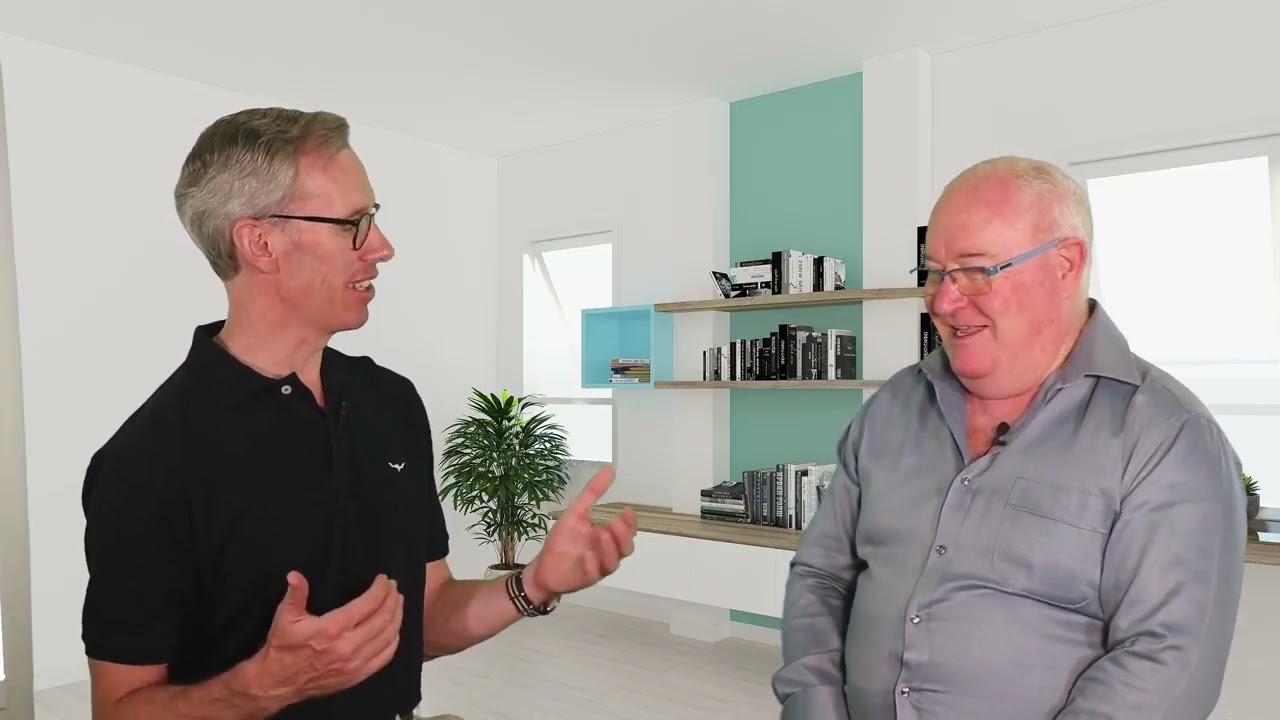
In this interview, Simon Pritchard and veteran meeting‑expert David Julian Price explore why most meetings feel wasteful and how to transform them into productive, decision‑driving sessions. They categorize meetings into three types – unengaged, engaged‑but‑unfocused, and engaged‑with‑clear‑decisions – and identify three universal problems: too many meetings, meetings that run too long, and meetings that lack productivity. Price highlights that organizations rarely account for the hidden time cost of meetings on their balance sheets, making leaders the key lever for change. The conversation delves into practical tools: redesigning agendas from simple topic lists to outcome‑based, question‑driven structures; using independent facilitators for workshops and ideation to separate group participation from facilitation; and employing simple inclusion tactics where participants either contribute or explicitly “pass.” They share vivid anecdotes, such as a senior‑partner meeting that was flawless versus its downstream counterparts, and a manager named Steve who cut a 2.5‑hour meeting to 40 minutes by using a question‑based agenda and strict time discipline. The interview also covers handling difficult participants, recommending a “rope‑giving” approach, guiding disruptive members to propose formal amendments that are then politely dismissed, and summarising the chair’s core principles as the three F’s – fair, firm, and focused. Throughout, Price stresses that meeting skills are rarely taught, are learned by observation, and thus perpetuate bad habits unless deliberately re‑engineered. The discussion ends with a call to action for organisations to seek help in improving their meeting culture.
Chapters
David, I work in a big organisation and I spend a lot of time in meetings.
Like most people do, Simon.
Now, meetings are interesting because I do hear people walk out and say things like, that's an hour of my life I'll never get back. And it strikes me there's probably 3 types that I've been to, but The first is where people don't really engage. They're the ones people often comment that, you know, it's an hour I won't get back because they go, well, why was I there? And then there's a second type where everybody engages, but it's not necessarily clear what the outcome is or the action that results from the meeting.
If there is an outcome.
Yeah. They often go over as well. And then there's a third type, which is maybe the type we want, where everybody's engaged, there is a clear decision, and it's clear what the action is after the meeting. Did I capture the types, or—
Oh yes, I think you captured them really well. Simon, I've been working in the area of meetings for, well, almost 40 years, and I've worked with hundreds of organisations, and the problems come down to the same 3 everywhere, and they are these: there are too many meetings, they go for too long, and they're not productive. And when you drill down, as I do with clients, we normally find that nearly always all 3 are present. And It's the— as you can imagine, there's been so much research done about meetings. And it all comes down to, nearly always, that the biggest complaint in every organisation is meetings. And when you drill down, it comes to those 3— too many, too long, and not productive. And there's things you can do. And they're really easy. And I ask myself frequently, and have done for 40 years, Why don't organisations do this? And the reason is meetings— the reason I think, one of the reasons, is meetings cost an enormous amount of money in time. But nowhere on the balance sheet is there a line that says cost of meetings. No one actually has to write a cheque. Not that anyone writes cheques now, but you know what I mean. No one actually has to pay for the time because it's not itemised. They don't know how much their meetings are costing them. Costing. And it comes to the leader of the meeting nearly always as being the person responsible. And by that I mean they have the ability to make a meeting highly effective, or they have the ability to let a meeting be really ineffective. And so there's a whole range of things that people can do to make their meetings more effective. And I always start with the person in the chair. I'll tell you a story, Simon. Some years ago, I was asked to go to the senior partners, the managing senior partners meeting of a very large organization. 12 partners in the room. It was the best meeting I have ever been to. They were Completely organized. The agenda was detailed, so they knew exactly what needed to be done, and it was very focused. They always started at 8 o'clock on a Monday morning and they finished at 10, no matter what. But the point that I want to make is this: they asked me to come in and see what I could suggest to improve their meeting, and I had to say— there were one or two minor things— I said, look, that's the best meeting I've ever seen. But my brief was then to work with the next level down. The interesting thing is, of the 12 partners, only 2 were willing to let me sit in on the meetings that they ran. And— but I was able to speak to the staff generally. And what I found is that that level down, the meetings were really bad. So at the top, top, top of the tree, the meeting was brilliant. But at the next level down, it wasn't. And it was the manager that ran it who didn't see the need to do the sort of things that they did for their main meeting, which was simply, in their case, was simply get a really well-organised agenda. And people think, oh, well, everyone knows that. You know, the 2 things that can make meetings better is have an agenda and start on time. And that's right, you do. You have an agenda to save time. But when I look at most agendas, they're not agendas at all. They're just a list of topics. There's no direction. There's no way that people can do any pre-thinking. And so I spend a lot of time with organisations showing them how to make their agendas much, much more effective. And the irony is, the work that goes into preparing the agenda is not a great deal. It's just rewording it and adding— changing structure a little. But the benefits in the meeting are huge. Because there's focus. And you said the word in one of those 3 types of meetings, the ones that are not focused are the really bad ones. A meeting has to be focused. So there's a whole, again, a body of knowledge around meetings. But there's much more than that. It goes into decision-making. It goes into conflict resolution or conflict management. It goes into, you know, what is the overall purpose? What are you trying to achieve? What do you want this meeting for? And so we do a lot of research in meetings, and one of the things we've found is that most people say 70% of the meetings they go to have no benefit to their job. They do not help them do their job in any way whatsoever.
That's frightening.
Yeah, it's a huge amount, 70%.
Well, let's carve that up a bit, because the— I guess what I'm thinking about is You know, we've got formal meetings in our organisation, very professionally run and effective and all that.
Yes.
There's what I think of as, you know, informal meetings, and there's a graduation in between that. And then the other dimension I'm thinking of is the difference between, if you like, a meeting and a workshop, which again is another graduation. But it's almost like when you bring a group of people together to sort of work on something. As opposed to maybe make a decision. So how do you think about those types of meetings?
Okay, well, let's start with the last one first, and that's the workshop, where what you're trying to get is you want to harness the collective knowledge, wisdom, experience, awareness of the people in the room for a common purpose. Am I right?
Yeah.
So the role of the— so there needs to be A person— I'm going to use the word in charge, but I don't mean in control. What I mean is a facilitator. So it's not the— the meeting doesn't get run, or doesn't get led, or doesn't get chaired in the same way as other meetings. This is a facilitation role. And that's a completely different skill, a completely different skill set. So I worked with an organisation once, a large organisation, who trained up a number of facilitators from all levels of their organisation. And whenever they had the meeting that you've described, a workshop where they're trying to gather information, gather ideas, often called ideation meetings now, they would use one of their facilitators. Because one of the things about facilitating is there's a line I use in my marketing, in fact, and that is, you can't ride 2 bikes at once. You can only ride one. And what I mean by— and I know that sounds silly, but what I mean is you can't be a member of the group And the facilitator of the group. They're 2 completely different roles. So in that type of meeting, you need to get someone who is not part of the group, but guides the group and takes the group through the process. And there's dozens of different processes that you can go through. Everyone says brainstorming, but brainstorming is only one process. There's dozens of other processes. There's that can get you to the point where you can effectively harness that experience and wisdom and knowledge. And wisdom is the key one. You really want to drill down a little beyond just the knowledge to the so what. Well, okay, so we know this, but what does it mean? That's where the wisdom lives. And that's where you have to tap into that.
So the point is you must have an independent facilitator. Is that—
Yes, essentially, that's it.
OK.
Now, the other meetings, as you say, there's the very formal meetings, which, as you say, are usually run really well. And it's that middle group of meetings where most of the problems exist. And a lot of it comes down to, again, the person who runs the meeting or leads the meeting. And I've done a lot of work in this. And I've asked literally hundreds and hundreds of managers Where did you learn to run meetings? And their answer is always the same. Well, by watching other people run meetings. When it's boiled down, that's their answer. And the reality is that very, very few people are trained to run a meeting. And there's so many skills involved in running meetings, so they run it in the way that they've seen it run. And then you ask, well, where did they learn? Well, they learned from watching people run meetings. And so what tends to happen is the bad habits, if you like, just get perpetuated all the way through. I had a friend once who worked for an organisation. He was second in charge of his area. And his boss went on leave. They used to have a meeting every Friday afternoon— the worst possible time to have a meeting, by the way, Friday afternoon— but they used to have a meeting Friday afternoon. It always ran from 2 o'clock to 4:30. The boss went on leave and my friend chaired the meeting. And he and I knew each other from an organization where we'd learned how to run meetings. He ran the meeting in 40 minutes and everyone knew exactly what to do. Now, unbeknownst to him, when the boss returned, the other staff went to the boss and said, Boss, you need to let Steve run the meetings. You wouldn't believe how he does it. And so, fortunately, the boss agreed and sat in on one meeting, let my friend Steve run the meeting. And he said to Steve after, Steve, you run all the meetings from now on. So, smart boss.
So what did Steve do?
Well, first of all, he had a structured agenda so that it wasn't a topic-based agenda, it was an outcome-based agenda. So for every item, it had exactly what needed to be decided. So his agenda was question-based. That's a really good tool to use in all meetings. What question do we need to answer? So you ask that for the meeting, but you also ask it for every single item. Secondly, he didn't allow any waffle. It was, it was Friday afternoon. The last thing I wanted to do was be in a meeting. And so he just got straight to the point. And because the agenda was question-based, everything was focused on what is the answer to the question. And then at the end of each thing, he simply said, okay, what do we need to do? Here's the answer to the question, but what action does that now require? And of course, obviously, who's going to do it? And it was noted in the minutes, moved on, and he got through what used to be a 2.5-hour meeting in 40 minutes with all of the boxes ticked, all the compliance done accurately. And everyone knew exactly where they stood. So the end result was people then wanted to come to those meetings because they knew it would not be a waste of time, whereas before they dreaded going.
And they'd experienced the bad ones as well.
Yes, absolutely.
Yeah. So the other thing I'm thinking about is inclusion is a big issue for us. And often in meetings, people want to hear from everybody to make sure you get that diverse perspective. But also sometimes people don't actually have something to add. So how do you balance that in a way that—
Oh, it's— Simon, you'll laugh, it's so simple. And I've taught this to so many groups, and it is this. You want inclusion, and you've got to ask why do you want inclusion? But if you want inclusion because you genuinely want everyone's opinion, and I guess hidden in that is what you're looking for is their knowledge, and their experience, and their wisdom and so on. So if you're looking for that, then the meeting needs to know that that's what you're looking for. And so you ask people who have something to contribute to contribute it. Now, there's ways to do that to make sure everyone does, but here's the key: if they don't have anything to contribute, they say pass. And it's so simple. So you go around and people either give what they want to contribute or or people simply say pass. Now, what we've found is that people who say pass do not then say, well, I didn't get the chance to say anything, because they did. And so you get inclusion, but inclusion doesn't necessarily mean that everyone in the room has to say something. There's a very interesting little thing that we discovered in our research. The Most unpopular phrase in a meeting? We'll just go around the table. The bosses, in my experience, bosses and managers love it. The troops, if you'll let me use that word, hate it with a passion because they just don't want to sit there listening to everyone else unless it's focused on the issue at hand. And if that's the case, then it would be normally structured as a question. That, as I said before, that's a really good way to structure a meeting. But they just don't want to listen to everyone else talk unless there's something valuable in what they're saying. And so the troops hate the, we'll just go around the room. I'm laughing because I've heard that one so many times.
What's the biggest disaster that you've ever observed in a meeting?
Oh, Simon, what's the biggest disaster I've ever observed in a meeting? Oh yes, I can tell you. One of the things I do is I'm often hired to chair meetings, difficult meetings, because one of the skill sets I have in my toolbox of skills is I'm an expert in formal meeting procedure. What used to be, you know, very common, but is not that common now. And I've written 5 books on that. And so I'm asked occasionally to go and chair difficult meetings, and the most difficult ones are nearly always strata management meetings. So blocks of units where all the owners get together, and you can imagine the sort of things that go on. Now, I need to be very careful in how I describe this to you because I can't let the particular situation be identified. So I'll be quite general if you'll allow me to be. So I've done one particular group 3 times. They have a particular owner who is very, very difficult. So I can share this with you, which will give you an understanding of how difficult the person is. On bin night, everyone goes out and puts their bins out. He has been captured on video going out and turning everyone's bins around, because in that particular council, the council will not collect the bin if it's not facing the right way. So that gives you a bit of an idea. He's a very odd person, an unusual person, because I think you would agree that's an unusual thing to do. But it does start to give you an idea of the sort of person we're talking about. At the meeting, he nearly always arrives late, he nearly always queries the budget, and he uses language which would be inappropriate in a pub, let alone inappropriate in a meeting. And he talks at great length, at very high volume, about irrelevant information or about things that have already been discussed. discussed, and then always storms out. And so the meeting is, you can't say it's a pleasant environment.
Well, how do you deal with something? I mean, we have, I won't say anyone exactly like that, but in often meetings, you know, you do have difficult participants.
Well, the way I deal with him, because I've now done the group 3 times, I know what he's going to do. And I give him his rope. I let him speak. Because I have learned that if I let him speak, he literally runs out of steam, and then he nearly always storms out. But he'll often— a perfect example is he'll often suggest that the budget be altered. And so what I do as the chair is I suggest to him the way that he can do that. And in a formal meeting, it's always, we'll move an amendment. And I help him word the amendment, and I know that the amendment is going to be lost, but at the end of the day he can't say that he wasn't allowed to speak by me, the Chair. And so I run with him, I help him, I let him put the amendment, the amendment is never seconded, and so I just rule, okay, so the amendment lapses for want of a seconder. and then we move on. But he's had his chance. So if it were a work meeting and there's an extremely difficult person, my example would be a little different because at work you wouldn't tolerate the language. But in every other way, you can have very difficult people in a meeting. Nearly always they're difficult in— there's a whole range of ways that they're difficult, but often it boils down to they're not focused on the question or the issue that we're dealing with. And so the The trick is to bring them back to the issue constantly. They'll often repeat themselves, so you need to politely bring them back in so they're not repeating themselves, because the meeting doesn't want to listen to that. Often just called waffle. And it all comes down to the focus. So a great person who chairs a meeting really well, or runs a meeting really well, I say have the 3 F words. They are fair, they're firm, and they're focused. And so it comes down to the person leading the meeting or running the meeting.
Terrific. Well, if you're having any issues of that nature in your meetings, or you just feel that your meetings could run better, get in touch with me and I can either put you in touch with David or provide some other help. Thanks, David, for joining us today.
Oh, my pleasure, Simon. Thank you.
We'll chat next time.
Yes.










