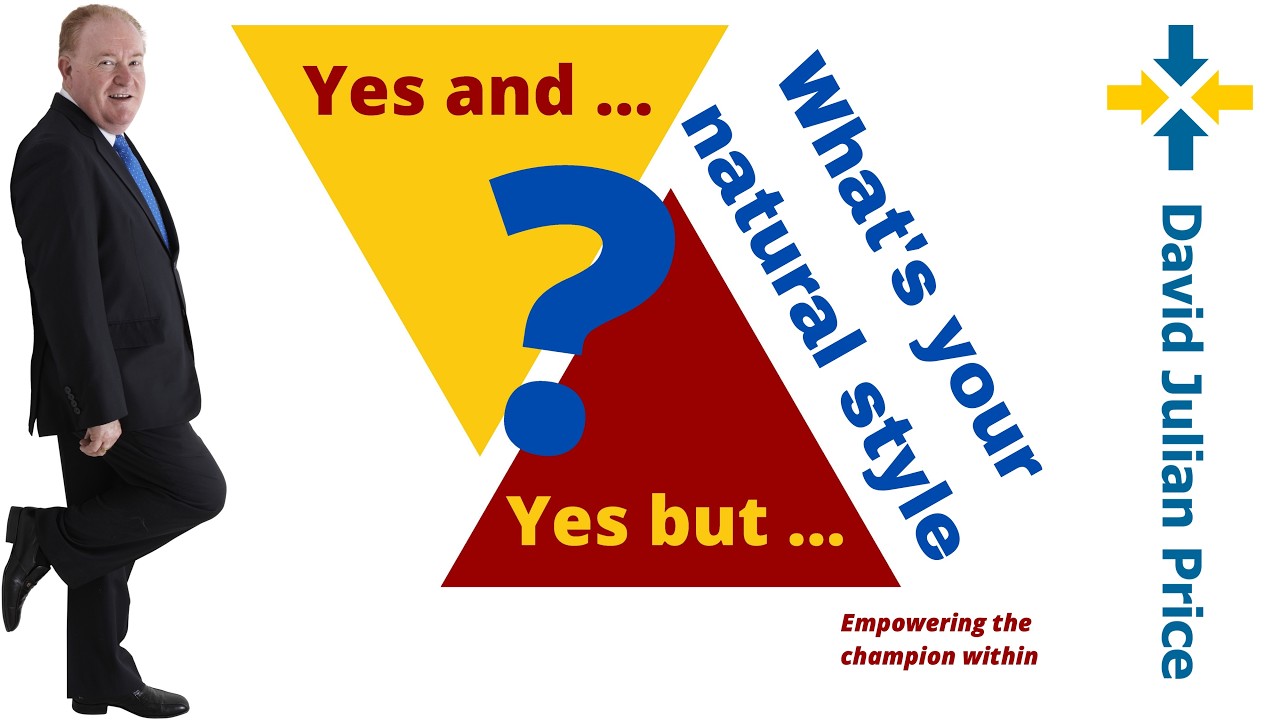
In this short instructional video, the speaker recounts an improvisation course where participants learn the contrasting mindsets of "Yes, And" and "Yes, But." He explains that "Yes, And" opens possibilities and moves dialogue forward, while "Yes, But" closes off ideas and stalls progress. He then maps these mindsets onto meeting culture, describing "yes‑and meetings" that build on prior ideas and explore next steps, versus "yes‑but meetings" that focus on obstacles and reasons why things cannot proceed. The speaker challenges viewers to reflect on their own thinking style and the style of the meetings they attend, recommending that they actively listen and keep a simple tally of "yes‑and" versus "yes‑but" moments to become aware of the meeting’s prevailing dynamic. The overall message is that recognizing and encouraging the "yes‑and" approach can make meetings more productive.
Chapters
A couple of years ago, I went to an improvisation class. Well, it was a course actually. It ran over a number of weeks. And improvisation is a really, really challenging skill. It's great fun, but my goodness, it's challenging. No matter how smart you are, no matter what you've done before, improvisation is challenging. There's something that they teach in improvisation that is absolutely crucial to thinking about meetings and speaking. But I didn't realise it at the time. I came to realise later that the exercise they teach is called Yes, But and Yes, And, and it has an impact on meetings. People and groups tend to fall into one or the other category. Some people are yes-and people. They're possibility thinkers. They look at what can be done with what's already happened. Yes-but thinkers are the people who tend to look backwards and they tend to hold things back. They tend to stop things moving. But the realization I had about meetings is that meetings have a style, a culture, if you like, that's exactly the same. Some meetings are yes-and meetings. They take what's been done before and they say, where can we go with this? What should we do with this? What's the next thing to do? And some meetings are yes-but meetings. They look backwards and they think, well, we can't do that because of this. And they look for the reasons why something can't happen. In improvisation, they say, yes, and opens things up. Yes, but closes things down. And it's exactly the same in meetings. So, are you a yes, and or a yes, but thinker? And are the meetings that you go to yes, and meetings, or are they yes, but meetings? It's a really interesting question. At your next meeting, listen carefully and see what the tendency is. Keep a little tally, if you like, of the yes, ands and the yes, buts, or things that are similar that amount to the same thing. Yes, and will move you forward. Yes, but will hold you back.