A Lifestyle To Balance Your Immune System - with Dr. Susan Blum | The Empowering Neurologist EP. 26
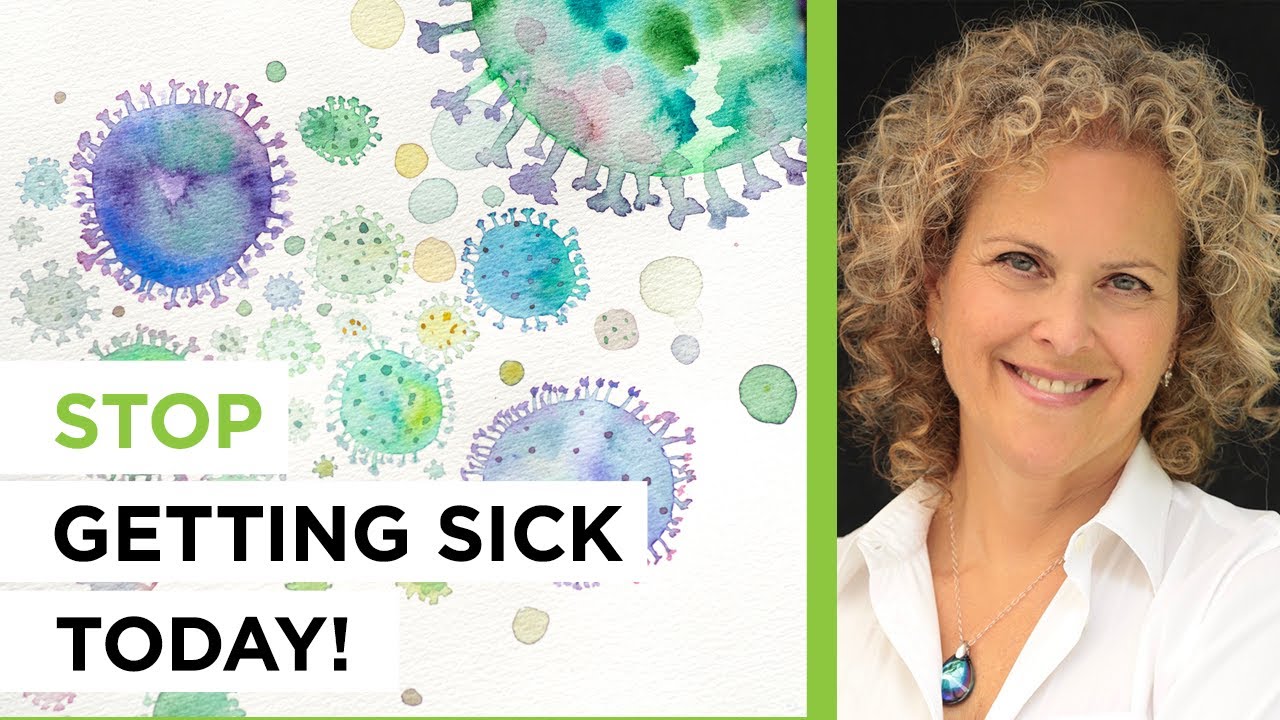
In this interview, Dr. David Perlmutter hosts functional‑medicine physician Dr. Susan Blum to discuss how a balanced immune system depends on gut health. Dr. Blum explains her functional‑medicine model that integrates a teaching kitchen, nutrition classes, and mind‑body practices within a clinical setting. She defines autoimmunity, using Hashimoto’s thyroiditis as a case study, and describes how the gut microbiome (≈70 % of immune cells) regulates immunity through barrier function and microbial signaling. Modern lifestyle factors—processed low‑fiber diets, overuse of antibiotics, proton‑pump inhibitors, NSAIDs, and other medications—disrupt the microbiome and increase intestinal permeability (“leaky gut”), which can trigger systemic inflammation and autoimmunity. Dr. Blum outlines practical, low‑cost interventions: increase plant‑based fiber, fermented/cultured foods, targeted herbal “gut‑cleanses,” and functional‑medicine testing for dysbiosis or leaky gut. She promotes her online program (blumhealthmd.com) offering 10‑ and 30‑day gut‑reboot protocols with coaching. The conversation emphasizes that immune dysregulation is largely a gut issue, that conventional medicine often treats symptoms with immune‑suppressing drugs that can further damage the gut, and that empowering patients with dietary and lifestyle tools can restore immune balance.
Chapters
Hello everybody, I'm Dr. David Perlmutter and welcome again to The Empowering Neurologist. You know, we really depend a lot on having a balanced immune system. We want to have a good immune system so we can fight infections and other traumas to our bodies. But beyond that, when the immune system becomes overactive, we can have what's called autoimmunity, where our immune system actually reacts against our own body tissue, like the thyroid gland, for example. When that's happening, it's called Hashimoto's thyroiditis, named after the person who discovered it. Well, we want to balance the immune system, and here's a terrific book called The Immune System Recovery Plan by Dr. Susan Blum, and she is our guest today. It's a great book because it talks about balancing the immune system based upon many important lifestyle choices, primarily the food that we choose to eat. Dr. Blum is one of the early adopters in functional medicine. She's been doing this for a while and is a nationally recognized clinician as well as teacher. She lectures all around the country. She's a founder and director of the Blum Center for Health and With her educational outreach, her writing, her research, and also her medical mentorship program, she's really revolutionizing healthcare and how it's coming out, how it's being played out here in America. She's a member of the advisory board for the Institute for Integrative Nutrition, and she's on the board of directors for the True Health Initiative in the College of Lifestyle Medicine. Dr. Blum completed her internship and residency training in internal medicine. at St. Luke's Roosevelt Hospital, and she's board certified not only in preventive medicine but also certified in functional medicine as well. She is a senior faculty member with the Center for Mind-Body Medicine, and again, she is the author of this wonderful book called The Immune System Recovery Plan. So it's really an honor to interview her today, so let's just jump right in. Well, hello, Dr. Blum, and welcome to the program.
Well, hello, Dr. Perlmutter. Thank you for having me.
So the audience needs to know we've known each other a long, long time, and we're being formal just to look good. But that said, you've got a really unique type of approach to medicine that really seems to be working. What is it that so defines what you do?
Well, I don't think there's one definition, really, I think that defines— it's hard to put it into one definition. Certainly. I think of what I'm doing now as a culmination of all the things I've been interested in and what I've been passionate about all these years. Certainly, the root of what I do is functional medicine, but I've— and I've created a center, right? So the physical part of what I do, the physical place, is a nice-sized health center in Westchester County in New York where I practice functional medicine. But it's not just about the clinical. You know, I'm very interested in mind, body, spirit. I'm very interested in food and nutrition, right? So At our health center, we have a very large teaching kitchen. Every person that comes through here goes into the kitchen and has a cooking class, a pantry makeover class.
Wait a minute. This is a doctor's office? How could you be teaching people about cooking? What would the relationship be?
Well, as you know, food is medicine. As a fellow functional medicine doc or a person who's been living this life, you know very well that food is central to everything we do. And what I learned in the early years of treating patients is that, you know, if we don't help them eat properly or help them— what does proper mean, right? Really help them eat in a way that's health-supportive. The food is a foundational part of all functional medicine treatment plans. It's really the root of our functional medicine practice in some ways because food has function. Everything you eat has nutrients that come into your body and trigger all sorts of events, and it can trigger inflammatory events. It can trigger antioxidant positive events, right? So we want to help people use food. And what I found is in the early years, you know, we can have all these great ideas and have all the— I present somebody with a fantastic treatment plan. Okay, this is what you're going to do. And then they look at me and it's very overwhelming. You know, we're asking for a lot of lifestyle change. We're asking for a lot of— you know, a lot of change. And so the education piece is so, so important because people need to know how to— how do I do that? You know, Dr. Blum, that sounds great, but oh my God, you know, that is so overwhelming. And so—
I'd like our viewers just to take a moment and think about what it's like when they go to their doctor's office. Let's say you got an appointment coming up or you were just at your doctor a week ago. What would you— how would you feel if you knew that that doctor was also teaching about nutrition and beyond that, Can you imagine if your current doctor, if that doctor had a kitchen in his or her office and a dietitian that was going to teach you how and what to eat? Why is it so important? And that's what Dr. Blum is talking about. So yeah, what, what brought about this shift? I mean, this isn't stuff that we learned in medical school, obviously.
Well, right.
You do this.
Well, then what? Well, there's a lot of this that I ended up doing because How did you get into it? I think like most of us in the integrative and functional medicine world, there's something that inspired us to discover these things for ourselves. For me, I developed something called Hashimoto's thyroiditis, which is an autoimmune condition. I was also always interested in nutrition. My background is in preventive medicine, so I'm board certified in preventive medicine. I'm an assistant clinical professor at the Mount Sinai School of Medicine, or actually it's called the Icahn School of Medicine at Mount Sinai in New York City in the Department of Preventive Medicine. I'm on faculty there. Yeah. And it's very much grounded in prevention. But the conventional world, when I was coming of age through the system, was very much about early detection, immunizations. Like, what does prevention mean? Get your mammogram. You know, get your Pap smear. Early detection. It wasn't about primary prevention. And so function— so what's primary prevention? And so I was— and so for me, it's about food and nutrition as well as stress. You know, and understanding stress and trauma.
That's a great point, and I think for our viewers, it's a theme that we have seen a lot of times on the program, and that is that physicians develop medical issues, and that turns out to be a strong impetus in terms of developing their interest and looking at things in a different way. And in your case, why don't you tell our viewers what exactly Hashimoto's is all about?
Yes, I'm happy to do that. Hashimoto's is in the world of— it's considered an autoimmune disease, and I'll share about— I'll tell you about the thyroid first, and then we'll talk about autoimmunity. The thyroid is a gland that lives in your neck, and it's an endocrine organ, and it makes hormones. It makes thyroid hormones, which are responsible for a lot of very important functions in our body. A lot of people walk into my office, and they're like, something's wrong with my thyroid. It's a very common— misconception that it's the single thing that causes, you know, weight gain and hair loss and slow metabolism and fatigue, and it does cause all that, but there are other things that cause that too, but that's the thyroid gland, and what happens is there's something called autoimmunity, and an autoimmune condition is when your immune system really attacks the gland, to keep it very simple. Your autoimmune— your immune system, rather than fighting the bad guys, turns its attention on your own tissues and starts fighting your own cells or your own tissues, and depending on where that, you know, attack happens, which tissue, that's how you get the disease. So I had Hashimoto's thyroiditis, which is my immune system was attacking my thyroid gland. But there are other conditions, and as you know, like multiple sclerosis, when the immune system attacks the brain, you know, certain parts of the brain that triggers disease. And there's rheumatoid arthritis, where the immune system attacks the joints and you end up with an inflammatory arthritis. arthritis. And so, autoimmunity can strike any tissue in your body and in the current world of autoimmunity, there's— it's divided up into depending on what specialty you belong to. So, the MS people would go to see you and I see actually all autoimmune people because I'm an autoimmune expert and I wrote a book a few years ago called The Immune System Recovery Plan because as a functional medicine doctor focusing on complex chronic illness, which is really what I do. do preventing and treating these complex illnesses, it crosses all barriers. We don't cut up in functional medicine the body into pieces for specialists. We see the person as a whole. I see the person as a whole. I developed Hashimoto's—
In the Immune System Recovery Plan, and as fate would have it, there's the book. Here's a book that you've written about balancing the immune system, not too high, not too low, and a lot of what you're talking about has to do with nutrition and the gut. How is it that the gut is involved in regulating the immune system?
Well, the gut, it turns out, is probably the most important factor that regulates our immune system, and it's the most fascinating evolution of science right now leading to all this research on the microbiome, which, as you— I know you know very well. So the gut is the home to— estimates are about 70% of our immune system. And if you think about the digestive tract as This long tube that starts in the mouth and winds its way all the way down to where it exits through your anus, you know, and you open that whole thing up. It's about the surface area of a tennis court. It's huge, right? The surface area of the, of the whole lining of your intestines. But your digestive tract is responsible for bringing in the outside world. I like to think between the gut and your lungs, well, and your skin, that's the biggest exposure to your outside world every day you bring in through your mouth. And so nature provided us with a lot of immune cells that are all clustered throughout the whole small intestine and the large intestine that are lying in wait in sort of all these lymphoid tissue, these clusters of cells lying in wait right under the intestinal lining to basically protect us from everything that comes in, right? And to sort of keep an eye on what's going on. And so the immune system is very much based there. And so what can happen is In addition to that, so how does it stay healthy there? We have all these trillions and trillions, and now the estimates are dropping it down to more like 50 trillion, but at one time it was up to 100 trillion.
It's a big number.
It's a big number, and it's probably more cells than we have in our body. We can probably all agree about that. It's a huge number. These bacteria that live inside our gut, that line the whole gut, talk to our immune system, and they've evolved through You know, millennia, you know, through the human species, I think they've evolved this sort of relationship.
So what are people doing these days that really seems to be screwing it up? In other words, we're seeing this incredible explosion of immune-related issues, like Hashimoto's is around every corner, it looks like. So what do you suppose is happening that is bringing this on in our society?
Well, if you think about— so when we So if we sort of go from the idea of the— these bacteria, right, and we say, okay, these bacteria are critical for toning our immune system and keeping it healthy. They're also critical for maintaining the barrier function, right, of the gut. And so this is the really central sort of linchpin, we think, in autoimmunity is that the imbalance in the flora— and I'll get— I'll answer your question at the end of— I just want to start here. Please take your time. The balance of the flora— the health of these flora are really relevant to maintaining your immune system, but it does that by maintaining the barrier, one of the ways it does that. This barrier, you're bringing in the outside world every day, and you have an impasse. What's supposed to be a barrier that is discernible, like you're supposed to decide what comes in. Things aren't supposed to just flow in. If the gut flora isn't healthy, Yeah. And there's other conditions like medication, and we'll talk about, that can destroy this lining and make it leaky. So it's called increased intestinal permeability. So it's this leakiness that annoys the immune system, that triggers it, that causes the immune system to stop developing properly, to malfunction. And this leakiness where these proteins and the bacterial cell wall proteins from all the bacteria leak into the body and trigger all this inflammation and autoimmunity. And so that's one of the main, main mechanisms for autoimmunity that we believe how it happens. And so why all of a sudden in today's day and age, what's happened? You know, why has our gut changed? You know, why has our flora changed? And my goodness, I think you and— between you and I, we could come up with a list, you know, that's beyond, you know, but the— starting from the top, the simplest things are lifestyle, right? So I think about food, right? Eating foods— the food that's devoid of fiber. What does the gut need? The gut needs a lot of vegetables and fiber, you know, a lot of plant-based material to feed it and to keep it happy and healthy, you know. And, and really in the '50s when we started processing food and taking a lot of the nutrients out of the food, we stopped feeding our good bacteria. And instead we ended up eating a lot of processed foods, which are all filled with sugar and, you know, simple carbohydrates, which actually, it's very interesting. They've done studies and in 3 days, if you completely change what you eat, your bacteria can change within 3 days later. You can see a change. Food really has a big effect on the flora. That's the simplest place to start in like, how did this happen? Is our food definitely changed? The other thing that changed is medication and the advent of antibiotics. Antibiotics. Antibiotics are wonderfully important. Now, that was the leading cause of death amongst humans. Right before antibiotics came were infectious diseases. We conquered infectious diseases, but using all those antibiotics, which we do very easily, and we've gone through a period of time in our evolution where people indiscriminately used antibiotics. I just had a new patient today who's been on antibiotics for 3 years for her acne. And what is that doing to her gut flora? That completely alters it because they're bacteria, right? And so things like antibiotics, things like proton pump inhibitors and antacids, people are overindulging in food and/or they're eating a diet that doesn't agree with them. They get reflux and then they take antacids. And the digestive tract has a very, very specific mechanism for how to keep things in balance. And one of the ways is to have really good acid in your stomach because the pH that comes out of your stomach heads downstream into the rest of your intestines and actually just helps your body decide which bacteria live and which die, right? And so the acid in your stomach are very important for killing off the bad stuff and the good bacteria are very resistant to that acid. And so, you know, things like antacids, so that's one kind of medication. You think about things like steroids and you think about You know, a lot of medication directly damage the gut, like— and like pain medication, for example, you know, Advil, a simple— what seems like, oh, I'll take some Advil. Well, Advil increases intestinal permeability all by itself, separate from actually damaging the microbes.
Where you're going with that is Advil increases the permeability and therefore might actually increase inflammation because the gut is now permeable. Yes. Advil is marketed as an anti-inflammatory, so that's certainly conjectural, isn't it?
Well, it's definitely conjectural. It is working on one anti-inflammatory pathway, but what it's doing is it's feeding into us, it's causing a foundational imbalance that all by itself might not do anything, right? So if that's the only thing that you're doing, perhaps your body can cope with that. But the problem is there comes a tipping point for everybody. You know, all these sort of accumulated insults, and if you're not doing anything to right the ship, you know, you're going to— so if you're eating a processed food, animal-based, you know, diet, which is not very good for the flora, if you're taking a lot of antibiotics for your chronic sinus infections or for your acne or for your, you know, for whatever reason, or given a lot of antibiotics as a kid for ear infections, you know, we go back. and do a timeline in functional medicine, I would go all the way back to the beginning. You know, what was your life like as a child? Did you have ear infections? Were you eating foods? And how— why do young children get ear infections a lot? We believe that there are food sensitivities or food things that might be triggering that. And, and that's— and so you go back and you try to make a list. It's really detective work. You know, how— you know, what's going on here? How many things have been going on in your life That might have added up to how you got here.
And so— So let's, if you can, give us some good news. What's the good news in terms of what are the positive choices that we can make now to turn this whole thing around and regain health and balance out our immune systems?
Yeah. So, well, certainly as we're talking about the gut, you know, I always— healthy gut is a healthy immune system. That's sort of the bottom line. And so the best way to work on your gut health The best way to work on your gut health just on your own without doing anything terribly interventional, right, is to change your food, right? Is to incorporate— now, I'm not saying a person needs to eat vegan. Like, we can all talk about different diets, right? But at the end of the day, I think what we all agree on is that there need to be a lot of vegetables in somebody's diet, right? There needs to be a lot of plants and vegetables. And so those— provide the fiber and help the good bacteria grow. There's also a lot of ways to include cultured foods in the diet, which are things like yogurts. I tend to steer away from dairy. I'm not a big dairy fan. I— for various reasons, it tends to be, I believe, inflammatory in the body. So I tend to direct people towards coconut milk, you know, kefirs, and there's ways to get cultures, you know, in food that's not in milk products, cow milk products or goat milk products. Yeah. Cultured foods and fermented foods. You can eat sauerkraut, kimchi, vegetables. There are things you can do. There's kombucha tea, drinks that people drink. There's ways to bring in cultured food. The problem is that, from my perspective, if you already have an autoimmune disease or you already have some sort of dysfunction in your gut where you're having reflux, you're having problems, You really might need some way of cleaning out the bad stuff. You might need some way of cleaning out the bad stuff, and I do that with herbs. For me, what I— see, I don't know that— I want to keep things simple for the people watching this, right? On your own, the simplest thing to do is to bring in more cultured foods and to bring in food. Mm-hmm. Taking it the next step, if you have a reason to believe Okay. That you have— and in my book, I give a very good— in my chapter on the gut, there's a very good evaluation for how to know if you have something called dysbiosis or leaky gut. It's very important to check yourself to see whether you have this thing called dysbiosis or leaky gut. Therefore, if you think you do, then you need something called what I call a gut cleanse. A gut cleanse is where you take herbs that are going to help clean out the bad bacteria. In fact, this is so foundationally important that I developed— I actually have developed a new website that has these online do-it-yourself sort of Heal My Gut programs because in a functional medicine perspective, healing the gut isn't just about taking in the good stuff, which you need to do, but there's this remove part where you have to remove the bad stuff.
Dr. Blum, can you give us the website?
Yes. The website is called blumhealthmd.com.
Blumhealthmd.com.
Yes. On Blum Health MD, see, healing the gut is so, so important, and it's become such an issue that's foundational for healing the immune system that— and not everybody can come see me. I built this health center, and not only do I have cooking classes, and I have meditation classes, and I have 4 other clinicians now seeing patients here. We're very busy, but not everybody can fly to New York and see me in Westchester and see— or see someone on my team. And so because healing the gut is so important, I felt it's so important that people can access it themselves online in a digital way. And so that's why I created this new site, and it offers a 10-day quick sort of reboot of your gut and a 30-day. And not just that, we have coaching that goes with it, and you can join a chat room and talk to one of our nutritionists to help you. sort of figure out what comes next. And so I really believe that healing the gut is going to be the most important next step that people can do if they have any immune issues that they're concerned about and if they have any digestive issues that they're concerned about.
That's a very, very powerful soundbite right there. I mean, if you get nothing else from, from our program today, what Dr. Blum just said is that healing the gut is the pathway for balancing your immune system, if I can paraphrase you. Yeah, yeah. So, it's so very important because, you know, in our society, people with immune issues or autoimmunity especially, they're treated with drugs at the end of the line that, that work on the immune system and really clearly neglect the cause, which is gut-related. And what's even more compelling is when you recognize that the very medications that so many people are taking because of their immune problems ultimately damage the gut and make the problem worse in the long run. It's, it's a really very overwhelming kind of notion because people like that are just ultimately digging the hole deeper and deeper.
Right. And because it can feel a little complicated, you know, we guide through— we guide people through healing their gut here. That's like functional medicine 101, you know, for us. And I think that's why I did my functional medicine training 15 years ago, and that's the first thing that I learned how to do is to heal the gut. We've known this all these years, and I think Conventional medicine is just now catching up to us. We do this all the time, but it's not— people need— you need guidance. People— it's not easy to do on your own. What I will say, right now, I'm writing a book on arthritis, on all sorts of— every kind of arthritis, including inflammatory arthritis. The research on the connection between the gut microbiome and even the oral microbiome now on systemic inflammation in your joints and arthritis is really in the past 3 years, enormous and conclusive, that there really is this connection and that even treating people and treating people's humans— there are human studies on repairing the microbiome, changing it with probiotics actually improves joint health and joint function and reduces pain. There's some just really compelling, compelling reasons why we have to really make it accessible Yeah. To help people repair their gut, repair the digestive system, repair that microbiome. I wouldn't say— and we're not 100% there yet. Look, we're still— this is still in infancy in its own way. I think we— I do— I feel like we do great work here. I know that my functional medicine colleagues do great work, but I think, as you know, there's so much coming down the pipeline now that we're learning about the microbiome and repairing the gut.
What I find so fascinating is, almost without exception, every physician, every specialist that I interview dealing with their particular diseases ultimately comes back to the gut, whether we're talking about arthritis, joint issues, or even dermatology. Yeah. Talking about skin inflammation, and even ophthalmology. It now looks as if the real focal point, the real leverage point here in a good way, Turns out to be not just the gut, but the lining of the gut and the permeability. It has body-wide implication in terms of disease causality, so—
Yes.
Or causation. So it's really very— so, you know, people need to get their arms around the notion that immune regulation begins in the gut, and that's why your book is so exciting.
Right. And not just get— and they need to know it, but we need to be able to offer them tools to fix it, you know. And I don't like the word fix. I feel like I'm a facilitator more than I am a fixer, right? But we need to give people tools to repair it, you know, to change that, to help turn that ship around. And so we have to make that accessible to people.
Well, again, accessibility— and everybody can buy your book, but also your new online program, I think, is really very exciting, the 10 and the 30-day programs. So one more time, if you can give us the website and— Yes, the website.
Yeah, so that would be great. The website is blumhealthmd.com. Right now, we have our 10 and 30-day programs up, and it involves coaching and coaching support and guides. We're really an email daily support. You ask us questions, and we're here to support.
That's so great.
Isn't that great? I'm actually very excited. We just launched it a month ago. I've been running— I do have to say, though, since my book came out 3 years ago, I've been running an online Do It With Us program, a Heal Your Gut program. I have been doing it for the past 3 years. What I discovered was it was sort of buried in my current website, and I wanted to add coaching. So I just moved it out and I'm offering it up in a different revised way to make it more accessible and easier for people to do with more support. Yeah. So yes, I've been doing the online gut programs for a while and it's so powerful. When people just— the emails that I get thanking me, I'm just so grateful that I get to share this information and make what we're doing accessible. My goal is to bring all the programs that we are doing here at Blum Center You know, online into that platform. Right now, the gut is the only thing that's up, but, you know, I'm— my intention is to put some more things up there that are very supportive for everybody. Yeah.
Well, Dr. Blum, let me say thank you so much for joining us. It's really always a pleasure to talk to you, and it's always very exciting to see what you're up to. And I'm really very impressed with your outreach to, you know, a much larger audience who's who now has the ability to participate in the type of work that you're doing. So, hope to see you soon.
Thank you so much. Hope to see you soon, and thank you for having me.
Okay. Bye, Susan.
Bye.
Well, that was a very interesting interview, and again, I think the point that Dr. Blum made that we've really got to take home from the message— take the message home is that our immune systems are under our control and are really influenced to a significant degree by our food choices. Food matters a whole heck of a lot in terms of balancing what goes on in the gut, and it turns out that the gut is playing a huge role in balancing the immune system. So again, The Immune System Recovery Plan is the book. I would urge you to take a look at that, whether you're having an immune issue or you're interested in preventing your immune system from going awry. And again, her website is blumhealthmd.com. That's a good place to go to learn about the various programs that she offers, her outreach, how their clinical staff is able to interact with you even online. So I hope you enjoyed the program today. I sure did. Thanks for joining us. I'm Dr. David Perlmutter.
More from David





Newsflash: Alzheimer’s Is Not Caused by What We Thought | Dr. David Perlmutter

