A New Look at Type 1 Diabetes - with Dr Keith Runyan | The Empowering Neurologist EP. 51
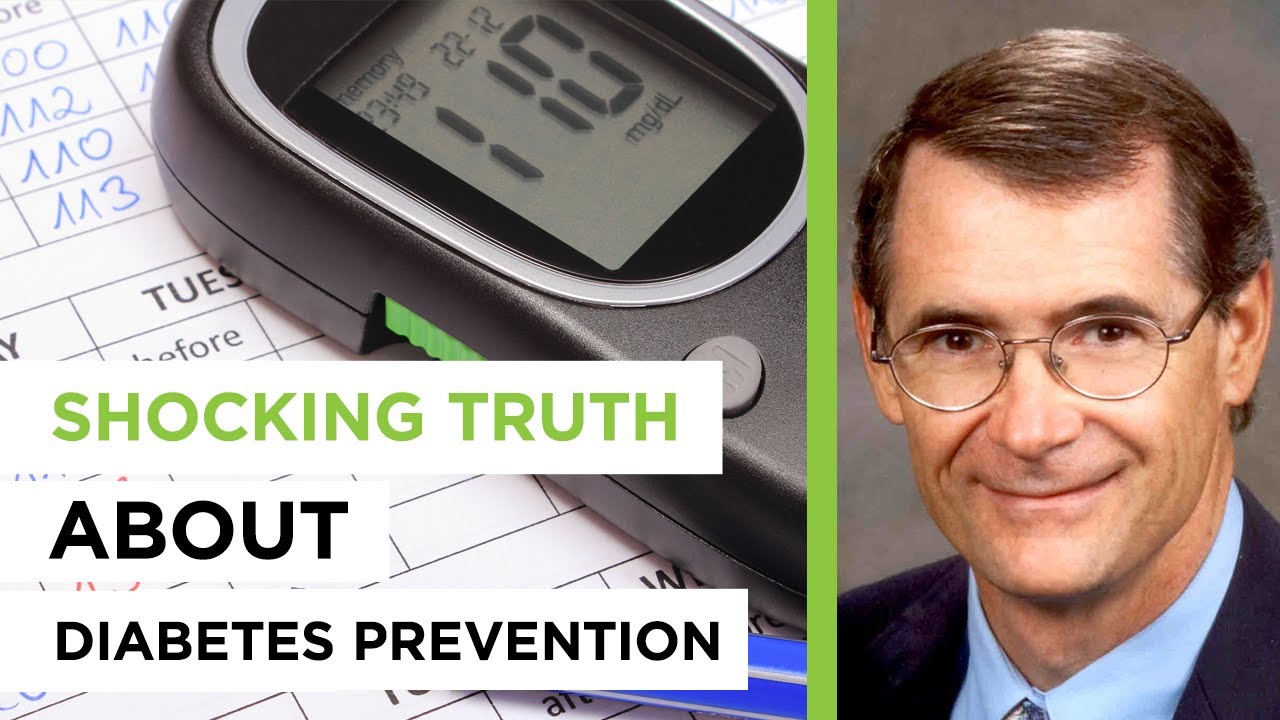
In this interview on The Empowering Neurologist, Dr. David Perlmutter talks with Dr. Keith Runyan, a physician who was diagnosed with latent autoimmune (type 1) diabetes at age 38. Dr. Runyan describes how conventional insulin‑carbohydrate management left him with frequent hypoglycemia and poor glucose control. After researching and gradually adopting a ketogenic diet in 2012, he experienced markedly better blood‑sugar stability, a substantial reduction in insulin requirements (eventually halving his dose over two years), and an A1c of 5.4%. He explains the physiological differences between type 1 (autoimmune beta‑cell loss) and type 2 (insulin resistance driven by processed‑food, high‑sugar, high‑seed‑oil diets), and why exercise can destabilize glucose in type 1 due to stress‑hormone release. Dr. Runyan details his stepwise carb elimination (sugar → bread → pasta → potatoes), his protein target (1–1.5 g/kg body weight), and his monitoring routine (4–5 glucose checks per day, occasional ketone checks). He clarifies that diabetic ketoacidosis (DKA) arises from insulin omission or severe illness, not from a well‑managed ketogenic diet, and notes that ketone bodies may protect against hypoglycemia symptoms. He shares his commitment to transparency via a public blog documenting every glucose reading, promotes his book “The Ketogenic Diet for Type 1 Diabetes,” and hopes the approach will gain broader medical acceptance, citing supportive researchers such as Dr. D’Agostino and Dr. Thomas Seyfried.
Chapters
Hello everyone, I'm Dr. David Perlmutter. Welcome again to The Empowering Neurologist. Today we're going to talk about type 1 diabetes. You know, we spend a lot of time talking about the much more common type 2 diabetes, but we're going to explore the autoimmune condition type 1 diabetes with our guest, Dr. Keith Runyon. Dr. Runyan is an MD, a medical doctor, and he has practiced in the areas of emergency medicine, internal medicine, nephrology, which is certainly apropos our discussion of diabetes, and obesity medicine over the last 20 years. Importantly, Dr. Runyan himself has been diagnosed with type 1 diabetes way back in 1998. Dr. Runyan found that he had difficulties controlling his blood sugar even on insulin, And had frequent, what we call hypoglycemic events, where he would get low blood sugar, and, you know, that can certainly cause problems, even passing out. He was given various levels of advice from his doctors about what he should eat and how he should adjust his insulin, but finally he decided to explore more deeply, and always being an avid exerciser, at least since about 2007, Finally, in 2012, he began exploring a ketogenic diet for the treatment of type 1 diabetes, and what he found was really quite interesting. He found that his blood sugar control was much better, his use of insulin actually has declined, and his frequency of these hypoglycemic episodes where his blood sugar would plummet have also decreased dramatically. We as practicing physicians have always dreaded the notion of something called Diabetic ketoacidosis, and certainly Dr. Runyon will, will discuss that with us. He is now a very strong advocate for the use of a ketogenic diet in patients with type 1 diabetes and has written a very insightful book called The Ketogenic Diet for Type 1 Diabetes. Terrific title, there's no mystery there about what he's talking about. So we're going to jump right into this really interesting interview. Here we go. Well, hello, Dr. Runyon. Thanks for joining us.
Hi, thanks for having me on your show.
I want to start right off by really teasing apart the very significant differences between type 1 and the more common type 2 diabetes so that our viewers can really get an understanding what this interview is all about.
Yeah, so today we're mainly going to be talking about type 1, which is the type of diabetes that I have. And I'm very interested in. When most people hear about diabetes in the media, they're really usually hearing about type 2 diabetes, even though they don't say type 2, because about 96%— I'm sorry, about 94% of people with diabetes have type 2 diabetes. But the 2 entities, even though they're both diabetes, are quite different. And their treatment is significantly different and the ability to control the disease is different. And so let me just briefly kind of talk about the differences between the two. Type 2 diabetes usually occurs in middle-aged adults, although more and more it's starting to become prevalent in adolescents and even children. But basically, it's a disease of insulin resistance, and, you know, the cause of this insulin resistance— there certainly is a genetic component, but it is clear that environment has a lot to do with it, and that environmental difference is primarily diet-related, in my opinion.
Mine too, so I'm right there with you. Go ahead.
Yeah. Yeah, so basically, people who have eaten the kind of diet that's been recommended by our government, and therefore a lot of the medical organizations since the 1970s, I think has brought about this increase that we're seeing in type 2 diabetes. And basically, the diet that leads to type 2 diabetes is is primarily high in processed foods, which in turn means it's high in sugar, it's low in fat, and what fat we do get on that diet is a type of fat that we never really have been exposed to in nature, which are these industrial processed seed oils like canola oil and and soybean oil and that sort of thing. So this combination of sugar and abnormal fat leads to excess calorie intake, overweight, obesity, and then eventually type 2 diabetes. So, but, you know, you pretty much have to be born with this genetic susceptibility to be insulin resistant, and then this diet expresses that genetic abnormality and, and makes it manifest. Now, type 1 diabetes is an autoimmune disease, and the actual triggers for that autoimmune process— there's debate about it, and it's not exactly known What those true triggers are, but there is usually, I believe, something in the environment, whether it's a viral infection or some dietary component. You know, since you did write Grain Brain, I'll just mention that gluten has been one of the suspect items that may be triggering the autoimmune process in type 1 diabetes. Okay. So anyway, one of these environmental factors, basically it's a protein that the body recognizes as foreign and then mounts an immune response against it. And then accidentally, so to speak, the target for this immune attack is insulin itself or the beta cells in the pancreas that make the insulin. And the beta cells eventually over time become destroyed, and then you know when you get down to you know let's say less than a quarter of your remaining beta cells, then you have high blood sugar and you know frank diabetes. And the the type that I had is called latent autoimmune diabetes in adults because I was 38 when I was diagnosed. And basically, it's the same destruction process, but it occurs much more slowly than it does in children and adolescents. And so my symptoms actually came on slowly, and it took me a while to actually figure out what my problem was.
Let me ask you this, if I may. You were how old when you were diagnosed? 38?
38, yeah.
Was there any other significant illness your 30s or in your 20s that you can recall? Were you hospitalized or on antibiotics for anything that you can recall?
No, no, I was not. Basically, I just started losing weight. I felt perfectly fine, and, you know, kind of by age 38, being a sedentary physician at the time, you know, I thought, well, this is good. I'm starting to be able to see my My six-pack again, you know.
It was there the whole time. I talked about in the introduction how you were given ranges, for example, of your hemoglobin A1c that now you realize were way too high to be healthy, and you endeavored to get your blood sugar down by engaging in exercise program, and how that didn't seem to be really effective, though that's what people seem to recommend. What happened with that?
Well, again, when you hear in the media about exercise and diabetes, what you're really hearing is the effect of exercise on type 2 diabetes because exercise is very effective in improving that insulin resistance that we were talking about. So it is very good for that. In type 1, exercise actually makes Type 1 diabetes more difficult to control. Exercise causes release of hormones like stress hormones, particularly intense exercise. So those stress hormones might be cortisol, epinephrine, glucagon, and there is a good purpose for those hormones. It's just to provide nutrients to exercising muscle. But if you can't secrete insulin, which is what happens in Type 1, Then you have no way to compensate for the release of those other hormones.
You stumbled on the ketogenic diet, which many physicians would be very, very reluctant to even consider in the treatment of type 1 diabetes because of the deprivation of sugar and carbs that's involved in being on a ketogenic diet. Walk us through your thought process in terms of being able to get your arms around that and then moving forward.
Yeah. Well, I actually— well, as you said, I kind of came upon it accidentally. I really wasn't looking for a dietary change because I had no idea. You know, when I went to see my doctors, diet never came up in the discussion. It was just, okay, what insulin are you going to take? And And that sort of thing. And as you said earlier, they were quite satisfied with my blood sugar control, and I just sort of got the feeling they didn't really understand what life was like with type 1, because it is not pleasant, this roller coaster of high and low blood sugars. And, you know, they also have this concept of a carbohydrate-insulin ratio,
Hmm.
Sounds very mathematical, and that all you have to do is know how much carbohydrate you're eating, and you'll know how much insulin to take. Well, I really went to an extreme to follow that very closely. I weighed all my food, and I did that for years, but the results I got on the blood sugar were very unpredictable. And so it was very discouraging that I was spending so much effort to try to be a very good patient, But I wasn't getting very good results. But anyway, just fast forward then, when I came across the idea of a ketogenic diet, I actually did a lot of reading on it first. I didn't just immediately start on it because, you know, I just wanted to make sure that this wasn't a bad idea, that, you know, there— you know, this some kind of fad thing. And so I researched it. You know, 1 or 2 months before I ever started on it. And by that point, I'd learned enough about it that it made complete sense to me, and I really had no fear that, you know, I might develop a diabetic ketoacidosis as a result of doing it. And I can explain why that is.
Sure, go ahead.
Okay, well, it turns out that that diabetic ketoacidosis is really caused by one of two things. Either the person has financial difficulties, they're not responsible, and they either quit taking their insulin or underdose their insulin, and then they get diabetic ketoacidosis, come into the hospital, etc. Another is they develop an illness. Usually it's an infection, whether it be pneumonia or a urinary tract infection. And along with illness comes those same hormones that I mentioned earlier that happen with exercise. So the stress of the infection leads to cortisol, glucagon, epinephrine hormone release, and that creates a relative insulin In addition, patients who are quite ill often will lose their appetite. They'll stop eating, and then they'll think, oh, well, I'm not eating, so therefore I should stop taking my insulin. And so this combination of insulin deficiency and stress hormone excess is what actually leads to the ketoacidosis. And this ketogenic diet is simply a reduction in dietary carbohydrate. There's no insulin deficiency. Yes, you do decrease the insulin doses, but that's just to compensate for the fact that you're eating less carbohydrate.
You went through this period of keto-adaptation, however long it took you. Maybe you can comment on that. What was that like? How rocky a road was that to try to make this dramatic change, and in addition, try to stay on top of what would be a reasonable insulin dosage?
Well, I decided not to go on it 100% all at once because I was—
That sounds reasonable.
Yeah. I was concerned that I wouldn't have time to adjust the insulin doses properly if I did it all of a sudden. So I basically cut one thing out after another. So I, you know, I started with sugar, then bread, then pasta, then potatoes.
I've heard of this diet before. I can't think of where, but go ahead.
So it was one thing after another, and basically it took me somewhere between 2 and 3 weeks to actually begin A ketogenic diet. And so during that time, I had the time to decrease the insulin doses. And interestingly, the insulin dose did not decrease that much all of a sudden. It really took about 2 years before my insulin dose made it all the way down to half of what I had been taking previously. But it didn't happen all of a sudden. Which, you know, it's fine because I wasn't looking for any specific number of insulin unit reduction. I basically— my main goal was to have as close to normal blood sugars as I could obtain safely.
Well, we've talked about fat and carbs and sugar included, of course. What about your recommendations on protein? What have you done and how does that affect blood sugar?
Yeah, I recommend between 1 and 1.5 grams of protein per kilogram body weight per day. So I'm about 100— I'm about 77 kilograms, so it's around 110. I take about 110 grams of protein a day.
Do you make that calculation based upon ideal body weight for your height or what you're currently weighing?
Well, since I am lean, I do it based on my actual body weight.
Because you're probably ideal. And I wonder if you could just take a moment and explain why you've been so diligent to limit, or at least keep an eye on, the amount of protein that you take in.
Honestly, the amount of protein I'm taking now is pretty much like it was before. I didn't really change it. You can eat too little, which is a problem because you need protein for to maintain your muscle mass and all your enzymes and everything. And too much protein, well, you can't really utilize it. You have no way to store excess protein, so it gets converted to something, whether that. touch glucose or fat, it will get converted to something. Protein is a relatively expensive source of food, and there's really no reason to go— to take an excessive amount. It's basically a moderate protein diet.
Can you tell us what are your biometrics in terms of what you normally are measuring? Likely, you're measuring, obviously, your blood sugars. How frequently, and also are you measuring your ketones?
So my I measure my blood sugar on average four to five times a day, and there are there are some also very diligent people with type one who will measure it more often than that. But honestly, I try to. get the results that I'm looking for with the fewest number of measurements I can get away with, and 4 to 5 seems to be what works for me.
How have you done with your A1c?
My last A1c was 5.4%. That's
awesome.
Yeah, I'm pleased with that. I actually— I'm a very data-driven oriented type person, and I've actually made a website, a blog that has every blood sugar I've measured since starting this diet, plus a bunch before too, so people can really understand what this diet can do because I've never seen anybody else publish that before.
Well, let's just— for our viewers, that blog site should be at the bottom of your screen right now. That would be a great way to connect with and learn more about this, you know, very unique approach. And I think, you know, when we understand about variations in blood sugar and how the body responds to being powered by, by ketones, which are— I have to say, Dr. Runyon, our audience is, is, uh, not, uh, it's not news for them. We've talked about this with a lot of people, uh, from around the world. It really offers up, um, you know, a new and exciting, uh, technique and therapy for, for type 1 diabetics. I want to get back to just a moment your discussion about the fact that this is an autoimmune condition. And, you know, just interesting that the risk of autoimmune type 1 diabetes is dramatically increased in, for example, children who are born by cesarean section, being deprived of the seeds of the microbiome, which does regulate immunity. And, you know, we are seeing certainly a lot of literature. We've talked about it quite a bit on the program that correlates other changes to the microbiome that can be induced by things like artificial sweeteners and even antibiotics being correlated with type 2 diabetes, as you mentioned, being far more common. So what does the future hold for a guy like you? I mean, I don't know that the medical community at large is necessarily going to jump right in and embrace what you've discovered, which is always— I think it's good. It keeps you moving, right? But what do you plan to do with— this is really a discovery.
Well, I'm just trying to spread the word, and I'm seeing more and more about the ketogenic diet online, and I think eventually it will filter through to the medical community, and I think just On a one-by-one basis, you're going to see more physicians, more endocrinologists who, you know, can't really find— you know, if you look real hard, you really can't find any evidence that this is a harmful diet to partake in. You'll see little medical reports, usually by media people, who talk about the dangers of the ketogenic diet. But honestly, I have searched and searched and searched for these dangers, and I cannot find them published anywhere.
Well, again, for our viewers, I would review the interview that I did recently with Dr. D'Amico and also— rather, D'Agostino, and also Dr. Thomas Seyfried. Really, these are the top researchers in the area, and how powerfully supportive they are over exactly what you've been talking about today. I want to thank you for 2 things. First, for being on the program with us today, but also, you know, for getting out there and letting the world know that there is another way and, you know, being very transparent about your results on your website. I think that's really fantastic and commendable.
Well, thank you. Yeah, I think that people really ought to look into it and discuss it with their doctor and give it a try if they think that it might help because it's— you know, I didn't mention earlier how one of the most dramatic changes that I found was the lack of symptoms of hypoglycemia. And of course, there's no published literature on why that might happen, although I did a nice blog post on some of the research that that at least would support the hypothesis that the ketones that you have access to on a ketogenic diet may actually be a brain fuel that will substitute for glucose during those intervals where you might have a low blood sugar from type 1 diabetes.
Again, this is information I think that our viewers are aware of, the very powerful role metabolically that beta-hydroxybutyrate plays in terms of serving as a substrate for mitochondrial activity, but also as a stimulator of mitochondrial biogenesis, as what we call a G-protein activator, and as such reducing inflammation, stabilizing immunity. You're right, and very, very exciting. Let me thank you for joining us today, and we're going to just put up information about where our viewers can get hold of your online information as well as your book. Thanks again.
You're welcome. I enjoyed talking to you.
Okay, bye for now.
Bye-bye.
Great, nice work. Let me— well, that was certainly an eyebrow-raising interview. The notion that we can have better control of blood sugar and even reduce insulin dosages in people who begin powering their bodies with Yeah. As opposed to be totally reliant upon carbohydrates, I think is certainly somewhat novel, but again, as I mentioned in the program, for those of you who are following the literature and following the interviews that we have been doing, there is a lot of support for Dr. Runyon's really groundbreaking work. So thanks to him for joining us today, and thanks to you for watching. I'm Dr. David Perlmutter. Bye for now. Bye for now.
More from David






Newsflash: Alzheimer’s Is Not Caused by What We Thought | Dr. David Perlmutter

