Amazing Story of a BMX Athlete - with Josh Perry | The Empowering Neurologist EP. 33
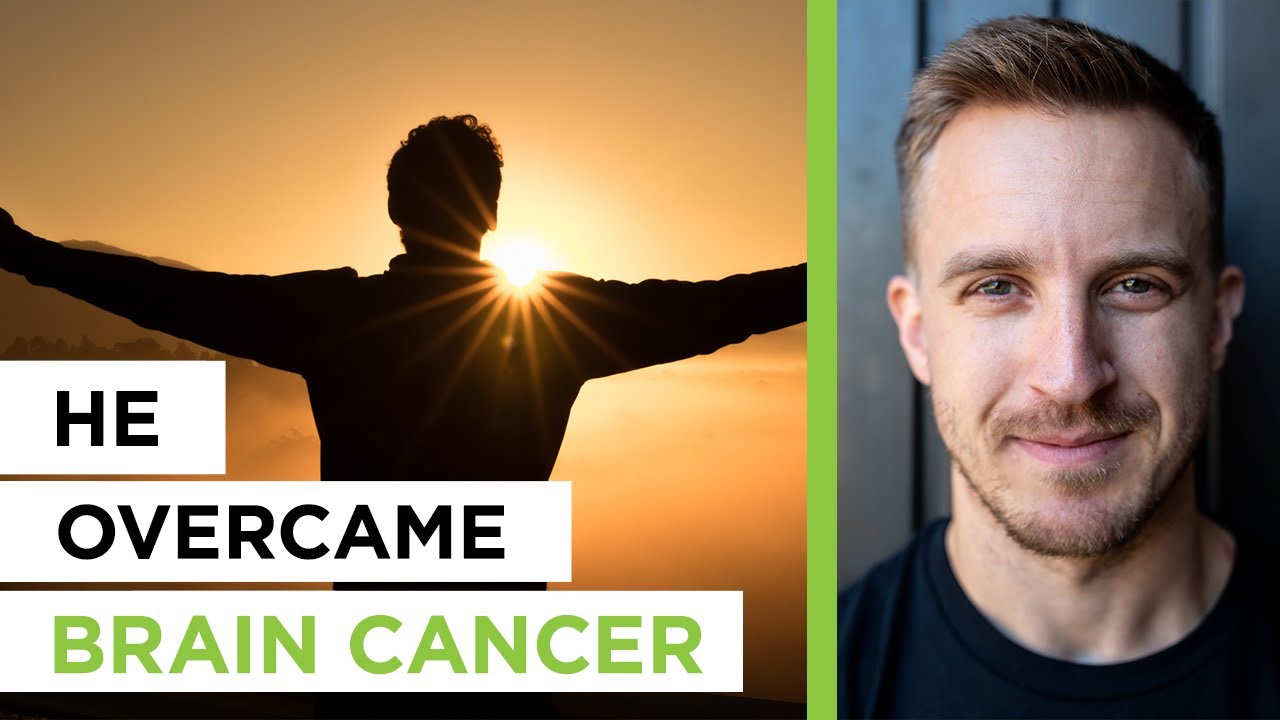
In this interview, Dr. David Perlmutter talks with professional BMX rider Josh Perry about his journey from a hyper‑active child diagnosed with ADHD to a world‑class athlete, his unexpected discovery of a brain tumor after a training accident, the subsequent craniotomy and later Gamma Knife radiosurgery, and his rapid return to elite competition. Perry describes how the experience drove him to overhaul his nutrition—adopting a low‑carb, ketogenic diet after reading Dr. Perlmutter’s Grain Brain and studying at the Institute for Integrative Nutrition. He also shares his new mission to give back through a nonprofit foundation that raises awareness, provides educational resources, and offers financial assistance to brain‑tumor patients. The conversation highlights the interplay of sport, medical treatment, lifestyle medicine, and advocacy.
Chapters
Hello everyone, I'm Dr. David Perlmutter and welcome to The Empowering Neurologist. Today I'm really excited to interview Josh Perry. You may know Josh Perry. He is a world-class BMX athlete riding bikes, but also interestingly, he's a holistic health advocate. Josh is originally from Cape Cod, Massachusetts, and then he decided to make his dream come true when he was 17 years of age. He moved to Greenville, North Carolina to pursue his career as a professional BMX athlete. He went there to ride with some of the top BMX riders in the world and then began competing globally with great achievement in things like the X Games, the Dew Tour. What you've got to know about Josh, a couple other things, is that he's right now starting a non-for-profit BMX stunt show for hospitals as a way of giving back. And what he's giving back to hospitals and to other charitable groups for is because you may not know that Josh is a brain tumor survival— survivor, rather. He experienced 3 brain tumors, and he's going to tell us all about his BMX biking, but also about his experiences with his brain tumor situation, as well as what he's learned along the way. So let's get started. Well, hi Josh, thanks for joining us today.
Yeah, thanks for having me. This is an honor, honestly.
First, I want to just sort of build the narrative here about you as a young kid. Even before you— certainly before you started competing in BMX, and because, you know, you kind of tell the story, at least when I read about you, about how early in life you had some— well, you were diagnosed with ADHD and life wasn't so great, and you actually turned to BMX really kind of as a way out. What was your early life like?
You know, just played school sports just like any other kid, you know, and got into BMX through Yeah. I think my older cousin introduced it to me. I remember my mom apologizing, having to put me on Ritalin, I think it was, and things like that, and experiencing different— reflecting now the different issues I had with my stomach and attention. BMX was always that outlet where I could go be that energetic kid. I could communicate on a better level. with others and express myself creatively.
So you started just doing this on your own. You got kind of handy with your bike, started doing a few things here and there, probably a few scraped knees at the least, and then suddenly people said, hey, this guy Perry is looking pretty good, to your parents, and then you moved to North Carolina. Is that pretty much how it happened?
Yeah, long story short, yeah. Like I said, I played traditional sports, and so the games were always a thing, traveling for different games. When I started getting more into BMX and developing my skills and seeing that there were other events for amateurs to attend besides my local park, my mom and us packed up and we'd drive off and start getting into the competitive side and entering local amateur contests and progressing with that just like anything in life. It got to the point where I was actually in the Do Action Sports Tour at 16, 17 and made a decision. I really wanted to progress with that aspect of my life. In order to do so, I had to— at the time, it was move to Greenville, North Carolina, train with Dave Mirra and the other professionals on the best ramps. Just like you want to go to the best school, get the best education, I had to go to the best facility to train with the best and compete with the best. Now I'm in North Carolina 10 years later.
There you are in North Carolina doing your thing and starting to travel the world competing. Suddenly, I think you did something and they did a CAT scan and then an MRI. Tell us how that all happened.
So it was March of 2010. I was training with my friends in the foam pit. So it's similar to gymnastics. You learn a trick in the pit and then you take it to the next ramp, the next obstacle. For us, it's a ramp. Uh-huh. I was doing a trick that involved flipping and spinning at the same time as well as jumping off your bike and spinning that. When I landed— or when I did it out of the foam pit, I overcompensated because I was afraid and naturally I just tried a little harder just Pulled a little too hard, and it resulted in me over-rotating the trick to landing and then kind of getting whiplashed off the side to hitting my head. I had to get an MRI. They had to make sure the brain wasn't swelling or bleeding. But a year prior to that, every so often I was experiencing these crazy migraines and headaches. They just say, nothing's wrong. You just got to deal with headaches, and here's some pain meds. They didn't settle well with me, so I didn't take them. I would just kind of— bury my head. And, um, that day where I fell, BMX literally saved my life. I had to get an MRI. Then they revealed there's something taking up a large portion of your brain that shouldn't be there. And that's when I found out that I was being diagnosed with a brain tumor.
So they're telling you this brain tumor is in your dominant hemisphere on the left side, speech area, and you ultimately had a craniotomy. You had your head opened And they extricated this meningioma and did a— well, I forget, you were talking about the word that they used was satisfactory or something that you kind of were laboring over a certain word that wasn't quite the cure word you were looking for, and that the tumor was wrapped around an artery and they possibly left some behind or who knows what. But you came out of that surgery feeling like you were in good shape, right?
Yeah, so the complications were it was located on the main artery as well as pushing onto my optic nerve, which made sense a little bit before. I was starting to lose my vision, going to eye doctors. I'm going blind, don't know why. They're saying your vision's fine. And so I guess how they were saying it was they didn't want to risk hitting that artery that would result in me having a stroke as well as many other complications, as well as I need to use my body. I need to use my legs, my arms for what I do as a career as well as what I do that I love most in life. And so the surgery was supposed to be 4 to 4.5 hours, actually took 6. And when I was reunited 6 years later with Dr. Alan Friedman, he was explaining the surgery. He didn't miss a beat. And it's crazy that he remembered all that. And he was specifically telling me, he was telling his resident at the time, we have to take very, very— we have to take our time, be very precautious because of what this man does on his bike. And I thought that was pretty— Pretty funny, but yeah, so there were some complications with that, not wanting to risk hitting it. From my understanding, what he was explaining was there were some cells left over that resulted in a different finding 2 years later.
After your first operation, then you went back to competing, or what happened after your first operation?
It was actually— I had to wait 4 weeks for the skull to fuse back together, which when I was diagnosed, I was like, oh, That's it. My career is done, or I'm looking at the very best a year recovery. 4 weeks till the bone fused back together. Went in for the checkup. Everything looked okay. Waited about another week, week and a half, and got back on the bike. Oh
my gosh.
Things were a little different. I had been previously knocked out a few times, not too many, well, in relation to others. I had never experienced that my coordination, my balance, It was so different and it was a result of my brain kind of being messed around with. I think it was about 6 weeks I was back on the bike training and then 8 or I think about 10, 12 weeks later I was in the UK competing and made top 10 finals.
Unbelievable.
After brain surgery, yeah. Very fortunate.
Then things started to deteriorate again or did they just see something on a follow-up MRI?
Yeah, I was feeling fine. That was a time where— it was actually the documentary Food Matters. Something in it clicked in my mind that maybe what I'm doing with my lifestyle and my food isn't helping or is maybe the cause. I don't know which one, but that's when I started to really take note of what I was doing to my body. It was just November 2012. We were in India performing bike shows to promote different things there and interact with the community. Follow-up revealed 2, as he explained it, blueberry-sized tumors, one in the front and one in the rear. I hadn't had any symptoms, just routine scan that showed that.
That MRI was done in India?
Oh no, it was done at Duke before I left. The results came in, I guess.
They did an MRI and they find 2 new lesions. How were those treated?
When I got home, I actually asked Dr. Friedman, should I come home now? He's like, no, no, it's no worries. Just when you get home, we need to assess this and take care of it. I went to what's called Gamma Knife radiosurgery. That was a result of him saying, the surgery to do that again, it'd be too risky. It's too small. The first one resulted not getting all the cells, and that's what he really felt strongly about. Why don't you look into some other forms? Radiation seems to be the way to go. Instantly, I felt very scared. I, you know, kind of ignorant at the time, didn't like how that sounded. Of course. Did some research with a friend of mine and, you know, we came across hours later of Googling Gamma Knife radiosurgery. And I was like, he said not to use a knife, like surgery, so how does this work? And the more I researched, the more I learned there's nothing really to it involving operation and very high success rates. It really appealed to me, and that's what I ended up going with.
Beyond that, you underwent a self-induced major lifestyle shift in terms of your nutrition, which I want to talk about, even going so far as to attend nutrition school, one of the biggest in the world, and learn about integrative approaches to nutrition. What prompted you to do that? Then we'll talk about what your diet changed to be.
Okay, so after the first full-on surgery, that's when I mentioned I found Food Matters and started learning more about the correlation to our health with food and started to make a lot of changes, do a lot of research, felt really overwhelmed, really stressed, anxiety just to all this information. And my main goal was how do I protect my brain from the tumors coming back? And then I just had this big sense of feeling overwhelmed and lost. And then— Same friend who helped me find Gamma Knife bought me your book Grain Brain. That was, I want to say, winter of 2013. I started reading that and was like, wow, this is crazy. This makes a lot of sense.
Who knew?
Yeah, exactly. Then I wanted to learn more in more of a structured format rather than having to take the years to go to college and get this degree, learn these things. I wanted to learn now. More importantly, I wanted to learn how to share that with others so they didn't have that feeling of being overwhelmed or scared or lost. And that's when I came across the Institute for Integrative Nutrition, and it sounded amazing. I spoke to some people on social media about their experience, and it was all positive.
So I was reading about you online in anticipation of this interview, and there was one site that was really kind of chronicling what you eat in a day. And from the looks of it, it looks like you're, you're pretty well involved in keto. You know, you're really low-carb and welcoming Fat back to the table, coconut oil, other types of fat. Why did you— what motivated you to do that? What part of the science was appealing to you?
Everything I learned from Grain Brain really started that, and it made me— I like to— my friends call me nerdy. I love learning the science behind things and researching, doing my own research. Your book led me to Mark Hyman. Actually, I was introduced to Mark Hyman via the IIN program. That's when I started to really learn about sugar and how that fuels inflammation as well as with Grain Brain and more importantly how fat helps with that. And then that led me to learning more and more and researching and I bought his recent book, Eat Fat Get Thin. I listened to Dave Asprey's podcast with you and him talking about these things and I was starting to learn more about how eating fats and the ketogenic type eating really helps keep inflammation at bay as well as protects the brain. Learned a lot of conflicting things about Cholesterol and fat with the brain neurons and just a whole overwhelming positive amount of information. I was like, let me experiment. Then just with my physical changes, my face started to thin out a little bit, started to get more defined and feeling better on the bike and not having these crazy crashes. I think I've dramatically cut out my carbs and sugar by like 95% to where some days I'm trying to keep up with eating my sweet potato and this and that because I got different workouts. Yeah. I'm like, man, it's like a struggle now to eat that many carbohydrates in a day. Before, I was just drinking the majority of what I have, like, a year in a day.
I had the opportunity 3 or 4 days ago to do a live Facebook interview with Apolo Ohno, the most highly decorated Winter Olympian in history in terms of medals. He is fully involved in being on a ketogenic diet.
Awesome.
He's done an Ironman, and the guy is in terrific shape. I think we're learning more and more that this diet, which is brand new— I mean, it's only been what humans have eaten for about 2.4 million years— is really, you know, very appropriate for us in terms of mental performance and even physical performance. So you are really involved in giving back. I talked about that in the introduction. And you have several organizations that you're working with, and you have one in particular, your foundation. Tell us what that's all about.
So yeah, I'm very excited. It's very new this year. The Josh Perry Foundation is my way of giving back to people. We have programs set up for awareness and research, but not many to help the individual. Coming from someone that was in the shoes, it's a very scary time as well as it can hurt the bank. So with being fortunate as I am to be doing what I love, to be traveling and Yeah. Be able to be here having this conversation, I want to take the opportunity to raise more awareness for the people and be able to give back, help them out, give them educational materials about different kinds of foods that could be helping or hurting them, as well as I want to support them directly, whether it's a conversation or if I can raise some funds to give to them for eating different foods or helping with different bills. I know from my perspective, it was really tough on my family and I, and luckily we had an organization called the Athlete Recovery Fund that kind of helped me out and my family. I have family all over the country, so they get to fly out and be with me. I really want to give back in that sense.
Your website should be right now appearing on the bottom of the screen, God willing. Let me just say that it's very inspiring to get to talk to you. It's a great story. I actually read about you, I think, in People magazine a while back that was telling this really very compelling story. I want to thank you for sharing that with us today and wish you all the best and really congratulate you on who you've become. It's really just an honor to talk to a guy like you.
I really appreciate it. It's an honor to talk to you. You've indirectly or directly helped me so much. Your work has done a lot for me, and I've shared it with all my friends and family. It's awesome. About the foundation too, we're still in the beginning phases, so we don't have the website or anything right now, but there's my social media. People can follow me to learn more and stuff like that. But yeah, I really appreciate just everything you're doing to put that information out to help others, and you're an inspiration to me as well as far as the educational part goes and supporting people. That's really what I want to contribute to more.
Well, all the best, and I'm hoping we get a chance to meet in person real soon.
Yeah, sounds great. I really appreciate that.
Okay, bye for now. Well, that was certainly a very, very inspirational interview with Josh Perry. And again, we're going to post the website where you can learn more about what he's doing. What an incredible young man. What an inspirational young man for all of us. Hope you enjoyed the program today. I'm Dr. Perlmutter. Thanks for joining us. Thank you.
More from David





Newsflash: Alzheimer’s Is Not Caused by What We Thought | Dr. David Perlmutter

