Cancer Survivor: Resilience, Hope, & the Power of Integrative Medicine to Heal | Dr. Jill Carnahan
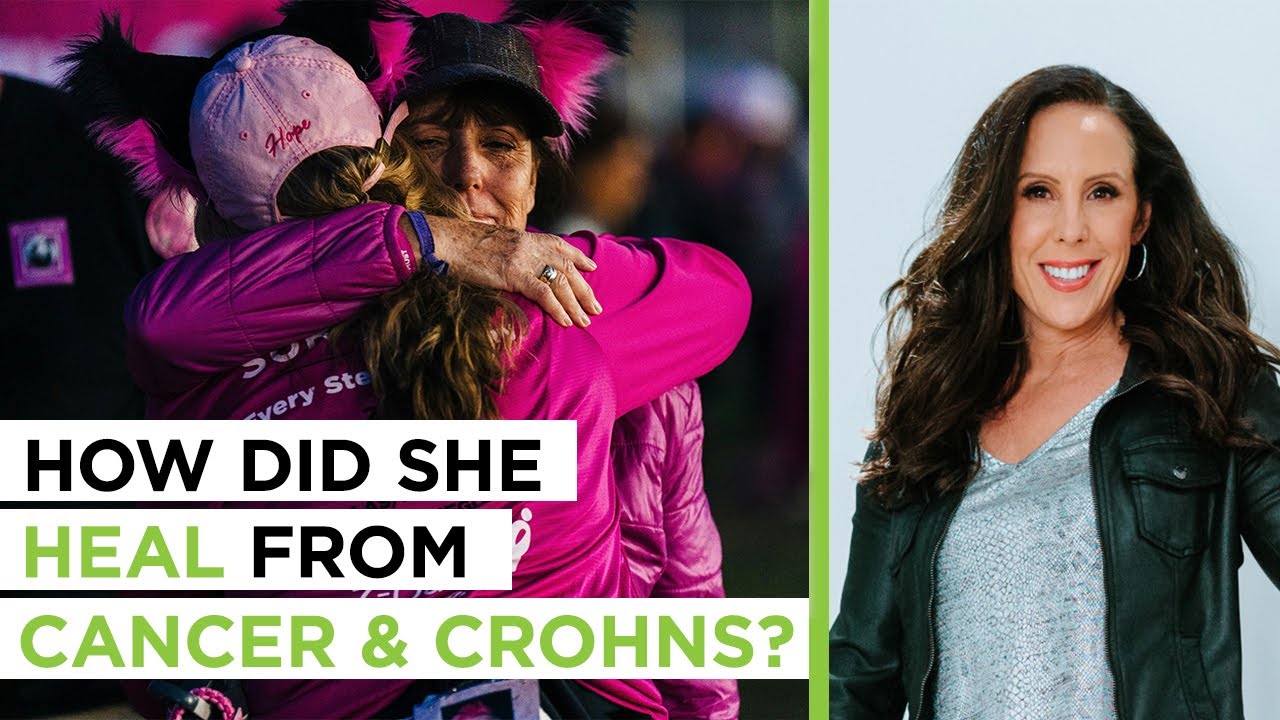
In this hour‑long interview on The Empowered Neurologist, Dr. David Perlmutter talks with Dr. Jill Carnahan, a functional‑medicine physician and cancer survivor. Dr. Carnahan recounts discovering a breast lump at age 24 during her surgery rotation, receiving an aggressive diagnosis of ductal carcinoma, and undergoing high‑dose chemotherapy, surgery, and experimental brachytherapy. She describes how early life exposure to agricultural chemicals (e.g., atrazine) and severe mast‑cell activation likely primed her immune system for cancer. After treatment she developed Crohn’s disease, which she links to chemotherapy‑induced gut permeability, a NOD2 mutation, and multiple B12‑related SNPs. The conversation moves to her shift toward functional and integrative medicine: using the Specific Carbohydrate Diet, addressing SIBO/SIFO, eliminating gluten after a celiac diagnosis, and employing high‑dose nutrients as targeted “pharmaceutical‑like” interventions. Dr. Carnahan explains how she founded an integrative medical center in Illinois, built trust with conventional specialists, and witnessed rapid patient improvements. She emphasizes the importance of embracing uncertainty, combining science with faith, and using the NUTS (Novelty, Unpredictability, Threat, Sense of control) model to reframe fear. The dialogue also covers environmental toxicants, especially glyphosate’s impact on soil microbiome diversity and downstream human health, and the need for supplementation in modern diets. Throughout, Dr. Carnahan stresses humility, patient empowerment, and the therapeutic power of agency and hope.
Chapters
If you think about cancer and the etiology, these cells started to go rogue and not be contained by the immune system probably 10, 15, or 20 years prior to diagnosis. So that makes me like 4 or 5, or even in utero. I believe that I probably was exposed to some of these things like atrazine in utero in my mother's womb because she grew up on the farm and she was drinking the well water and exposed, and they would help out in the fields and all of those things. So I believe from a very, very young age I was getting exposed. Then on top of that, I had very high level of mast cell activation. In hindsight, I had severe Severe eczema, severe allergies. I mean, just the worst you could imagine. I couldn't function. I was home from school a lot because of the allergies and eczema. So, and when we look back, I think there's definitely a connection that can be made between mast cells, weakened immune system, and the potential for cancer.
Hello everyone, and welcome back to The Empowered Neurologist. You know, one of the great things about doing this job and why I love it so much is I get to interact with just some really amazing individuals. And it's not just this job. As I travel around the country, around the world, and lecture, I get to meet some really amazing individuals. And a couple weeks back, I was lecturing in Dana Point, California at an event, and the evening speaker's dinner was really, uh, quite impressive for me because I got to meet an amazing individual. I was sitting next to a physician who recounted— let me just say that she and I both decided after 2 minutes there would be no small talk, and gratefully so. She recounted her experiences in medical education, a profound health challenge that she experienced during that period of time, what that health challenge did for her in terms of making her a better physician, the intersection, the confluence between, or maybe the collaboration is a better word, between science and faith, the role of empathy and compassion in the practice of medicine. Not necessarily an easy conversation to go through, but certainly one that makes your heart feel good and feel warm. She lectured the next day, and her connection with the audience was profound and really drove home the point that what we can offer to individuals in terms of the provision of care is so much deeper than simply writing a prescription and having patients go on their merry way. My interview today is with Dr. Jill Carnahan. She is the author of the wonderful book Unexpected. This is what we're going to be talking about today, with a foreword by Dr. Sarah Gottfried. She's been on the program several times. Let me tell you a little bit more about Dr. Carnahan. Dr. Jill Carnahan is a functional medicine doctor, and we'll describe what that means in just a moment. And that means that she's dedicated to searching for underlying triggers that contribute to an illness through cutting-edge lab testing and tailor the intervention to the specific individual needs. She uses things like nutrition, supplements, lifestyle changes, medications if need be to treat illness. She's always seeking the gentlest and least invasive way to help optimize outcome, to allow patients to find hope, restore health, and optimize healing. I'm really very excited about this interview. We decided we were going to get together on the podcast when we were together lecturing out in California. So We're going to jump right into it. Well, hi, Dr. Jill. Welcome to the program.
Hi, Dr. Perlmutter. Always fun to be with you.
In the introduction, we were talking— I was talking about the notion that, you know, we're kind of— and I say we, I think mainstream medicine is a bit myopic in really wanting to purview the landscape related to the types of interventions that we learned in medical school. You know, the prescriptions, the surgery, the radiation, etc., all the things that we do. And you've had some experiences in life that show you there's a much bigger nexus of tools in the toolbox that really require you as the healthcare provider to kind of dig deep emotionally, but that really is much more powerful an interaction with that patient than you and I learned in medical school. And I think a great place to launch our discussion is going to be to go back in your medical school. experience. I think it's third year, uh, something happened to you, and I'd like you to just unpack that for us because I think that'll really set the stage for the rest of our time together.
Sure. Well, you know, I didn't really know I was a healer, but then in medical school, my very— in my third year, I'm actually just finishing my surgery rotation, and of course we're taught about breast cancer, breast exams. I did my very first breast exam at the age of 24, and I found a lump. Now, as we know, the risk of my— of me getting breast cancer in my 20s was like that of winning the lottery. So I didn't think a whole lot of it. I knew the statistics were incredibly low, and I was a busy medical student working crazy shifts, as you remember how that was, you know, sometimes 36 hours at a time. This was before the work hour regulations. So it was just an insane time. I felt like I didn't have time to check that out. But of course I did. I went and got a mammogram and ultrasound. And I'll never forget the moment that changed my life. And that was even before I knew what was going on, but my heart knew. I was sitting with a radiologist because in medical school everything's a learning opportunity. So my films were up on the board in front of me and he's pointing out the calcifications and he looked at me and he said, Jill, if you were 55 years old, the pattern here of microcalcifications is classic for ductal carcinoma, which for lay terms means this looks like breast cancer. And he looked at me and I could see that glint of like, nervousness in his eyes. So I kind of knew then that something wasn't right. But he said, but you're 24. Go ahead and get a biopsy. I'm sure it's fine. 2 weeks later, I get a call from the surgeon. And again, these are not just— yes, they're my surgeon, but these are mentors and my teachers and people I knew really well. And her voice was cracking on the other line. She said, Jill, I don't know how to tell you, but you have aggressive breast cancer. I've never seen anything like it as far as the pathology, the types of aggressive, the grade of the cells. This is something that you You are in for the battle of your life. And you know how we have those calls and whether it's a death of a loved one or a diagnosis that we're not expecting, you and I have had conversations around these things with patients and other situations and it changes your life forever because you never forget where you were sitting. Maybe there's a song on the radio, that song will never be the same when you hear it again. And I'll never forget the color of the wall, the chair I was sitting in, that feeling in that moment of realizing my own mortality was flashing before my eyes and I had just A week prior, celebrated my 25th birthday. And talk about, you know, patient become— doctor becoming patient. Yeah. For me, it was a real— all of a sudden I had to have the eyes and the view of like, what am I gonna do with my life and my choices? And how do I treat this? And what do I do? And what are the answers? And now here I am, 20-plus years later, healthy and vibrant and have overcome cancer. But in that moment, I did not know if I had 6 weeks or 6 months or 6 years. And it was, it was shocking and really changed the whole trajectory of my life.
In the intro, I, I just want to say, I was telling people how when we sat next to each other having dinner several weeks ago, how we— there was no time for idle chitchat, and we got into this story, uh, by as soon as we started talking. So just kind of set the stage for how I met you, uh, or, you know, really got to know each other, and then for your presentation the next day. But let's continue on now. Um, you have the diagnosis, now you're going to go
Yeah. So what we think in medicine, and I'm in the training, in some of the best training in the world, you know, an academic allopathic at Loyola University in Chicago. And what we're not taught is that things are so much more gray. We think it's black and white. And I think many of our patients think there's an answer. I just have to find the right professional who knows the answer. And as you and I know so well, there's so many shades of gray and there's so many nuances. And for me, the biggest lesson, number one, was as I started to figure out what does a 25-year-old with aggressive breast cancer do? cancer do for treatment? There were no black and white answers. In fact, I went before the, the oncology board because I was such a unique case. Wow. And I always joke, you never wanna be the interesting case. Well, that was me because it was a unique case and everybody discussed, what are we gonna do? I ended up doing aggressive 3-drug chemotherapy, pretty much as high a dose as they could calculate for safety. One of the drugs, um, which is cardiotoxic doxorubicin, um, was calculated to be my maximum lifetime dose, which means I can never receive any more of that drug in my lifetime or my, I have the risk of heart failure. So these are really toxic drugs. And I ended up going within a very aggressive regimen due to my age and due to the aggressiveness of the tumor. And interestingly, like I said, with patients, I think what we think is there's this black and white answer. But what I encountered was in the literature, there was no black and white. And I had to really dive deep and then make a decision on intellect and analytical mind and the best advice of the professionals that I was trusting. But there had to be this intuition heart piece. I had to actually go into that place of what What feels, what gives me the most peace with the data that I know. And even today, Dr. Perlmutter, one of the things I love to talk to patients facing these kinds of decisions about is in that moment, you take all the data that you have, then you go pray, meditate, go wherever you go to find peace of mind and clarity. You take those 2 sides, the left brain, the right brain, the science and the faith, you make a decision and you never look back because that regret that you could have 5 years later if you have side effects is going to be far more harmful. And so I decided in that moment, matter what happened with this chemotherapy and all the aggressive regimen that I chose, even if my immune system failed or I had heart failure, I would never ever second-guess my choice. And that has saved me so much worry and guilt and fear. And I teach that to patients because I have an immune deficiency and I have no doubt that that could have been because of the chemo, but it never bothers me because I'm alive. And I think that lesson of like taking what we know in the real time and trying to move forward and then not going back and regretting, because if we live in the past and We live in that regret. I see patients, I'm sure you do too, that are almost tore up because of that thinking. And I think that's just an important lesson that I learned in the process.
Well, it's an incredibly important lesson, and how— what a beautiful story that you incorporate that into your interaction with patients on a day-to-day basis, giving them, you know, just a totally different perspective in terms of what's going on and what can be done moving forward that can be unexpected, give them unexpected results. And I would just say, how often does that happen? You know, when you think about, you know, we've all had our medical issues and we've all been on the other side of this. How often do you have that experience where the treating physician is sitting on basically the same side of the table as you are and working through things from that perspective? You mentioned something a moment ago about fear, and you dedicate the early part of your book to the notion of embracing fear. I think you talk about the climbing thing and you're going to REI buying shoes. Were they red? And how you really put fear into a context that let you deal with it and imbibe it into your body in such a way that it wasn't confrontational and it allowed you to, I think, reframe your whole perspective on challenges in life.
Thank you for noticing that, because that's one of my favorite things about the story and what I've learned and what I get to teach to patients. You know, it's funny, I'm a person of faith, but even if you don't have faith, for me, faith is a much broader definition, and it's really getting very comfortable with the inevitable uncertainty of life in whatever way, shape, or form that takes. I love that so much because especially in medicine, we're taught that we need this answer, this black and white, and there's certainty. And the truth is nothing is certain. We're not even guaranteed another breath. And the sooner Yeah. The sooner we learn— we pad our lives with insurance policies and so many things around us to allow us to feel like we have certainty. We have the AAA to call if there's a flat tire. And none of these things are bad. There's nothing wrong with having things that protect us in case of emergency, insurance policies, health insurance, all those things are good. But they give us the illusion that we actually have control over our lives. And if we believe that illusion, what happens is something comes in and sets us off and upsets what we think that we were expecting. And then we get disheveled or we get nervous or we get fearful. But if we go into the next day knowing we're going to encounter uncertainty— and I'm tying this to fear because I think the uncertainty is what drives the fear. But if we can actually be like, oh my goodness, what is coming next? And we have this curious mind and this heart that is open to the unexpected, we actually can embrace change and uncertainty with joy and expectation. I've learned like things that interrupt my day, like maybe a flat tire or just the The other day I was driving home, I had a flat tire on Sunday, actually.
Who gets a flat tire anymore? I haven't seen one for years.
I know. Well, I think I might have driven over a curb.
Okay. All right.
Maybe my driving skills. But the truth is, like, those things that are uncertain and those things that are unexpected, often if we're open, will bring an unexpected encounter with someone that changes our life or becomes a friend. And so when we frame that, and for me, the cancer, that is not something I would wish on anyone. And I look back now, Dr. Perlmutter, and it was the best training for my medical degree that I could have ever had because I really learned what it was like on the other side of the table as a patient and how to really navigate that uncertainty. And bringing it back to your original question, this is how we embrace fear because literally it's the uncertainty and lack of control. We know from Hans Selye's work that there's an acronym that describes what raises our cortisol. It's N-U-T-S. Novelty. Unpredictability, threat to ego or threat to health, and sense of control. And those are the things that drive fear. But if we can actually embrace those things as part of life with excitement and anticipation, it shifts everything.
I remember a few years ago, I had not a huge medical issue, but I was going through, and I read the report and it said, this 66-year-old Caucasian male, that's how they start off with that. Oh, who is that that they're talking about? Some old guy with a medical problem. And I realized that's who I am. But I want to continue on, 'cause I think you had 2 surgeries, you had brachytherapy, maybe you can tell us what that's about. And I wanna get to the point that you go back to medical school after this experience, and what does the new Dr. Jill, what's the perspective change that you experience after that event?
Yeah, so I went through about 9 months of chemotherapy, very aggressive, lost all my hair. I was at the lowest weight I'd been since maybe 12 years old, malnourished, and my gut was destroyed, as you can imagine, with chemotherapy. Then I had multiple surgeries to get clean margins, and then I followed with radiation. They were recommending external beam radiation, which is classic after lumpectomy. But when I looked at the data, once again, I was shocked. There was no increased mortality benefit at that time with the data that I had been looking at. And I thought, well, why would I do that and get an external skin burn and also potential splay into the heart, which was on my left side? Even if they're careful, at least 20 years ago, they were still getting a little margin of the heart. So I looked and I found a doc in Wisconsin, only a few hours away from my home in Chicago, that was doing a new experimental therapy called brachytherapy. And what they did is they actually implanted some tubes into the breast tissue that went right across the cavity where the tumor was, and then they put iridium beads over 5 days, twice a day, to get basically inside-out radiation. Now, since that time, they have something called a Mammocyte. They do this for prostate cancer and breast cancer. Right. It's actually become quite common. At that time, it was completely experimental. But again,
especially for somebody your age. I mean, the experimental work was being done, but not in your age group.
Not at all. And so this doctor we found, Dr. Kuski, had a trial going, and it was all 55-year-olds, slow-growing, like non-aggressive, the perfect set of data for success. And here I come, and I, I did not fit the protocol at all. I wouldn't have even qualified. But we sat there and literally said, will you please take us on? We believe your therapy can help me. And he was And the thing I saw in him was one thing that changed my life. It was he sat with us for 2 hours. He did not once—
Was that on a Saturday?
Yeah. It was on a weekend. Yeah. And he didn't once look at his clock or— and he listened and he was present. And then he's like, yeah, I'll take you on. Knowing that my outcome, say I would have died or had a bad outcome, I could have completely skewed the data in his study just by taking me on and ruined all of his results. But he saw me as a human and the potential to help me survive, and he put that ahead of his research. And that to me was really profound on so many levels. And I feel like his work, his ability to take me on was part of what saved my life. So then I go back to medical school.
Oh my gosh. So how much did you miss of medical school, a year?
It was just a little under a year, about 9 months I took off.
Now you go back. Has your hair come back yet?
No, I have like little tiny little slips of hair. And it's interesting because, again, I grew up on a farm, hardworking, surrounded by brothers. And part of my learning in all this was I felt at that moment I was still in like, be tough, be strong, don't complain. And then medical school just reinforces that because you remember how it is, unless you're dead or in the ICU, you report to work. You don't call in sick. That was just not acceptable.
Quick story. I was running the neurosurgery ICU at Jackson Memorial Hospital, uh, one night in the ICU when I developed chickenpox. So I, I couldn't continue to work because I got a little bit confused and I had these, you know, I was very contagious. But anyway, as an aside, yeah, but I did have to leave the ICU for that reason.
Wow. But that's the only thing, right? Like, otherwise you're like, you're— so all that framework again and my mentality was like, oh my gosh, I already took 9 months off. I've gotta get back. So I immediately, as soon as I was done with radiation, I went back within a month, um, to my rotations. Looking back, I would've said, sweetheart, take a break, give yourself a little time because I was so sick and malnourished and like still chemo brain. And, but I went right back to rotations. I was on an ER rotation for the next, um, you know, 3 months and it was a few months in, I started running cyclical fevers. And these are not just like 99. I would run up to 101.5. I told no one because I'd already taken all this time off. I didn't want to be like the student that wasn't reporting to duty, but I was so miserable, so sick, and I kind of just thought, oh, this must be the effects of chemotherapy, radiation. I'm just recovering. But the truth was something much worse was going on. And one day I'm taking a patient's blood pressure in the emergency room and I literally passed out cold and they had to take me back. Turned out I had an abscess that needed emergency drainage. And I woke up and the surgeon came in the next morning and he said, Oh, okay. Jill, you have Crohn's disease. So Crohn's is an autoimmune disease that attacks the gut lining. In hindsight, it makes perfect sense. I had an NOD2 mutation, which makes me high risk, and what that means is my immune system reacts aggressively to a normal microbiome, and some of the chemotherapy that I got is actually known to induce intestinal permeability. So I, from the chemo, probably had massive dumping of the microbiome products in my gut lumen into the bloodstream, and then my genetics said, hey, these are bad guys, let's start to attack. And it caused collateral damage on the lining of the gut, which turned out to be Crohn's disease. So makes a lot of sense in hindsight.
I want to go back further in hindsight, and you've done a deep dive. You've presented it. You wrote about it in your book, thinking, why me? In terms of what happened to set the stage for cancer at age 24. And you tell us about, you know, growing up on the farm, discovering your father's records. And all that's a very compelling story.
Yeah, so I remember, you know, I'm always you and I both is a great doctor asks the question why. And so for me, that's what I did after I got through the chemo, got through the radiation. I sort of say, well, what why did I did I do something different? What happened that led me to this early diagnosis of cancer?
Why me?
Yeah, why me? I grew up in Illinois on a farm, corn and soybeans. I was one of five children. Mother was a retired nurse to care for us, and my dad was. Yeah. He was a farmer. And in that Midwestern time, we looked back at the records of the year of my birth, 1976, and we found some very, very toxic chemicals that were— some of them derived from atrazine, other toxic chemicals that affected liver, affected immune function. Pretty much everything in my dad's record has either immunotoxic or cancer-causing effects. Now, they didn't know it. This was no different than any of the other farmers, but that's what's kind of scary is in the '70s and '80s and even to this day, the chemicals we use on our fields, um, for the typical agriculture in the Midwest, they're very, very toxic. So my thought was there was very likelihood that either that ran off into the well water, which we drank, um, or— Yeah. If you think about cancer and the etiology, these cells started to go rogue and not be contained by the immune system probably 10, 15, or 20 years prior to diagnosis. So that makes me like 4 or 5 or even Uh-huh. In utero. I believe that I probably was exposed to some of these things like atrazine in utero in my mother's womb because she grew up on the farm and she was, you know, drinking the well water and exposed and they would help out in the fields and all of those things. So I believe from a very, very young age I was getting exposed. Then on top of that, I had a very high level of mast cell activation in hindsight. I had severe eczema, severe allergies. I mean, just the worst you could imagine. I couldn't function. I was home from school a lot because of the allergies and eczema. So, and when we look back, I think there's definitely a connection that can be made between mast cells, weakened immune system, and the potential for cancer.
Well, hi everyone, Dr. David Perlmutter here. We hope you're enjoying this content, and if you would do so, go ahead and hit the like button. And if you're not already a subscriber to our channel, please consider doing so. We're really grateful to have you as part of our community, so let's get So even as a kid, you really had significant immune dysfunction, at least in terms of your allergies in comparison to your siblings. And, you know, again, it's nature and nurture. It's the combination of what you're exposed to and your, and your genome as well. I want to just go back to the Crohn's disease being an autoimmune condition post-chemotherapy. So it certainly could have had a lot to do with it, but I think you said in your book That you asked the doctor after the fact, after the diagnosis was made, if diet had anything to do with it. You were told that has absolutely nothing to do with it, which I think these days is, you know, I don't know if you can get away with that.
I know, it's almost like malpractice. I literally remember, and I was so sincere, because I had, you know, we don't get a lot of nutritional training in medical school, and I thought, I'll do whatever I need to do. And as I'm walking out the door, I said, hey, by the way, is there anything I can do with my diet? I'm willing to do whatever it takes. And he didn't even pause. He's a Jill. And he kind of like was so dismissive. Diet has nothing to do with Crohn's disease.
But here's where— Or anything for that matter.
Yeah, or anything, or anything. And the funny thing is though, here's where once again, like my analytical mind was like, oh, I wanna believe this guy. He's the doctor. But then my intuition was like, that cannot be true. That cannot be true. And somewhere stubborn, the grit inside of me was like, I'm gonna prove this wrong. I went diving deep. I found— first thing I found was Elaine Gottschall's specific carbohydrate diet, which has been used for many years to help with Crohn's and colitis. And I thought, what do I have to lose? And here's the proof is in the pudding. 2 weeks on that diet, my fevers, my symptoms were gone. Now, I didn't heal for a couple years. It took a while to rebalance the microbiome and change the immune function, but I knew in 2 weeks there was something that was dramatically different when I changed my diet.
Well, let's talk about that for just a moment, what that means. And interestingly, in the book, you talk about the fact that seaweed is one of the things that you have to avoid. You know, I'd like to figure out where that comes from. Is it the iodine or what is it about seaweed? But first, what do you mean specific carbohydrate diet?
Yeah, so Elaine Gotchall wrote a book called The Specific Carbohydrate Diet: Breaking the Vicious Cycle. It was, I don't know, 30 years ago. It's been around a long time. She actually worked with a pediatrician gastroenterologist and her daughter ended up having colitis and she was a nurse. And so she started just doing studies and research and what she found, now in hindsight, she didn't know this, but what she did is she kind of created a low FODMAP diet accidentally. It was a little different from the low FODMAP, but the principles behind her specific carbohydrate— Right. Were starving the small bowel, that microbiome, 'cause what happens in Crohn's and colitis often is on top of the inflammatory issue, like we said, it's an abnormally aggressive response to normal microbial inhabitants, but if you have an overgrowth of either bacteria or yeast, which is very common in Crohn's and colitis, that aggressive response will continue until you get rid of that burden of bacteria Bacteria in a location in the small bowel where it has no business being. And that happened to be underlying— I bet I had both SIBO and SIFO, bacterial and fungal overgrowth, as also underlying causes. So when I changed my diet, unbeknownst to me, it started to starve off the fungus and the bacteria. And the other little piece of that was that I had the high-risk genetics for celiac, and I was eating a gluten-full diet. So I went on—
And you were diagnosed with celiac as well?
Yes.
All right, let me, let me just, uh, put pause here for just a moment, because what you're saying I think is really incredibly important, and that is that the, um, the bacteria and other organisms in the gut are really involved in establishing a set point for the immune system— not too high, not too low— and the input is the food that they see, i.e., the food choices that each individual makes. So in a very real way, the food choices that we make are regulating our immune set point. And that's what Elaine Gottschall talked about 30-plus years ago. Uh, the— again, the specific carbohydrate diet for anyone with Crohn's disease would be a place that I would go. I'd also certainly look at some of the newer work looking at fecal microbial transplant and the effectiveness of that technique. And you can learn about that by Googling it, uh, in terms of these autoimmune gut inflammatory issues. So that seemed to help you. And I'm wondering though, As I recall, when you were 12 years old— I recall a lot about your book because it was very captivating— when you were 12 years old, you went vegetarian.
Yes.
But you did it in such a way that you were eating a lot of crap, from your description of it. So one wonders if you might not have set the stage even back then. And I think the reason you did it was trying to do something for your allergies. So even back then, you were reaching for— I hate to say a straw because people have straw allergies— but you're reaching for something food that might help you control your allergies. What a prescient kind of approach. But that said, I'm wondering if the poor choices you made when you went vegetarian might have— and I'm not saying that it was a good vegetarian diet, it was simply avoiding meat, which didn't incur the support of your family from the way you described it. But that said, I wonder if you changed your microbiome at that point.
Yeah, so this I think is a huge point, and it's so interesting because looking back, I think the things— so first of all, meat never felt good to me as a child. It felt heavy. It felt like— I didn't feel good. I felt foggy. So it wasn't that I had any ethical concerns. I mean, I grew up on a farm and steak and potatoes was kind of the fodder there, right? So this is—
Yeah, killing animals, I guess.
Exactly. So this wasn't— I mean, it was very unusual for me to be vegetarian. There's no one else, no precedent in my family. But here's the deal. I think way back then I had hypochlorhydria, which is low stomach acid, which would cause someone at a young age to not be able to digest the proteins very well. And—
Ah, yes. It's the mast cell activation. There you go.
Yes. Yes. And zinc deficiency, which if you've No. And we now know even anorexia nervosa can be linked in some young women to zinc deficiency because you have the lack of taste. Like there's an actual symptom, which is you don't like meat when you don't, when you have that zinc deficiency. So I had hypochlorhydria, probably contributing to the zinc deficiency. I also had almost every B12 SNP that you can have.
I was just going to go, I was just going to go to B12. I bet your B12 levels low. I bet your homocysteine level was elevated.
Yeah, it was actually probably like the— I mean, it had to be low because I had every MTR, MTRR, MTHFR, every B12 absorption, FUT, all of those genes that relate to absorption and assimilation of B12. I have abnormalities there. I think I was severely B12 deficient.
I bet you were macrocytic too.
Yeah, by the diet. So then I went 10 years from basically, I think 12, I decided 14 to 24. And like you said, what happened is because I had no precedent, I had no nutritionist, I was just trying to avoid meat. And then I started Craving carbs because I'm sure my gut microbiome was starting to go in the wrong direction, and so I joked I was more of a carbatarian. I was eating pasta and lots of gluten.
Carbatarian. You heard it first, folks, on the show here today. You describe early in the book your experience: a woman brings her daughter to you, and the daughter is is not doesn't look in your eyes that she's going to make. And I'd like you to walk us through that whole experience, how it played out and what it did for you, to you, and what you learned from that experience.
Yeah. And you know what? It was interesting. So this young 22-year-old college-bound student, she dies. And can you imagine you're writing a book about you as a doctor and your first story is about the death of someone that's so precious, a young person who has a future ahead of her? I felt like that was so important. I love that you start the book that way. Number one, just because I'm so humble in knowing I come with a full heart and with so much love and willingness to help a patient, every single person who walks in the door. But I also know the humanity and the mortality that we're facing. And I'm so, so aware of my own limitations in that. And— but I think when we come with that humility to every patient that comes in, We're actually more open because I'm sure you've had this experience. They teach us stuff so often. And this girl was no different, right? Like, as we're coming humbly with an open heart and curiosity. And of course, we have a medical education and knowledge that we can share, but that humility is so important. And I wanted to start the book with that for that very purpose of knowing we can't save everyone. And ultimately, everyone's going to die. So we might have 100% failure rate if we consider it that way.
It's true. It was unexpected. Um, you know, normally the book, uh, it's all about, oh, how successful I was treating this, that, or the other, and, you know, what I'm doing is really great. And I, I didn't expect that she would have not survived. But then I asked myself, well, why would you have begun that, uh, the, you know, first case history that you presented in the book? And I thought, where are you going with this? And I think what you just described is where you're going with that. That the fact is that she taught you so much, and that the relationship you had both with her and her mother, against all odds, was so supportive and loving. And when when people read your book, I think they're going to get that. And it was good that you did that because it paves the way for the rest of the book in terms of this doctor-patient, patient-doctor relationship. I mean, this is a bidirectional relationship. We always talk about the doctor-patient relationship. And we never ever mentioned the patient-doctor relationship. What is that patient doing to you spiritually, emotionally? You know, and that's huge. We are taught in medical school to hide our emotions.
Yes.
And to not become involved. And it just doesn't— maybe it works that way for some people, but, you know, I just can't tell you the number of times on the drive home, I'm working through what I experienced that day. And I actually wrote a book about it, I haven't sent it to the publisher yet, about what I experienced. And my wife always knows. So I could walk in the door and she knew, you know, she would know that I needed time to process this because we're, you know, we're in a gifted position to deal with this level of vulnerability of other individuals. Yes. And, you know, what you've made so clear is that when we embrace our own vulnerability and Who knows better than you after what you've just told us that we become better at what we're trying to accomplish? So, you know, I don't know where we take our conversation now, but I guess let's shift a little bit and take a deep breath. And let's talk about how you move to a place as you're finishing your training to recognize that there's more out there aside from just what you did, you know, in residency, et cetera. Discovery of something called functional medicine, a different way of practicing medicine that still is very much not mainstream. And as you know, I've been fully trained in functional medicine as well. But how did you get there?
Yeah, so it's interesting because the framing was there growing up on a farm, growing our own fruits and vegetables, and like doing a lot of things. We wouldn't run to the doctors the first thing, although we saw doctors. There was nothing unusual about our childhood. But I learned that the body has an innate wisdom, and it can heal itself. And one of my first mentors was a chiropractor, not a medical doctor, who. Taught me about nutrition, loaned me the book about nutrition from Metagenics first, you know course, whatever way way back in the day, and I learned oh there's power in food and there's power in lifestyle. And so I kind of had that framework going into medical school, and I remember wondering if medical school was the right fit for me because I believed so much in the power of healing, and I was absolutely wanting to learn the best medical system that we had in the U.S. as far as reimbursement. But I also knew that there was limitations, and so going in with that framework, I didn't know. That there was such a thing as functional medicine. But I'll never forget, as many of us can say, when I first heard the first Jeff Bland lecture and I was like, oh, not only is this, this what I've been thinking in my mind that we could do, but this is out there as a real thing. It has a name. And I never looked back.
And it's science-backed.
Yeah.
It's meant a lot to you and me, I think.
Exactly. Yeah, that was the thing I wanted to really— that's why I love the idea of science, faith, analytical, left brain, right brain, like the combination of these 2 is where the real power is. So I wanted to have a very good scientific rigor in what I did because I wanted to— I really wanted to push the boundaries. So going into medical school, I knew I was going to push and move, and I hoped to move the needle in medicine. I just didn't know how. And then as I found functional medicine, root cause approach, looking at the biology, the physiology that we're all taught, and then really applying that to finding root cause and to changing the trajectory of a patient on disease continuum. It's, it's so science-based. It was so exciting for me. So I really embraced it full-fledged, like immediately after graduating from medical school. I went to all the extra training and that while I was in residency. In fact, I'll never forget in residency clinic, you know how that is, you kind of end up with sometimes underserved populations in your city, at least for us it was. But I ended up having all the housewives of the city coming because I was the only one talking about thyroid hormone, endocrine, adrenals. So we'd have all this in the They're like, Jill, what are you doing? They're, you know, they had this whole population of suburban housewives coming to see me as a resident because I was looking at a bigger picture to optimize their hormones.
So for people watching our time together, and hopefully our team can put a graphic at the bottom of the screen right now, ifm.org. And IFM is Institute for Functional Medicine. Uh, this link that you'll see at the bottom of your screen is a, uh, a way to find, by putting in your zip code, or city, a functional medicine practitioner near you. And for clinicians, Institute for Functional Medicine has what's called Applying Functional Medicine in the Clinical Practice. It's called AFMCP, where I taught for a number of years. For anyone in medicine, clinical medicine, wants to learn more about what you can do in your practice, again, that's the AFMCP course. I would highly recommend it. So you begin listening to Dr. Bland's lectures, you get training in functional medicine,
Yeah. So I went, um, so I was in Illinois and my grad— graduated from residency and I went to the hospital that had employed me for residency and I said, hey, there's 3 big medical centers in Illinois and they're all competing. So I told the CEO, you need something different. What if we did an integrative medical center? Because nothing like that was in Illinois in— it was 2003. So, um, nothing 2003 to 2006. And so he's like, yeah, I think that's a great idea. So I had the ear of the CEO and he ended up building this integrative medical center. Building me from the ground up an integrative medical center. I was the medical director and it was so exciting. And the point here is that many of the rheumatologists, endocrinologists, gastroenterologists were looking like, what in the world is this? Who is this Dr. Jill? They did not trust any of it. But what happened, Dr. Perlmutter, is as a patient with rheumatoid arthritis came or Crohn's or colitis, and over a year or two we'd work with them, they'd go back to their gastroenterologist or rheumatologist and be like, Hey, I'm off meds. I have no symptoms. I really, you know, am doing better. And so the specialists starting to hear started to hear the success stories, and all of a sudden they were wondering what is going on over there. And I always say the proof is in the pudding because I never went out and tried to promote myself or try to say that I was doing anything better or different. I didn't believe that. But the patients started getting better, and that word of mouth was what drove all the successes in the early days. And even for me, I don't know how you feel, but when I. Uh-huh. When I first started, I remember maybe the first elimination diet or the first thing I would do for a patient, they'd come back in 30 days and like, yeah, my arthritis is gone. I lost 20 pounds. My brain is more clear. My relationships are better. My sleep is better. And I'd be like, really? It worked? You know, because in medicine we're so taught this one model and so indoctrinated that even though we believe that the root cause approach can work, I remember in the early days being like, oh my goodness, it really, really works. Like being shocked that people would come back.
Yeah, and and how incredible it is that your first foray into something not allopathic was meeting with a chiropractor who I think in the book you you said I want you wanted to become a chiropractor, and he said to you, "You're too smart for that." I thought that was kind of cute. So yeah, the proof is in the pudding. But you know, I have found over the years that oftentimes. Mainstream medicine medical doctors feel a bit threatened when you start getting these really good results, because you know this is stuff that they had not learned about and maybe are not willing to learn about and feel challenged by. Let me tell you a real quick story. I had a patient with chronic headaches. I said, "Why don't we try gluten-free?" She said, "I don't have celiac disease." I said, "Flatter me. Let's go gluten-free for a couple of weeks." 2 weeks goes by, she's now headache-free, and this continues. She stayed gluten-free for a couple of months, and she's so happy. She was on narcotics for pain. She goes to her gastroenterologist who says, Dr. Perlmutter told me to be gluten-free, and he said nonsense. I'm going to scope you. He scopes her and says, you don't have celiac disease. Get back on gluten right away. And she does, and her headaches come back with a vengeance. So yeah, you know, it's sometimes, I think, very challenging. So you've really kind of established yourself now in terms of not just integrating your emotional relationship with patients, which, you know, there's an awful lot of that taught in medical school and residency, that's for sure. That's as facetious as can be, just about as much as there was nutritional training. But beyond that, you are now really leveraging state-of-the-art information that comes your way via really leading-edge laboratory studies that are informing you to fully understand what's going on physiologically and pathophysiologically with a patient. So let's unpack that for just a moment. Let's first— let's talk about genetics. What are you learning from looking at people's Yeah.
So I still— I really do. There's so many great tests out there and you kinda just as a practitioner wanna find one that you can interpret and do well and that has good data behind it. Because for every SNP, there might be 30 different variations and you wanna know what are the scientifically valid and verifiable ones that make a clinical difference because some of them don't do a lot of action on the body. So you wanna kinda know that. And I find that to be the framework because it often explains, especially if there's a 0.01% chance that this actually occurs in the wild. When you find those 0.1 or very small likelihood, you often find that needle in the haystack of why this patient is behaving differently than the average. So, I find it to be a really nice framework to hang, for example, someone with very severe mast cell issues or maybe alpha-1 antitrypsin deficiency, things that are not super common. Interestingly, I always think about this. In medical school, we were taught about eosinophilic esophageitis. And we were taught this is a zebra, like we'll almost never see it. Well, nowadays we see a ton of that because there's so much more mast cell activation and issues like that in that world of allergic immune dysfunction. But often, even in a case like that, I can trace it back to poor breakdown of histamine or issues with methylation. And that just frames— because when we use nutrition and functional medicine, we're actually using nutrients and interventions often at a higher level than normal to move the needle on a physiological process. So in a way, we're using them almost like a pharmaceutical. would use a drug to push something like riboflavin with migraines, high dose, or we might use thiamine with energy deficiencies or mitochondrial disorders. So all of these things we're using at an extra physiological dose to actually move the needle, and I find that when you're looking at the average patient with a set of symptoms, if you don't know the genetics, you might not find the one thing that's gonna move the needle, but if you know the genetics, you might be like, oh, that's the thing, thiamine, or that's the thing, issues with methylation, And then you know how to move that needle.
So just for our viewers, what you just heard from Dr. Carnahan is really that, you know, it's one thing to have intuition as a healthcare provider, get a sense as to what may be going on and cultivate a plan or an intervention based upon your intervention, what you've heard, what you see. But, you know, the fact that you are taking this to such a high level to inform you and to really open up the possibilities that this variation of a gene or this nutritional deficiency or this change in immune reactivity may be a powerful clue in terms of what's going on with this patient. And really, you know, applying some great science and opening the door to so much of what's available today to help you in the decision-making and how effective that
Yeah, we really, and the great thing, I love that you said that, cuz I think in functional medicine we practice highly science-based, like it's the best of the best of the best. We just have a larger toolbox and we're taking data on the cutting edge and applying it maybe before the standard of care. Because what, what, what I always believe is that if there's a very low risk, like say ascorbic acid or say a, a, a methyl donor, these things that They are very have low risk, we can do them. fairly low risk and incredible potential benefits. So why not apply them even if we don't have a very large randomized controlled trial because the risk is so low and the benefit is so great?
And I also think it allows you to be very prospective as opposed to retrospective or proactive as opposed to reactive. I think modern medicine by and large is reactive. You come in with an established problem. Either acutely or subacutely, and then the doctor figures out well you've got this or that. Here's how we're going to treat your illness, as opposed to being able to be predictive based upon what you're seeing in the laboratory studies and the biometrics. As to you know if if we don't do something now, then fifteen twenty years from now, here's what we might expect to happen. Let's not even have that you know as a possibility. Let's fix it now. And And gosh, you know, it's preventive medicine, but it's really unfortunately not the standard by any means. I mean, most of medicine is reactive. It's responsive to a patient coming in, hey doc, I've got a problem with you name it. And we could do so much better by keeping people healthy.
So true. And the thing is, we know this, but just for your listeners, our healthcare system is not really a healthcare system. Or tragedy or trauma or prevention system for acute illness, and it doesn't do a great job with our chronic complex disease burden. It really doesn't do much at all for that.
Well, that's our biggest burden, chronic degenerative conditions. That's the number one cause of death in America, are the chronic degenerative conditions, which are front and center related to lifestyle choices. And the beauty of what you do is that it's not just, you know, making good recommendations to an individual for better lifestyle choices. You could write a book and everyone could read it, but it's the personalized part of that equation where you're looking at these biometrics and laboratory studies and saying, you know, in general, you should be eating less refined carbohydrates, whatever it may be. We get that. But here are some possibilities of things that may be amiss in you based upon your genomic Predisposition, and therefore we're going to do X, Y, and Z. You mentioned methylated B vitamin, whatever it may be, to be preemptive and keep you healthy. I mean, who does that, you know?
Yeah, it's so exciting because we really get to see these— I call them miracles, but the truth is when you input the proper inputs and take away the proper insults, you see results. It's just inevitable.
What it isn't is heroic. And I think, you know, medicine is looked upon and portrayed as being heroic. You know, the ER, the paddles, the whole thing that's heroic, life-saving, this and that. You know, development of these incredibly aggressive pharmaceuticals that can treat, you know, monoclonal antibodies that can treat whatever the problem may be. Just watch the evening news and you see how these monoclonal antibodies are being used so aggressively and promoted so aggressively to treat autoimmune conditions that are so prevalent these days. And when you just described your situation with 2 common autoimmune conditions, Crohn's and celiac, which are really— there is some genetic predisposition, I'll give people that. But by and large, there are huge lifestyle issues that relate to risk of developing those problems. And even once they're addressed, to getting out of the woods. So it's a different approach. You know, I think we're convinced to offload our care to pharmaceuticals being developed to help us through our woes, when really we are, to a significant degree, responsible for taking care of ourselves, given the right tools. And that's where you come in.
Yeah, no, I couldn't agree more. It's like we have agents And agency actually decreases the fear that we started talking about, right? Because if we have no agency, we're stuck in a pattern. What hope is that? But giving a patient agency, empowering them, giving them choices, and partnering with them to really make those decisions that are going to give them the best quality of life is— I think of nothing I'd rather do.
What are the most common misconceptions you think about about people with autoimmune conditions or autoimmune conditions in general? What, what are— what's— where are people getting it wrong in terms of their belief?
Yeah, so, um, first of all, if we look at them as a whole, they're very siloed because we have rheumatology seeing RA, we have gastroenterology seeing the Crohn's and colitis and those diseases, neurologists seeing MS or those other ones. So you can have a very silo-esque these diseases, but when you put them all together as a whole, which is really how we should be thinking of them because mechanistically, it's a common pathway. It's gut-immune interface, it's environmental insults, and it is the genetics that play into that, all those 3 together. So I think we're getting it wrong with the— even for me, Crohn's, I was told, is gonna be lifelong. You're gonna need immune-modulating drugs. You're probably gonna need part of your colon removed over your lifetime, and this is incurable. I mean, that's a hopeless way to look at it, and it's a very victim mentality. Had I taken the gastroenterologist at his word, I would still have Crohn's and I would still be sick and I'd probably be on drugs and probably have had a surgery for the removal of part of my colon. But I didn't believe that. And so when we start to empower patients and say, did you know that you might be able to change your trajectory? Did you know you might actually have agency? That agency is what empowers them to get out of the fear cycle and actually move into activity that could change that trajectory. And boy, when we're empowered and we have something that we can do, It might be scary, but it also gives us the way out, the way to change, and I love getting patients excited about that.
You you mentioned the kind of the central role in all of these autoimmune conditions that you just described of the microbiome, but you made a comment in the book I thought was really interesting, and I think I'd like to see more of that. That upstream of the microbiome, in terms of being important, is this. The soil. And who would know that better than a farm girl?
Yeah, so I just love this analogy because, I mean, the microbiome comes from the soil and how that populates our food supply. It really— and I've always said when I'm teaching about the gut, which has been my favorite topic due to my own history, you cannot probiotic your way into a diversity. And we know diversity in the microbiome is king. It is the thing that creates resilience. It's the thing that creates not a difficulty getting those kinds of autoimmune diseases if we create diversity or have diversity. But you can't give an 8 or 10 strain probiotic. You might actually be creating monoculture by giving the same old thing because we have thousands of different strains that need different types of food. The only way to increase diversity is through the foods that we eat, the fibers that we eat, increasing the short-chain fatty acids, which is the mucosal barrier layer that these microbes live in. And all that comes from the plants in our soils. And the interesting thing, as we started to use glyphosate in the '80s and the prevalence started to go up. Glyphosate is a mineral chelator, it's an herbicide, and it absolutely disrupts the soil's microbiome. And we've seen the sequelae of that in our human population to a very large degree because as we consume these foods that are genetically modified and have residues of Monsanto's glyphosate on them, they actually—
Which we all have in us now.
Yeah, yeah, we all have this. They actually preferentially kill off good guys like lactobacillus and allow proliferation of things like Clostridium. I remember reading the animal studies, which in some of these cases they have a lot more because they have a lot more to lose financially when the pigs die and the cows die. And they were showing that the animals fed with the grains that were laced with glyphosate, the cows would have a typical what humans would call C. diff colitis or ulcerative colitis, and they'd have this overgrowth of Clostridia and they were dying from bleeding out through the bowel. And the pigs were having an ulcerative gastritis, where they would have bleeding ulcers in their stomach. And all of this was based on that glyphosate preferentially chelating minerals, starving the healthy microbes, and creating lack of diversity, and then these conditions that actually led to death of animals. So it's, it's the same thing in humans. We're seeing really changes in the diversity of the microbiome based on our food supply being contaminated with things like glyphosate. And then the soils, even our good organic farm soils that are coming from local organic farmers, are so much more depleted than they were 50 years ago. So I don't think you can get the same amount
Yeah, and when using glyphosate that acts as a metal chelator, uh, or chelator in general, you're further reducing the availability of these trace nutrients.
Yeah, it's a, it's a really big deal. That's one reason why, like, a lot of people will be like, well, do I really need supplements if I eat a healthy diet, right? That's the question. Maybe 50 years ago you didn't, but nowadays I think there's no question you need to supplement because you're not— no matter how clean your diet is, you're not getting enough of these trace nutrients. It is micronutrient devoid in most cases.
I eat really well and very carefully and organically, on and on, but I take, you know, many supplements because I just, you know, and they're called supplements because they're supplementing what I consider to be a very good diet. I'm so glad that we met and have now got to carry on our conversation Further, I can't wait until next time, and I want to say I'm going to thank you for many things. First of all, for being my friend, my new friend, for writing this amazing, amazing book, and also for appearing on our program today. So thank you.
Thank you, Dr. Promutter. Always a pleasure, and equally grateful for our friendship.
Okay, well, we'll talk soon. Bye for now. What a story, right? An amazing story. This is an individual who took her life's experience. That were so challenging for her and did good with them. You know, realize that what goes on in the doctor-patient relationship is valuable, it's sacred, and it can be so much more effective if we allow ourselves the vulnerability to go to places that we may not be comfortable going in terms of the relationship with these individuals, embracing things like love, faith, and compassion. Compassion. The book again is Unexpected: Finding Resilience Through Functional Medicine, Science, Science, and More Importantly, Faith. Thank you for joining me today. What a show. I'll be back soon. Bye for now.
More from David









Newsflash: Alzheimer’s Is Not Caused by What We Thought | Dr. David Perlmutter

