Control Your Brain's Destiny - with Dr. Steven Masley | The Empowering Neurologist EP. 57
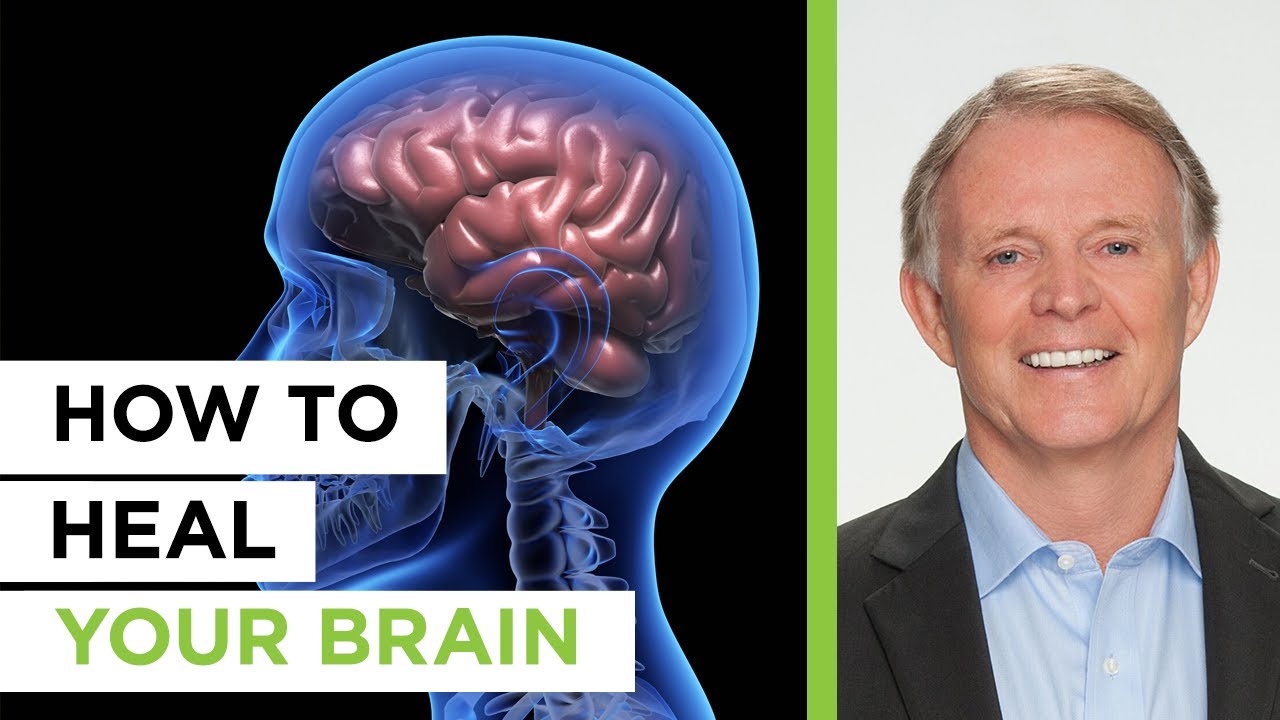
In this episode of The Empowering Neurologist, Dr. David Perlmutter interviews Dr. Steven Masley, a physician‑nutritionist, chef, and author of The Better Brain Solution. The conversation centers on Masley’s research showing how modifiable lifestyle factors predict and improve cognitive function. They discuss the key findings of Masley’s recent study “Lifestyle Markers Predict Cognitive Function,” highlighting aerobic fitness, strength training, tight blood‑sugar control, body‑fat composition, smoking avoidance, and moderate red‑wine consumption as strong predictors of brain speed. The hosts explore why fitness (VO₂ max and strength) matters more than total exercise minutes, and how these metrics can be measured in a clinic. Nutrition recommendations focus on low‑glycemic‑load foods, smart fats (nuts, olive oil, avocado, wild salmon), colorful fruits/berries, spices, dark chocolate, and green/matcha tea, while emphasizing the removal of sugar, refined flour, and grains. A core supplement protocol is outlined: vitamin D, mixed folates + B12, magnesium, a daily probiotic, and long‑chain omega‑3 DHA, with optional curcumin and CoQ10. Toxicant avoidance is covered, including mercury from large‑mouth fish, rising glyphosate exposure, and nitrosamines in processed meats. Chronic stress’s damaging effect on the hippocampus is described, along with stress‑reduction tools (exercise, sleep, meditation, HeartMath biofeedback). For APOE4 carriers (≈20 % of the U.S. population), Masley advises stricter glycemic control, vigorous aerobic/strength training, higher DHA dosing, and intermittent fasting (e.g., no food after 9 pm, first meal at noon). The interview culminates with Masley’s “5‑step Better Brain Solution,” which he claims can boost executive function by 25‑30 % in a short time, and directs listeners to drmasley.com for the Better Brain Challenge and additional resources.
Chapters
Hello everyone, Dr. David Perlmutter here. Welcome to The Empowering Neurologist. You know, continuing on our series of programs that are focusing on the importance of our lifestyle choices in terms of our general health and more specifically in terms of our brain health, We're going to have a great discussion today with Dr. Steven Masley. Let me tell you a little bit about Dr. Masley. Dr. Masley is a medical doctor, MD. He is also a nutritionist. He's a trained chef and an author. And Dr. Masley indicates that his motivation is really to help people tune up their health, tune up their brains, their hearts, and even their sexual performance. Dr. Masley is a fellow in 3 different prestigious organizations, including? The American Heart Association, the American College of Nutrition, and the American Academy of Family Physicians. He is a clinical associate professor at the University of South Florida in Tampa. And Dr. Masley's research focuses on the impact of our lifestyle choices in terms of heart health, brain health, and aging. And we're going to focus on that today. His passion is empowering people to achieve optimal health through comprehensive assessments and then acting on the results of those assessments to create programs that basically leverage this information in terms of creating lifestyle recommendations. He is a best-selling author. He's published several books including 10 Years Younger, The 30-Day Heart Tune-Up, Smart Fat, and his latest book that we'll be talking about today, The Better Brain Solution. He's also authored numerous scientific articles in very well-respected peer-reviewed journals. He's appeared on public television, the Discovery Channel, the Today Show, and in more than 500 media interviews. He continues to see patients. Again, he publishes his research. His clinic is in St. Petersburg, Florida, and he does have a weekly blog that I would encourage you to take a look at called drmazley.com. So let's get right to saying hello to Dr. Masley. Well, Dr. Masley, delighted to have you on the program today.
Well, really, Dr. Perlmutter, I'm really thrilled to get a chance to speak with you.
Well, thank you. I, you know, as often is the case on a show like this, our guests are a little bit, in a good way, different, out of step a little bit in a good way. I know that I am. I know that you are. What makes you so unique and how did you get on this path?
Well, I started on, you know, traditional healthcare. My dad was a surgeon. I grew up in the hospital setting. But I, as a child, I always dreamed that we could keep people out of the hospital. I mean, I somewhat like you growing up with your dad and always involved early on, to see my dad when I was a little kid, I'd have to ride my bike to the I would meet him in the surgery suite. I usually had to do a couple stitches, or he'd be in the intensive care unit. I might have to pull out someone's NG tube—that tube they put down their nose into their stomach—and I was I couldn't even drive a car. So I thought people went to the hospital as a kid to be tortured, even though people worshipped my dad because he was an awesome surgeon. And I dreamed that someday I'd be a doctor that prevented people. From going— And I think I've been blessed. I created a clinic about 15 years ago and we— effects of aging. We look at nutrition and fitness, stress management, toxin load, and we compare that with arterial plaque growth and with brain processing speed and memory, cognitive testing. And we've identified what makes— I think I've been so blessed by is we've been able to publish our data and show What lifestyle factors improve your brain processing speed, your memory, your function, and then get the word out. So I'm definitely not on the traditional pathway, and I think my really— what's been lucky for me is this database and learning from it as to what makes our brains better.
So when you see patients, they are getting all kinds of examinations, you're collecting a lot of data, you're doing certain tests to measure their cognitive function. And lo and behold, 2 nights ago, I'm lying in bed at night reading the Journal of the American College of Nutrition. There it is. And I find your newest report called Lifestyle Markers Predict Cognitive Function. You're the senior author in this study. And let's go through this. I mean, just for our viewers, this is a study that looked at a variety of factors: diet, level of physical activity, cigarette smoking, alcohol consumption. And what Dr. Masley is about to tell us, he was able to relate each of these factors to the ability of a person's brain to function, how they predict— how these— looking at these parameters, which are variables, meaning we can control them, how they predict cognitive function. So, Dr. Masley, can we go through this new report?
I'd love to. That'd be great. So, what we noticed was there are some specific things that predict when I meet someone, how is How is your brain performance? How is your brain functioning? And things that really stood out were your fitness. One of the strongest marchers was both your aerobic capacity and your strength. They're both independently important, strongly predict brain speed. And I've learned from you over the years that, you know, when we do strength training, it has nootropic factors, our brain actually enlarges, you know, so it's really compatible with that. That blood sugar turned out to be really super important. If your blood sugar levels go up, decreasing brain performance and function. So we want really excellent blood sugar control. That your body fat has a factor here. Clearly smoking was bad for your brain. That's not really much of a surprise. And at least in my database, a little bit of red wine turns out to be good for your brain. You know, 1 to 2 servings a day in moderation was probably good. More than 4 servings a day of alcohol clearly didn't help, but a little bit of red wine each day, that was another predictive factor. So we've got some really cool information on lifestyle choices that predict better brain performance.
Well, like yourself following this data, but for me prior to this data, I had been fairly convinced that 1 to 2 glasses of red wine a day were probably salubrious for the brain. Having said that, there is some new data out that calls it into question, so I think we have to just kind of wait a little bit till we can really nail that down. But let's go back to the first parameter, and that is physical activity. Talk to us a little bit more about amount and kind, and perhaps we can get into some of those mechanisms that lead to better brain health.
Well, of interest, you know, we didn't find any relationship between the minutes somebody exercises per week and their brain performance. It's how fit you were Aerobically. So it's like, you know, adding interval training in building fitness appears to be more important than just spending long tracks of time in a moderate workout. So in our office, we do like the gold standard for fitness, VO2 max testing. We put people on a treadmill in a mask and we measure your— Is that we determined the longer you could last just the minutes you can do on one of these protocols, that was an equally strong predictor. So, and that's a really easy tool that people could do. I actually mentioned that, how to do that, in The Better Brain Solution. What, what could you do to measure your aerobic capacity? So fitness, like your ability to get your heart rate up, huff and puff— the fitter you are, the better for your brain. And then likewise, the stronger you are. Um, Better strength was a very powerful predictor of a better brain. So, um, I would— so I really focus on make sure— measure your fitness, make sure you're fit and you improve it over time, and keep working on strength training too. They're equally important.
Well, let me, let me, uh, take that apart a little bit too because it brings up a couple of interesting points. So you've mentioned that max VO2 is an important way of looking at cardiorespiratory fitness. It's really, you know, sort of become the darling right now. And I would just like our viewers to think back to a video blog I did a while back that correlated max VO2 as a marker of fitness with diversity of gut bacteria. Who knew the higher, you know, the— your level of cardiovascular fitness, the, the more diverse were the organisms in your gut Which I think is a good thing. Does it necessarily mean, and based upon what you're saying, does it necessarily mean we can say therefore that achieving a higher level of fitness is going to translate into better health for your brain and translate into better health for your gut? You know, it's a correlative study. Your findings are correlative as well. We can't say that. But then again, I'm going to say it because I think it's true, and you can say whatever. If you want, but I think what people need to take home is that we are— correct me if I'm wrong— saying that it makes sense to get in shape because those things correlate with better brain health.
Well, yes, I completely agree. And our new data in our follow-up study to this is now we're looking at over 100 patients who've improved their brains substantially, a 25% improvement in brain. We're looking at what predicts a dramatic improvement in brain speed. We're finding that improving your fitness is certainly one of those predictors. There's fiber in food. There are certain nutrients like vitamin D and B12 and folates. There's several things, but fitness is one of the important things that if you improve your fitness, we see an improvement in brain processing speed.
Again, I want to, if I may, stop you because I want our viewers to hear again What you just said, that you're now demonstrating improvement in cognitive function by making lifestyle changes and, as you mentioned, taking some nutritional supplements. You know, a few years ago, no one would have embraced that idea, so it's really very empowering.
Well, you've been saying this for years. I got to give you credit for that. But the normal medicalist— no, I mean, in medical school, we told you couldn't fix the brain, and there's still naysayers out there. But we've— we are clearly seeing our average patient in our clinic over time has an improvement. We've done a randomized clinical trial and showed a 25 to 30% improvement in executive brain function when people follow 5 easy steps. So it's not that hard to add the right steps to improve your brain function, and it happens pretty quickly.
Well, that then leads in perfectly to what are those 5 steps. That's why people are That's what they pay the admission for here.
I like to start with food. You know, I'm a physician, nutritionist, fellow with the American College of Nutrition like you, and I did a chef internship at the Four Seasons. I like food.
Wow.
And we know if we ask people to eat the right foods and avoid glycemic load, sugar foods, that's really one of the most important keys. So cut out the sugar and the flour and the grains. Focus more on Clean protein, vegetables, colorful fruits like berries that have a low glycemic load. I mean, pretty much all the vegetables, not counting potatoes. We want more smart fats for our brain, like nuts and olive oil and avocado and wild salmon. Those are great fats for our brain. And we want spices and herbs. One, they make our food taste better, and two, they add anti-inflammatory. But dark chocolate and cocoa has been shown to improve people's brain function if they have mild cognitive impairment. I'm really encouraged by that. I think green tea, matcha tea has really strong potential. So there's some specific foods we want to add, and we definitely want to cut out the sugar and the flour, because to me, the number one cause of accelerated memory loss is excess sugar intake and insulin resistance.
Well, I would add to that sedentary lifestyle. I think that's such a huge issue. These days, you know, when we talk about enhancing BDNF and the growth of new brain cells, that's probably the biggest issue. So those are important foods. Let's move to supplements. Where are you on your recommendations?
So we really looked— I've always been trying to look at what are the key nutrients our brain can't function without. I mean, there's a huge list we could, but I'm trying to make this— what could we recommend that would be a slam dunk Really solid. I would say vitamin D. We need a probiotic, something to support our gut microbiome. Hope you would agree there. We need adequate mixed folates and B12 because if those are low, that's really a problem for our brain. We need magnesium because between our brain cells, as you know, there's these trillions of synaptic connections and they're dependent on magnesium. And then fish oil, you know, our brain is 40% fish oil by weight, especially DHA. So to me, those are like the— we could get into several others, but that's my foundation. Don't be deficient in vitamin D, mixed folates, B12, a probiotic source every day, magnesium, and long-chain omega-3s. That's— I mean, and then I could go on to curcumin and other things, but I would start with that as a foundation. And that's what our research is showing. People who get those nutrients and have better brain. I think there's been some criticism because trials that did just B12 only haven't shown benefit, but they may not have been deficient in the first place, or they should have had several other problems. But, um, I would really strongly say those are the nutrients to me that have shown the biggest benefit. I'd be open to what other ones you would want to add to that.
Well, let me just address the B12 issue for a moment. I think that, you know, the margin of safety on B12 is vast, so there's no reason at all not to supplement, and beyond that, supplement aggressively, especially with people who are beginning to at least have complaints or subjective cognitive issues well beyond MCI. And I think, you know, people could have their B12 levels checked, or we can infer B12 status to some degree by looking at markers like homocysteine and looking at even red cell morphology for that matter. I'm all in as it relates to B12. So many people aren't going to have adequate B12 levels by virtue of the fact that they're suppressing their stomach acid with proton pump inhibitors. Exactly. They are front row center at risk for deficiencies in B12 and cognitive risk because I believe as a consequence of that. Matter of fact, in a recent study published in the Journal of the American Medical Association, chronic users of proton pump inhibitors, for example, had a 42% increased risk of dementia. So I just think, you know, as we look at those parameters and those supplements to fix those parameters, we should also be asking, well, why in the heck did this person Get into trouble in the first place. Vitamin D, because you're wearing clothes outdoors and you're not getting any sunshine. I'm not suggesting everybody gets naked outside, but try to get a little sunshine. But point well taken, take the vitamin D supplement. I think your list is actually very good, especially as you talk about DHA. These days we're seeing this whole coffee fruit concentrate getting a lot of press because of its effect on BDNF. You mentioned turmeric. I would add that in, and I think CoQ10 is also very important. But I'd like to move on beyond what we should be taking and maybe take a step back and say, what should we avoid? And you do talk a lot in your new book about toxins and how toxins can affect the brain and how we're exposed in our everyday lives. Let's, let's talk about that for a little bit.
So something I focused on has been, especially in our clinic, a third of my patients that I see for one of these detailed assessments has elevated mercury. And 10% of them have really— you know, so when I say elevated, the normal labs are like 11 parts per million, so I cut off at 11. In our research, we've published more than 15 is associated with a drop in brain speed and memory performance, especially verbal memory. But I— a third of my patients are probably 15 or above, and 10% are more than 20. And above 20, they have a significant drop. So people appear to be eating— and, and most of it, I think it comes from bigmouth fish— grouper, tuna, bass, snapper, swordfish. I mean, a few points could come from amalgams, you know, a few points maybe from, you know, things we spray around the house or yard that we shouldn't. But I think the biggest source of that is bigmouth fish intake. And not everyone— some people can handle it. Biochemically unique. That's one thing I'd like to identify. If you're eating more than 2 to 3 servings of bigmouth fish per month, check your mercury level. Make sure you're not injuring your brain with something that's so simple to avoid.
You mentioned things that we're spraying around the house. For our viewers, I've written the blog. I'm not sure it's been posted yet, summarizing a recent report in the Journal of the American Medical Association from 2 weeks ago. Showing that in the past 2 decades, glyphosate levels measured by excretion in urine in Americans, the group that was sampled, have gone up 500%. Wow. Glyphosate is the active ingredient in Roundup. It's a weed killer. We understand from the work of Dr. Stephanie Seneff, you can watch her interview here, that it has a profound effect on changing the human microbiome, and as such, Paves the way for inflammation, which is really the cornerstone of brain degeneration. What other things should people be on the lookout for in terms of toxins?
Well, I think one of the surprising ones is, you know, what we've recently learned about nitrosamines. We've known, you know, the nitrosamines, for your listeners, are these chemicals we sprinkle on deli meats, sandwich meats, hot dogs, bacon, But the problem is that we've known for years nitrosamines increase cancer rate. But I think more recently, like from Dr. Suzanne De La Monte, her work with the lab animals looking at when we give these nitrosamines in the same levels someone might get from eating bacon regularly, that they're seeing blood sugar abnormalities and neurodegeneration, nerve cell death, causing Alzheimer's in these animals by feeding them nitrosamines. And I, you know, that's Really a common source. It's not that hard to avoid. People could insist that if they're going to eat animal protein, one, just meat from feedlots in general, but make sure you pick pasture-raised, organically fed, nitrosamine-free products. I think that's a really key important thing for people to be more aware of.
Now, you also spend some time talking about the detrimental effect of chronic stress on the brain. Can we walk through that a little bit?
Well, I like some stress in my life. I want everybody to have purpose and challenge. But if we have chronic stress, like every day it's always there, a bad relationship, a job we hate, when we're stressed out all the time, cortisol levels go up. And, you know, cortisol is fine for an hour when we're being chased by a lion or a burglar, But if it's up all the time, it has a terrible effect. It grows artery plaque, it raises blood sugar, it weakens our bones, it shrinks our muscles. But specifically on the brain, it shrinks the brain, in particular the hippocampus. So we need to do much more. I don't think we're going to get rid of our stress. And I just see stress levels going up for all of us all the time, watching the news, interacting in the world. But what we can do is proactively manage it. We can take steps that lower our cortisol, raise our oxytocin and endorphins that give us peace and calm each day. So, you know, things like a good workout to burn off stress, a good night's sleep, and meditation, or using HeartMath, the biofeedback tool, to ensure we get 10 to 20 minutes of peace and calm, bring those cortisol levels down, and provide some Brain quiet, you know, brain hormone relief. I think that's super important if we want to have a better brain.
You know, there's still a notion that Alzheimer's is strongly genetic, and though, you know, statistics show if you live to be age 85, your risk is 50/50, and that sure, you know, almost sounds epidemic. Nonetheless, we do know that carrying the APOE4 gene Yes. —is associated with increased risk. If you carry one copy, your risk may be increased 5-fold, 2 copies as much as 12-fold. So what specific recommendations can you make to the at least 20% of Americans who carry at least one copy of the APOE4 allele?
Well, it's— you're right, it's 20% of Americans, and it's some of my, my loved ones have this gene allele too. So it's— this is really important to me. And yes, I look at it as a Big increase, you know, somewhere between 350 to 500% increased risk for Alzheimer's and heart disease too. So here's my take on the things we can do for this. Um, number one, people with the APOE4 allele, they're really good at probably— But they don't tolerate glycemic load very well. They're not— their brain cells are not going to tolerate insulin resistance. They have to go ensure they don't have elevated blood sugar levels because I think for them it's more toxic than the regular population. 2, I think they really benefit more from exercise. So get into an aerobic training program, do more strength training, ensure you've got that. 3, I think the data on long-chain omega-3 fish oil is fascinating for them. We've actually realized that when we look at Some studies— Well, help prevent memory loss. If we do it for the whole population, we might mistakenly think, no, it doesn't work. But if you control for the ApoE4s, you realize, all right, the ApoE4s benefit more than the general population, but they need a high— and this is something I don't understand the mechanisms of, but the people with an ApoE4 don't seem to have the same uptake from the bloodstream in across the brain barrier to somehow get those levels into the brain, or they need need a higher level to benefit. But my take on the literature is people with the ApoE4 benefit more from long-chain omega-3, but they probably need double the dose to get the benefit. And that has messed up many of the studies that haven't controlled for that, that look at fish oil and cognition. And, um, you know, I was looking at some of Henderson's— Dr. Henderson's work in terms of MCT oil and things like that and helping people get their ketone levels up. They didn't seem to work nearly as well for people with an APOE4 genotype as the rest of the 80% of the population, but they still seem to benefit from fasting. Fasting— I think that's fascinating that people with the APOE4 benefit. I really encourage intermittent fasting, like not eating from 9 PM to noon. You could have coffee if you don't put anything in it, or maybe put some MCT oil in your coffee if you want. But, um, I think there's really a benefit to Partial intermittent fasting for people with the ApoE4 genotype as well. Those would be my key highlights I would emphasize.
Again, we're talking about 1 in 5 people, and I think your take-home message here is that they've got to be even more judicious in terms of reducing their carb intake, their sugar intake, and be even more involved in aerobic exercise, that they may need a higher level of DHA from whatever source. These are the keys to the APOE individuals, you know, and I think your point is interesting about the perhaps less beneficial aspects of being in a ketosis state compared to non-APOEs. We'll have to see how that plays out, but you know, you ended with the importance of considering these intermittent fasts, and really, you know, by not having anything after dinner and protracting your morning the time you do your morning meal or break your fast to noon or later, I think is very, very important. And, you know, for our viewers who have tried that and have difficulty with it, I think you'll find, number one, that the more you do it, the easier it gets. And number two, the less carbs you have, especially in the evening meal, the easier it will be. You really want to load up, as Dr. Masley talked about, with fat, with good fats, olive oil in the evening meal. And, you know, use things like coconut oil, avocados during the course of the day. It makes Those periods between meals are a lot more comfortable for people who have difficulty with that. So any final thoughts for us?
Well, I think human nature is to kind of wait till we have a problem to deal with it. We procrastinate. That's, I think, you know, really common in healthcare and medicine. We don't deal with a joint till we've had it for long, or— but with your brain, that's a really bad idea. Yeah. I mean, by the time people are actually aware that they've got subjective cognitive impairment, they've been probably having a decline in function for 5 to 10 years, and they're already shrinking their brain. I— our data from our clinic would suggest that if you follow the 5 steps we recommend with the Better Brain Solution, you can improve your brain performance by 25 to 30% very quickly. And I think it's, you know, if you have a brain, you deserve a better brain. You can make it better. So I'm a firm believer if we take the right steps, our brain functions better. We can truly prevent most memory loss out there today. But don't wait until you have symptoms because you've already shrunk part of your brain and it's too late. So I think it's really good news to know that with 5 easy steps you can improve it. That gives people motivation to say, okay, I'll get started, I'll do it. I'm not going to put it off till I have signs of memory loss.
So tell us what we'll find if we go to drmasley.com.
Well, there'd be an invite for, you know, what I'd love to do is get an offer for the Better Brain Challenge. How can we get people willing to follow, try these 5 steps, and how easy can I make it? So that's really my goal, to help people look at, you know, if I want a better brain, what are these steps? You know, it's— that's my goal, is to help people find how do I I want to make it as easy as possible to give them the most improvement possible. That's really what they would find right now at drmazley.com is tools to make that happen and resources to make that happen.
Excellent. Listen, thanks for spending time with us today. I hope we get to see each other soon. I think that may actually be happening in a few months, but we'll see.
I certainly hope so.
Okay. Talk to you soon, Dr. Mazley. Bye-bye for now.
Okay, thank you. Really, I really appreciate your support. This is awesome. Really, thank you so much.
Okay. Well, what an interesting interview that was. Again, Dr. Masley hammering home the points that our lifestyle choices are absolutely critical if we want to change our brain's destiny and really the destiny of our health in general. Who knew? You know, many of us have known. We've been talking about this for quite some time, and again, refreshing that more and more physicians are making this information widely available. That's why we commend doctors like Dr. Masley. Well, I'm Dr. Perlmutter. I want to thank you for joining us today, and we will see you soon right here on The Empowering Neurologist. Bye for now.
More from David









Newsflash: Alzheimer’s Is Not Caused by What We Thought | Dr. David Perlmutter

