Coping with Alzheimer's Impact on Loved Ones - with Patti Davis | The Empowering Neurologist EP. 141
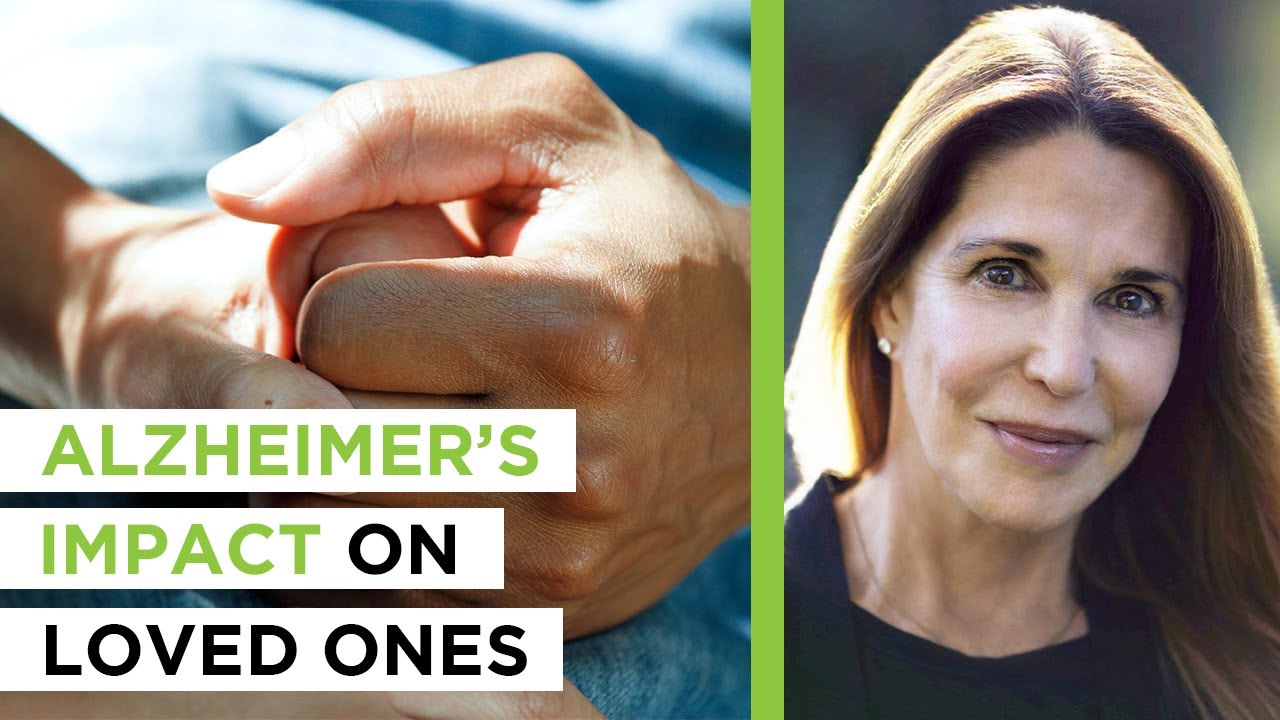
In this interview on The Empowering Neurologist, Dr. David Perlmutter talks with author Patti Davis about her memoir Floating in the Deep End, which chronicles her experience caring for her father, former President Ronald Reagan, as he progressed through Alzheimer’s disease. The conversation explores how dementia strips away personas to reveal a person’s essence, the profound grief caregivers experience and often avoid, and the systemic neglect of caregiver health. Davis describes her support‑group program, the financial barriers hospitals place on such services, and the importance of accurate diagnosis (Alzheimer’s vs. Lewy‑body vs. vascular dementia) for appropriate treatment. They discuss the limited efficacy and possible harm of cholinesterase inhibitors like Aricept, the role of lifestyle prevention, and practical caregiving challenges such as driving safety, respite care, and the emotional toll of decision‑making within families. The interview also touches on therapeutic modalities—music, cold‑water immersion, and cryotherapy— and how Davis’s personal crisis (divorce, financial loss) was reframed by her father’s diagnosis, giving her a purpose beyond her own pain. Finally, Davis explains the symbolism behind her book’s title and mentions her upcoming novel, underscoring the broader message that caregivers must prioritize their own oxygen mask, allow grief, and seek peace over being right.
Chapters
We are— I think we are very clever as human beings at avoiding grief. We don't want to go there. It hurts. You know, it feels— I've likened it to crossing a river and you feel like you're going to drown there. You know, you'll never make it to the other side. And so we find ways to avoid it. And Alzheimer's offers you innumerable opportunities to avoid grief.
Hello everyone, I'm Dr. David Perlmutter. Welcome again to The Empowering Neurologist. You know, we spend an awful lot of time on the program, rightfully so I believe, talking about how lifestyle factors influence a person's risk for developing Alzheimer's, especially in the context of the idea that there is no real treatment for that problem. We really do try to emphasize prevention as it relates to Alzheimer's disease. But one thing we haven't really covered extensively is the effect that Alzheimer's has on the family, on loved ones, and on caregivers uniquely. Our book we're going to talk about today is called Floating in the Deep End. And it is by Patti Davis, How Caregivers Can See Beyond Alzheimer's. Patti Davis has written a very meaningful book, especially for people who are going through this or have gone through it. And it's something that, you know, many of us will face. I have certainly already faced it. And her father, President Reagan, as we all know, was diagnosed and ultimately succumbed. Uh, he suffered from Alzheimer's disease, and we're going to learn what that meant for her, uh, how she had to learn to deal with it, and importantly, how this was a powerful lesson for her, how she learned a lot about herself and her family dynamics and many other things from the experience with her father's diagnosis and ultimately her father's decline. Um, looking forward to this interview. I think, uh, that A lot of people are going to benefit from her message. So let's get right to it. Well, welcome, Patty Davis, to the program.
Thank you so much for having me.
I was in strategizing this interview. I was planning to— actually, I was not planning, trying to figure out where I was going to let you know that I experienced what you experienced. So many times in the book, you were talking about what it was like how you could metricize the progression of the disease by looking into your father's eyes. And I'm gonna tell you right now, I didn't plan to open with that, but that really stuck with me. That's okay. Because I think we spend our whole lives, you know, looking into our parents' eyes for guidance, for acceptance, for love. And then as it changes with that diagnosis, that's— it's really, I think, one of the hardest things to deal with.
Well, I think it's one of the hardest, but it's also, it's also one of the most illuminating, you know, because I think that is where you find them. I mean, I could, I could sort of gauge how far away my father was, and obviously in the latter stages the person is very far away. But, you know, in most cases where they have drifted off to They're okay there. You know, I mean, there still might be upsets and things like that, but for the most part, they're pretty content where they've drifted off to. I mean, it is one of the unique aspects of dementia that the latter stages are in many ways easier than the initial stages. The initial stages are really, really hard because— That person knows that they're losing cognition. Right.
You mentioned that. You mentioned that they move to a place of serenity.
Yeah.
And, you know, you also— there's a vocabulary word that I have to thank you for, uh, palimpsest.
Palimpsest.
I did not know that word. And so I was very happy to learn that. And that is— I then looked it up. My daughter, being an artist, knew this word.
Yeah.
And it is, uh, the act of painting on top of a painting. And then as you remove those paintings, What you see and how really what the very deep painting is of that individual seems to emerge as the disease progresses.
Yes. And, you know, I've always said to people that dementia— and I wrote it in Floating in the Deep End also— that dementia is really a stripping away of all of the, you know, all of the personas and the layers that we all build up in this life just to be out in the world. And it's a stripping away down to the essence of who you are, which could be a good thing or a bad thing, depending on what that essence is, right?
Well, who could have been more skilled at building up these layers than first an actor and then a politician, the President of the United States? I mean, that's what life is about from, you know, you're on the stage constantly. So in a sense then, who your father was became revealed to you, at least for a short period of time. There was that window when he was presenting that to you.
Well, I think consistently through that, because, because what was left when things got stripped away was this very sweet, kind, gentle person, which was not a surprise. I mean, we always, you know, all of his children adored him and wanted more from him. And the fact that he was an elusive and not very present, always-present father. None of us ever took that as that he didn't care or he didn't love us or something. He just didn't know how. But we all loved him and wanted more from him. So that wasn't a surprise. But I've had people say to me, usually about a parent, rarely about a spouse, usually about a parent, that That with dementia, suddenly they've— like, suddenly they're racist or something, or suddenly they're just furious all the time or something. And they were never that person before. But then you talk to them more and you're going, okay, like you never saw a glimpse of this person? Like you never saw that rage? You never heard an offhand racist comment or something like that? You know, the more you dig, they go, well, yeah, there were a few times, but— But it wasn't really what they led with. It wasn't who they were all the time. No, but it's who they were underneath. And that's what's sad.
And they were able to adapt to social constraints and rein themselves in. So that's this lability that we see as dementia progresses, that it does in fact removes those constraints and people then allow that to manifest. You know, the main thing for me in our time together today is that we, on our outreach, has been for the past 25 years, the notion of the role lifestyle choices in influencing risk for Alzheimer's, a disease for which we have no meaningful treatment affecting now 6.2 million people. And as I mentioned in the introduction to our time together today, there's really not that much dedicated to those who are really impacted most. You know, you mentioned that ultimately an Alzheimer's patient gets to a pretty serene— that was your word— place.
Mm-hmm.
And that it's the rest of us who are really having the tough time with it. Right. And that importantly, there was a pretty good dedication to the notion that family dynamics are really stressed and can go one way or another, and that this isn't the time to try to repair old wounds in relationship to the Alzheimer's patient, but perhaps there is this opportunity for family members to gain some realization about what really matters, but that this diagnosis in mom or dad or loved one really brings out these family dynamic issues that have been present since childhood.
Yeah, okay, so a couple of things. Caregiver stress is a very real thing. I mean, doctors and hospitals know this. So when I stopped running my support group after 6 years, I've been running it twice a week for 6 years, for a combination of reasons, mostly having to do with time, because it's not just running a— it's not just twice a week. There's a lot of outside work and I'd managed to publish one book in those 6 years, but I really needed to get back to my work as an author. I thought, well, I'm going to take this to a different phase and I'm going to license it to hospitals. And I wrote up a pamphlet and everything. And the model that I presented was for once a week. I thought that would be more palatable for a hospital. 2 hospitals licensed it. I got a lot of— many nos, all of them really the same, saying, oh, it's a great program, great idea. This is just not in our budget.
Hmm.
The cost of running this group with the 2 facilitators, if you go by, you know, my pay scale and stuff like that, is about $30,000 a year for a hospital, which is pocket change, you know. So when they said it's not in our budget, I heard we don't care enough, which is true. You know, the medical establishment knows full well that caregiver stress is a very real thing and that caregivers of people with dementia particularly are very likely to get ill and even die before the person that they're caring for because of stress, because of heart attacks, strokes, stress-related conditions. The person with dementia doesn't have any stress. Every moment's new, right? They don't— even if they get upset, in 10 minutes it's over, right? It's the caregivers that hang on to things. And, you know, so if you know that, then why wouldn't you try to prevent those caregivers from becoming patients themselves? I mean, I think it's just I think it's just irresponsible.
Yeah, I think you mentioned how your program was canceled because you were told in so many words that basically Alzheimer's is not remunerative. And, you know, they wanted to have— my sense in reading that, though you didn't fully explore it, was that the hospital kind of had a sense they could do other things, cardiac rehab or whatever, for which they would actually receive compensation. So it was basically just a money thing.
Yeah, I mean, you know, most Alzheimer's patients— obviously there's early onset Alzheimer's, there's frontotemporal dementia that affects younger people— but for the most part, Alzheimer's and other forms of dementia affect older people. There is no cure, there is no treatment. I had a friend recently, very recently, the other day, who knows someone who's dealing with their father who has Lewy body dementia, which is, you know, is just brutal. And the doctor actually said to this woman, you know, I don't have time to answer all your phone calls all the time. I thought, oh my God, really? I mean, you know, there are a lot of questions that come up, particularly with something like Lewy body, and you don't have time to answer those questions? So,
yeah, I think, you know, COVID has really called out the incredible inadequacies of our healthcare. And let me say, it's not a healthcare system, it's an illness-focused system.
Yeah.
But it's really called it out in terms of how weak it really is, not just from a delivery perspective, but even from a data collection perspective, in comparison to places like Great Britain and Israel, where they have centralized repositories to deal with the data to determine who's getting sick, why they're getting sick, how they're responding to treatment, to vaccines, you name it. And so it is with Alzheimer's as well, that there's no comprehensive overriding plan to deal with the disease and all of its manifestations. And the caregiver burnout is a, as you well mentioned, a huge manifestation of that diagnosis in an individual. So It's, it's a much broader diagnosis affecting so many other people. We don't deal with it in any way, shape, or form here in America.
Yeah, I mentioned in this book I had somebody in my support group who got, um, one of those environmental lung diseases. I think it was Valley Fever. I think I'm right, but I could be wrong. Anyway, it was one of those that you get like when you go to the Mojave Desert and breathe in the dust, except he hadn't gone into the desert. He was just here in Los Angeles. And but he got that, and he was being, you know, treated with antibiotics or however they treat it. And I said to him, you know, in Chinese medicine, the lungs are the organ of grief. So you might want to just mull that one over.
Why not? I mean, we don't know each other, but I, I'm certainly open to that. Having done this for as many years as I have, I, I've seen enough, and experienced enough that you've got to keep an open mind, because if you don't, it means you think you know everything. And I can— Right.
I wasn't suggesting that he not be treated as he was treated. I just wanted him to have in his consciousness that what was going on here, you know, in my opinion— I'm not a doctor, but it's just something to think about. How did— why did he get this lung disease?
I want to digress for just one second because you brought up something very important in the book, and it's not the Not caregiver-related, that's really what we're focusing on, but you mentioned sort of in passing that, you know, as a matter of fact, it's really important. I mean, some people may say, oh, grandpa or dad or mom, mostly mom because 2/3 of Alzheimer's patients are actually women, is failing, probably has Alzheimer's, why even go to the doctor? And you bring up a very good point, I just want to call it out, that there are other things that are easily treatable that can relate to cognitive decline, like B12 deficiency, hypothyroidism, toxic reaction to medications, a whole list of things. So I think—
Sleep apnea.
Pardon me?
Sleep apnea.
You bet. Sleep apnea is huge.
Yeah, the oxygen—
Consequence of diet.
People aren't getting oxygen to their brain. They get treated for sleep apnea and the symptoms disappear.
And how easy it is to treat aside from the weight loss, you know, CPAP. But, you know, by and large, when you say that there's no meaningful treatment, you know, we're 100% on board with that statement. But it doesn't mean that at least people shouldn't have that initial evaluation just to rule out— you know, Alzheimer's is a disease of exclusion. You exclude everything else that's treatable. That's right. Not that there are a lot of things, but you do have to go through that checklist. And then, you know, unfortunately, people are then offered medications that our best science shows do not work. Even when we think back of this recent Aduhelm fiasco, you know, it's sort of predicated on the notion that beta amyloid is the cause of amyloid— of Alzheimer's. We know that there's a big pushback in terms of that being the central dogma here. And so, you know, that's why we emphasize prevention. But I thought that Your inclusion of that bit of information was exceedingly helpful.
Well, I also— I want to add to that though, that the other reason to get diagnosed, even if it is dementia, is to understand, is to know what type of dementia the person has. Vascular dementia presents itself very differently than Alzheimer's. Lewy body dementia is in a whole other category. And in fact, I remember somebody coming into the support group for the first time describing the symptoms that their parent had and saying that they had been diagnosed with Alzheimer's and given Aricept. And I remember my co-facilitator and I kind of looked at each other and read each other's minds. And because he was describing— the person was describing the parent's symptoms. And I looked at my co-facilitator and I said, you know what, you take this. You're the doctor. You take this one. And he said to this person, you know what? You need to get another opinion because what it sounds like is Lewy body dementia and Aricept is— you should not be giving somebody with Lewy body Aricept. The guy went back and went to another doctor, got his parent diagnosed, and it was Lewy body dementia. It was not Alzheimer's. Interesting. So you really need to know what you're dealing with, what version of dementia you're dealing with, and that does take a lot of testing and But you need to know.
Well, without question. And, you know, now that you've brought up the Aricept question, you know, published in the Journal of the American Medical Association, research by Dr. Kennedy at University of Alabama actually demonstrated that that class of drugs, what we call the cholinesterase inhibitors, is associated in Alzheimer's patients with a more rapid cognitive decline.
Really?
The drug that is prescribed for Alzheimer's is making people decline cognitively more quickly. Why don't we hear about that? I mean—
I had not. This is news to me. I didn't know that.
I've written about it. It's published in the Journal of the American Medical Association. And, you know, the truth is, as you mentioned earlier, we don't have a treatment. Had we had something effective, I would have jumped on it. certainly professionally for my patients and certainly for my father as well. But that said, again, you know, our emphasis is on looking at how lifestyle impacts, how diabetes, obesity, et cetera, how these things all impact the destiny of the brain, if you will. You mention in the book that you were kind of unaware of your father's situation and received word When you were, I think, walking down Columbus Avenue and you heard in the news that President Reagan had announced, or family had announced, that he was diagnosed with Alzheimer's disease. I think you said you felt like you were in the Himalayas without a Sherpa.
Well, that's— it's a little— you mixed it up a little bit. I wasn't— I was living in New York at the time, but my mother called me And, well, actually, she had told me— she had been in New York very shortly before that and told me that he had been diagnosed with Alzheimer's. And then she called me. We didn't have cell phones then, so it's—
How did we get by?
I got the call. I just said, good thing I was home. She called me and said that he was going to be putting out this letter to the world announcing his diagnosis. And, and that's— and then I wrote that, you know, shortly after that I was walking. I went out and took a walk. Oh, then, okay, then you're walking. And
you felt lost.
You know, I have no— I don't know what I'm getting into here or what this is going to be. Um, but I mean, I was— I really went on my faith and I really said, God, just Please keep me open. Let me learn. Let me grow from this. Let me not make any decisions about what it's going to be so that I can really be present for this experience. And I did feel like I was trekking in the Himalayas without a Sherpa.
Yeah. You give some really very pragmatic recommendations like the car keys and childproofing the house, as an example, and that the, the patient himself or herself doesn't get a vote.
Yeah.
So how difficult is that in general?
It's really hard. You know, that car key thing is really, really hard. That's probably one of the hardest because, you know, you think about it, when we, when we became of age to get our driver's license, it was a huge thing. I mean, we had the independence. We could get in a car and we could go somewhere. It was a huge thing. Well, to take that away is a huge thing too. It's a little, it's a little better now because there are, you know, companies like Lyft and Uber and stuff, and that, that you can set up a, you know, a ride thing with for the person. So I think that makes it a little bit easier. You know, you're taking something away, but you're also giving them something to replace it. But it's still really, really hard. And I have known people who got incredibly creative, like disabled the car and then, you know, said they didn't have the money to get it fixed and hoped that the parent would forget about it after a while. Or took the car, just took it and said it was stolen and they couldn't afford to get a new one. It's, you know, people have gotten very innovative about getting the car keys away. I, you know, I always have tried to and do try to never say to people in the realm of dementia what they should or shouldn't do with a loved one or what they should or shouldn't think. I want to make— it's not my place. I want to make suggestions and try to maybe lead them, you know, in a certain direction. I make exceptions to that rule, and one of those exceptions is when it comes to driving. And, you know, the story that I've told many, many people is the story of the Santa Monica Farms, George Weller— I wrote about it in this book— who went and plowed down 69 people.
You mentioned that, yes.
And I've told people that story. I mean, people knew it, but they may have forgotten it. And I, and I tell it to them for a very specific reason. I want to scare the hell out of them because that family lost everything. I mean, they were sued, they lost everything. And, um, you know, that's about as bad as it can get. So that's what you're playing with. So, you know, I've had people say, well, I, you know, I drove with them and, and they were fine. And well, they only drive a couple of blocks. Uh-uh, no.
Yeah, I mean, one of the earliest things that goes in Alzheimer's, it's judgment, and kind of a good thing to have if you're operating a motor vehicle. Um, but the substitution, I think, uh, Lyft, Uber, uh, etc., golf cart if, if it's a gated community, for example, you can't get into all that much trouble with a golf cart. Um, another substitution you talked about in the book that I, I was, uh, I put a smile on my face actually. I think that maybe is why you did it, that your dad always loved the water. always would swim in the ocean, etc. He was a great swimmer. And that as his Alzheimer's progressed, he came to find enjoyment cleaning the magnolias out of the swimming pool.
Yeah.
To the extent that the Secret Service agents would throw magnolia flowers into the pool so he would have the opportunity to take them out. That was great.
Yeah. Yeah, he could stand there for a long time with that scooper. And, you know, I think he still could have— I understand not letting go in the ocean. I get that. But I think he still could have gone in the swimming pool. But, you know, it wasn't my call. My mother was running the show, and it wasn't my call.
Yeah, sometimes those— yeah, well, what you just mentioned, we should explore in a moment. But sometimes those really deep and important parts of someone's life— and just from your description, it sounds like swimming was a really big part of his life. Well, it reminds me of a program I saw last night, actually, 60 Minutes on Tony Bennett.
Yes.
And very advanced in terms of moment-to-moment interactions. But when the piano player started to play, he knew every lyric, you know, to pretty complex songs. And, you know, that was his life, as I would imagine, you know, how important swimming would have been for your father. But You know, that was— I praise Anderson Cooper for, uh, really revealing what happens to people, and yet also, you know, the sweetness of, of those parts that can remain preserved. You know, and I was also thinking about the role of music.
Yeah, well, music— I mean, I, I thought the explanation in 60 Minutes was very interesting about the different parts of the brain and, and how familiar this was to him. But, um, I've also— and you could— I mean, you know this about this more than I do, but I had always heard that music sort of lives in a different part of our brain, and that's why music can be very therapeutic to people with dementia. Is that true?
Well, music lives in multiple areas of the brain, and there are the parts of the tonality and the cadence that actually are represented in some very primitive parts of the brain because it may have been signaling mechanisms for us in our hunter-gatherer days and perhaps even, even before that. But music in terms of its complexity, uh, the lyrics, the tonality, the various instruments, etc., really represents, uh, a manifestation of deep connections within multiple areas of the brain. That's what's required for music appreciation for those who are involved in music, and therefore those may be the last to go. You know, if you don't use it, you lose it. Right. But these areas are I wouldn't say indelible because they will ultimately go, but they've been fortified for many, many years of being actively used. So that might be why they persist while other areas that were less aggressively used during— over time seem to decay more readily. It may also explain why individuals with higher educational levels are somewhat more resistant to Alzheimer's, or at least their rate of decline may seem to be slower. Because of the, you know, the use versus disuse kind of hypothesis.
Right.
Whether that's true or not, you know, I guess future research will tell. But I would say, interestingly, that your dad being a swimmer may have offered him up some protection. We're now seeing quite a bit of literature that's talking about the effect of hypothermia, or just lowering your core temperature. I don't mean becoming hypothermic, But the whole notion of just cooling the body in terms of how that actually stimulates the connection of one neuron to another, actually the synapse gets strengthened by cold water immersion, anything that really lowers the core temperature. Really interesting.
Wow. Yet another thing I didn't know.
Cryotherapy. Yeah, there's a—
We're all going to be running those cryotherapy things.
I would tell you there's, there's some good science behind them. I have a sauna. I don't have a cryotherapy. I can't get cold water in South Florida. Right now our pool is probably 88 degrees. I wish we had an air conditioner for it or water conditioner. Let me get back to our story, though. Quote from you is that your father's Alzheimer's saved your life. How so?
Well, I was in a really dark period of my life. I had I was divorced. I was fleeing an abusive relationship and I did what I am prone to do. I ran away from California across the country to the East Coast. I sold my house at the bottom of the market. The real estate market had crashed. I said, I don't care, I'm selling my house. I lost basically everything. I had like, you know, just enough money to make it across the country. And, you know, it was just one of these periods where I knew nobody in New York. And it was one of these periods where kind of everything I touched seemed to go bad. And I was just in such despair. And I didn't— I was emotionally tired. I was tired down to my soul. And I was thinking, I don't— what's the point of even being here? You know, what's the point of even being on this earth? I mean, who's going to miss me if I'm gone? I really was starting to go down that road when I got the news about my father's Alzheimer's. And I guess that that could have been sort of the last straw, and it could have sent me down that road even more, but it actually had the opposite effect. I thought, okay, this is bigger than me. This is bigger than my problems. This is bigger than my pain, and I want to show up for this. And also, my father's letter to the country had such courage and grace in it. And I thought, if he can stand in front of this disease that's going to steal him and ultimately kill him, I can navigate my way through what's going through what I'm going through in my life. It was just— it was bigger than me. And, and I remember thinking, I've gotten so many things wrong in my life, I have to get this right.
There's a lot of transparency in your book and that you, uh, elucidated, uh, just now. And I know it's hard to be that transparent and vulnerable, but You, I believe, did it with a purpose, and that is to let people know that, you know, life can be challenging and we can find solace in the most unexpected places. So it's so valuable that that is in your book. Yeah. It's so real, like all of the rest of us, you know. Nobody gets a free ticket.
Right. It's something that, I mean, I never had told anybody about that before. I certainly never told David.
And here you write it. You put it in your book.
I put it in there, and I thought about it carefully, and I thought, you know what, I am going to put it in here because somebody is going to read that and go, well, I'm kind of in that place, and what can I look at that's bigger than me? where I can devote myself that will make, you know, my issues, my problems seem a little bit, a little bit smaller. It's not like everything goes away, but you find something that's, that's bigger than you.
Well, I'm going to read a quote, and I think I attribute this to you. Looking for a guiding star. The thing about stars is they can only be seen in the dark. Those are your words, right?
Yes, those are my words.
I mean, you quote a lot of people in your book, but that's the one that really, I think, resonates in terms of the fact that there is this brightness, but against what some would say is a very dark background. And I experienced it too, you know, those moments of lucidity when my dad would look at a family album Mm-hmm. And would tell us things, you know, about a relative that we didn't know. And he was able to pull that up. And, you know, against this background of him just no longer being there. And it brings to my mind your discussion in your book about grief. Mm-hmm. And about the difficulty of first finding the time for grief. And then, you know, the questions that we ask ourselves about our grief for somebody who's still alive. Yeah. It is very much a challenge to understand what's going through our minds as children of these people, of these individuals who are suffering this way, when they're still there. But, you know, the light is going out in their eyes, as we talked about earlier. And now is the time for grief, and do we even have time for grief when we're setting up for the various people to come in and do his medical care and arrange for his meals and all the things that we end up doing. Do we even have the time for that grief? And if not, then when do we get that luxury?
Well, here's the thing. We are— I think we are very clever as human beings at avoiding grief. We don't want to go there. It hurts. You know, it feels— I've likened it to, you know, crossing a River and you feel like you're going to drown there. You know, you'll never make it to the other side. And so we find ways to avoid it. And Alzheimer's offers you innumerable opportunities to avoid grief. I have to— I have to hire the caregivers. I have to get my loved one dressed. I have to feed them. I have to make sure they don't wander off. All of that is true, but you also have to set time aside for yourself, some quiet time to get still and quiet and sit with your grief. What I've always said to people and what I wrote in this book is that we assume that it that we can push grief aside and it will. Dissipate if we push it far enough away. It doesn't work like that. Grief is not biodegradable. It will wait for you and it will come find you. And if it has to come find you, it will bring your life to a standstill. I mean, it will bring you to your knees until you deal with it. I told the story of a woman I met many years ago whose husband died not of Alzheimer's but of cancer. And she had been his primary caregiver and really didn't have any other— hardly any other caregivers in there. Not that She couldn't afford them. She could. She just took on every task herself, and she she submerged herself in that. And after he died, she got agoraphobia. She couldn't leave the house, and she was wise enough to know what it was. She said to me, "This was long, long before my father was diagnosed." She said to me, "I I knew that I hadn't given myself the time to grieve, and." Now I had agoraphobia, and I had to sit in my house and grieve, right? And that's, that's really how it works. So it's much healthier, and you're doing yourself a really big favor if you allow yourself to start grieving at the beginning. Alzheimer's is a death before dying. I mean, that's— that it just is.
It's, it's, uh, it's protracted. It, it's not like, you know, a diagnosis of some form of cancer and Yeah, you know, we'll get through this. It's going to be 3 months. I mean, who knows? But, uh,
Yeah.
You know, I think the, you know, the other thing is that Alzheimer's patients in general— now I'm talking from my neurologist hat, uh, because my dad fortunately didn't have many complications— but they get a lot of things, uh, that go on with them medically that need attention more than other just older people in nursing homes. So it really, you know, that's yet another set of challenges that caregivers have to deal with. But I think, you know, the main message that you brought out is that caregivers first, as you said, like the analogy of being on the plane, they have to put their own oxygen mask on first and then deal with the child next to them. That was so vivid for me. Yeah, I love that analogy. Oh, I loved it. We have to care for ourselves if we're going to be caregivers to others.
Yeah. I mean, it's a very valid analogy. I mean, if you can't breathe, then you can't help somebody else breathe. So metaphorically speaking, that really fits with Alzheimer's. You know, you need to take that time for yourself and you need to allow yourself to grieve. And I understand that there are some people, you know, financially they don't have a choice. They can't bring someone else in. But, you know, there are a lot of resources now that didn't exist in the '90s. There's respite care. There are people who you could hire just to come in like, you know, a couple of hours a week and bathe the person. So, you know, there are choices, but I understand that sometimes someone just doesn't— you know, there isn't a dollar to spare. I get that.
But well, yeah, typically out-of-pocket for the average American family dealing with an Alzheimer's patient is $11,000 here in America. annually. And, you know, with Medicare and other private insurance ending up paying somewhere around $350 billion in the care of Alzheimer's patients. So it's— and, but, you know, virtually all of that is dedicated to the direct care of that individual. Yeah. As opposed to, as we talked about earlier on, you know, recognizing that this is a health threat. It's a health threat to the families by virtue of the lack of sleep, by virtue of the dietary changes, the stress, and all the things that end up as entrees to real disease that is quantifiable.
Yeah,
yeah. You were talking earlier about the family dynamics and about how You know, siblings have different viewpoints about what should happen with mom or dad. And you— there was a quote that you brought up from A Course in Miracles that, would you rather be right or would you rather be at peace?
Yeah.
And gosh, we could, uh, we could sure apply that to so many of the experiences that we're having in our general world right now. I mean, do you want to dig your heels into the sand and maintain your position, or do you want to come to a place where there's acquiescence and resolution? You know, you talked about it in terms of the family dynamic in the Alzheimer's patient, but gee whiz, there's so much involved today about being right and not being at peace.
Yeah, and I think, I think it's a really, really important question to ask yourself in, in all walks of life. you know, in the context of family and dealing with Alzheimer's or any version of dementia. I think it's an important question to ask, but also I don't think there's really a wrong answer because I think sometimes we just want to be right, right? And so you own that. Like in this moment, and I know, I mean, I asked myself that question a lot when I was in the 10 years of my father's illness, usually when it came to my mother. And And there were moments when I went, no, you know what? I don't care about being at peace. I want to be right. And you just have to own that because then what happens is you do that enough times and then you go, you know, this just doesn't feel so good anymore. You know, I'm not really getting the satisfaction from, from, from being right that I did before. So
yeah,
maybe next time I'll choose peace. Uh-oh, my cat Minnie is going to join us.
Oh, what a great coloration. That's great.
I heard her meowing back there. I thought, I know she's She's going to come in here in a minute. Sorry about
that. You know, I'm thinking that the notion of, well, why is your opinion more valid or more appropriate? Why are you right? And I remember dealing with a family and one sister said to the other sister, they were trying to come up with a decision, that you have to listen to me because I'm older. One was 77 and one was 75. That was the fallback. That justified that she was right and therefore you better listen to me.
Well, see, so, but usually I just want to say this about the, the, you know, the homeostasis of a family is what it is. It's evolved over, over decades, right? So people who— in fact, somebody said to me the other day about their situation with their father, I think, who has now has dementia, and he said, you know, I have 2 other siblings but they're never around. It's all down to me. And I said, well, how were things before dementia came, like in the family dynamic? Were you the one who always stepped up to the plate? He went, well, yeah. I said, okay, so why would you expect that to change, right? It's just the way it's always been.
Yeah, I think you might have mentioned that in the book. I seem to recall that. Well, I want to tell you that, um, this is a very, very meaningful and important and loving book that you have created. And—
Oh, thank you.
I'm so grateful that you've done this. Um, you know, there's been The 36-Hour Day, which I think offered up a lot of help for people. Uh, but, you know, I— the transparency part of this, the, the direct understanding about what you as an individual went through and how you resolved as best you could the challenges that you experienced— wasn't perfect, But the fact— which I think is a very good lesson for everyone, that it's not going to be perfect, but you're going to give it your college try, that's for sure. And that ultimately, it's good for you, the caregiver, to give it, you know, to do your best, but not to expect perfection. That was a great lesson. And I'm very thankful that we have your book now.
Thank you so much.
I say we, I mean the collective. I think it's—
Yeah, thank you. Great.
So what's next for you?
Well, I am working on a novel which I had started years ago and had been sitting on my computer and I hadn't had time for it. I'd actually started 2 novels at the same time and I moved ahead with one of them. The book before this book is called The Wrong Side of Night. And so that novel was out 3 years ago, and now I'm working on a new novel.
So, well, I think our viewers should know you are quite an accomplished author. I was very pleasantly surprised to see all the books that you've written. As we close, though, I'd like you to tell me, what does the title mean?
You know, my title first, when I, when I first took it to Norton, was Seeing Beyond Alzheimer's. And I had about 40 pages done, I think. And they said, you know, we can have something like that as the subtitle, but can you think of something more lyrical? And water is just— it's such an important image to me, probably because of my father and learning to swim and body surf with him and everything. I tend to always sort of go to that imagery. And the title just came to me that, you know, that is what it feels like, that you are, you are in deep water and you just need to, you have to float there, you know.
With magnolia flowers, right? With magnolia flowers.
Yeah. Yeah.
Well, thank you for spending time with us today. And again, thank you for, for doing what you did. Uh, this is, uh, It's going to help. And, you know, we talked earlier about the transparency part, but when you look at the risk-benefit, I'm sure you weighed that. I think the benefit here is incredibly higher than, than any risk. So thanks for doing that.
Oh, thank you so much. I really appreciate it.
Bye for now.
Bye.
What a message. And thank you, Patty, for that message. This is a situation that many of us have already found ourselves in, and certainly a lot of us are going to need to deal with moving forward. A lot of great lessons that we were given today, a lot of things that we should be thinking about, and a lot of tools, importantly, that we were given that can help us when we have to move through this situation. There are some upsides that were made very clear to us today, weren't they? So we're very grateful to Patty Davis for Thank you. Thank you for spending time with us and giving us this incredible insight into this situation. Thanks for joining me. I'm Dr. David Perlmutter, and we will be back soon.
More from David









Newsflash: Alzheimer’s Is Not Caused by What We Thought | Dr. David Perlmutter

