Dangers of Isolation - with Drs. Danilo Bzdok and Robin Dunbar | The Empowering Neurologist EP. 101
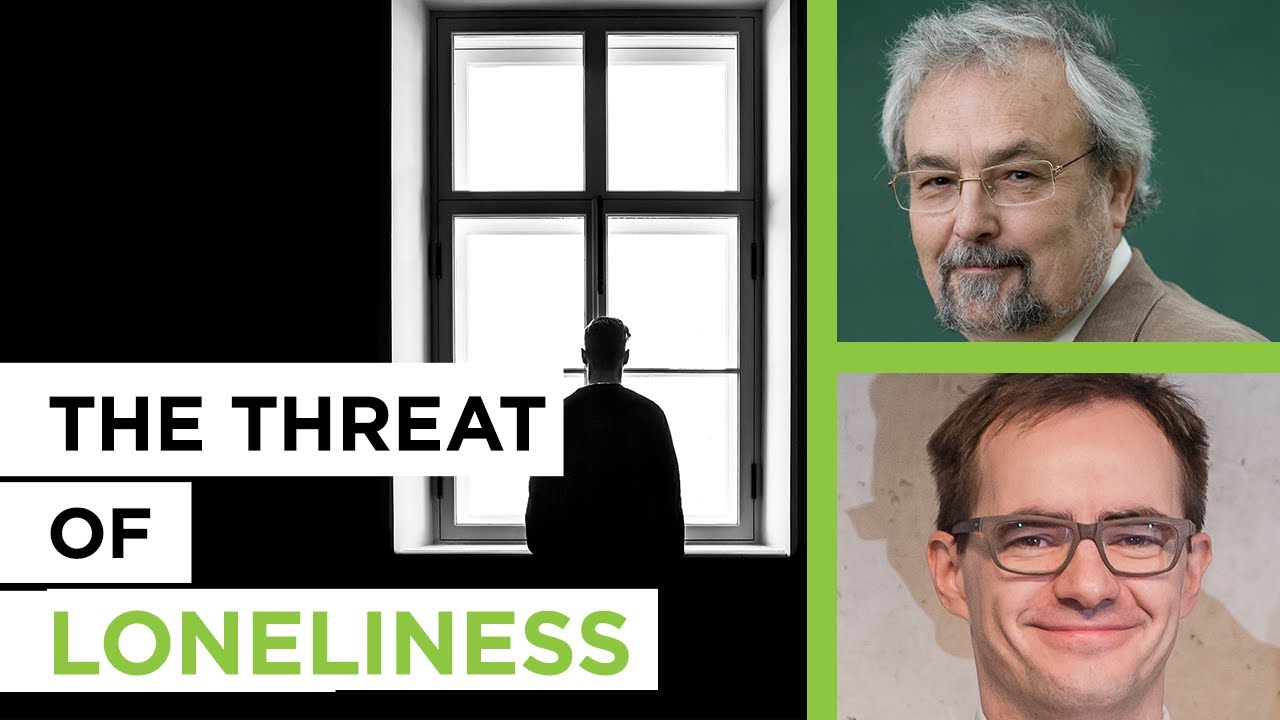
In this 100th episode of The Empowering Neurologist, host Dr. David Perlmutter convenes a panel with Dr. Austin Perlmutter, Dr. Danilo Bzdok, and Professor Robin Dunbar to discuss the neurobiology of social distance, a review article from Trends in Cognitive Sciences. The conversation explores why humans are evolutionarily wired for tight social bonds, distinguishes objective social isolation from the subjective feeling of loneliness, and examines how modern pandemic‑induced distancing impacts brain circuits (pre‑frontal cortex, amygdala, threat and endorphin systems) and immune function. The panel compares face‑to‑face, video‑based, and text‑based interactions, noting that visual cues (faces, emojis) preserve much of the social information lost in pure text. They discuss the historical shift from stable, geographically compact communities to highly mobile, fragmented networks, and how this undermines the “social brain” and increases loneliness. Empirical findings are cited, such as the estimate that forming a close friendship requires roughly 200 hours of in‑person contact over three months, and neuroimaging studies linking the number of friends to pre‑frontal cortex volume. The experts propose mitigations: fostering local community, communal singing, laughter, and other “virtual grooming” activities that trigger endorphin release; and they speculate on future biomedical interventions (non‑invasive brain stimulation, MDMA‑assisted therapy) to counteract loneliness‑related neural patterns. The discussion also touches on broader societal implications, including political structures, the mismatch between our evolved social needs and modern life, and the limited longitudinal data on long‑term brain effects of pandemic‑scale isolation. The episode ends with a call to maintain social connection despite physical distancing.
Chapters
Well, hello everyone. I'm Dr. David Perlmutter. Welcome again to The Empowering Neurologist. Today's program is really very special for 3 reasons. First, this is our 100th program, so we're very excited about this, uh, Numerical milestone, if you will. Second, always exciting to have Dr. Austin Perlmutter join us. So he's going to be joining in on our conversation today with our number 3 very exciting guest. We have 2 guests who will be joining us. And how this all came to pass is one of our wonderful research assistants, Kate, decided to send us an article recently. entitled The Neurobiology of Social Distance, appearing in Trends in Cognitive Sciences. And this may sound compelling by the title, but it really is a wonderful review article that focuses on the importance of social interaction for us as humans across a variety of disciplines in terms of health, physical health, certainly mental health, achievement, cognitive development, Cognitive preservation, immune function, a variety of areas were reviewed in this article. Very, very interesting. So we decided to reach out to the authors and invite them on the program. We heard back from them very, very quickly, and how exciting that they're going to join us today for our 100th episode of The Empowered Neurologist. Let me tell you a little bit about our guests today. In addition to Dr. Austin Perlmutter, We will have Dr. Danilo Stock, who is an MD, medical doctor, among other titles that you'll learn about in just a moment. That is his training. He has a unique dual background in systems neuroscience and machine learning statistics. After medical training in Germany, as well as at Lausanne in Switzerland and Harvard Medical School, he completed a PhD in social affective neuroscience, and then high achiever went on to obtain another PhD in machine learning statistics in France. And he currently serves as associate professor at McGill's Faculty of Medicine, as well as chair at the Mila-Québec Artificial Intelligence Institute in Montreal, Canada, including cross-appointments at the McConnell Brain Imaging Center, Montreal Neurological Institute, Ludmer Center for Neuroinflammatics and Mental Health, and the School of Computer Science at McGill University. His interest that we're going to explore today focuses on the human social brain and its intimate relation to mental as well as physical wellness. He is joined and was joined in the article that— the review article that I mentioned above by Dr. Robin Dunbar, Professor of Evolutionary Psychology at the University of Oxford, as well as Emeritus Fellow at Magdalen College and an elected Fellow of the British Academy. His principal research areas include looking at the evolution of social interactions, with particular reference to the social interactions when studying primates, as well as humans. He's best known for the popularization of the term social brain hypothesis, as well as his work in looking at the gossip theory of language evolution and Dunbar's number, which you may have heard about. That's the limit on the number of relationships that we can successfully manage in our lives. We're gonna certainly talk about that. He has authored some 15 academic books and nearly 550 scientific articles. Books include How Many Friends Does One Person Need? as well as The Science of Love and Betrayal. So what an exciting program we have in store today. Can't wait. Let's get started. Hello, everyone. Thank you for joining us today. We're very excited about the program. And I just wanted to start off by, again, thanking both Dr. Stork and Dr. Dunbar for joining us on our 100th episode of The Empowering Neurologist. This is a time when we are told that we need to socially distance for our own health and wellbeing, and yet in your recent paper that we reviewed, it seems like being socially connected is vital for our survival. So let me just throw this out there for whichever, whomever of you wants to begin. Why is it important that we remain socially connected?
Well, I guess I might start on that at least. And the short answer is, you know, it's just a reflection of the fact that we belong to the monkey and ape family, you know, whose main evolutionary strategy has been to develop this incredibly tightly bonded social lifestyle. It's there to provide buffering for you against all the stresses that the world throws at you, the stresses that come from living in crowded social environments even. So, you know, actually it's the beginning and the end of life for humans because That's the nature of our major adaptation, really.
The, um, you know, these days, uh, it seems like our imposed isolation, if you will, this imposed loneliness, uh, might actually fan the flames of, of more problems for us in terms of compromising immune function. So how do you see this, uh, playing out right now in terms of the situation that we're in? And I'll just For our viewers, know that, look at the date stamp on this podcast because it is during the early stages, I would say, of this coronavirus infection pandemic.
I'll leave that one to you, Daniel.
Yeah. There's a lot of ways in which humans connect to each other. What I find compelling is that there's probably few people in the first world right now that have a memory of what is good to do or happen between massive social isolation during a pandemic. And so maybe these days there are very different means in place that humans interact with anyways, like especially modern social media, modern means of communication. And what we found repeatedly and what we also mentioned in our review is that The structure of the social networks at all layers, they're actually surprisingly similar in the digital world as they are in the real world. And so even if there are measures that are imposed by the states or local governments that force people to have less real-world physical interaction, that doesn't mean that people stop interacting with friends,
So I think it'd be helpful for viewers— I'm sure you get this question all the time— but to differentiate between isolation, social isolation, and loneliness.
Sure, yeah. Robin?
Go ahead, go ahead, Daniel.
Well, yeah, so I'm gonna give the very important distinction, and that is really that Loneliness by nature is something that is much closer to a feeling or sense that's highly subjective. So you literally have to ask a given human being, do you perceive yourself to be disconnected, not well socially embedded? And that is very different from objective measures of the intensity, frequency, quality of social interactions. So objective social isolation does certainly not equate with the perceived social isolation. Loneliness is really about the perceived social isolation.
Yeah, I think this is one of the things nicely highlighted. Sorry, I was going to say, I think it's sort of— this point is sort of nicely highlighted by the sort of contrast between what you would find in small-scale communities, even, you know, a small village in the Midwest or somewhere like that, where everybody knows everybody else and, you know, everybody sort of helps to look after each other, if you like. And I think in those sort of environments, which is the kind of traditional environment in which we've spent most of our history, of course, you know, it's really an intensely social environment and this sense of isolation that you get is minimal. And our problem, if you like, is sort of living in these enormous cities and conurbations where it's possible to be surrounded by literally millions of people, but to be utterly lonely, utterly isolated, not know anybody. And that's partly because friendship, the opposite, if you like, of loneliness, is a two-way process. You know, it's not enough for me to want to be your friend. You have to be willing to make room for me. So, you know, we all have busy lives these days. So along you come, perhaps as a newcomer to our street in the middle of New York, and I just don't have— you don't have time sort of to set aside for me, because for you to do that, you'd actually have to sacrifice some other friendship in my favor. So it becomes difficult to meet people. It becomes difficult to engage with people in those kind of large, busy— Cities. I think that's what produces loneliness.
Well, you mentioned in your paper that there's almost a finite, but at least a ballpark estimate of the amount of time and investment that needs to happen to cultivate a relationship from a perfect stranger to being a good friend. So, it's some effort and it's some dedication to making that happen, and yet there's value to it.
Yes, I mean, this is not our work in particular, but somebody else actually prompted, I think, by the research that we'd done, tried to have a look at how much effort is actually involved in creating not necessarily perhaps an intimate friendship, but a good friendship out of a complete stranger. And the estimate that came back out of that was something like 200 hours of face-to-face time over a period of 3 months. It was an enormous investment. And that bears out kind of what we've found, which is that the quality of your friendships really is very, very dependent on how much time you invest in them. And it doesn't seem to matter too much how that's done, although face-to-face is always better. But sort of for your closest kind of 5, what I call shoulders-to-cry-on friends, so the ones that are going to support you and come to your aid, when your world falls apart. They require contact at least once a week as the absolute minimum. If you see them less often than that, they will drift down through the sort of rankings of your friends and end up at the bottom within, you know, a matter of a couple of years perhaps, but end up relentlessly as just an acquaintance. That's somebody I once knew that I can't remember now much about.
So as medical doctors, my dad and I talk a lot about pre-existing conditions that increase our risk of developing things like chronic diseases. And as you're describing this, this loneliness pandemic that we're experiencing even before coronavirus came into play, I wonder, could you speak a little bit more about where you see our social interactions as having changed over the last several decades? And maybe how that might influence our immunity and even predispose us to having a worse time with something like the COVID pandemic, regardless of even our immune function, but just how well we're able to mentally process what is going on.
I think at the social level, it's really just a sort of reflection of a move from a relatively static society, which kind of most communities were, relatively speaking, Up until maybe the Second World War. What's happened since the Second World War, of course, has been cheap transport, cheap fast transport, and a much more kind of— not so much globalized until recently, but certainly a much wider scale opportunity of employment. So people are moving much more than they ever did before. And what seems to have happened, I think, is that Thank you. Prior to that, people spent most of their lives— I mean, they might move 2 or 3 times during the course of their lives, but they spend most of their time embedded in a small community of a few hundred people, either in a village or in a little sort of couple of streets in a city. And then this mobility that we've had really over the last 50, 70 years has meant that we sort of wander around much more and spend a little bit of time, a few years here, a few years there, and you end up with a social network, your set of friends and family, as it were, who are just scattered all over the place in little clumps. And your sort of social network is a reflection of your travels through space and time, with little sort of groups of people that you knew when you were at college at this particular place, and then when you moved to your job somewhere else, first job, the little group of people that you got to know there, and then you moved on. So these groups of people don't know each other. They don't know your family, that's for sure. They don't know each other. And so that sense of a highly integrated community, which kind of acts both as its own police force but also its own social net, as it were, its support network, has just vanished. Your social networks are much more fractured, they're much more scattered over large geographical areas, and they don't have that kind of unity anymore. And I think that therein lies a lot of these problems, because it makes it very difficult to walk around the corner and just knock on somebody's door and say, you know, can I come in and tell you my problems? You know, there's a very kind of robust rule in the sociology of this kind of area, which is called the 30-minute rule, that if somebody doesn't live within 30 minutes of you, you're not going to make the effort to go and see them, to build up these friendships. And it doesn't seem to matter too much whether that 30 minutes is on foot, by bicycle, in the car, or whatever. It's 30 minutes. And that becomes important because it's the people— you know, you have to set these relationships up with these people before you need them. It's too late. Once your world falls apart, it's too late. And I sometimes invite people to step out into the street when we're allowed to do it again and sort of go to the first stranger they meet and throw your arms around them and say, give me a hug, my world's falling apart, you know, show some kindness. And my guess is anywhere in the world you try that, the first thing they'll do is get their phone out and phone the ambulance service.
Or worse. Dr. Stork, I'd like to ask you, you know, about one thing that the neurobiology of social distance really brought to mind, was that you, you both described seemingly good or great value of social interactions that are digital, that are virtual, which I think was a bit surprising to read. But I think, correct me if I'm wrong, but that is, I think, the conclusion that you drew.
Yes, absolutely. So when you look at how social interaction is represented in the human brain, one of the first important distinctions there is whether or not people are meeting in the real world in an immediate physical encounter. Or, for example, having a phone call without visual representation of the other. And so there's also an interesting and compelling evolutionary psychology or anthropological explanation to this, and that is that Darwin himself already thought that the human face may actually be an evolved adaptation to transmit information between human beings in a very fast way. So as far as I know, just the muscle, the number of muscles we have to control our face exceeds that of pretty much any other species on the planet. And so decisions, even more complex things, not only kind of fear, disgust, basic emotions, but even more complex social judgments of like trustworthiness or attractiveness, Those are really kind of in a dozens of milliseconds scale. So first of all, it's important to acknowledge that faces are really a key driver of human social interaction or primate societies more broadly. And so this is an important component of what you observe in the brain when humans interact. This is also why, just to kind of close the circle, the types of social interaction in the digital world that tend to be perceived as satisfying, being quality time, it's those, as we are having now, such as Zoom and other things that have a visual component. So there's other aspects in the brain that have complicated and interesting relationships to social behavior. But we really think that this visual component is a key aspect, especially now.
And then you, you talked about how in written language, in text, that this might have been the reason that we now use emojis, just to further nuance the message by giving kind of a facial expression to our written language.
And this is true, actually. We've just run some experiments looking at how much people— information people get out of the— just the auditory component of the speech, as it were, without necessarily hearing the words themselves, the phonetics of it, in terms of the quality of the relationships between 2 people. and it's massive. People are pretty much 80% accurate when hearing just these kind of the vocal channel, as it were, without the actual words in figuring out the quality of the relationship between 2 people as if they hear the words themselves. The words give us relatively little information. And I think kind of just to you know, emphasize what Danilo was saying. The, you know, something peculiar about being able to see somebody's face. The information you get out of it is really extraordinary. And so, while kind of text-based media are okay, I kind of see them as sticking plasters to keep things going when you can't actually get together, but they're never going to stop relationships decaying quietly if you don't meet up now and again and stare into each other's eyeballs. I think that, that becomes terribly important, and I think that's where these kind of video-based environments are sort of winning out, if you like, because you might not be wanting to do that with 400 people on the line, whereas you might be happy singing with 400 people, you know, all kind of Not in
person, that's
for sure. But our conversational level exchanges, as it were, getting to know people really well really depends on these close face-to-face interactions.
So I'd like to ask a little bit more about the kind of pathophysiology and how that relates to brain processes in loneliness, because we know that loneliness, as you elaborate on in your paper, is linked to all of these negative health outcomes. So I think for For listeners, it'd be helpful to understand, is it mainly a function of the amount of time that we spend lonely that then correlates with changes in our brain and some of these health outcomes? Or do you think it's the intensity of the loneliness? And then on the other end, especially as we come out of the worldwide isolation that has accompanied COVID, do you see this as a process that can be quickly reversed? So as soon as we're able to regain our social connections, We're able to perhaps immediately see those changes in brain function and subsequent to that, see improvements in those associated negative health sequelae?
There really seem to be kind of 3 aspects of the question. So the first is like, how is loneliness related to the brain? How is it related to the body? And is it reversible? Right?
Sure.
And so maybe starting out with this first one. A key reason why I really wrote this review is that there's actually a surprisingly low number of original articles and research on how loneliness impacts the human brain in particular. So there's a handful of studies. So this is actually an under-researched area. And this is why many of the questions you just asked, they're actually difficult to answer for the human being at this point in history. It's a different story for monkeys, rats, mice. In these species where we can do very different type of experiments, more invasive and so on and so forth, we have much more knowledge of how episodes of social isolation impact the brain. In humans, there's little. So some of the things we know about the human brain and its relation to loneliness is that it tends to relate to those brain systems that some psychologists like to interpret as representing kind of constant attention to threat. And there again, there's an evolutionary psychology story to it. Some people think that A lonely individual is somebody who will be stressed because there's a lot of distress from their perception of being socially excluded or expecting to be socially excluded. Because if you think about the fact that what makes the human species most different from any other species, if that truly is the complexity and richness of social interactions, Then it would make sense that taking this away, or people thinking that they are kind of taken out of the social web, has important consequences, such as kind of having a constant stress response. And so I would say the most prominent psychologist who studied this area, John Cacioppo, in his work on the human brain, he very much emphasized the stress circuits and kind of the interpretation is really existential threat. So that's, that's what I wanted to say about the human brain.
Yeah, and you know, in the article that we've been talking about, I thought it was really fascinating and that you showed that social isolation was associated with less connection to and perhaps activation of the prefrontal cortex. And in the book that Austin and I co-authored, we really talk about the fundamental importance of this relationship between the prefrontal cortex in terms of modulating the amygdala, in terms of its perceived fear activity, etc. So I think that, you know, we get that, and we— you know, that it's really such a powerful argument About cultivating social integration, or as you said, building our social capital. In your TEDx talk, you talked about the fact that there are measurable changes in activation in primate brain based upon the number of individuals that they interact with. And I would suspect And there may be human studies, maybe you can tell us about that, but I certainly would expect that that's something we would expect to see in humans.
Absolutely. So that is really a question about social interaction. So if you think about social deprivation, it's pretty much the extreme of the social interaction intensity and quality. And so that has been investigated in primates by colleagues of Robin Dunbar's in Oxford. And they found that if you take monkeys and you put them in cages alone, with one companion, up to 7 companions, then after a couple of weeks— so this is a causal conclusion, which is harder to obtain in humans or has not been studied to the same extent— after a couple of weeks, There are volume adaptations, plasticity effects in distributed parts of the brain, including the prefrontal cortex.
So I might add to that.
Go ahead.
Humans, we've done a number of neuroimaging studies in humans looking at, and probably about half a dozen other studies beyond ours that have been done now, um, just looking at the volumes of some of these brain areas in relation to the number of friends people have. And certainly in all these studies, I think the front, uh, prefrontal cortex comes out as really important, particularly either the orbital frontal or the ventromedial prefrontal cortex correlates really quite surprisingly strongly with the number of friends people have. Now, you know, this may reflect your past history, um, I hesitate to say that these things are completely fixed, in other words, but it probably reflects the social experiences you've had over the course of certainly growing up and early adulthood, where the neurons, if you like, are kind of building the capacity to handle friendships. But probably by the time you get to our age, I'm afraid you're stuck with what you've got. And, you know, that really does limit the number of friends you can handle at any one time.
You mean cognitively, the cognitive reserves to be able to— Yes, yes.
Yeah, I mean, there are 2 key components to this you have to remember, and this really just reflects our primate heritage because this is how primates in general organize their social relationships. It's a kind of 2-process business. The one process is this cognitive constraint. It's not about memory. It's not a memory constraint per se. It's about figuring out what's going on in somebody else's mind and understanding how another person, a friend obviously, would react to something you say or would want to do, their likes and dislikes, and sort of integrating your likes and dislikes into their likes and dislikes, that kind of thing. Those kind of— really complex calculations. And then underpinning that is, is this time component, which really, um, is the core to primate, um, uh, sociality. In primates, it takes the form of social grooming, where they sort of sit leafing through each other's fur and, and stroking, uh, and picking out rubbish, uh, bits of leaves and, and so on. Um, and that seems to trigger the endorphin system in the brain. So you've got brain operating at 2 separate levels. You've got this sort of quite conscious level component up in the prefrontal cortex, and then somewhere deep down, uh, you've got the endorphin system being kicked in by stroking. And we still do that. And we've done neuroimaging experiments and shown very nicely that if you are stroked on your torso, um, the, the brain sort of is absolutely kicking out endorphins like crazy, and the endorphin receptors are just absorbing this stuff all over the brain, practically.
The, you know, the mention of the importance of understanding through social interaction the hierarchy of the community, I think it's something that Dr. Robert Sapolsky explored, you know, quite a long time ago with imaging and postmortem analysis of primate brains, showing that those subordinate versus the ordinate males Clearly demonstrated significant changes in terms of the areas that we've talked about in addition to hippocampus. So one wonders if there is— what is the positive, from an evolutionary perspective, aspect of this hierarchy if those who are subordinate then experience this less favorable brain physiology, brain anatomy? Right. I mean, why would that necessarily be good for the group that we have subordinates who have that pathology?
Well, I guess the answer to that question really is what the nature of primate sociality altogether. It's individuals essentially grouping together in what's essentially an implicit social contract to solve key problems of survival and successful reproduction. Those key problems largely have to do with protection against predators or protection against neighboring rival groups that might be threatening your access to resources. So the group, the group is forming essentially for reasons of self-protection. Your choice, if you like, faced with this situation Is either you leave the group or you stay in the group. It's as simple as that. So if you want to make— take the benefit of having the protection offered by the group, you've got to find some compromise that you're happy enough with for staying in the group despite all these stresses. So there's no question, right the way through primate— all primate species, the big problem they're trying to deal with is the stresses of living together in close proximity, right? This is, you know, well, you know, this is no different to living in New York with, with the subway and all the stresses and pressures you get of people jostling you and when the subway is crowded. Um, uh, and all of primate social evolution is about finding that balance and finding solutions. Now, for primates in general, the key buffer they Evolved to handle that stress and mitigate that stress is friendships. That's their grooming partners. They just keep everybody off your back just enough so that they don't kind of mess you up too much, but you're not driving them away, which is the risk that you otherwise run. It's a very fine balance that you've got to maintain, and that's why actually primate social groups are so cognitively complex for the animals to handle. They actually engage in a very, very complicated balancing act between not driving everybody away, so you end up with a group of 2, which is the danger if, if you're too dominant and you bully everybody too much. Everybody's just going to go, leave you to it, and find a more congenial group to live somewhere else. And the fact that you want to be surrounded by others because they provide— help provide you with protection against predators. So, and that's true, you know, for humans. You know, the group still provides that sort of defense against the threats of life. Obviously, there are not so many predators for us to worry about these days in the industrialized world anyway. But still, you know, the generalized sort of threats that make life difficult for us, having that support network on the wider scale for when times get tough and your world falls apart, just become very important.
I think that's such a helpful conceptualization of humans in groups and how we rely upon each other as almost nodes in this larger circuit where we each serve different purposes. I'd love to just for a moment get back to what we were talking about. And this is, I guess, a question for both of you. So you had mentioned the idea that stroking is associated with observable changes in brain patterns. And so question of how exogenous stimuli change our brain function and how that relates to, I guess, our central topic today, which is the loneliness architecture. And we actually had a really interesting conversation a couple of weeks back with Dr. Ingmar Gordon. Gorman, who was a— he's an MDMA researcher in New York, and he's using it for PTSD. And so we talked about how MDMA as an empathogen actually impacts some of these same functional connectivity patterns that we're talking about as related to loneliness and how it may actually improve social interaction. And then I also think about how people are using transcranial magnetic stimulation to preferentially activate regions of the brain that that are involved with depression. And so I guess my question again for both of you is, do you see a future in which we are using, maybe not these exact examples, but these exogenous stimulation devices in order to either activate or deactivate patterns in the brain that are associated with loneliness?
Okay, so if I put my MD hat on, what I will say is, that's experience from working in a department of psychiatry in Germany, where I was an assistant professor for the last 4 years. There is kind of non-invasive electrical stimulation means that in certain parts of the world have kind of a comeback right now. So I'm not a practicing clinician, but what I did notice is that And certain major psychiatric conditions, for example, depression and schizophrenia, there is kind of a comeback of using maybe kind of electrical stimulation from outside in cases where a lot of different treatment options have not worked. And so that's one example. Something like that may perhaps also be a useful solution for other conditions such as kind of loneliness.
I'd like to, Dr. Dunbar, ask you if— it's maybe— let me preface it first of all by saying that I'm feeling very much less socially isolated even though we're having this wonderful digital interaction. It is digital, but it's making me feel good. But beyond that, if we look around the world and see what's going on right now, with increased tribalism, borders closing, us versus them mentality. I think it's become pretty obvious that we're seeing sort of a trend. What role does this pervasive and ever-increasing social isolation issue that you well described, what role do you think that has— it's playing in terms of what we see now happening globally?
Okay, actually, let me just step back one moment and add a comment to the previous question, because I actually think it's really quite interesting, you know, and actually, of course, it's about mental health and stuff. It's really a major matter of major importance. And I'm kind of tempted to say under that context is that we already have the medikit. under our belts. It's there because although the way primates build their relationships is through social grooming, and we still kind of use that with our nearest and dearest, you know, stroking and patting and cuddling and hugging and all these kind of things, clearly we don't like sort of cuddling people who are not very close. to us emotionally. So what seems to have happened is we've developed in the course of recent, relatively recent human evolution— like a lot of these are historical rather than sort of genetic, if you like— we've discovered lots of ways of triggering the endorphin system that's triggered by grooming without having to physically touch each other. So it's like virtual grooming at a distance. Mm-hmm. And these have been laughter, singing, dancing, The rituals of religion happen to be very good, if you like that kind of thing. Eating socially, and so on. These, these all trigger the endorphin system. So my solution to this problem, if you like, is chuck the drugs, just go and sing, you know, sing around the campfire. That's the best thing you can do. And it's extraordinary the effect it has on people because We actually call it the icebreaker effect because you just have to put complete strangers, if you like, around the campfire to sing, you know, old folk songs and anything like that, you know, jolly stuff. And at the end of it, they'll come away as though they've been lifelong friends. It's quite amazing. And people who sing regularly in choirs, who obviously take these things much more seriously, they will tell you that's exactly the feel you get. this wonderful uplift you get from it. It seems to be really fast and furious from singing. So I'm a great fan of, if you like, communal singing as the solution to all our ills.
I think I know what comes next in our time together today. Here we go.
Yes. Well, there's a, you know, there's— that's the sort of social side to it, and that's really good. But it turns out that endorphins trigger the release of— trigger the immune system and particularly trigger the release of natural killer cells. So actually, you know, you're getting the benefit both ways because the endorphin system is giving you this kind of happiness and contentedness and making you feel kind of more trusting and less stressed, and at the same time you're getting this little boost to your immune system which is clobbering all the bacteria and what have you that constantly seem to want to invade our poor humble bodies. So, you know, I mean, I think there is no better solution to a lot of this kind of stuff than social singing in the good old-fashioned way. And I think, you know, what has been very striking, I think, in the course of lockdown is the extent to which people have got out on their balconies and Now, you know, I realize this is kind of difficult if you happen to live in the Midwest where people have big gardens and wide streets, but I guess the people who are going to luck out on this one is those living in their tenements in New York and the big urban centers where they can lean out of their windows and have a good old street sing-song. But anyway, back— sorry. Oh,
go ahead, go ahead. I guess we need to get back to the original question, which I probably forgot.
I was going to get— yeah. I'm going to come back now then to your question. And I think I'm kind of torn two ways here, because my perception really is that our real social world is very, very small. You know, that's what really counts to us in the end. I mean, you know, the butterflies flapping in the Amazon, you know, may proverbially have consequences. what happens for us here in terms of storms or hurricanes or whatever it may be. But at the end of the day, that's so far outside our kind of real personal knowledge that it actually doesn't have much, like I said, great impact, I think. I mean, what you want is just well-knit communities, and the rest of it is a matter of economics as much as anything in politics. So I'm much less kind of Fussed about the fact that there's a sort of contraction going on. There may be some benefit to come out of this because I actually do think that part of the big problem that we we face is simply that our political units, our states, are just far too big. You know, the sheer size of most countries is just far too great. See, you guys in America are kind of lucky, and Canada is sort of. has the same benefit. And in a way, Germany did too, with this federal system. You have the states, and the states are your bedrock, really. The federal government in Washington does what it has to do and occasionally is a nuisance, but what really matters is what you guys do in your neighborhood. And I think that makes for a much stronger political structure. I think it has been the great saving grace of the American particular structure, In particular, because it has this kind of federal and state level system where you can have a much more local kind of personalized person-to-person political activity and economic activity. Okay, the government in Washington does what it has to do. It's a way of keeping boys quiet, if nothing else.
You know, one thing we've explored quite a bit on this program has been the notion of evolutionary mismatch, which I think underpins the so-called paleo movement of people trying to regain a diet that's more in line with our genome and what our genome, let's say, expects, with physical activity, with chronobiology, with reconnection with nature. engaging in enough restorative sleep, for example. And through that lens of this evolutionary mismatch, I think what you guys have been exploring over the years really is an indication that we're suffering consequences because of our, you know, increased social isolation, which was really never part of the, of the story. It was never part of the recommendation, if you will.
Well, we see that on a kind of small scale, I think. And this is why I'm kind of hopeful that maybe some better political structuring may come out of this episode that we've been experiencing as people rethink what's going on. But we've done a number of surveys around the UK, so proper stratified national surveys. And what has been very clear about all of those has been that the more you engage in some local social activity, be it going to your local church regularly, be it going out for social dinners with people, whatever it might be, the more friends you have, the more satisfied you are with your life, happier you are, the less depressed you are, the more engaged you are with your local community, and the more trusting you are of strangers in your community. And I think that's been part of our problem in a way, is we've been pushed into these contexts where we've been sort of thrown into this huge, enormous world which we're not really that well adapted to cope with in a social and And perhaps the cognitive sort of sense. So I think if we kind of refocused our interests a little bit more on our local community as the center of our lives, actually paradoxically, what you would then find is people who are kinder to the world in general and probably less, less, less, less sort of took less aggressive stances than has tended to be the case.
Well, I'd love to pick both of your brains as far as the Practical steps that people can take, given that so many people right now are experiencing loneliness and are perhaps experiencing some of the negative effects as it relates to their health. So I know we're talking about these bigger picture, perhaps Dr. Dunbar, as you just mentioned, moves towards community, moves towards more localized community. But I'd love to just hear if, in addition to perhaps even the singing together, Either of you have insights as to what the average person who is experiencing loneliness right now might be able to do in addition to going on a video chat, and also I'd love to get your take on. You know, we talk about loneliness as a risk factor for these other problems, but are there things in our lives that predispose us to loneliness? I'm thinking back to a couple of studies, one from UCLA, where they looked at giving endotoxin to increase inflammation, and that it increased feelings of social withdrawal after these volunteers. had the injection. And then research from Matthew Walker, also in California, that showed that people who were sleep deprived had a kind of a social contagion loneliness, where people looking at pictures or looking at videos of those who were sleep deprived felt lonelier. So I guess I'm just asking, if you had your, your recipe book, or if you had your menu of all the different things that you can do to help improve symptoms of loneliness, Would some of those things actually relate to lowering your risk for developing it in the first place through other factors, and then what you can do once you already have it to start mitigating those symptoms?
I'm just going to kind of try to contextualize this a little bit. It's important to realize that this is a maybe once in a century, once in a lifetime type of situation. That probably nobody anticipated in this shape and form a couple of months ago. So that's one. We don't have randomized trials with detailed information and causal relationships with the year-long longitudinal designs. This has not been expected, I would say, by most scientists in my area, certainly. And so a lot of the questions you asked, they are really not a cross-sectional design. Most of the studies that we mentioned and that we also cited in our studies in humans, they tend to be cross-sectional studies. So that's one. There's just a technical difference in kind of how much insight and knowledge you can gain and what type of studies you can do. So I don't think that we have a lot of very detailed, robust knowledge what long-term consequences are on the human brain, on the human body of loneliness in general. And as I alluded to before, but this is even more so the case because we're not talking about normal average loneliness, which is a problem, which has been recognized by the World Health Organization. That there's a major loneliness pandemic, but the type of mass social isolation synchronized multiple countries across the planet, that didn't happen in this form before. And this is why we do not have a lot of scientific articles that specifically have investigated this or could give principled recommendations. We can only kind of speculate and extrapolate from the hints that we have in the scientific literature.
I want to get back to—
This is true. Let me just— I'll just add a further comment on top of what Danilo said, which is perfectly correct. And that is, you know, at the end of the day, these are short-term situations that we're really in. I mean, you know, what causes the damage? I defer to Then there's greater knowledge on these things. But my feeling would be that what creates the kind of neural or cognitive or whatever damage, if you like, of isolation is really prolonged isolation. We're not yet in prolonged isolation. This is a couple of months, 3 months, and people will bounce back out of it just fine. I think if it went on for 6 months or a year, maybe it would be really quite serious. But we've, to be fair, we've been here in the past many, many times. It's just that nobody was alive when it happened last time, right? The last one really was the Spanish flu. And, you know, with a lot of government encouragement not to go sort of doing too much social and wearing masks. I had no idea that the government in California, you know, was making people wear wear masks outside in 1918-19 just the same as is happening now. And of course the big one in Europe was the— and Asia— was the Black Death in the 1350s or whenever it was. And there was very serious lockdown, effectively lockdown going on then because one of the big problems they had with the flagellants, who viewing the Black Death as a punishment for misbehavior from God, were going around from town to town and village to village, flagellating themselves and singing hymns and psalms and stuff. Mm-hmm. And of course they were spreading the disease as they went. You know, this is a classic Typhoid Mary problem. And a lot of cities very quickly learned that they just shut the gates and kept these people out and essentially shut the place down. You know, and we survived. We're still here. We still have culture. We're still talking to each other. It's not going to be—
So just to complement kind of the glasses half full perspective with the glasses empty, now with the full perspective, there is few studies in human brains with a longitudinal design. And so we know a few things. It's just that we don't have dozens of studies on this. And what's positive that I can mention is that we do know that in a matter of weeks, when humans do, for example, targeted training and really thinking about what other people may be going through in their mind, what their beliefs, intentions, potential rejections, these perspective-taking empathy type of tasks, we know very well that if humans do this on a regular basis, it does induce changes in parts of the brain that in the normal situation are also believed to be responsible for supporting these types of social interactions. So that would mean on the one hand that if the social interaction patterns change, such as from real-world social interaction with colleagues to online social interactions like text messages and so on. And that's a speculation at this point, is it probably leads to adaptations in the human social brain. But at the same time, the few studies that we have in that space, they would also suggest that if you get back to normal, then you would also kind of revert to the previous situation.
I'd like to get back just a moment to A point Austin brought up a few minutes ago, and that was the research showing that injection of endotoxin leads to virtually self-imposed kind of isolation. And again, this is mimicking having an infectious disease. So might that be an evolutionary advantage for people who suddenly have some sort of infectious, possibly contagious disease, then to feel that they need to self-isolate? So Maybe there's an upside to that type of isolation.
Perfect question for Robin.
I was going to say, I think this must be your territory. Okay, I think that's an interesting—
Somebody's got to answer the question.
Yeah, I thought you were going off in a different direction, and that's really kind of an interesting take. So it's a kind of natural recuperation preventative. strategy, if you like, that's built into the system. That's a possibility. It makes a certain sense. And, you know, when the body is ready to have another go at life, it goes back onto kind of normal functioning again, and you bounce back out and off you go to party and club and theater and what have you. Yeah, well, it's possible. I don't know if there's any— do you know anything, any evidence bearing on that, Danilo?
I can only say that some of the patterns that you mentioned, I know that there are some speculations in the psychology literature in terms of disgust and emotion. So some of these more physical threats to humans, like getting poisoned or something. Some people think that basic emotions, even like disgust, and that could also mean that the friend who kind of brought this food just looked at that food, but then there's something wrong with that food, and I can see it in the face, and that could inform me that there may be kind of a problem, a potential threat of getting some form of food intoxication. For example. So that would be kind of a little, maybe a little remote, but a form of this type of neurocognitive adaptation that you're getting at.
I can't believe an hour has gone by. This is, uh, I feel so much more socially connected. And, uh, I'd like to say to everybody, thank you for spending time with us today.
Thank you guys so much.
And I hope we can continue.
Thank you so much for inviting us to the 100th episode of your podcast.
Yes, I know. I feel very privileged
here.
I should wait for the 150th though.
That'd be the special one.
But are we going to end with a song? No, I'm just kidding. Thank you again. We'll all talk soon.
Very good.
Okay. Bye-bye.
Thank you so much. Have a nice day.
Bye-bye.
Bye.
Wow, what an incredible program. Think about it. You know, in this time when we are told that we've got to socially distance. It's really important, as we learned today, that social distancing does not mean we should be socially isolated. Social isolation, you know, leading to loneliness looks like has some pretty profound consequences for us and really runs in contrast to human evolution, whereby our social interactions, our social capital, really has fostered our success It's critical to our success as a species, and certainly, as we've learned today, is really important individually for our health. Thanks for joining us today on the 100th episode of The Empowered Neurologist, and we will be back soon. Bye for now.
More from David





Newsflash: Alzheimer’s Is Not Caused by What We Thought | Dr. David Perlmutter

